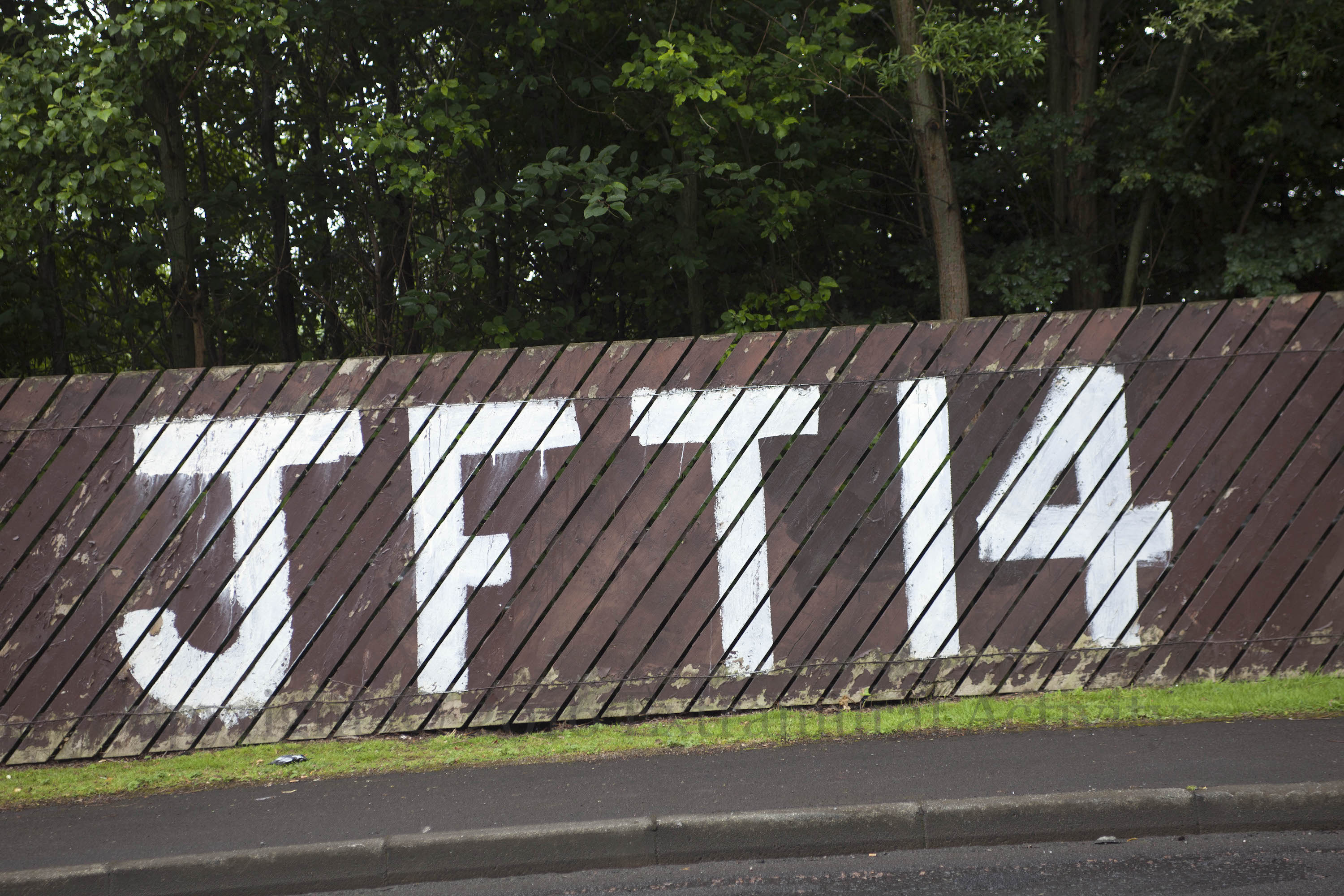
These republican slogans are on the fencing along Southway, Derry. “End internment”, “1916 – 2016 Unfinished business”, “IRA”, “JFT14” = “Justice for the 14 [Bloody Sunday victims]”, and “Brits out”.
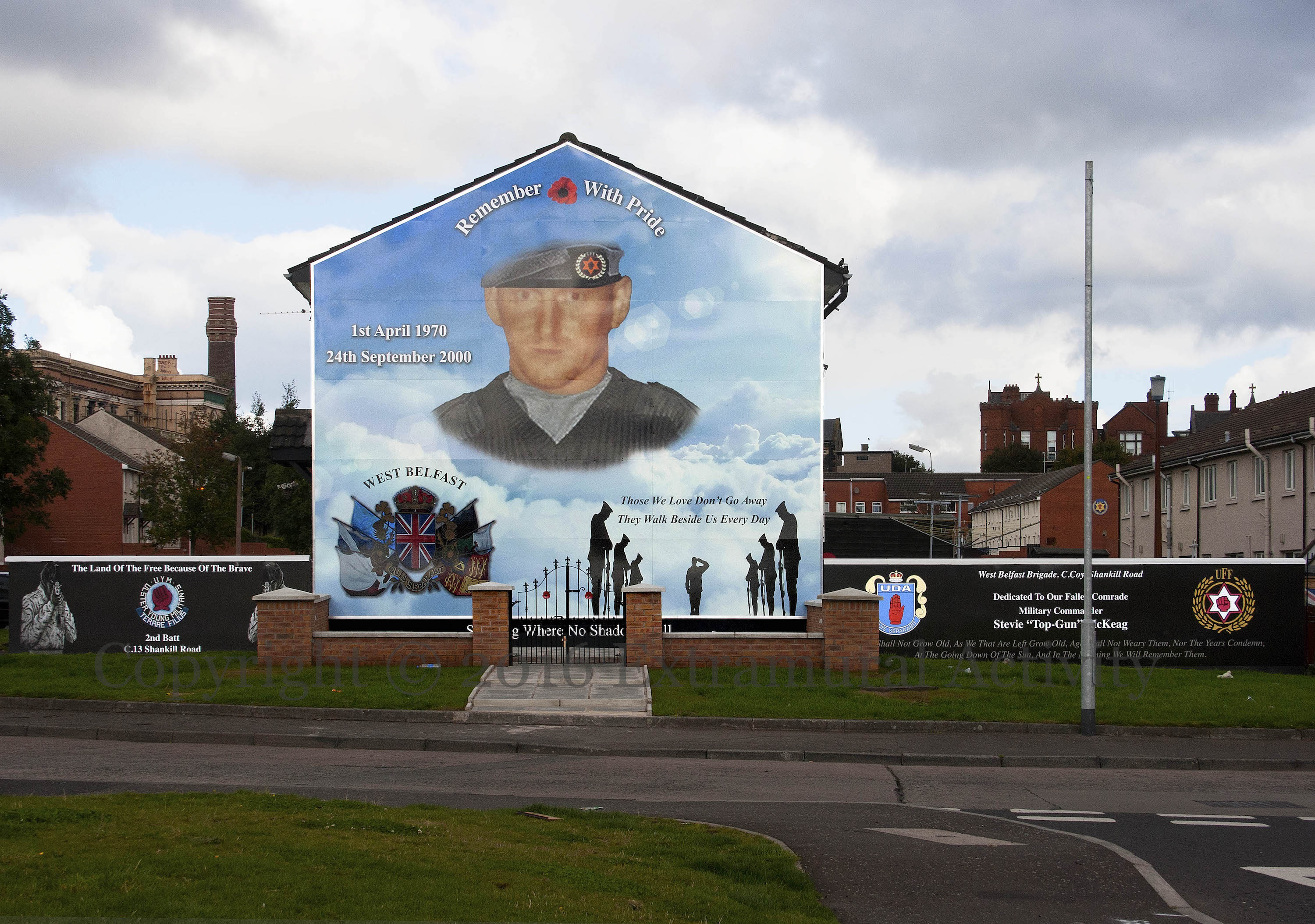
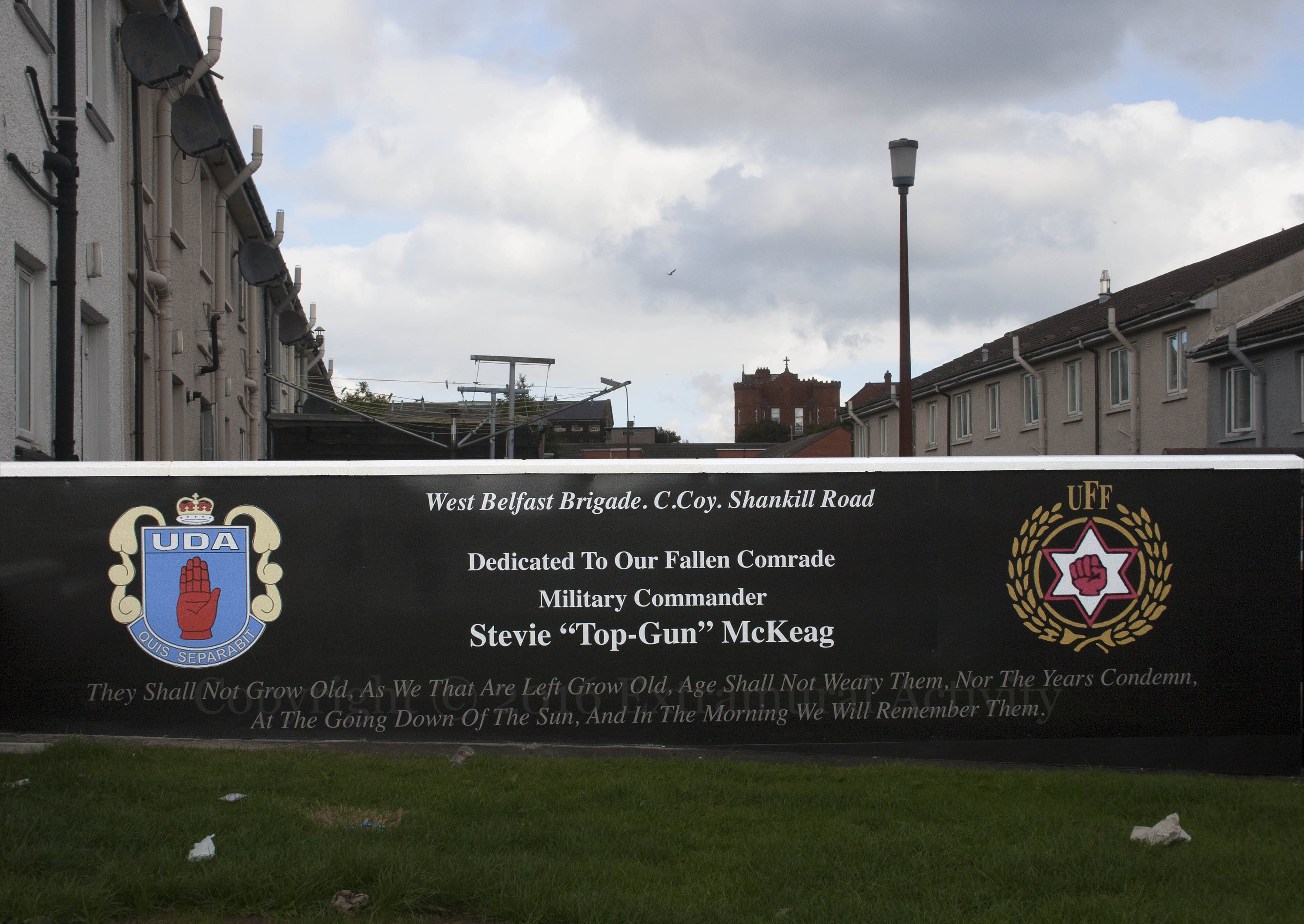
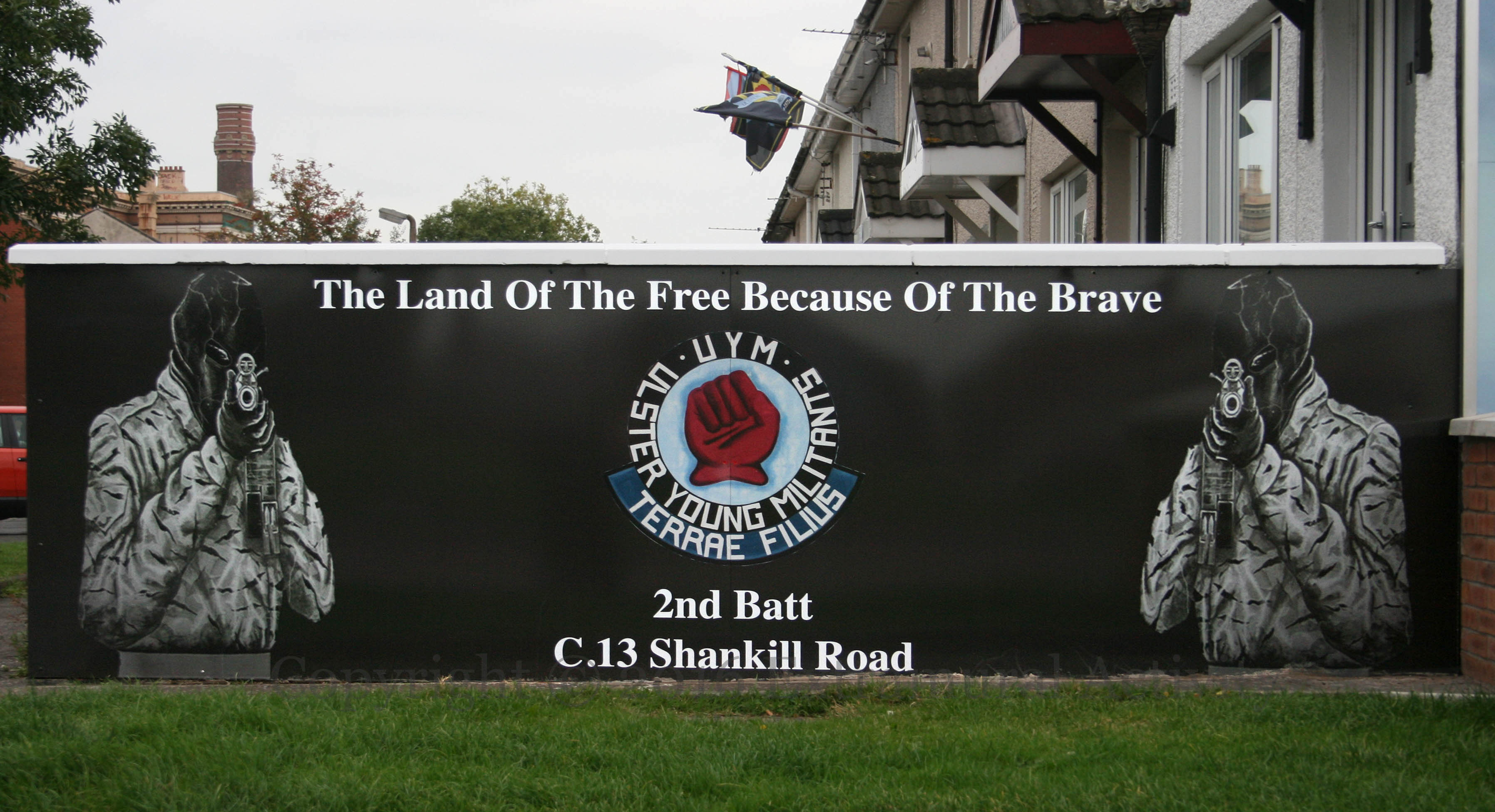
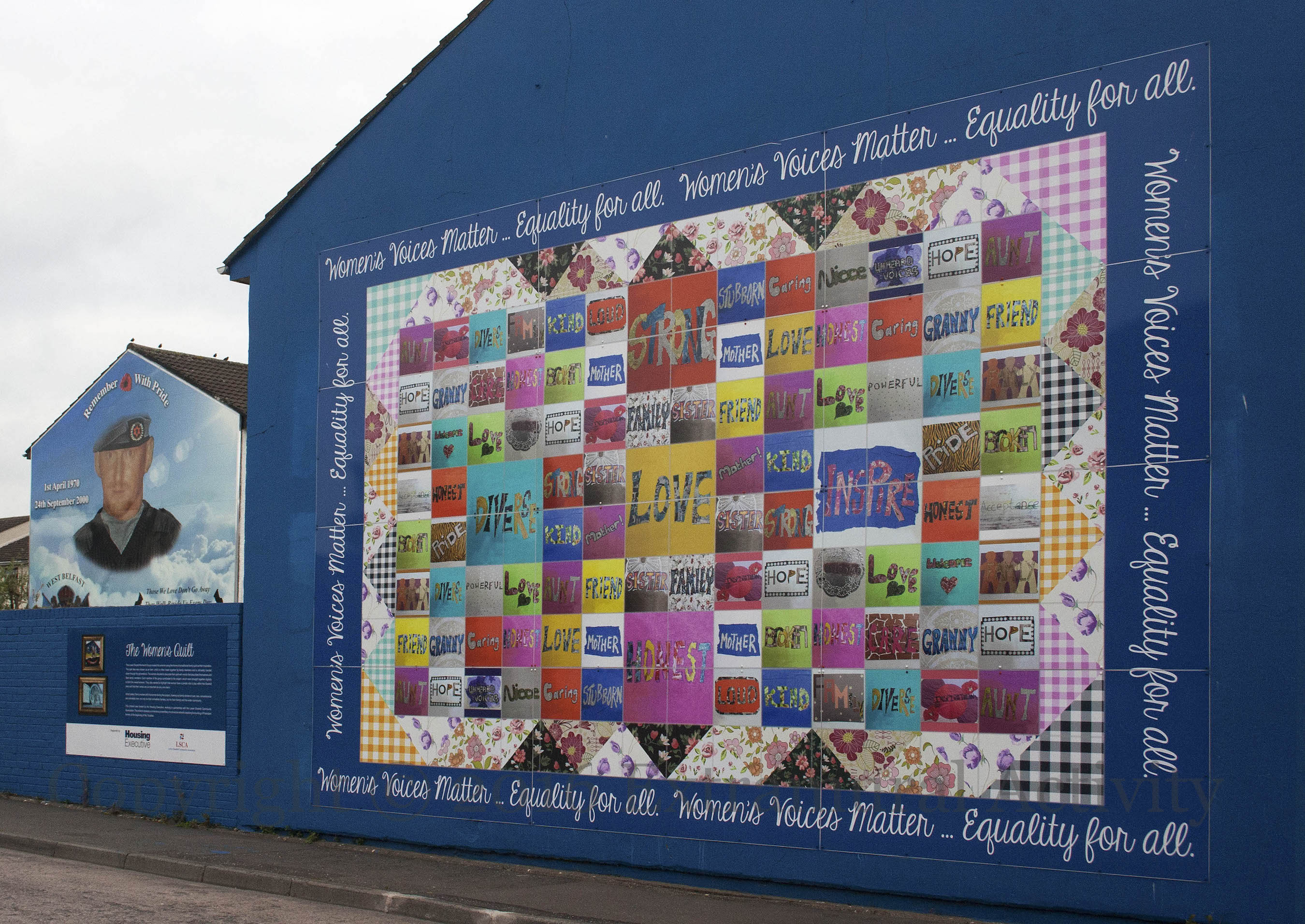
“Remember With Pride” (with a poppy). Although the dates of his birth and death are given, Stevie “Top Gun” McKeag’s name appears only on the side-wall of this new mural in the Lower Shankill estate. McKeag was the top assassin in the UDA during the 1990s, claiming at least 12 victims. Both his WP page and this Guardian article describe his career and preeminent standing within the UDA.
A stencilled phoenix in the Bogside, Derry’s, Meenan Square. The phoenix dies in flames and from its ashes rises another; a symbol of Irish republicanism.
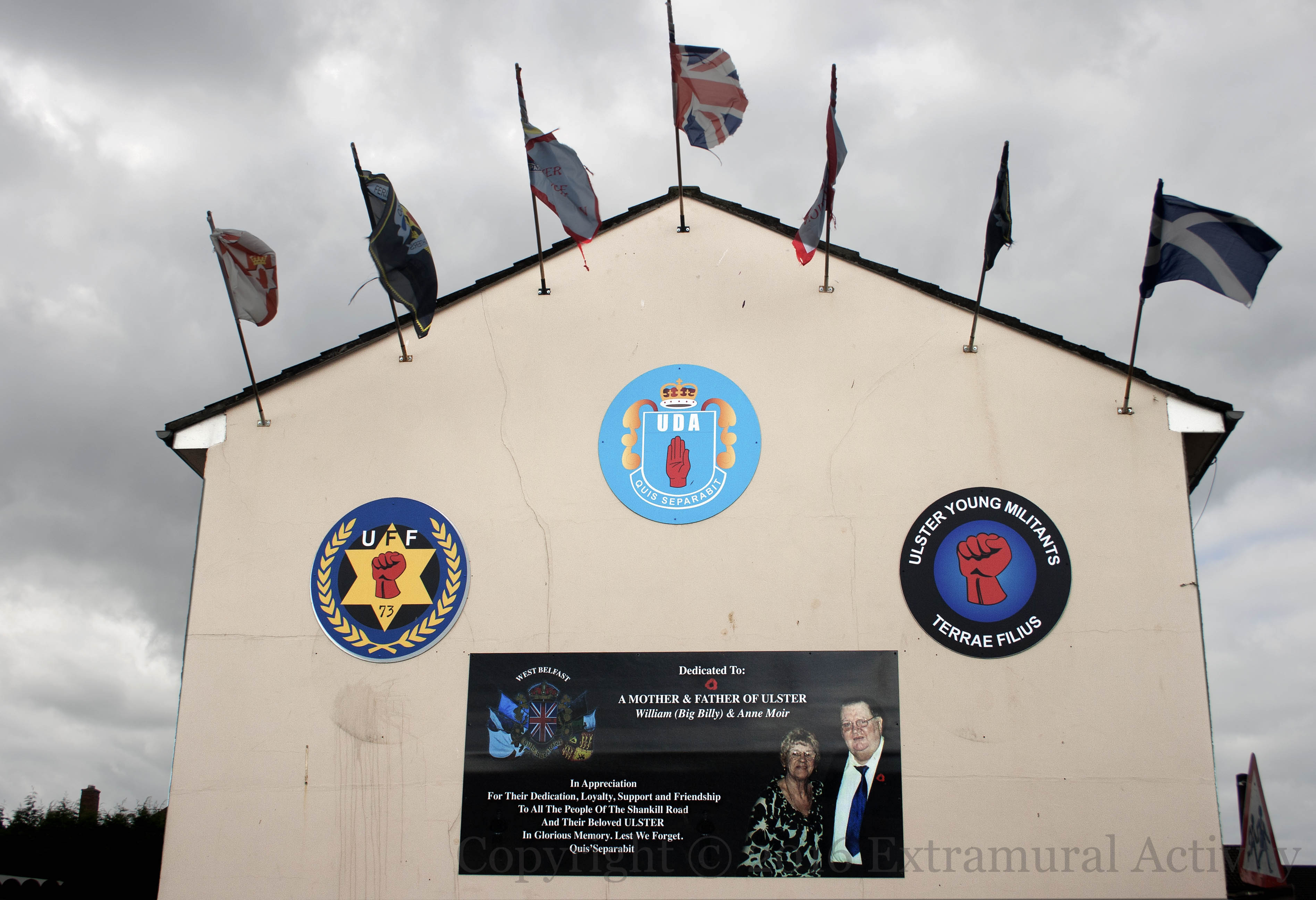
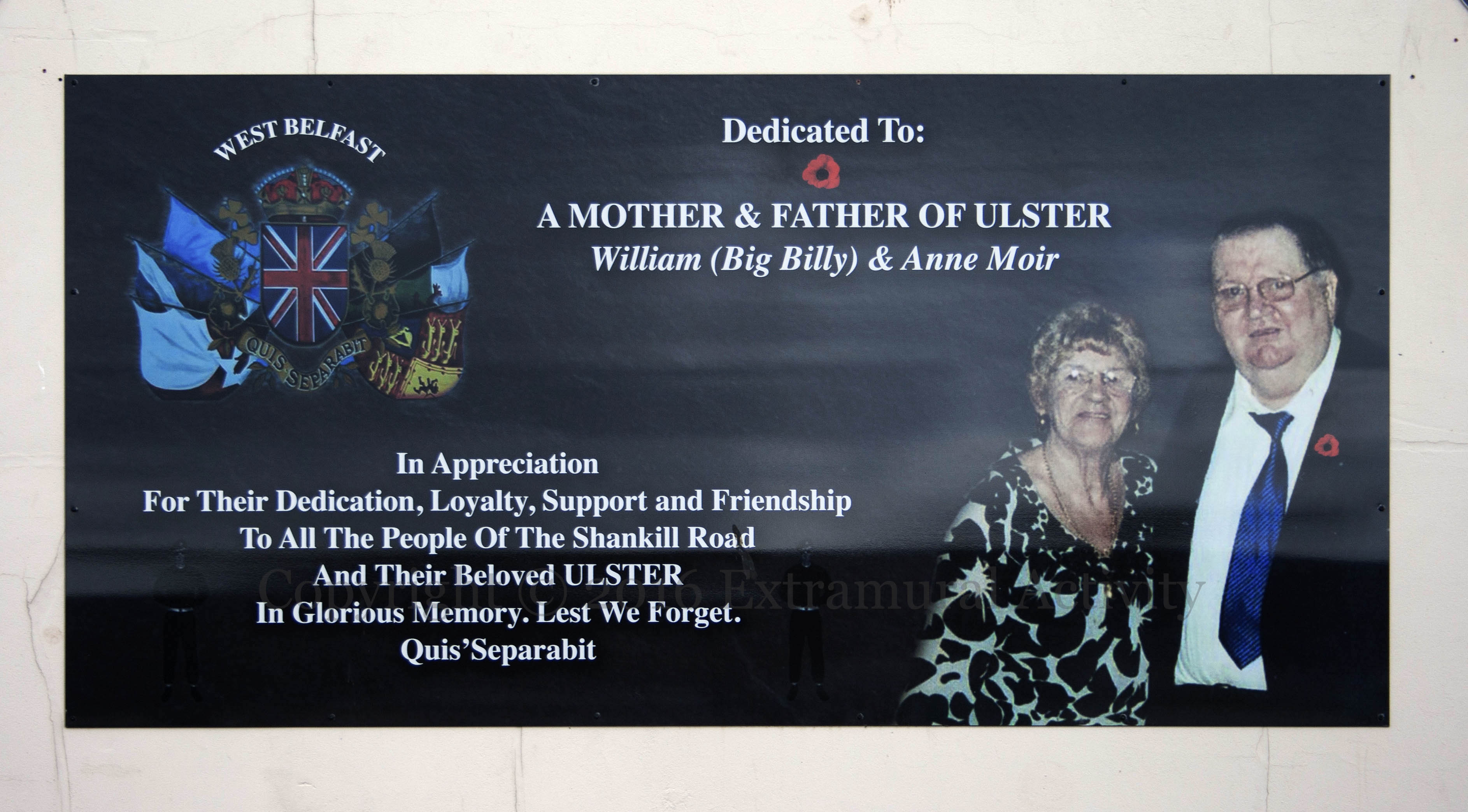
Billy Moir, who died this past May (2016) was a central figure in the Glasgow flute-band scene. The board above, dedicated to Billy and his wife Anne, is in the lower Shankill estate. “Dedicated to a mother & father of Ulster: William (Big Billy) & Anne Moir, in appreciation for their Dedication, Loyalty, Support and Friendship to all the people of the Shankill Road and their beloved ULSTER. In Glorious Memory, Lest We Forget, Quis Separabit.”
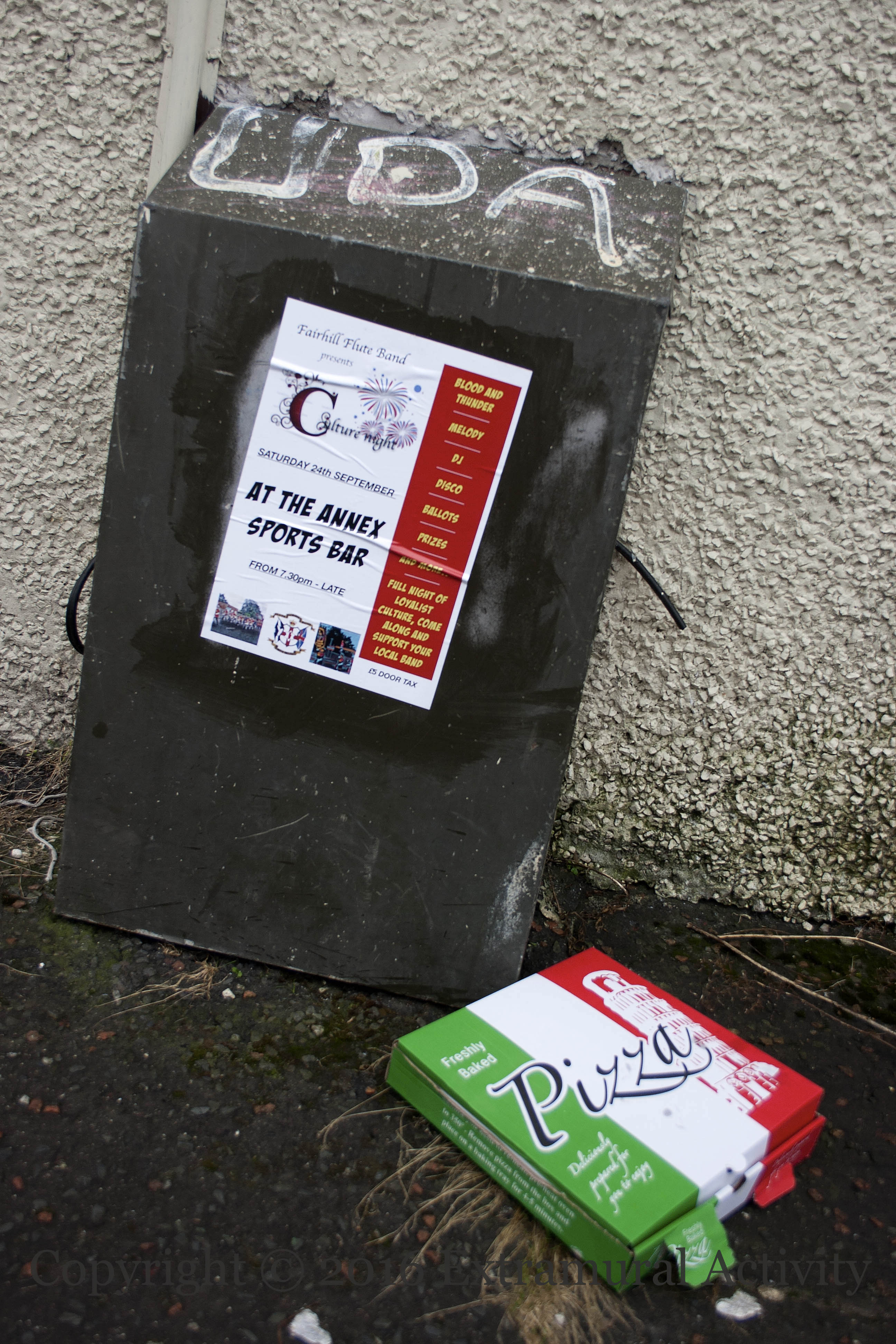
Pay the £5 “door tax” and you can attend the Fernhill Flute Band’s “Full night of loyalist culture” including “Blood And Thunder, Melody, DJ, disco, ballots, prizes, and more”.
(We’ll start posting images from that other culture night — #CNB16 — tomorrow.)
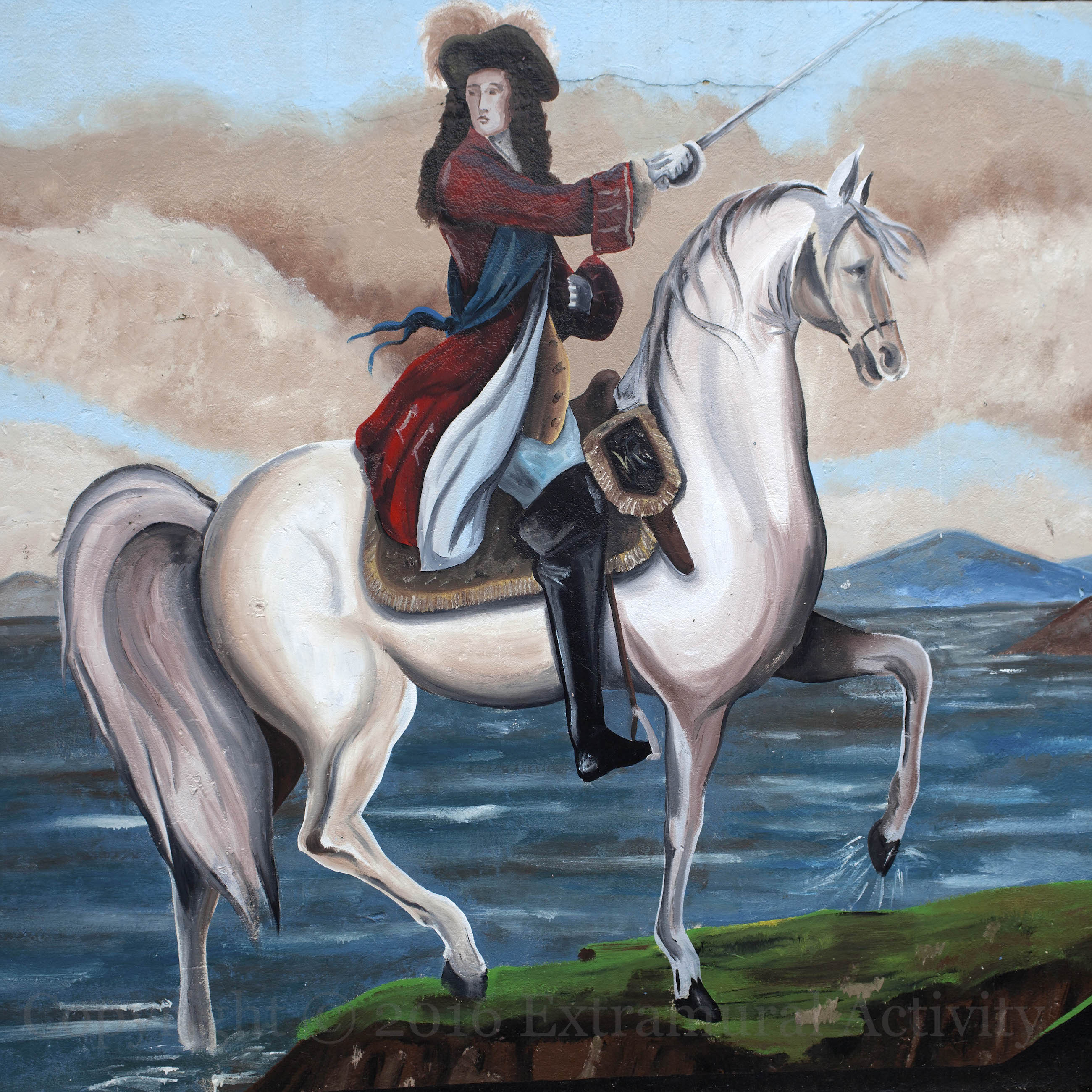
William III of England, commonly known as William of Orange, led his troops to victory on July 1st, 1690 at the Battle of the Boyne against the forces of James II, the deposed English monarch and the father of his wife. The Williamite campaign began with successful resistance against the Siege of Derry in 1689 and James’s final defeat came a year later on July 12th, at Aughrim.
The repainting of the Mountjoy ‘Breaking The Boom‘ in the Siege Of Derry is the second of three recent works in the Waterside. (The first of the three to be featured was City Of Temperance.) The work has been retitled ‘The Brave Thirteen’ and extended to include the closing of the gates by 13 Apprentice Boys, whose surnames are given here as Sherrard, Morrison, Steward, Campsie, Cunninghman, Sherrard, Conningham, Cairns, Hunt, Crookshannks, Irwin, Harvy, Spire (for first names and alternate spellings, see Apprentice Boys).
The covenant was signed in September 1912 (as captured in another famous image from Belfast’s City Hall — see Betting Office). The mural above uses the text of the Covenant as a backdrop to a composite of Edward Carson speaking and a row of Ulster Volunteers, formed in January 1913 (see the similar mural First World War).
Murals Irlande du Nord has a post comparing this painted version with the previous plastic version.










 Extramural Activity