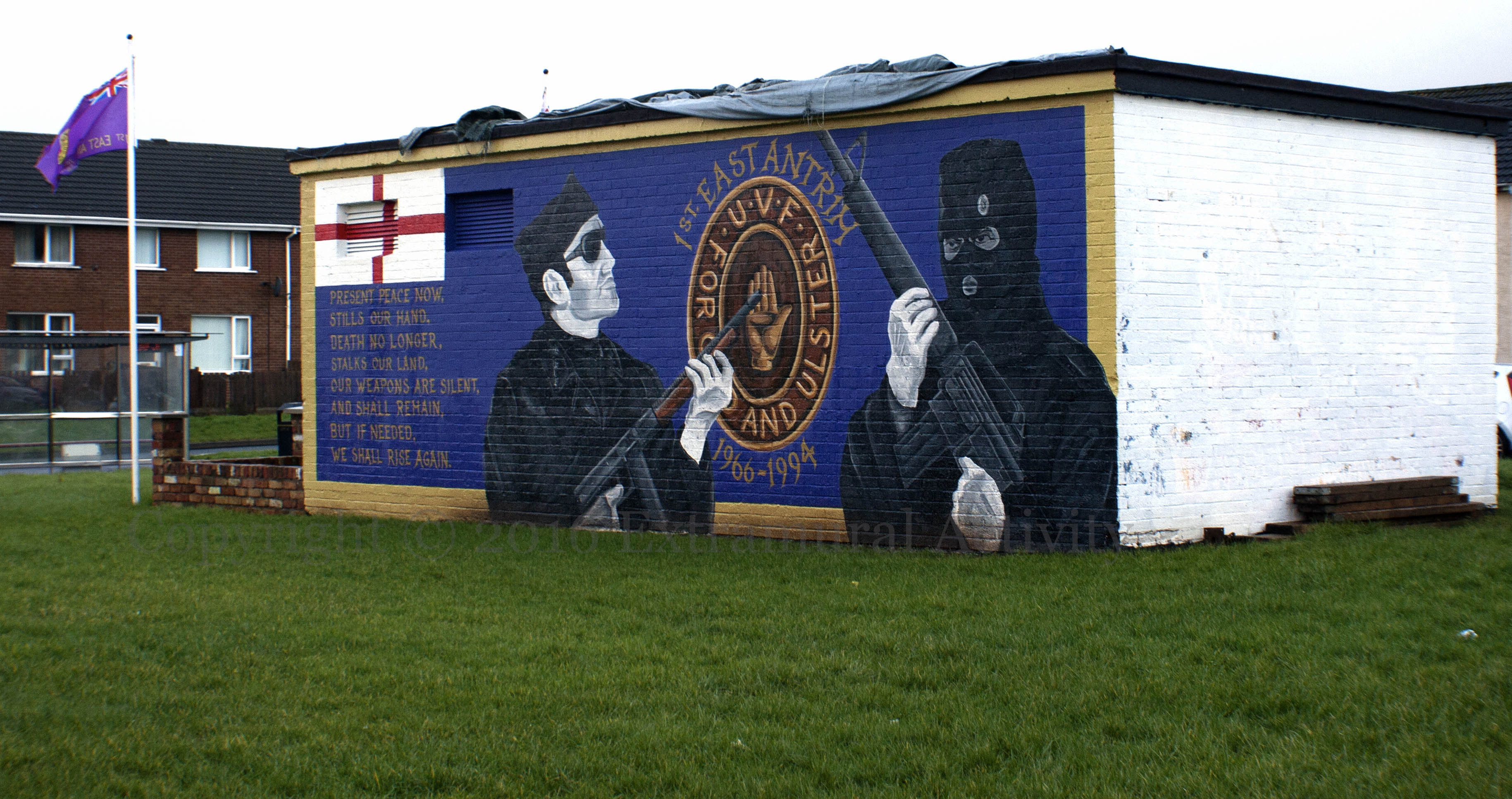
The years of operation of the UVF in this new Ballyduff mural are given as 1966-1994. The main loyalist paramilitaries began what was to be a lasting ceasefire on 13th of October, 1994. The ceasefire was announced by Gusty Spence, who was the organisation’s original leader in 1966.
“Present peace now, stills our hand, death no longer stalks our land, our weapons are silent, and shall remain, but if needed, we shall rise again.”
The Green Brigade, founded in 2006, (Web | WP) is an ultra-fanatical supporters club for Scottish football team Celtic. The poster above, which shows a supporter with scarf over the lower part of his face and aiming a slingshot, is in the Clonard area of west Belfast.
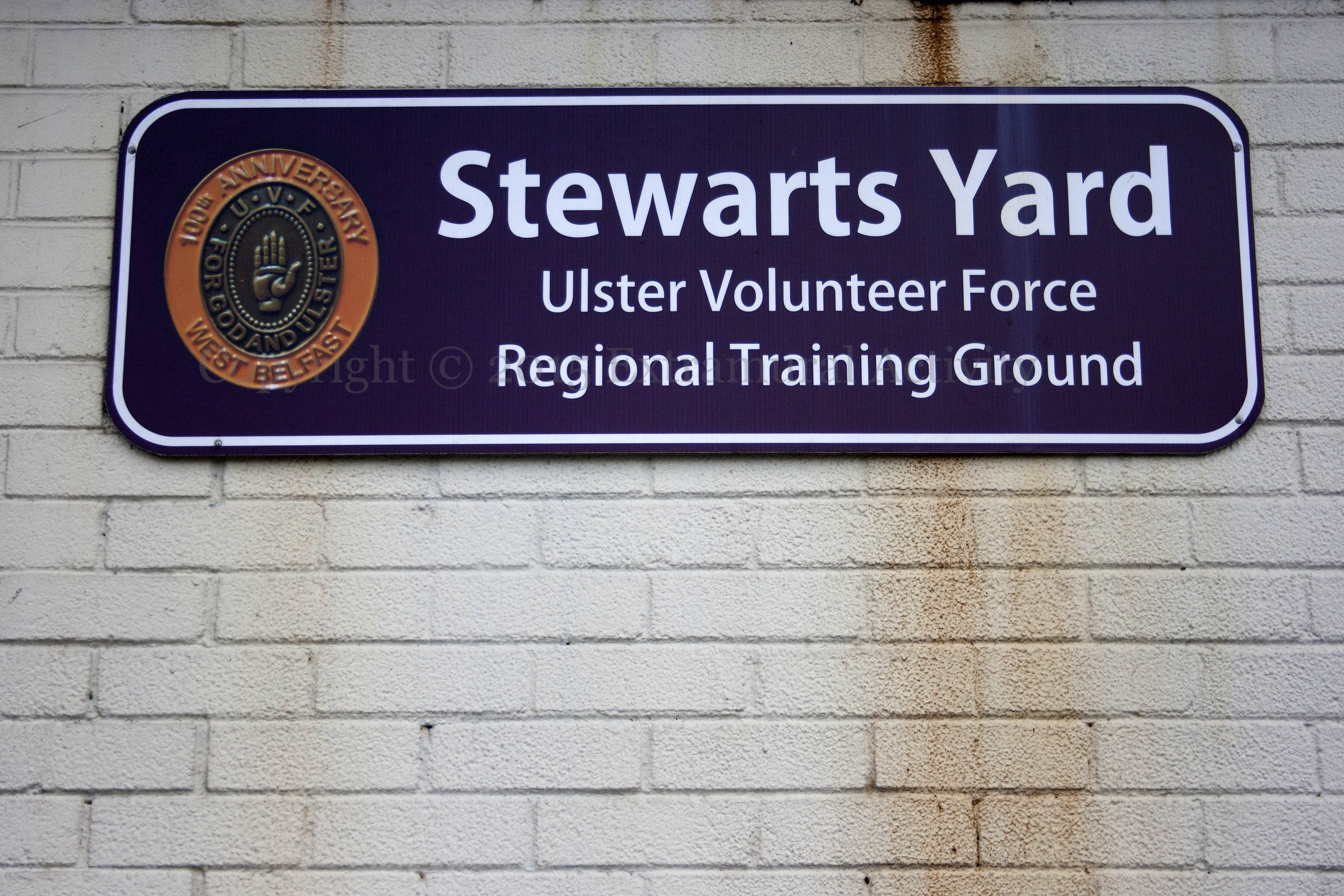
As the sign says, the area of what is now an Iceland supermarket on the Shankill Road was, at the time of World War I, a training ground for the Ulster Volunteers. The sign was erected to commemorate the 100th anniversary of the force, which then became the Ulster Volunteer Force which served in the war. “On the first day of enlistment for the West Belfast UVF, volunteers assembled at Stewart’s Yard in the Shankill Road. They were addressed by Colonel T. E. Hickman, the Conservative MP for Wolverhampton and a senior UVF figure who had become the Recruiting Officer for the whole of Ulster. Joining Hickman were James Craig MP, plus Stewart Blacker Quin, who was the Unionist candidate for West Belfast and the commander of the 1st Battalion West Belfast UVF.” (Richard S. Grayson, Belfast Boys: How Unionists and Nationalists Fought and Died Together in First World War, p. 12) “The day following the opening of enlistment for the Division, 360 men assembled at the same yard, where after being presented with a box of cigarettes, they marched to the railway station to board trains for Donard Camp near Newcastle. These men became the corps of the 9th Battalion Royal Irish Rifles.” (Bygone Days)
Seán Mac Dıarmada was born in Leitrim, left for Glasgow at age 15, but after two years returned to Belfast in 1905 (working on the trams) and – according to the new mural above – spoke from the back of a coal lorry in Clonard Street, outside the Clonard branch of the Ancient Order Of Hibernians. Mac Dıarmada was for a short time an AOH member, before moving on to the Irish Republican Brotherhood and Irish Volunteers, which led to his participation in the 1916 Easter Rising and execution on May 12th of that year.
The title of today’s post is historian F.X. Martin’s assessment of Mac Dıarmada, quoted in a pamphlet on Mac Dıarmada from the National Library Of Ireland, which includes reproductions of letters from and about Mac Dıarmada. The NLI made more letters available today (2016-02-08). (See also this Irish Times write-up).
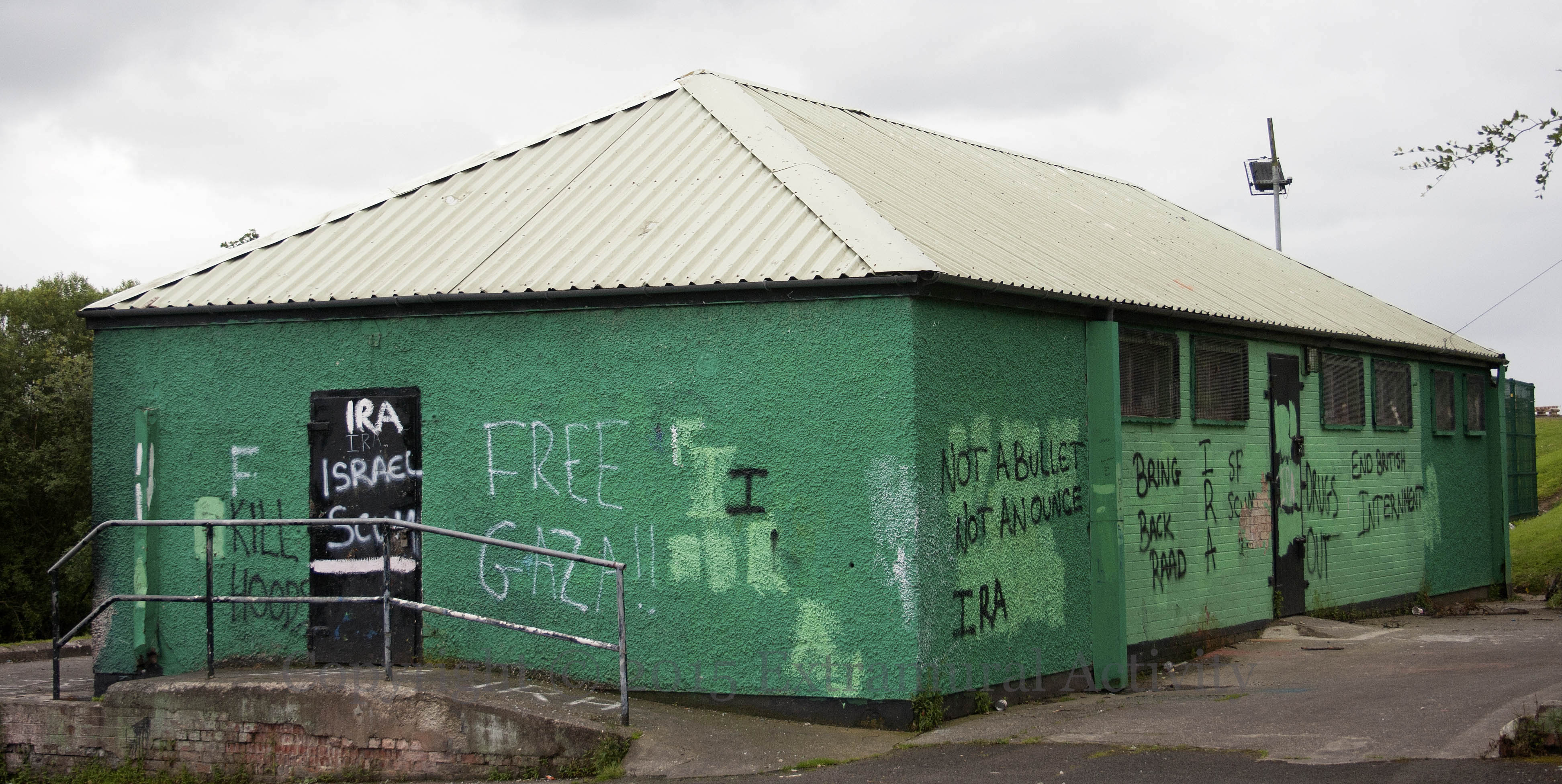
Two images of graffiti in the Kildrum area of Derry. The first (above) sends messages to outsiders (or at least, directed at external pressures) — “Tıocfaıdh ár lá”, “End British Internment”, “Victory to the POWs”, and “RUC not welcome in Foylehill” — while the second, which is in a more secluded spot, contains many for internal audiences — “Drugs out”, “Bring back RAAD” (Republican Action Against Drugs | WP), “Kill Hoods”, “SF scum”, “Not a bullet, not an ounce” (a comment on IRA disarmament), as well as “Free Gaza!!” and “Israel scum”.
The new loyalist mural in Ballyduff shows volunteers in sunglasses and scarves standing with flags to either side of a monument which reads “They who kept the faith and fought the fight, the glory theirs and the duty ours. Dedicated to the officers and Volunteers of South East Antrim U.D.A. – U.F.F. Quis separabit.”
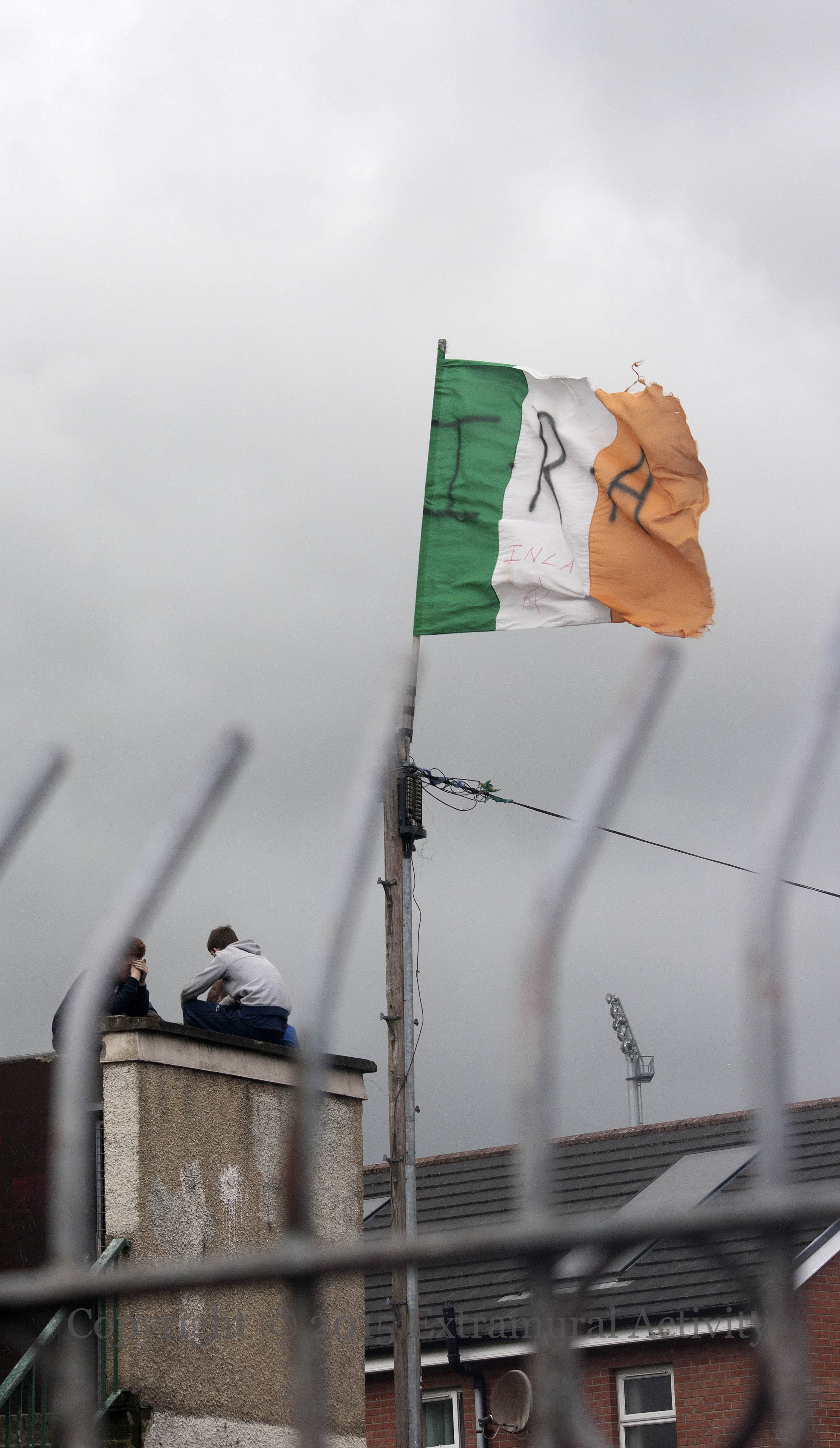
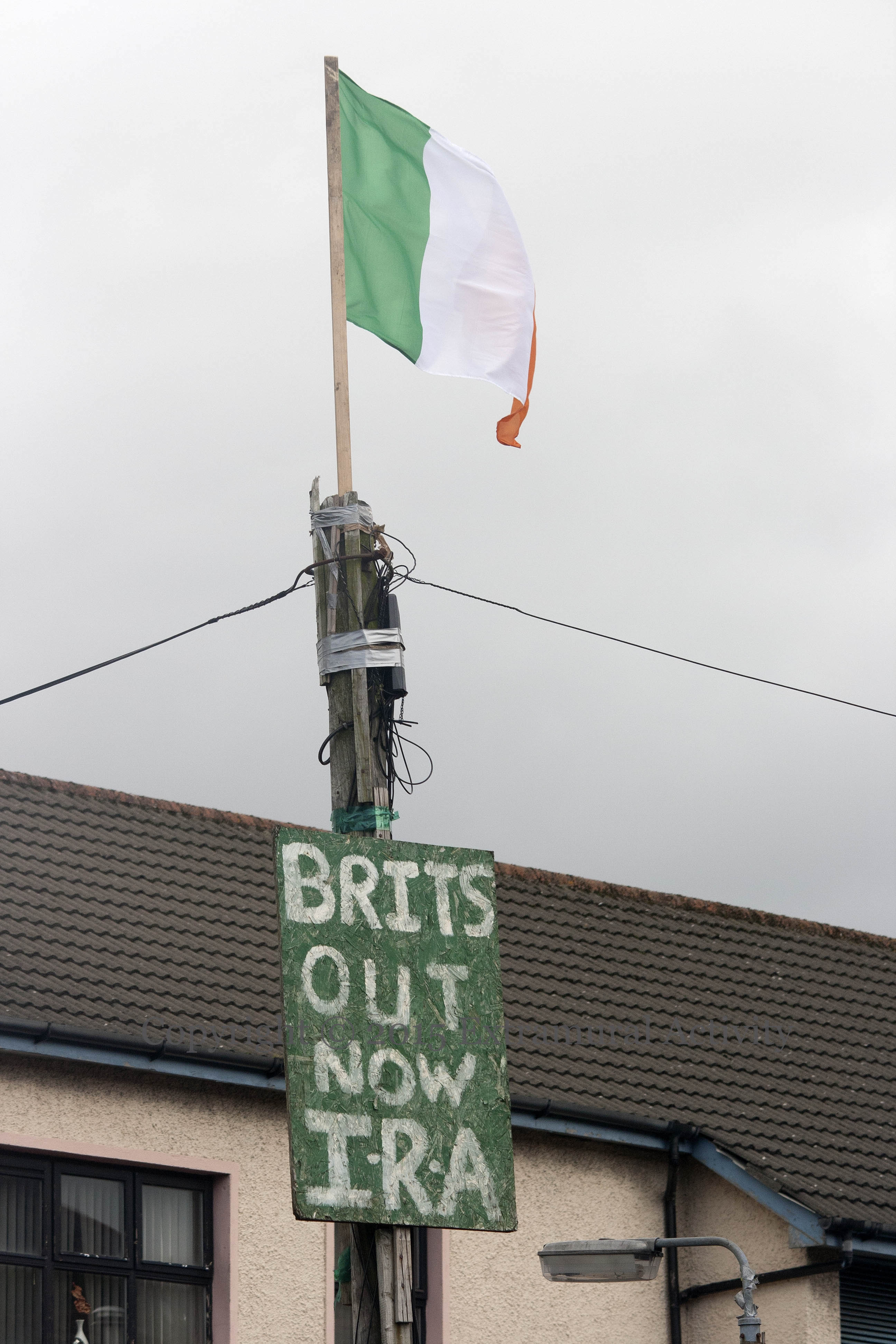
The crew whiles away the hours sitting atop a Bogside stairwell, with IRA-emblazoned tricolour fluttering overhead, keeping an eye on a heap of bonfire wood. Below: another tricolour in the same area, with “Brits out now – IRA” board beneath.
Back in July (2015) “Taigs will be crucified” graffiti appeared on an box next to the Broadway roundabout but was removed after a few days. “Taigs will be dealt with” then appeared — see the image below.
The graffiti above is not far away on the Donegall Road, when it appeared in July it was joined by a wooden crucifix (for which see this BelTel article); the crucifix has gone but the graffiti was still in place in November. “VTOT” stands for “Village Team On Tour” – referring to the loyalist “Village” area of south Belfast.
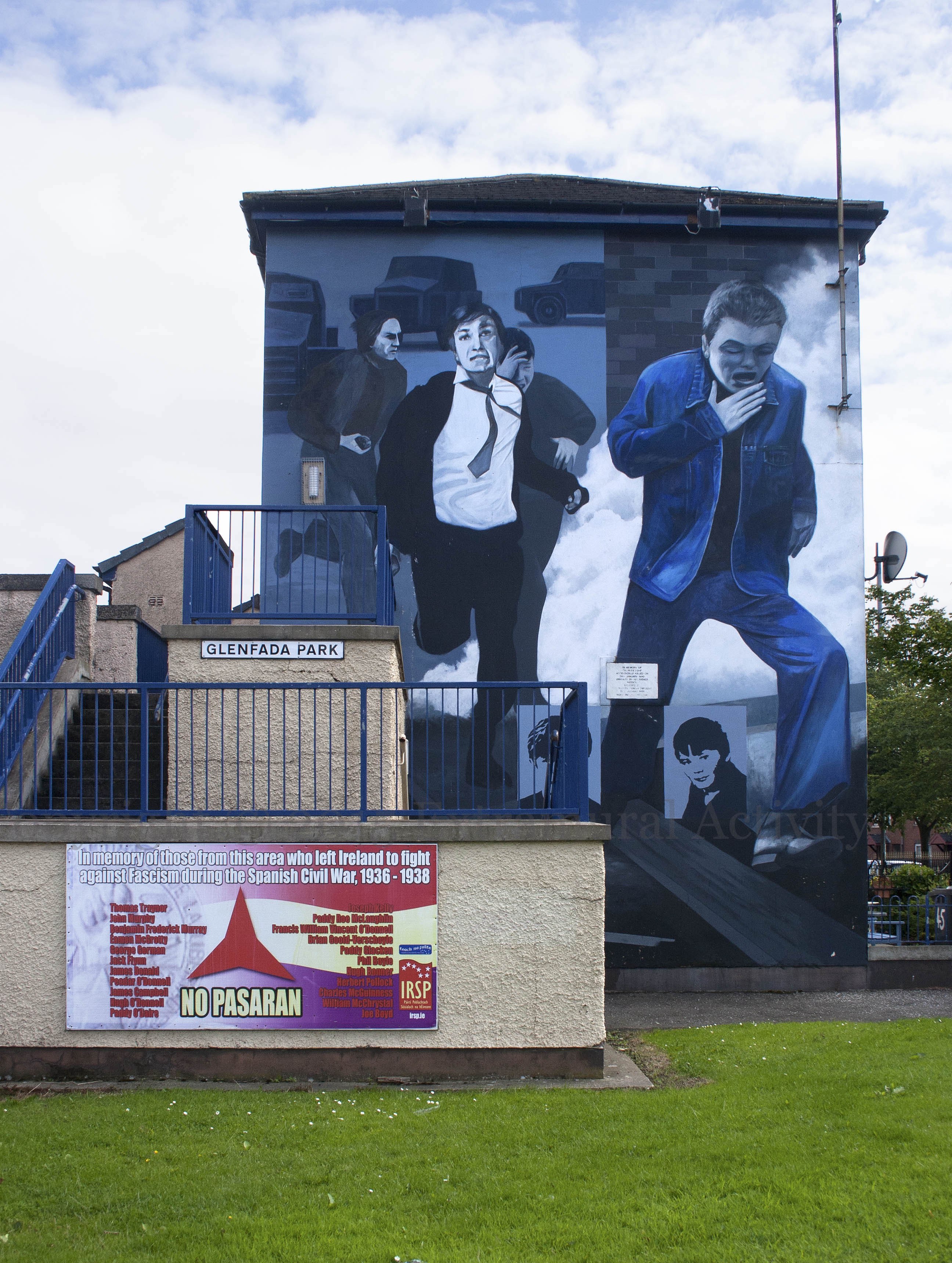
“No pasarán” is Spanish for “they shall not pass”, a phrase used by the Communists and Republicans as they tried (unsuccessfully) to defend the city of Madrid during the Spanish civil war. The board in front commemorates “those from this area who left Ireland to fight against Fascism during the Spanish Civil War 1936-1938”.
“The Runner” in the background mural (part of The People’s Gallery) is also having trouble holding his ground in the (repainted) famous Bogside Artists’ (web) work intended “to be a cautionary reminder to the young of the dangers inherent in civil conflict”. (CAIN)







 Extramural Activity