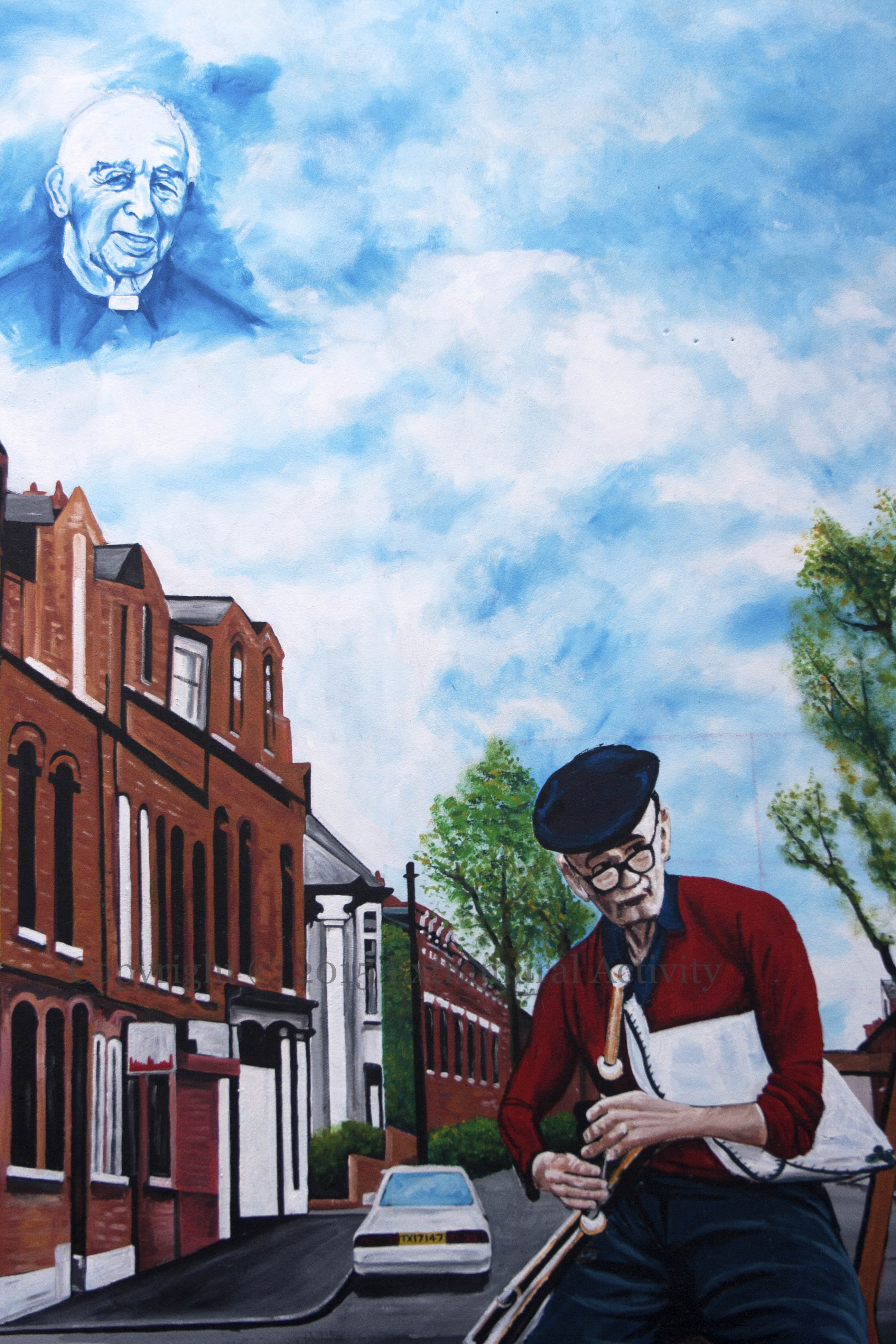
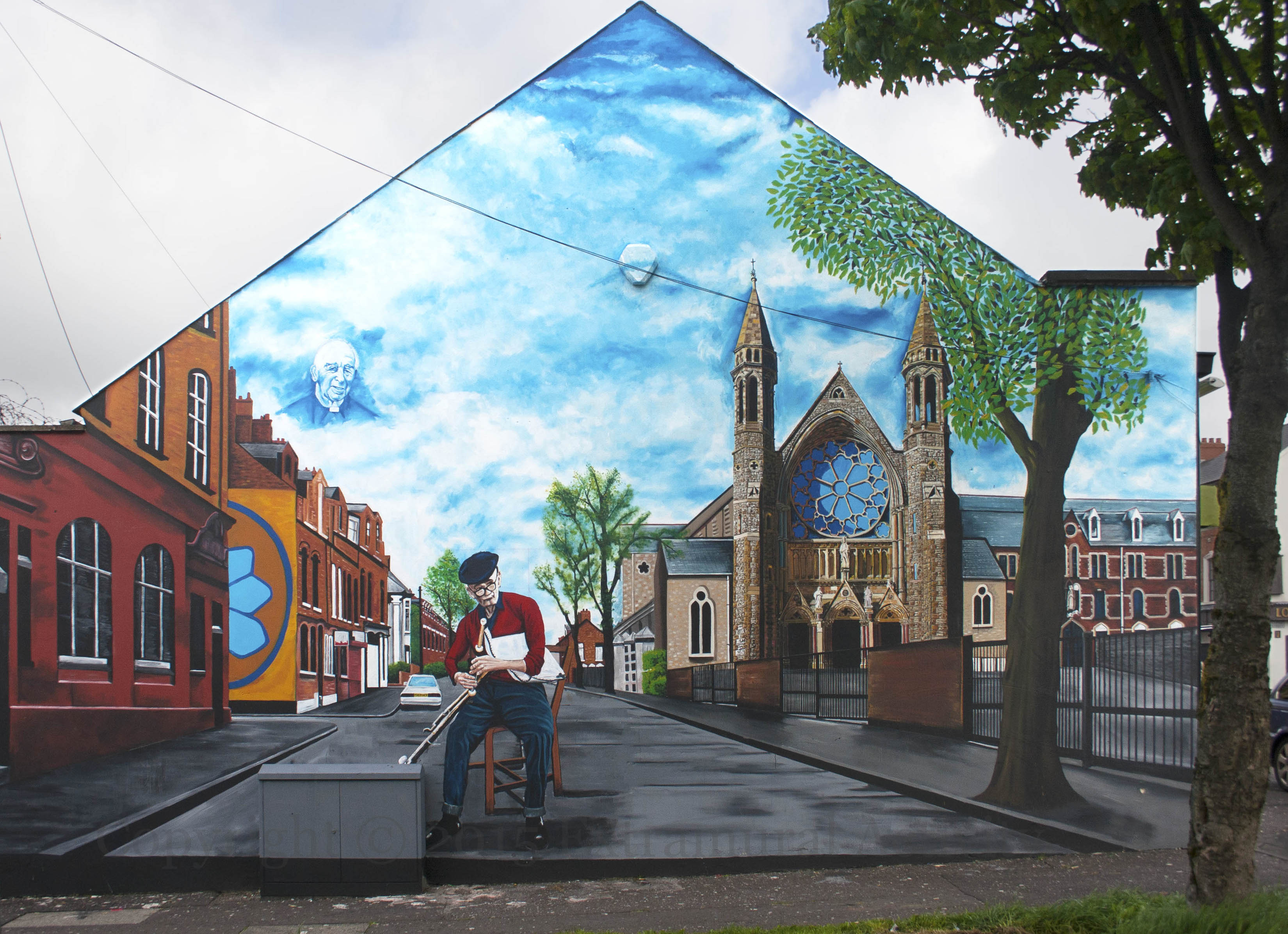
This new mural pays tribute to two long-time residents of Clonard. On a good day, Noel Fitzpatrick, a cobbler with a little shop on the corner of Odessa and Clonard streets, would take his chair out into the street and play the uıleann pipes. Looking down from above is Alec Reid, the Redemptorist priest who spent 40 years at Clonard monastery and played an important role in the peace process. He died in 2013 at age 82. (WP)
Painted by Marty Lyons & Mickey Doc in Springfield Drive. For the large ‘flower’ mural to the left of this mural (which imitates the stained glass in the cathedral), see C01044.
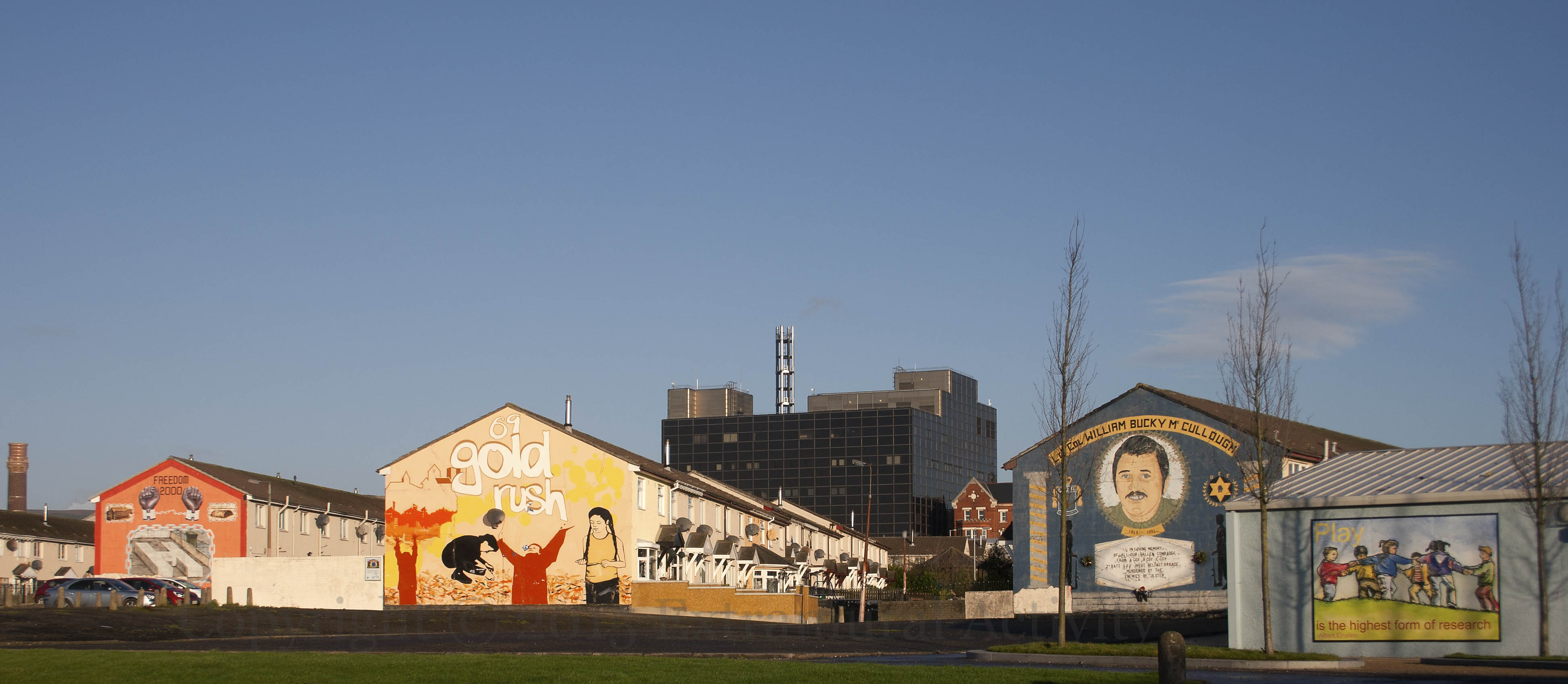
Here’s a wide shot of the right-hand side of the murals in the lower Shankill estate. These gables have remained in place while the estate has been redeveloped, causing the removal of the Red Hand, Martin Luther and Cuchulainn murals.
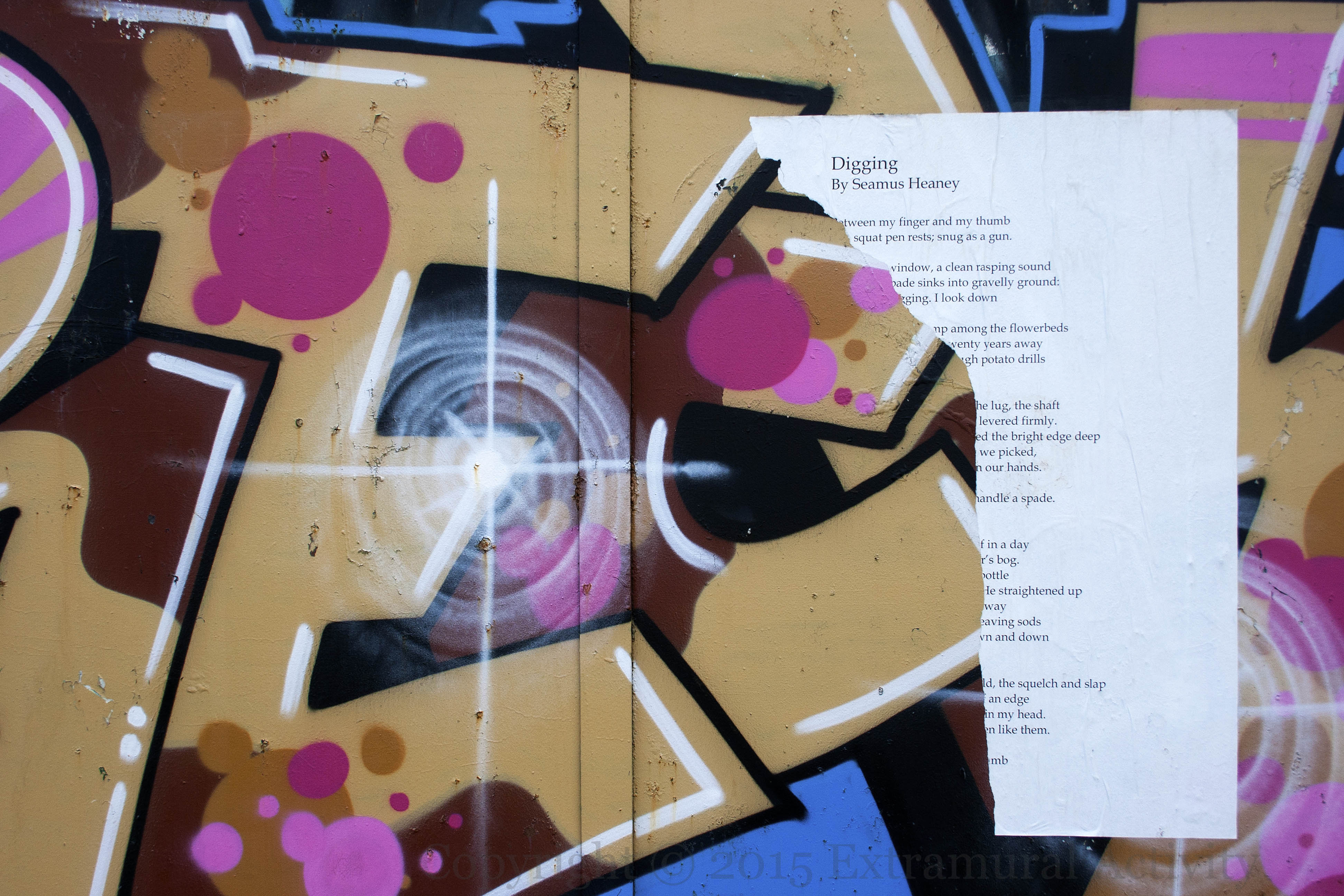
Seamus Heaney took up the pen where his father and grandfather had worked with the spade. A copy of his poem Digging was, along with others, placed on the Alexandra Park “peace” line but has been torn off in favor of the preferred mode of expression of the next generation: the spray can.
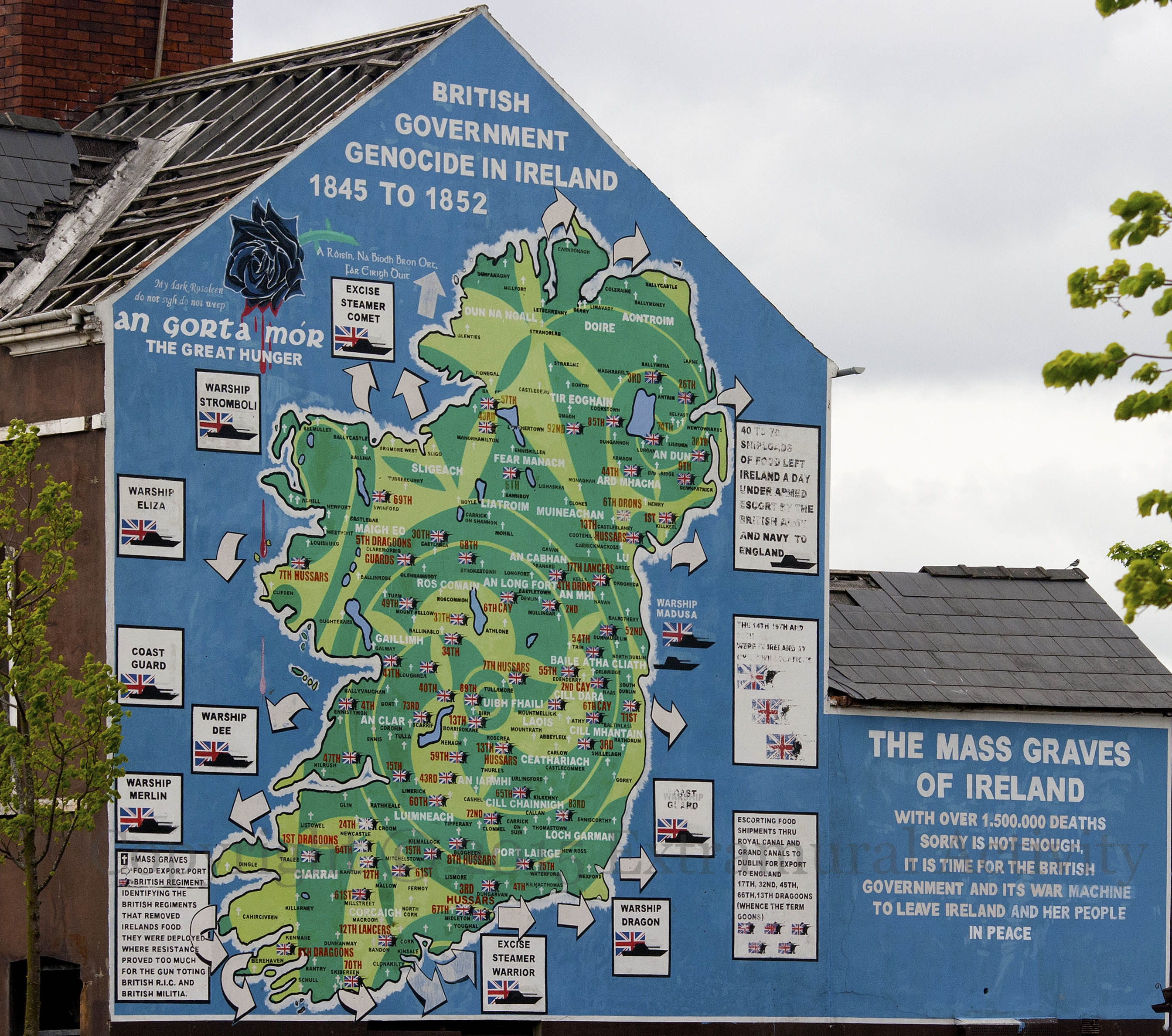
In 1997, then-Prime Minister Tony Blair’s office issued a statement acknowledging that the administration of the time of the Hunger failed to intervene (Guardian | Independent).
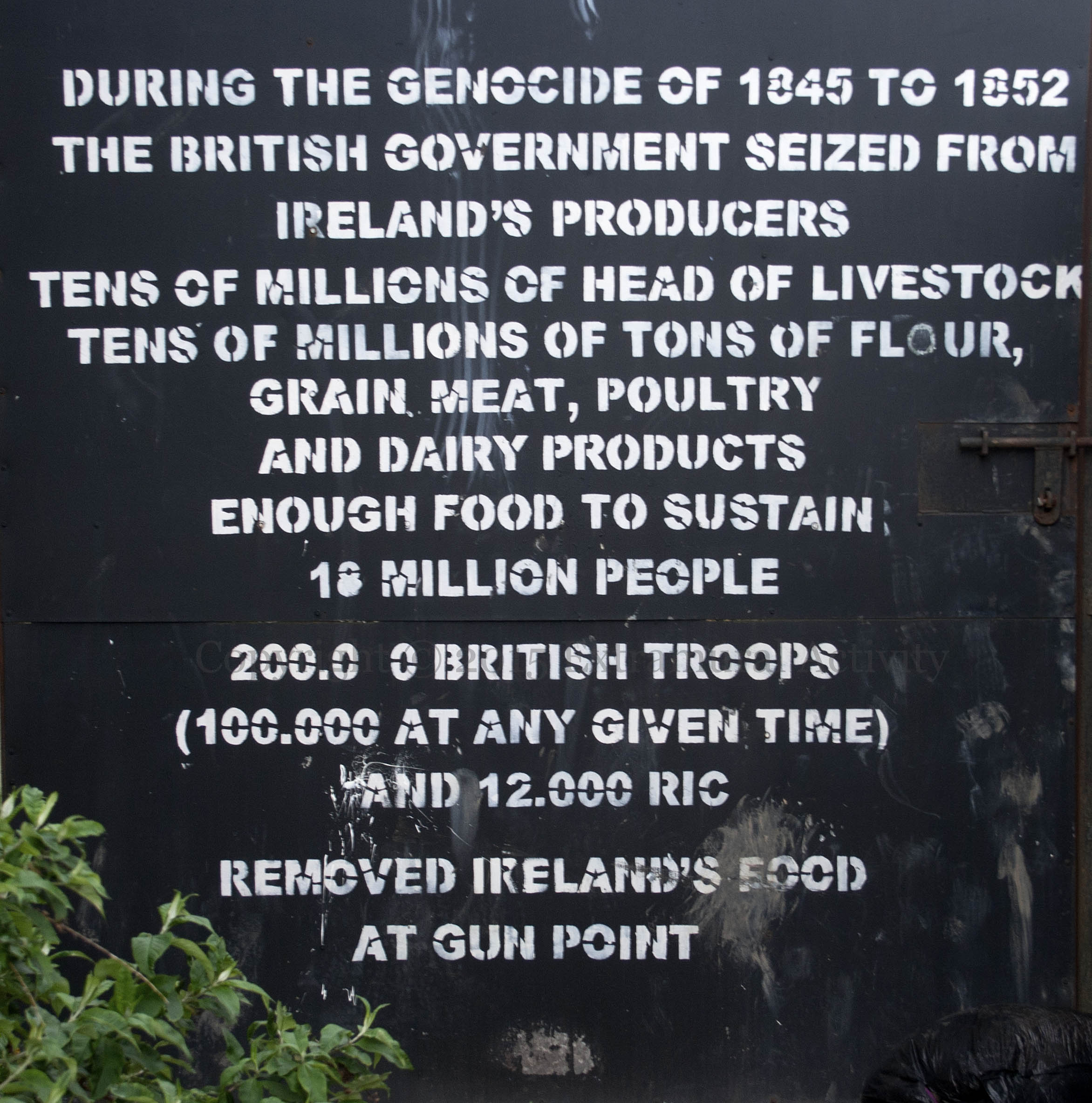
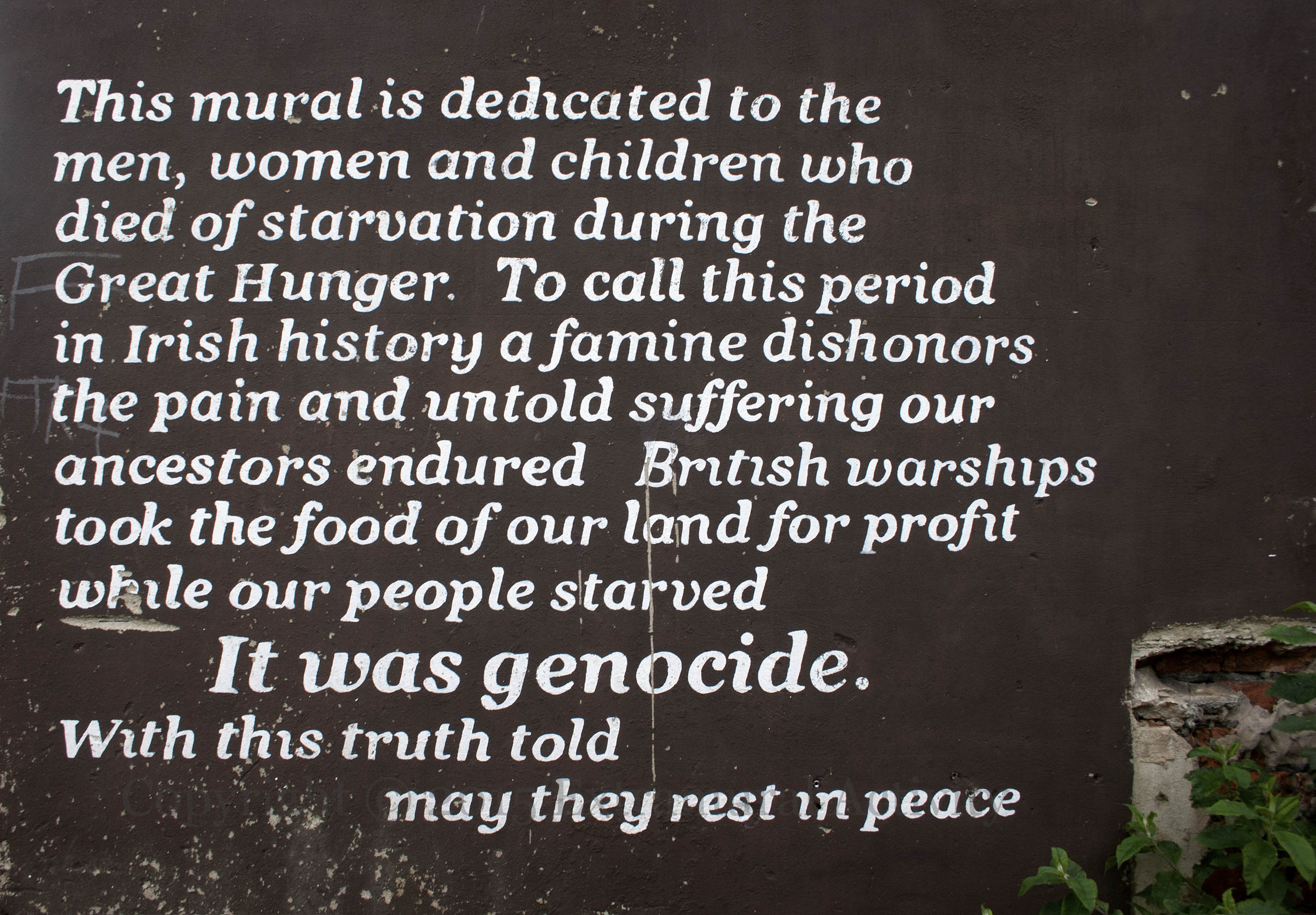
The mural above asserts that it was not merely a matter of negligence but of will: “With over 1,500,000 deaths “sorry” is not enough. It is time the British government and its war machine to leave Ireland and her people in peace. During the genocide or 1845 to 1852 the British government seized from Ireland’s producers tens of millions of head of livestock, tens of millions of tons of flour, grain, meat, poultry and dairy products, enough food to sustain 18 million people. 200,000 British troops (100,000 at any given time) and 12,000 RIC removed Ireland’s food at gun point. This mural is dedicated to the men, women and children who died of starvation during the Great Hunger. To call this period in Irish history a famine dishonors the pain and untold suffering our ancestors endured. British warships took the food of our land for profit while our people starved. It was genocide. With this truth told may they rest in peace.”
Each white cross on the map represents a mass grave. The map is originally from irishholocaust.org.
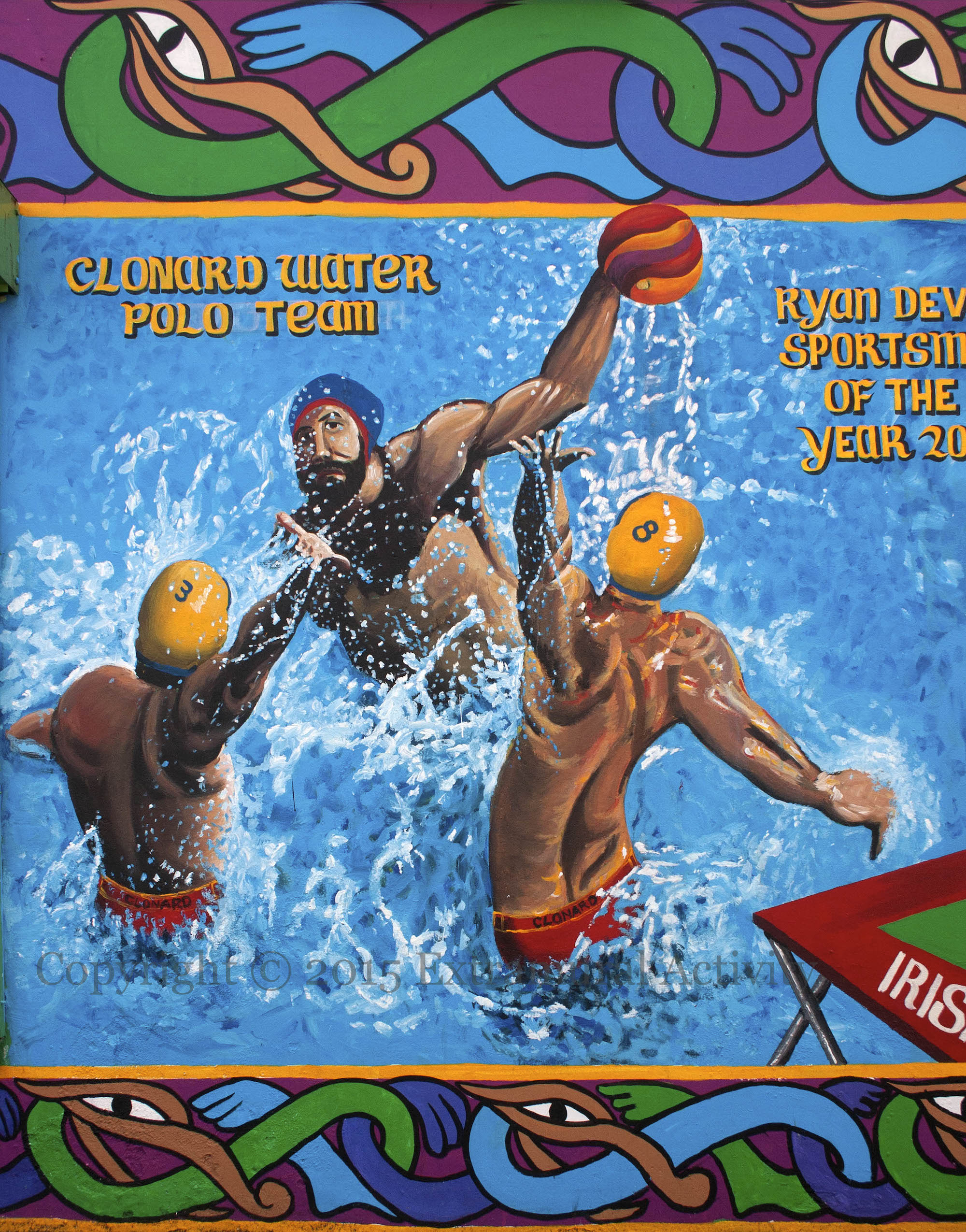
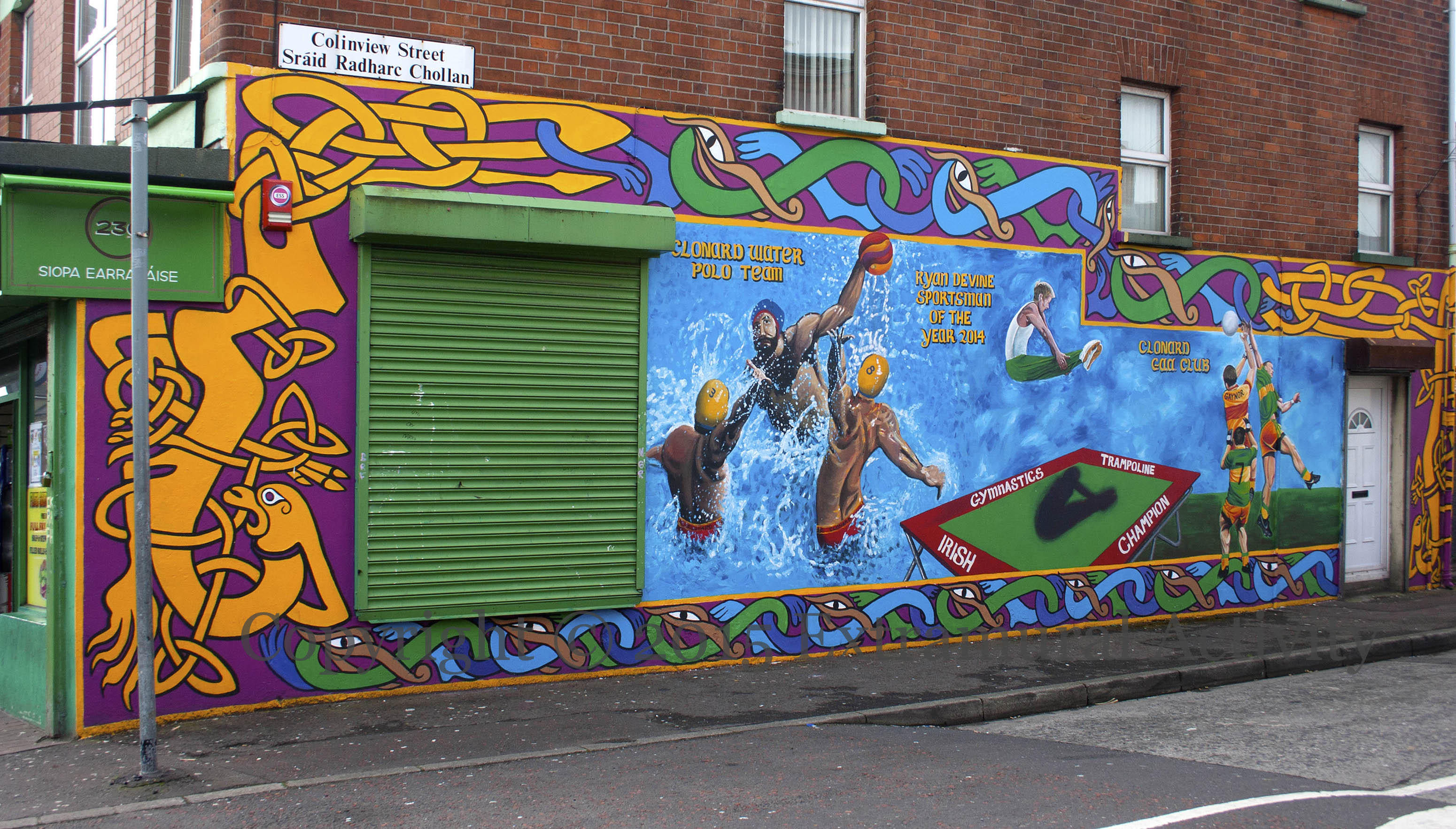
A new mural on Colinview Street/Sráıd Radharc Chollan celebrates local sports: first (shown above) is the Clonard water polo club (Fb), second (in the wide shot, below) is Ryan Devine of Anderstonstown Trampoline Club, junior sportsman of the year, 2014 (Fb), and third, Clonard GAA. The mural is on the side wall of The Flush newsagents, near the former location (above ground) of the Farset and Forth rivers, where dams and races were put in to supply a cotton mill and linen mill and, later, a laundry, a hat-makers, and a biscuit factory. The river, flowing south, then became the Blackie in Beechmount. (Information gleaned from the Belfast Forum).
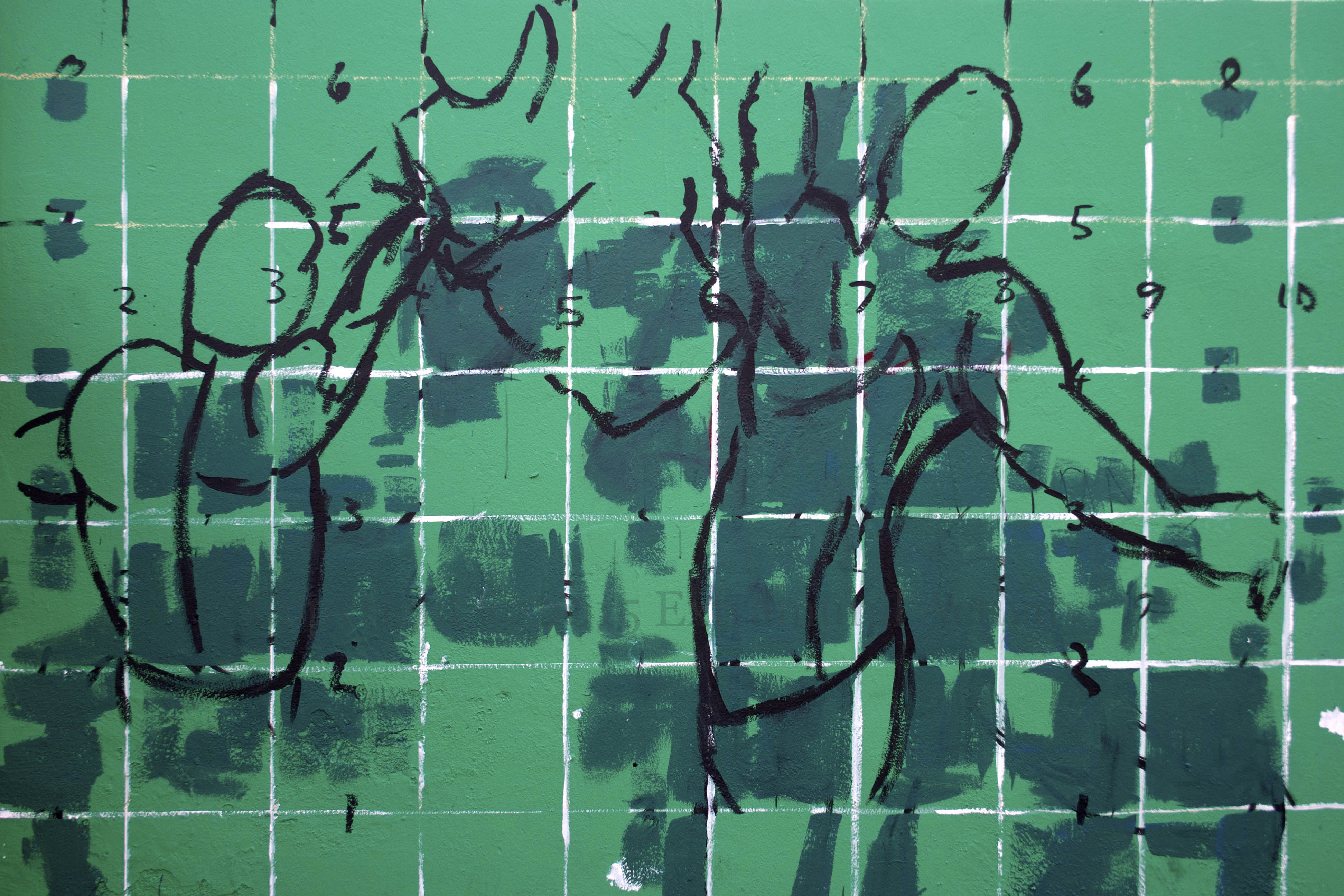
The final image below is the cartoon for the water polo part of mural, which was begun back in February.
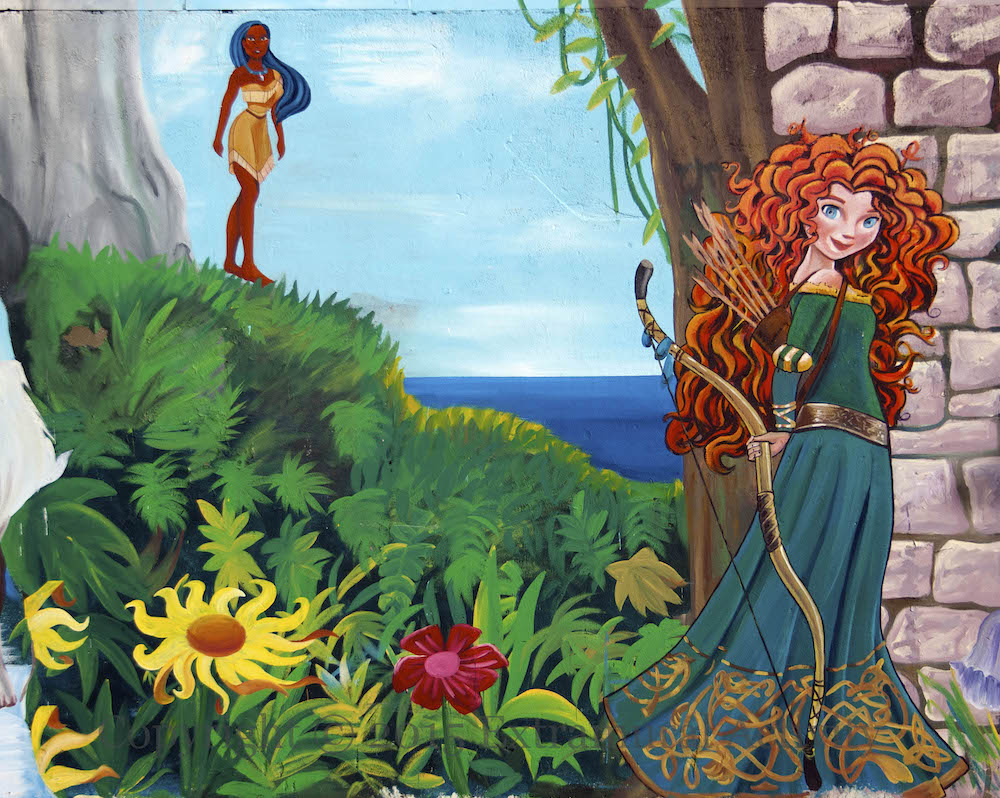
After a fraught experience with a colony of gold-digging Englishmen, native American princess Pocahontas keeps a wary on eye on the Scot Merida (from Disney’s Brave), who is armed with a bow and arrows.
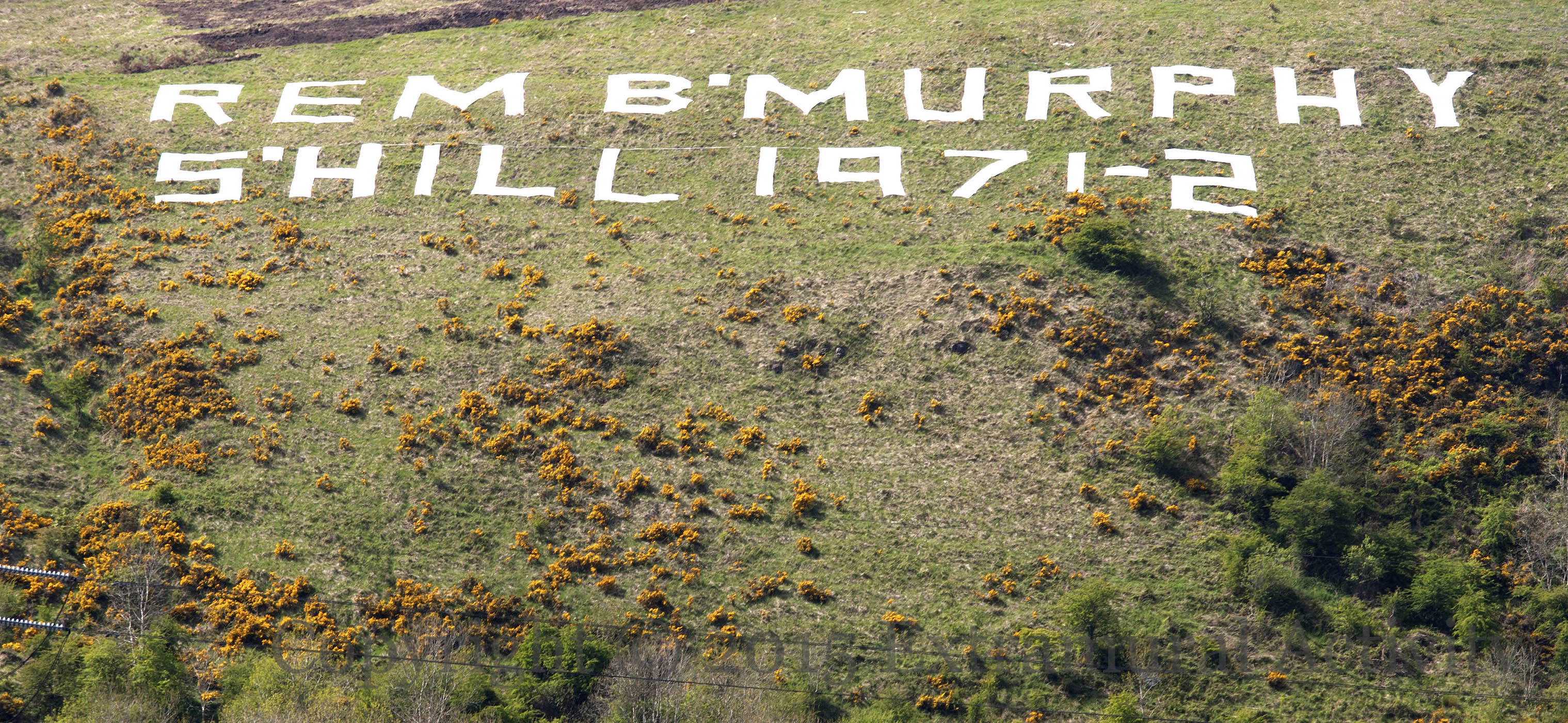
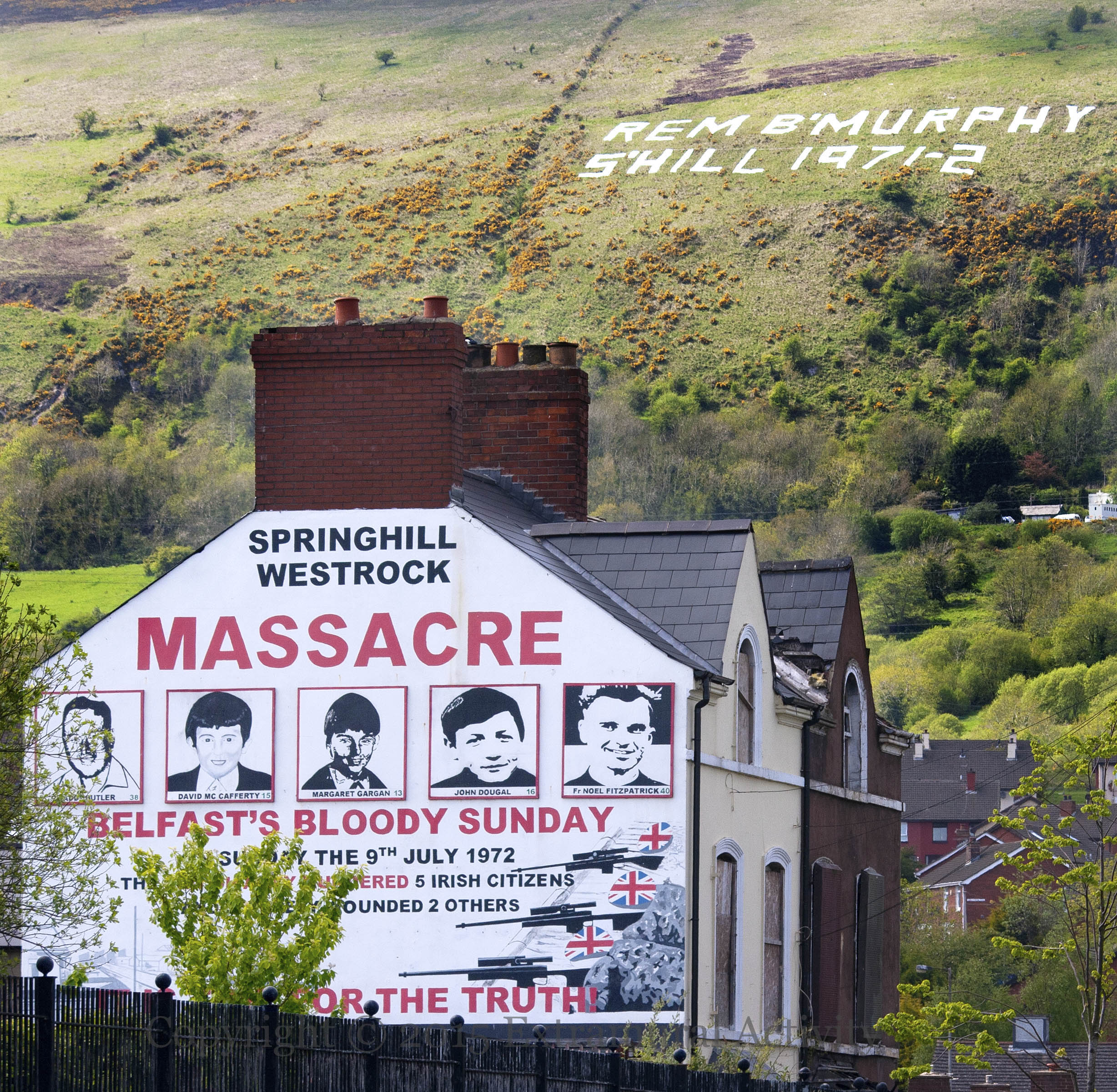
Prince Charles’s last day drew this respond from Gael Force Art on Sliabh Dubh/Black Mountain, “Remember Ballymurphy and Springhill 1971-1972”, a reference to the Ballymurphy Massacre of August 1971, in which 11 people died at the hands of the Prince’s Parachute Regiment (WP) and the Springhill-Westrock Massacre of July 1972, in which five people were killed by British army snipers (WP).
For more Republican reaction to the Prince’s visit last week, see Operation Banner.
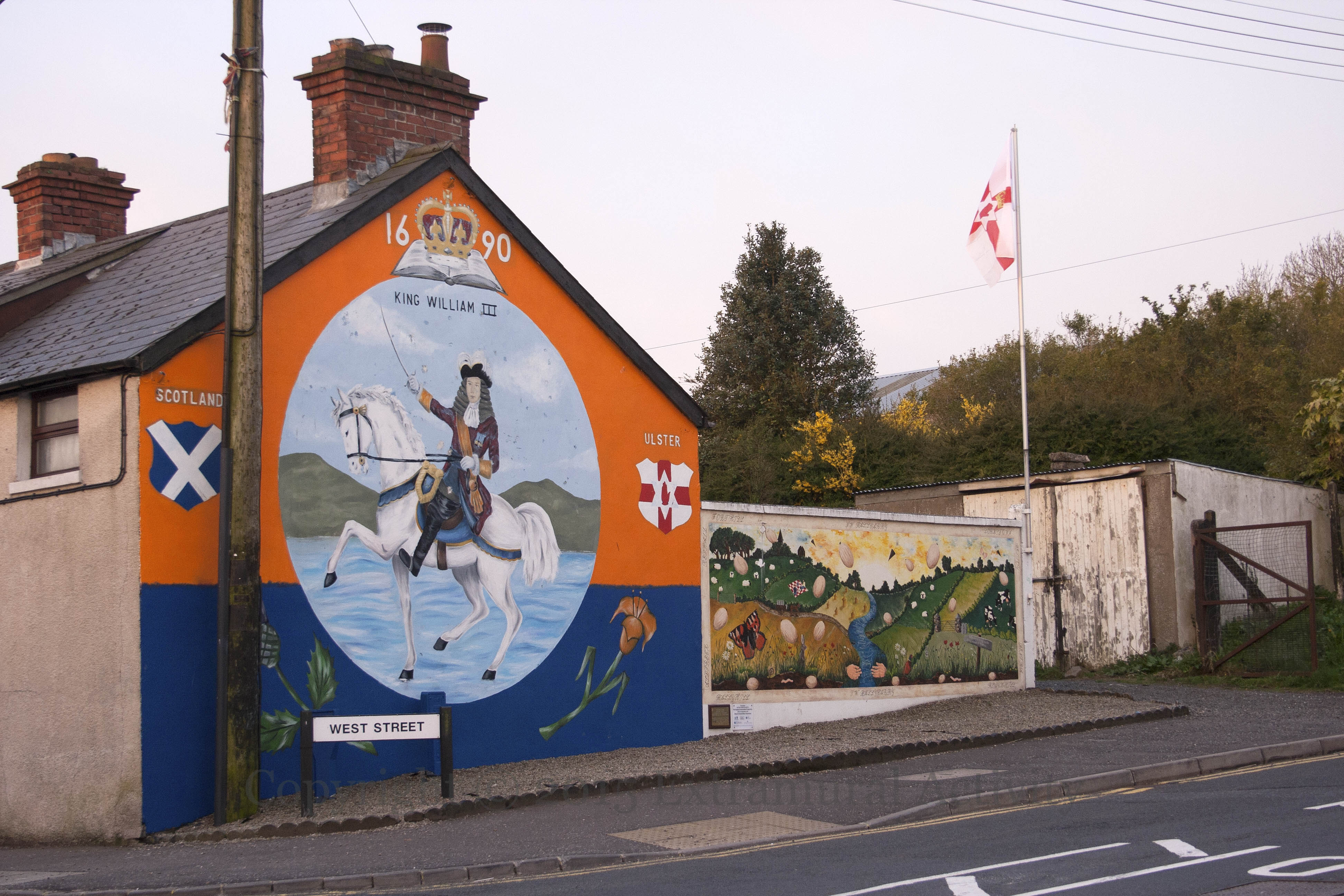
Here’s a PUL mural in classic style, though not seen much of late: King William “Billy” III of Orange crosses the Boyne, sword drawn, on a white steed that walks on water. The crests of Scotland and Northern Ireland (labelled as “Ulster”) and the Scottish thistle and orange lily of the Orange Order fill out the quadrants.
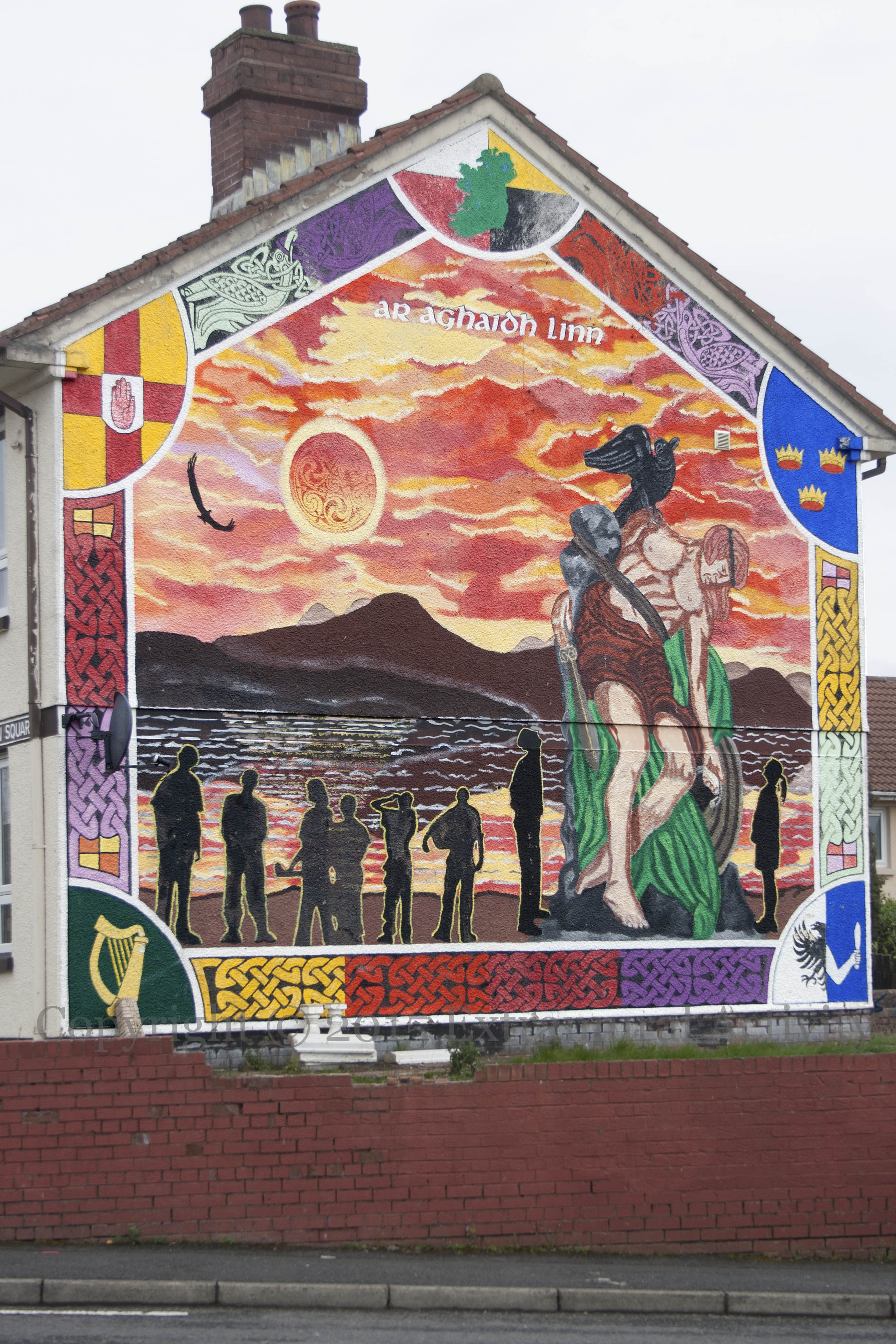
“Ar aghaıdh linn [Onward]” Silhouetted figures, one carrying a hurley, take inspiration from a dying Cú Chulaınn and gaze across a body of water, perhaps Carlingford Lough towards the mountains of Mourne – Cú Chulaınn’s traditional place of death is in County Louth, outside Dundalk. Tuan the hawk historian, who has seen all of the conquests of Ireland, flies overhead.






 Extramural Activity