More electioneering, this time by éirígí on a wall in Hugo Street: “Votáıl éırígí #1 – Pádraıc Mac Coıtır – Máıre Drumm”. As shown below, this piece is next to the Ciarán Mulhullond piece featured previously: Think Independently.
“RNU in west Belfast are today leading the way in combating anti-social behavior [sic], reclaiming republican values, fighting the benefits cuts, tackling the increased drug problem, exposing the slum landlords, rebuilding community pride.” RNU [Republican Network for Unity (Xitter)] stencil on Northumberland Street. Tommy Doherty (leaflet) is running in the local council elections taking place on May 22nd.
The phoenix portion of the mural was featured previously: Out Of The Flames.
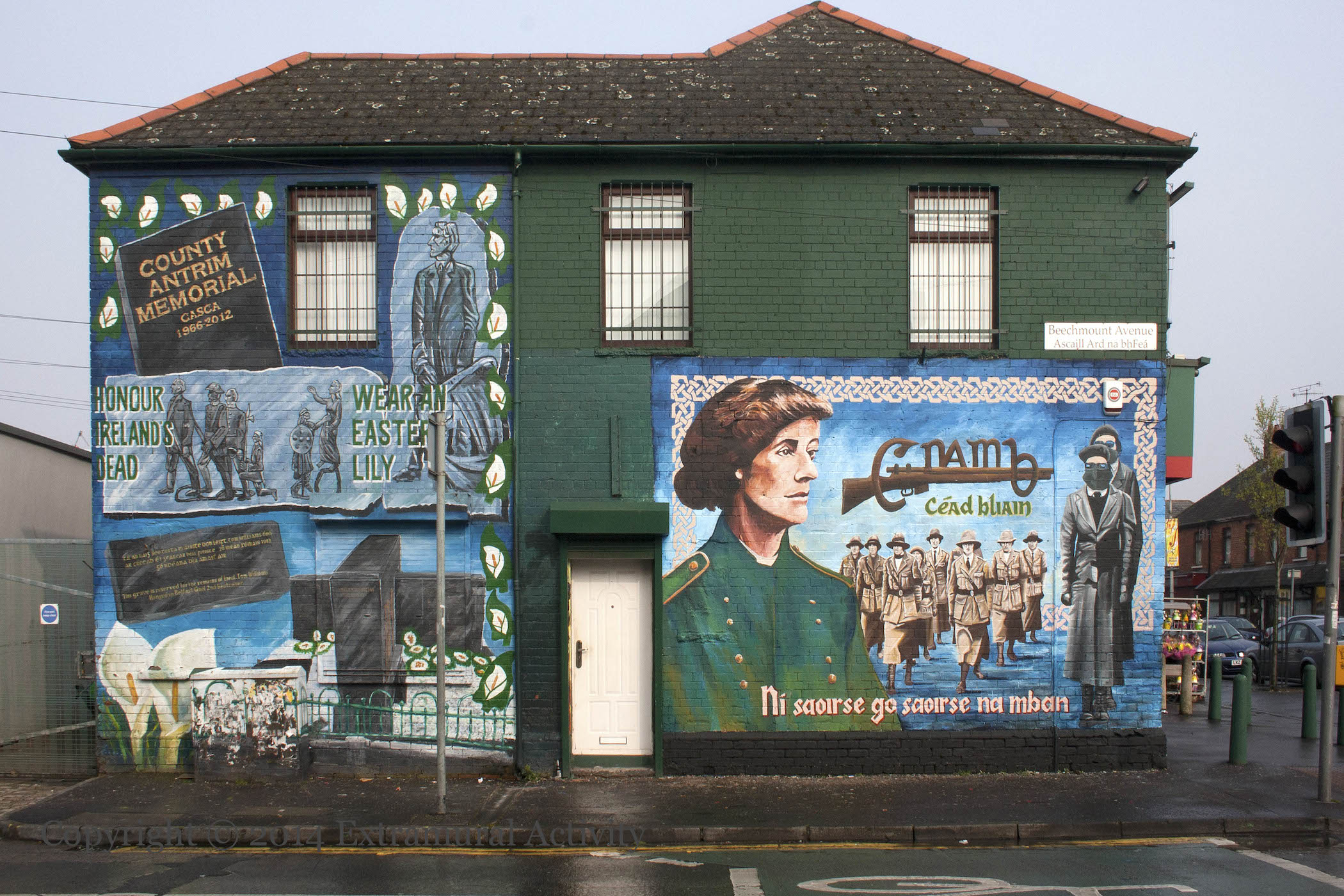
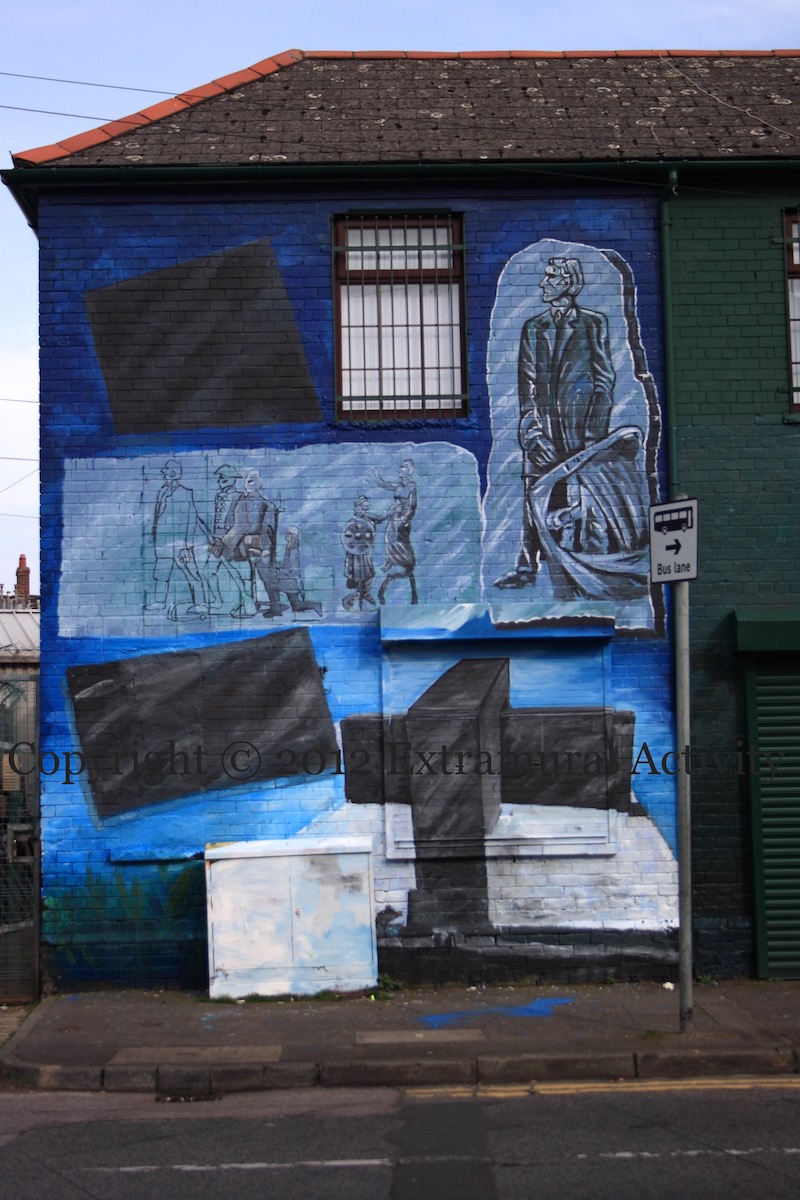
April 24th, 1916 is the date of the commencement of the Easter Rising. The left-hand side of the building on the eastern corner of the Falls Road and Ascaıll Ard Na bhFeá (Beechmount Avenue) is a memorial to Republicans from County Antrim from 1798 to 1966 – when the ‘County Antrim Memorial’ was raised in Milltown on the 50th anniversary of the Easter Rising – and beyond; it is pictured in the lower right, a large cross-shaped monument. Tom Williams (WP), an IRA volunteer who was executed during the Northern Campaign (during the second world war) and is buried in the plot, is mentioned specifically on the headstone in the lower left.
The right-hand side – the Cumman Na mBan centenary – was featured previously.
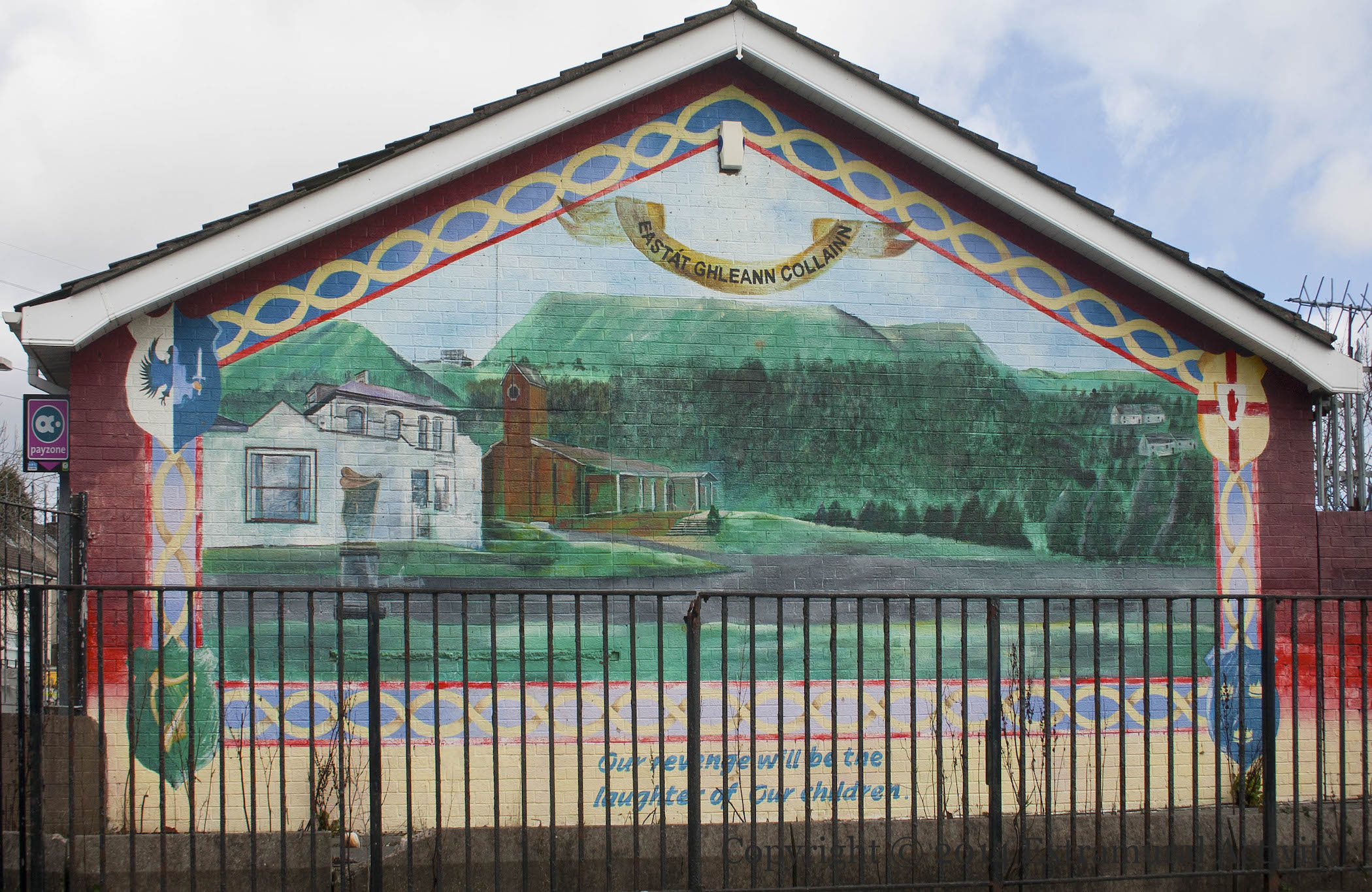
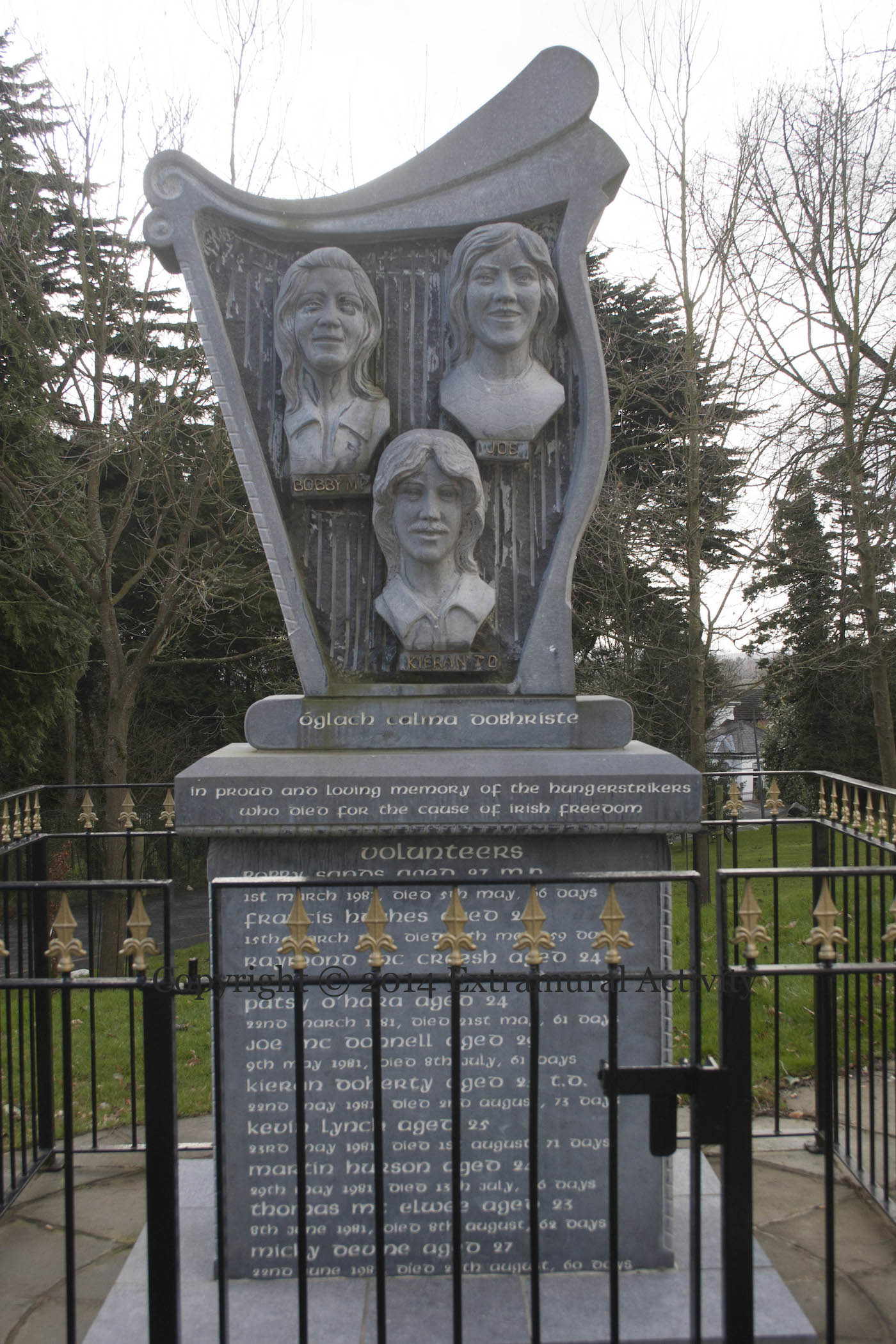
This mural in the Glen Colin estate, just off the Glen Road, shows The Roddy’s club (in white) with the hunger striker memorial in the shape of a harp in front (shown in the image below) and the St. Oliver Plunkett church, which is in fact on the other (southern) side of the Glen Road, with the twin peaks of Divis and Black Mountain in the background. The Bobby Sands quote “Our revenge will be the laughter of our children” is at the bottom.
Like a phoenix. This is part of a new (as yet incomplete) RNU (Republican Network For Unity) mural at the corner of Northumberland Street and Divis Street.
This new Albert Street mural in the lower Falls celebrates the 30th anniversary of the Frank Gillen Centre and the 70th anniversary of Immaculata Football Club. The figure on the right is current Cliftonville player Liam Boyce who grew up in the area and played for Immaculata as a youth. The team’s logo appears to the right of Boyce’s outstretched hand. (If you know the local player on the left, please leave a comment or send an e-mail.)
The piece was painted by Mickey Doherty and Lucas Quigley. Detail of the players in the lower right below.
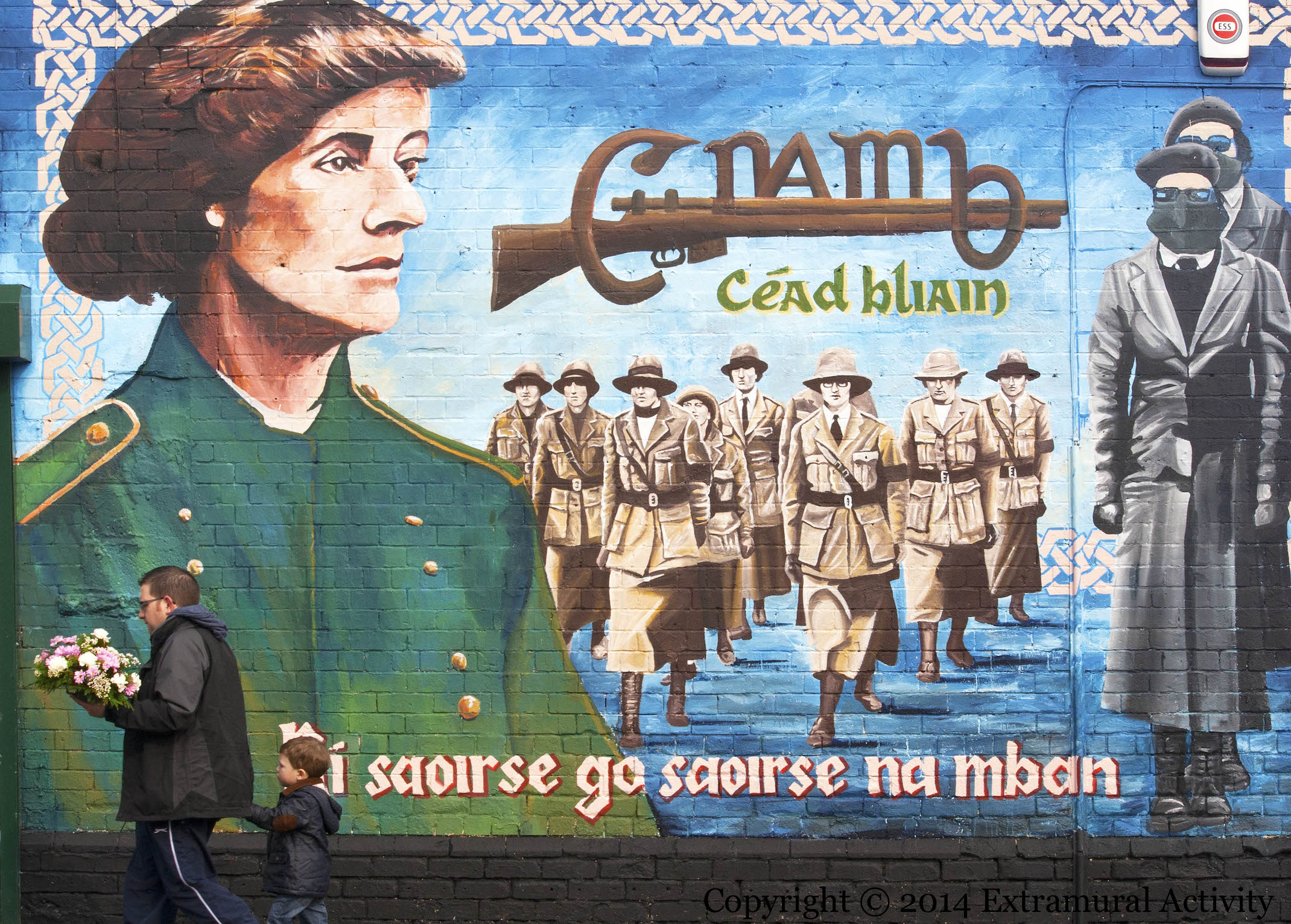
Mothering Sunday 2014 was yesterday, Sunday March 30th. On Saturday, when this image was taken, menfolk were out and about tracking down flowers and chocolates. This week also happens to be the one-hundredth anniversary (“céad blıaın”) of the founding of Cumann Na mBan on April 2nd, 1914, and it is being commemorated in various ways, including a new mural on Ascaıll Ard na bhFeá/Beechmount Avenue.
Cumann Na mBan was the women’s division of the Irish Volunteers and is best remembered for its role in the Easter Rising of 1916. Its members were involved in the occupation of many locations. Some, including (non-combatant) Winifred Carney, were in the GPO, while Countess Markievicz, the main figure of the mural, was in St. Stephen’s Green. (Here is an RTÉ gallery of vintage photographs, including one of Markievicz surrendering.)
The letters “Cnamb” on a rifle formed the badge of Cumann Na mBan. The Irish “Ní saoırse go saoırse na mban” means “No freedom until the freedom of women”. Below are an ‘in-progress’ shot from last week; and a close-up of the finished mural. Below these is a plain shot of the full mural.
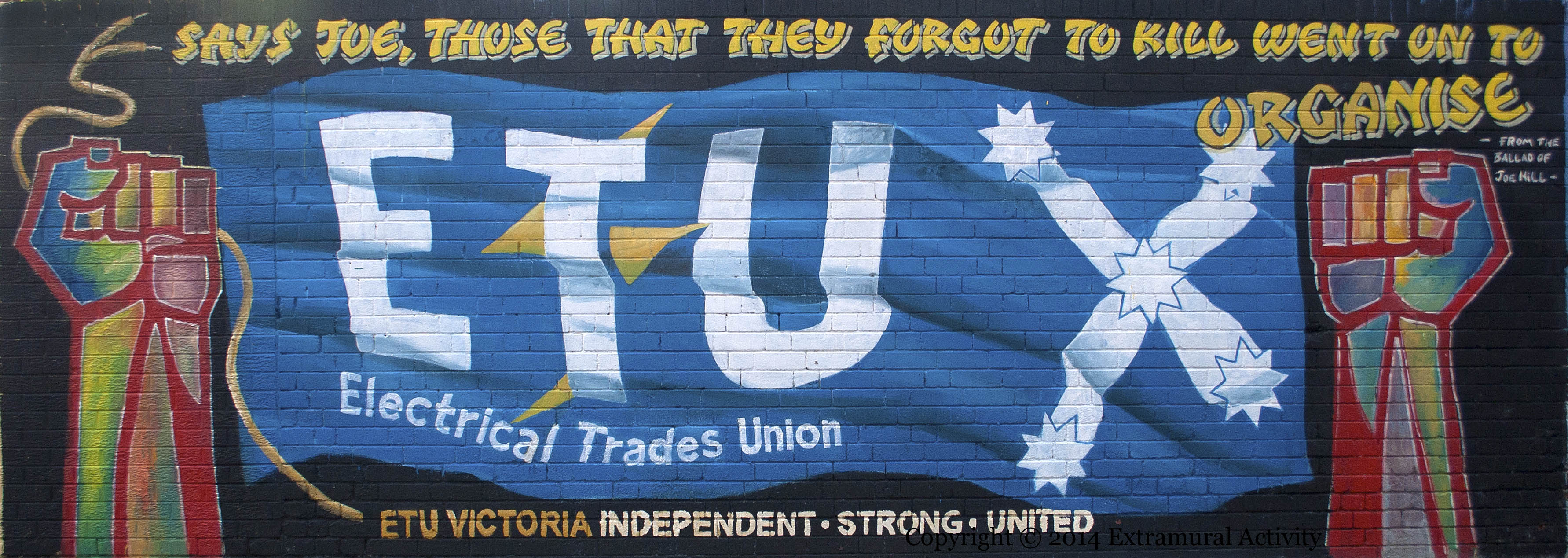
“Says Joe, ‘Those that they forgot to kill went on to organise.'” Words from ‘(The Ballad Of) Joe Hill’ are included in a mural in Conway Street sponsored by the Australian Electrical Trades Union (ETU) in Victoria.
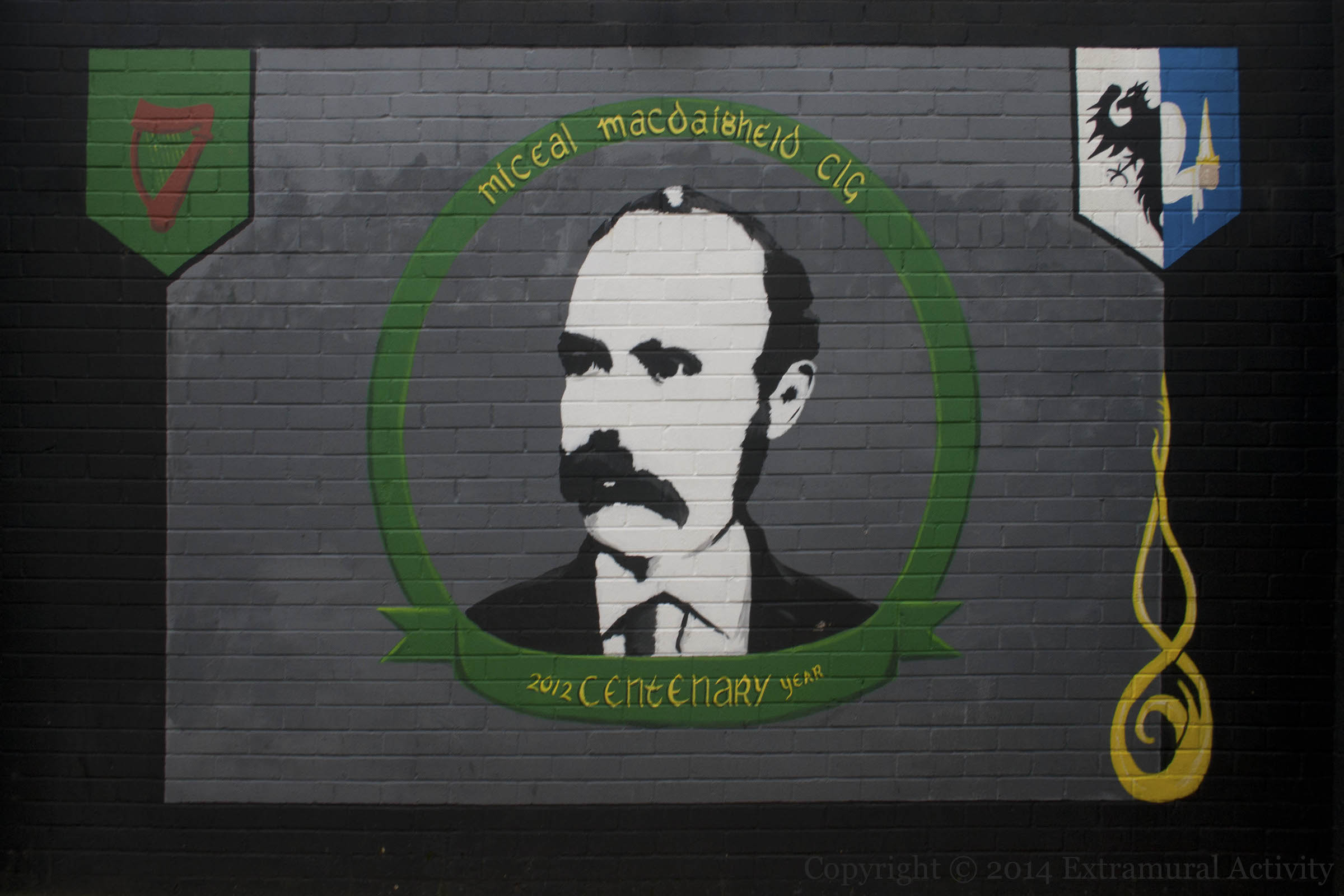
CLG Mac Daıbhéıd/Davitt’s GAA club is named for Mícheál Mac Daıbhéad/Michael Davitt, famous for leading the Irish Republican Brotherhood and the Land League. Mac Daıbhéad himself had his right arm amputated at age eleven after it got caught in the cogs of a spinning machine. The murals shown today are in the grounds of the social club on Clonard Street and celebrate the centenary of the club, 1912-2012.







 Extramural Activity