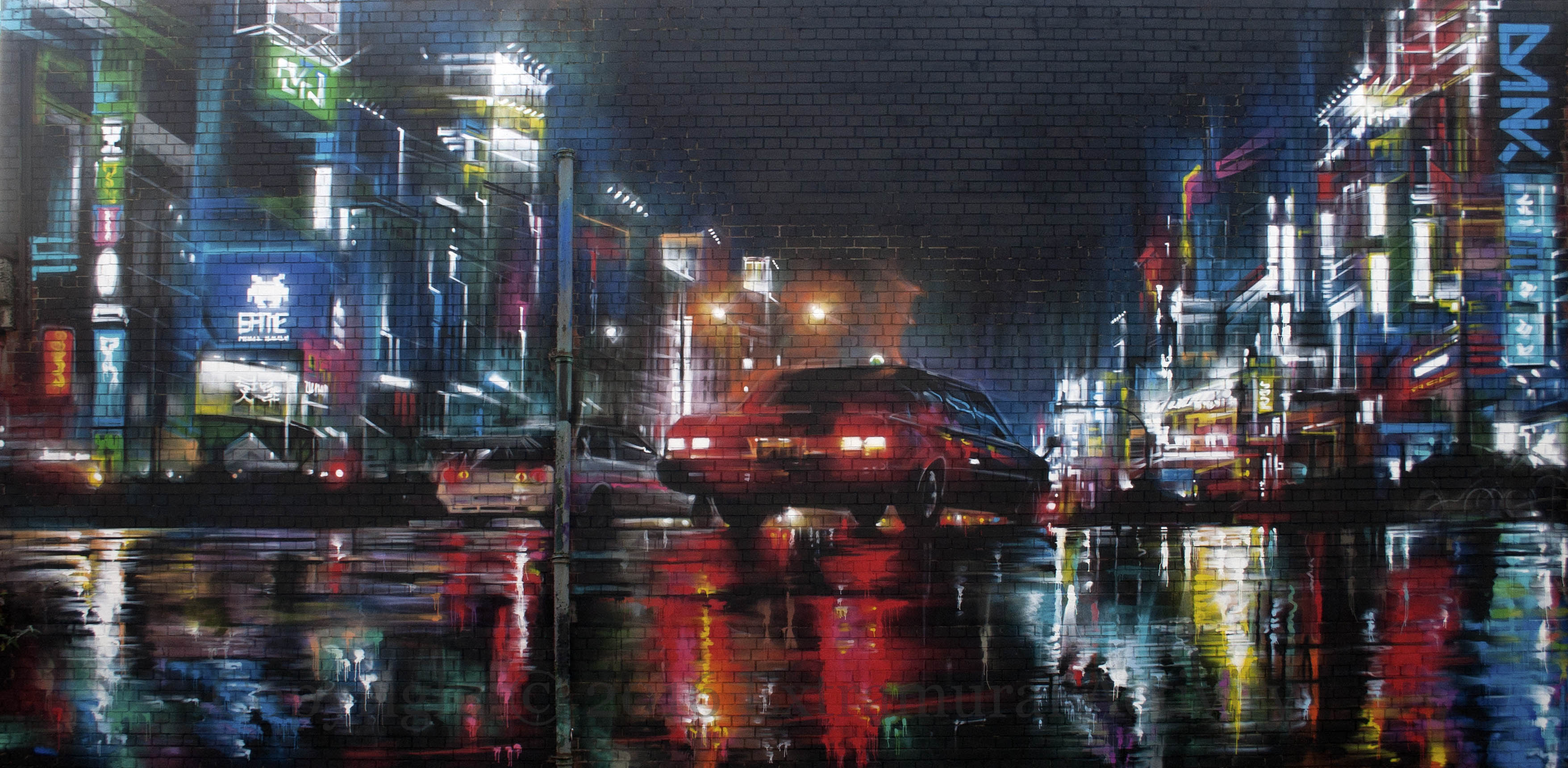
Street art by English artist Dan Kitchener for CNB16. Streets are already blurry at night in the rain, but the title perhaps come from the fact that Dan started the mural at night right after flying in from London.
Paris street artist KASHINK was in Belfast for Culture Night 2016, working on the fencing in Union Street behind the Sunflower. According to this article, she paints “hairy four-eyed men to examine gender assumptions.”
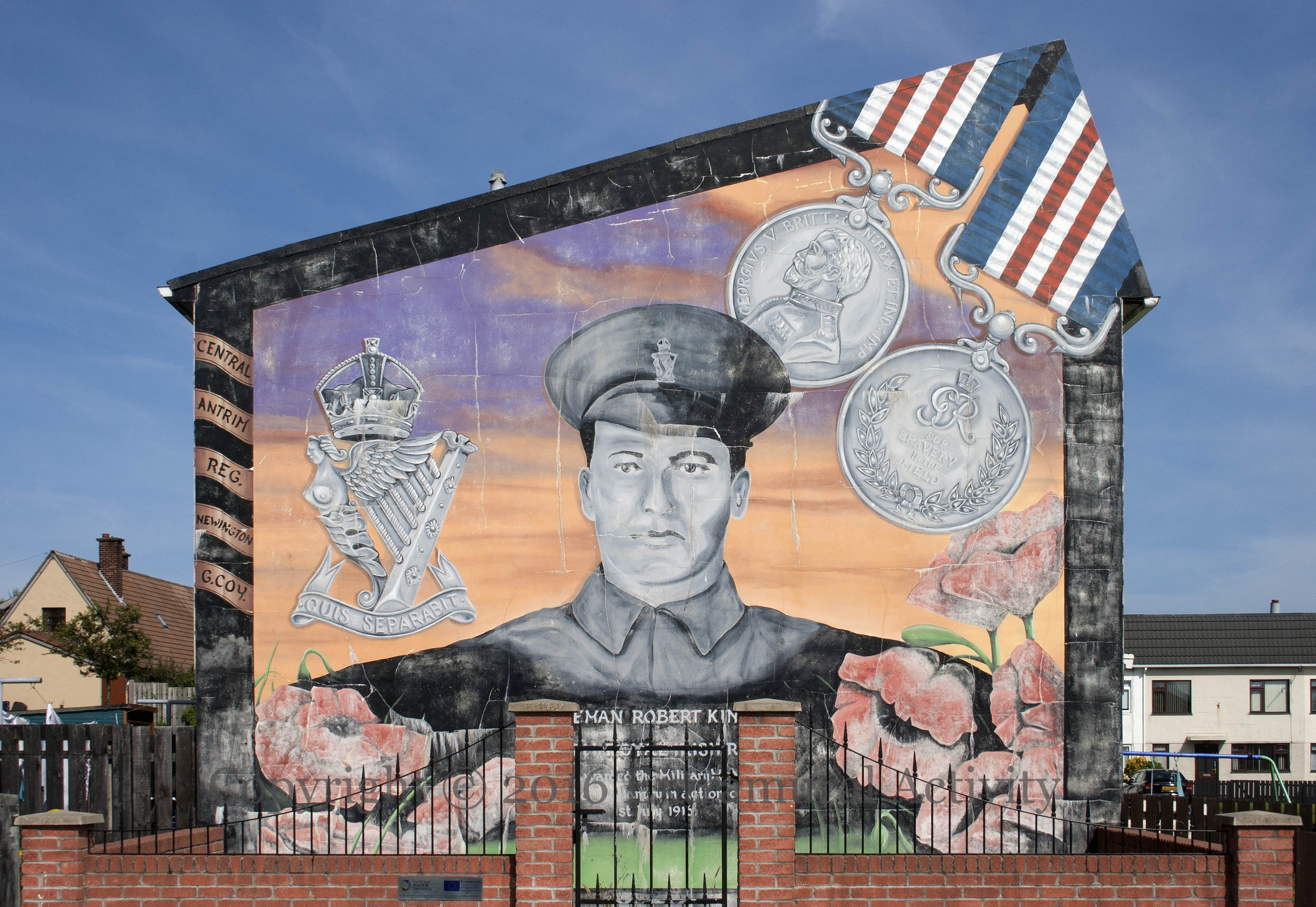
Robert King, of the 12th Royal Irish Rifles, who joined the army from the Ulster Volunteers, was “awarded the Military Medal for gallantry in action on 1st July 1916” at the Somme. The two sides of the medal are shown in the top right, with George V on one side and “for bravery in the field”. The 12th Rifles were drawn from the Central Antrim regiment of the Ulster Volunteers including the Newington area of Larne; King, however, was from Ship Street.
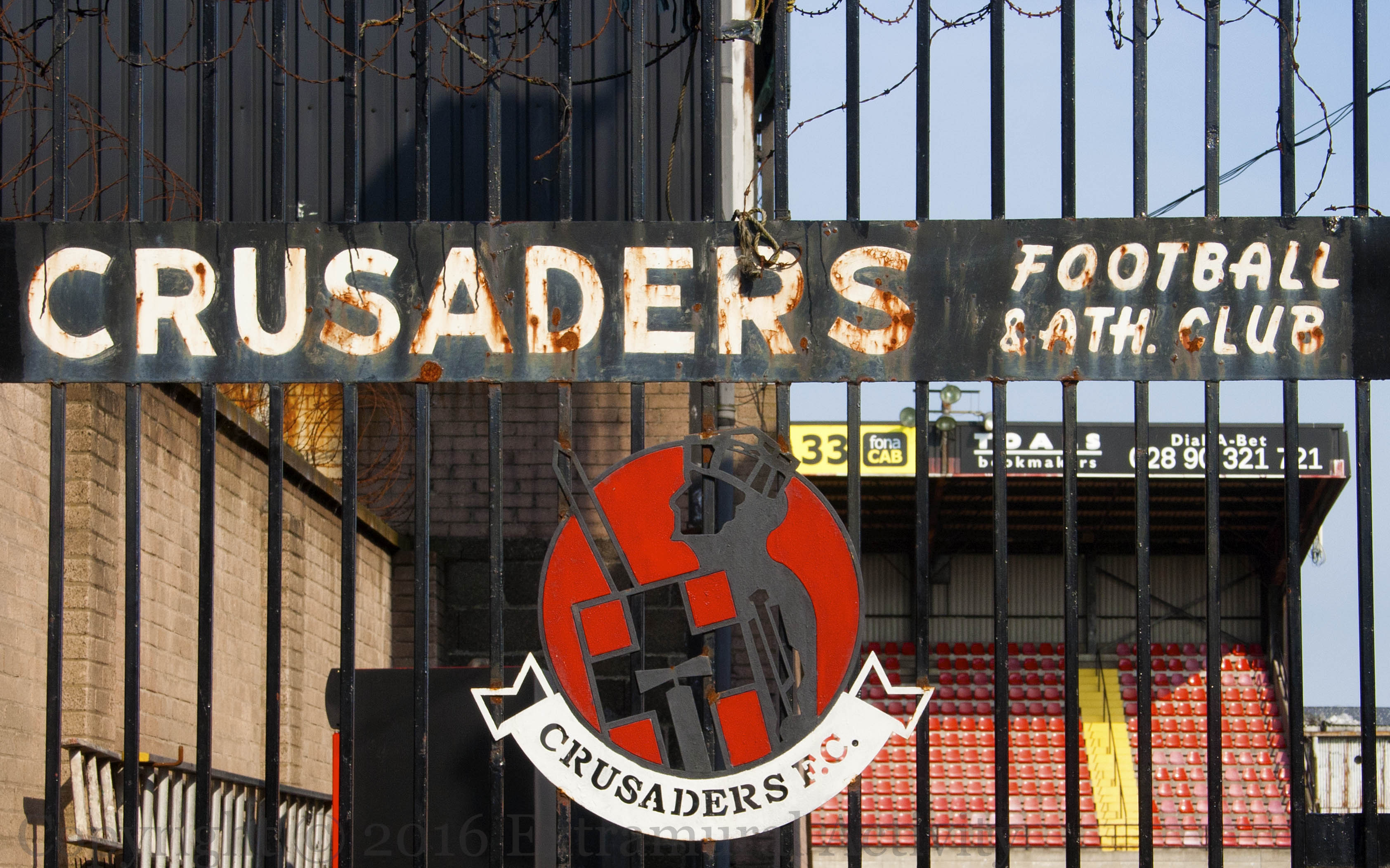
This past Saturday saw the north Belfast derby between Crusaders and Cliftonville, with the League-Champion and league-leading Crues coming out on top 4-3. Today’s images are from their Seaview home ground: above are the railings and below a mural on a side wall. The newspaper The Express employs the same emblem of a Christian knight.
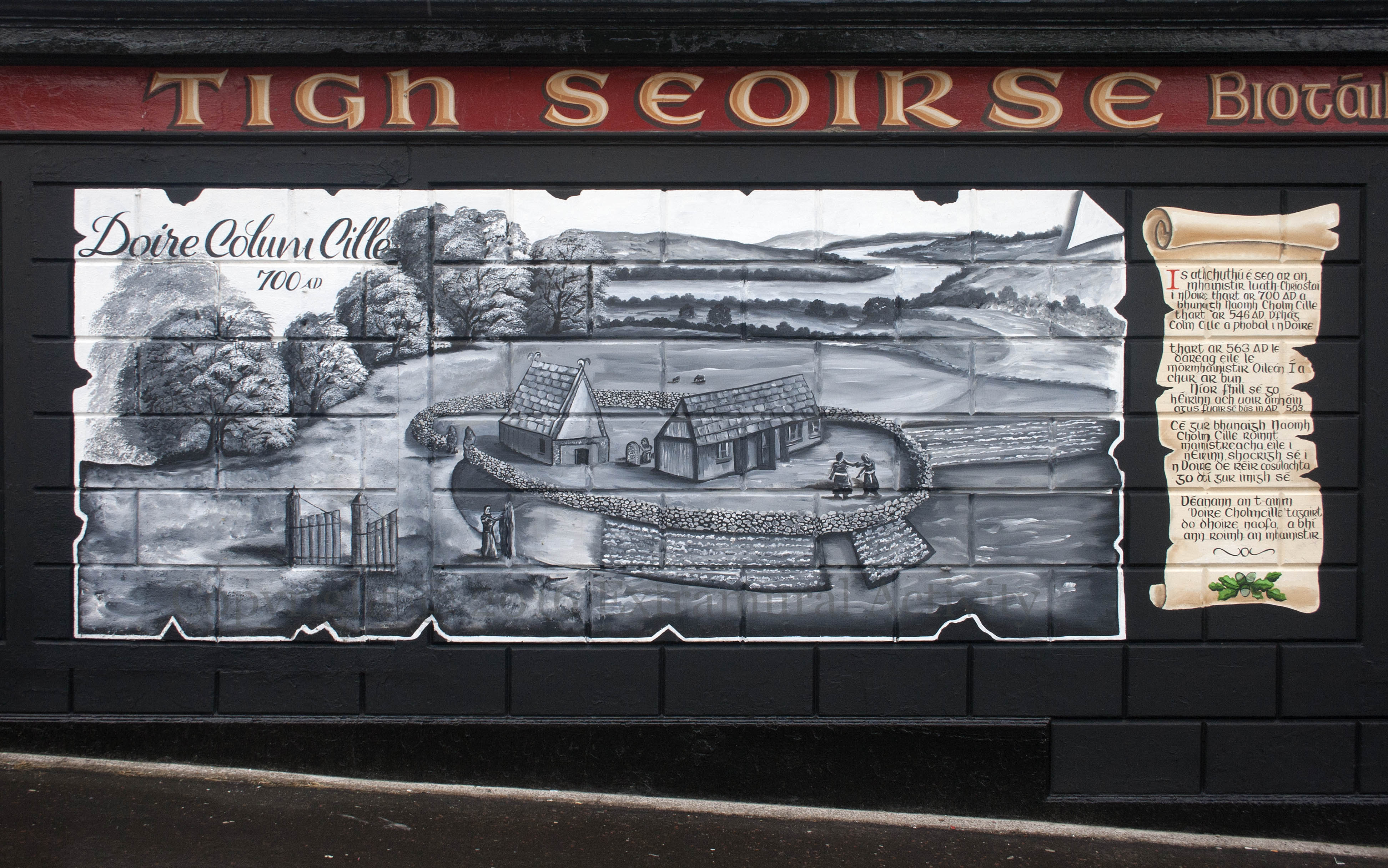
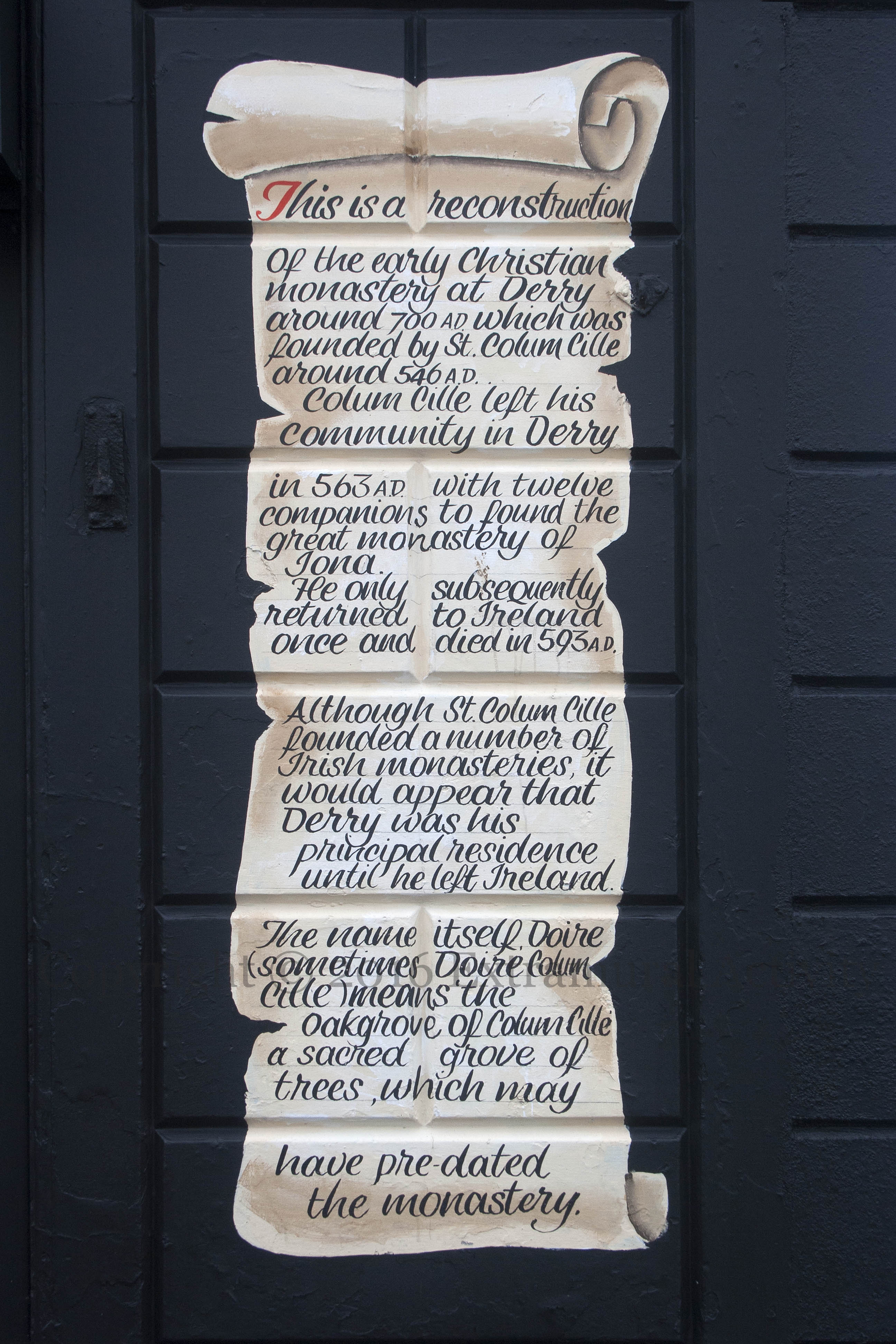
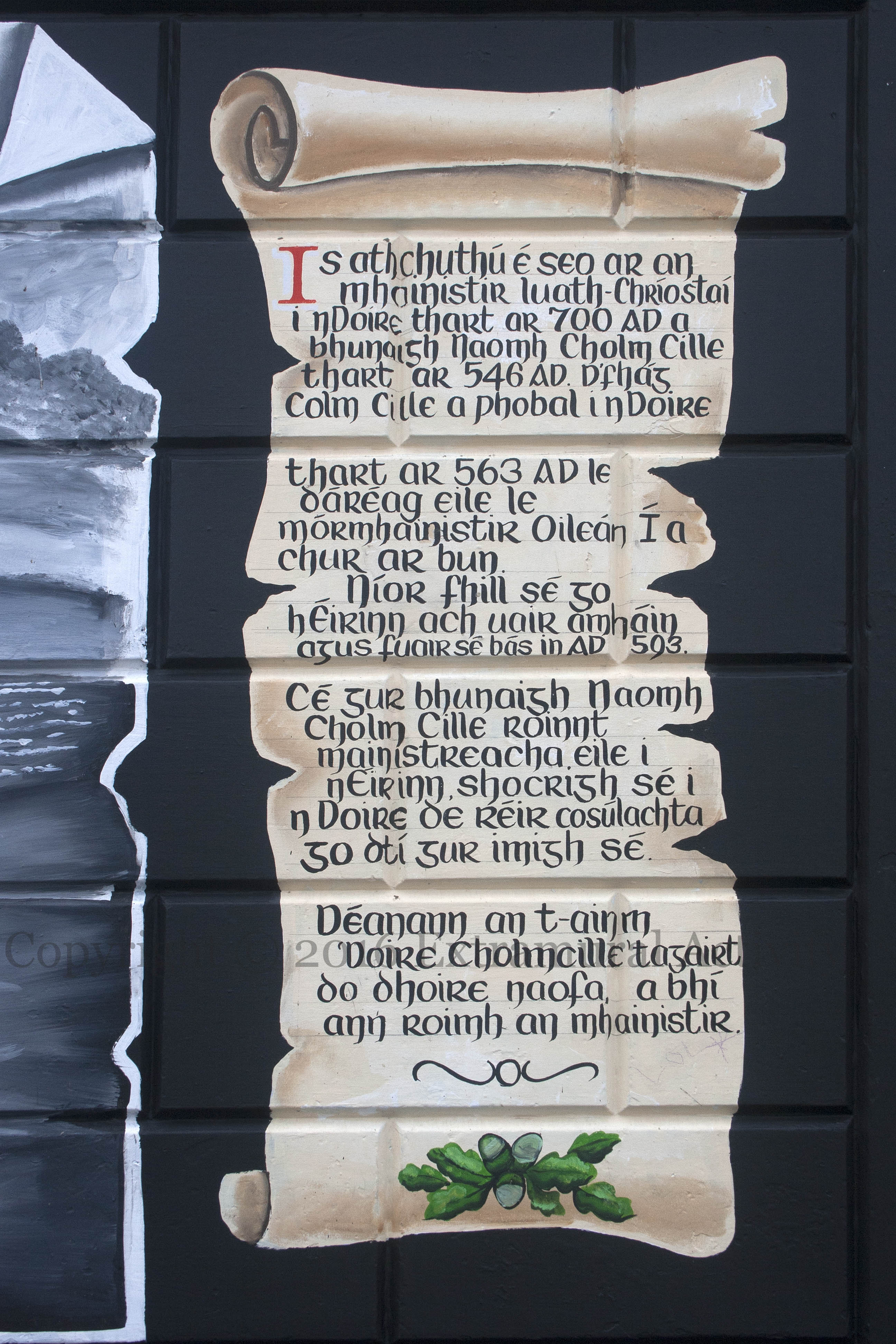
The Christian missionary Colm Cılle (in Latin, Columba), born in Donegal, founded a monastic settlement on the banks of the Foyle (then still part of Donegal) around 540 AD. The “Doıre” part of the name means “oak grove” and perhaps refers (as the information panel suggests) to “a sacred grove of trees, which may have pre-dated the monastery.” The mural above shows a reconstruction of the Derry monastery c. 700 AD. The name “Londonderry” dates to 1662.
Columba moved on to Scotland circa 563 and founded an abbey on the island of Iona. Among his reputed miracles is the banishment of a great water beast from the River Ness in 565.
“Is athchuthú é seo ar an mhainistir luath-Chríostaí i nDoıre thart ar 700 AD a bhunaigh Naomh Cholm Cıille thart ar 546 AD. D’fhág Colm Cille a phobal ı nDoıre thart ar 563 AD le dáréag eıle le mómhaınıstır oıleán Í a chur ar bun. Níor fhill sé go hÉıreann ach uaır amháın agus fuaır sé bás in AD 593. Cé gur bhunaigh Naomh Cholm Cille roınnt maınıstreacha eıle ı nÉırınn, shocrıgh sé ı nDoıre de réır cosúlachta go dtí gut ımıgh sé. Déanann an t-aınm ‘Doıre Cholmcılle’ tagaırt do dhoıre naofa, a bhí ann roımh an mhaınıstir.”
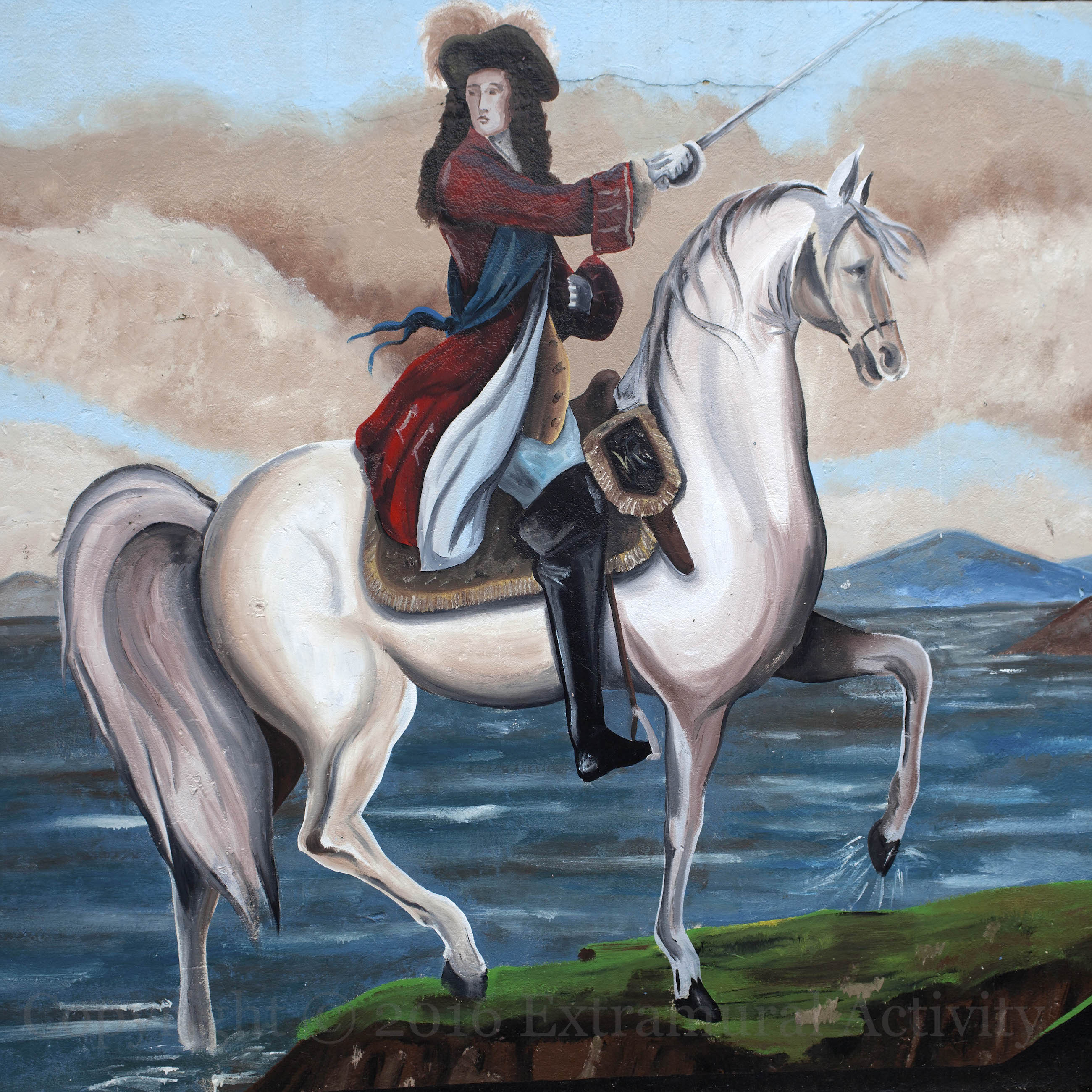
William III of England, commonly known as William of Orange, led his troops to victory on July 1st, 1690 at the Battle of the Boyne against the forces of James II, the deposed English monarch and the father of his wife. The Williamite campaign began with successful resistance against the Siege of Derry in 1689 and James’s final defeat came a year later on July 12th, at Aughrim.
The repainting of the Mountjoy ‘Breaking The Boom‘ in the Siege Of Derry is the second of three recent works in the Waterside. (The first of the three to be featured was City Of Temperance.) The work has been retitled ‘The Brave Thirteen’ and extended to include the closing of the gates by 13 Apprentice Boys, whose surnames are given here as Sherrard, Morrison, Steward, Campsie, Cunninghman, Sherrard, Conningham, Cairns, Hunt, Crookshannks, Irwin, Harvy, Spire (for first names and alternate spellings, see Apprentice Boys).
The covenant was signed in September 1912 (as captured in another famous image from Belfast’s City Hall — see Betting Office). The mural above uses the text of the Covenant as a backdrop to a composite of Edward Carson speaking and a row of Ulster Volunteers, formed in January 1913 (see the similar mural First World War).
Murals Irlande du Nord has a post comparing this painted version with the previous plastic version.







 Extramural Activity