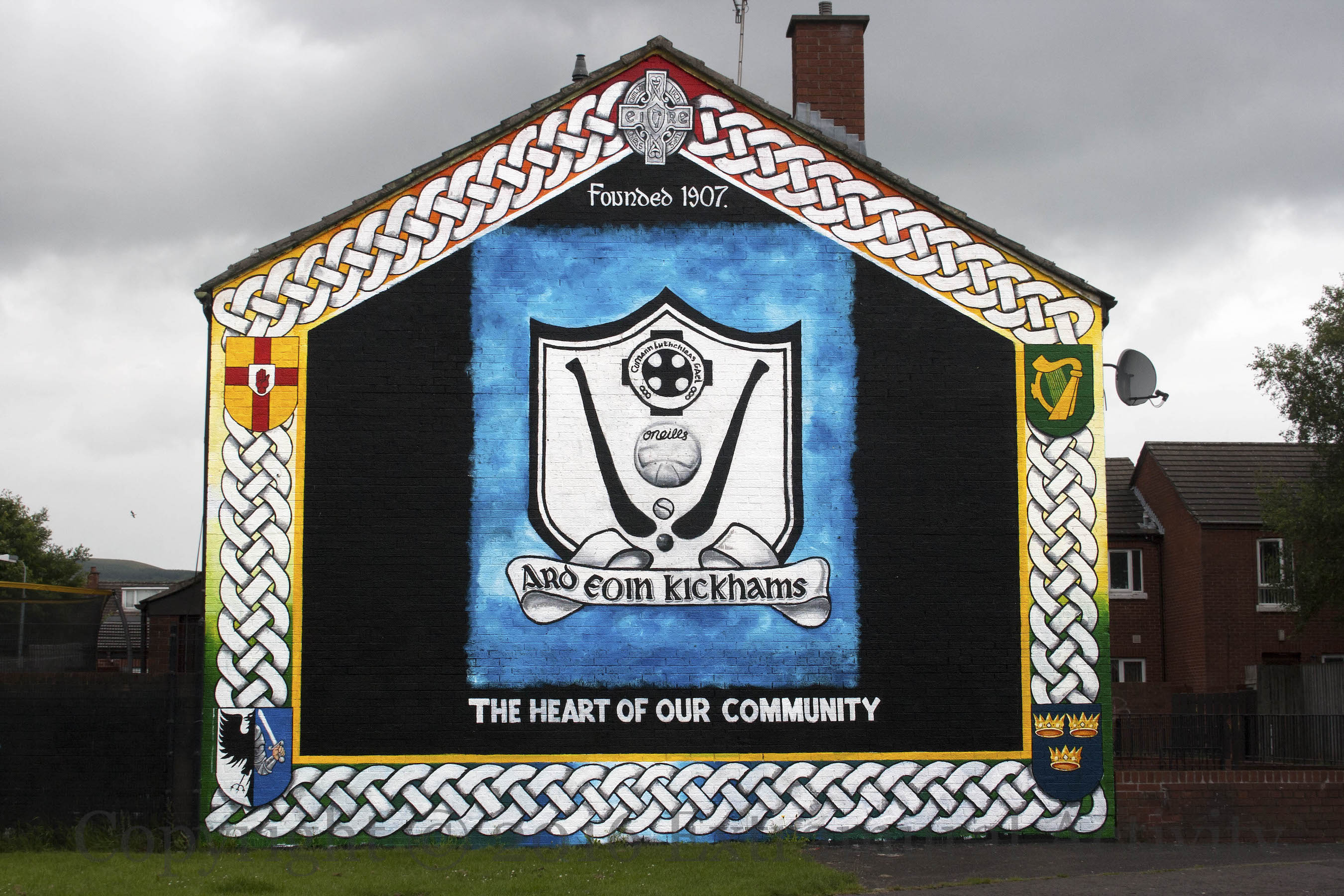
A border of Celtic knot-work and the shields of the four provinces has been added to the Ard Eoın Kickhams mural at the top of Havana Way. (For the previous version, see The Heart Of Our Community.)
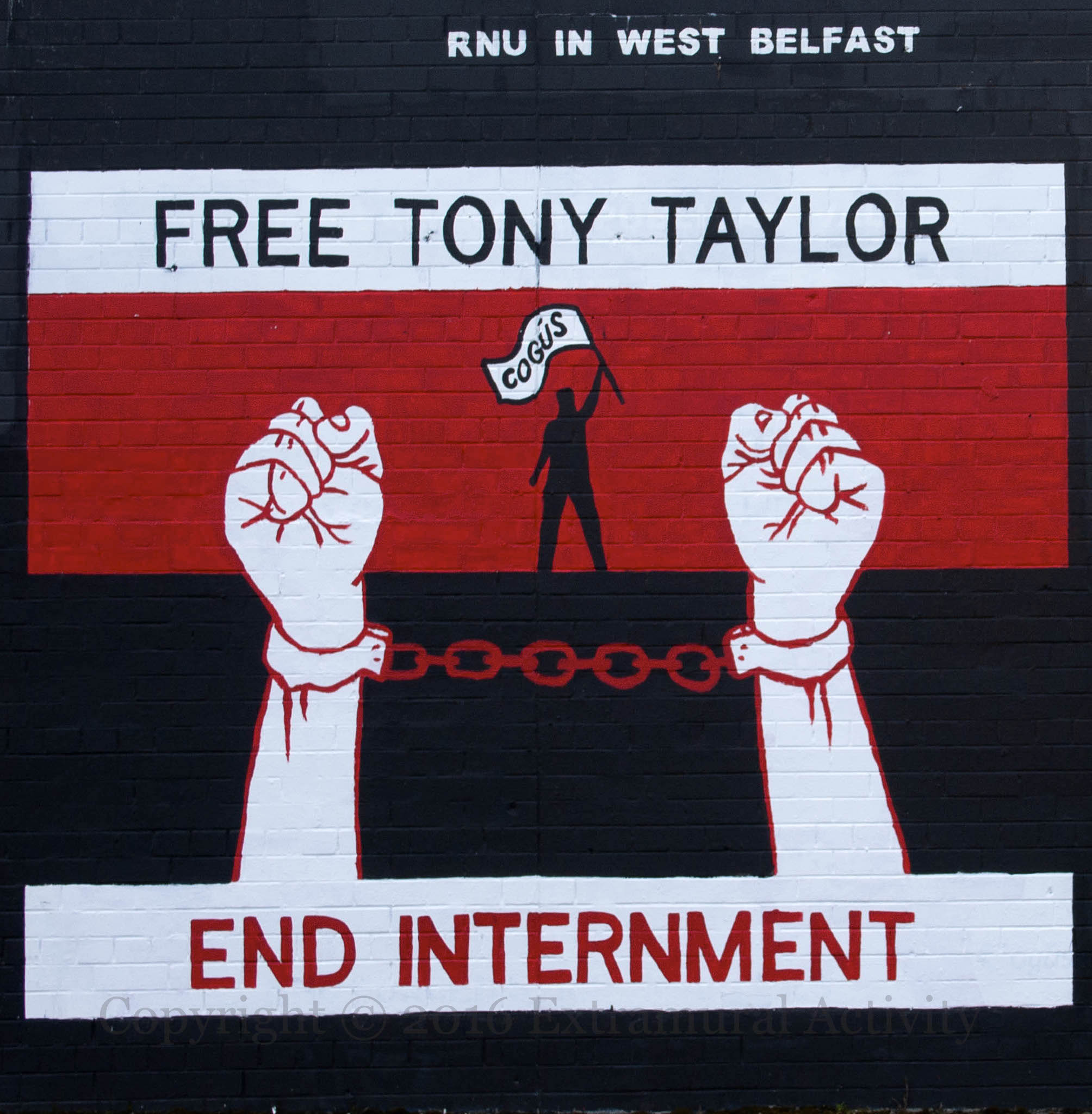
“Free Tony Taylor”, “End internment” – identical to the mural in Ardoyne, though without the “Cogús”. On the RNU “notice-board” on Northumberland Street.
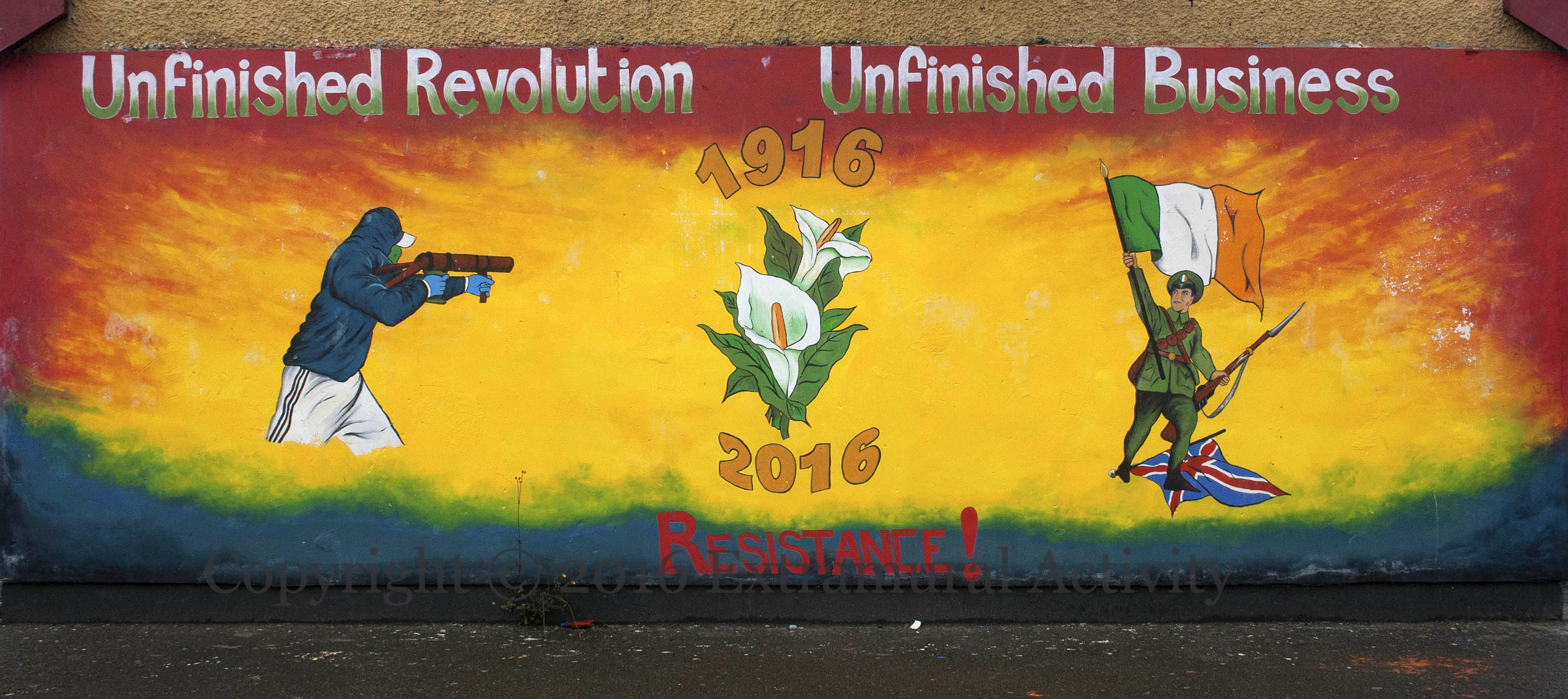
Three images of a new mural in the Creggan area of Derry preaching continued “Resistance!” on account of the “unfinished business” of raising the Irish Tricolour and trampling on Britain’s Union Flag and the “unfinished revolution” of 1916’s Easter Rising (reproducing a postcard of the era).
For the modern-day figure on the left, see also 2015’s Resistance board in Ardoyne.
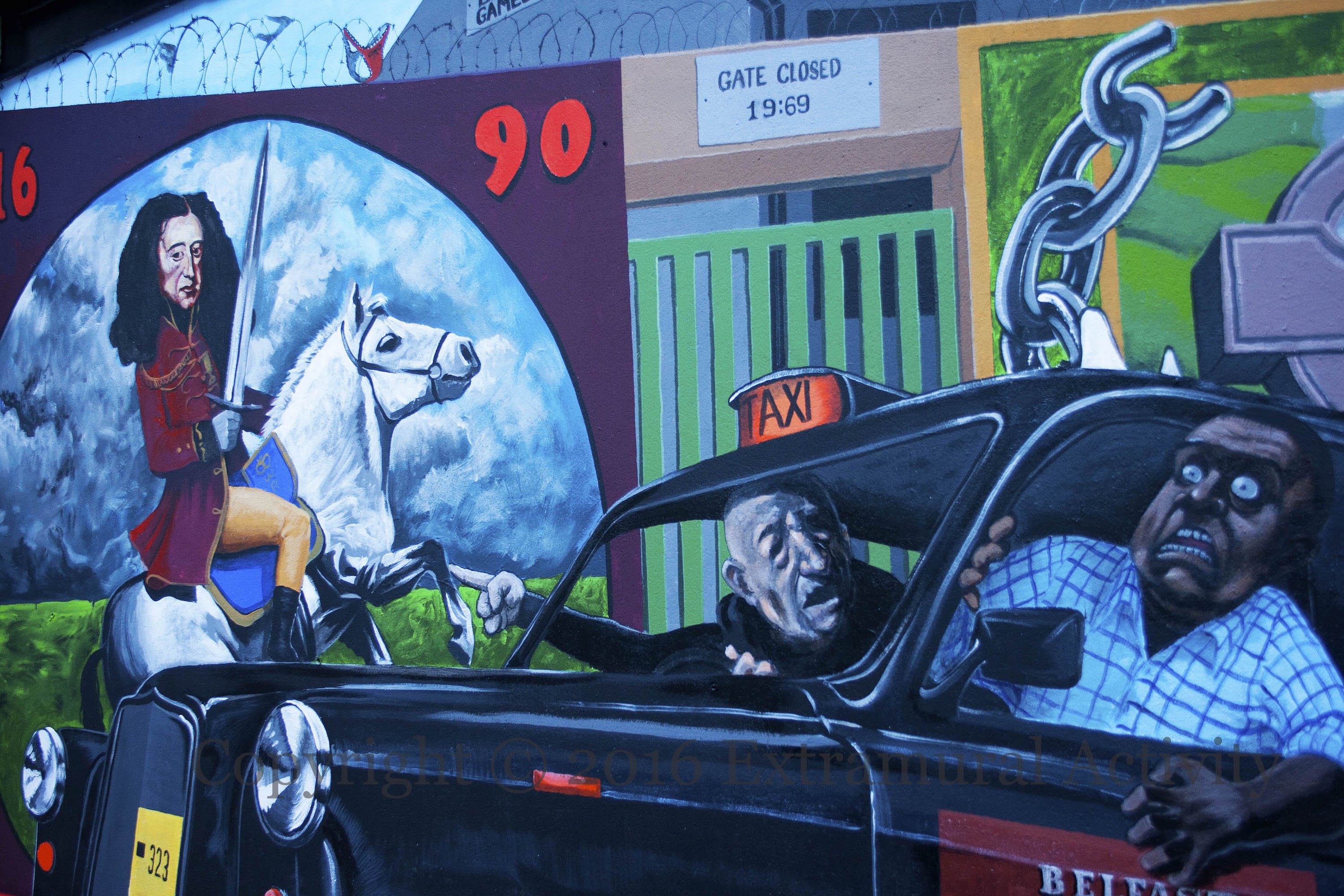
Black taxi tours of the murals from both sides of the political divide in west Belfast are a well-established part of the tourist industry. (There are also tours of east Belfast.) The various gates in the “peace” line — shown here as closing nightly at 19:69 — are generally open during daylight hours.
IRPWA (Irish Republican Prisoners Welfare Association) stencil. Below is a wide shot showing all three of recent pieces in Beechmount (prior to the destruction of the one on the right): No Steps Backward | Political Dissent Is Not A Crime! | The Butcher’s Apron.
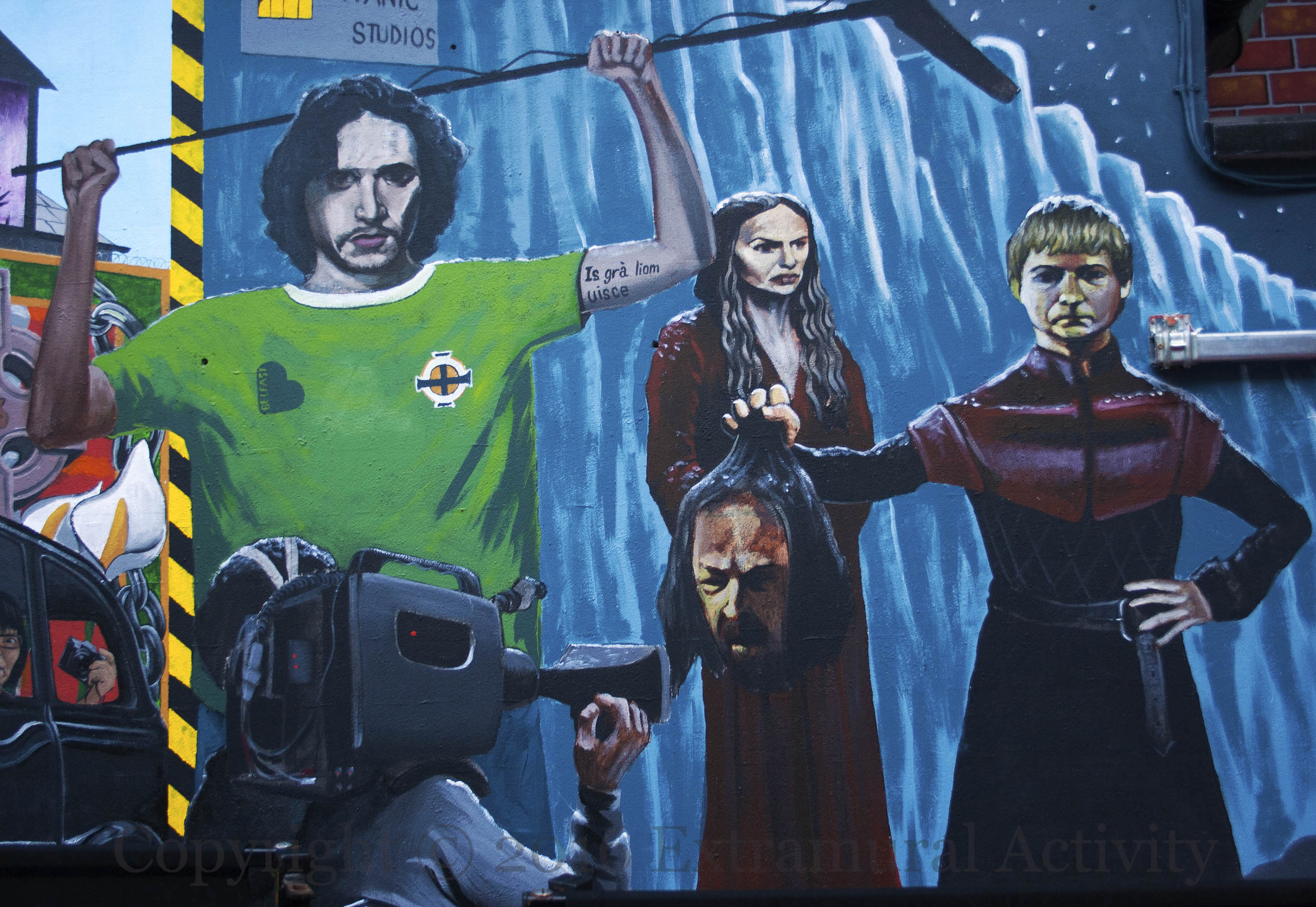
The HBO show Game Of Thrones wrapped up its sixth season recently in its customary fashion, which is to say, with intrigue and murder.
Interior scenes for the show are shot at the old Harland & Wolff ‘Paint Hall’ in the Titanic Quarter. The filming is parodied in the image above — the boom operator is wearing a Northern Ireland football top and has a tattoo saying “Is grá liom uisce” (“I love water”) on his bicep.
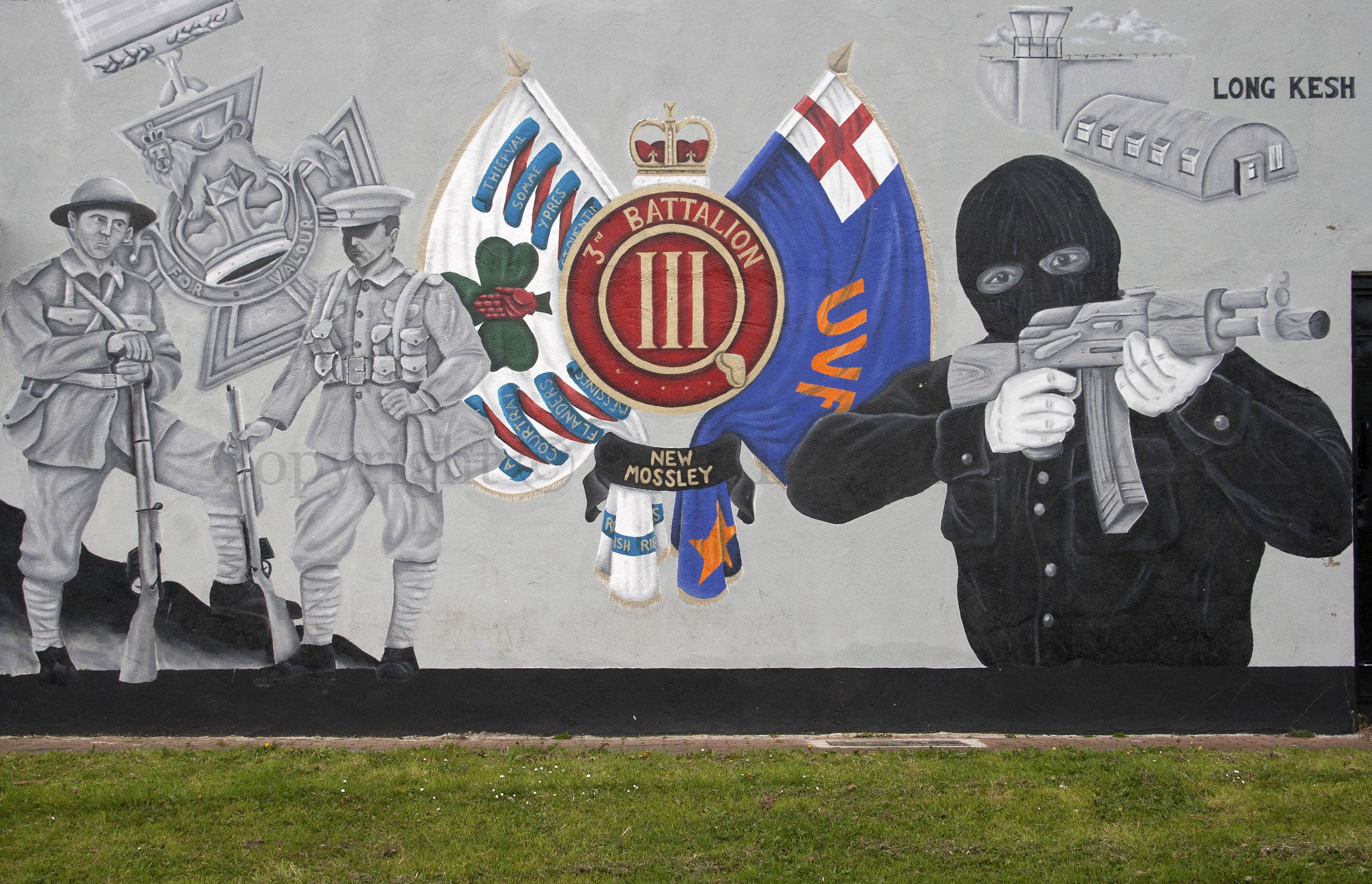
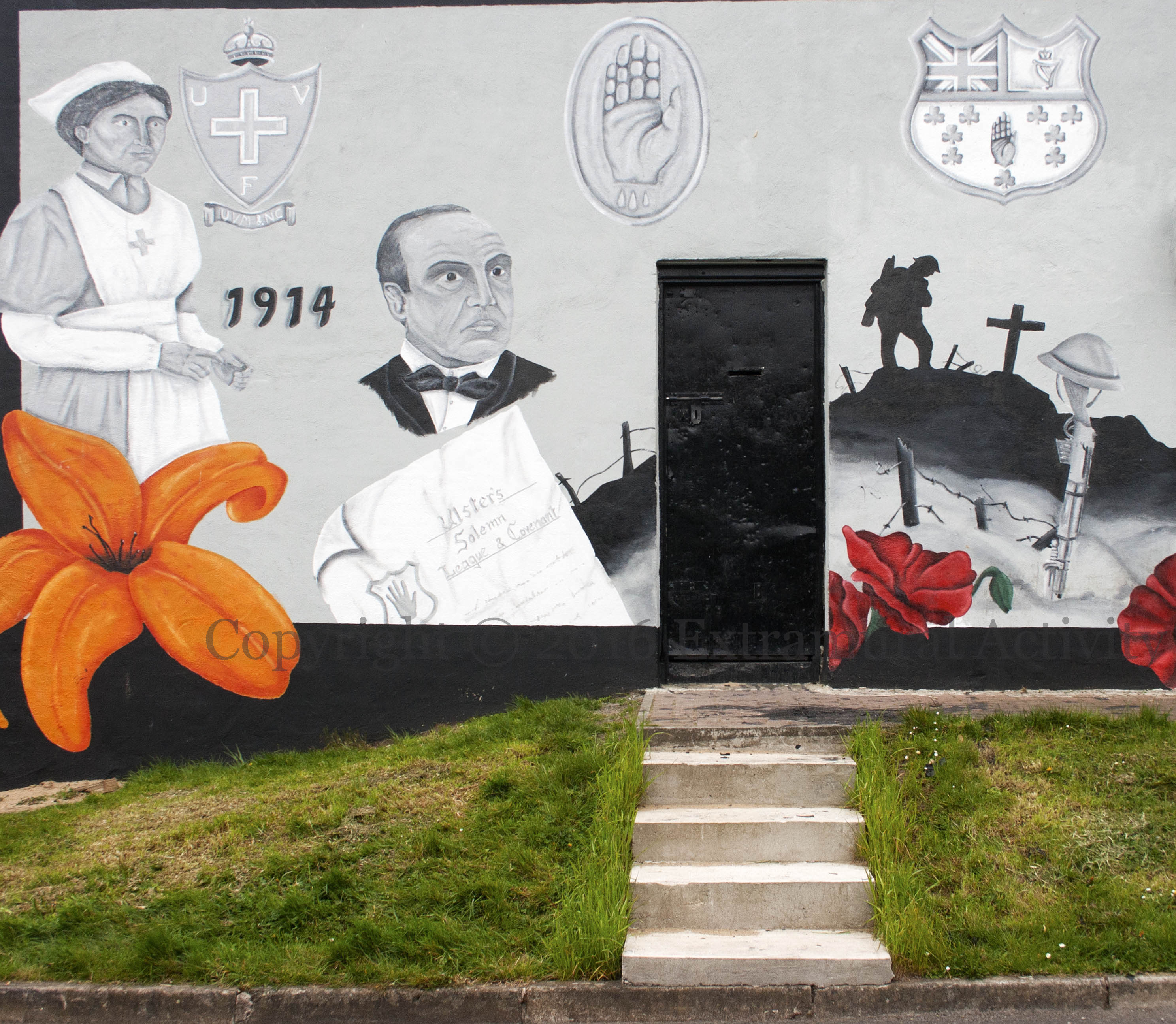
After a year without any change, work appears to have stopped on this UVF mural in Ballyearl. It links together the Ulster Volunteers of the first world war (shown on the left of the wall, with a Victoria Cross, Carson and the covenant, and a cross on the battlefield of Flanders) and the modern UVF (represented by a hooded gunman with rifle brought to bear, and the Nissen huts of Long Kesh. An orange lily and red poppy complete the tableau.
One hundred years ago today, on July 1st, 1916, the Battle of Albert began, the first of many battles in what is known collectively as the Battle of the Somme. Soldiers from the 36th (Ulster) Brigade went “over the top” at 7:28 a.m. By the end of the day, more than nineteen thousand British soldiers were dead, five thousand from the 36th.
The line “We gathered from our towns, our villages and farms, in answer to the echo of alarm” comes from the song “Armagh Brigade”; the alarm is more specifically “Carson’s loud alarm”. Below the main panel, which shows combat at close quarters, are the words of Wilfrid Spender: “I am not an Ulsterman but yesterday, the 1st. July, as I followed their amazing attack, I felt that I would rather be an Ulsterman than anything else in the world … the Ulster Volunteer Force, from which the Division was made, has won a name that equals any in history.”
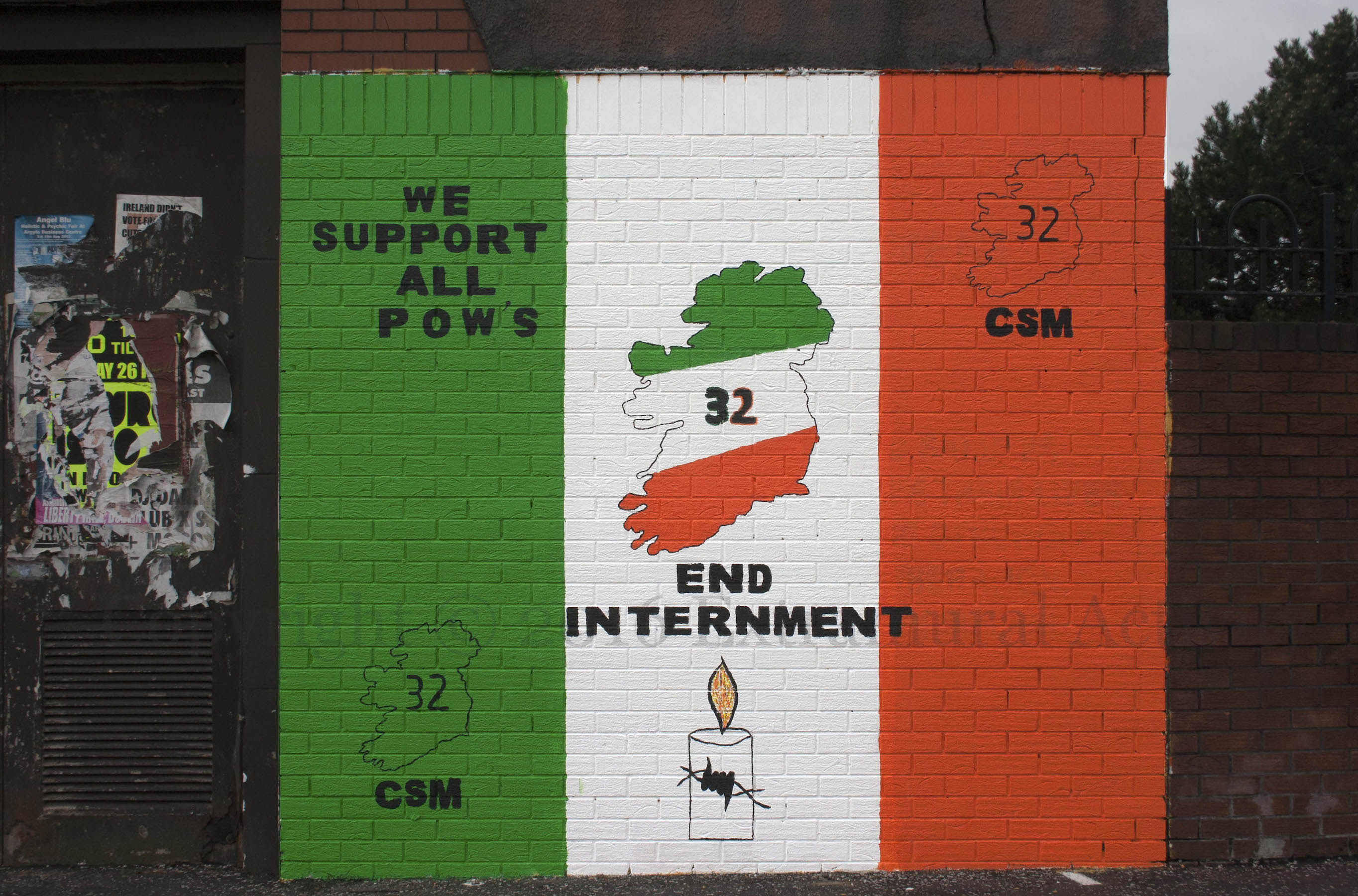
In quick succession to the Easter Rising centenary mural in the same spot, there comes this 32 County Sovereignty Movement mural, with the island of Ireland in green, white, and orange, and (representing prisoners) barbed wire and a candle.








 Extramural Activity