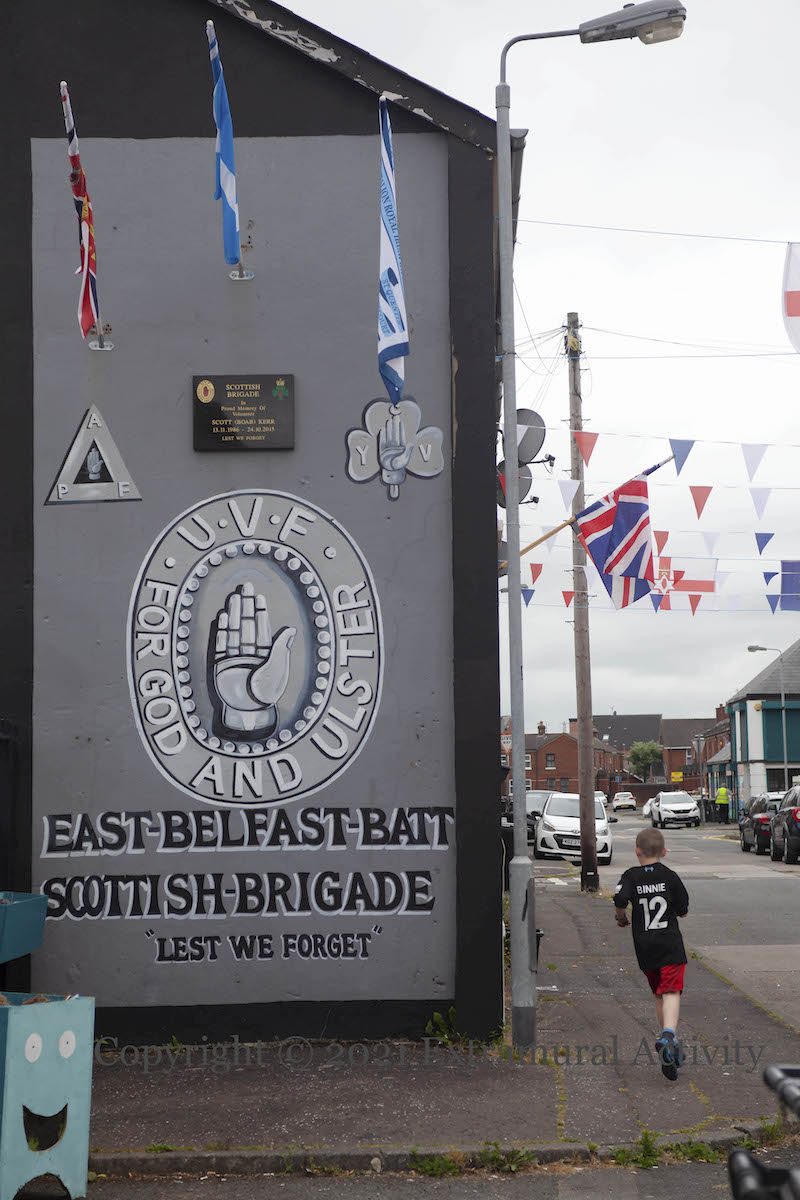
UVF Scottish Brigade Volunteer Scott “Boab” Kerr, from the Govan area of Glasgow and Sons Of The Somme FB (Fb), died in 2015 and is remembered with a plaque on the corner of Beechfield Street in east Belfast.
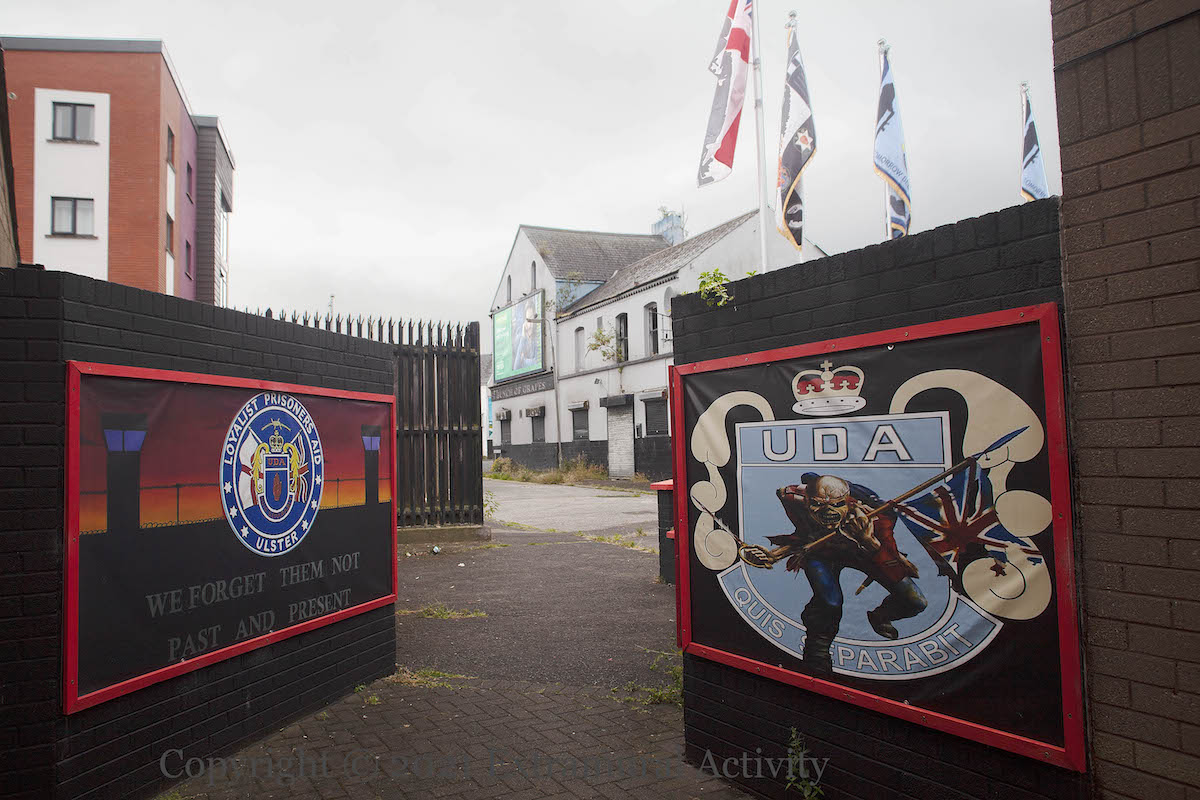
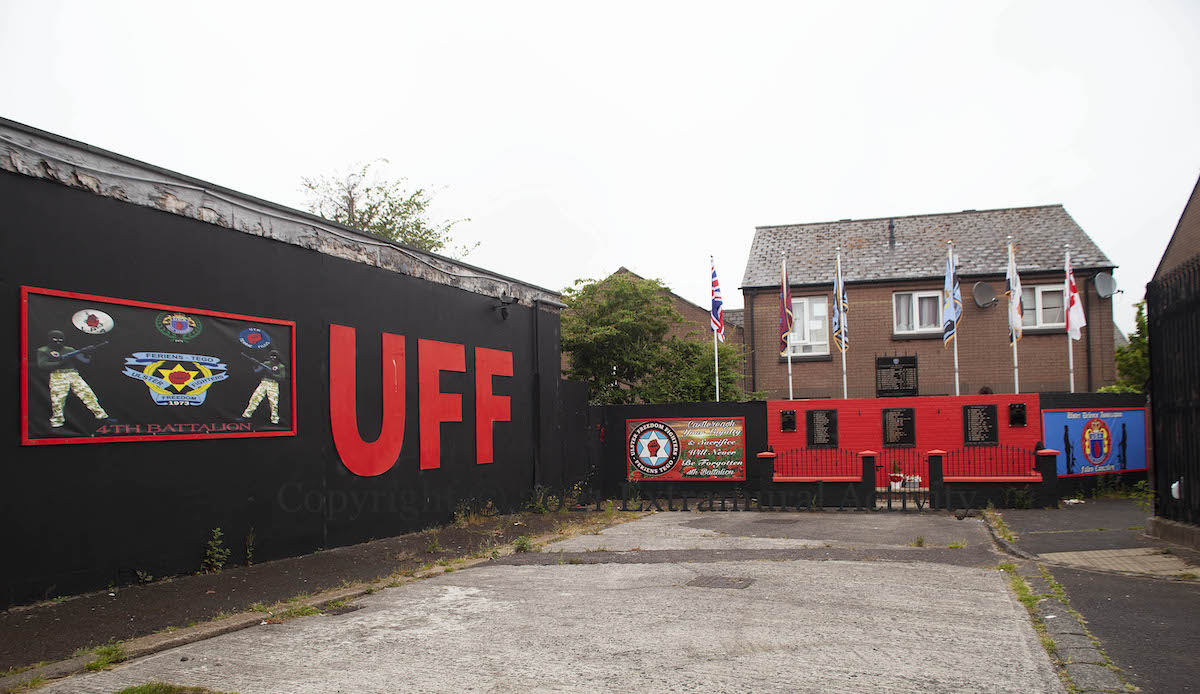
The Castlereagh (4th battalion) UDA memorial garden behind the Bunch Of Grapes has changed over the years from painted murals (M | X) to spray-painted boards (We Forget Them Not) and now again to tarps within red frames. As far as content is concerned, the UFF, LPA (“We forget them not – past and present”) and UYM (“They shall not grow old etc”) remain but Tim Collins – a product of re-imaging – is out (see On That Journey) and Eddie The Trooper is in. The side wall of the pub has also been employed for the first time, with more hooded gunmen (see the third image, below). Two small plaques have been added to the outsides of the memorial wall.
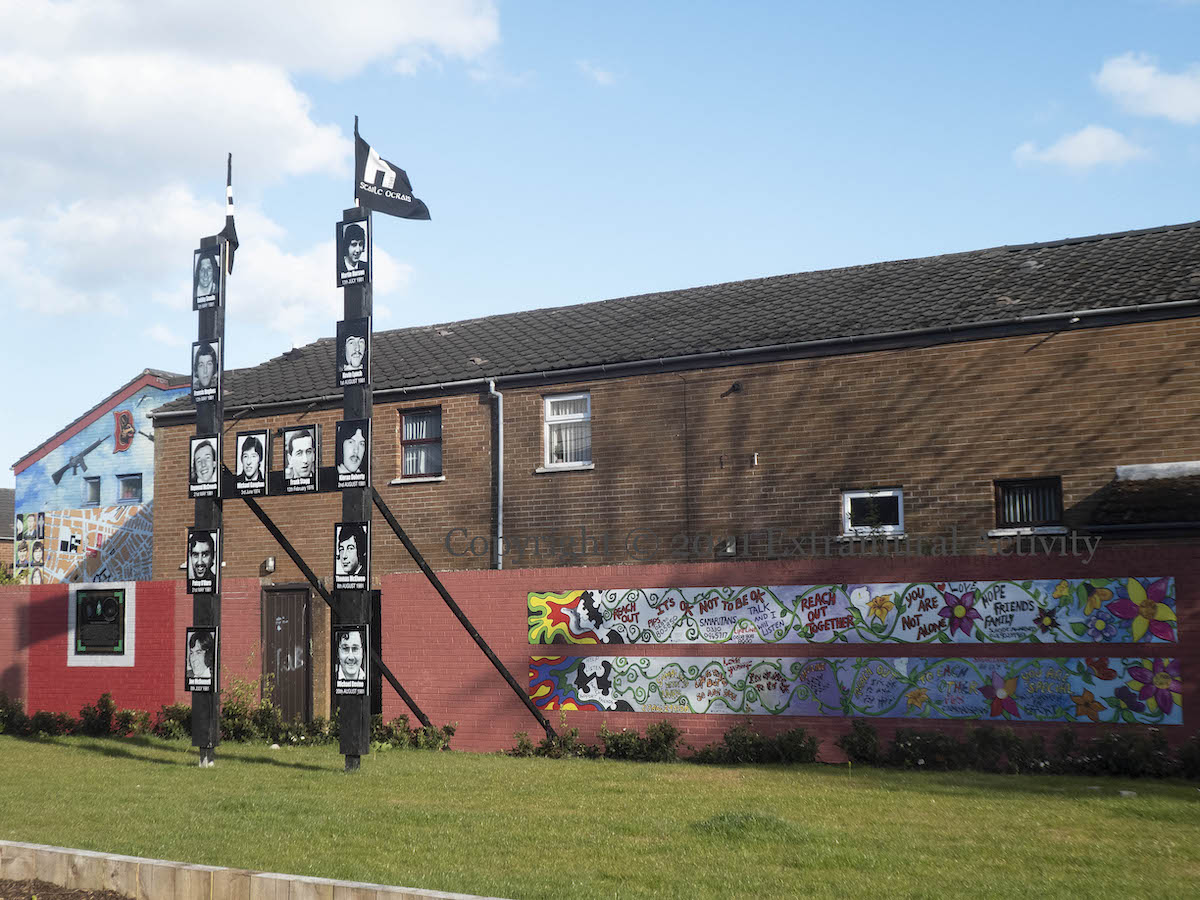
Six weeks after the first four deaths, the 1981 hunger strike’s long summer of mourning resumed with the death of Joe McDonnell, who died on July 8th, 1981. The “H” (for “H Blocks”) is on the Falls Road, next to the D company IRA memorial garden.
In April, the Workers’ Party (web | web | tw | Fb | Fb) suffered a leadership challenge and a split in which its sole elected representative – Ted Tynan on Cork county council – left the party (statement). This is only the latest in a long line of splits, going back to the formation of the modern Workers’ Party, from a split in Sinn Féin in 1970 (WP).
“National Commemoration Committee – erected in memory of all those comrades who dedicated their lives for the establishment of a democratic, secular, socialist republic. ‘I have given whatever I had to give for the party, the people of Ireland, and for a better world, but others have given more, much more. Comrades have given their lives’ – Tomás Mac Giolla TD. ‘For the unity of Protestant, Catholic and Dissenter.'”
“History of the death of Sean McCartney. This memorial was placed here on Saturday 8th May 2021 to mark the 100th anniversary of the death of Vol Sean “Johnny” McCartney of no. 55 Norfolk Street, Falls Road, Belfast. Sean was a volunteer of “D” Company 1st battalion Belfast Brigade Oglaigh na hEireann, when he was killed in action, aged 23 years old. He died while on active service with the 3rd Northern Division, 3rd County Cavan Brigade flying column during the Irish Republican War of Independence. He was shot twice during an ambush and gun battle with the British Army RIC and Black and Tans on Sunday 8th May 1921 on Croghan Mountain at the Lappanbane stretch of the Lappanduff Mountain, Co. Cavan. His body was then mutilated by the Black and Tans. Sean’s body was kicked, stamped on, danced on and tied by the ankles and feet to a Crossley Tender military vehicle and dragged along mountain lanes in an attempt to instill fear in the local Co. Cavan community. The 32 county Irish republic based on the self determination of the Irish people which Sean and many others fought and died for has yet to be achieved. Sean will always be proudly remembered by his extended family circle in Ireland and Canada.” McCartney is buried in Milltown cemetery.
“If our shores are threatened/We will take up arms/To defend our loyal cause/Our culture and our heritage/Our freedoms and our laws.” Moygashel’s own (William) Wesley Somerville, a member of both the UVF and UDR, was killed by a bomb prematurely exploding as he placed it on the minibus of the Miami Showband in July of 1975. Three members of the band died, one of them Protestant, along with volunteers Somerville and Harris Boyle from Portadown (WP). “He died for Ulster” (on the plaque).
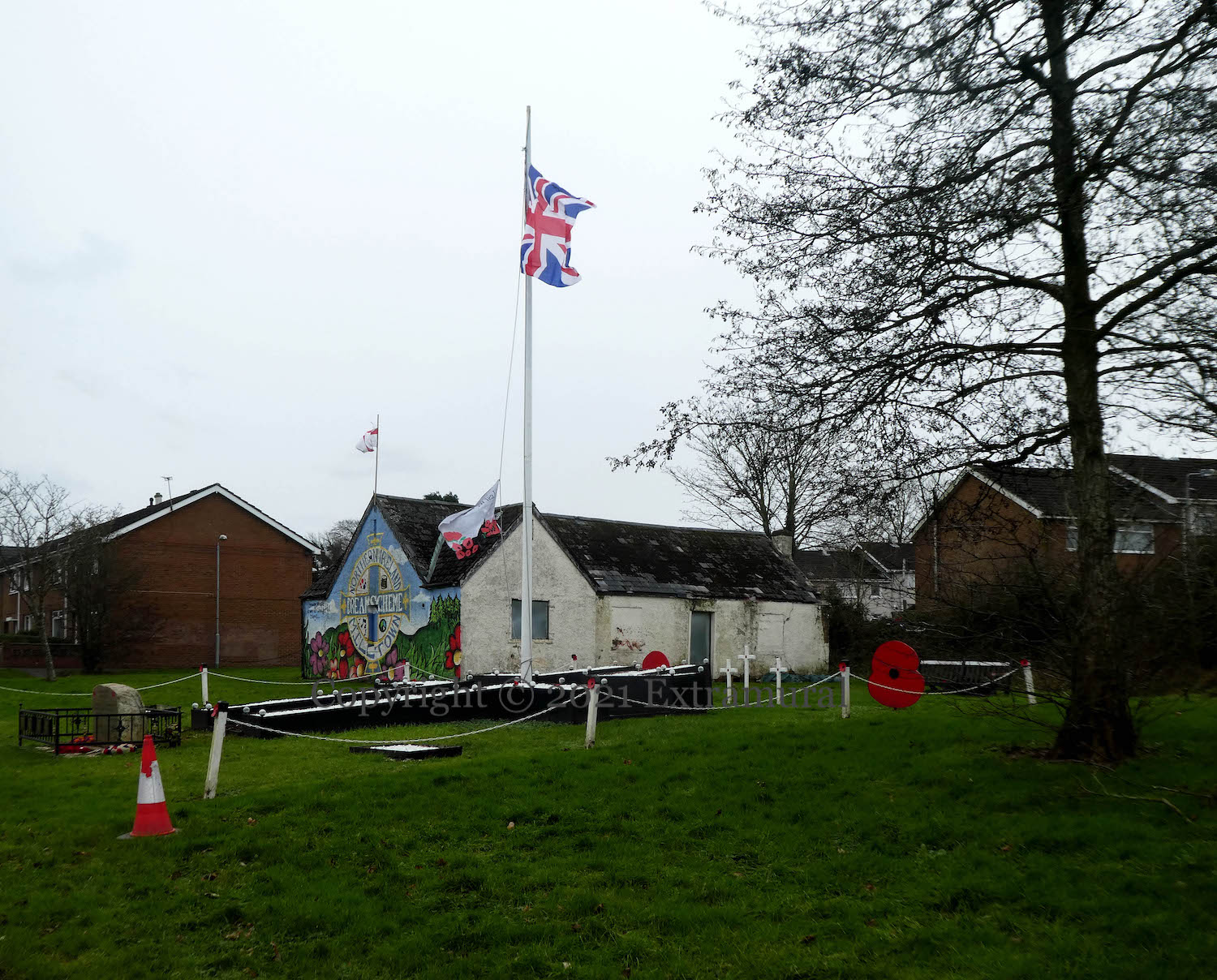
A long series of tit-for-tat shootings of pubs and clubs continued into the summer of 1976, with attacks on the Chlorane (June 5th), Walkers (June 25th), the Ramble (July 2nd), the Whitefort (July 29th), and then, on the 30th, The Stag at Shaws Bridge, Belfast, by the Republican Action Force (PIRA) (Sutton). John McCleave, John McKay, and James “Jimmy” Doherty died on the night of the attack, and Thompson McCreight died of his wounds nine days later. The memorial to them – “erected by the local communities” – is on Milltown Road, next to the Dreamscheme (web) mural.
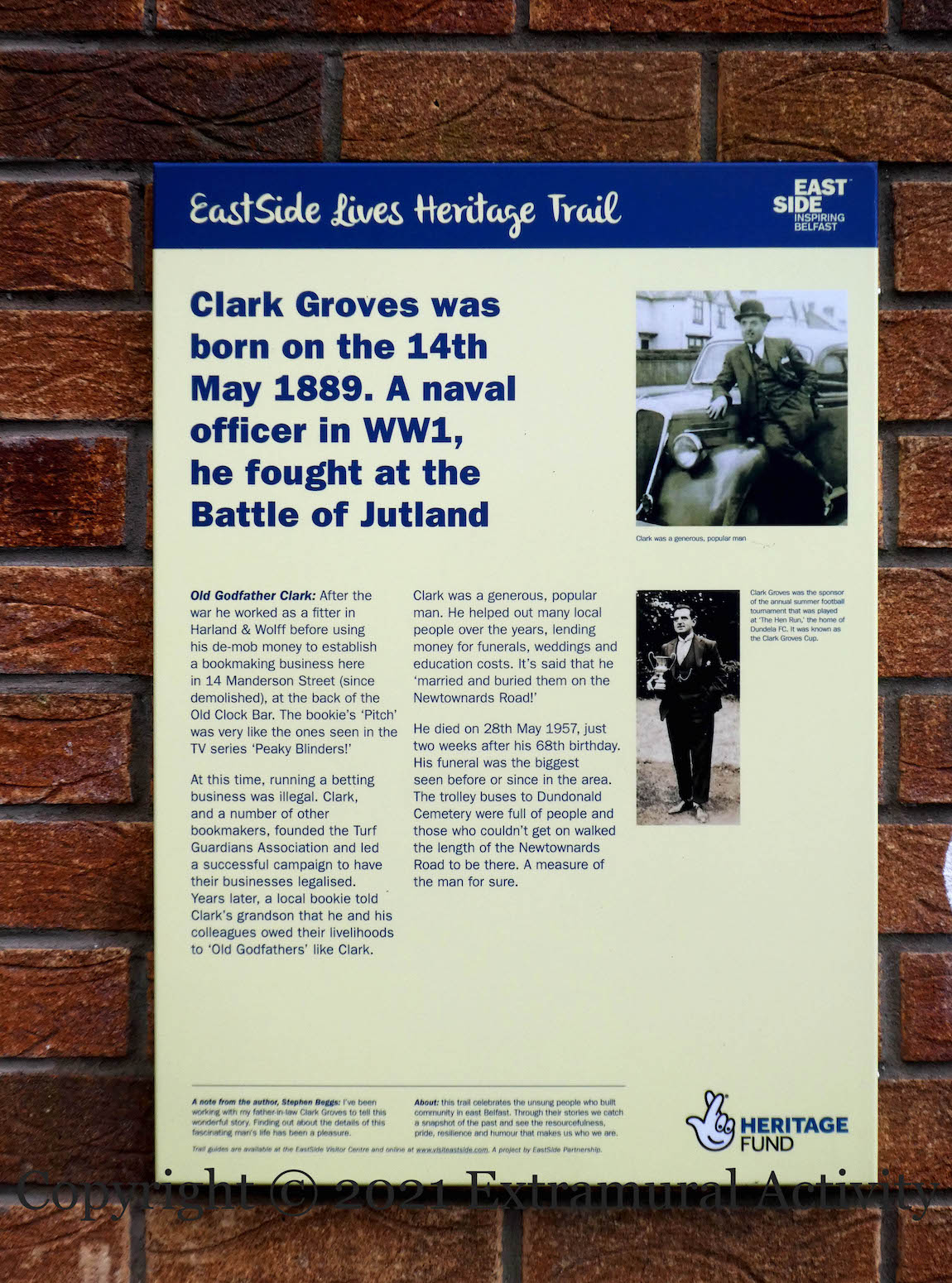
“Clark Groves was born on the 14th May 1889. A naval officer, in WW1, he fought at the Battle of Jutland. After the war he worked as a fitter in Harland & Wolff before using his de-mob money to establish a bookmaking business here in 14 Manderson Street (since demolished), at the back of the Old Clock Bar. The bookie’s ‘Pitch’ was very like the ones seen in the TV series ‘Peaky Blinders!’ At this time, running a betting business was illegal. Clark, and a number of other bookmakers, founded the Turf Guardians Association and led a successful campaign to have their businesses legalised. Years later, a local bookie told Clark’s grandson that he and his colleagues owed their livelihoods to ‘Old Godfathers’ like Clark. Clark was a generous, popular man. He helped out many local people over the years, lending money for funerals, weddings and education costs. It’s said that he ‘married and buried them on the Newtownards Road!’ He died on 28th May 1957, just two weeks after his 68th birthday. His funeral was the biggest seen before or since in the area. The trolley buses to Dundonald Cemetery were full of people and those who couldn’t get on walked the length of Newtownards Road to be there. A measure of the man for sure. Clark Groves was the annual summer football tournament that was played at ‘The Hen Run,’ the home of Dundela FC. It was known as the Clark Groves Cup. – Stephen Beggs”
The Cupar Way “peace” line, home to graffiti-art/wild-style writing and patronising slogans from around the world, is also home to a single Troubles-related memorial plaque, to Plum Smith (one | two) of the UVF/RHC and subsequently the PUP, which thus far has resisted the artists’ can and the tourists’ Sharpie. It is not known whether the “Plum” graffiti (and previously “RIP Plum Smith”) is by locals or by a visiting writer.
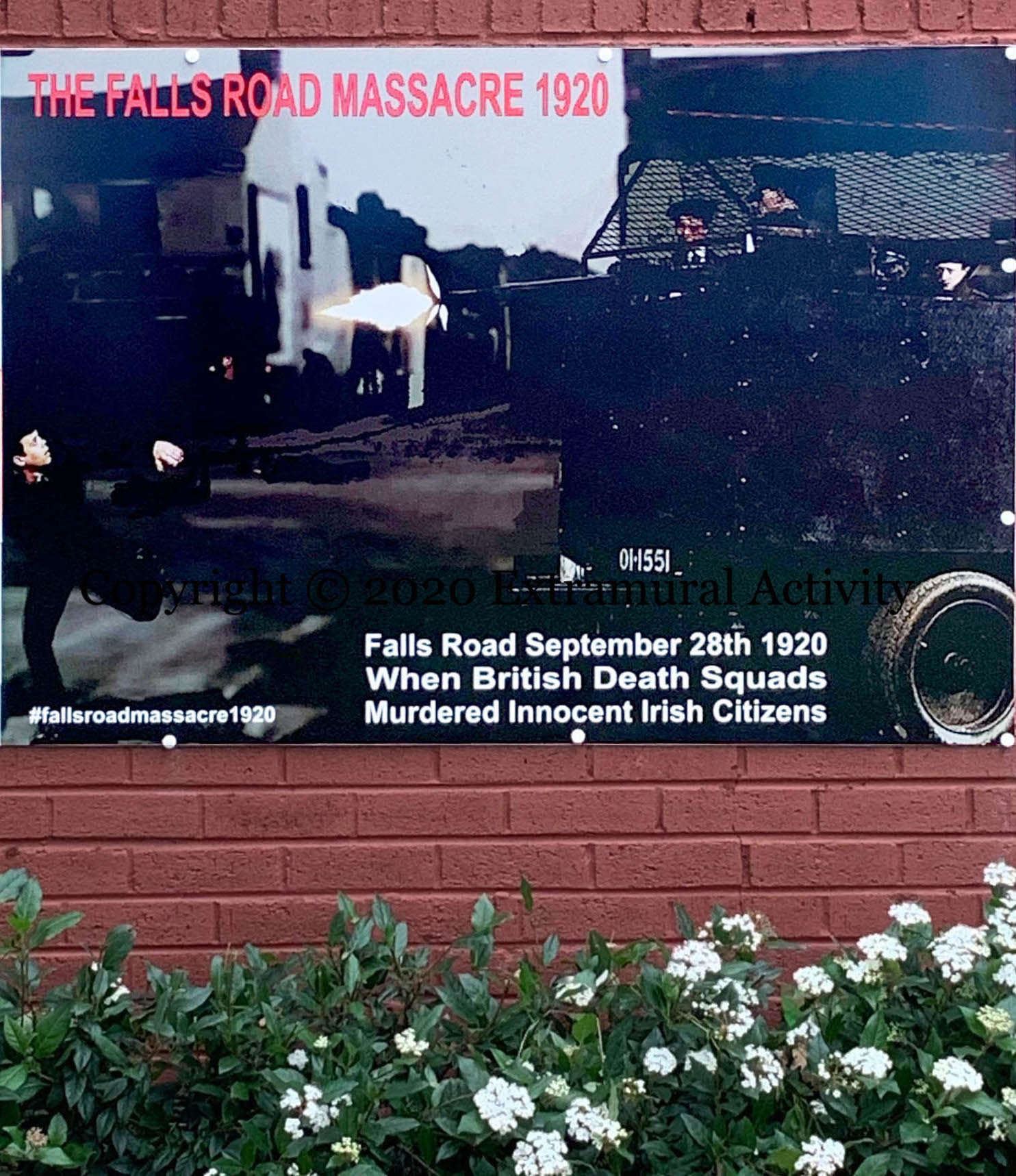
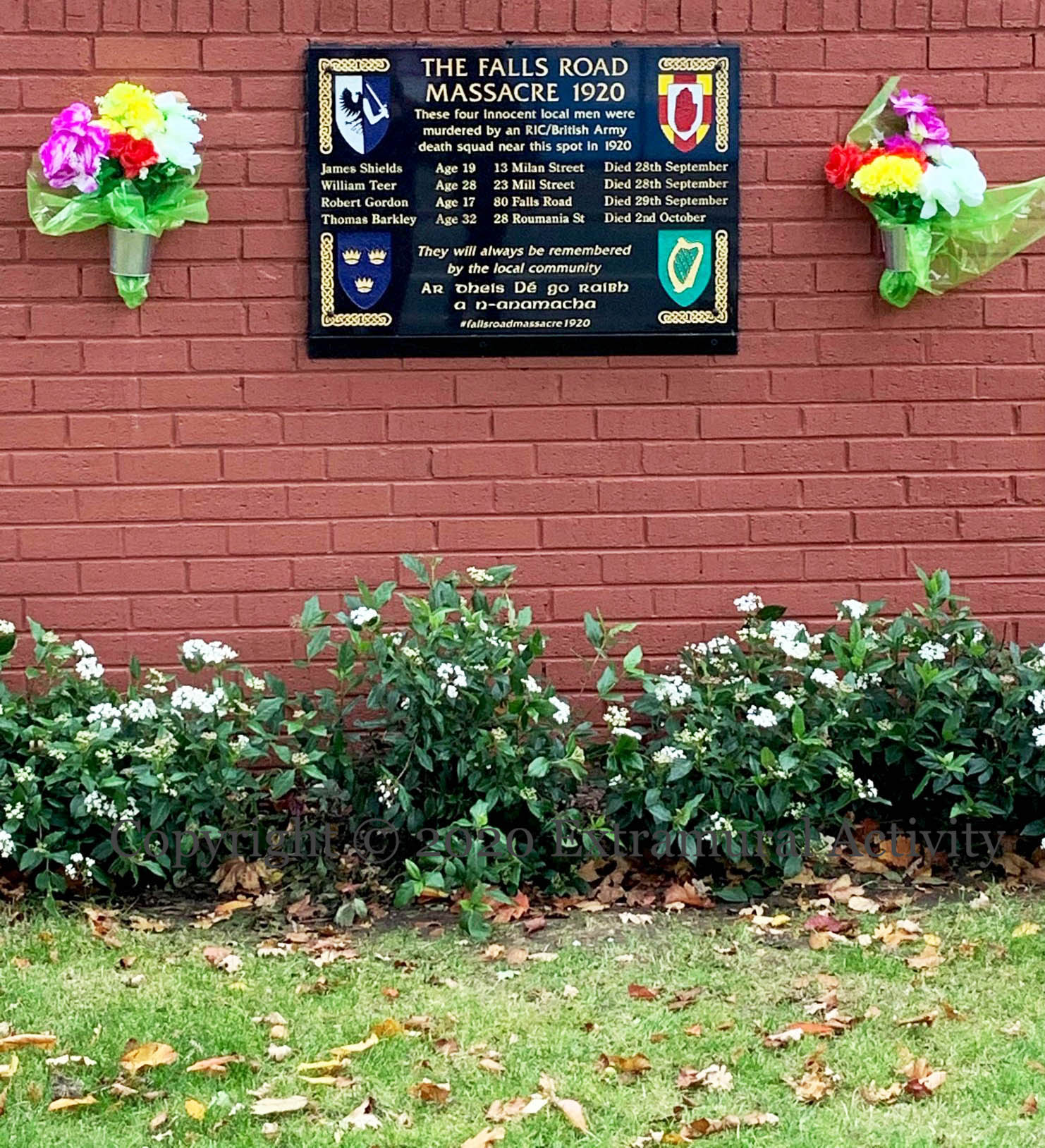
Muralist Gerard ‘Mo Chara’ Kelly (whose catalogue of work can be seen in a separate site) and others from Gael Force Art (Fb) have mounted a three-piece memorial for the centenary of the Falls Road Massacre in which four people were killed – one of them being Mo Chara’s great uncle Jimmy Shields – in a 5-minute shooting spree by a “special patrol” on the night of the funerals of three men killed by the ‘RIC Murder Gang’ (see the 2007 post). For more background see the memorial’s Facebook page.
“These four innocent local men were murdered by an RIC/British Army death squad near this spot in [September 28th] 1920: James Shields, William Teer, Robert Gordon, Thomas Barkley.” With perhaps the first appearance of a hashtag on a plaque: #fallsroadmassacre1920










 Extramural Activity