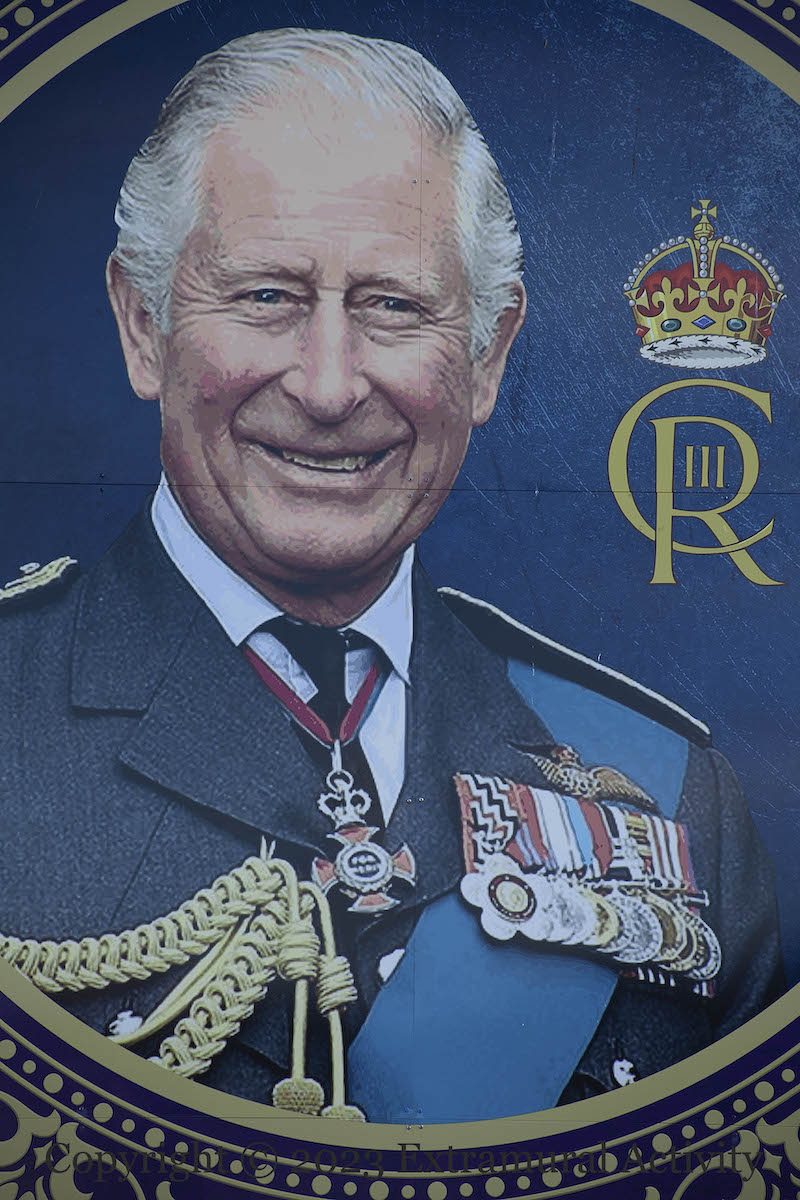
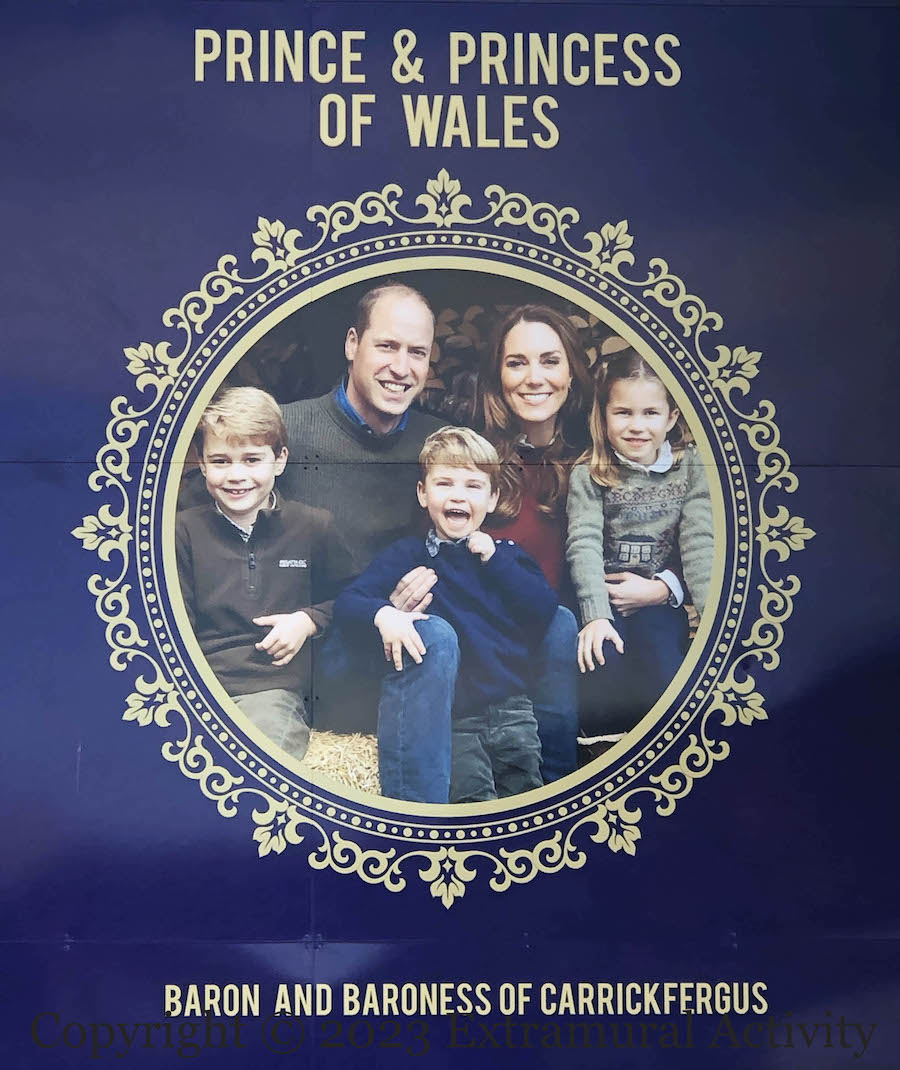
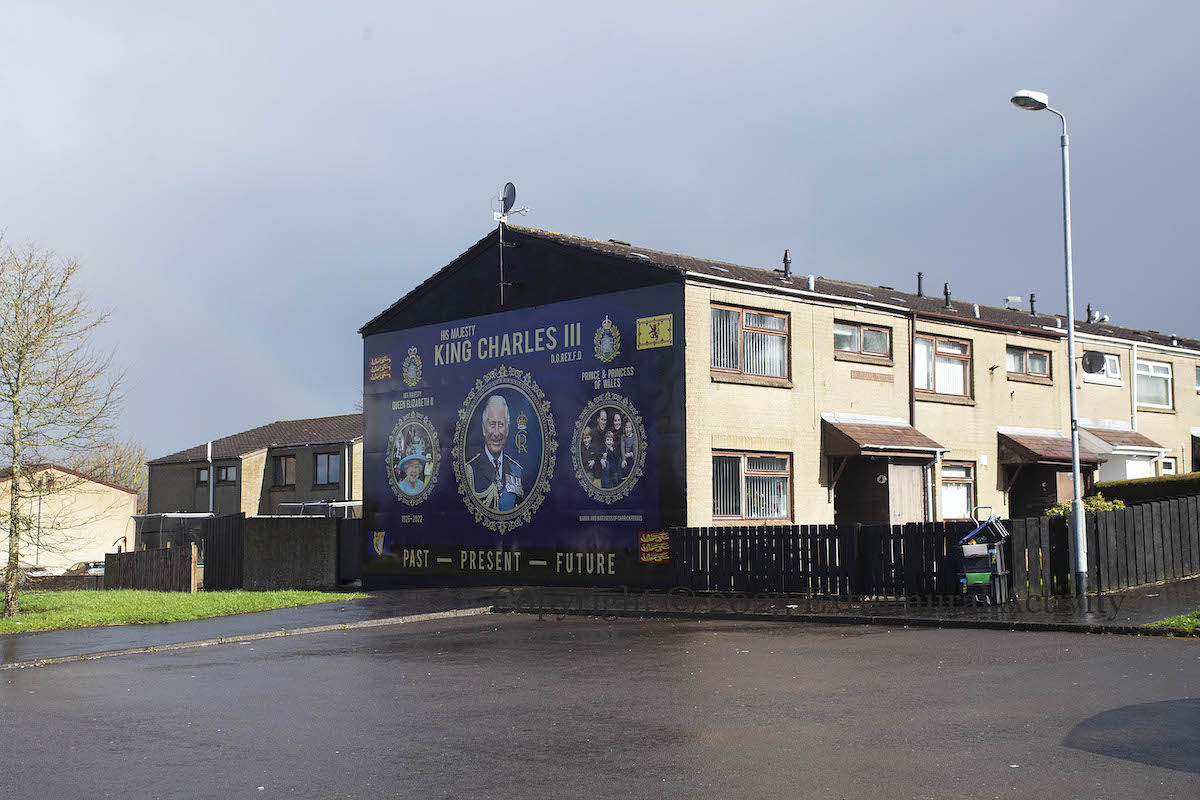
Four generations of UK royalty: the previous Queen Elizabeth II, the current King Charles III, the heir apparent William, baron Carrickfergus – here written as “baron of Carrickfergus” (also the prince of Wales), and his nine-year-old son George. Charles’s coronation will be on May 6th, 2023.
An IRSP (web) electoral board joins the Miriam Daly tribute at the end of Oakman Street (see previously History Is Written By The Winners). Dan Murphy took 2.5% of the first-preference votes in the 2022 Assembly elections (WP) on a platform focusing on housing: “Demand better! Housing – Equality – Community. Someone who stands up to landlords in Beechmount (e.g.), fighting for affordable rents, fighting for our community.”
The IRSP first painted on this Oakman Street gable in 1996, with the original Daly mural. Before that, in 1986, there was an IRA anti-touting message (see M00413).
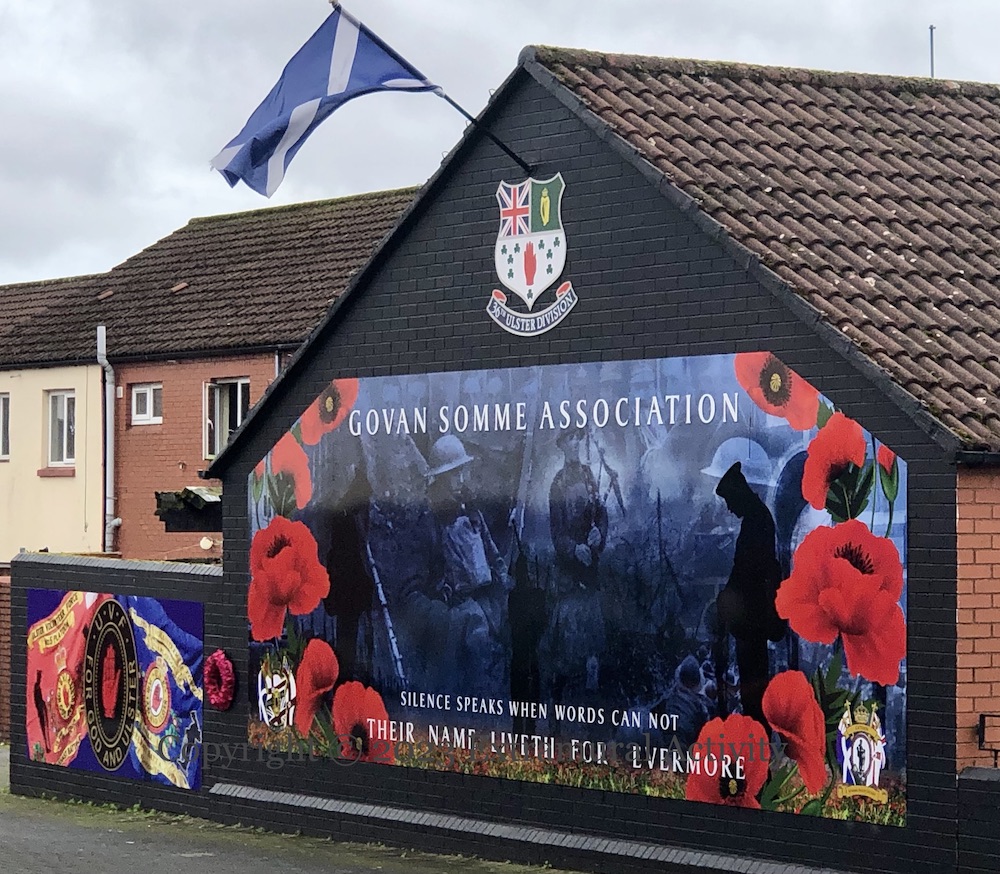
There was previously a (painted) mural on this wall – see Passchendaele Court – but this latest display is a large printed board, with photographs blended together and framed by graveside mourners, poppies, and the emblems of the Pride Of Govan flute band and the Govan Somme Association (Fb), which also supported the previous mural.
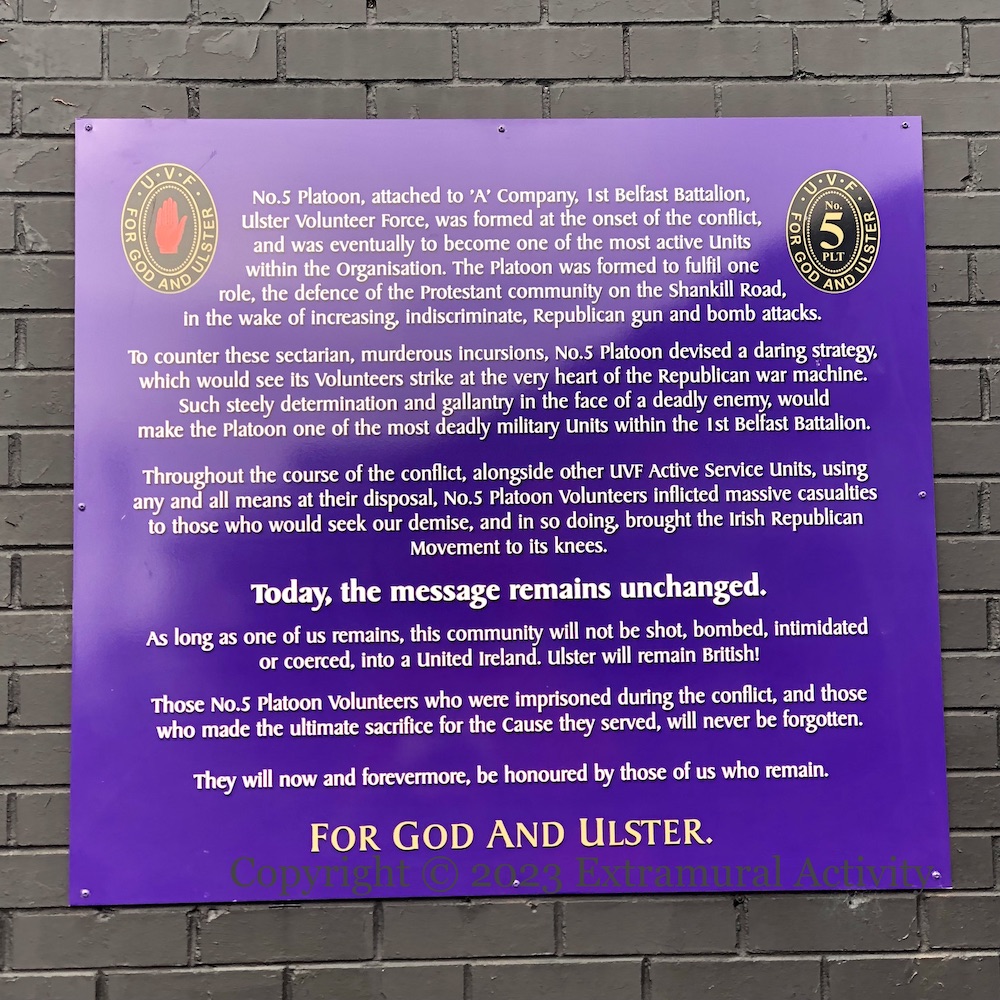
To the left, as seen in the final images, is a smaller UVF (1st Battalion) A Company 5th Platoon board – like the other new board in the street We Will Always Be Ready (and on the other side of Conway Street – see When Needed We Shall Rise Again).
There are three hooded gunmen on the main panel of this new installation along Conway Street, Belfast, and the side panel is a gallery of 14 photographs of hooded gunmen, flanked on either by two more hooded gunmen.
Please note: the photograph above has been photoshopped for colour. The true colour (orange) can be seen in the wide shot, below.
“No. 5 Platoon, attached to ‘A’ Company, 1st Belfast Battalion, Ulster Volunteer Force, was formed at the onset of the conflict, and was eventually to become one of the most active Units with the Organisation. The Platoon was formed to fulfil one role, the defence of the Protestant community on the Shankill Road, in the wake of increasing, indiscriminate, Republican gun and bomb attacks. To counter these sectarian, murderous incursions, No. 5 Platoon devised a daring strategy, which would see its Volunteers strike at the very heart of the Republican war machine. Such steely determination and gallantry in the face of a deadly enemy, would make the Platoon one of the most deadly military Units within the 1st Belfast Battalion. Throughout the course of the conflict, alongside other UVF Active Service Units, using any and all means at their disposal, No. 5 Platoon Volunteers inflicted massive casualties to those who would seek our demise, and in so doing, brought the Irish Republican Movement to its knees. Today the message remains unchanged. As long as one of us remains, this community will not be shot, bombed, intimidated or coerced, into a United Ireland. Ulster will remain British! Those No. 5 Platoon Volunteers who were imprisoned during the conflict, and those who made the ultimate sacrifice for the Cause they served, will never be forgotten. They will now and forevermore, be honoured by those of us who remain. For God and Ulster.”
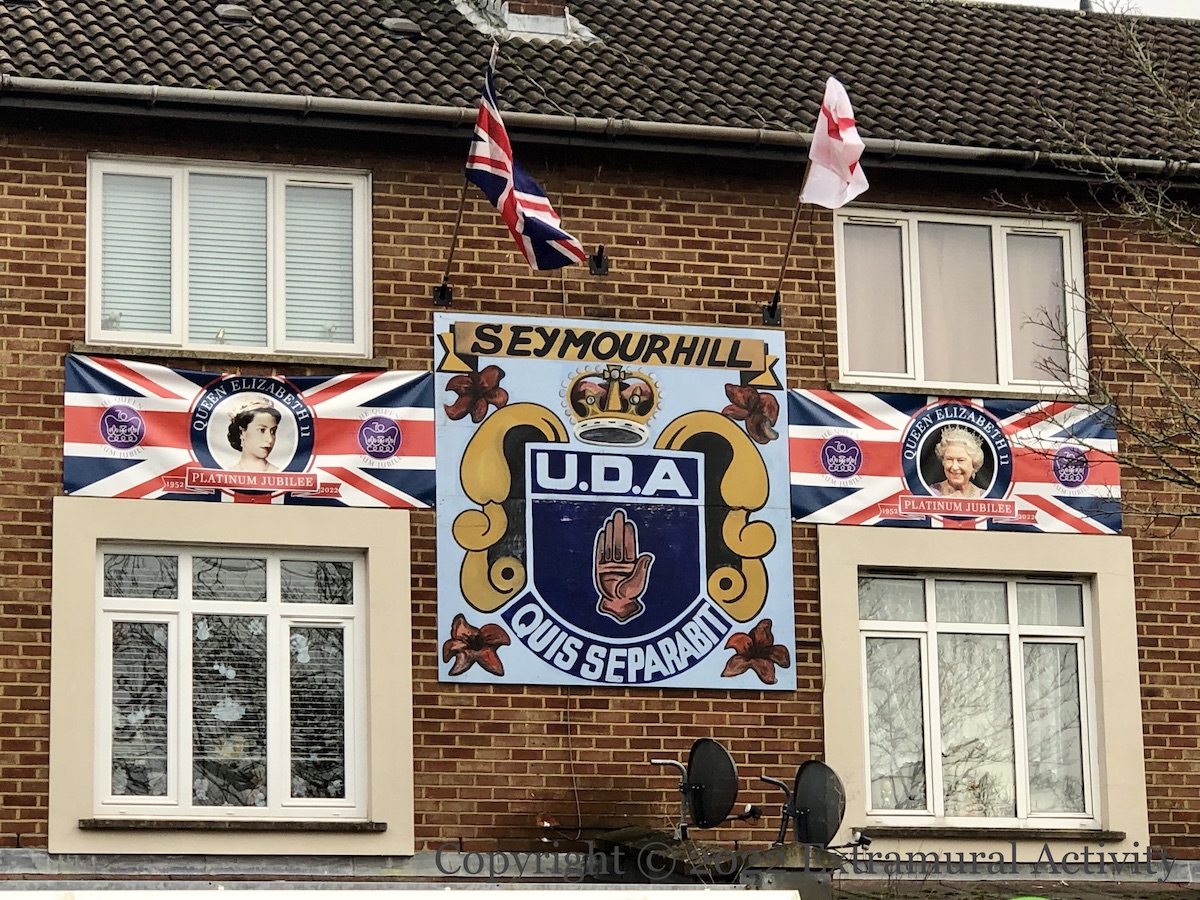
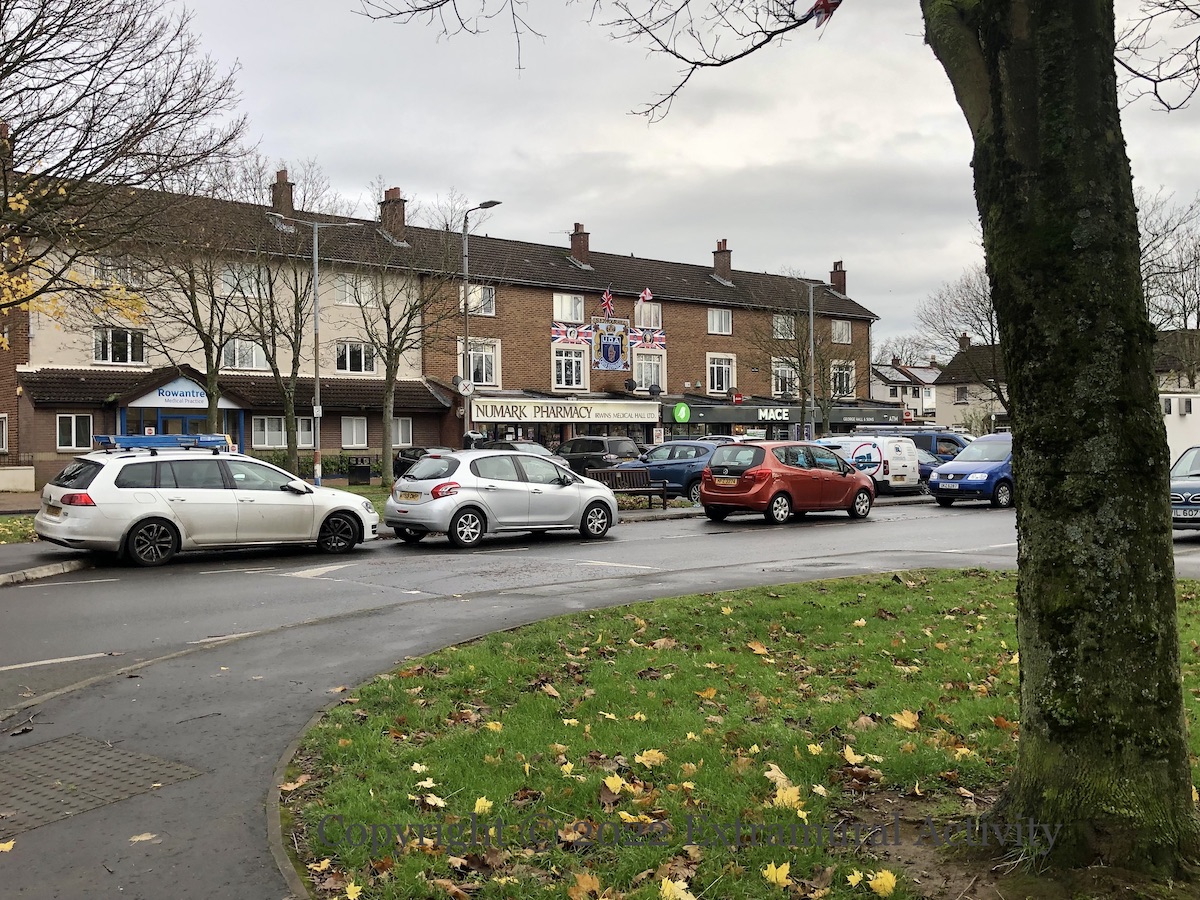
Queen Elizabeth II 70th/platinum Jubilee banners remain on either side of the UDA board above the Seymour Hill shops, even after her death in September (previously there were two NI Centenary banners). There are orange lilies at the four corners of the UDA emblem.
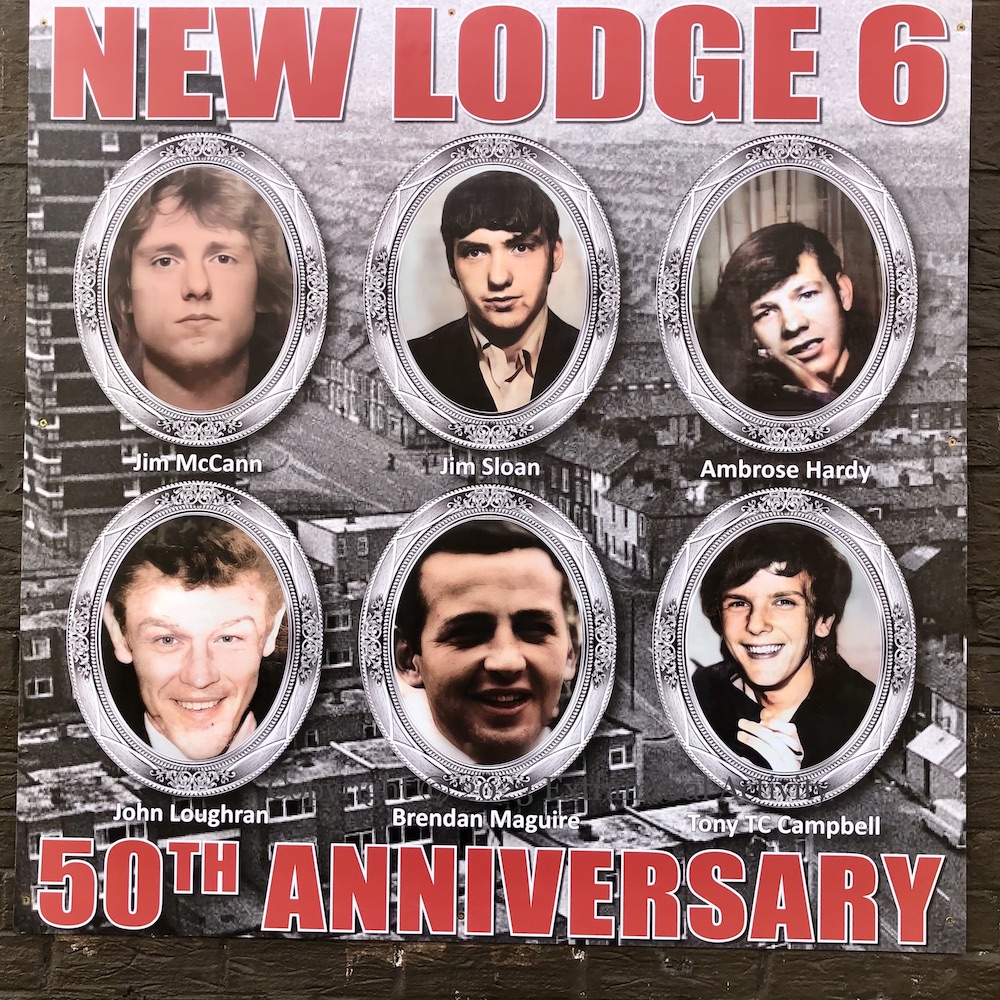
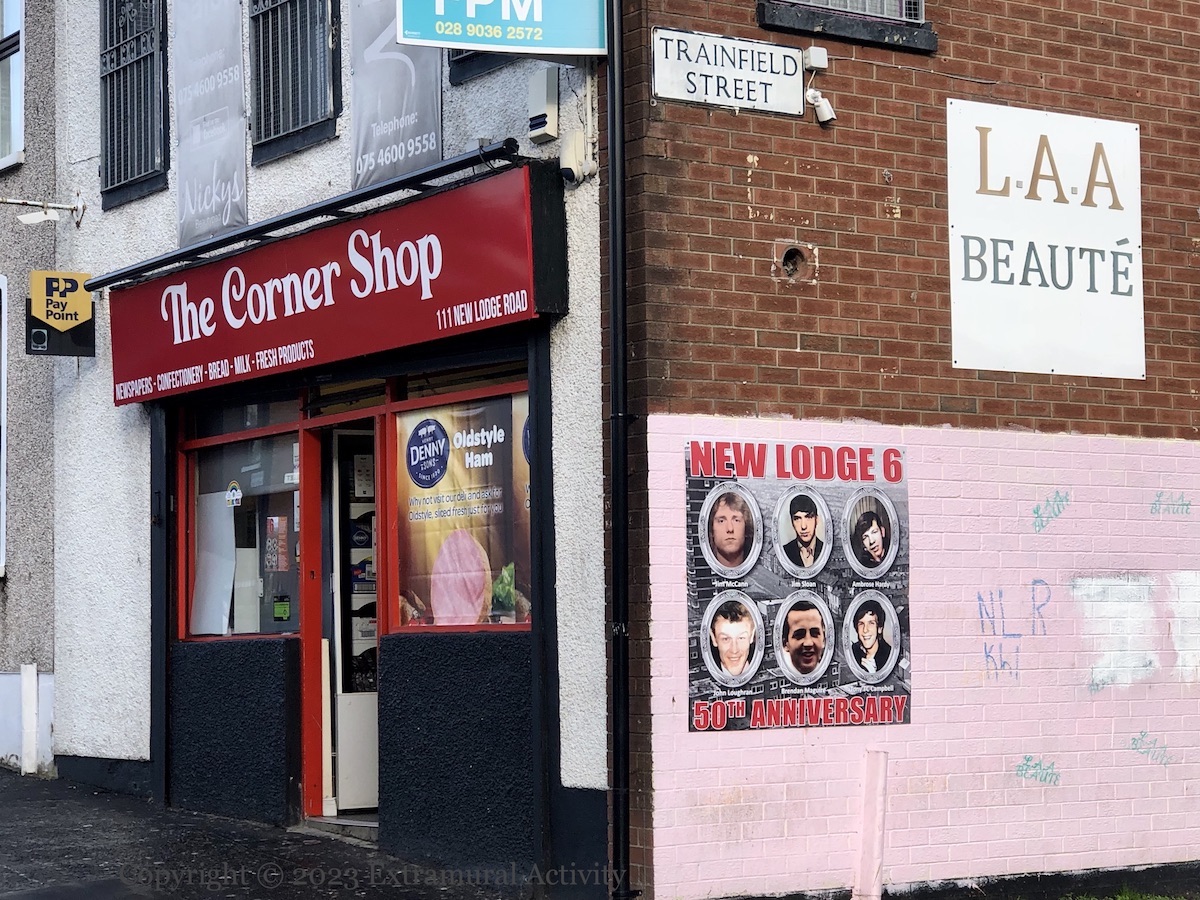
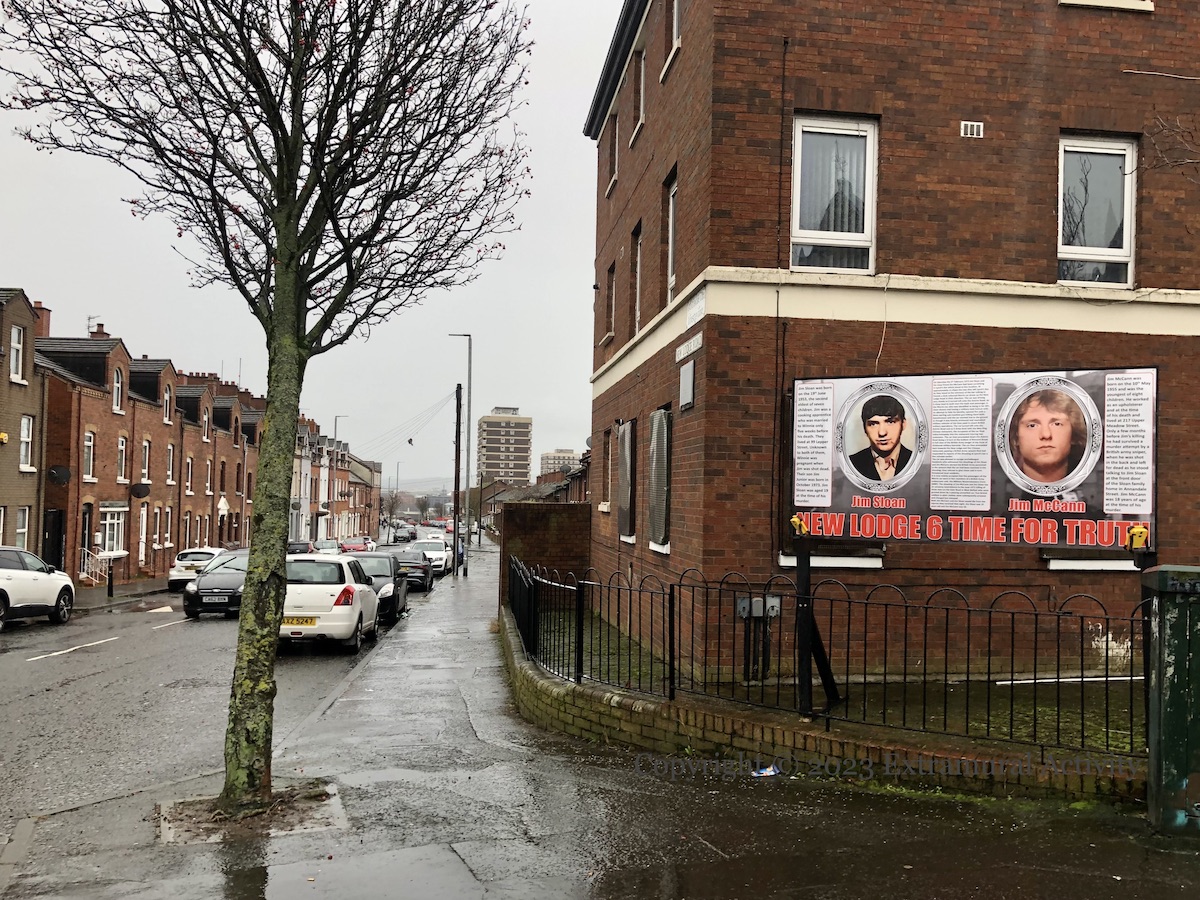
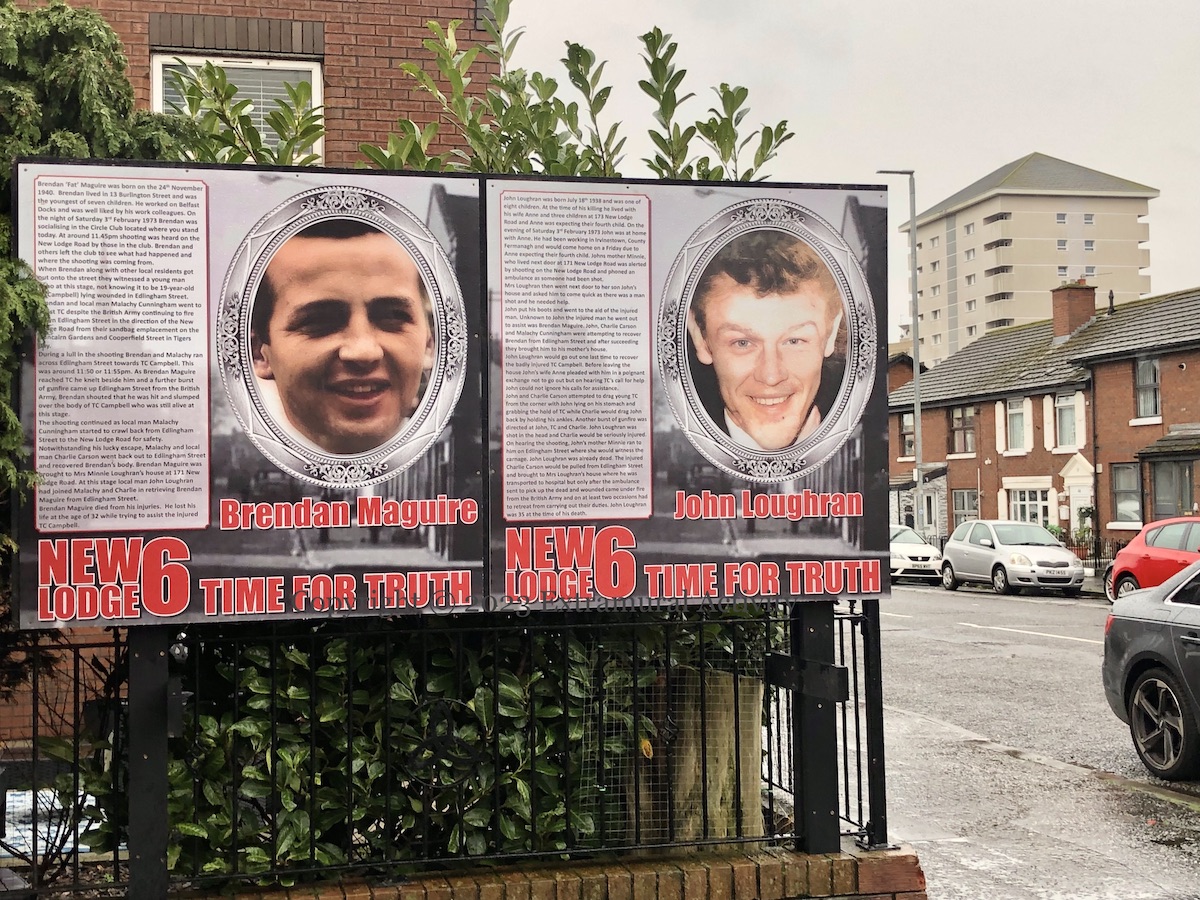
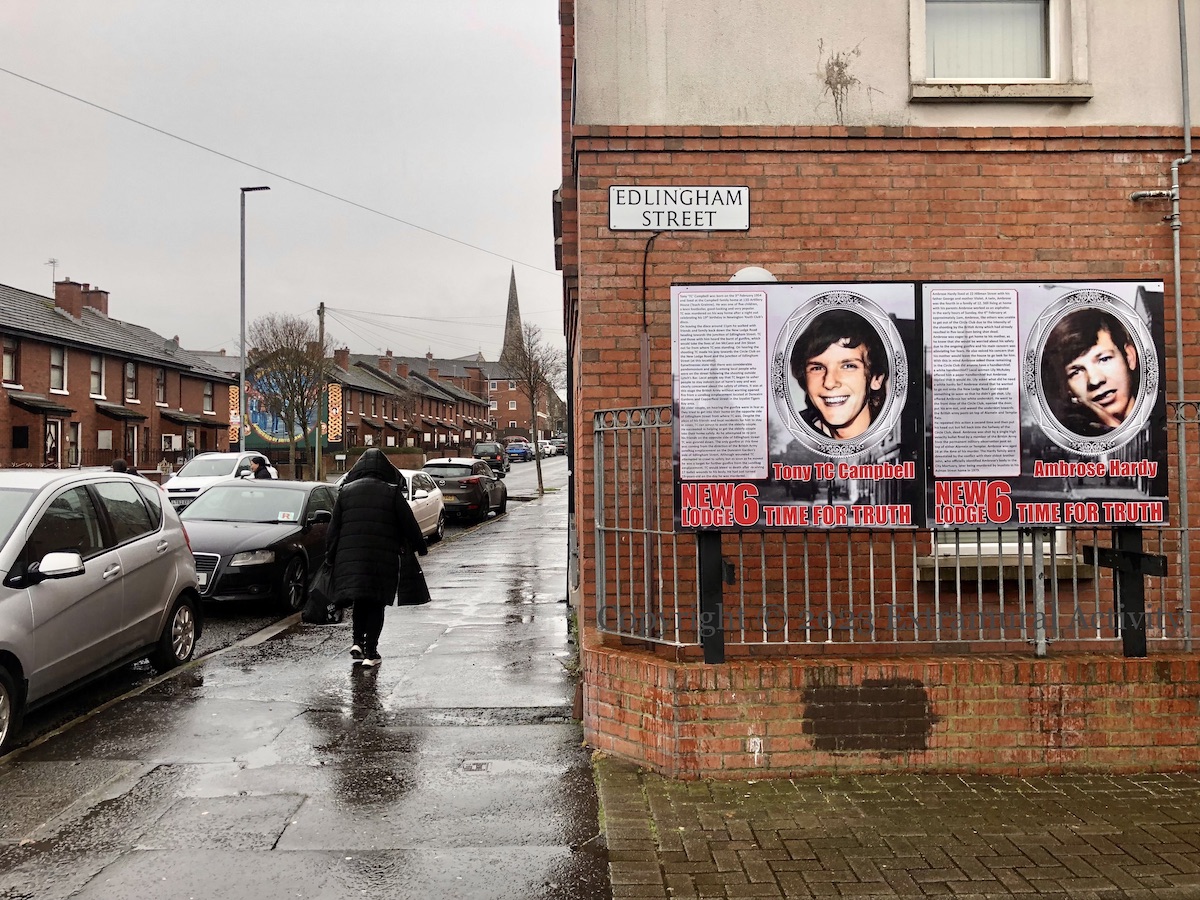
In addition to the repainted mural in Donore Court (featured yesterday in Time For The Truth) a number of information boards have been mounted along the New Lodge Road and on Teach Eithne, presenting photographs and profiles of the six youths who were killed, and a map and description of the events that took place on the night of February 3rd-4th, 1973.
The board concludes, “It is equally true that many others from the neighbouring Unionist and Protestant communities lost their lives during the conflict – these tragedies too bring a painful sense of loss that must be acknowledged. With over 100 lives lost by a combination of loyalist and British State forces – the Greater New Lodge community experience speaks to a story of State execution, collusion and naked sectarian killings over a 35 year period. … The New Lodge community has a narrative that remains to be told – this includes lives lost, imprisonment and discrimination. It is extremely difficult to accurately convey the enormity of the devastation and pain of lives lost in the conflict. … The New Lodge conflict narrative is not of passive victimhood, but of a community who survived the most difficult circumstances and who remain steadfast in their determination to pursue truth and justice for their loved ones.”
The Citizens’ Assembly is a group of 99 randomly-chosen Irish citizens, plus a chair, that considers large-scale issues over the course of months. It began in 2016 by taking up the Eighth Amendment on abortion, the “pensions timebomb” fixed-term parliaments, voter turnout and referendums, and climate change – it is not restricted, like its predecessor the Constitutional Convention, to constitutional issues (WP). The 2020-2021 Assembly considered gender equality and biodiversity loss. Sınn Féın called for an Assembly on Irish unity at its November (2022) Ard Fheıs (Irish Examiner | Derry Journal | youtube panel) and Belfast City Council passed an SDLP motion to recommend that the Taoıseach form an Assembly (News Letter); in December, the Dublin City Council approved a measure calling for an Assembly to consider the topic (SF).
“The Irish government should establish a citizens’ assembly on Irish unity/tıonól na saoránach ar aontú na hÉıreann.” Sınn Féın’s preferred outcome of such a process is given at the bottom of the board: “#Time4Unity/Am d’Aontacht”. The images show the board in north Belfast (Limestone Road).
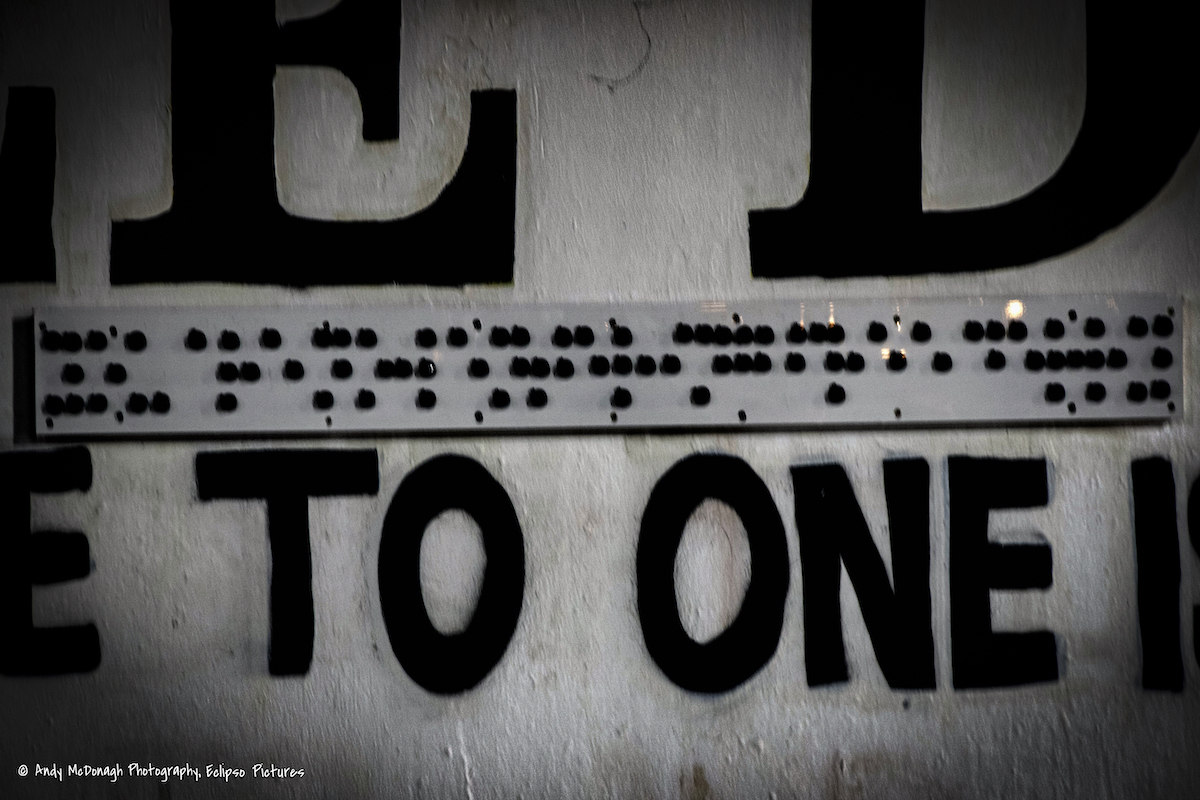
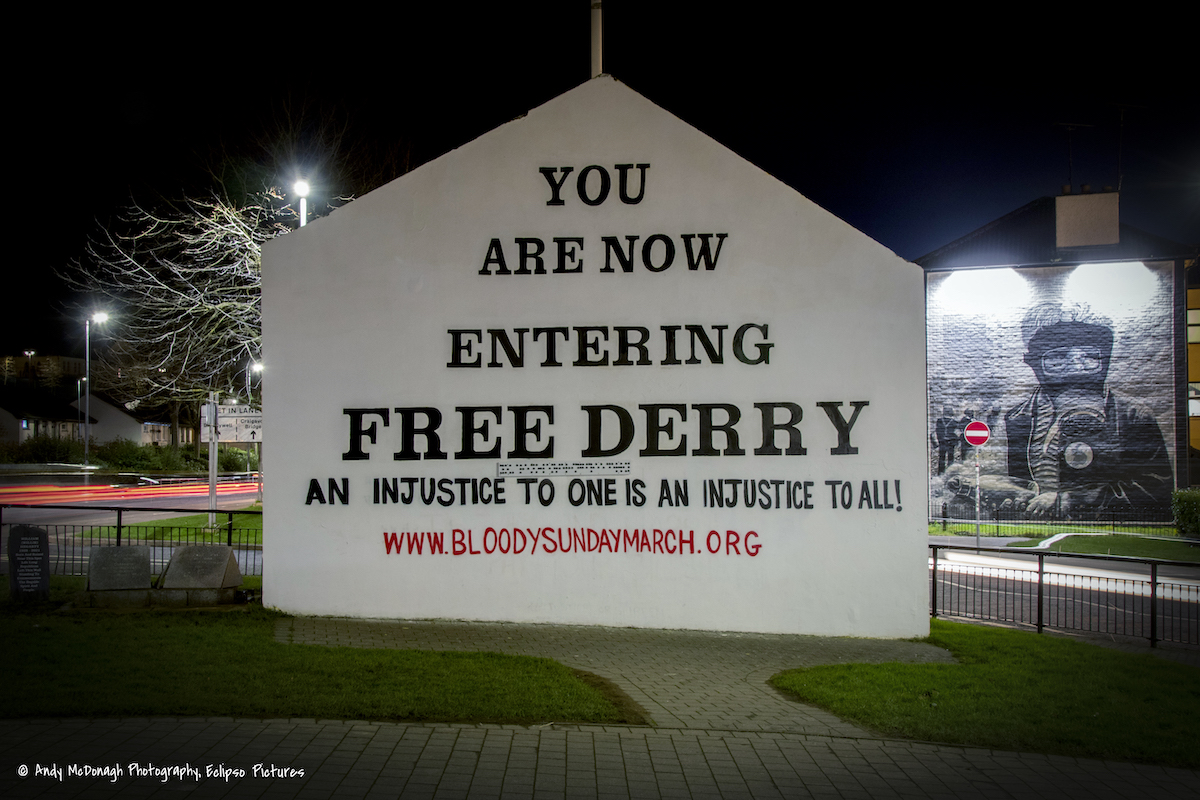
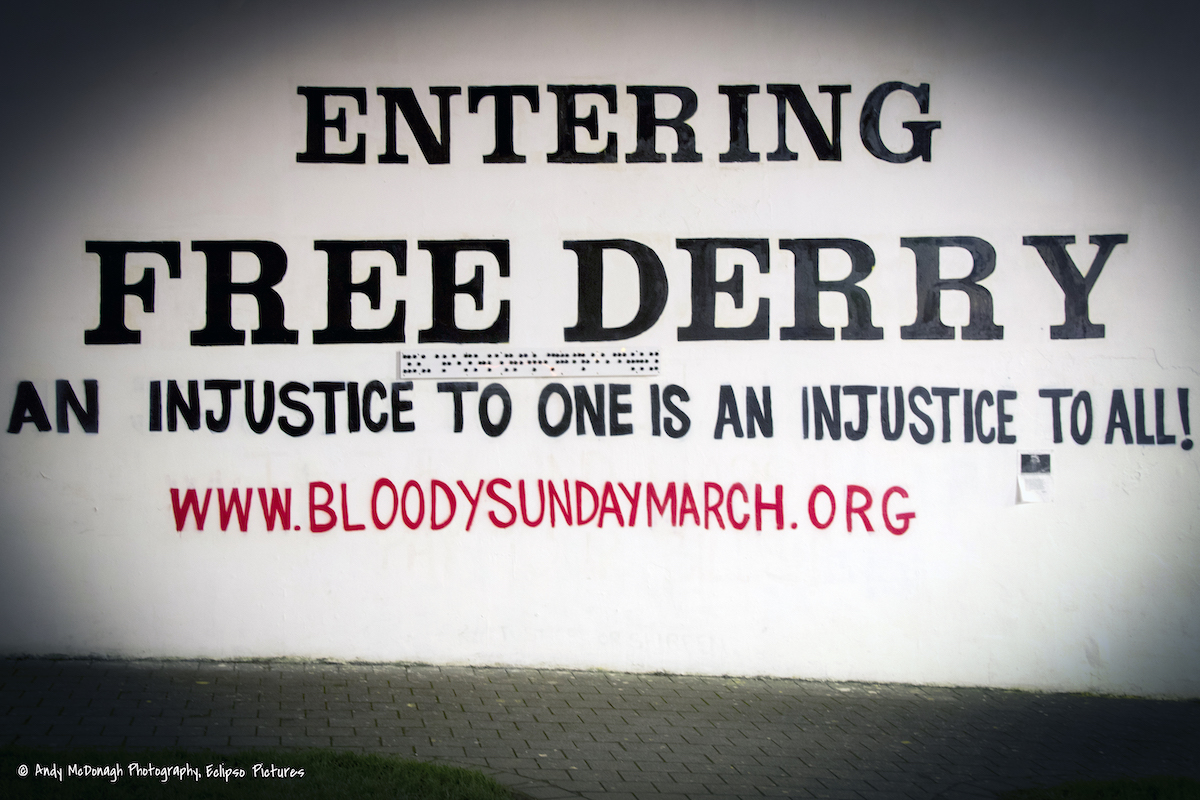
A new braille plaque bearing the now-iconic saying “You are now enterting Free Derry” was unveiled last Tuesday (January 24th) by the founder of Children In Crossfire Richard Moore (featured previously in The Derry Lama) who was blinded in 1972 when he was hit with a rubber bullet.
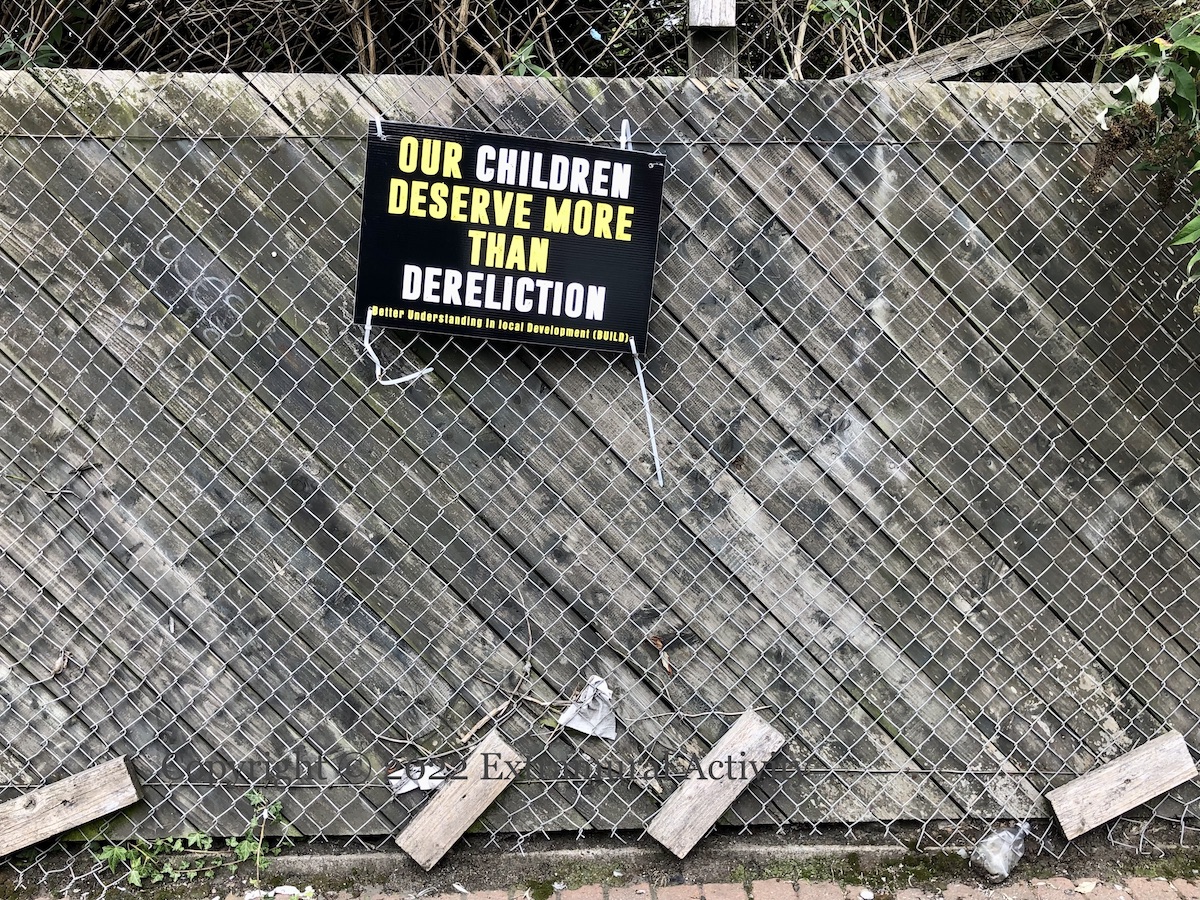
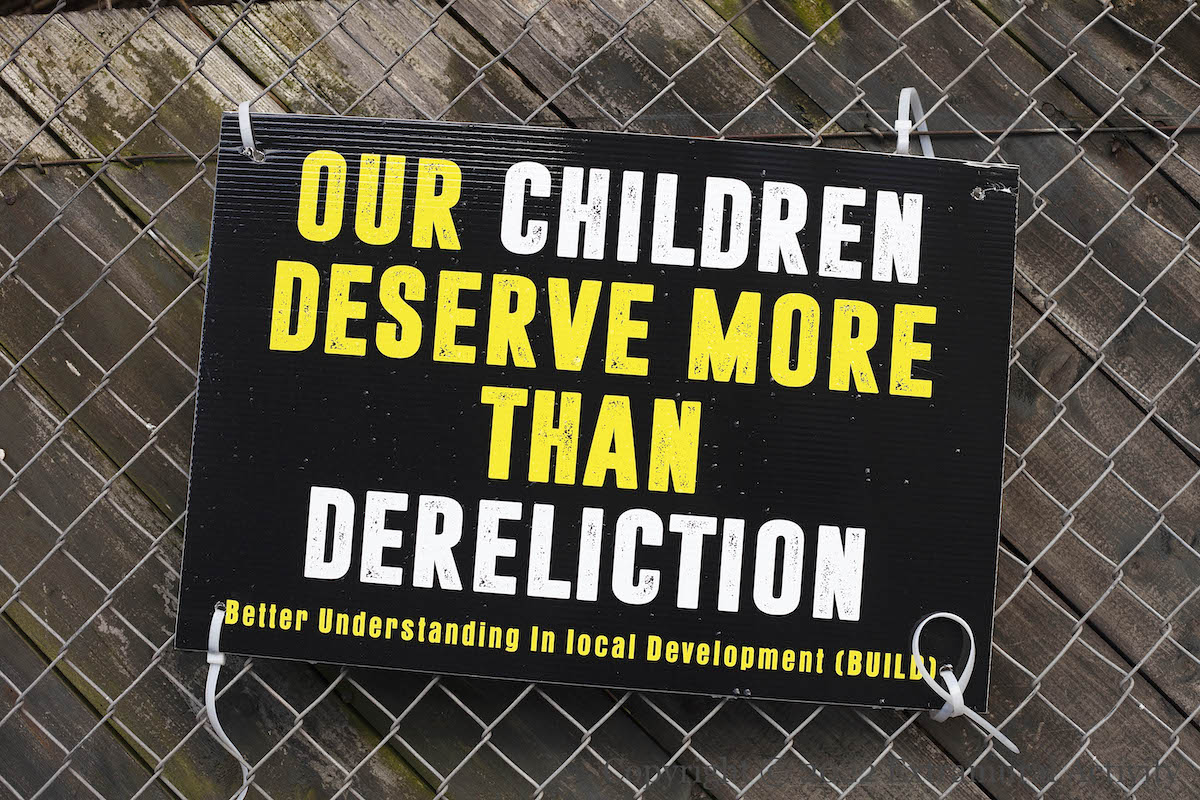
BUILD Shankill now has a website that promises to provide (in the future) “a full inventory of vacant and derelict land in the area”. In the meantime, the campaign to bring attention to housing issues in the area continues with placards and tarps:
“Our children deserve more than dereliction – Better Understanding In Local Development (BUILD)”
“Did you know? The Shankill has over 80 waste sites the size of 62 football pitches with the space to build 3300 homes. #BuildShankill.” For a mural-sized version of this tarp (in the third image) over one of the pieces of waste ground, see #BuildShankill.
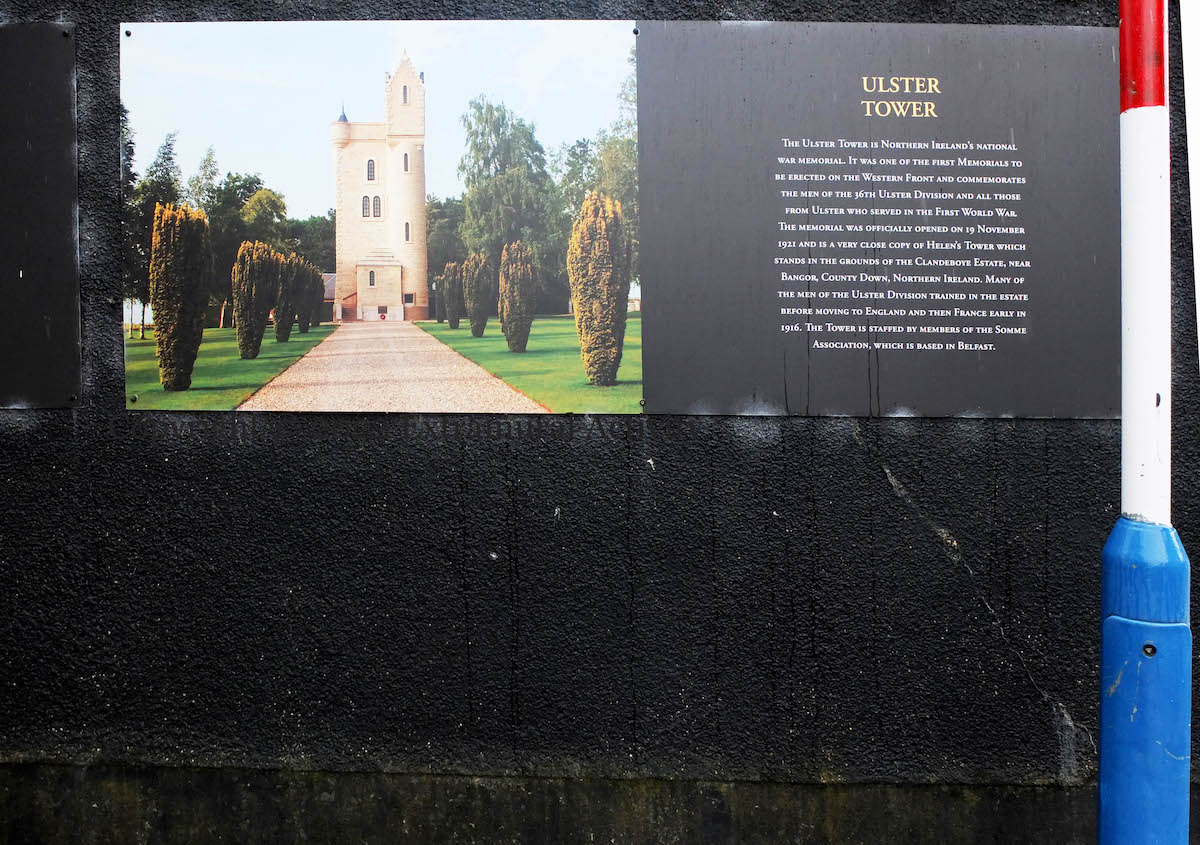
All three major WWI memorials with relevance to Ulster – Thiepval Memorial, Menin Gate, Ulster Tower – are brought together in a gallery in Londonderry’s Fountain as part of a tribute to the “Men from the Fountain who made the supreme sacrifice in the Great War.”
“Thiepval Memorial: The Thiepval Memorial to the missing of the Somme is a war memorial to 72,195 missing British and South African servicemen, who died in the battles of the Somme of the First World War between 1915 and 1918, with no known grave. It was built in red brick and limestone between 1928 and 1932. It is near the village of Thiepval, Picardy in France. A visitors’ centre opened in 2004.”
“Menin Gate: The Menin Gate memorial to the missing is a war memorial in Ypres, Belgium, dedicated to the 54,395 British and Commonwealth soldiers who were killed in the Ypres salient of World War I and whose graves are unknown. The memorial is located at the eastern exit of the town and marks the starting point for one of the main roads out of the town that led Allied soldiers to the front line. The Menin Gate memorial was unveiled on 24 July 1927.”
“Ulster Tower: The Ulster Tower is Northern Ireland’s national war memorial. It was one of the first memorials to be erected on the western front and commemorates the men of the 36th (Ulster) Division and all those from Ulster who served in the First World War. The memorial was officially opened on 19 November 1921 and is a very close copy of Helen’s Tower which stands in the grounds of the Clandeboye estate, near Bangor, County Down, Northern Ireland. Many of the men of the Ulster division trained in the estate before moving to England and then France early in 1916. The Tower is staffed by members of the Somme Association, which is based in Belfast.”















 Extramural Activity