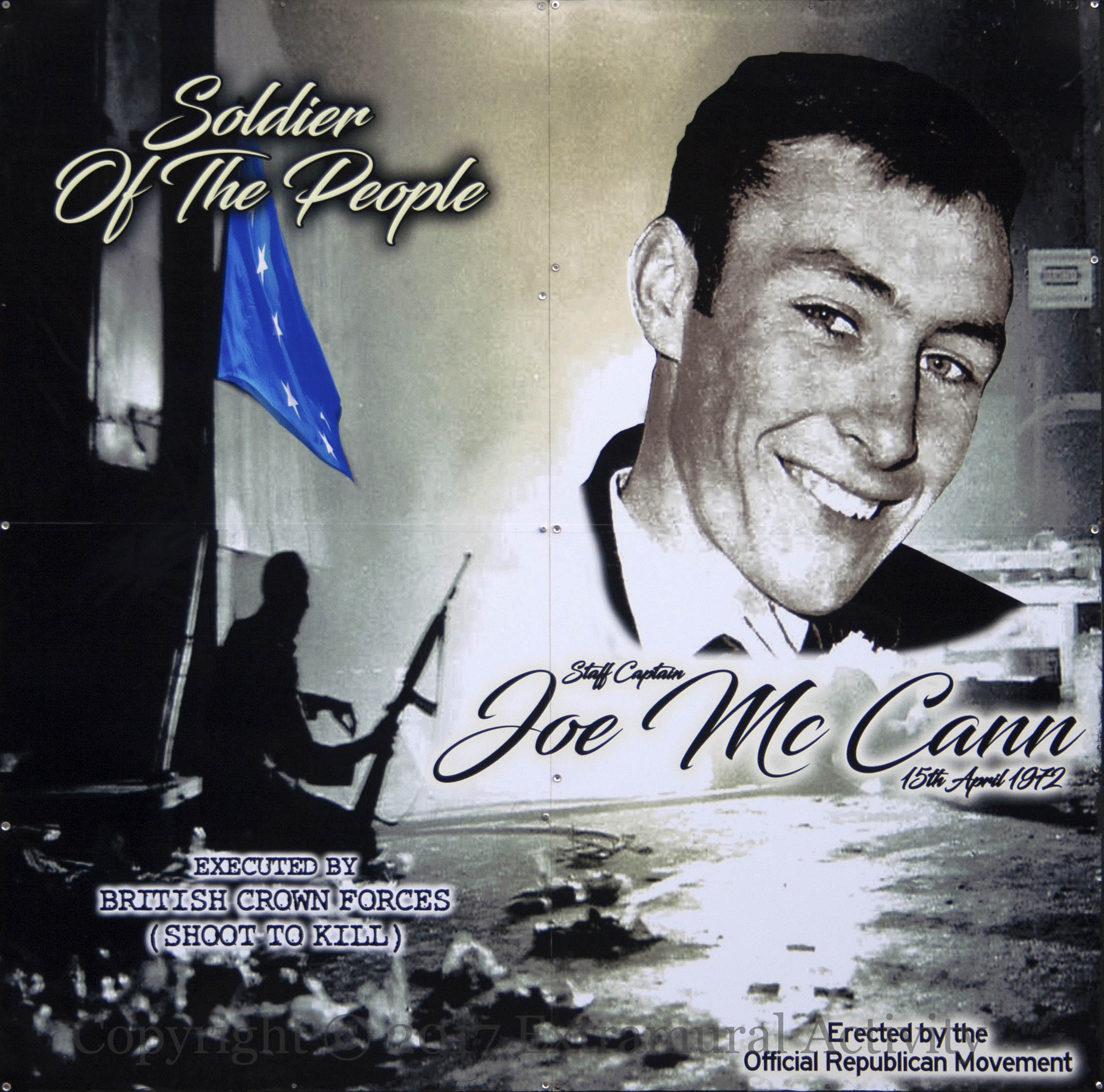
Joe McCann was (Official) IRA OC in the Markets area of south Belfast, where he was shot by paratroopers in 1972. The HET in 2013 found that the killing was unjustified, as McCann was unarmed and shot multiple times at close range; the DPP announced in December 2016 that two soldiers – now in their 60s – are to stand trial for the shooting. (WP | Irish Times | Telegraph which also includes the photograph used as a background, which shows McCann, with MI, during the occupation of the Inglis bakery in the Markets on August 9th, 1971 – Internment Day.)
The boards on the right read: “‘Tis thy flag and my flag;/The best of flags on Earth,/So cherish it my children,/It’s yours by right of birth.//Your fathers fought,/Your fathers died,/To raise it to the skies,/And we like them must never yield,/But keep it flying high.” from The UnionJack, by Edward Shirley, in Little Poems For Little People, and “In memory of the men and women from the Orangefield area, who have made the ultimate sacrifice in the defence of our freedom in all theatres of conflict, both foreign and at home.” These memorial boards are to local men who “stood to the fore to defend the Empire as the 8th Battalion (East Belfast) Royal Irish Rifles” in the 36th division, formed from formed from the “8th Battalion (Avoniel) and the 6th Battalion (Strandtown)” of the Ulster Volunteers.
Privates Fred Starrett and James Cummings died in an IRA bombing on Belfast’s Royal Avenue on February 24th, 1988. Both Orangemen, their deaths are commemorated every year by a parade from east Belfast to the city centre. Shown in today’s post are the panels from a new UDR commemorative wall in east Belfast.
The fourth panel is a collage of UDR activities (on the streets, on base, manning check-points, in boats, helicopters, with dogs) with a few pieces of republican signs as backdrop (Free Derry Corner, “Provies rule”, “Such is British justice – remember 9th August”) and the fifth shows soldiers searching for arms near some outbuildings.
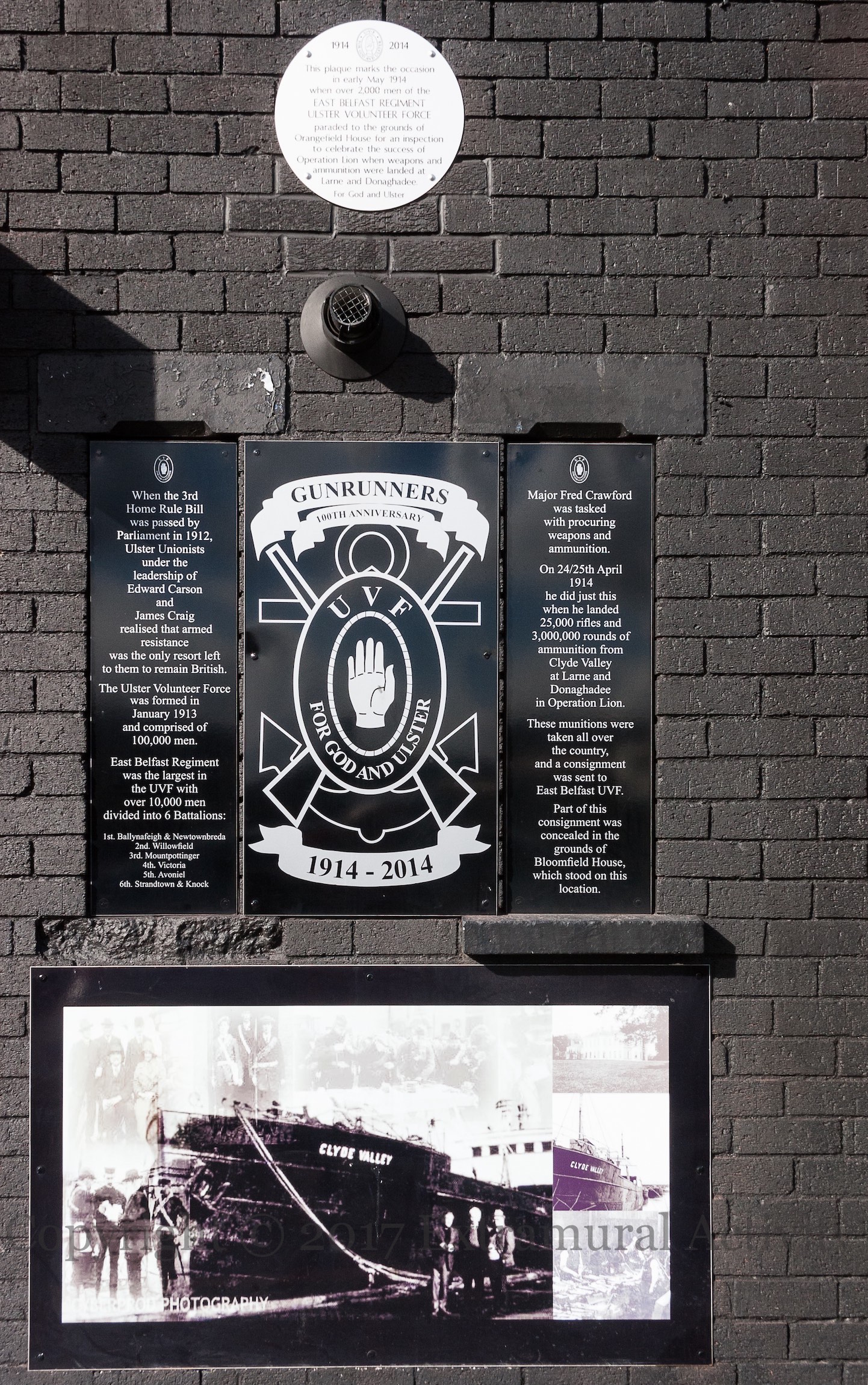
The 100th anniversary plaque and board shown in this entry are on the spot of Bloomfield House (web), where guns from Clyde Valley were held for the East Belfast battalion of the Ulster Volunteers in 1914. See also: John Henry Patterson’s involvement in Operation Lion.
“When the 3rd Home Rule Bill was passed by Parliament in 1912, Ulster Unionists under the leadership of Edward Carson and James Craig realised that armed resistance was the only resort left to them to remain British. The Ulster Volunteer Force was formed in January 1913 and comprised of 100,000 men. East Belfast Regiment was the largest in the UVF with over 10,000 men divided into 6 Battalions: 1st. Ballynafeigh & Newtownbreda, 2nd. Willowfield, 3rd. Mountpottinger, 4th. Victoria, 5th. Avoniel, 6th. Strandtown & Knock. Major Fred Crawford was tasked with procuring weapons and ammunition. On 24/25th April 1914 he did just this when landed 25,000 rifles and 3,000,000 rounds of ammunition from Clyde Valley at Larne and Donaghadee in Operation Lion. These munitions were taken all over the country, and a consignment was sent to East Belfast UVF. Part of this consignment was concealed in the grounds of Bloomfield House, which stood on this location.”
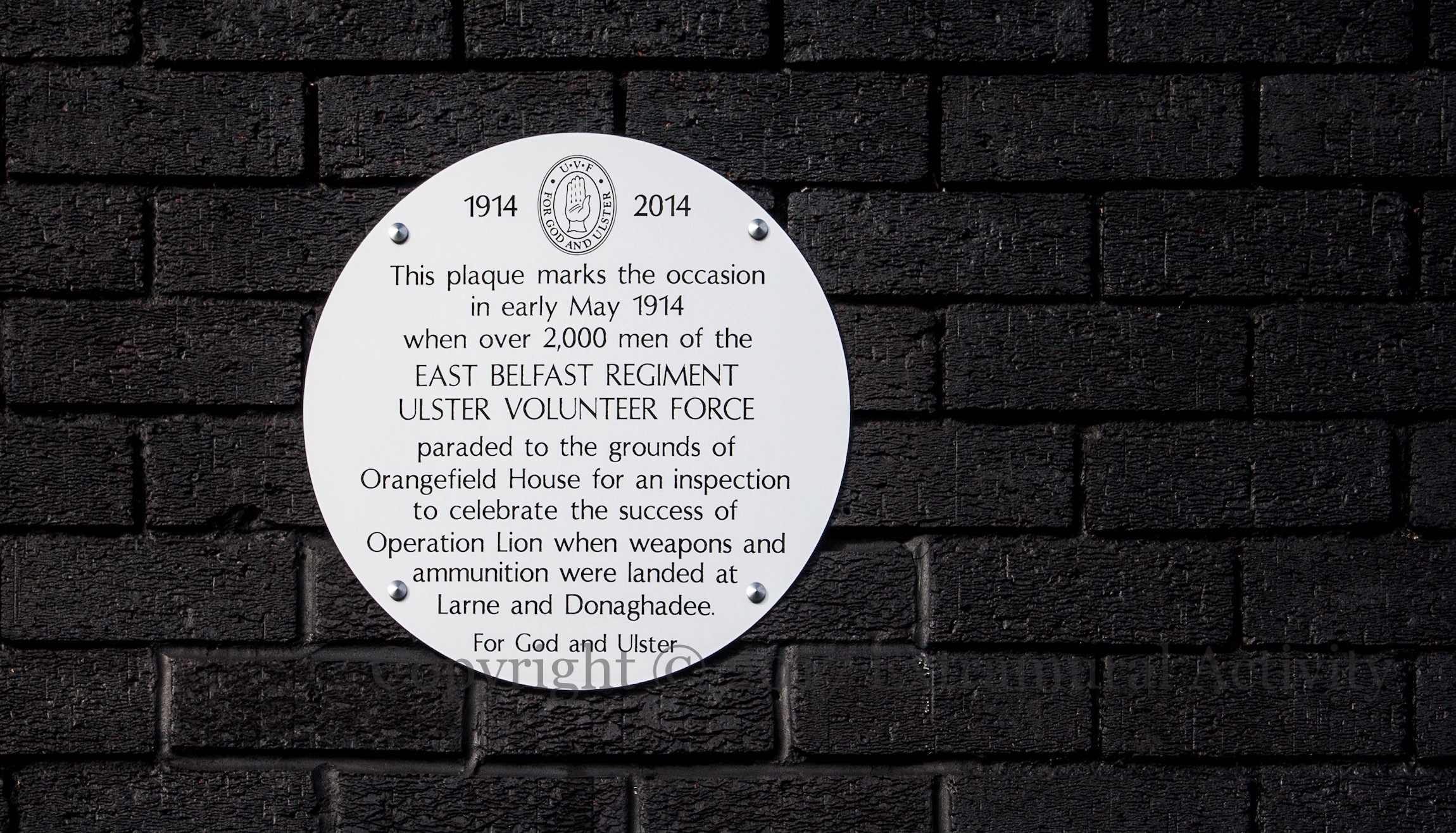
“This plaque marks the occasion in early May 1914 when over 2,000 men of the East Belfast Regiment, Ulster Volunteer Force paraded to the grounds of Orangefield House for an inspection to celebrate the success of Operation Lion when weapons and ammunition were landed at Larne and Donaghadee. For God and Ulster.”
These three are next to (and the same black background) as the Orangefield memorial – see In All Theatres Of Conflict.
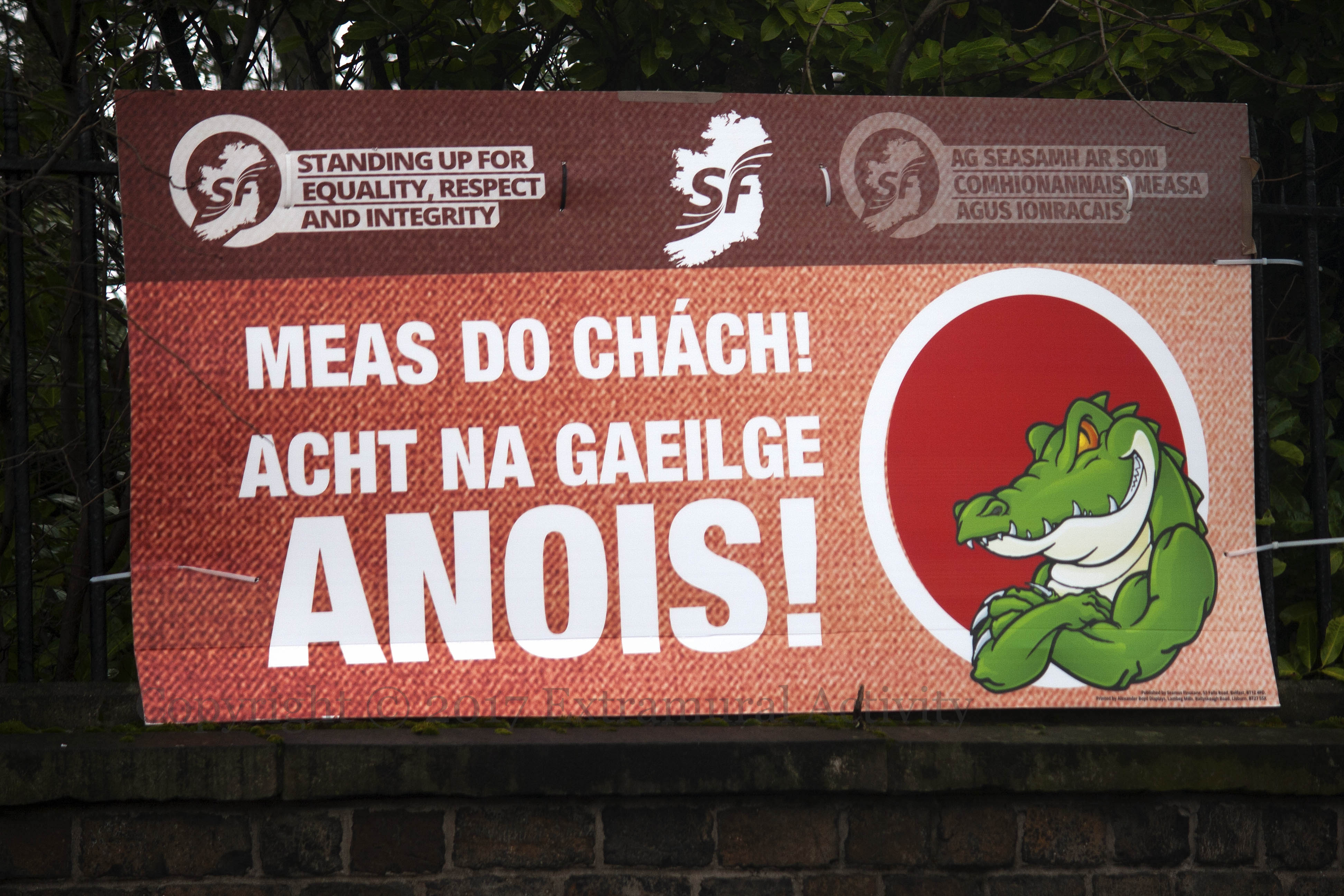
Two final pieces from the #ae17 election campaign. Above, a somewhat menacing crocodile waits impatiently for an Irish-language act: “Meas do chách – Acht na Gaeılge anoıs!” (“Respect for all – Irish language act now!”) The white circle on red is the logo of An Dream Dearg, an Irish-language campaign (Irish News); the crocodile stems from DUP leader Arlene Foster’s response to Sınn Féın demands for an Act, when she said “If you feed a crocodile, they’re going to keep coming back and looking for more.” (BBC-NI | video at RTÉ) She later said she regretted the remarks as they allowed her to be demonised during the campaign (BelTel).
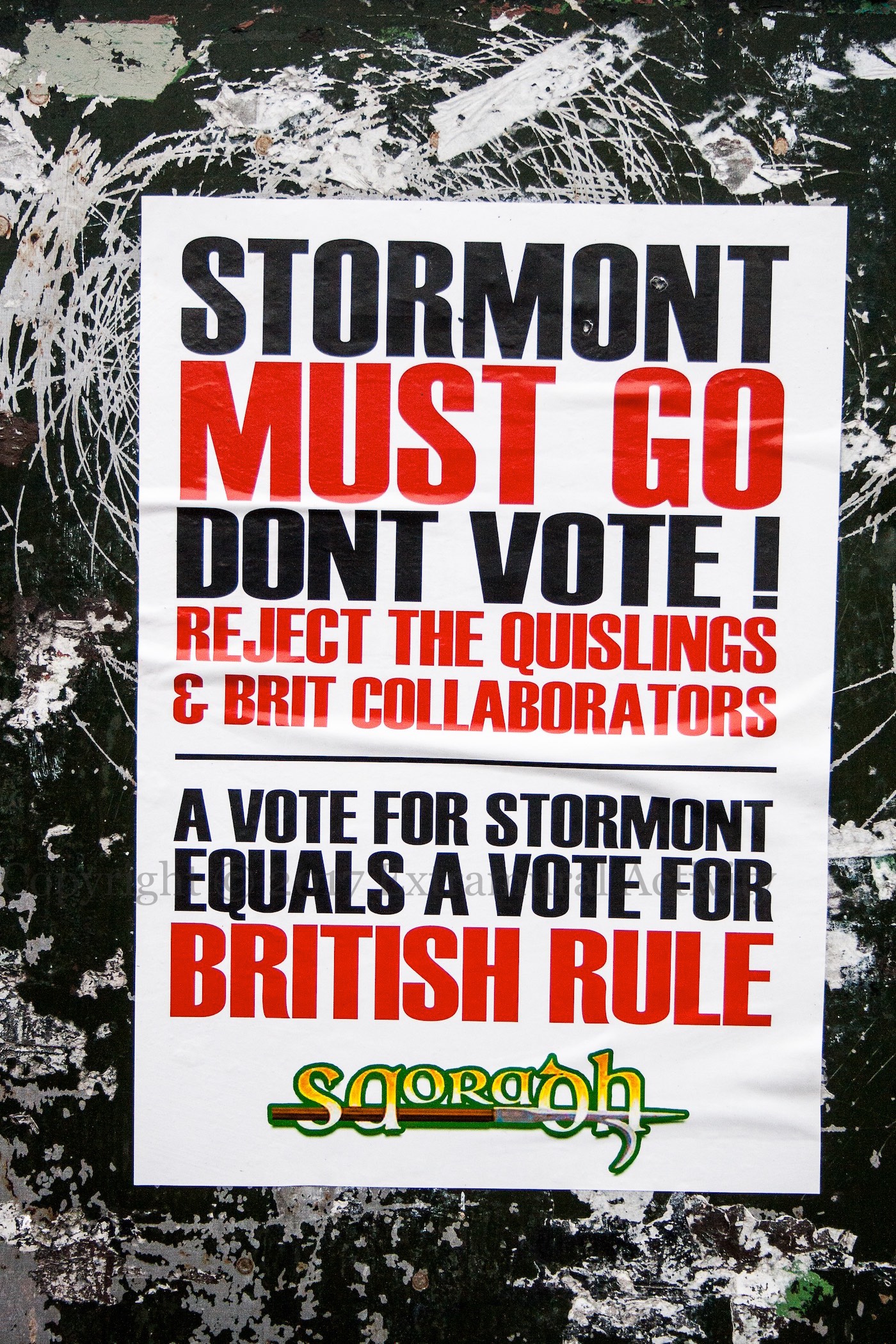
Below, Saoradh’s plea that “A vote for Stormont equals a vote for British rule – Don’t vote! Reject the quislings and Brit collaborators.” (See also: Stormont Must Go)
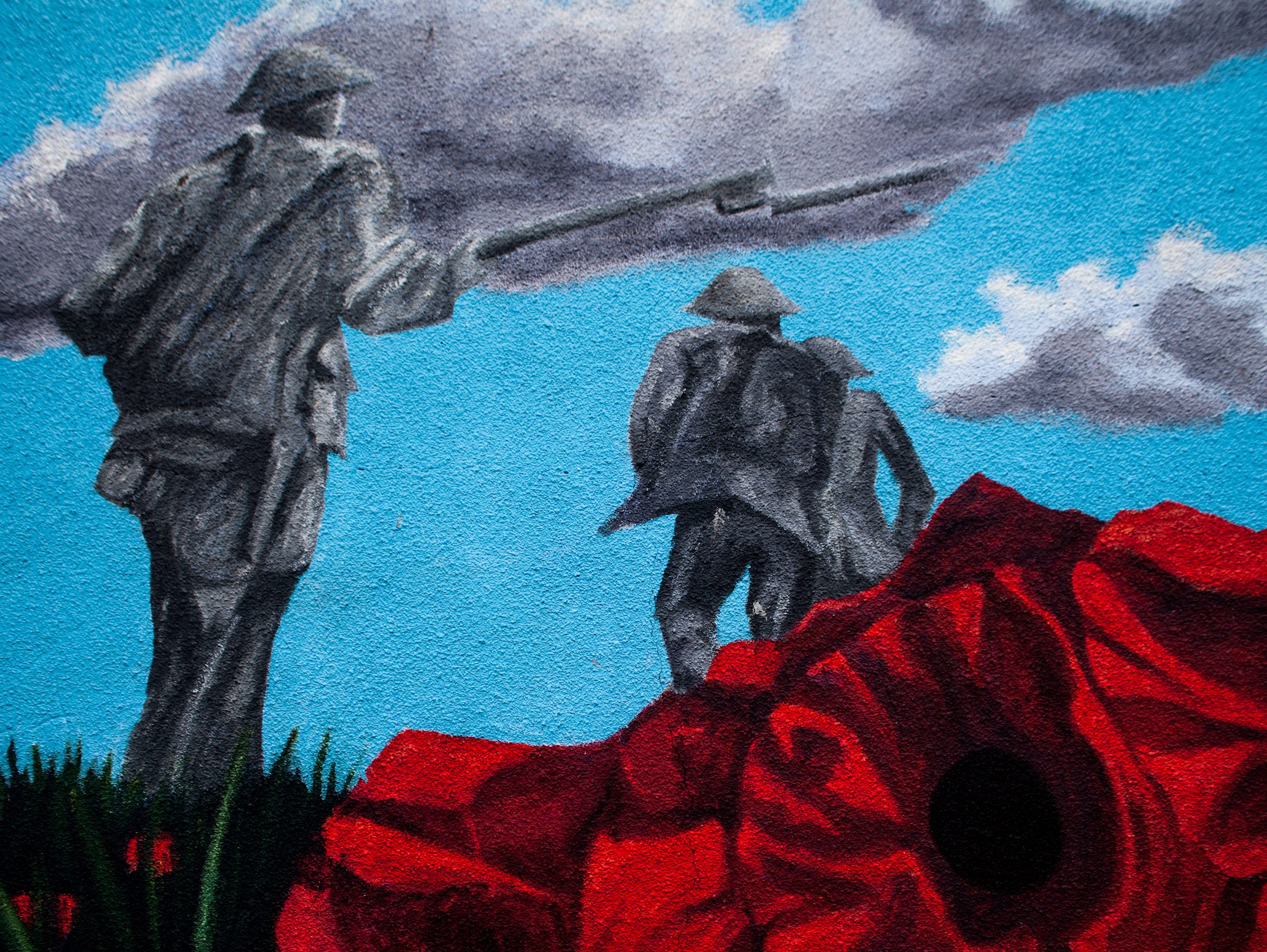
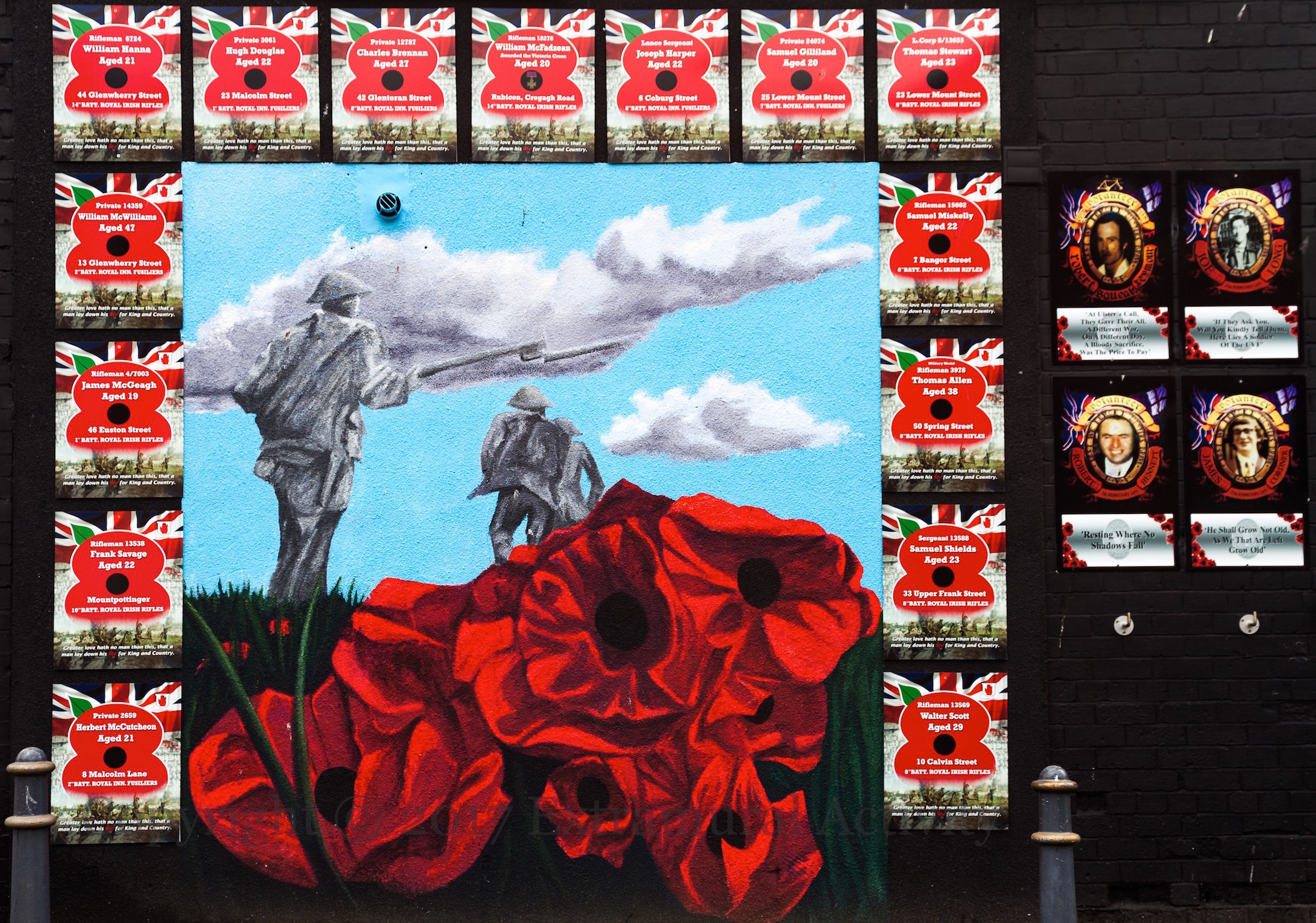
The “Jesus” tag at the corner of My Lady’s and London roads has been replaced with a WWI mural showing soldiers running through a field of poppies, and which is surrounded by plaques from the Poppy Trail with the details of some of those from the 36th (Ulster) Division who were killed.
By Mark Ervine in London Road.
For the four panels on the right, see Ulsters Brave.
Photographic portraits of four UVF members – Robert “Squeak” Seymour (east Belfast commander), Joe Long, Robert Bennett, James Cordner – on panels adjacent to a new Somme mural (shown tomorrow). Seymour died in 1988, the others in the early seventies. The same four are commemorated on a mural (and a plaque) on Ballymacarrett Road. “At Ulster’s call, they gave their all, a different war, on a different day, a bloody sacrifice, was the price to pay.”
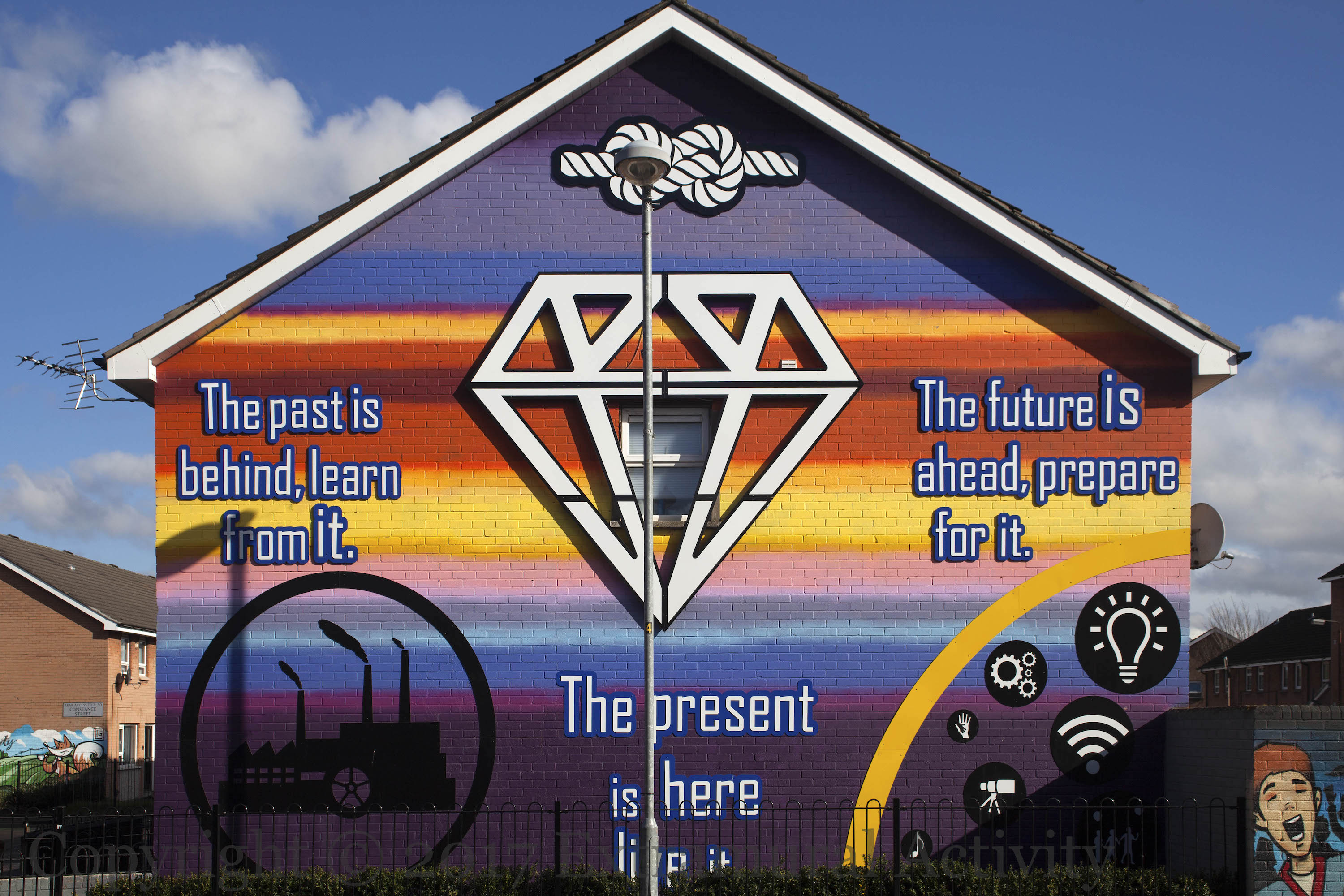
“The past is behind, learn from it. The present is here, live it. The future is ahead, prepare for it.” 2016 mural and board-cut diamond (which is lit from behind at night) in Lord Street, replacing the old LPA mural which lasted from 1997 to 2015.
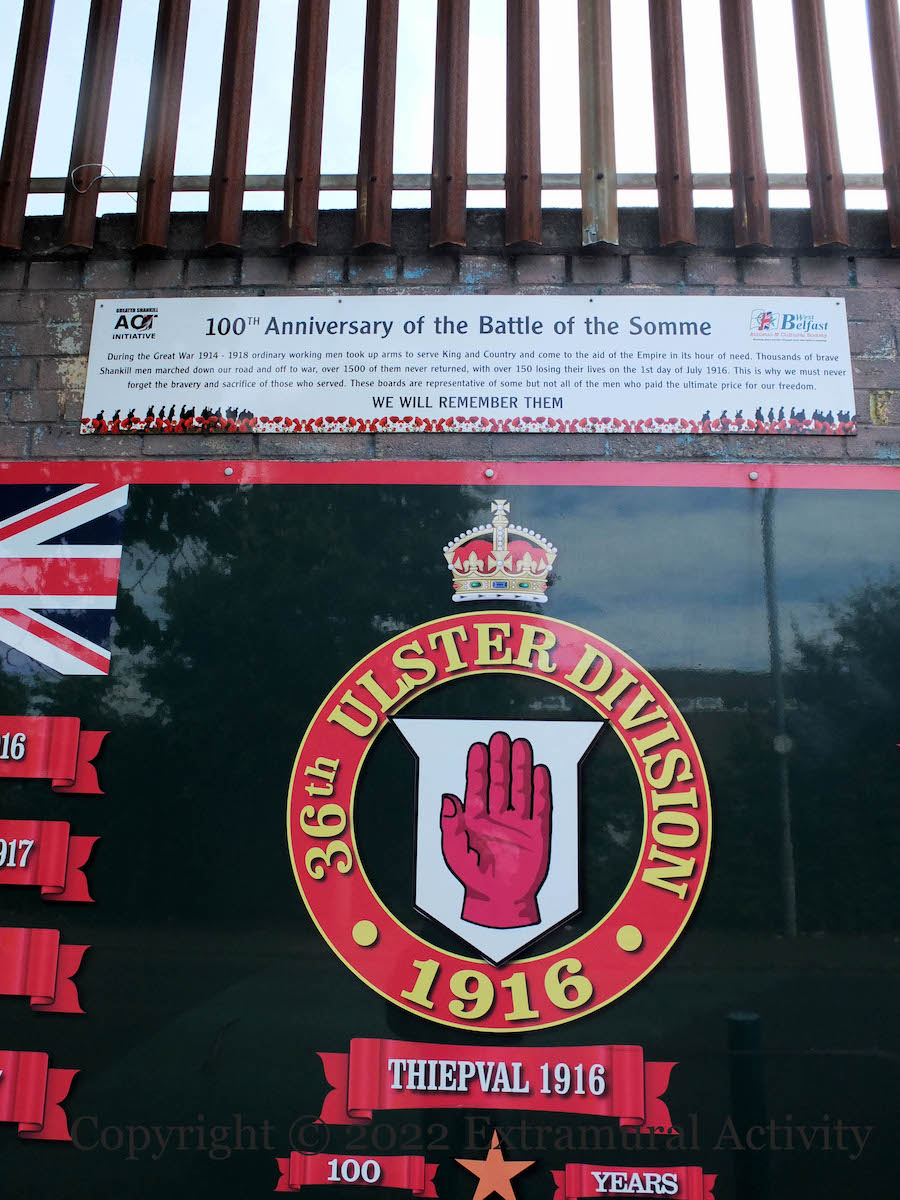
The main battles of the 36th (Ulster) Division (“XXXVI”) are listed – Somme, Thiepval, Messines, Ypres, Cambrai, Somme (1918), St. Quintin [St. Quentin], Lys, Courtrai – and those who died are commemorated on this new board. The main board is surrounded by smaller boards, part of the Poppy Trail, bearing the names, ages, addresses, ranks, and units of deceased soldiers. For example: William Lyttle, aged 18, 16 Tenth Street, 9th batt. Royal Irish Rifles, Rifleman 13044.
Update: info board added “Thousands of brave Shankill men marched down our road and off to war, over 1500 of them never returned, with over 150 losing their lives on the 1st day of July 1916.”




 Extramural Activity