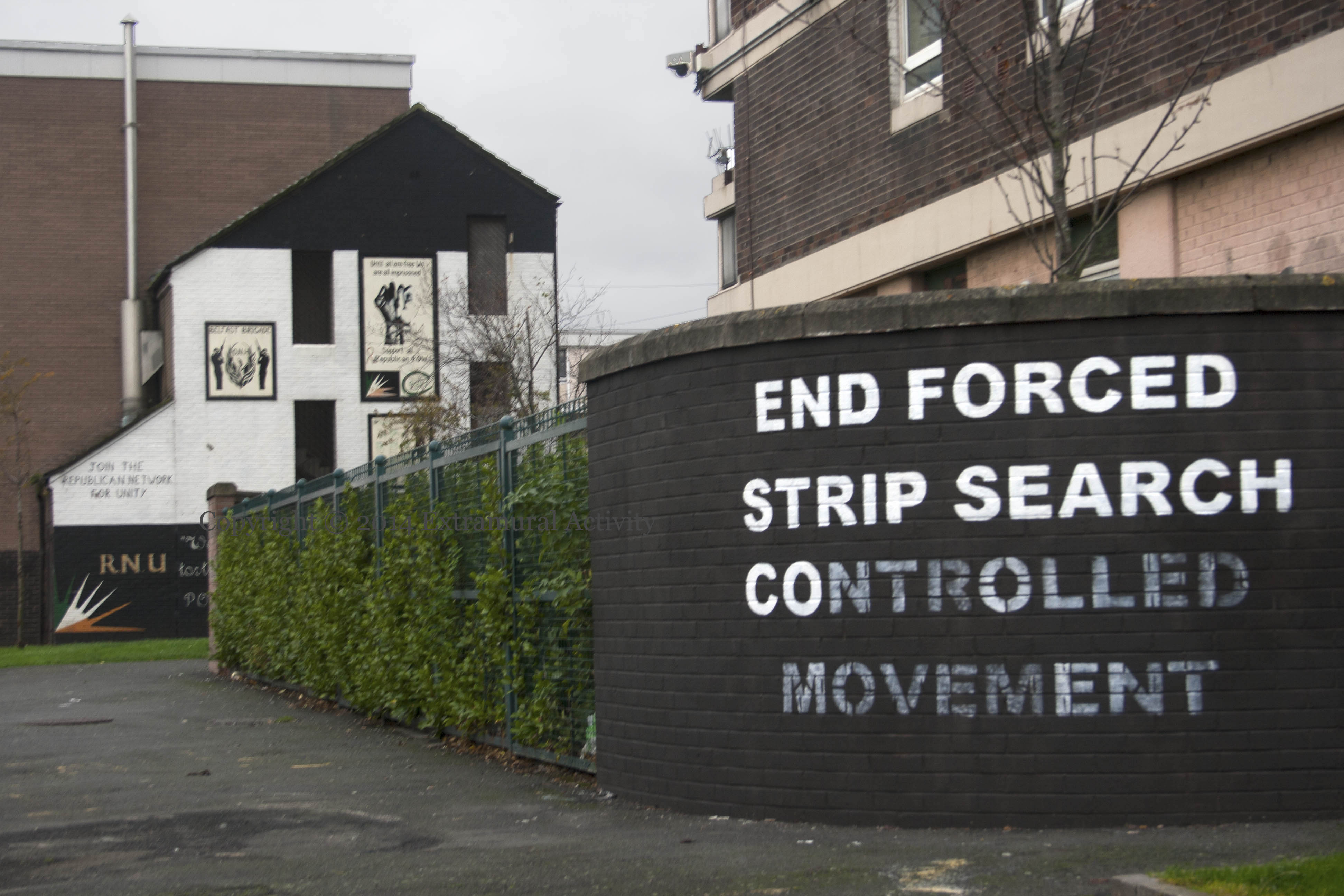
Above, “End forced strip search, controlled movement” RNU/Cogús (web) stencil (“End forced strip search, controlled movement”) in front of a gallery of RNU/Cogús boards (see Until All Are Free We Are All Imprisoned).
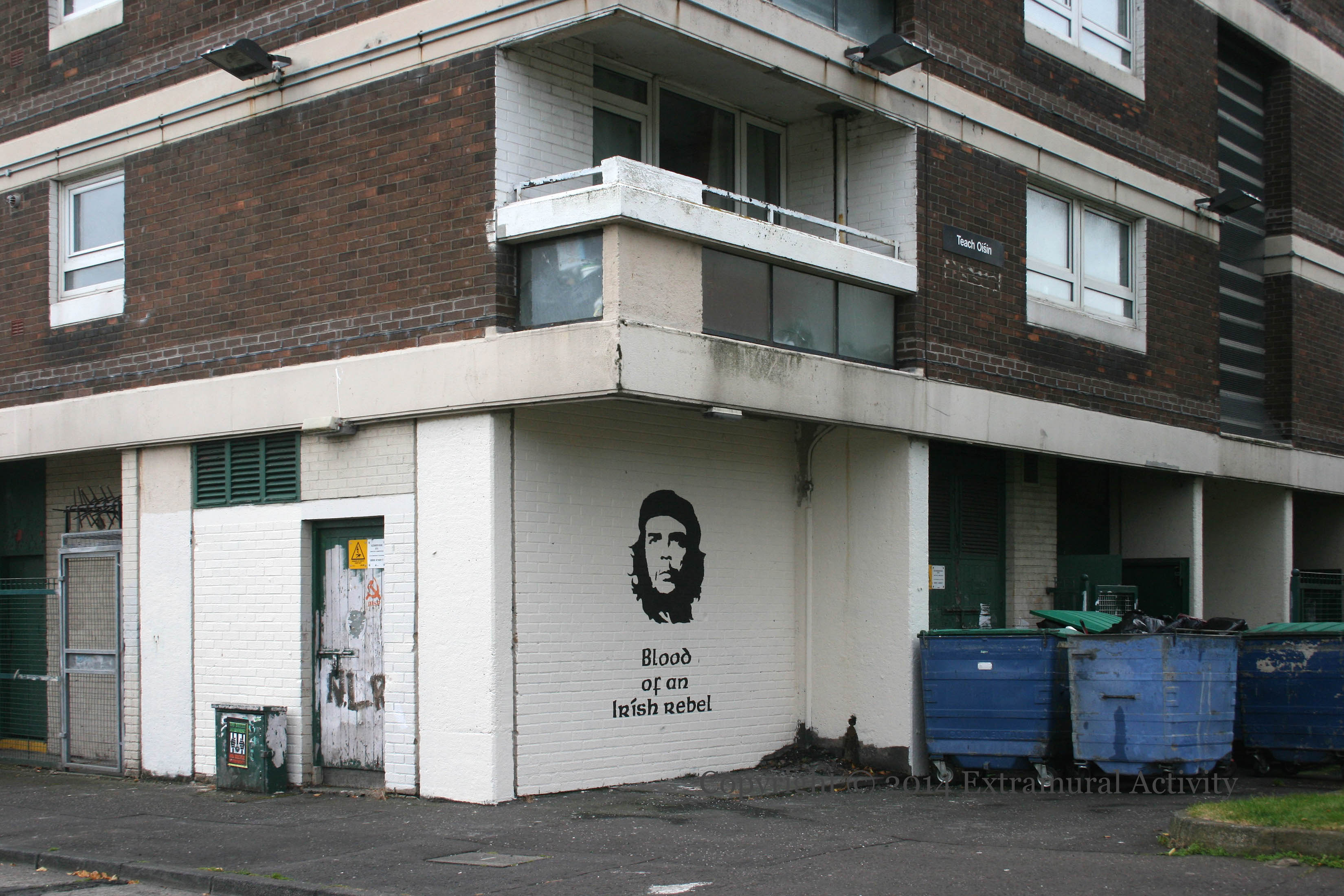
Below, stencil of the iconic Che over his father’s words: “[In my son’s veins flowed the] Blood of an Irish rebel”. (See previously: Che Guevara Lynch)
This new roadside memorial to the 36th (Ulster) Division in WWI, of wooden crosses on white stone along with a board on the wall above, has appeared on the Shore Road, across from Seaview, home of Crusaders FC, the Hatchet Men.
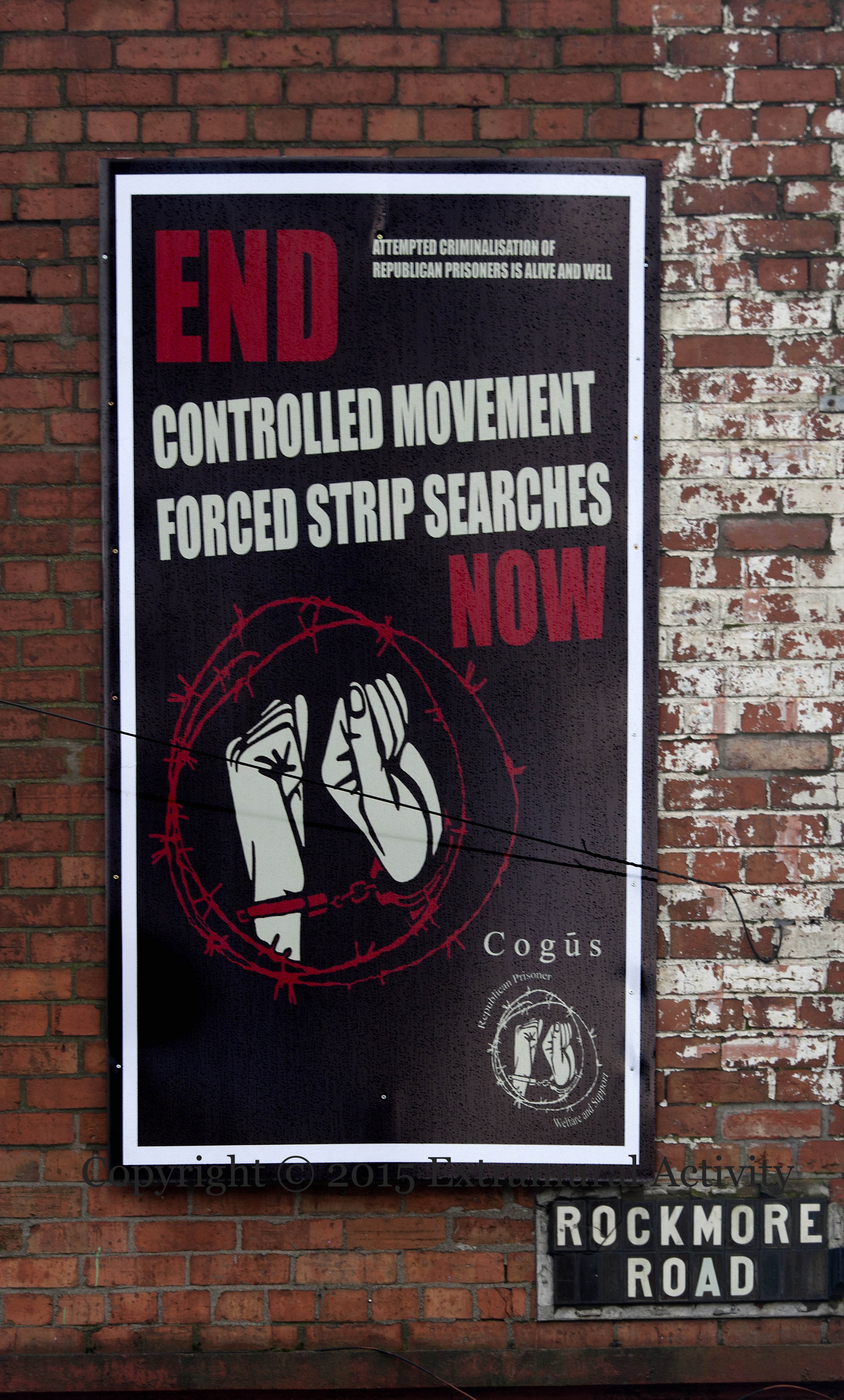
“Attempted criminalisation of republican prisoners is alive and well”: Above is a new board erected 2015-01-23 by Republican Network For Unity (RNU)’s Cogús committee in support of “Republican prisoner welfare and support”: “End controlled movement, forced strip searches now.” On the opposite corner, the Rock Bar advertises the Celtic v Rangers League Cup match last Sunday February 1st.
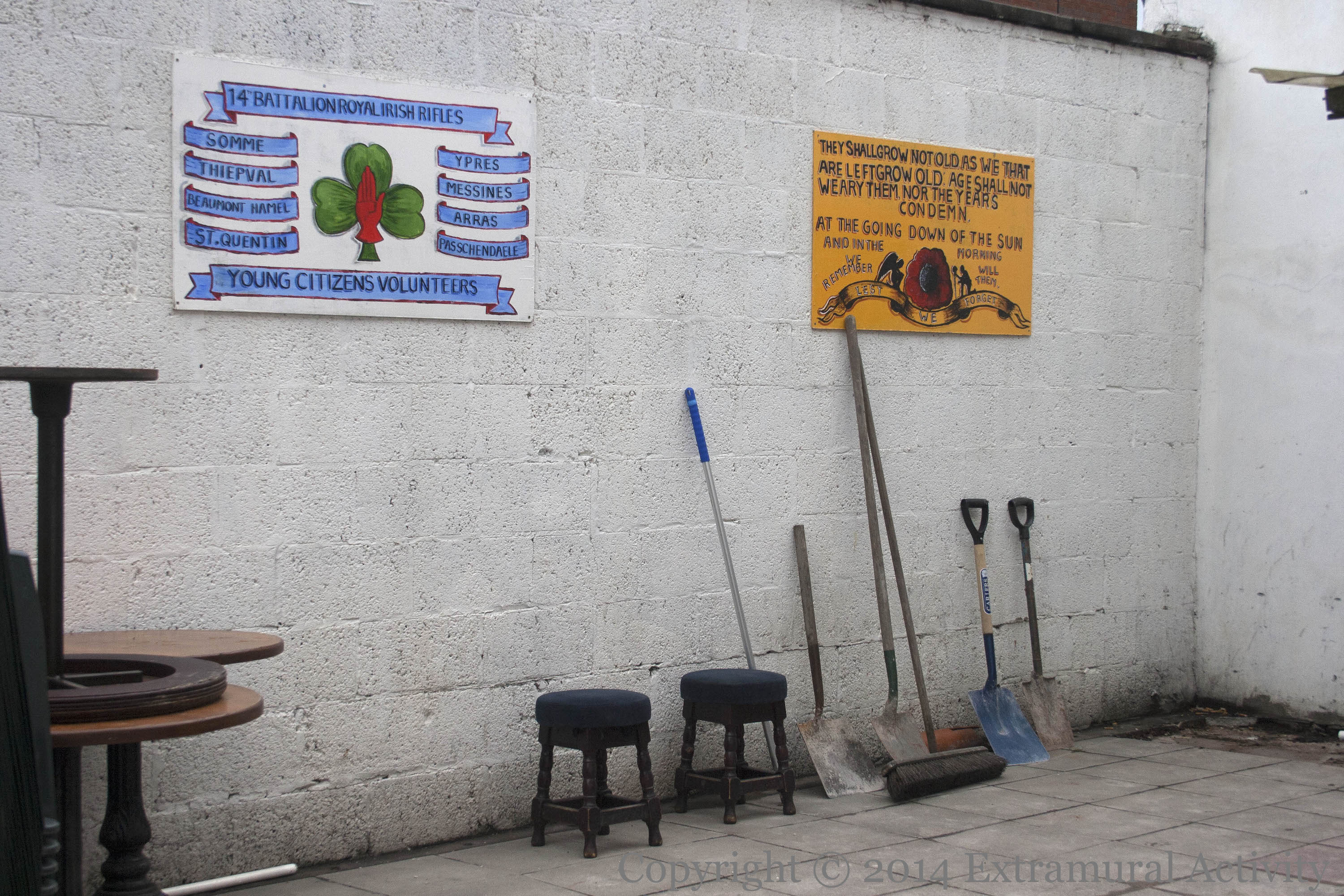
A selection of shovels and brooms stand to attention in the courtyard of The Hideout bar, in Donegall Pass, beneath boards to the 14th battalion of the Royal Irish Rifles and soldiers in WWI.
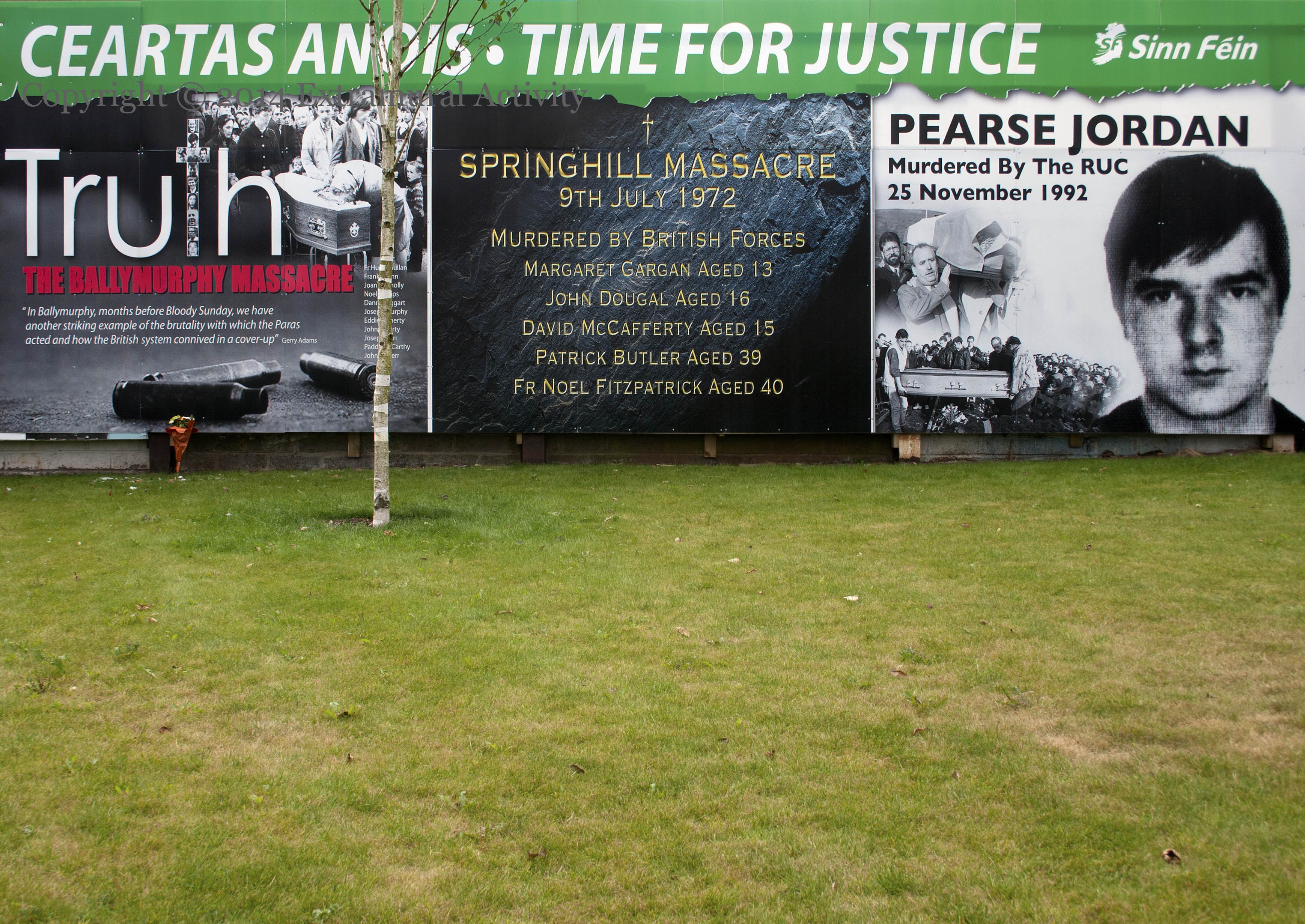
Three different campaigns for inquiries into deaths at the hands of British paratroopers are brought together into a single board on the site of the former Andersonstown RUC station: the Ballymurphy Massacre of August, 1971, in which 11 were killed; the Springhill Massacre of July 1972, in which 5 were killed, and the killing of IRA volunteer Pearse Jordan, who, like the others, lived in the greater Ballymurphy area.
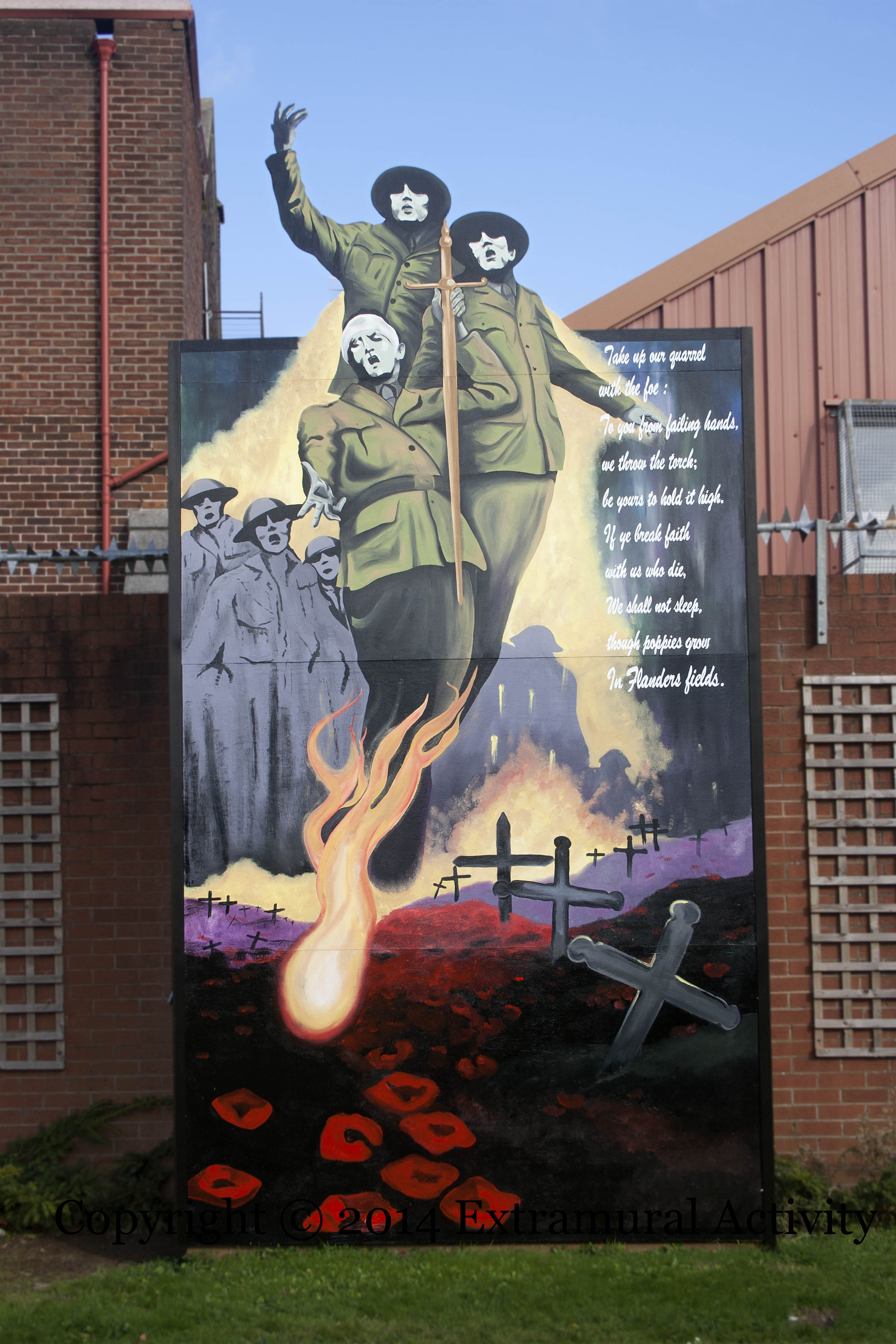
Three wraiths of dead WWI soldiers – one with its head wrapped in a bandage – rise from the grave to issue a final edict: Take up our quarrel with the foe; to you from failing hands we throw the torch; be yours to hold it high. If ye break faith with us who die, we shall not sleep though poppies grow in Flanders’ fields.
For another WWI memorial in Shankill Graveyard see The Great War.
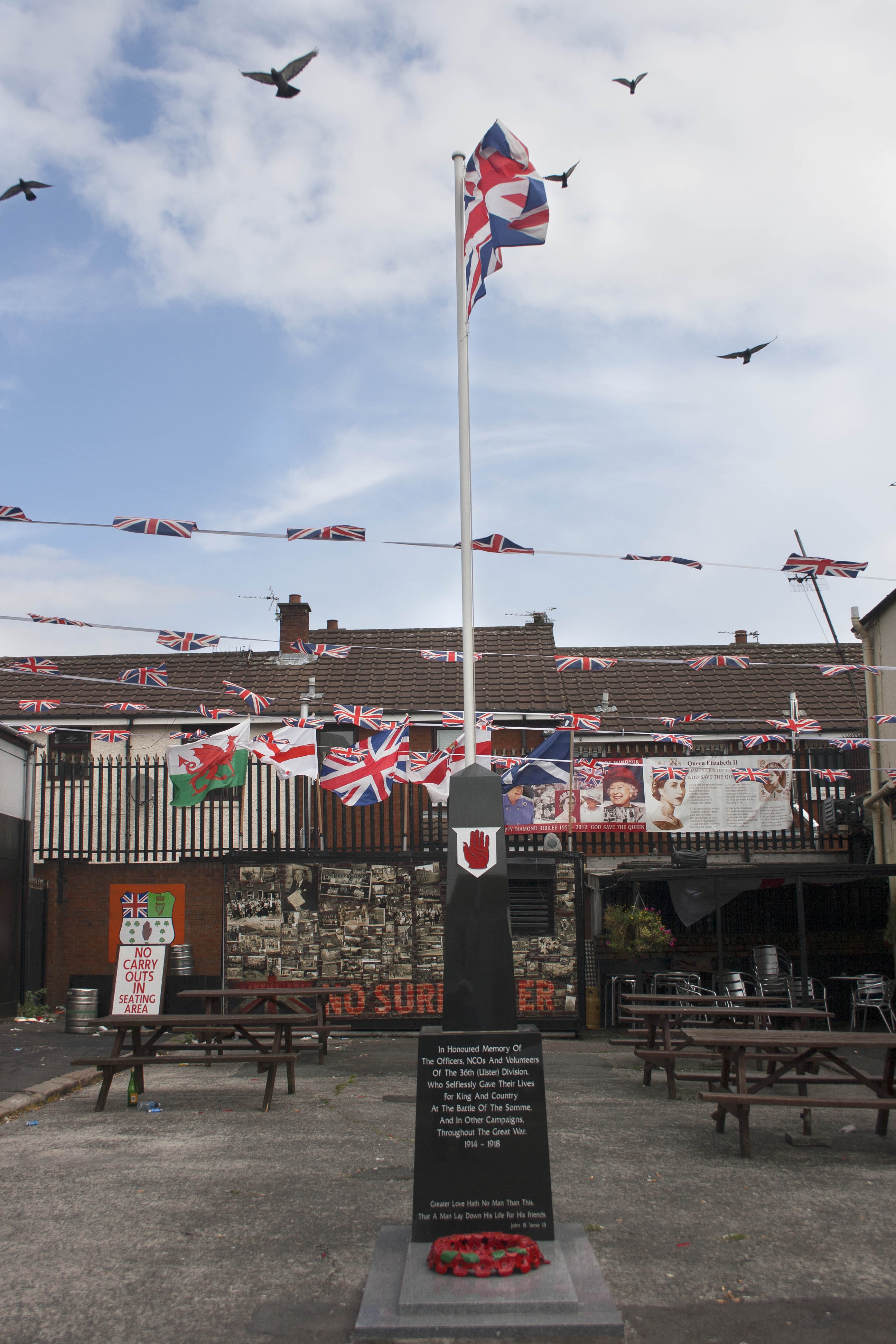
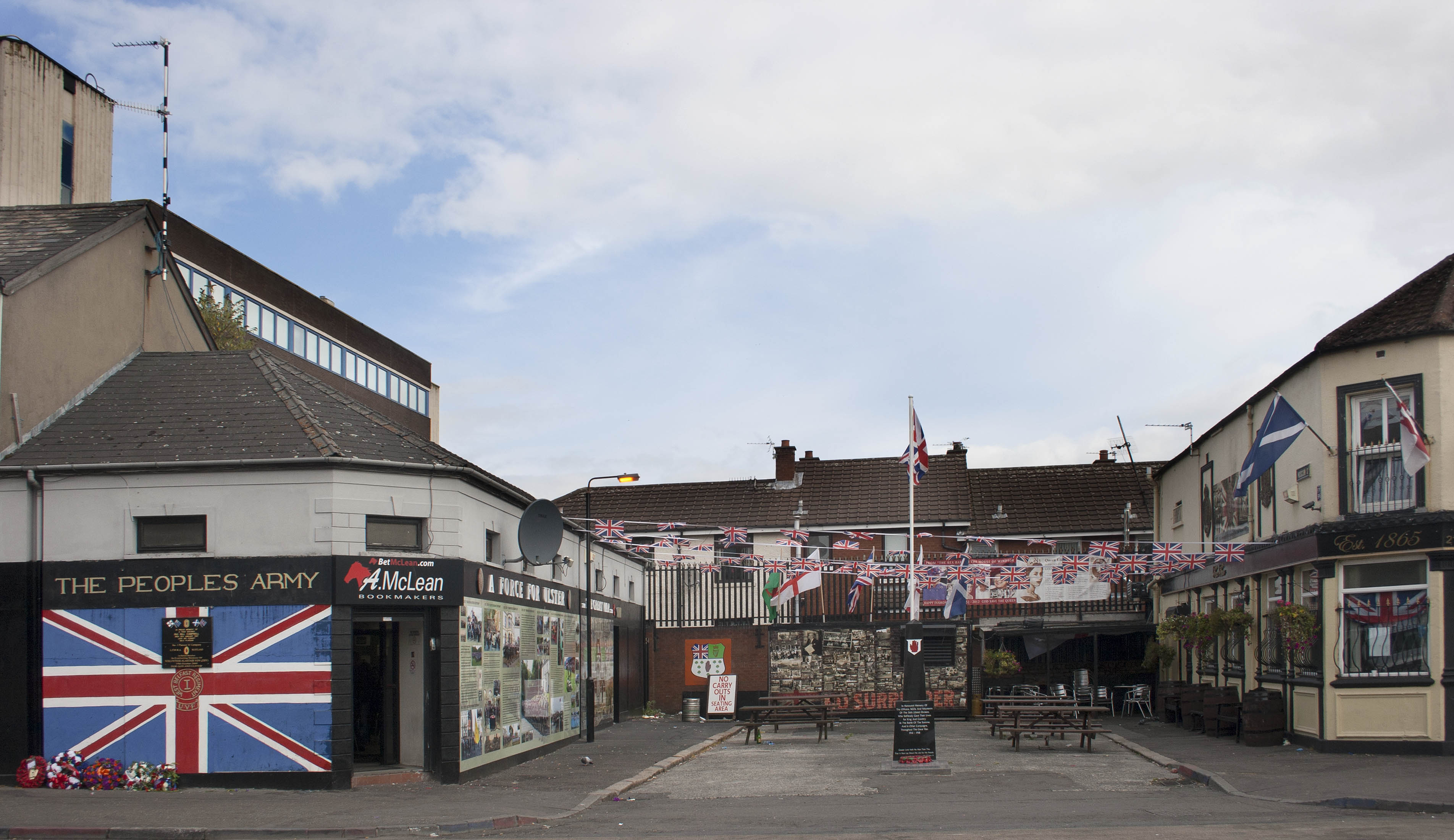
Above and below is the scene at the end of summer in the courtyard of the Rex Bar – bunting and bouquets join the flags of the home nations and various boards celebrating the queen’s diamond jubilee and commemorating the 36th Ulster division “who selflessly gave their lives for King and county at the battle of the Somme”. The new boards (on the left hand side of the wide shot) were featured previously in The Last Post, along with the Union flag of The People’s Army. For the same scene ten years previously, see Betting Office.
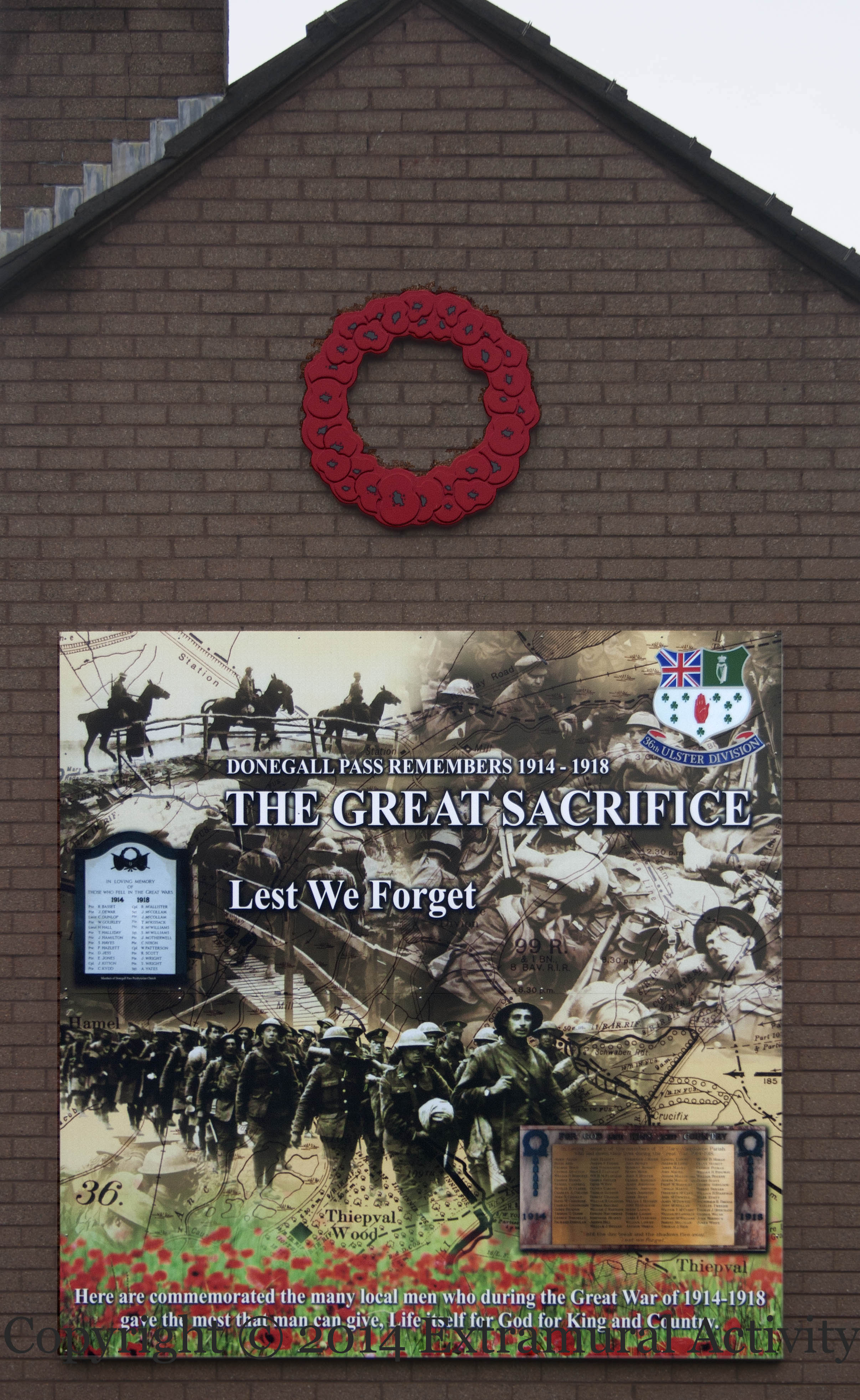
Computer-generated board in Lindsay Street showing a map of the northern end of the Western Front and images of soldiers marching, on horseback, and in the trenches: Donegall Pass remembers 1914-1918 the great sacrifice. Lest we forget. Here are commemorated the many local men who during the Great War of 1914-1918 gave the most that man can give: life itself for God for King and Country.
A pair of boards have been added to either side of one of the Bone memorials in Clós Ard An Lao, one for Na Fıanna Éıreann – the boys – and one for Cumann Na gCaılíní – the girls. The words are those of the Marching Song Of Na Fıanna Éıreann, except that in the second verse (the third stanza shown, first in the image below) the words “Cumann Na gCaılınní [sic]” have been inserted instead of “Fıanna Éıreann”.
The third image, below, shows the whole wall; for a close-up of the central boards, commemorating locals who lost their lives in the troubles, see Bone Memorial.
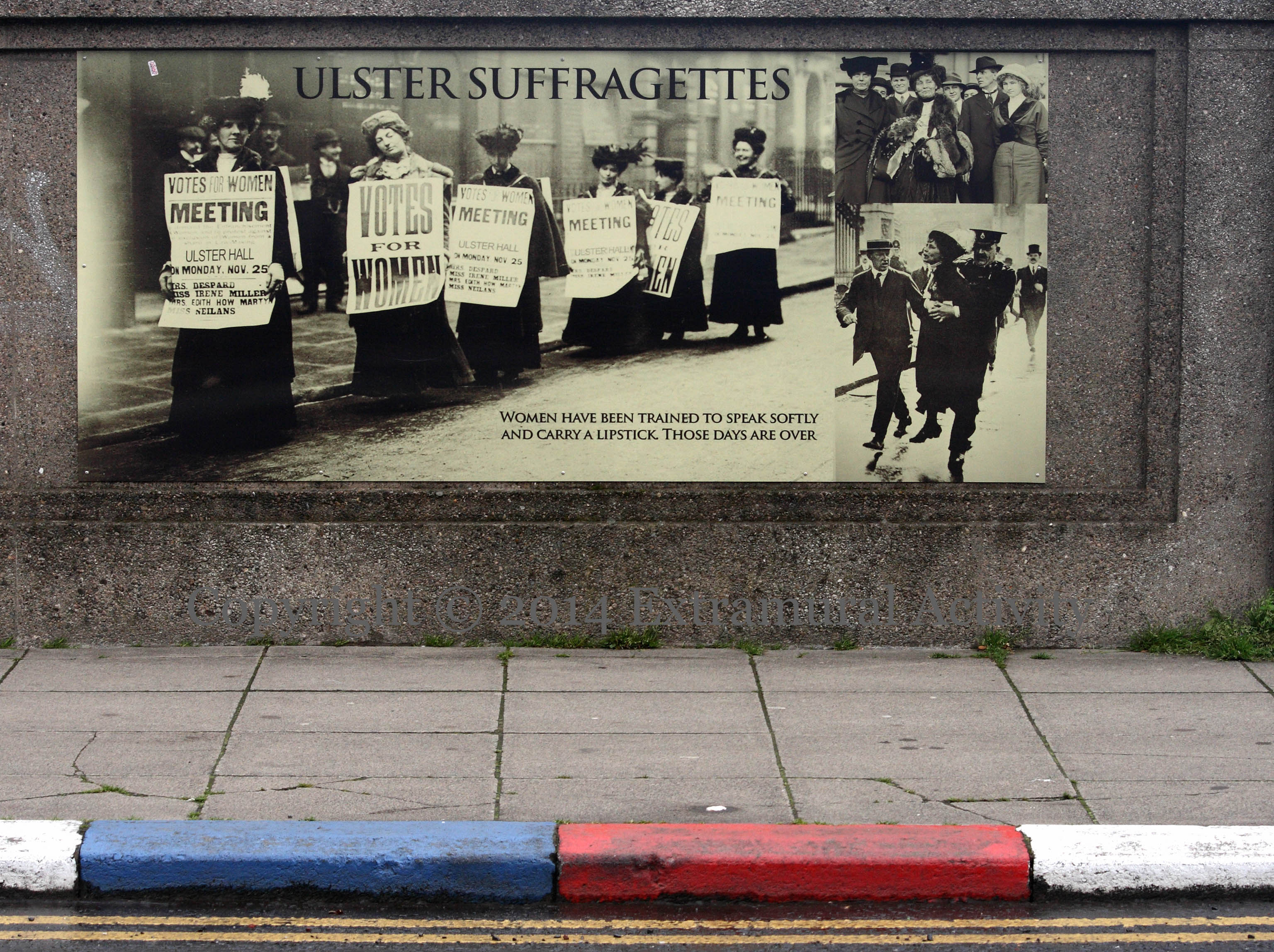
“Women have been trained to speak softly and carry a lipstick. Those days are over.” (Bella Abzug).
Above is a board on the Donegall Road bridge showing women drumming up an audience for a suffragette meeting in the Ulster Hall in November 1912. The image in the bottom right is of Emmeline Pankhurst being arrested in London in 1914; the top image is of Pankhurst on tour in the US in 1913 (LoC; see Pieces Of History for a description of the tour; she gave a speech entitled ‘Freedom Or Death’). Pankhurst spoke in Belfast at the 1912 meeting, though the speakers advertised on the placards are “Mrs Charlotte Despard, Miss Irene Miller, Mrs Edith How-Martyn, Miss Alison Neilans“.
The first suffrage group in Ireland was the North Of Ireland Women’s Suffrage Society, founded in Belfast in 1872 by Isabella Tod.





 Extramural Activity