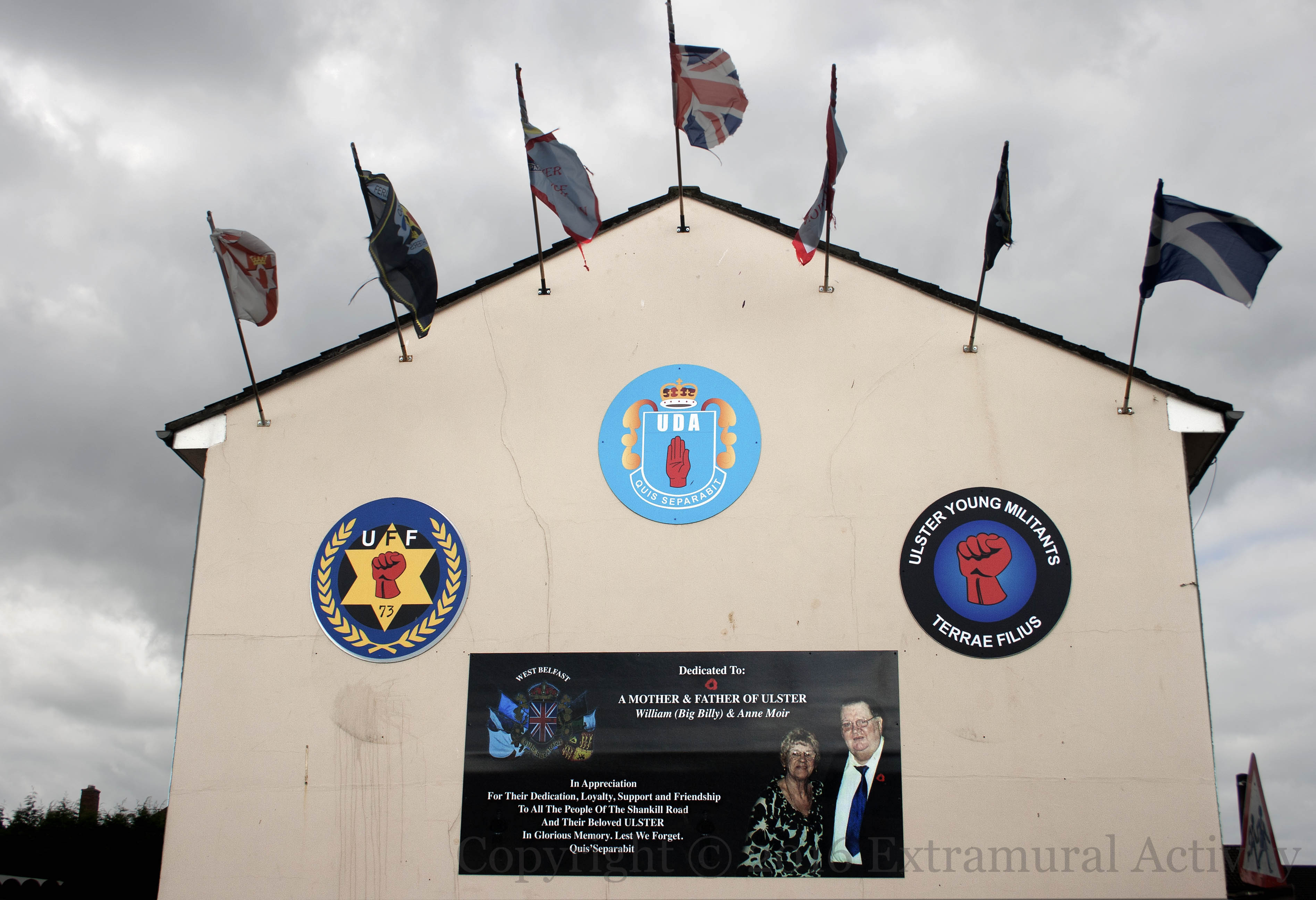
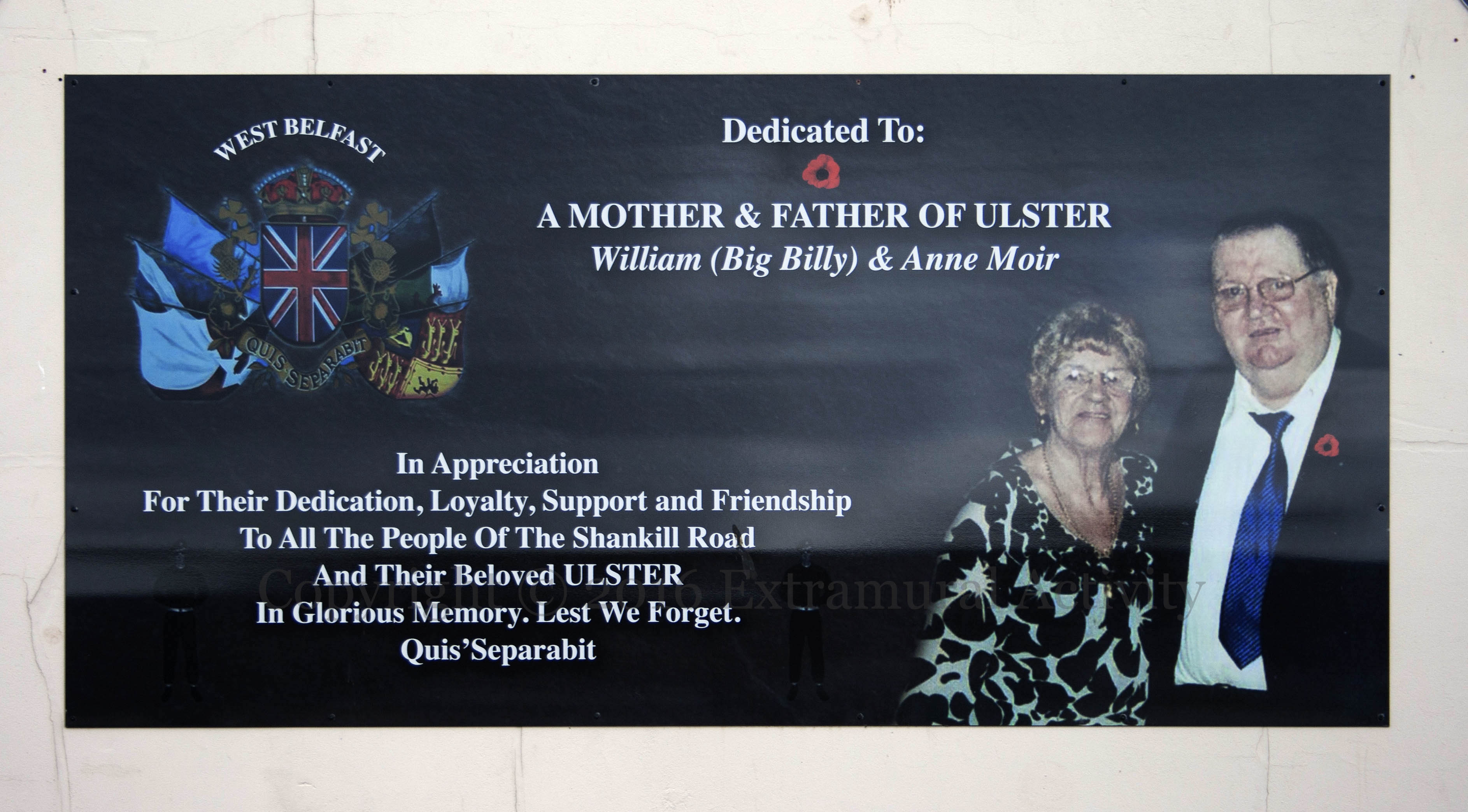
Billy Moir, who died this past May (2016) was a central figure in the Glasgow flute-band scene. The board above, dedicated to Billy and his wife Anne, is in the lower Shankill estate. “Dedicated to a mother & father of Ulster: William (Big Billy) & Anne Moir, in appreciation for their Dedication, Loyalty, Support and Friendship to all the people of the Shankill Road and their beloved ULSTER. In Glorious Memory, Lest We Forget, Quis Separabit.”
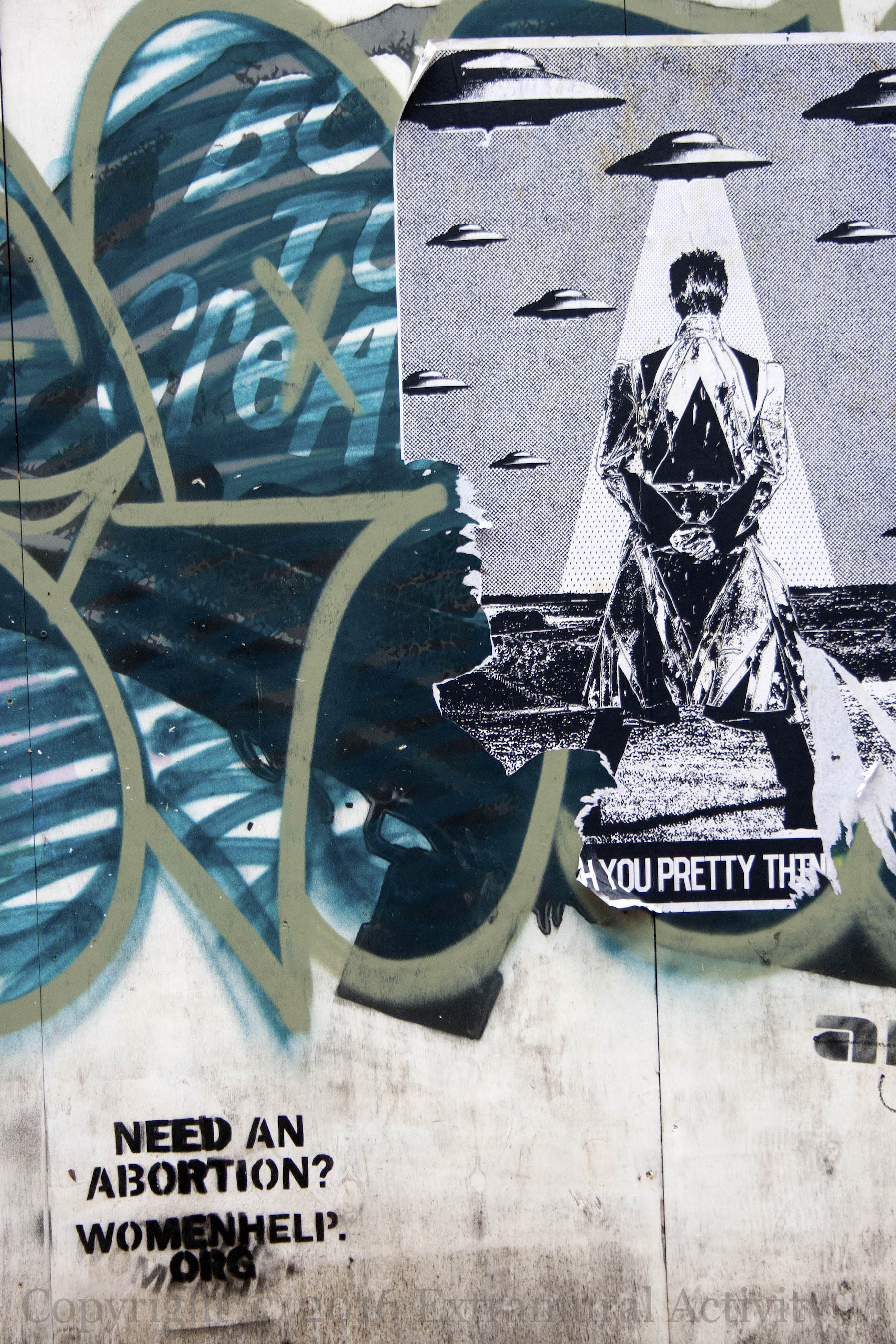
Two pieces relating to abortion rights. The first is a piece of Irish-language graffiti in North Street, below Andy Council’s CNB14 Phoenix, signed by “Mısneach” (“courage”). The second is a stencil in Garfield Street below Leo Boyd’s Bowie tribute Oh You Pretty Thing: “Need an abortion? Womenhelp.org.”
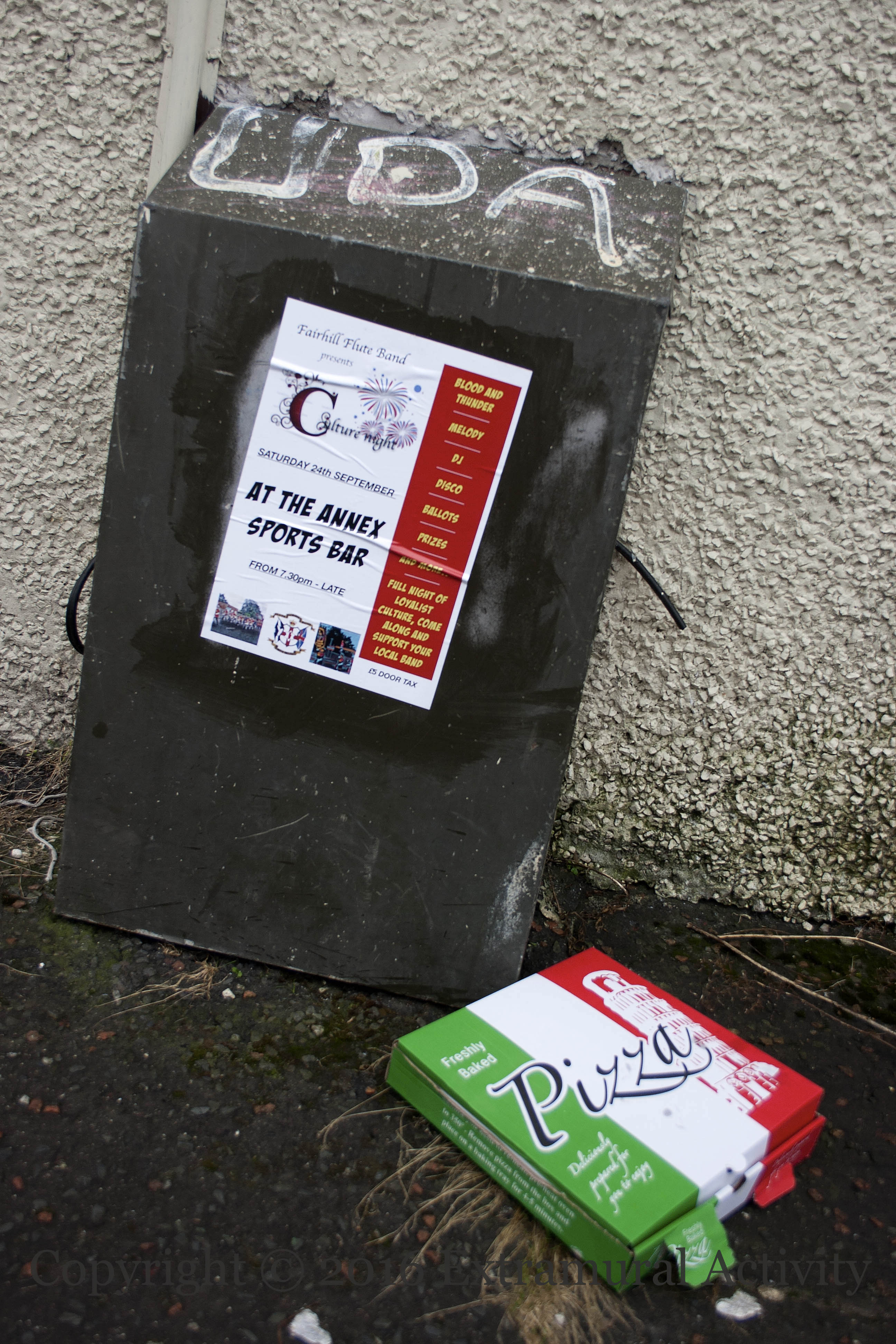
Pay the £5 “door tax” and you can attend the Fernhill Flute Band’s “Full night of loyalist culture” including “Blood And Thunder, Melody, DJ, disco, ballots, prizes, and more”.
(We’ll start posting images from that other culture night — #CNB16 — tomorrow.)
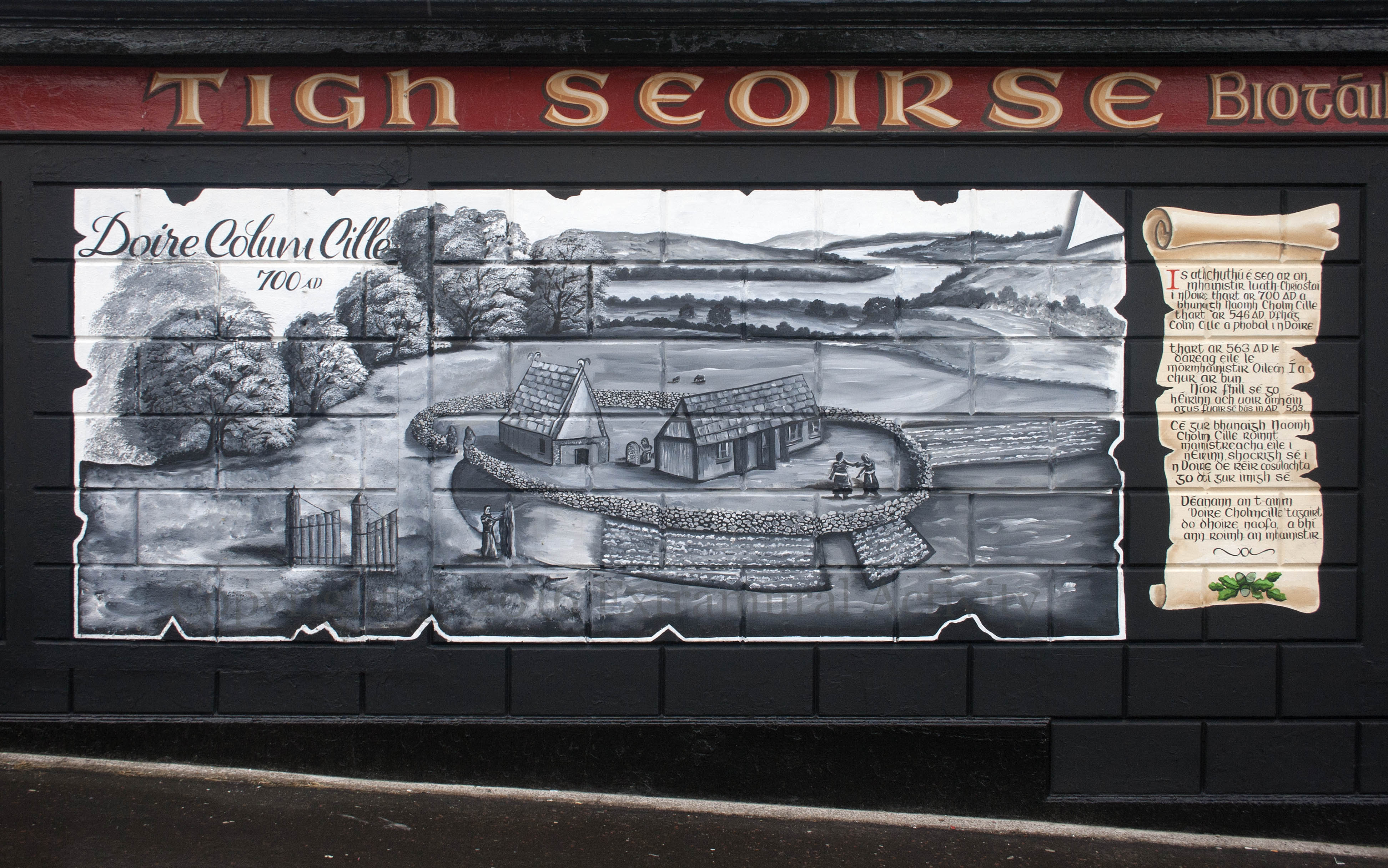
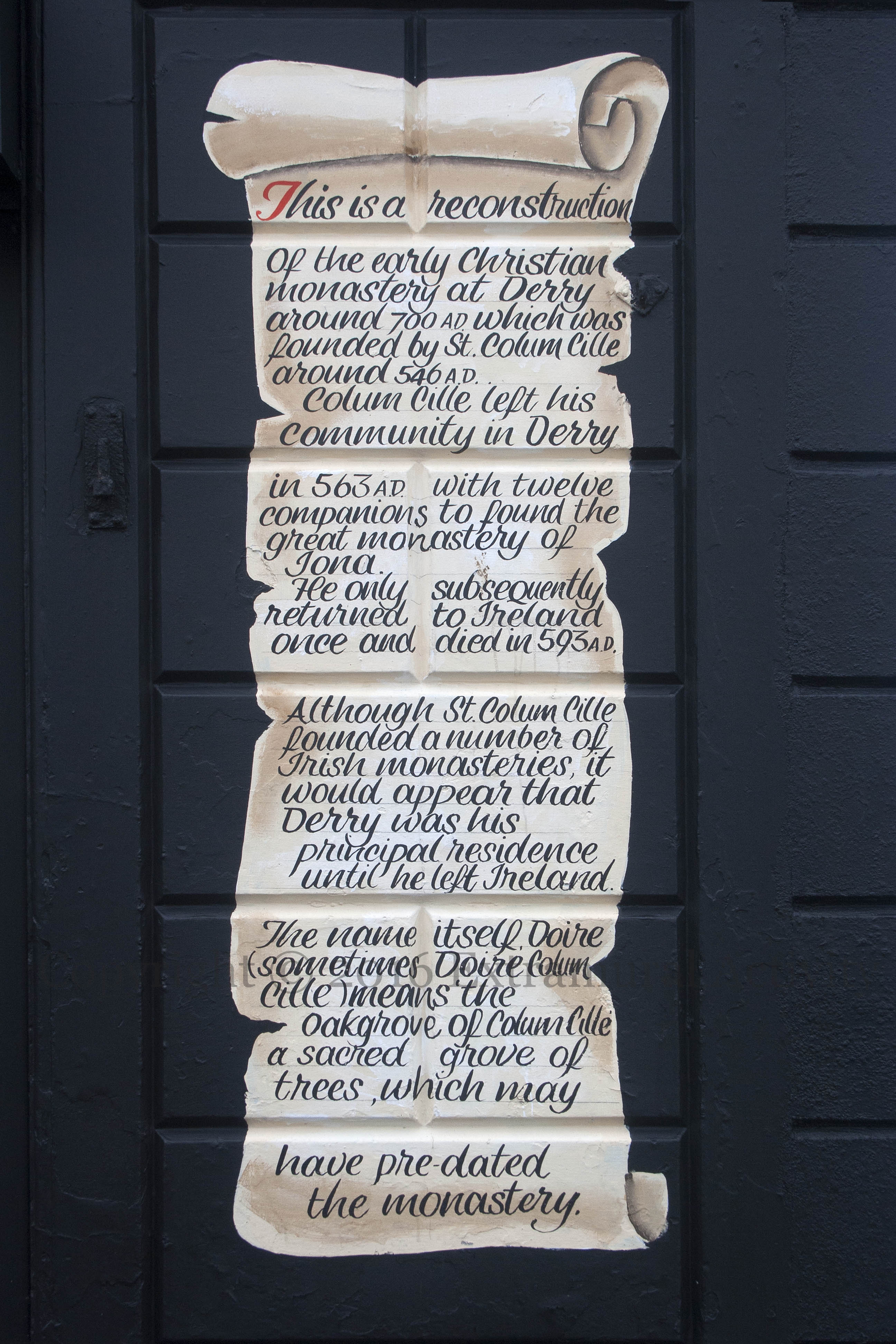
The Christian missionary Colm Cılle (in Latin, Columba), born in Donegal, founded a monastic settlement on the banks of the Foyle (then still part of Donegal) around 540 AD. The “Doıre” part of the name means “oak grove” and perhaps refers (as the information panel suggests) to “a sacred grove of trees, which may have pre-dated the monastery.” The mural above shows a reconstruction of the Derry monastery c. 700 AD. The name “Londonderry” dates to 1662.
Columba moved on to Scotland circa 563 and founded an abbey on the island of Iona. Among his reputed miracles is the banishment of a great water beast from the River Ness in 565.
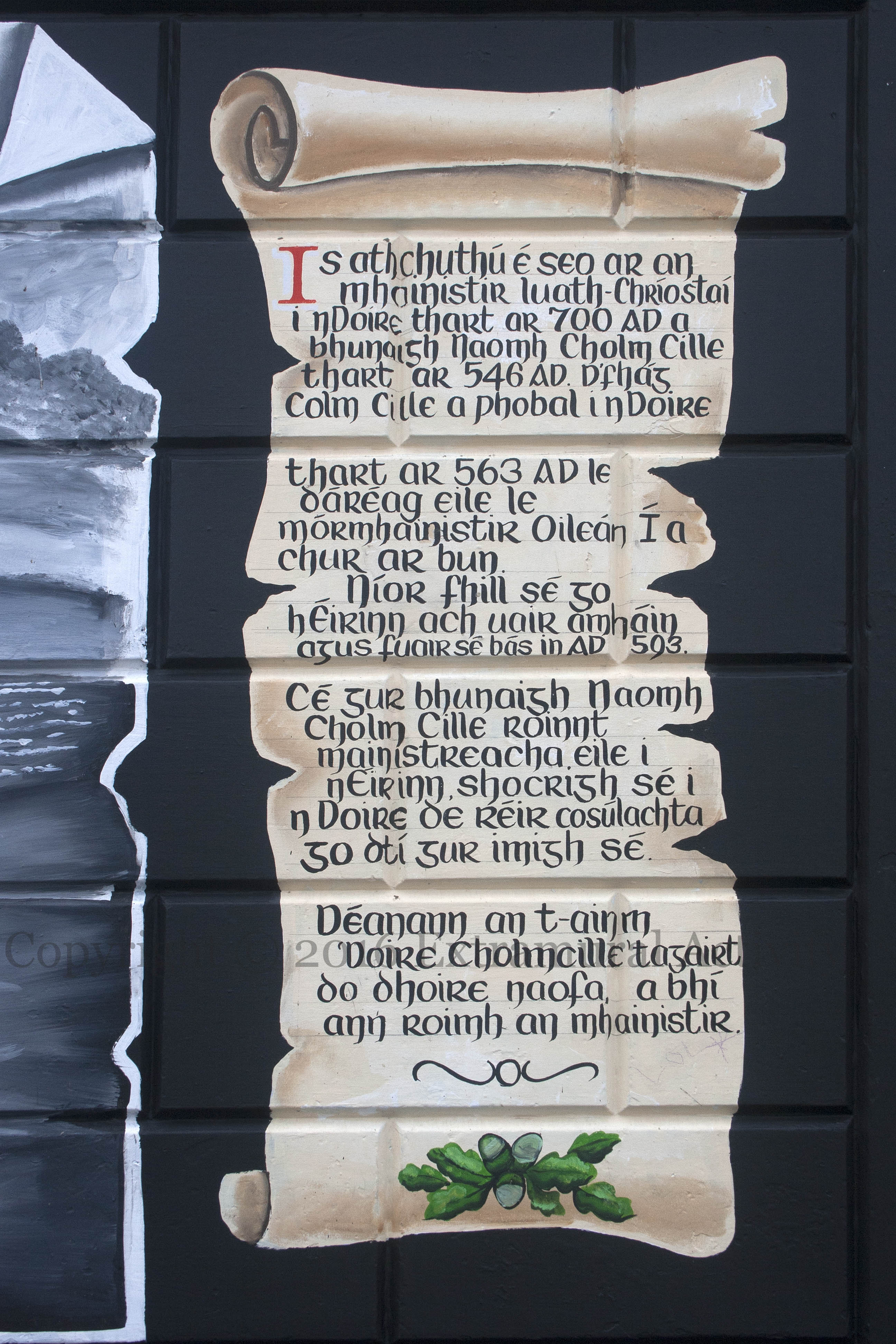
“Is athchuthú é seo ar an mhainistir luath-Chríostaí i nDoıre thart ar 700 AD a bhunaigh Naomh Cholm Cıille thart ar 546 AD. D’fhág Colm Cille a phobal ı nDoıre thart ar 563 AD le dáréag eıle le mómhaınıstır oıleán Í a chur ar bun. Níor fhill sé go hÉıreann ach uaır amháın agus fuaır sé bás in AD 593. Cé gur bhunaigh Naomh Cholm Cille roınnt maınıstreacha eıle ı nÉırınn, shocrıgh sé ı nDoıre de réır cosúlachta go dtí gut ımıgh sé. Déanann an t-aınm ‘Doıre Cholmcılle’ tagaırt do dhoıre naofa, a bhí ann roımh an mhaınıstir.”
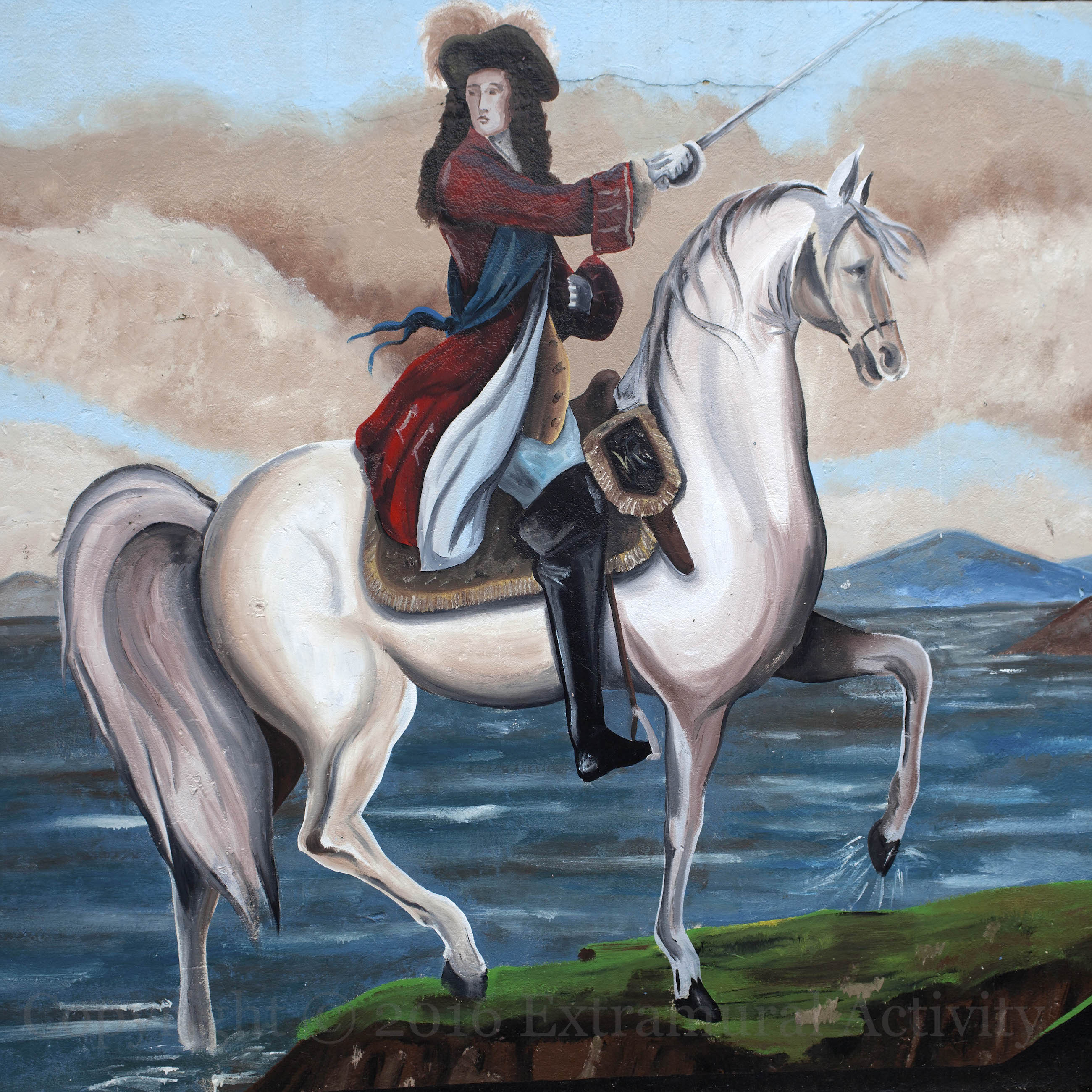
William III of England, commonly known as William of Orange, led his troops to victory on July 1st, 1690 at the Battle of the Boyne against the forces of James II, the deposed English monarch and the father of his wife. The Williamite campaign began with successful resistance against the Siege of Derry in 1689 and James’s final defeat came a year later on July 12th, at Aughrim.
Lıú Lúnasa is an Irish language festival, held this year on 24-28 August. The mural above shows rocks taken from the wall separating Palestine and Israel being used to build a gaelscoıl (an Irish-language school). The mural was painted by Jımí Mac Fhlannchadha.
The repainting of the Mountjoy ‘Breaking The Boom‘ in the Siege Of Derry is the second of three recent works in the Waterside. (The first of the three to be featured was City Of Temperance.) The work has been retitled ‘The Brave Thirteen’ and extended to include the closing of the gates by 13 Apprentice Boys, whose surnames are given here as Sherrard, Morrison, Steward, Campsie, Cunninghman, Sherrard, Conningham, Cairns, Hunt, Crookshannks, Irwin, Harvy, Spire (for first names and alternate spellings, see Apprentice Boys).
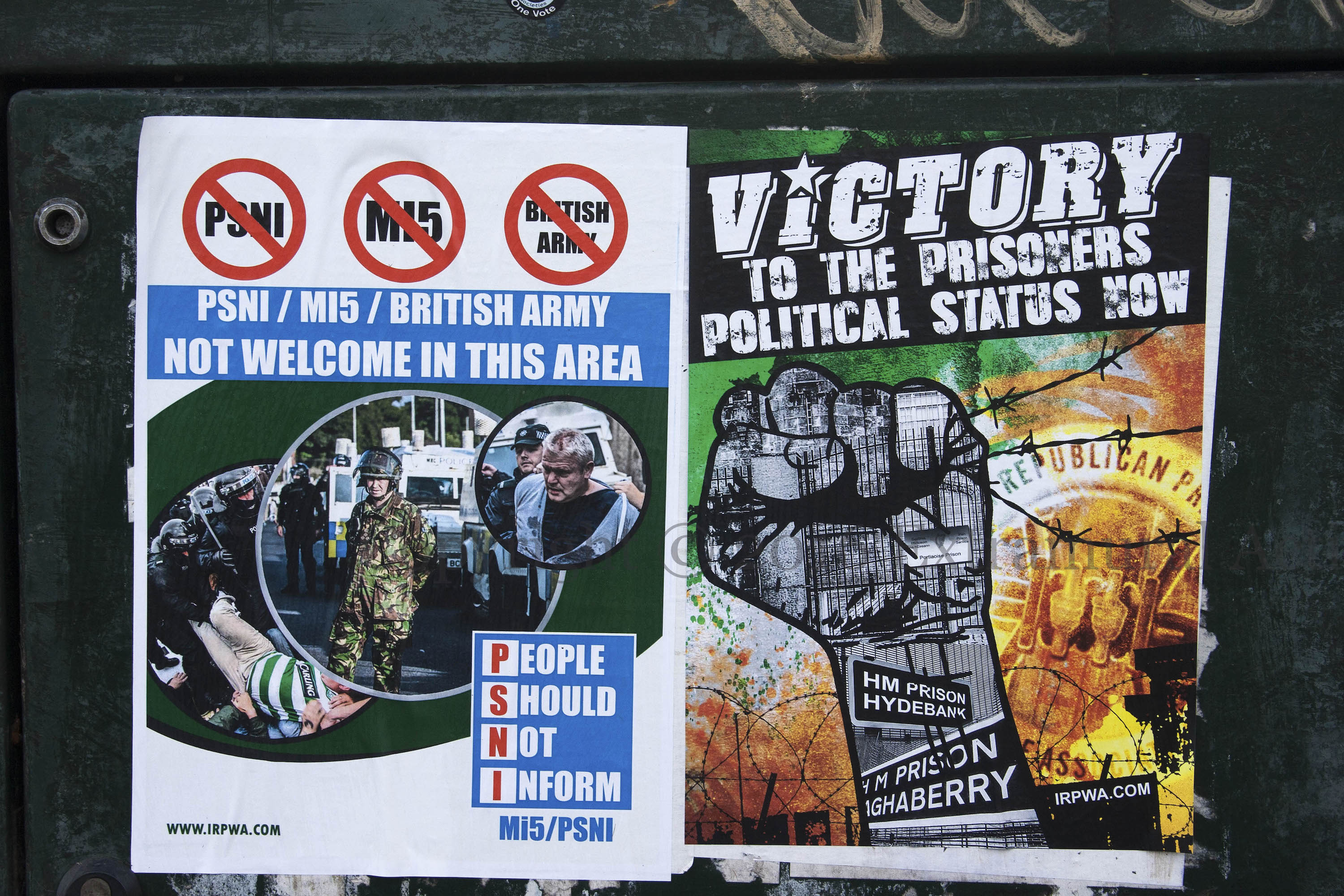
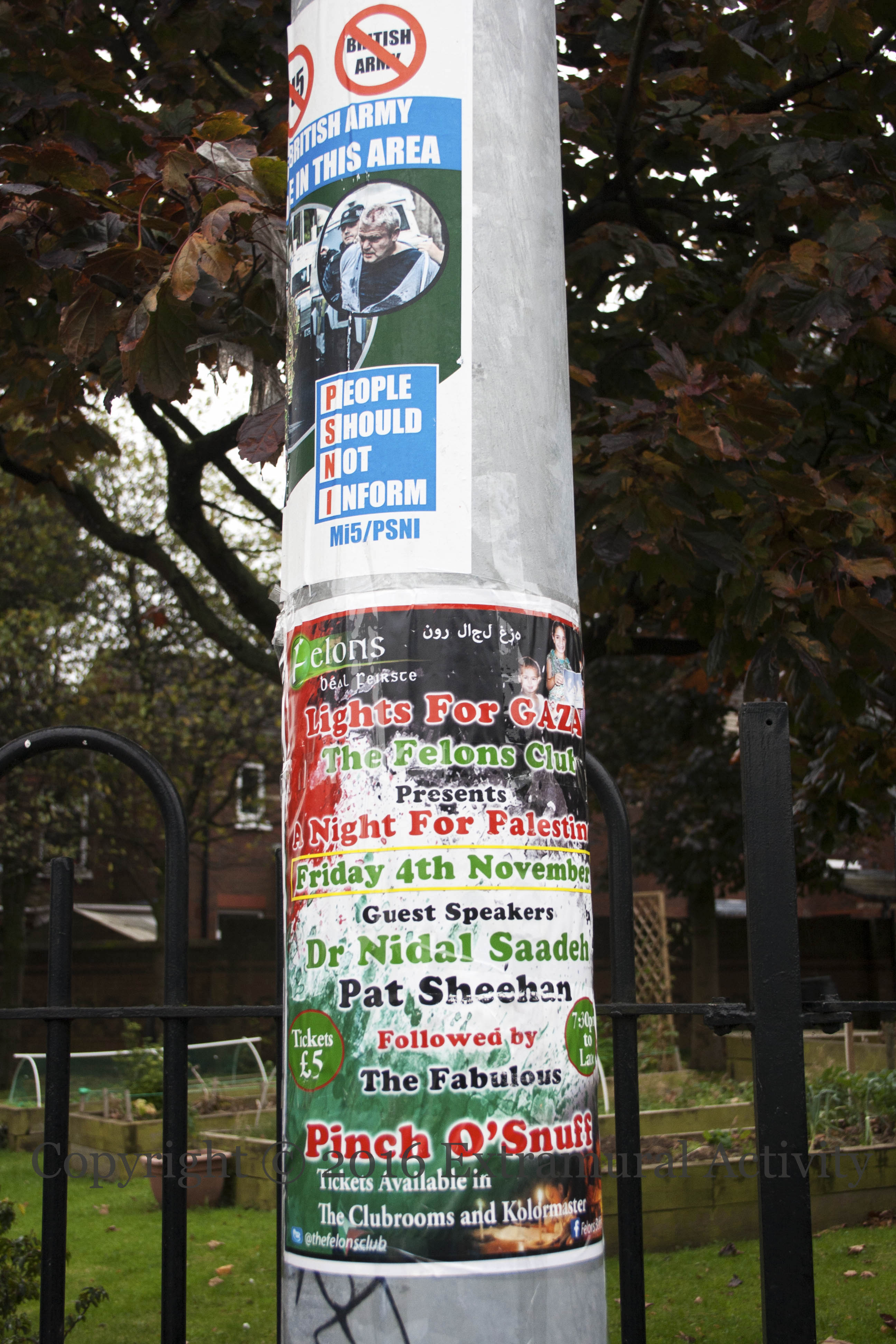
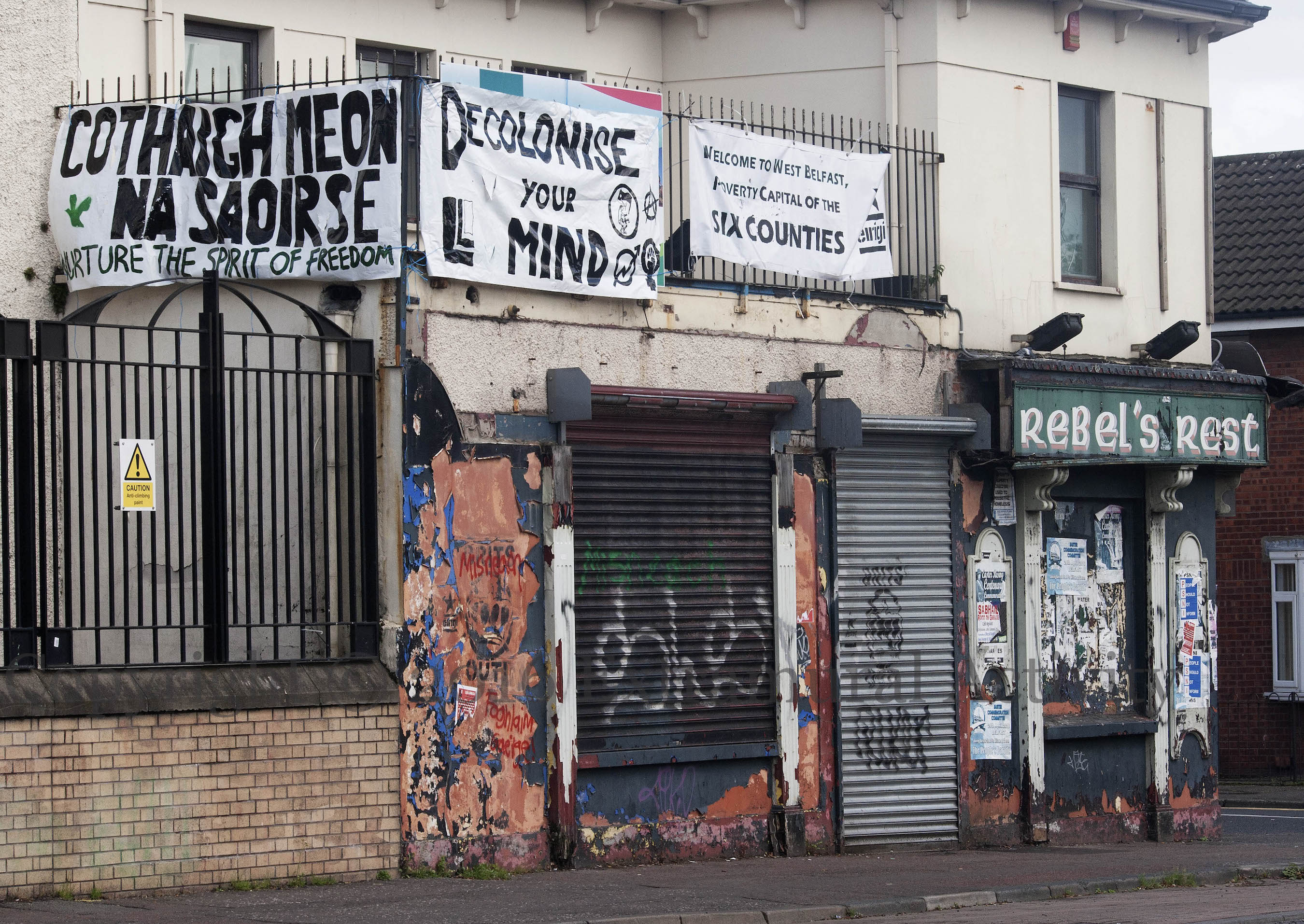
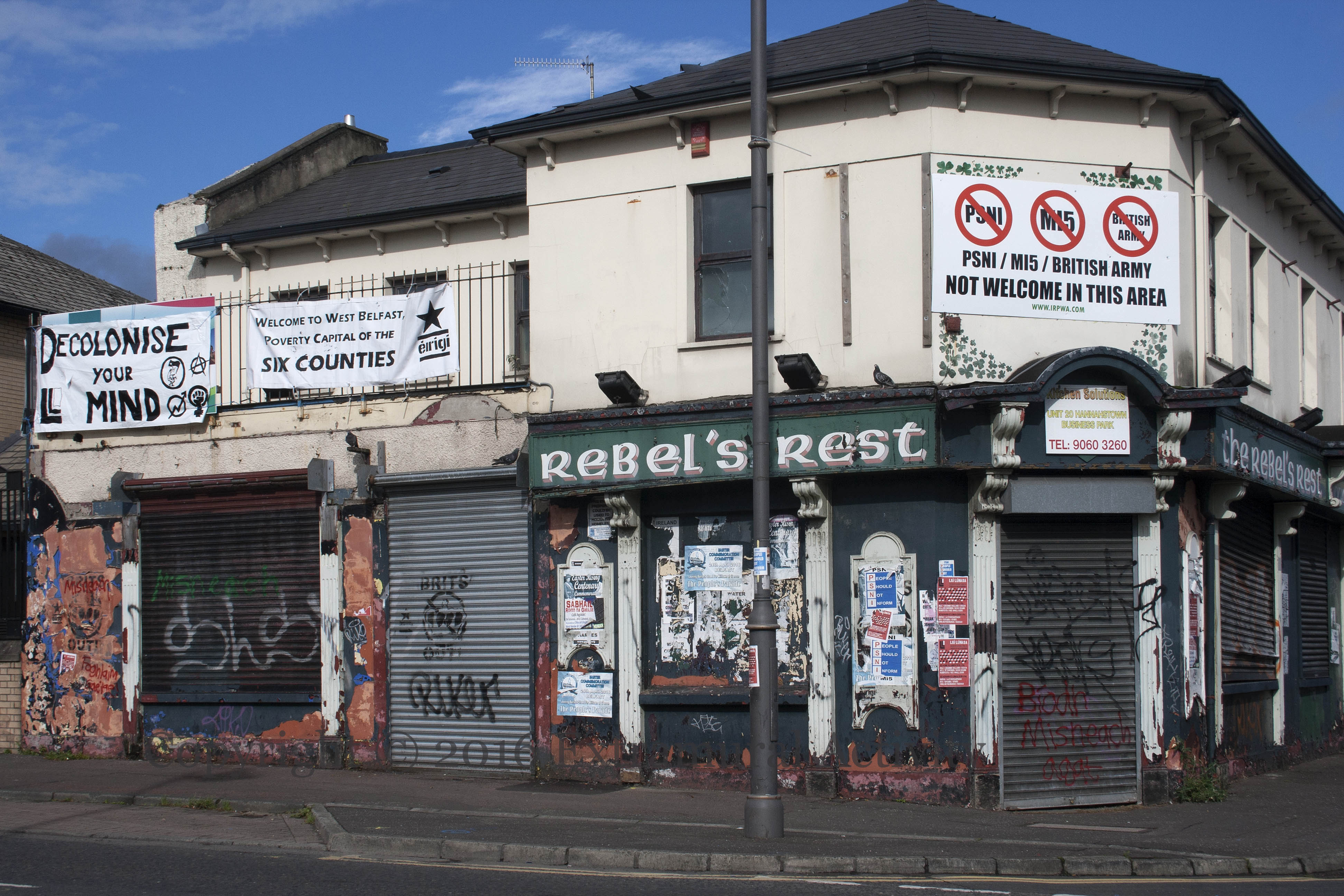
The four banners shown above are on the front of the Rebels’ Rest in west Belfast: “Cothaıgh meon na saoırse/Nurture the spirit of freedom”, “Decolonise your mind”, “Welcome to west Belfast, poverty capital of the six counties”, and (visible below) “PSNI/MI5/British Army not welcome in this area” (one of several of these boards placed in various republican areas – the one at the end of the International Wall is included below). For previous stencils from 2014, see The Rebel’s Rest.








 Extramural Activity