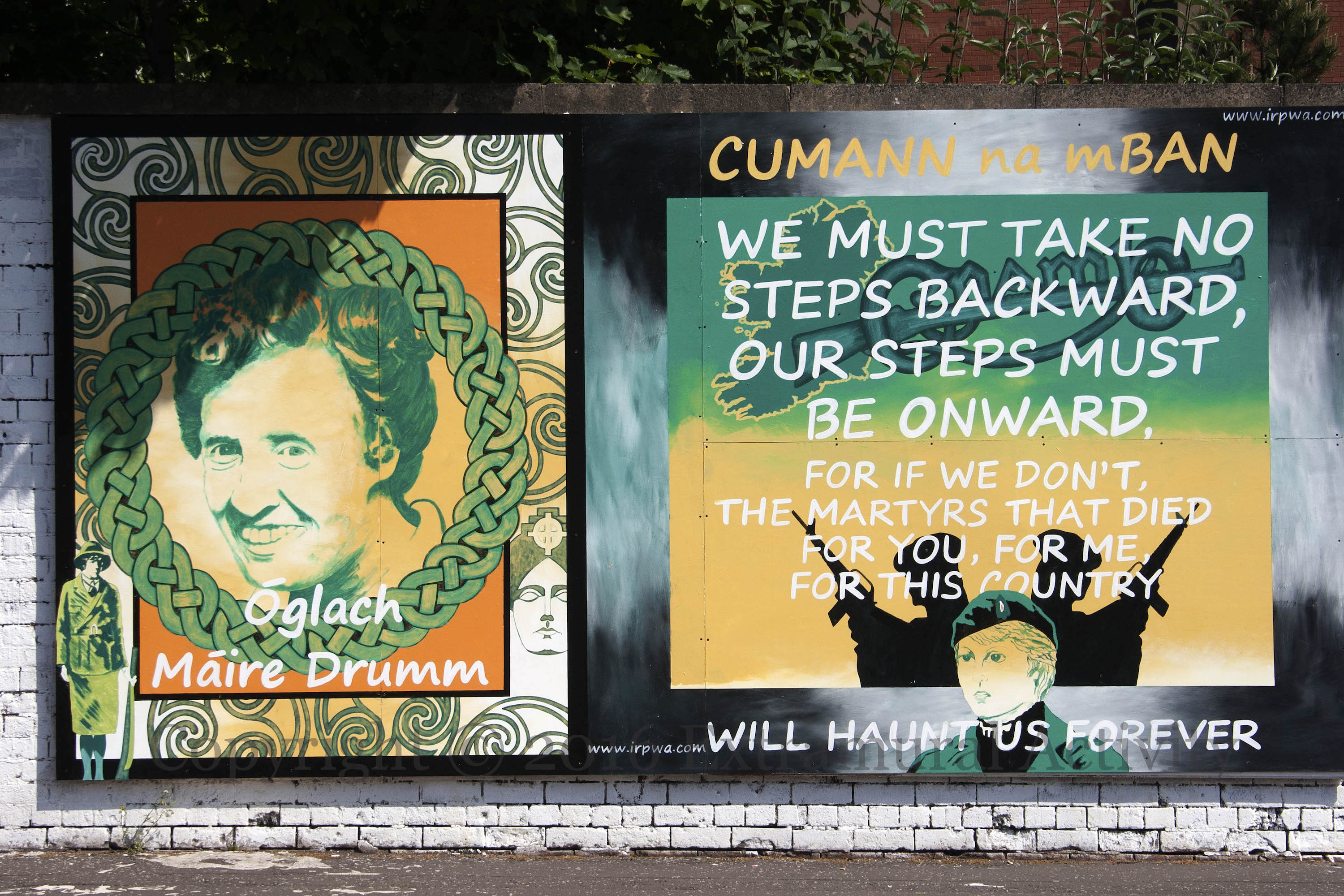
“We must take no steps backward, our steps must be onward. If we don’t, the martyrs that died for you, for me, for this country … will haunt us forever” — the words of Máıre Drumm from an anti-internment rally in Dunville Park on 10th August, 1975 (RN) are featured against a backdrop of female volunteers in Cumann Na mBan wearing berets and holding rifles.
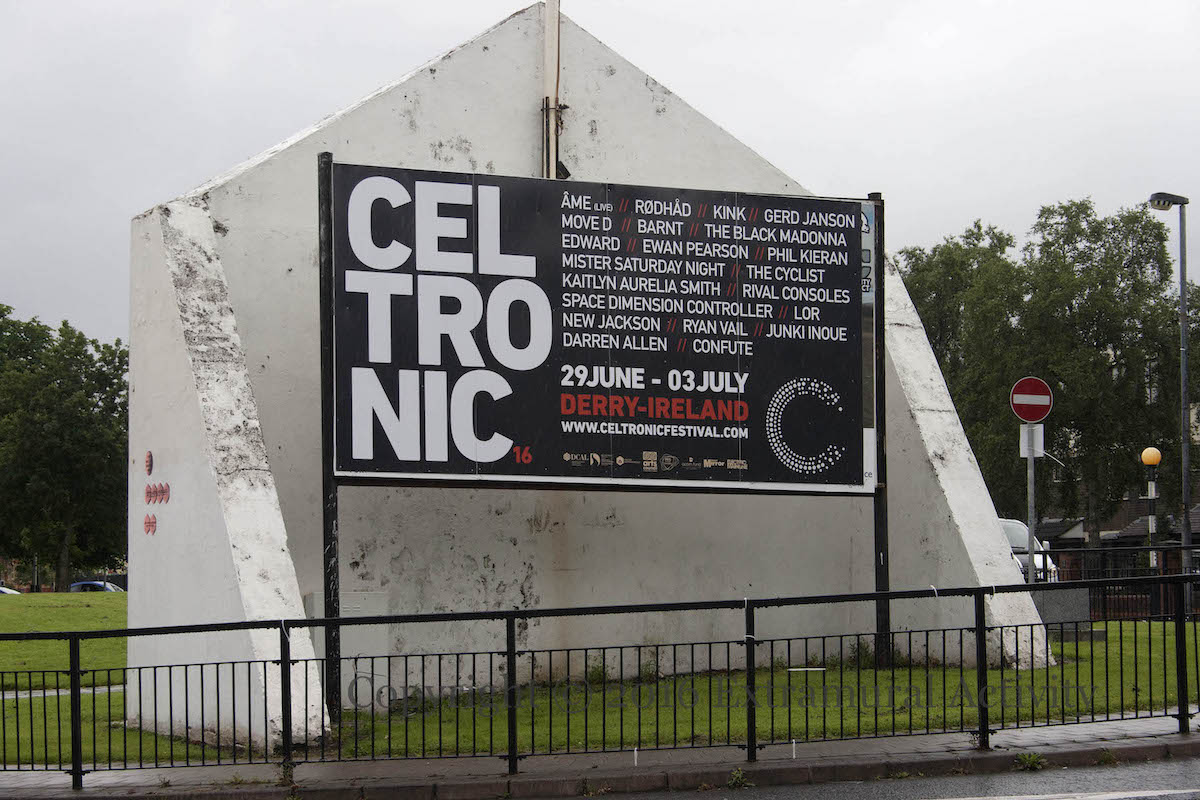
Celtronic brands itself as “Ireland’s leading electronic music festival”. This years festival takes place in clubs across “Derry, Ireland” until July 3rd. On the rear of Free Derry Corner.
One hundred years ago today, on July 1st, 1916, the Battle of Albert began, the first of many battles in what is known collectively as the Battle of the Somme. Soldiers from the 36th (Ulster) Brigade went “over the top” at 7:28 a.m. By the end of the day, more than nineteen thousand British soldiers were dead, five thousand from the 36th.
The line “We gathered from our towns, our villages and farms, in answer to the echo of alarm” comes from the song “Armagh Brigade”; the alarm is more specifically “Carson’s loud alarm”. Below the main panel, which shows combat at close quarters, are the words of Wilfrid Spender: “I am not an Ulsterman but yesterday, the 1st. July, as I followed their amazing attack, I felt that I would rather be an Ulsterman than anything else in the world … the Ulster Volunteer Force, from which the Division was made, has won a name that equals any in history.”
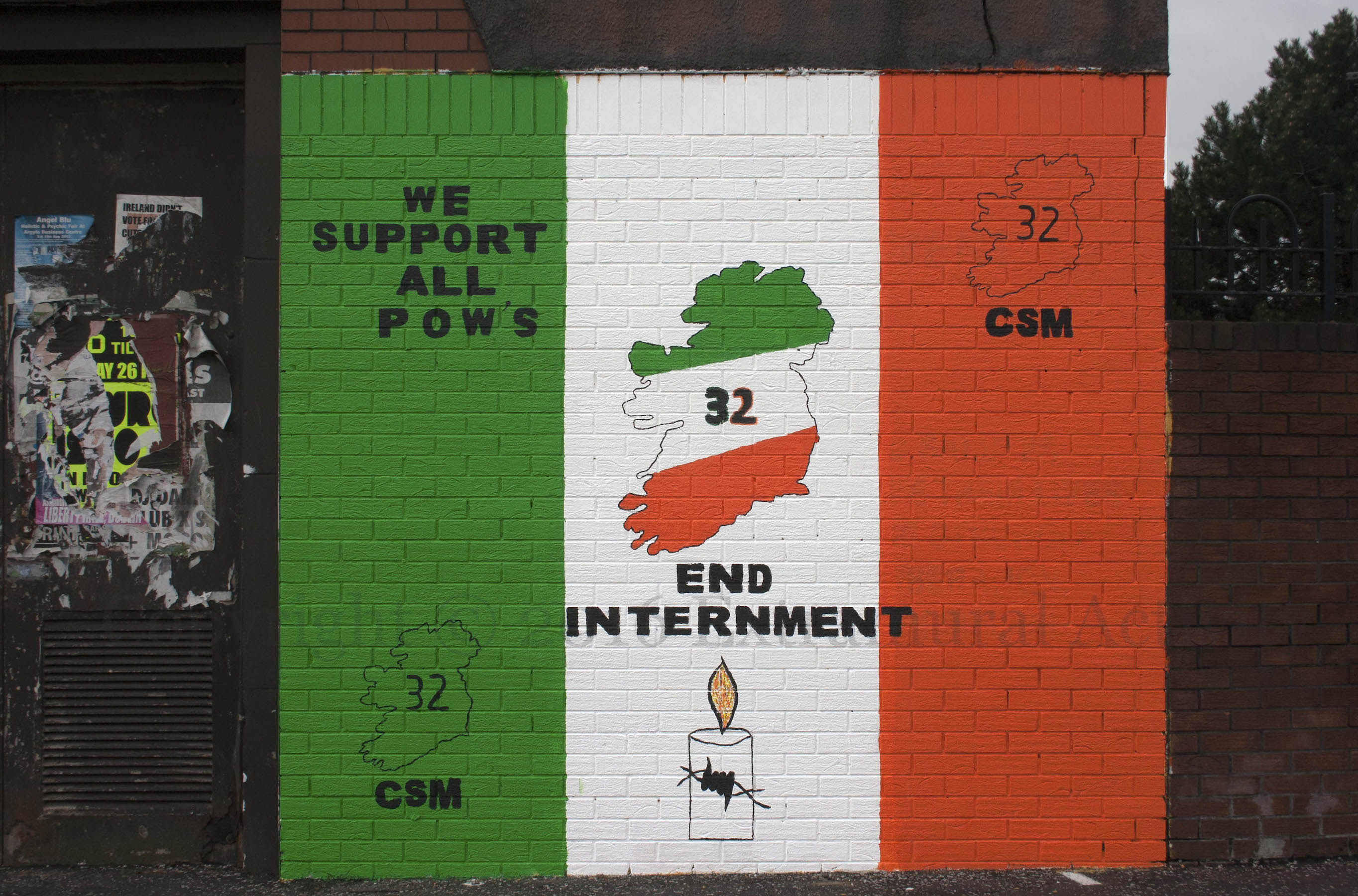
In quick succession to the Easter Rising centenary mural in the same spot, there comes this 32 County Sovereignty Movement mural, with the island of Ireland in green, white, and orange, and (representing prisoners) barbed wire and a candle.
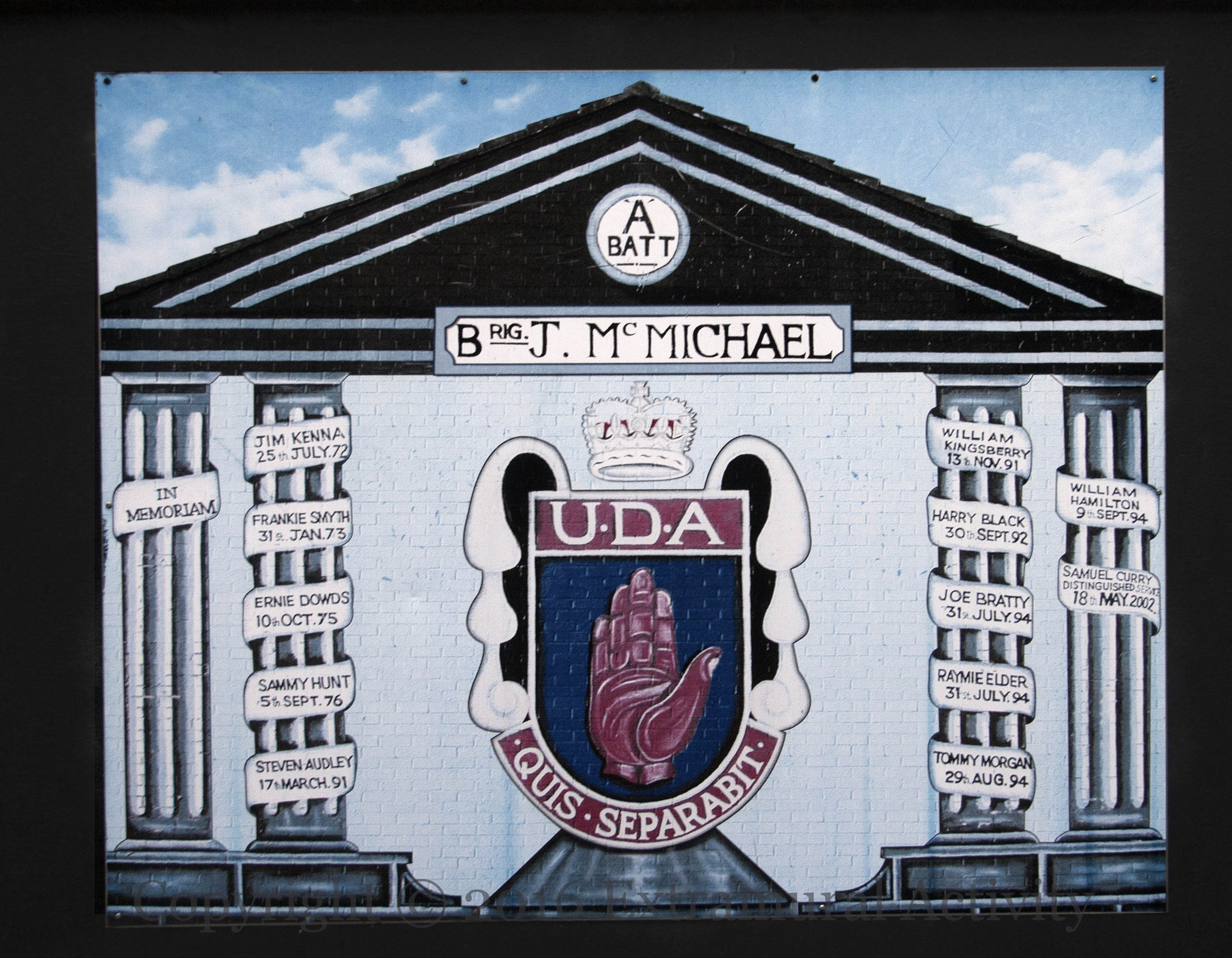
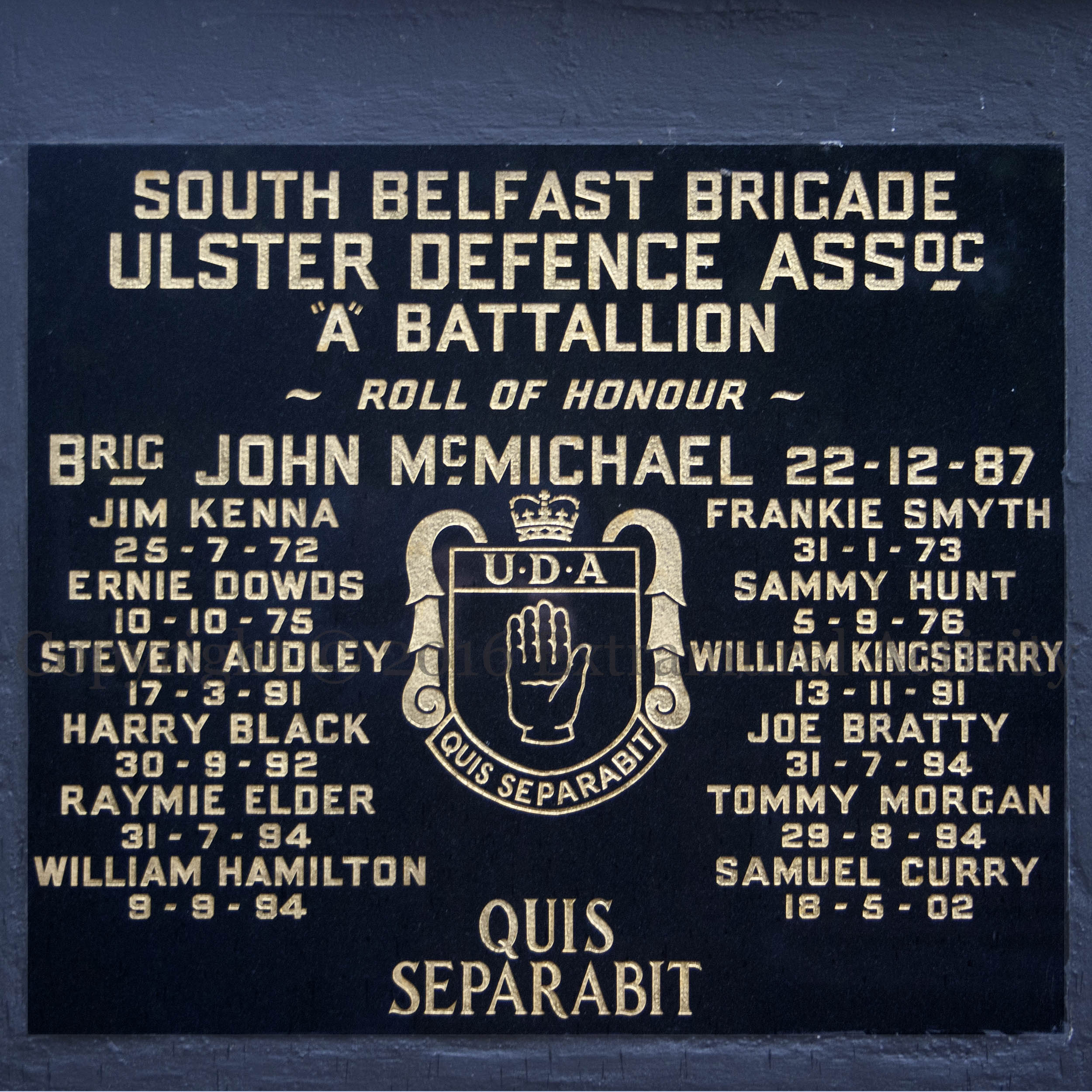
The image above is of a small (4′ x 3′) plaque in the memorial garden in City Way, off Sandy Row. It reproduces a mural (2005 M02408) from nearby Rowland Way (which was itself a repaint of an earlier mural from 1995 M01183 and 2001 M01518). The same thirteen names also appear on the “roll of honour” plaque in the garden, shown second.
The thirteen are: John McMichael, Jim Kenna, Frankie Smyth, Ernie Dowds, Sammy Hunt, Steven Audley, William Kingsberry, Harry Black, Joe Bratty, Raymie Elder, Tommy Morgan, William Hamilton, Samuel Curry
“From Warsaw to Berlin” — Polish airmen in England, in the 300 Mazovian bomber squadron, write a “dedication” on a bomb headed for Germany in August 1941. The plane added as a background is perhaps an Avro Lancaster, while the one in the middle ground (in the wide shot, below) is a Vickers Wellington. According to the information board (shown last, below) “many Polish servicemen remained in Great Britain and Ireland after the [Second World] war, laying the foundations for a large Polish community that now (in Northern Ireland) numbers over 30,000.”
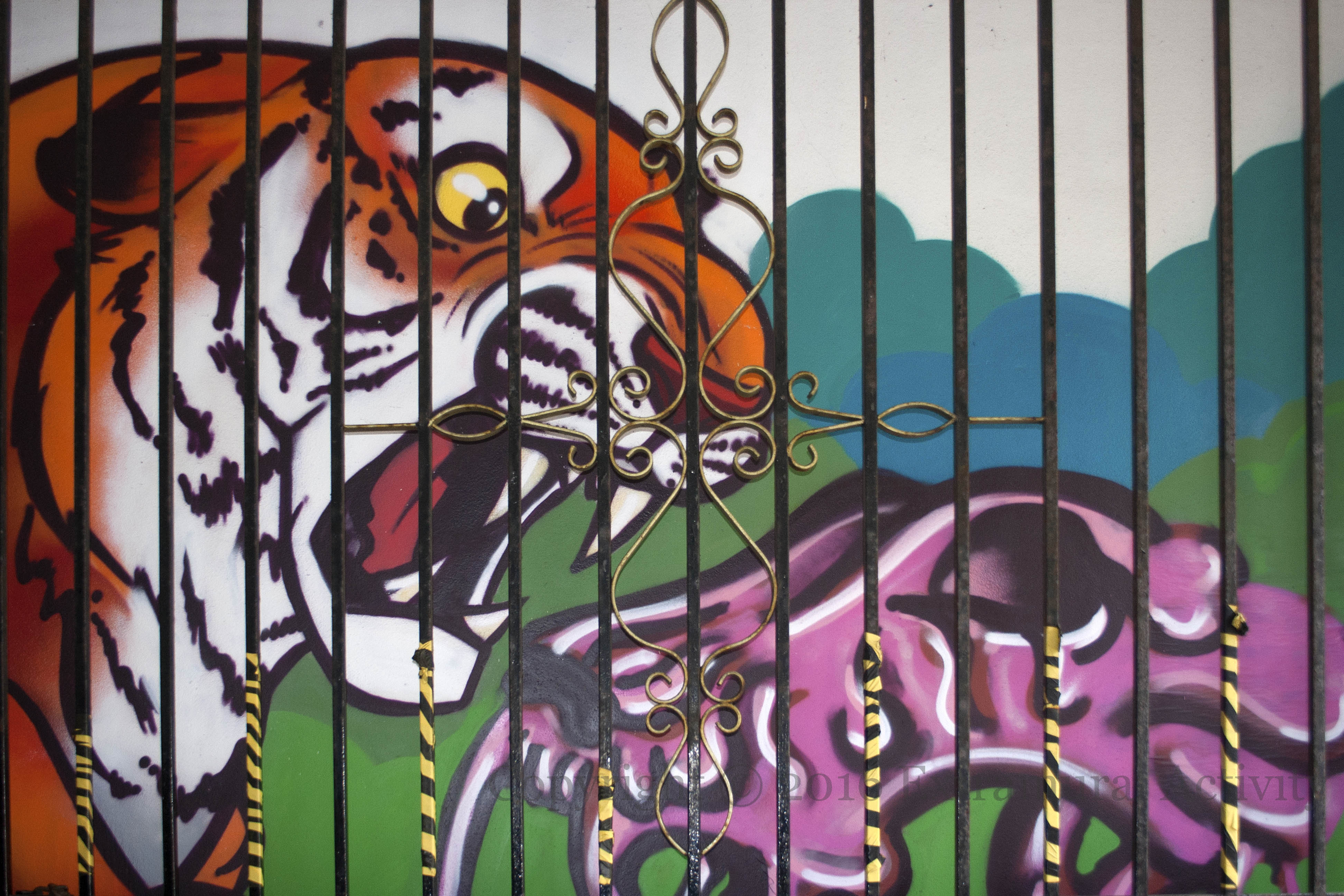
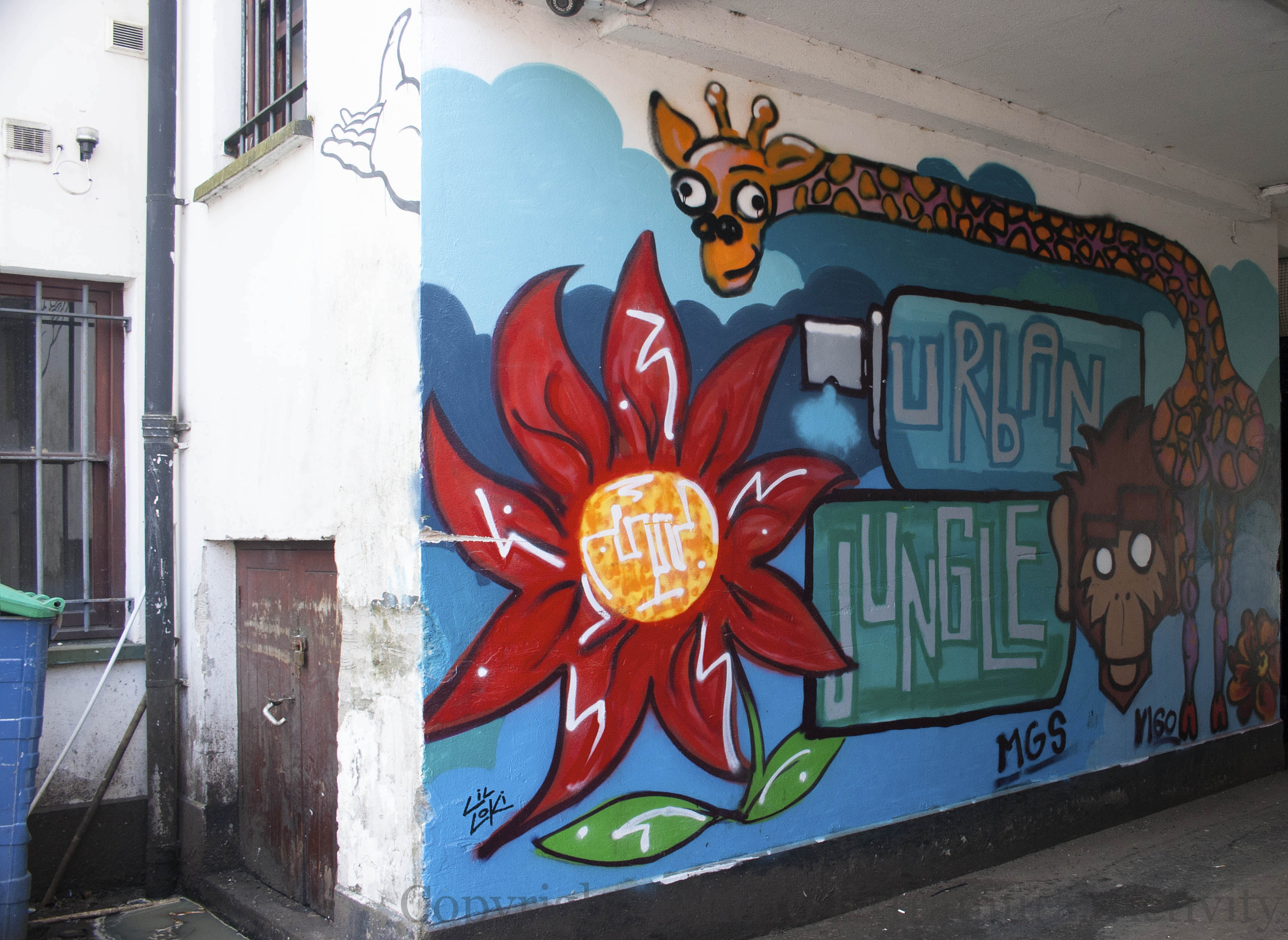
Two animal pieces: in the second, below, the giraffe and the monkey roam free among the flowers; in the first, the tiger (painted by Friz web) is caged behind some railings along Donegall Street Place.
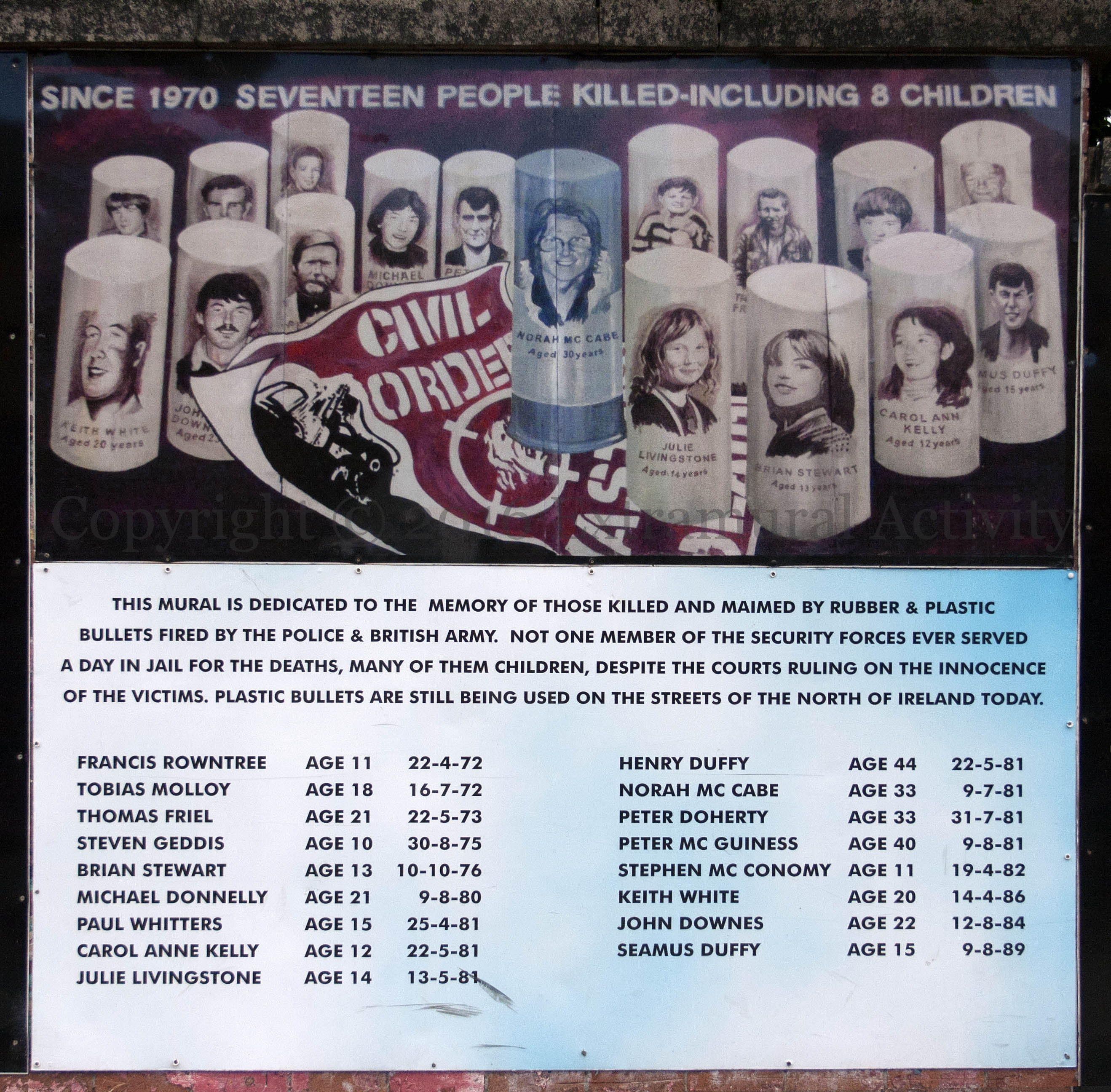
“Since 1970 seventeen people killed – including eight children”. A vintage poster against plastic bullets (see also Plastic Death in the Peter Moloney Collection for a mural) is part of this Beechmount Avenue mural showing a candle for each of the victims. The first listed (Rowntree, Molloy, Friel) were killed by rubber bullets, the rest by plastic; plastic bullets took over from rubber bullets in 1975 (WP).
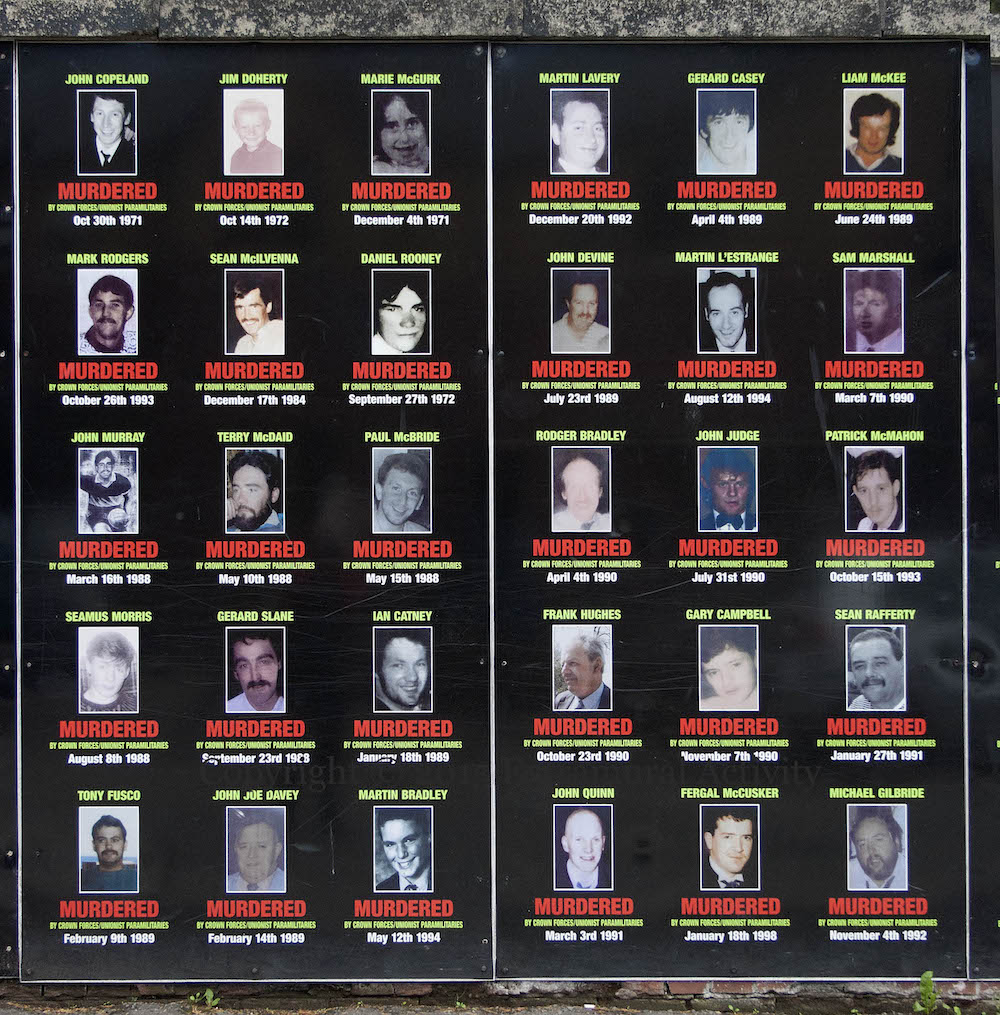
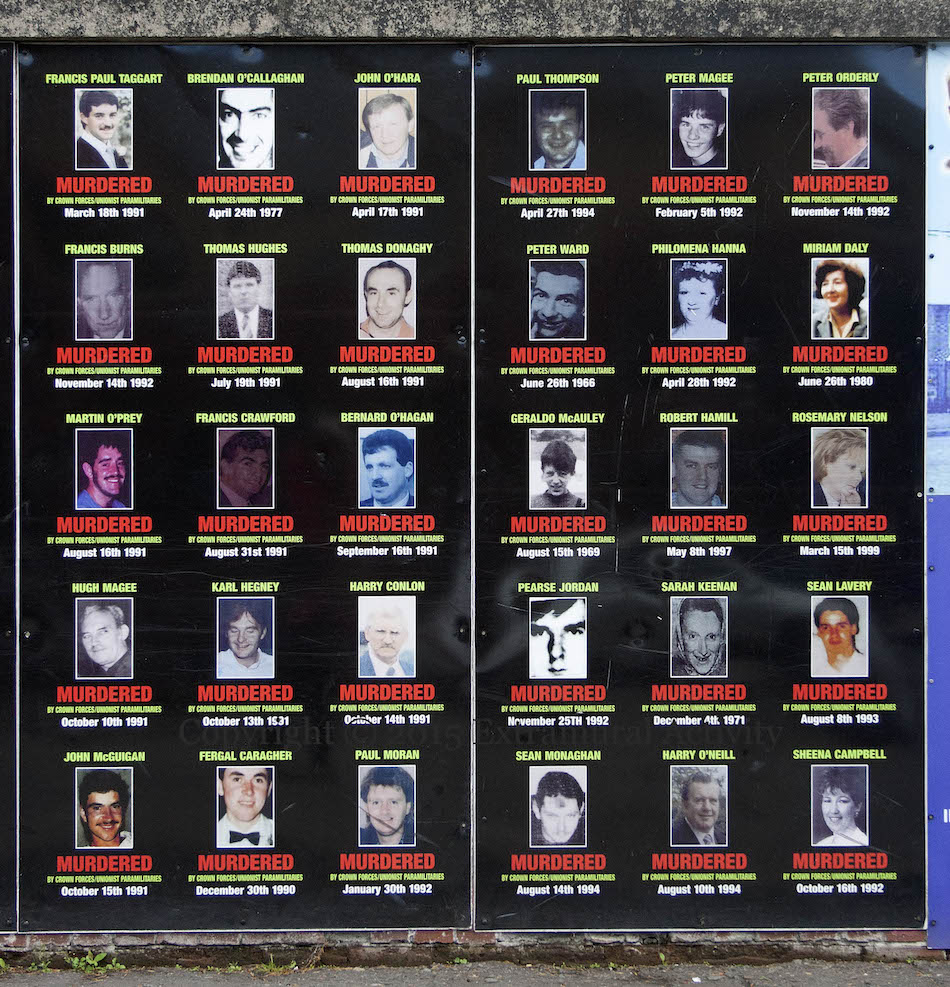
Panels 10-15 of the ‘murdered’ follow to the right of the Plastic Bullets board, here presented two-at-a-time. The 11th panel (the second one shown here, with Francis Bradley in top left) was previously the ninth panel; it is not clear why its position was swapped.




 Extramural Activity