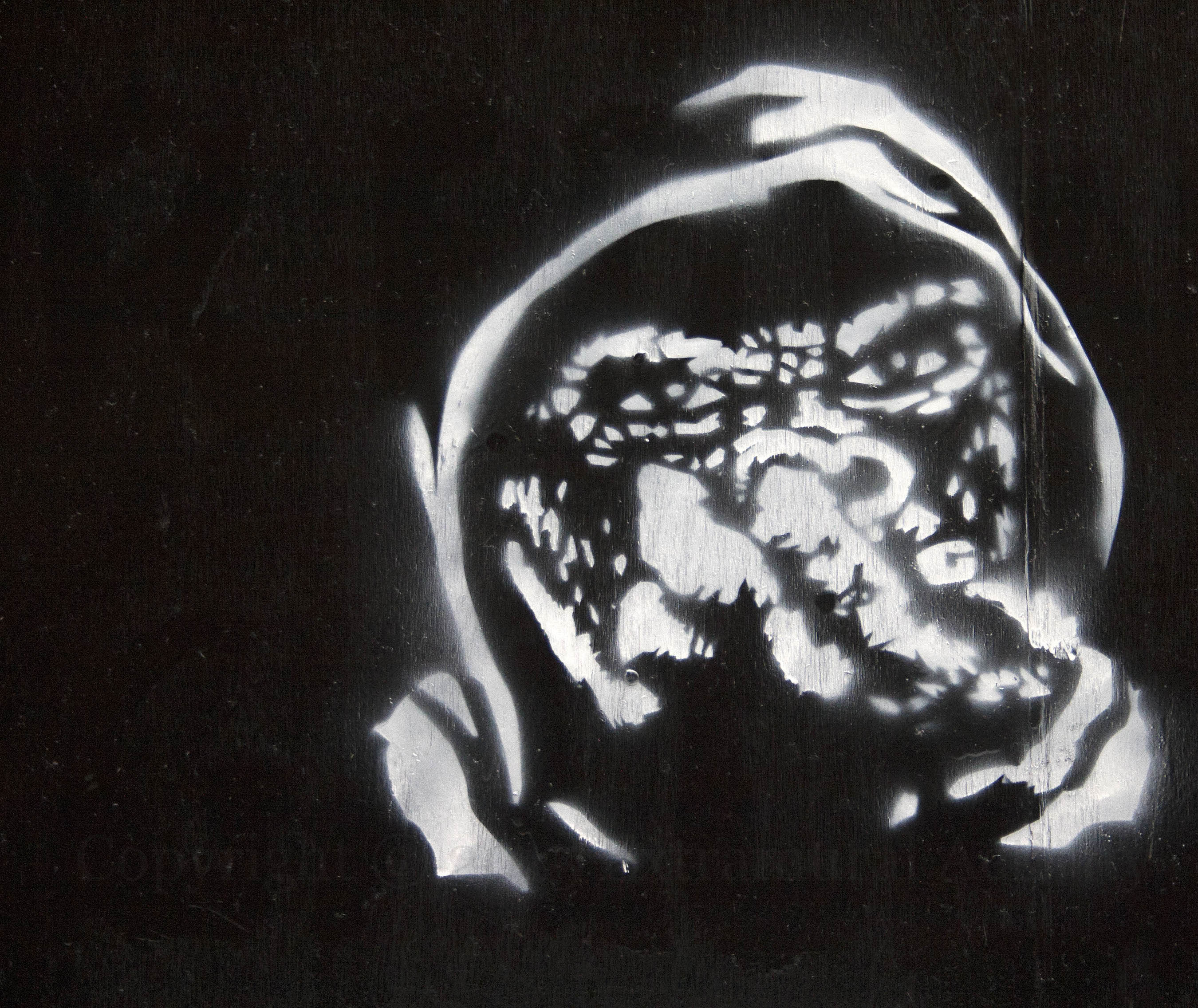
Above is another Patrick Devlin stencil at the Red Barn Gallery. Extensive research has failed to reveal who/what the stencil is based on – some sort of nose-picking gorilla-monster in a cowl. Leave a comment or send an e-mail if you have an idea.
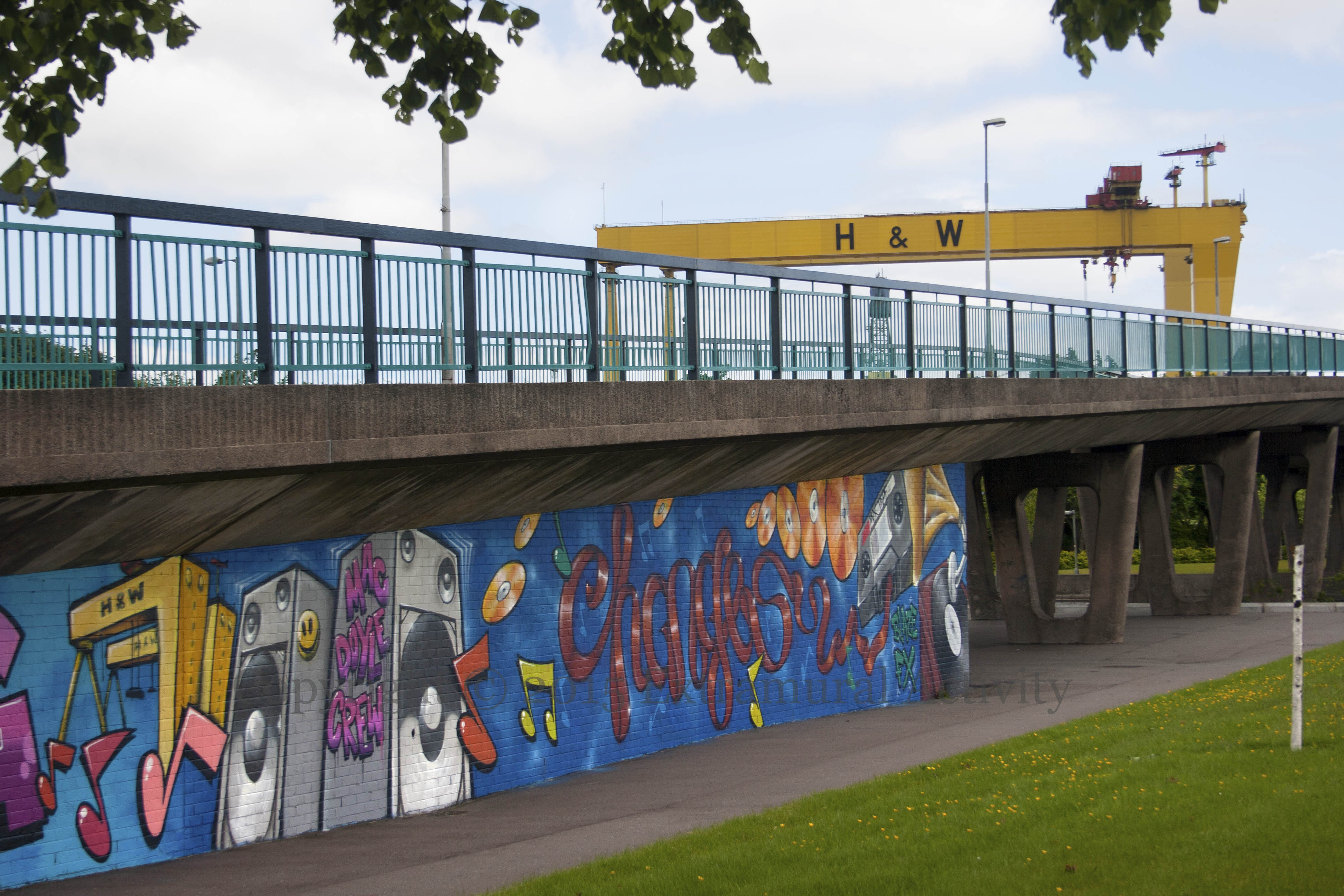
The history of music is told (from right to left) in a new mural. The gramophone gives way to the cassette and then to the CD and finally the iPod, with a mic and speakers in the middle. The suggestion, presumably, is that life in east Belfast also changes. From Blaze FX, who also did the Teenage Dreams repaint on the other side of the flyover, and local youths from both Short Strand and Newtownards Road.
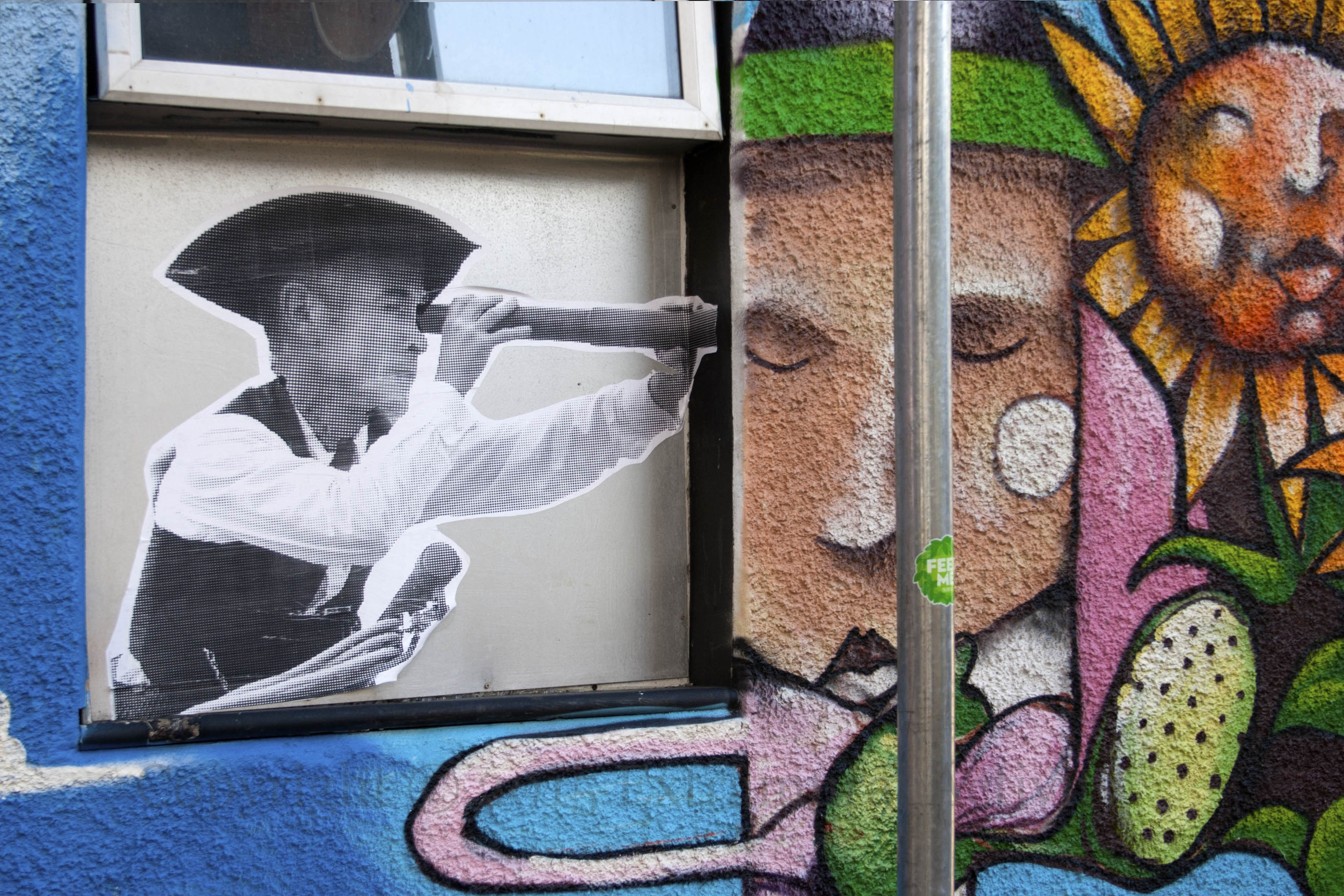
Union Street paste-ups, opposite the Sunflower, showing (in costume) a lobster with wine-glass, a hiker with a bed-roll, a cow (Moomin?) in admiral’s hat, and an old-west character scanning the horizon with a spyglass.
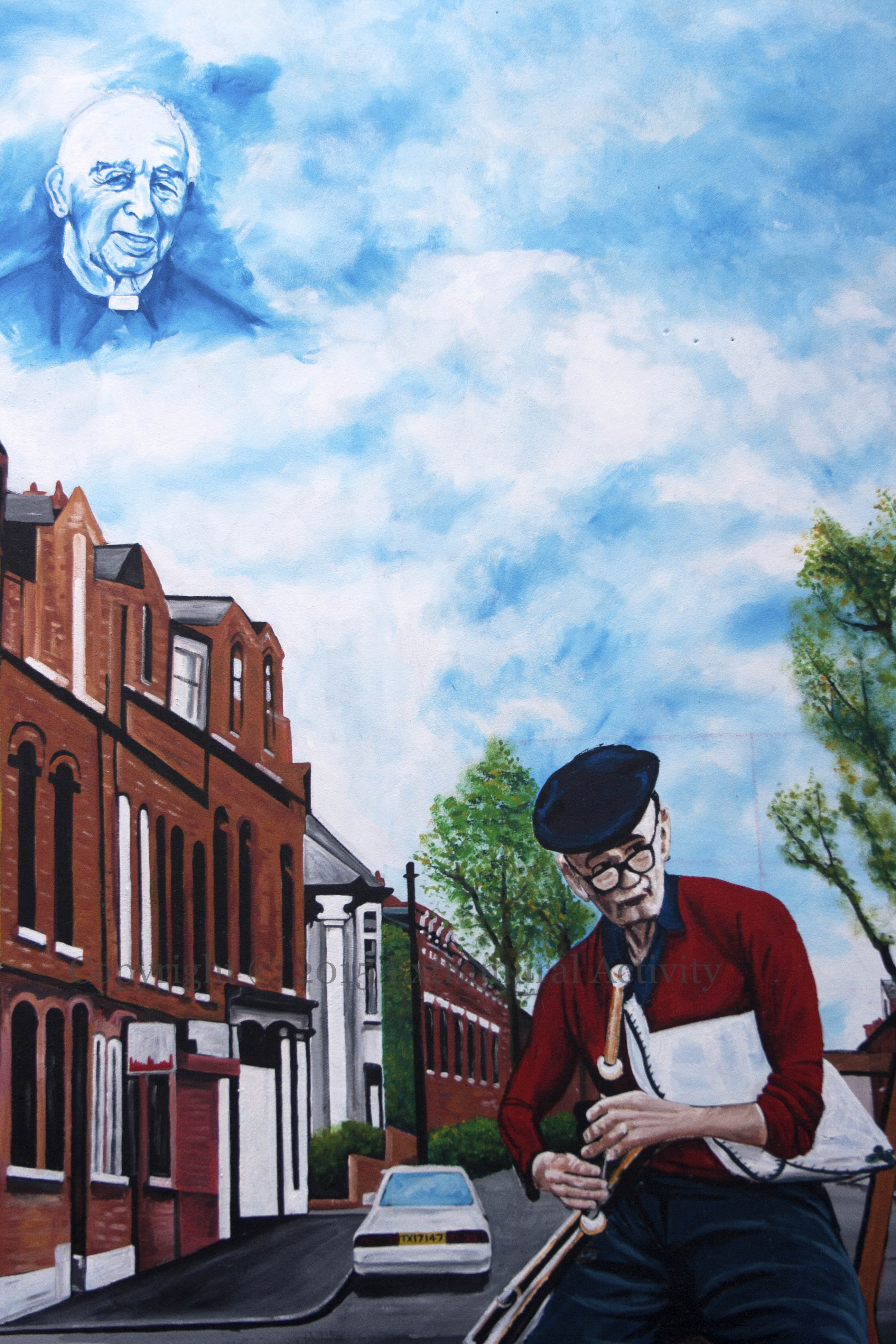
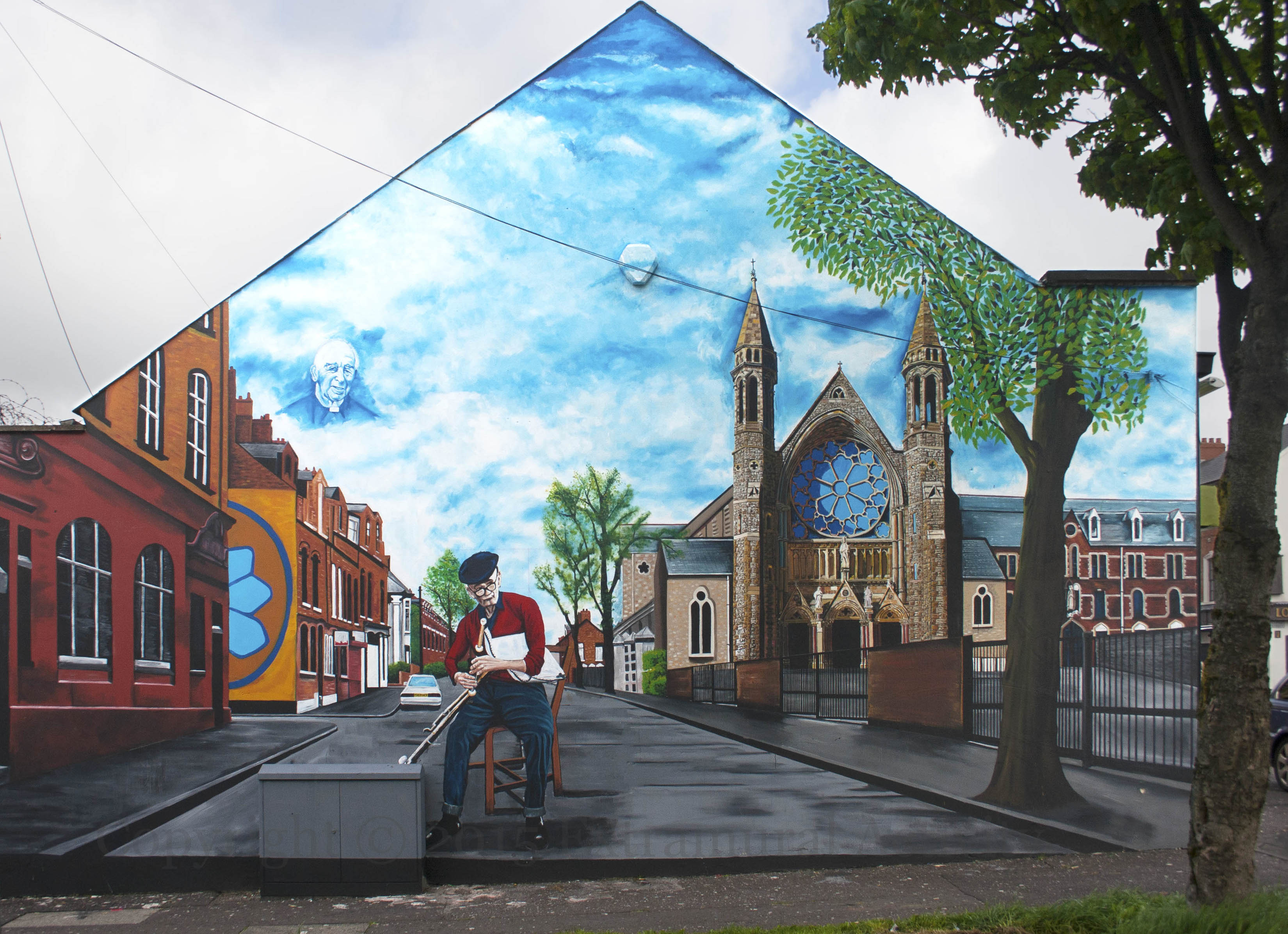
This new mural pays tribute to two long-time residents of Clonard. On a good day, Noel Fitzpatrick, a cobbler with a little shop on the corner of Odessa and Clonard streets, would take his chair out into the street and play the uıleann pipes. Looking down from above is Alec Reid, the Redemptorist priest who spent 40 years at Clonard monastery and played an important role in the peace process. He died in 2013 at age 82. (WP)
Painted by Marty Lyons & Mickey Doc in Springfield Drive. For the large ‘flower’ mural to the left of this mural (which imitates the stained glass in the cathedral), see C01044.
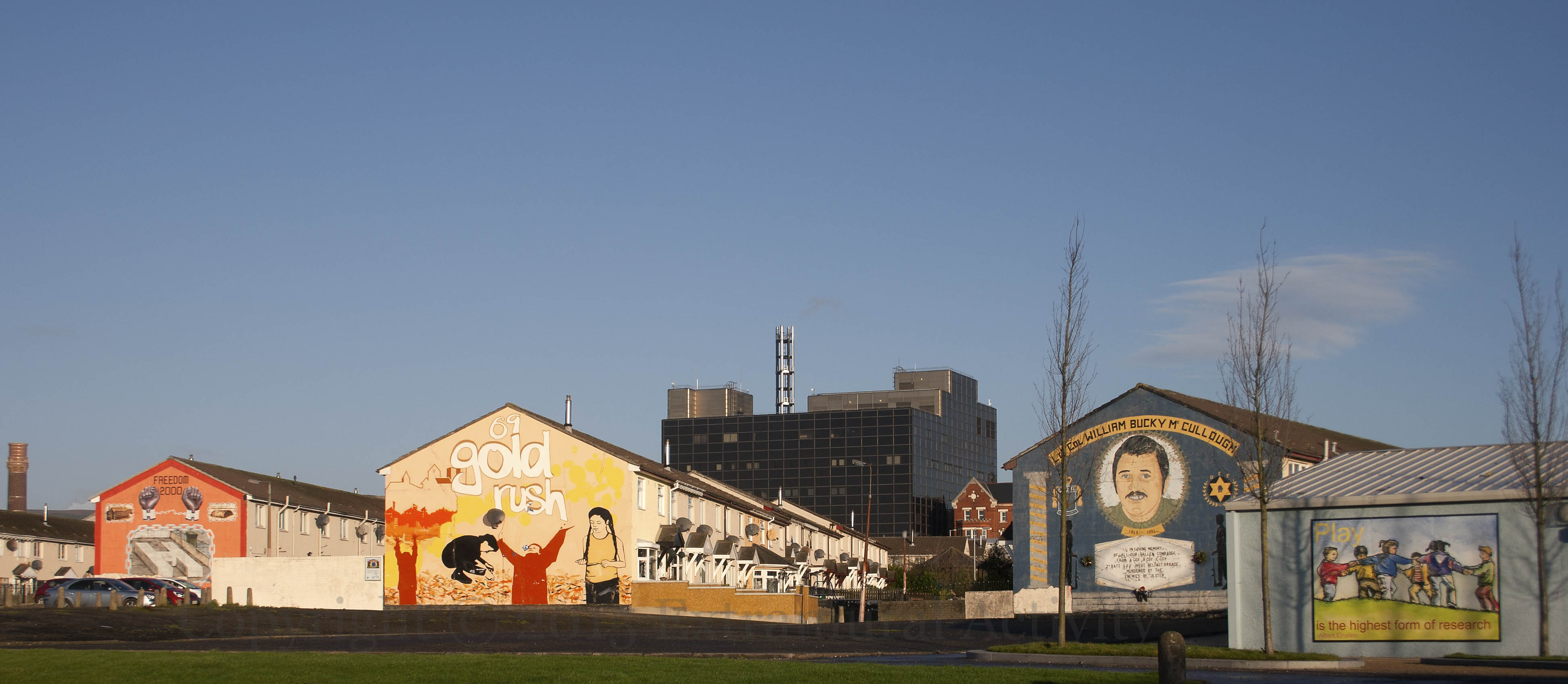
Here’s a wide shot of the right-hand side of the murals in the lower Shankill estate. These gables have remained in place while the estate has been redeveloped, causing the removal of the Red Hand, Martin Luther and Cuchulainn murals.
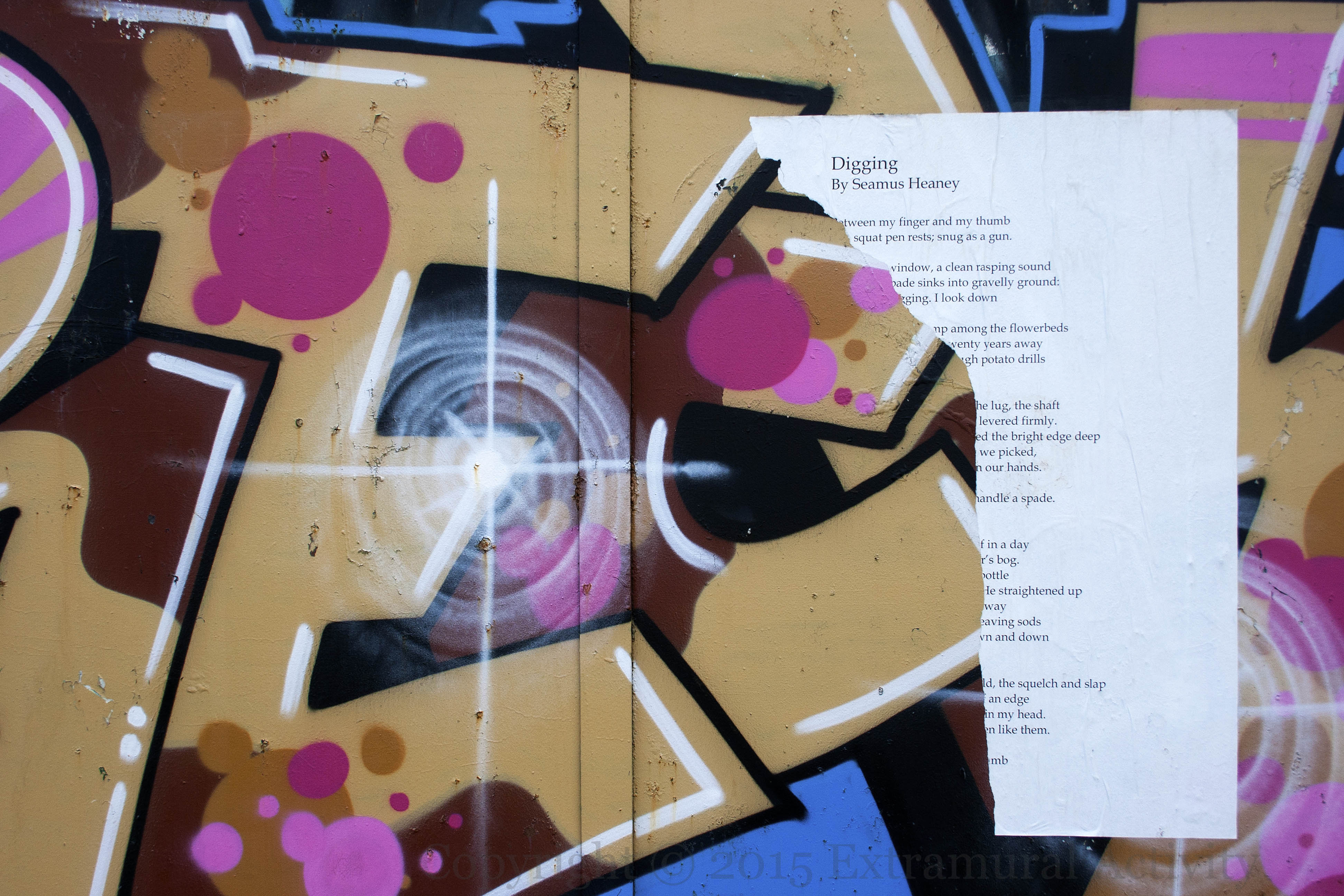
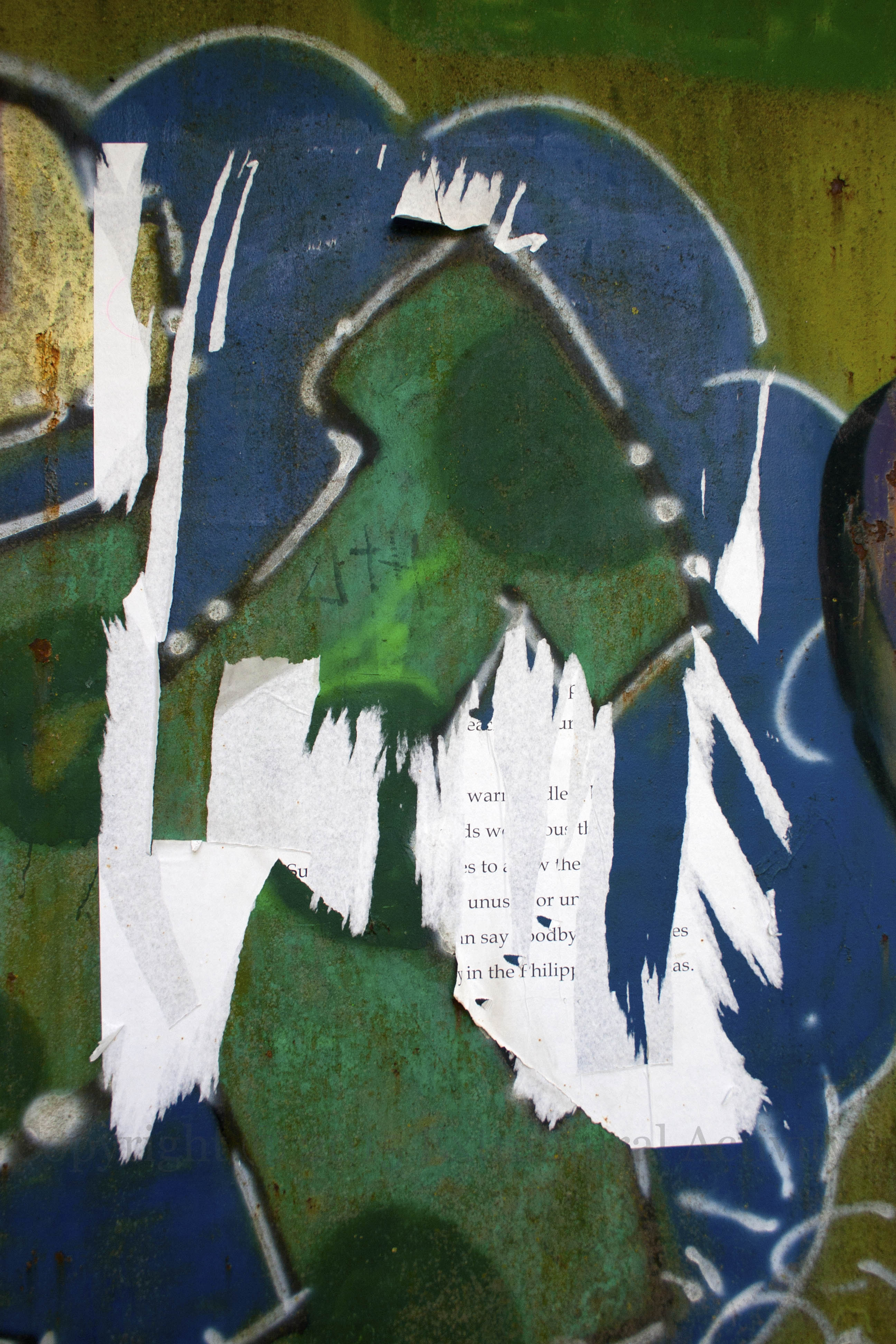
Seamus Heaney took up the pen where his father and grandfather had worked with the spade. A copy of his poem Digging was, along with others, placed on the Alexandra Park “peace” line but has been torn off in favor of the preferred mode of expression of the next generation: the spray can.
In 1997, then-Prime Minister Tony Blair’s office issued a statement acknowledging that the administration of the time of the Hunger failed to intervene (Guardian | Independent).
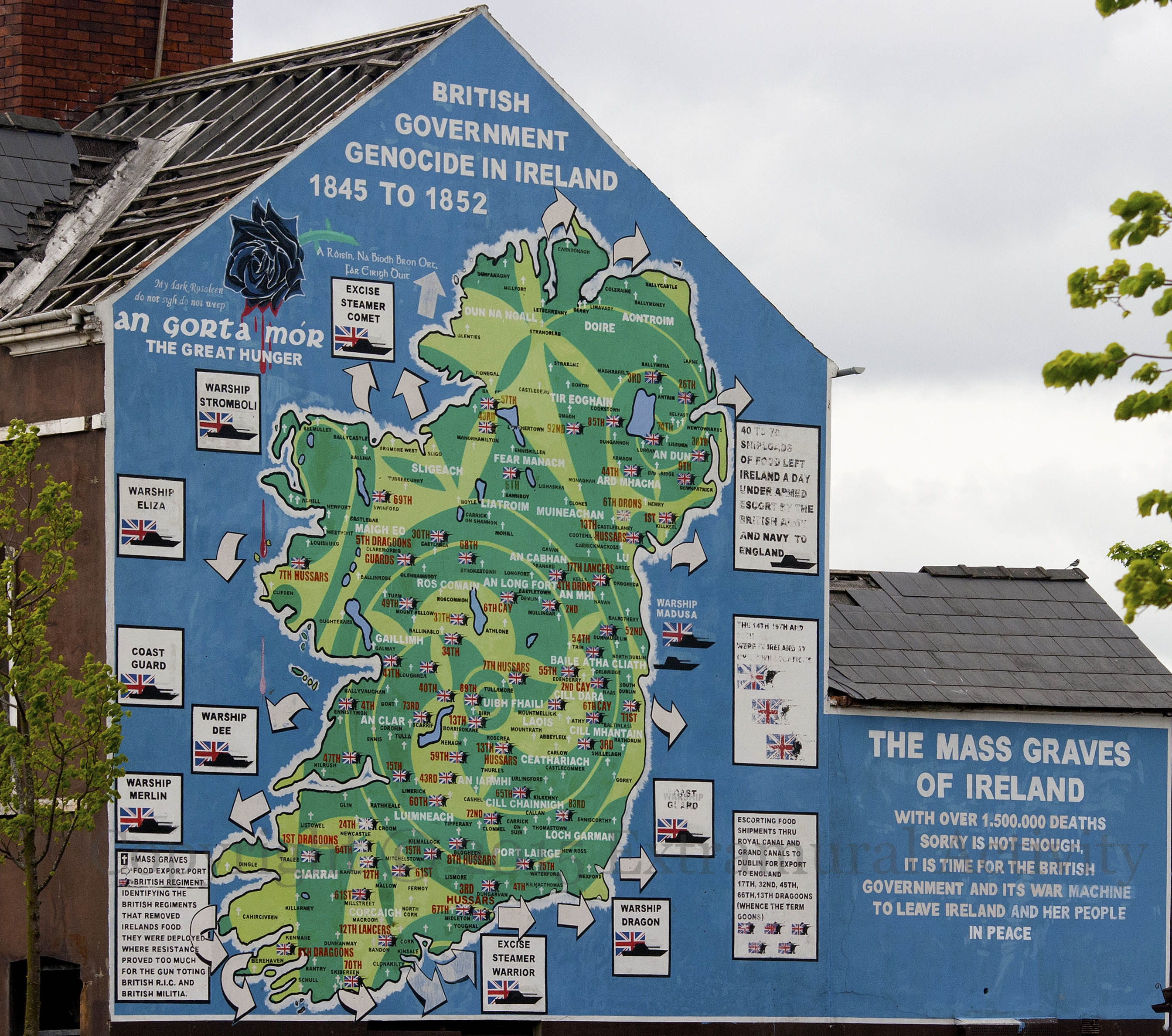
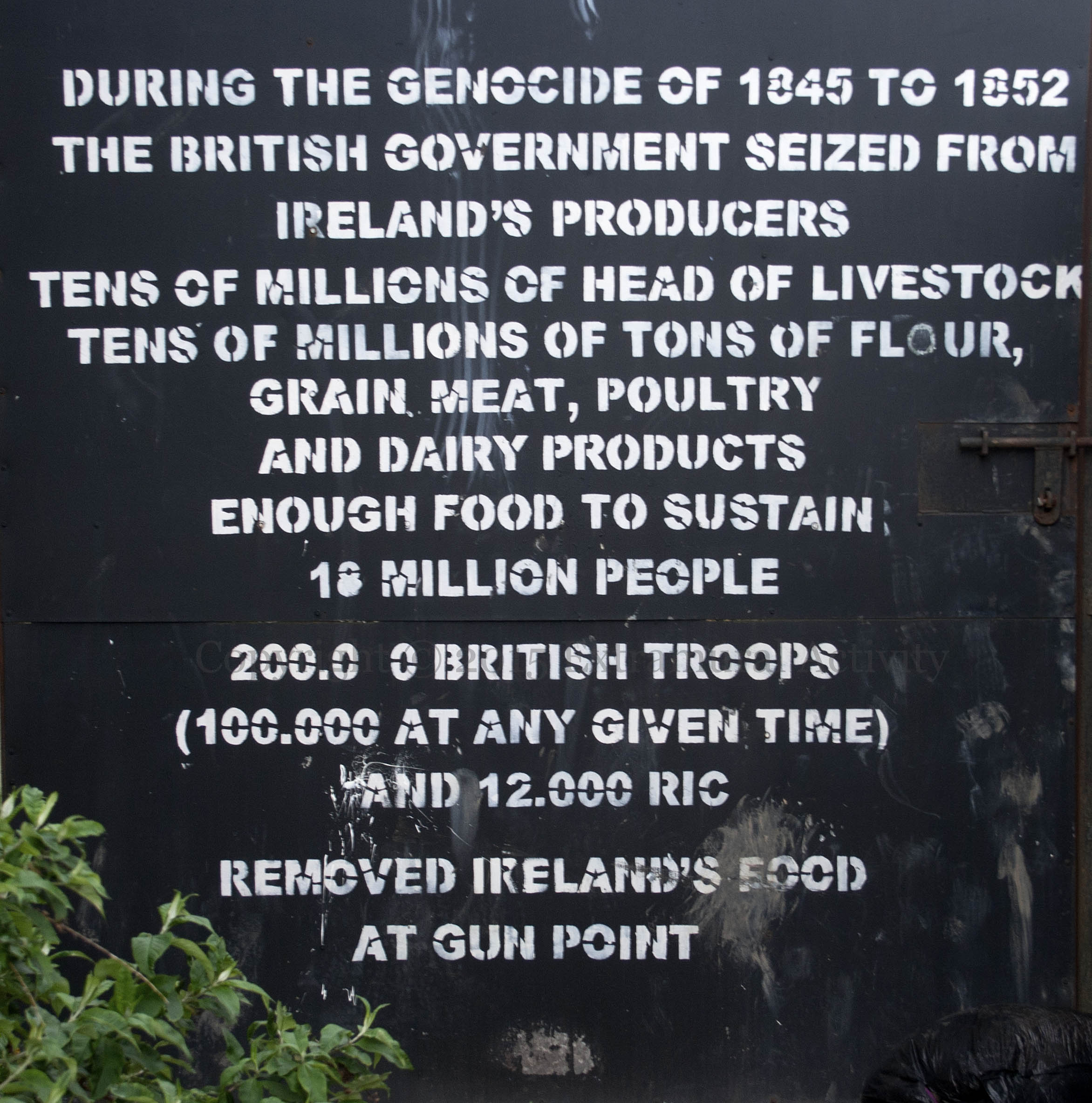
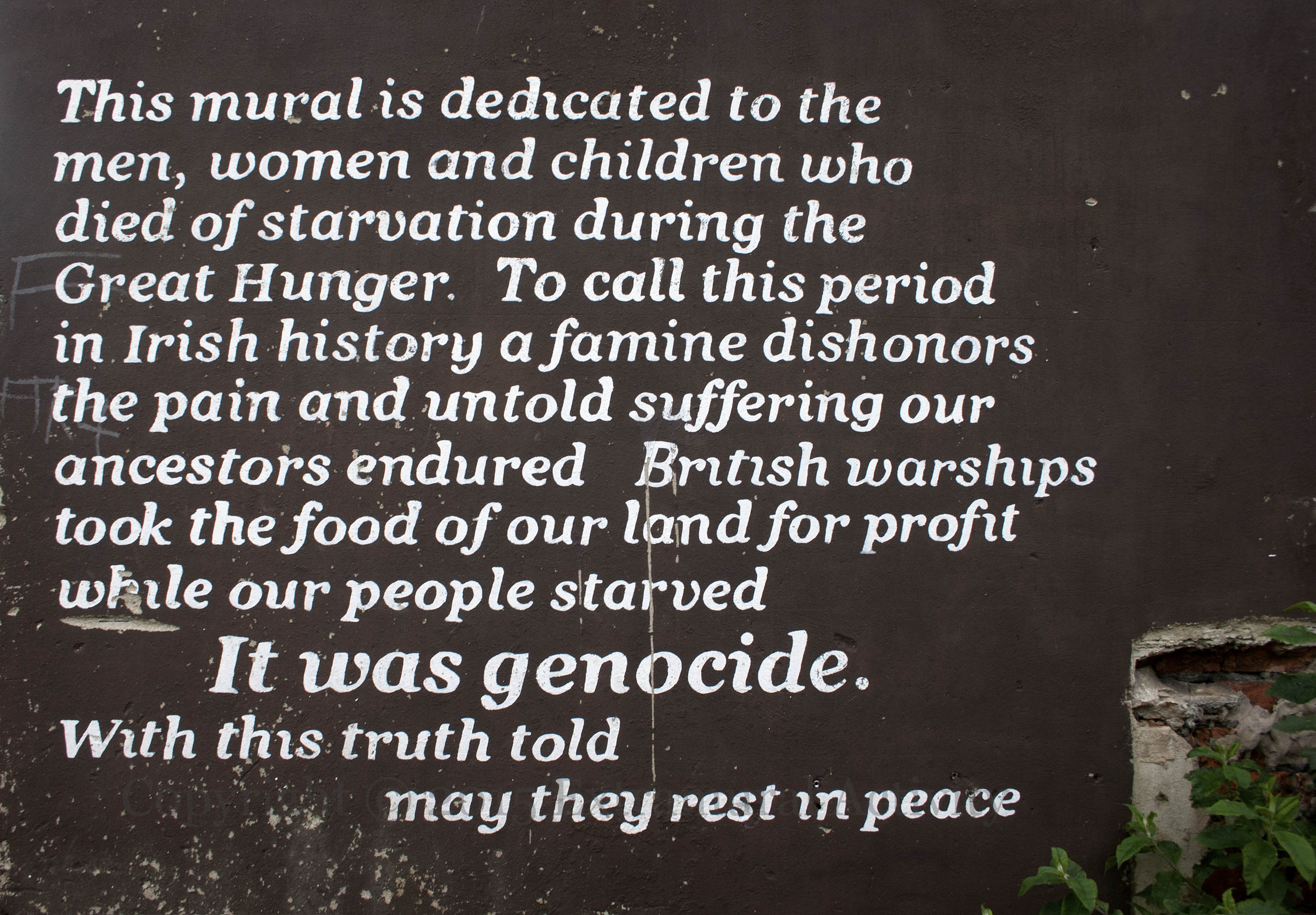
The mural above asserts that it was not merely a matter of negligence but of will: “With over 1,500,000 deaths “sorry” is not enough. It is time the British government and its war machine to leave Ireland and her people in peace. During the genocide or 1845 to 1852 the British government seized from Ireland’s producers tens of millions of head of livestock, tens of millions of tons of flour, grain, meat, poultry and dairy products, enough food to sustain 18 million people. 200,000 British troops (100,000 at any given time) and 12,000 RIC removed Ireland’s food at gun point. This mural is dedicated to the men, women and children who died of starvation during the Great Hunger. To call this period in Irish history a famine dishonors the pain and untold suffering our ancestors endured. British warships took the food of our land for profit while our people starved. It was genocide. With this truth told may they rest in peace.”
Each white cross on the map represents a mass grave. The map is originally from irishholocaust.org.
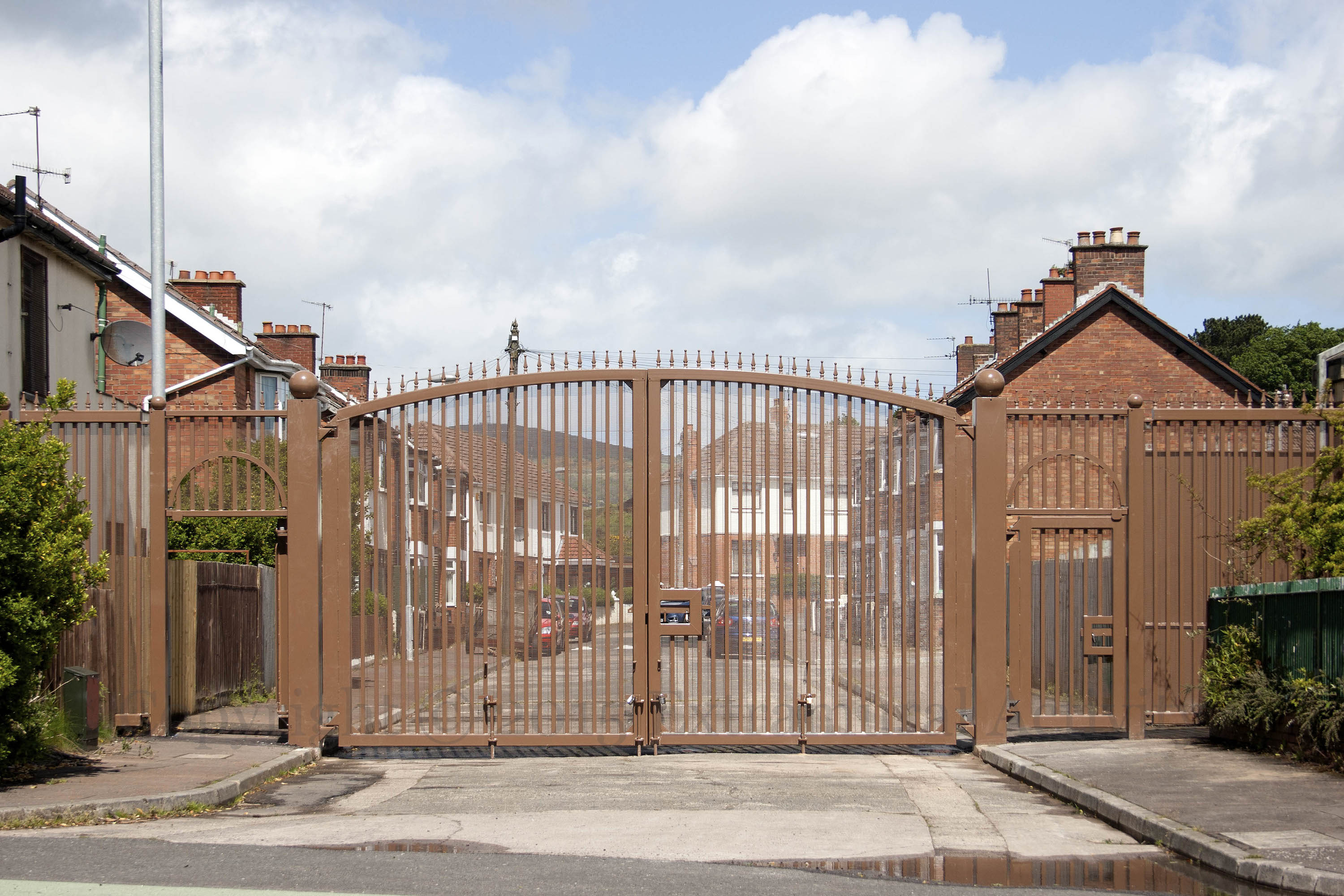
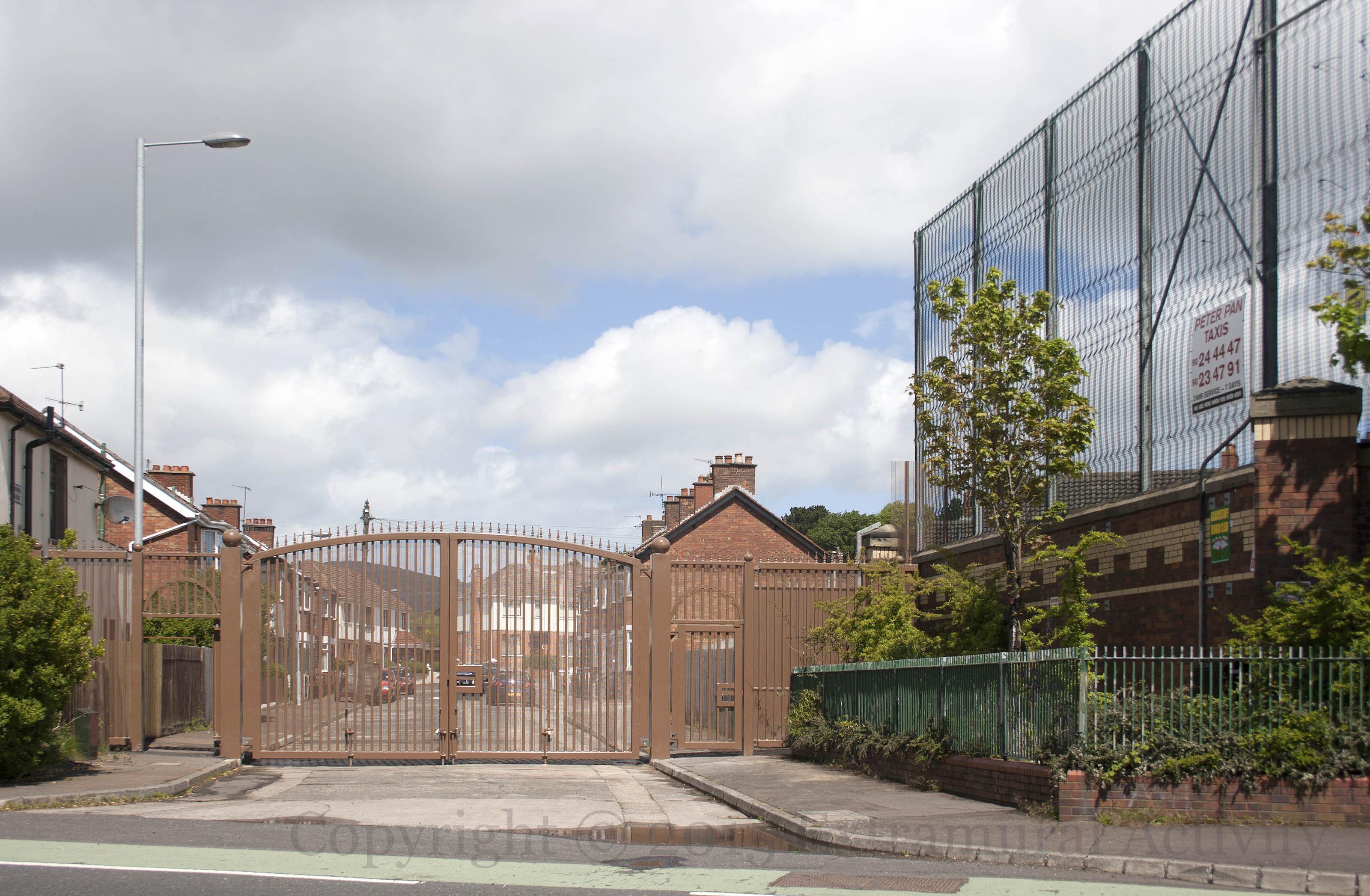
In May 2013 the Executive pledged to remove “peace” lines in ten years – by 2023 (Tele). One step in this process is see-through gates, such as those at Workman Avenue in the image above. There is no change, however, to the fence on the Springfield Road – see the image below. See previously: the new gates in Howard Street.
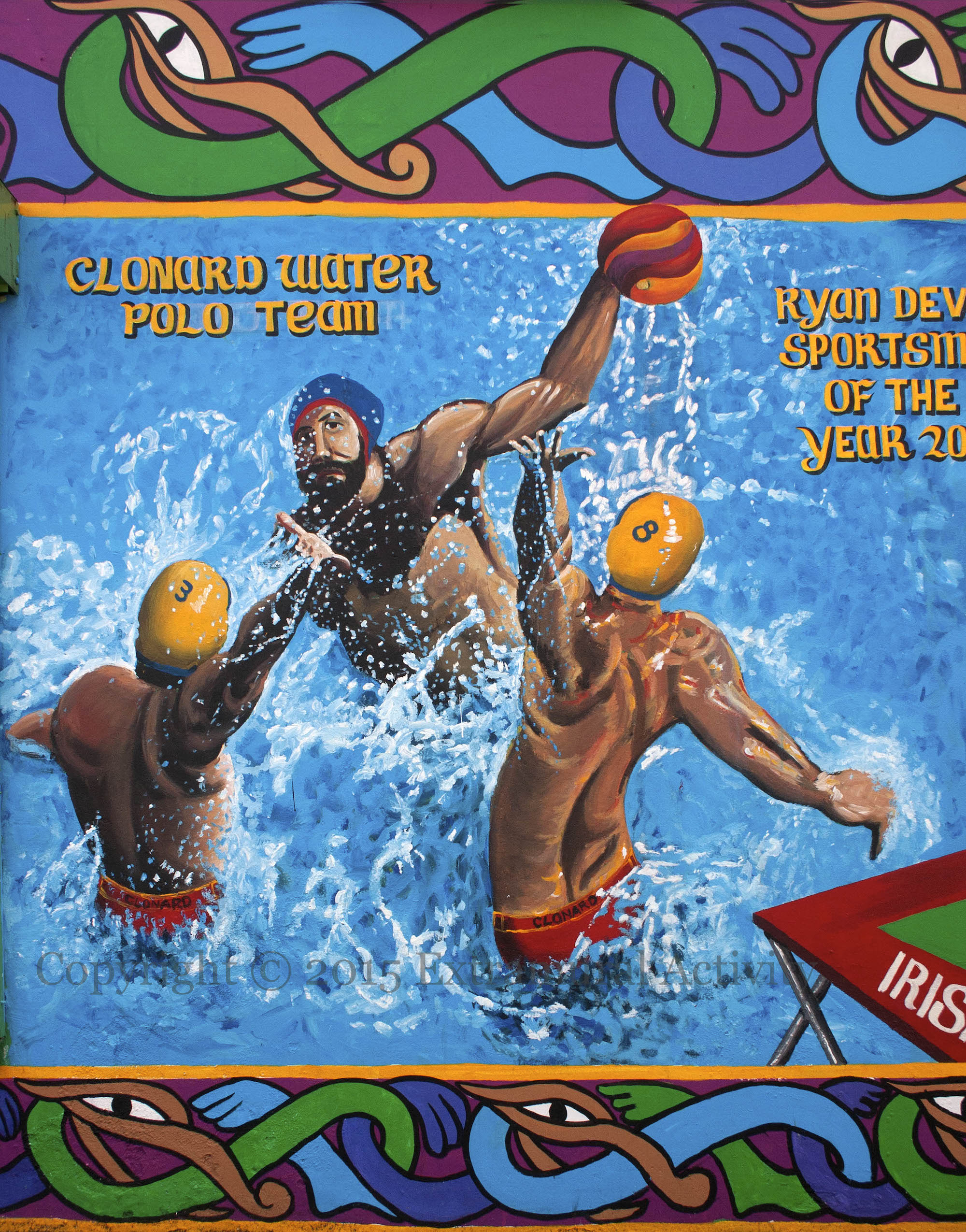
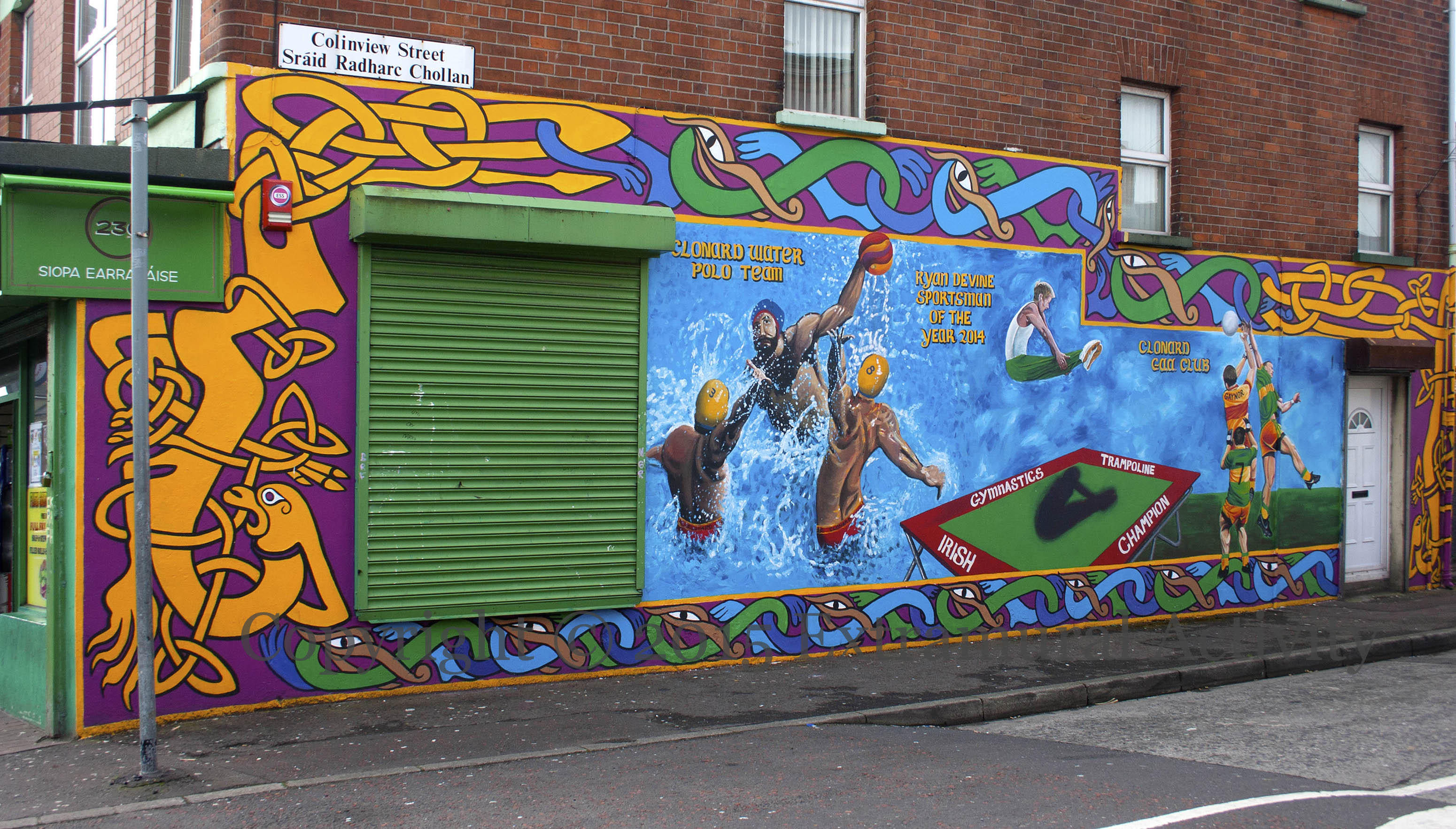
A new mural on Colinview Street/Sráıd Radharc Chollan celebrates local sports: first (shown above) is the Clonard water polo club (Fb), second (in the wide shot, below) is Ryan Devine of Anderstonstown Trampoline Club, junior sportsman of the year, 2014 (Fb), and third, Clonard GAA. The mural is on the side wall of The Flush newsagents, near the former location (above ground) of the Farset and Forth rivers, where dams and races were put in to supply a cotton mill and linen mill and, later, a laundry, a hat-makers, and a biscuit factory. The river, flowing south, then became the Blackie in Beechmount. (Information gleaned from the Belfast Forum).
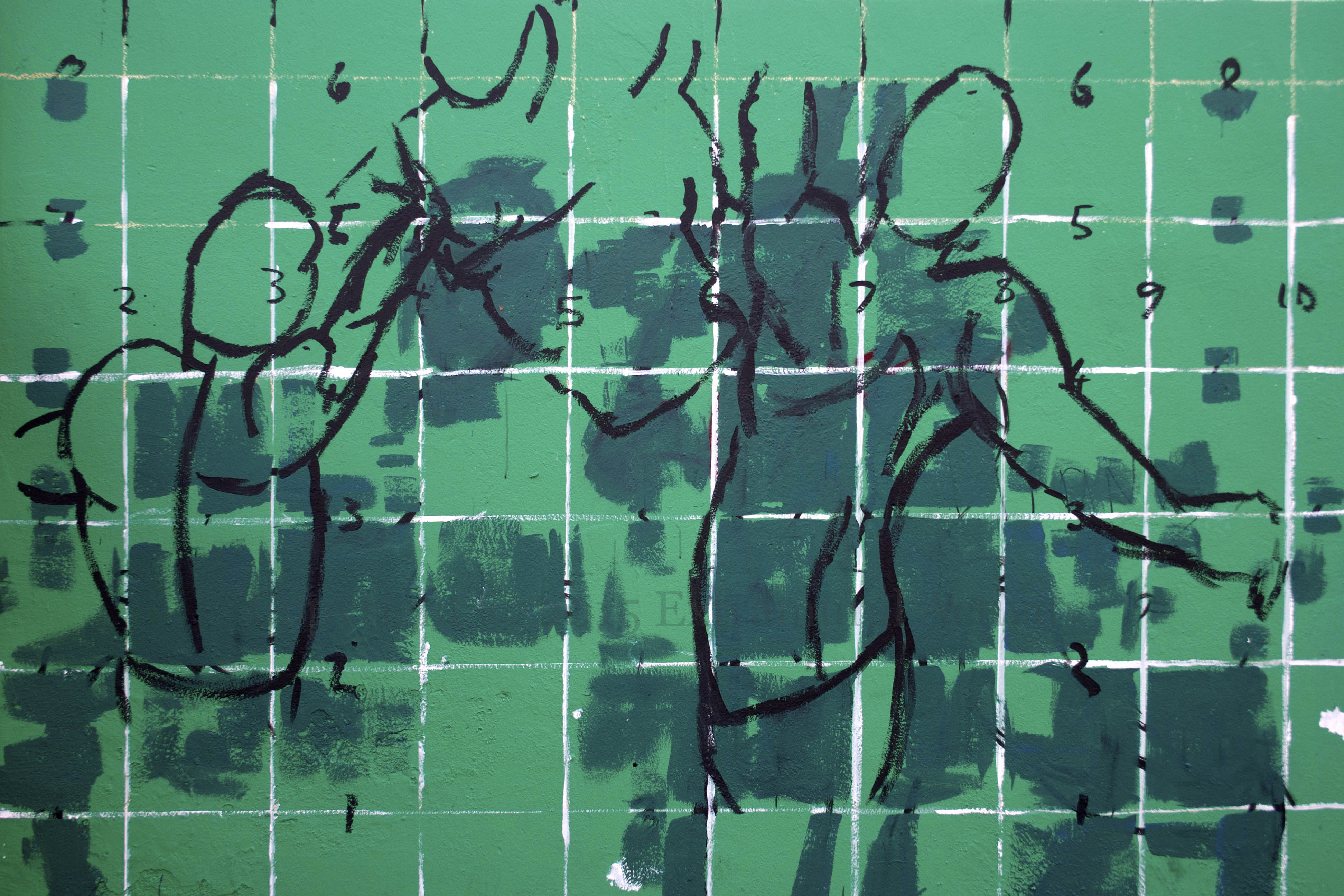
The final image below is the cartoon for the water polo part of mural, which was begun back in February.







 Extramural Activity