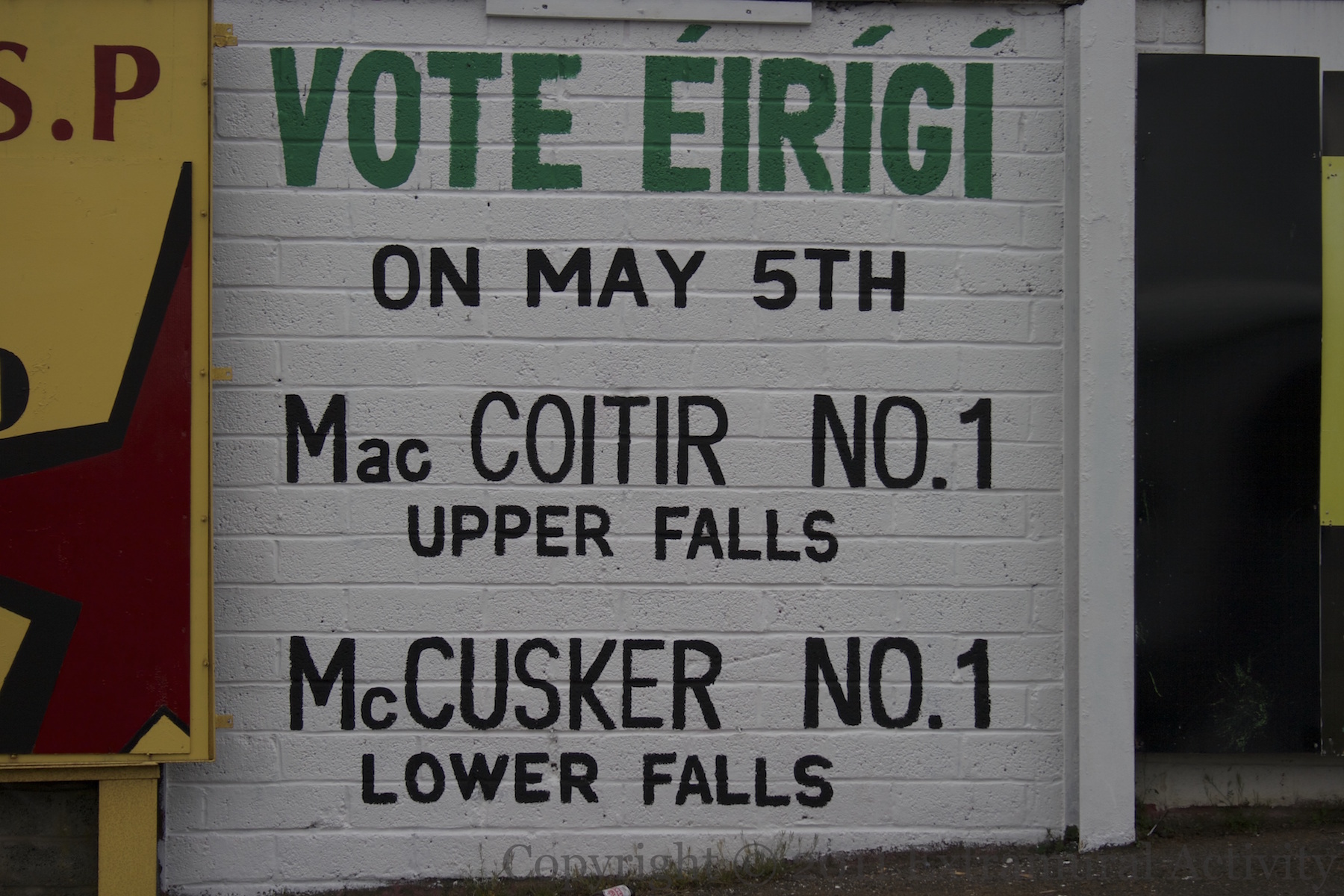
In 2011, Éırígí contested the local election in Belfast, fielding candidates in two areas. Pádraıc Mac Coıtır received 1,415 first preference votes (more than 10%) in Upper Falls and John McCusker 647 in Lower Falls. Neither was successful (WP).
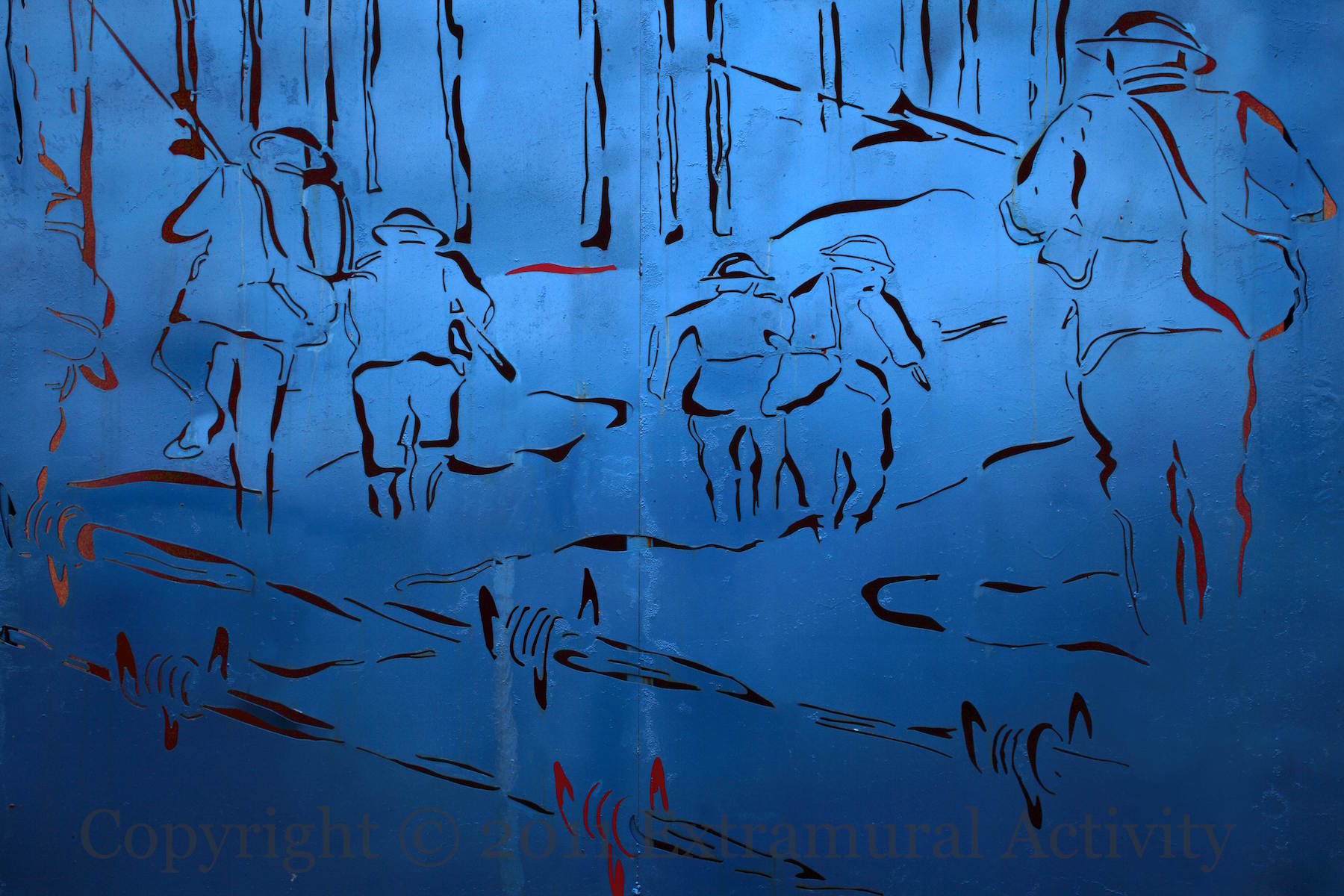
Here are three details from the metalworks in the Mount Vernon WWI memorial garden, showing scenes from the conflict and a map of the area around Messines (photoshopped in red). For more, including the panels to John Cordon and William McFadzean, see M07770.
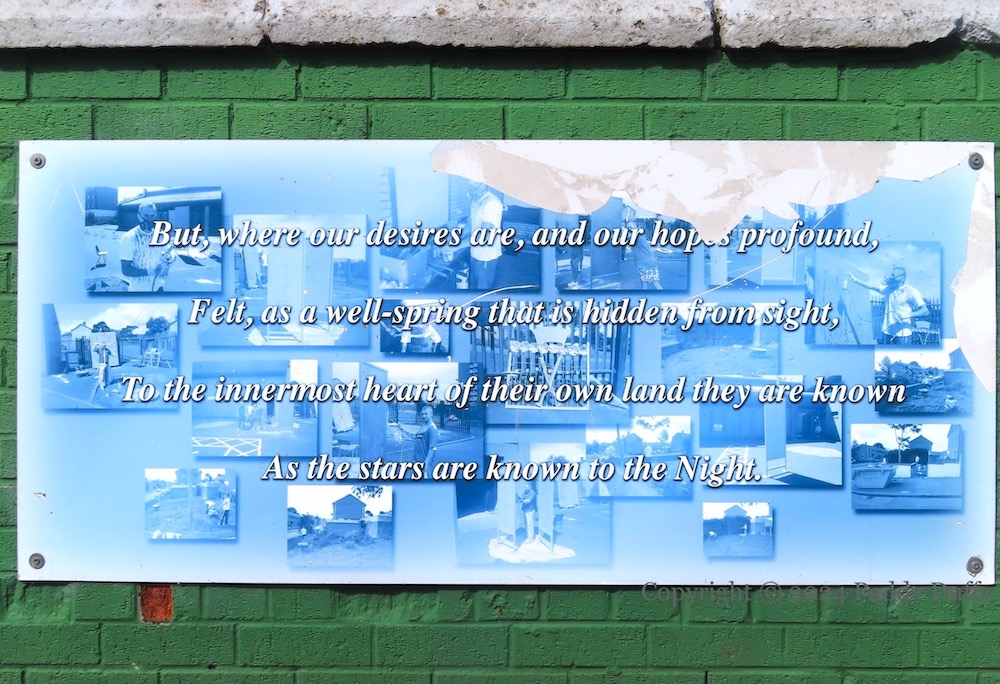
Update: As the images below from 2017 and 2018 show, the metalworks themselves have also been repainted (and replaced in a slightly different configuration), a new gate has been installed and the boards on the surrounding wall have been restored, against a freshly-painted background of green. The boards have verses from Laurence Binyon’s For The Fallen. “They mingle not with their laughing comrades again/They sit no more at familiar tables of home/They have no lot in our labour of the day-time/They sleep beyond Ulster’s [originally, England’s] foam.”
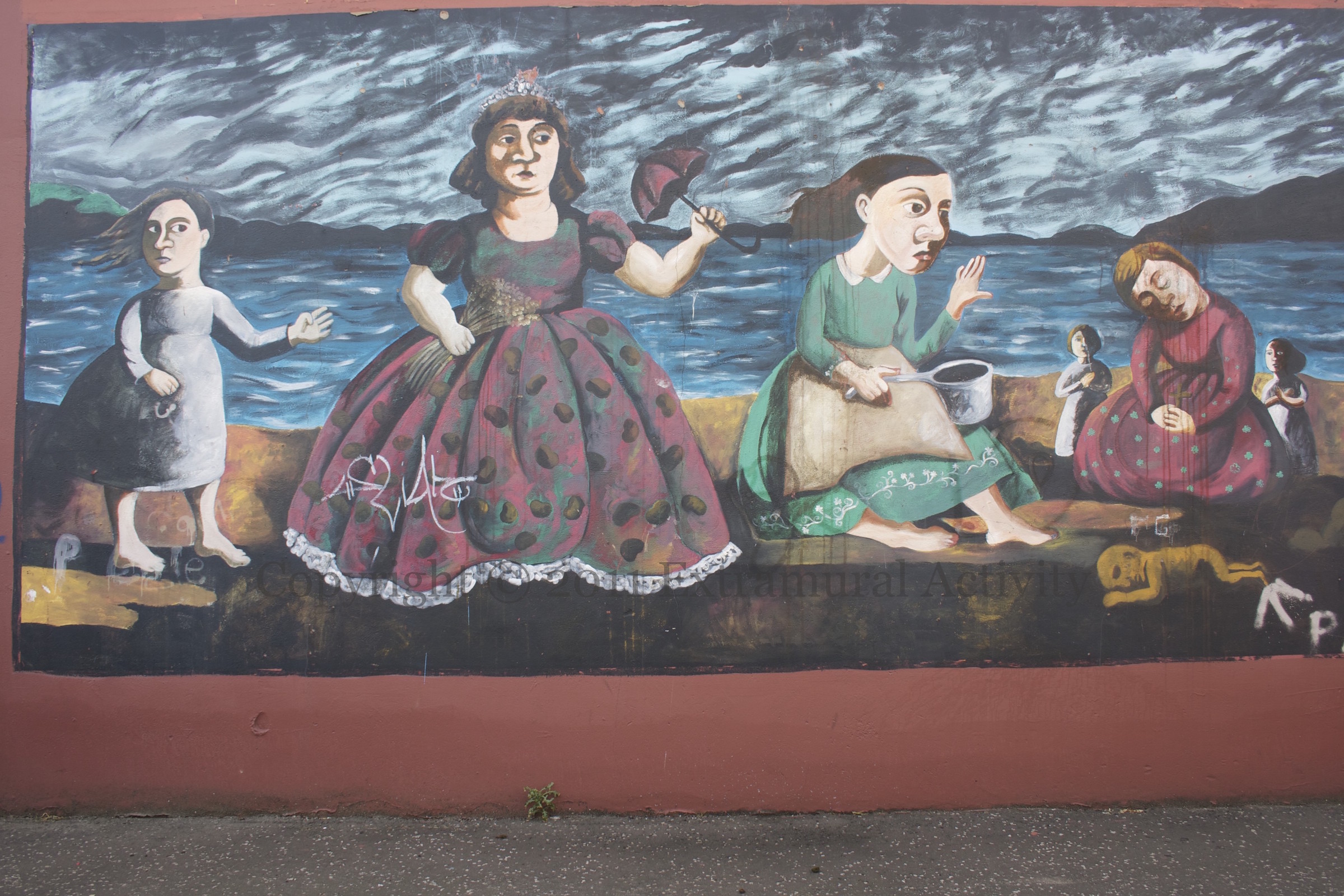
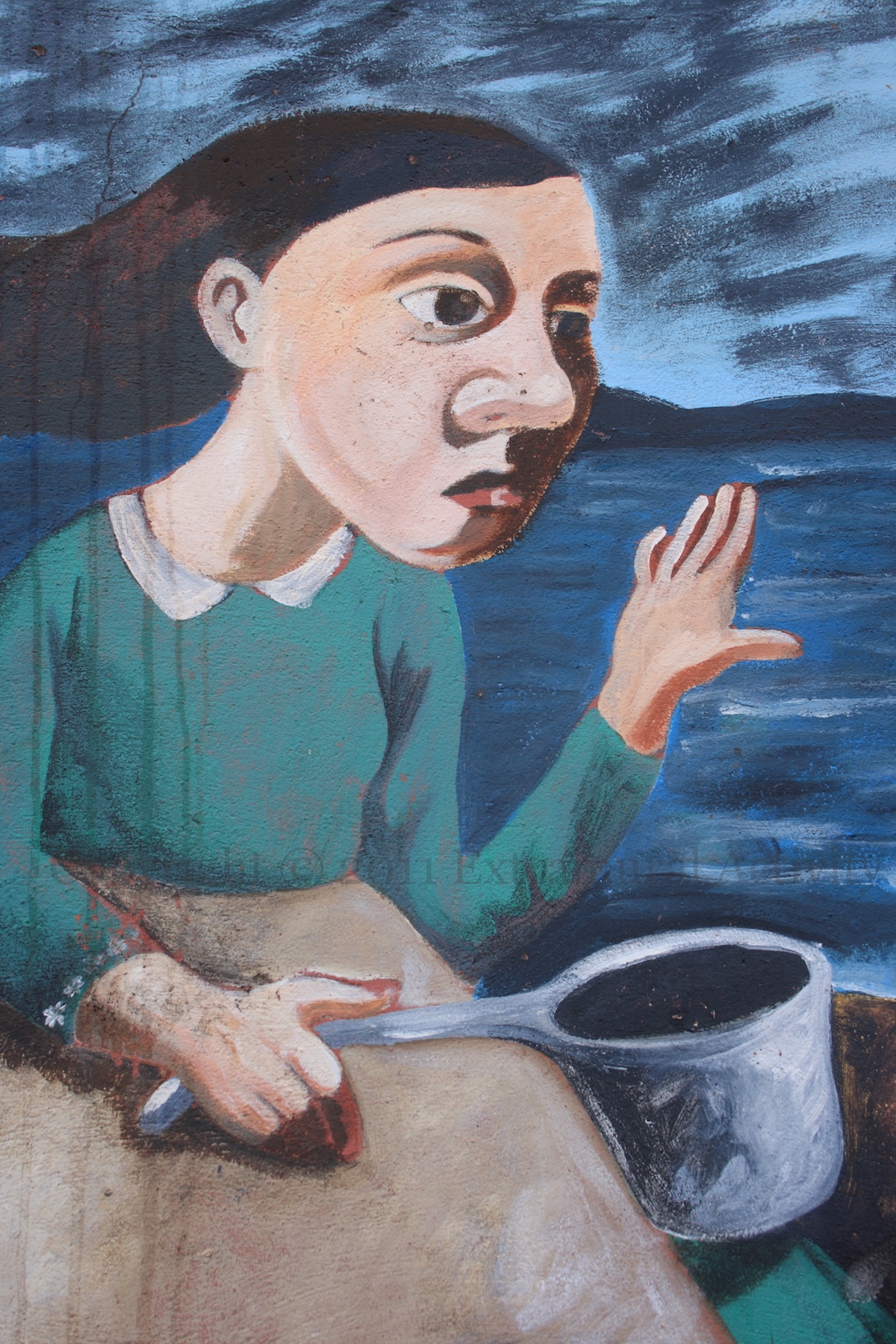
Queen Victoria and entourage paddle along the Irish shore at the end of the Great Hunger. (Here are one | two discussions of her visit and (un)involvement with famine relief.) Work by Rosie McGurran (Fb) in Linden Street, Belfast.
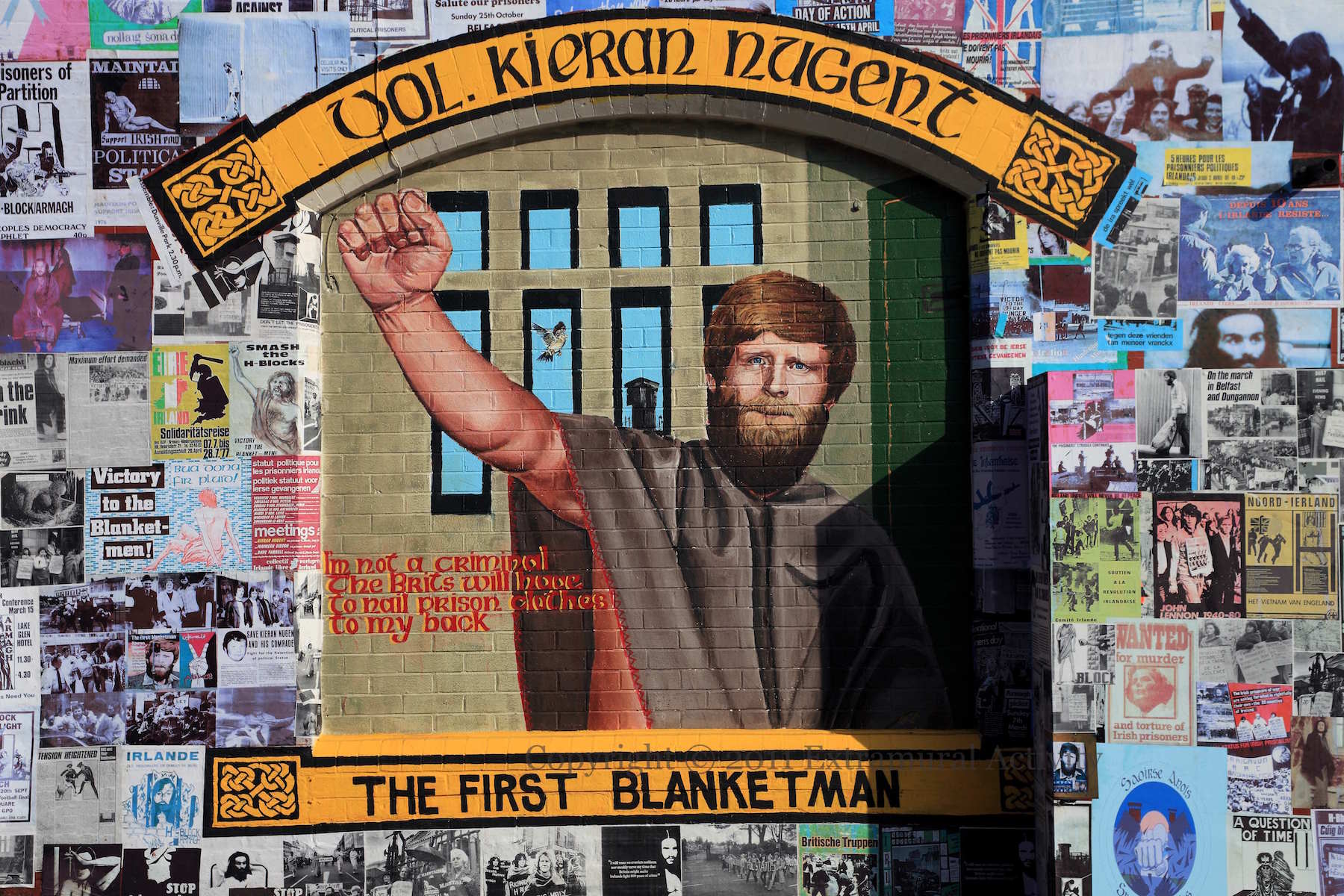
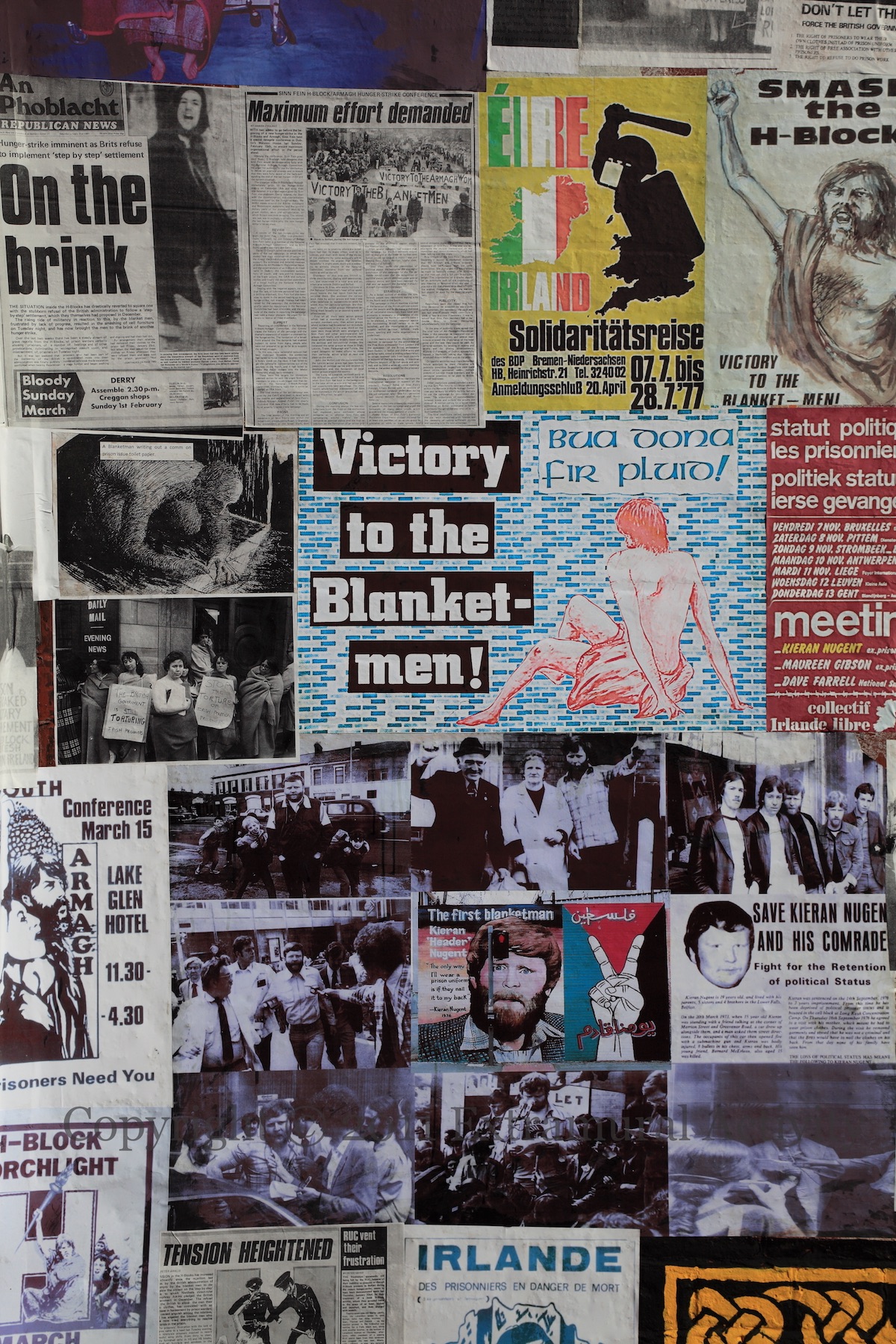
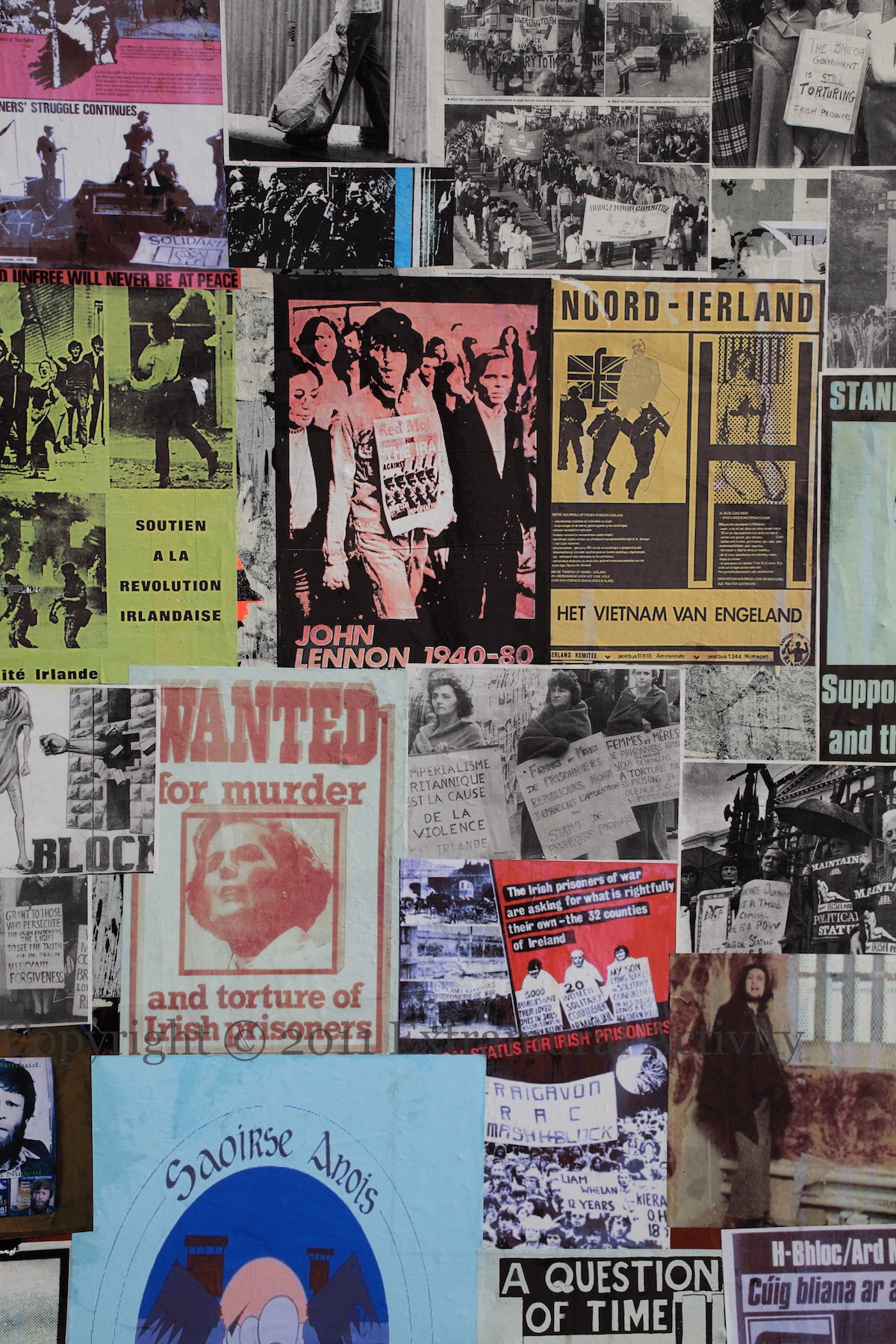
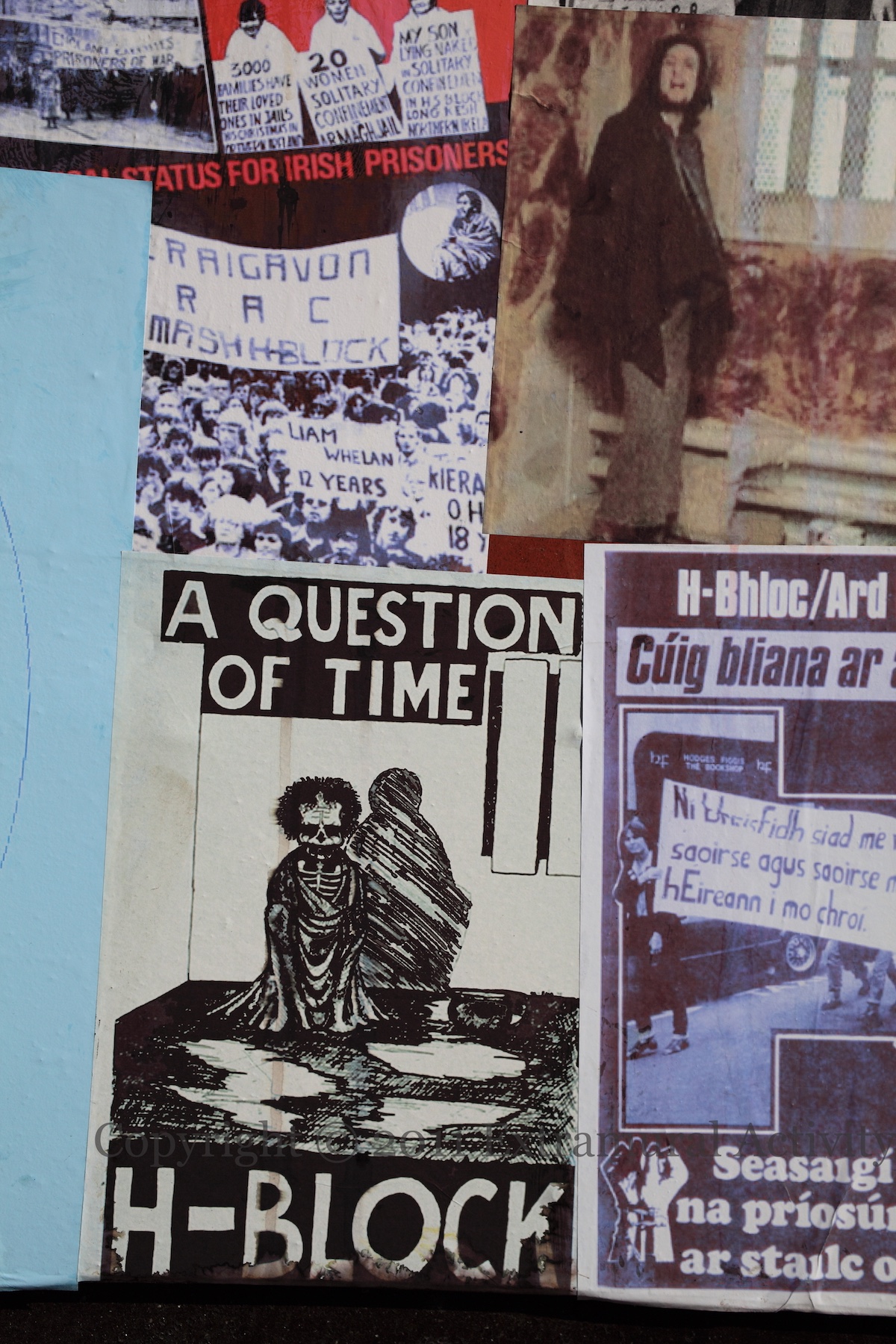
When the mural to “the first blanketman” Kieran Nugent mural (in the Rock streets) was re-done in February 2011, it was initially framed with a terrific selection of posters from the period, many of them from continental Europe, about Kieran, the blanket protest, and hunger striker.
“I’m not a criminal. The Brits will have to nail prison clothes to my back.” For the previous mural, and some background about Nugent going “on the blanket”, see M02550.
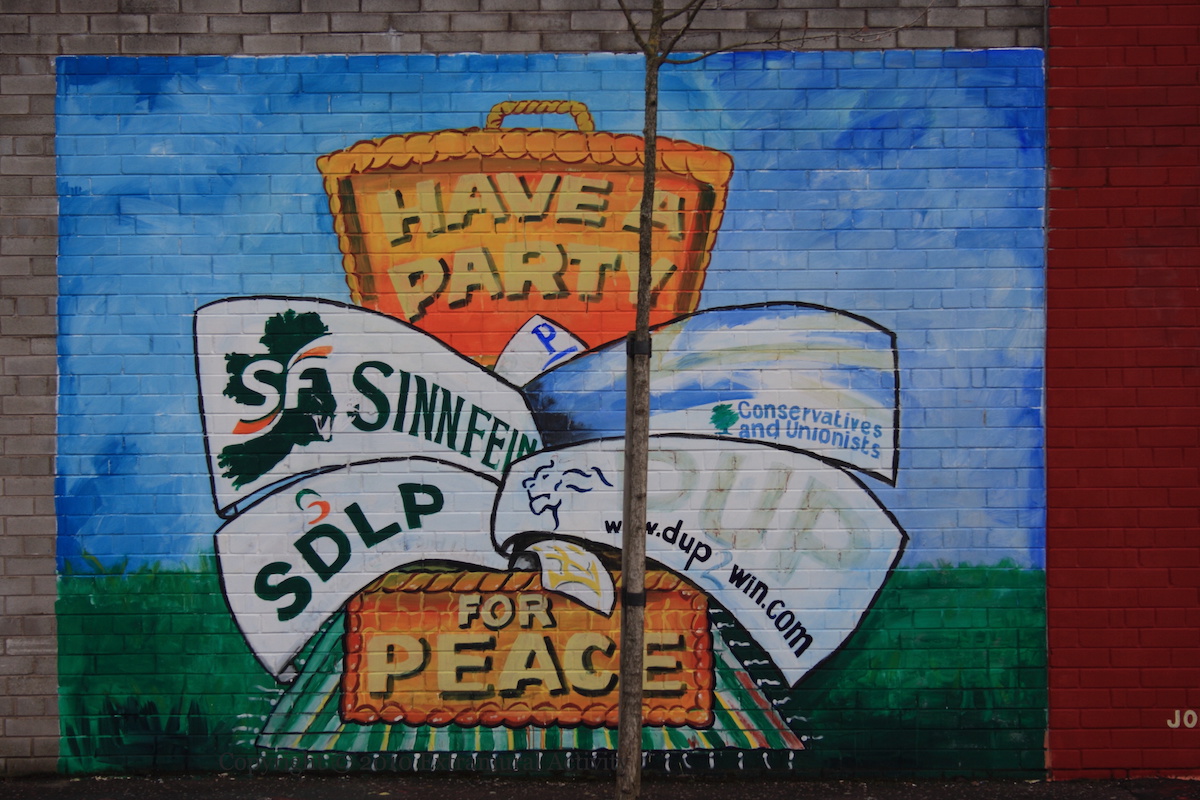
A picnic basket of political parties: PUP, Conservatives and Unionists, DUP, [perhaps Alliance sticking out at the bottom] SDLP, and Sınn Féın. Painted for International Peace Day, 2009.
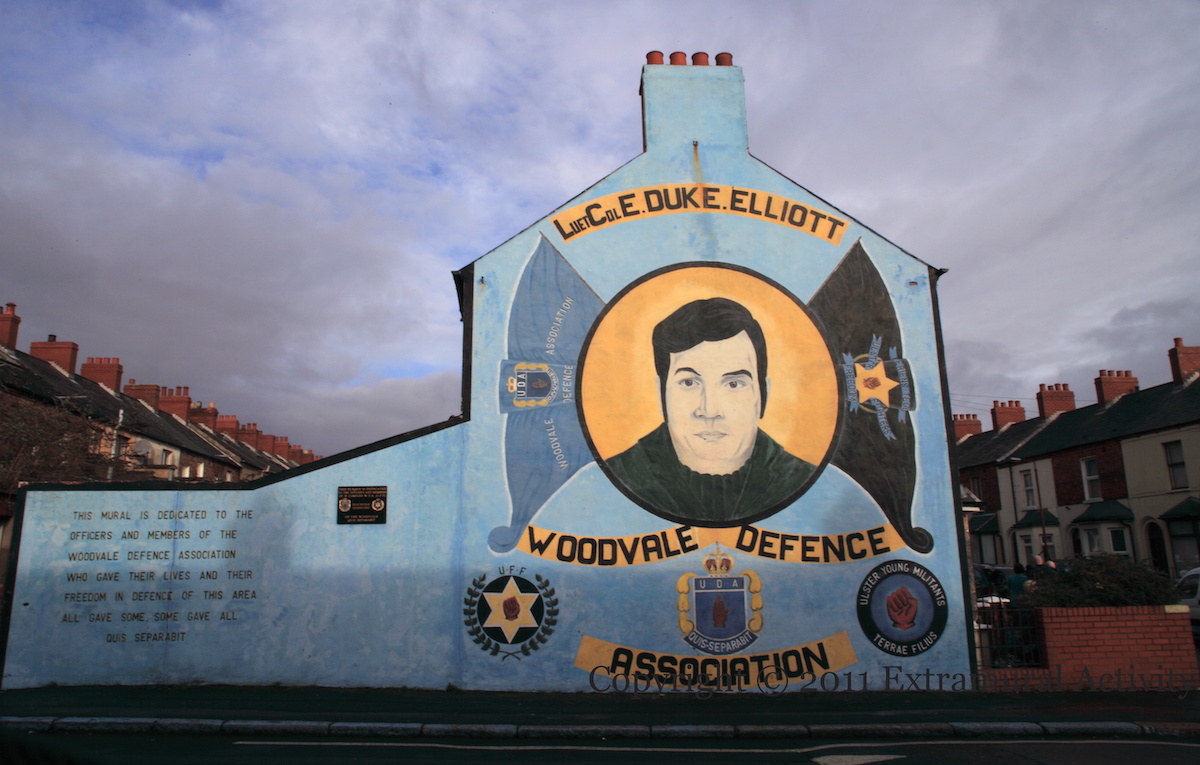
“This mural is dedicated to the officers and members of the Woodvale Defence Association who gave their lives and their freedom in defence of this are. All gave some, some gave all. Quis separabit.” The plaque reads: “This plaque is dedicated to the officers and members of ‘B’ Company WDA (UFF) who gave their lives and their freedom in defence of the Woodvale. Quis separabit.
Ernie “Duke” Elliott came from the Woodvale area and was a founder member of the Woodvale Defence Association in 1971, which was later folded into the UDA. He was also a Marxist. He was killed in a pub brawl in December 1972 in a dispute over weapons (WP | Tele | Watching The Door).
In 1607 – “400 blıaın” after the Anglo-Norman invasion of Ireland – 50 years of newly-asserted English control, most recently at the hands of Charles Blount – who defeated the pair in the Nine Years’ War – and Arthur Chichester – who, as O’Donnell is shown reading, was “appointed Lord Deputy in Ireland” in 1605 – compelled Earls Hugh O’Neill of Tyrone and Rory O’Donnell of Tyrconnell to depart Ireland on a ship bound for Spain in order to petition for Spanish support in reclaiming the lands and status they were losing under English rule. They ended up in Rome instead and never returned, ending the period of Gaelic chiefs’ rule in Ireland and making way for the plantation of Ulster.
The pair of plaques on the left indicate that the mural was painted as part of the Re-Imaging Communities Programme’ (top) and launched by President Mary McAleese on June 19th (bottom). Even though the subject was historical, the state funding for the project required the removal of a sword from O’Neill’s right hand; he is shown instead clutching the collar of his cloak. For more on the re-imaging programme, see Visual History 10.
“Imeacht na nIarlaí. I ndıadh 400 blıaın … that the eternal values of liberty and democracy have prevailed and the sons and daughters of the planter and the Gael have found a way to share the land of their birth and live together in peace.”







 Extramural Activity