“In proud and loving memory of Stevie ‘Top Gun’ McKeag, born 1970, died 2000, military commander, C coy, 2nd Batt, UFF. Sleeping where no shadows fall.” “Ulster Freedom Fighters – This mural is dedicated to memory of Stevie ‘Top Gun’ McKeag (WP).”
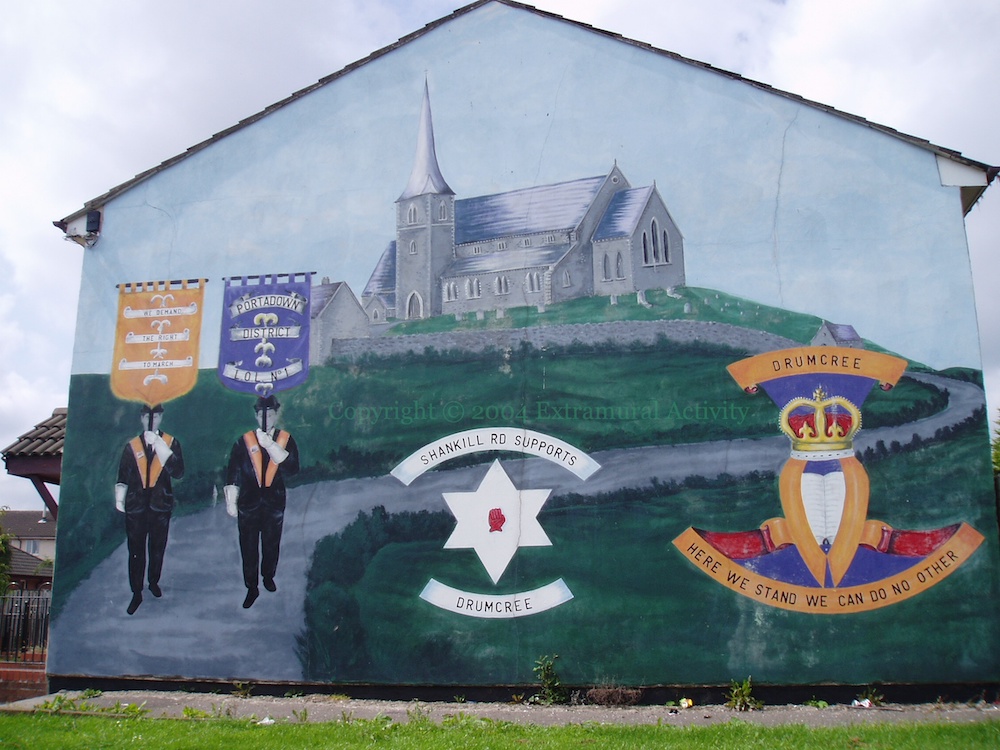
“We demand the right to march.” This mural in the lower Shankill is about the disputed Orange Order parade (WP entry, including a map of the route) to Drumcree Church in Portadown, part of which goes along the Garvaghy Road
“Here we stand, we can do no other” is a variation on Martin Luther’s pronouncement at Worms, the subject of this mural
This lower Shankill UDA/UFF C company mural is a survivor from the days of Johnny Adair. There is a separate Visual History page on the Adair-Era Murals.
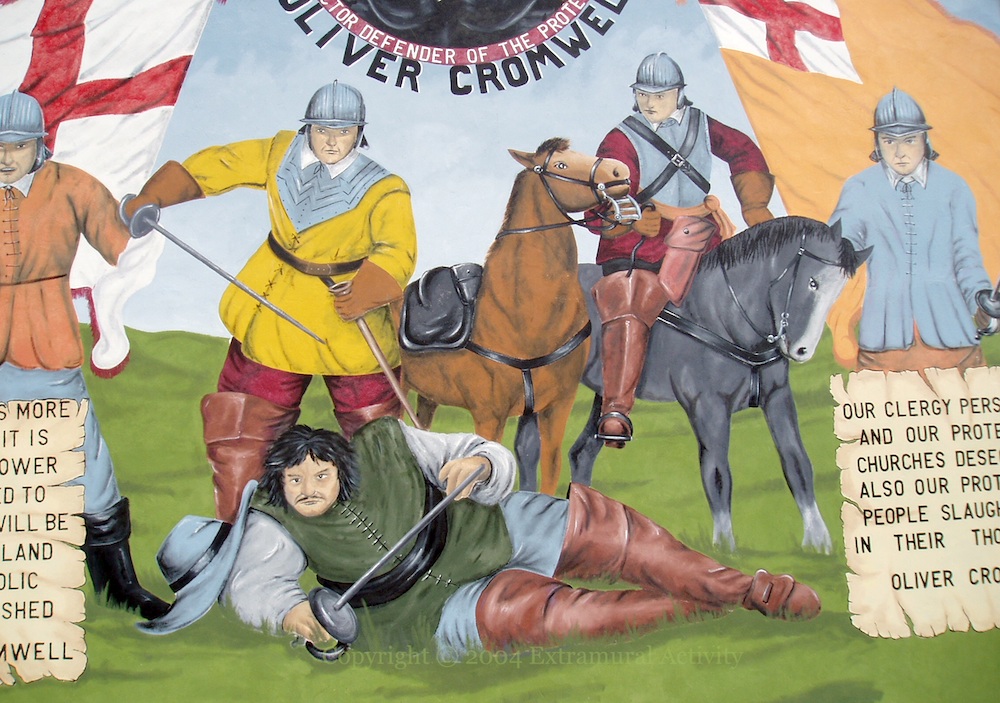
This is a lower Shankill mural of Oliver Cromwell, Lieutenant General, Lord Protector of the Protestant faith, born 1599, died 1658. “Catholicism is more than a religion, it is a political power. Therefore I’m led to believe there will be no peace in Ireland until the Catholic church is crushed.” “Our clergy persecuted and our Protestant churches desecrated. Also our Protestant people slaughtered in their thousands.”
Close-up of the middle portion behind the railing:
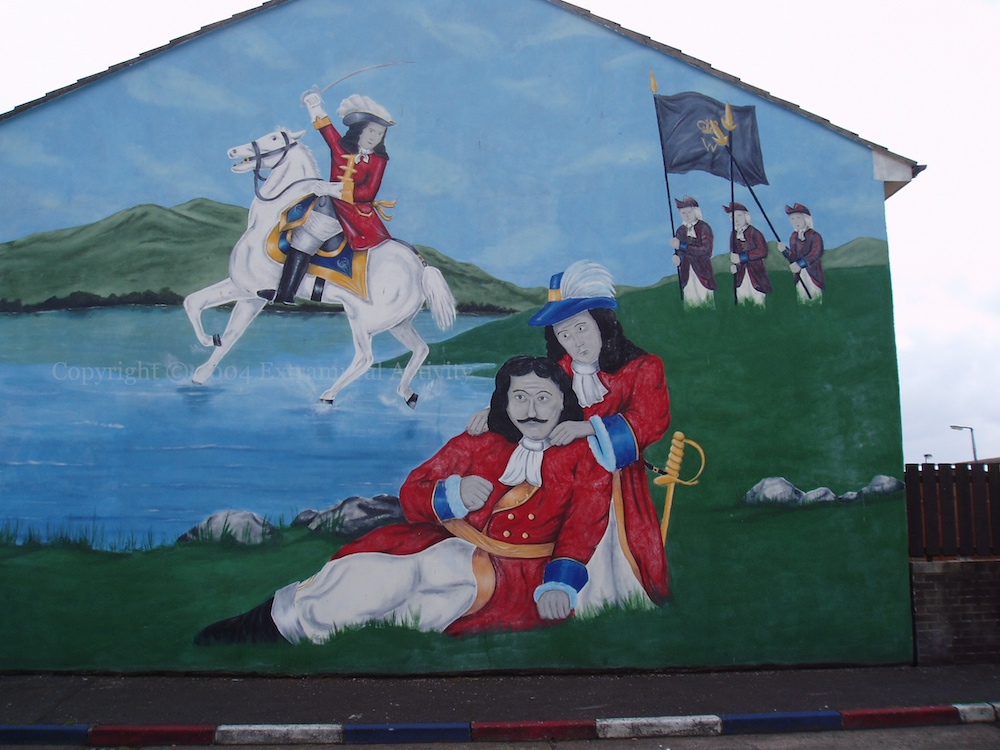
King Billy crossing the Boyne, with Schomberg dying in the foreground, making this a crude reproduction of Benjamin West’s 1780 painting ‘Battle Of The Boyne’. Second-in-command Schomberg had crossed the Boyne first and met his fate at the hands of Jacobite cavalry. Schomberg’s helper is perhaps George Walker, governor of Derry during the siege, who was shot and killed (reportedly) while attending to Schomberg – see George Walker in the Paddy Duffy collection.
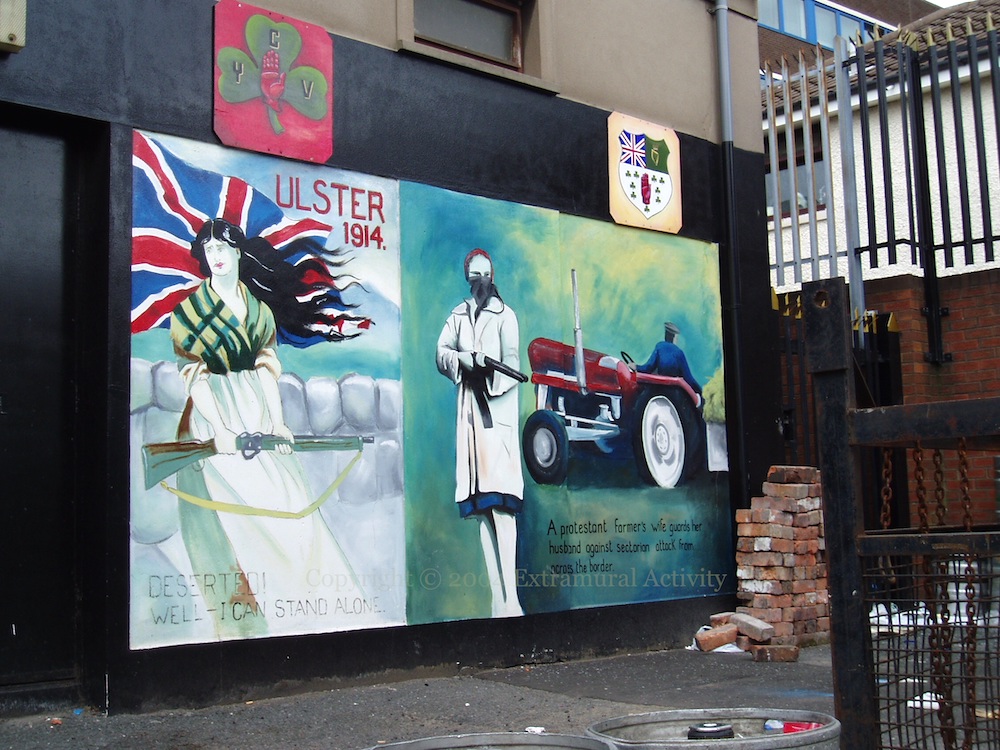
Here are two images of women defending Protestant territory in Ireland. On the left, the date is “1914”, that is, Ulster during the Home Rule Crisis and WWI. The words “Deserted! Well – I can stand alone” can refer both to Britain’s proposed desertion or the absence of menfolk who joined Kitchener’s army.
On the right, the date is the early days of Northern Ireland: “A Protestant farmer’s wife guards her husband against sectarian attack from across the border.”
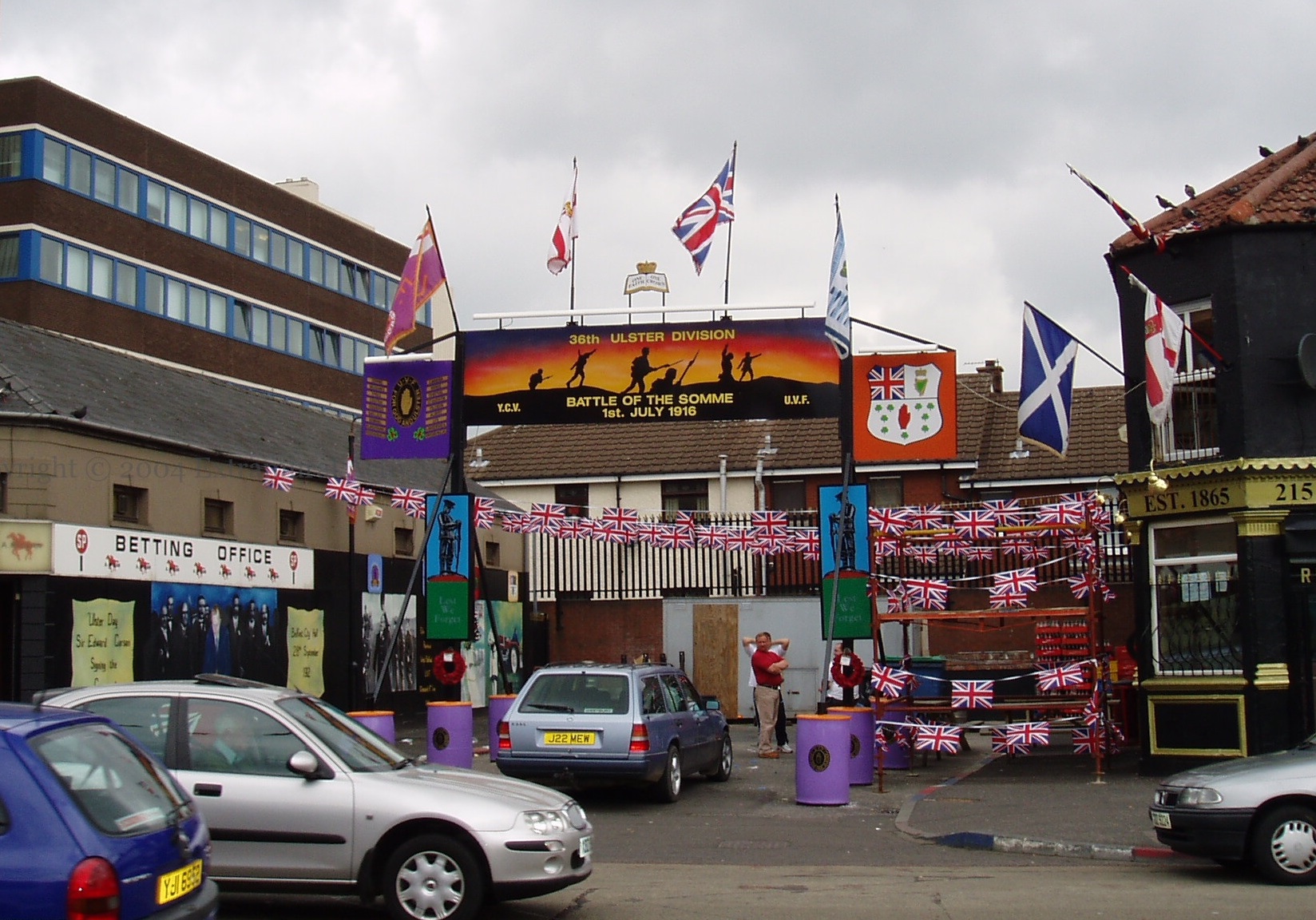
This is the third of three murals in the courtyard of the Rex Bar at Moscow Street on the Shankill Rd. Betting Office | Ready For War. The first also has a wide shot of all three and surrounding area.
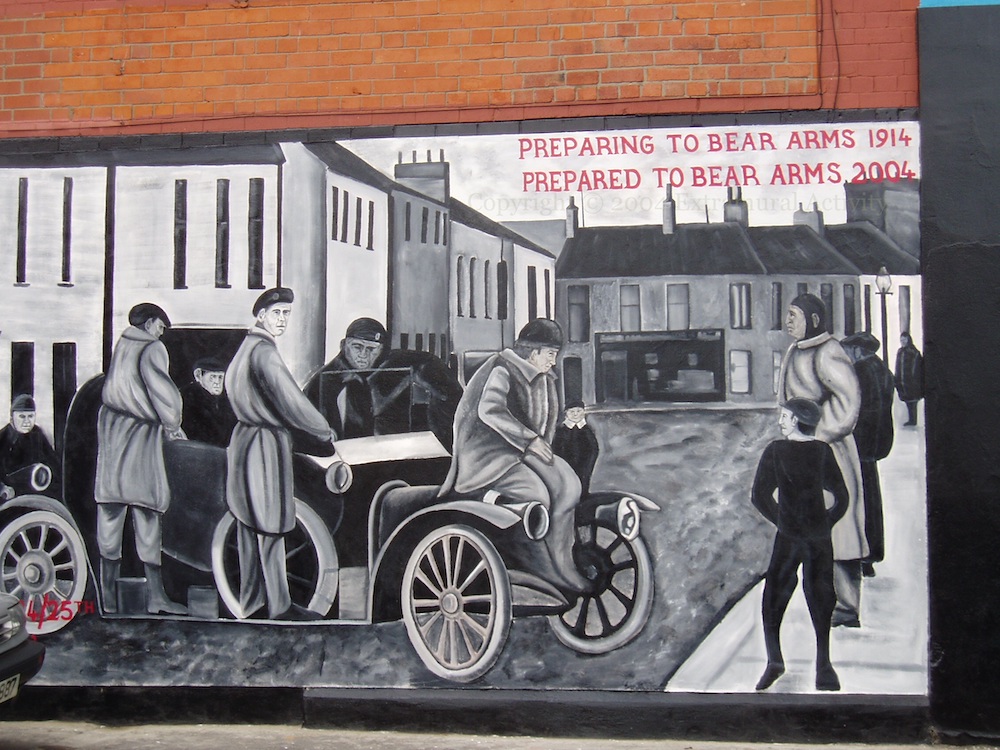
Carson inspects the Ulster Volunteers at Glencairn (the grounds are also mentioned in this mural). The date is June 14th, 1914: guns have been smuggled in, but Britain has not yet declared war (August 4th).
The is the middle of three murals concerning unionism at the time of the (third) Home Rule bill and First World War. The first depicts the signing of the Covenant; the third depicts women farmers protecting their lands.
The first also contains a wide shot of all three and the surrounding area.
The photograph on which the mural is based in the Mary Evans collection. See e.g. this copy at the Express.
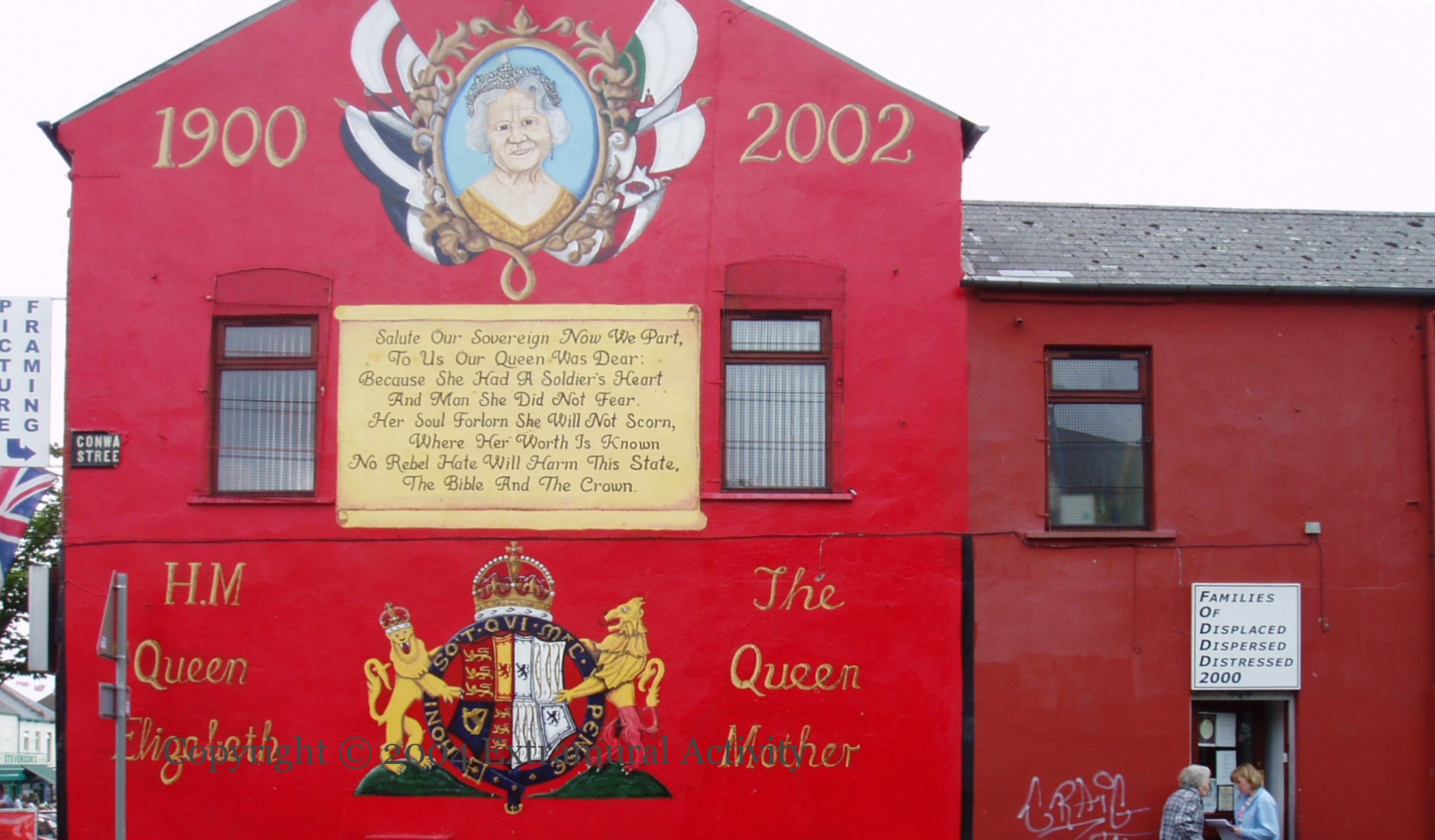
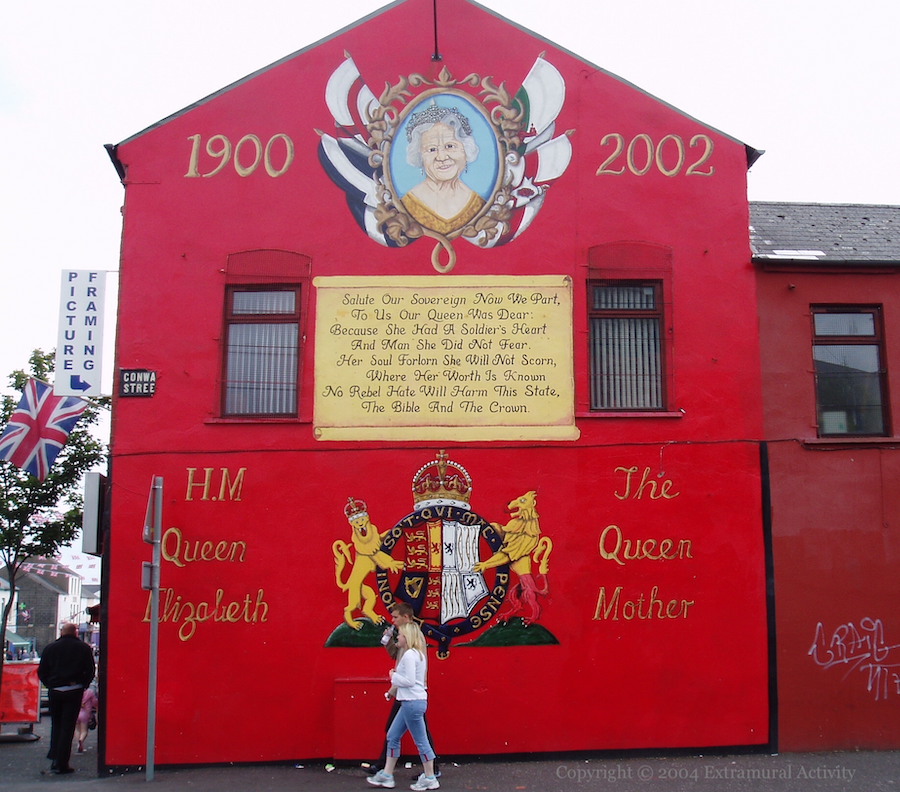
This is a 2002 mural commemorating the death of the Queen mother, HM Queen Elizabeth. “Salute our sovereign, now we part/To us our queen was dear/Because she had a soldier’s heart/And man she did not fear/Her soul forlorn she will not scorn/Where her worth is known/No rebel hate will harm this state/The bible and the crown”
At the Shankill Road end of Conway Street, west Belfast.
“Ulster Day. Sir Edward Carson (WP) signing the covenant (WP). Belfast City Hall, 28th September, 1912.”
This is the first of three panels on this wall that together trace the history of the Ulster Volunteers; see also the second (Carson and the Ulster Volunteers) and third (women defenders while the men fight in Europe).
Below is a shot of the full scene in the courtyard of the Rex bar, two weeks away from the 12th





 Extramural Activity