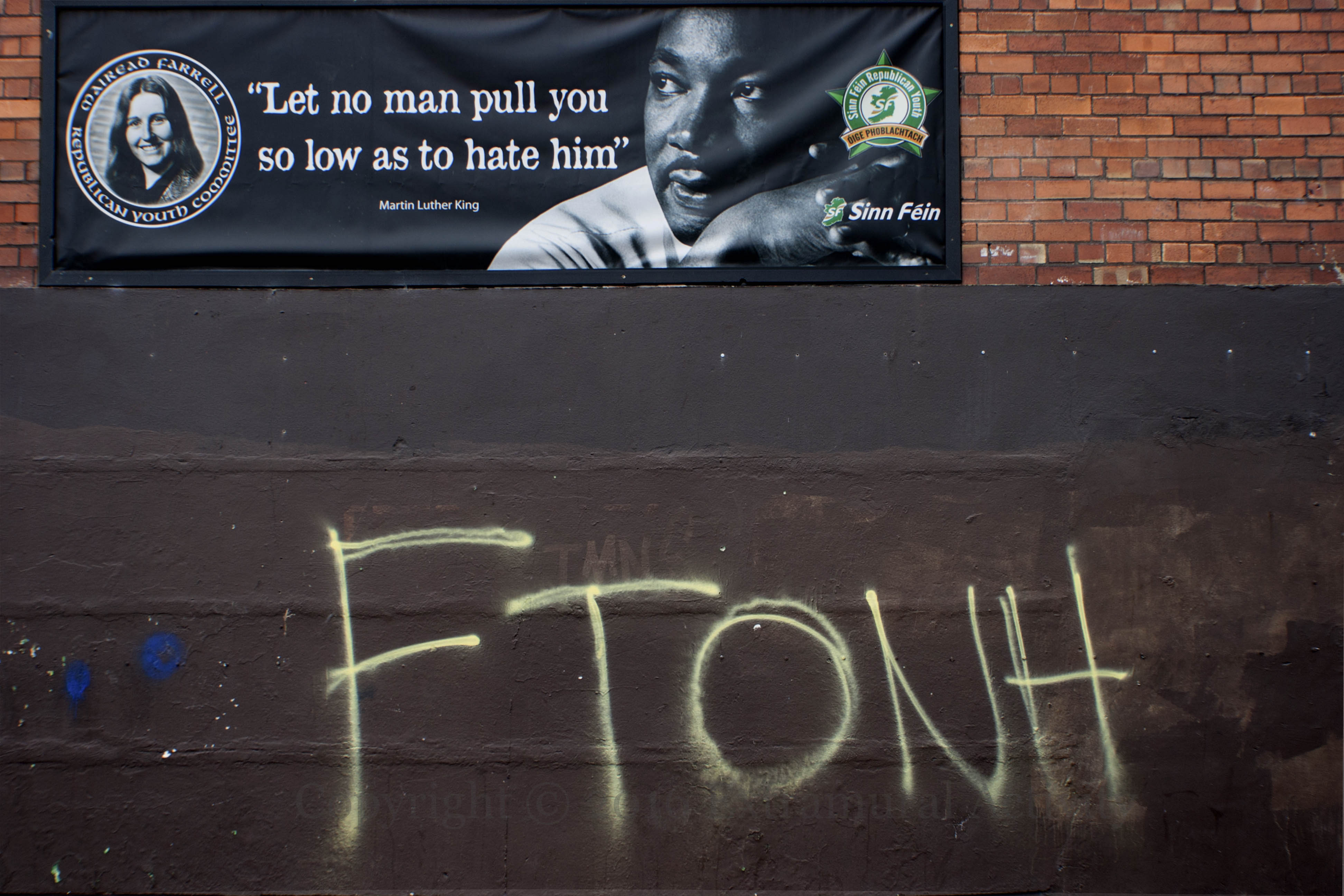
Anti-Óglaıgh Na hÉıreann graffiti in Beechmount Street beneath a Sınn Féın banner using Martin Luther King to advocate for non-violent protest (featured previously in Always Avoid Violence).
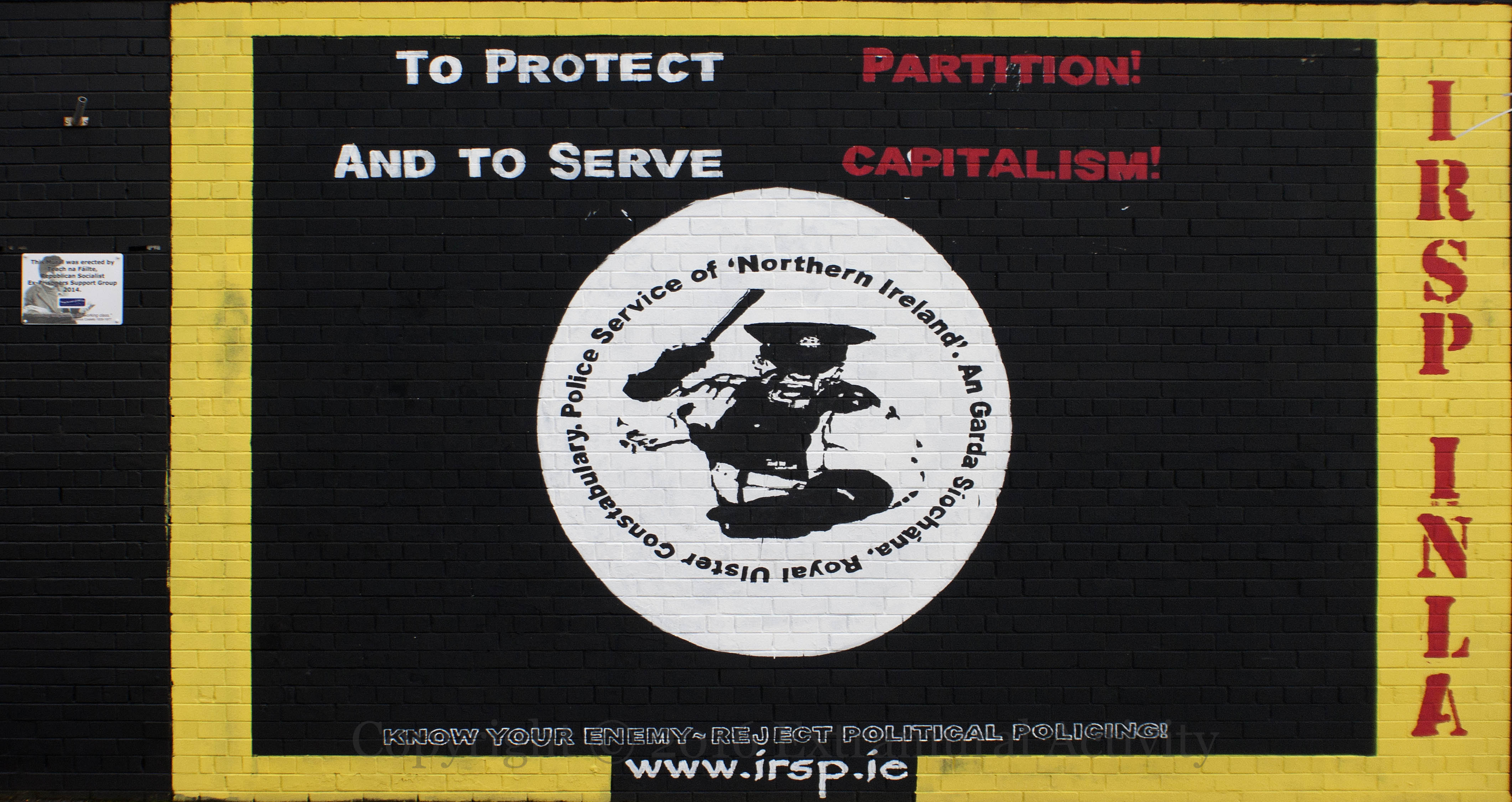
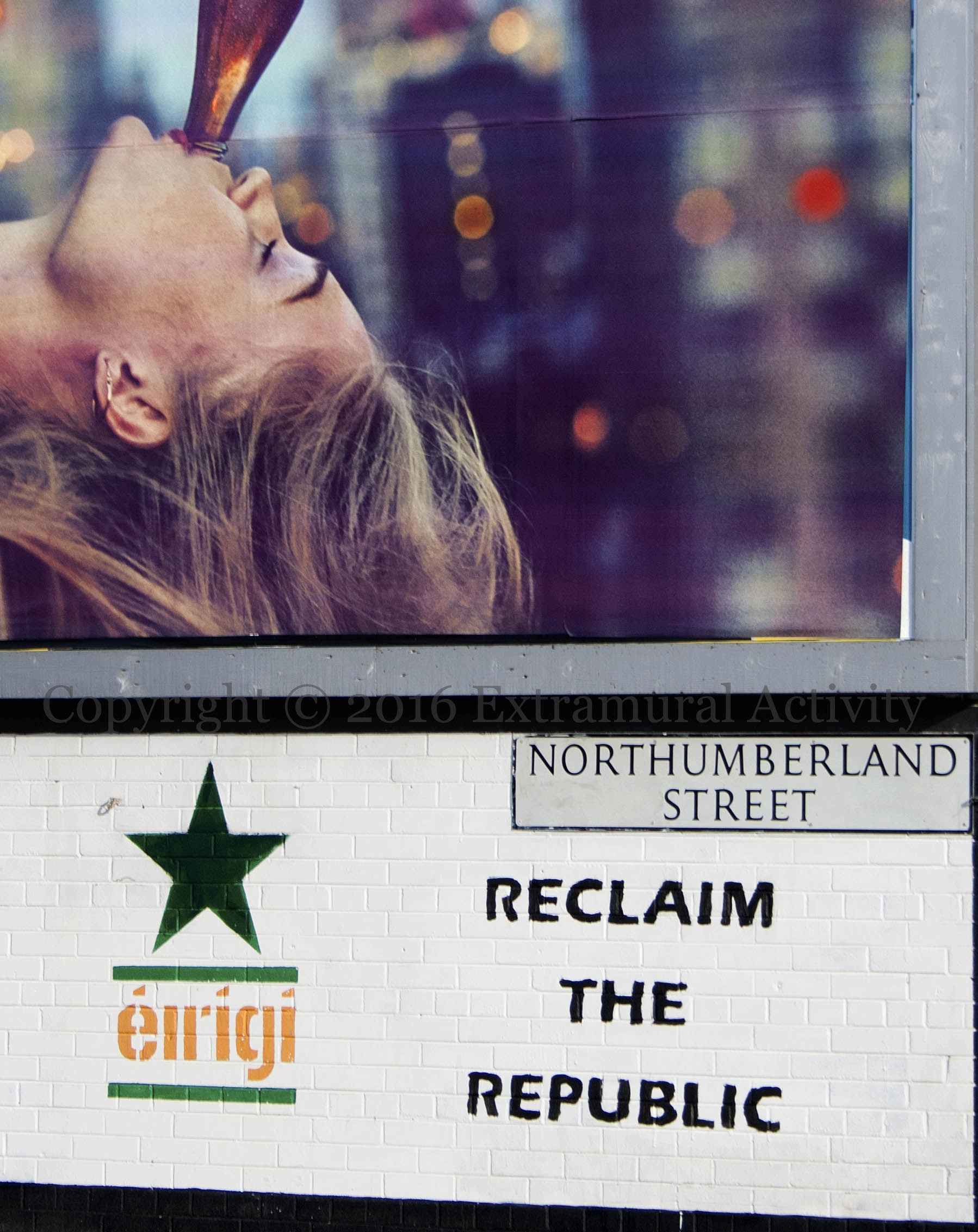
The Royal Ulster Constabulary, Police Service of ‘Northern Ireland’, and An Garda Síochána are branded as agents of the status quo, enforcing the partition of Ireland and the capitalist system in this IRSP mural on Northumberland Street: “Know your enemy – reject political policing”.
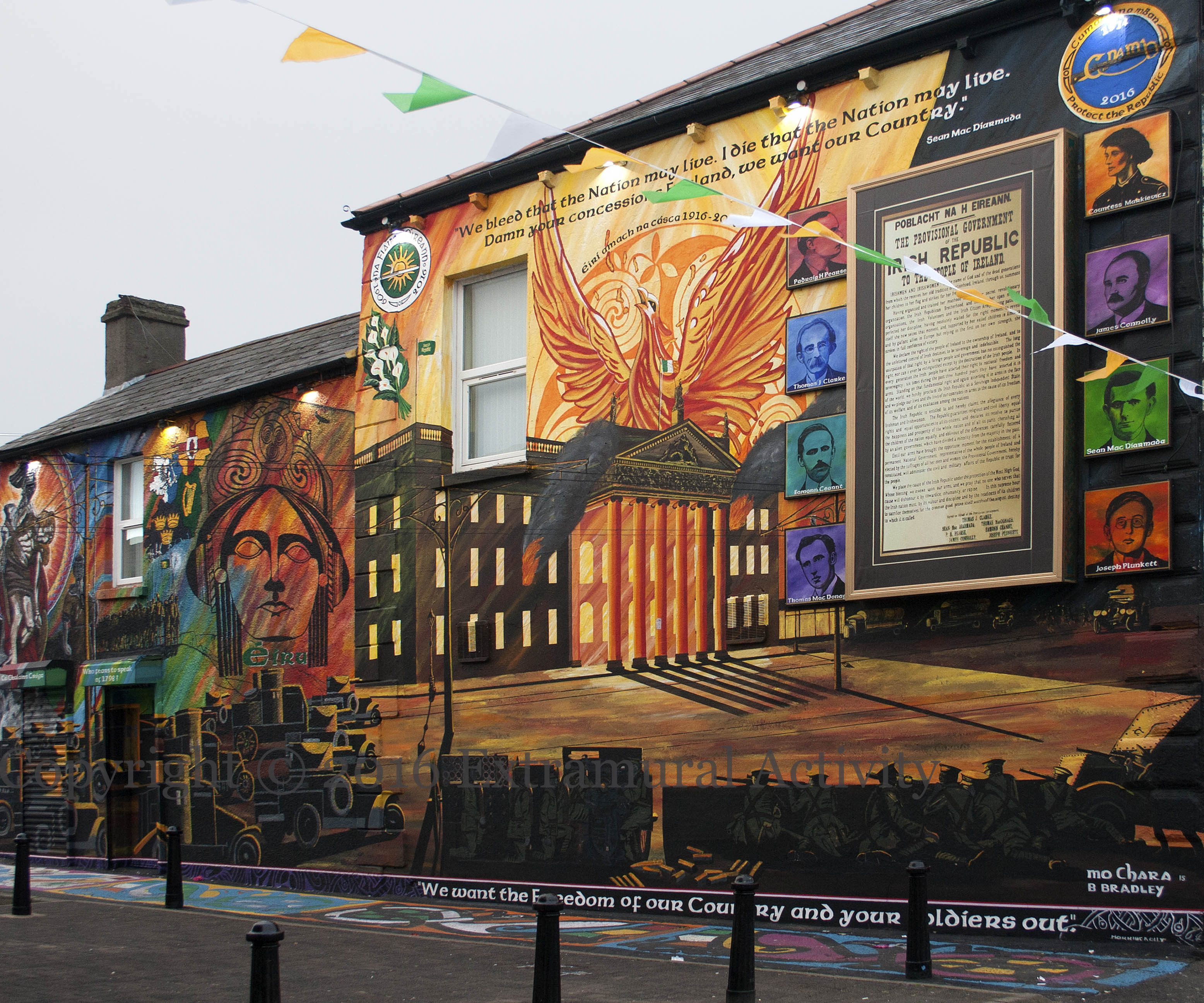
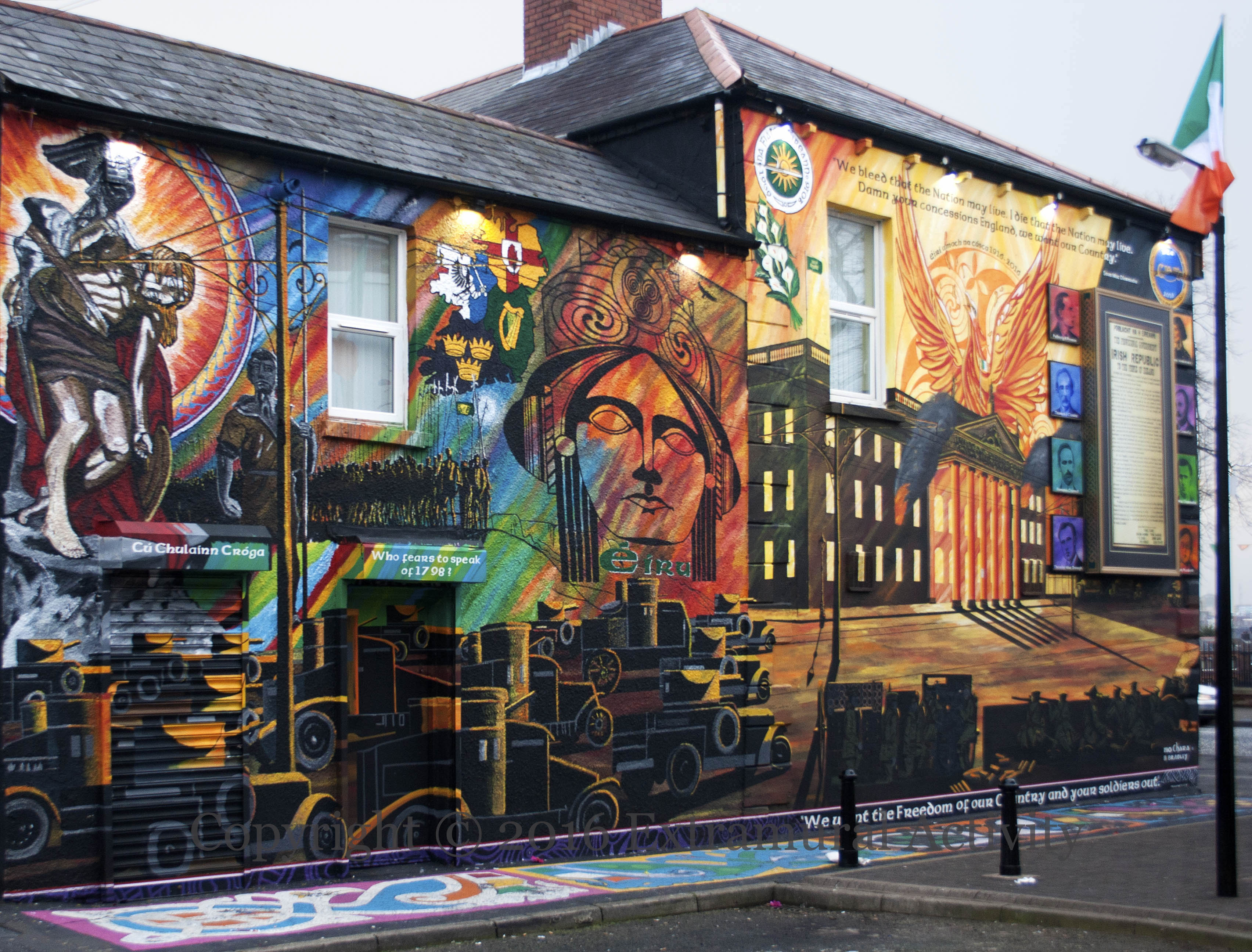
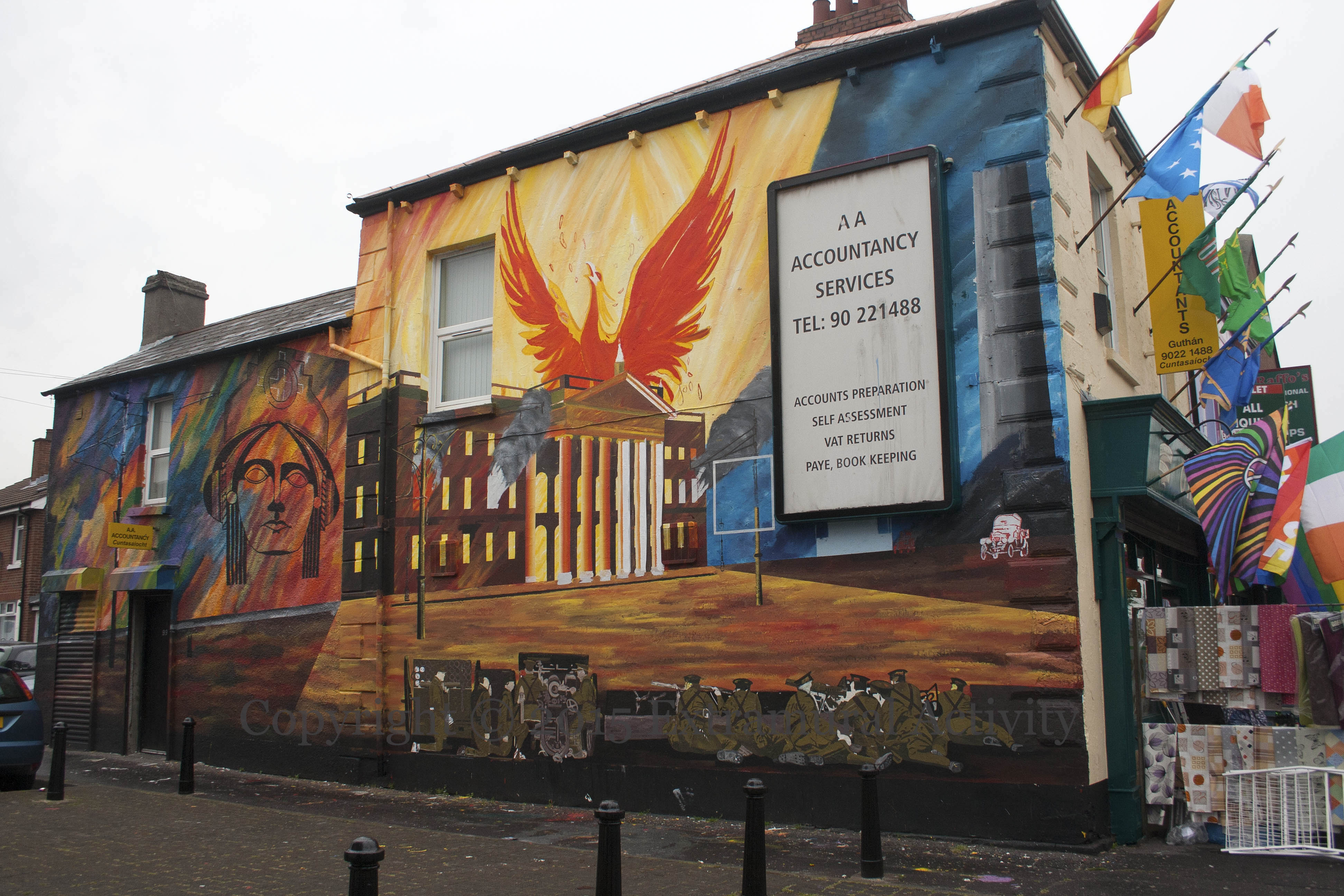
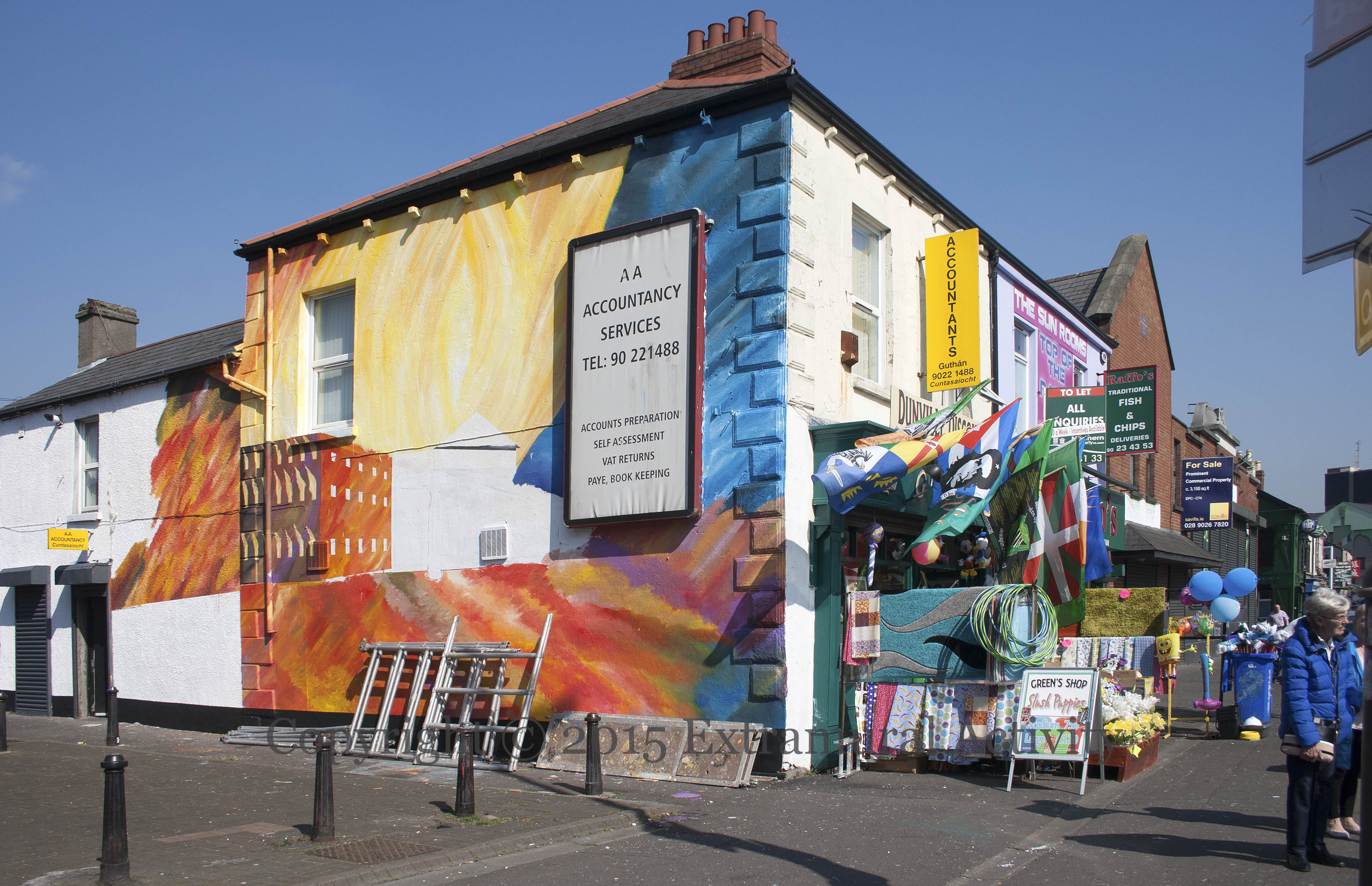
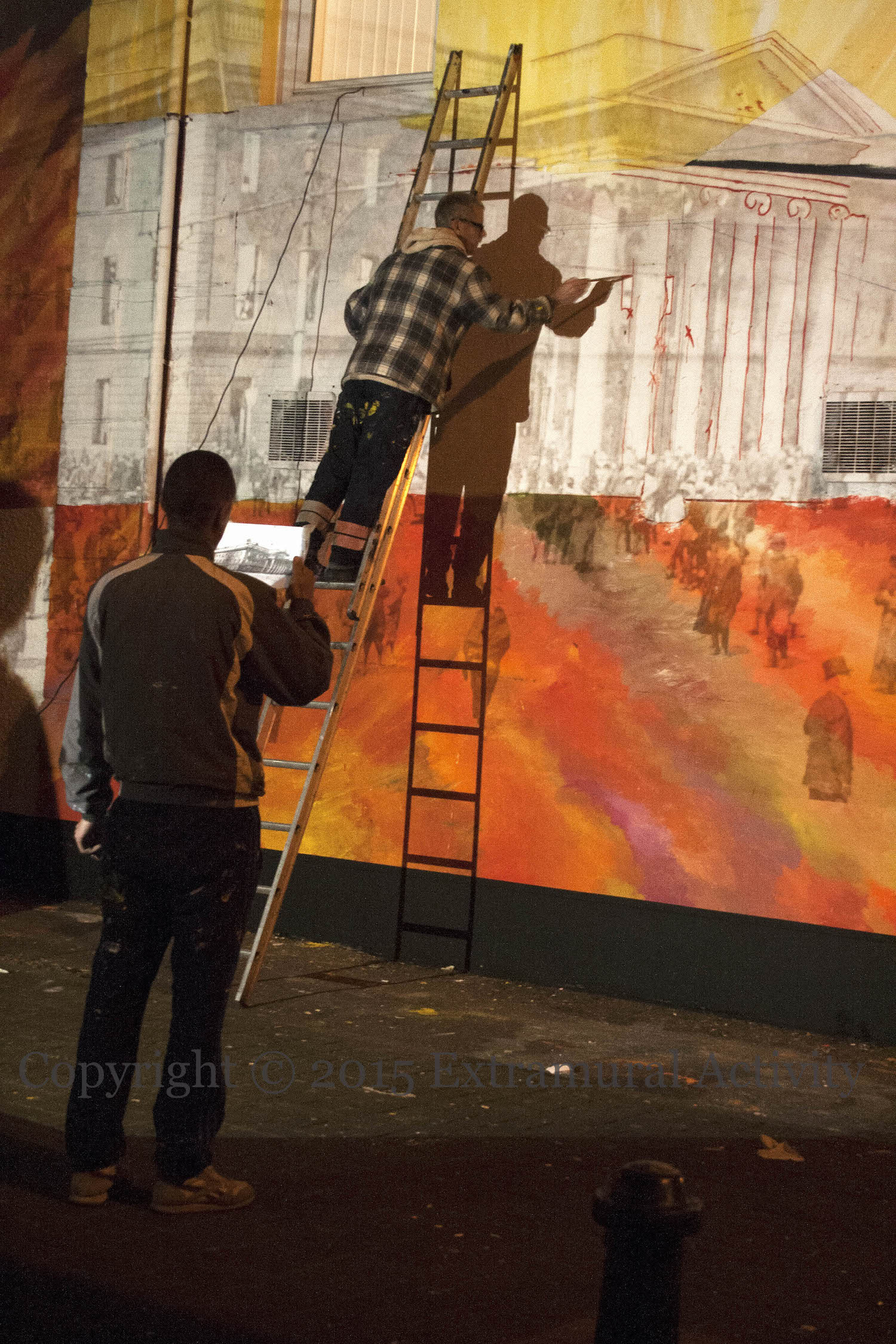
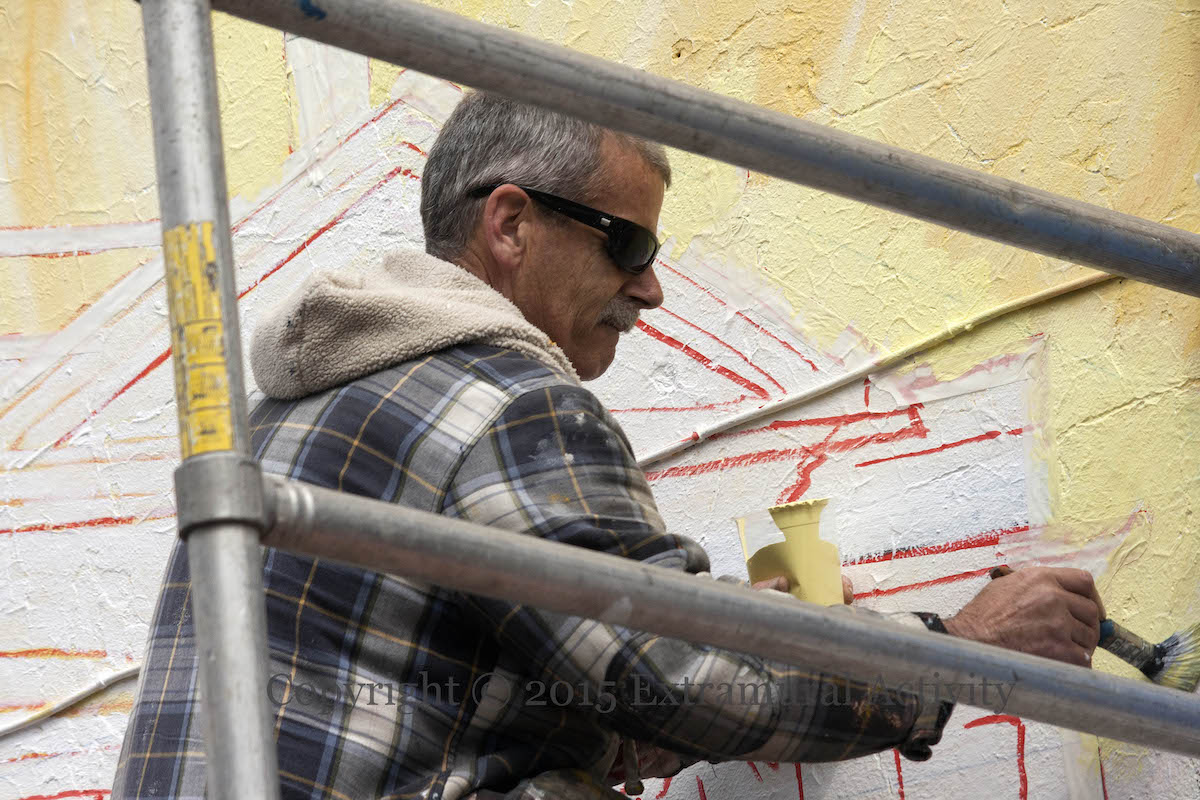
Arrayed against the forces of the British Army (which are shown in armoured cars and in sniping positions in the foreground of the mural, along the whole length of the wall) are various symbols of Irish nationalism: Oliver Sheppard‘s 1911 statue of Cú Chulaınn dying; the pikemen of the 1798 Rebellion (featured yesterday: Éırí Amach 1798); the four provinces of Ireland; Érıu the mythological queen of Ireland/Éıre as designed by Richard J King/Rísteard Ó Cíonga; Easter lilies; the emblems of Na Fıanna Évreann and Cumann Na mBan on either side of a quote from (The Mainspring) Sean MacDiarmada “We bleed that the nation may live; I die that the nation may live. Damn your concessions, England: we want our country”; a phoenix rising from the flames of the burning Dublin GPO (inspired by Norman Teeling’s 1998 painting The GPO Burns In Dublin); the GPO flying an ‘Irish Republic’ flag; portraits of signatories and other rebels — (left) Padraig H. Pearse, Thomas J Clarke, Eamonn Ceannt, Thomas MacDonagh, (right) Countess Markievicz, James Connolly, Sean MacDiarmada, Thomas Plunkett; the declaration of independence, placed over the advertising box of AA Accountants – see the in-progress shot below. For more work-in-progess images, see yesterday’s post, Éırí Amach 1798. At the very bottom is a quote from the mother of Gerard ‘Mo Chara’ Kelly, Harriet Kelly: “We want the freedom of our country and your soldiers out.”
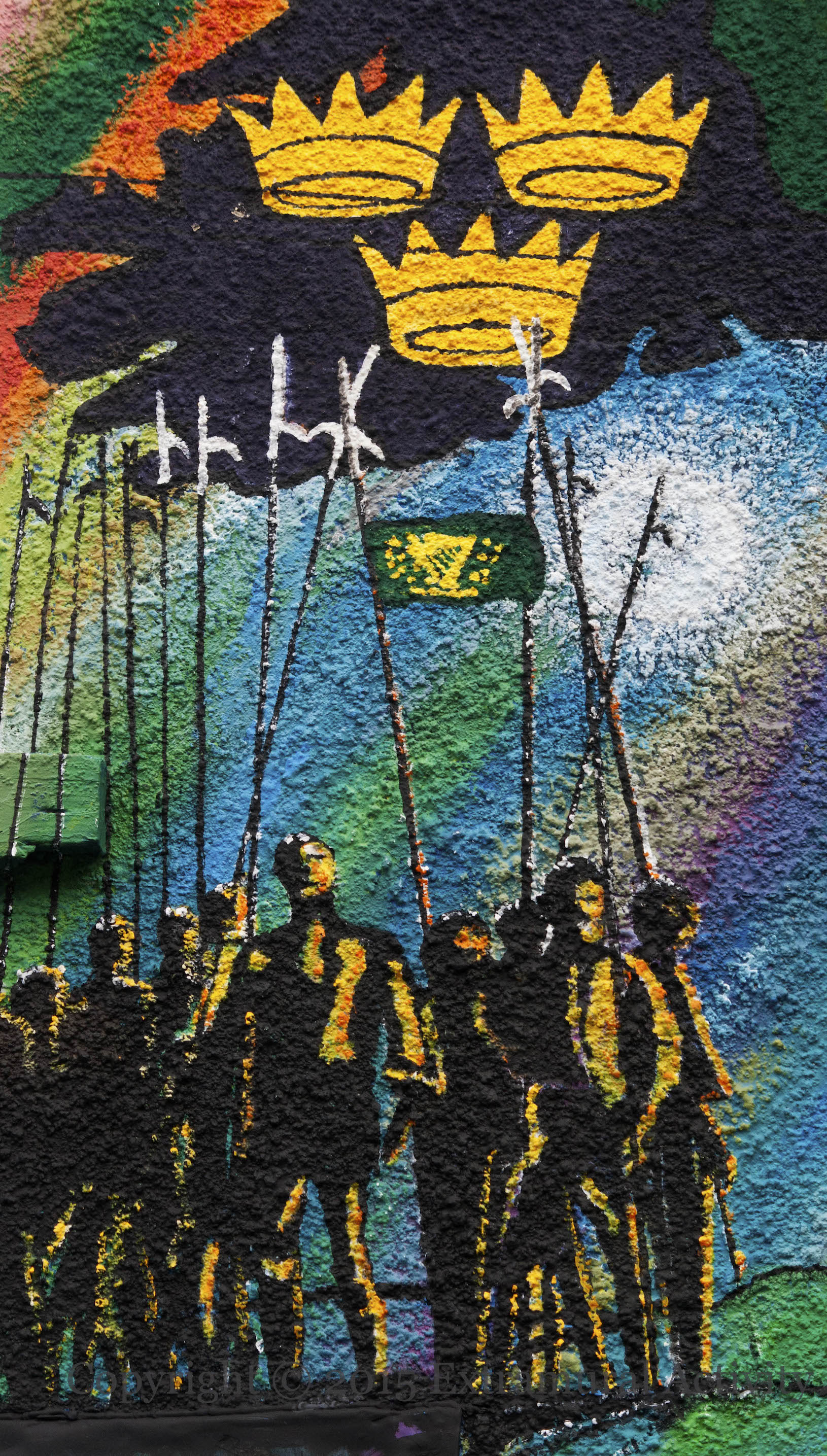
The pikemen of 1798 go into battle under the flag of the United Irishmen in a detail from a new mural on the Falls Road for the centenary of the 1916 Easter Rising. Below are work-in-progress images showing artists Gerard ‘Mo Chara’ Kelly and Bill Bradley.
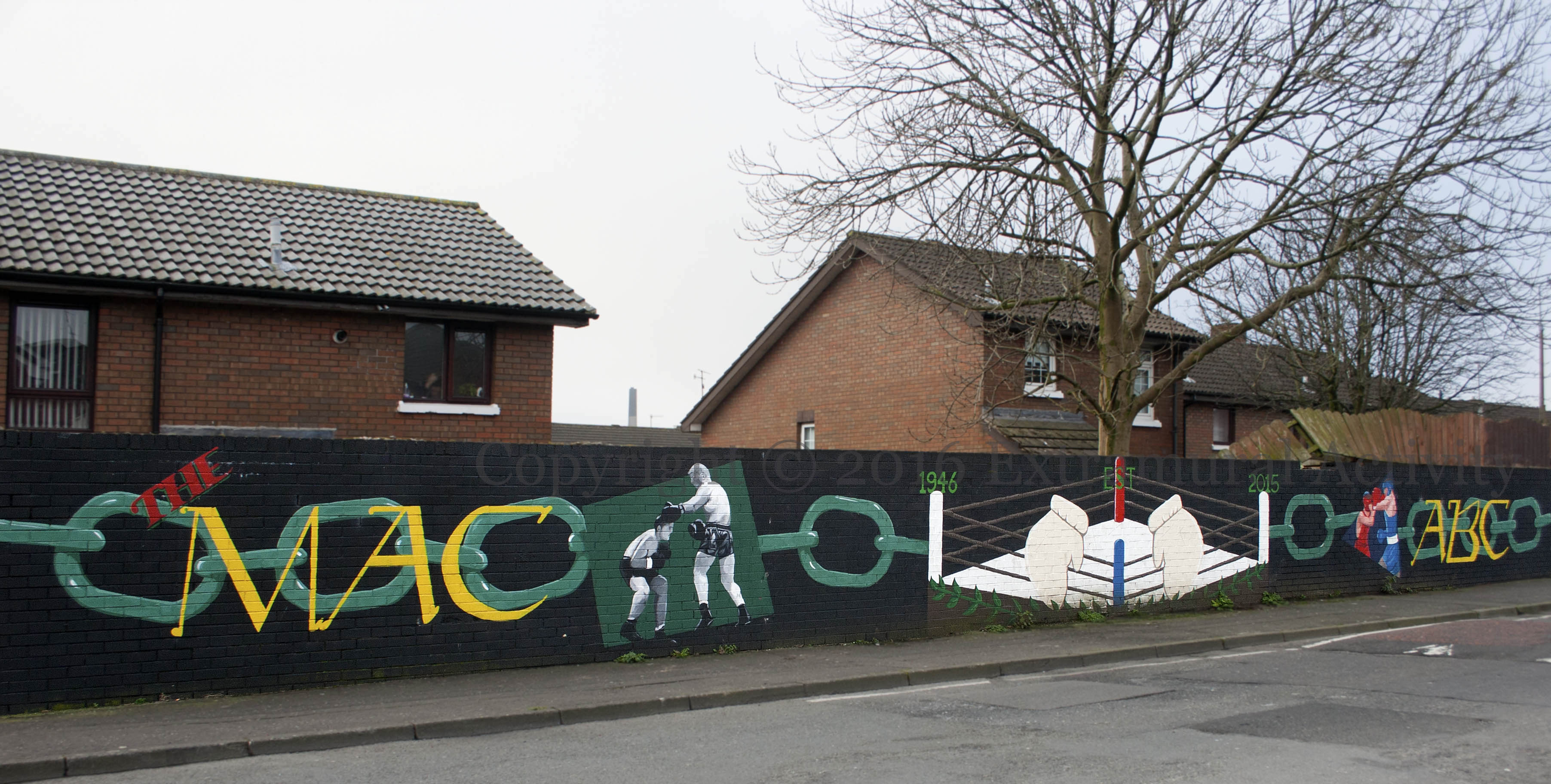
Immaculata amateur boxing club (Fb) (or simply “The Mac”) in the Lower Falls will celebrate its 70th birthday in May this year. This long mural, painted in 2015 and featuring boxing past and present, is in Servia Street, near the club’s Albert Street home.
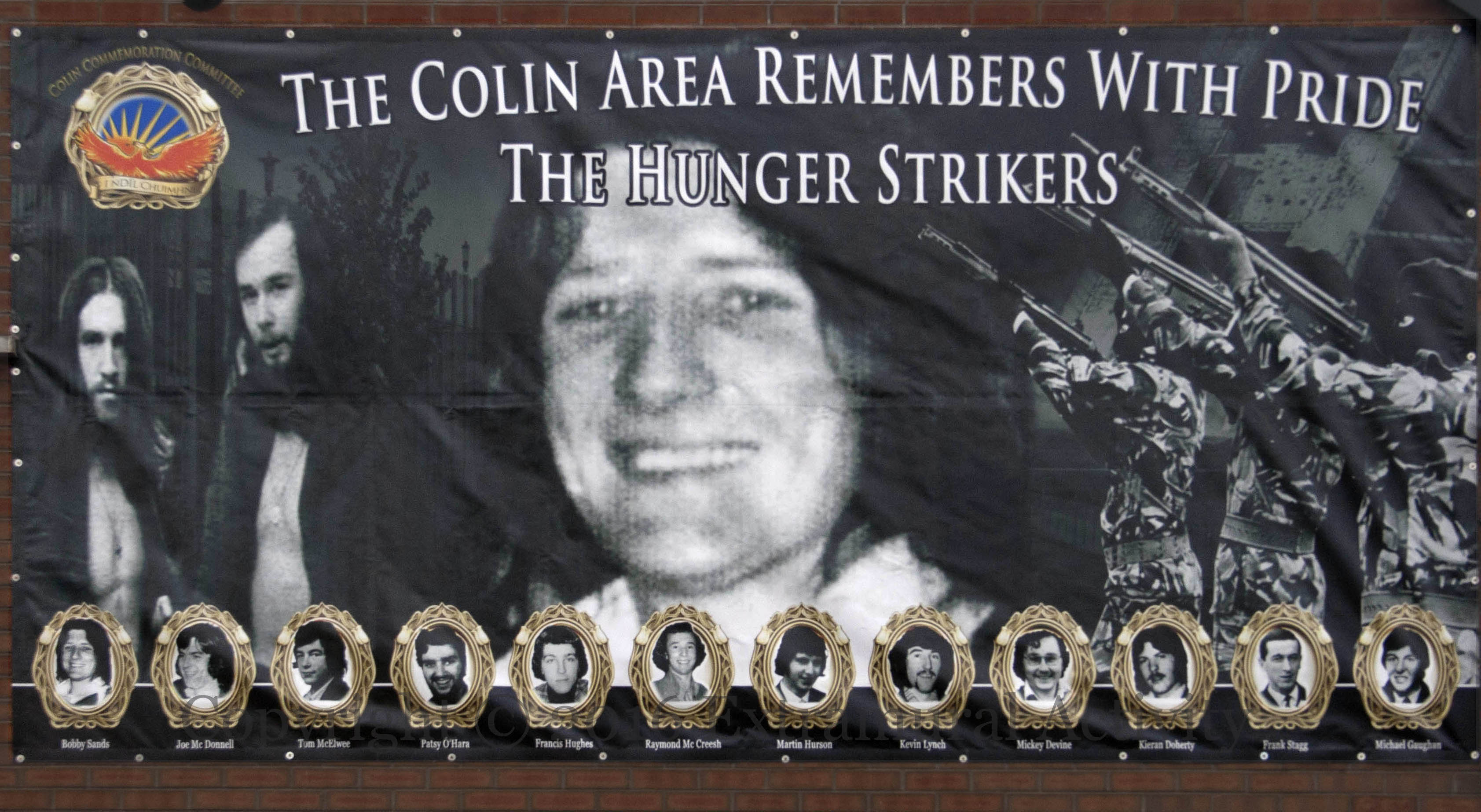
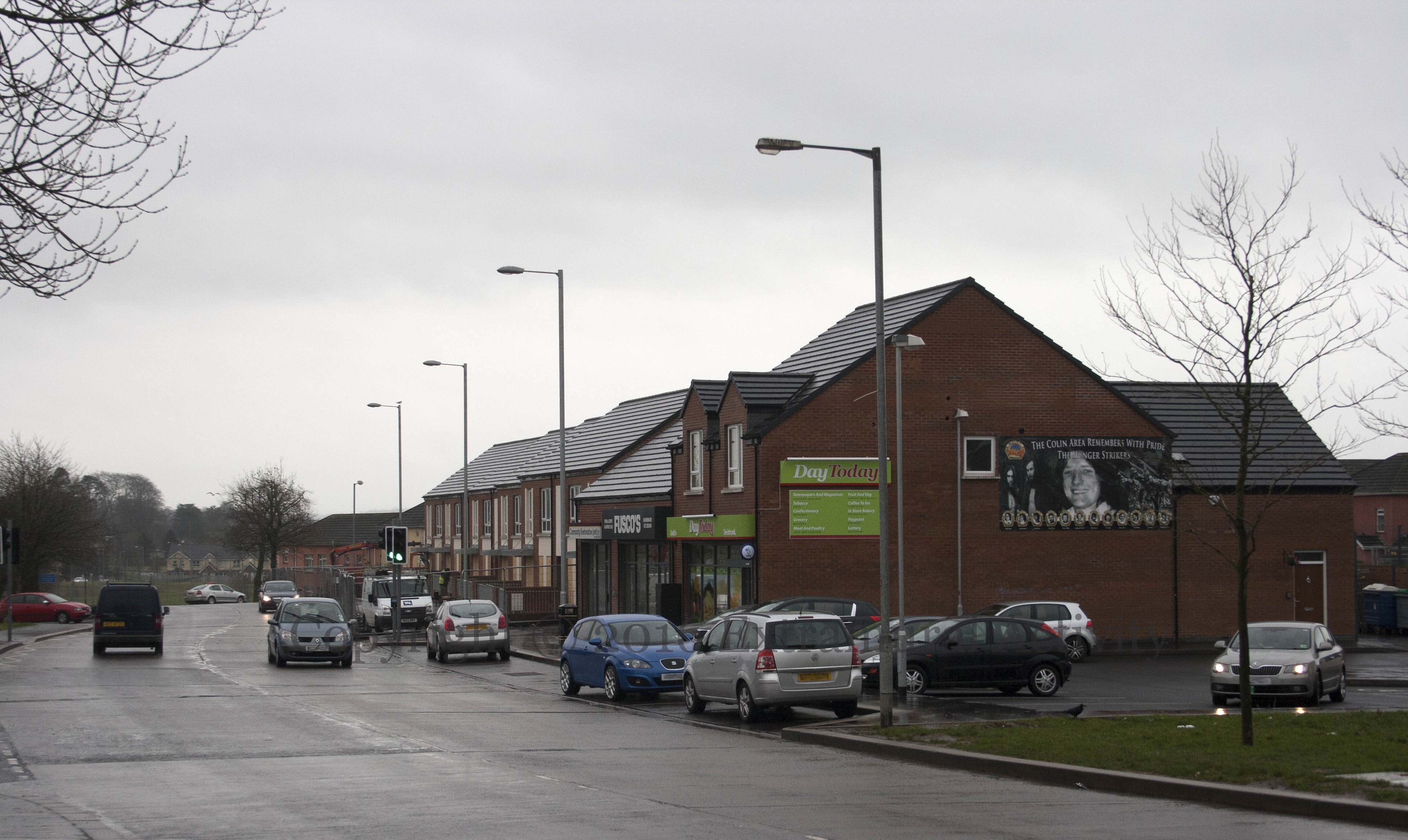
The Twinbrook Road shops have been moved out to the edge of the street and the murals that were on the old shops are now gone or obscured, including the long wall of hunger-striker portraits had been updated annually since 2006. That mural has been condensed into a new, printed, image, placed on the side of the shops facing the Stewartstown Road. As before, it shows blanketmen Freddie Toal and Hugh Rooney, Sands, and three volunteers firing a volley of shots, with the portraits of the strikers who died in the 70s and 80s along the bottom.
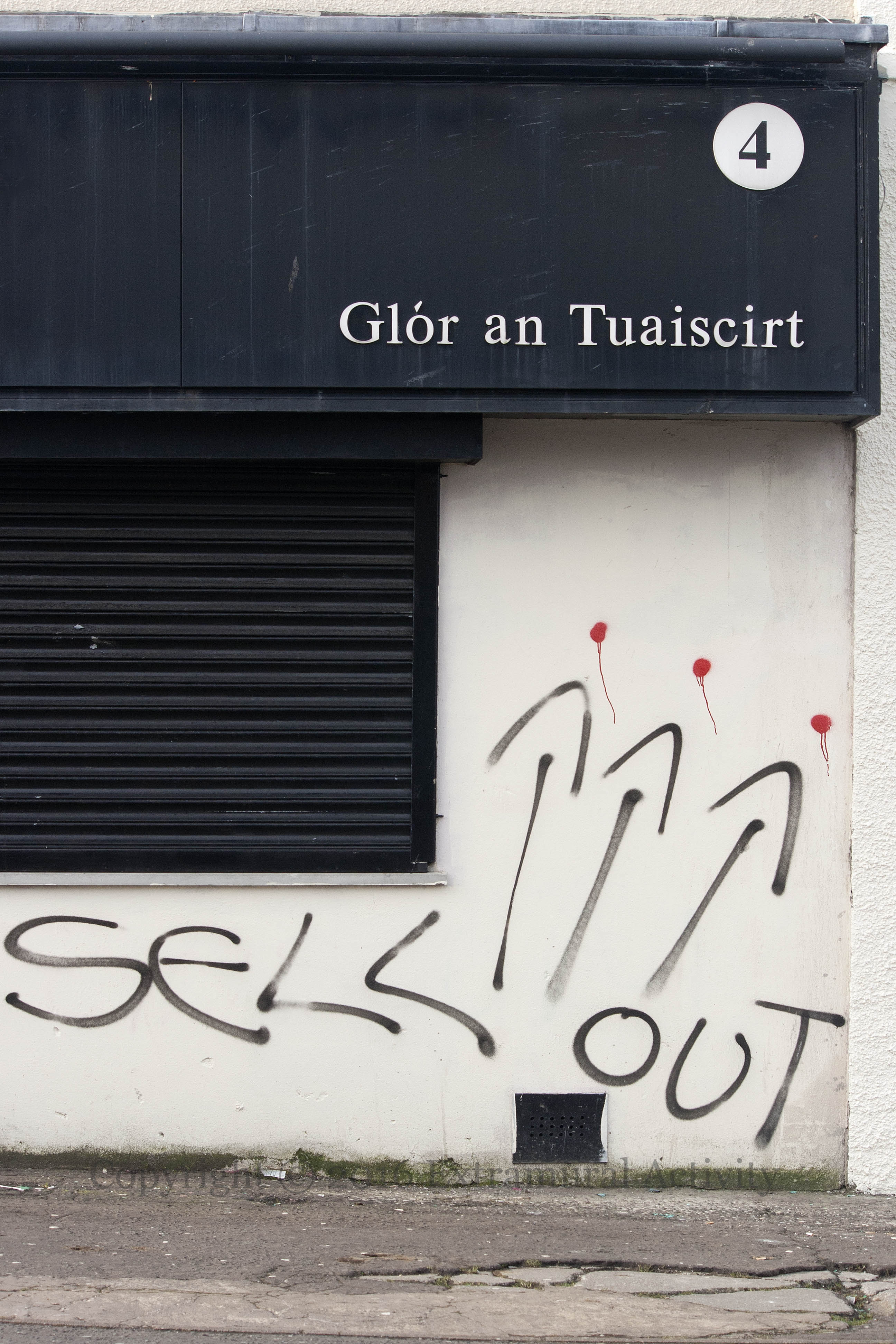
“Sell Out” with arrows pointing to three red dots on the wall of the Republican Ex-Prisoners Association (also housing SNAP – Safer Neighbourhood Ardoyne Project – and Glór An Tuaiscirt (Voice Of The North – an Irish-language and cultural organisation)) in Ardyone.
The plaque above is a new one outside the Andersonstown Social Club, mounted for the centenary of the Easter Rising: 1916-2016 – We serve neither king nor kaiser but Ireland. This plaque was erected to the memory of the men and women who give their lives in the fight for Irish freedom. “Apostles of freedom are ever idolised when dead but crucified when alive” – James Connolly (These are the opening lives of ‘The Men We Honour‘ 1898)
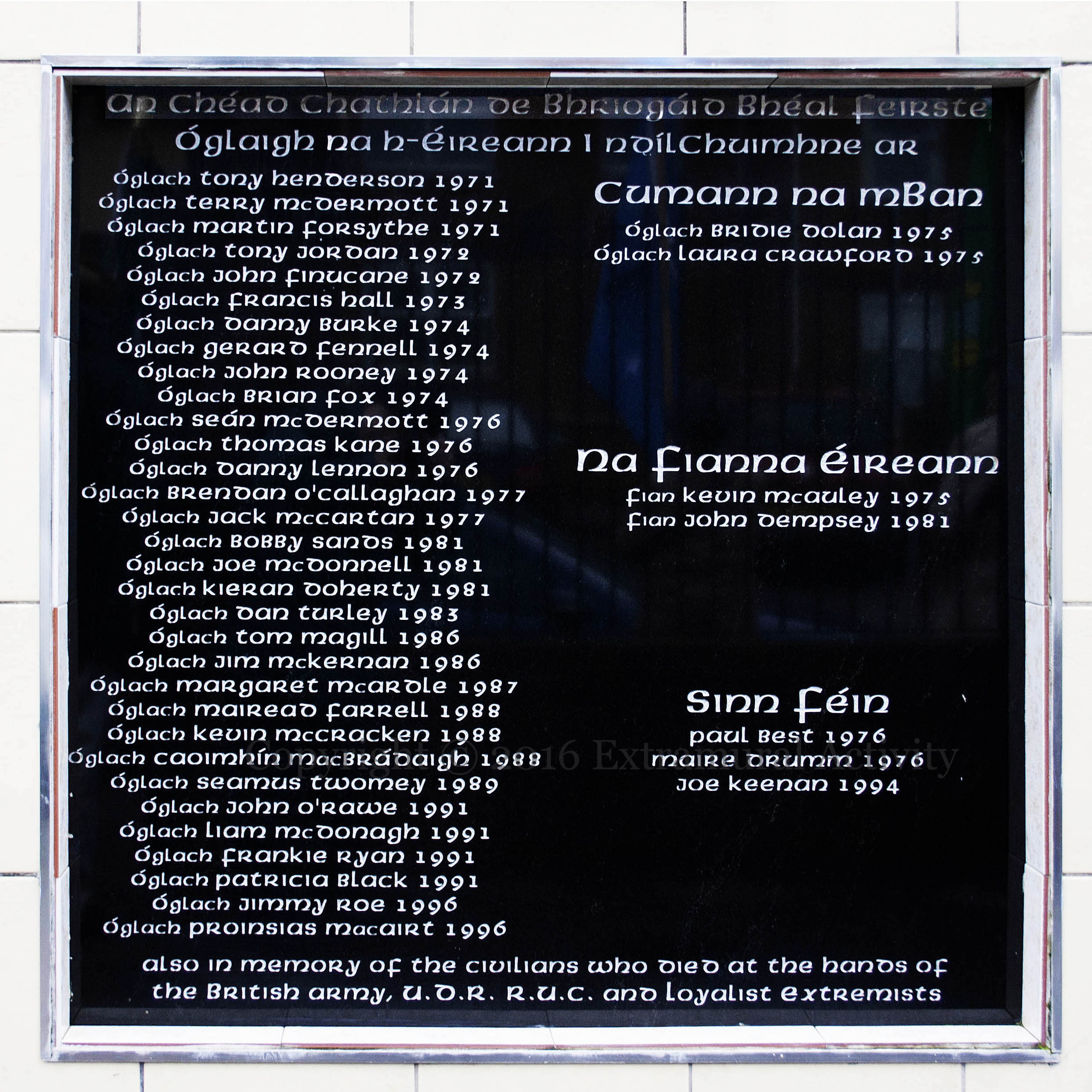
The plaque below is a previously existing one to volunteers from the First Battalion of the IRA’s Belfast Brigade and various other republicans and “also in memory of the civilians who died at the hands of the UDR, RUC, and loyalist extremists”.
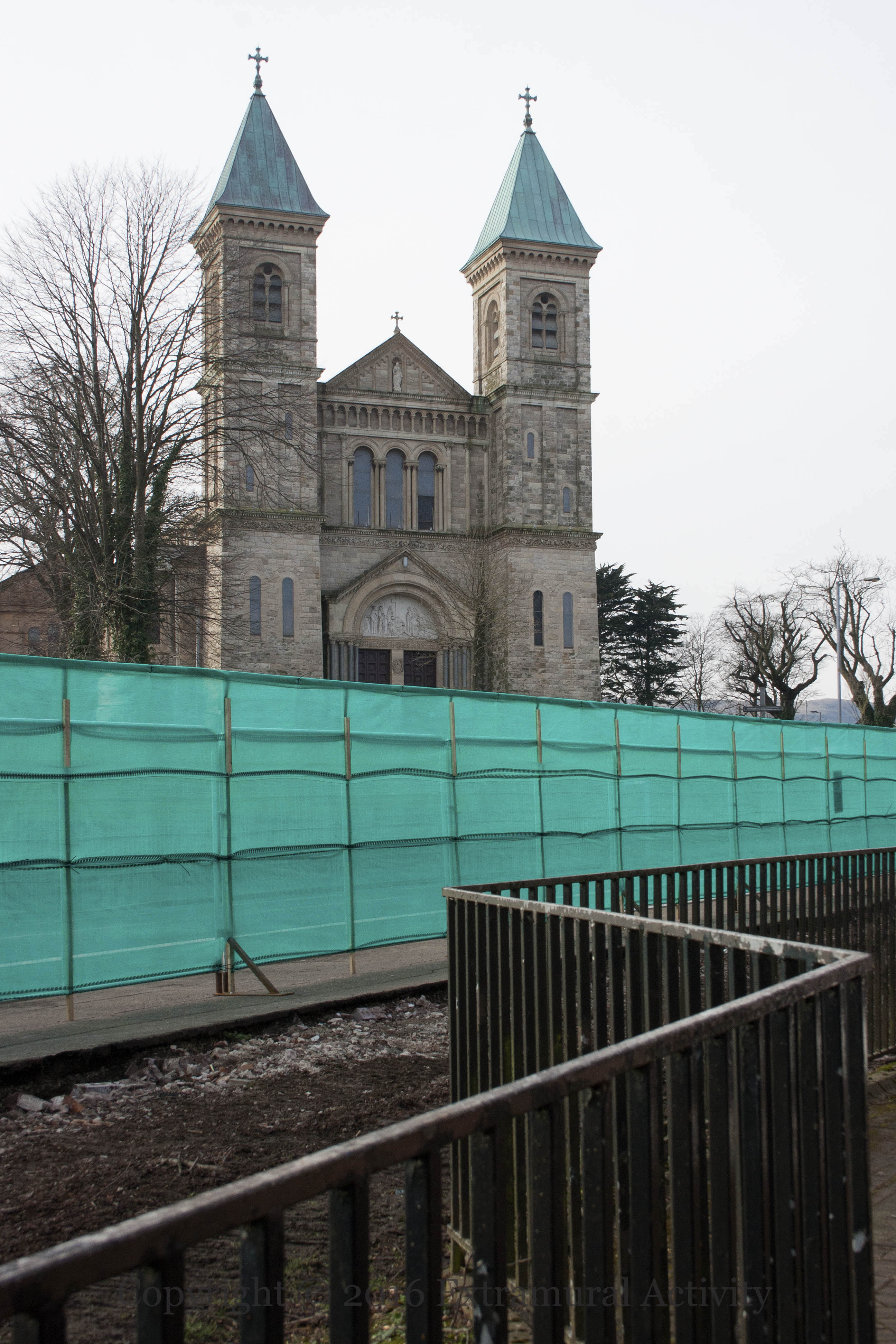
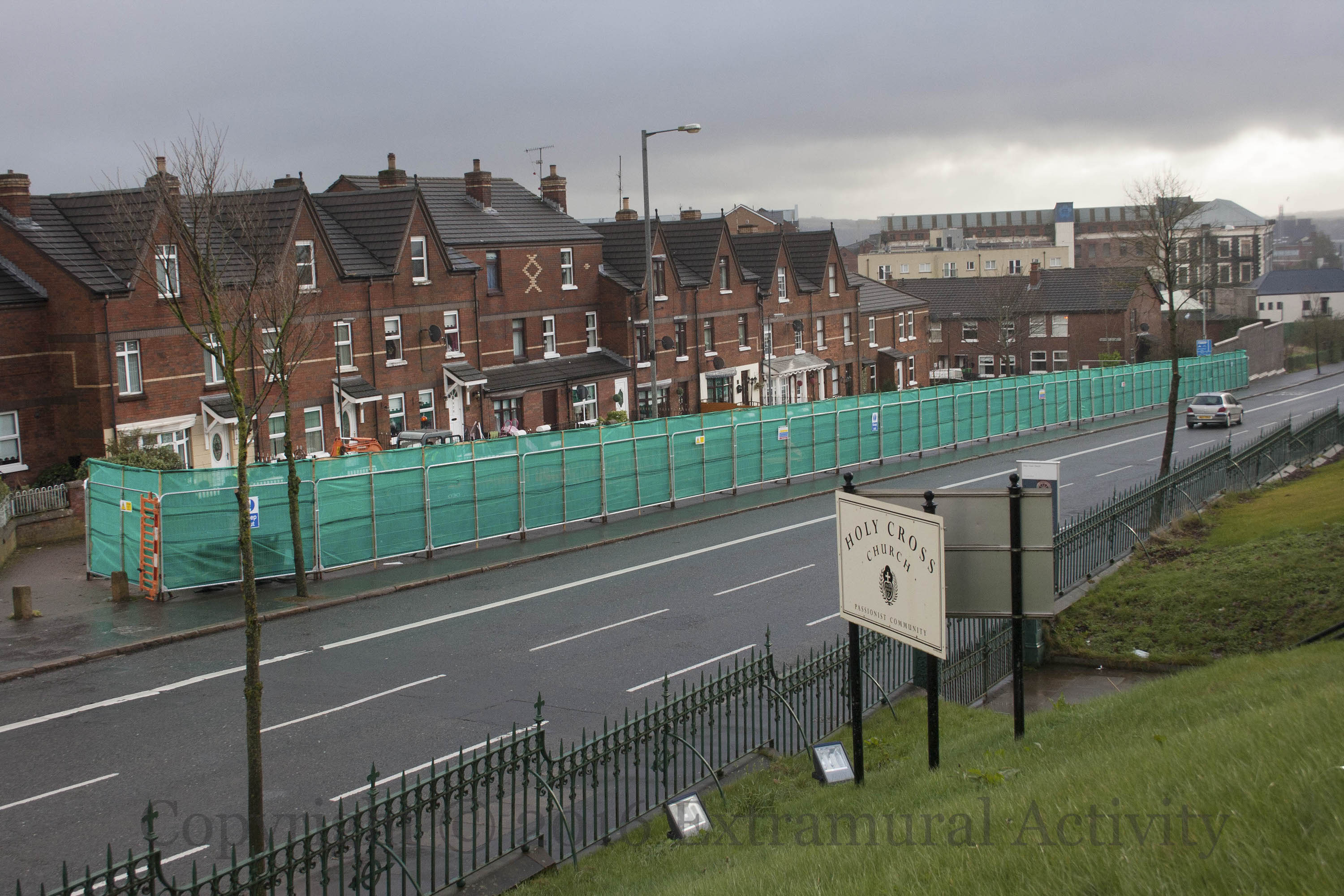
More “peace” line images today (after yesterday’s repainting of the Cliftonville “peace” line in Blue Sky Thinking): at the end of February work began taking down a section of the 8 foot high wall on the Ardoyne side of the Crumlin Road, separating Ardoyne from the Woodvale area, though the section close to Woodvale and the wall on the Woodvale side remain for now.
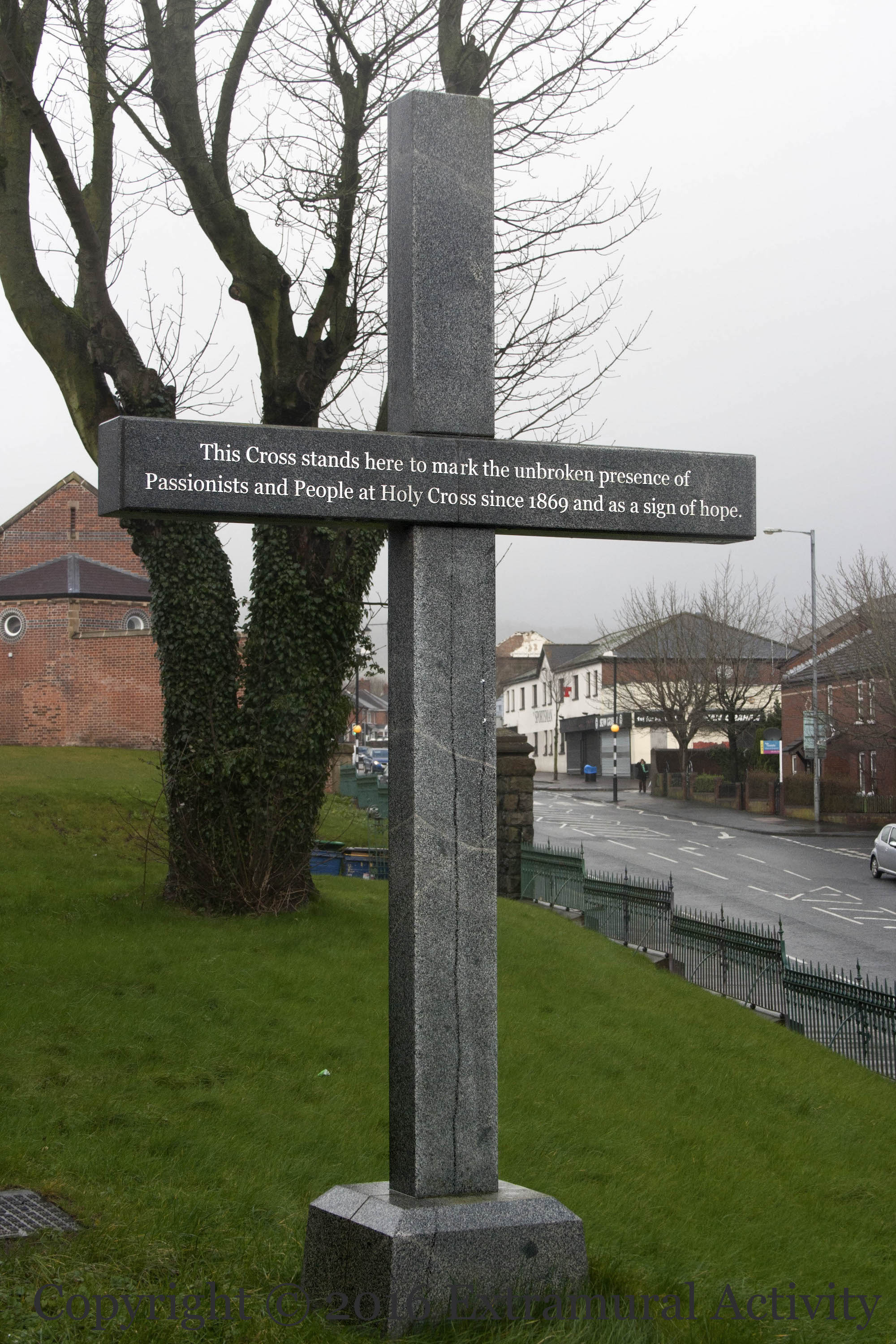
The houses on the north side of the road will now be able to see the road and the doors of Holy Cross church (shown above).
The vintage piece of Free Brendan Lillis graffiti shown in the final image survives, just out of picture to the left in the wide shot below.





 Extramural Activity