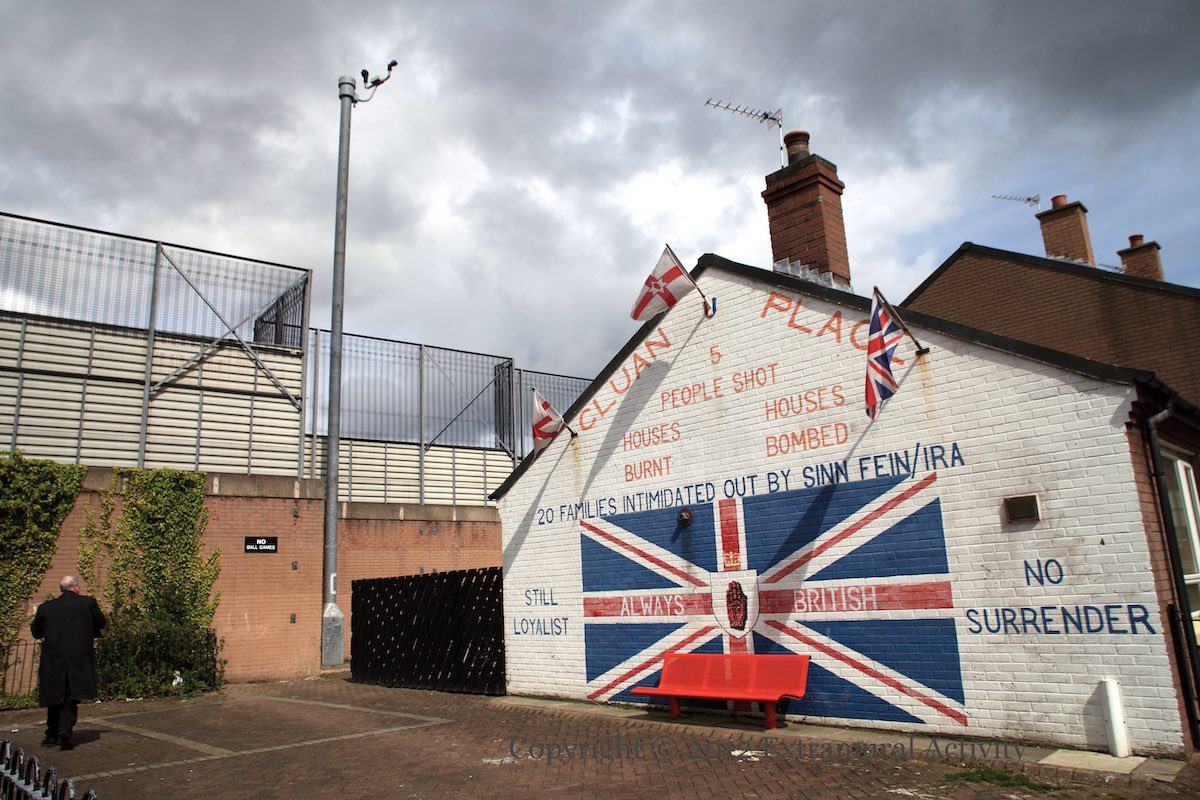
Cluan Place is a single street in east Belfast separated from (nationalist) Short Strand by a “peace” line. For a history of Cluan Place, see Out Of The Ashes. “5 people shot – houses burnt – houses bombed. 20 families intimidated out by Sinn Fein/IRA. Still loyalist. No surrender.”
The mural – to make the point that Northern Ireland is British – features an unusual combination of Union Flag and Ulster Banner.
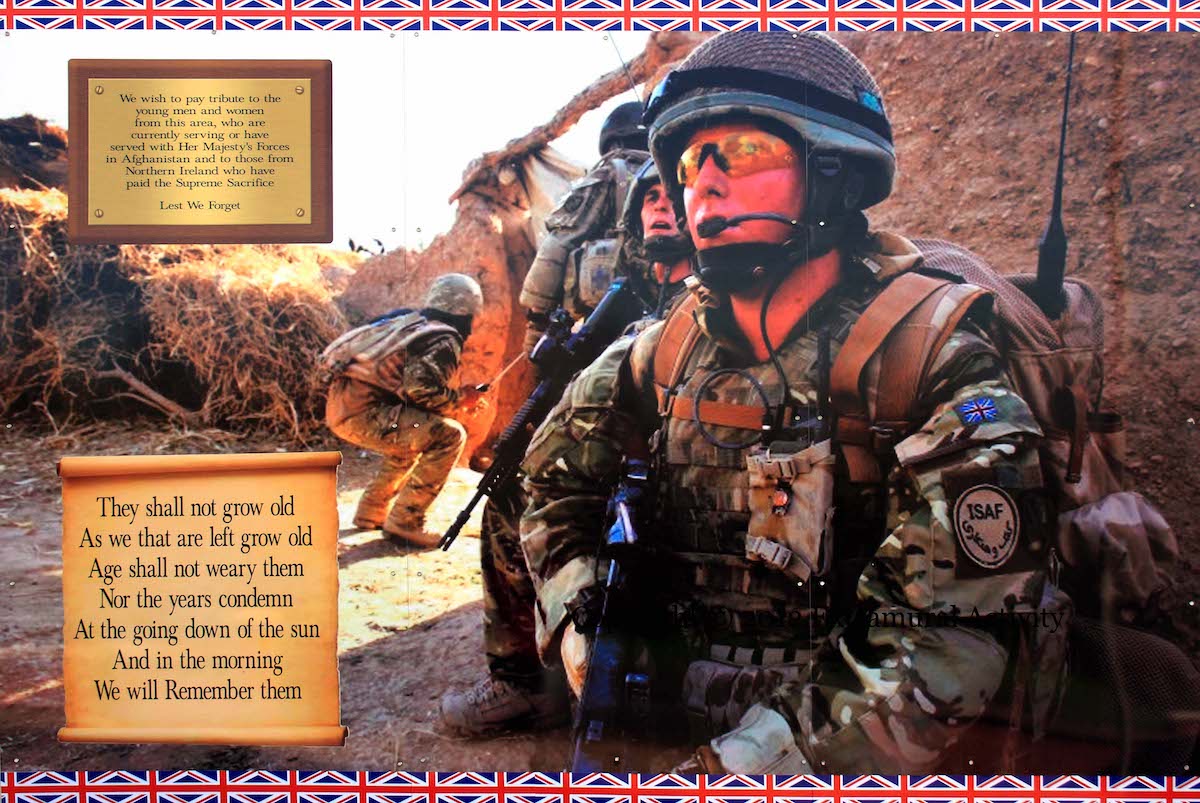
This is a recent mural to British forces in Linn Road, Larne. The larger piece of writing on the board above reads, “We wish to pay tribute to the young men and women from this area, who are currently serving or have served with Her Majesty’s Forces in Afghanistan and to those from Northern Ireland who have paid the Surpreme Sacrifice. Lest we forget”.
The smaller one has part of the Ode of Remembrance from Laurence Binyon’s poem For The Fallen: “They shall grow not old, as we that are left grow old, Age shall not weary them, Nor the years condemn, At the going down of the sun, And in the morning, We will Remember them.”
The impending resurrection of Titanic looms overhead, a new and shiny “reason to visit Belfast” in contrast with the boarded up houses on Lawnbrook Avenue.
Click image to enlarge Copyright 2012 Seosamh Mac Coılle X00553 festival 31 march – 22 april ni 2012 our time our place ni2012.com
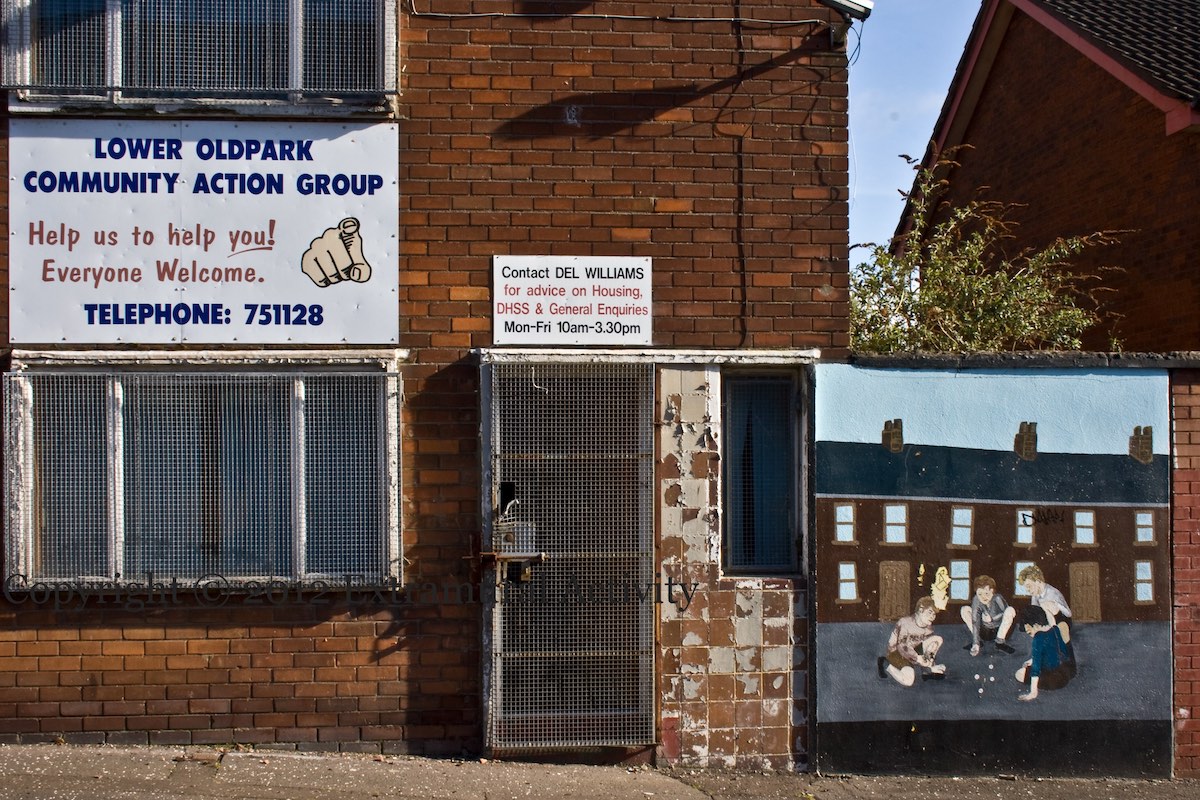
These are the murals on either side of the Lower Oldpark Community Action Group in Alloa Street. The office might already have been vacated, as the building will be demolished this summer (the office moved to Avoca St).
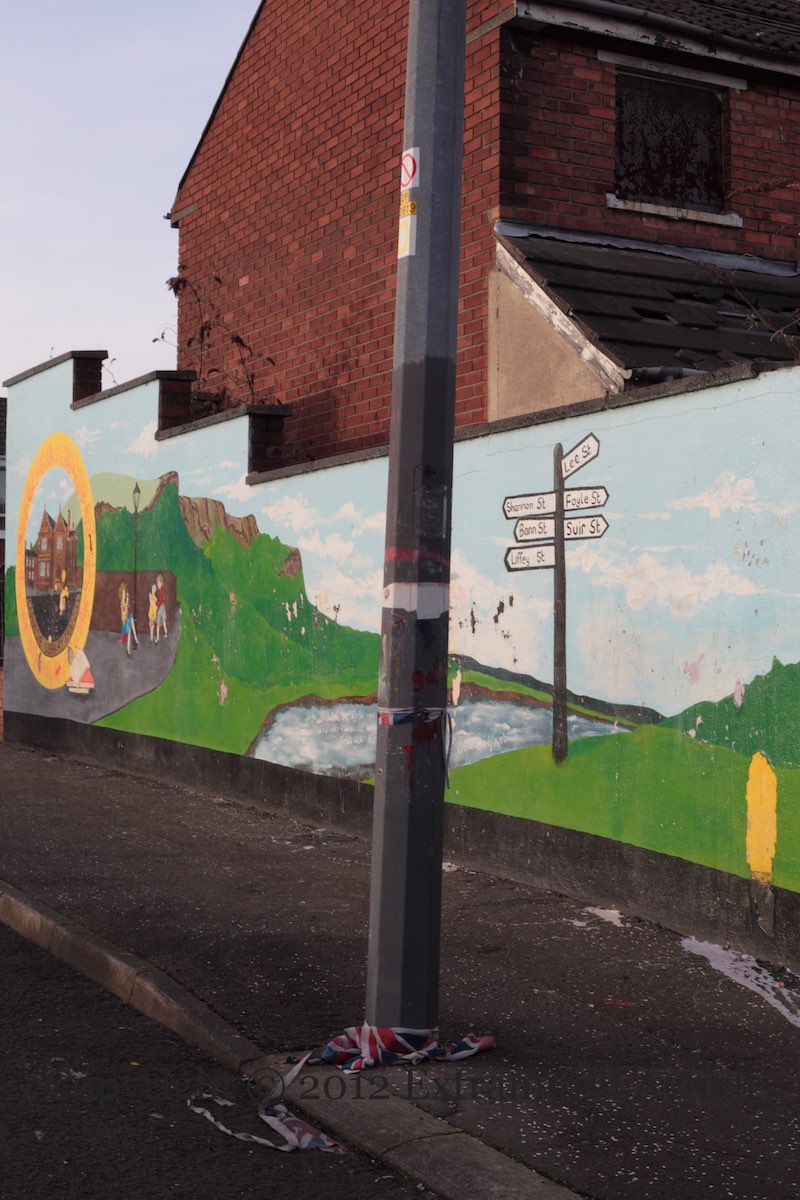
Above, children play marbles in the street; below, the Oldpark Carnegie Library (Fb) stand beneath Cave Hill and a signpost points the way to old streets in the area that were named after rivers of Ireland: Lee St, Shannon St, Foyle St, Bann St, Suir St, Liffey St.
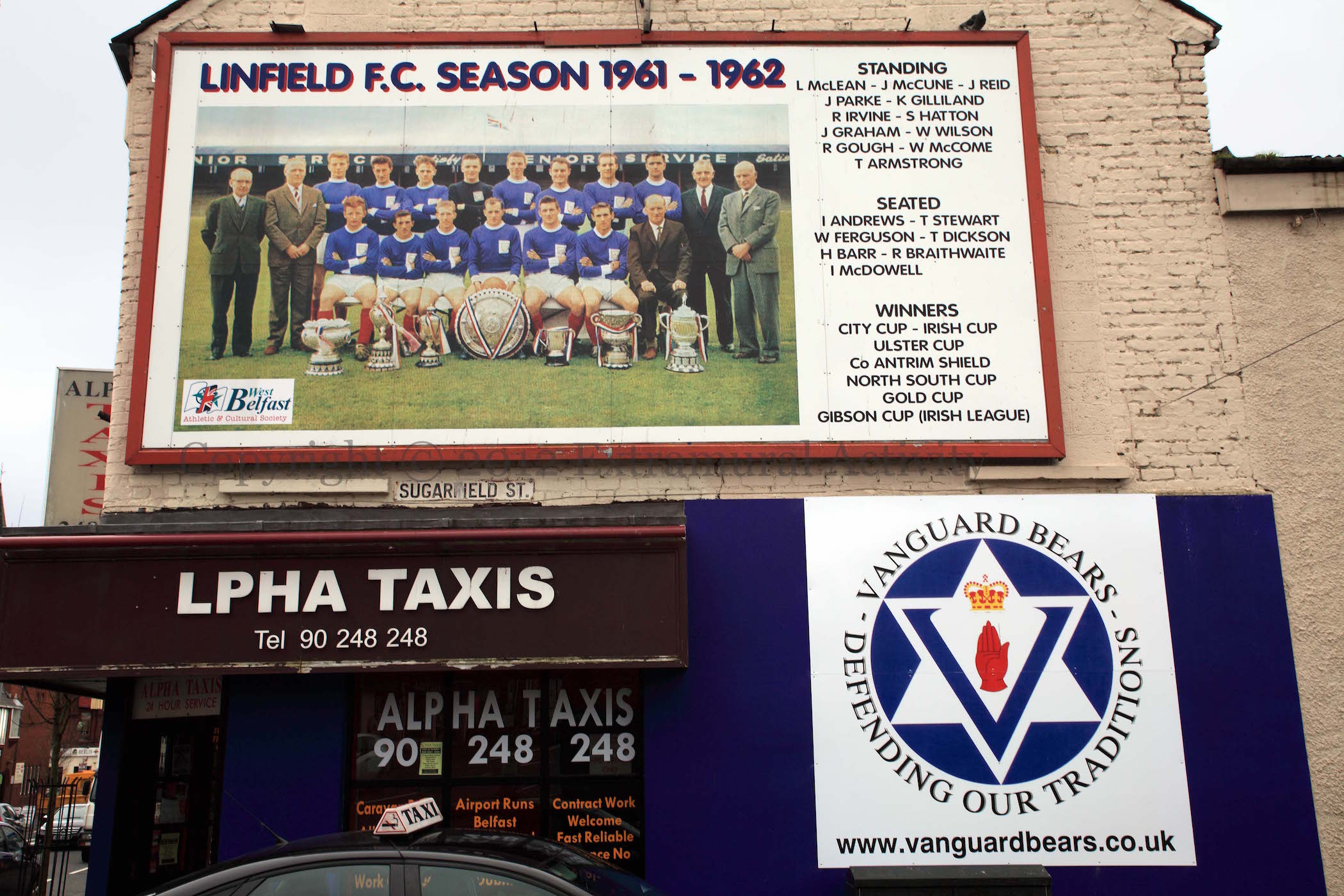
Linfield FC is a south-Belfast soccer club. The 1961-1962 season is one of two seven-trophy seasons in the club’s history, the first being 40 years previously in 1921-1922 (WP).
“Hang out our banners … The cry is still “They come!”” – Shakespeare, Macbeth Act V, Scene V
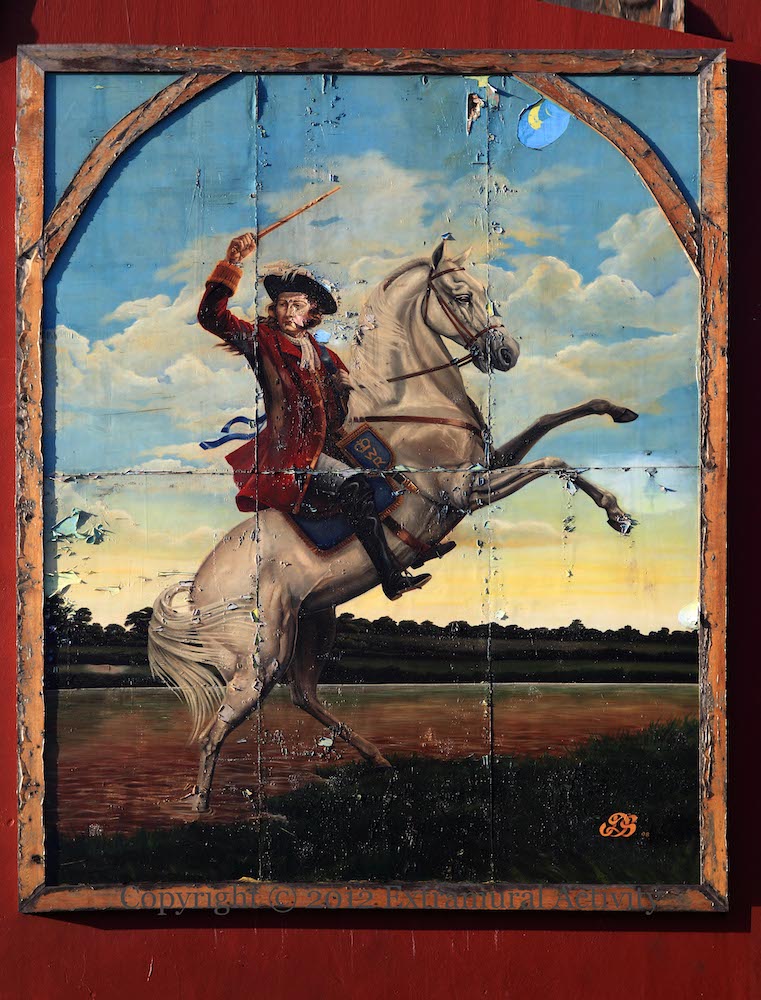
King Billy crossing the Boyne replaces a UFF ‘Eddie’ mural (see M02487) as part of the re-imaging of loyalist murals in 2008. Rolston (2012 p. 455) reports that the Arts Council thought King Billy was too divisive an image to replace the Village Eddie, but lost this particular battle (though Billy does not carry a sword but a stick/crop).
The info board, shown below, places the painting in the history of loyalist muraling as a return to traditional images after a period of paramilitary control.
By John Darren Sutton in Tavanagh Street, Belfast.
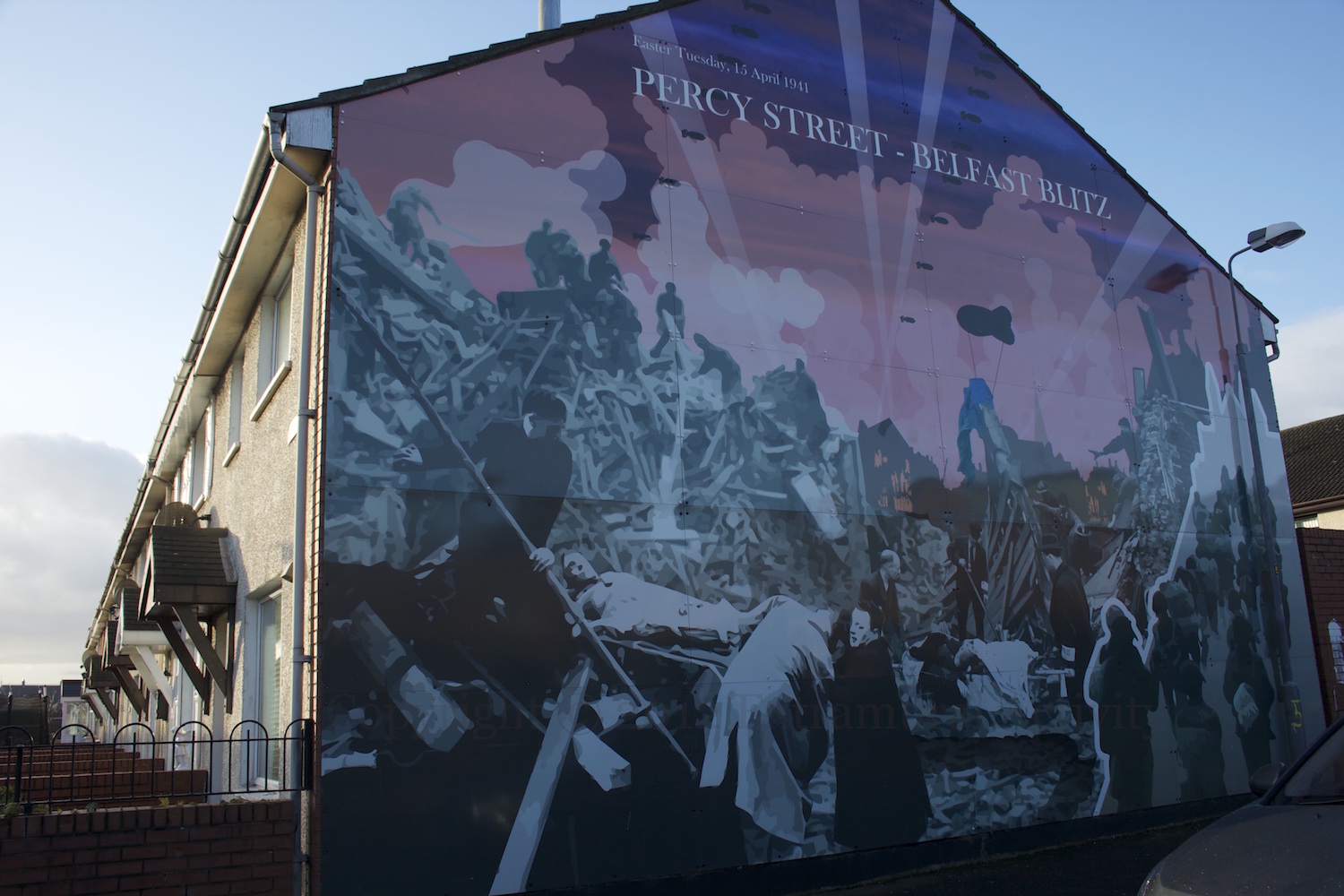
Here are three murals/boards by Steven Tunley for the Re-Imaging Communities programme in Dover Place, lower Shankill.
From left to right: “Fathers and sons of the Shankill enlist to fight in World War One”, “Belfast blitz – Easter Tuesday , 15 April 1941”, and “VE Day – 8th May 1945”.
“It is our firm conviction that the vast majority of both religious communities long for peace, reconciliation and the chance to create a better future for their children.” UFF volunteers in the previous mural on this wall turn their back on violence and look towards Stormont for a political solution.
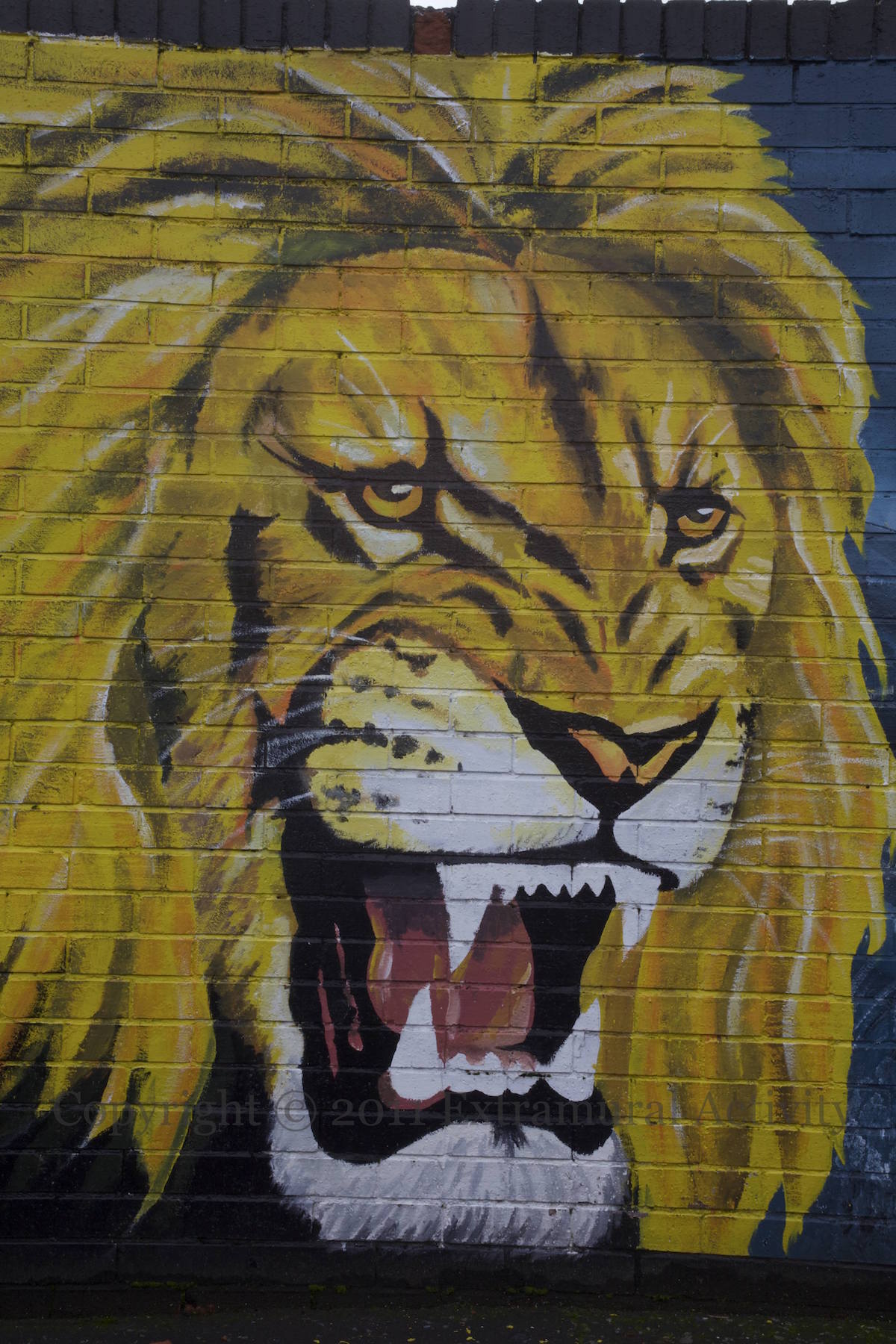
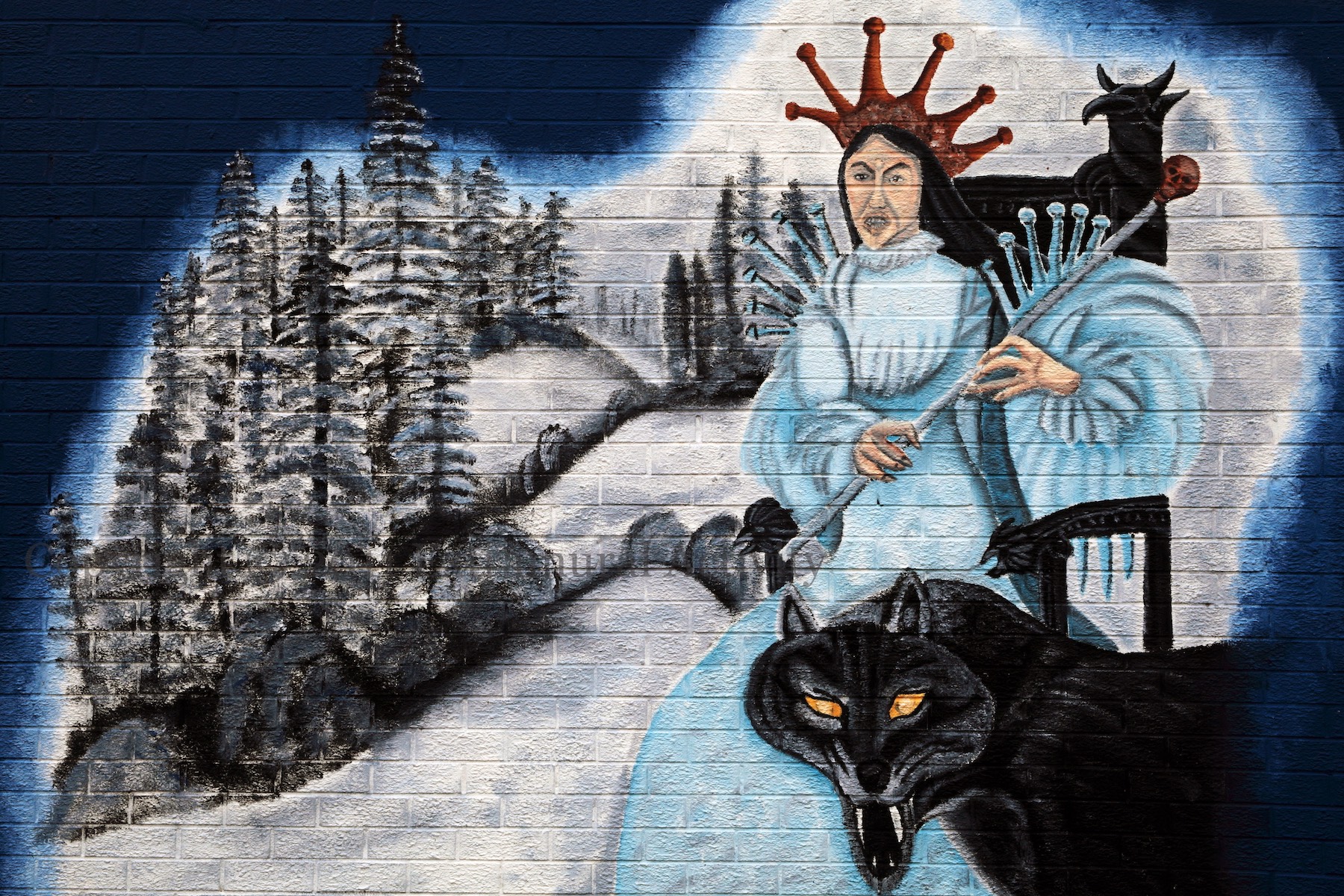
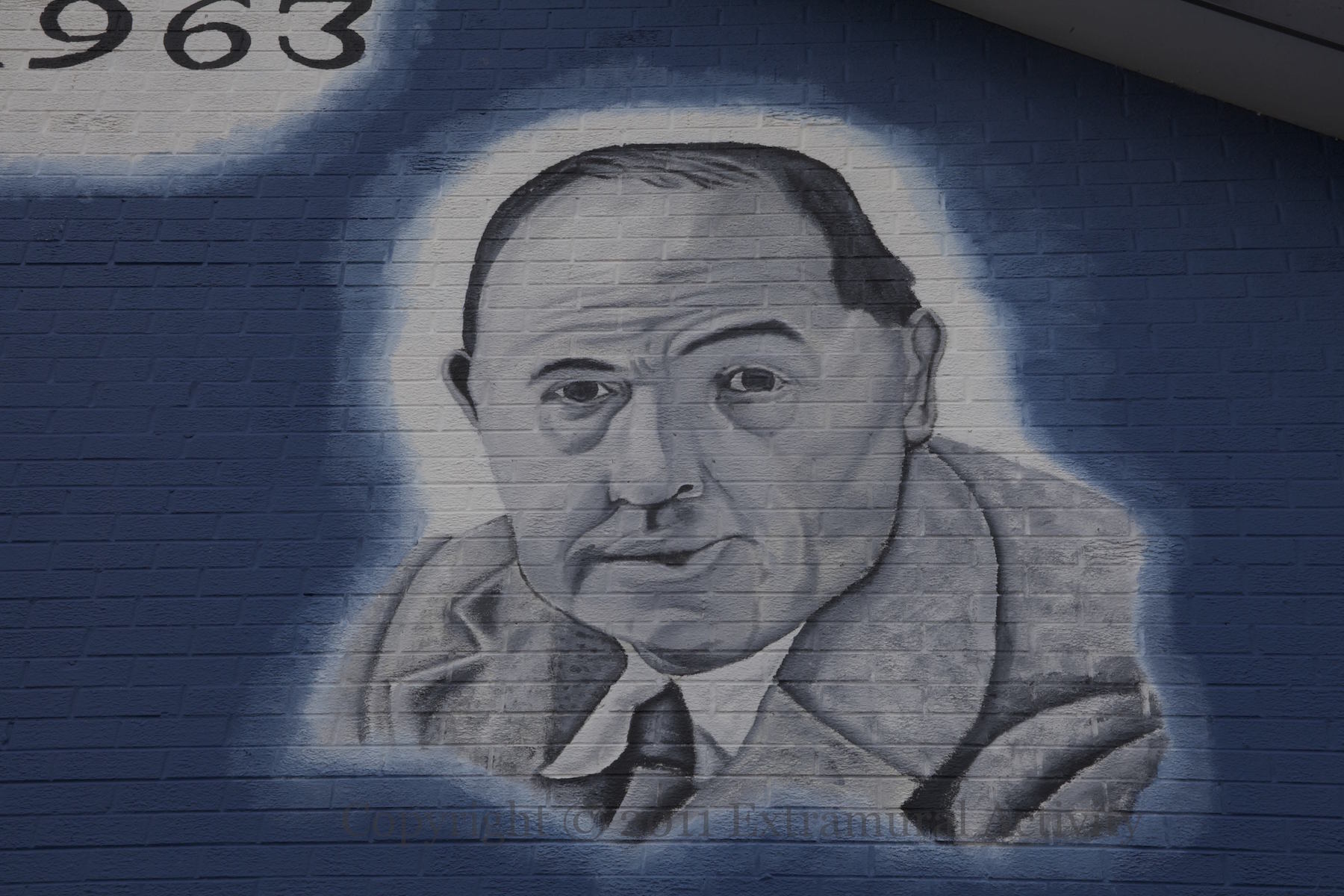
Here are three details from the Narnia mural Pansy Street, Belfast: Aslan the lion, the witch’s winter world, and the author – CS Lewis, born in east Belfast. This is the second mural in the area on on The Lion, The Witch, And The Wardrobe.
Here are three close-ups from the mural CS Lewis’s book The Lion, The Witch & The Wardrobe in Convention Court, east Belfast. (For the whole, see M02946.)
This mural replaced the mural putting the Red Branch Knights and the Red Hand Commando in parallel – see the Visual History page on Cú Chulaınn.









 Extramural Activity