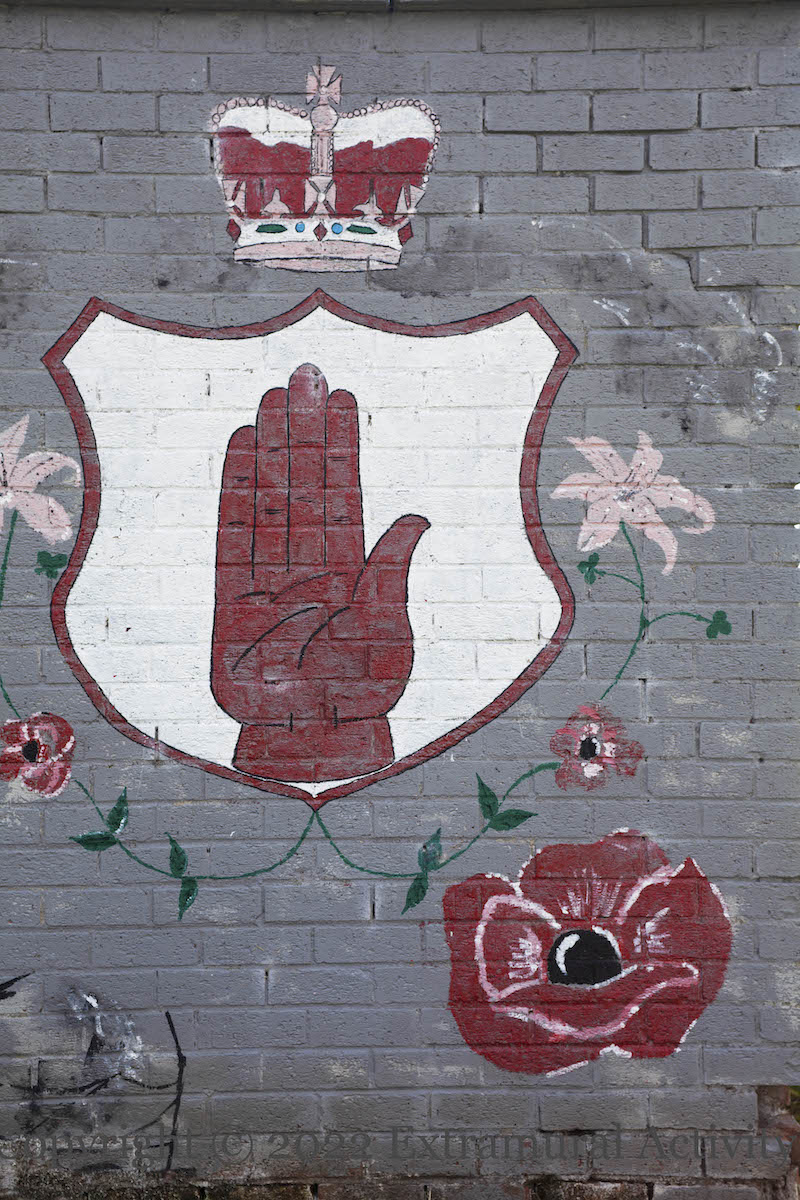
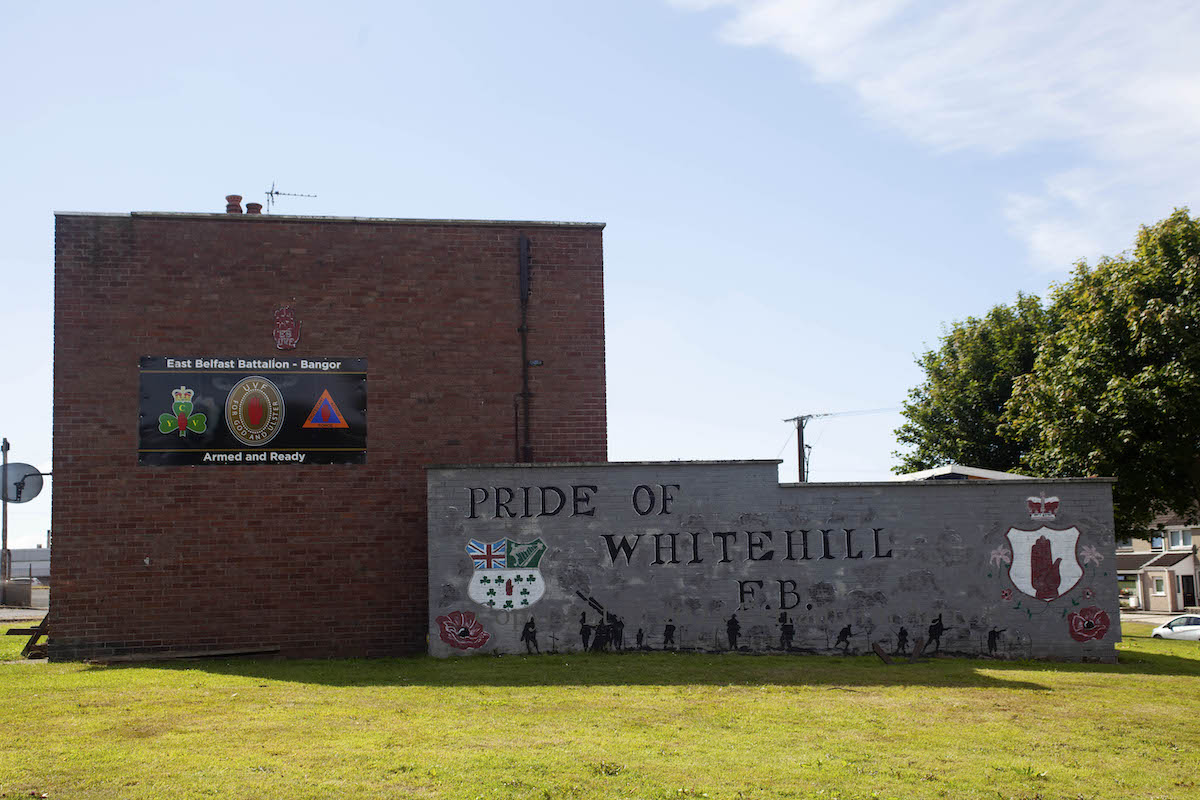
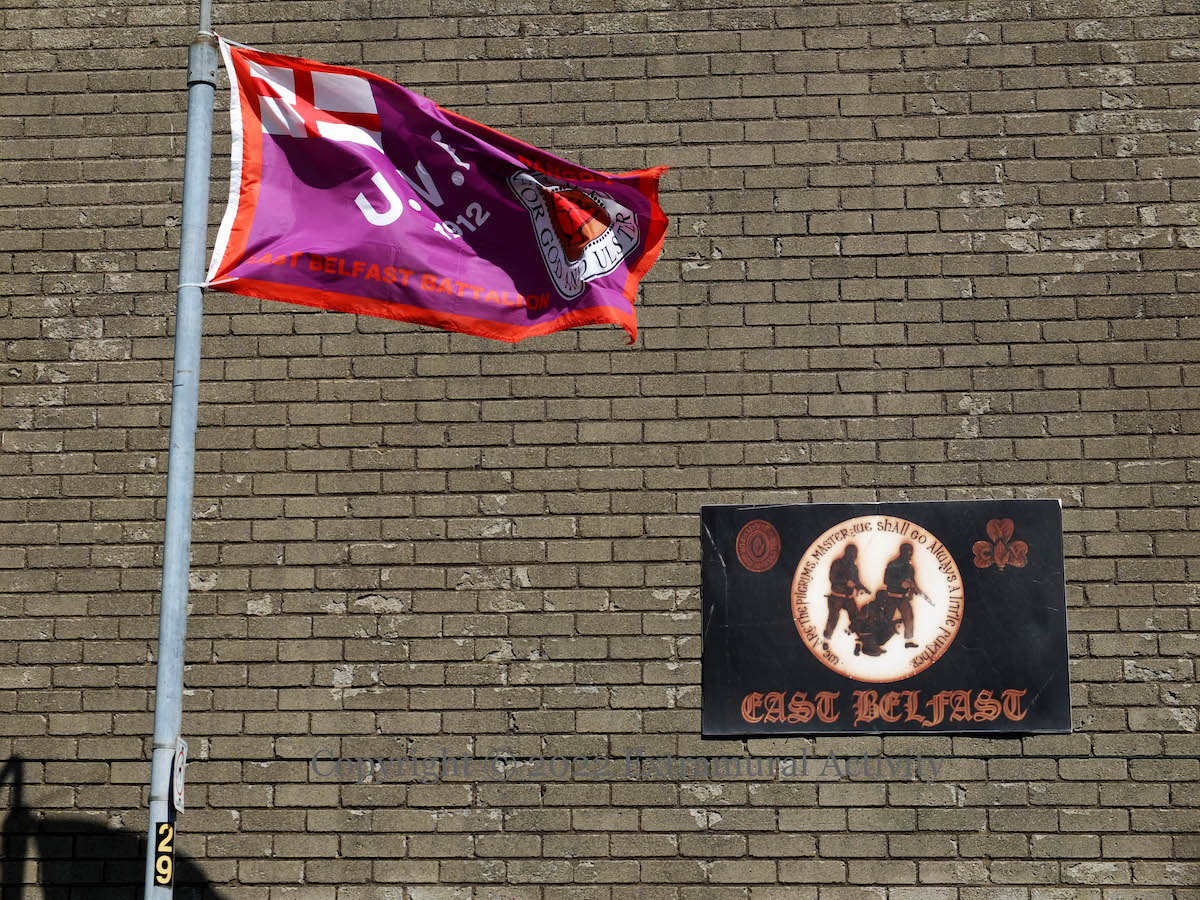
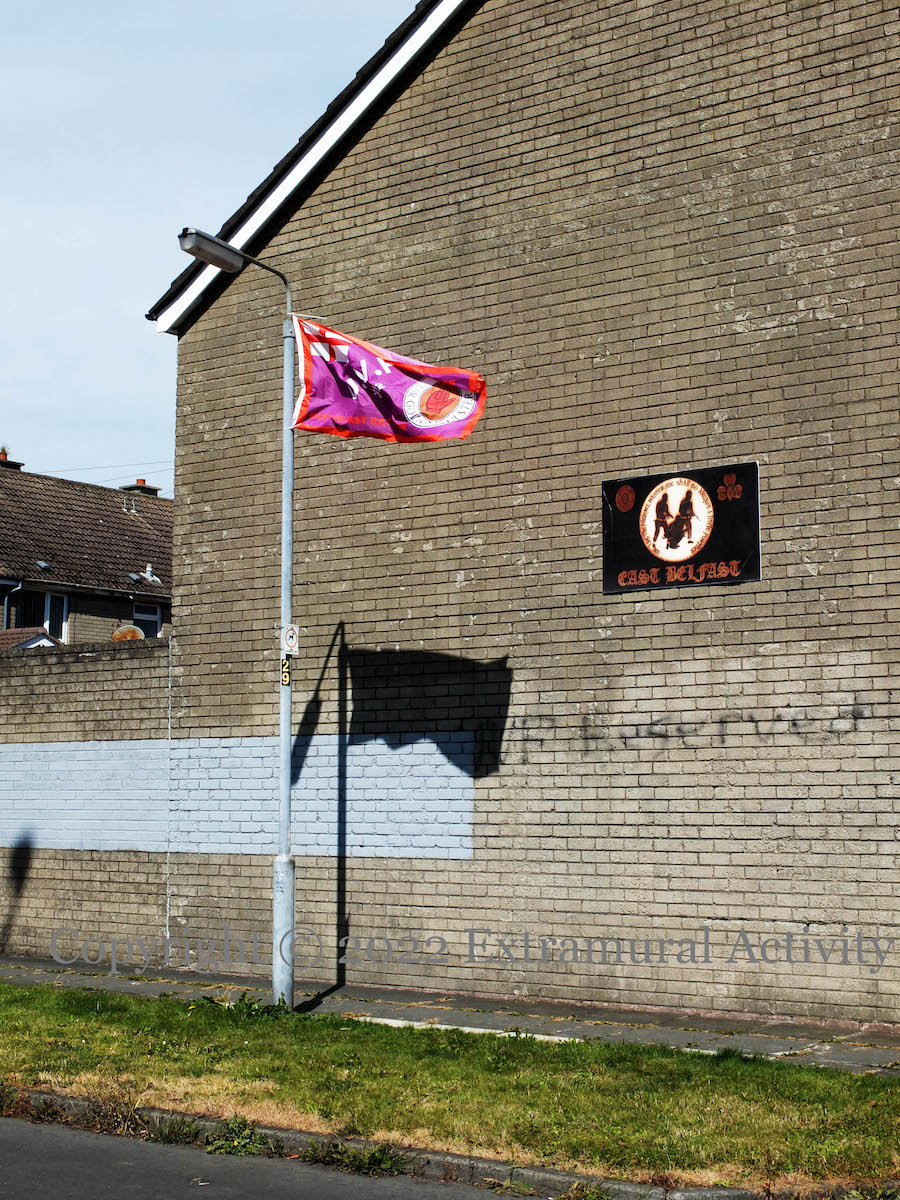
This UVF hooded gunman board (above the Pride Of Whitehill flute band (Fb) mural) was previously a memorial to the 36th (Ulster) Division (see They Sleep Side-By-Side) but has now become part of the East Belfast battalion’s markings in Bangor (see Always A Little Further).
The twelve “Gertrude Street Great War Fatalities” are: Robert Harvey; William Duff; James Fagan; Alexander Leckey; George McCune; Hugh Nabney; William Nabney; Matthew Scott; Robert C. Skillen; James Watson; Samuel Wright; James Burns.
This board was originally next to the To France And Flanders mural on the adjacent wall; the mural also named these twelve but which only lasted a year. That mural depicted the damaged basilica tower in the village of Albert and there is a similar mural in the village itself – a photograph of the mural and the rebuilt tower can be seen in the top right of the board; the mural can be seen in full here.
As the map in the top left shows, Gertrude Street was where Wolff Close now is, running north from the Newtownards Road; the original Gertrude Star mural (circa 1989) was on the first gable of what is now called “Freedom Corner” – see D00388.
“‘The Legacy Of Gertrude Street. Twelve brave young men from Gertrude Street,/Bravely fought in world war one./They tried their best as legends do./But never returned back home.//They dragged through muddy trenches,/In the darkness of the night./But never once would they give up,/As they bravely continued to fight.//Each year these men will be honoured,/As we stand together taking time to reflect./It’s vital to show these heroes the uttermost respect.//For now they lie in Flanders fields,/Between crosses row by row./They lived, they fought for our country,/And gave their lives many years ago.//Forever we will speak of these men,/Who came from Gertrude Street./Their legacy will always live on,/When we think of their marching feet.’ By Angela McCully”
“We have given much, we have much to give”. Earlier murals on this wall in the Caw (2015 | 2011) were similarly divided into Ulster Volunteers/Ulster Division on the left and the modern UVF on the right. But this version shows a UVF “hooded gunman” whereas before on both sides there were graveside mourners. There is also a very rare (and possibly unique) reference to the H-Blocks, rather than the Long Kesh cages – a watchtower and walls are included above Carson’s portrait.
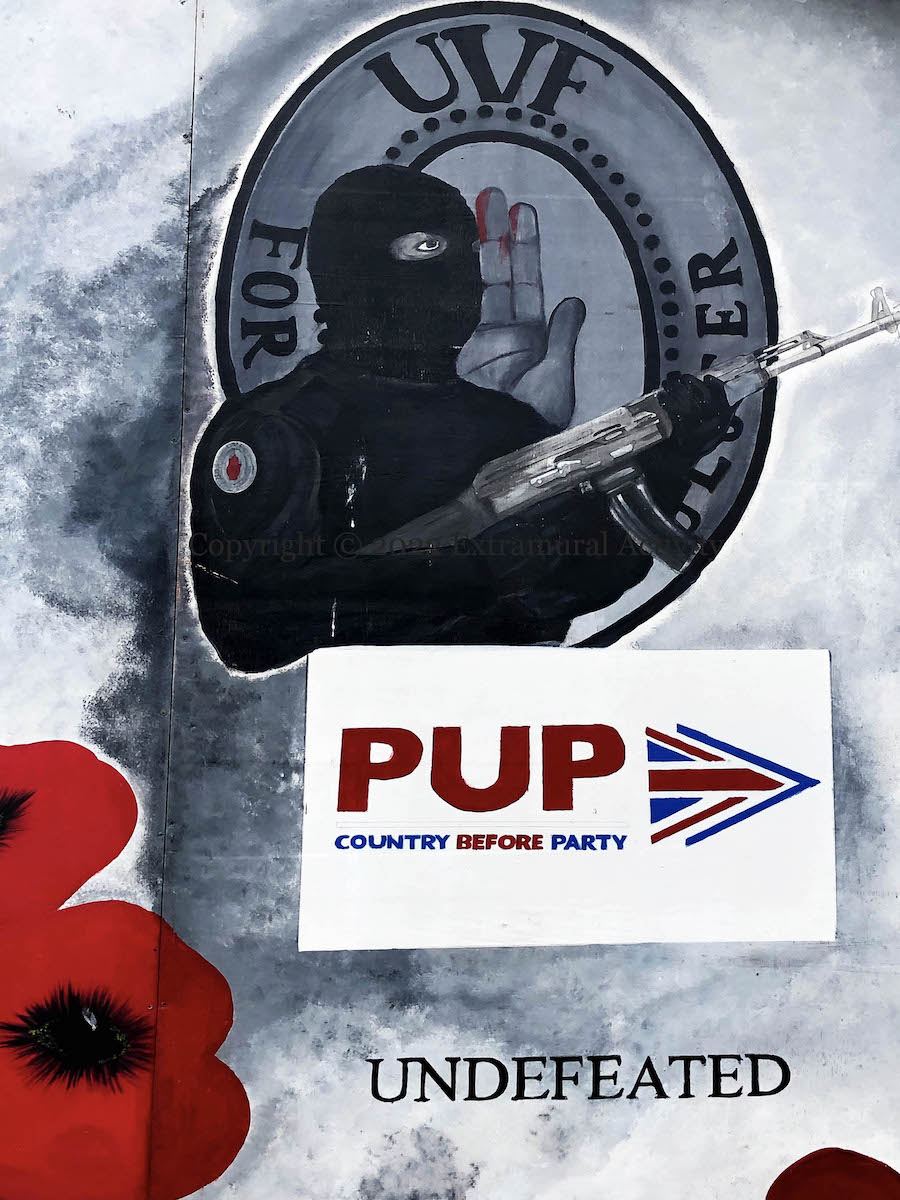
On the left are the Union Flag, Covenant, the Clyde Valley, graveside mourner in WWI, and Carson. On the right a UVF hooded gunman, the PUP emblem and slogan “Country Before Party”, and the flag of the UVF (Londonderry company).
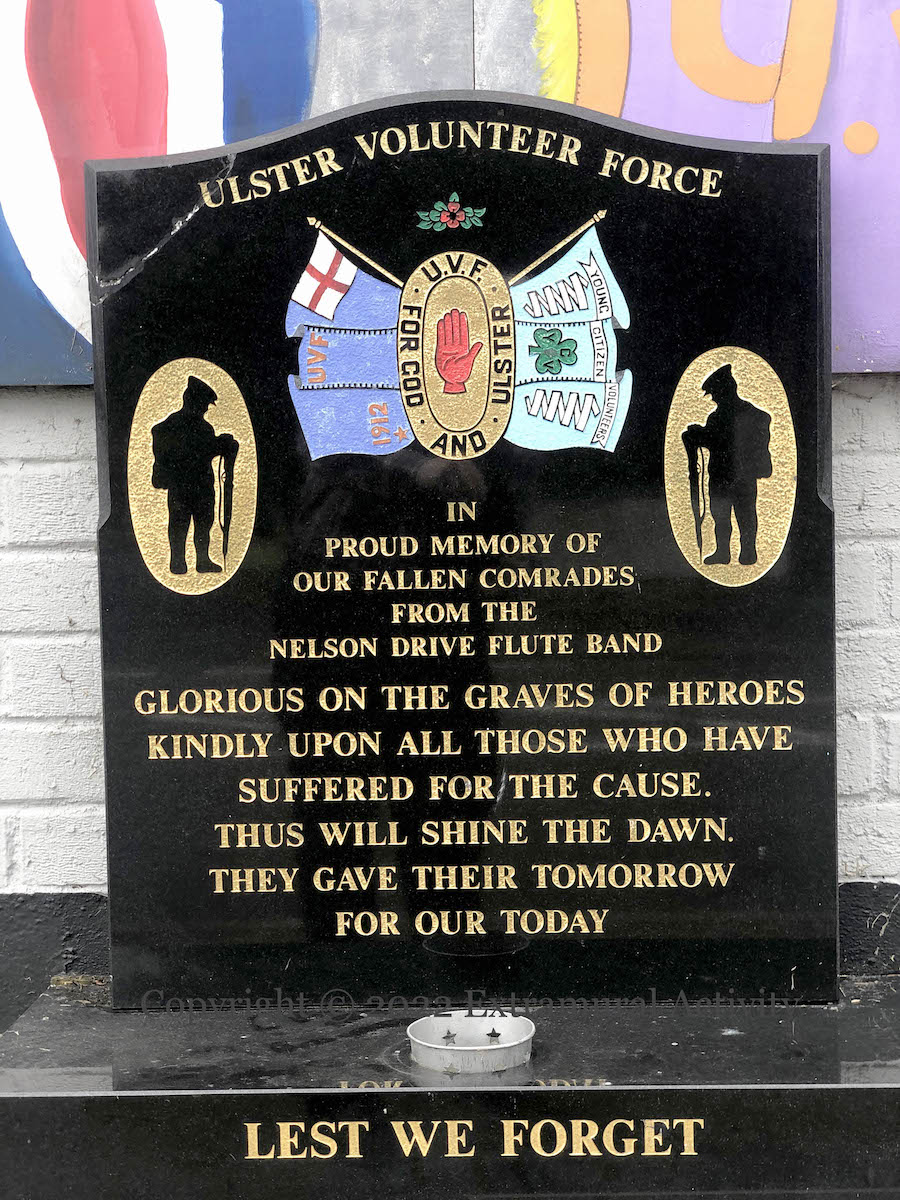
The plaque, which has been retained from previously, reads “In proud memory of our fallen comrades from the Nelson Drive flute band. Glorious on the graves of heroes, kindly on all those who have suffered for the cause. Thus will shine the dawn. They gave their tomorrow for our today.”
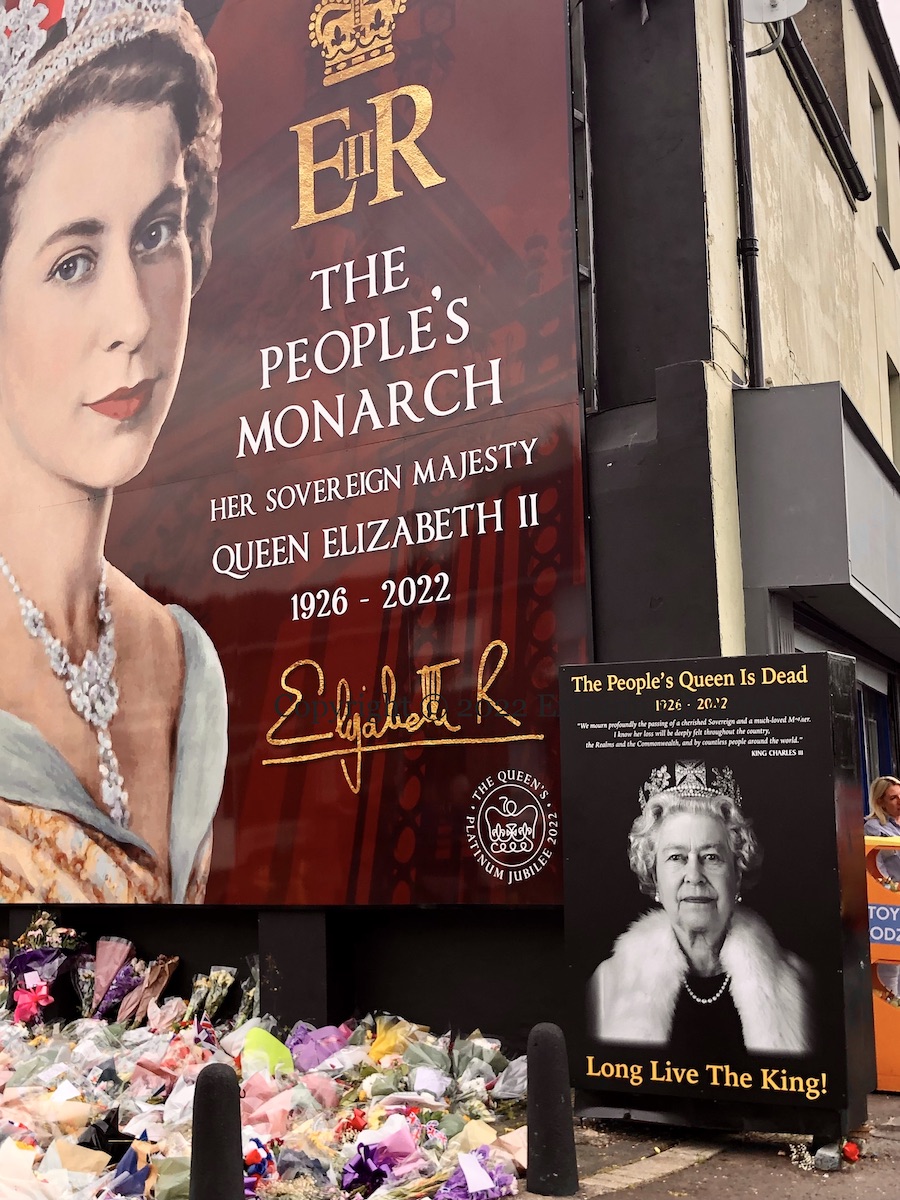
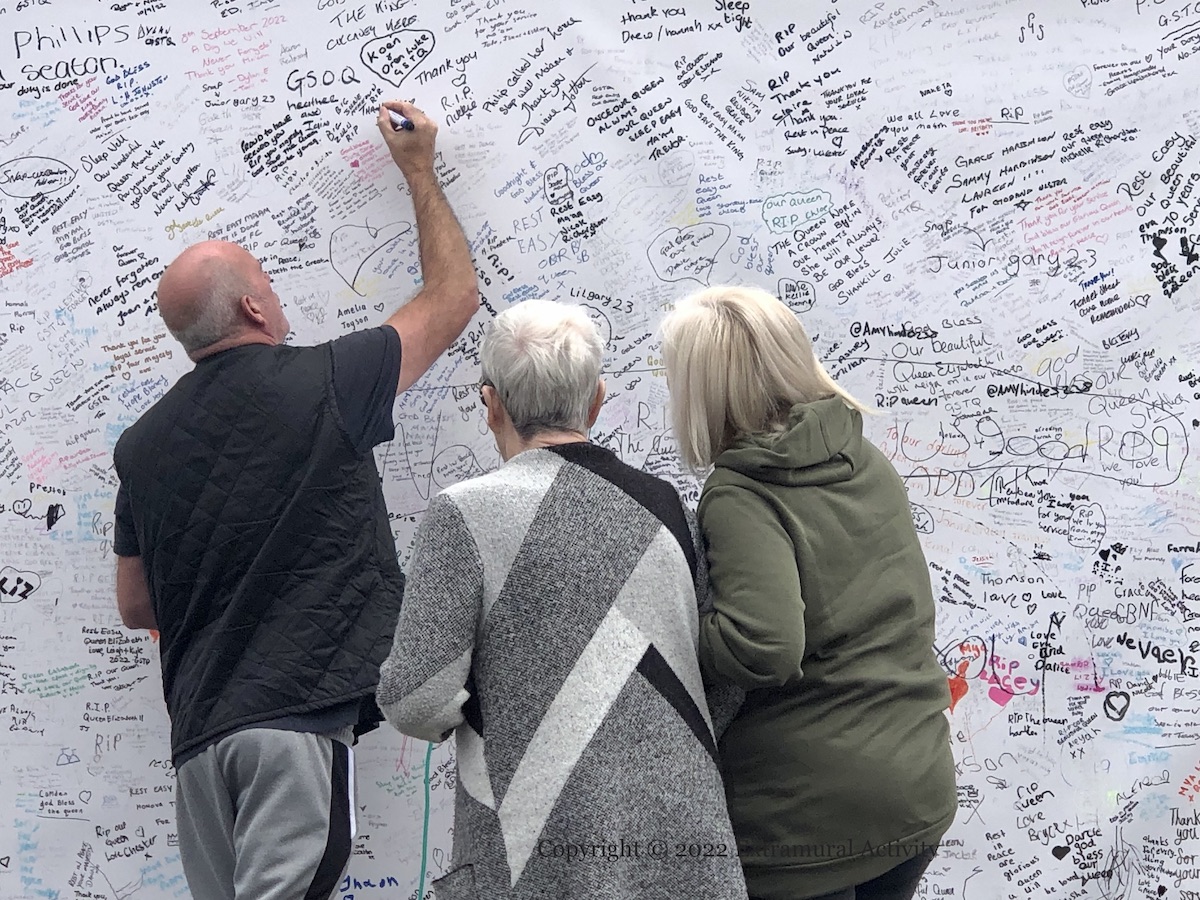
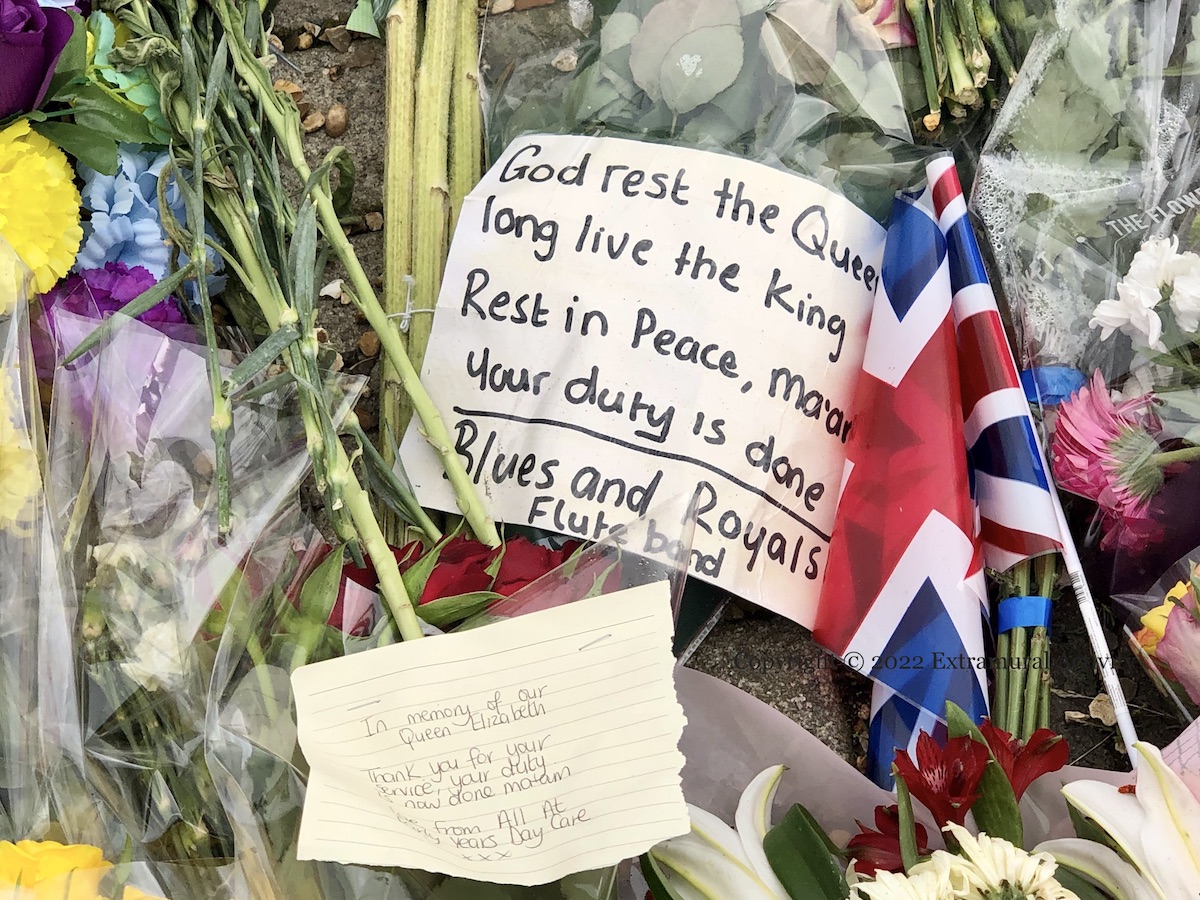
Upon news of Queen Elizabeth’s death, the platinum jubilee mural at the bottom of Crimea Street became a memorial, with hundreds of bouquets being laid before it and a “wall of condolences” set up. (For the mural itself, see The People’s Monarch.) In addition, to the right-hand side has been added a small commemoration of her passing, with a quote from her son, the newly acceded King Charles:
“We mourn profoundly the passing of a cherished Sovereign and a much-loved Mother. I know her loss will be deeply felt throughout the country, the Realms and the Commonwealth, and by countless people around the world”; “Long live the king!”
The fifteen commonwealth “realms” (previously called “dominions”) share a monarch – formerly Elizabeth II and now Charles III – while the commonwealth comprises 41 additional nations, including some which are now republics: Barbados, for example, became a republic on November 30th last year (2021) but is still in the Commonwealth (WP). Additional countries might take the passing of Elizabeth as a suitable juncture at which to sever ties (Edinburgh News has a round-up | for the Bahamas see Caribbean National Weekly | for Canada see Toronto Star).
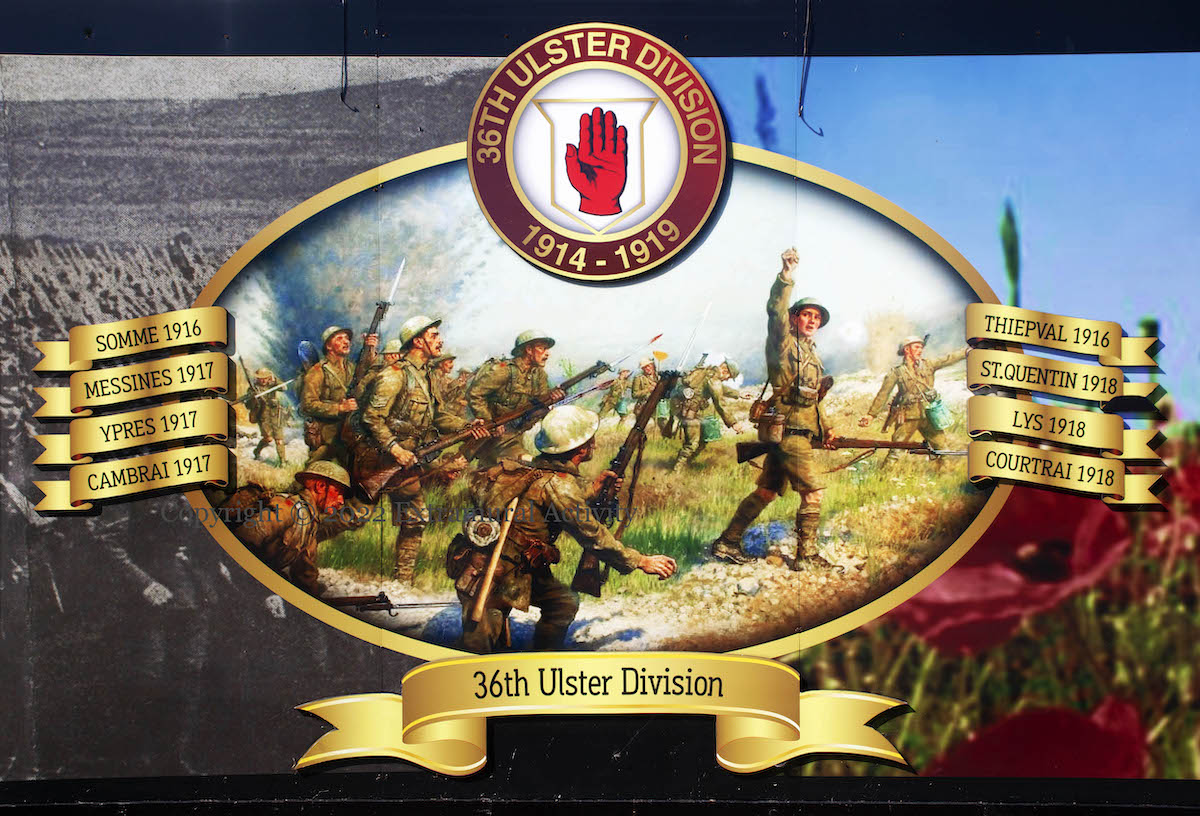
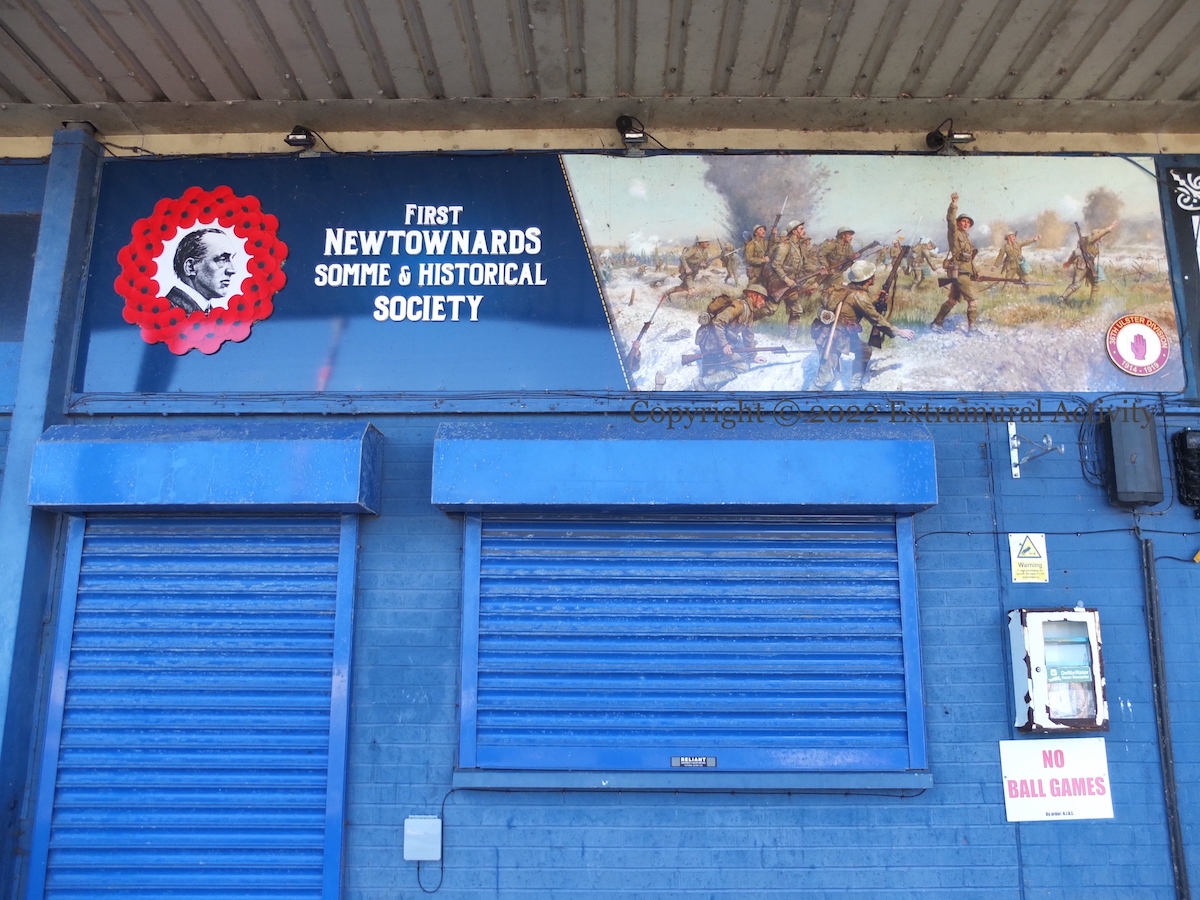
This is new, more extensive display from The First Newtownards Somme & Historical Society (Fb) (replacing The Pride Of Ulster). There are seven panels about the Ulster Volunteers and the 36th Division, plus an eighth panel on the Ulster Special Constabulary. The formation of the Ulster Volunteers (anti-Home Rule poster | anti-Home Rule postcard), formation of the 36th (Ulster) Division, the 13 battalions of the division, the Battle Of The Somme, JP Beadle’s Attack Of The Ulster Division (Royal Irish), the Ulster Tower, the USC (B Specials), the Victoria Cross.
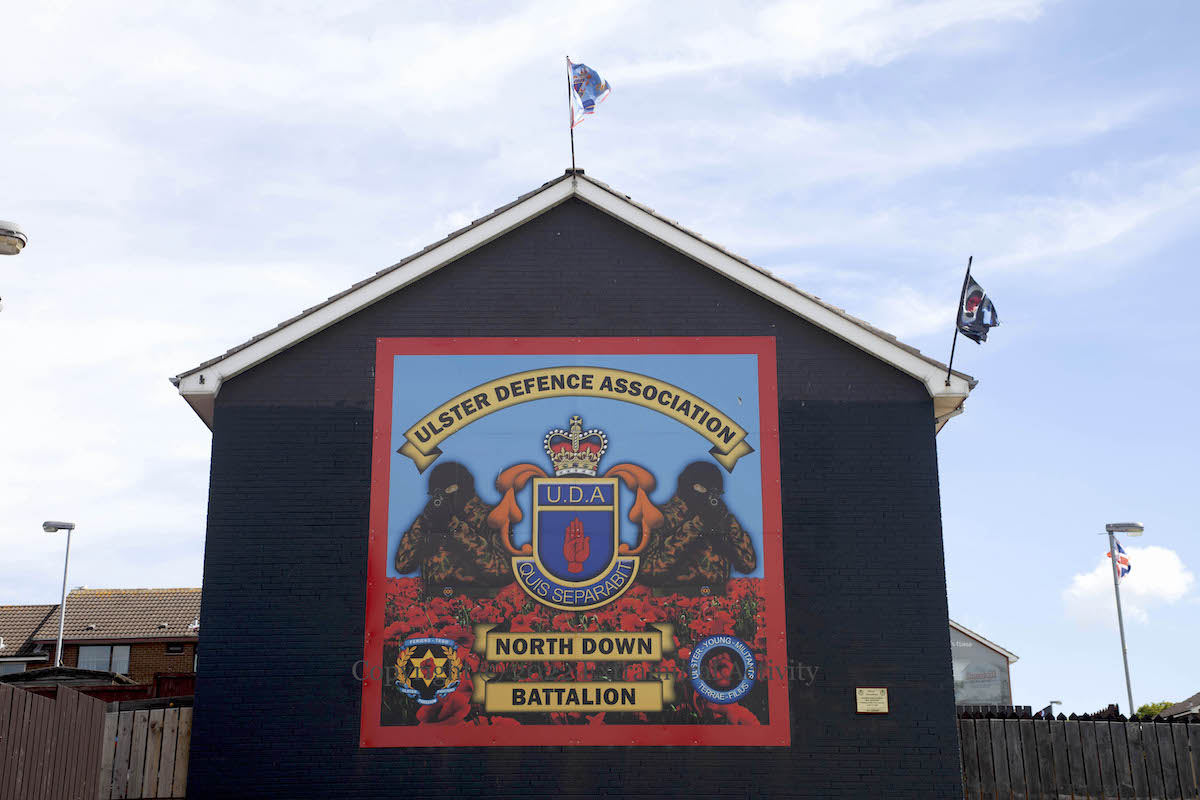
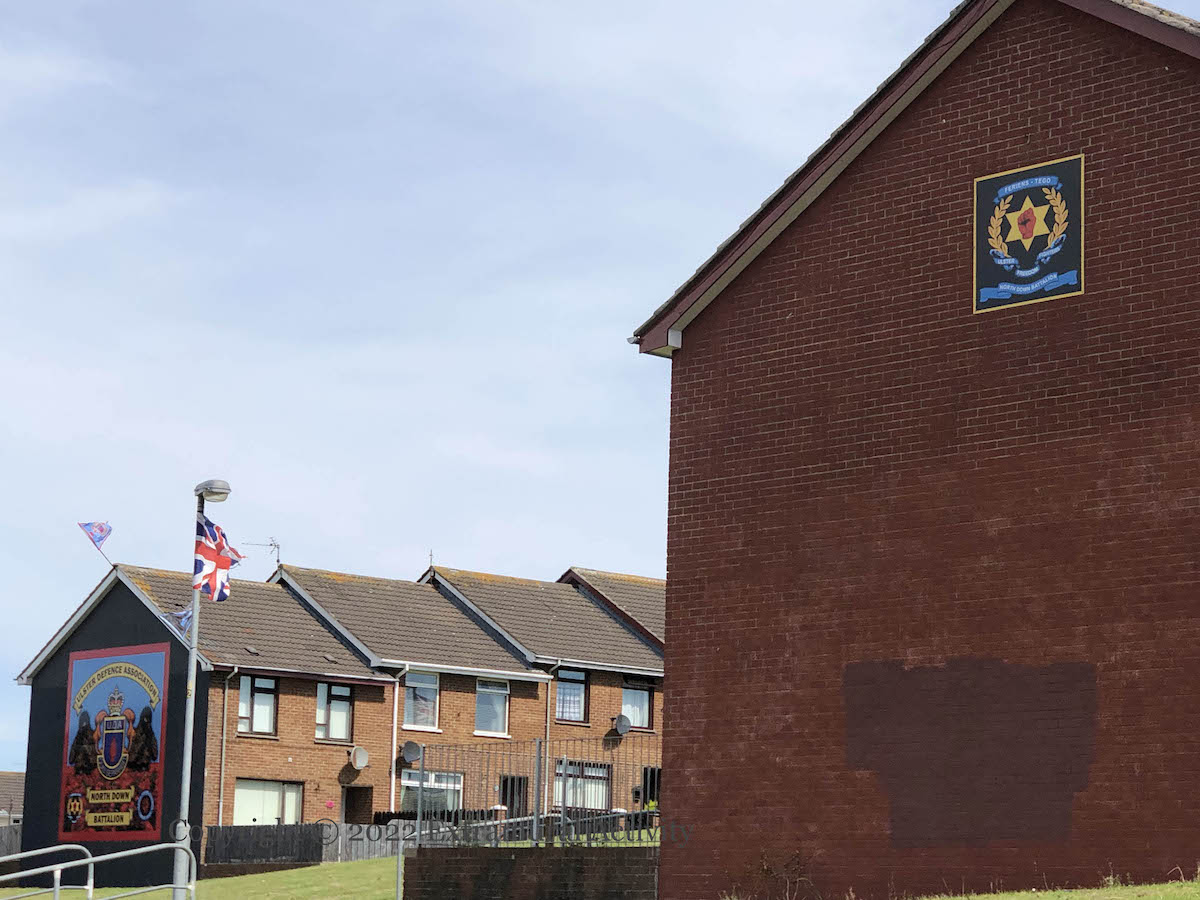
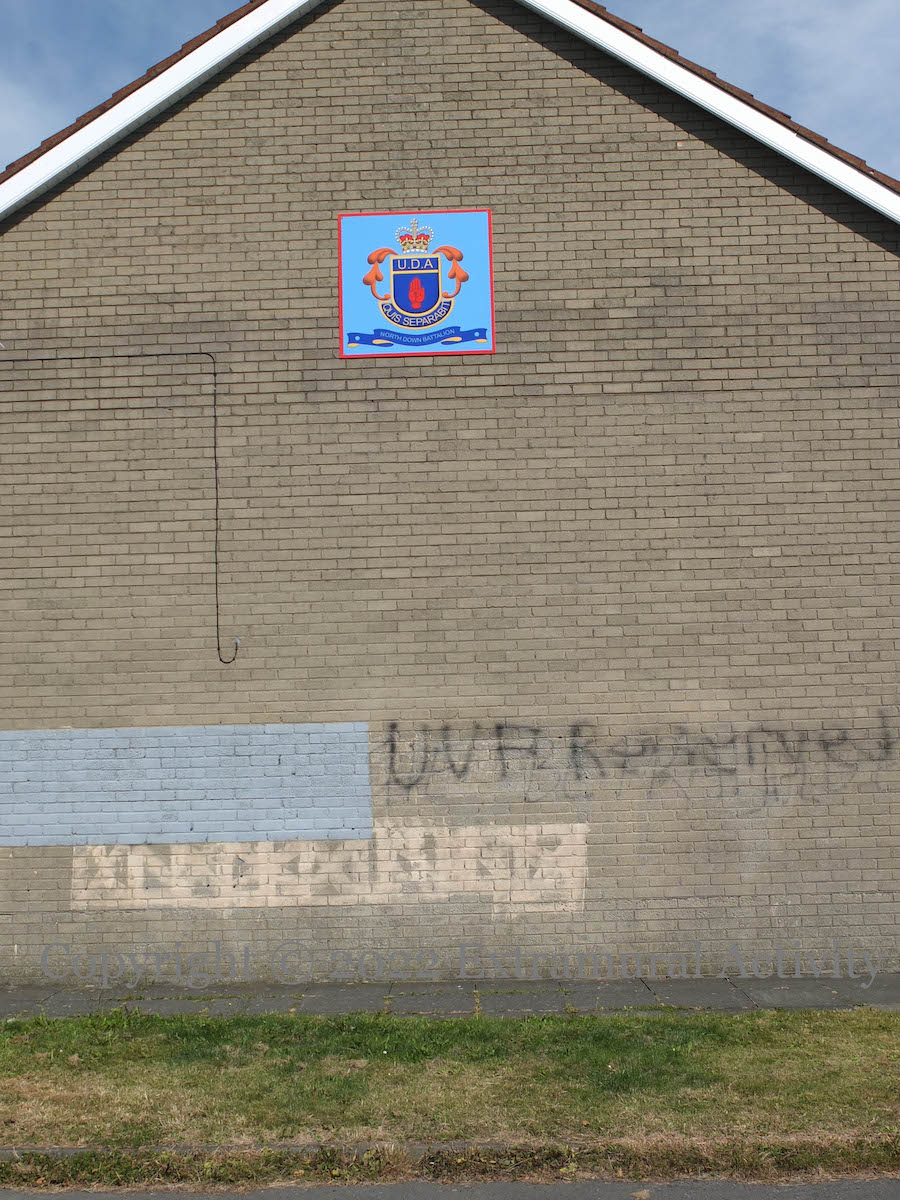
The hooded UDA gunmen stare down at you in the green in the middle of Bloomfield (Bangor) estate. The new printed board replaces the similar North Down battalion mural seen in Always Remembered. (The plaque to Andrew McIlvenny and Roy Officer has been moved to the right-hand side.) There are smaller UDA boards – one on top of some old“UVF” graffiti (third image) – and one RHC board on the other gables around the green; not included here is the somewhat odd history of Bloomfield that only shows images from the Shankill in Belfast – see A Journey Through Time And Space.
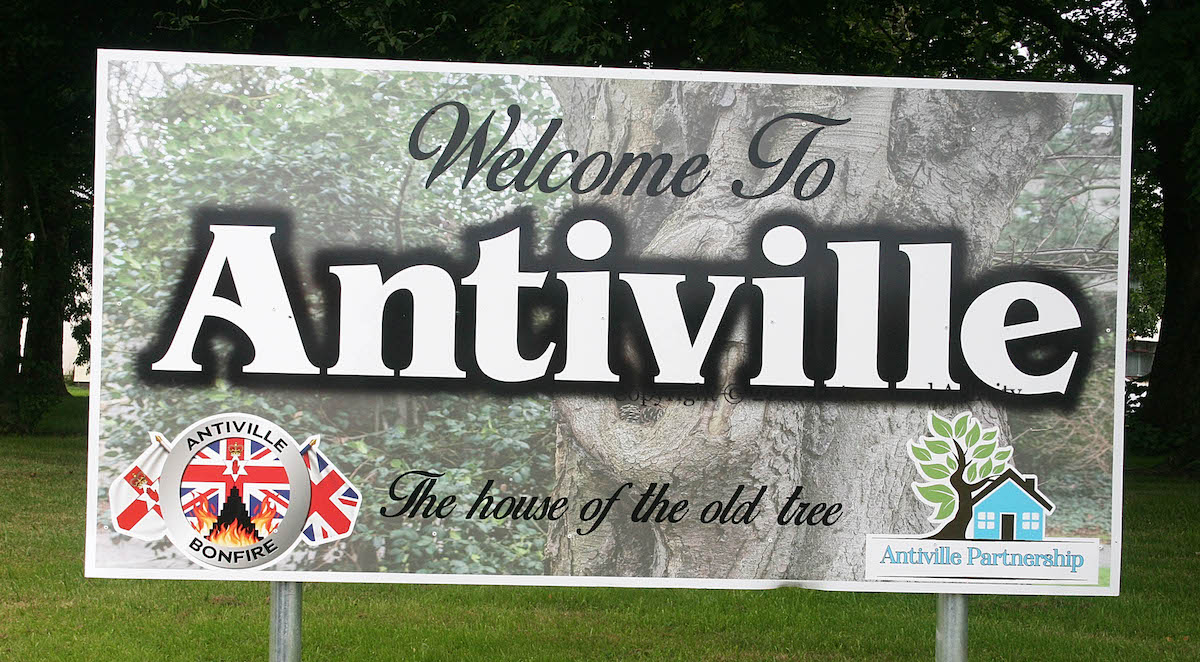
“Antiville” is perhaps derived from the Irish “an tıgh bhıle, “the house of/by the sacred tree” (rather than just “the house of the old tree”, as on the board below). The two boards shown here are at the Linn Road entrance to the estate: above is the UDA’s welcome, below is the welcome from the Bonfire committee and Antiville Partnership (Fb), showing a tree. The 2022 Antiville bonfire was torn down after the death of one of its builders, John Steele – see With Heart And Hand.
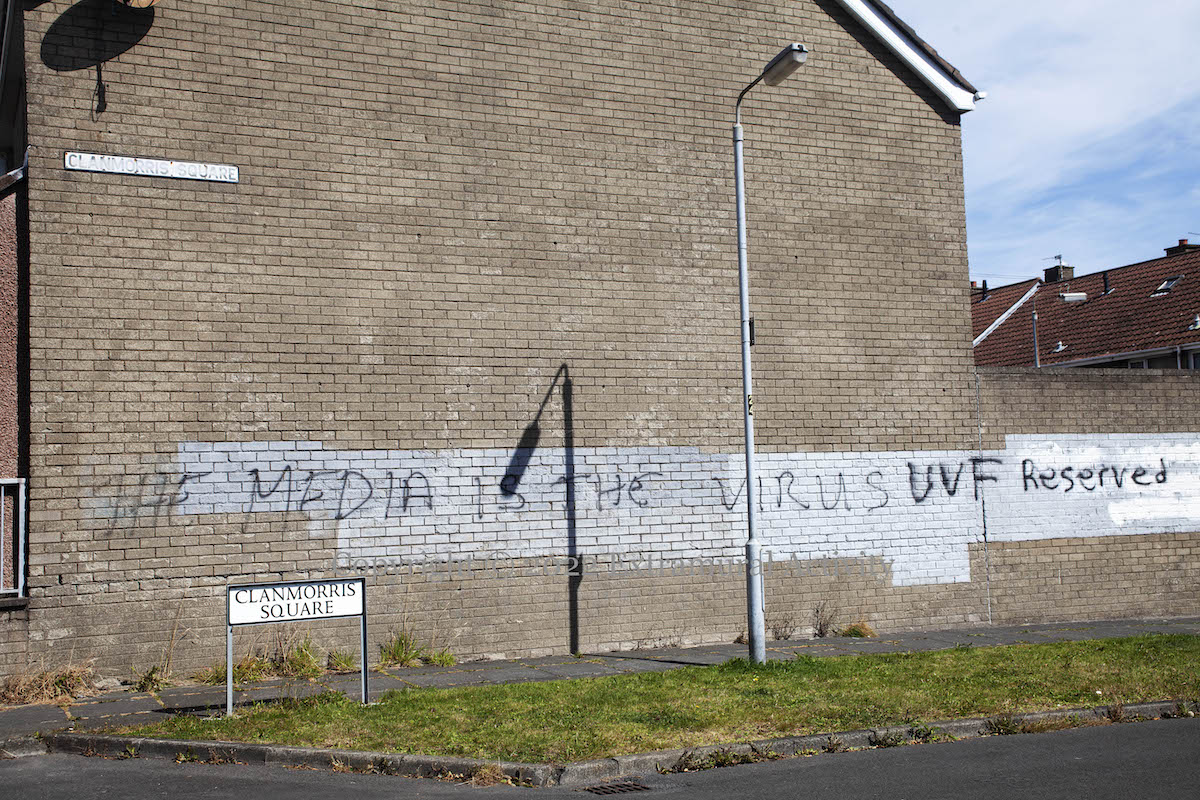
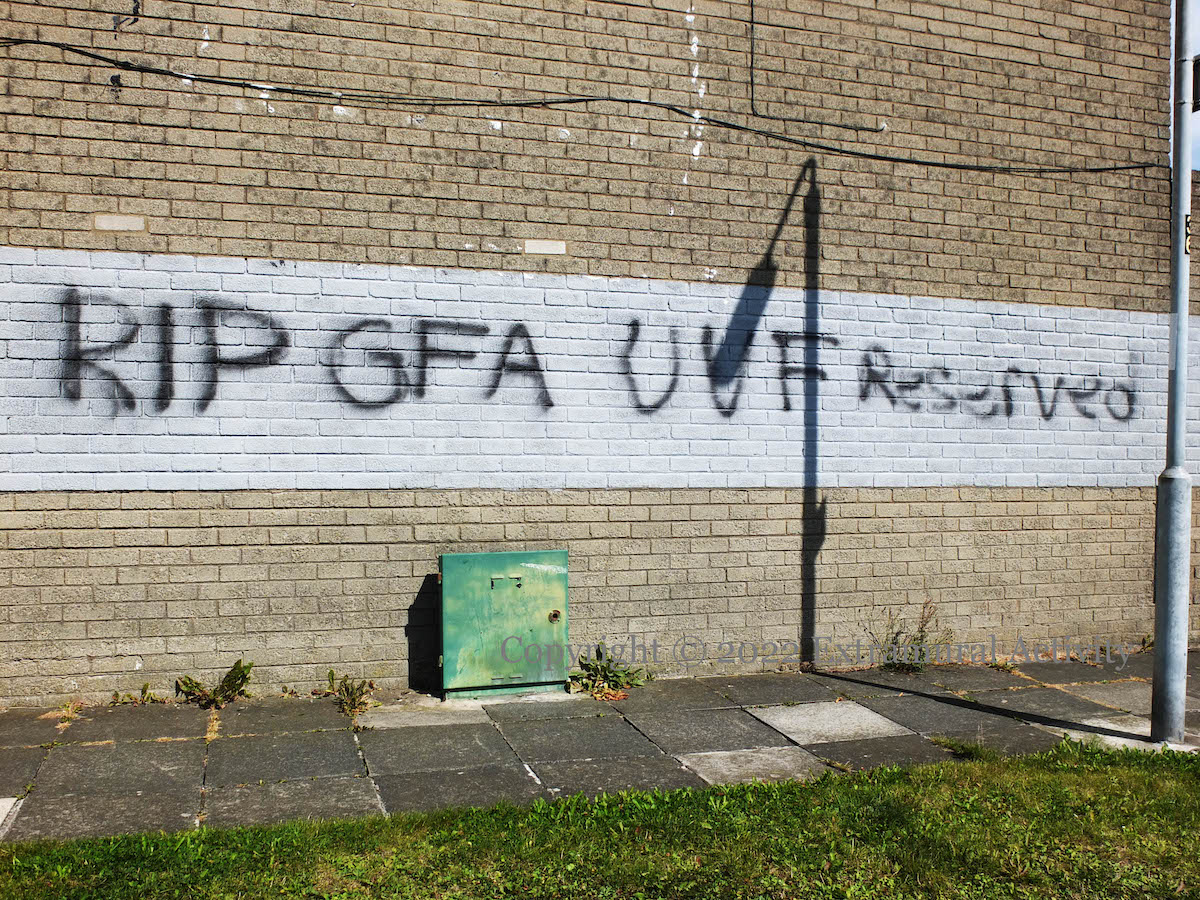
There are nine gable walls along Clanmorris Avenue, Whitehill (Bangor) which – more importantly – can be seen from the South Circular Road approaching the Bloomfield shopping centre. On many of these walls “UVF reserved” has now appeared, even on the one that recently acquired a UDA board (see third image, below). Above: a small “UVF pilgrims” board; bottom: “RIP GFA“; in between: “The media is the virus”.
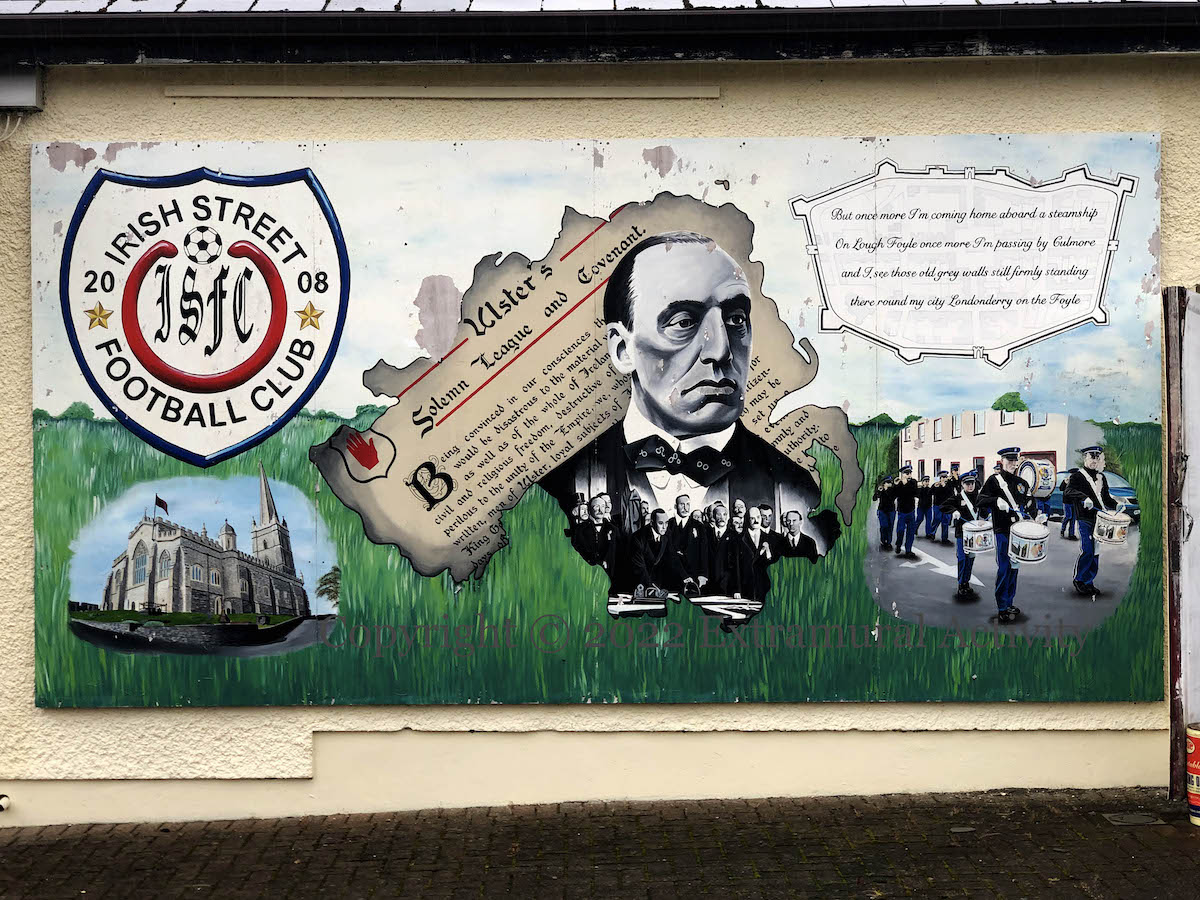
The sights and sounds of Irish Street and Londonderry: (clockwise from right) a verse from Londonderry On The Foyle (youtube) in a frame of the walls of the city of Derry – “But once more I’m coming home aboard a steamship/On Lough Foyle once more I’m passing by Culmore/And I see those old grey walls still firmly standing/There ’round my city Londonderry on the Foyle”; East Bank (Irish Street) Protestant Boys (Fb) on parade; Carson and the signing of the 1912 Covenant; St Columb’s Cathedral; Irish Street FC (Fb).
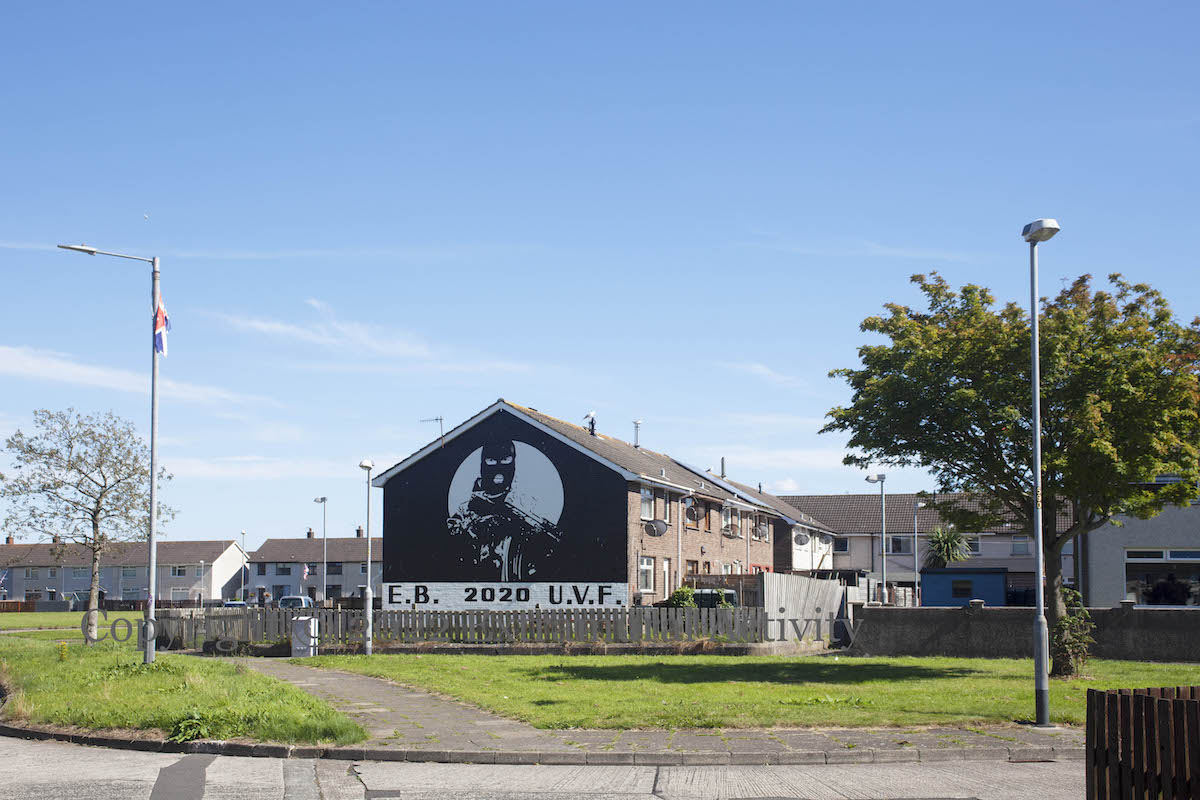
This is an example of a paramilitary mural replacing a cultural one – for eight years there was a giant Union Flag on this Westwinds gable, but it has been turned into a giant hooded UVF gunman instead.


















 Extramural Activity