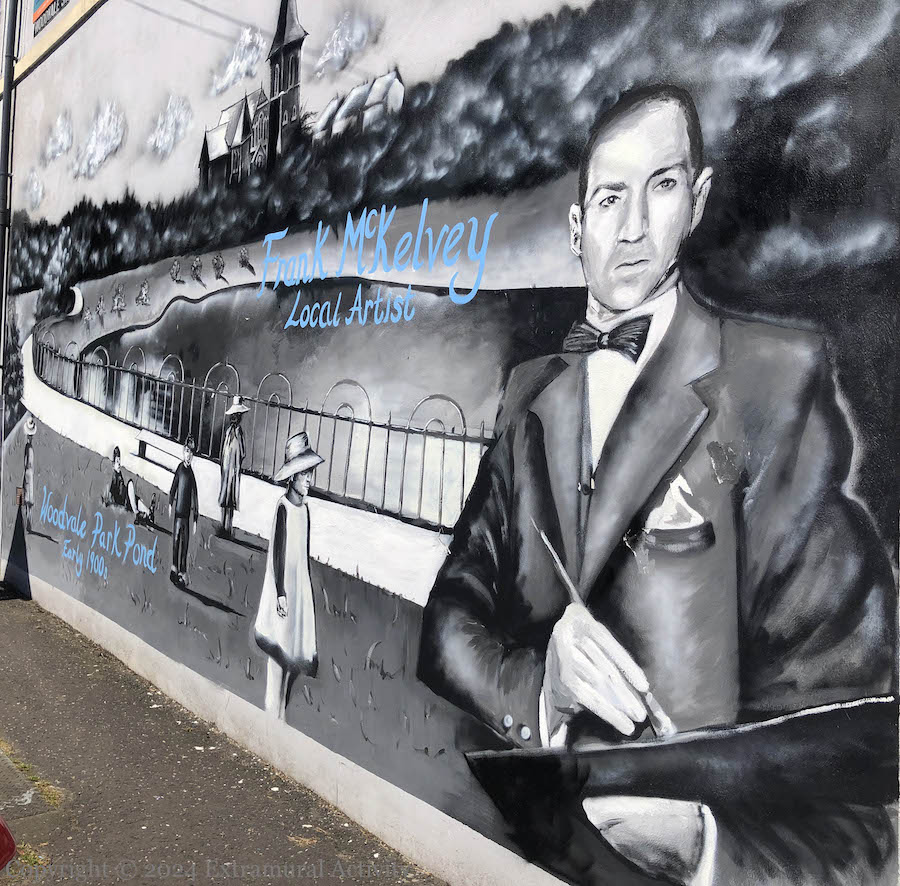
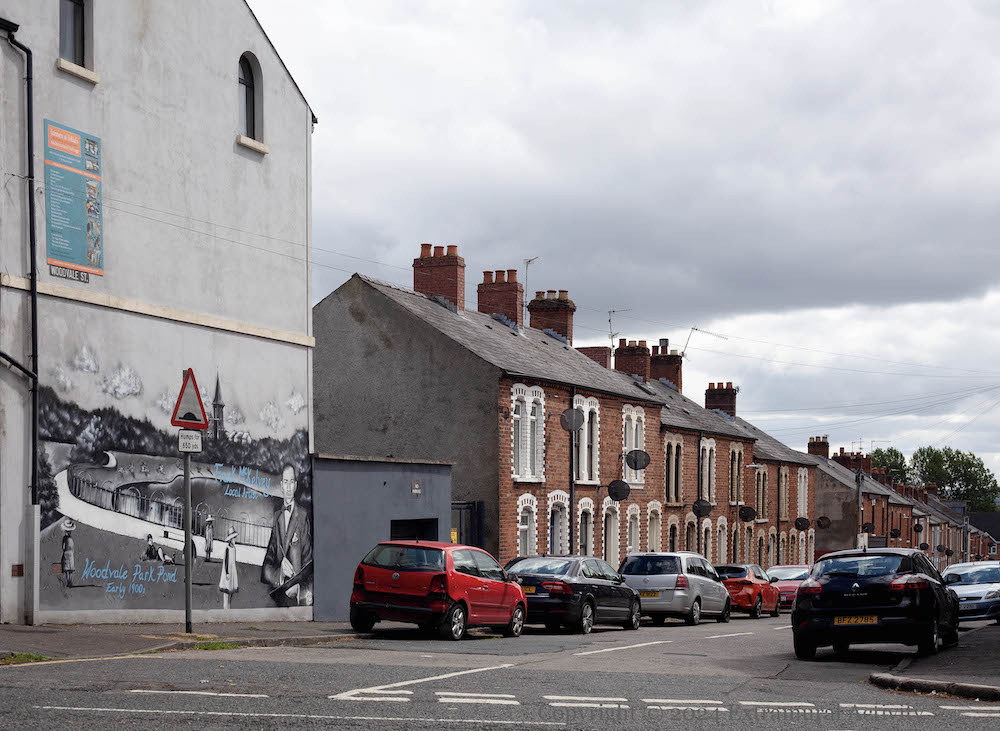
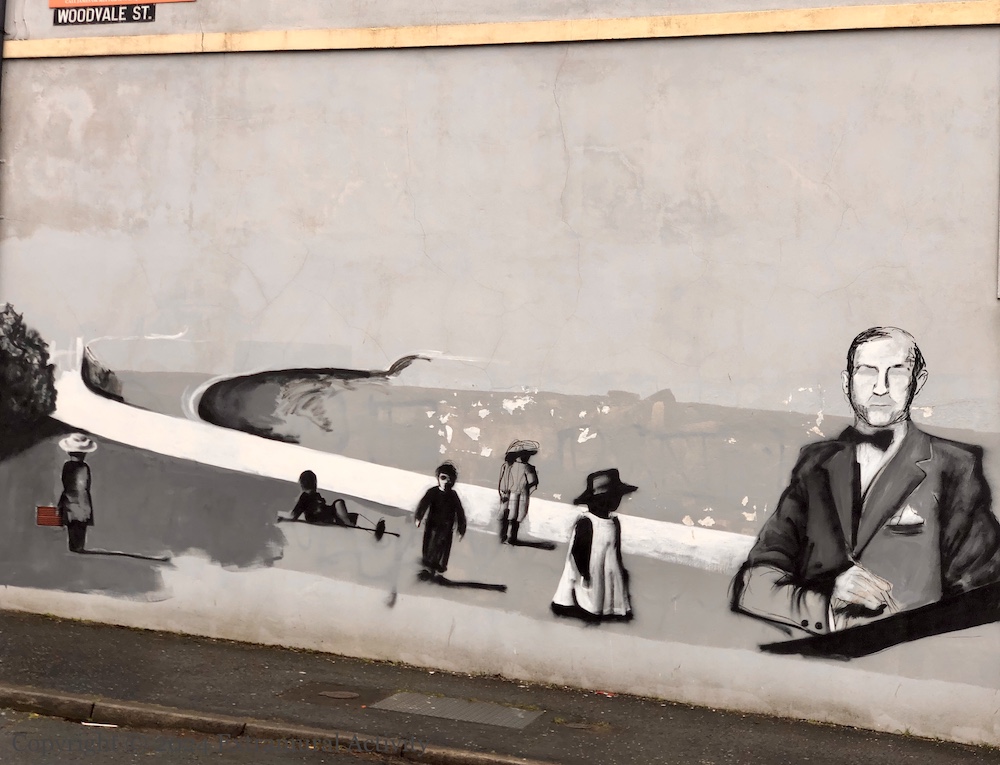
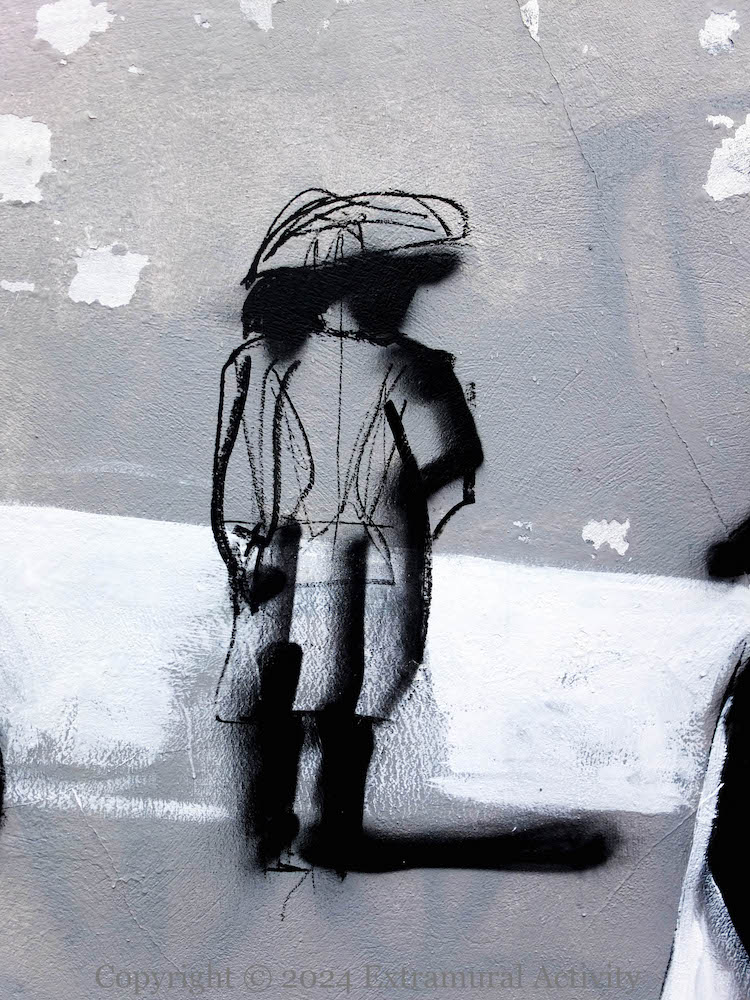
Francis “Frank” McKelvey grew up at 56 Woodvale Road (based on Lennon Wylie and the blue plaque on the wall at this address – Street View). That would put him a stone’s throw from Woodvale Park, which provides the backdrop for this new mural at the end of Woodvale Street. The photograph reproduced, of “Woodvale park pond”, can be seen on the Old Shankill Fb page. The pond was filled in after the second World War (City Council). McKelvey’s ‘A Summer’s Day‘ is perhaps of Woodvale Park pond. He died in 1974 (Ulster History Circle).
By Holly Hooks (ig) in Woodvale Street, west Belfast.
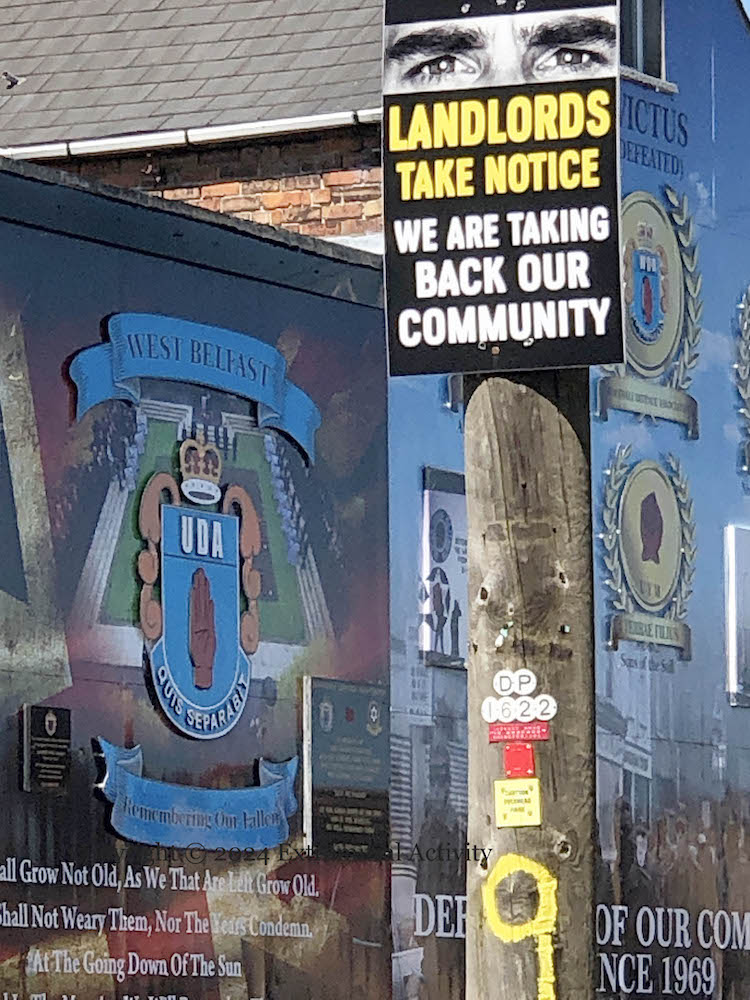
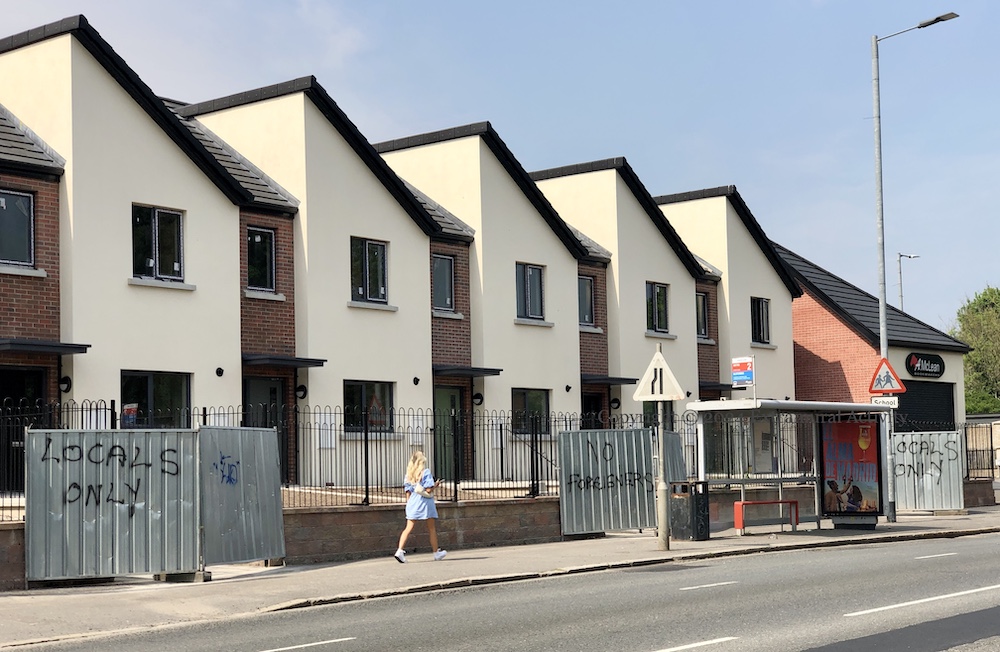
These Shankill placards read “Landlords take notice: “You have a responsibility” This is not a dumping ground.” and “Landlords take notice: We are taking back our community.” Their wording is not as explicit as the tarps and posters that have been seen in other areas which read, “NIHE & Private Landlords take note: [Belvoir | Suffolk | Finaghy | Newtownards] will no longer accept the re-housing of illegal immigrants or the excrement of other communities!” (BBC Belvoir | BBC Suffolk | (BelTel Newtownards) and “We have had enough of undesirables and immigrants being placed into our community. The time has come for locals only.” (BBC Finaghy). The “excrement” language has been condemned by politicians from both sides, as it (probably) refers to homeless people and those suffering intimidation who apply for Housing Executive housing (here is the points system). See also: similar placards in Rathcoole (Belfast Live).
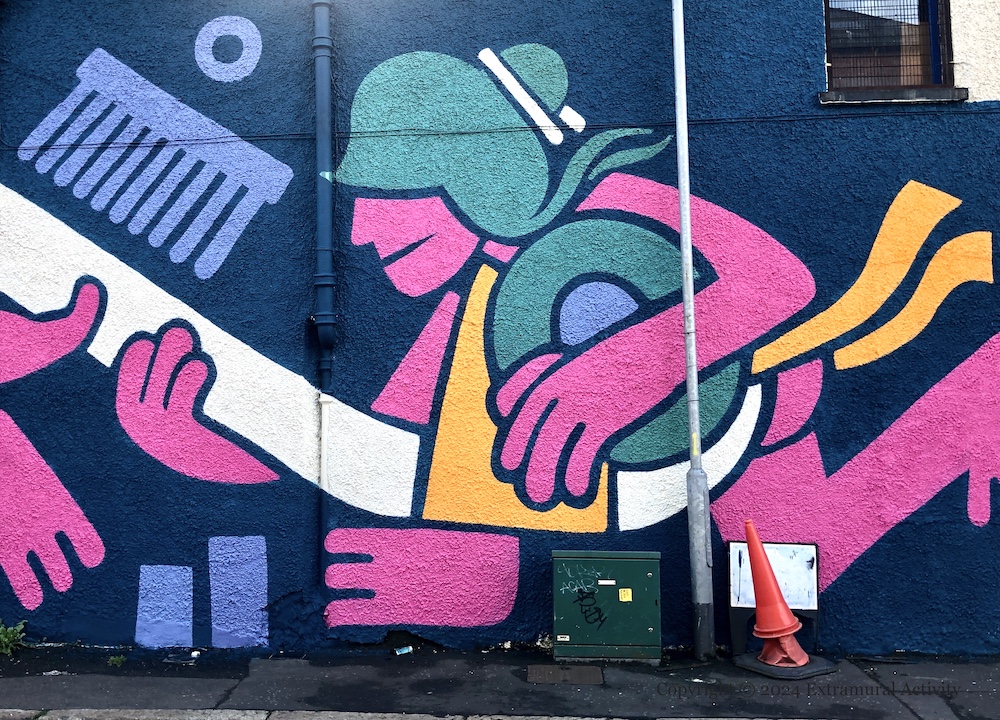
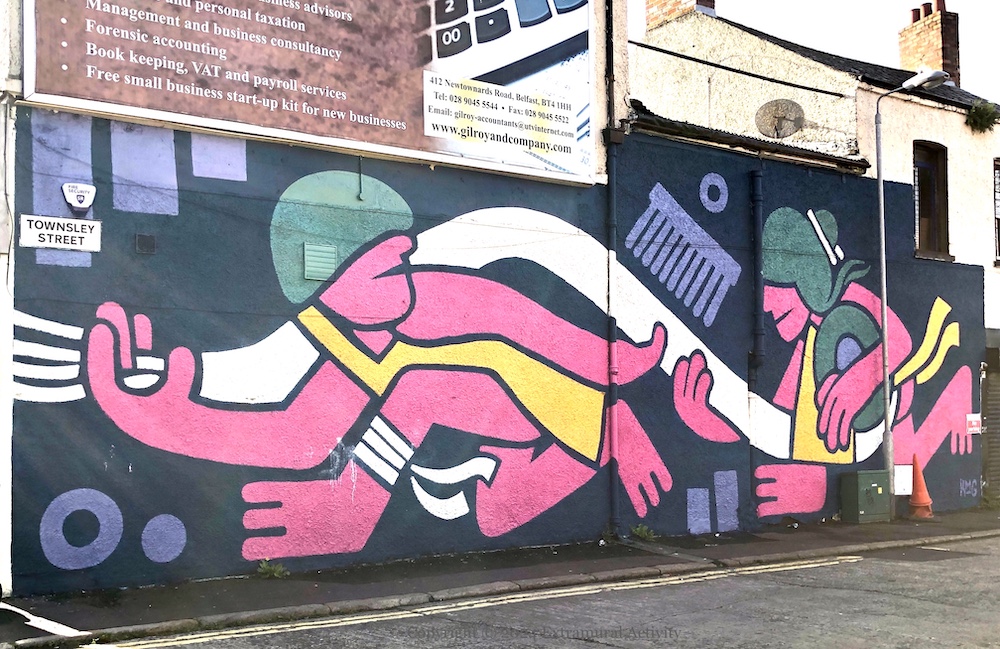
The inspiration for this new piece of street art by KMG (ig) was the Strand Spinning Mill (formerly the Jaffe Spinning Mill) which closed in 1983 and is now the Portview Trade Centre. During WWI the mill made munitions and during WWII viscose rayon. The film Lint And Linen (youtube) covers both pre-industrial and mechanical linen-production (though mostly focused on yarn from line fibres rather than from tow, which was the Strand mill’s claim to fame (Duffy Rafferty)); the painting appears to present a more primitive and imaginary age in which fibres could be spun using the human hand.
For photographs of the old mill on the Trade Centre, see previously the image of A Block in Strand Spinning Mill.
“Spinning memories” is the name of a planned collection of stories for an archive at Portview (Portview Stories).
These are images of people collecting for Andy Allen Veterans Support (web) on the Shankill, Belfast. At its peak (in 1973) the UDR had more than 9,000 personnel (Statista). The UDR was amalgamated into the Royal Irish Regiment in 1992 and a 2005 estimate put the number of its veterans at about 58,000 (Veterans Services NI).
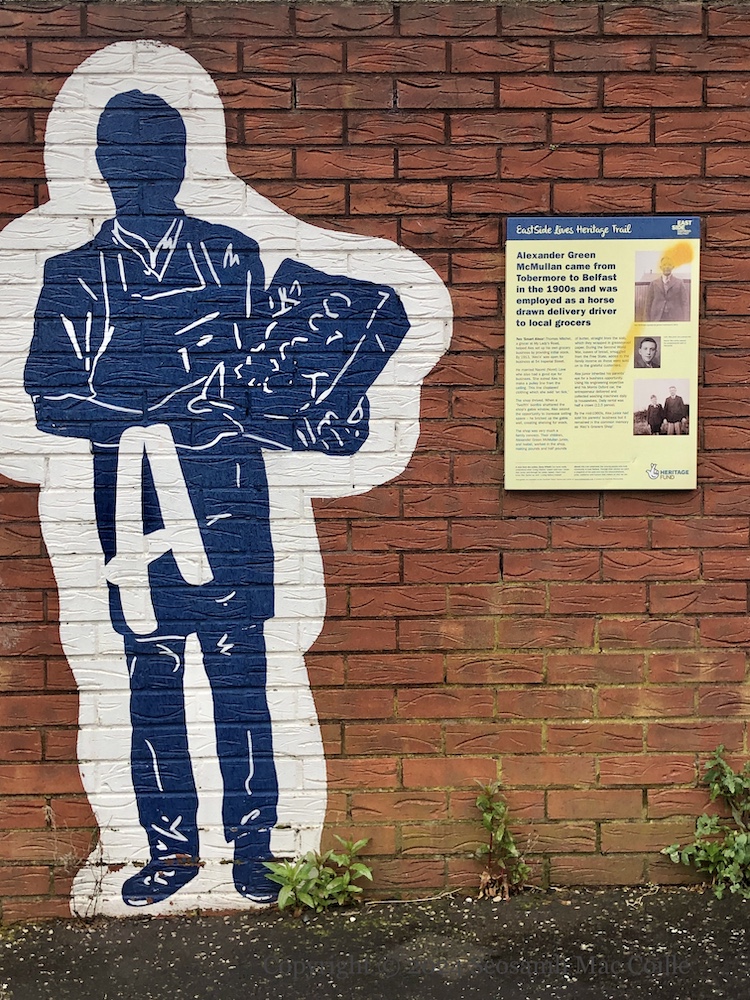
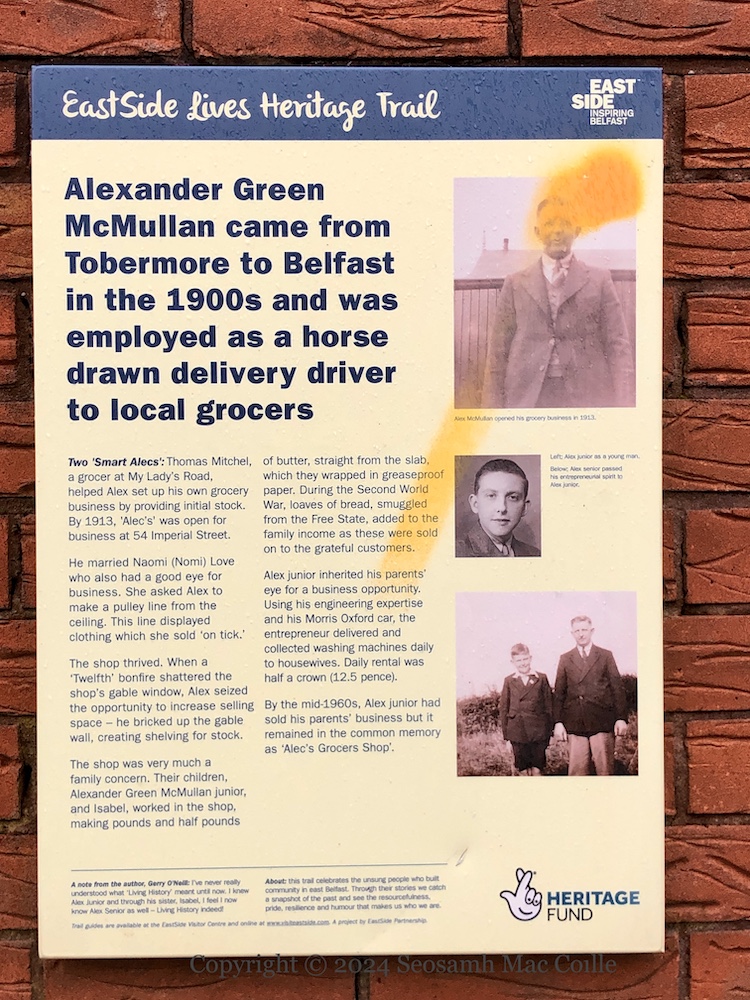
“Alexander Green McMullan came from Tobermore to Belfast in the 1900s and was employed as a horse drawn delivery driver to local grocers. Two ‘Smart Alecs’: Thomas Mitchel, a grocer at My Lady’s Road, helped Alex set up his own grocery business by providing initial stock. By 1913, ‘Alec’s’ was open for business at 54 Imperial Street. He married Naomi (Nomi) Love who also had a good eye for business. She asked Alex to make a pulley line from the ceiling. This line displayed clothing which she sold ‘on tick’. The shop thrived. When a ‘Twelfth’ bonfire shattered the shop’s gable window, Alex seized the opportunity to increase selling space – he bricked up the gable wall, creating shelving for stock. The shop was very much a family concern. Their children, Alexander Green McMullan junior, and Isabel, worked in the shop, making pounds and pounds of butter, straight from the slab, which they wrapped in greaseproof paper. During the Second World War, loaves of bread, smuggled from the Free State, added to the family income as these were sold on to the grateful customers. Alex junior inherited his parents’ eye for a business opportunity. Using his engineering expertise and his Morris Oxford car, the entrepreneur delivered and collected washing machines daily to housewives. Daily rental was half a crown (12.5 pence). By the mid-1960s, Alex junior had sold his parents’ business but it remained in the common memory as ‘Alec’s Grocers Shop’.
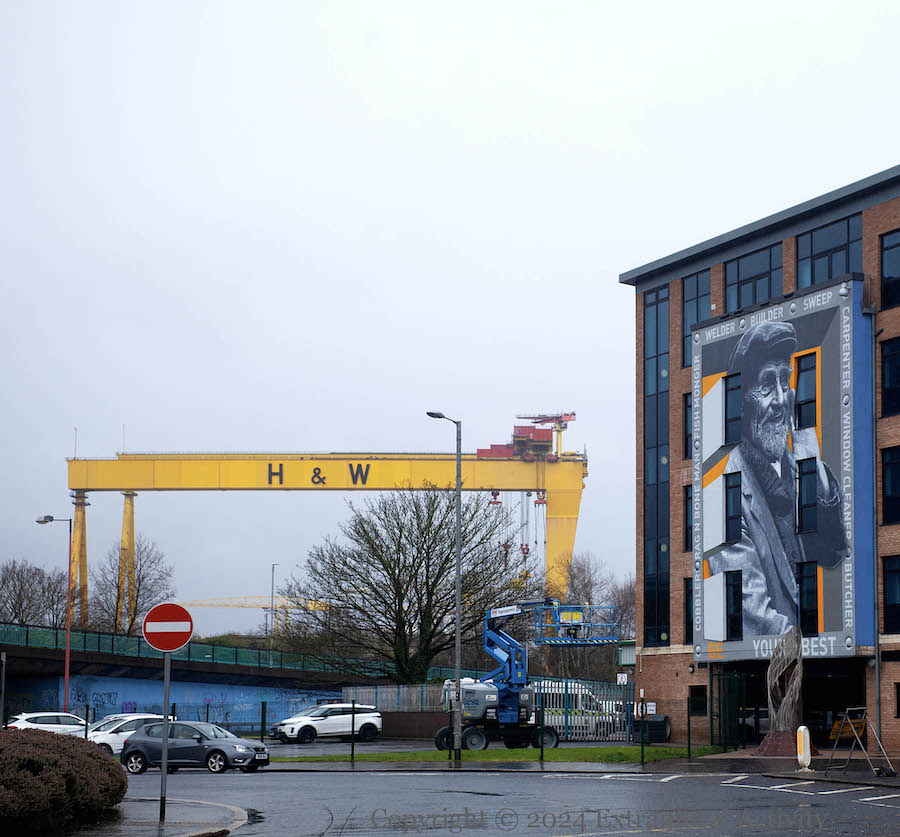
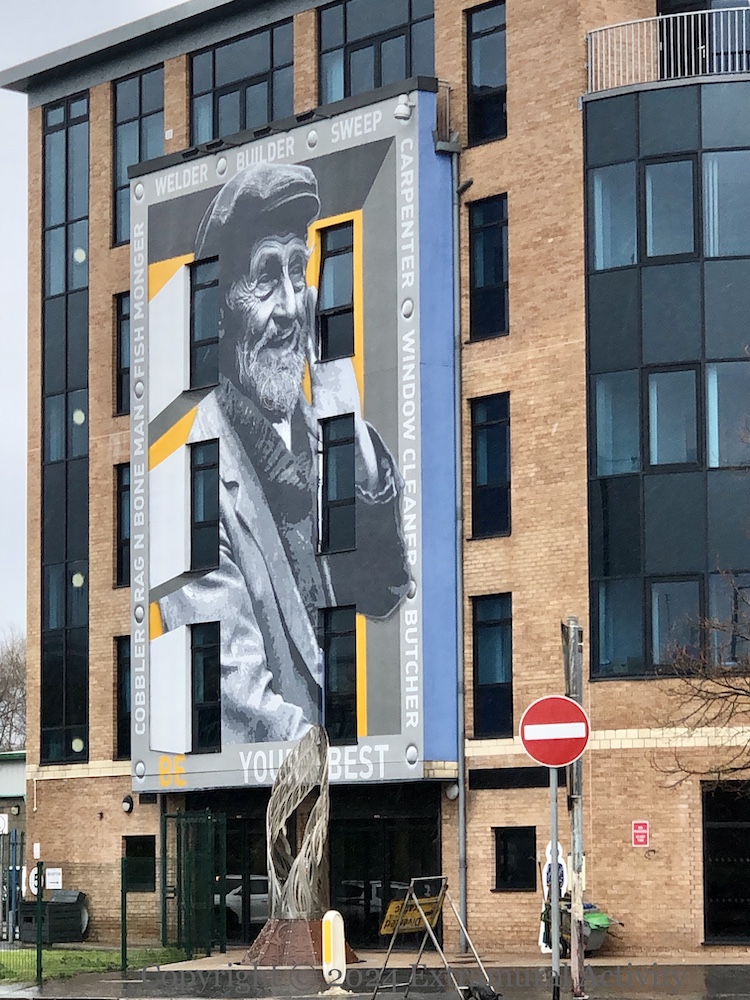
This new three-storey mural by Dee Craig (Fb) is at the city end of Newtownards Road and so serves as a highly-visible introduction to east Belfast. People arriving in the area are now greeted with a vintage image of a smiling bearded man in a cloth cap, surrounded by occupations from the industrial era: “Cobbler, rag’n’bone man, fish monger, welder, builder, sweep, carpenter, window cleaner, butcher”, capped off by an inspirational “Be your best”, with yellow highlights that match the colour of the shipyard cranes Samson and Goliath (see the third image).
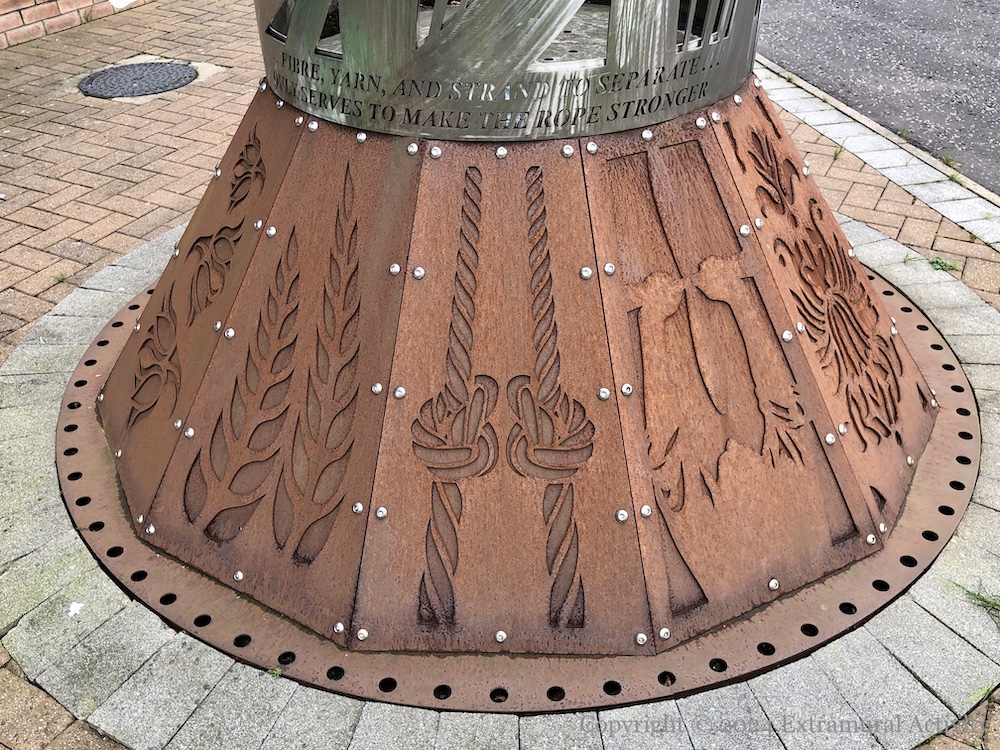
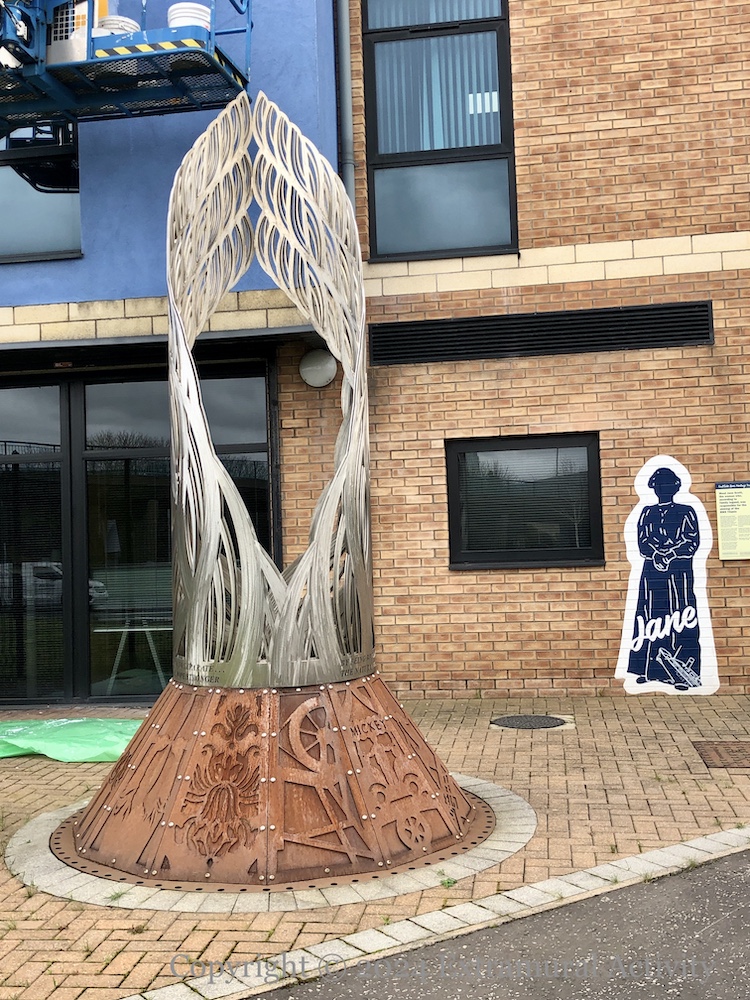
In being overshadowed by the mural, the “Let’s Twist Again” sculpture on the plaza in front of the business centre now becomes a symbol of east Belfast rather than the symbol. It too features east Belfast’s “industrial past” (BelTel), using rope as a metaphor for community: “By being bound together in a common cause, the natural tendency for each twist, fibre, yarn, and strand to separate, only serves to make the rope stronger.”
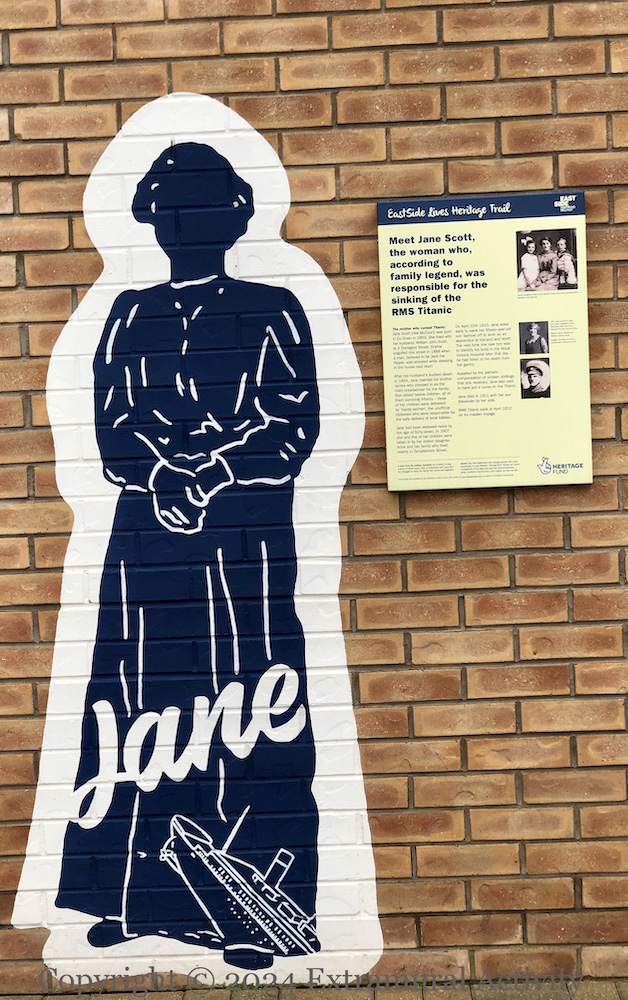
On the wall behind the sculpture and below the mural is one of the Eastside Lives Heritage Trail (pdf) figures, Jane Scott, whose fifteen-year-old son Samuel fell to his death from a ladder while working on the ship in 1910. She supposedly cursed the ship and it sank two years later.













 Extramural Activity