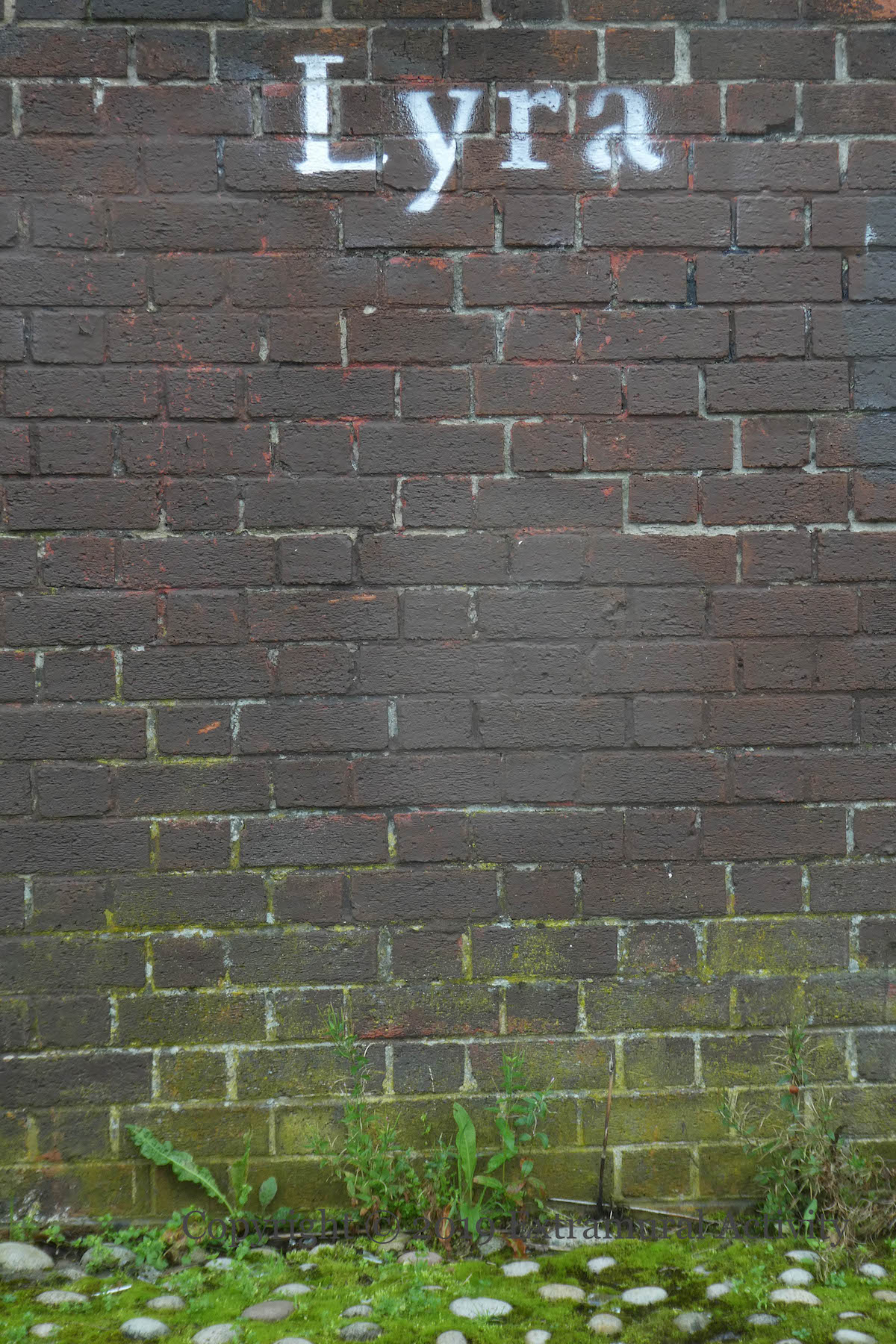
Lyra McKee was killed observing a riot in Creggan, Derry, in April. The (New) IRA apologised for the consequences of the gun attack on police but did not suggest an end to violence (Guardian). The (presumably unfinished) stencil to McKee’s memory on Ardoyne Avenue (below) is now in the shadow of the “IRA” and assault rifle cut-outs (shown above) on the lamp-pole opposite.
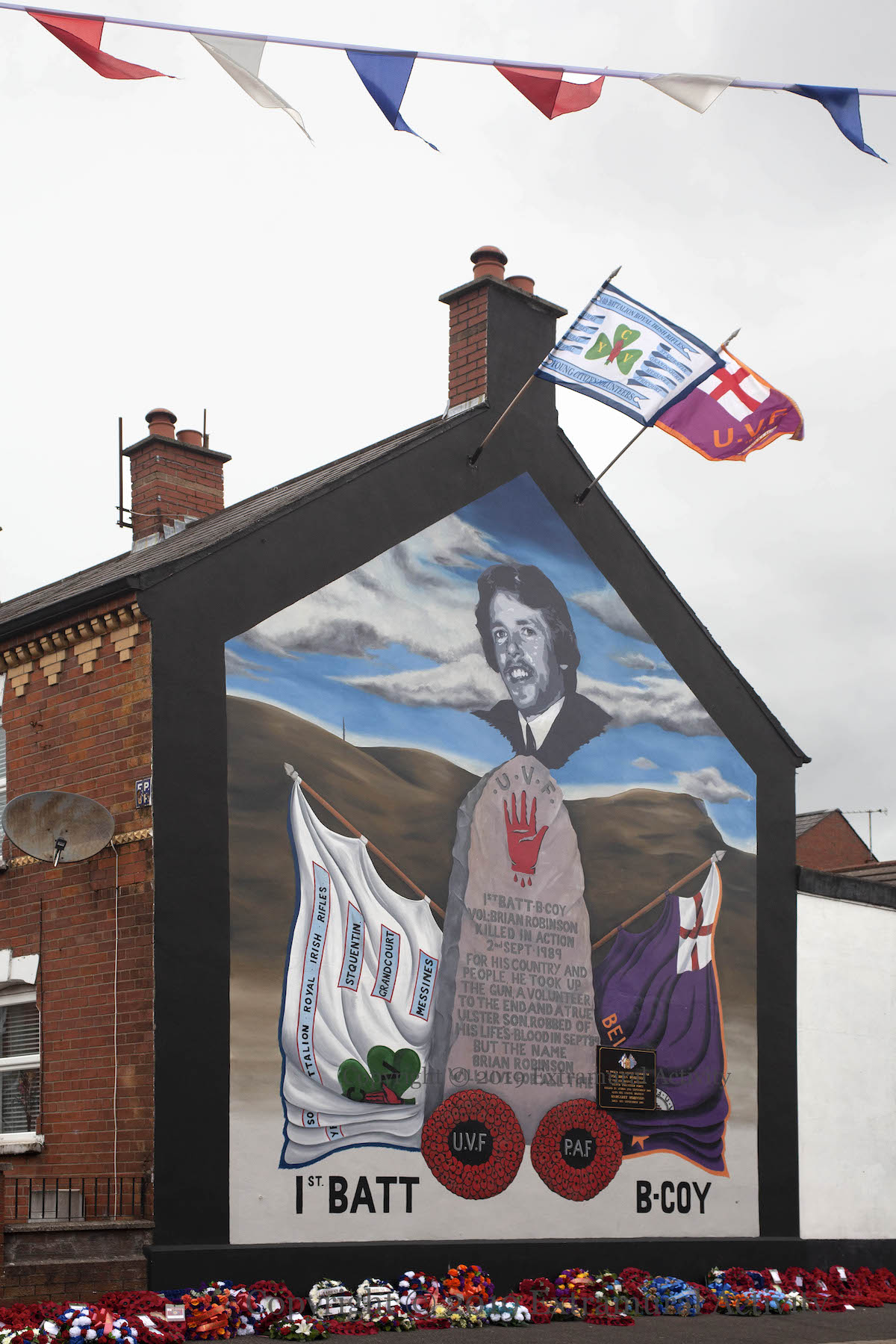
Garlands of flowers rest at the base of the (upper) mural to UVF volunteer Brian Robinson on the thirtieth anniversary of his death, on September 2nd, 1989, by a British Army undercover unit, moments after he had shot and killed a Catholic civilian named Patrick McKenna on the Crumlin Road (WP).
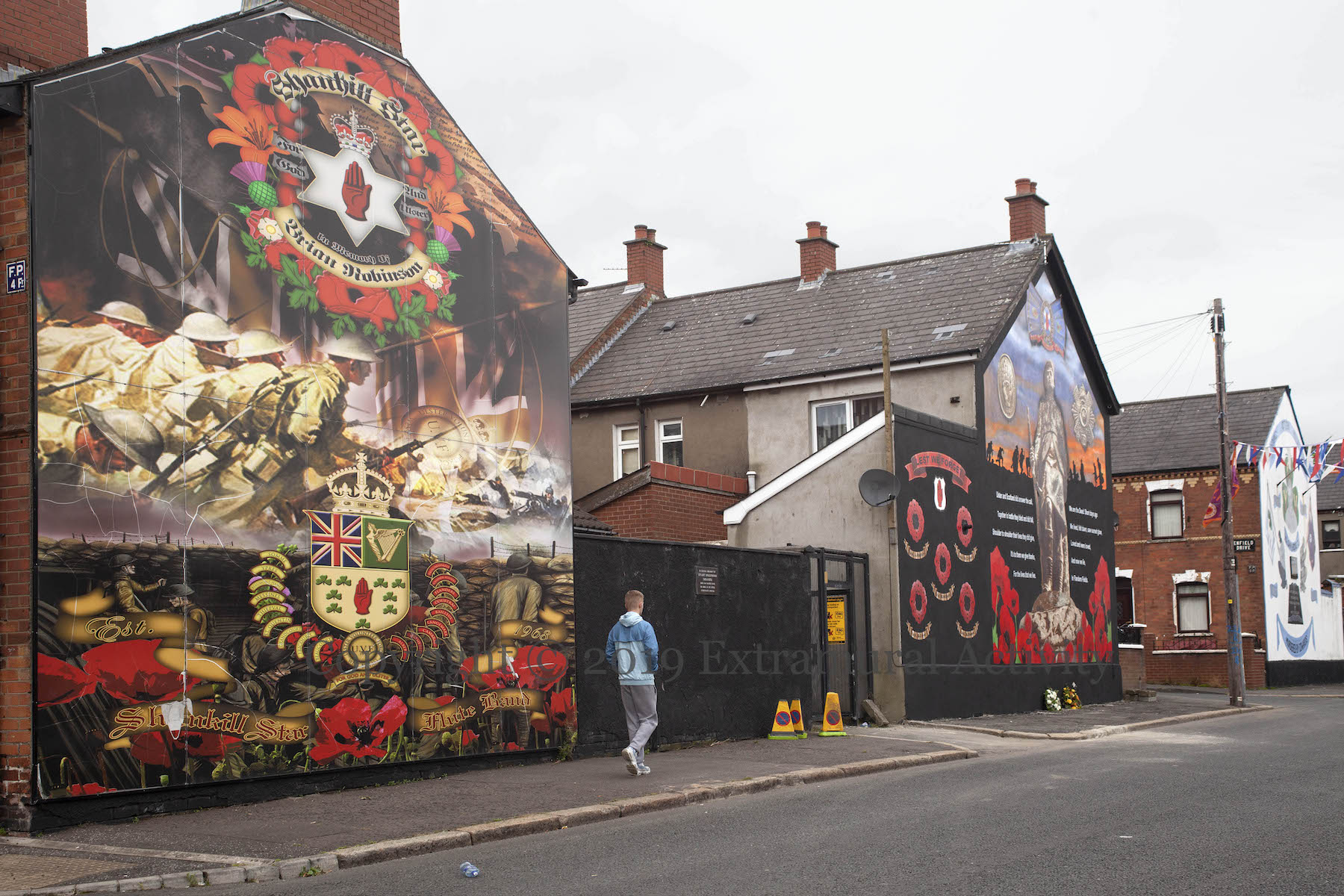
The other (lower) mural to Robinson in Disraeli Street is shown in the image below (and previously in Shankill Star). “1st batt, B coy, Vol Brian Robinson killed in action 2nd Sept 1989. For his country and people he took up the gun, a volunteer to the end, and a true Ulster son. Robbed of his life’s blood in Sept. 89, but the name Brian Robinson will live for all time.”
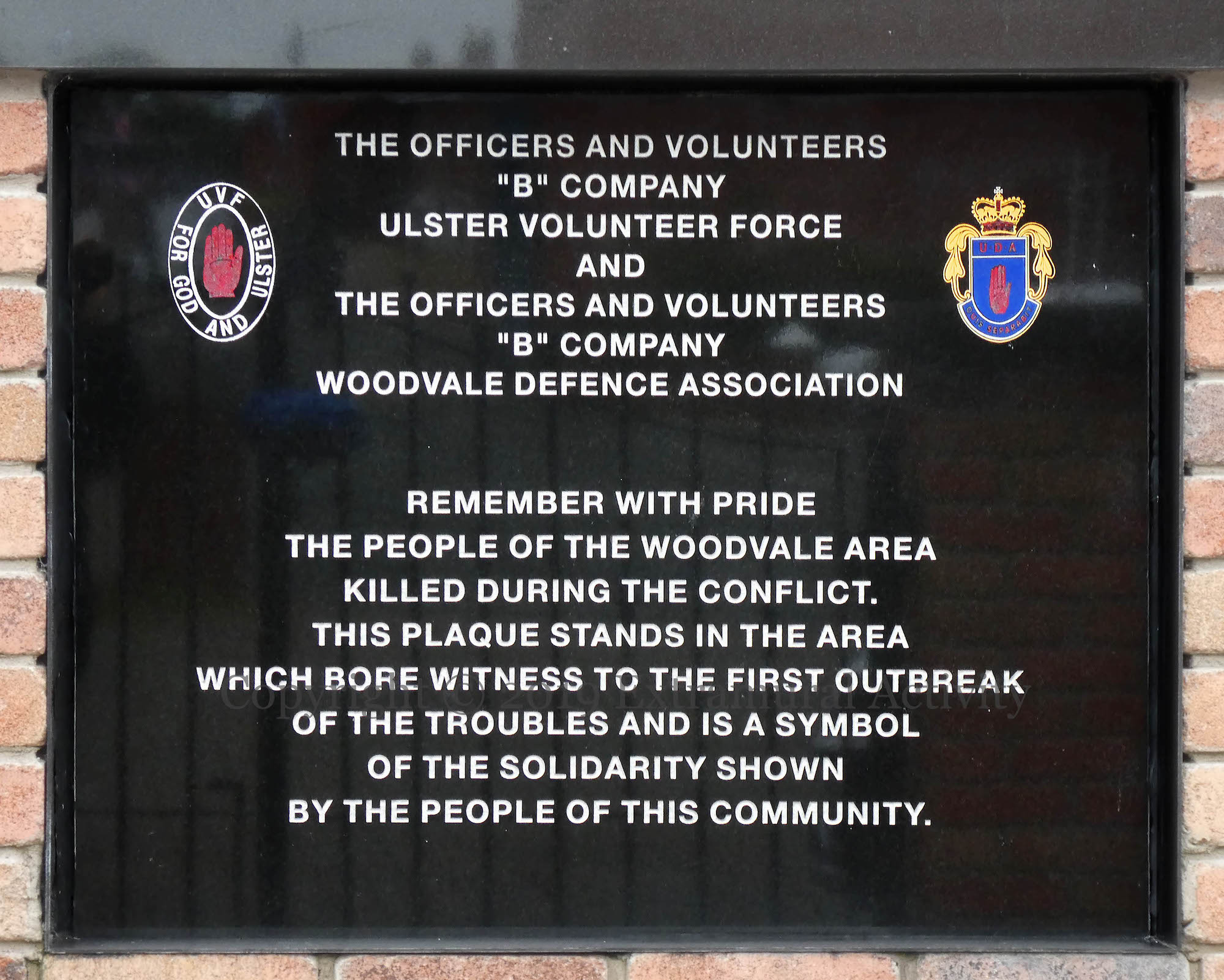
The plaque shown above sits in a memorial garden at the northern end of Disraeli Street, which in 1969 ran out onto the Crumlin Road between Hooker and Brookfield streets on the nationalist side, which saw intense rioting in August 1969 (see 90 Years Of Resistance; also Can It Change? for the lower Shankill). The UVF was founded in 1966 in response to the Civil Rights campaign and an IRA attack on Nelson’s statue in Dublin, and the WDA in June 1970 in response to escalating tensions along the upper Crumlin.
“The officers and volunteers “B” company Ulster Volunteer Force and the officers and volunteers “B” company Woodvale Defence Association remember with pride the people of the Woodvale area killed during the conflict. This plaque stands in the area which bore witness to the first outbreak of the troubles and is a symbol of the solidarity shown by the people of this community.
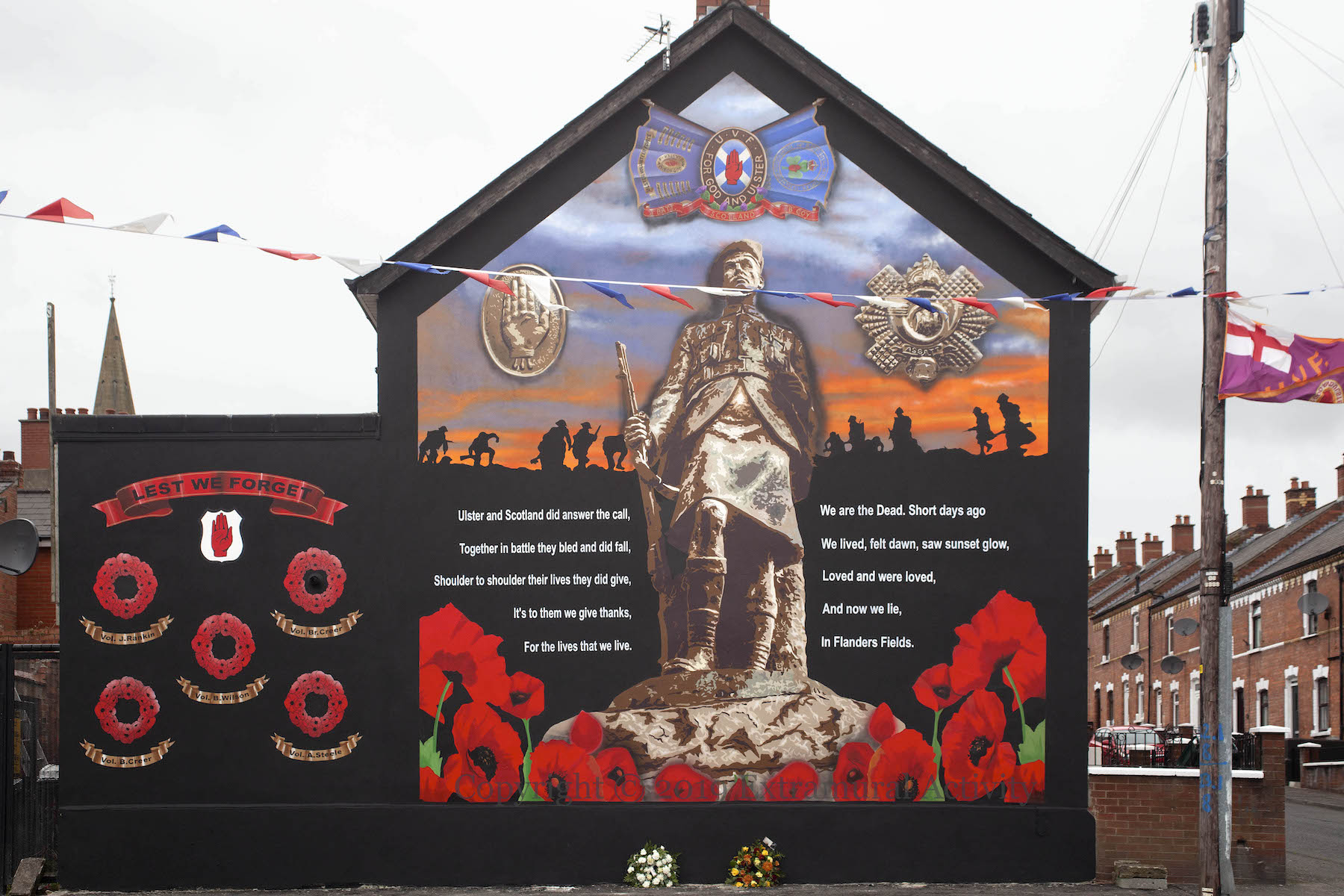
The Battle Of Assaye (India) took place on September 23rd, 1803, and the 74th regiment of the Royal Highland Fusiliers became known as the Assaye regiment in recognition of their performance (WP). By the time of WWI, the regiment had been merged into the Highland Light Infantry, whose 2nd battalion fought at the Somme in 1916 alongside the 36th (Ulster) Division (WP). The Highlanders’ emblem (which still includes the word “Assaye”) is on the right, the Ulster Volunteers’ on the left. In the apex are the flags of the UVF and YCV (14th battalion Royal Irish Rifles). This new mural commemorates the UVF volunteers of both WWI and the Scottish brigade: J. Rankin, Br. Creer, B. Wilson, B. Creer, A. Steele.
“Ulster and Scotland did answer the call/Together in battle they bled and fall/Shoulder to shoulder their lives they did give/It’s to them we give thanks/For the lives that we live.”
“We are the dead. Short days ago/We lived, felt dawn, saw sunset glow/Loved and were loved/And now we lie/In Flanders Fields.”
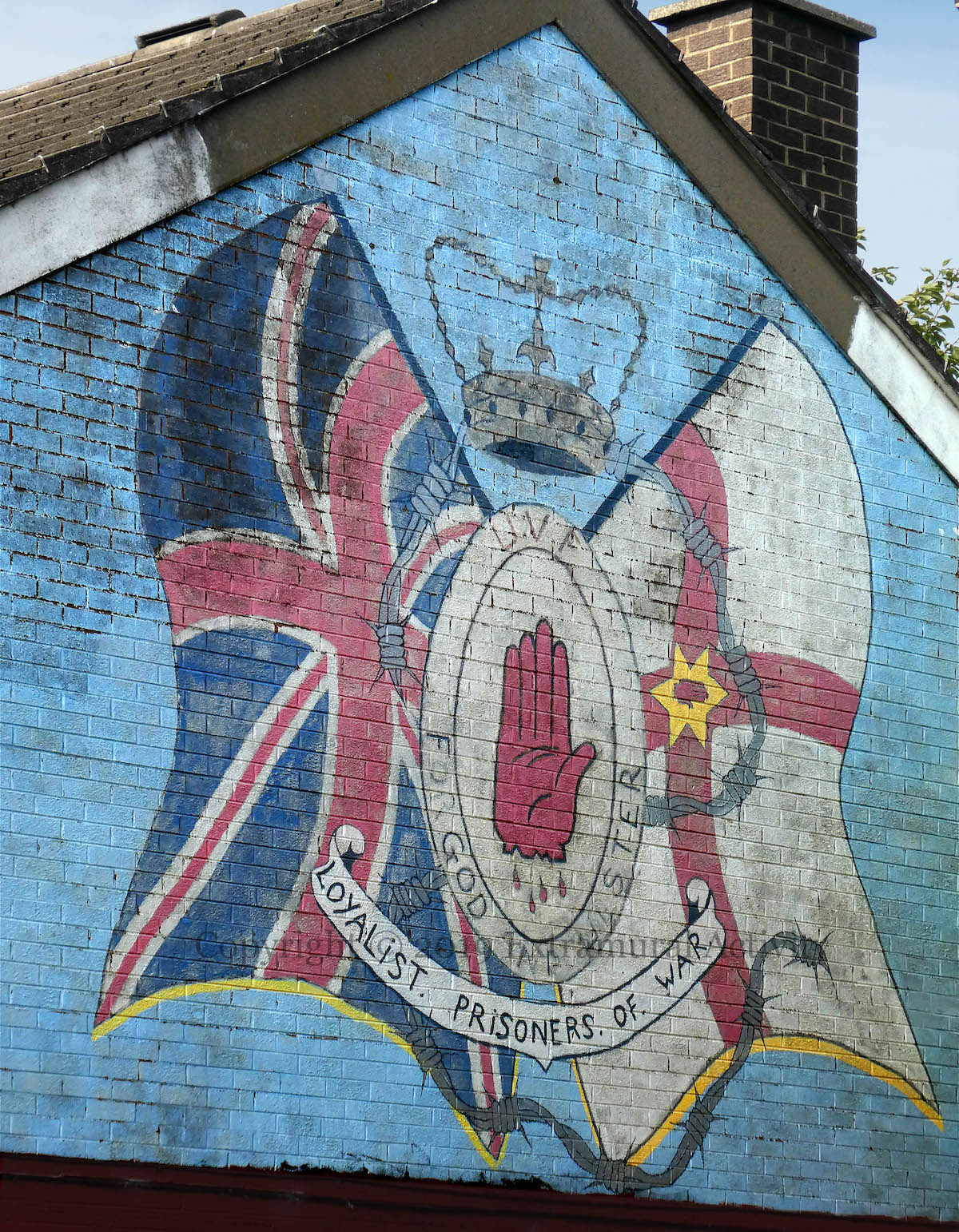
This UVF LPOW mural in Inverary Drive, east Belfast, probably dates back to the years after the Agreement, when the release of prisoners from both sides was being implemented between 1998 and 2000. That would make the mural about 20 years old.
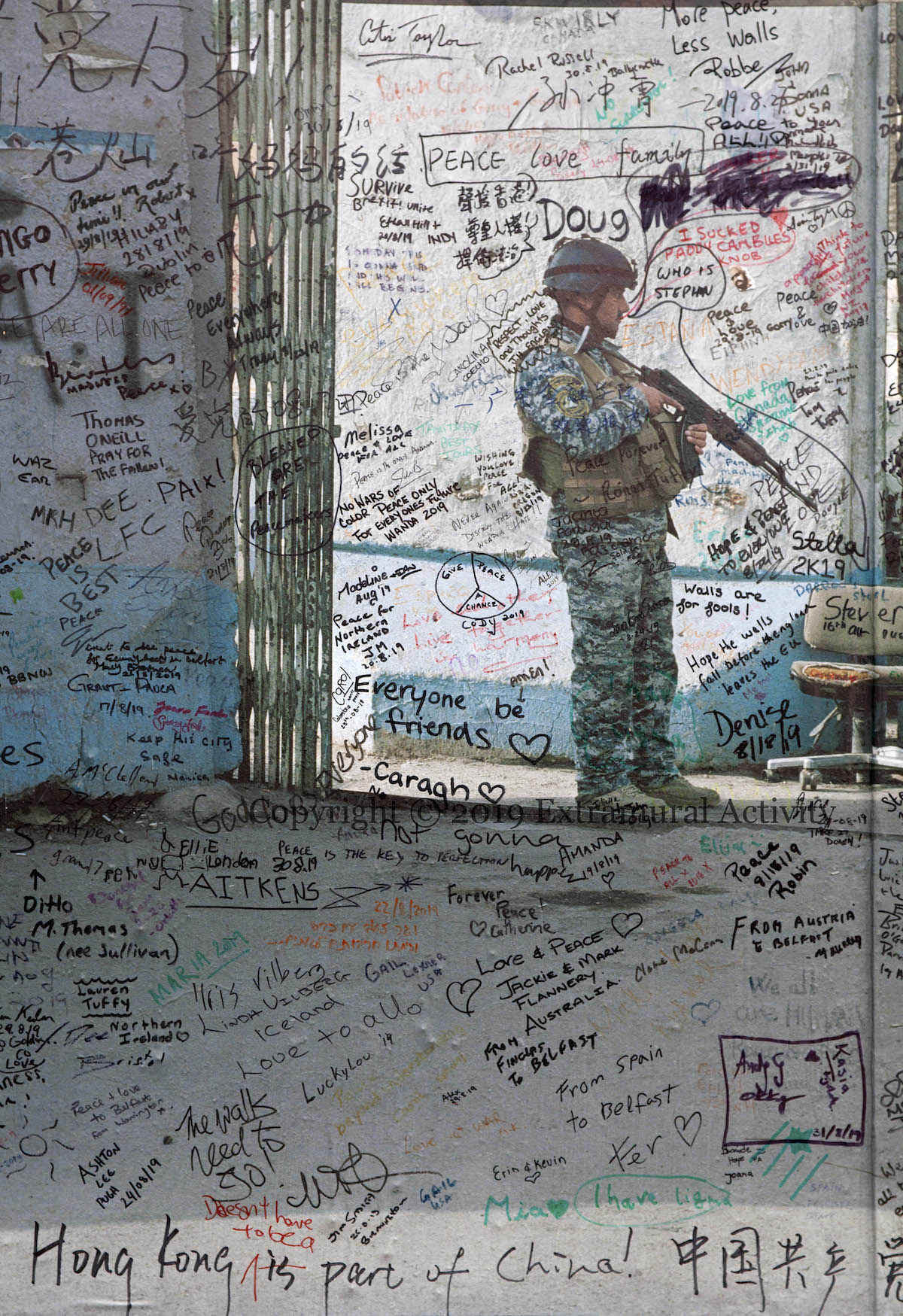
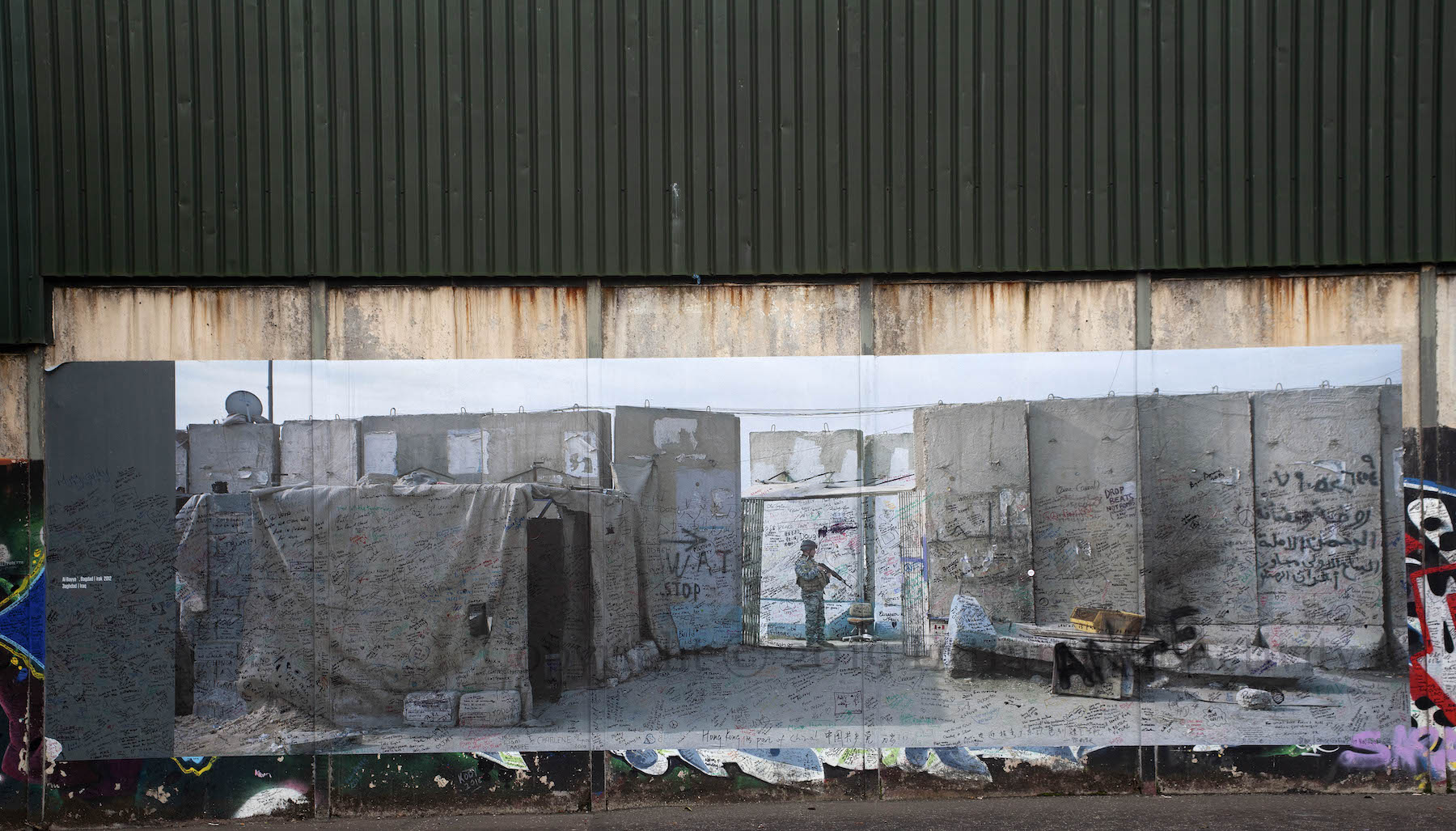
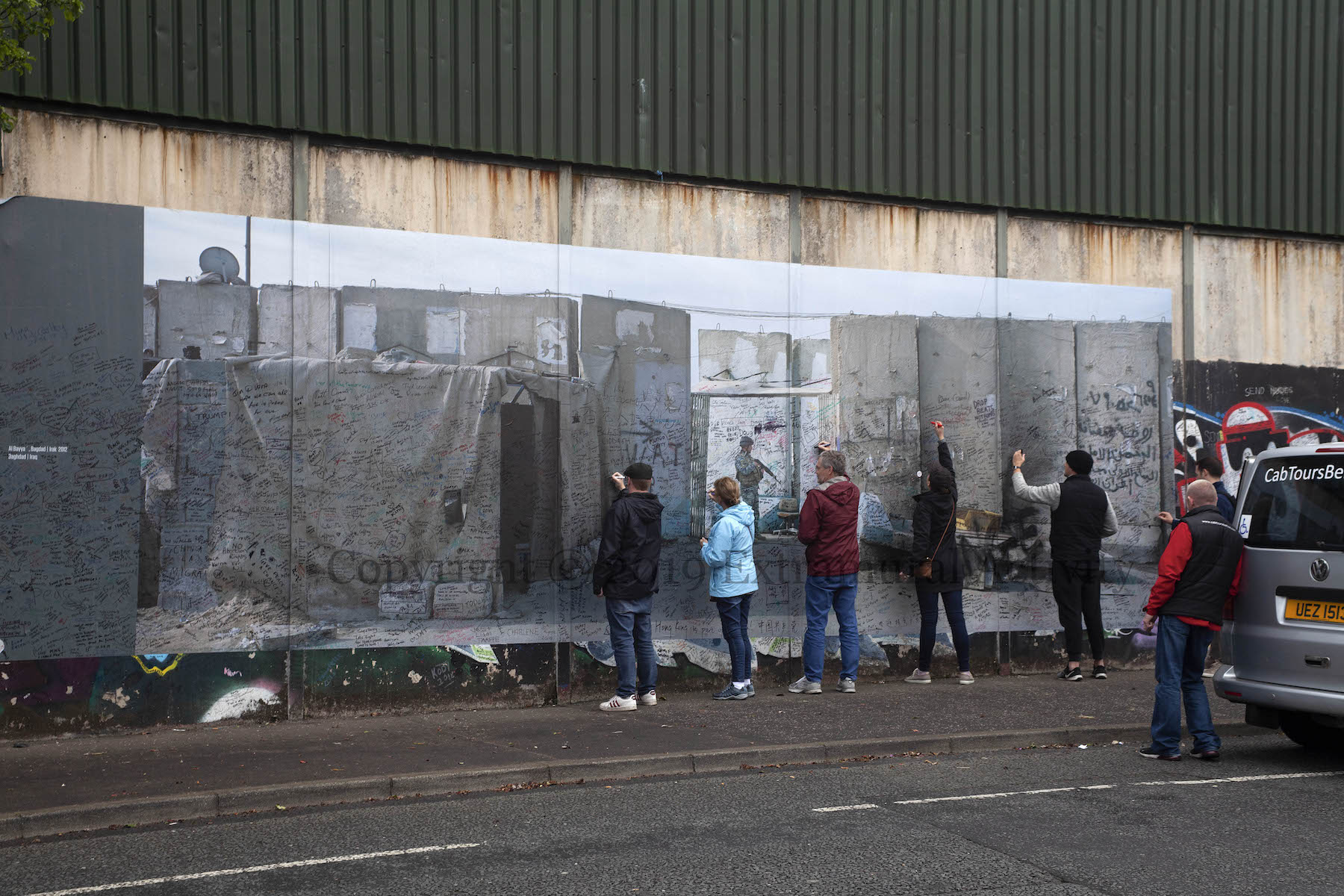
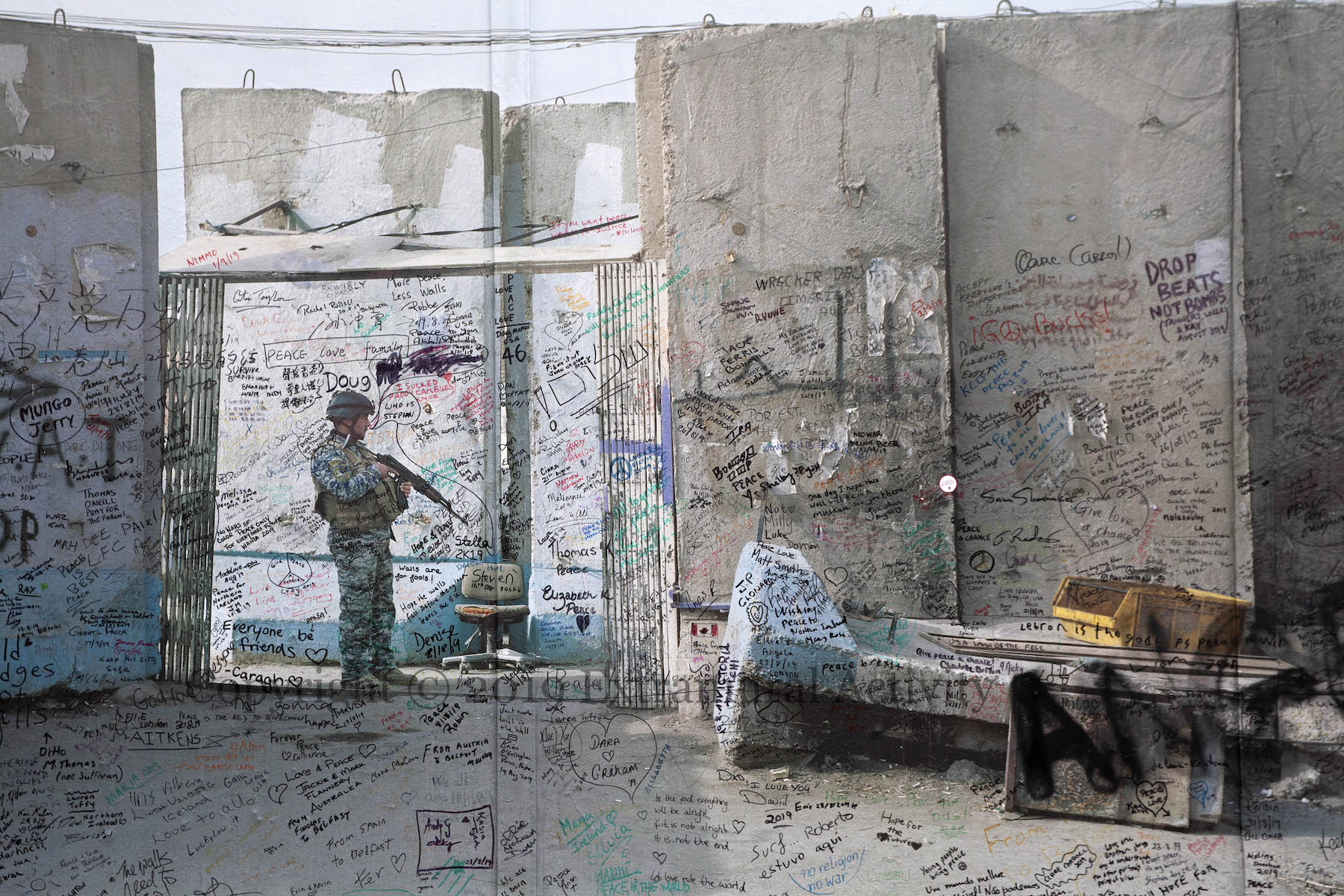
The Berlin Wall fell in 1989 but dividing walls all over the world still stand. Kai Wiedenhöfer’s Wall On Wall exhibition comes to Belfast later in the month (the launch is September 27th at 4 pm), placing images of dividing walls on Belfast’s own dividing wall, the Cupar Way “peace” line. Shown above is the image of the wall in Al Bayya (Baiyya) in the Al Rashid district, part of the 700 km of walls in Baghdad, Iraq (Browse Gallery), which was pasted onto the “peace” line as a trial for the forthcoming exhibition. As usual, it has been vandalised by tourists and their patronising slogans (and political statements: “Hong Kong isdoesn’t have to be a part of China!”). Wiedenhöfer’s image of the Occupied Territories was on Free Derry Corner in 2013 (see Ramallah, Israeli City Of Culture) and three images of Belfast were pasted onto the Berlin Wall in 2013 (Irish Times).
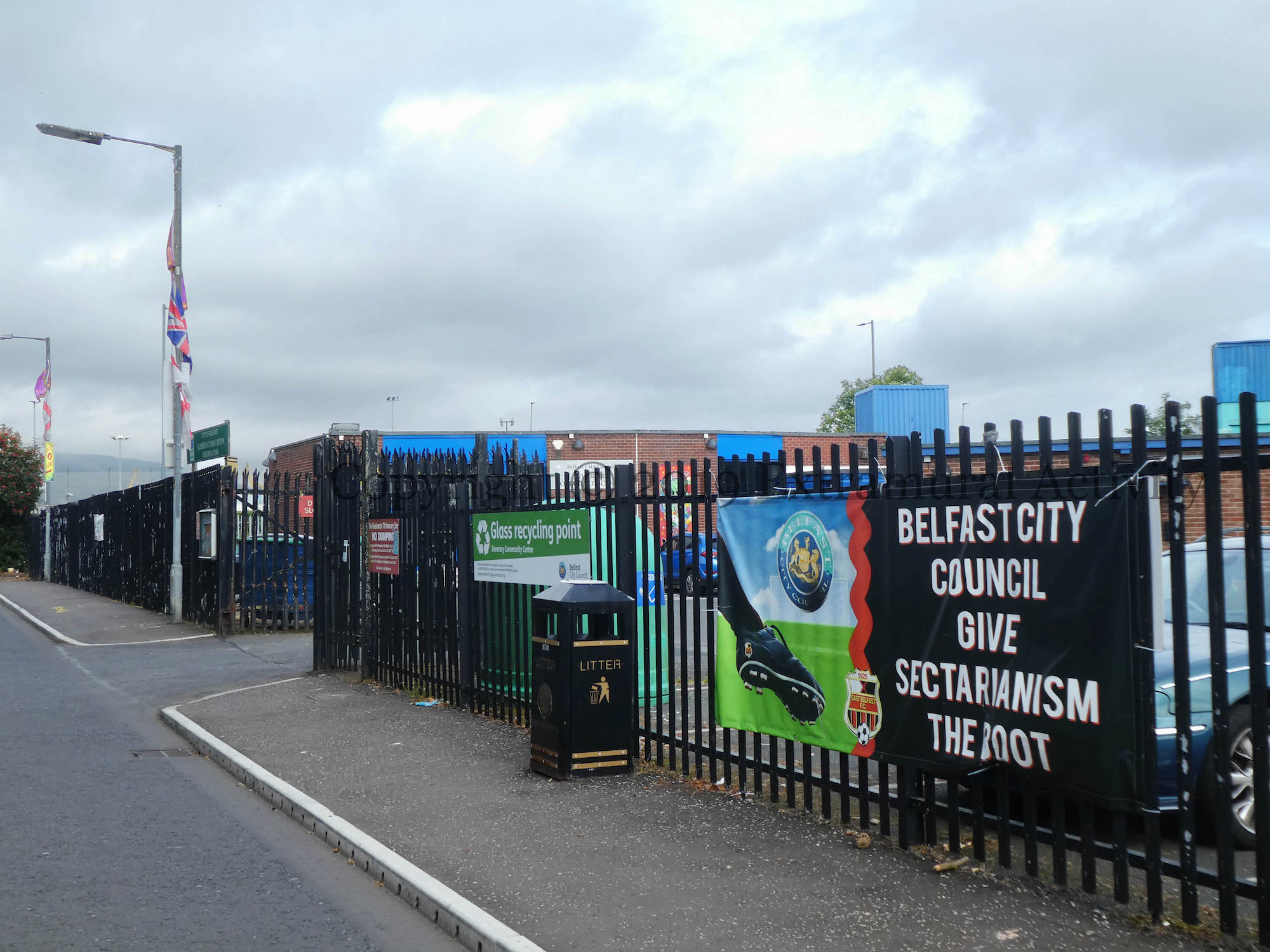
There have been various ‘give sectarianism the boot’ campaigns over the year. This one is not an appeal to bring players from both sides together using sport but criticism of Belfast City Council’s decision to remove a portacabin from the grounds of East Belfast FC (Fb | tw) due to lack of planning permission, as well as perceived inequality in funding compared to clubs in nationalist communities (Facebook).
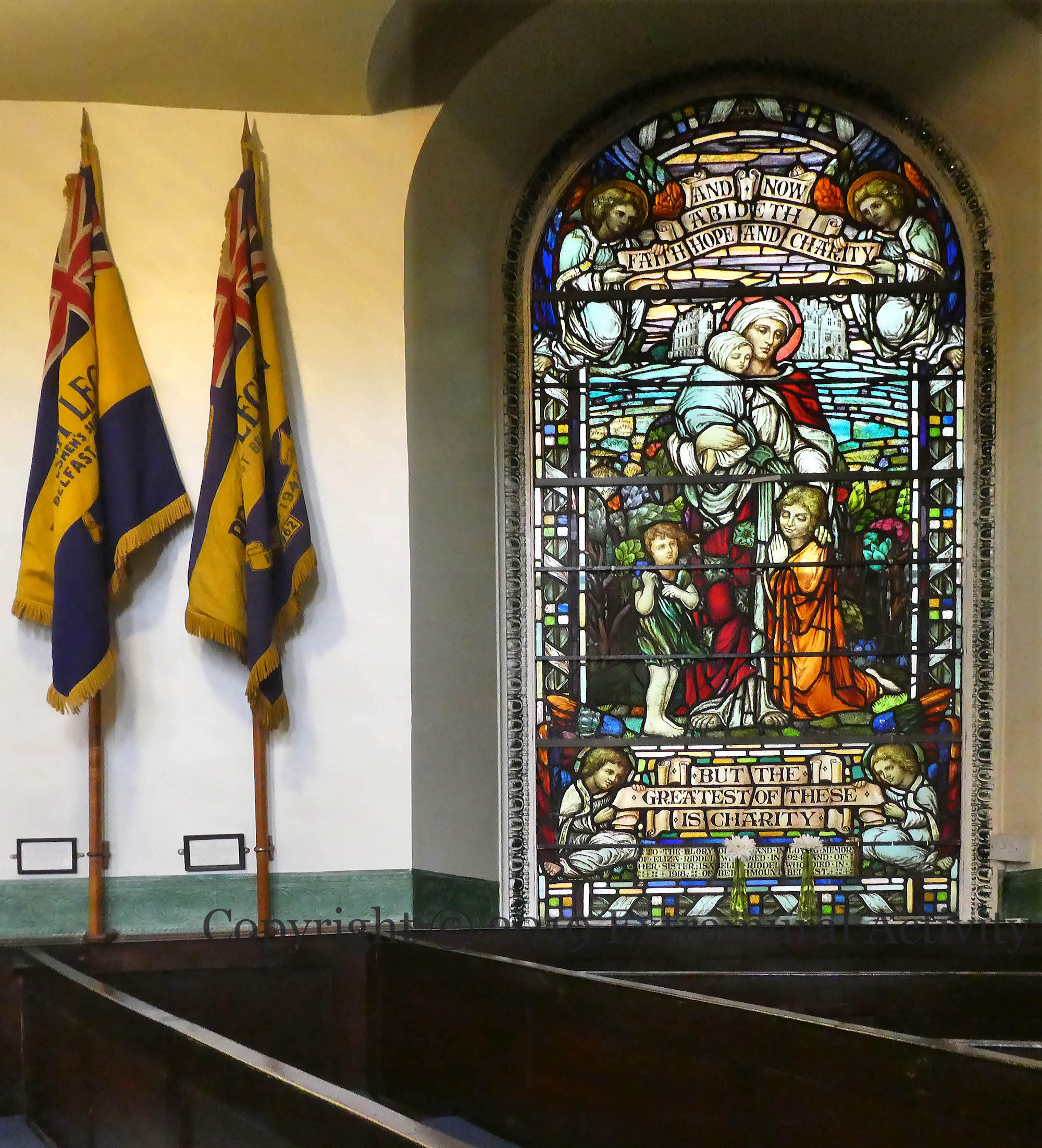
The First Presbyterian church in Rosemary Street dates back to 1783 but the congregation goes back to 1644. There are six stained glass windows around the pews, including this one on the teaching of First Corinthians 13:13: “And now abideth faith, hope and charity, but the greatest of these is charity.” The piece was produced in 1929 by Mayer Of Munich with patronage by Riddel. Two British Legion flags, laid by after forty years of use, are to the left.

 Extramural Activity