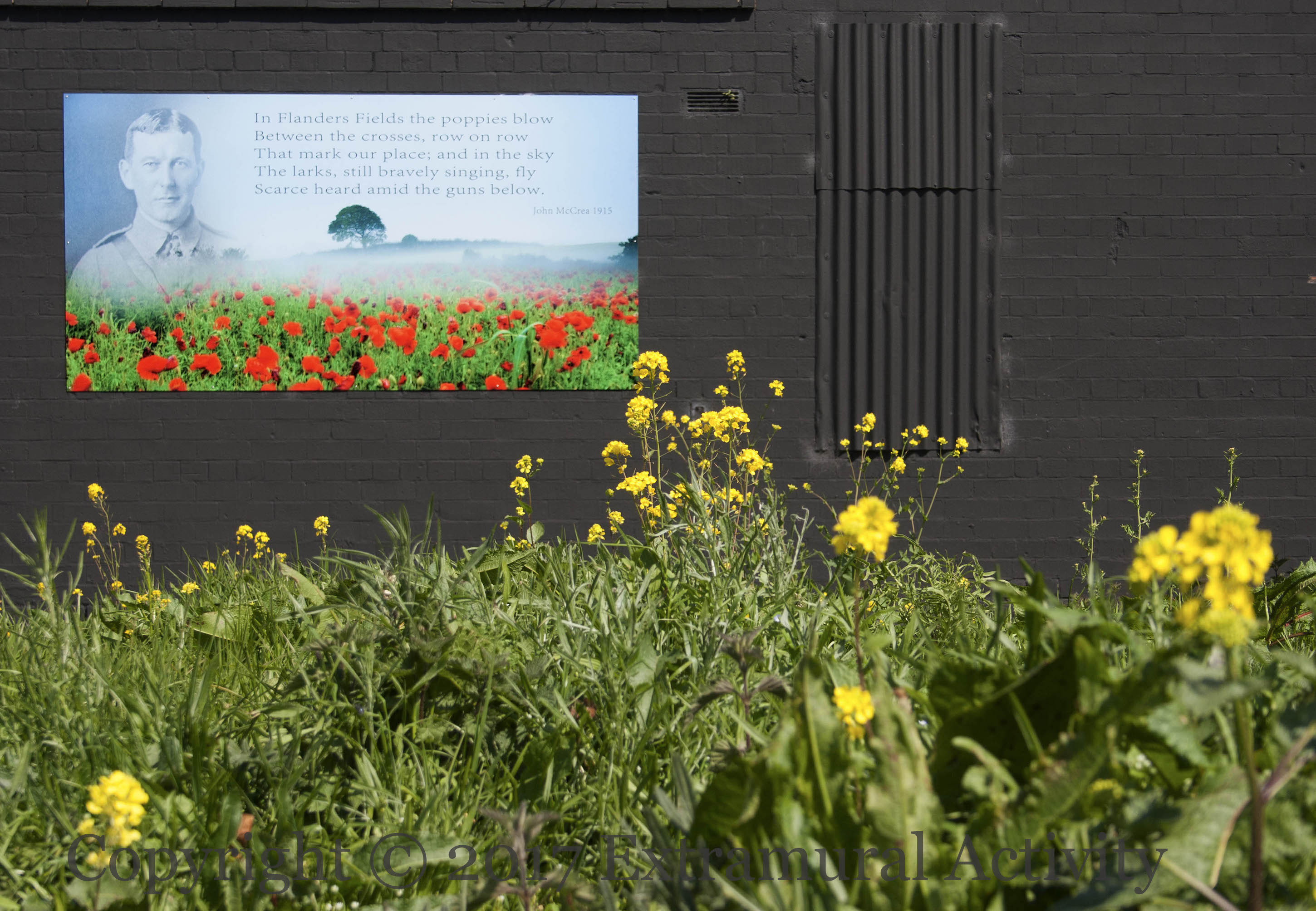
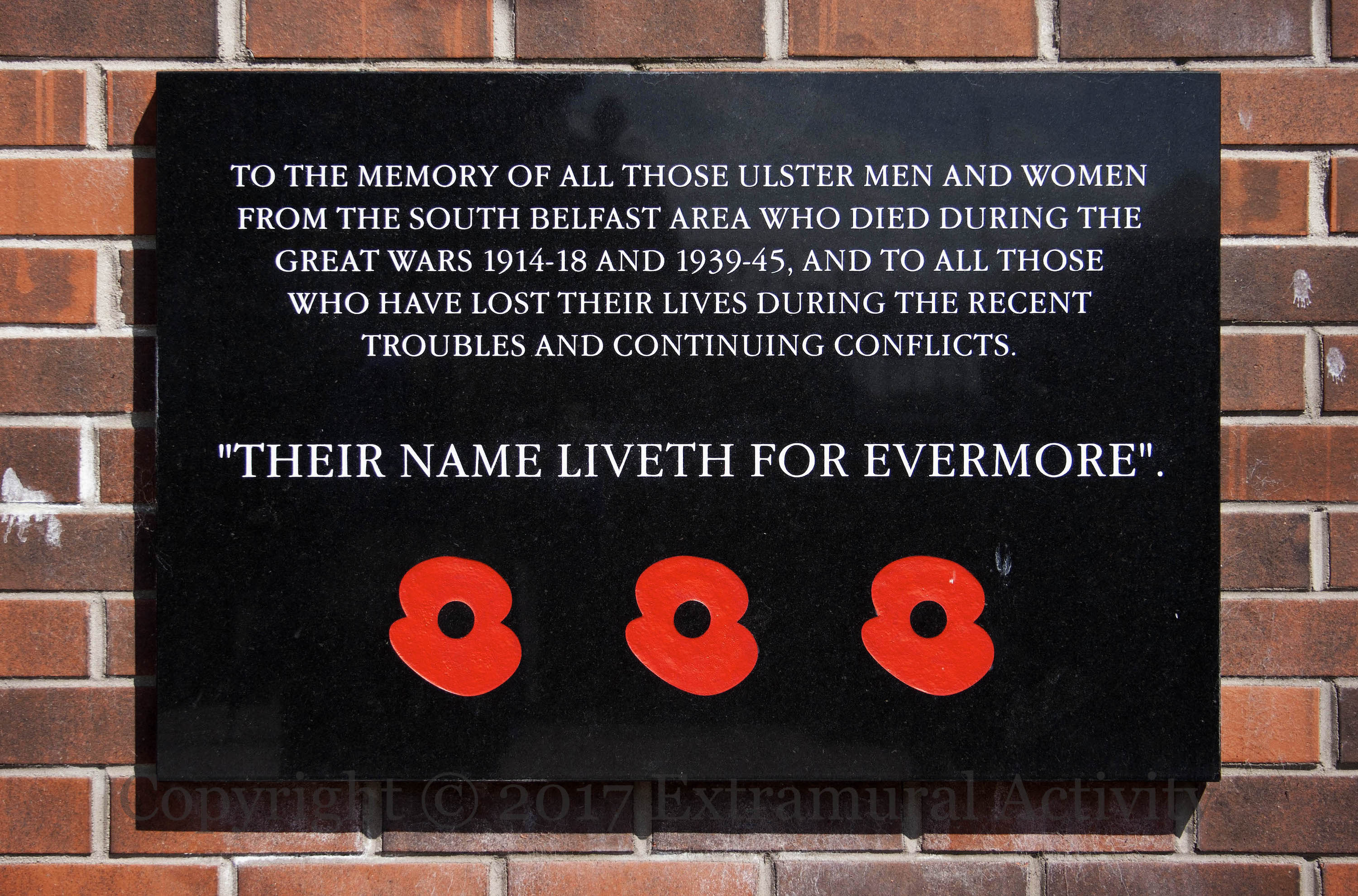
Here are two panels and a wide shot of the memorial garden in Frenchpark Street. Above is a verse from John McCrea’s In Flanders Fields. Below is a plaque “to the memory of all those Ulster men and women from the south Belfast area who died during the great wars 1914-18 and 1939-45, and to all those who have lost their lives during the recent troubles and continuing conflicts.”
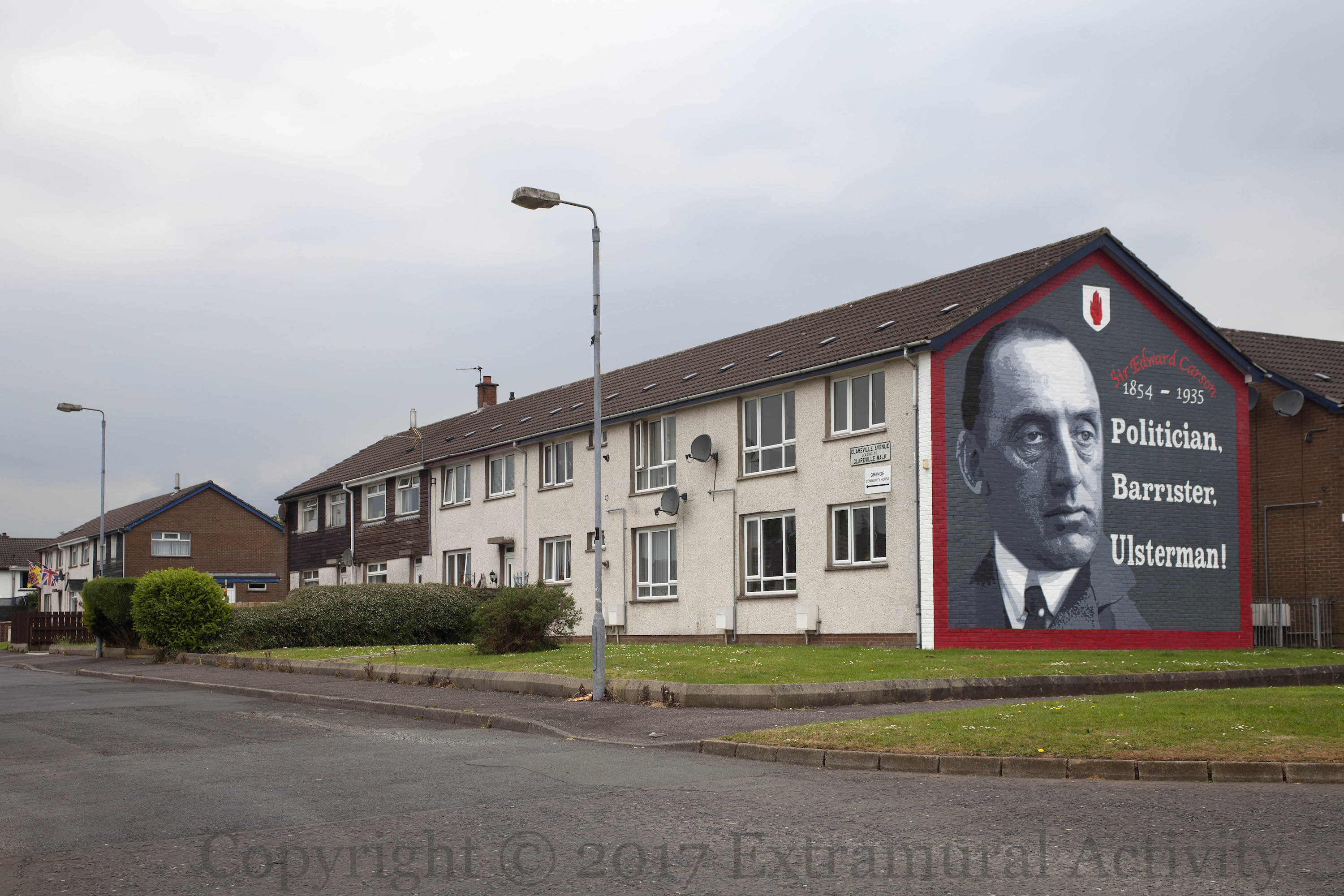
Sir Edward Carson, 1854-1935, was born and raised in Dublin, and practiced law there for many years, but he is most famously associated with the Unionist campaign against Home Rule and the creation of “a Protestant province of Ulster” and eventually the six-county state of Northern Ireland. The new mural in today’s post is by Dee Craig in Ballyclare’s Grange Drive.
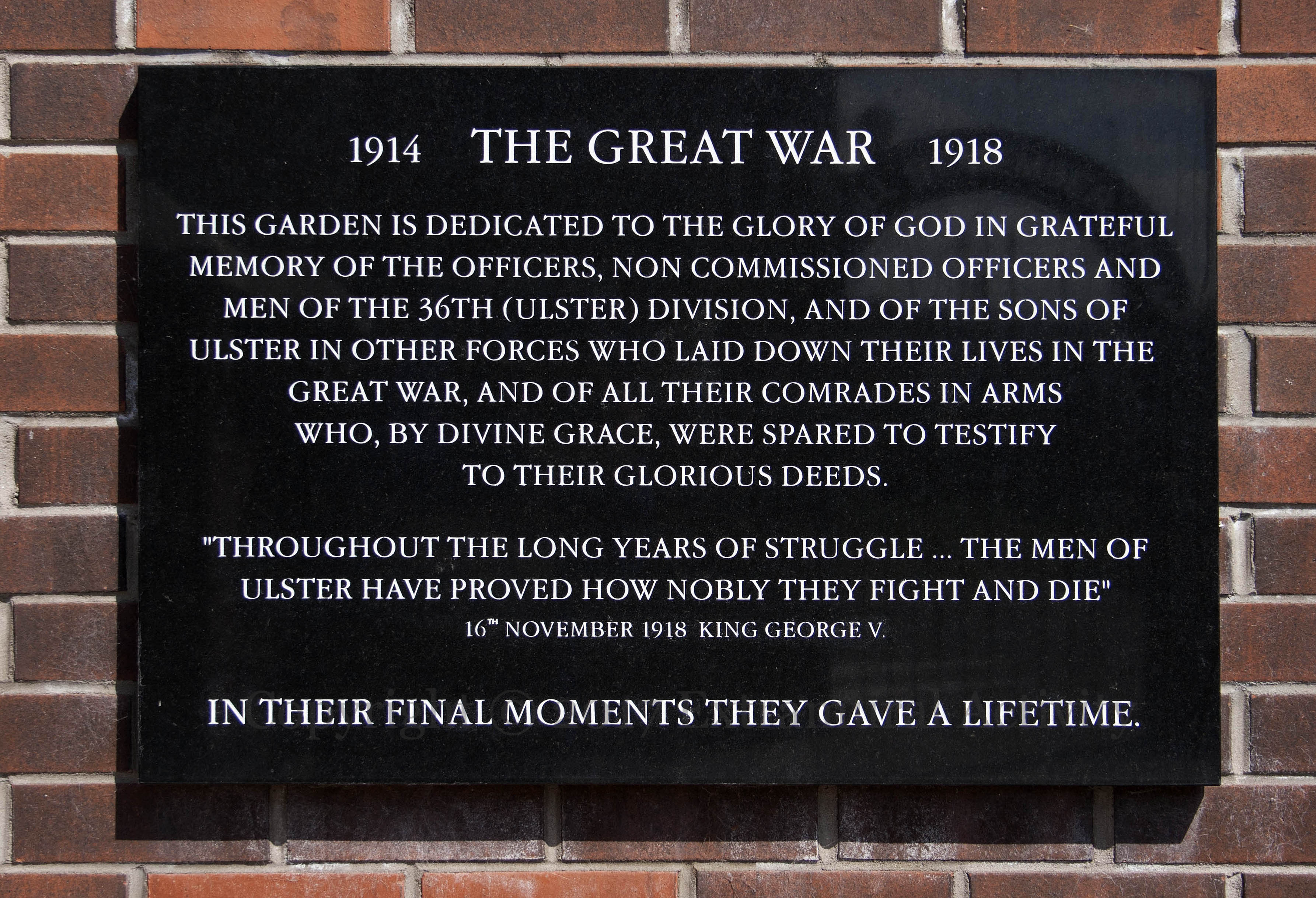
Here is another pair of combined UVF memorial stones – from both WWI and the modern conflict. Above, the fallen comrades of 2nd battalion South Belfast are remembered by their fellow officers and volunteers in the Village’s B Company; below, the garden is dedicated to the “glory of God” in memory of the “sons of Ulster” by “all of their comrades in arms who, by divine grace, were spared to testify to their glorious deeds.” (BelTel and Irish News articles on the unplanned inclusion of modern-day UVF.)
Fifteen football teams from west and north Belfast are involved in a new Suicide Awareness and Mental Health Initiative (SAMHI) in order to combat a recent increase in suicides, including two players from Belfast Celtic (BBC).
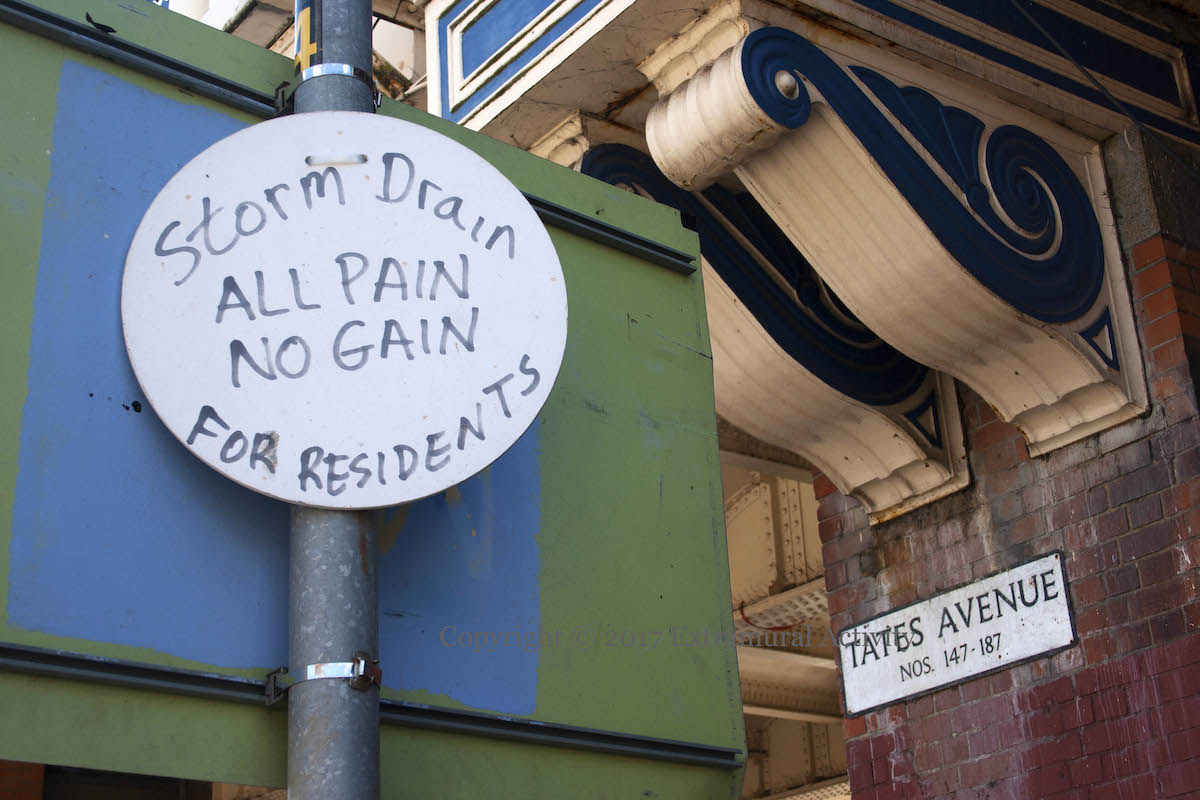
“Storm drain – all pain, no gain for residents”. This is perhaps a reference to the major construction project needed to provide drainage for Windsor Park and the Olympia leisure centre – see Water Projects for images of Donegall Avenue and Olympia Avenue during the work.
Graffiti against both the IRA (“Your [You’re] a scumbag Martin McGuinness” and “Provo bastards”) and the police (“PSNI scum”) in the Village, south Belfast.
A happier image from Oakfield Drive (after yesterday’s offering): the interests of local children are reflected in the tiles they made: a Union flag and Ulster banner but also a heart and “Liverpool”. One of four such tile collages on the front of the (now-defunct) Glenfield Community Association building.
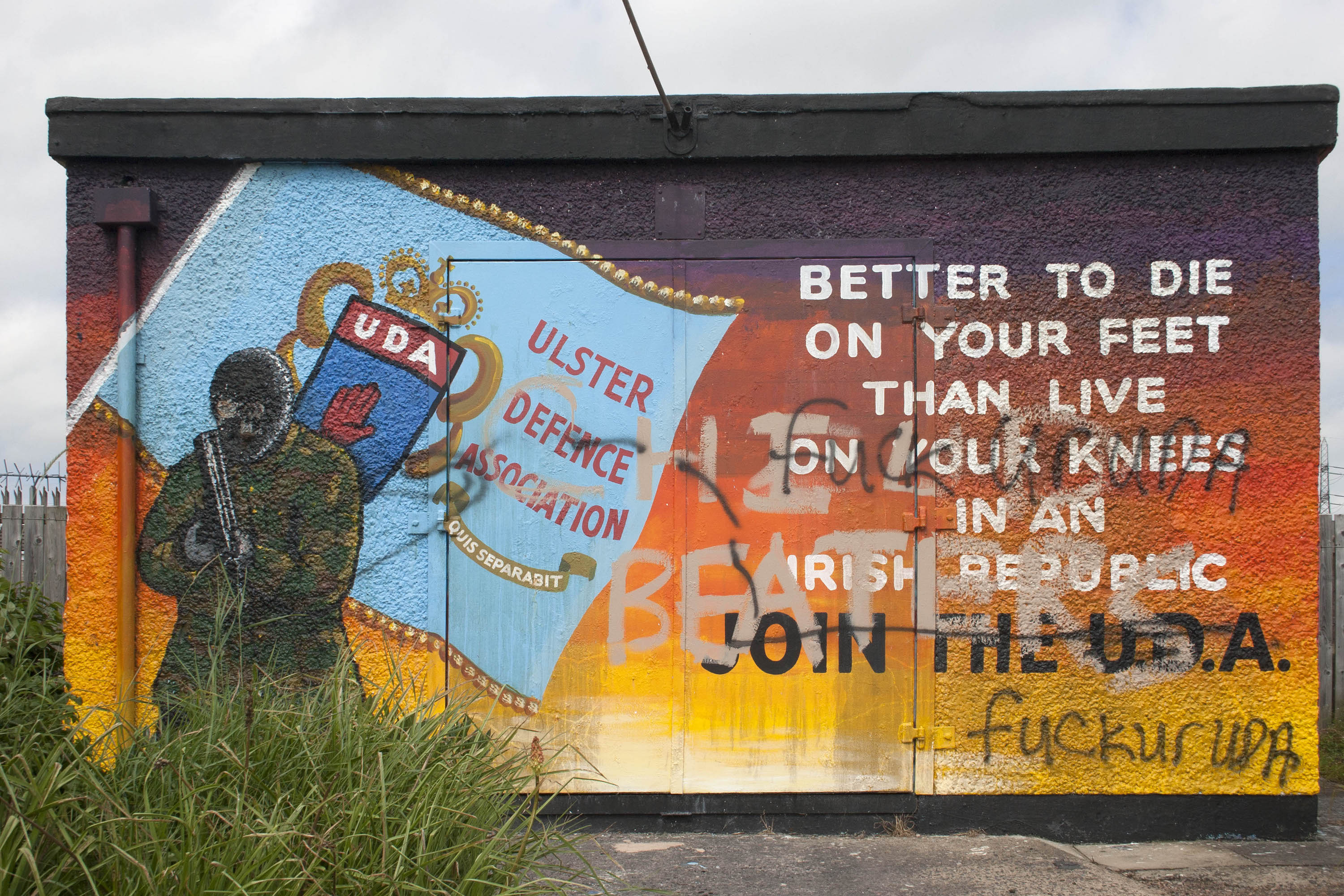
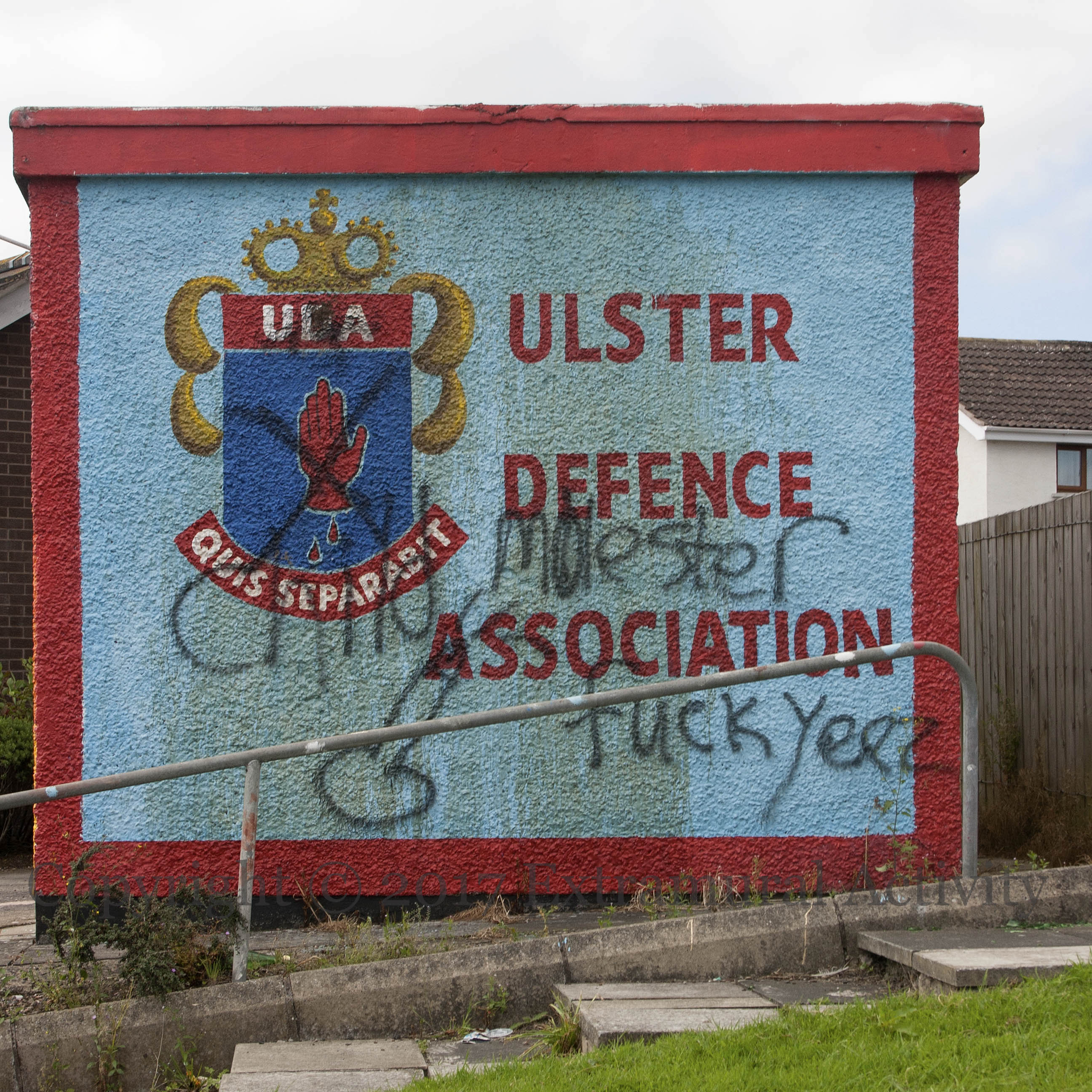
February 2015 saw the controversial painting of two UDA murals in the Glenfield estate, Carrickfergus. They are now graffitied over with “child beaters”, “fuck ur UDA” (above) and “child molester”, “fuck yerz” and the red hand x’ed out (below). It’s not clear what (or who) the allegations concern.
Here are two final images from the memorial garden in Kilcooley. As mentioned in Tuesday’s post (To Keep Our Ulster Free), it seems that the combination of WWI imagery (today’s post and Across The Wire) and paramilitary memorials was not the plan approved by the Department of Social Development, which contributed funds to the project (Belfast Telegraph). A wide shot of the whole is included below.
According to an article in the Tele last Friday (2017-04-21), the Housing Executive has a list of over 100 memorial on Executive-owned land that it considers illegal. The list itself does not seem to be available and so it is not not known if the Kilcooley garden is one of these.
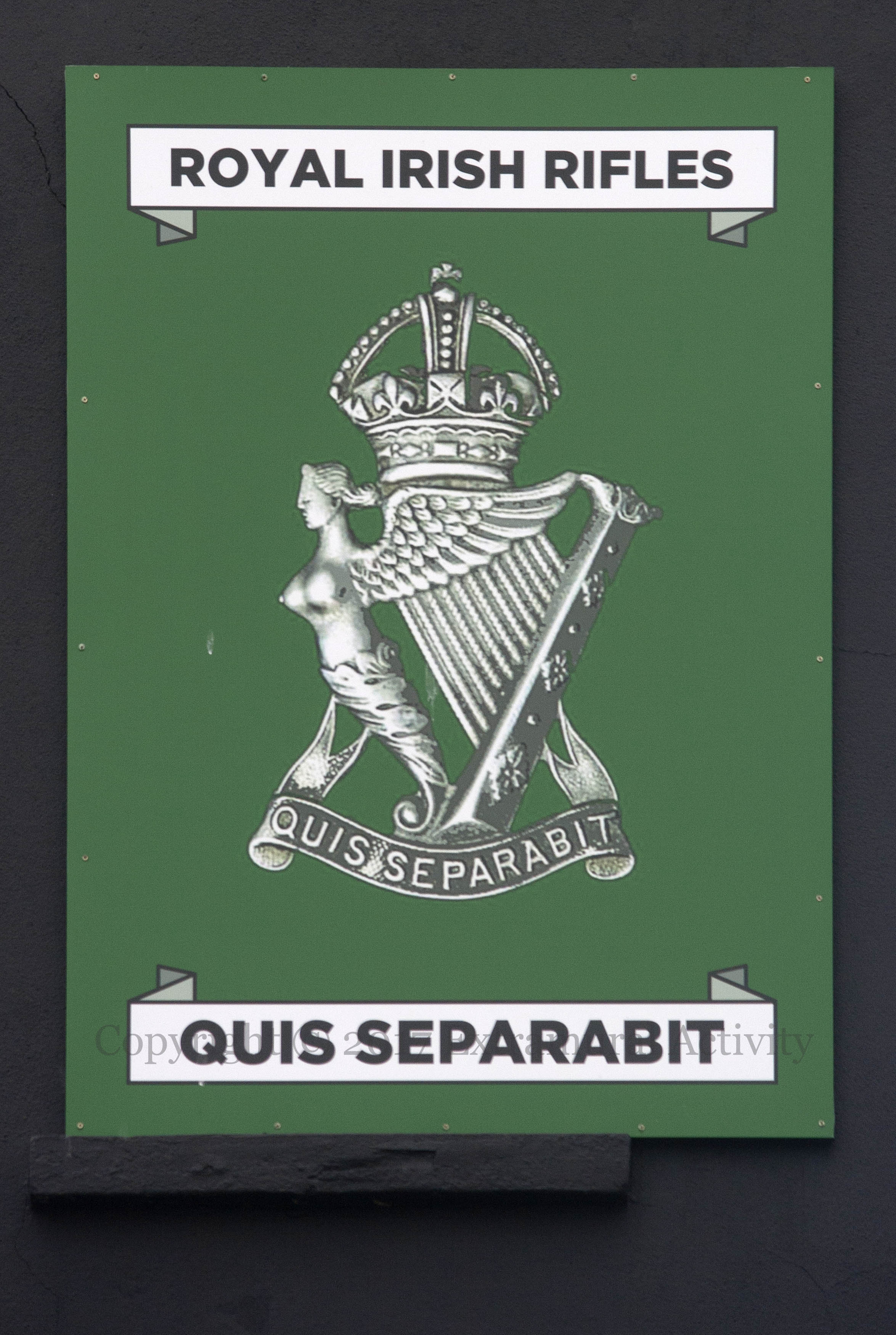
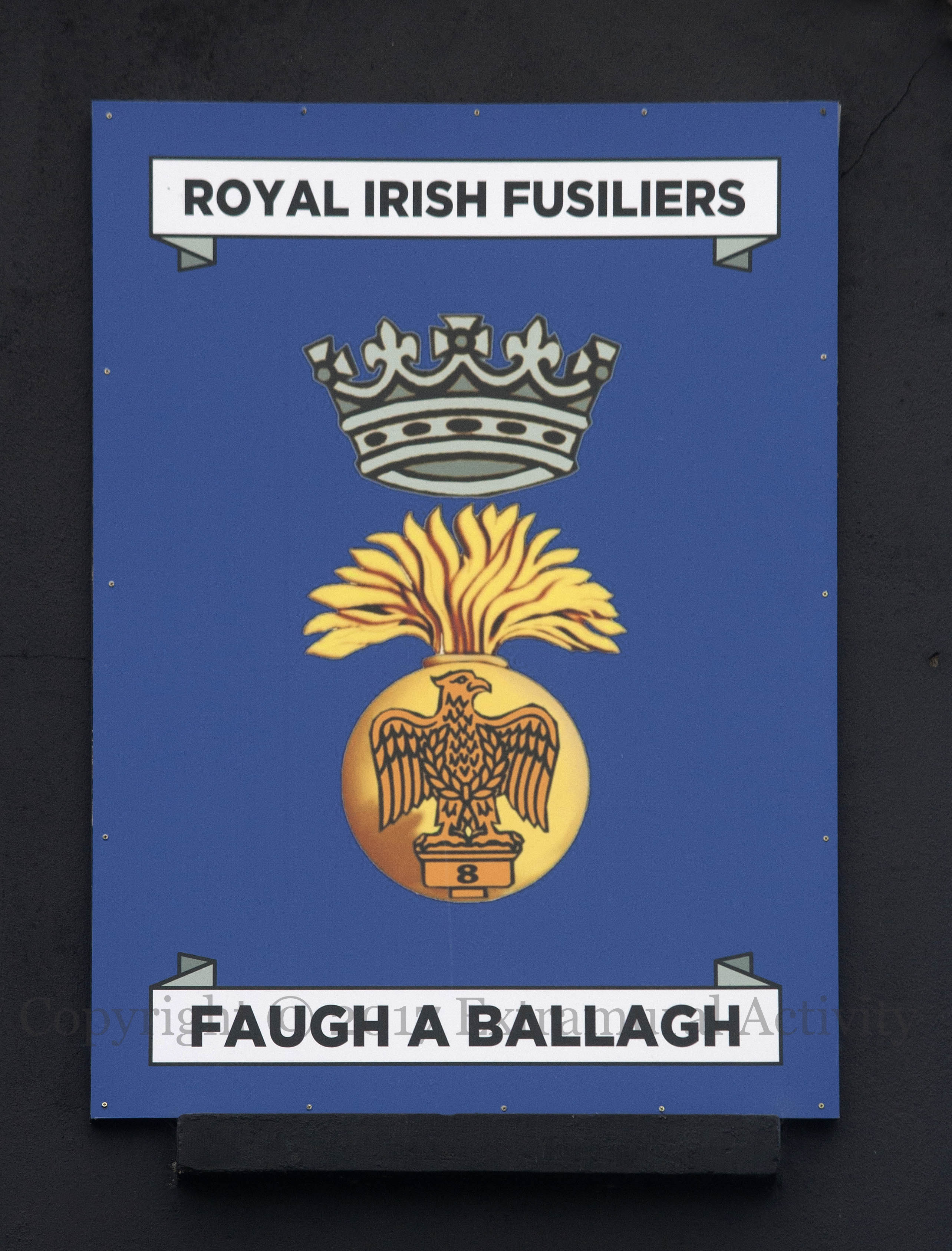
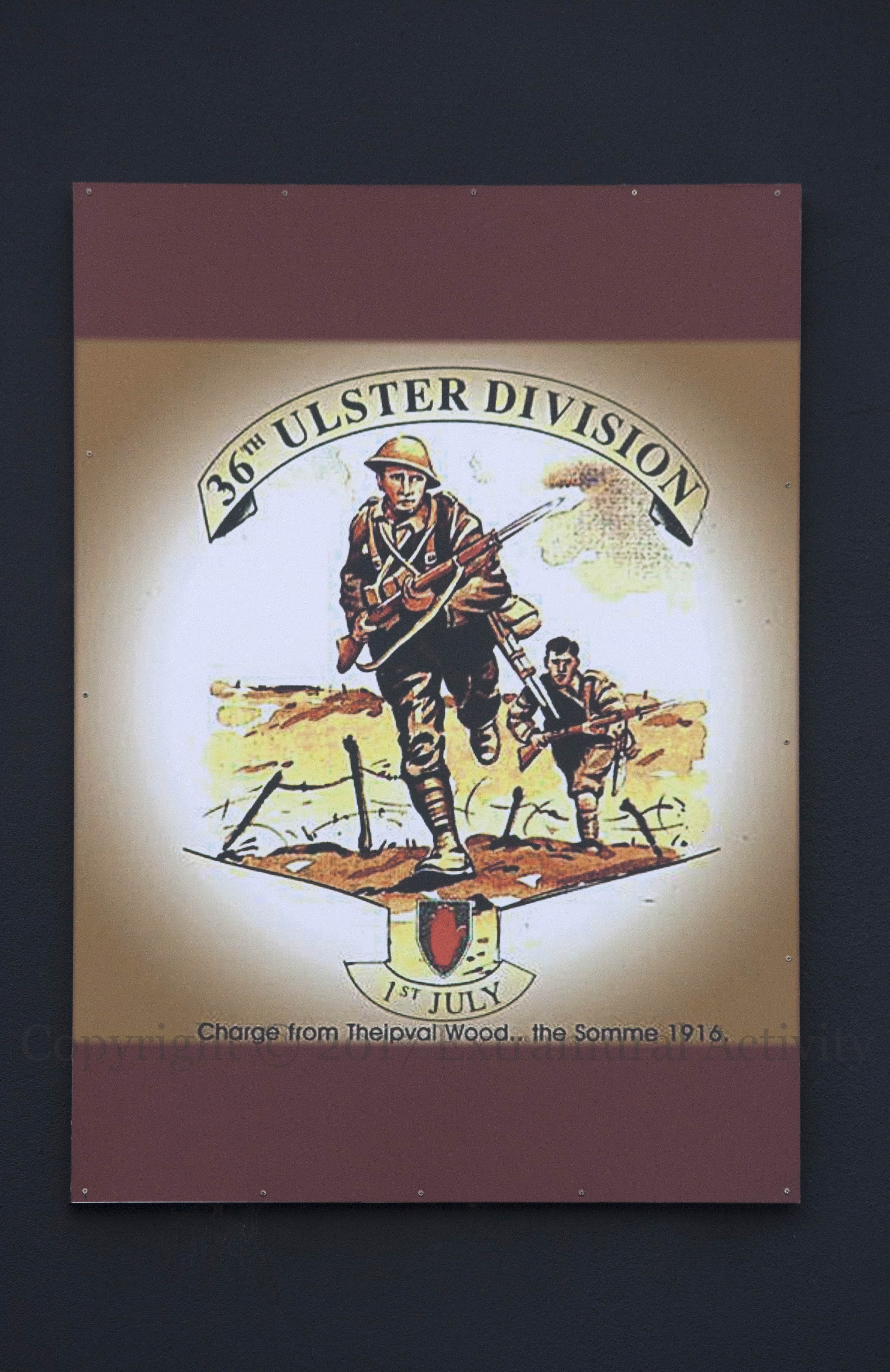
“Faugh a ballagh” (Clear the way) was the motto of the Royal Irish Fusiliers (and then of the Royal Irish Rangers and currently of the Royal Irish Regiment). The Fusiliers served on the western front during WWI – the first and ninth battalions serving in the 36th (Ulster) Division – and the 3rd battalion helped put down the Easter Rising in 1916. Its coat of arm are one of four panels along with the 36th, the Royal Irish Rifles, and the Royal Inniskilling Fusiliers.
The Thiepval Memorial, the Cross of Sacrifice, and the Ulster Tower are pictured in the bottom left.
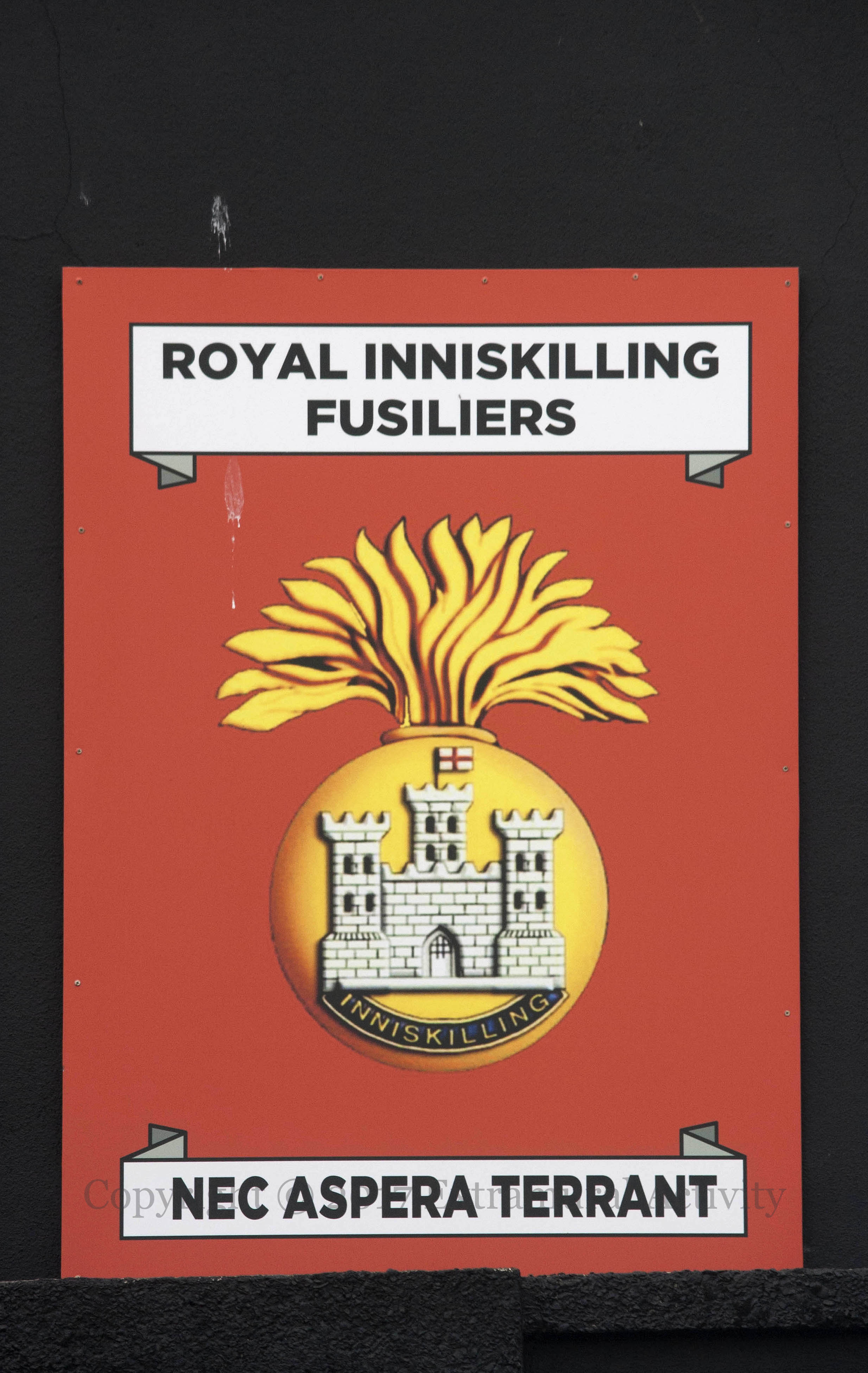
Close-ups of the four regimental insignia are included below. “Nec Aspera Terrant [sic, for “terrent”]”, meaning “frightened by no difficulties”, was the motto of the Inniskilling Fusiliers, who fought in both Boer Wars and both World Wars – its battalions saw action at Gallipoli and on the Western front – before being amalgamated in the Royal Irish Rangers in 1968, along with the Royal Ulster Rifles and the troop featured in the third image, the Royal Irish Fusiliers. Their arms are shown along with those of the Royal Irish Rifles and a board commemorating the charge from Thiepval Wood during the Somme








 Extramural Activity