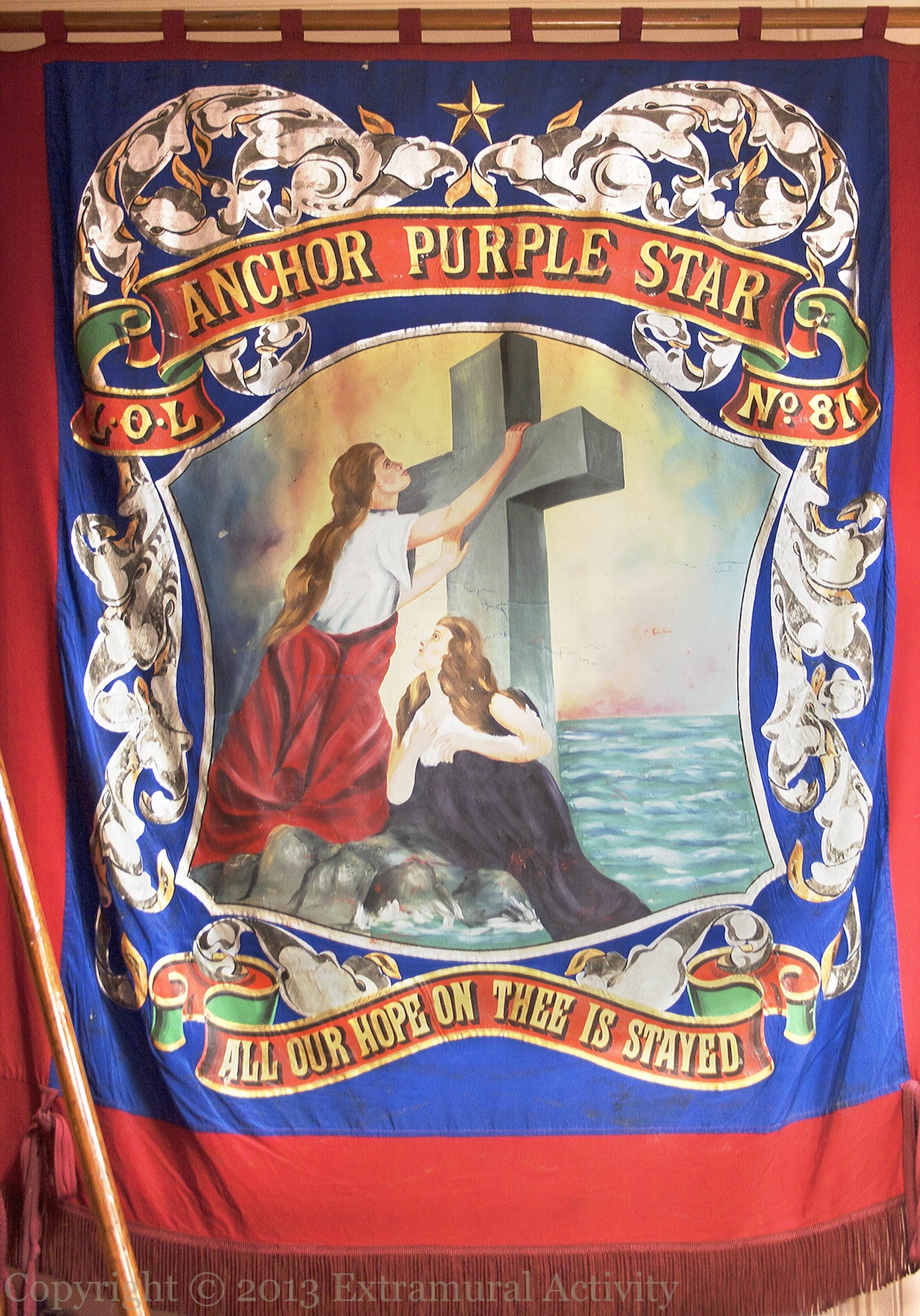
Last weekend (September 14th and 15th) saw many buildings typically closed to the public open up for European Heritage Open Days. Among those was the Orange hall on Clifton Street. Military and religious themes were prevalent throughout, as images over the coming days will illustrate.
Titanic was hull number “401” at Harland & Wolff, and, after hitting an iceberg at 11:40 p.m. on April 14th, 1912, sank at 2:20 a.m. (WP). Above is another (see also 2013-09-02, 2013-09-13) metal-work piece on the Cupar Way “peace” line, with images of a boat dock, solderers, and wind turbines.
This is the (second) memorial to Paul ‘Topper’ Thompson in Moyard. He was killed by the UDA on April 27th, 1994. Collusion is alleged – see Relatives For Justice.
“In memory of Topper Thompson, murdered by British death squads, 27th April 1994 aged 25. Deeply missed by never forgotten. Erected by his friends.”
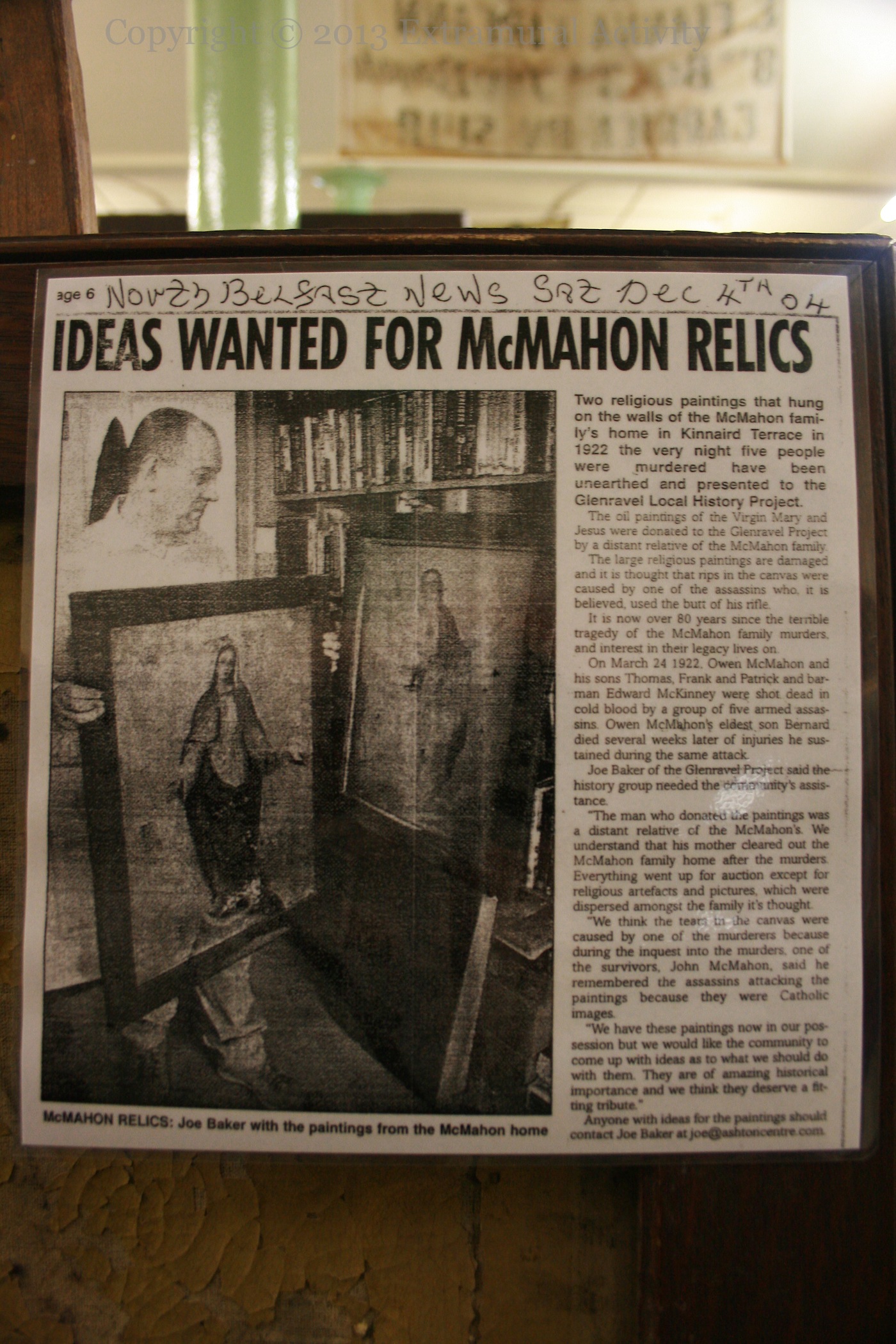
Above is an image of one of two surviving religious pictures from the McMahon household on Kinnaird Terrace, off the Antrim Road. The picture was in the house the night five members of the family and one other person were killed, in 1922, by members of the RIC or the Specials (milltowncemetery.com, WP). The holes on the left and at the bottom are thought to be bullet holes, while the article below claims the tear in the upper centre is from the butt of a rifle. The picture is at present on display in the Republican Museum on Conway Street.
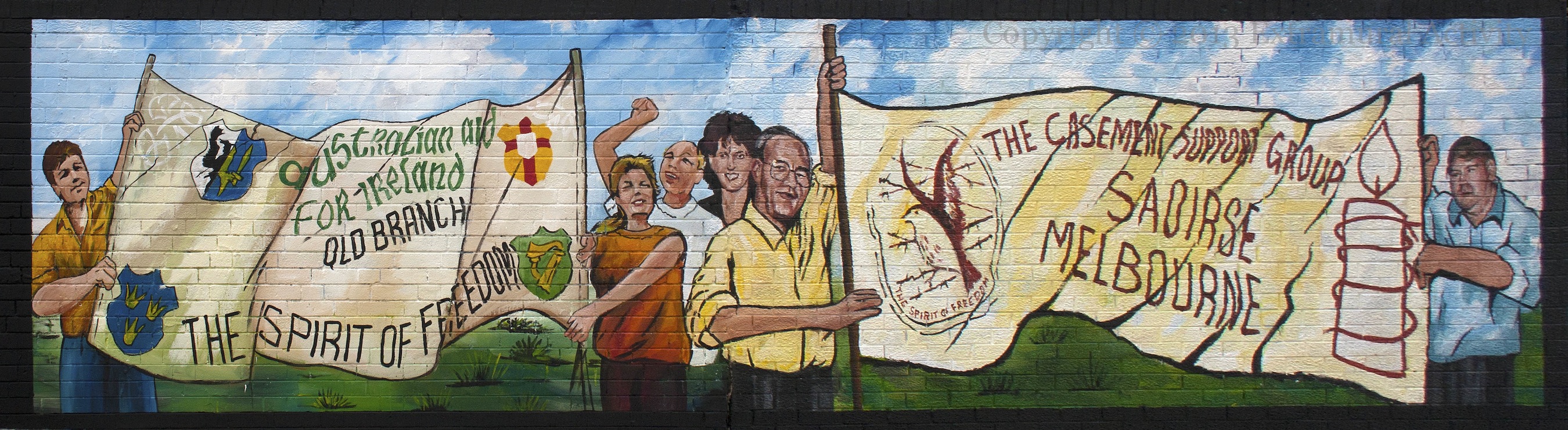
Above is an extra-wide shot (2700 pixels) of another panel from the wall next to the Republican Museum on Conway Street (next to the previously featured Eileen Hickey). The mural features banners of two Australian Republican support-groups, holding banners reading “Australian Aid for Ireland QLD [Queensland] Branch – The Spirit of Freedom” and “The Casement Support Group – Saoirse Melbourne”.
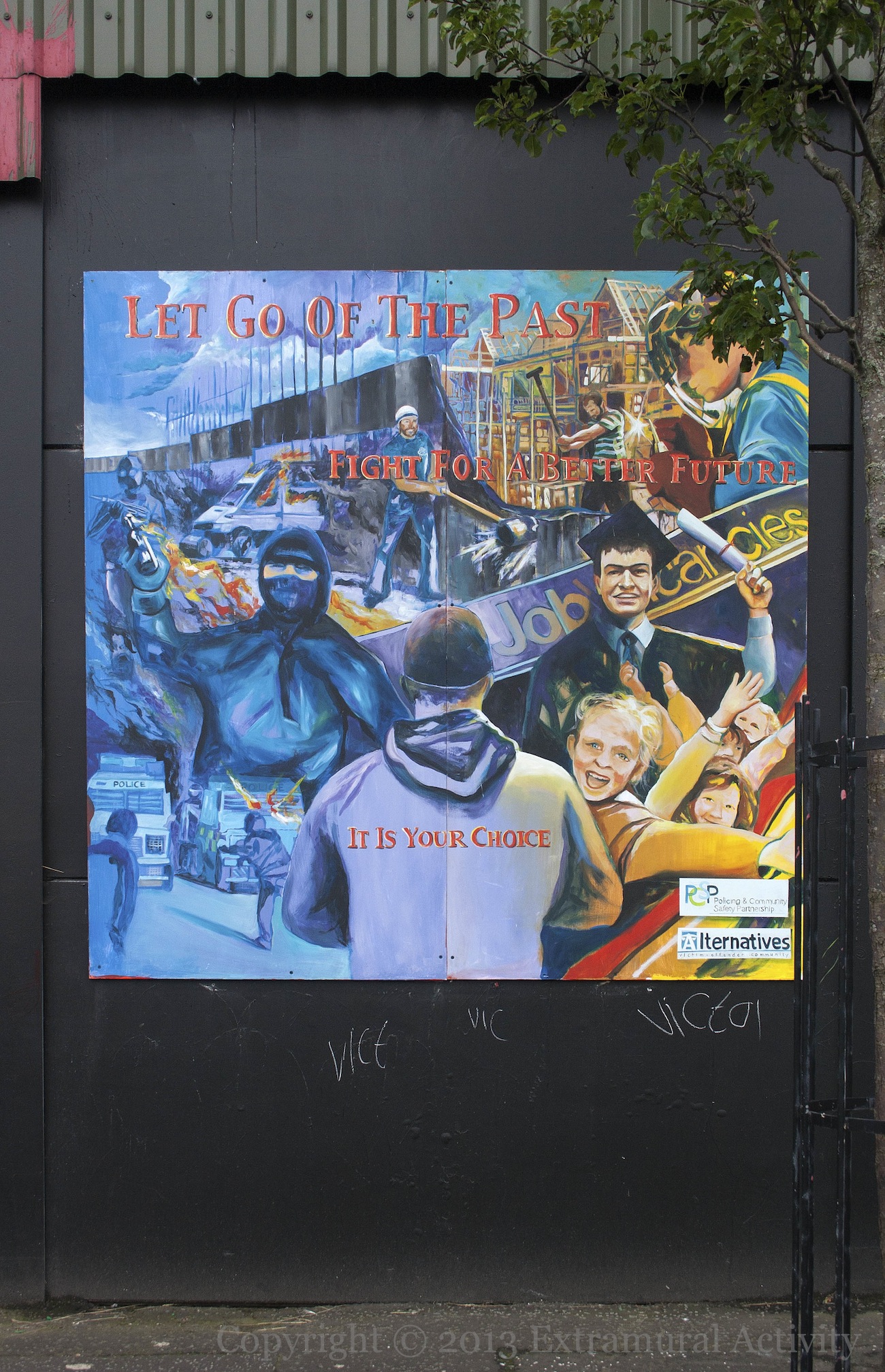
Board on the Cupar Way side of the “peace” line showing, on the left hand side, rioters with petrol bombs attacking the police, the “peace” line, and a burning vehicle, and, on the right, construction workers, university graduates, and happy children. “Fight for a better future. It is your choice.” For more information, see Daniela Balmaverde.
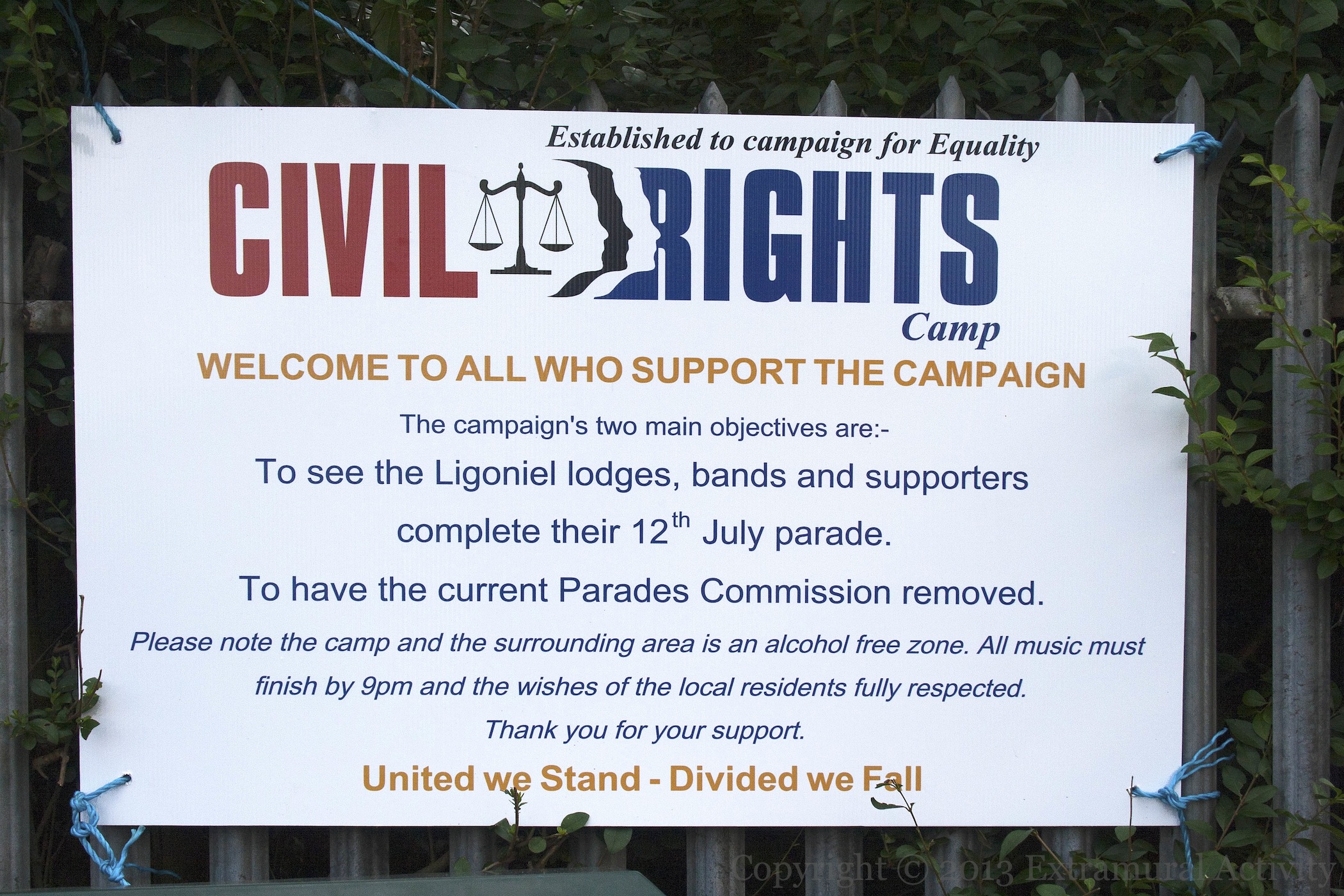
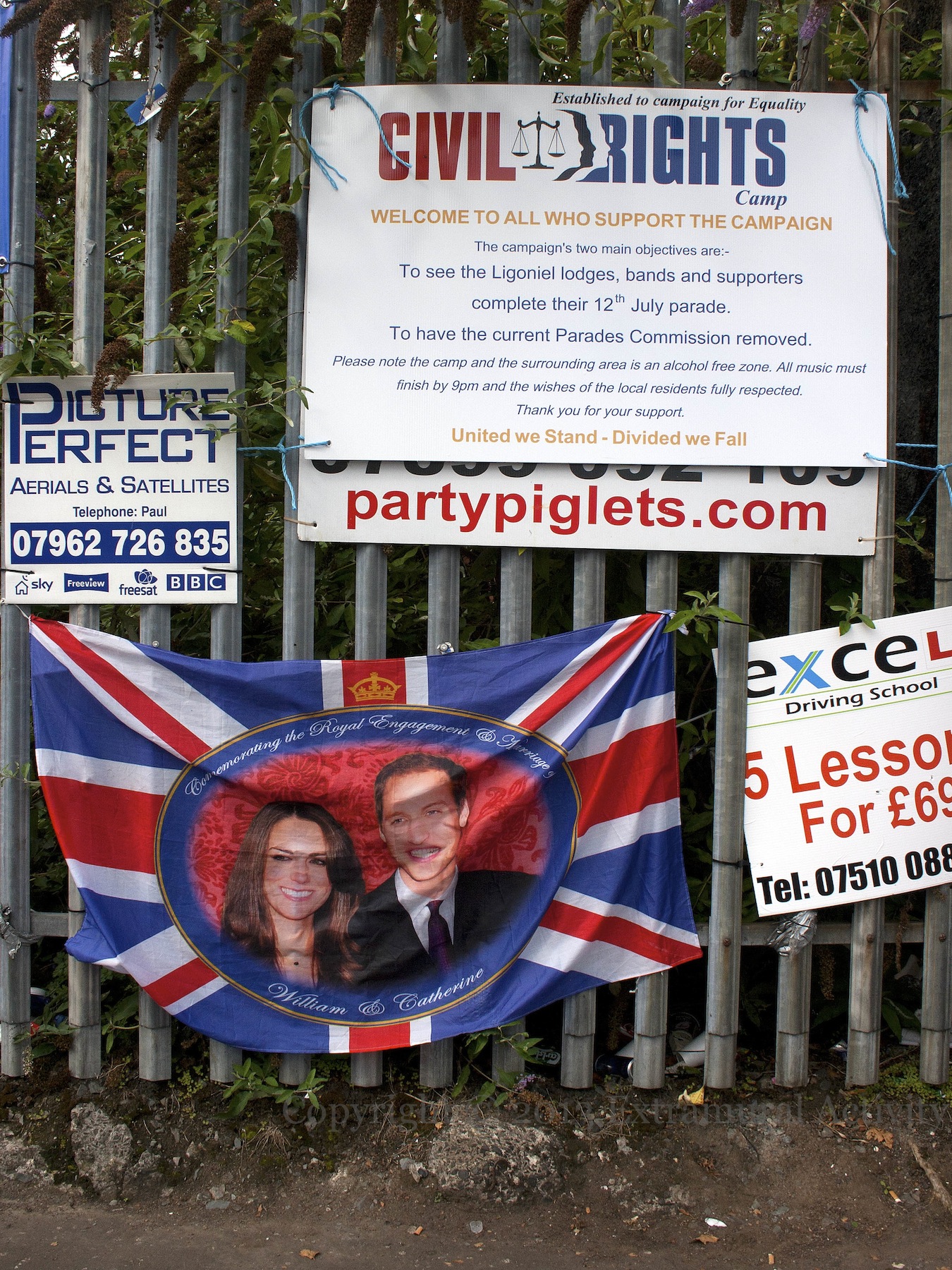
The language of “civil rights” and “equality” is being used at the Twaddell site, as can be seen in the placard shown here there are three copies of this sign: the second image, below, is of one on the north side of the street (visible in the previous set of Twaddell pictures) and the third image shows an additional copy on the electrical box on the south side of the street.
“Established to campaign for Equality. Civil Rights. Welcome to all who support the campaign. The two main objectives are to see the Ligoniel lodges, bands and supporters complete their 12th july parade; to have the current parades commission removed. Please note the camp and the surrounding area is an alcohol free zone. All music must finish by 9 p.m. and the wishes of the local residents fully respected. Thank you for your support. United we stand – divided we fall.”
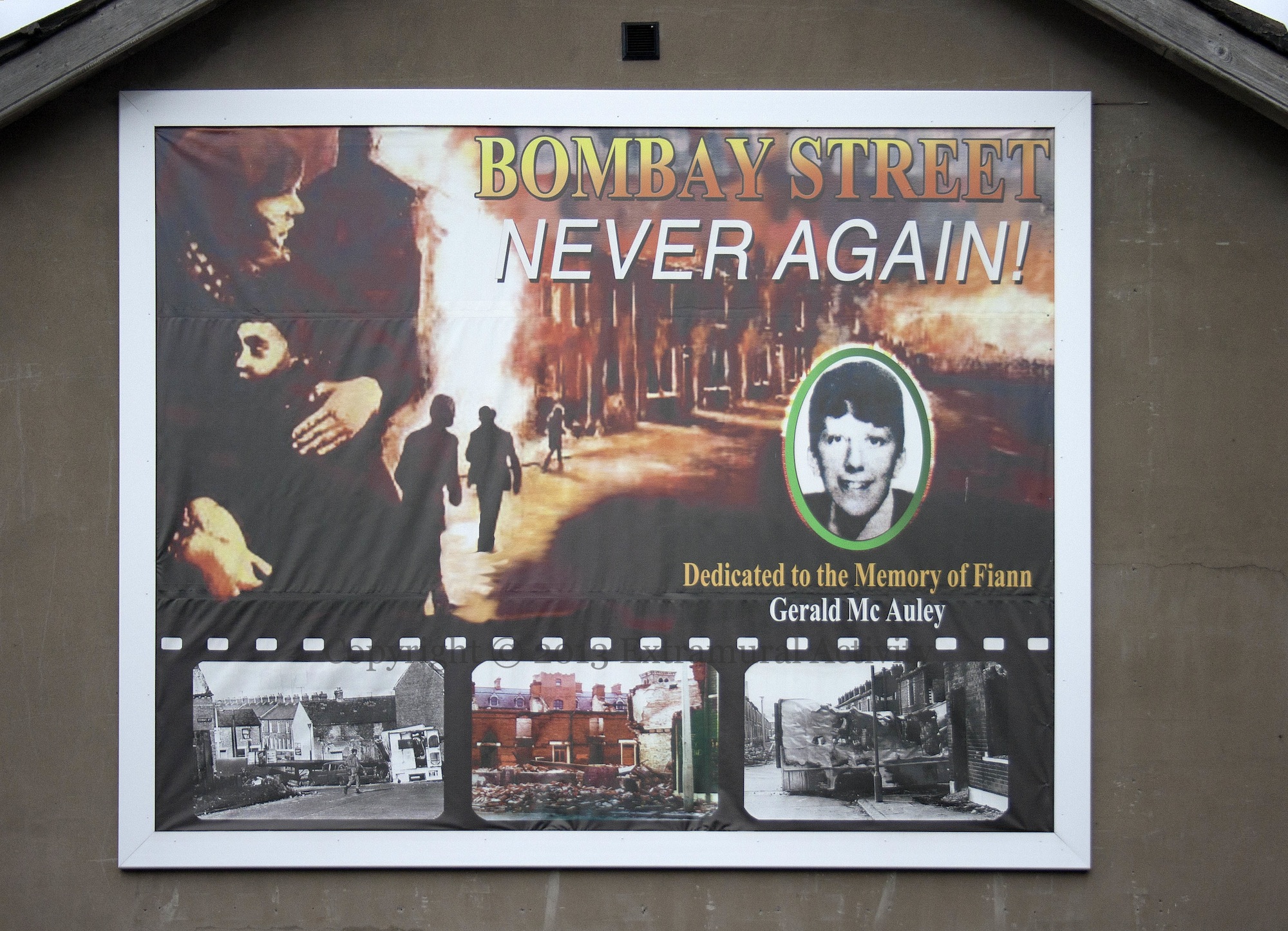
Printed and framed tarp in Bombay Street, commemorating the burning of Bombay Street during the August 1969 Belfast riots and the death Gerald McAuley, a young IRA member (Fian, not “Fiann” as written here) killed by a sniper during the trouble. Three photographs from the street at the time are reproduced in the bottom third of the board.
Ten years ago, an earlier incarnation of this board could be found on the other side of the street, connected to the issue of the day: No (Decom)mission.



 Extramural Activity