There is now a mural in Stanhope Street of “Carrick Hill in the old days”, of two women talking in the street, to complement the four printed boards.
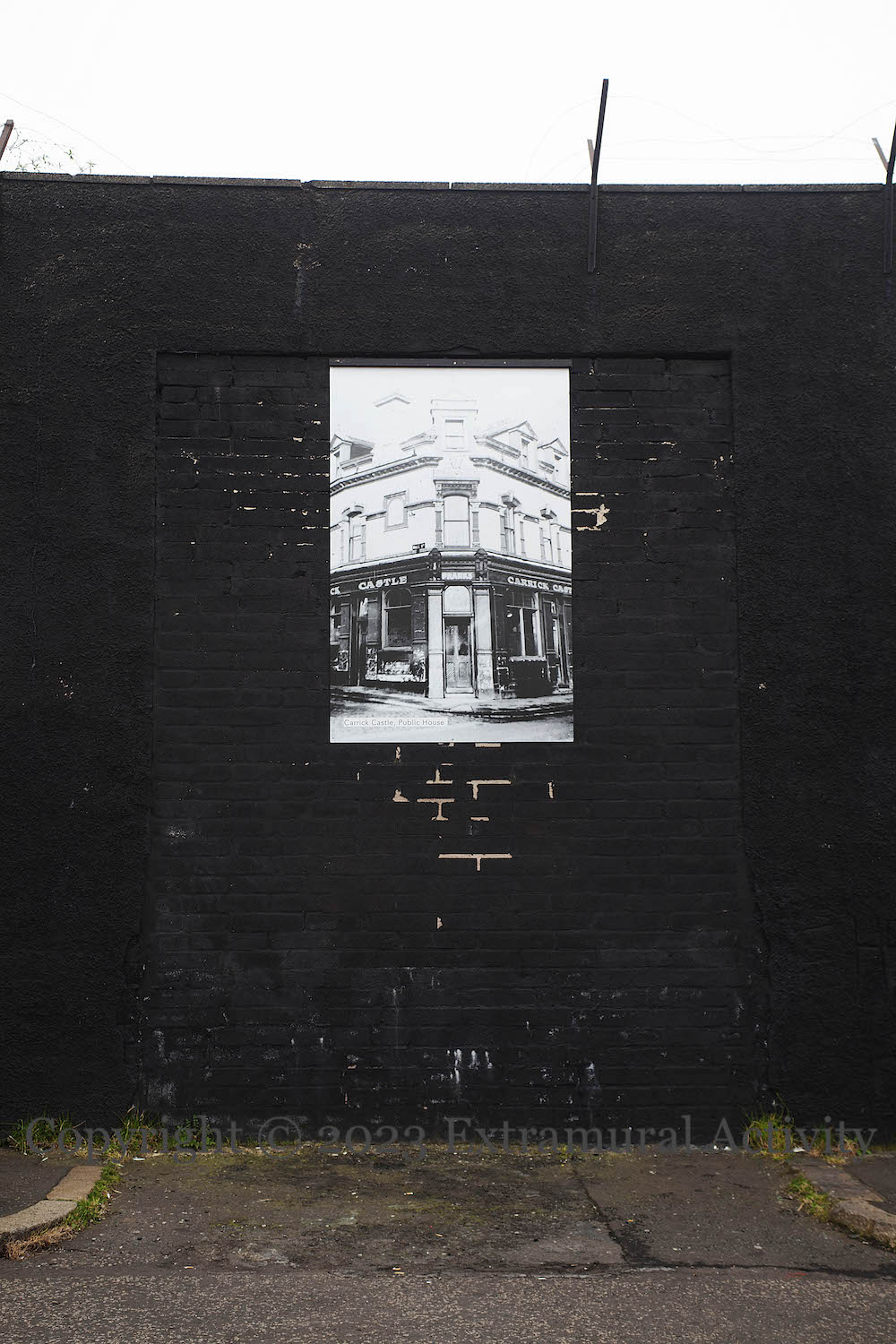
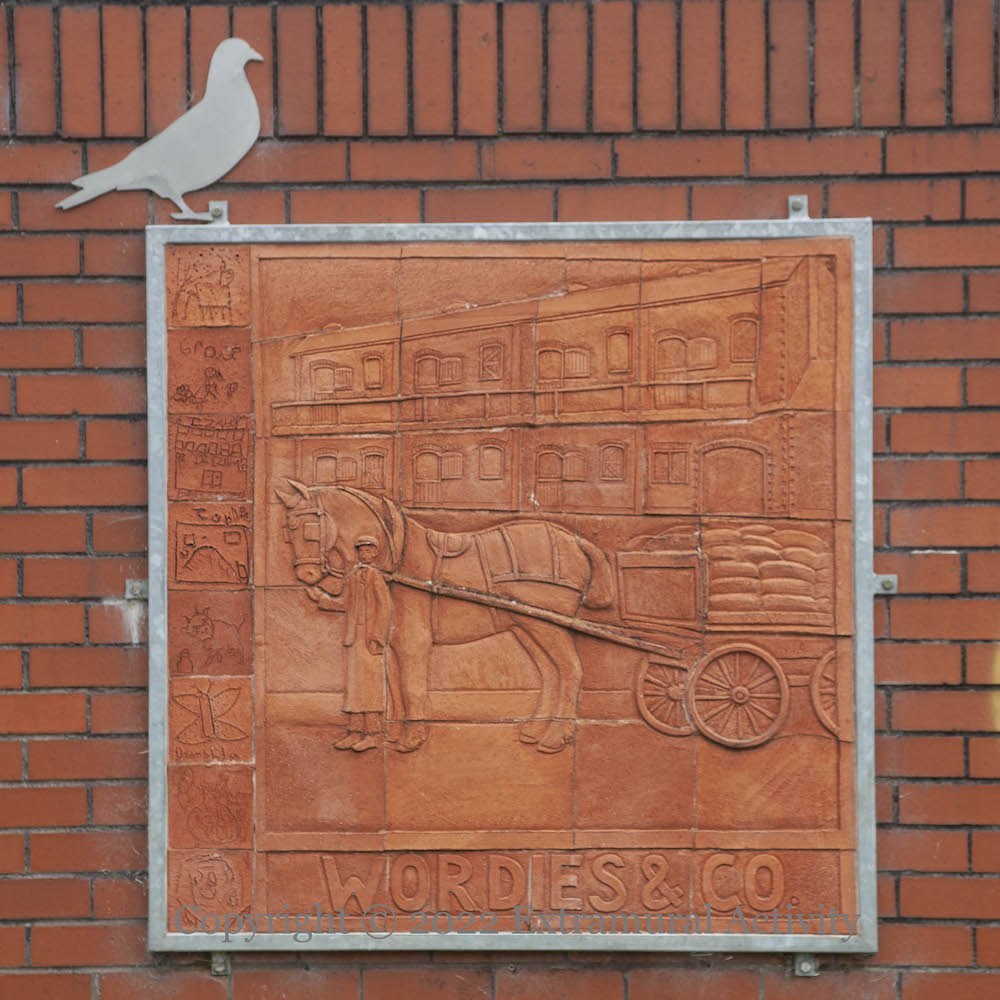
Below are two of the fifteen boards around the corner in Regent Street, showing the Carrick Castle public house and the old Unity flats.
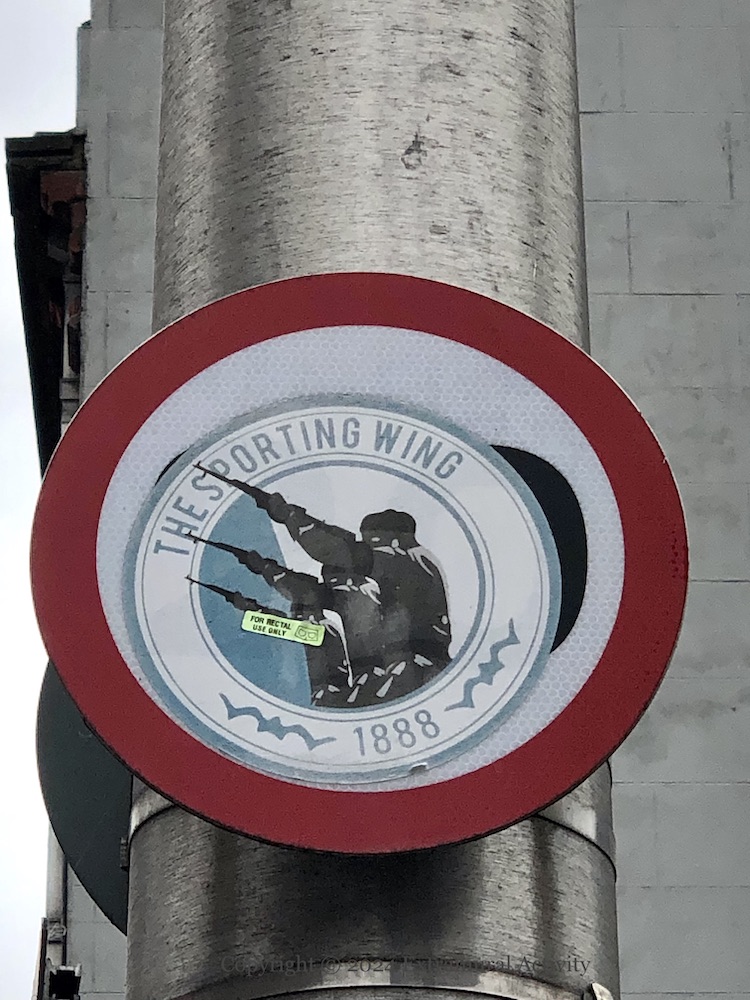
Other boards in the collection (not shown) show street games, street parties, and Alton United football club, a team founded in 1921 that played in the Falls League and won the 1923 Free State Cup Final (Bohs Sporting Life).
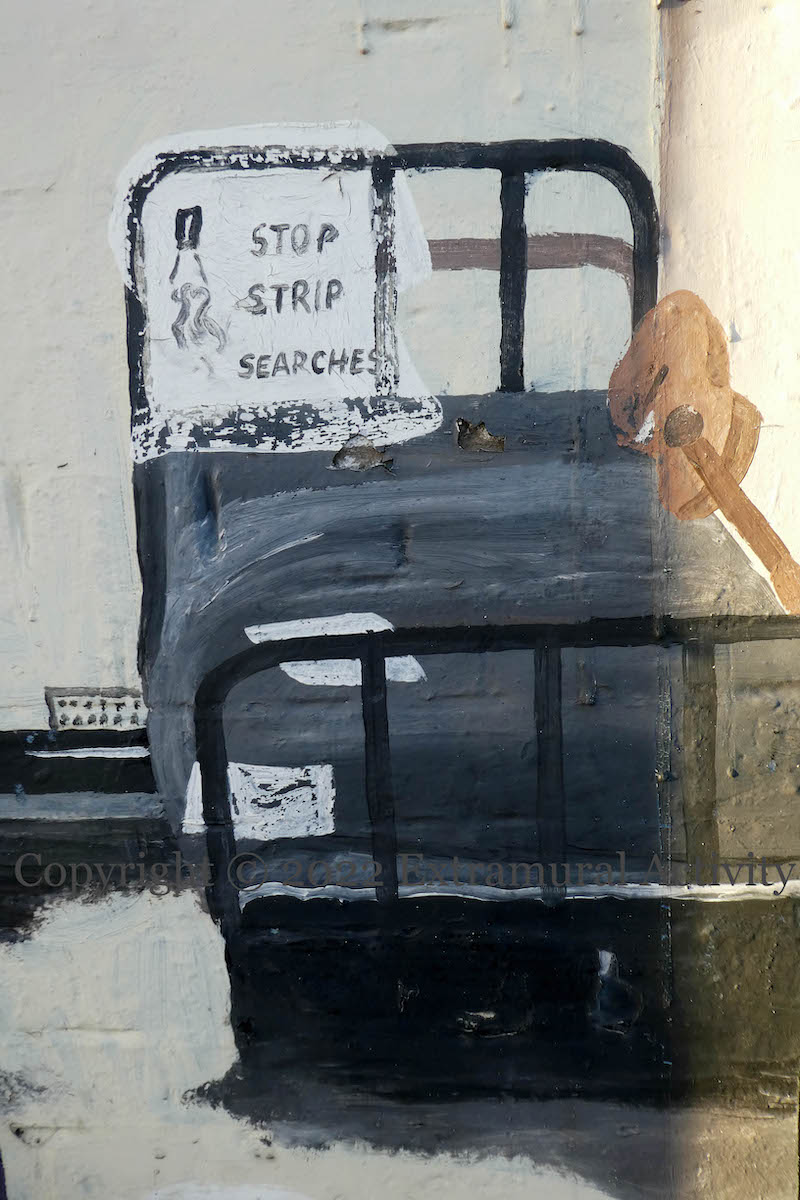
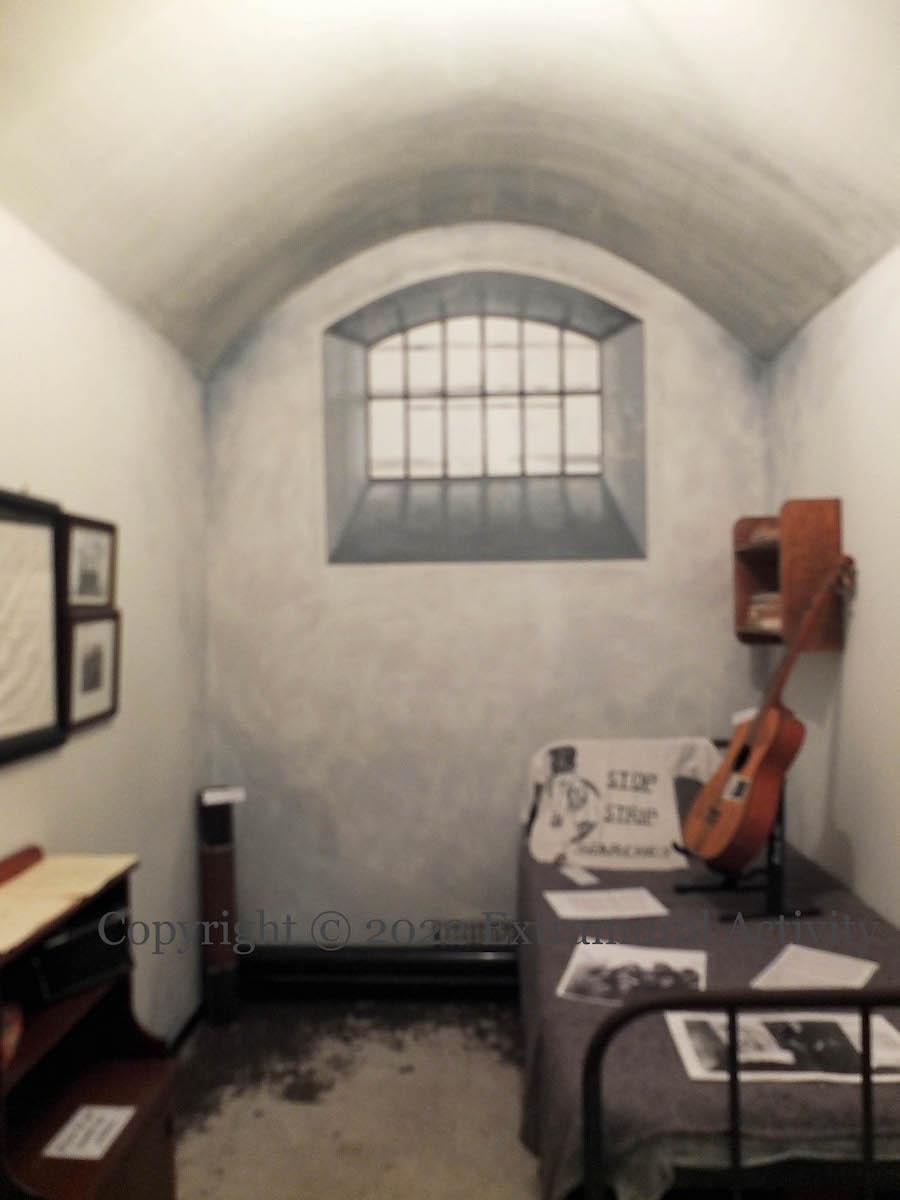
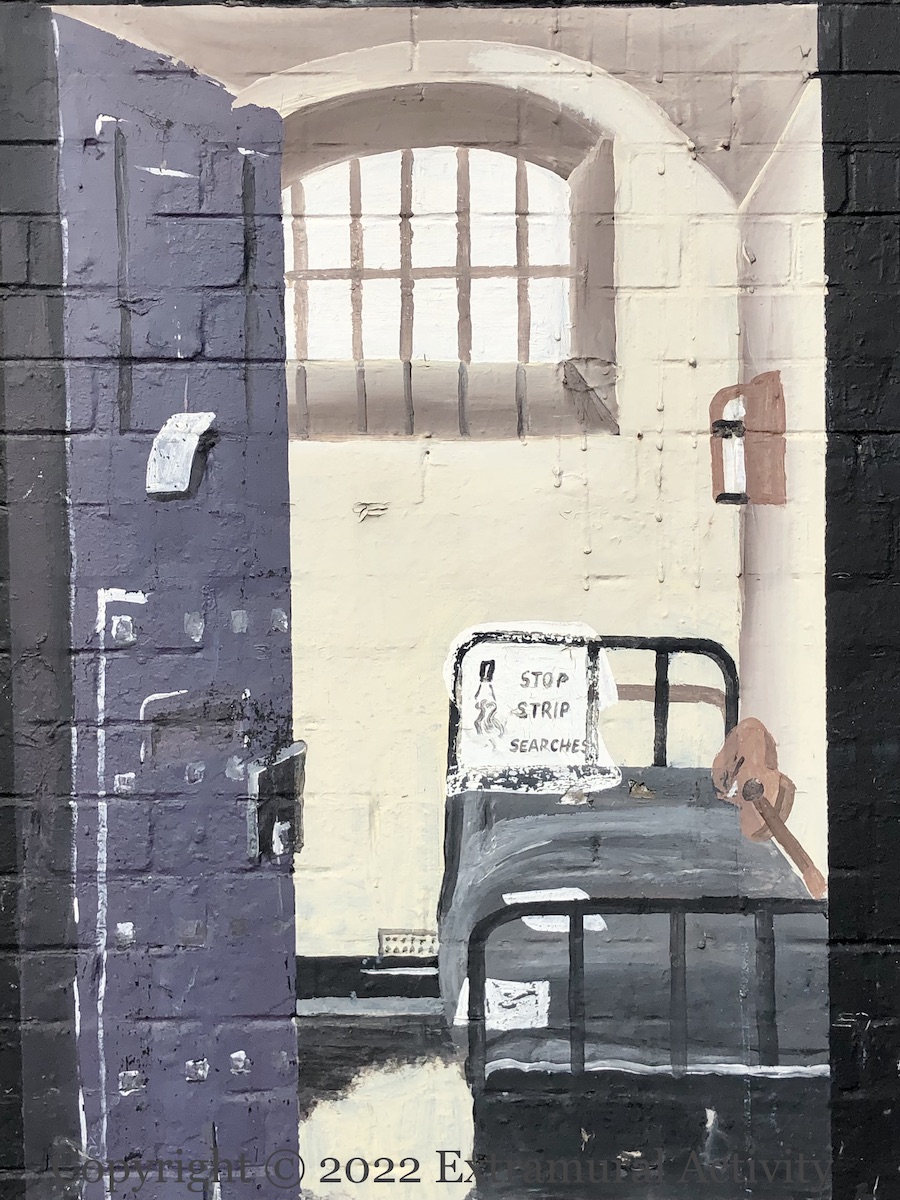
We have featured this ‘bookmark’-dimensioned mural on the so-called “International Wall” before (in 2018) but today include an image (the third one, below) of the replica cell inside the museum itself; a sharper image (and the source for the painting) can be seen on the home page of the Museum’s web site.
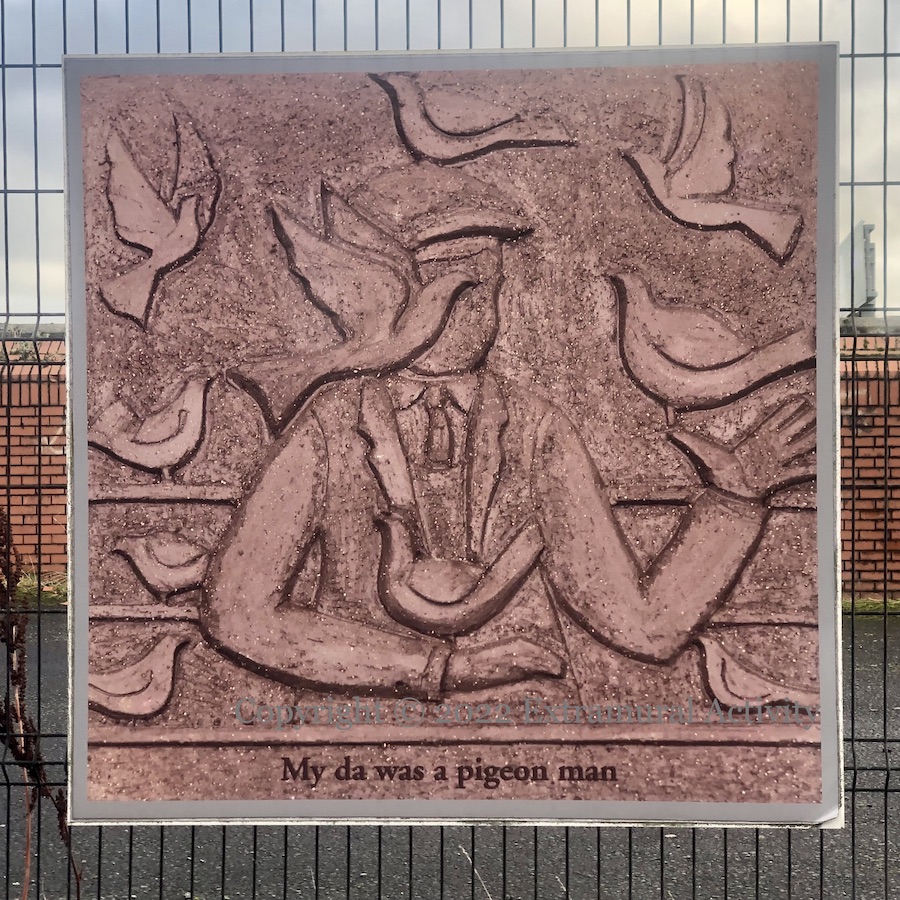
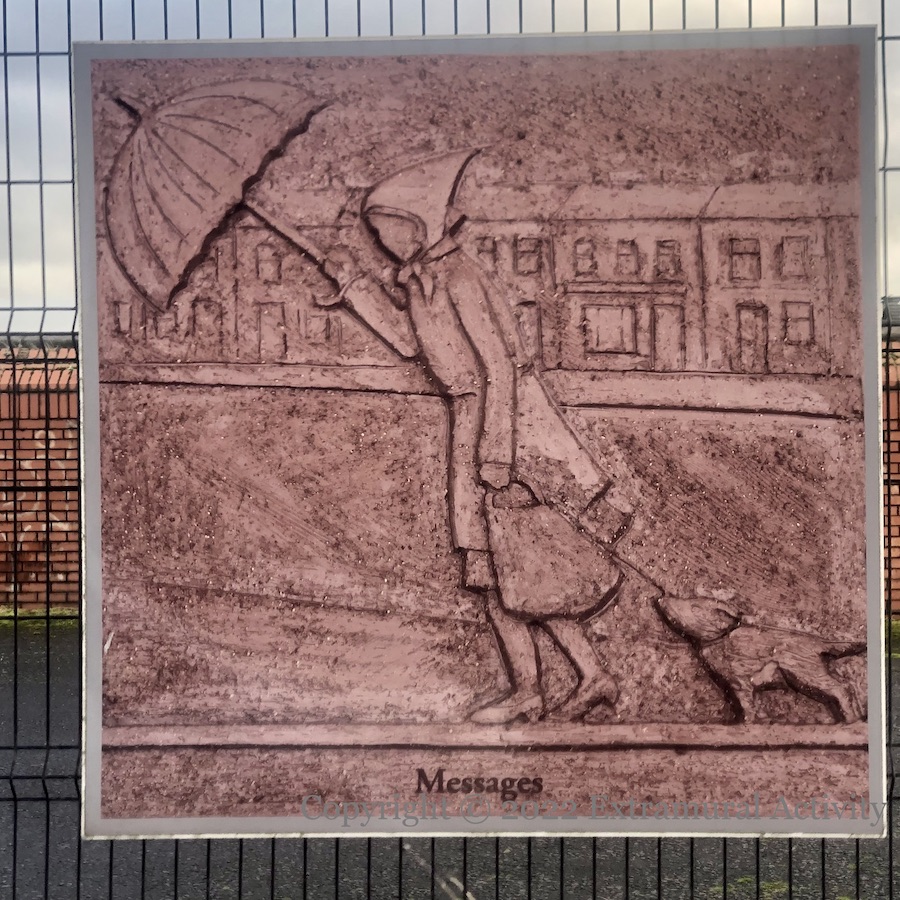
Here are six pieces on the fence above the Townsend Street gates in the west Belfast “peace” line (seen previously Da War Is Not Over Yet and Mickey Marley’s Roundabout) depicting life in years gone by in the Townsend Street/Brown’s Square area. The six are (from left to right on the street/top to bottom on this page):
Messages – “Doing” or “running” “messages” means grocery shopping.
Half Moon – the “half moon” was the semi-circular area on the pavement outside a terraced house that would become shiny with repeated washing. Here are some descriptions and memories from Belfast Forum.
Born, Wed And Buried On Townsend St
Atlas & Soho: The Soho iron foundry in Townsend Street was owned and managed by Robert Shipboy McAdam and his brother James (Ricorso | Grace’s); the Atlas foundry was at 73 Townsend Street and owned by Victor C Taylor (Lennon Wylie).
Dog Walking Man
These appear to be prints or photographs on boards, rather than stone casts as on the CNR side of the gates: see The Oasis.
According to a history of Brown’s Square, the area was known as “the oasis” during WWII on account of its 3 dance-halls and 22 pubs (Religion, Riots And Rebels). As with so much publicly-funded art (though we cannot find any provenance for this art) it depicts Belfast in the “good old days” – that is, before the Troubles, which produced the so-called “peace line” dividing west Belfast.
In this case of Brown’s Square, the area was further desolated in anticipation of a planned ring road (formally to be known as the Belfast Urban Motorway). the plan produced only the subterranean “Westlink” that cut Brown’s Square in half. The images in today’s post are in Townsend Street, (these are from below the security gates; there are others above it). Before the construction of the Westlink, which opened in 1981, Townsend Street was considered the western border, and part of Brown’s Square. John Gilbert’s photographs at the Belfast Archive Project show the area in the mid-seventies, when much of it had been abandoned but prior to construction.
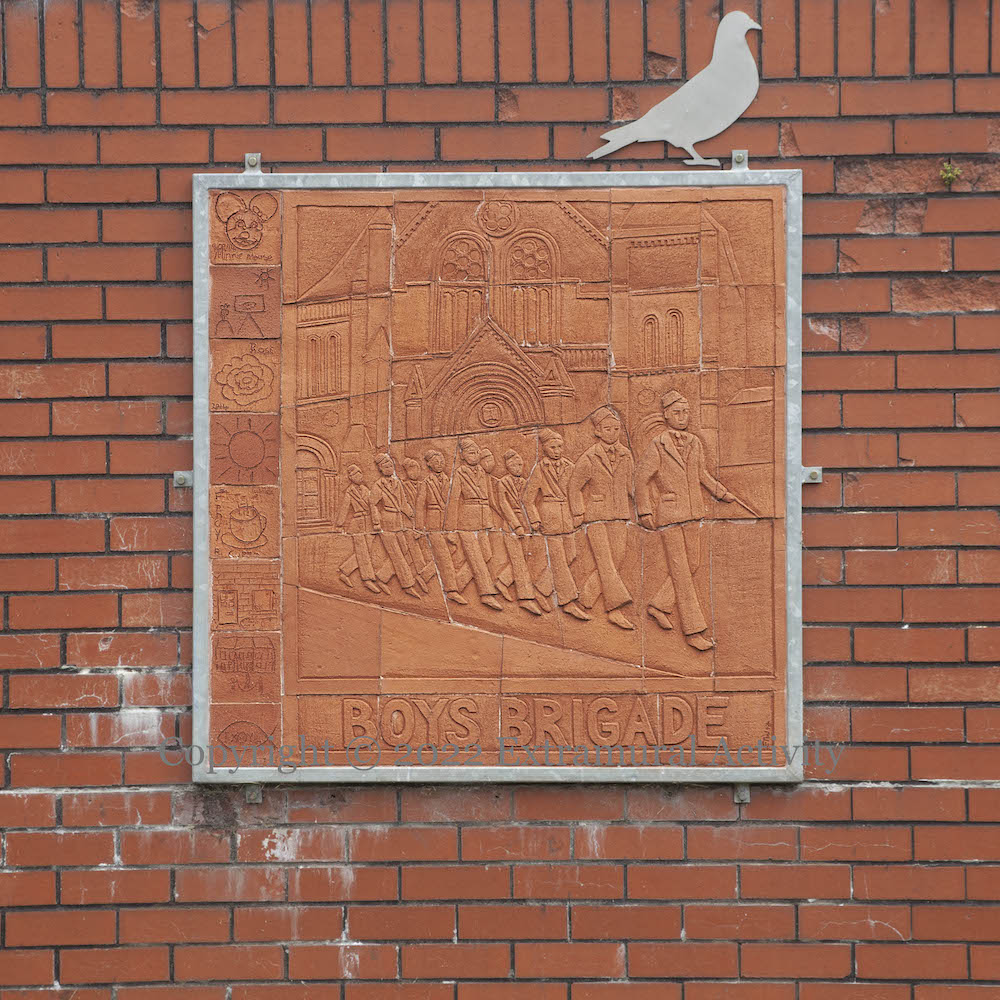
The Boys Brigade are shown parading in front of Townsend Presbyterian which held its last service in September and is being handed over to the Ulster Orchestra (Belfast Media) (see previously On The Other Side for stained glass windows inside the church). The Brown’s Square school was at the junction of Brown’s Square (the street) and Melbourne Street.
“The Woodvale Blitz occurred when German air raids took place during the spring of 1941. The first raid took place on April 7th/8th, the next raid came at Easter on April 15th/16th, the 3rd air raid would come on the May 4th/5th and the final air raid would take place May 5th/6th. These attacks on the city would result in over 1,000 civilians being killed and 1,5000 injured. This was the highest casualty rate of any air raids outside London during the Second World War. It was in these streets that the Woodvale area was indiscriminately attacked resulting in the total devastation of Heather Street, Ohio Street, Palmer Street and Disraeli Street resulting in the loss of many lives injuring 100’s more, most of those lives lost were families who had lived in the area for generations. The effects of the air raids and the devastation caused would last for many years to come.” The names of 79 victims are given on the right (see close-up below).
“The Woodvale Blitz April-May 1941. ‘But for the loyalty of Northern Ireland we should have been confronted with slavery and death and the light which now shines so strongly throughout the world would have been quenched’ – Prime Minister Winston Churchill 1945. We remember those who were killed, those who survived and those lives changed forever.”
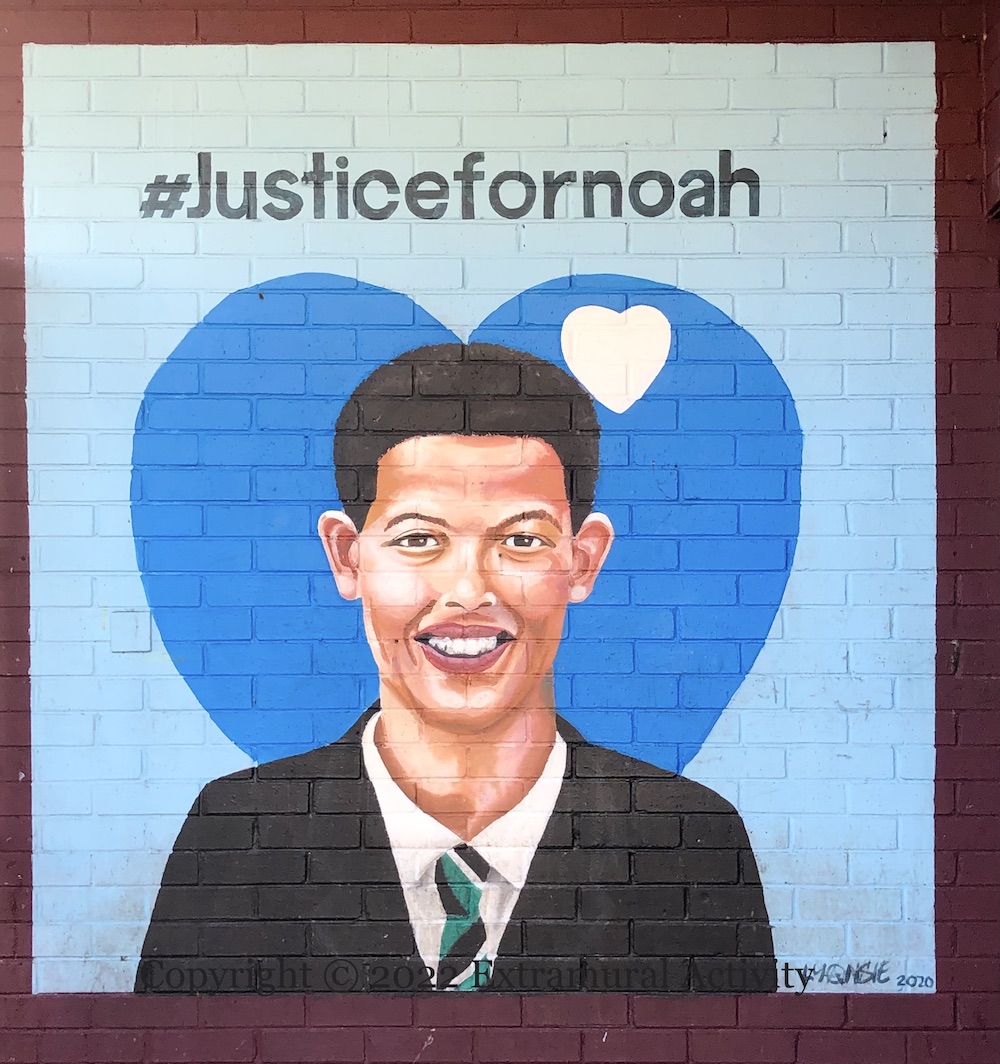
Noah Donohoe would have been 17 last Friday (November 25th). The inquest had been due to start on the 28th, but after the Coroner Joe McCrisker ruled at the end of October that it should take place in front of a jury, a preliminary hearing will be held on December 9th at which a new date might be set (Belfast Media | Sunday World).
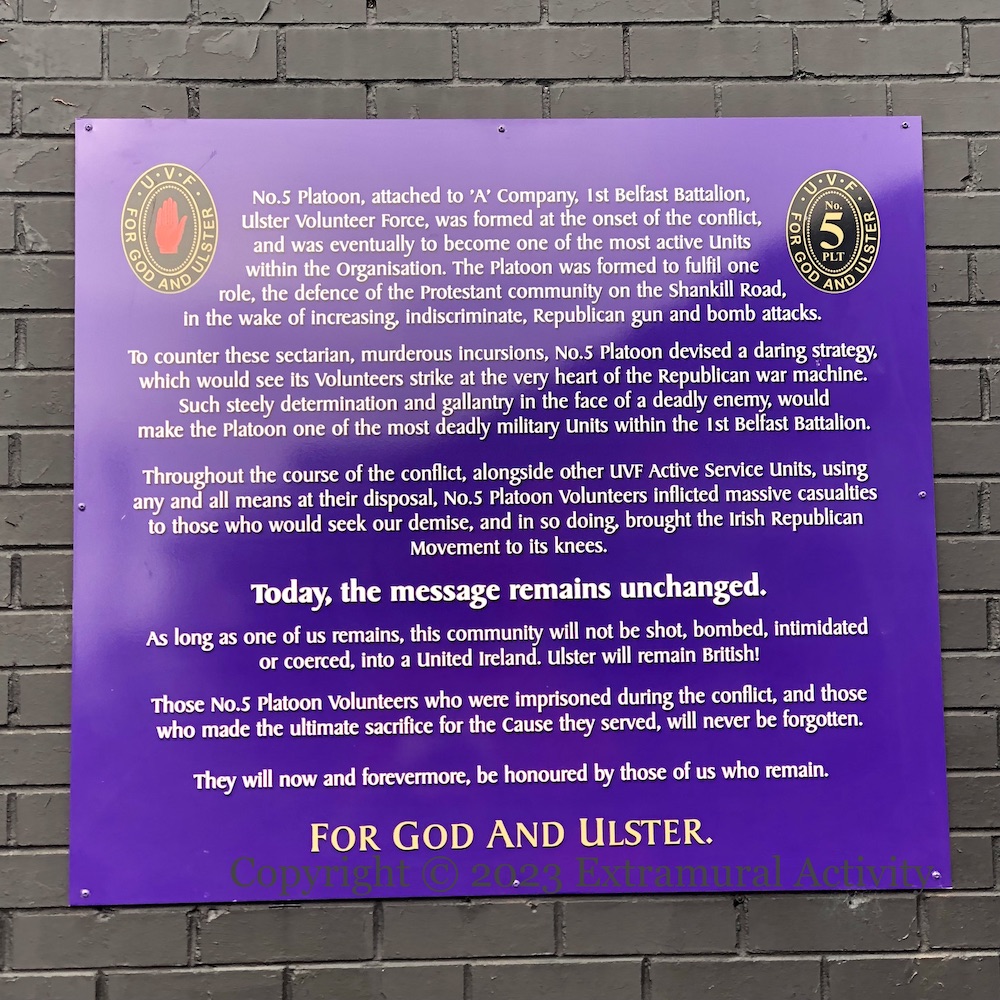
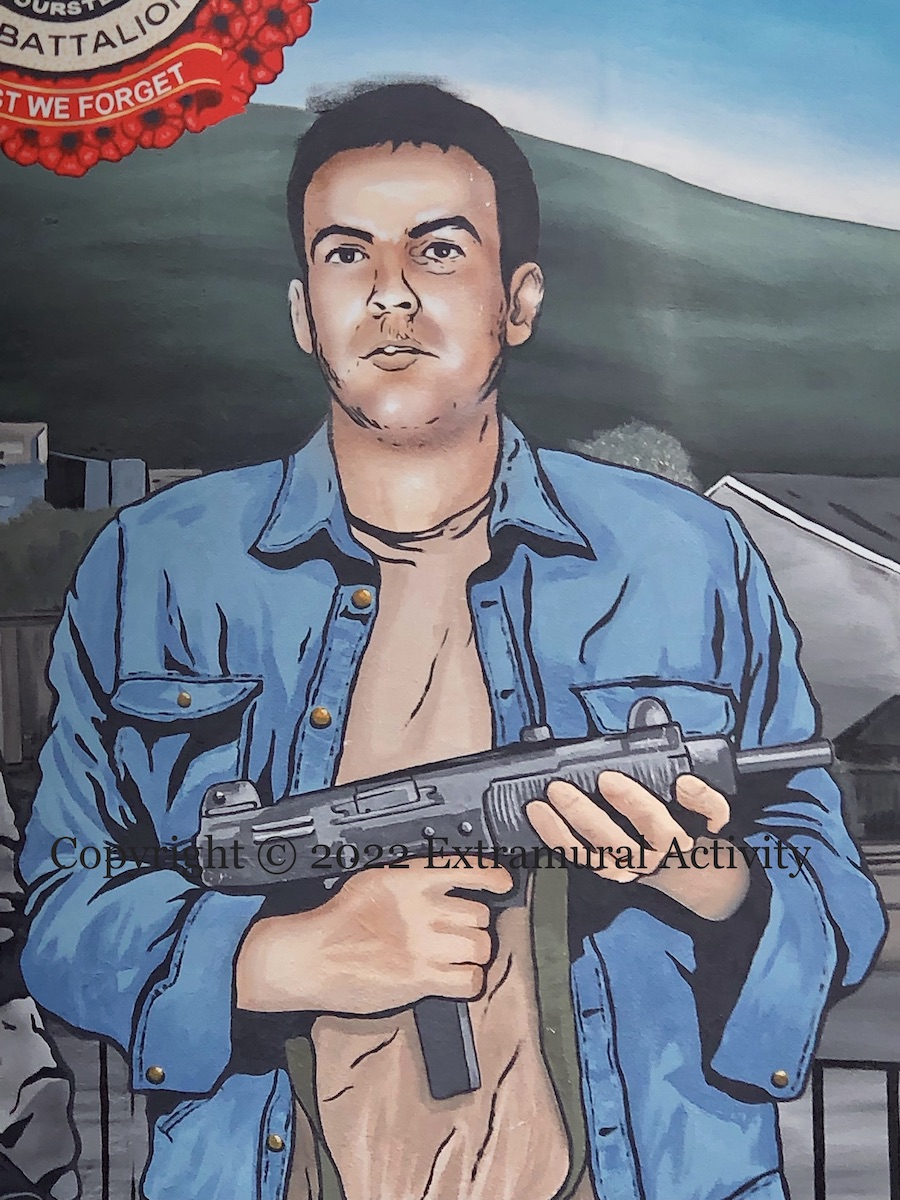
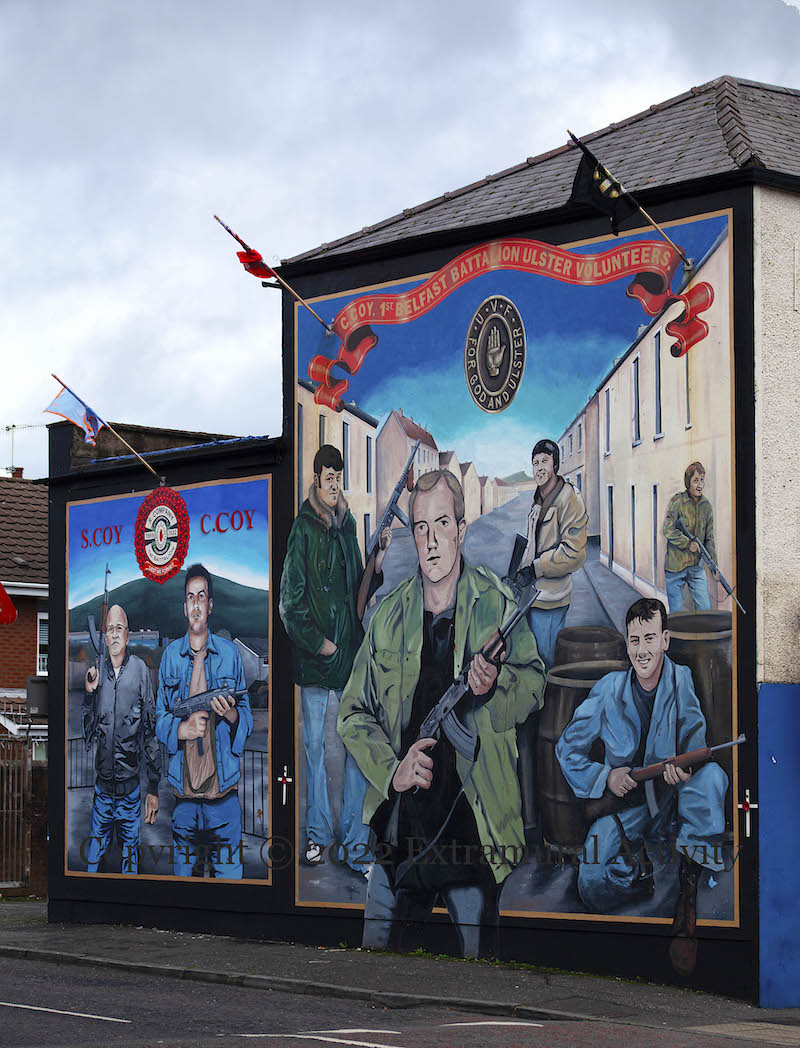
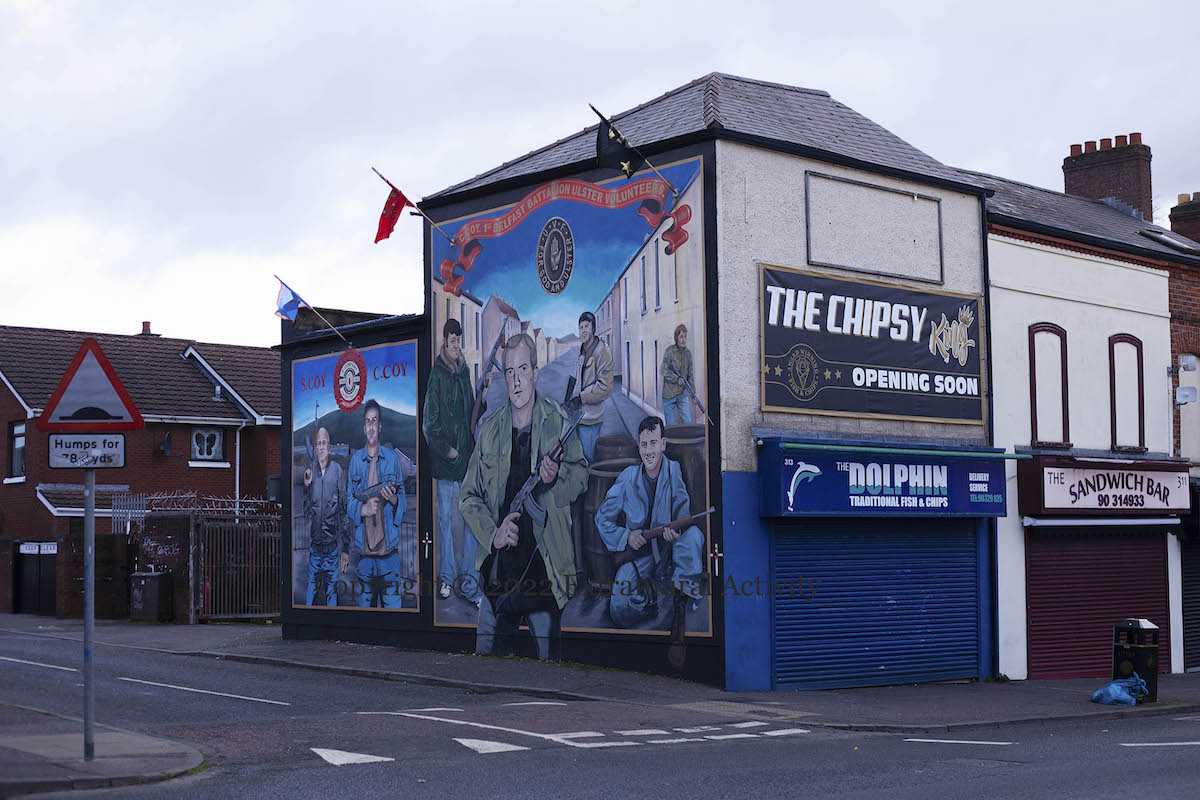
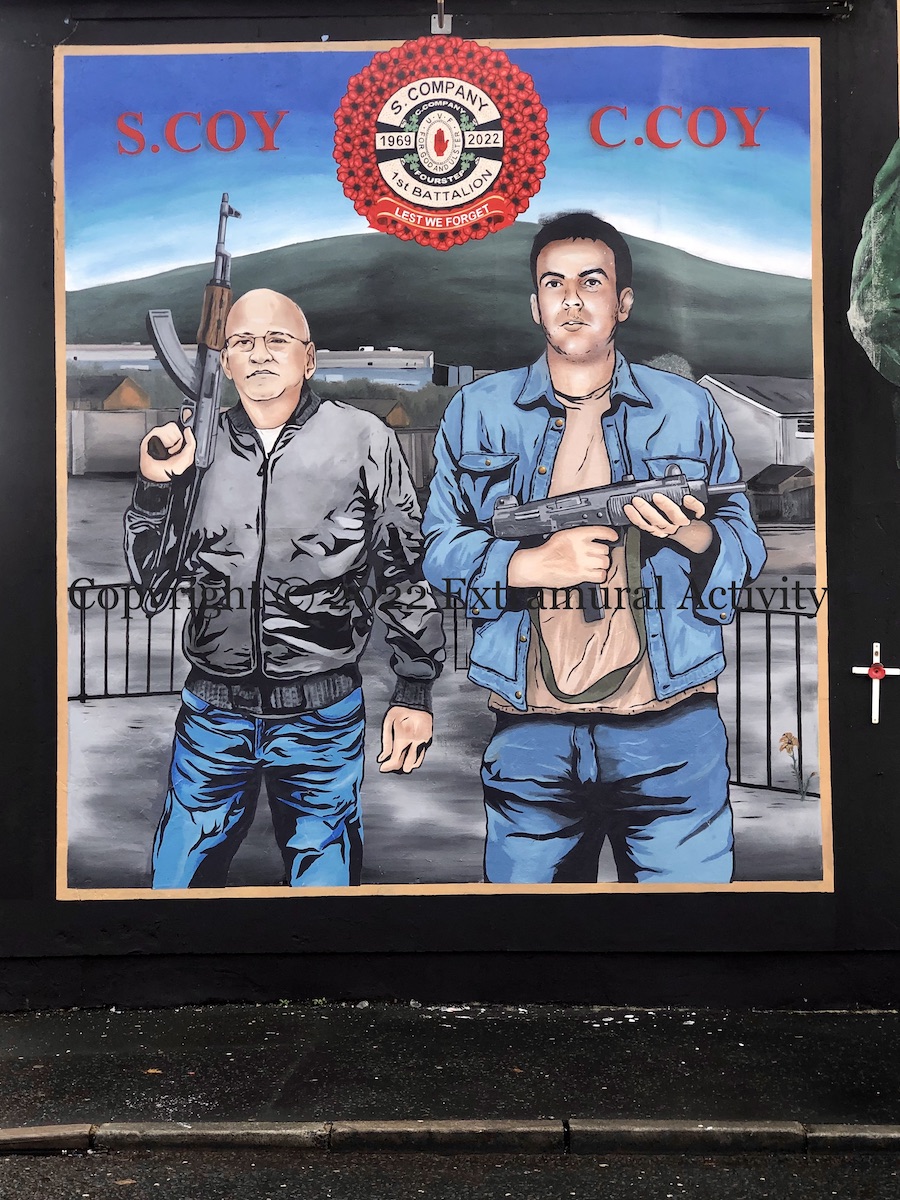
Joe Coggle and Paul McClelland were arrested as they sat with weapons in a car on the Falls Road in 1991; they were jailed for 18 years (Independent) but released under the Agreement. The Sunday World also report that the pair were involved in the killing of David Braniff in 1989. Both UVF men are said to be deceased; Coggle died in September.
Coggle had previously served 18 months for running over and killing Elizabeth Masterson in Beechmount in 1986 and her descendants objected to the mural (Irish News | BBC).
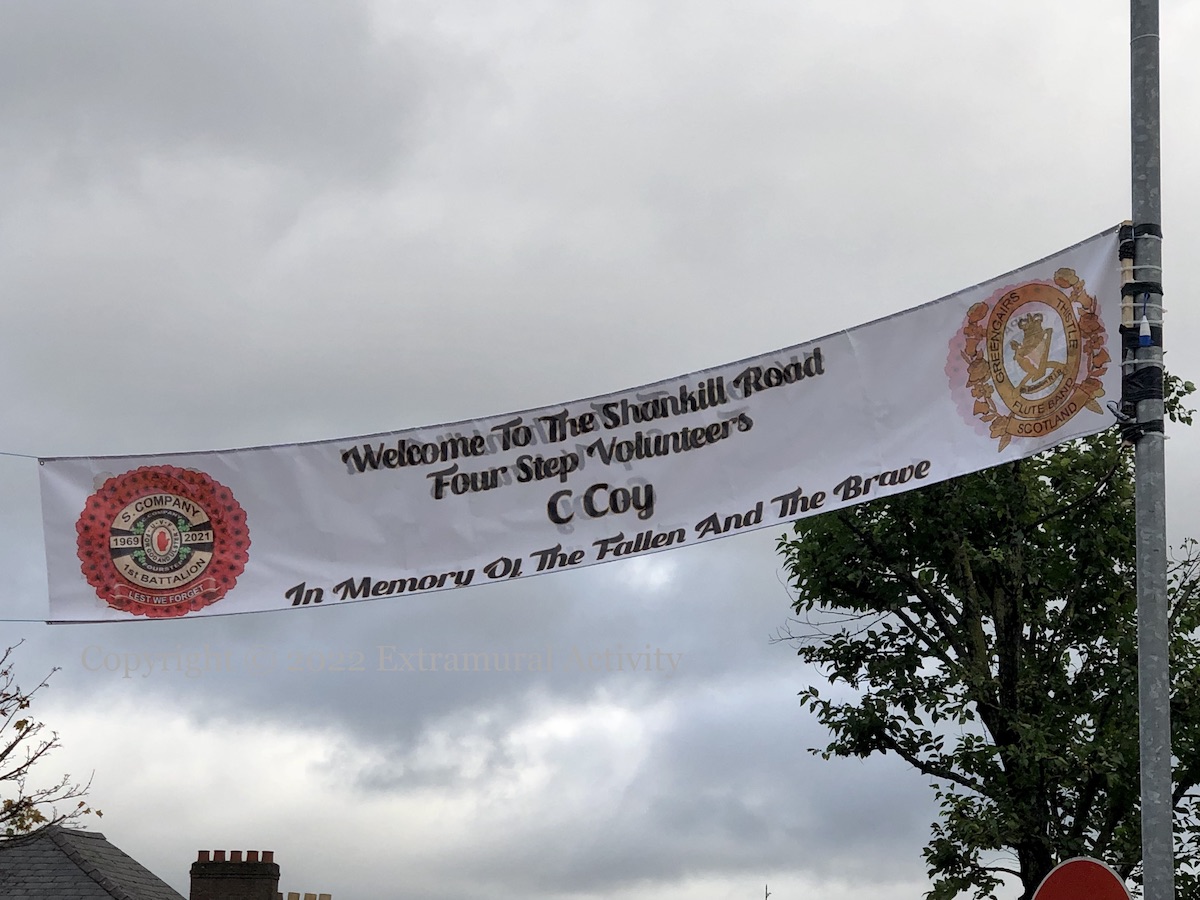
S Company was a predecessor to C Company; it existed from 1969 to 1974, when C Company was formed (see M08105 for an older S Coy – C Coy mural in Ballygomartin). A previous UVF uzi can be seen in M01186.
Yesterday was Thanksgiving in the United States, also commonly known as “turkey day”, and the orgy of eating is today followed by the orgy of spending – Black Friday. The terms are gradually creeping into local parlance, to mark an artificial beginning to the Christmas shopping season. One local petrol chain made headlines yesterday with its “Thanksgiving Thursday” promotion (BelTel | Belfast Live gallery), while one Woodvale butcher is encouraging people to “order your Christmas meat now”, using a saving club if necessary.
The mural underneath is Dan Kitchener’s Night Taxi.
IRA volunteer Frank “Bap” McGreevy spent 15 (Irish Times) or 17 (An Phoblacht) years in Long Kesh (for a crime of which he was innocent, says Anthony McIntyre; possibly the car bombing of the Klondyke Bar in Sandy Row). He was attacked by two assailants at his home in (the old) Ross Street, near this memorial board, in March 2008 and died of his wounds after three days in hospital.
As the wide shots below show, there are now a dozen pieces along this stretch of the Falls Road. The other pieces have all been seen in previous posts. For close-ups, see Kieran Abram with Charlie Hughes plaque and map of The Falls Road Massacre Unrepentant Republicans Billy McKee, Alec Murphy, and Brendan Hughes; the Falls Curfew Web Of Corruption: Drop The Rents; PSNI Not Supported; Divis 81 in Defund The Police For A Socialist Republic
“Britain in Palestine & Ireland” The Balfour Declaration of November 1917 is seen as a pivotal moment in the history leading to the what is formally known as the State Of Israel, as it made the UK the first major government to endorse the idea of a homeland for Jews (WP).
The poster (for a talk in Cultúrlann) is in Allworthy Avenue; the board is on Northumberland Street. The latter draws parallels between Ireland and Palestine: homelands partitioned for British imperialist interests, struggles for freedom met with British barbarism … forbidden from speaking their native tongue, faiths outlawed … . About 650 former RIC members were recruited to the “British Gendarmarie” that would police what was called “Mandatory Palestine” (Palestine Studies | Irish History) after WWI.
The League Of Nations mandate putting the UK in change of the Palestinian territory was replaced (in 1947) by a UN plan for partition, which triggered an internal war between Jews and Arabs, and when the UK ended the mandate and evacuated from Palestine in May 1948, Israel declared independence and neighbouring Arab states entered the conflict. About 700,000 Arabs were displaced during the fighting. Key48 (tw) advocates for the right of return and uses as a symbol the keys that householders took with them when they fled.