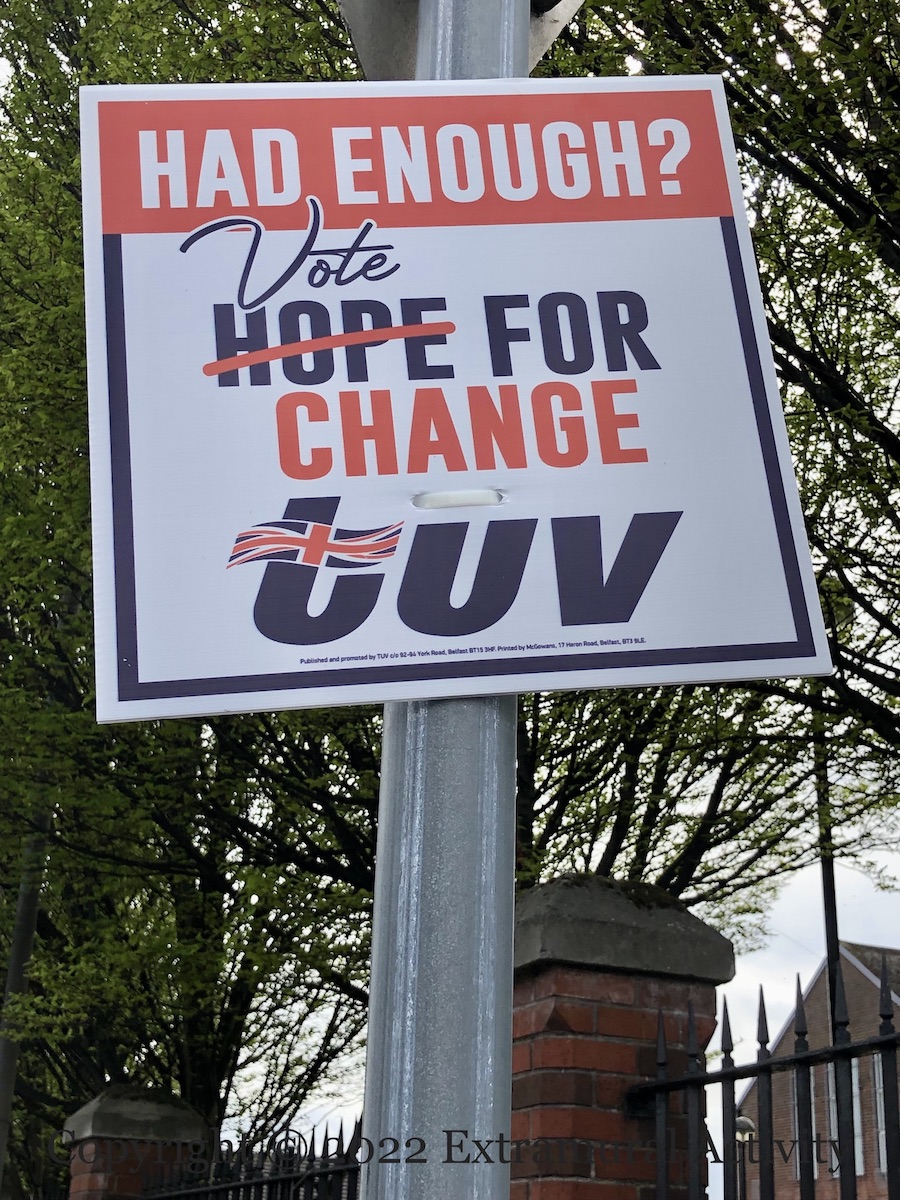
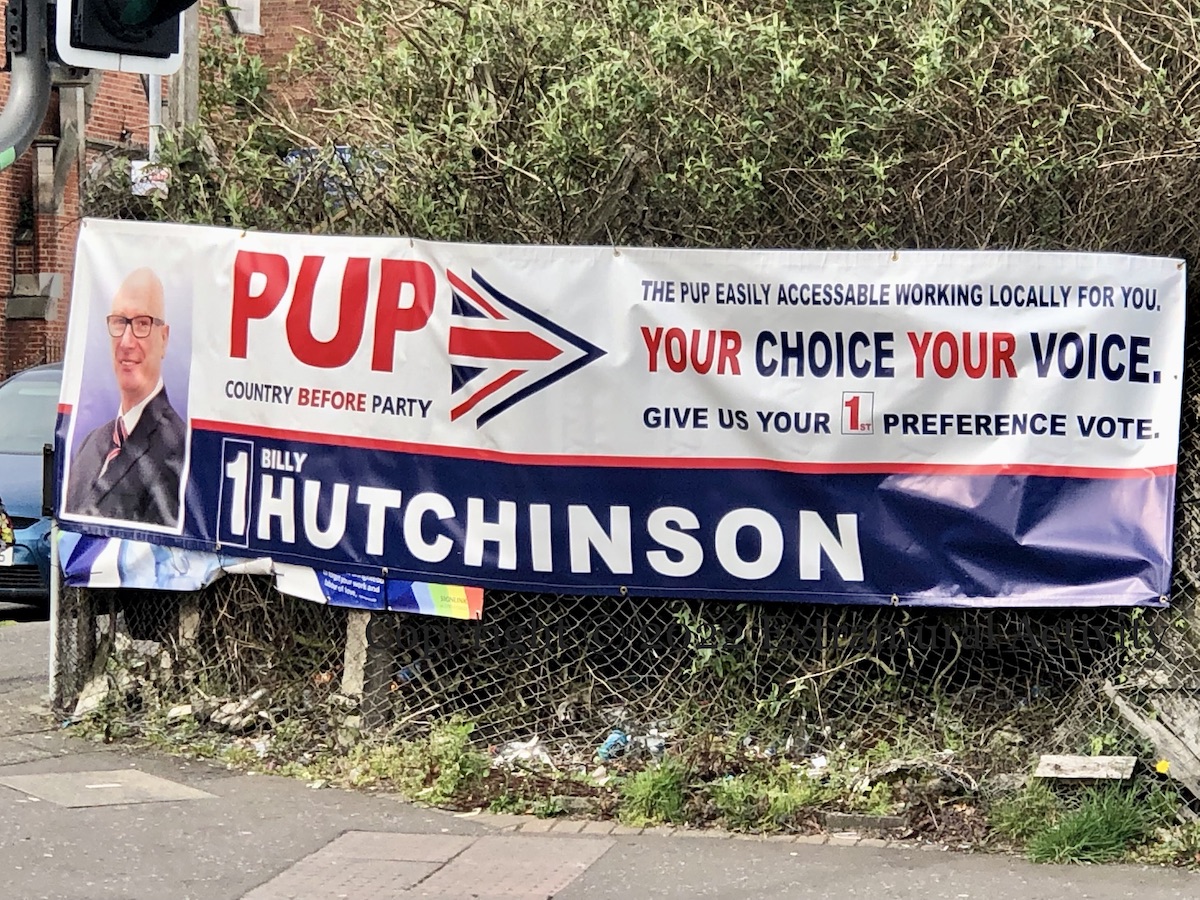
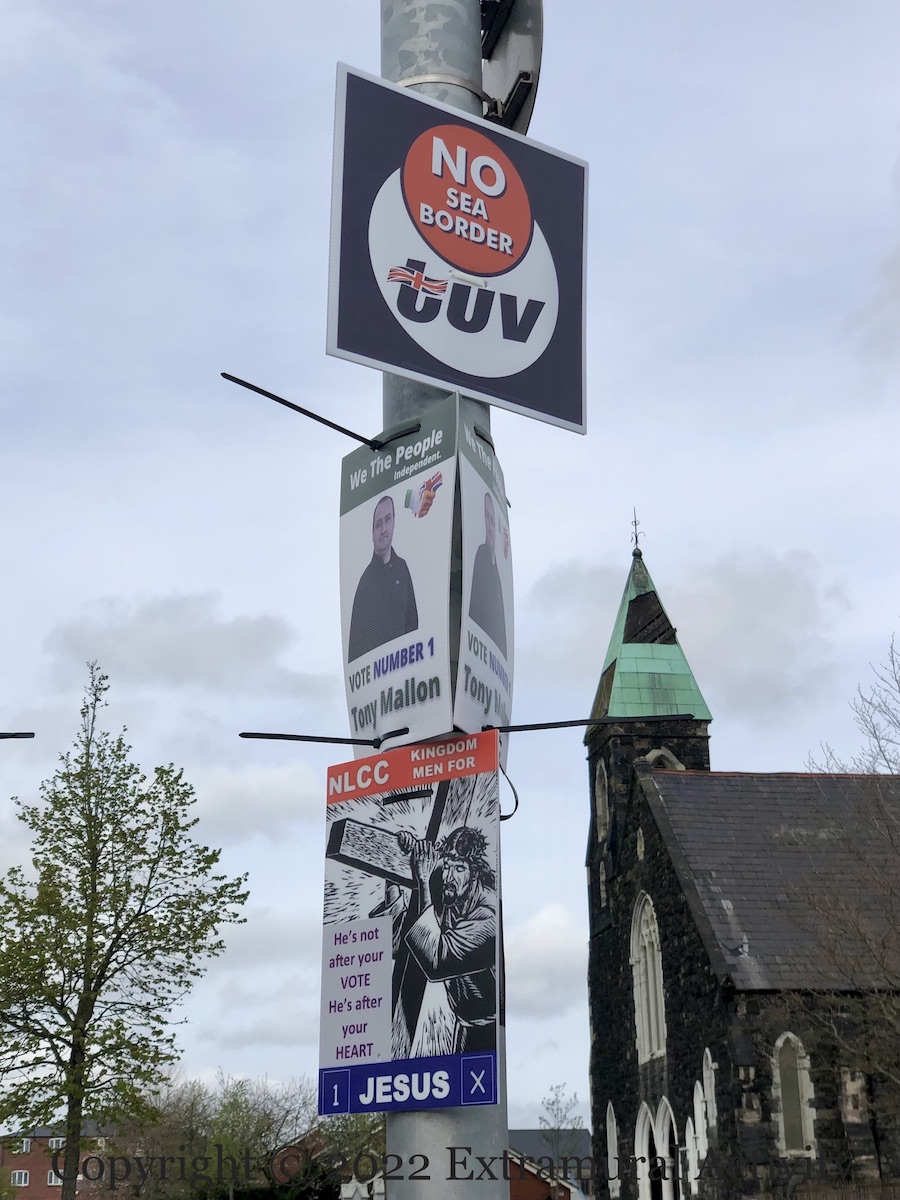
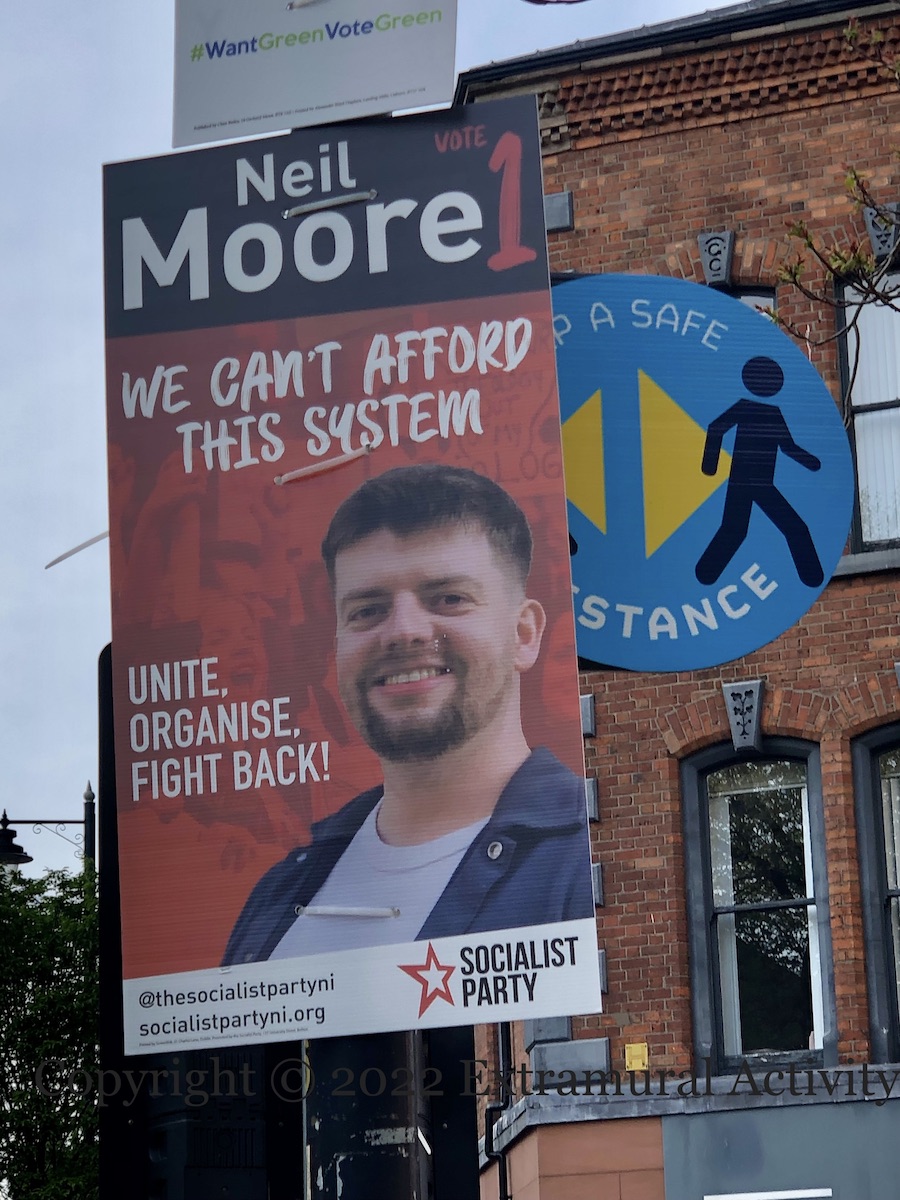
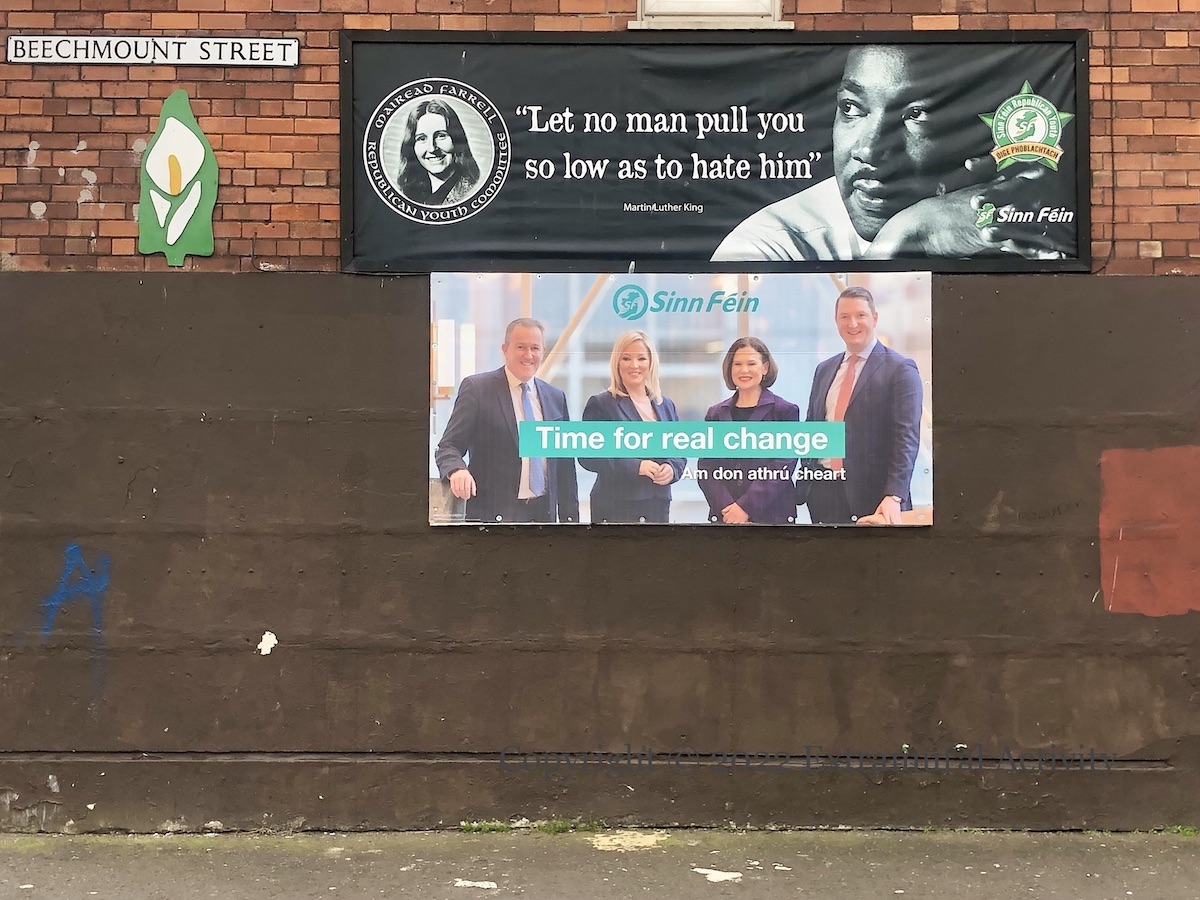
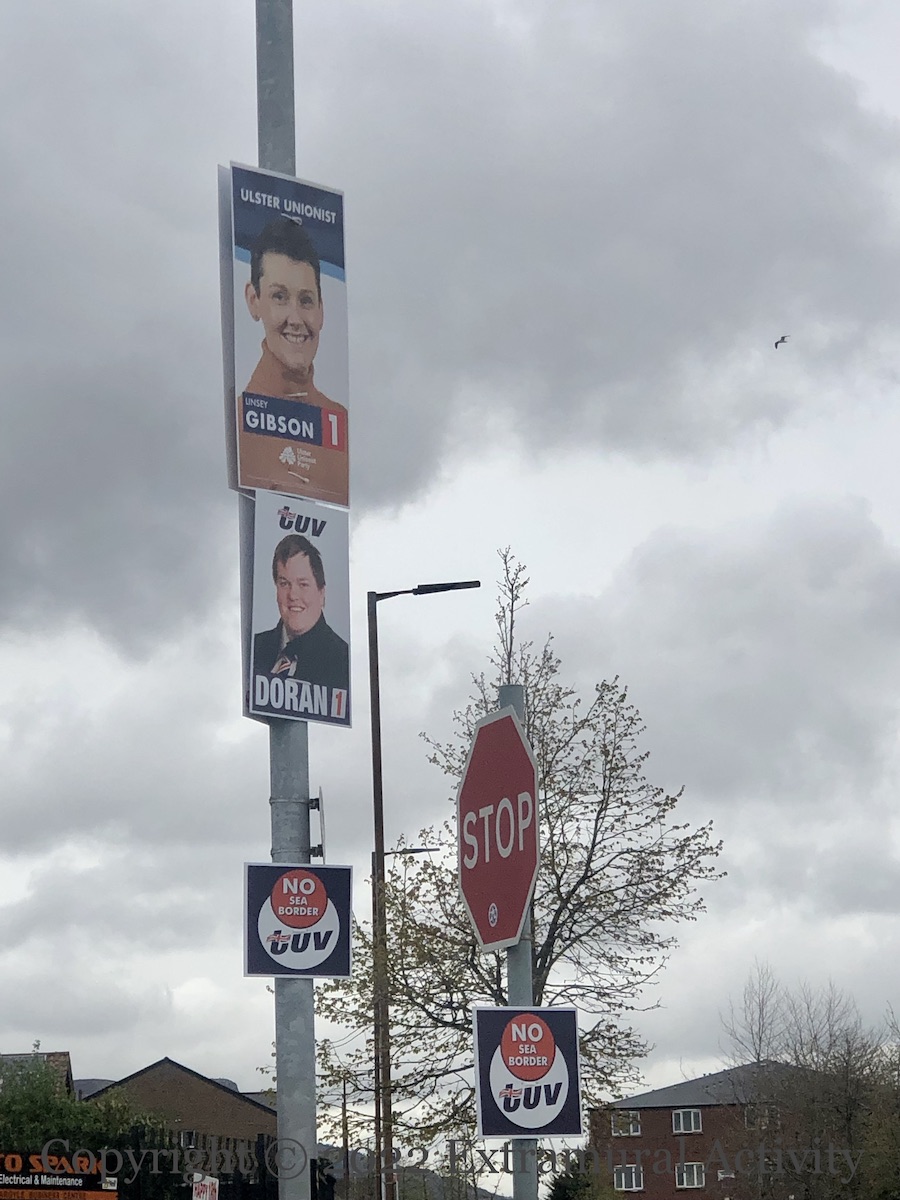
The NI Assembly election is this day week (Thursday May 5th). Here is another gallery of electoral posters. Where last week’s selection included a Noah Donahoe placard in electoral style, this weeks’ includes one for New Life City Church (ig), again in the style of an electoral candidate: “He’s not after your vote, he’s after your heart.” Also shown are: (above) TUV’s ‘don’t hope; vote’; Sinn Féin’s “Time for real change” on top of a “spoil your vote” stencil; the PUP’s “country before party” with anti-woke independent Tony Mallon’s “We the people”; and last, Neil Moore of the Socialist Party “We can’t afford this system” (namely, capitalism).
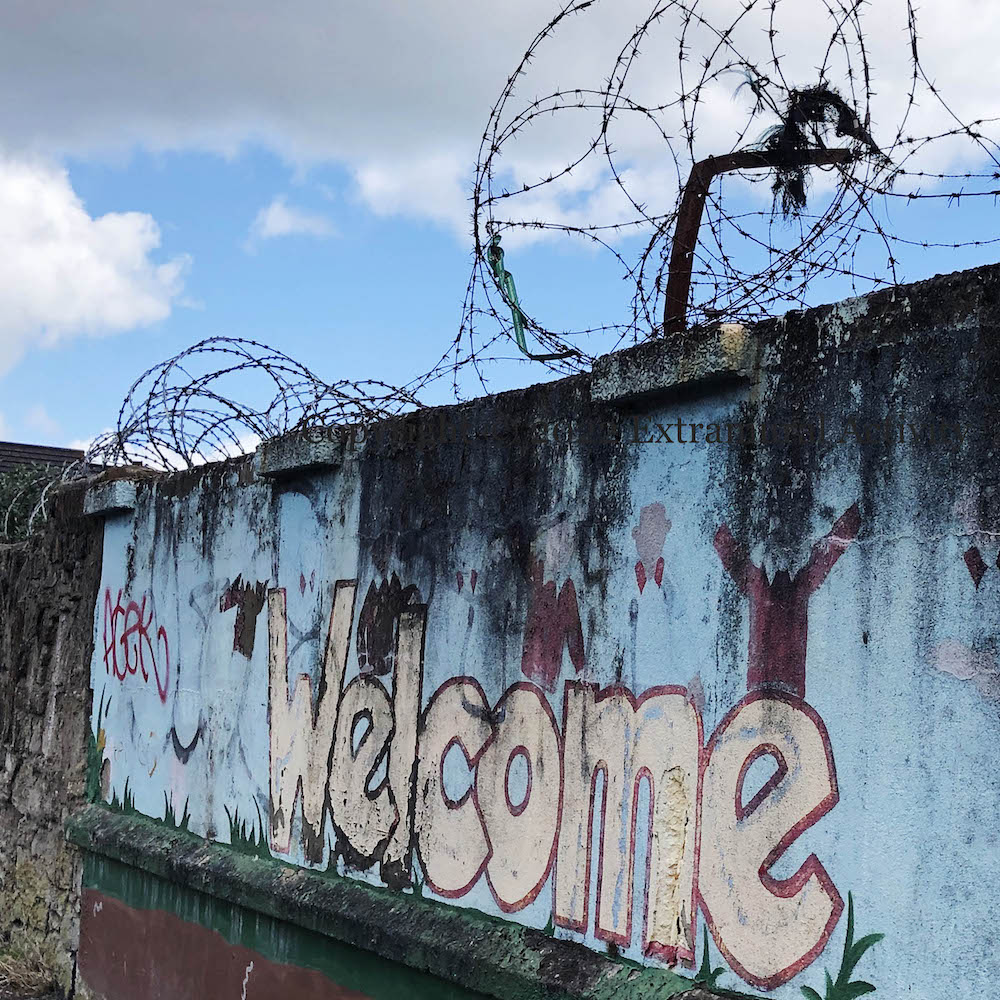
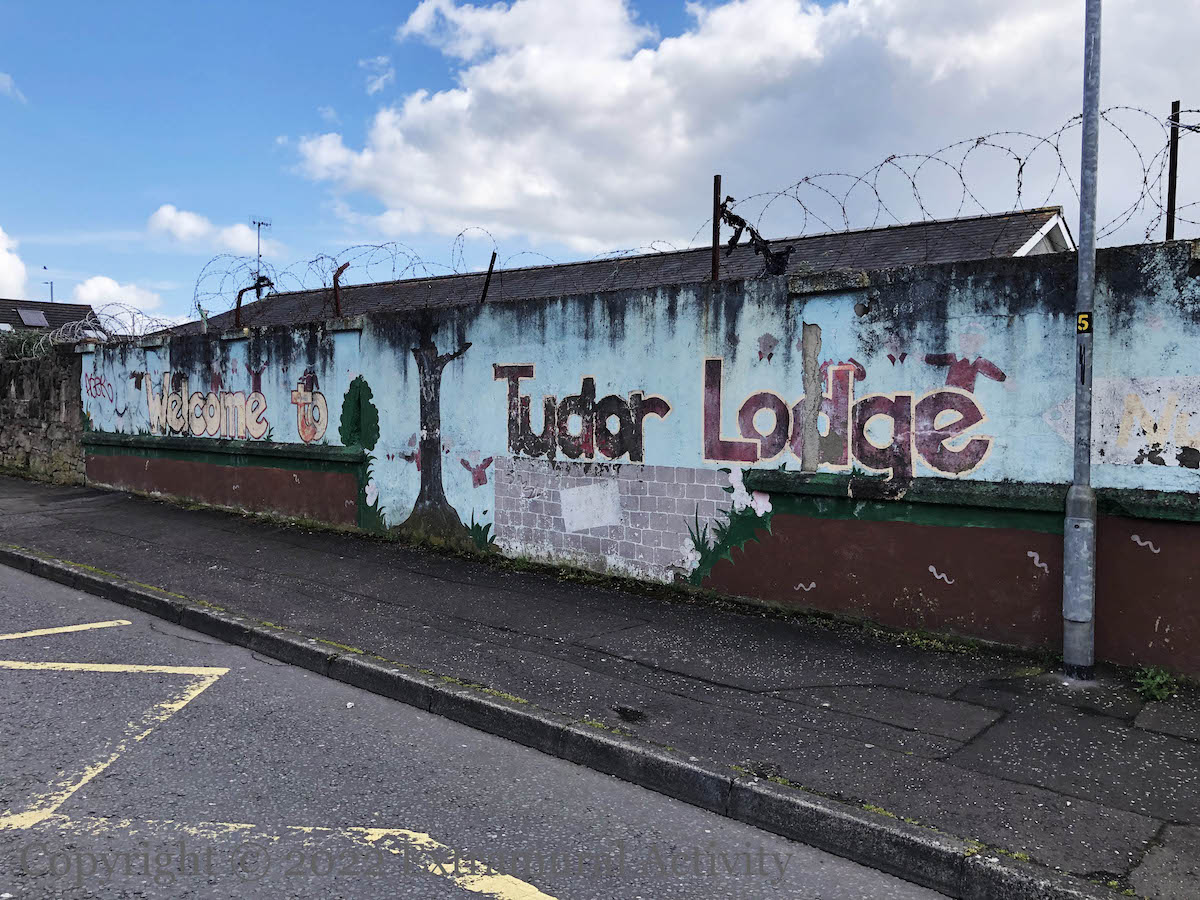
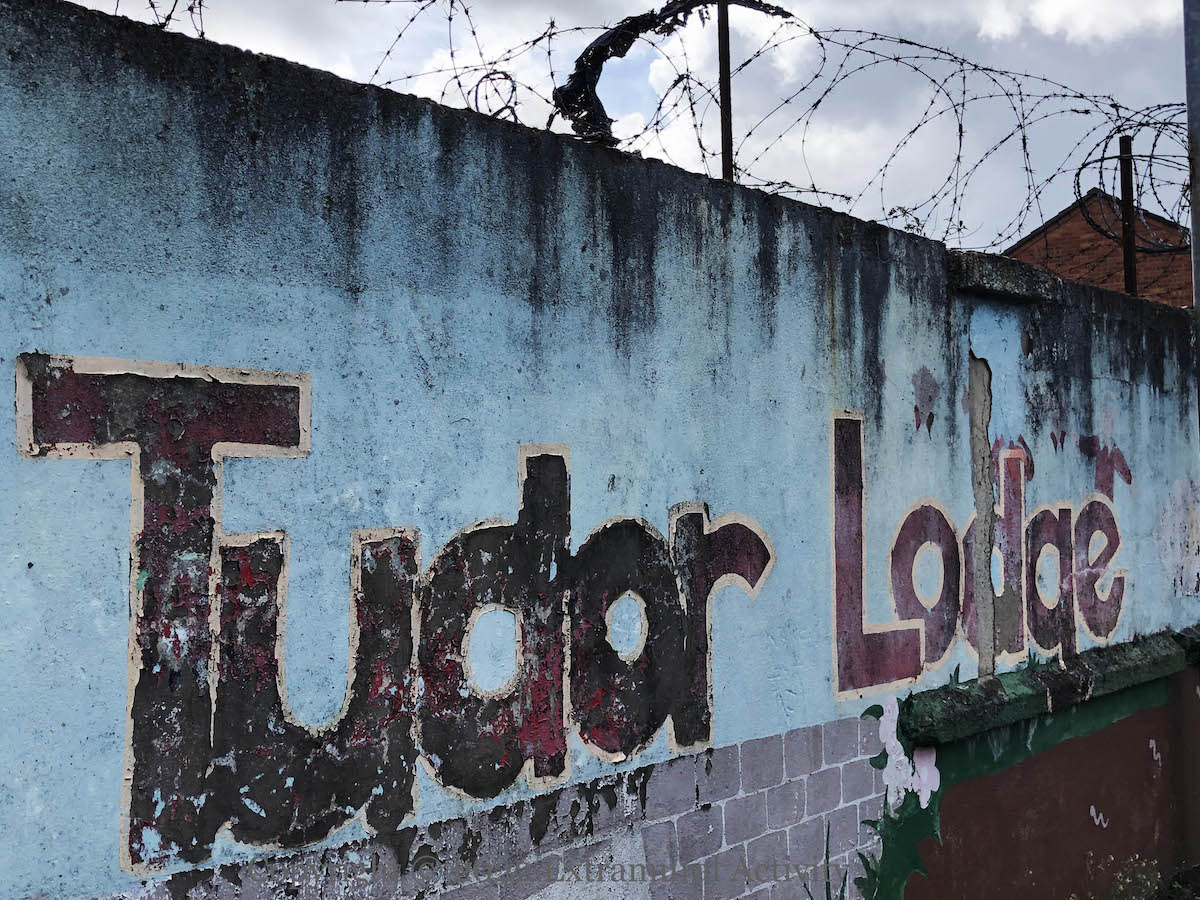
Tudor Place (the street) is now simply the top end of Crimea Street, but in years past it was physically separated and accessible only from the Crumlin Road. The reason for that seems to be that in the 1800s it was the grounds of a lodge, called Tudor Lodge. The nursery school is on the site of the old lodge (which is not the lodge known as Old Lodge) and takes its name.
This mural – which perhaps memorialises the RUC in particular – has evidently been rolling since 1984 and the two different styles of house and brick (in the image below) explain its longevity – it’s in a narrow alley between two different stages of construction on Sydney Street West, initially to where the old Harrybrook Street used to be and then extended out to Snugville Street.
When Cupar Way was constructed (circa 1984) it was a joining stretch of road put in place where the houses along Ashmore Street had been, and joined up (part of) Cupar Street and the old First Street; the new road in toto was called “Cupar Way”. Ashmore had been left undeveloped after the start of the Troubles and despite the presence of the separating barrier from 1969 onward, many of the houses on both sides of the wall were demolished or left vacant for various lengths of time. Carlow Street, for example, was redeveloped in 1981, even before the modern wall was put in place, while Ashmore and the bottom of the old Sugarfield Street was not redeveloped until the mid-1990s. (For more info and maps see the Visual History page of the Cupar Way “peace” line.)
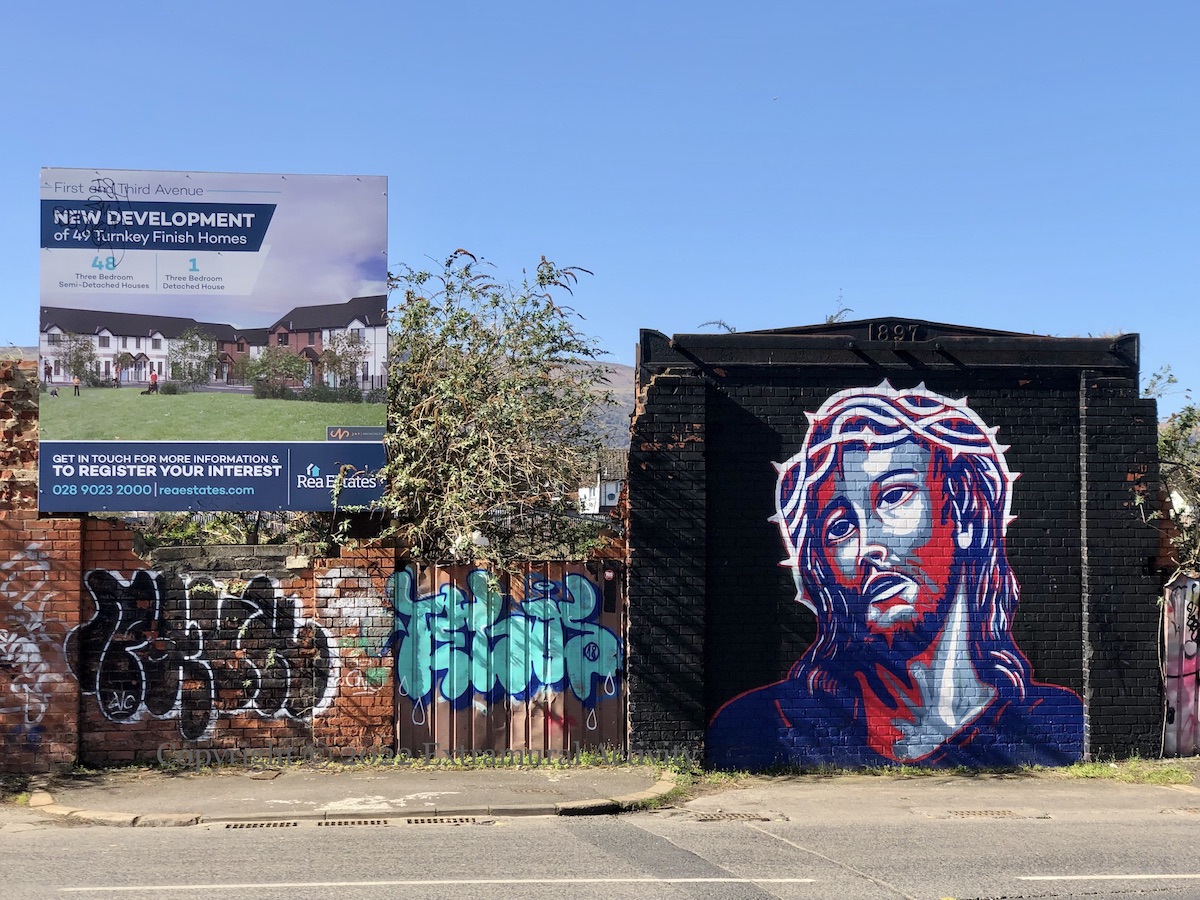
The block between First and Third streets was occupied (from 1956 onward) by a Wellman Smith Owen Engineering factory, which had earlier been the Falls Foundry (History); it’s not clear what the date “1897” refers to (above Jesus’s head – for the mural, see Prince Of Peace Line) as the foundry was established in 1845 (Lindsay 1970, Textile History 1.3). Wellman still exists as a company but the foundry at First Street was closed in 1968 (Grace’s). The site is finally to be redeveloped with 48 semi-detached and one detached house – images of what the houses will look like upon completion can be seen at Rea Estates (web).
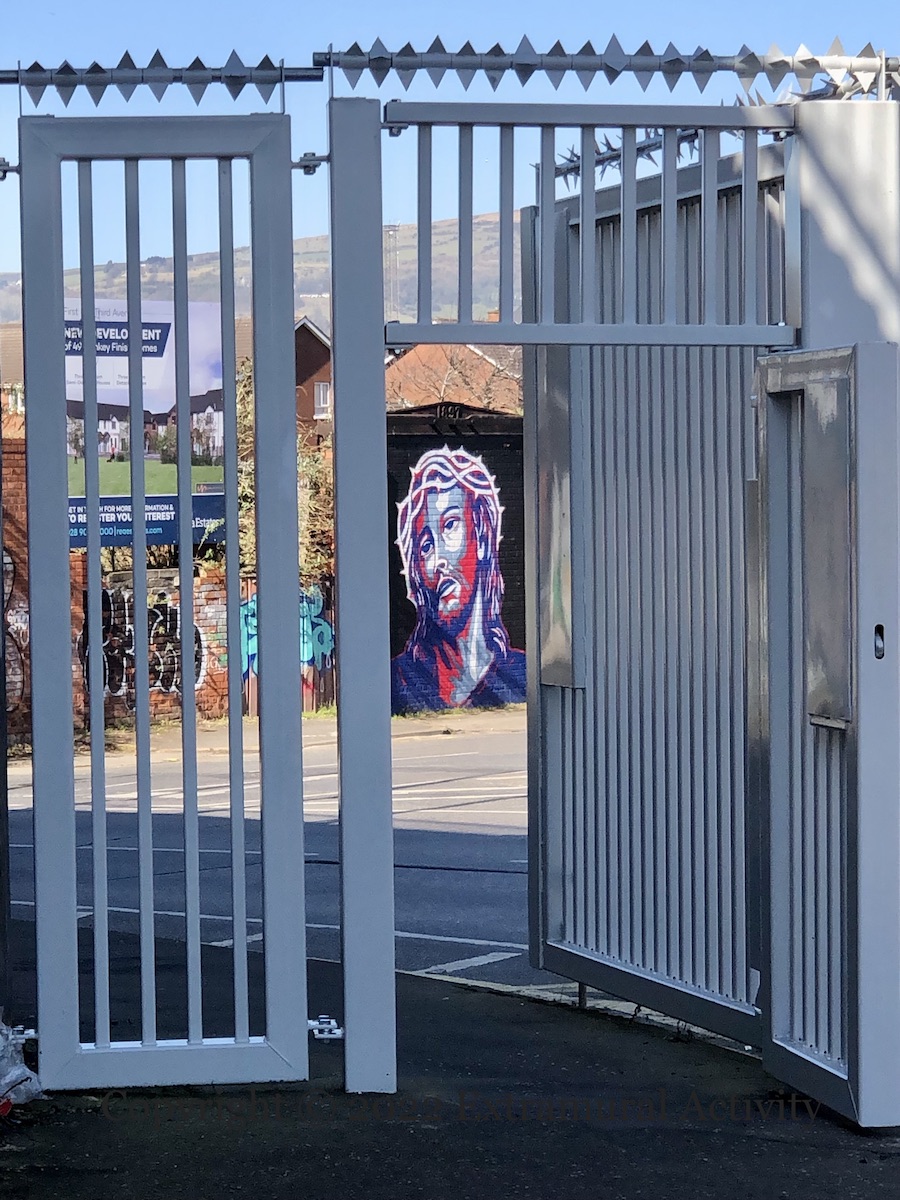
The new development is presaged by the (May 2021, but still looking fresh) scaled-down security gate at the junction with North Howard Street – similar to the changes made at Workman Avenue and at Townsend Street – with pedestrian gates on both footpaths and no metal sheeting to obscure the view.
The SNP [Scottish National Party] became the largest party in the Scottish parliament in 2007 and went from 6 Westminster seats in 2010 to a completely dominant 56 (of 59) in 2015. It spearheaded a referendum in 2014, which was defeated 55% to 47% (WP). Scottish independence is again included in the manifesto of the SNP – though it has not committed to a specific date on account of the Covid pandemic – and as such the SNP remains a threat to the integrity of the UK that Northern Ireland unionists espouse. Hence this sticker on the Shankill Road, even though the SNP does not stand any candidates in NI elections.
“Ireland supporrs [sic] the people of Donetsk”. “Donetsk” is the name of both the oblast and its captial city, as is “Luhansk”. In 2014, pro-Russian separatists in both capitals stormed government buildings, and each held a referendum (not recognised by any regime, including Russia) and declared independence from Ukraine (WP). As a prelude to the 2022 invasion of Ukraine by Russia, Vladimir Putin recognised the two independent republics and sent Russian troops into the two regions on a so-called “peace-keeping mission” (CNN), which subsequently became an invasion of Ukraine generally, with the Russians “demilitarising” various Ukrainian cities and suburbs – including towns in Donetsk and Lunhansk (e.g. in Donestsk | in Luhansk) by destroying them (Battle Of Bến Tre). Russian forces were forced to retreat from around Kyiv (roughly March 25th onward) and some have been put in place around Izyum and along the eastern Russia-Ukraine border in preparation for a battle for Donetsk and Luhansk; however, it is not clear that it will take place on the Russian’s terms (ISW), and instead that Ukrainian forces will eventually attempt to regain the separatist-controlled areas.
Today is the last day to register to vote in the May 5th Assembly election. You can register on-line at gov.uk. Currently, 1.4 million people are registered in Northern Ireland (BBC). As today’s images make clear, the poles of Belfast are already cluttered with placards for the various candidates, as well as the salient issues, such as the “sea border” and the death of Noah Donohoe.









 Extramural Activity