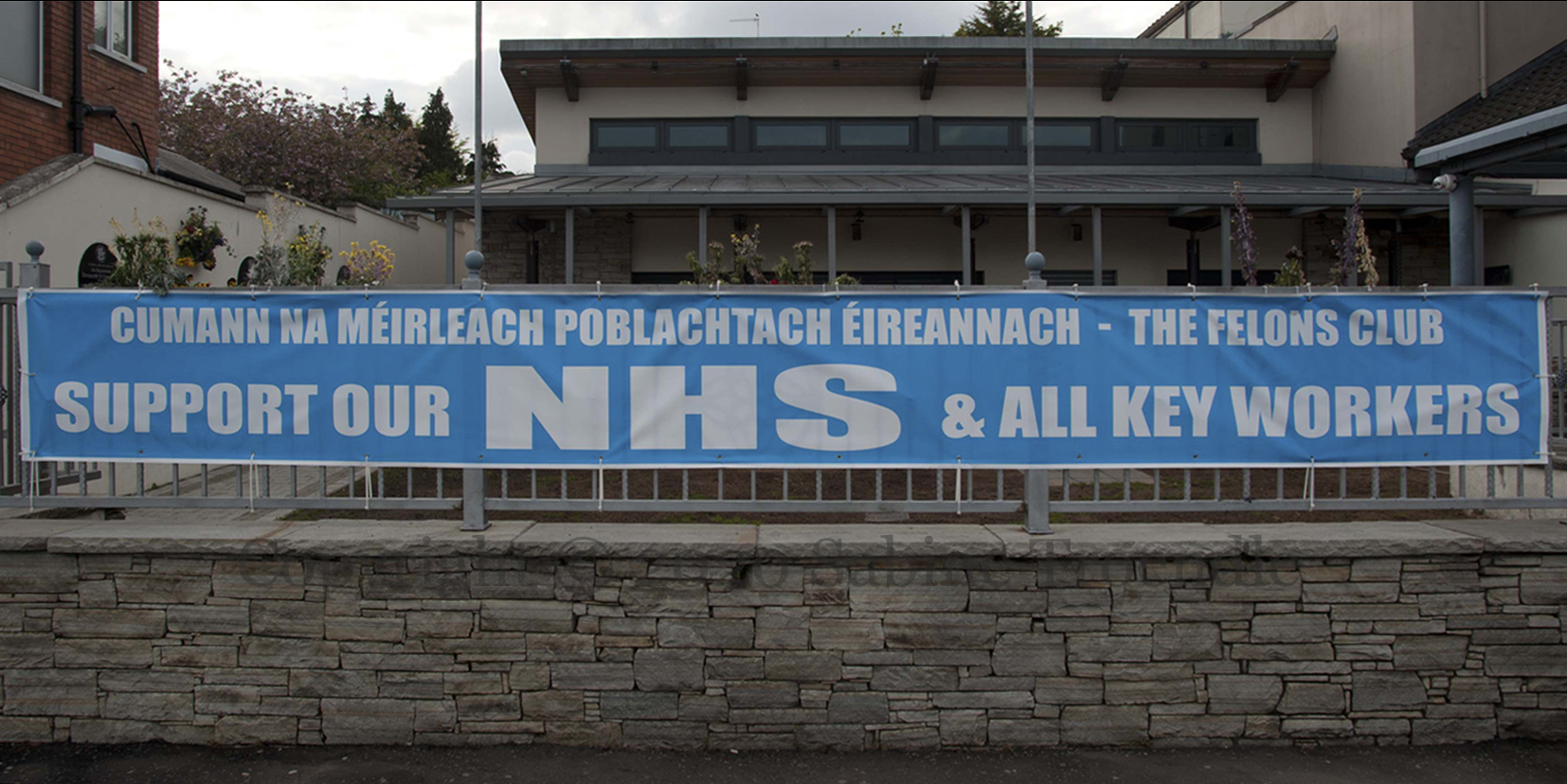
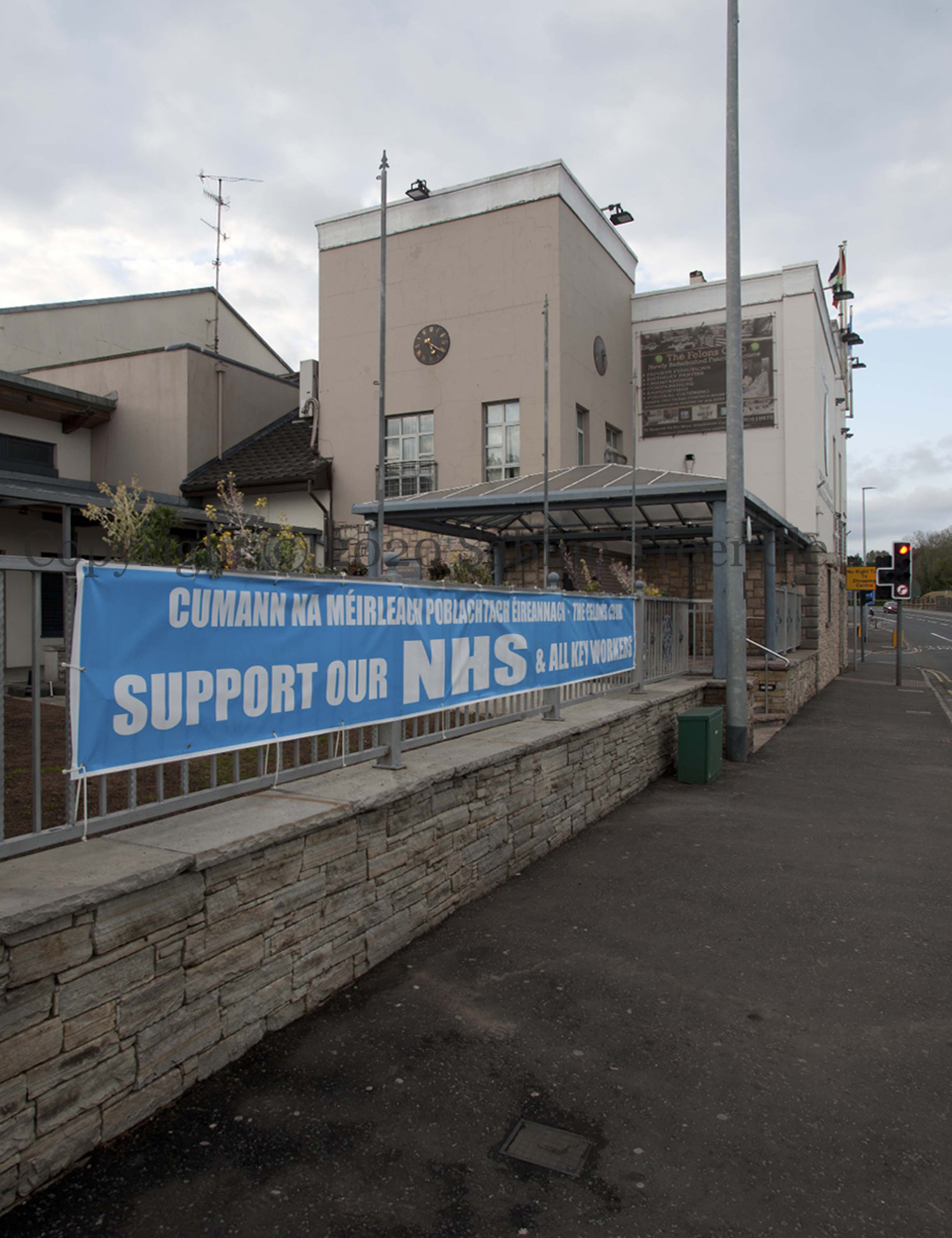
“Cumann Na Méırleach Poblachtach Éıreannach – The Felons Club support our NHS & all key workers.” This banner in support of the NHS is outside the club in Andersonstown.
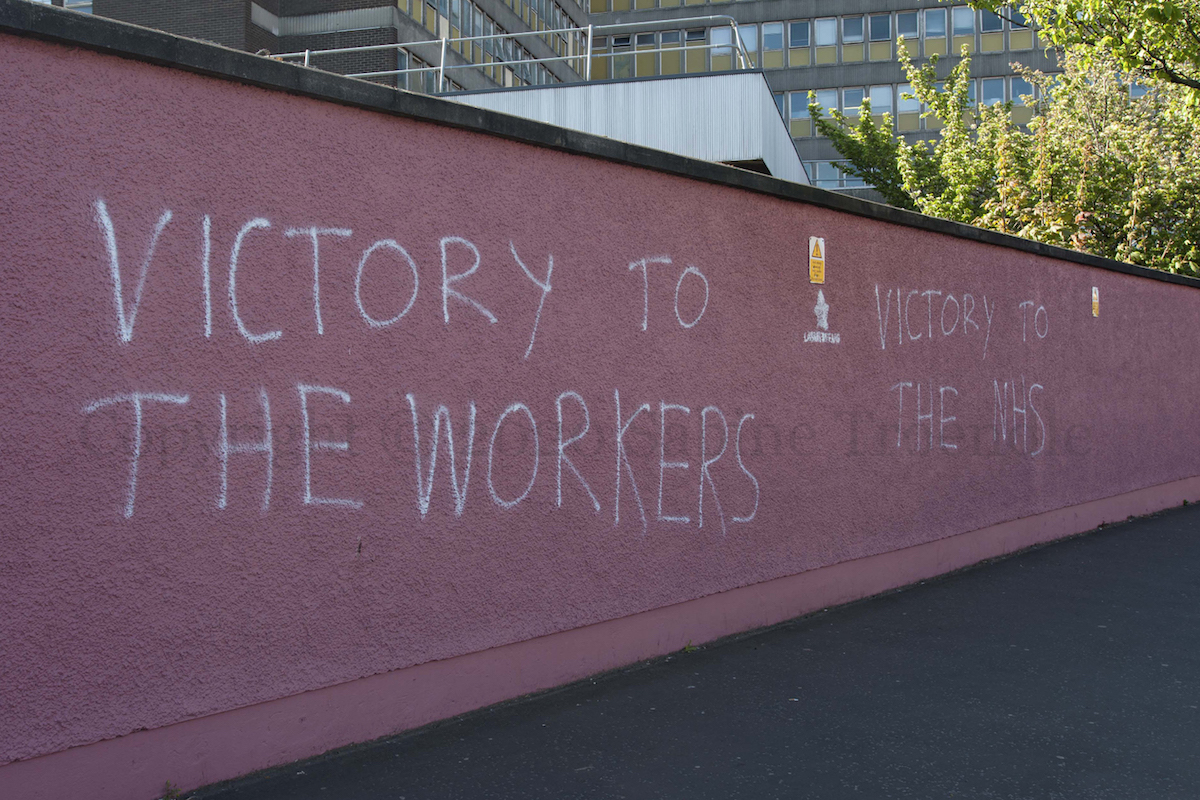
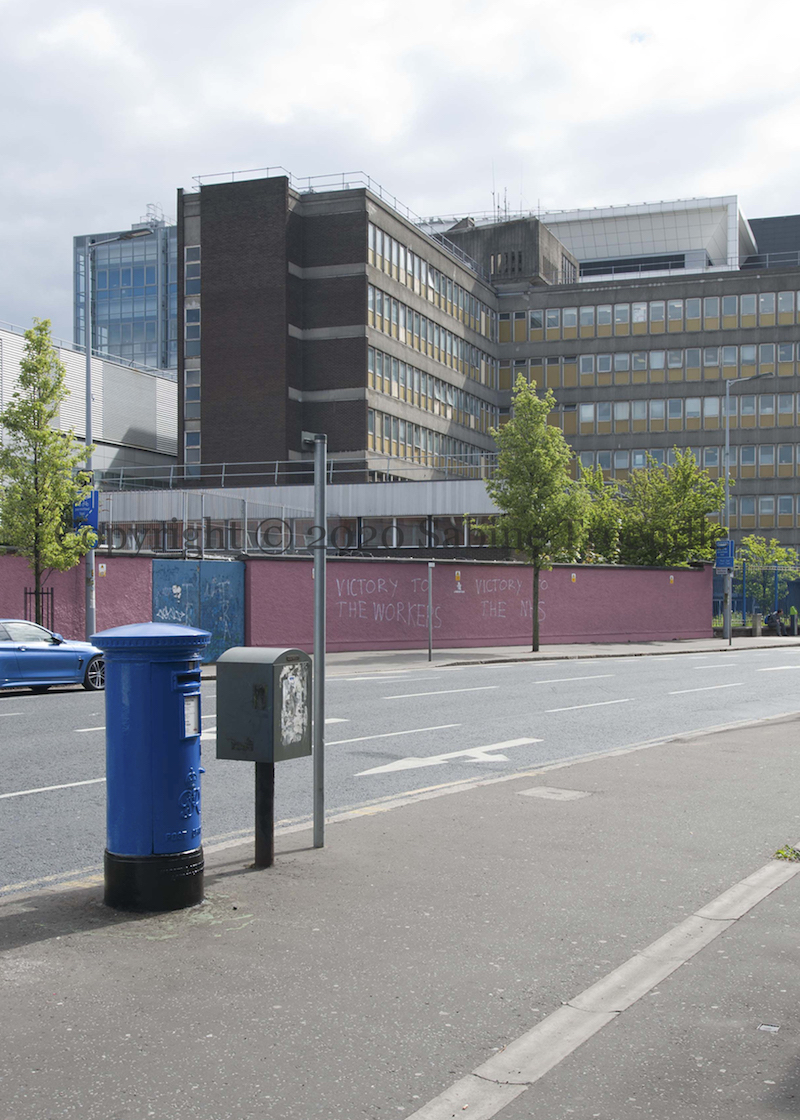
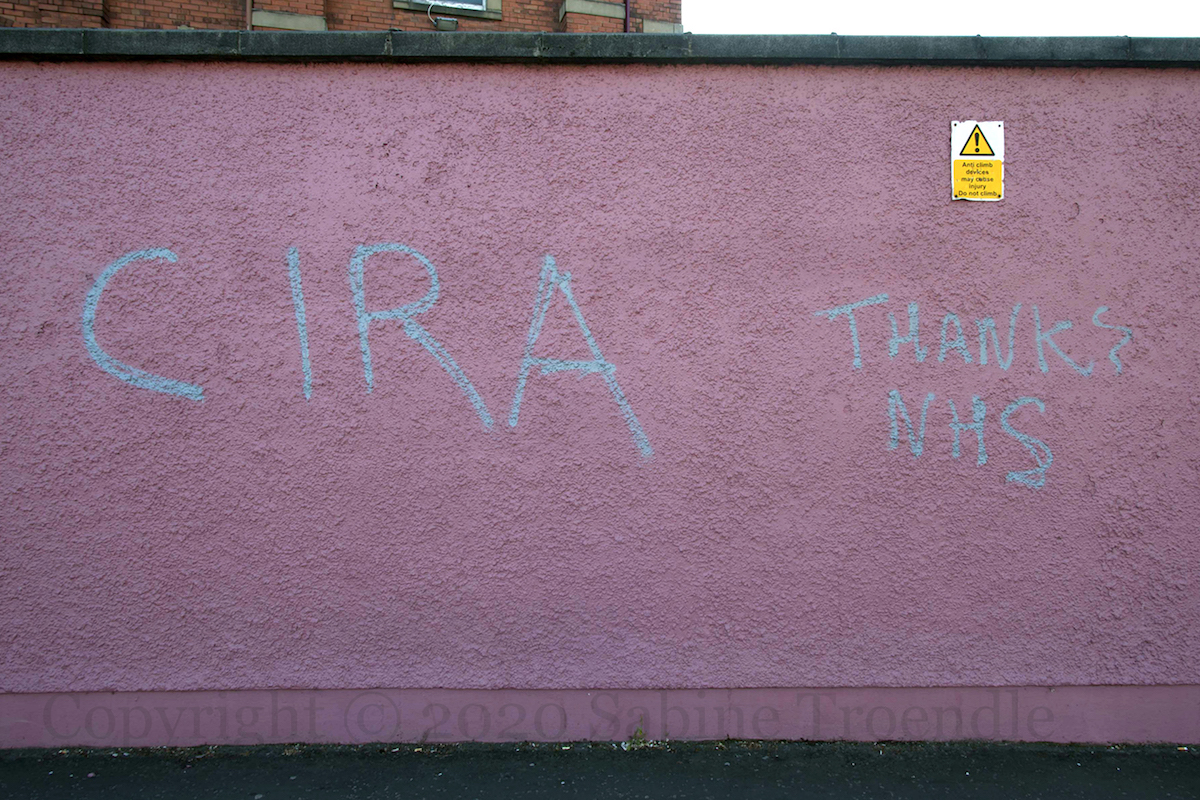
“Victory to the workers. Victory to the NHS.” Republican graffiti from Lasaır Dhearg (tw) on the wall of the RVH, across the street from the NHS Blue post box. (And, in a different colour, “CIRA thanks NHS.”)
Letter-boxes in nationalist west Belfast have sometimes been painted green (e.g. 2016), though blue and not green is the official colour of Ireland. The box shown above, across from the Royal Victoria Hospital, is blue not for Ireland but in support of NHS workers during the coronavirus pandemic.
A home-made sign on cardboard “NHS – stay safe” has been attached to the mural to IRA volunteers Bobby McCrudden, Mundo O’Rawe, and Pearse Jordan, and the wall below it painted with the message “Stay home – Protect the NHS – Save lives”.
Public Health England last Friday issued guidelines for reusing personal protective equipment (PPE) when stocks of fresh gowns, goggles, gloves, and masks run out. In response to concerns from local health workers, First Minister Arlene Foster has given assurances that the policy will not be adopted here (iTV | BelTel) but the on-going coronavirus pandemic means that the search for PPE continues. A quarter million gowns were transferred from Northern Ireland to England this week without any firm date for their being returned in kind (BelTel). The Orange Order, on the other hand, was able to make a contribution of masks and aprons via lodges both north and south (NewsLetter | Irish News). Mural perhaps based on this banner. The image below shows the mural at the time of its official launch on April 18th; it was added to the following week.
Artist Glen Molloy (Fb) has painted a portrait of Jesus Of Nazareth next to the Cupar Way “peace line” in the style of Shepard Fairey’s Obama ‘Hope’ poster (also the inspiration for De Craig’s Achieve! in east Belfast). Irish News report on the mural.
During the blitz, more than 900 people died, 1,500 people were injured, and half of the houses in Belfast were destroyed (WP).
This is only one of about 20 similar plaques erected in 2016 by Belfast City council to commemorate the 75th anniversary of the blitz of Belfast in 1941. (For images of others, see Wartime NI.)
This is the one in Ohio Street, on the side of the Woodvale Community Centre. Another one, on the Falls, can be seen in Suíomh Marbhlaınne.
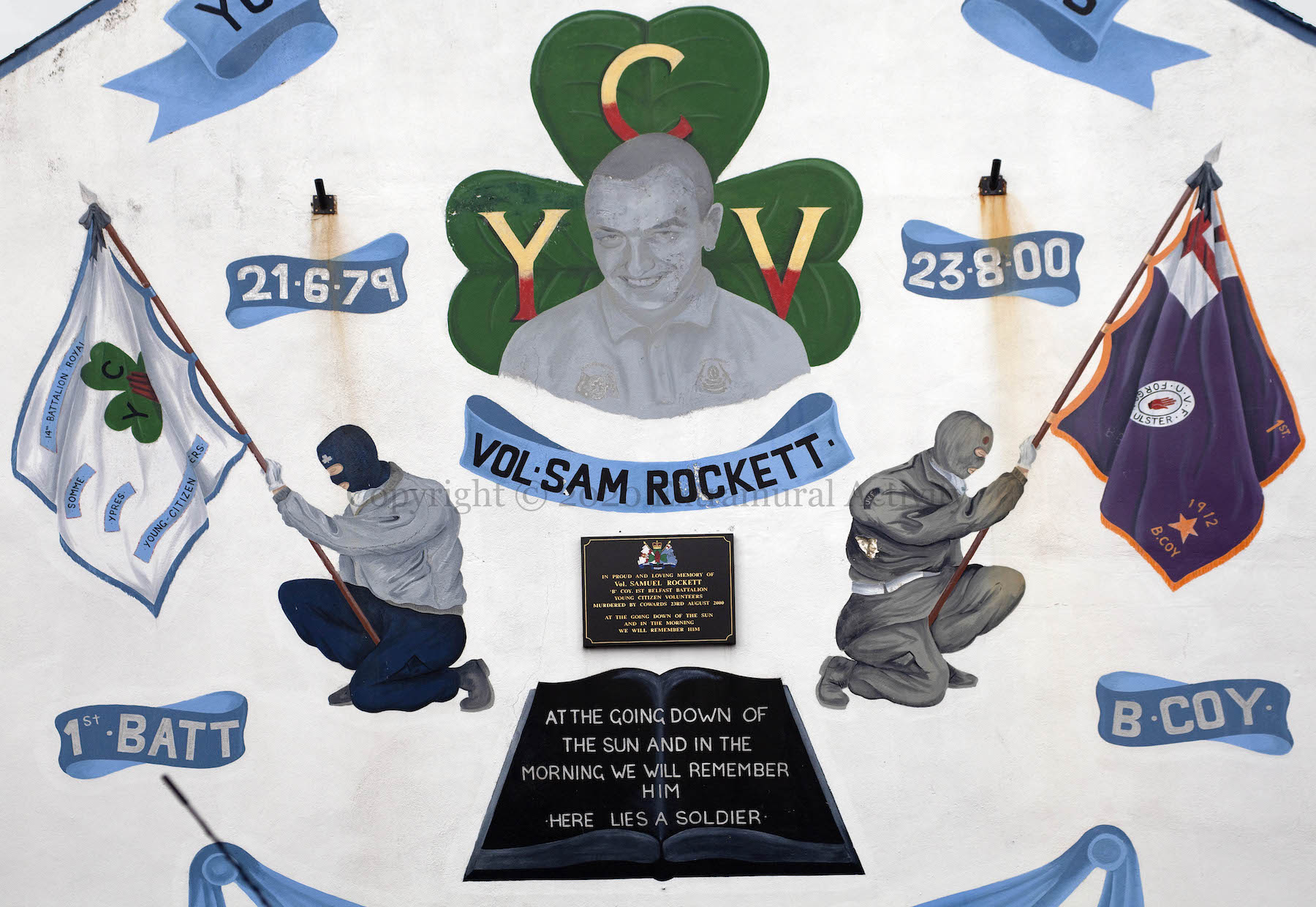
The “cowards” in this case are the members of the UDA who killed Rockett in front of his girlfriend and 18 month old child in an attack on her house in the lower Oldpark, during the feud between the UVF and UDA, sparked by Johnny Adair’s “loyalist day of culture” and removal of the UVF from the lower Shankill.
In response to the purge (and attacks on the Rex bar), the UVF killed Jackie Coulter (UDA) and Bobby Mahood (formerly of the UVF). Rockett was killed by the UDA in retaliation for Coulter’s death; 1,000 people attended Rockett’s funeral (Irish Times). The feud continued until mid-December (Mirror).
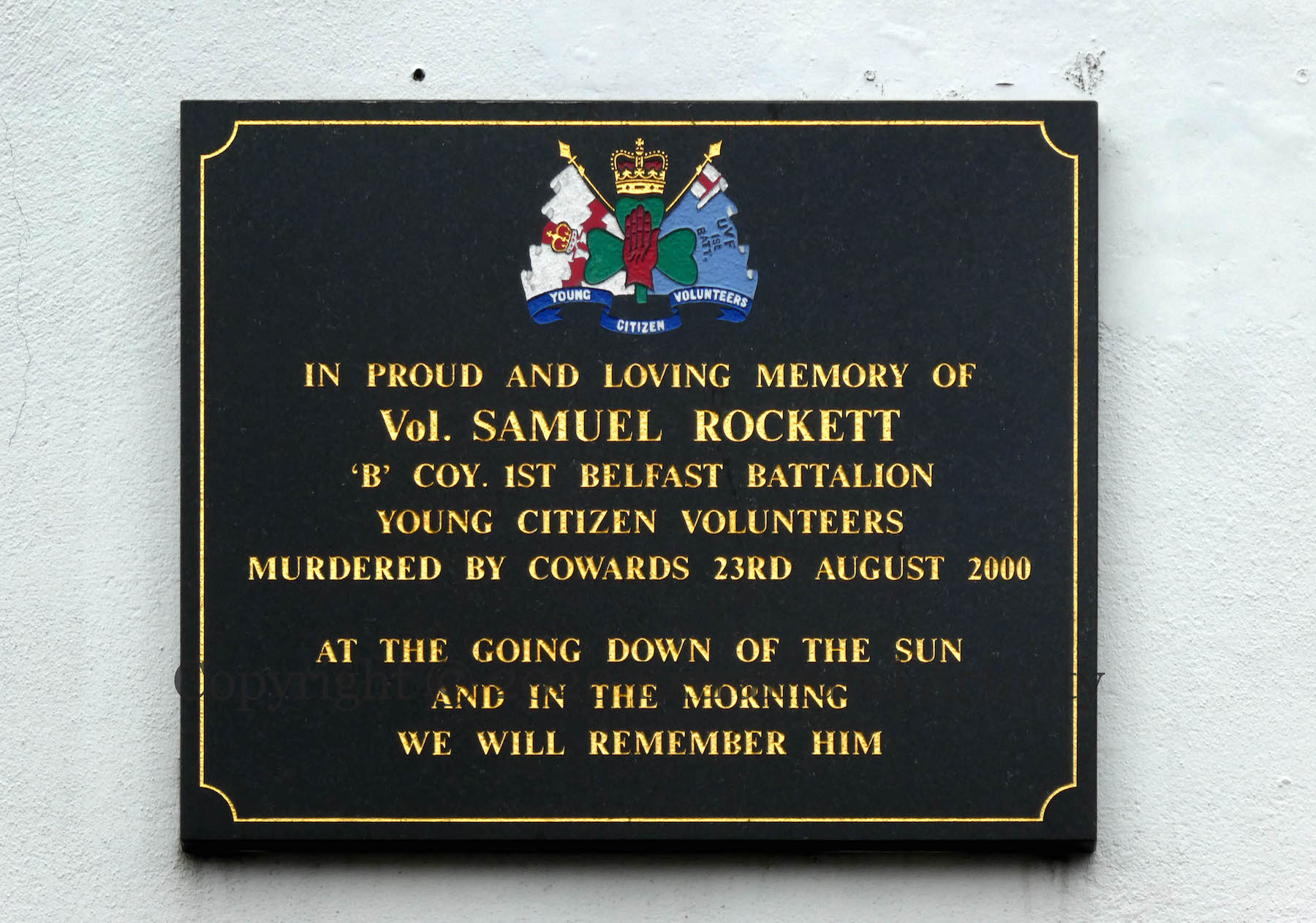
“In proud and loving memory of Vol. Samuel Rockett, ‘B’ Coy. 1st Belfast battalion, Young Citizens Volunteers. Murdered by cowards 23rd August 2000. ‘At the going down of the sun and in the morning we will remember him.'”
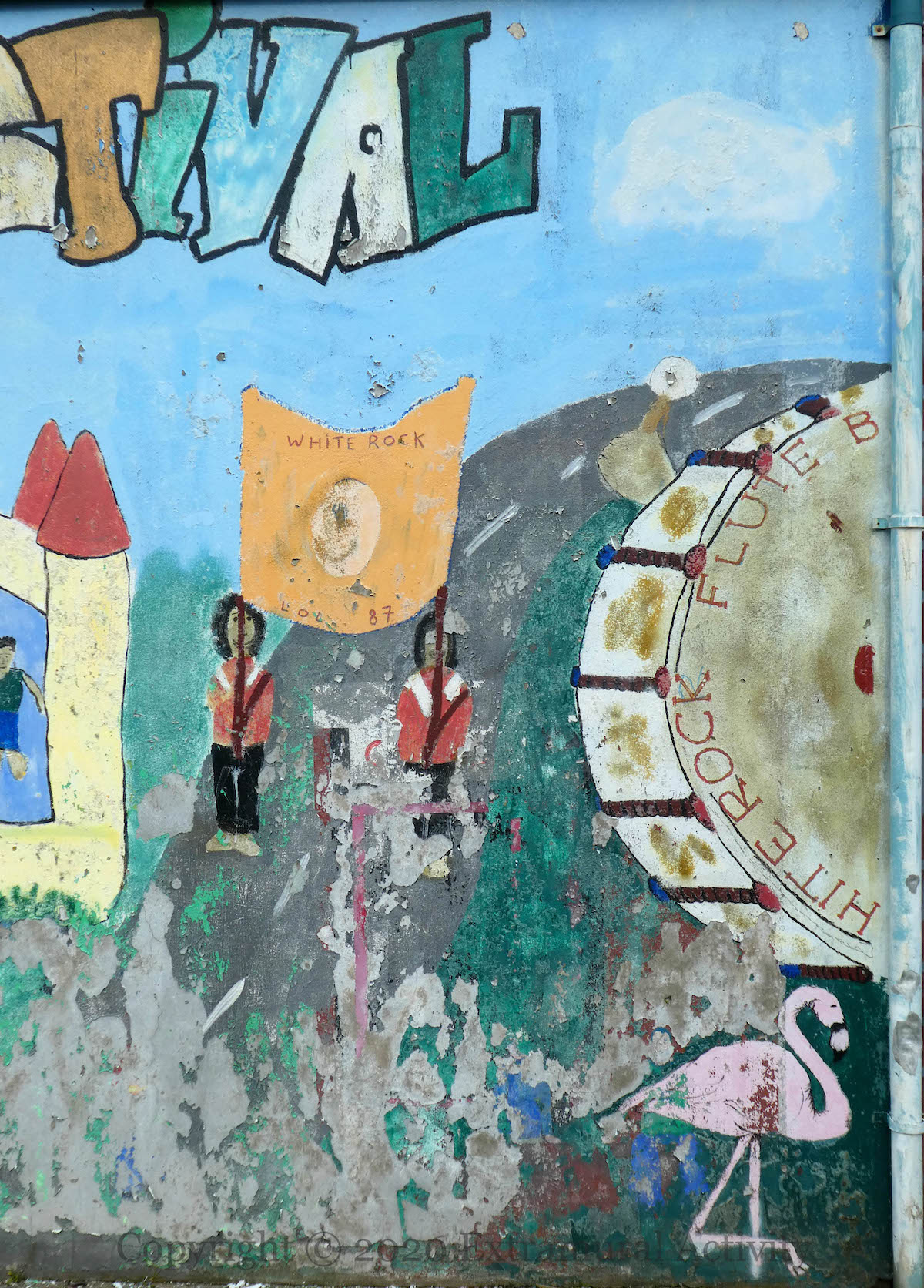
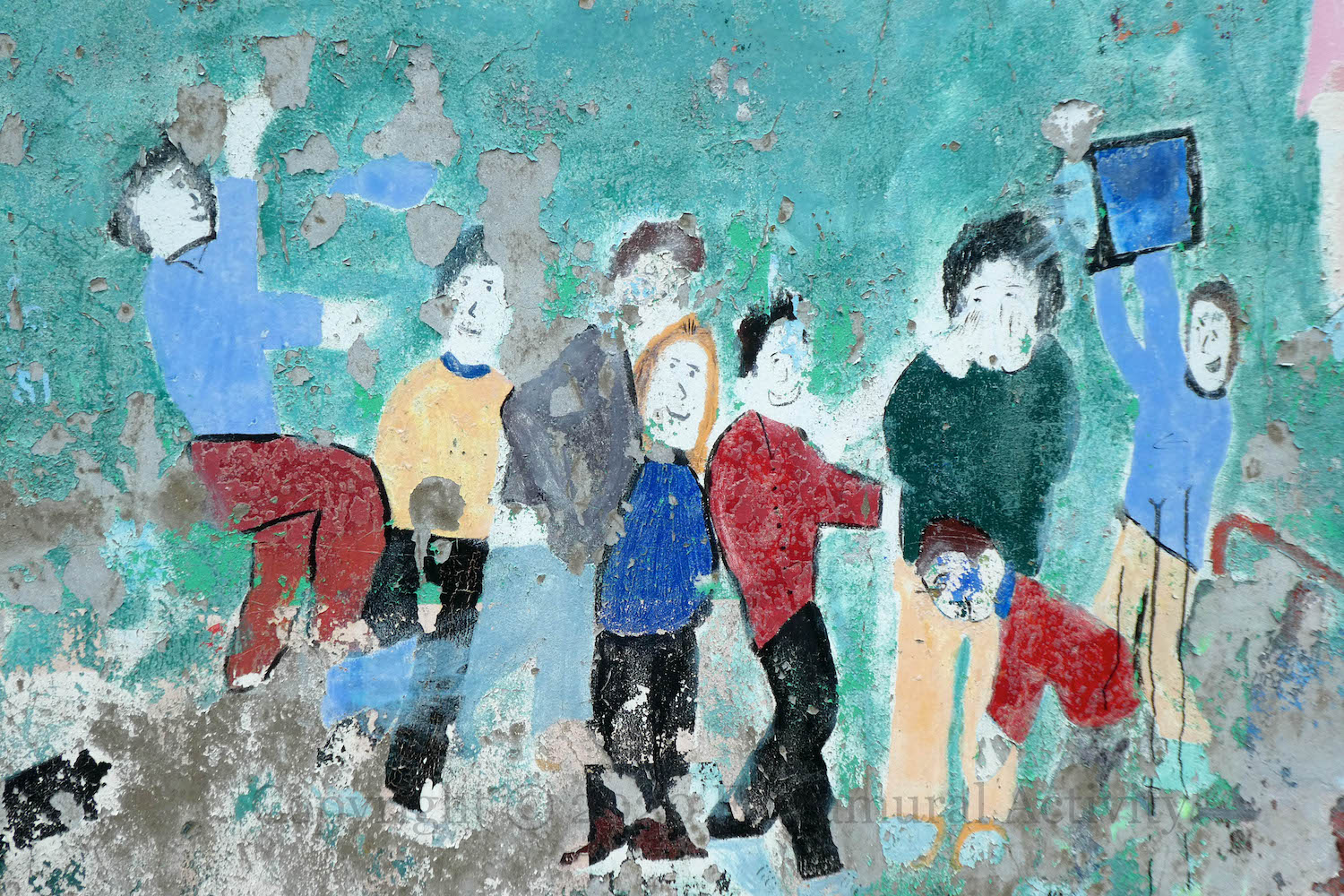
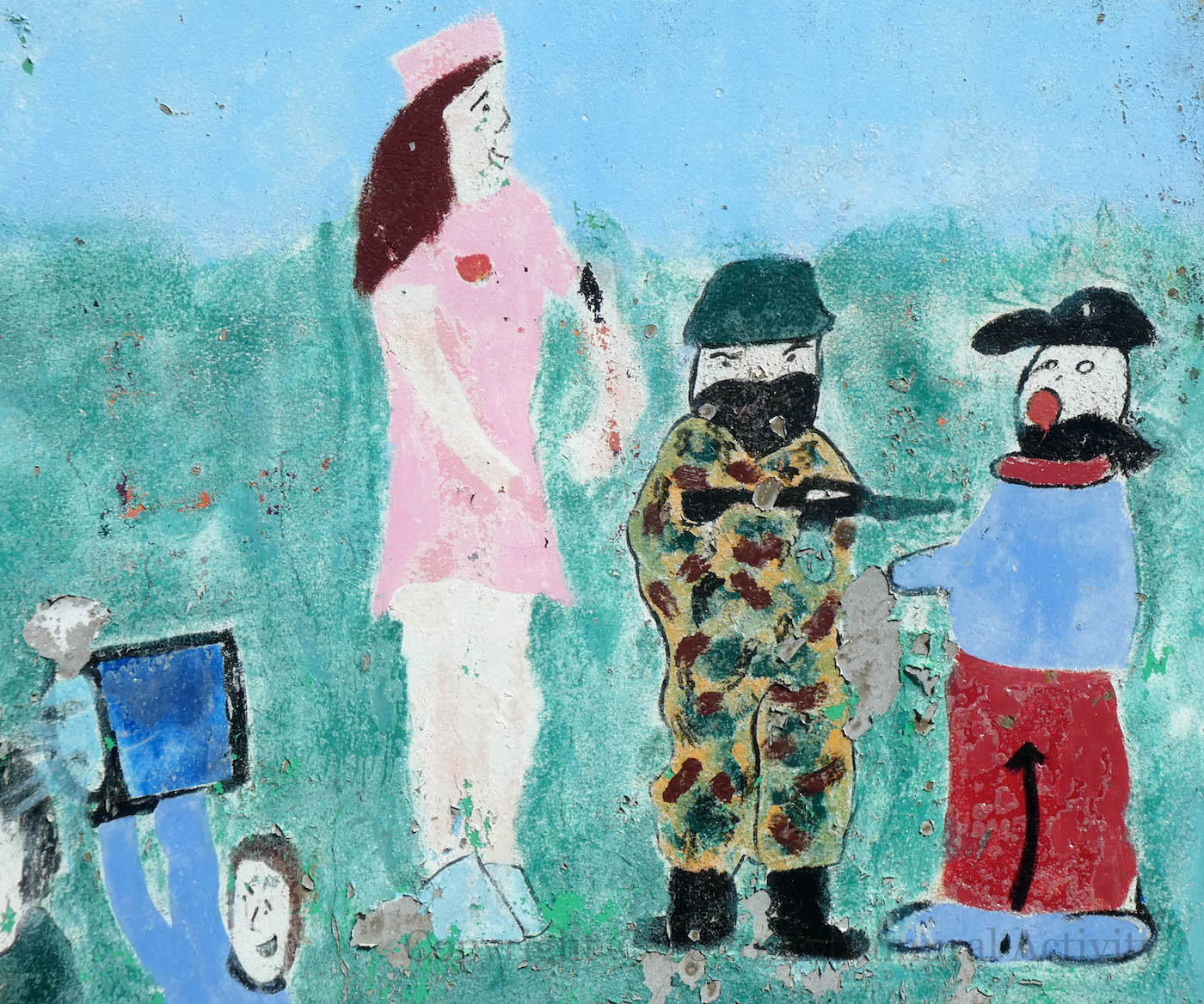
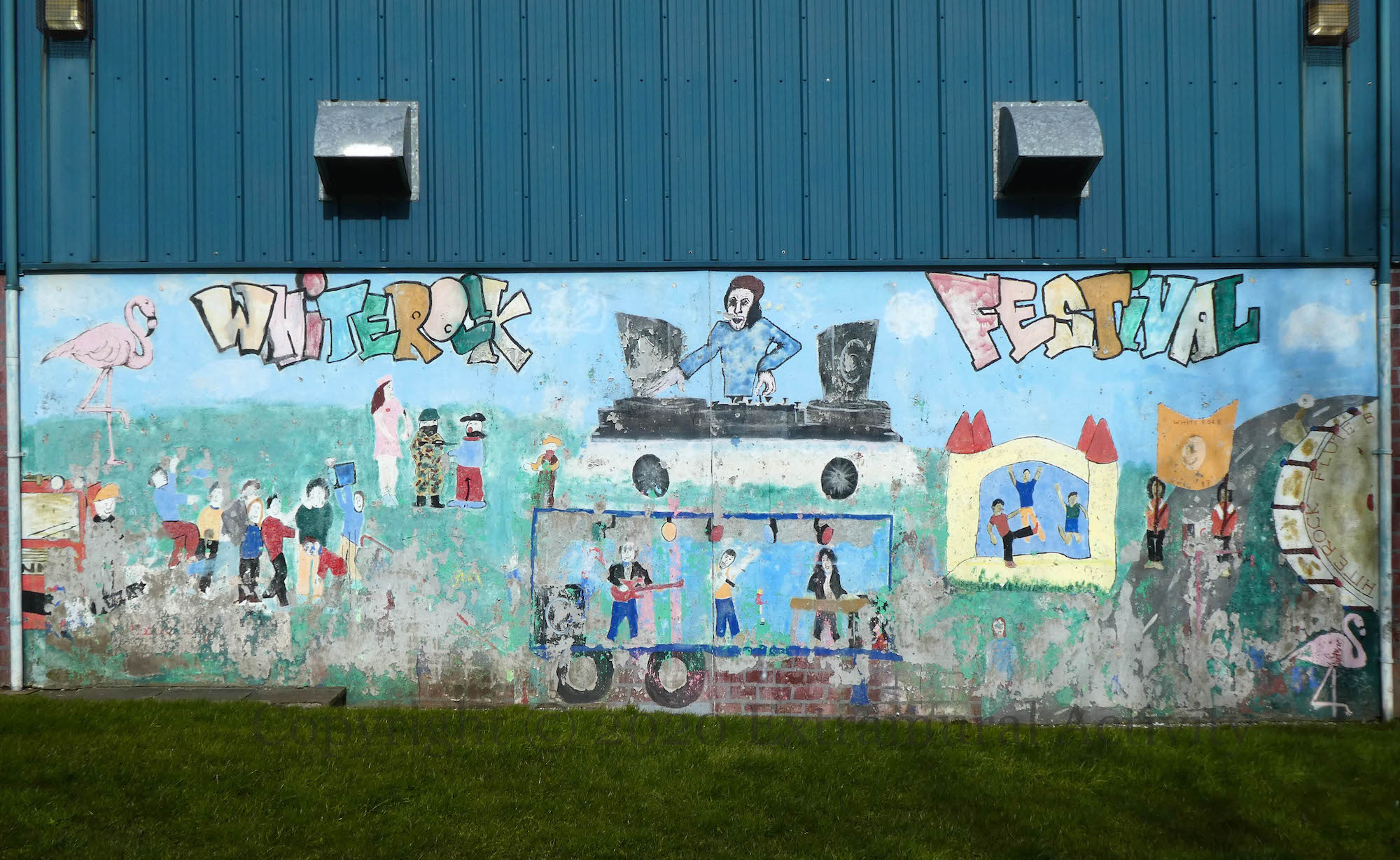
Plans for the Highfield estate were drawn up and approved in 1945, converting a green-field site in the foothills of Black Mountain between the Ballygomartin, West Circular and Springfield roads. The first houses were completed in 1948 (Belfast Forum.) The community hall sits at the centre of the estate. UDA bomb-maker Michael Wright died there in a premature explosion in 1980 (Sutton) and there used to be a UFF mural on the side. This was replaced in 2000 (C01505) and again in 2006(?) (M04512) with the current mural (entitled “Whiterock Festival” after the cross-community event sponsored by the City Council’s ‘Good Relations’ fund (one | two) showing Highfield kids having fun with music provided by a DJ, band, and the Whiterock Flute Band (Fb) drum.
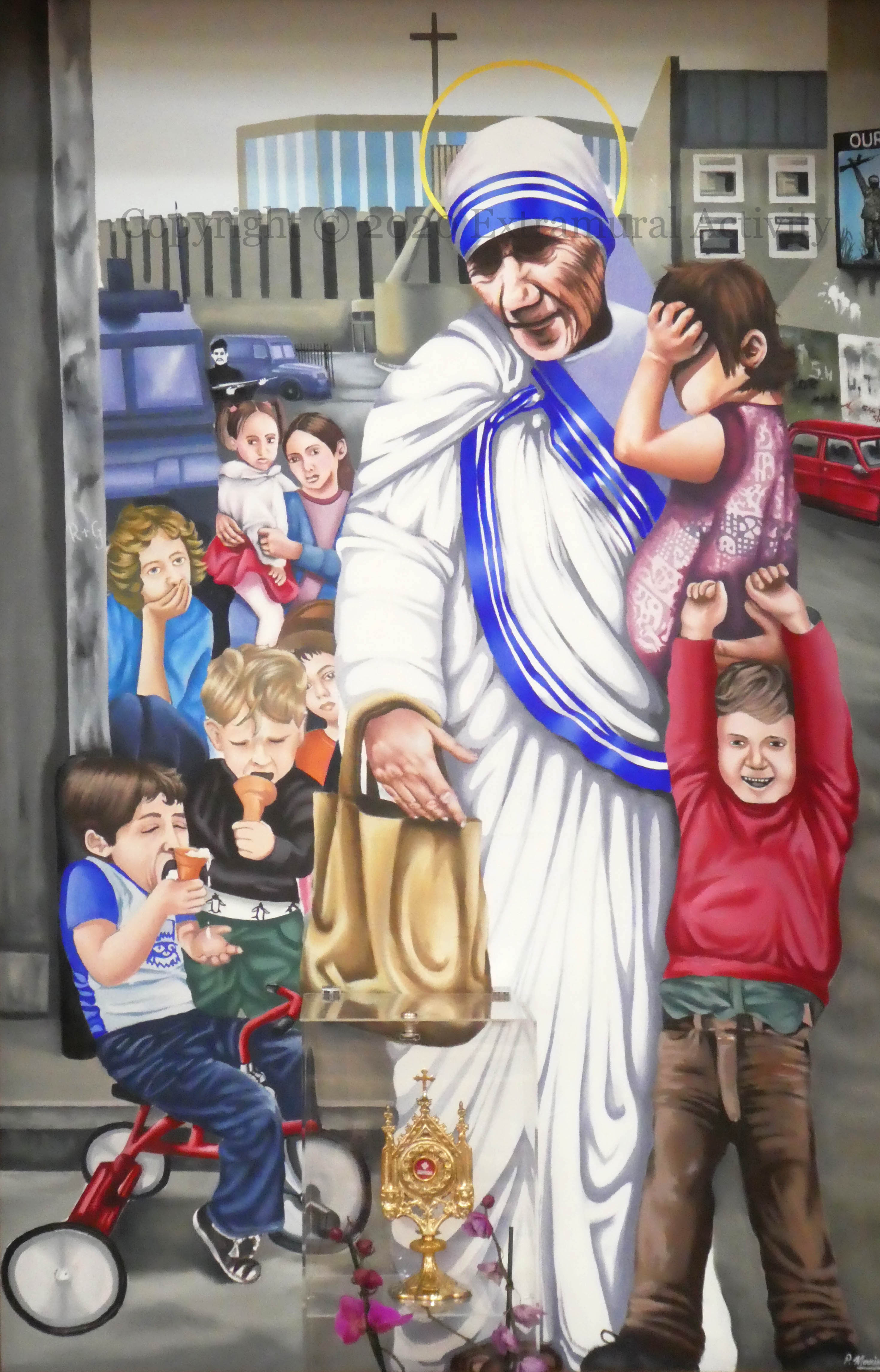
Local artist Paul Morrison (web | Fb) was asked to paint a shrine for Corpus Christi church in Westrock/Springhill. As his main subject he chose Mother Teresa, who lived and worked in the area with four nuns from 1971 to 1973 before being put out (allegedly) by the Catholic church. Morrison also painted portraits of the sixteen victims of the Ballymurphy and Springhill/Westrock massacres of 1972, including the one of John Dougal, shown below, as well as clerics Noel Fitzpatrick (from St John’s) and Hugh Mullan (from Corpus Christi itself).





 Extramural Activity