Englishman Clive Dutton was an urban planner who was best known for work in Birmingham, London (Newham), and Belfast. He produced “The Dutton Report” in 2004 and “The Big Plan” (pdf) (the cover of which is pictured in the mural) in 2013. In them, he proposed and then updated a plan to tackle economic deprivation in west Belfast by the creation of a ‘Gaeltacht Quarter’ or ‘Ceathrú Gaeltachta’. He died on June 8th at the age of 62 and the mural above has been painted in remembrance.
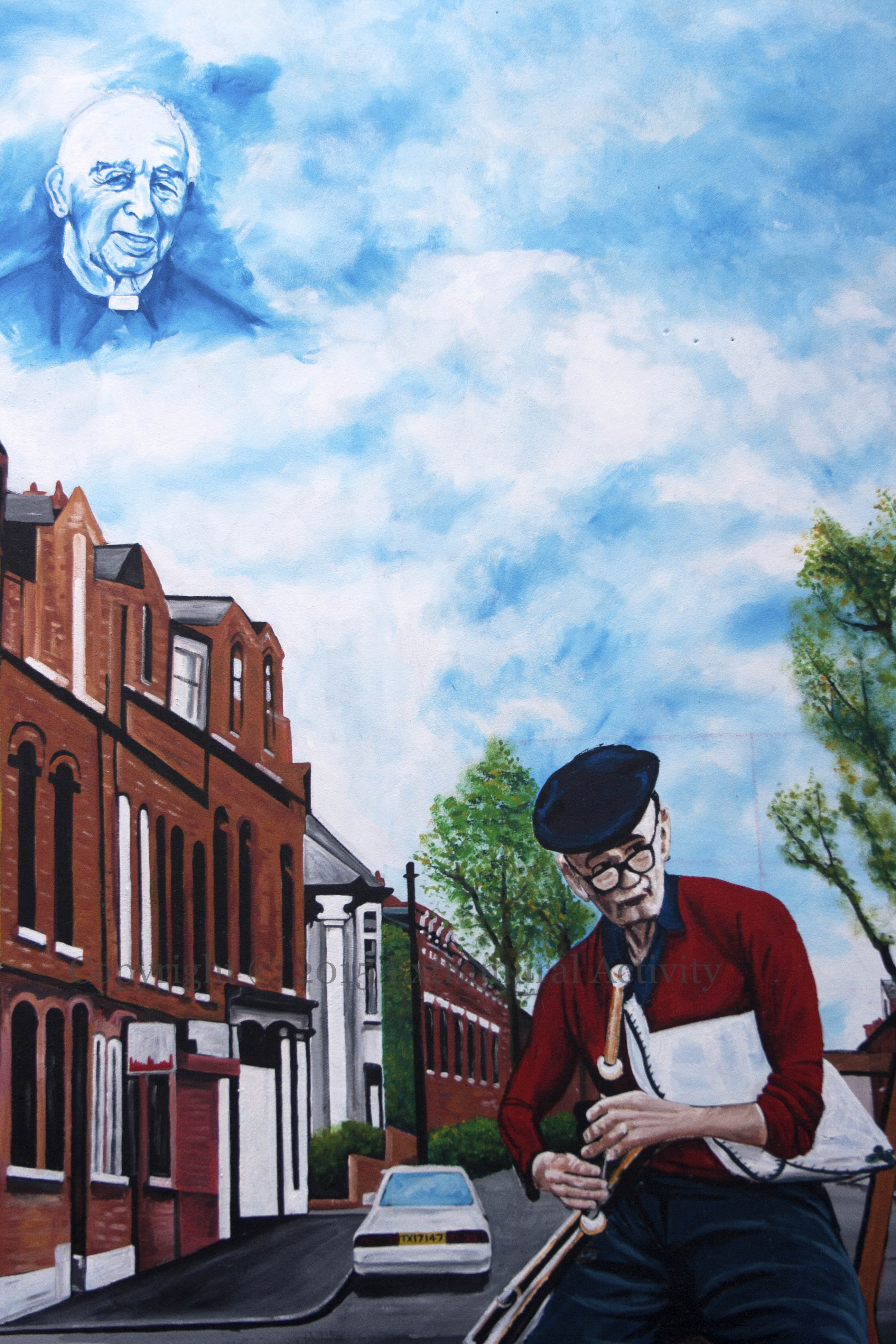
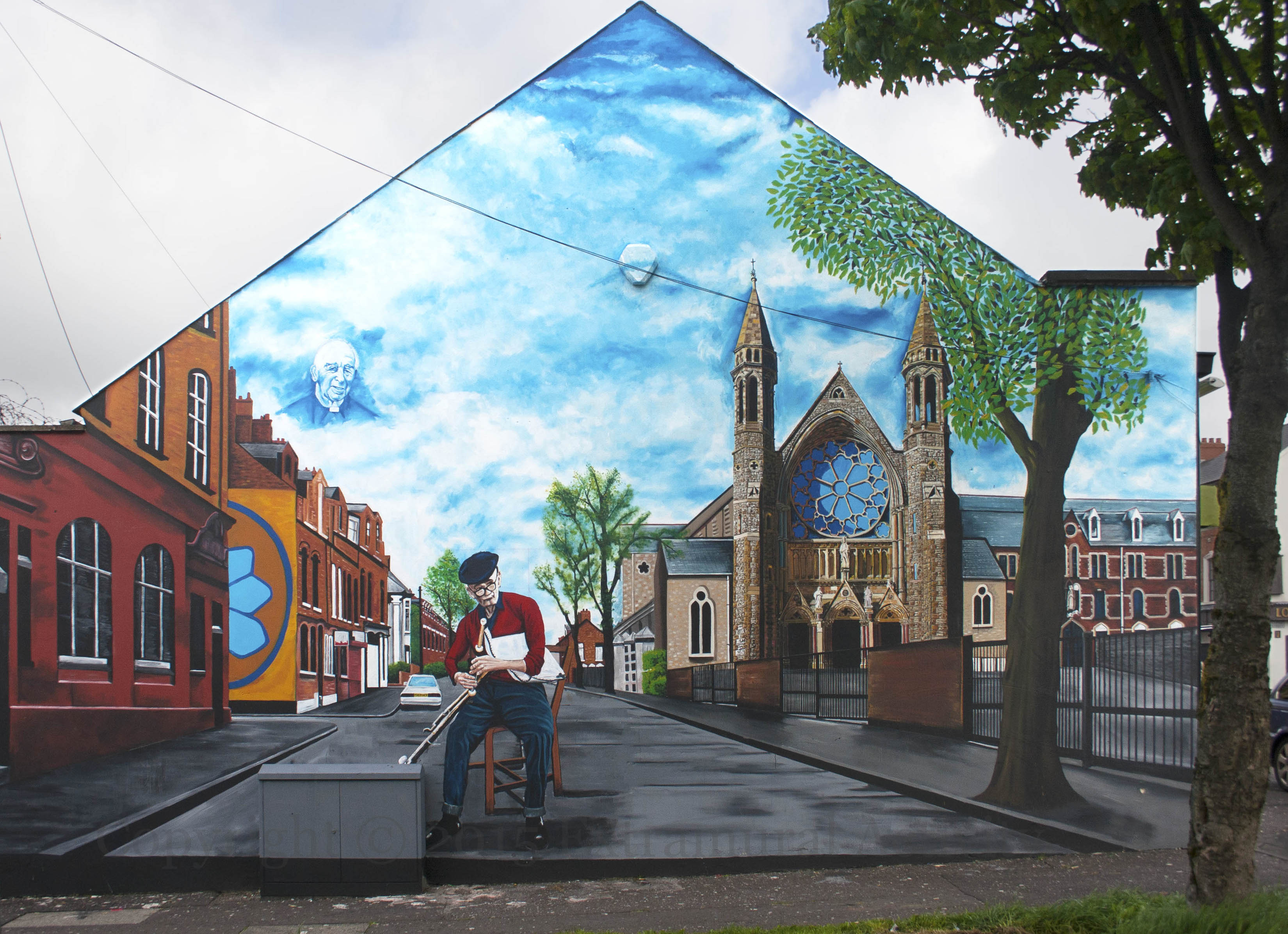
This new mural pays tribute to two long-time residents of Clonard. On a good day, Noel Fitzpatrick, a cobbler with a little shop on the corner of Odessa and Clonard streets, would take his chair out into the street and play the uıleann pipes. Looking down from above is Alec Reid, the Redemptorist priest who spent 40 years at Clonard monastery and played an important role in the peace process. He died in 2013 at age 82. (WP)
Painted by Marty Lyons & Mickey Doc in Springfield Drive. For the large ‘flower’ mural to the left of this mural (which imitates the stained glass in the cathedral), see C01044.
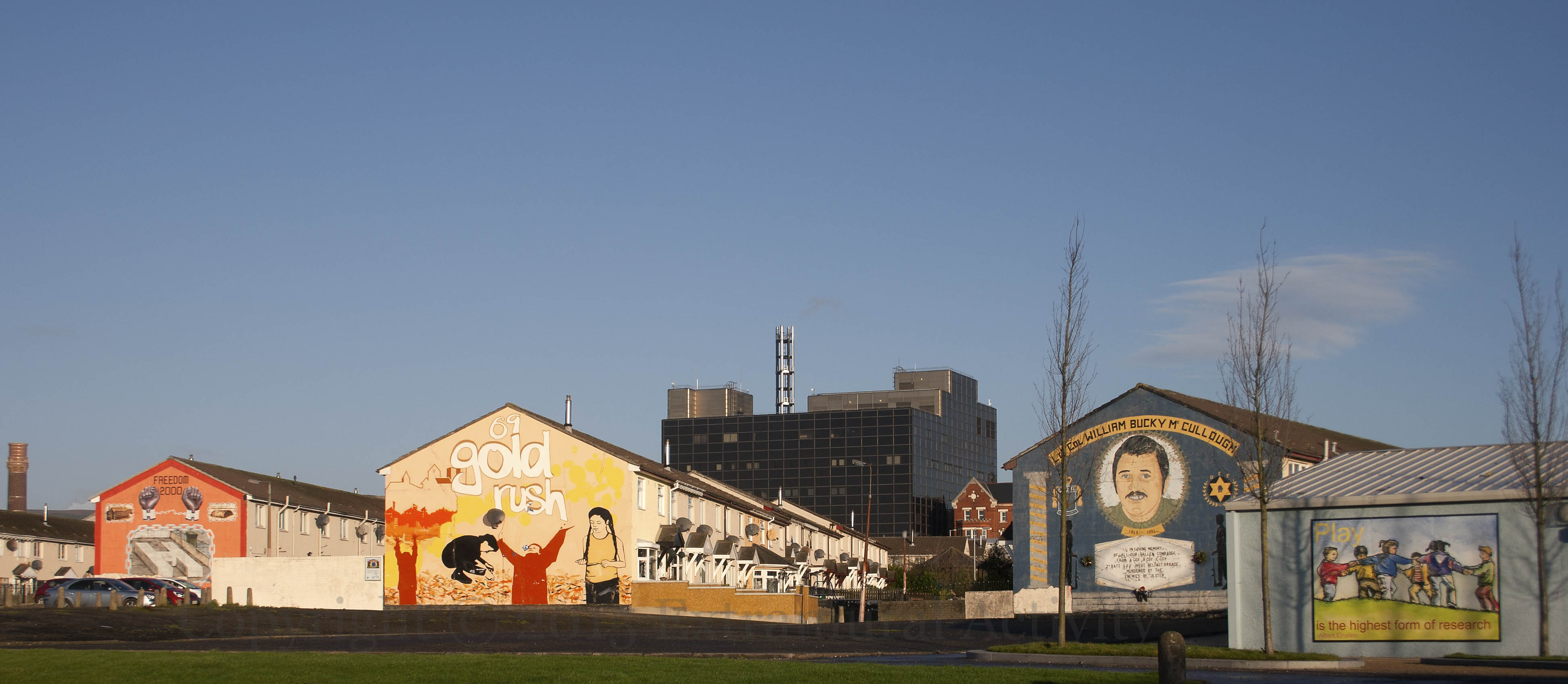
Here’s a wide shot of the right-hand side of the murals in the lower Shankill estate. These gables have remained in place while the estate has been redeveloped, causing the removal of the Red Hand, Martin Luther and Cuchulainn murals.
In 1997, then-Prime Minister Tony Blair’s office issued a statement acknowledging that the administration of the time of the Hunger failed to intervene (Guardian | Independent).
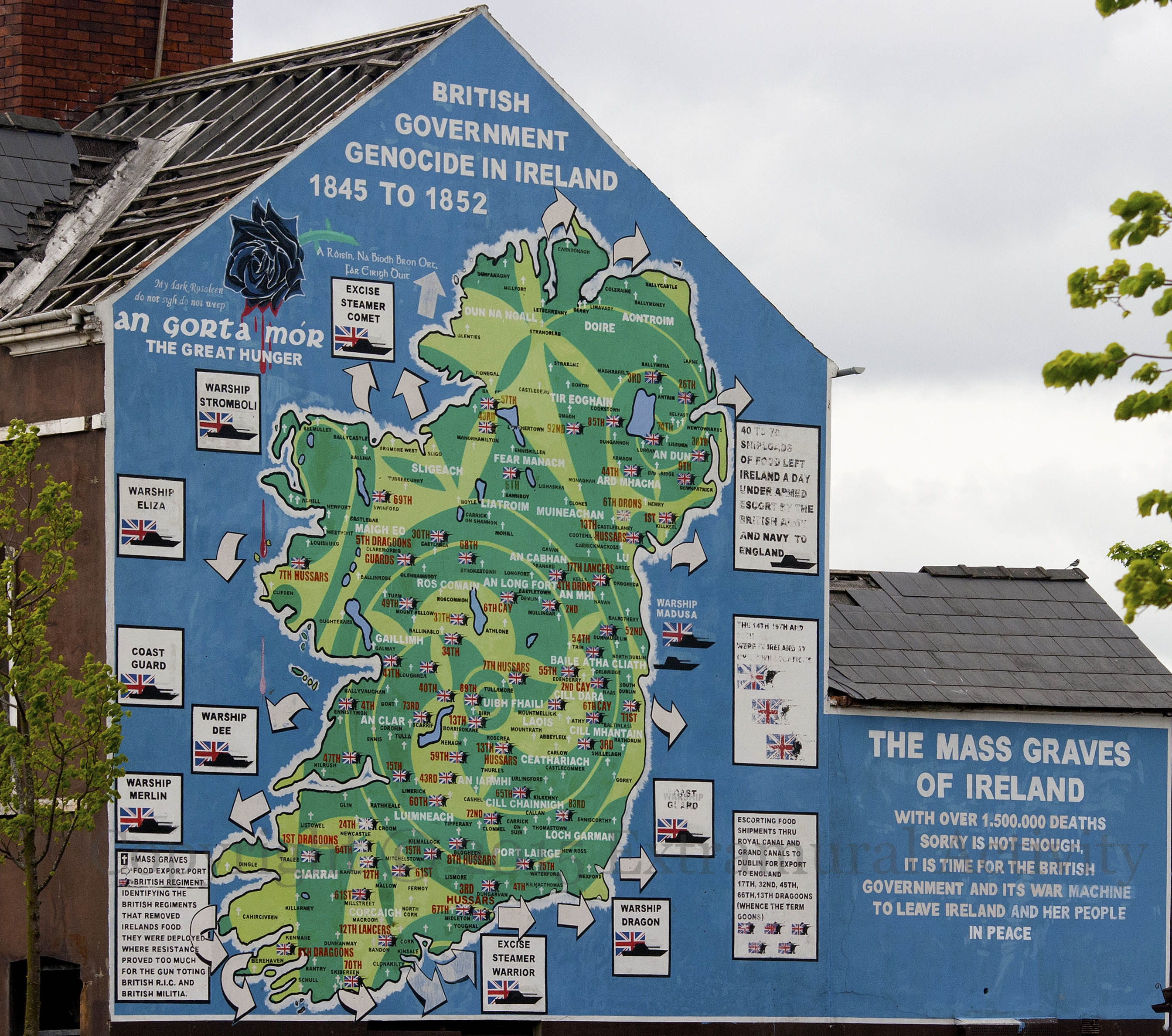
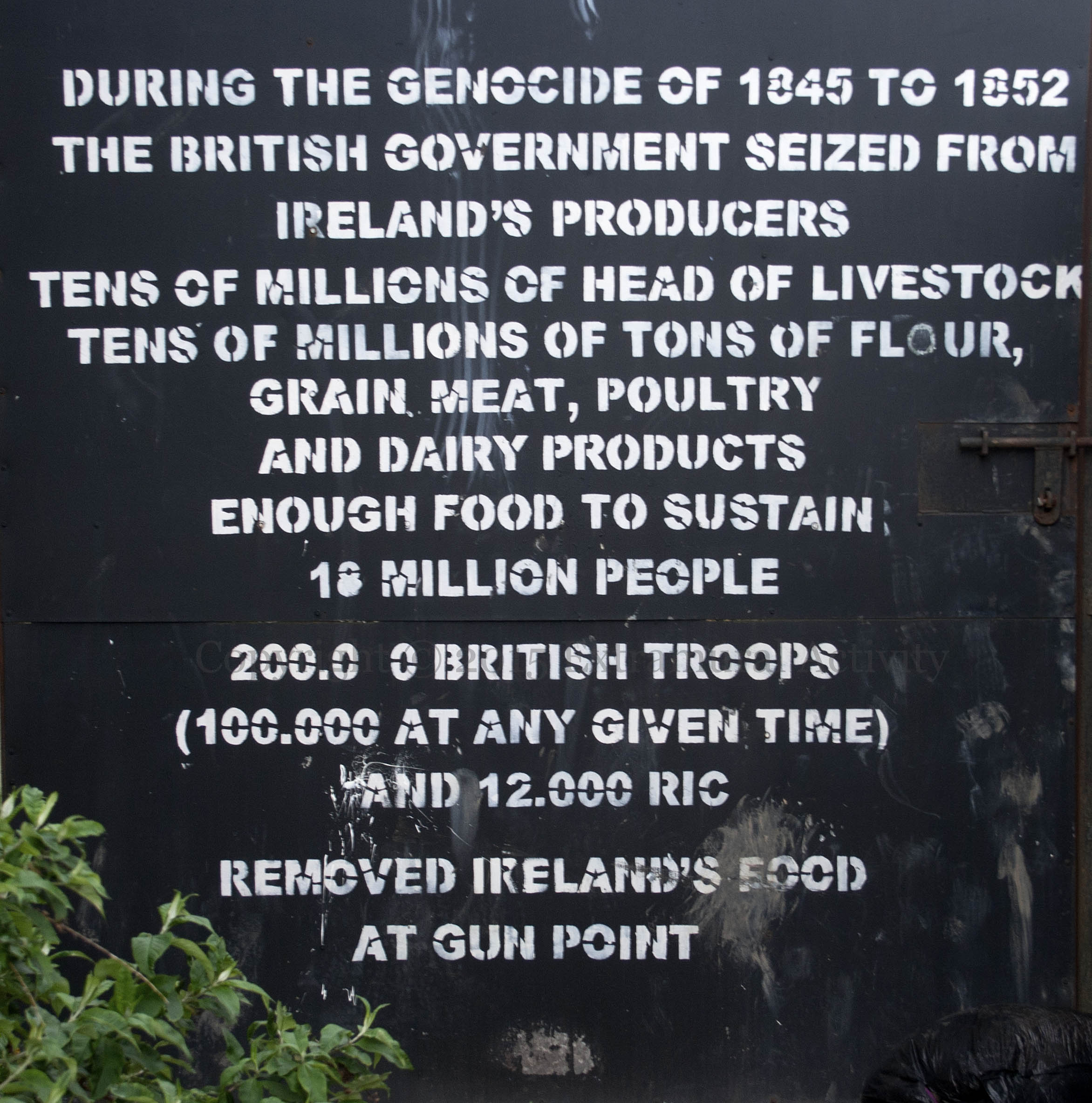
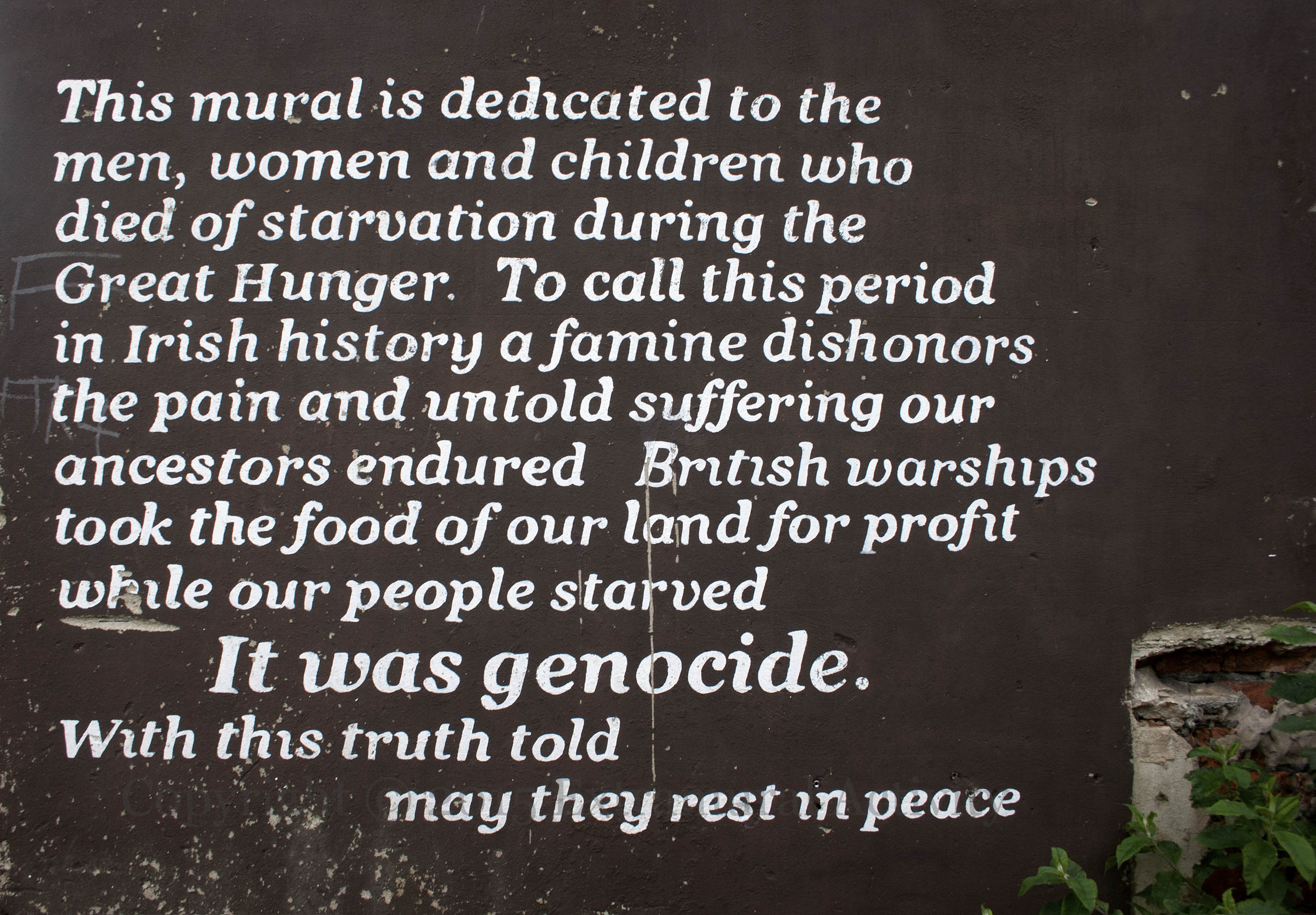
The mural above asserts that it was not merely a matter of negligence but of will: “With over 1,500,000 deaths “sorry” is not enough. It is time the British government and its war machine to leave Ireland and her people in peace. During the genocide or 1845 to 1852 the British government seized from Ireland’s producers tens of millions of head of livestock, tens of millions of tons of flour, grain, meat, poultry and dairy products, enough food to sustain 18 million people. 200,000 British troops (100,000 at any given time) and 12,000 RIC removed Ireland’s food at gun point. This mural is dedicated to the men, women and children who died of starvation during the Great Hunger. To call this period in Irish history a famine dishonors the pain and untold suffering our ancestors endured. British warships took the food of our land for profit while our people starved. It was genocide. With this truth told may they rest in peace.”
Each white cross on the map represents a mass grave. The map is originally from irishholocaust.org.
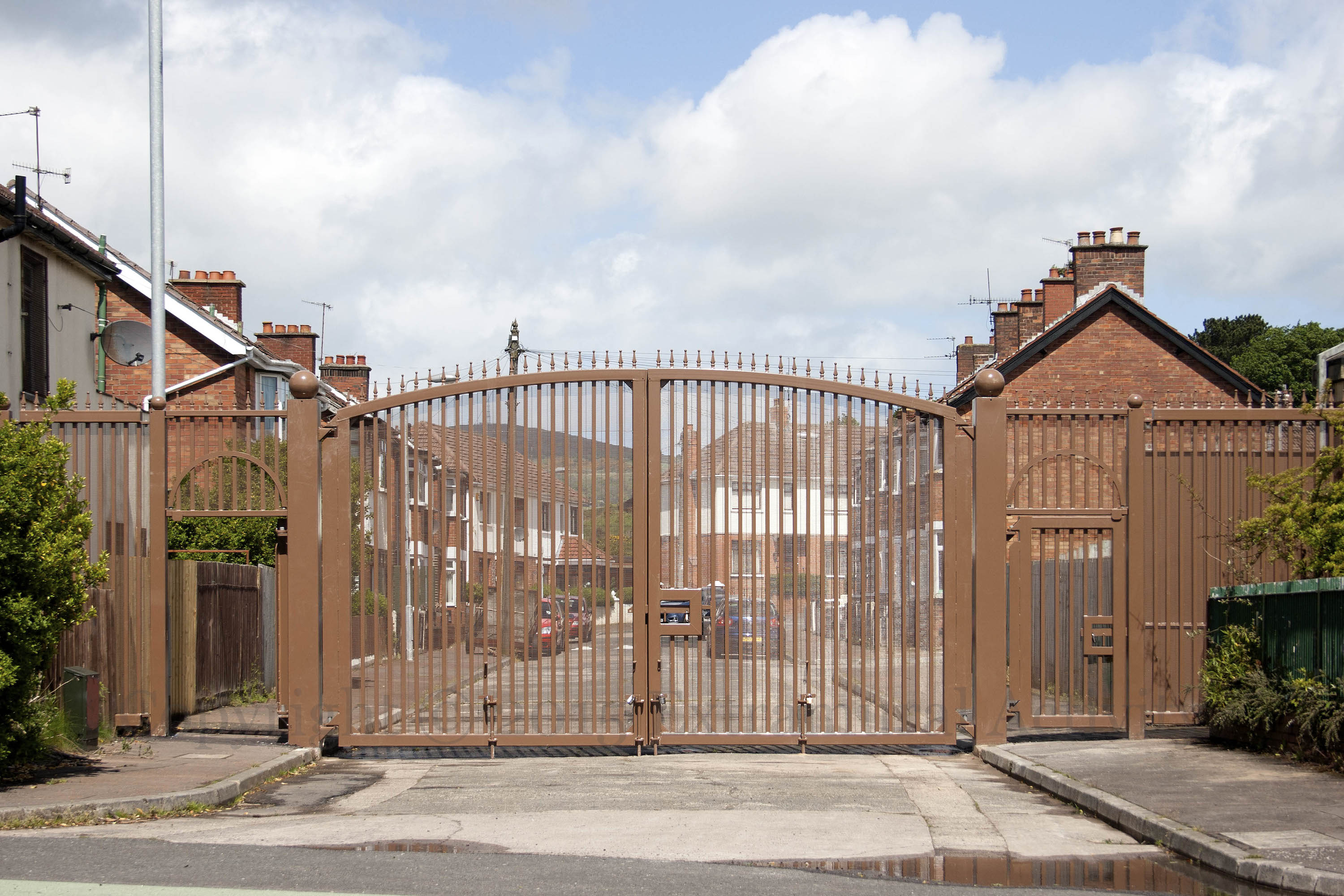
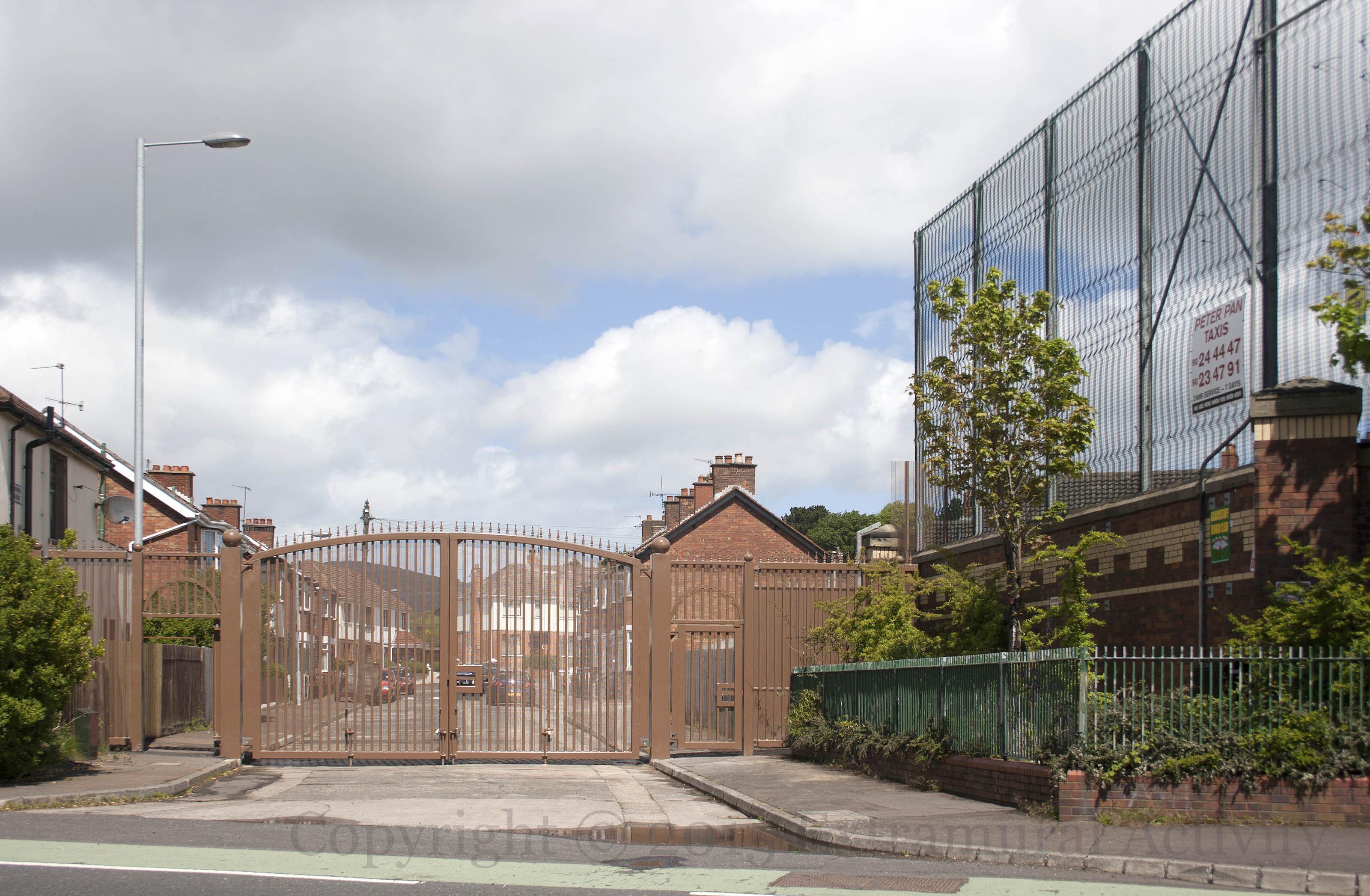
In May 2013 the Executive pledged to remove “peace” lines in ten years – by 2023 (Tele). One step in this process is see-through gates, such as those at Workman Avenue in the image above. There is no change, however, to the fence on the Springfield Road – see the image below. See previously: the new gates in Howard Street.
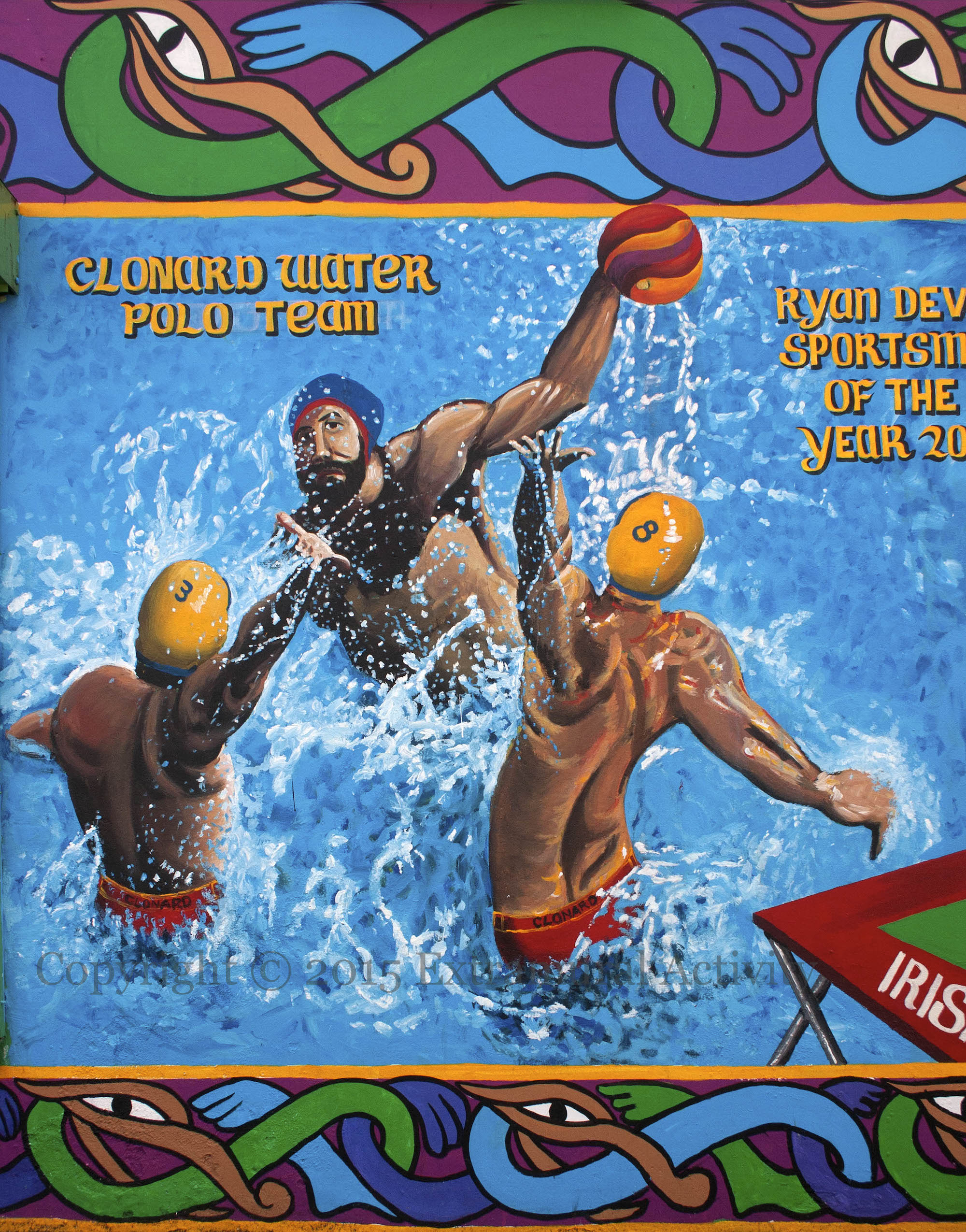
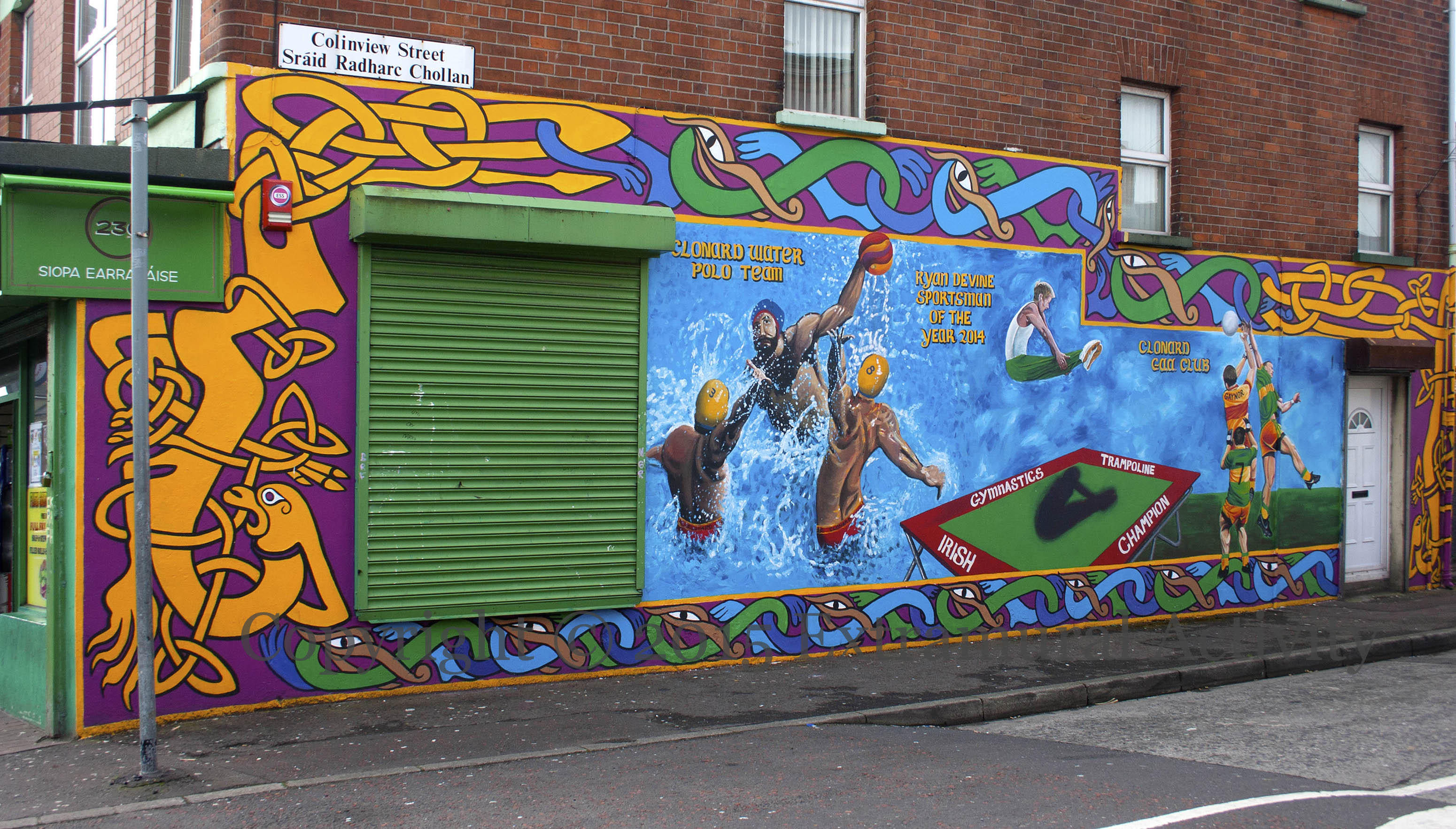
A new mural on Colinview Street/Sráıd Radharc Chollan celebrates local sports: first (shown above) is the Clonard water polo club (Fb), second (in the wide shot, below) is Ryan Devine of Anderstonstown Trampoline Club, junior sportsman of the year, 2014 (Fb), and third, Clonard GAA. The mural is on the side wall of The Flush newsagents, near the former location (above ground) of the Farset and Forth rivers, where dams and races were put in to supply a cotton mill and linen mill and, later, a laundry, a hat-makers, and a biscuit factory. The river, flowing south, then became the Blackie in Beechmount. (Information gleaned from the Belfast Forum).
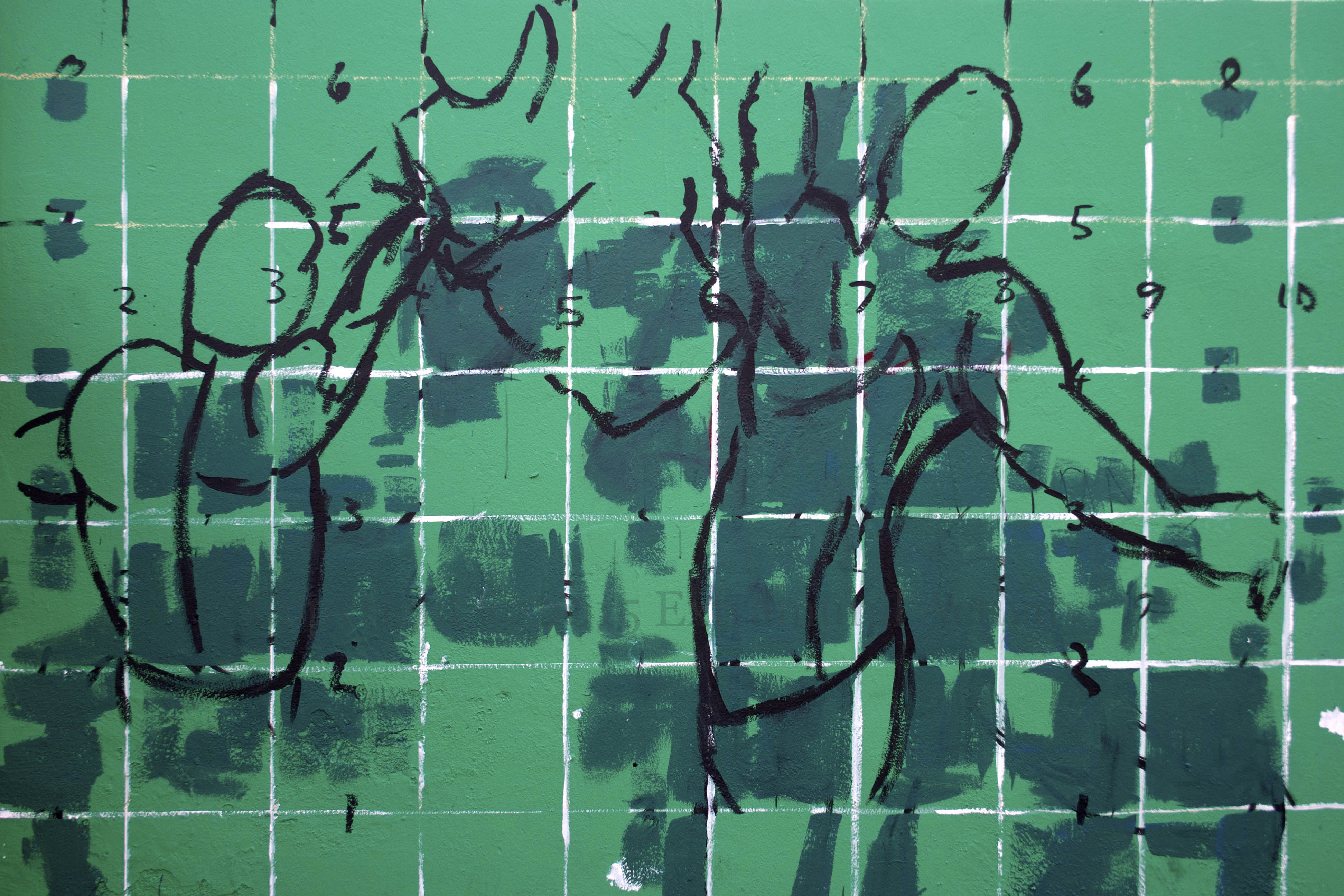
The final image below is the cartoon for the water polo part of mural, which was begun back in February.
“SOS – Wall St rapes Ireland”. Conor Devine (at EamonnMallie.com) provides context. This message on the mountain (Slıabh Dubh) came and went in a matter of days, if not hours, because the television exposé it was designed to coincide with was not in fact broadcast; also perhaps because parents did not appreciate having to explain rape to their young children – the mountain can be seen from a large portion of west and central Belfast.
CIRA stencil outside the offices of the West Belfast Partnership on the Falls Road, with the offices of Sınn Féın Poblachtach and a tricolour reflected in the window.
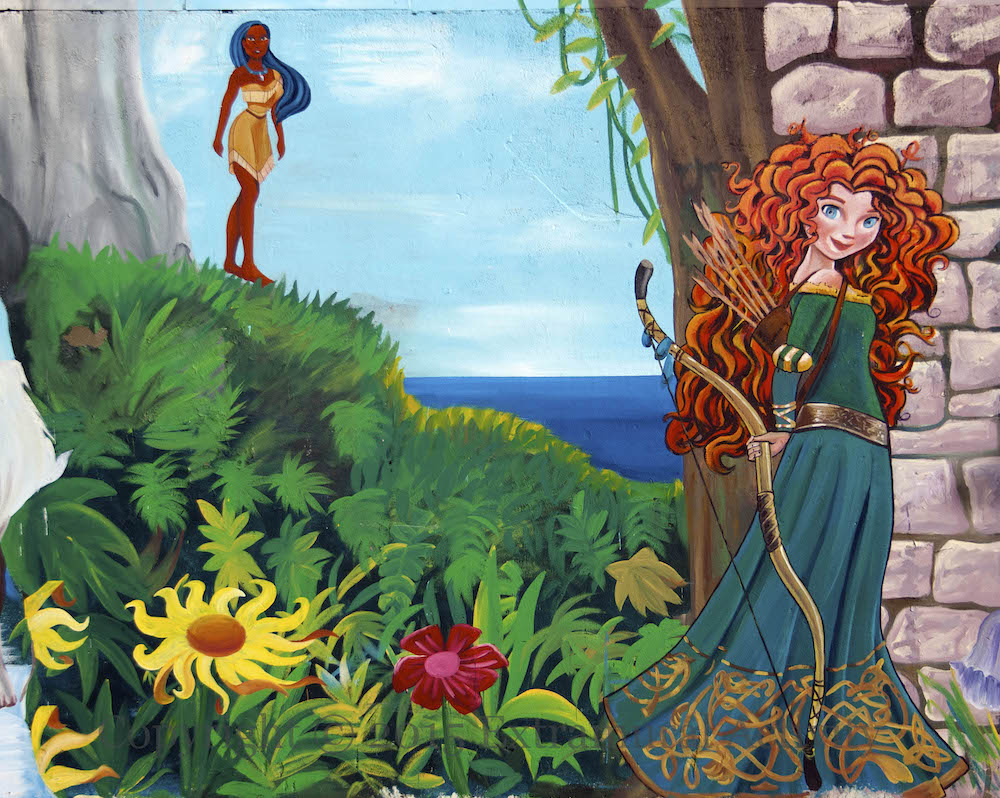
After a fraught experience with a colony of gold-digging Englishmen, native American princess Pocahontas keeps a wary on eye on the Scot Merida (from Disney’s Brave), who is armed with a bow and arrows.
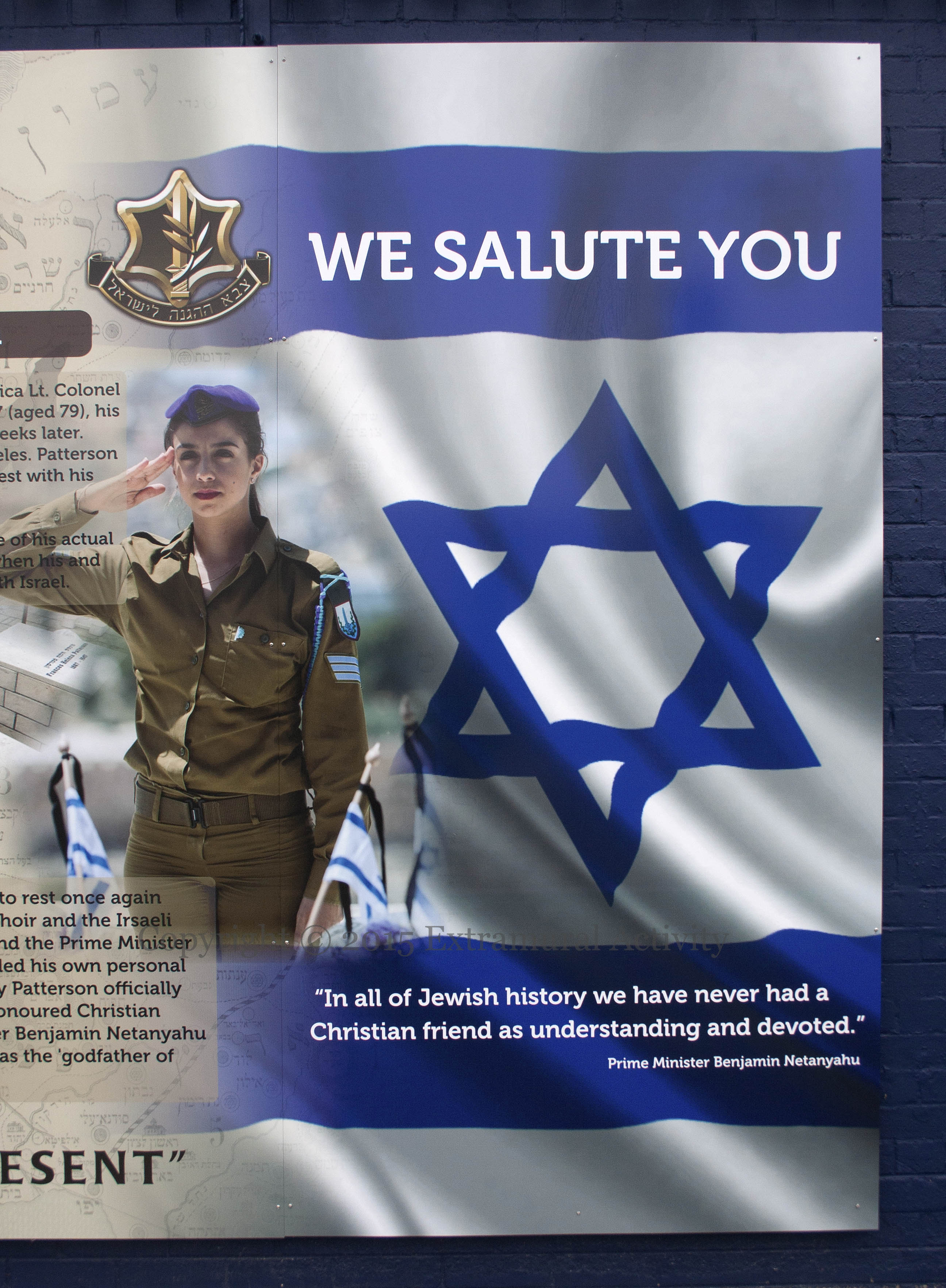
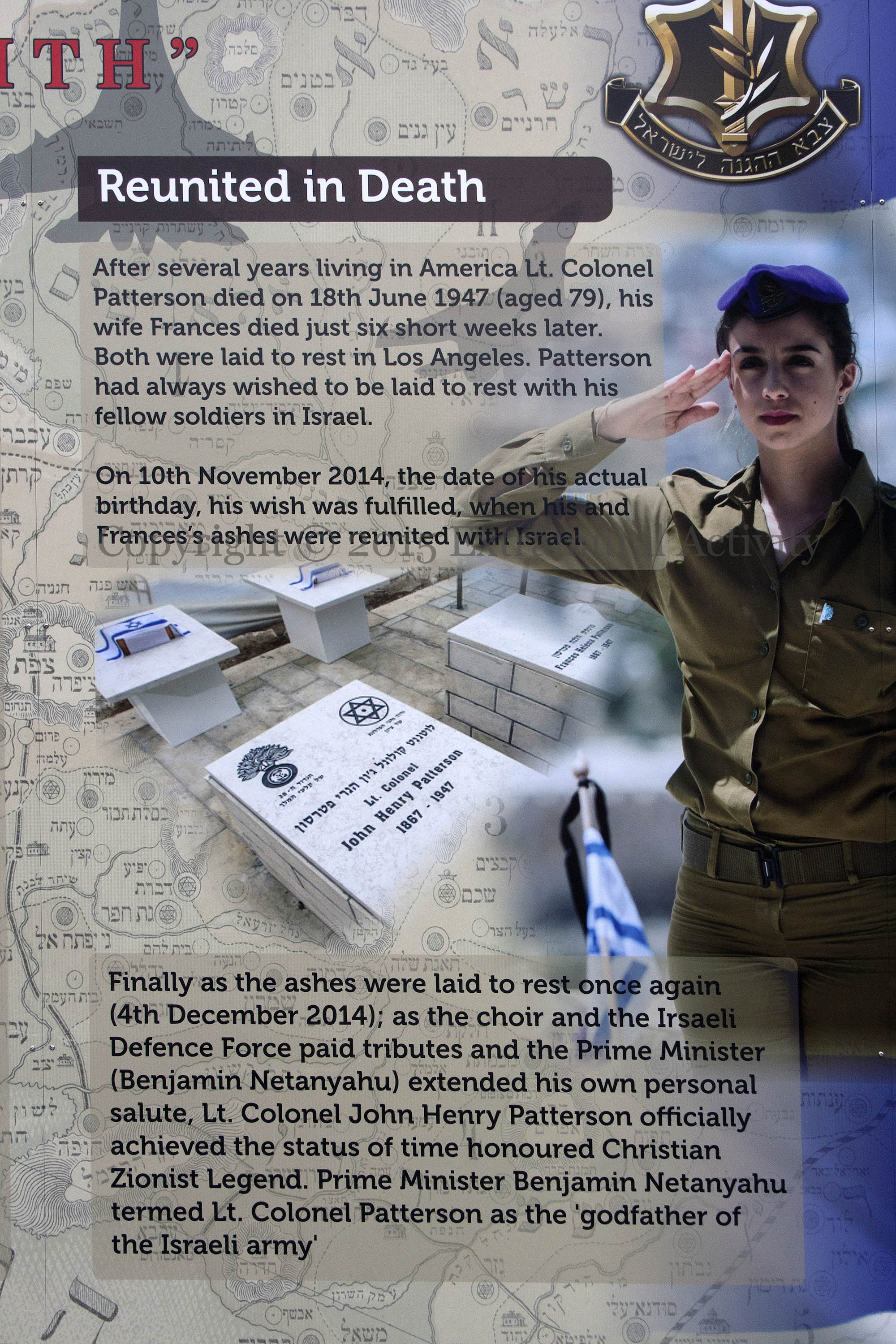
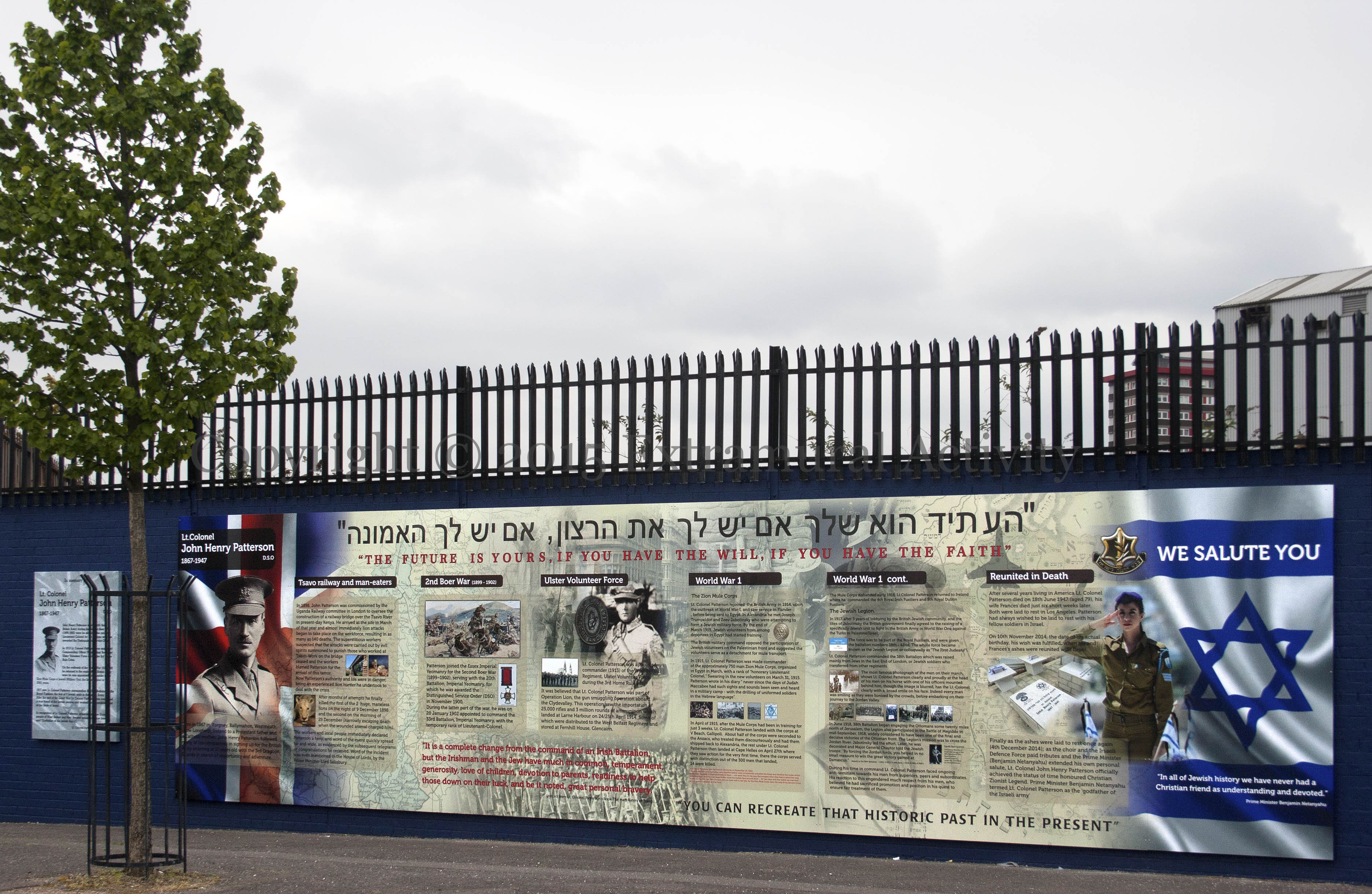
Here are panels 8, 5, 6, and 7 from the Patterson board featured yesterday. The final panel shows the star of David and a quote from Prime Minister Benjamin Netanyahu: “In all of Jewish history we have never had a Christian friend as understanding and devoted.” The interim panels described Patterson’s raising and leading of the Jewish battalions of the Royal Fusiliers in WWI. After dying in obscurity in Los Angeles in 1947, his remains were transported to Israel in December 2014 and reinterred (video). For more, including a recording of Patterson’s voice, see this BBC Magazine article.
Video of the launch:
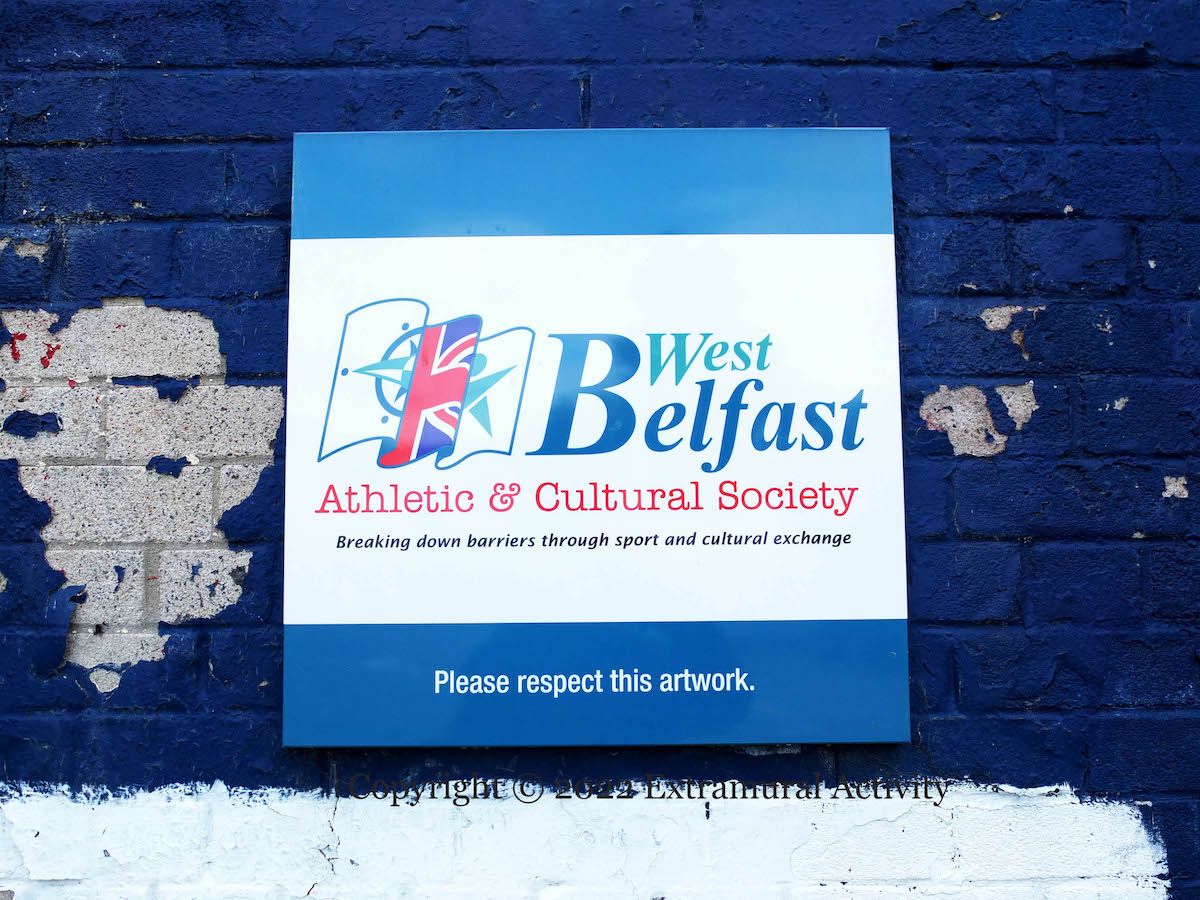
The plaque to the right asks viewers to “please respect this artwork” but a fire was set below it in 2016; see Where Is The Reconciliation?








 Extramural Activity