Surviving The Titanic

2014-05-06 South5Titanic+

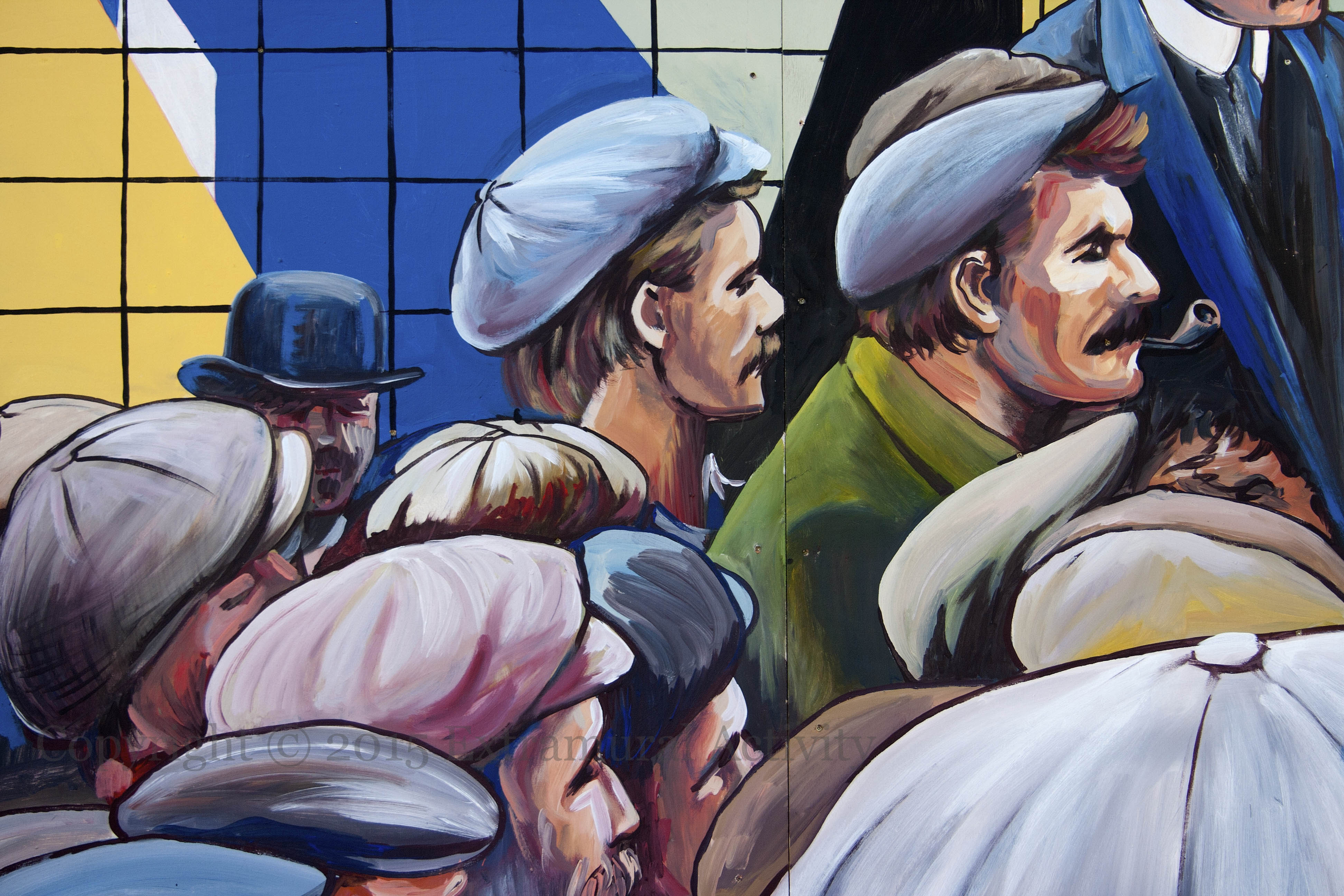
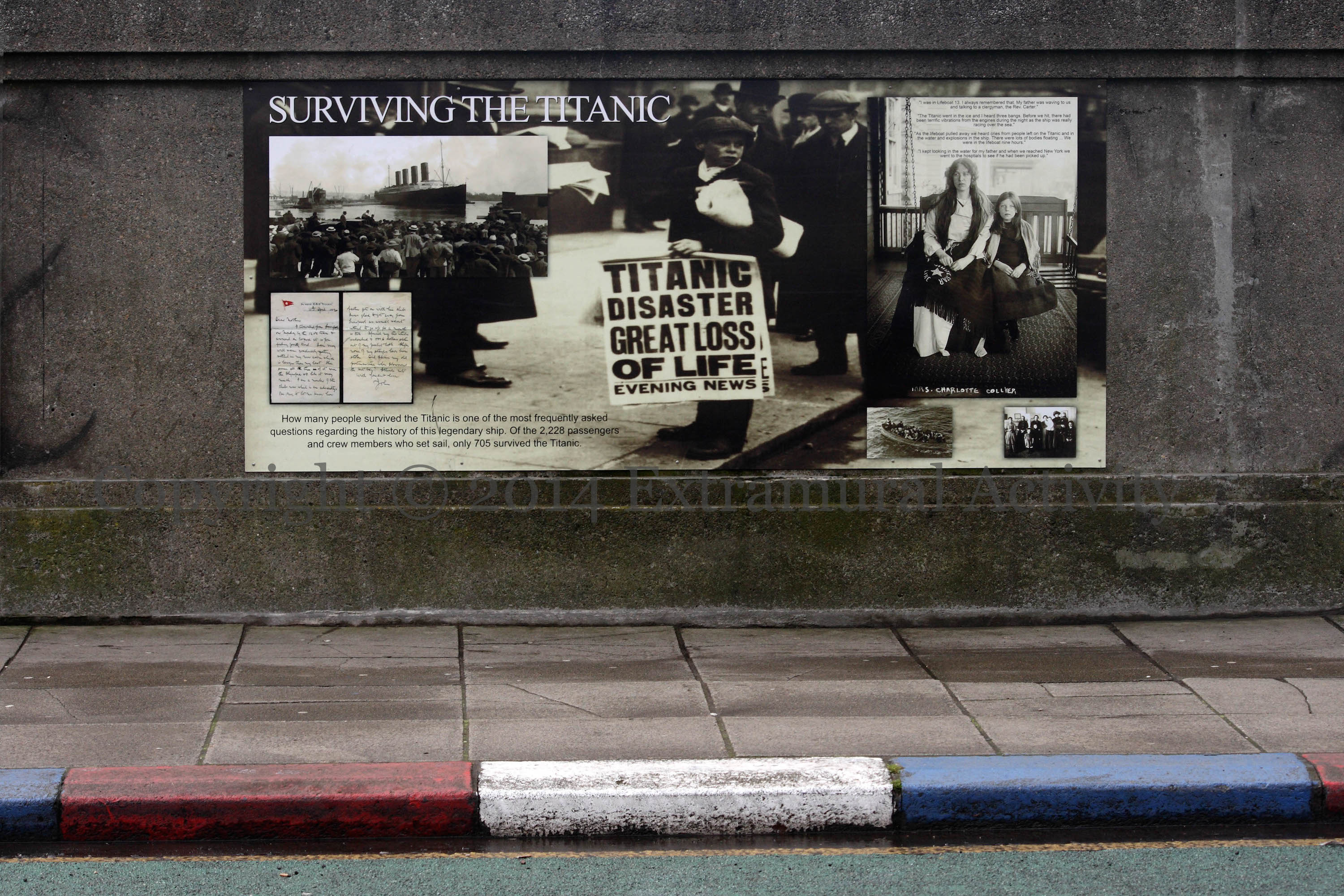
Here are two final images from the south side of the Donegall Road bridge over the Victoria Street line, one about Titanic and the other about locals awarded the MBE.

“I was in Lifeboat 13. I always remember that. My father was waving to us and talking to a clergyman, the Rev. Carter. The Titanic went in the ice and I heard three bangs. Before we hit, there had been terrific vibrations from the engines during the night as the ship was really racing over the sea. As the lifeboat pulled away we heard cries from the people left on the Titanic and in the water and explosions in the ship. There were lots of bodies floating … We were in the lifeboat nine hours. I kept looking in the water for my father and when we reached New York we went to the hospitals to see if he had been picked up.” Mrs. Charlotte Collier

How many people survived the Titanic is one of the most frequently asked questions regarding the history of this legendary ship. Of the 2,228 passengers and crew members who set sail, only 705 survived the Titanic.

See previously: Titanic Lifeboat | The Titanic Story and various other Titanic murals

1. Belfast Blitz #2
2 & 10. The Thread Of History (weavers)
3 & 9. Work Organises Life
4. In The Wars (Korea)
5  & 8. Surviving The Titanic
6. The Door Opens And Lets The Future In (Carnegie Library)
7. The Beautiful Blues (Linfield football)

2014-05-06 South8Choice+

2014-05-06 South+

Click image to enlarge
Copyright © 2014 Seosamh Mac Coılle
X01850 X01853 X01844 disaster great loss of life buckingham palace “Being a man or a women is a matter of birth. Being a man or women who makes a different is a matter of choice.” Tommy Wilson, MBE – for service to the community; Rita Mills MBE – for service to the civil service
Standing Stone

2015-03-14 TeleBlitz+

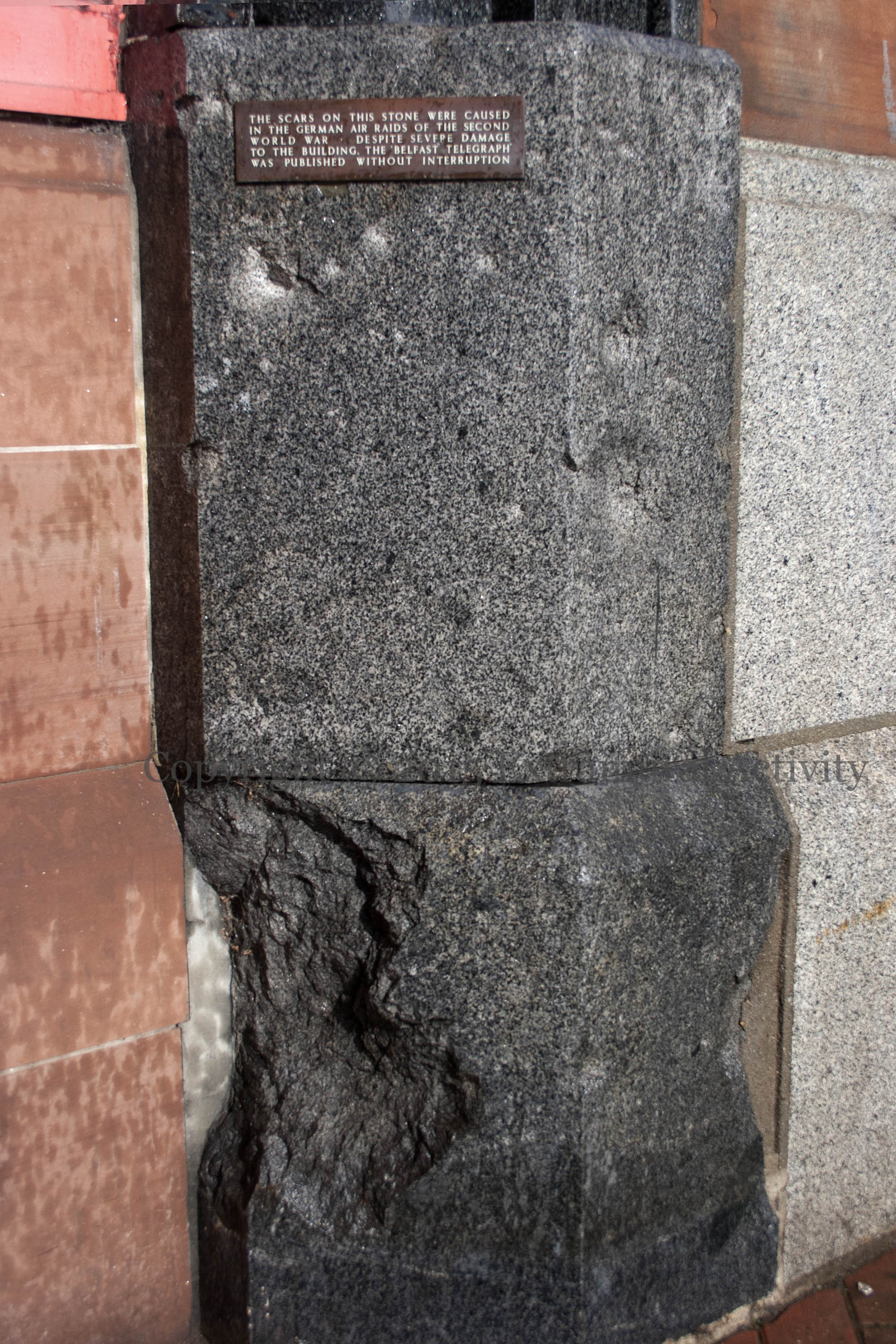
“The scars on this stone were caused in the German air raids of the second world war. Despite severe damage to the building, the Belfast Telegraph was published without interruption.” The masonry above forms part of what was the old front door of the offices, at the corner of Royal Avenue and Library Street.

Click image to enlarge
Copyright © 2015 Seosamh Mac Coılle
X02552

The Right To Be Happy

2014-12-11 NewLodge1900+

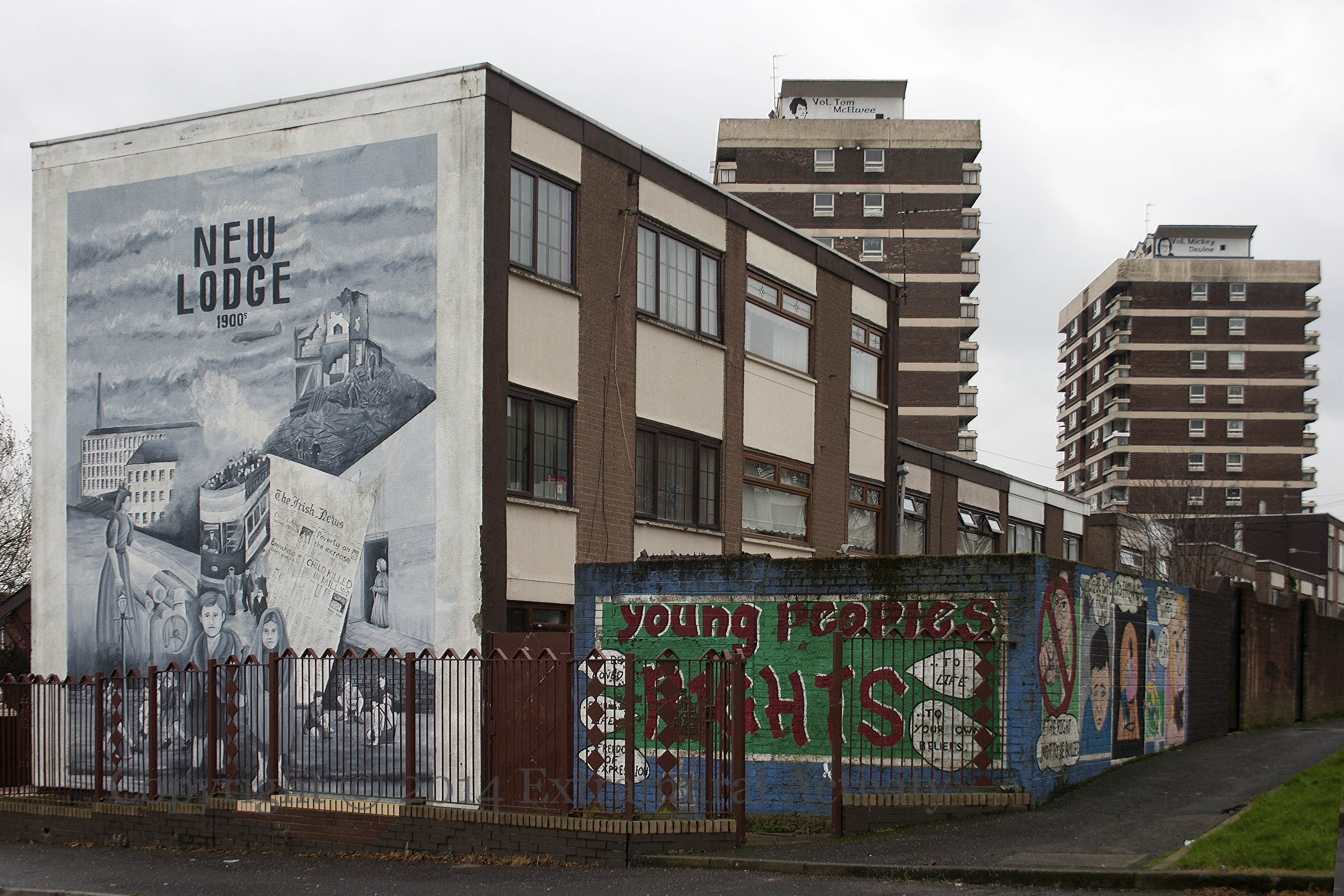
The life of a child in the New Lodge of the 1900s was one of poverty, disease, mill work, and being displaced by German bombers in 1941, with only a lamppost swing and marbles for relief. (It was also in black-and-white.) The struggle for young people’s rights “to be loved, to family life, to freedom of expression, to life, to your own beliefs, not to be bullied, to be safe from war, to privacy, to play, to be happy” continues in the panels on the right-hand side (for a close-up, see Young People’s Rights).

Click image to enlarge
Copyright © 2014 Seosamh Mac Coılle
X02423 tom mcelwee mickey devine linen tram irish news bronchitis

First Movement

2014-08-08 MarketsFiacc+

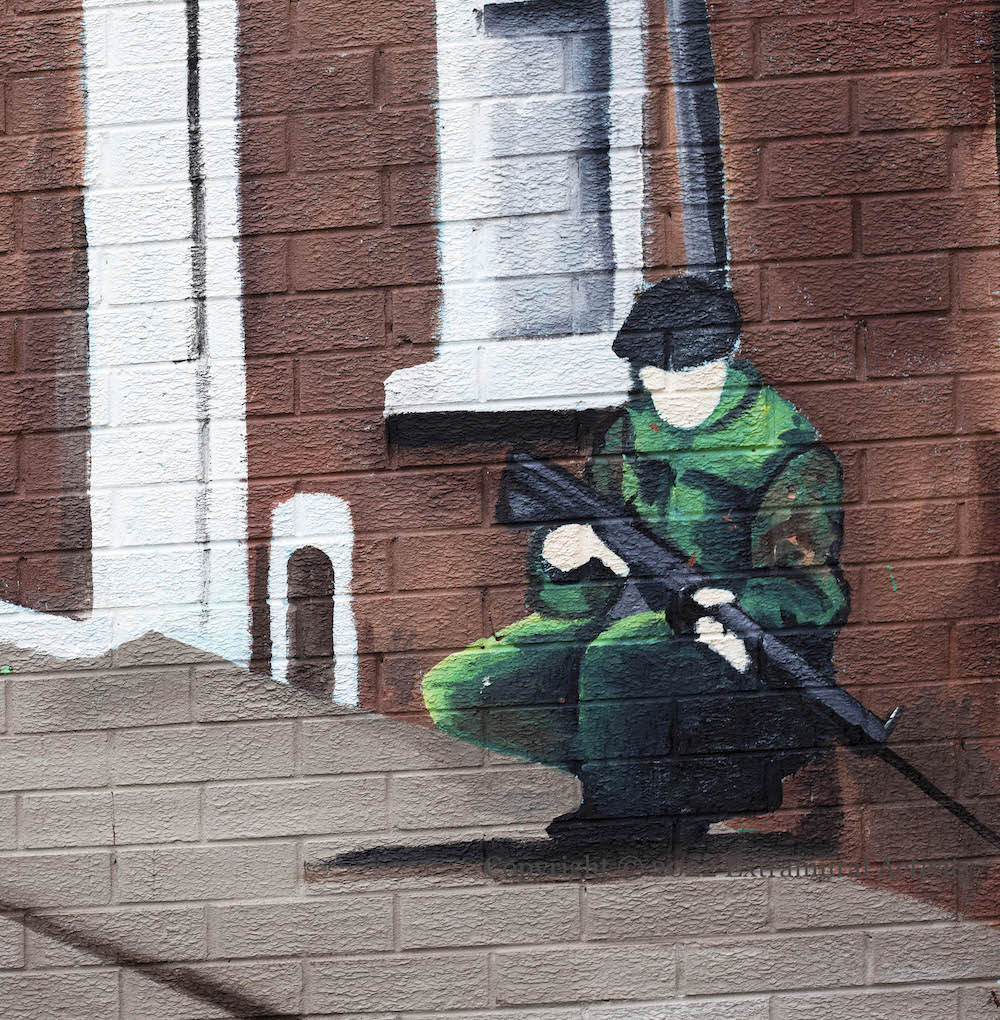
Patrick O’Connor was born on this day in 1924 on the lower Falls but after his father emigrated he spent his early years – until age 5 – with his grandparents in East Street in the Markets. It was as a high-schooler in New York that he adopted the name Pádraıc Fıacc (“fıach dubh” is “raven”) and began writing poetry. He settled in Glengormley upon his second and final return; it is not clear that he ever saw East Street lined with British Army soldiers, as shown in the mural above. He wrote of his early life in ‘First Movement’:

Low clouds, yellow in a mist wind
Sift on far-off Ards
Drift hazily …
I was born on such a morning
Smelling of the bone yards
The smoking chimneys over the slate top roofs
The wayward storm birds
And to the east where morning is, the sea
And to the west where evening is, the sea
Threatening with danger
And it would always darken suddenly

Some of Fıacc’s poems are in the TroublesArchive. There are two videos below. The first is an interview with NVTv’s Bernard Conlon; the second is of a reception in Belfast City Hall.

X09071 2022-02-14 Fiacc d

Click image to enlarge
Copyright © 2022 Seosamh Mac Coılle
X02057 [X09070] X09071 1929

The Hunting Heart

2015-03-29 StillWatersLeft+

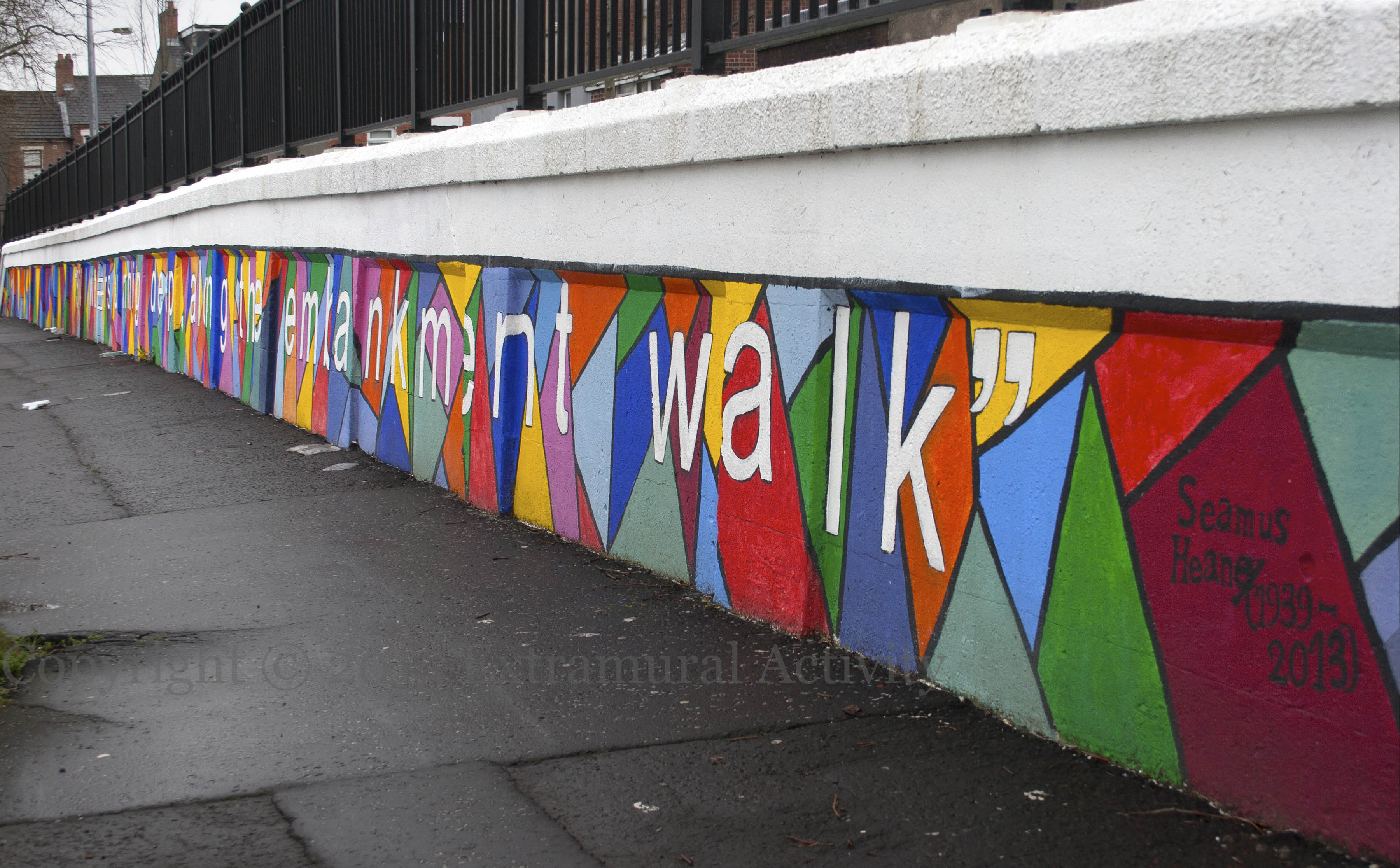
Seamus Heaney was born on this date in 1939 on a farm in County London-/Derry. His first (full) collection was Death Of A Naturalist in 1966 and it included the poem Twice Shy, the concluding lines of which are painted on Stranmillis embankment: Still waters running deep along the embankment walk.

Painted by UUSU students (see also Animals Two By Two).

Belfast City Council report.

2015-03-29 StillWatersRight+

Click image to enlarge
Copyright © 2015 Seosamh Mac Coılle
X02576 X02577 uusu

The Human Condition

2015-03-14 RightsChildren+

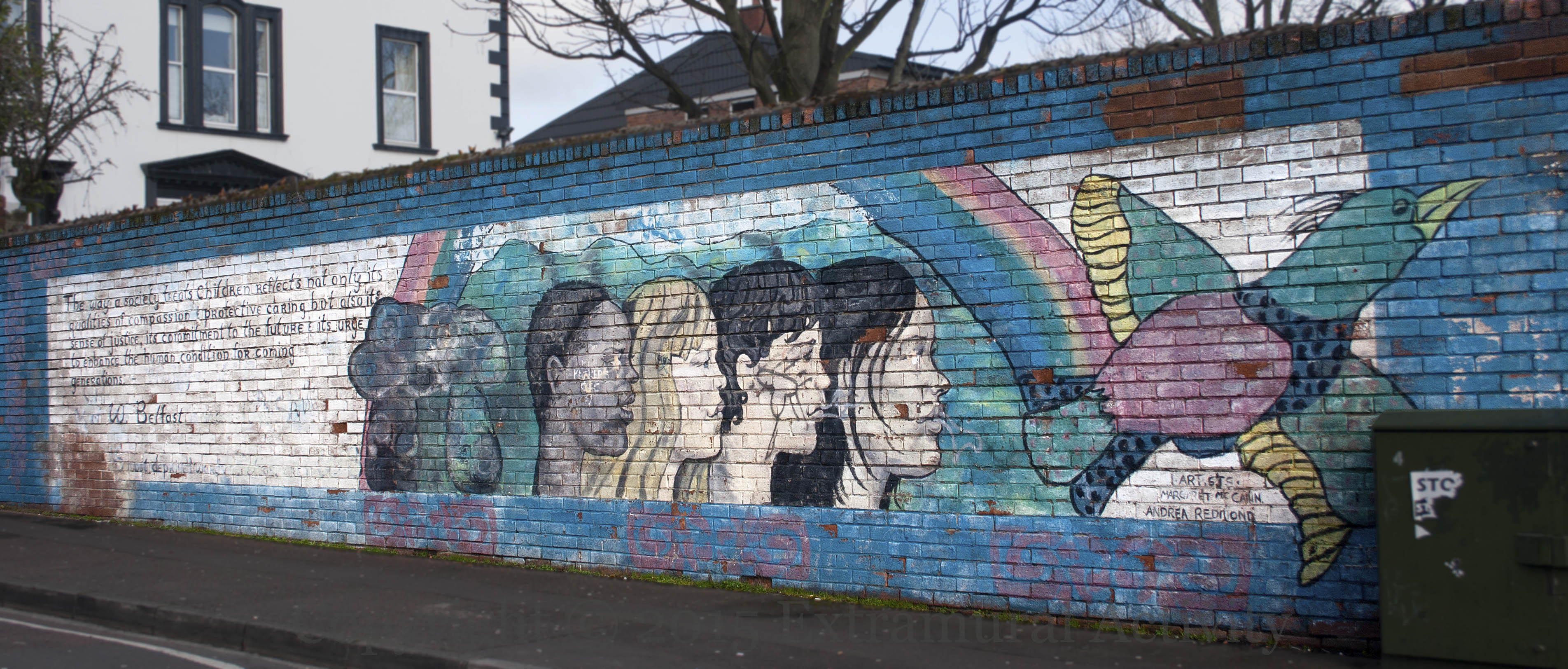
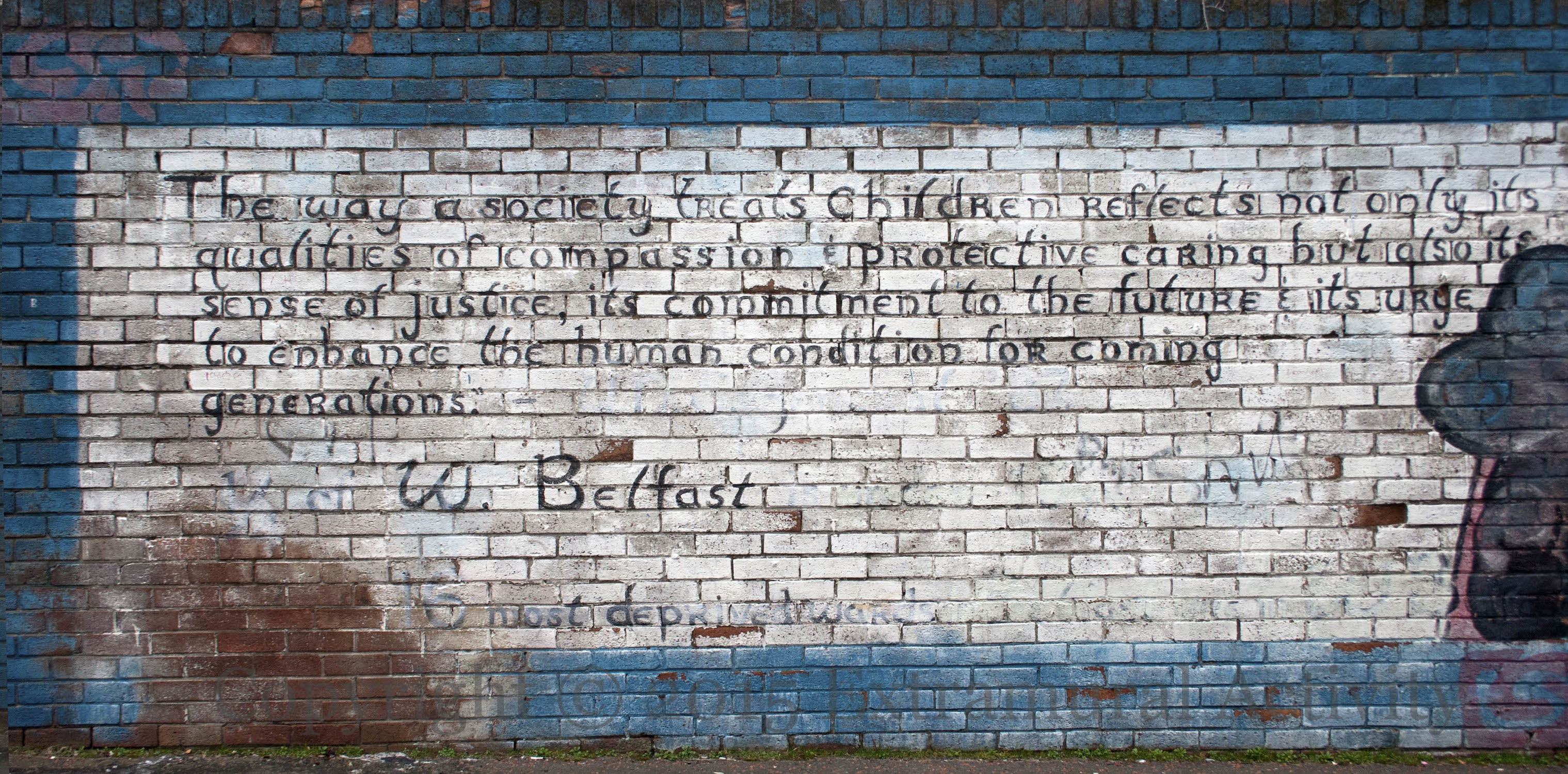
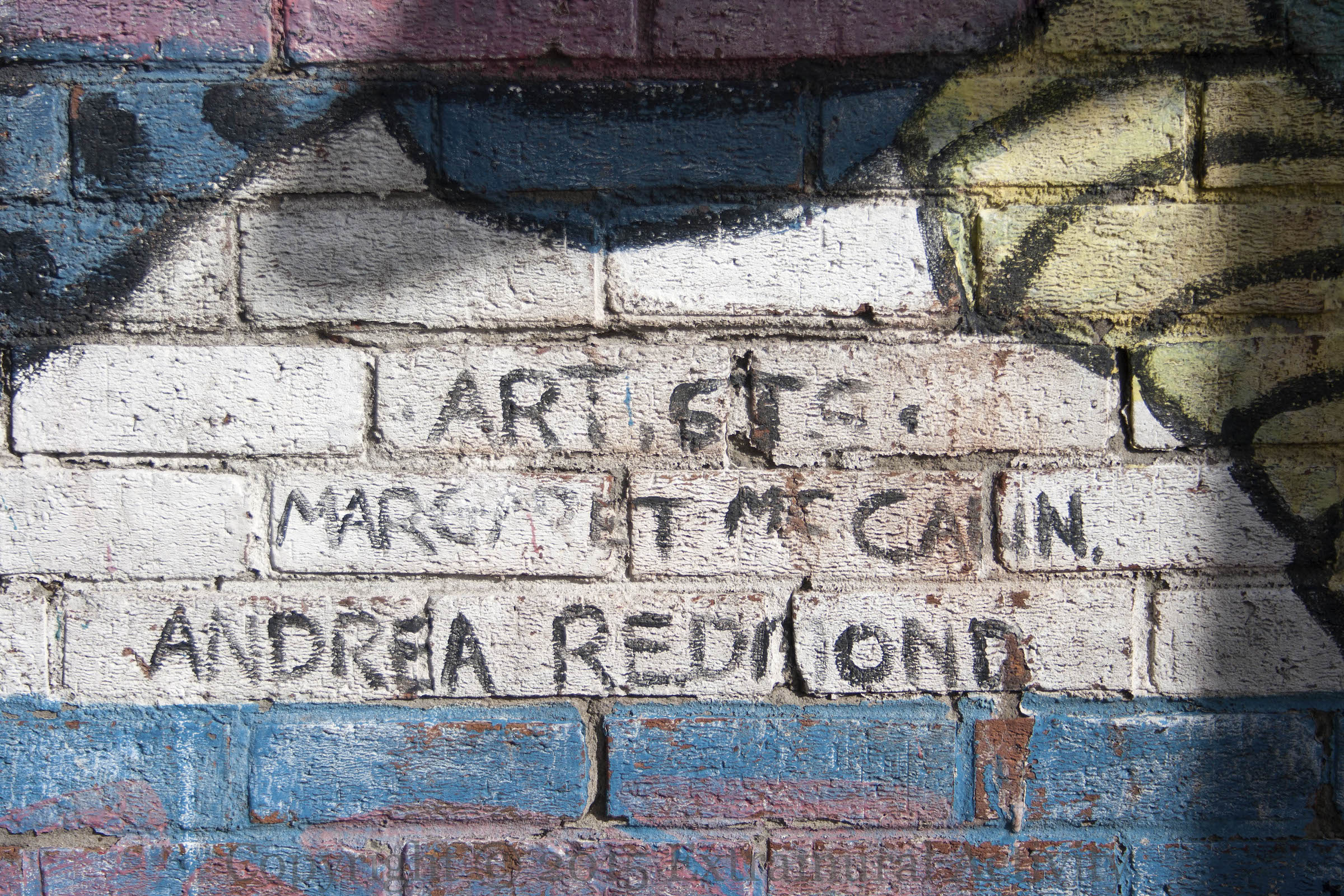
“The way a society treats children reflects not only its qualities of compassion & protective caring but also its sense of justice, its commitment to the future & its urge to enhance the human condition for coming generations.” Words by the United Nations Secretary-General Javier Perez De Cuellar in 1987 inscribed on a mural by Margaret McCann and Andrea Redmond in Dunlewey Street in Clonard.

2015-03-14 RightsChildrenQuote+

2015-03-14 RightsChildrenSig+

Click image to enlarge
Copyright © 2015 Extramural Activity
X02548 X02549 X02550 rainbow mountains duck flying “1/4 of W. Belfast is under 15. 12 of 16 most deprived wards in Belfast are in W. B.” dolmen races children

Unite The Union

2015-02-28 TransportUnite+

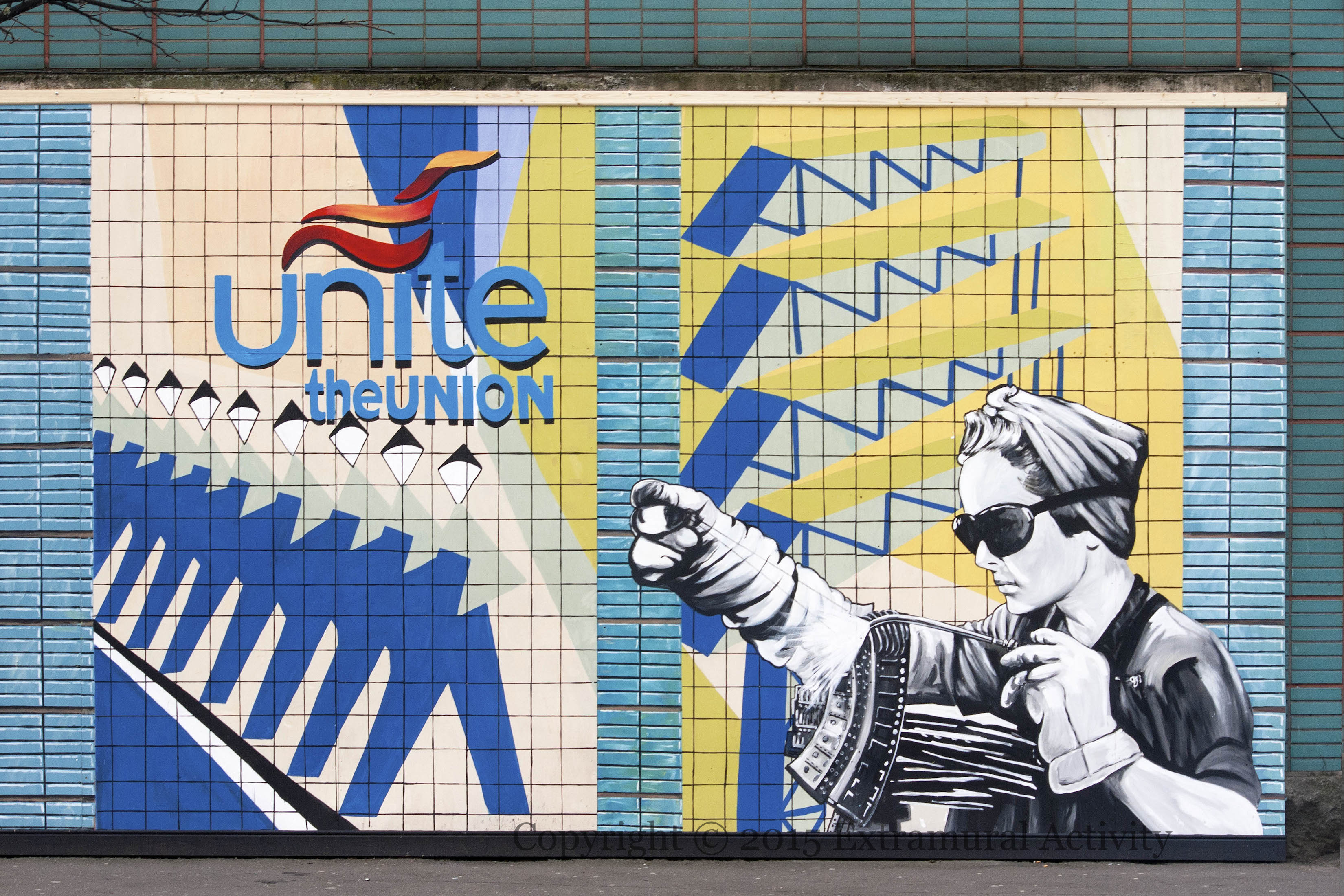
Here are more images from the new ‘Unite – the union’ mural at Transport House. Monday’s post featured Jim Larkin, who, after the Belfast lockout, founded the Irish Transport & General Workers Union in 1909. The separate (Amalgamated) Transport & General Workers Union (headquartered in London) was formed in 1922. (Larkin’s old union NUDL, renamed the National Union of Dock, Riverside and General Workers in Great Britain and Ireland, joined soon after in the same year.) In 2007, the T&G merged with Amicus to form the current Unite – The Union. The TGWU’s base in Belfast was Transport House, a 1959 building by architect J.J. Brennan in the International style (C20) and a B1 listed building (wikimedia). As can be seen from the image of a female welder above, the new mural features the green tile squares of the building itself, as well as the string of workers in the large mosaic on the front.

2015-02-28 TransportFront+

2015-02-28 TransportWide+

Click image to enlarge
Copyright © 2015 Seosamh Mac Coılle
X02542 X02540 X02543

Big Jim

2015-02-28 TransportLarkin+

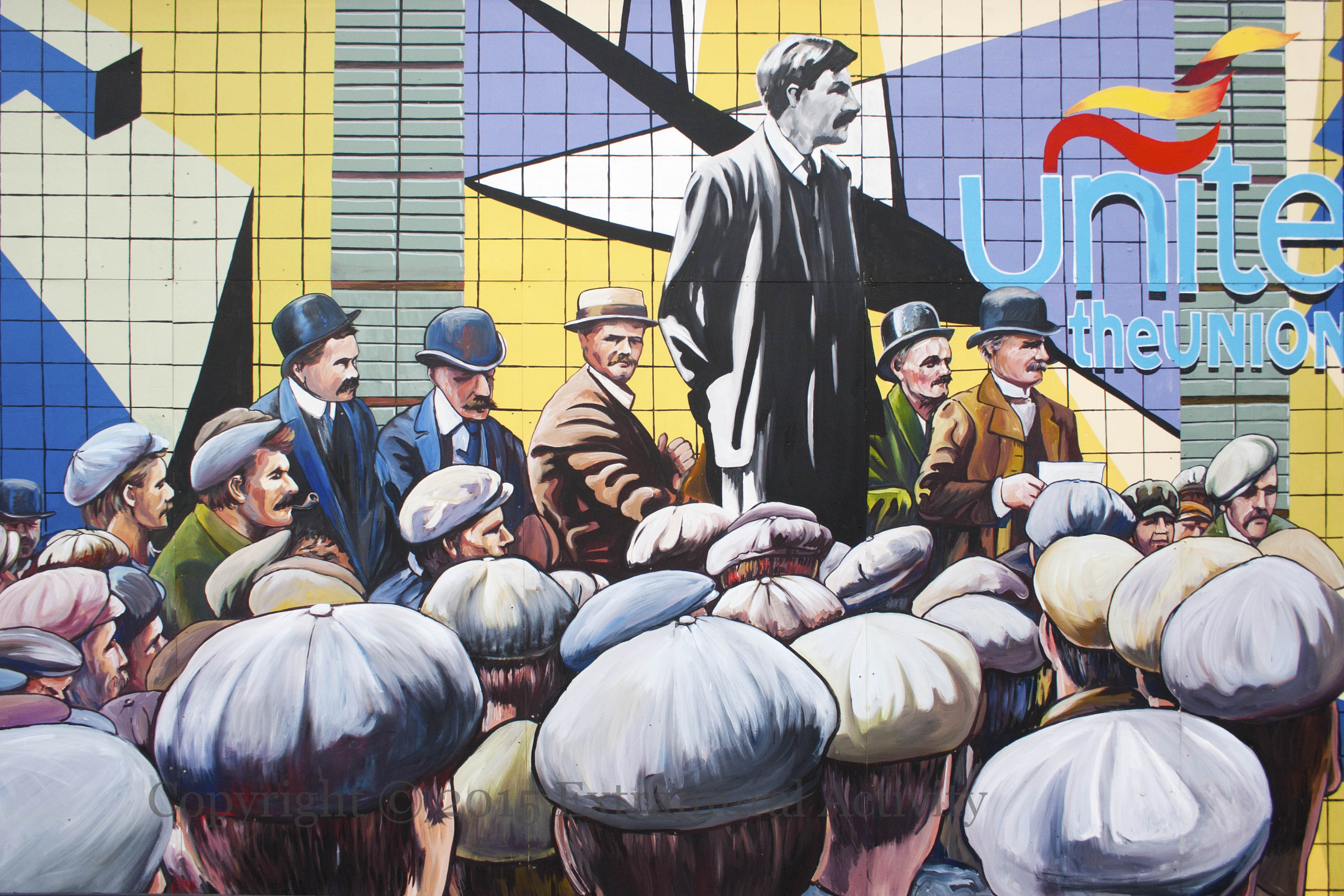
Big Jim Larkin spoke from the steps of the Custom House – a stone’s throw away from this new mural at Transport House in the city centre – in the early months of 1907, speaking on behalf of the dockers and other unskilled labourers, recruiting them to the National Union of Dock Workers, and ultimately organizing various strikes as part of what is now known as the ‘Belfast Lockout’, which stretched from April 26th to August 28th. Larkin was expelled from the NUDL and went on to form the Irish Transport & General Workers Union in 1909 and organize the Dublin Lockout in 1913. The rest of his history is equally dramatic, including arrest and imprisonment for ‘criminal anarchism’ in the US in 1919. (WP)

Here is an image of Larkin on the platform at a Belfast rally (mouse-over to enlarge), surrounded by workers wearing cloth caps.

2015-02-28 TransportClothCaps+

Click image to enlarge
Copyright © 2015 Seosamh Mac Coılle
X02541 X02539 international workers world wobblies

Road To Equality

2014-11-25 RoadToEquality+

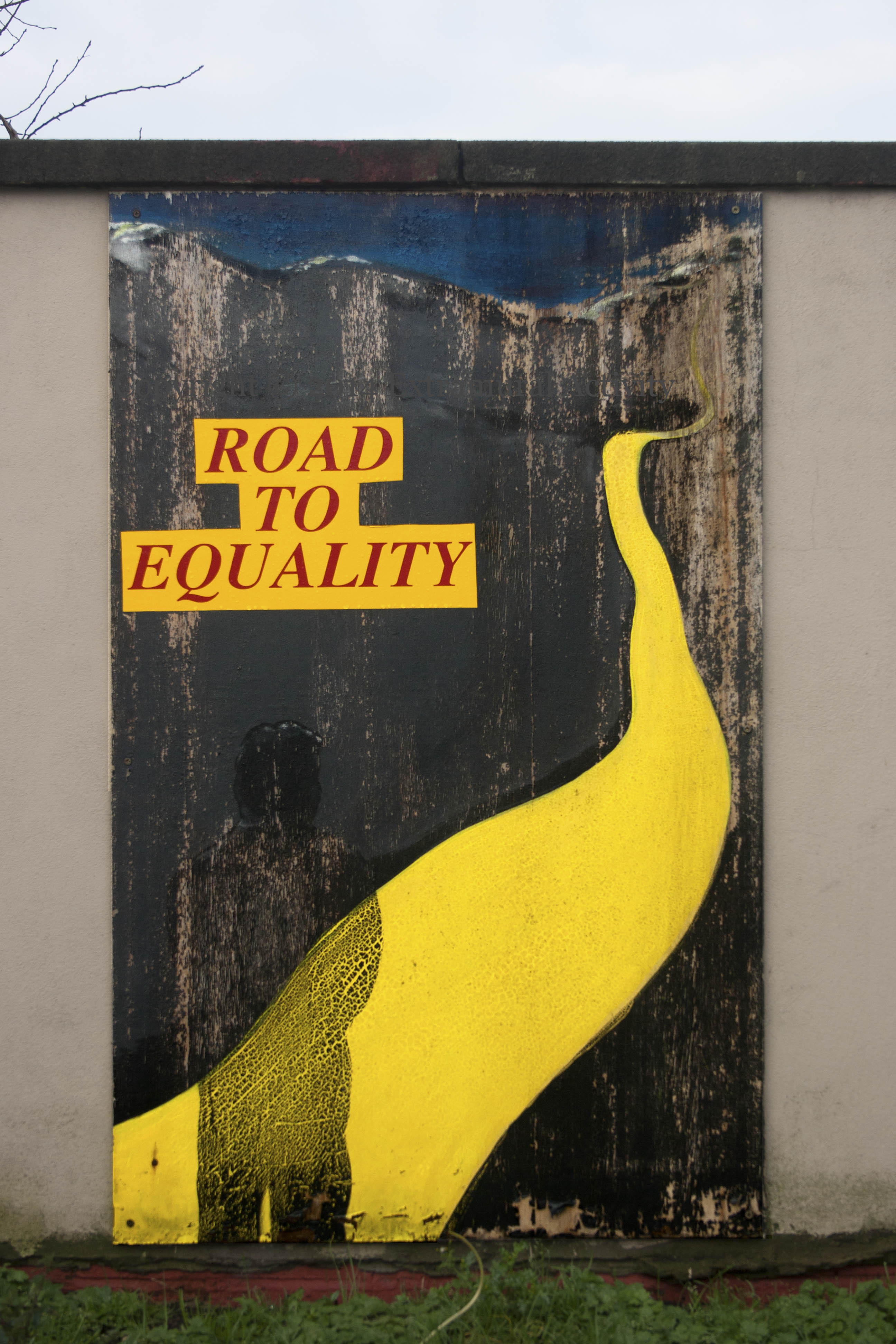
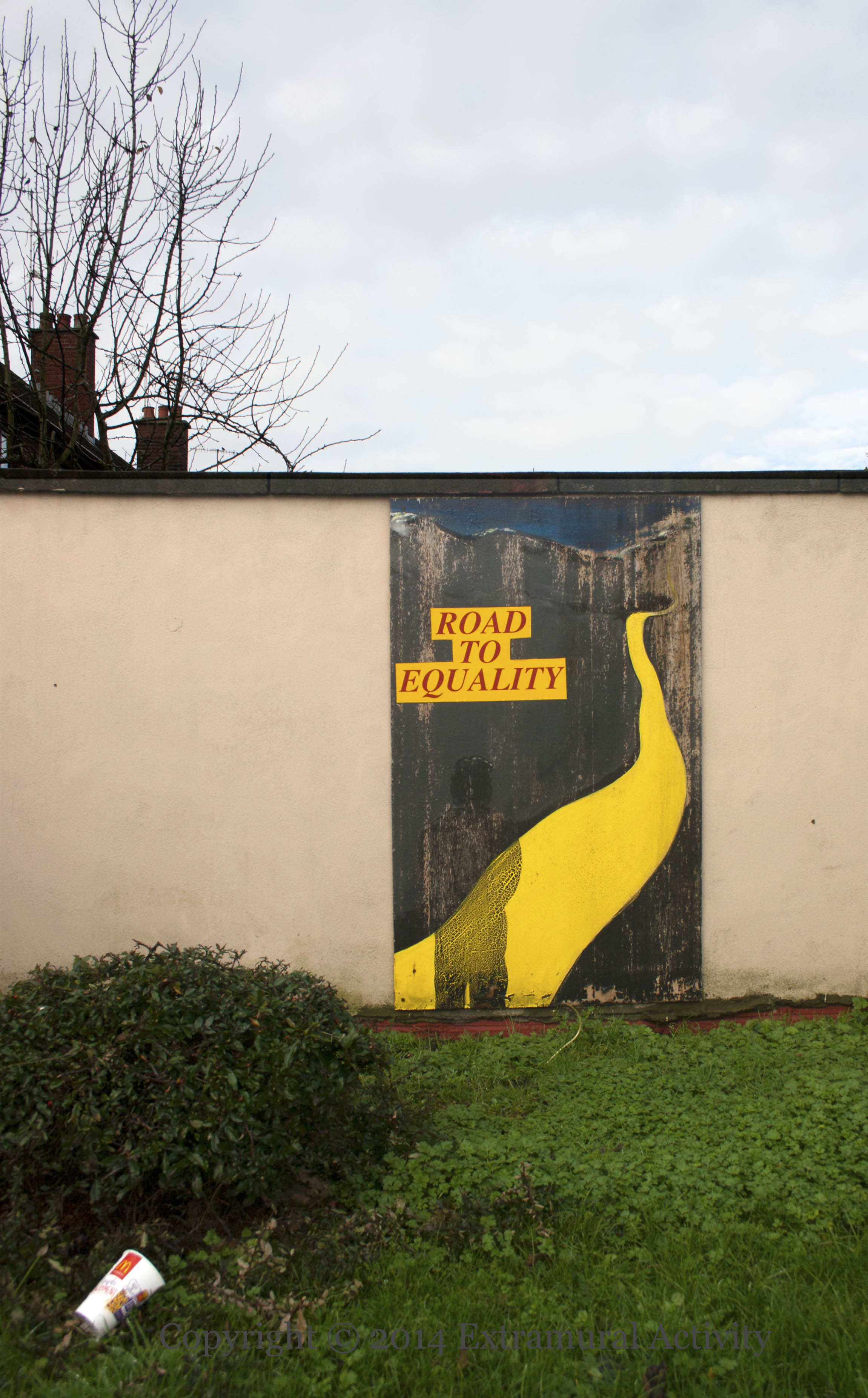
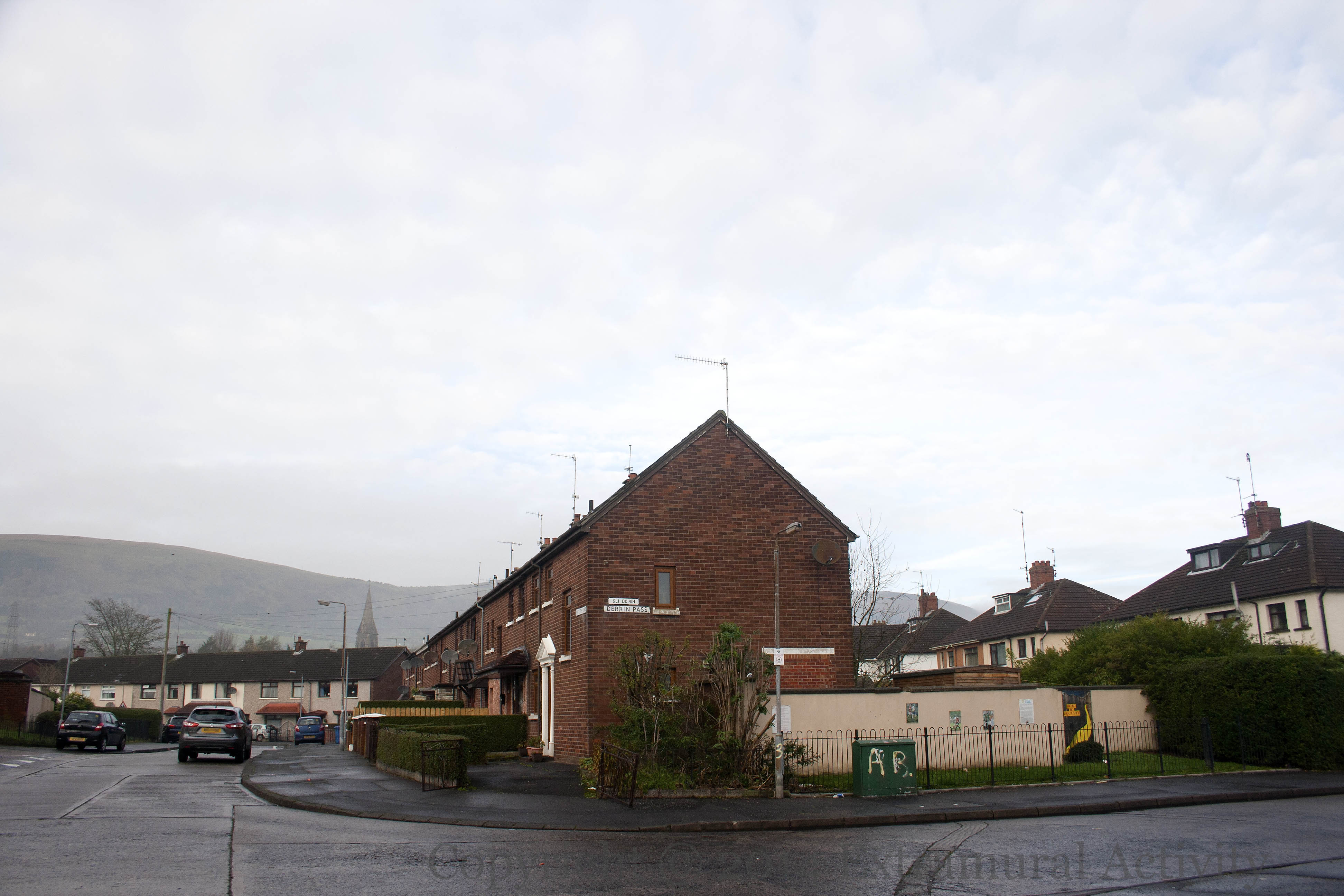
The road to equality is long and winding and goes through Andersonstown’s Derrin Pass. The junction is full of small board depicting Gaelic games, Irish culture, and landscape drawings, as well as exhortations towards equality — see the corresponding entry in the Peter Moloney Collection.

2014-11-25 RoadToEqualityWide+

2014-11-25 RoadToEqualityWide2+

Click image to enlarge
Copyright © 2014 Seosamh Mac Coılle
X02398 X02399 X02400

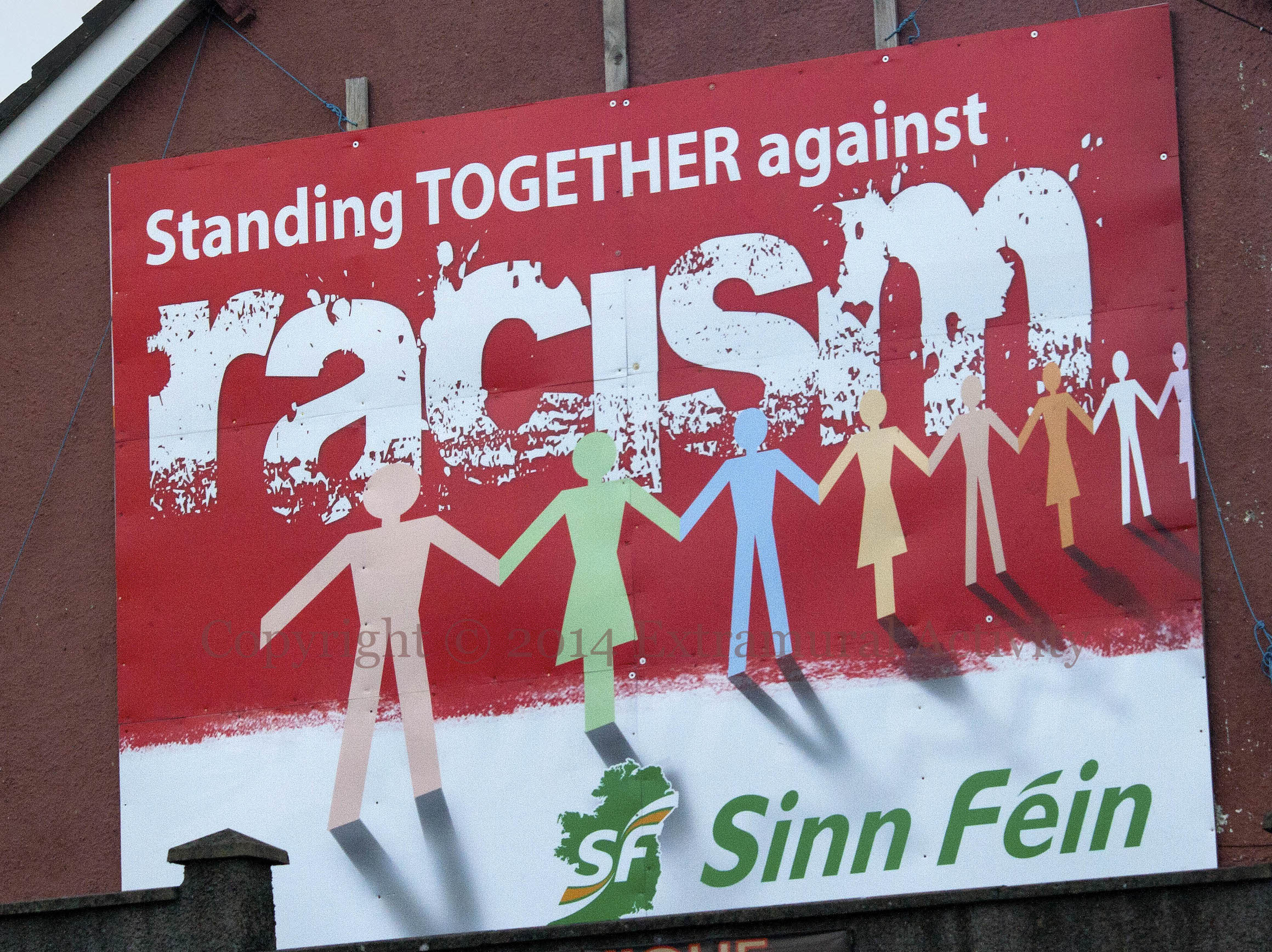
Standing Together Against Racism

2014-06-27 SFAntiRacism+

Anti-racism board on Sınn Féın’s Andersonstown office.

Click image to enlarge
Copyright © 2014 Seosamh Mac Coılle
X01999