“1891-1949” are the dates of the operation of Belfast Celtic, not the dates of forward Jimmy Ferris, who lived from 1894 to 1932. Ferris played for the club for nine years, and for various British clubs during the pogroms. He quit playing in 1930 because of a heart condition and died two years later, at the age of 37. The Ferris family grave, shown in today’s images, is in Milltown Cemetery. (Belfast Celtic | WP)
“Jimmy Ferris, known as Belfast Celtic’s ‘brilliant schemer’, he was on the team, which won four Irish League titles in the 1920s, for the loss of only one match. Also played for Chelsea and Preston North End.” With funding from the “European Regional Development Fund”.
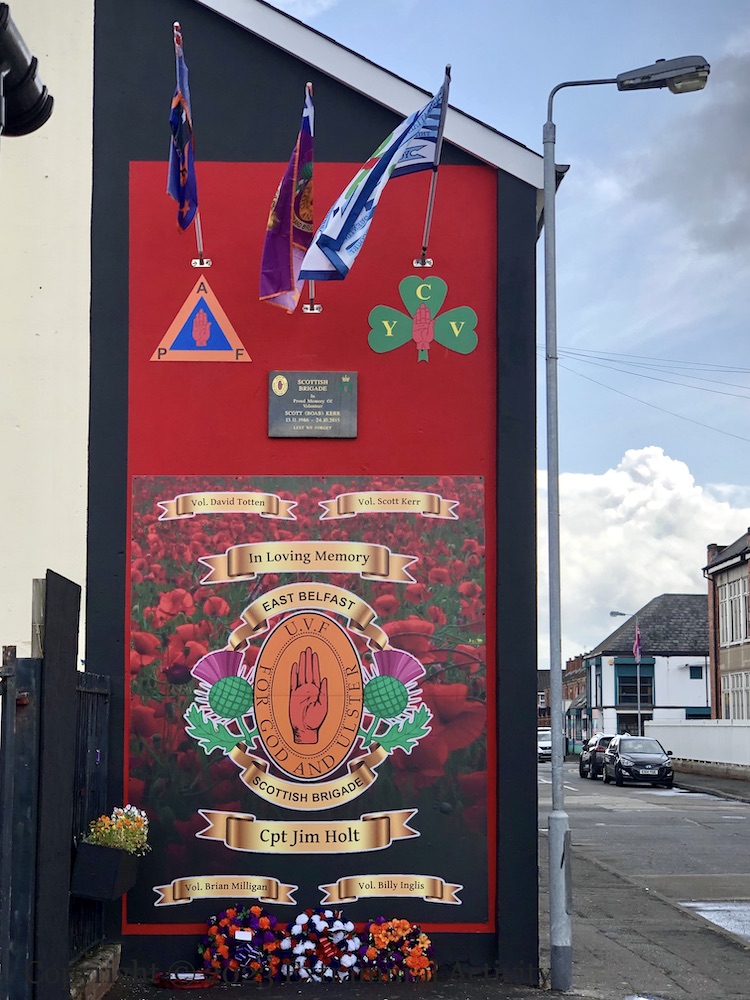
The hand-painted UVF Scottish Brigade mural (see Boab Kerr) in Beechfield Street/Tower Street has been replaced by this new printed board. The plaque to Kerr has been retained, but four names have been added – David Totten, Brian Milligan, Billy Inglis, and Jim Holt, who is now the most prominent. Holt died in February 2021 (ACT Fb).
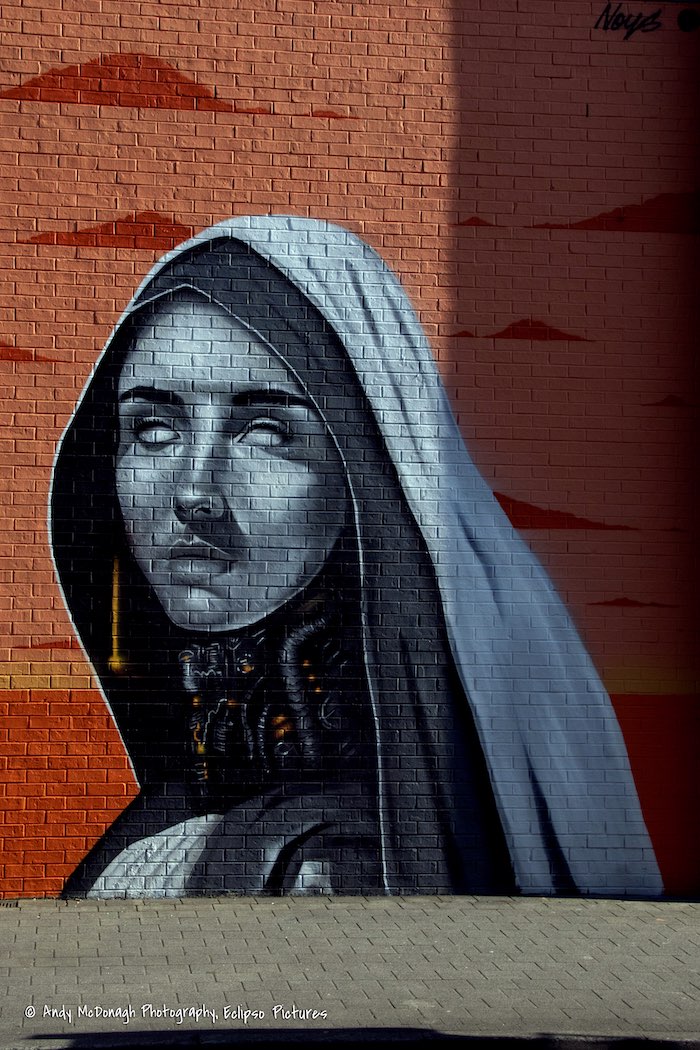
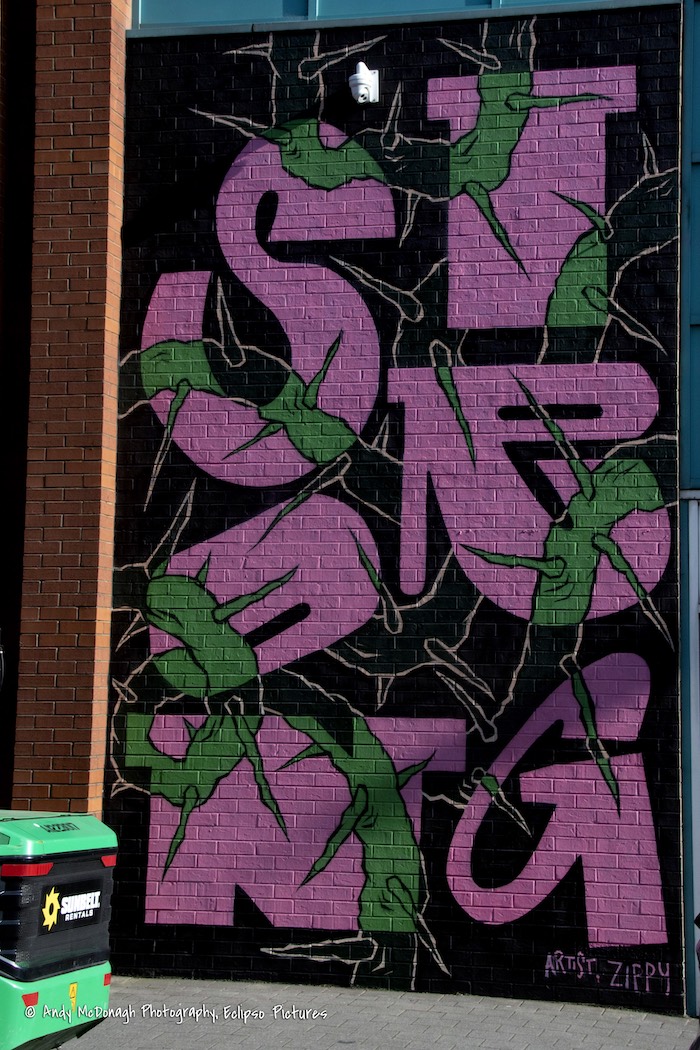
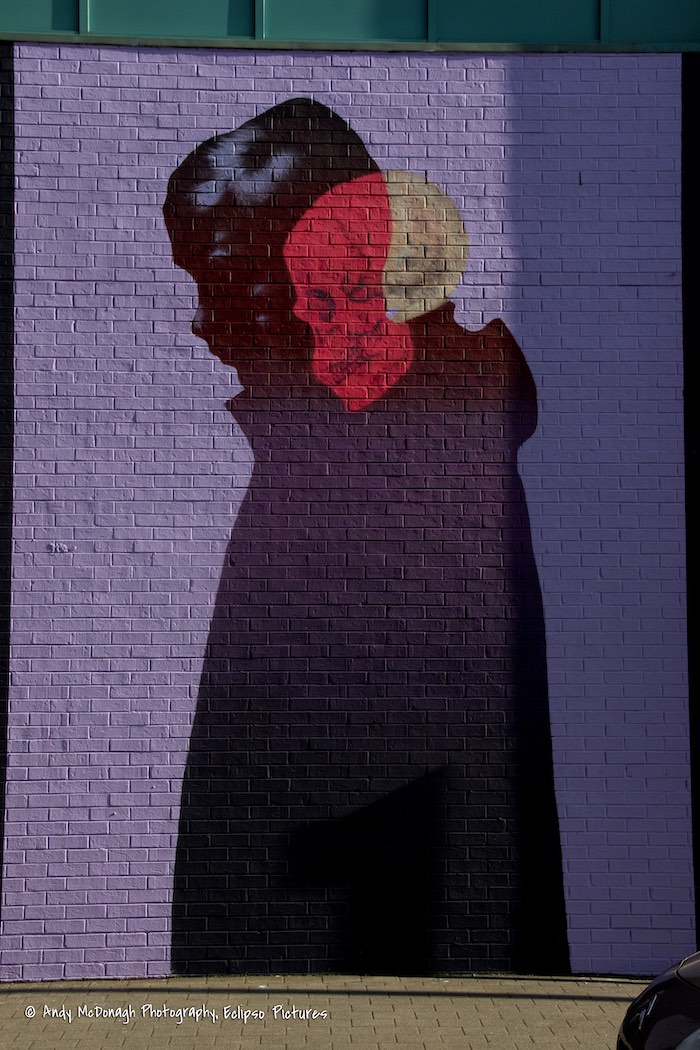
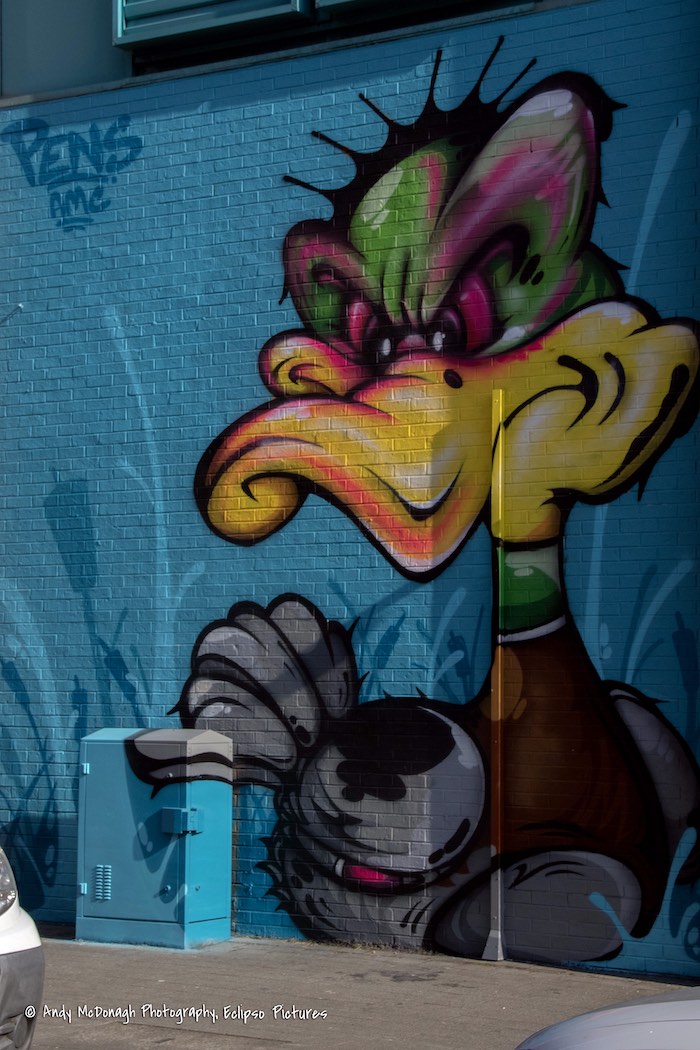
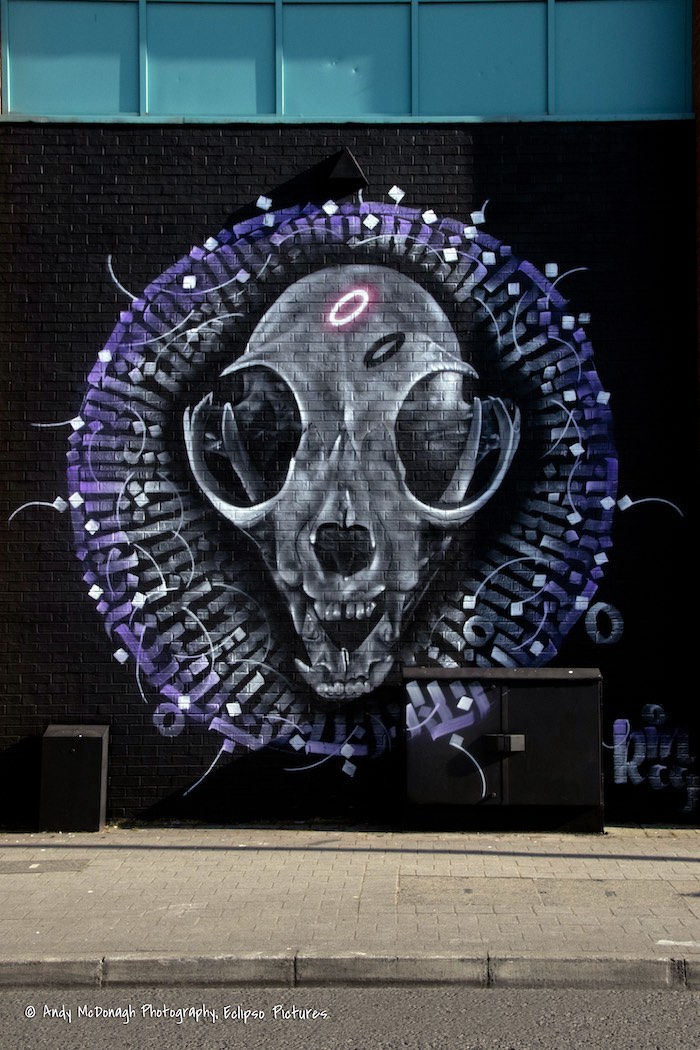
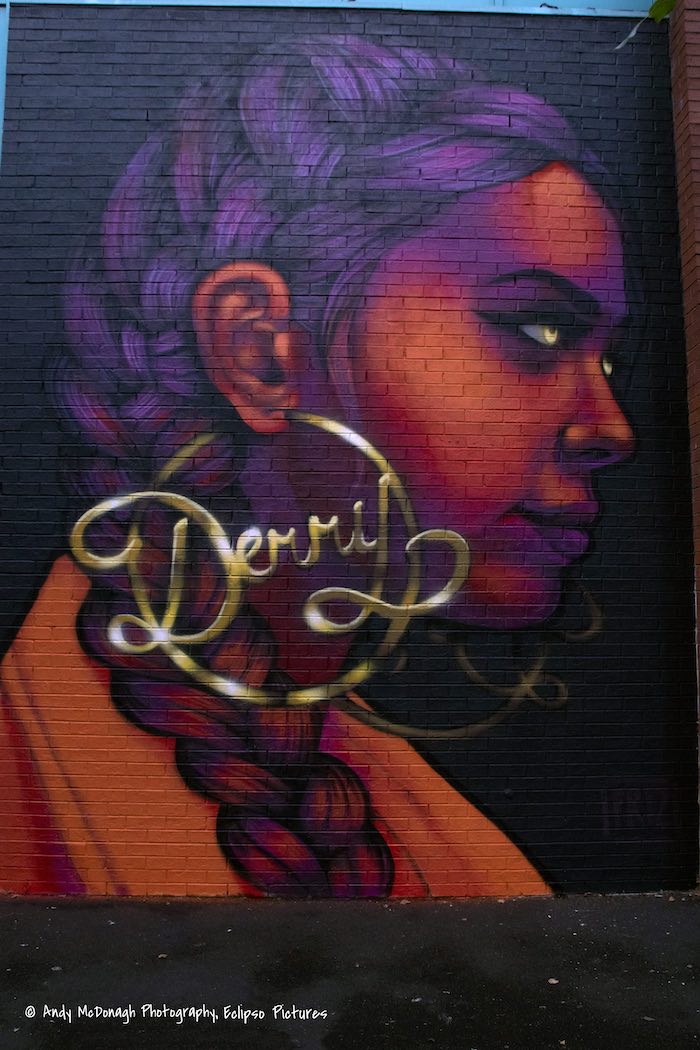
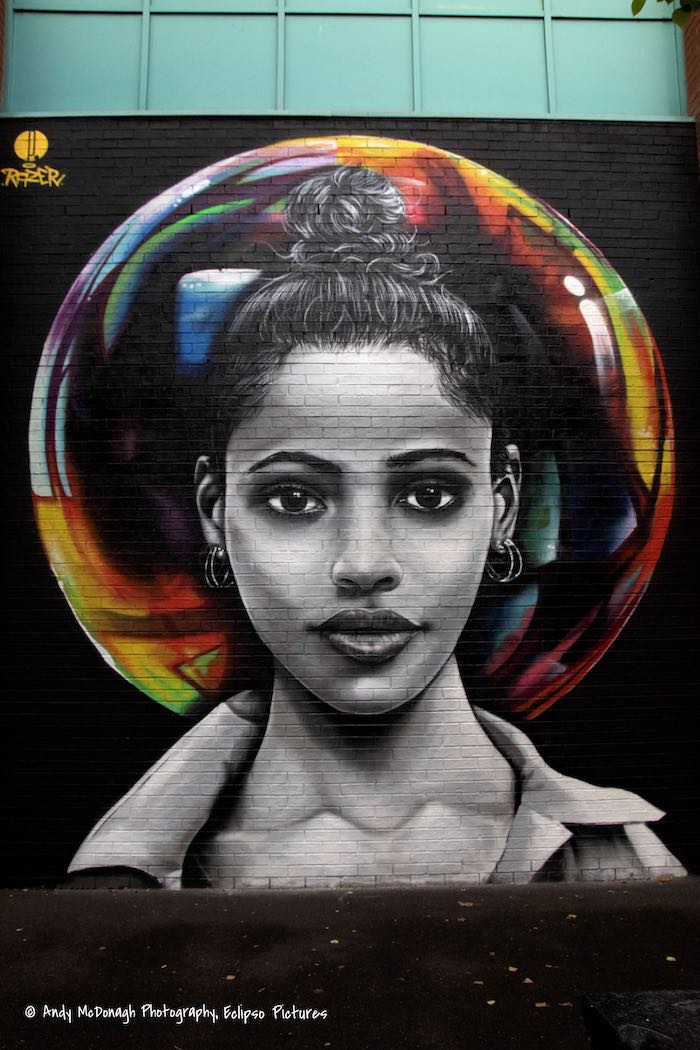
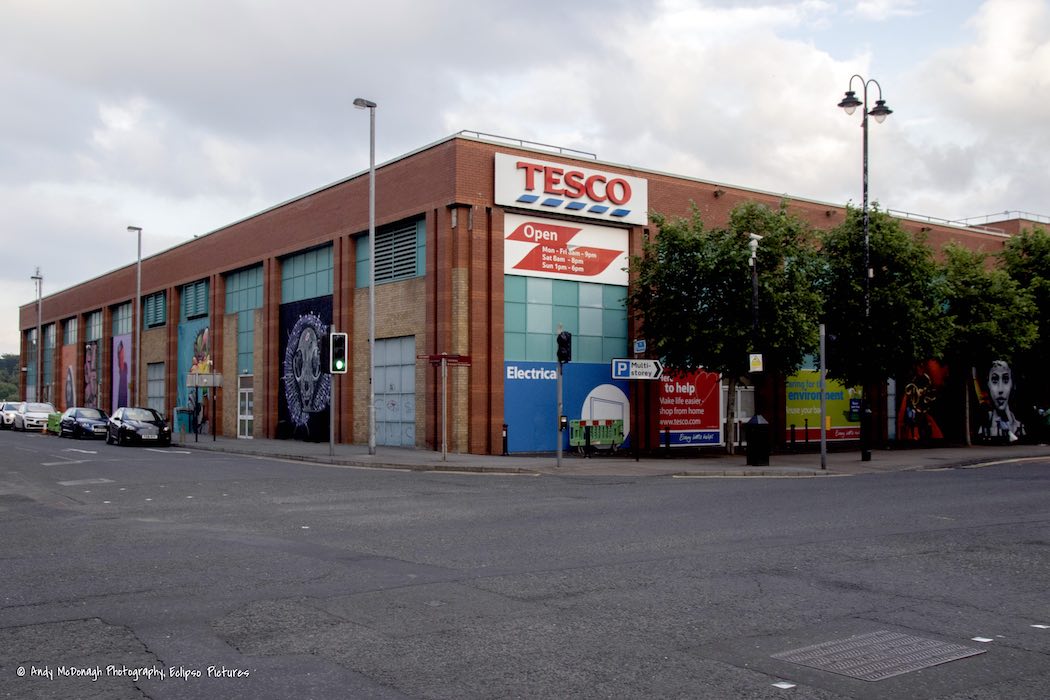
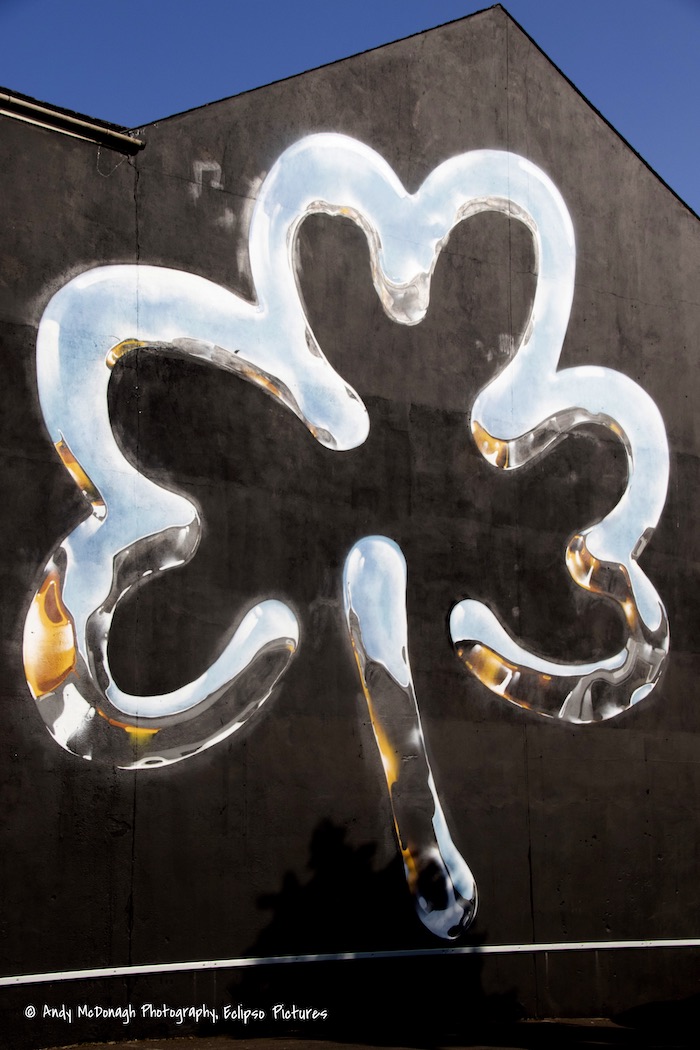
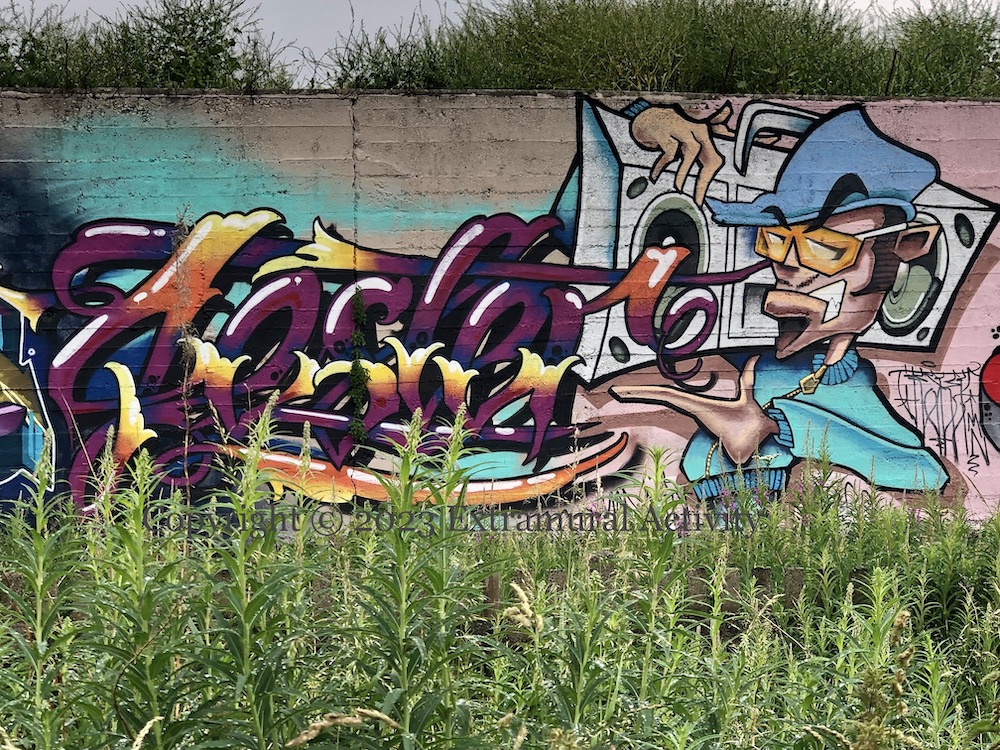
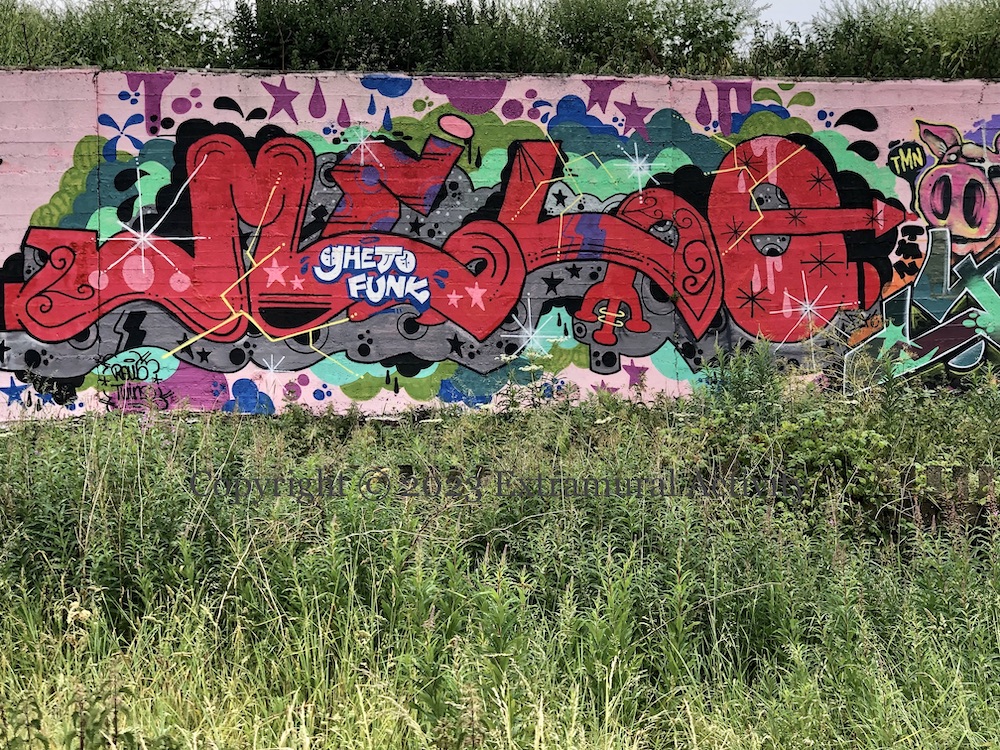
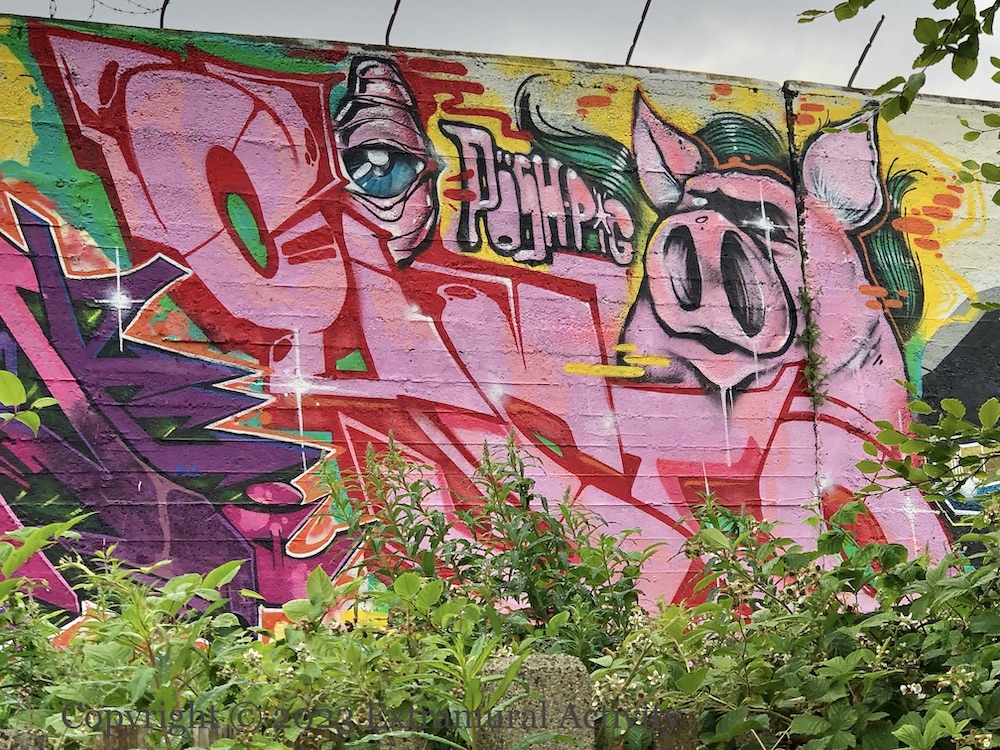
As part of the ‘Get Up Derry’ graffiti and street art jam, seven substantial panels were painted at the Tesco superstore in Quayside, including work by NOYS (ig), Zippy (ig), emic (ig), PENS (ig), Kyle McGinley (ig), Friz (ig), and Razer (ig).
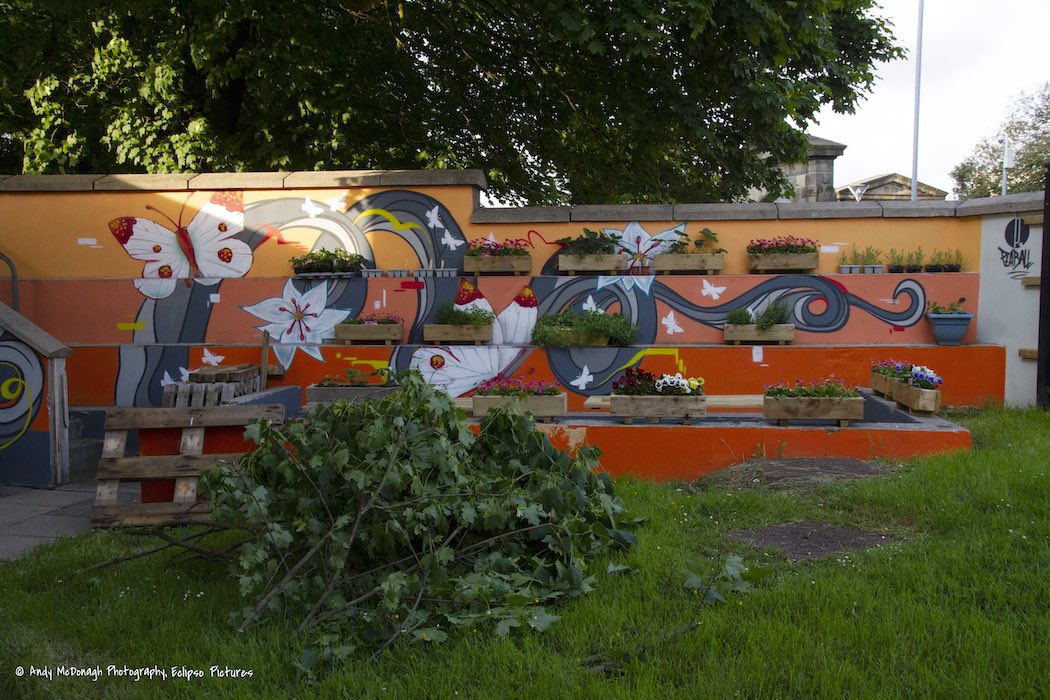
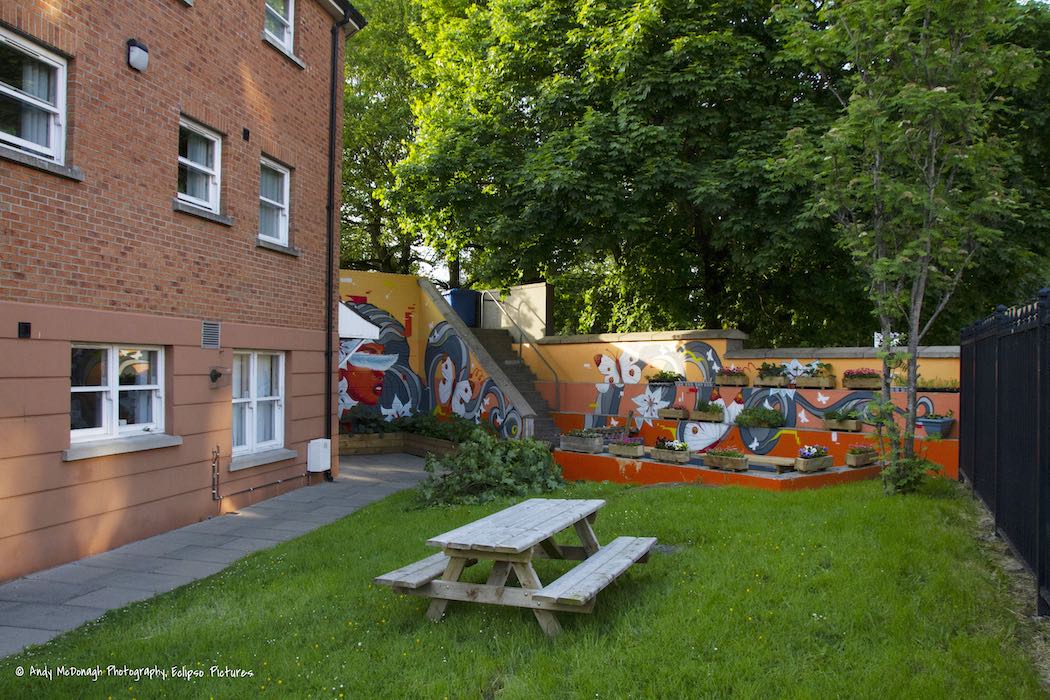
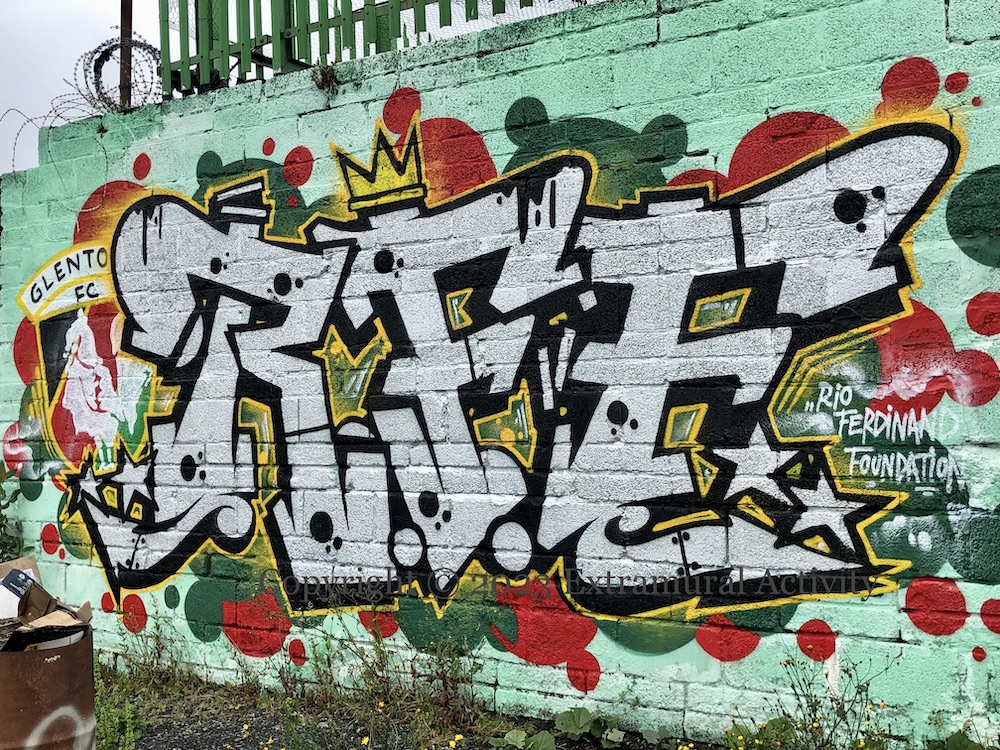
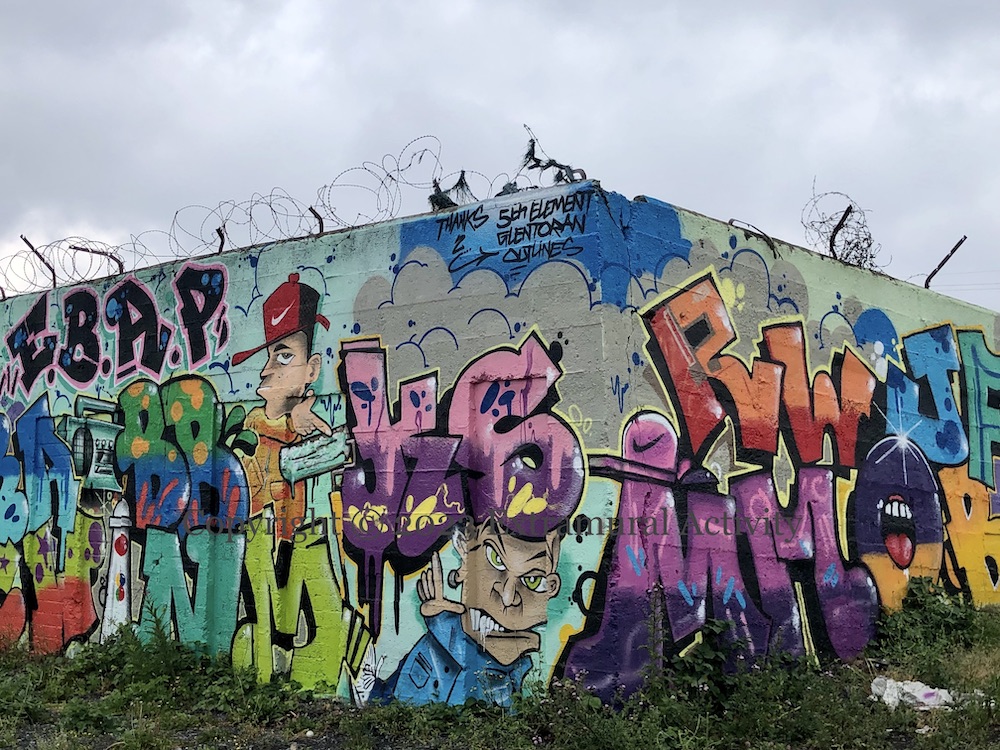
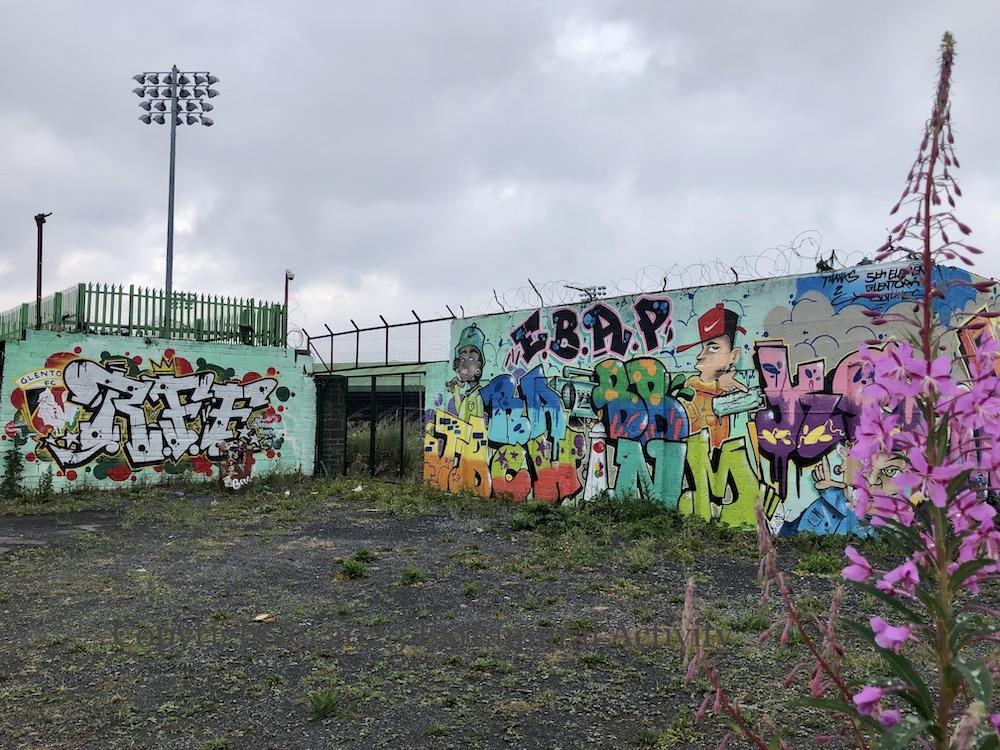
Here is a gallery of images from last week’s project to repaint a long wall at the Oval in east Belfast – about 14 young people took part, assisted by sprayers from 5th Element (ig), with sponsorship from the Rio Ferdinand Foundation, Glentoran FC, and Choice Housing (Belfast Live).
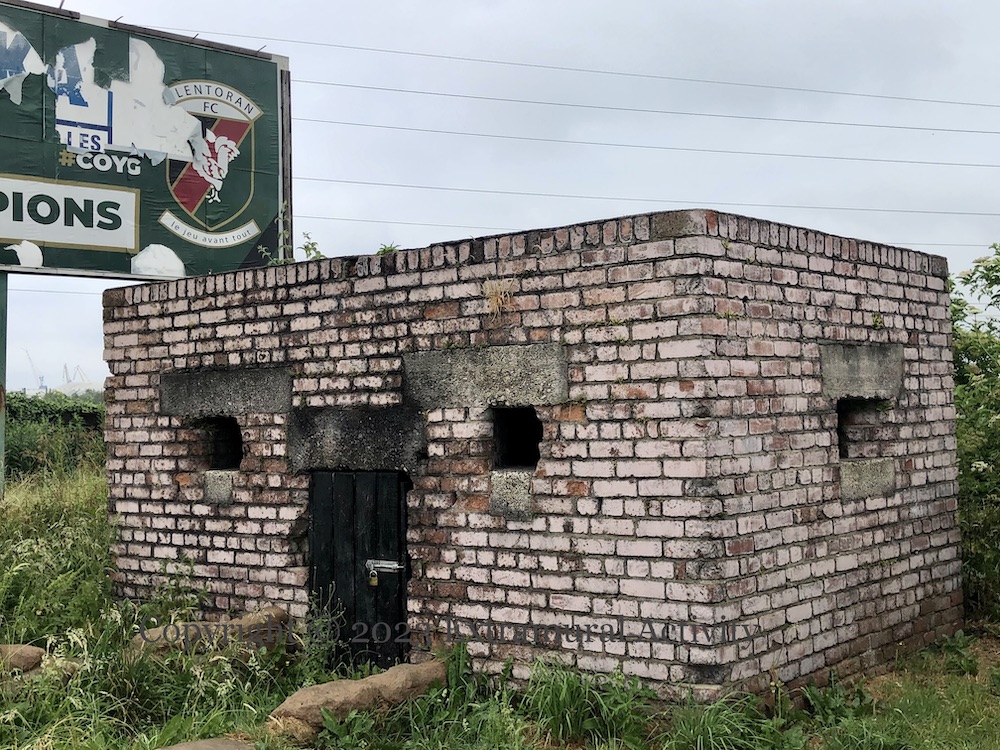
During the second World War, six basic designs for pillboxes, numbered from ‘Type 22’ to ‘Type 27’ were promulgated by the division of Fortifications And Works as part of anti-invasion planning (WP). This Type 24 is still standing in a corner of the Oval grounds in east Belfast. This image – showing the door – is of the rear of the pillbox; the anticipated line of attack was along Belfast Lough.
“The Oval’s Type-24. In the early hours of the 5th of may the German Luftwaffe (air force) attacked a number of targets in the heart of Belfast. This ‘Type 24’ military pillbox was one of the defence positions around the city which was manned on that morning by a platoon of soldiers of the Gloucestershire Regiment who were based at nearby Victoria Park. … The Oval, the home of Glentoran Football Club was reduced to smouldering rubble as bombs and incendiary mines landed on an area perceived by German intelligence to be an oil storage facility adjacent to both Harland and Wolff shipyard and Short Brothers aircraft factory.”
“”From here started the long hard march to allied victory” Dwight D. Eisenhower. “Opposite this point was the gathering area for a massive convoy of mixed ships which sailed to arrive at the beaches of Normandy on D-Day 6th. June 1944.”” US naval vessels gathered in Belfast Lough and Commander Thomas Keane (photo) was residing at the Royal hotel in Bangor (WartimeNI). General Eisenhower inspected the USS Quincy at Bangor on 19th May, 1944, (WartimeNI). Bangor’s North Pier was renamed Eisenhower Pier in 2004.
The quote is from August, 1945, when Eisenhower received an honorary doctorate from Queen’s (WartimeNI).
“Pobal ag foghlaım, pobal ag forbaırt, pobal ag fás” [a community learning, developing, growing]
Students from “Naíscoıl & Gaelscoıl An Lonnáın (Fb) bun[aithe] 1999″ [Nursery-school and Irish-language [primary] school of the loney, founded 1999] are shown playing Gaelic games, Irish dancing, and playing traditional instruments (and the guitar). On the left are representations from Irish mythology: the Children Of Lear and Setanta killing Culann’s hound (and taking the name Cú Chulaınn in taking its place), along with hedge-row school (see Hedge Row School).
The origin of the name is unclear; the nearest loney [lane] was the “Pound” loney, so-called because of the animal pen just outside Barrack Street, used to store livestock before moving on to the markets the following day (Rushlight | Uachtar Na bhFál). (The Pound Loney is included in the mural in Durham Street – see Et In Arcadia Ego.)
The other well-known loney in Belfast is the “buttermilk loney” which was either/both what is now Ballysillan Park (that is, connecting Olpark with the horsehoe bend) or the top part of the loney that connected Wheatfield (the top of Ardoyne) to the Ligoniel junction and on towards the old Ligoneil House (there are a mixture of usages in this Belfast Forum thread); this image from the 1930s might show the lane in (what was still at the time) the hills above Oldpark; a new housing-development towards the top of the Ballysillan Park is euphemistically called “Buttermilk Loney”. (It is also said to have been a prior name of Skegoniell Avenue (Belfast History).)
(The Uachtar Na bhFál page also mentions “Turf” loney, “Mountain” loney, and “Killoney”.)
The history of the Irish word “lonnán” is unclear. Uachtar na bhFál says the word is of Scots origin (perhaps as “loanin”). (See this BelTel article on the opening of the Ulster-Scots centre in 2014.) Spelled “lonnen”, it is also a Geordie word (Heslop’s Northumberland Words | wiktionary). The Irish News and Belfast Live, working from the same (uncited) press-release about Páırc An Lonnáın (which is along the Westlink below Raıdıó Fáılte), state that “loney” comes from the English word “loaning”. The Irish word “lonnán” does not appear in Dinneen 1904; Dinneen 1953 defines it (hyper-specifically) as “a grassy recess running up into high basaltic cliffs”.
“Honi soit qui mal y pense” is the motto of the Order Of The Garter. It appears together with “Dieu et mon droit” (“God and my right”) in the UK’s royal coat of arms (see e.g. United Kingdom). The former means, roughly, “Shame to he who thinks bad of it”, the “it” in this case being the English royals’ designs on France (in the 1300s) and in general the monarchy and its God-given right to rule.
The latest divinely-anointed monarch is Charles III, crowned on May 6th. He was preceded by Elizabeth II, who reigned for 70 years: “East Belfast would like to thank her majesty Queen Elizabeth II on devoting 70 years of service to our great nation. God save the Queen.”






 Extramural Activity