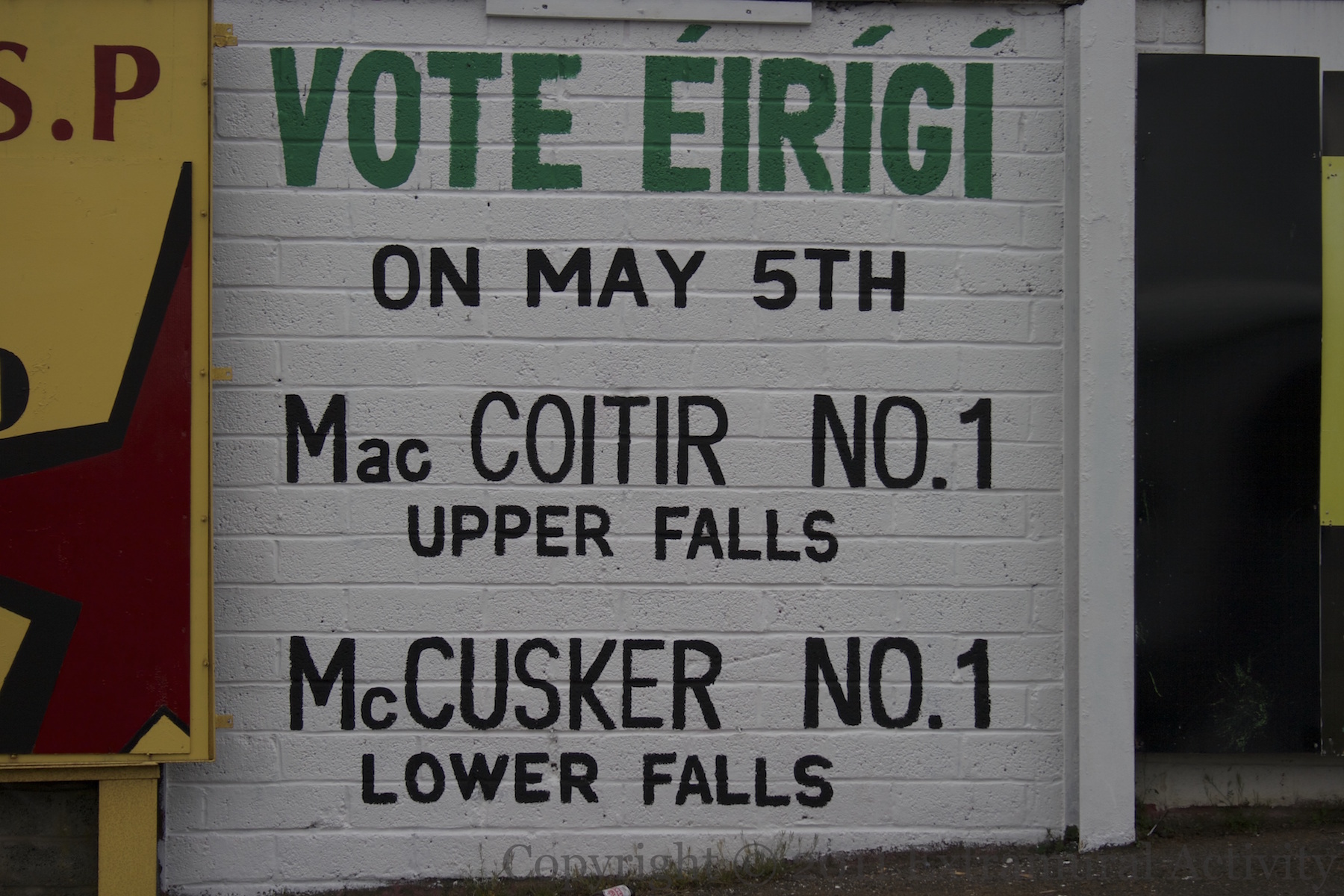
In 2011, Éırígí contested the local election in Belfast, fielding candidates in two areas. Pádraıc Mac Coıtır received 1,415 first preference votes (more than 10%) in Upper Falls and John McCusker 647 in Lower Falls. Neither was successful (WP).
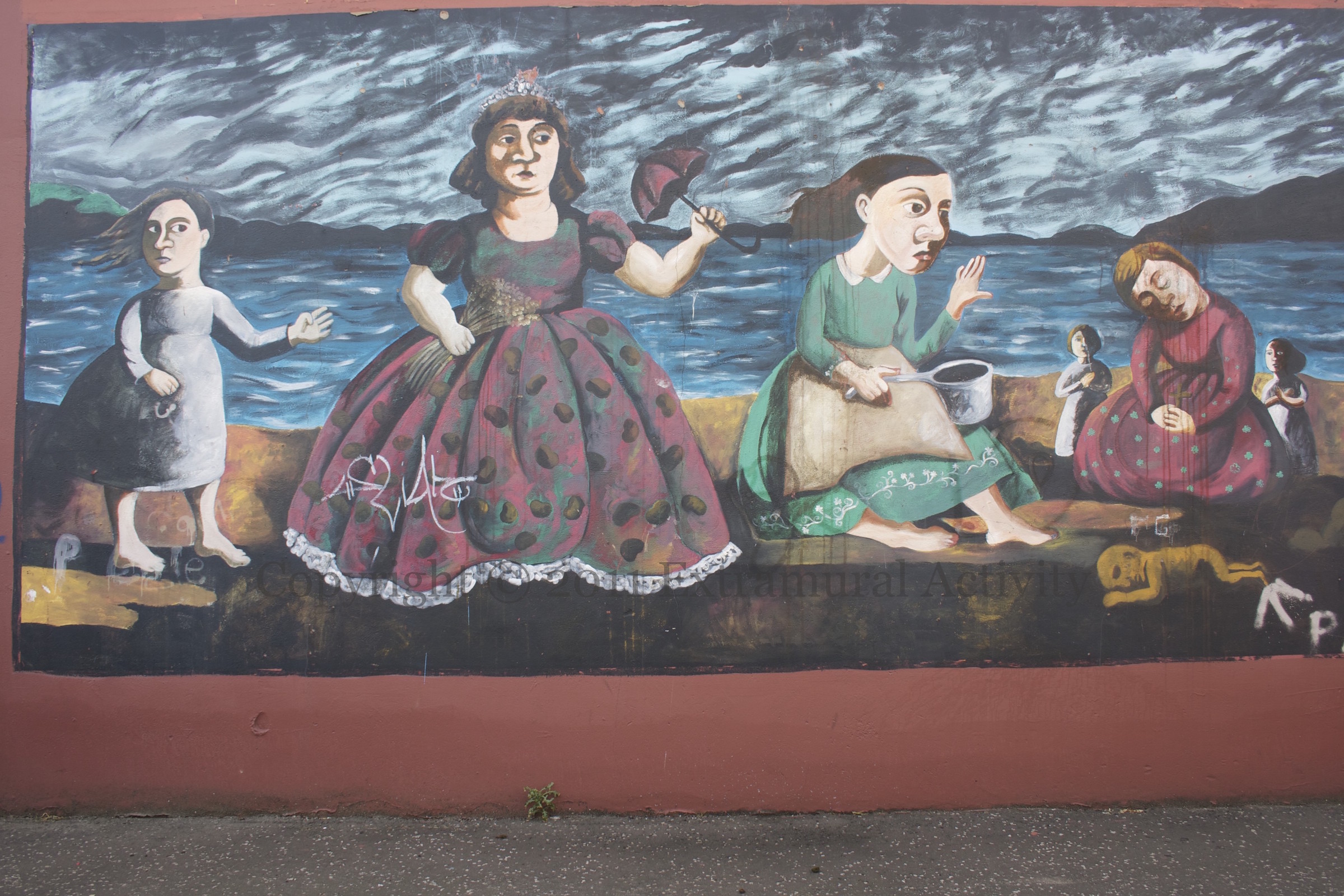
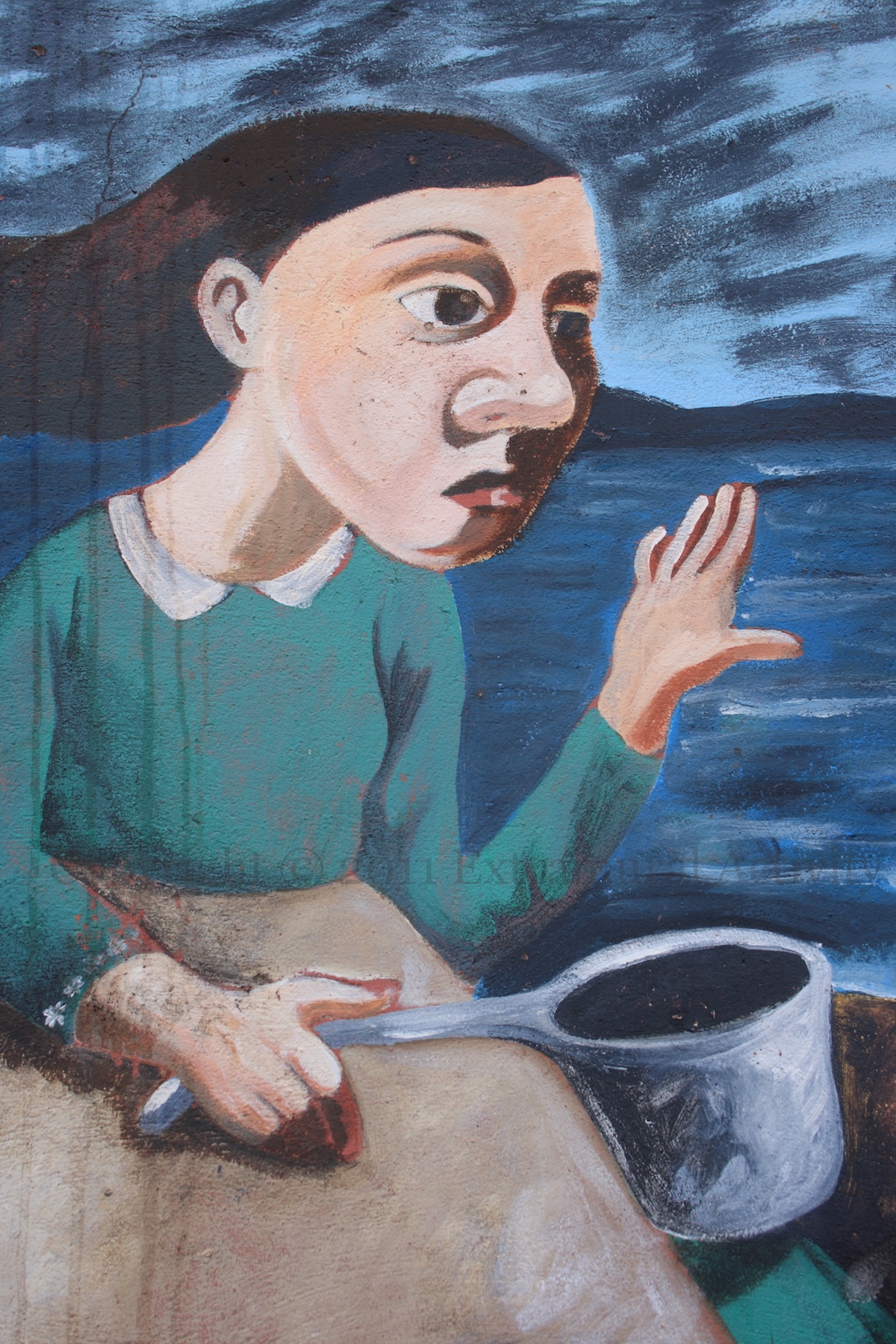
Queen Victoria and entourage paddle along the Irish shore at the end of the Great Hunger. (Here are one | two discussions of her visit and (un)involvement with famine relief.) Work by Rosie McGurran (Fb) in Linden Street, Belfast.
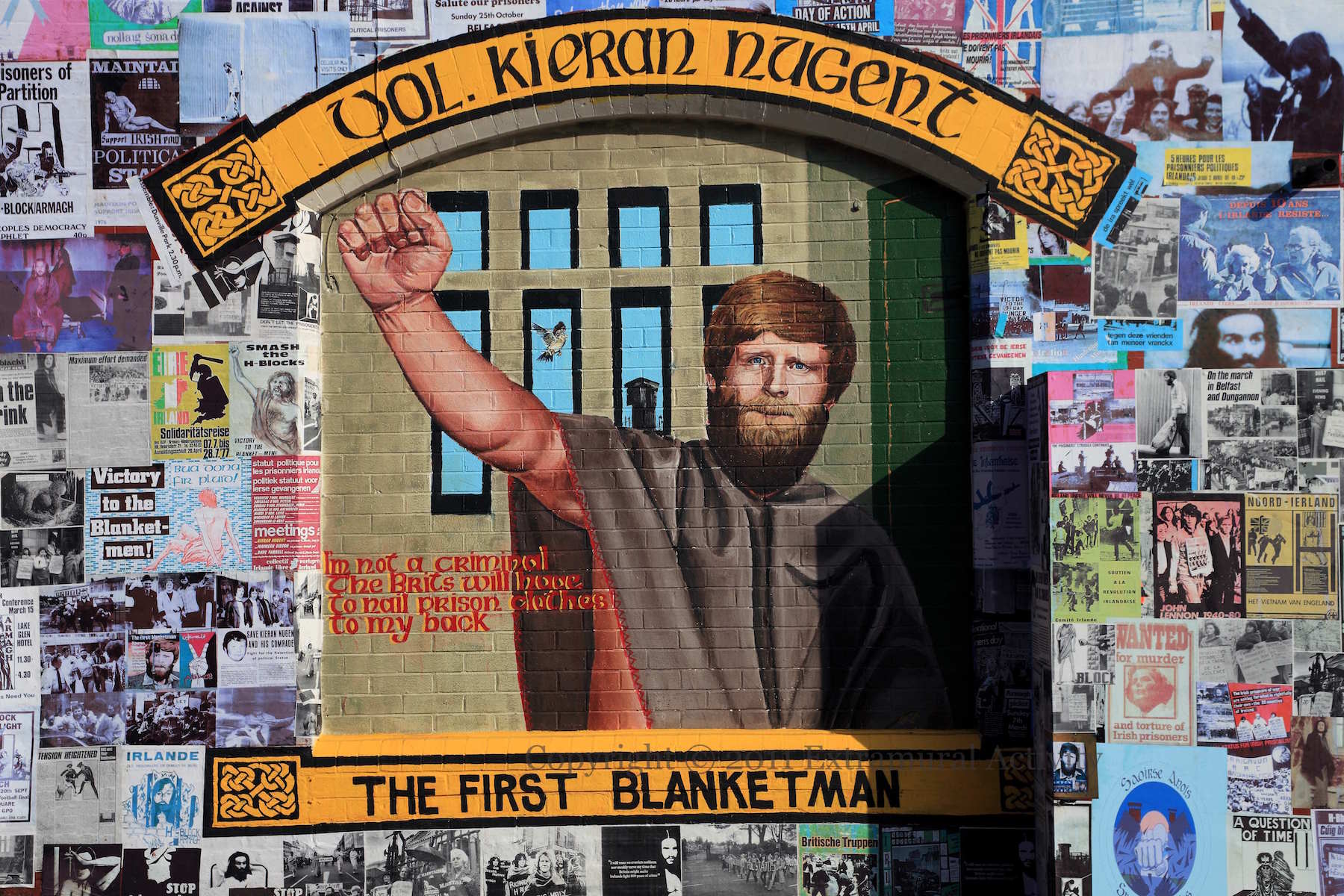
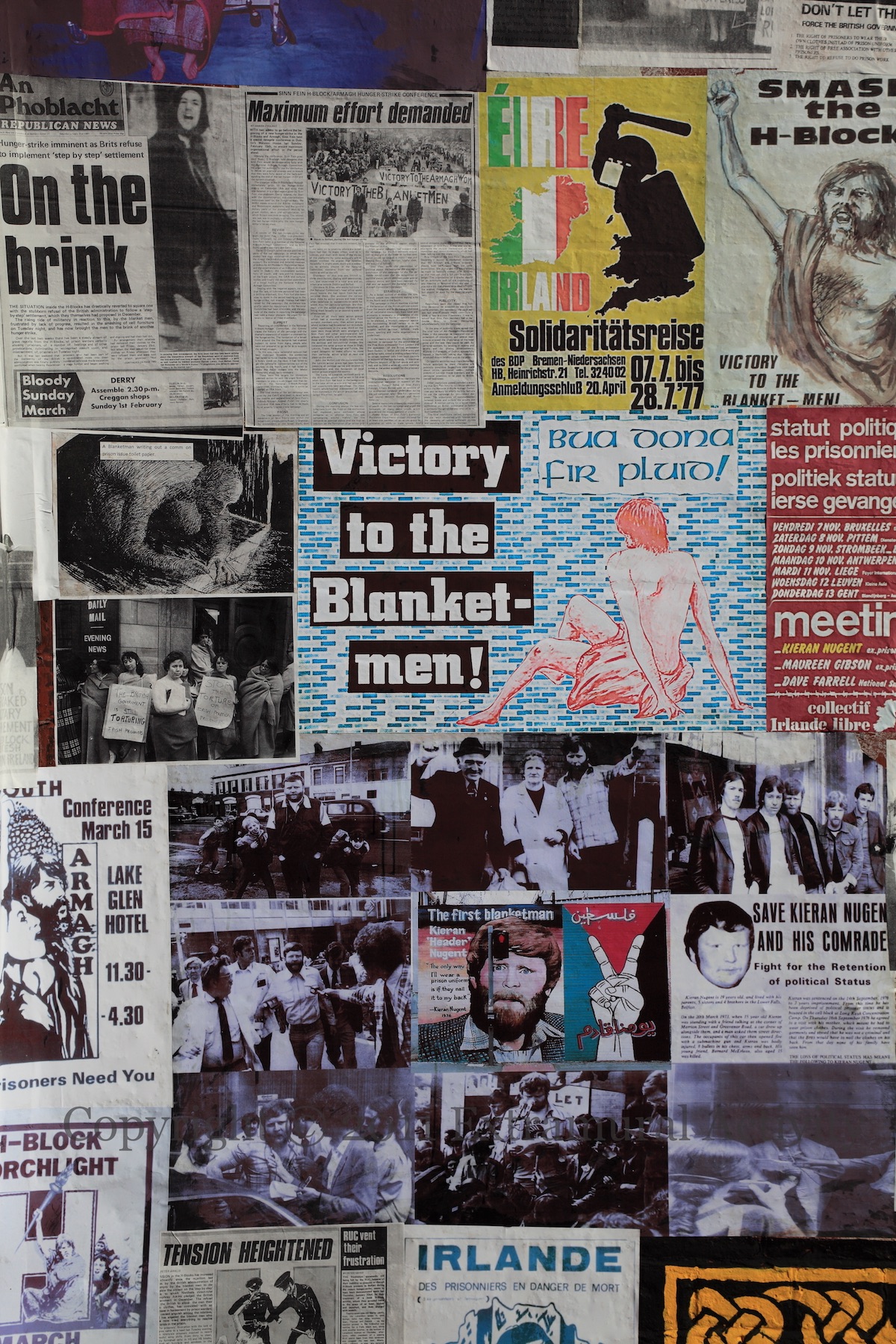
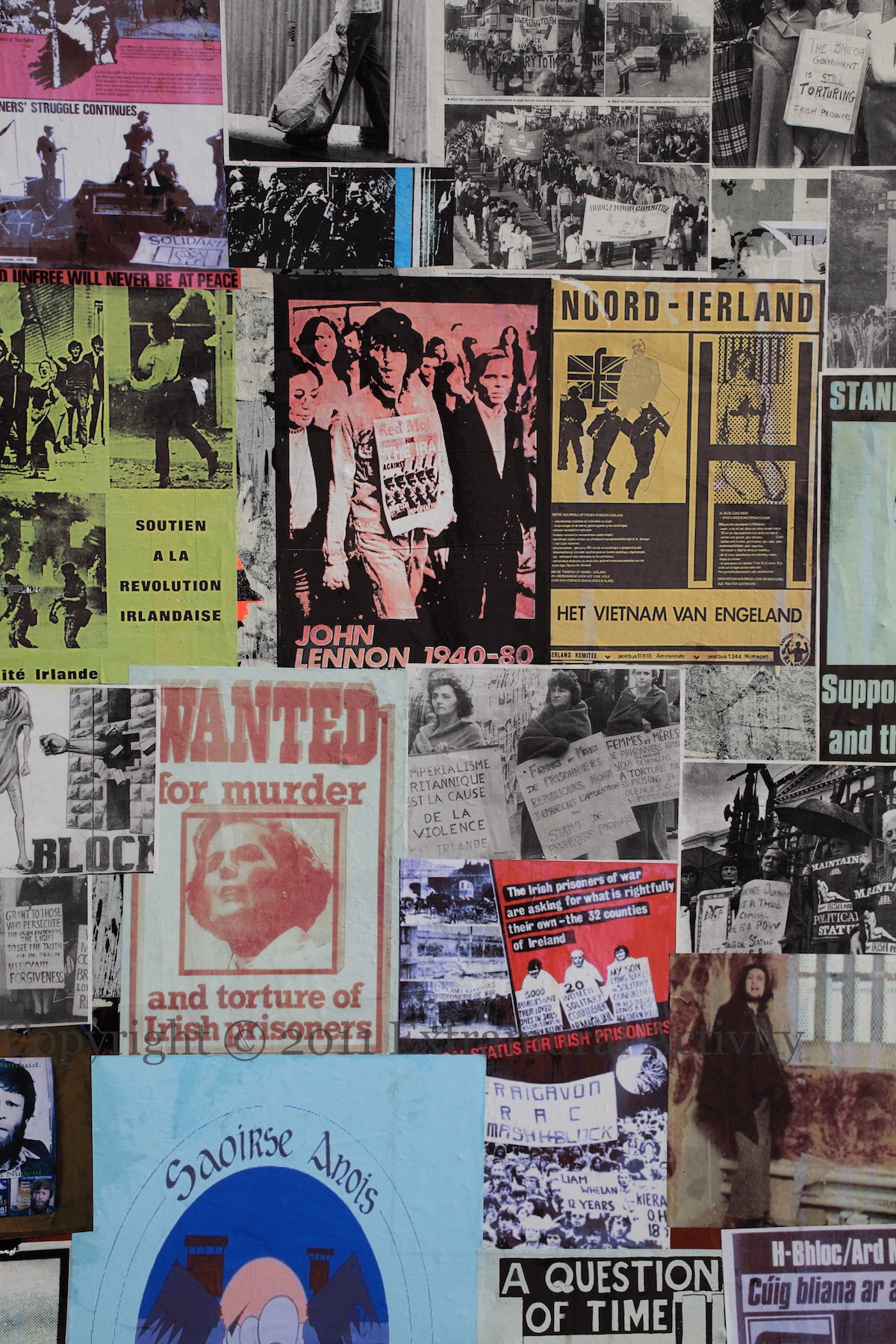
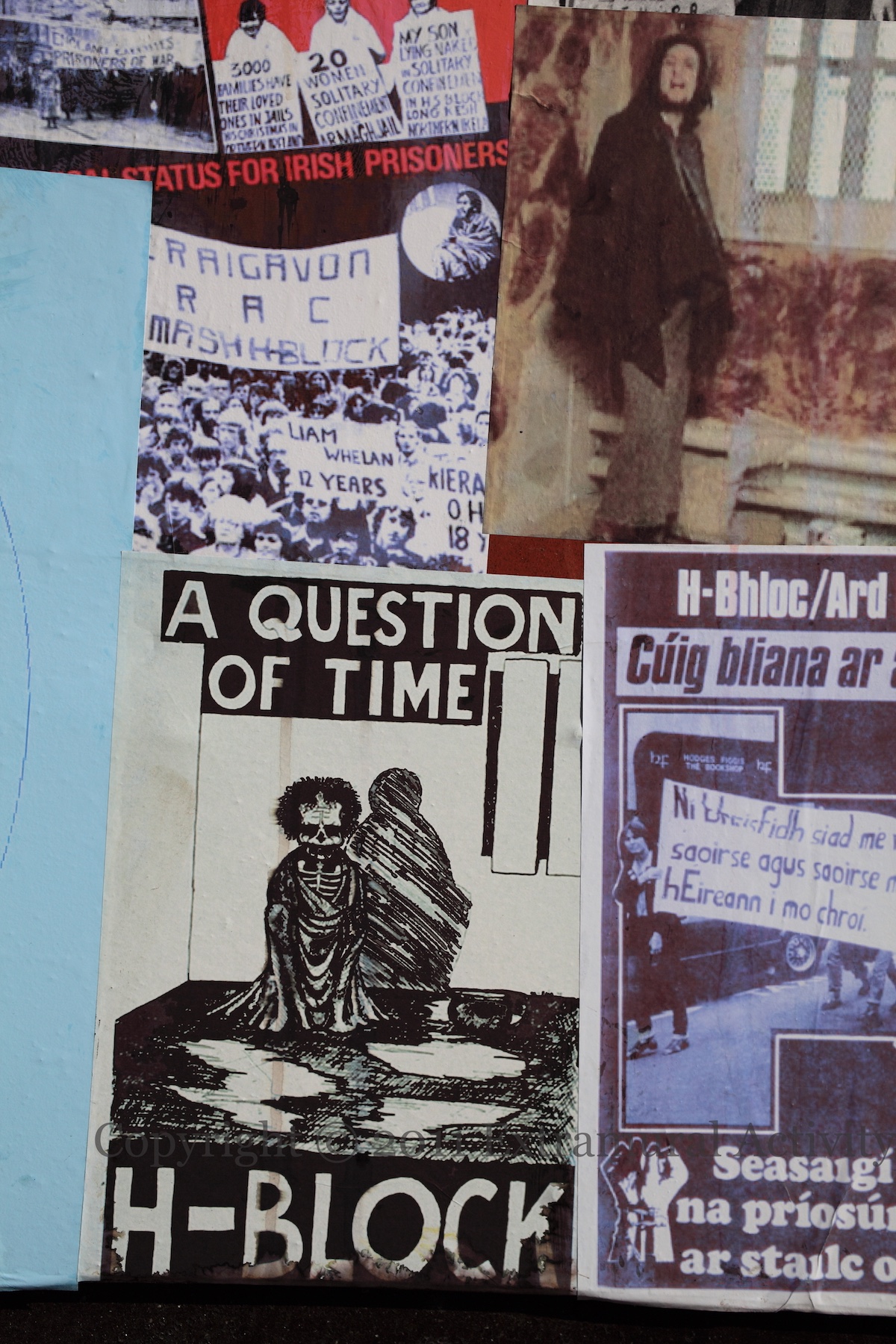
When the mural to “the first blanketman” Kieran Nugent mural (in the Rock streets) was re-done in February 2011, it was initially framed with a terrific selection of posters from the period, many of them from continental Europe, about Kieran, the blanket protest, and hunger striker.
“I’m not a criminal. The Brits will have to nail prison clothes to my back.” For the previous mural, and some background about Nugent going “on the blanket”, see M02550.
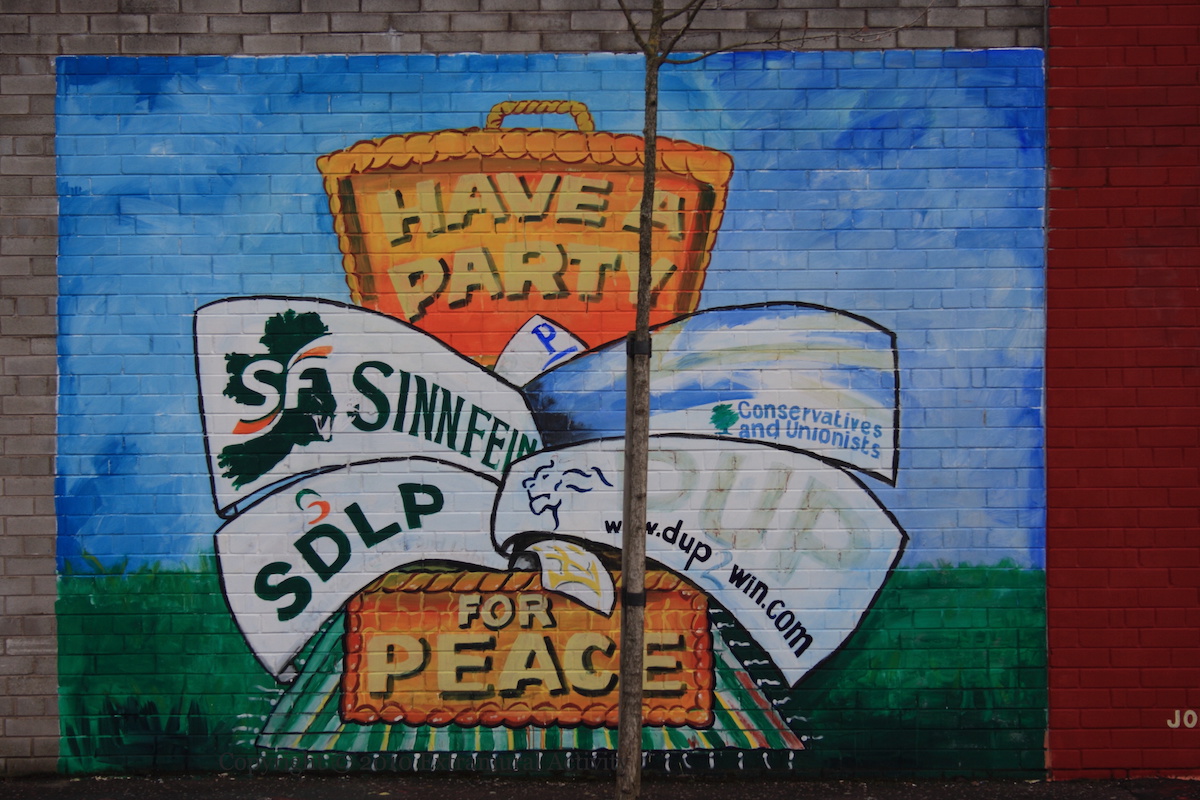
A picnic basket of political parties: PUP, Conservatives and Unionists, DUP, [perhaps Alliance sticking out at the bottom] SDLP, and Sınn Féın. Painted for International Peace Day, 2009.
In 1607 – “400 blıaın” after the Anglo-Norman invasion of Ireland – 50 years of newly-asserted English control, most recently at the hands of Charles Blount – who defeated the pair in the Nine Years’ War – and Arthur Chichester – who, as O’Donnell is shown reading, was “appointed Lord Deputy in Ireland” in 1605 – compelled Earls Hugh O’Neill of Tyrone and Rory O’Donnell of Tyrconnell to depart Ireland on a ship bound for Spain in order to petition for Spanish support in reclaiming the lands and status they were losing under English rule. They ended up in Rome instead and never returned, ending the period of Gaelic chiefs’ rule in Ireland and making way for the plantation of Ulster.
The pair of plaques on the left indicate that the mural was painted as part of the Re-Imaging Communities Programme’ (top) and launched by President Mary McAleese on June 19th (bottom). Even though the subject was historical, the state funding for the project required the removal of a sword from O’Neill’s right hand; he is shown instead clutching the collar of his cloak. For more on the re-imaging programme, see Visual History 10.
“Imeacht na nIarlaí. I ndıadh 400 blıaın … that the eternal values of liberty and democracy have prevailed and the sons and daughters of the planter and the Gael have found a way to share the land of their birth and live together in peace.”
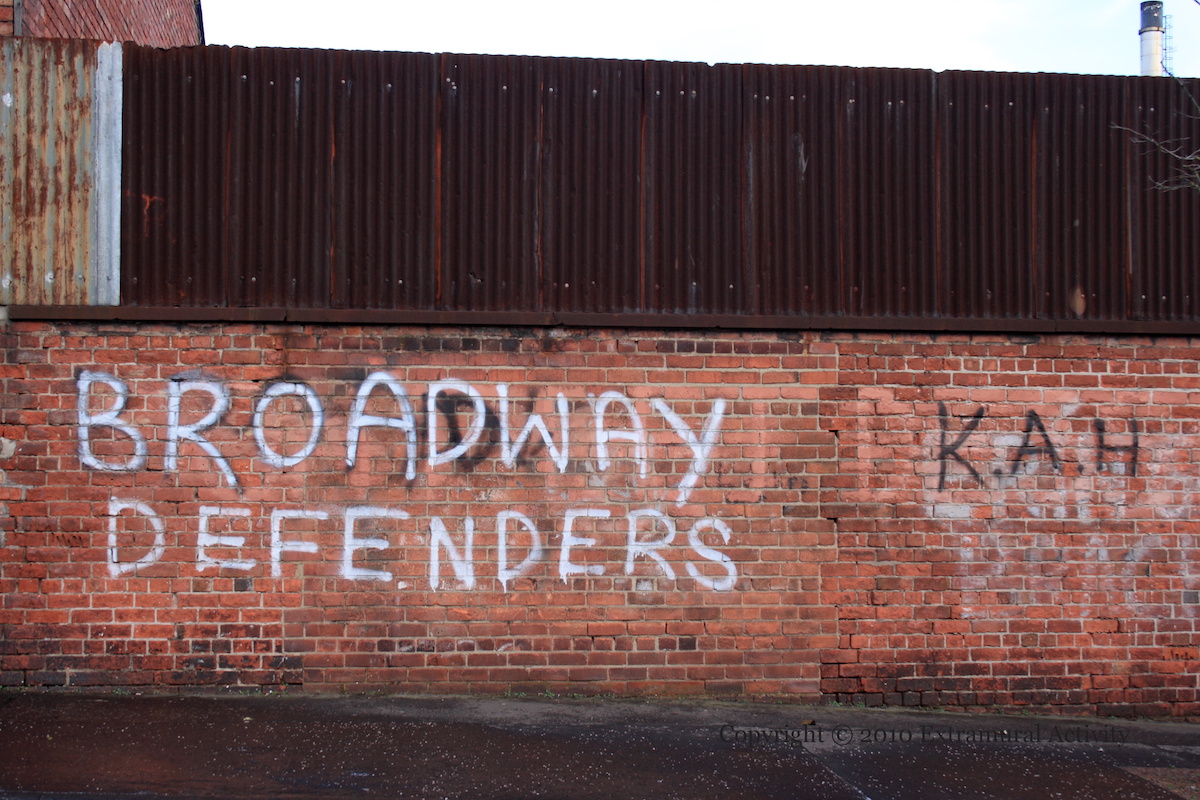
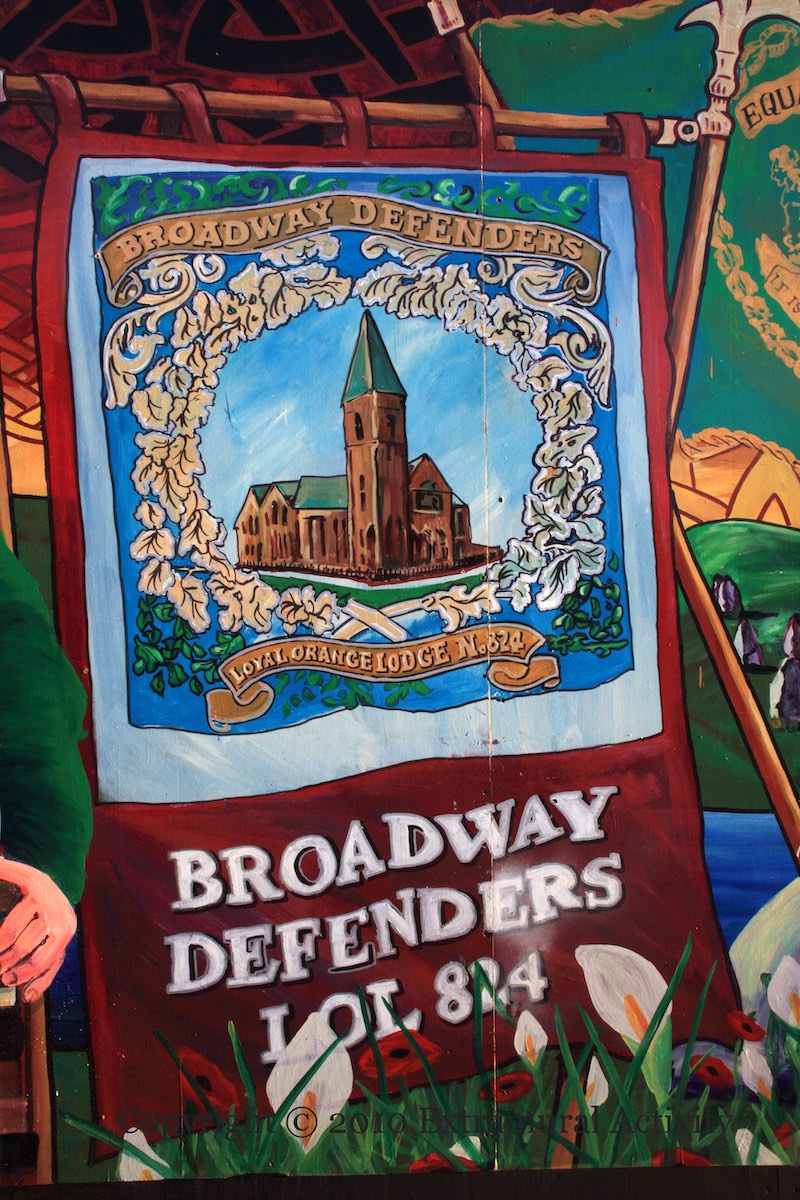
“Broadway Defenders” was originally the name of LOL 824, which was based in what is now An Cultúrlann but was formerly Broadway Presbyterian church. (LOL 824 was included on the mural on the hoarding around Cultúrlann while it was be redeveloped – see the close-up below and for more see M06462.) But the graffiti above is probably from a CNR hand, given its location and the adjacent “KAH” (and previously “Erin Go Brach“) graffiti.
In the two-person game of ‘rock-paper-scissors’ (or four-person ‘rock-paper-scissors-lizard-Spock’) rock prevents scissors from cutting. Sınn Féın are encouraging stoney resistance to austerity proposals by the Conservative party (Tories).
“1650-2009: 350 years of occupation, 350 years of resistance. Catalan language has been spoken since VIII century. Nowadays, after 350 years of occupation and prohibition, there are 9 million Catalan speakers. The spirit of revolt against the Spanish kingdom and French state is still alive. The struggle of the Catalan people continues against the existing discriminations. Not Spain, not France.” “Saoırse na hÉıreann, Llibrtat Països Catalans”.




 Extramural Activity