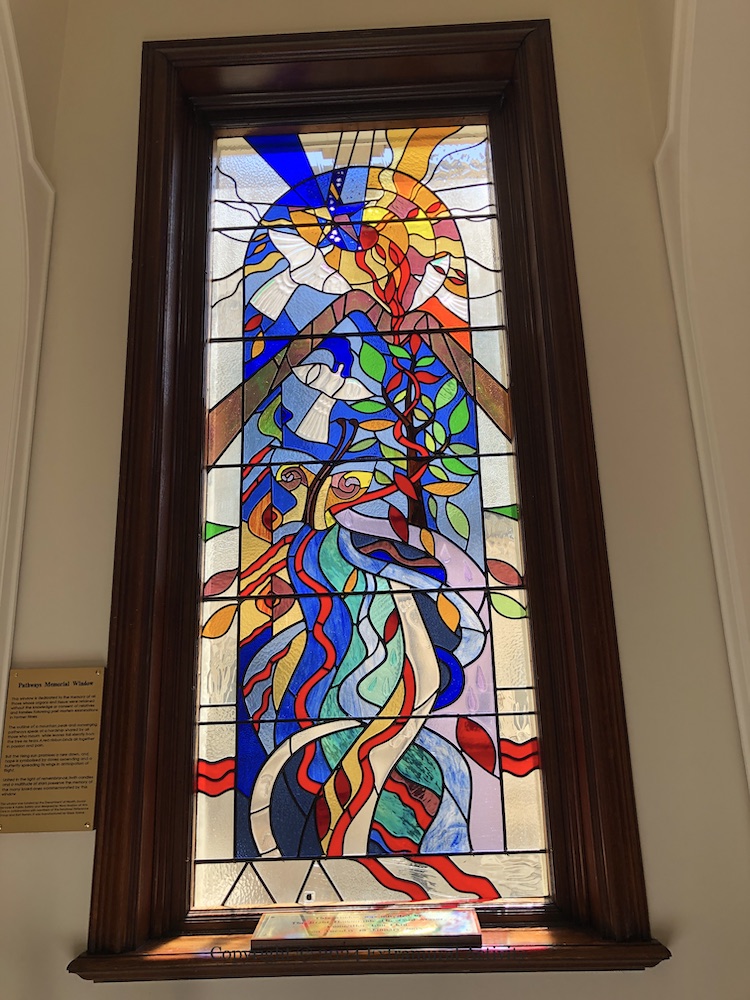
6: The Pathways Window – according to the guide, this window commemorates the pain caused to the relatives of deceased persons from whom organs were taken without consent.
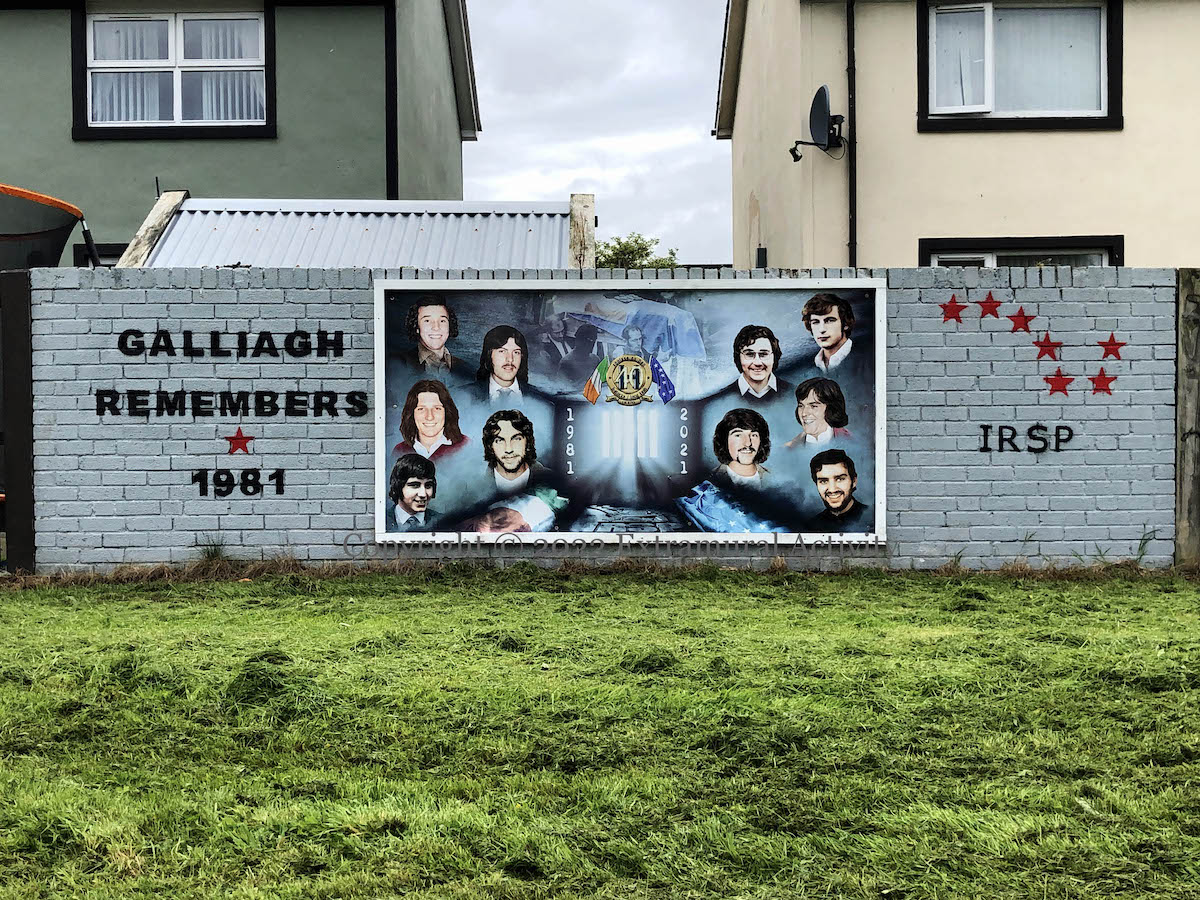
This installation in Galliagh, Derry, has a portrait of each of the ten deceased 1981 hunger strikers on a large “H” as well as the central board shown above – the coffin being carried is that of Kevin Lynch – see For A Socialist Republic.
“An staılc ocraıs 1981 hunger strike – 35th anniversary march – Sunday 14th August – Assemble Divis tower 2pm”. With portraits of the deceased 1981 hunger strikers; Frank Stagg and Michael Gaughan are included even though they died in the 1970s.
A shortage in low-income housing is highlighted in the #buildhomesnow campaign which has put up lots of small boards (such as the one in the image below, on Divis Street) and the mural shown above, which is in the New Lodge. The site of the old Mackie’s factory is one particular location the campaign says could be redeveloped. (See articles from BMG and Participation & Practice Of Rights.)
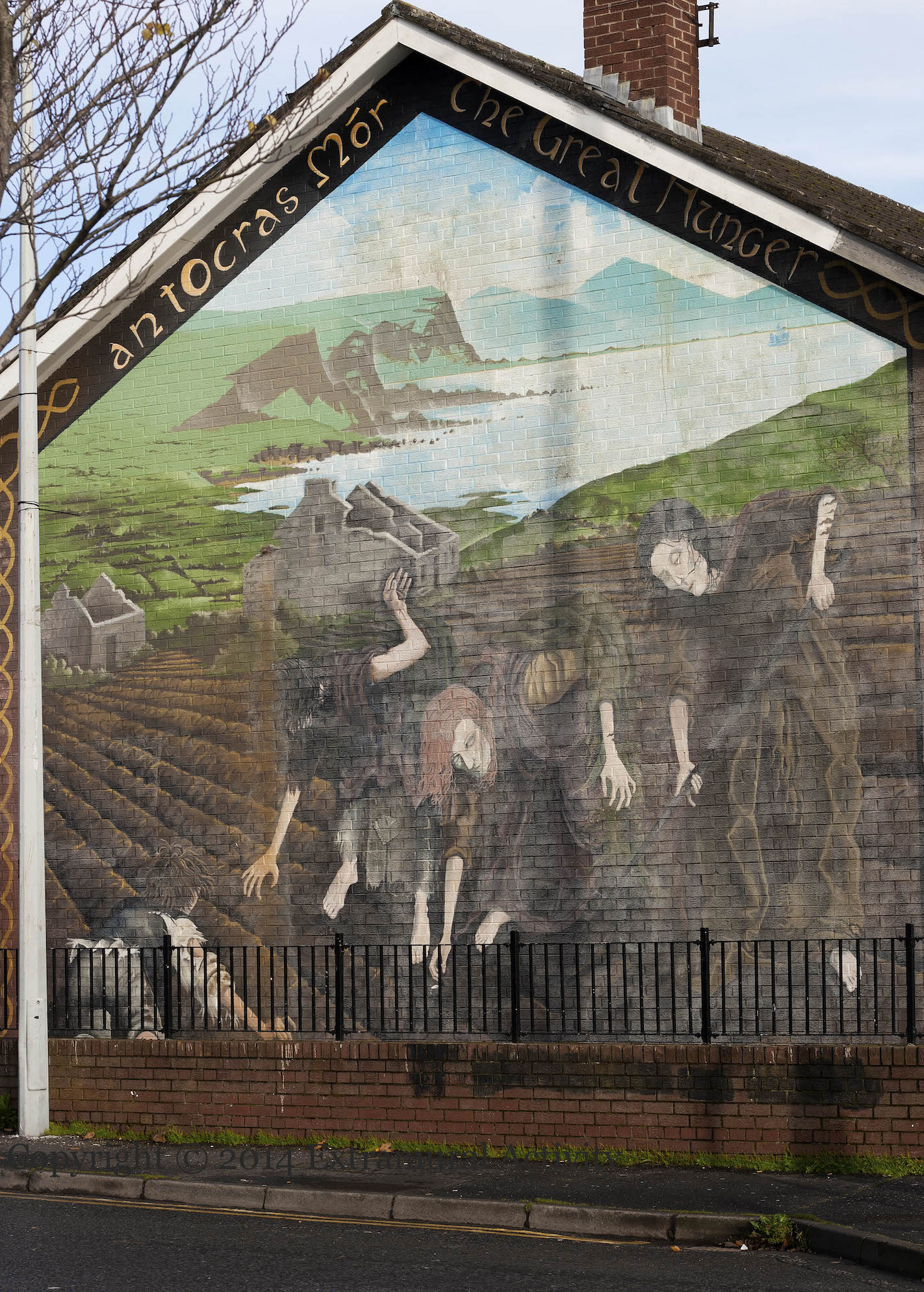
In 1997, then-Prime Minister Tony Blair’s office issued a statement acknowledging that the administration of the time of the Hunger failed to intervene (Guardian | Independent).
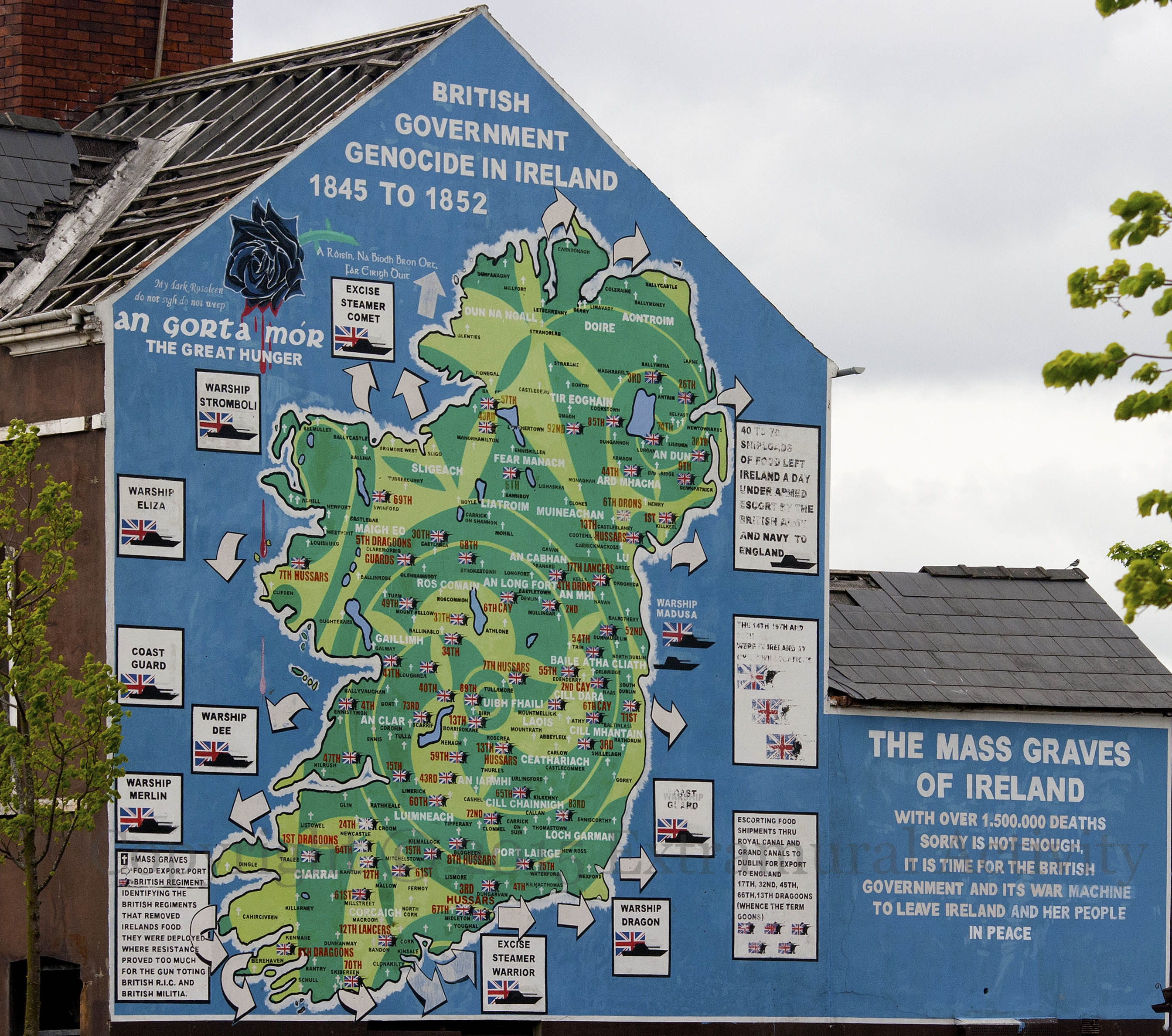
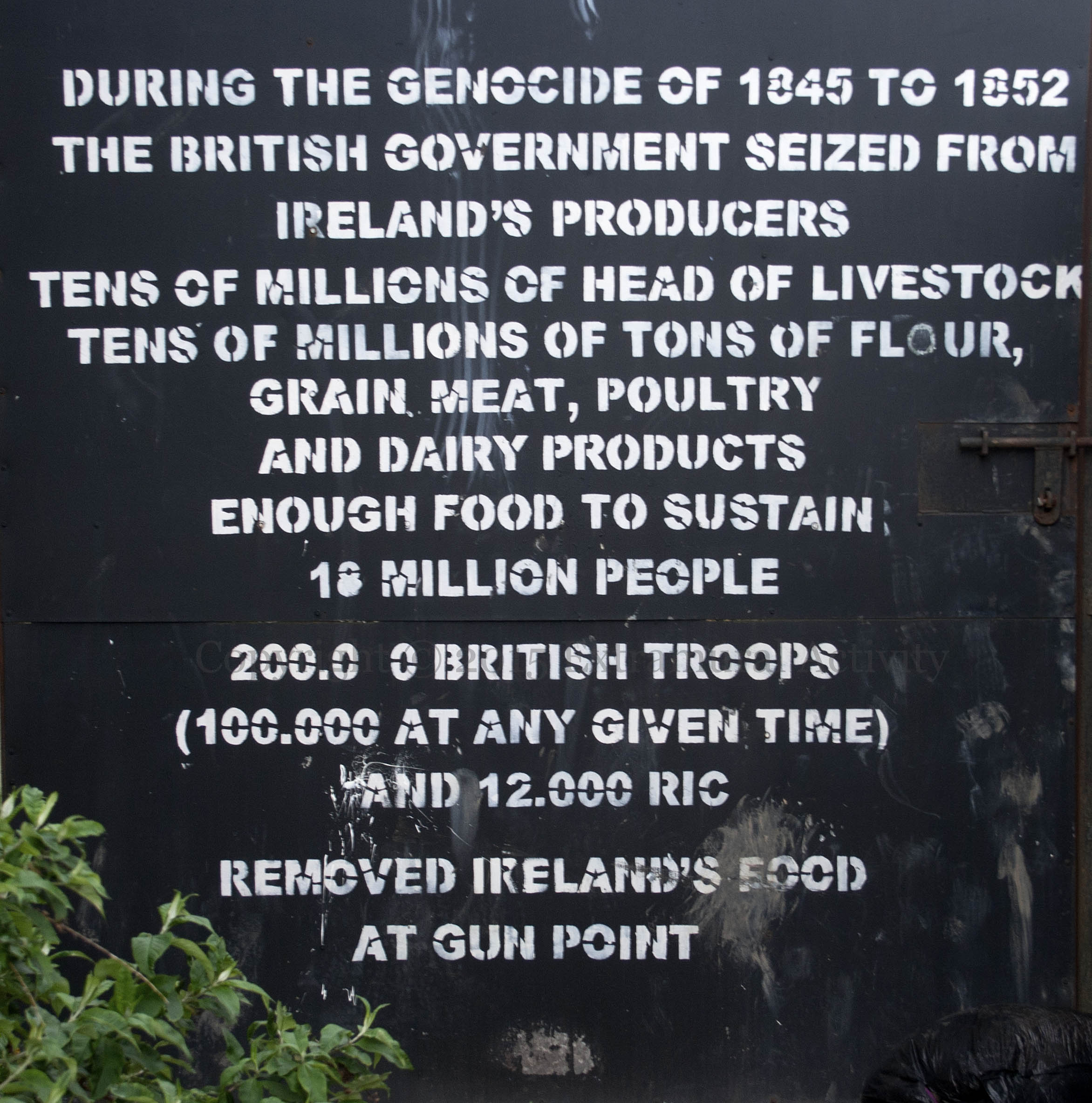
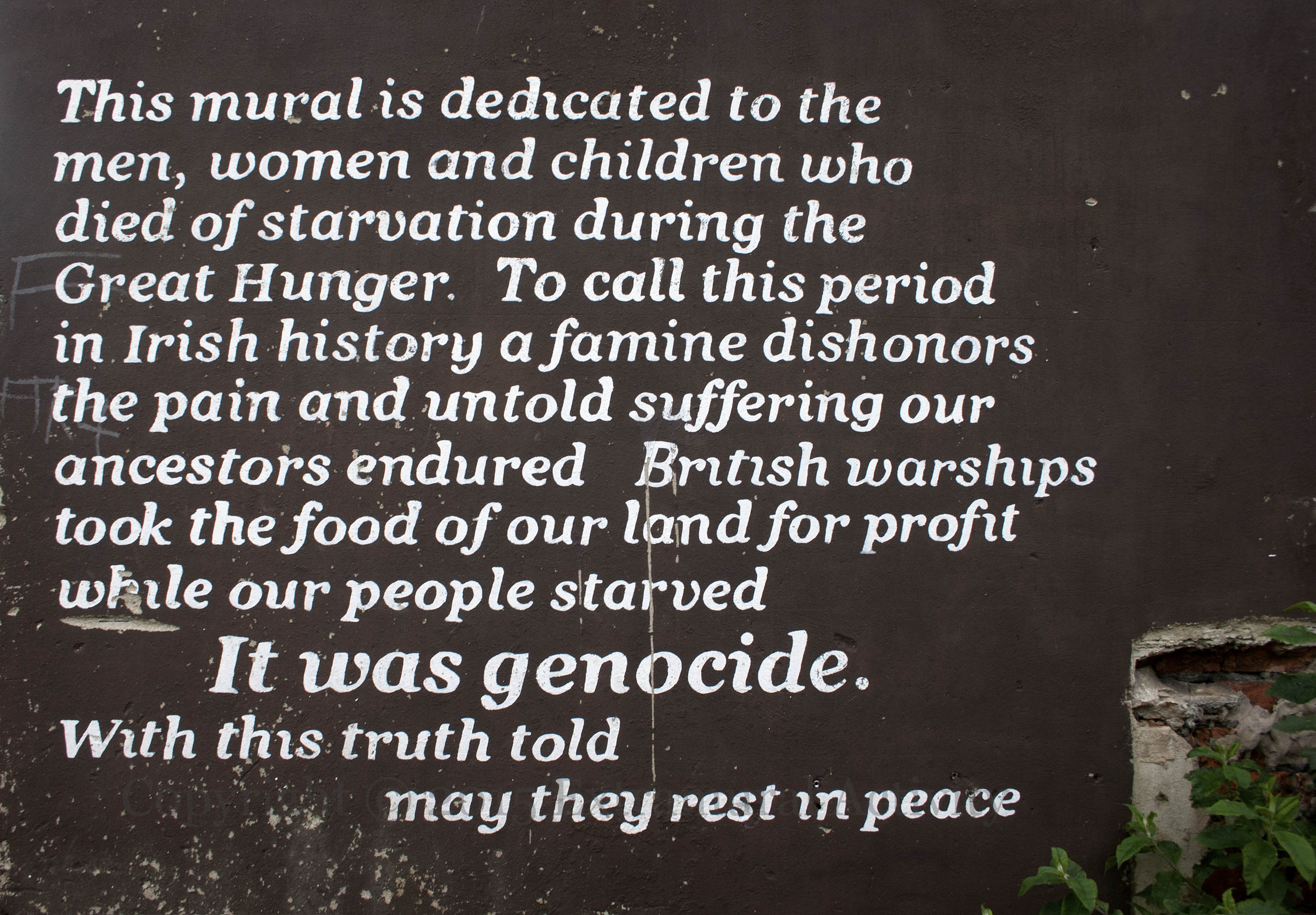
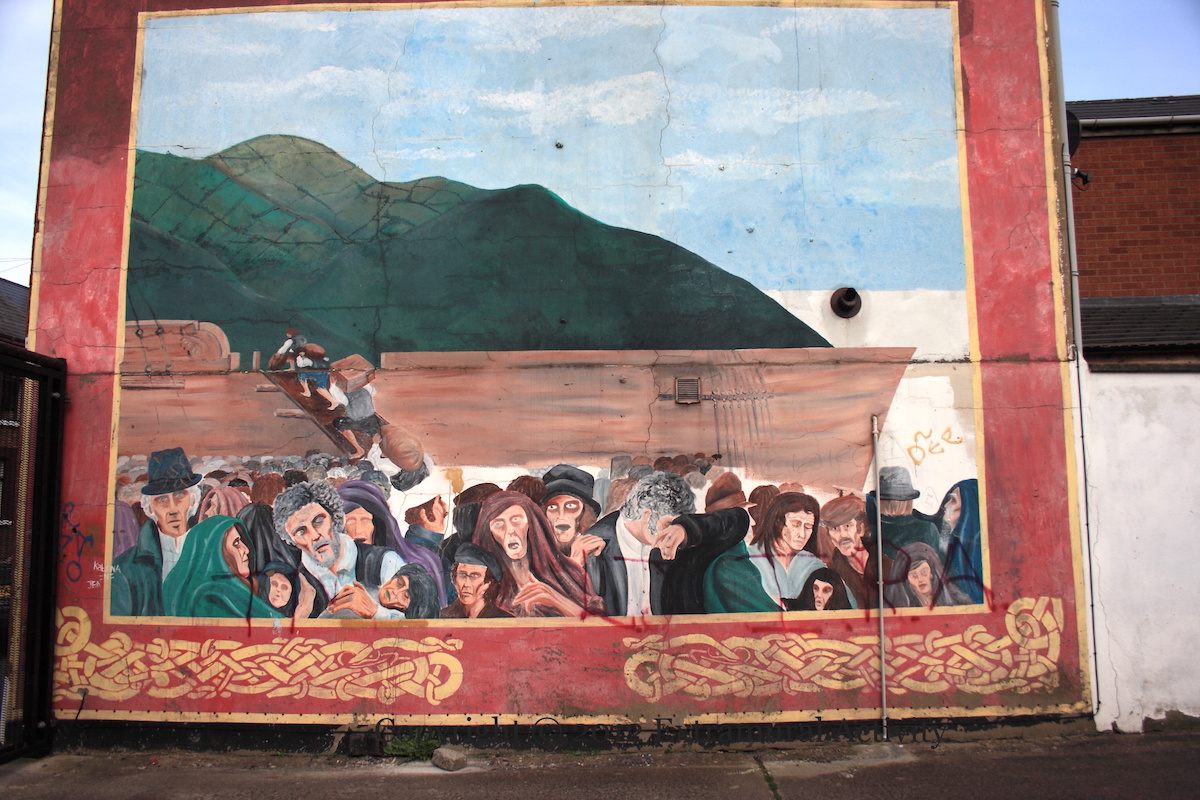
The mural above asserts that it was not merely a matter of negligence but of will: “With over 1,500,000 deaths “sorry” is not enough. It is time the British government and its war machine to leave Ireland and her people in peace. During the genocide or 1845 to 1852 the British government seized from Ireland’s producers tens of millions of head of livestock, tens of millions of tons of flour, grain, meat, poultry and dairy products, enough food to sustain 18 million people. 200,000 British troops (100,000 at any given time) and 12,000 RIC removed Ireland’s food at gun point. This mural is dedicated to the men, women and children who died of starvation during the Great Hunger. To call this period in Irish history a famine dishonors the pain and untold suffering our ancestors endured. British warships took the food of our land for profit while our people starved. It was genocide. With this truth told may they rest in peace.”
Each white cross on the map represents a mass grave. The map is originally from irishholocaust.org.
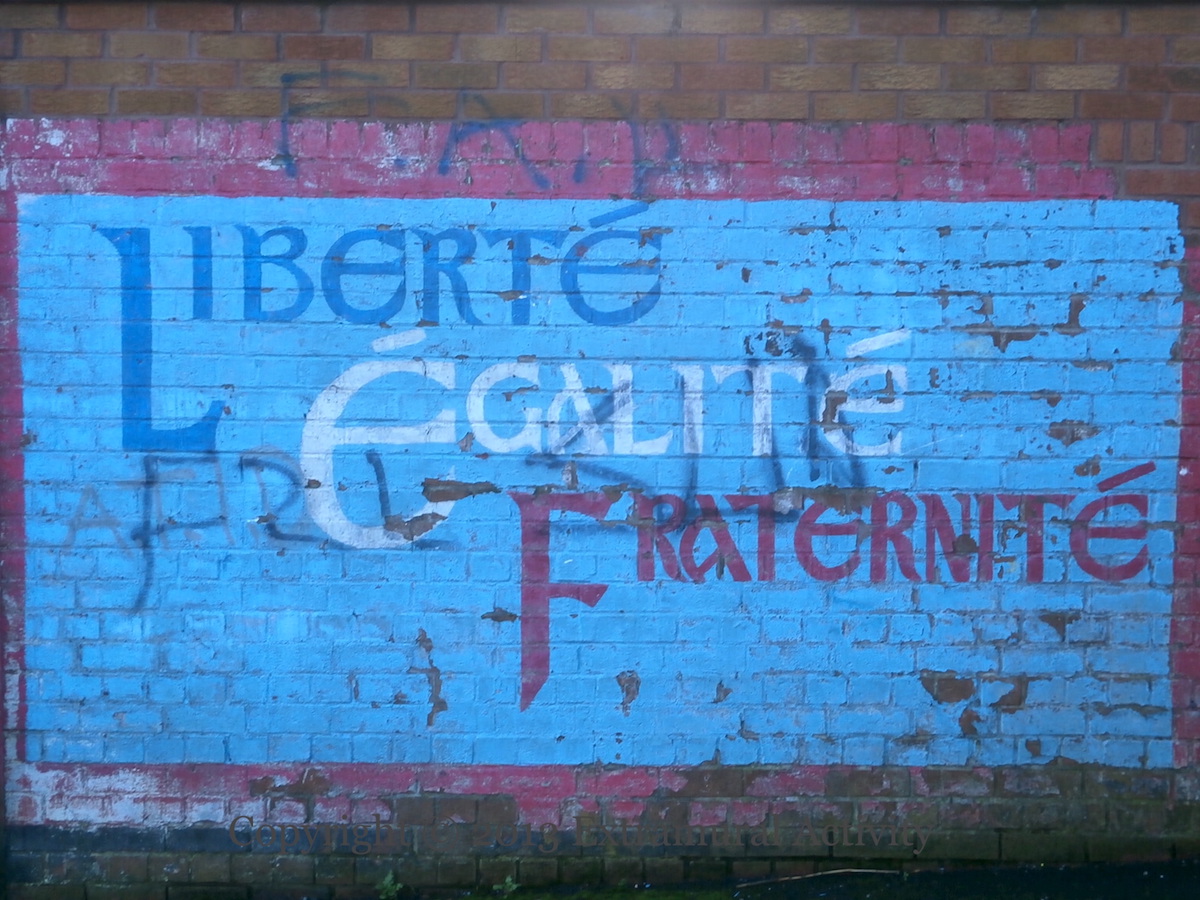
“Liberté, égalité, fraternité”. The United Irishmen of 1798 had been inspired by the revolutions in both the United States and France, and France attempted without success to send troops to Ireland in 1796 and 1798 (Irish History). “It is new strung and shall be heard” – this style of harp is called a Maid Of Erin harp.
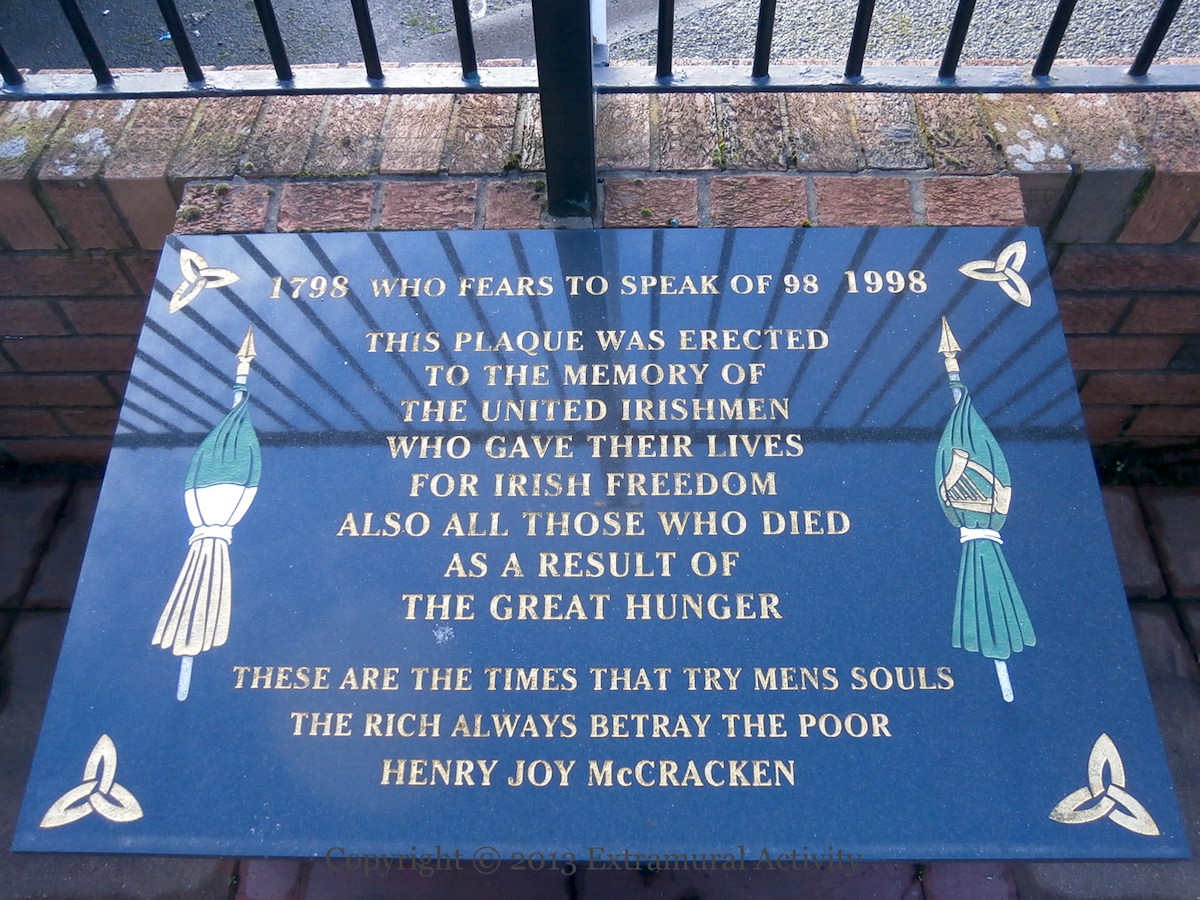
Painted by Andrea Redmond in South Link, Andersonstown, Belfast, for the 200th anniversary of the rebellion. Also new for the 200th anniversary is the stone below in the nearby memorial garden outside the PD. “Who fears to speak of 98? This plaque was erected to the memory of the United Irishmen who gave their lives for Irish freedom; also all those who died as a result of the Great Hunger. ‘These are the times that try men’s souls’ [Thomas Paine] ‘The rich always betray the poor’ – Henry Joy McCracken.”
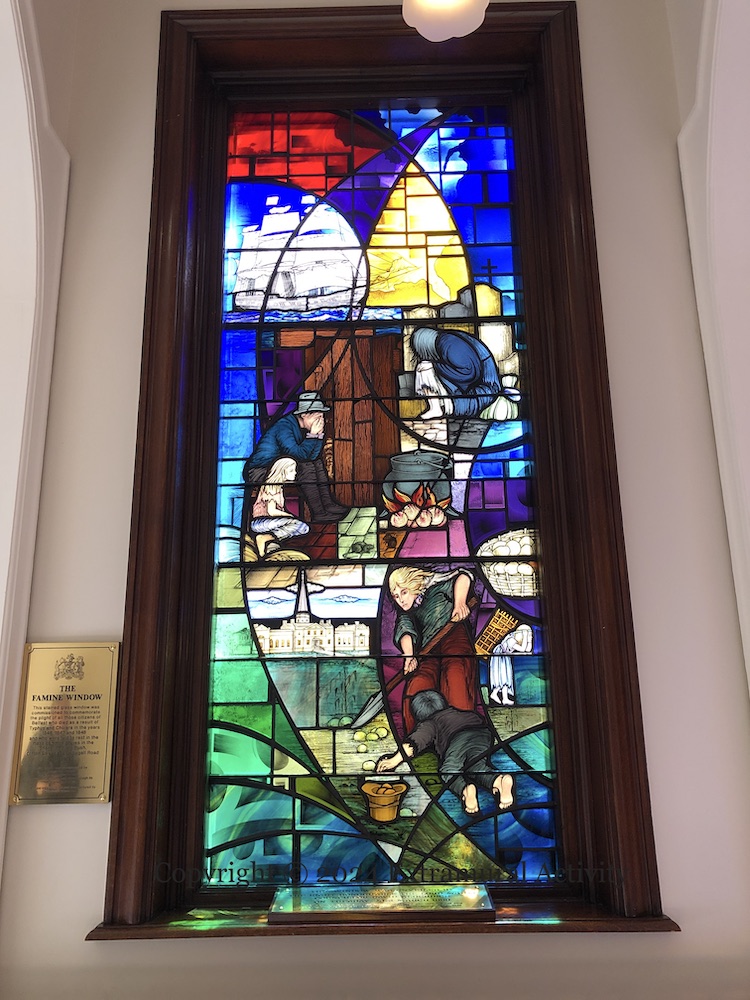
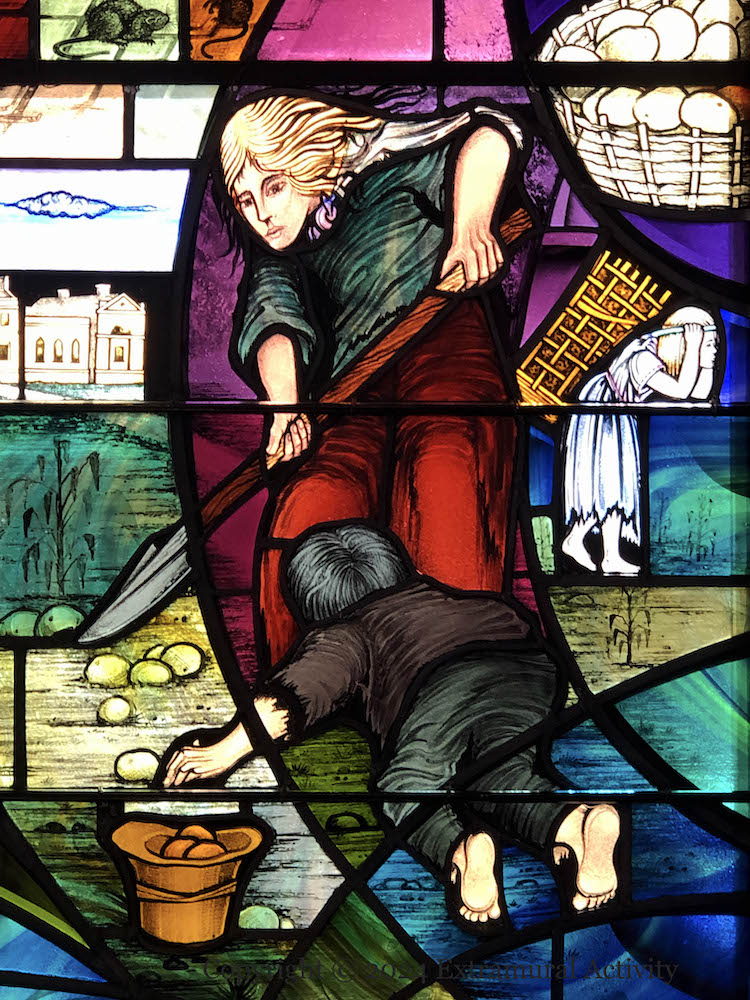
“Nature sent the potato blight, government & landlords created the famine.” A woman kneeling between two gravestones inspects a rotten potato during the Great Hunger (Visual History).









 Extramural Activity