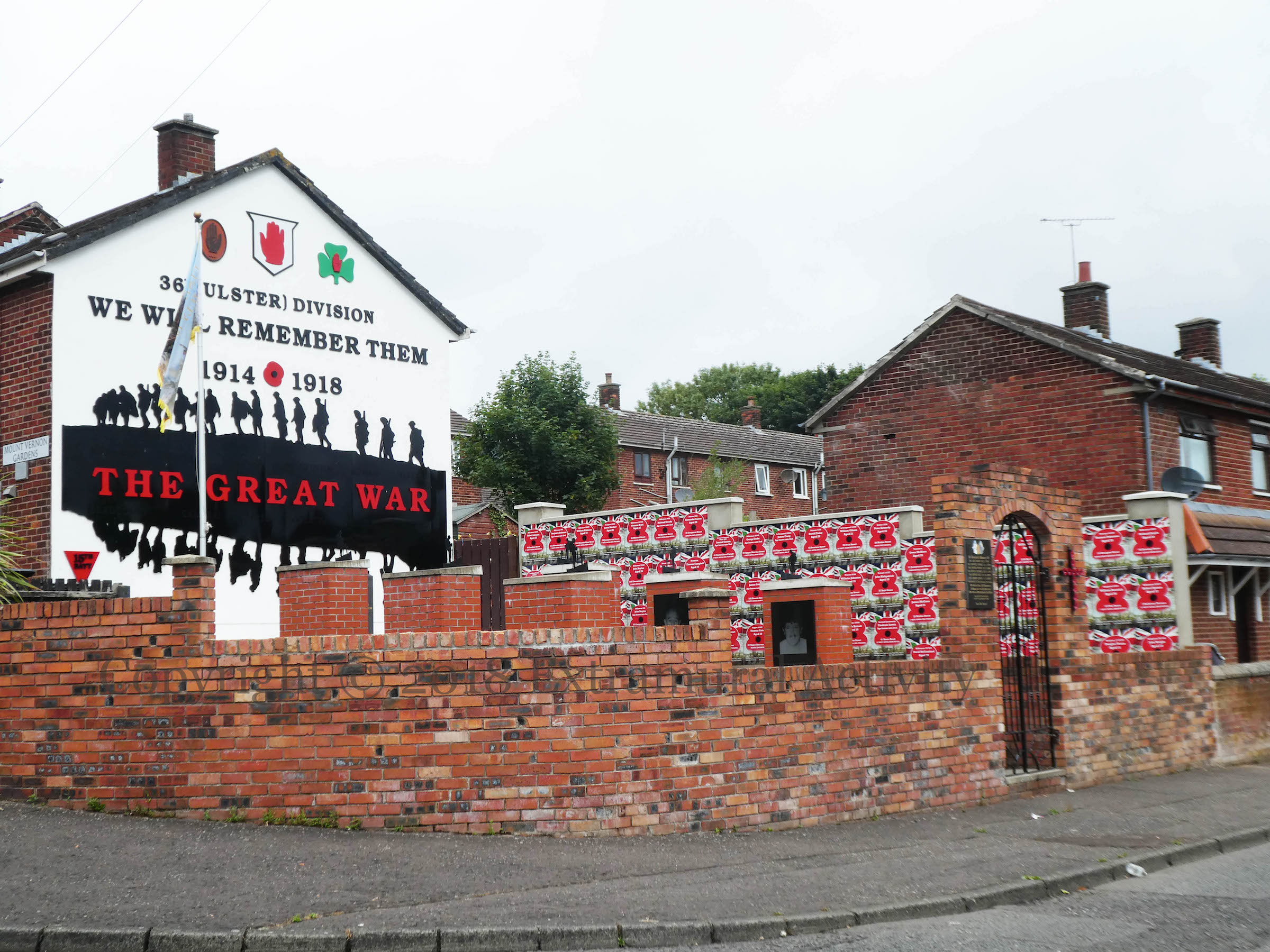
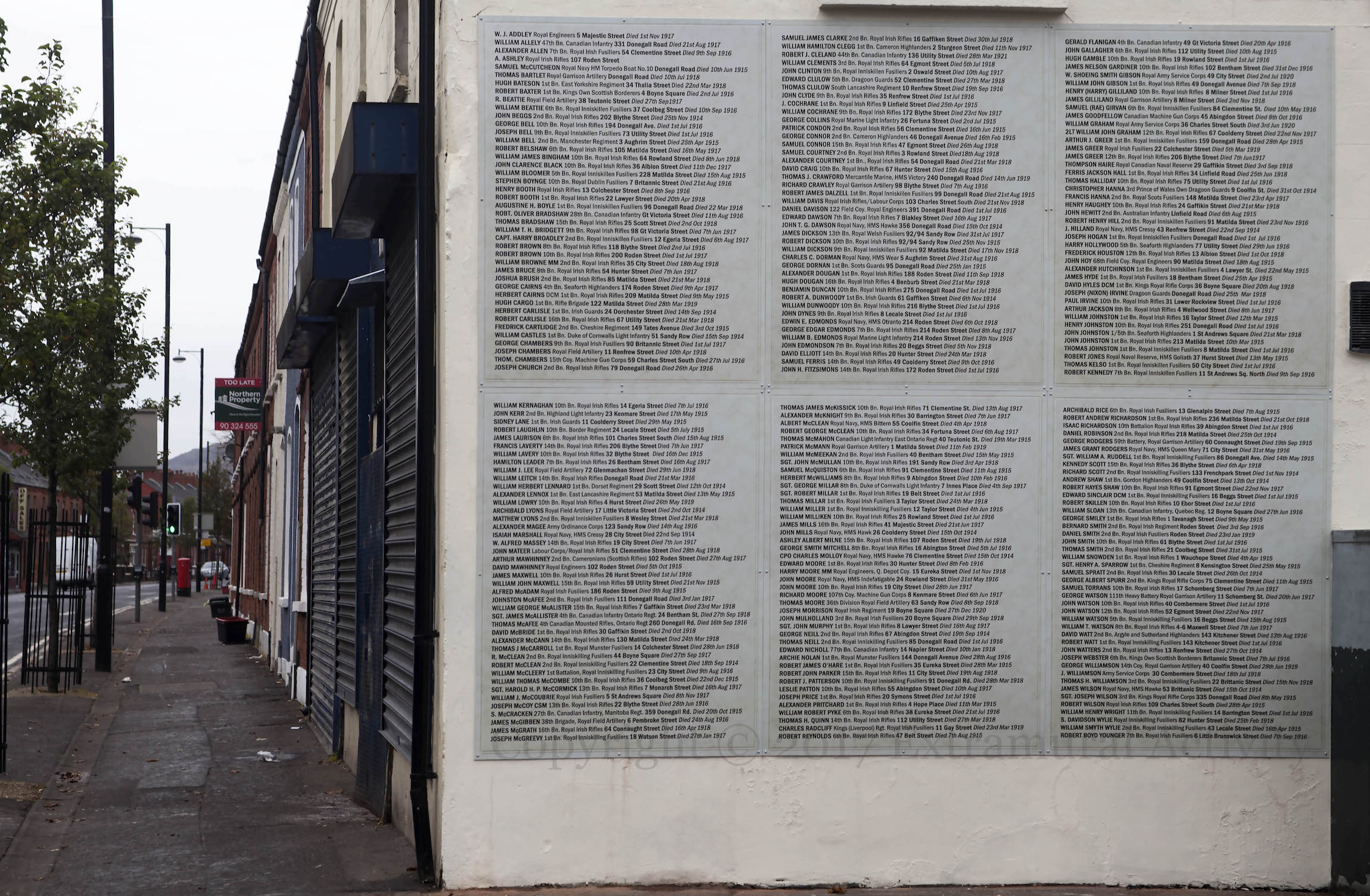
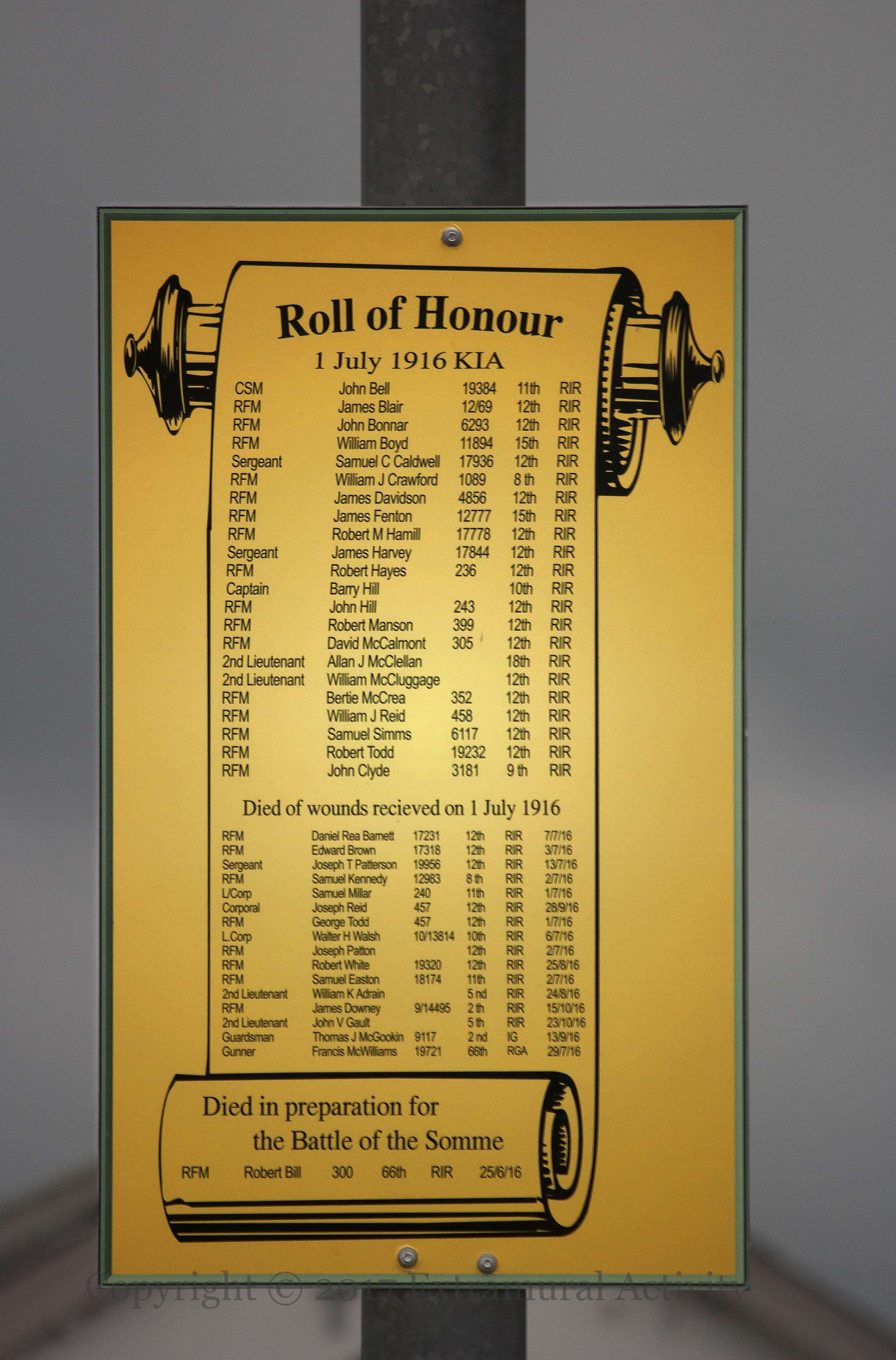
Dozens of boards to local soldiers from the 36th (Ulster) Division (by the 2016 Committee) have been added to the Mount Vernon memorial garden to the soldiers of the Great War (the mural) and contemporary UVF volunteers (the garden). For the mural, memorial stones, and outside plaque, see At Home And On The Mainland.
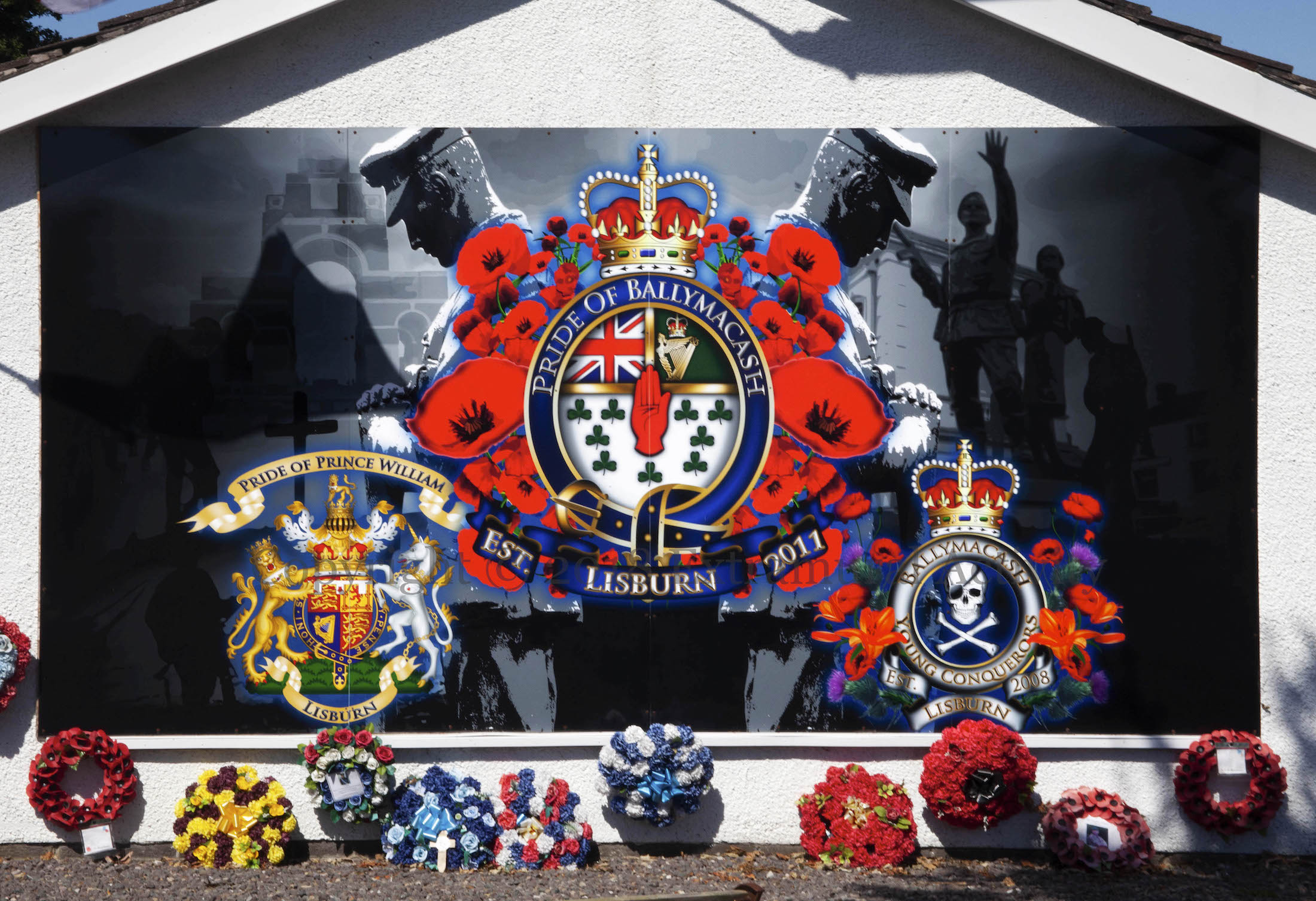
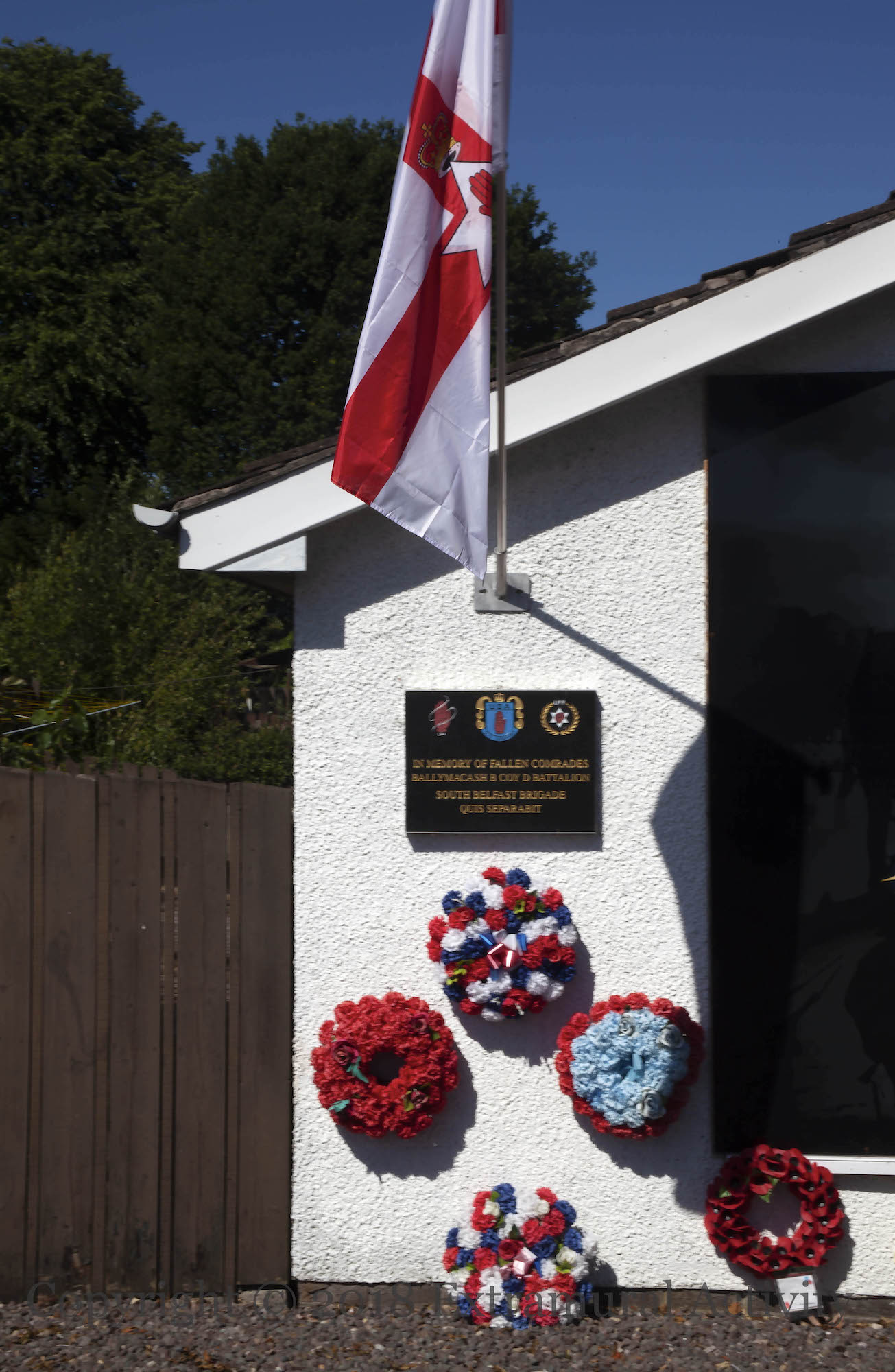
The Pride Of Ballymacash flute band, formed in 2011 from the Pride Of Prince William (bottom left) and Ballymacash Young Conquerors (bottom right), uses the emblem of the 36th (Ulster) Division, in the centre of the mural. In the background on the left is the Thiepval Memorial and, on the right, the UDR memorial statue in Market Square, Lisburn. To the left (in the second image) is a UDA plaque “In memory of fallen comrades Ballymacash B coy D battaltion, South Belfast Brigade. Quis separabit.” For a close-up of the memorial on the ground, see Death & Life.
It is usually the fourth verse from Laurence Binyon’s poem For The Fallen that is quoted on memorial stones to the fallen of the WWI but here we have the third verse: They went with songs to the battle, they were young/Straight of limb, true of eyes, steady and aglow/They were staunch to the end against odds uncounted/They fell with their faces to the foe. The stone commemorates “the men of the 36th (Ulster) Division who gave their lives for King and country at the Battle of the Somme 1st July – 18th November 1916”. It is in the garden adjacent to the West Kirk Presbyterian church (Fb) on the Shankill Road. As the image below shows, the garden is also host to many small boards to individual soldier (see previously Among The Fallen | XXXVI | The Sacrifice Remains The Same).
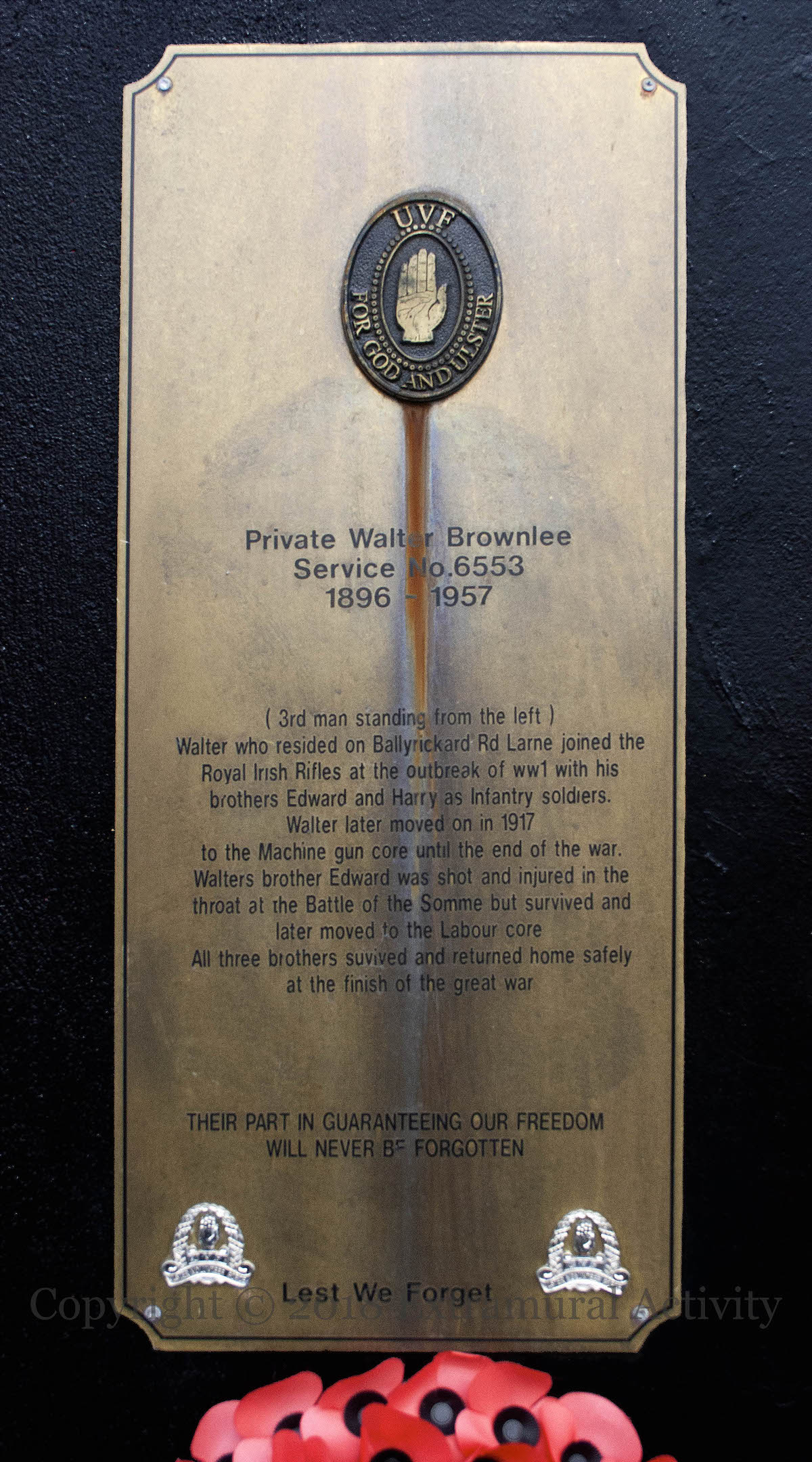
Here are five more images of the WWI memorial mural (featured yesterday) in Drumahoe Gardens, Larne, including a plaque to Walter Brownlee and his brothers Edward and Harry, all of whom survived the war.
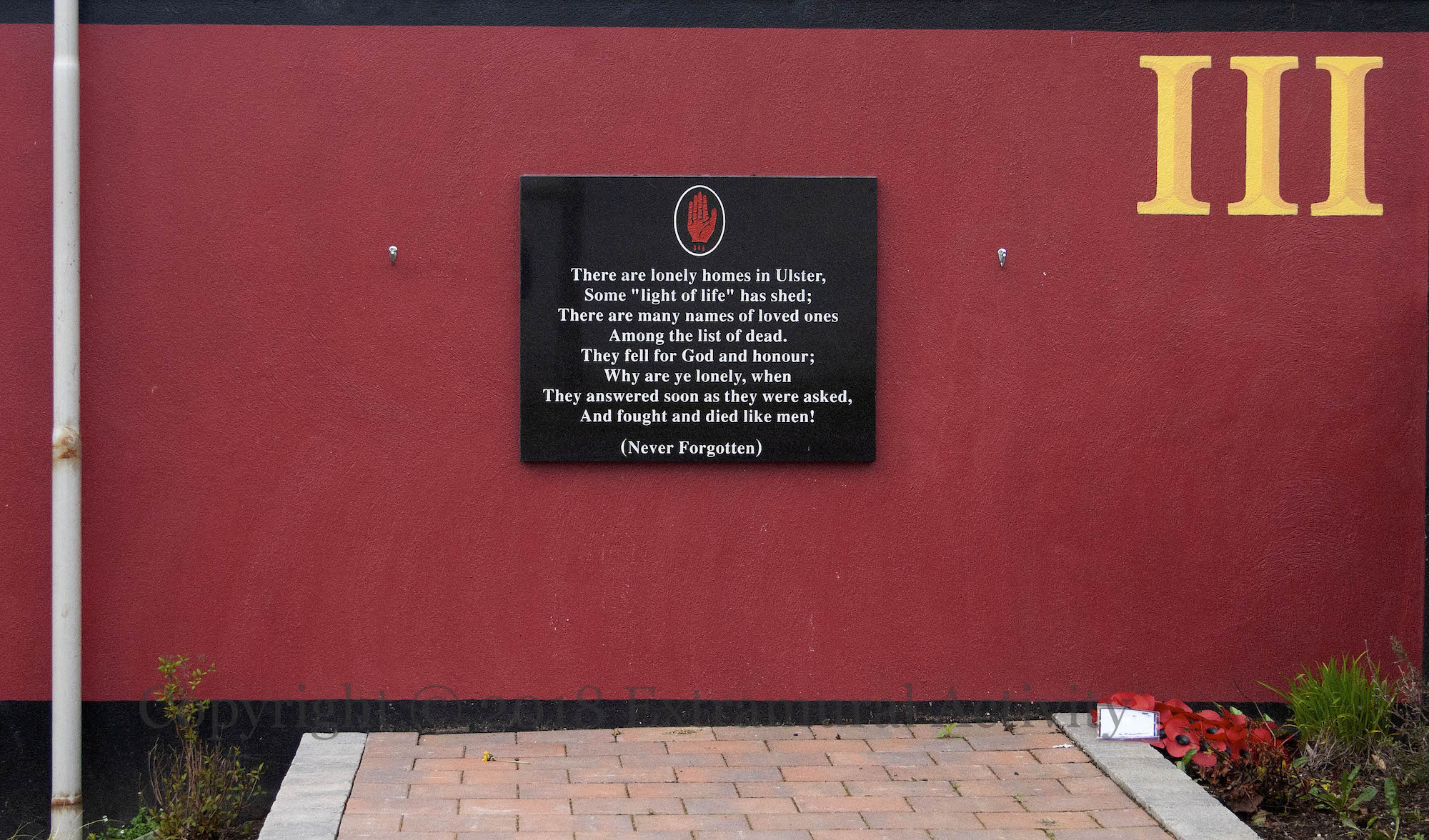
“There are lonely homes in Ulster/Some “light of life” has shed/There are many names of loved ones/Among the list of dead.//They fell for God and honour;/Why are ye lonely when/They answered soon as they were asked/And fought and died like men!”
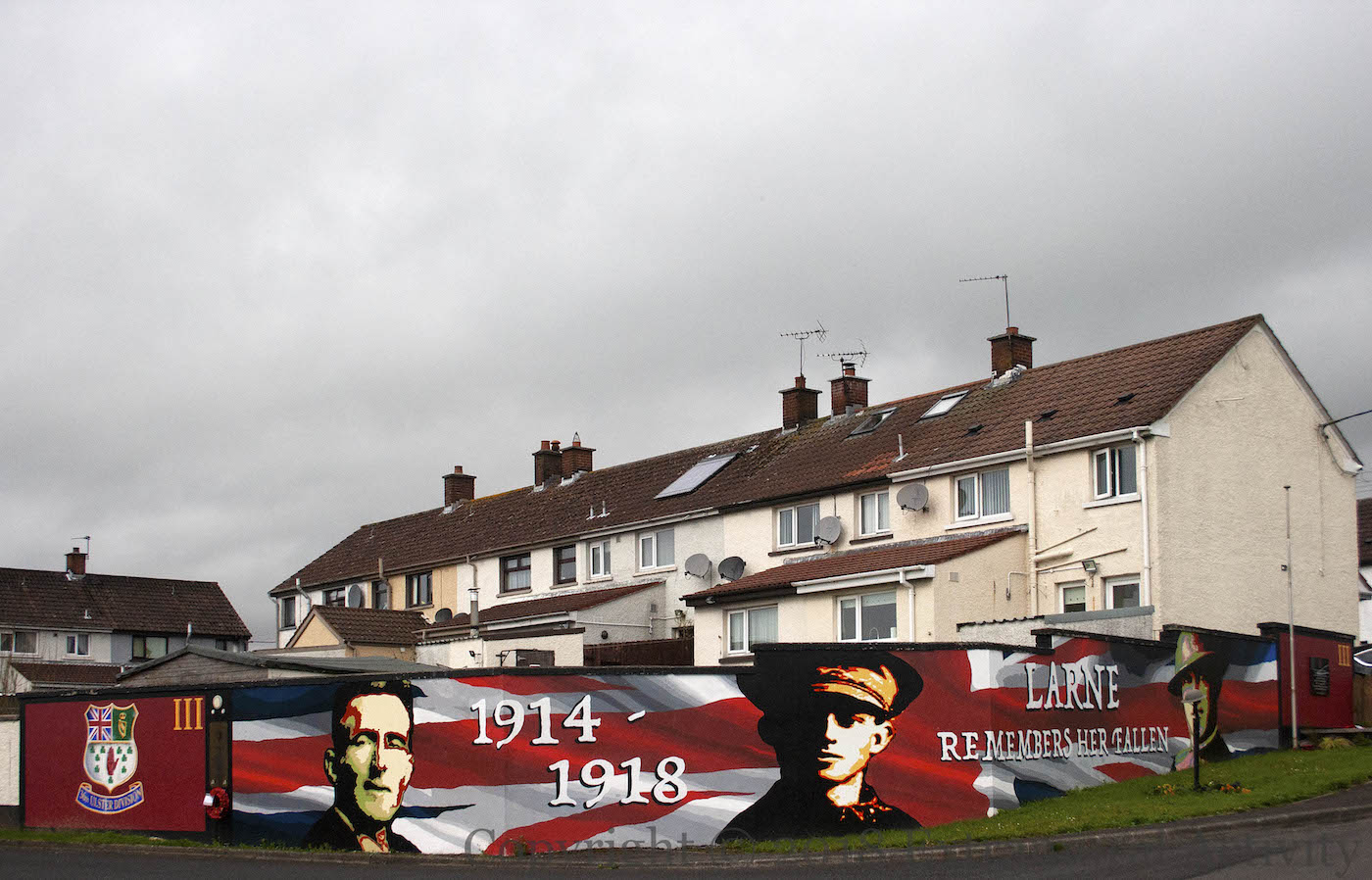
History Hub Ulster and Larne Urban District Council are conducting a search for additional names of residents from the Larne area who died in WWI, to add to the 147 included on the war memorial in Inver. The dead are also remembered in this wrap-around mural in Milbrook. We will have close-ups of the different panels and plaques tomorrow. For images of the launch, see the Friends of the 36th – Cairncastle facebook page.
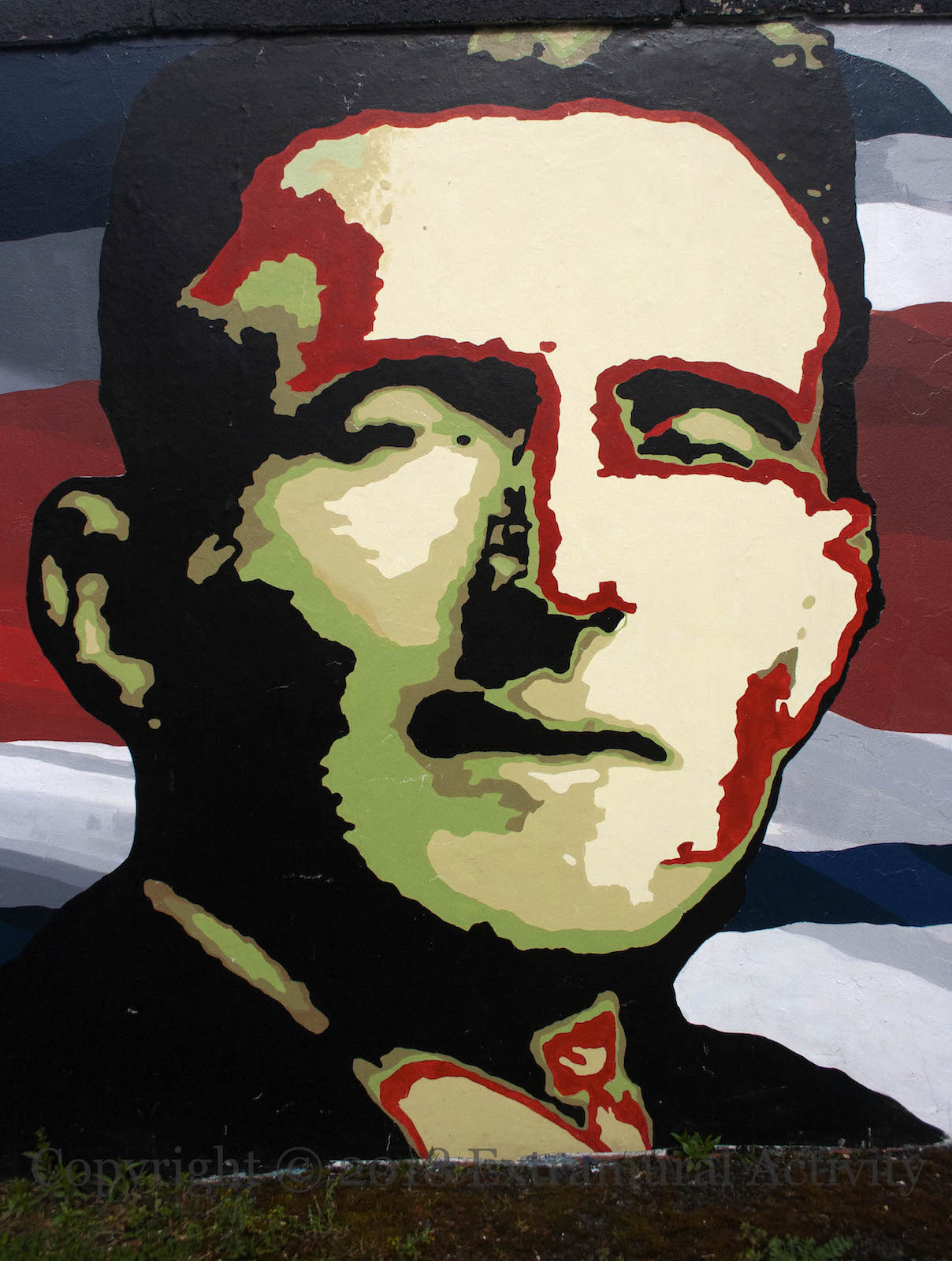
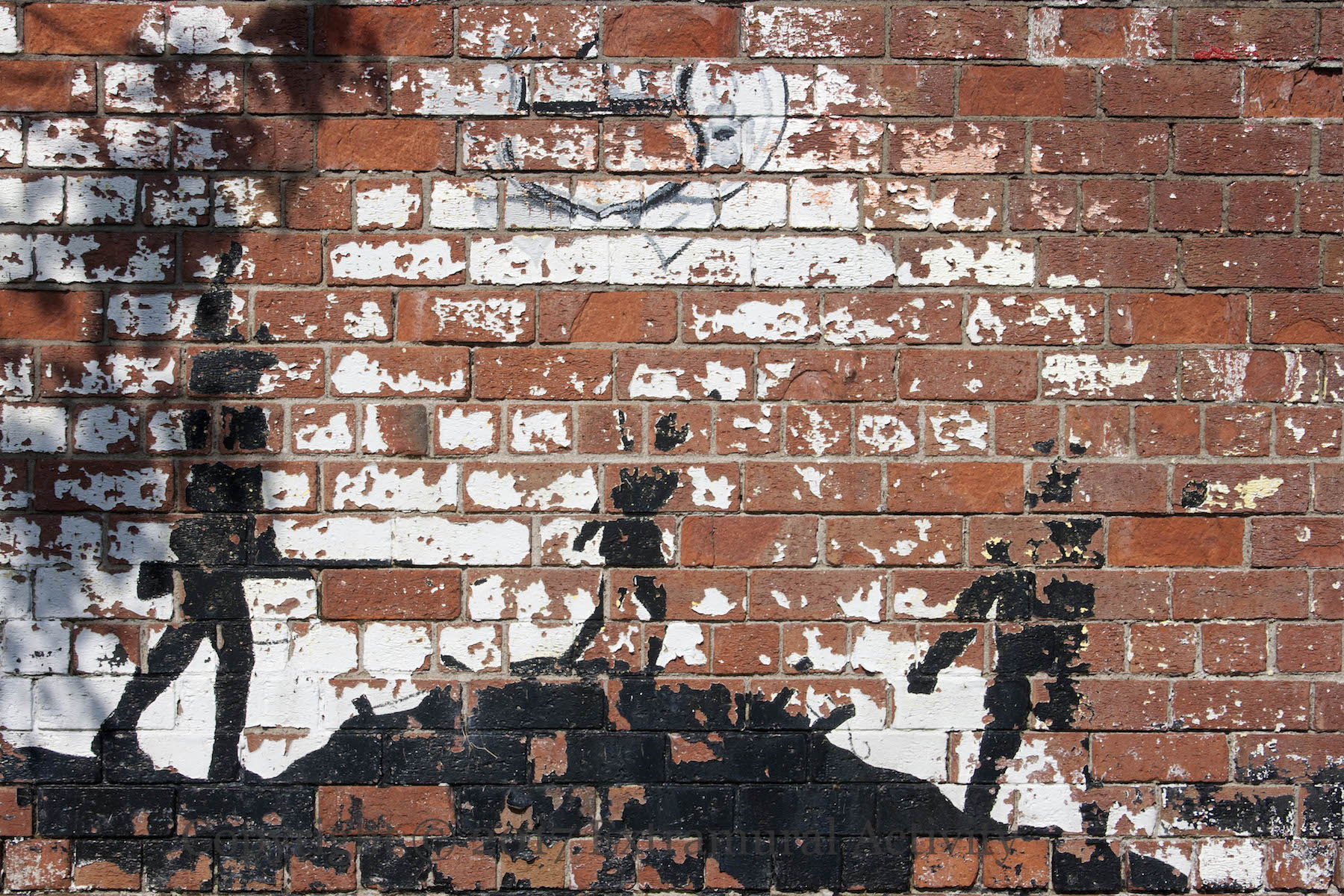
These five images show the remains of an Ulster Special Service Force (USSF) mural in Drumahoe Gardens, Millbrook. In addition to the union flag and emblem of the unit, the mural showed the Covenant and Carson, the gunrunning ship Clyde Valley which landed at Larne (not shown here), the garlanded red hand shown above, a memorial lamp post(?) not shown, soldiers from the 36th Division going over the top(fourth), the Ulster Tower and a helmet on a cross (not shown).
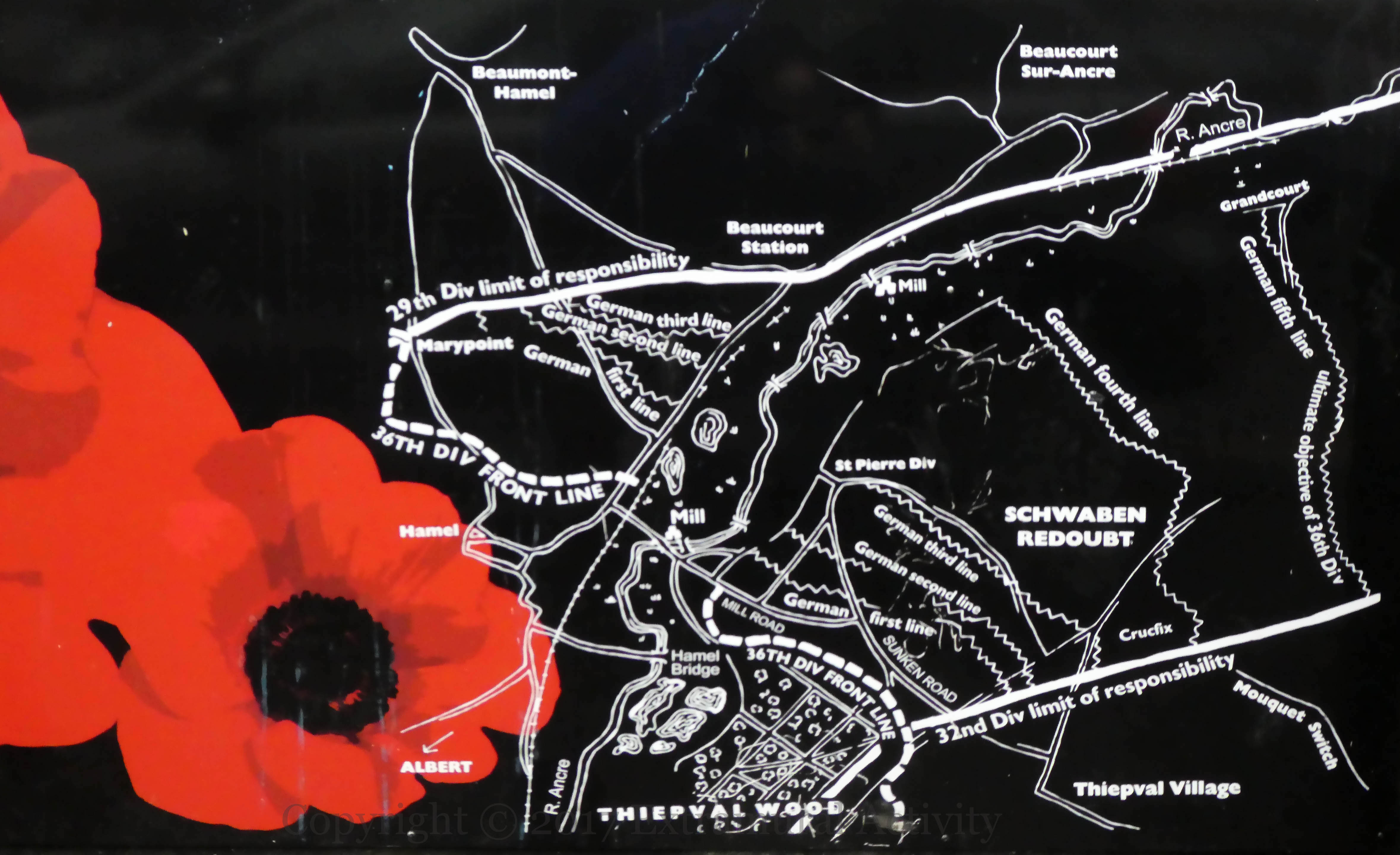
The map in the lower left corner of this WWI commemorative mural shows the defensive lines of both the Allies and the Central Powers. As the inscription on the mural describes, the Ulster Tower is situated close to the Schwaben Redoubt, the primary objective of the 36th Division on the first day of battle.
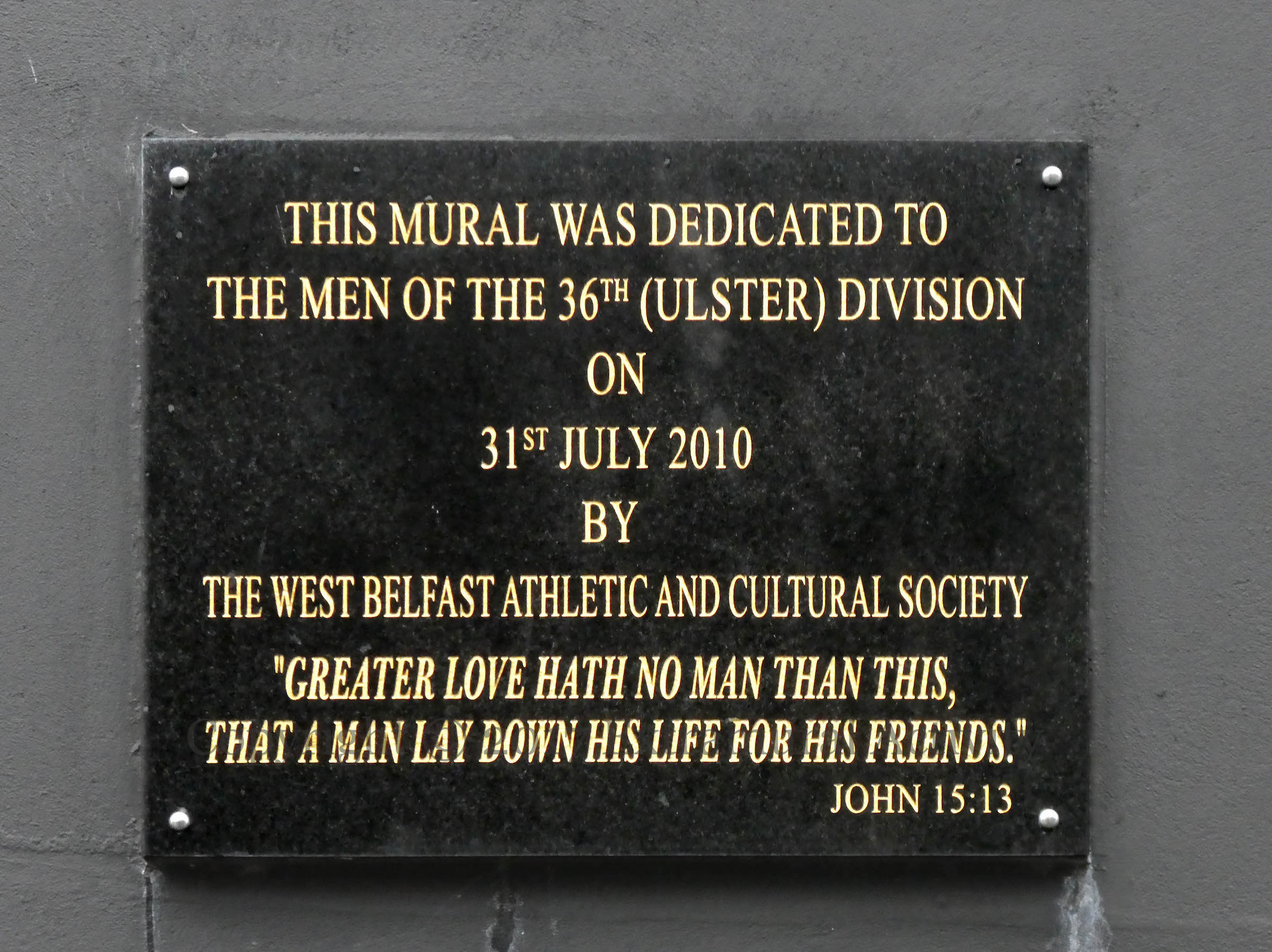
The plaque (shown second, below) refers to a similar mural painted in 2010.
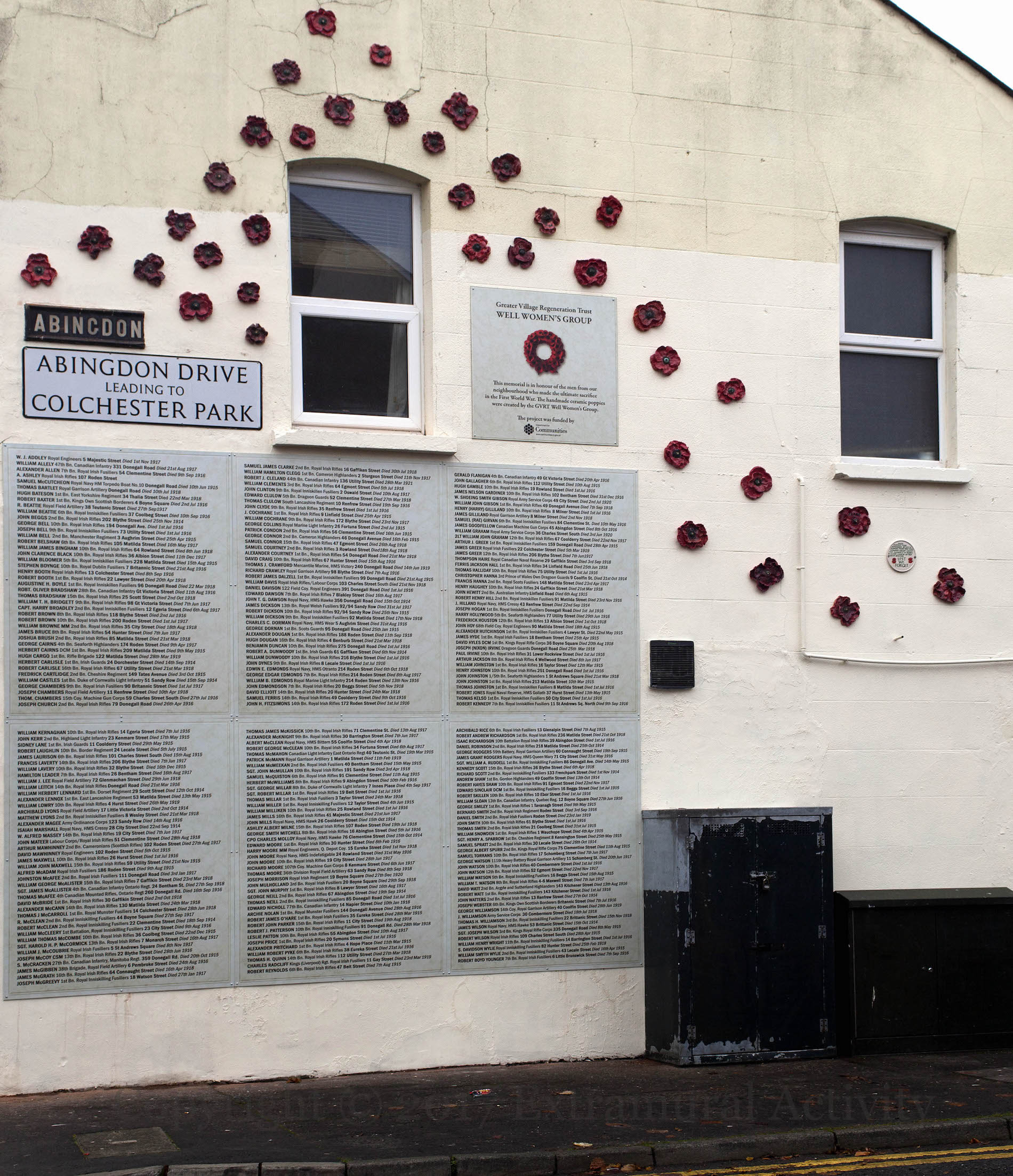
“This memorial is in honour of the men from our neighbourhood who made the ultimate sacrifice in the First World War. The handmade ceramic poppies were created by the GVRT [Greater Village Regeneration Trust] Well Women’s Group.”
“I am not an Ulsterman but yesterday, the First of July, as I followed their amazing attack, I felt that I would rather be an Ulsterman than anything else in the world. My pen cannot describe adequately the hundreds of heroic acts I witnessed, the Ulster Volunteer Force, from which the Division was made, has won a name that equals any in history. Their devotion deserves the gratitude of the British empire.”
The words of Wilfrid Spender, Plymouth-born newspaper manager, quartermaster of the Ulster Volunteers, general staff officer of the 36th (Ulster) Division, winner of the Military Cross for actions at Thiepval, and Cabinet Secretary of the new “Northern Ireland” in 1921.
Kilburn St; later moved to Broadway/Donegall Ave, south Belfast
The 12th battalion of the Royal Irish Rifles was drawn from central Antrim towns such as Ballymena and Ballyclare. There is a web site and a Facebook page dedicated to the battalion. For more pictures of the Ballymena arch, see Cross And Crown.









 Extramural Activity