“Ulster Day” is September 28th, the day in 1912 that the Ulster Covenant was signed, pledging to use any means necessary to defend “our cherished position in the United Kingdom” and defeat Home Rule. The first signatory was Edward Carson. The Ulster Volunteers were subsequently formed in January, 1913.
The Whiterock Flute Band was founded in 1962 by the the local Temperance Lodge and drew on areas near the now nationalist areas of New Barnsley, Moyard, Whiterock, and the upper Springfield for its membership. Over the years has seen the route of its annual parade changed “by the authorities or at the whim of nationalists” (band history pages one | two | three).
“I am not an Ulsterman but yesterday, the First of July, as I followed their amazing attack, I felt that I would rather be an Ulsterman than anything else in the world. My pen cannot describe adequately the hundreds of heroic acts I witnessed, the Ulster Volunteer Force, from which the Division was made, has won a name that equals any in history. Their devotion deserves the gratitude of the British empire.”
The words of Wilfrid Spender, Plymouth-born newspaper manager, quartermaster of the Ulster Volunteers, general staff officer of the 36th (Ulster) Division, winner of the Military Cross for actions at Thiepval, and Cabinet Secretary of the new “Northern Ireland” in 1921.
Kilburn St; later moved to Broadway/Donegall Ave, south Belfast
UDA members John Fulton and were Stephen Goatley were killed together in the Alexandra Bar on York Road (close to the Mervue Street location of this memorial) by the UVF as part of a UDA-UVF feud in 1975. The poppy is more often associated with the Ulster Volunteers (of WWI) and the UVF.
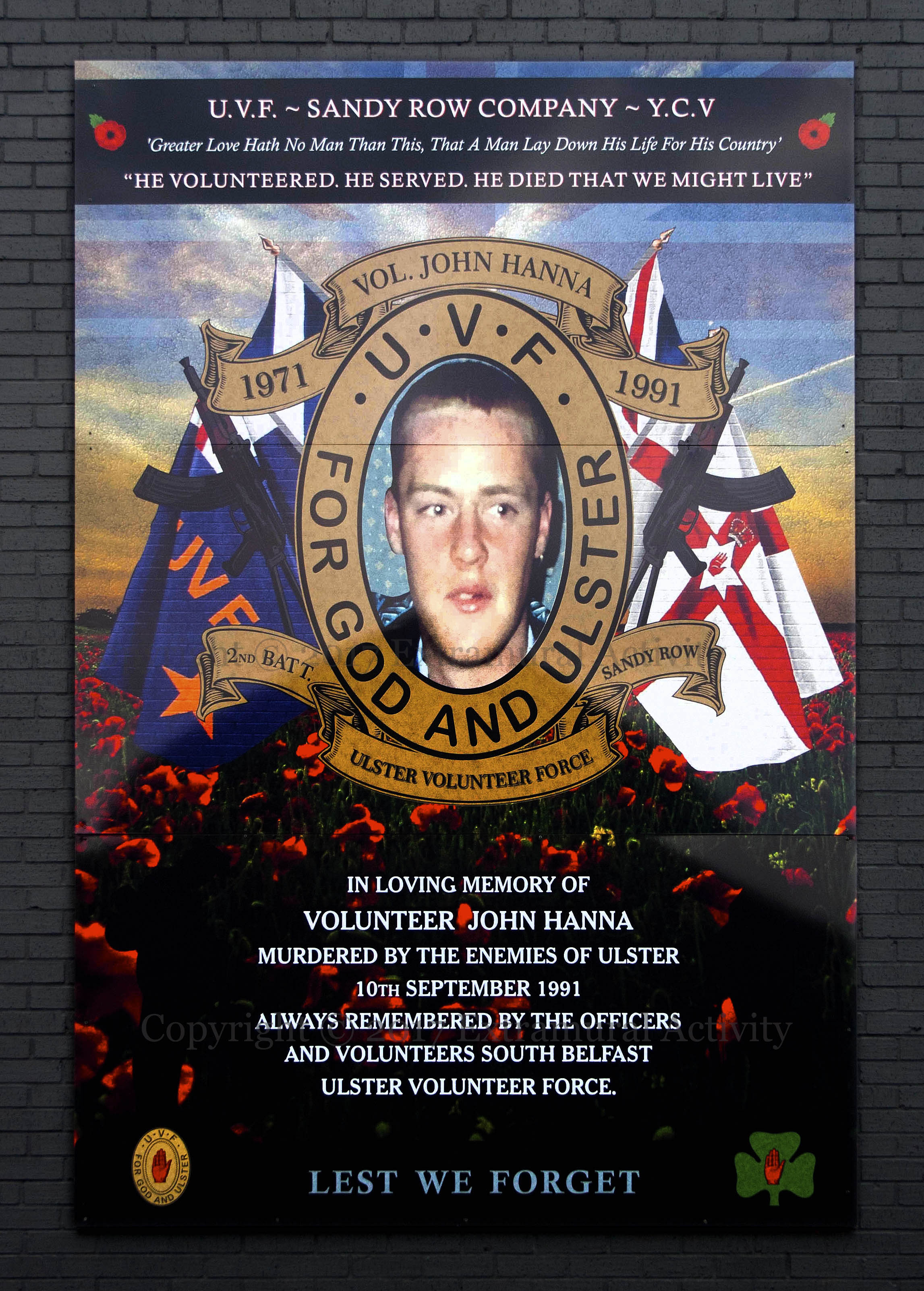
UVF volunteer John Hanna was 19 years old when he was killed by “the enemies of Ulster” (the IRA) at his home on Donegall Road in the Village. This new board is in Prince Andrew Park, just off Donegall Road. “Always remembered by the officers and volunteers South Belfast [2nd Batt Sandy Row] UVF”.
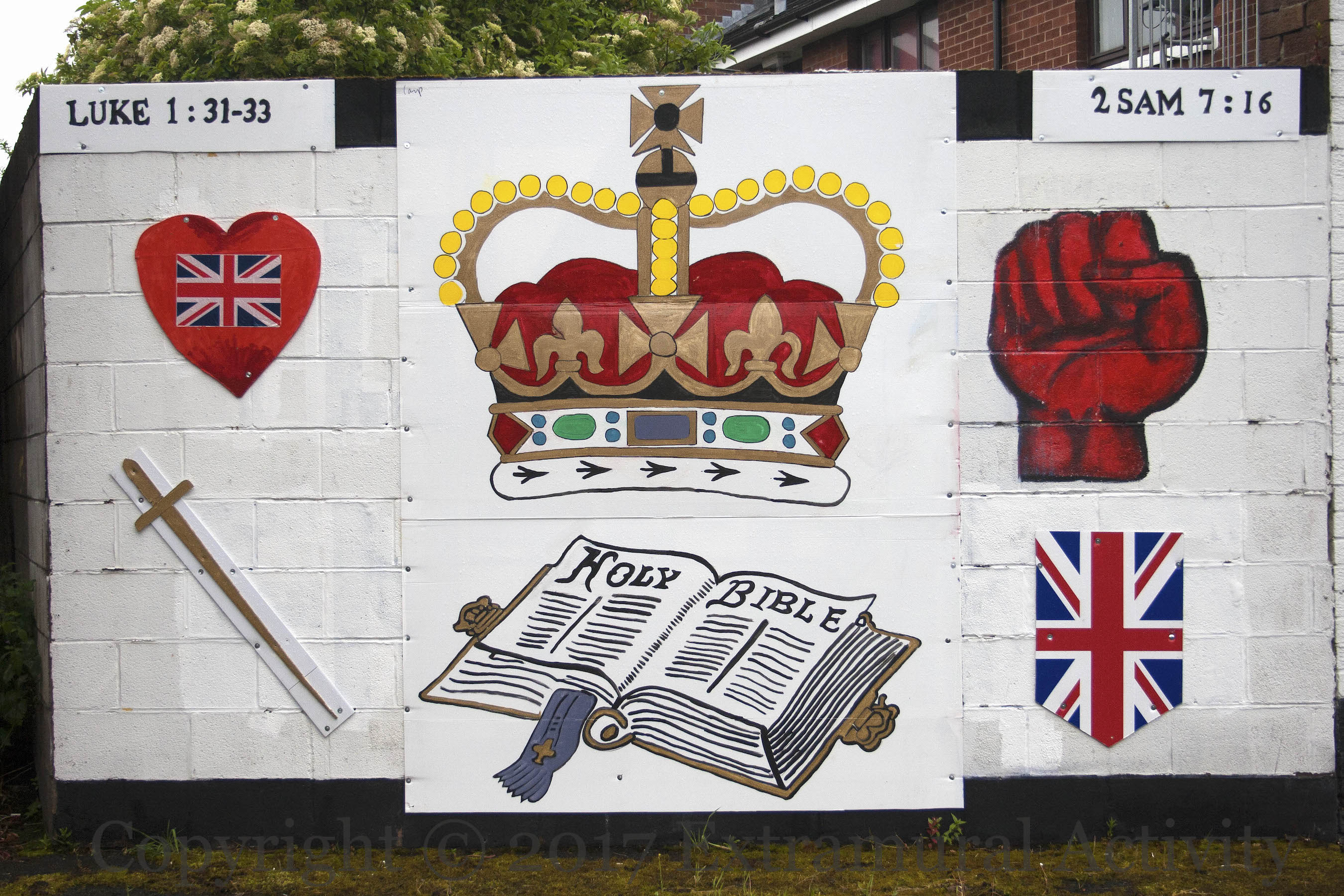
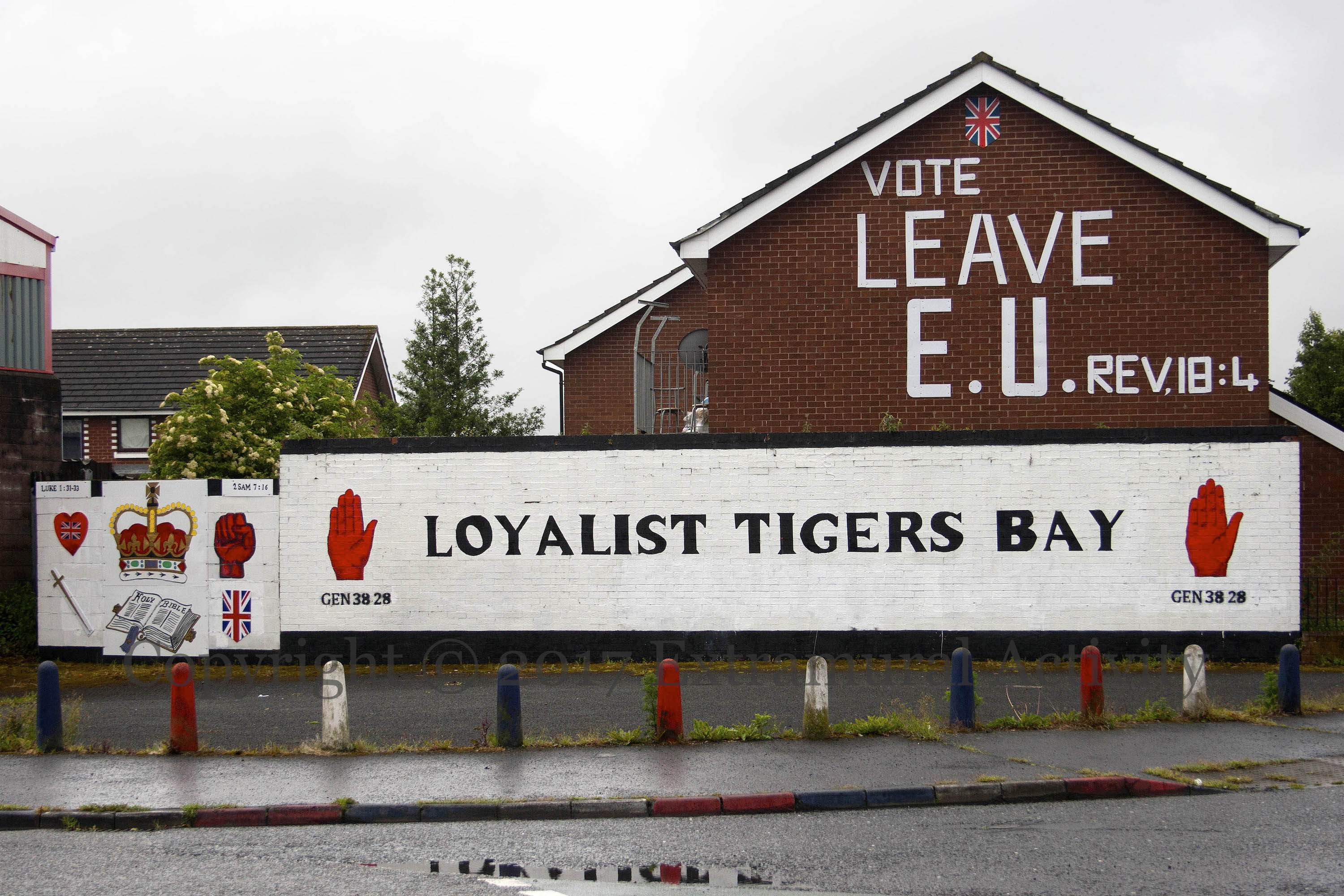
Orange emblems added to the Welcome To Loyalist Tigers Bay mural: the crown and bible, a heart and sword, a red fist and the union flag. Two Bible verses are referenced: “And thine house and thy kingdom shall be established for ever before thee: thy throne shall be established for ever.” (2 Sam 7:16) and “You will conceive and give birth to a son, and you are to call him Jesus. He will be great and will be called the Son of the Most High. The Lord God.” (Luke 1:31-33)
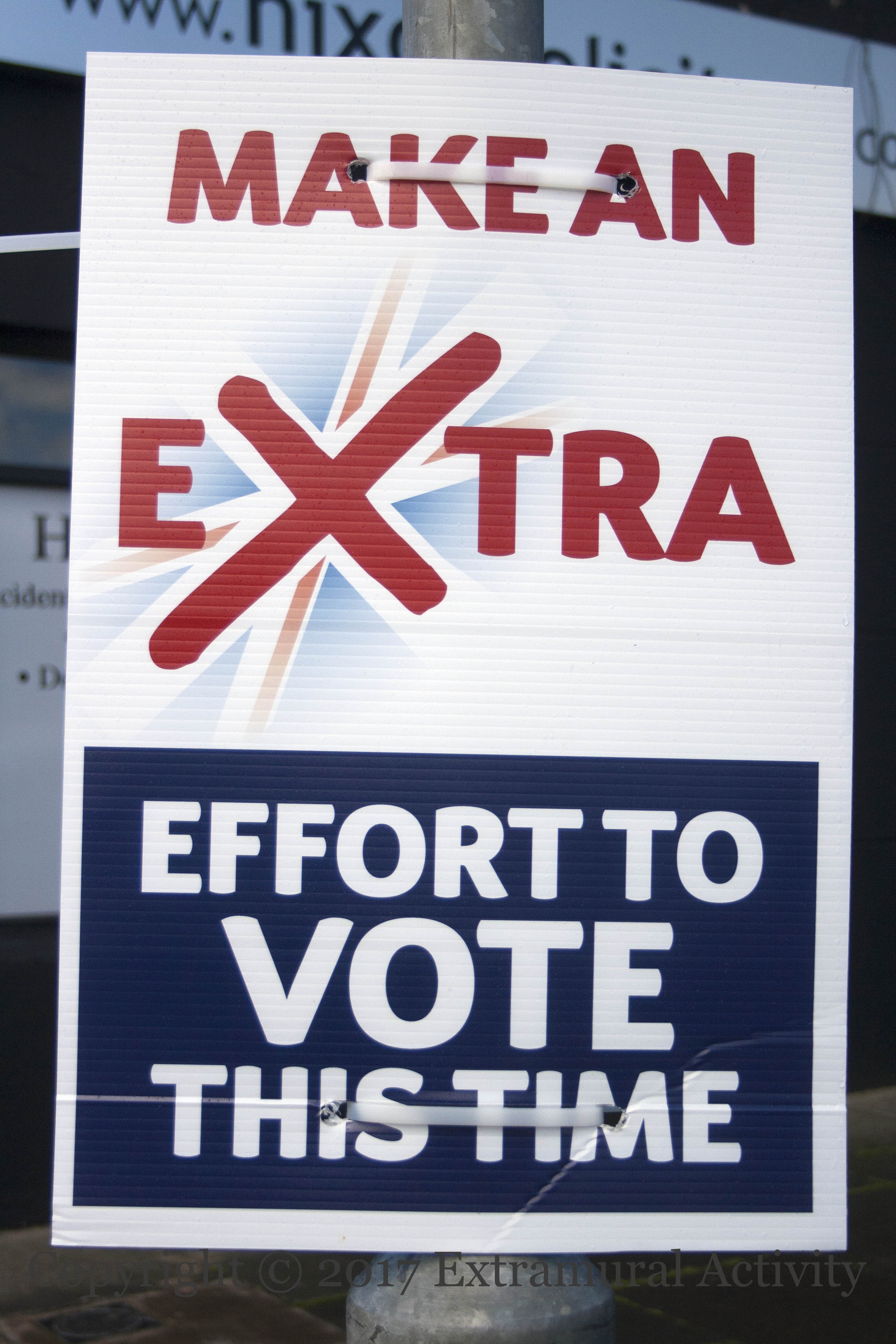
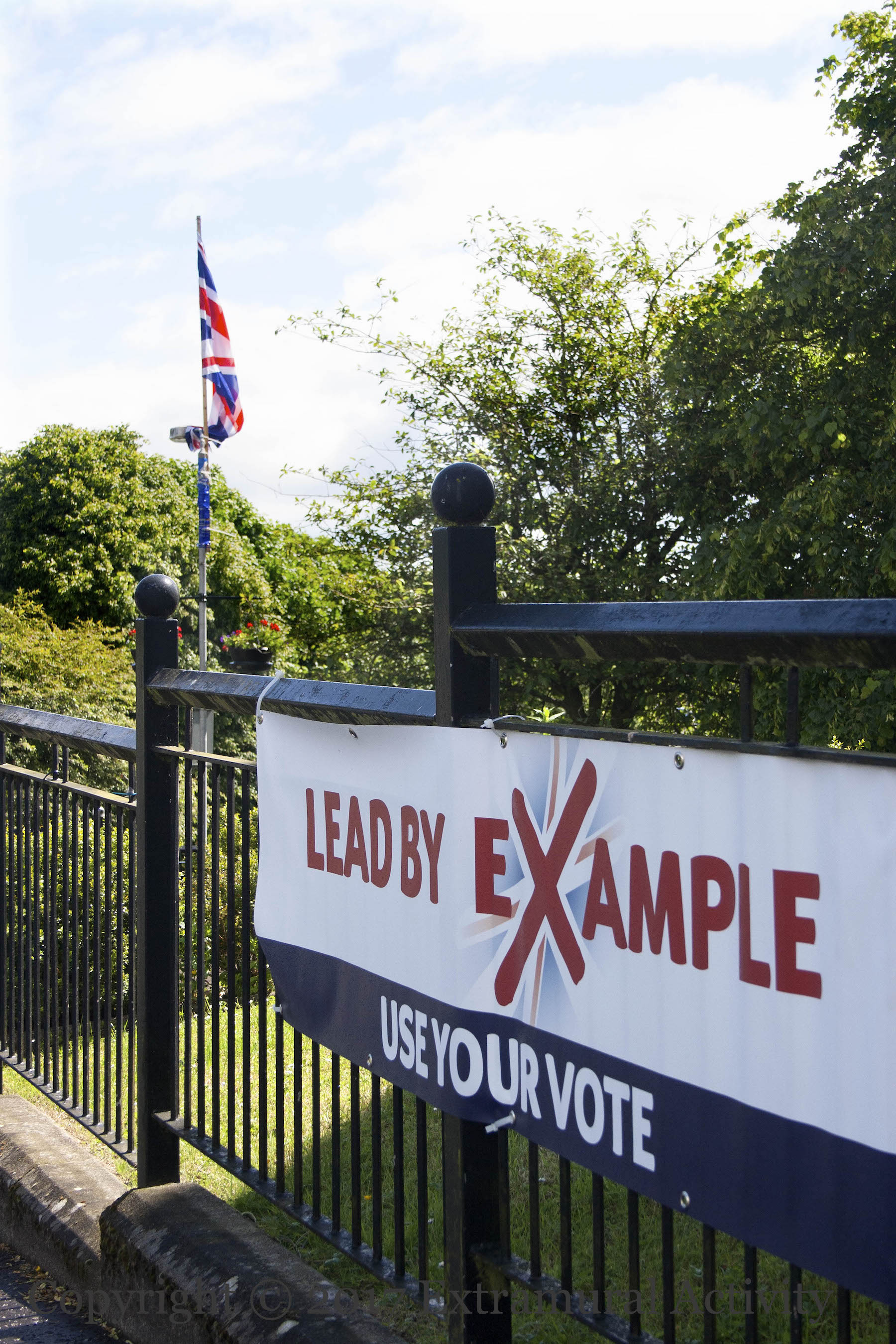
Election posters urging people to vote unionist but without specifying the party. “Make an eXtra effort to vote this time” and “Lead by eXample – use your vote”.
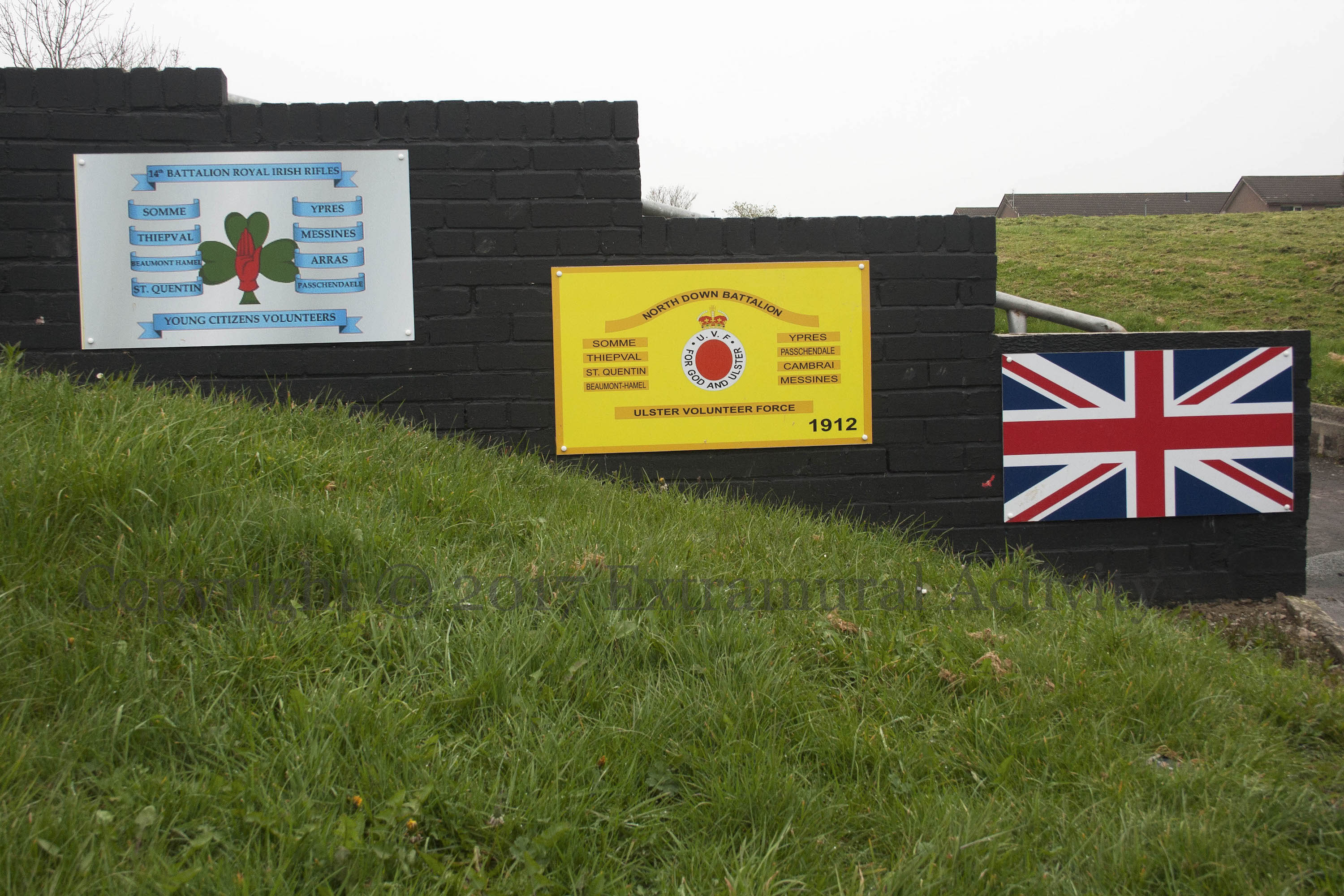
Recruiting for the Ulster Volunteers in Down was so successful that it was divided into four areas (North, South, East, and West), each with a battalion, and the North down battalion comprised 15 companies (History Ireland). The Down battalions became the 13th battalion of the (108th Brigade) Royal Irish Rifles in WWI. The YCV (Young Citizen Volunteers) was formed separately (in 1912) but joined the Volunteers in May 1914, before becoming the (109th Brigade) 14th battalion of the Royal Irish Rifles when the war broke out (WP). Both began their campaigns at Boulogne-Sur-Mer in October, 1915 (WP).
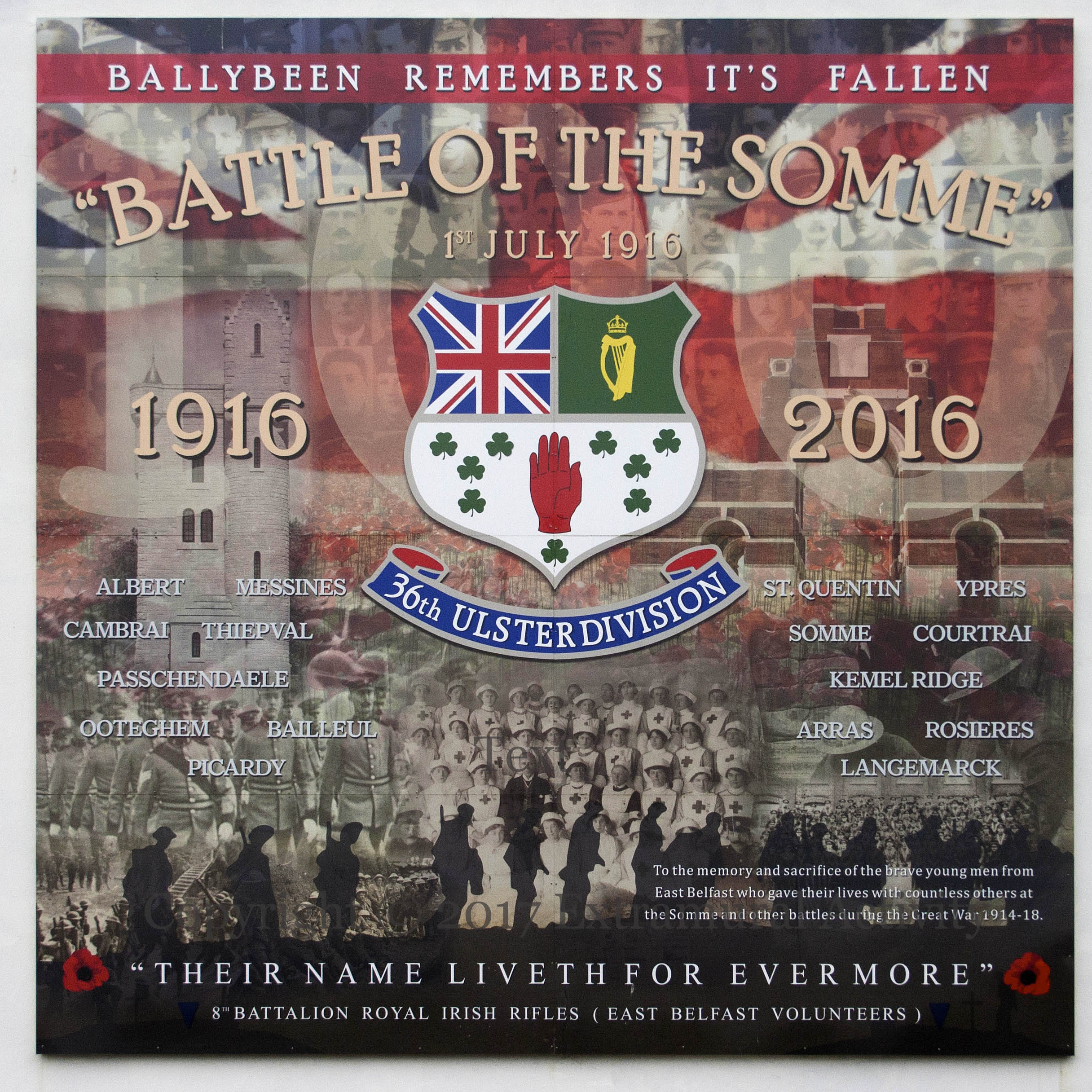
“Ballybeen remembers it’s [sic] fallen – to the memory and sacrifice of the brave young men from East Belfast who gave their lives with countless others at the Somme and other battles during the Great War 1914-18.” The Union flag and the Thiepval memorials serve as a backdrop for images of individual soldier and photographs of soldiers and nurses at work.
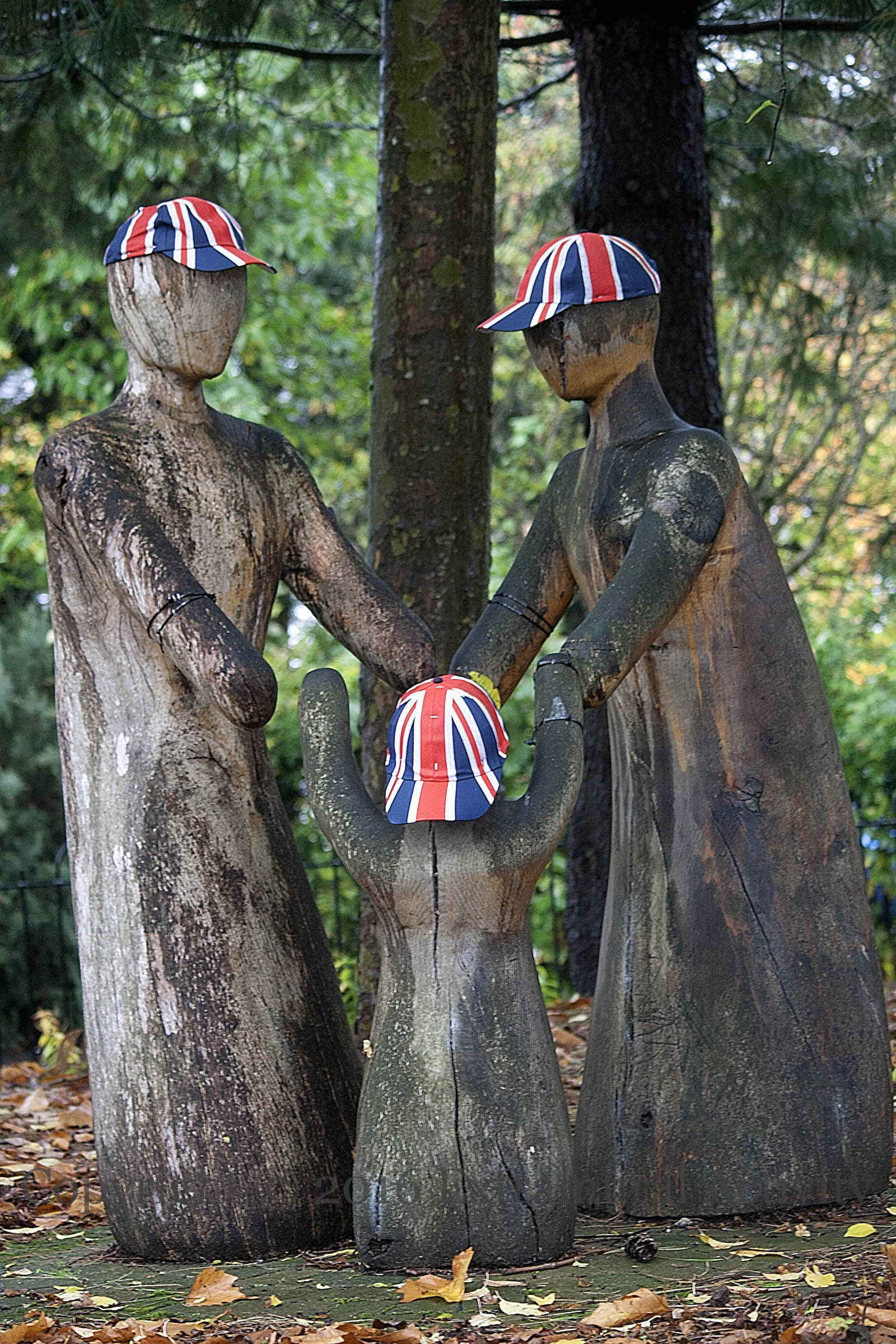
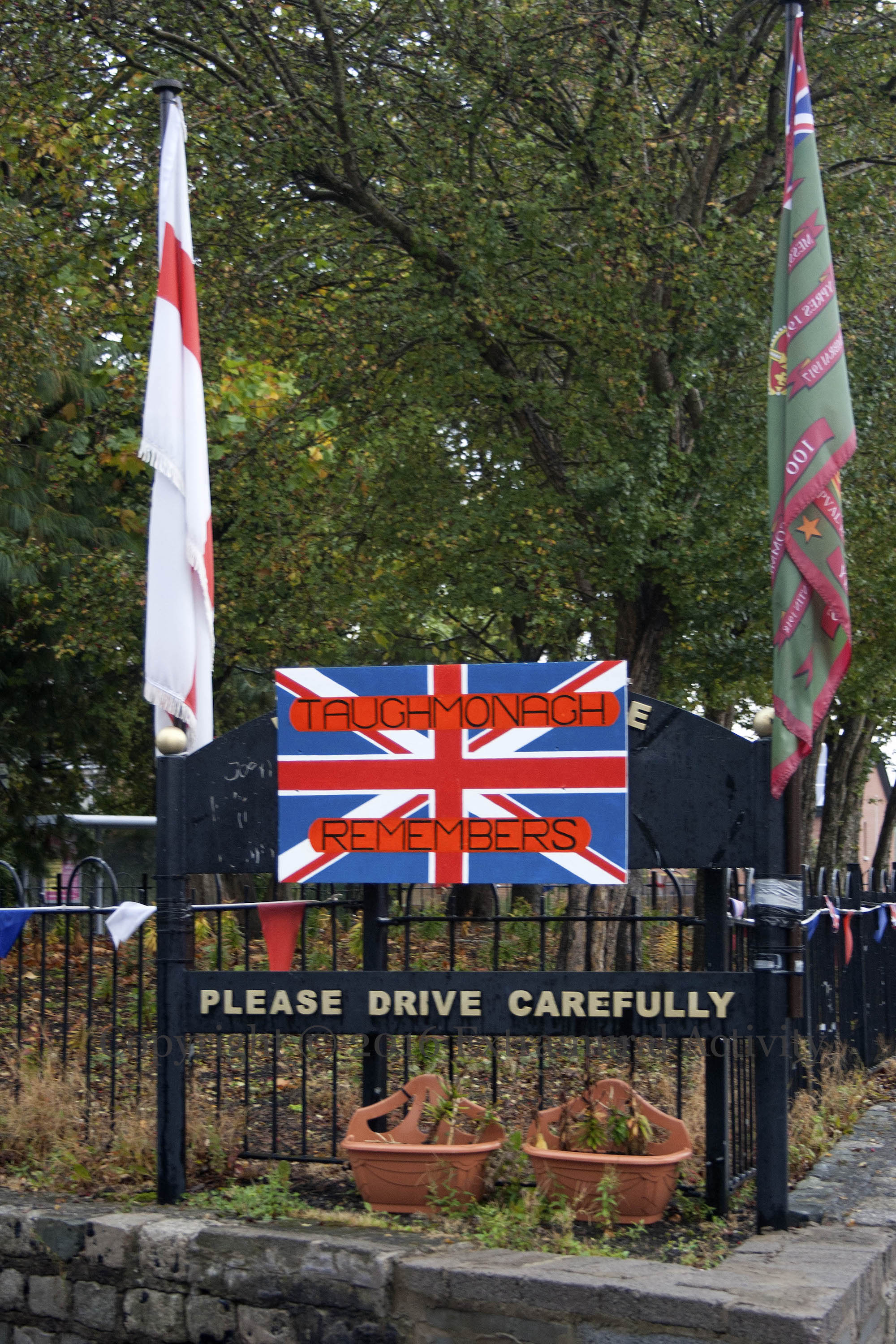
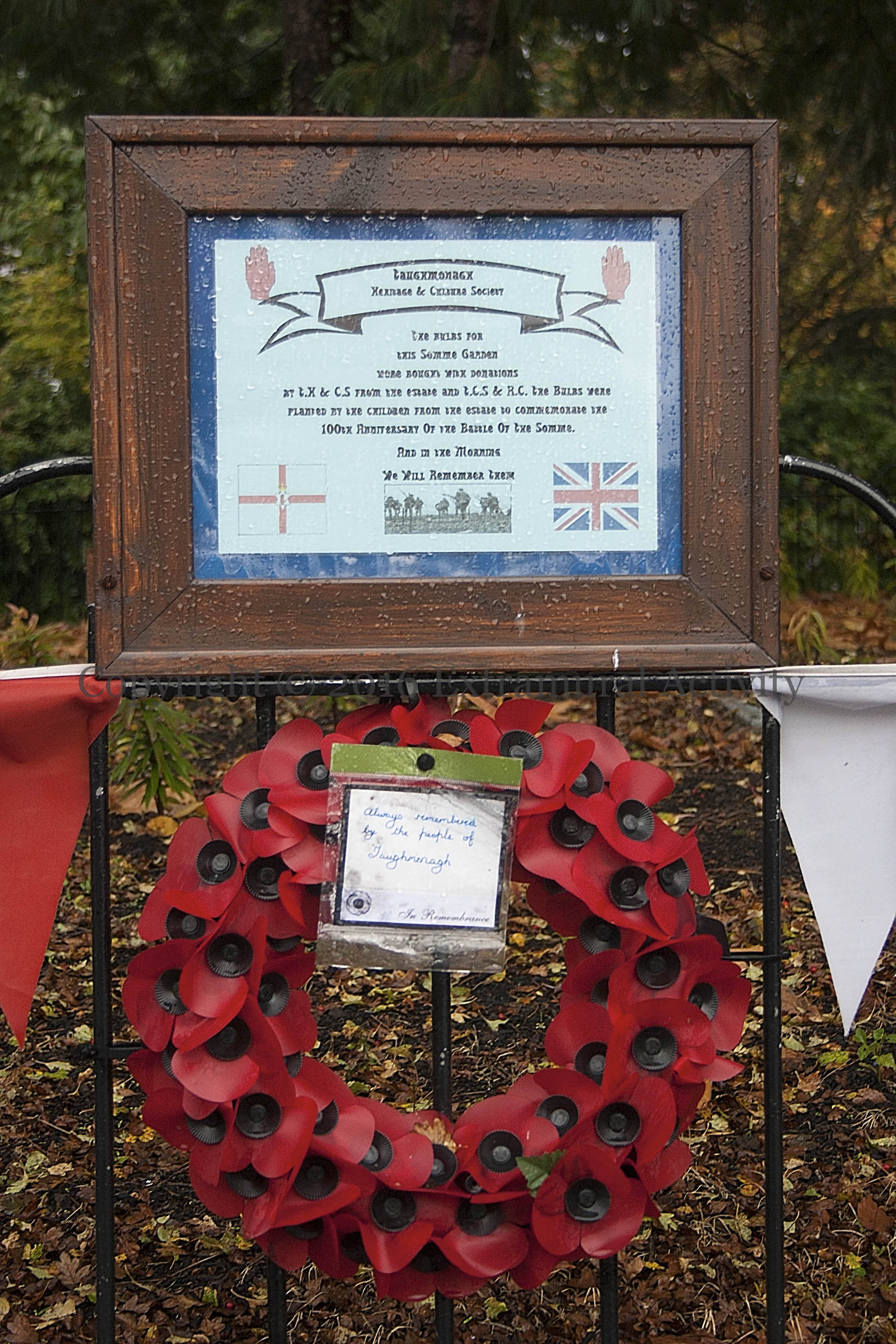
The bus turnaround at the entrance to Taughmonagh estate has been turned into a Somme Garden (see the third image, below). The “Welcome to Taughmonagh” sign at entrance has been covered over with a Union flag board with “Taughmonagh remembers” and the three figures in the sculpture in the middle have each been given a union jack cap.


 Extramural Activity