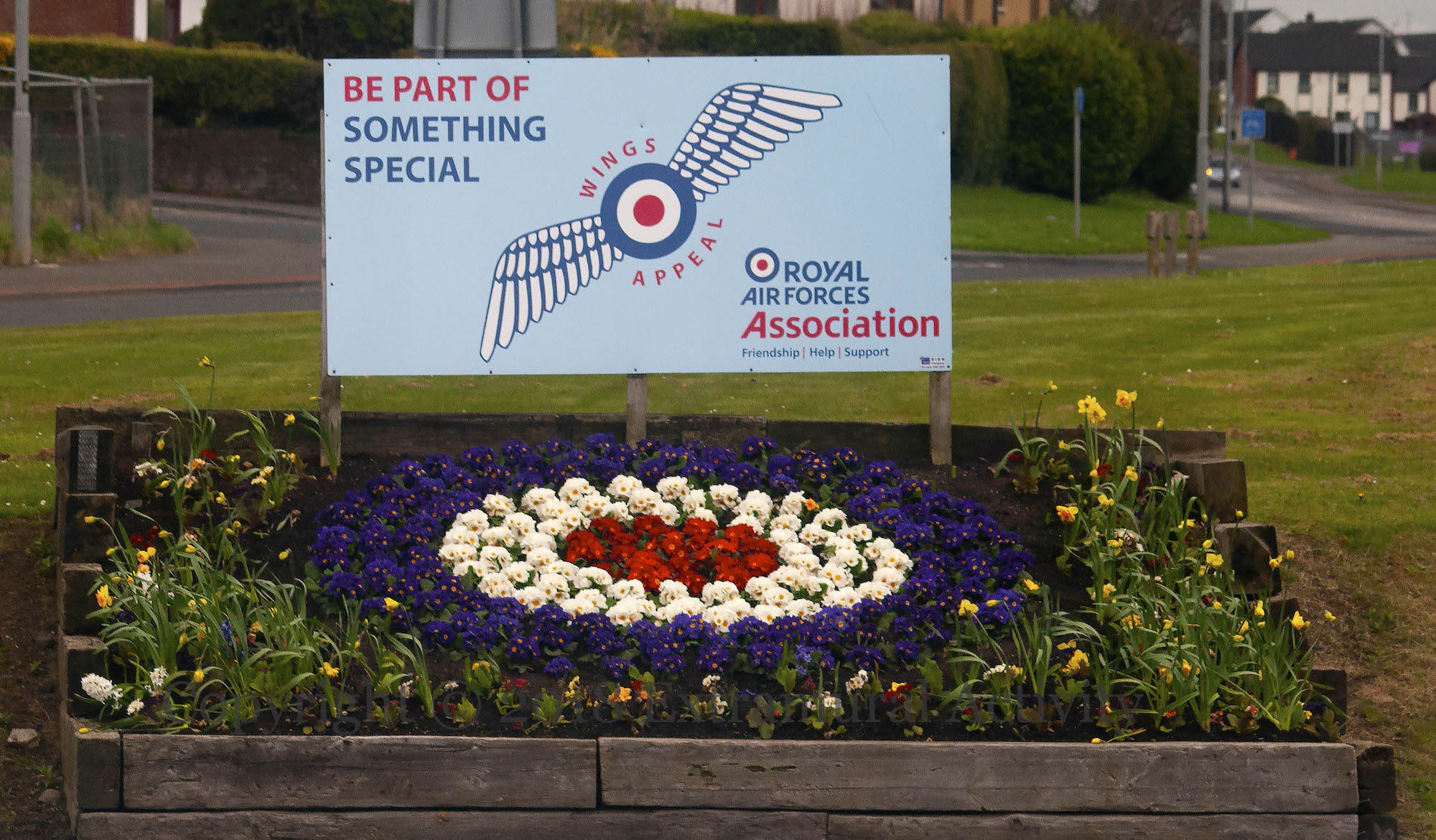
The Royal Air Forces Association’s ‘Wings Appeal’ has been raising money to support Air Force members and their families since 1951 (RAFA). This bed of flowers in the pattern of the Air Force’s red, white, and blue roundel (the reverse of the French roundel) is at the start of the Antiville Road in Larne.
Six of the dead on Bloody Sunday (January 31st, 1972) were from Creggan, and the funeral service for all 13 immediate victims took place in St Mary’s Chapel, at the bottom of Bishop’s Field; the board of photographs shown in today’s post are at the top, on Creggan’s Cental Drive.
Gerard Gibson, aged 16, was shot dead by members of the Royal Green Jackets (“murdered by British crown forces”) in Lenadoon on 11 July 1972. His case was examined by the Historical Enquiries Team (HET) but the family rejected the findings (BBC). This board show today is in a similar style, and close to, that of Fıan Sean Ó Rıordan, but Gibson is not identified as a youth member of the OIRA (as Sutton identifies him).
Four people were killed in the course of The Falls Curfew, the 36 hours from July 3rd to 5th in 1970 during which 3,000 houses on the lower Falls were cordoned off after a weapons search of the area devolved into a riot. The curfew ended with a march of women and children from Andersonstown bearing relief (represented in Falls Curfew 1970).
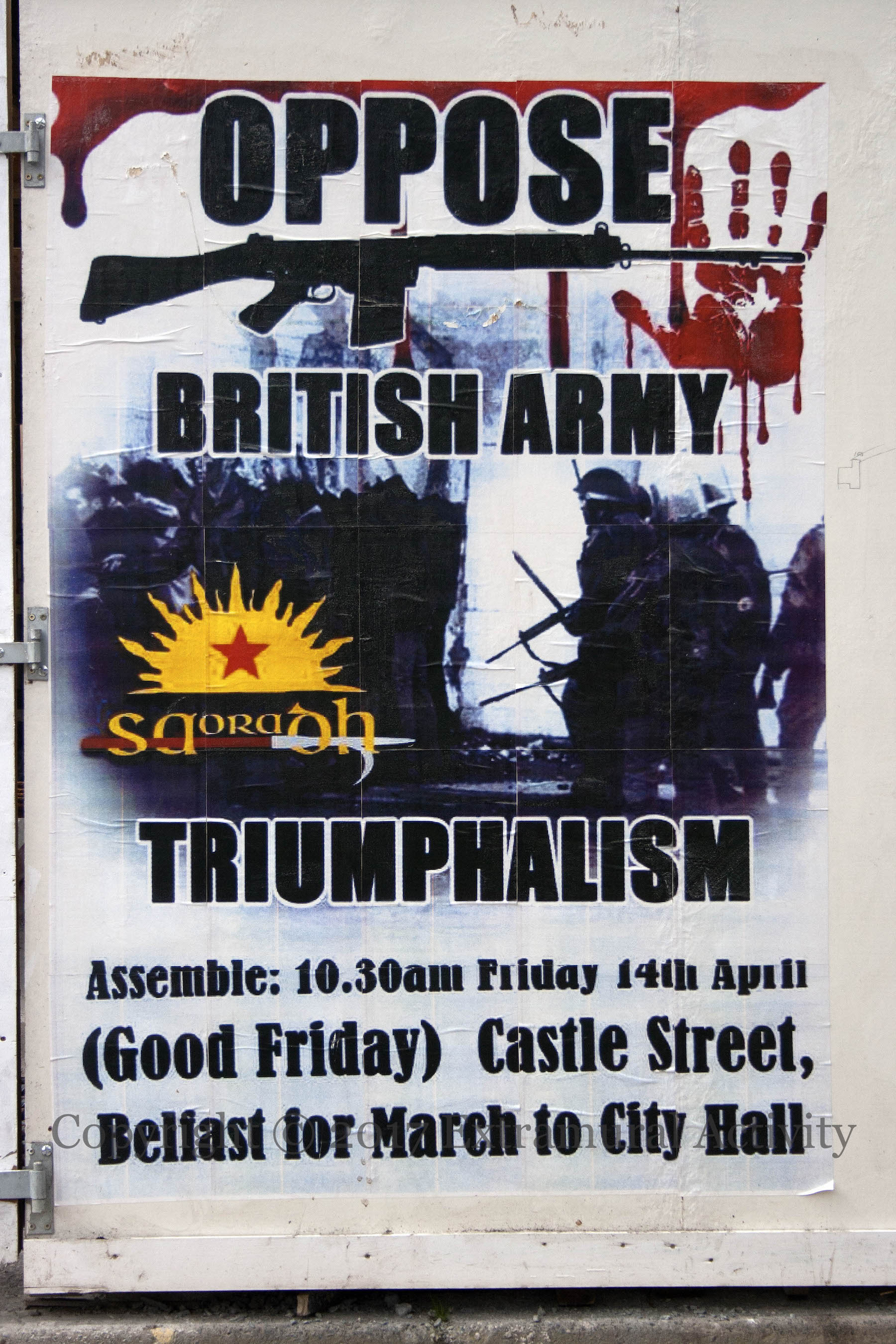
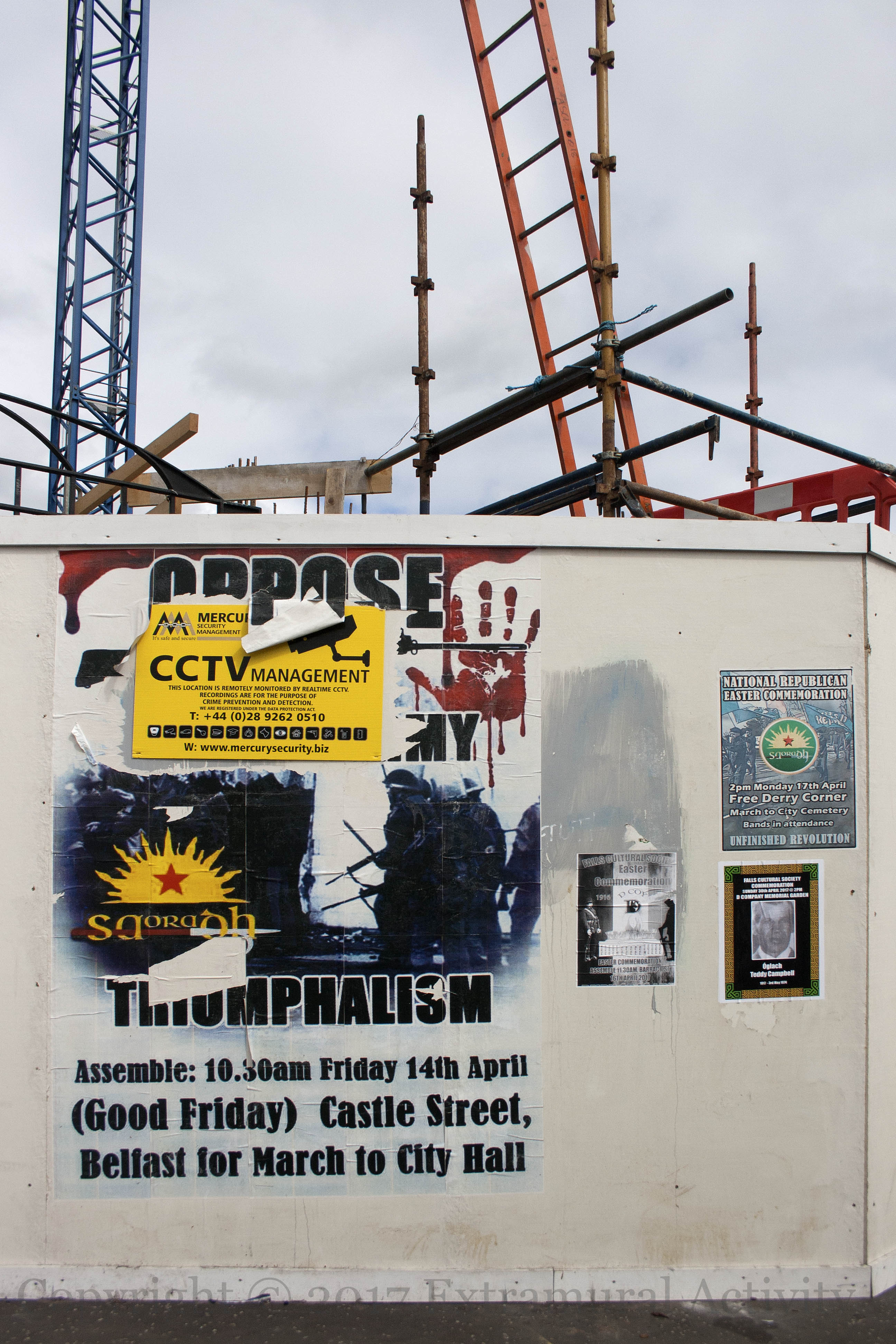
A variety of posters for marches in Easter week: on the 14th, Saoradh’s call for a counter-protest to the march by former soldiers against prosecutions for deaths during the Troubles (see e.g. Irish News); on the 16th, an Easter Rising commemorative march, somehow associated with the IRA’s D Company; on the 17th (see the final image, below), an Easter Rising commemoration in Derry, organised by Saoradh (and on the 30th – also in the final image below – a commemoration for “Óglach Teddy Campbell”).
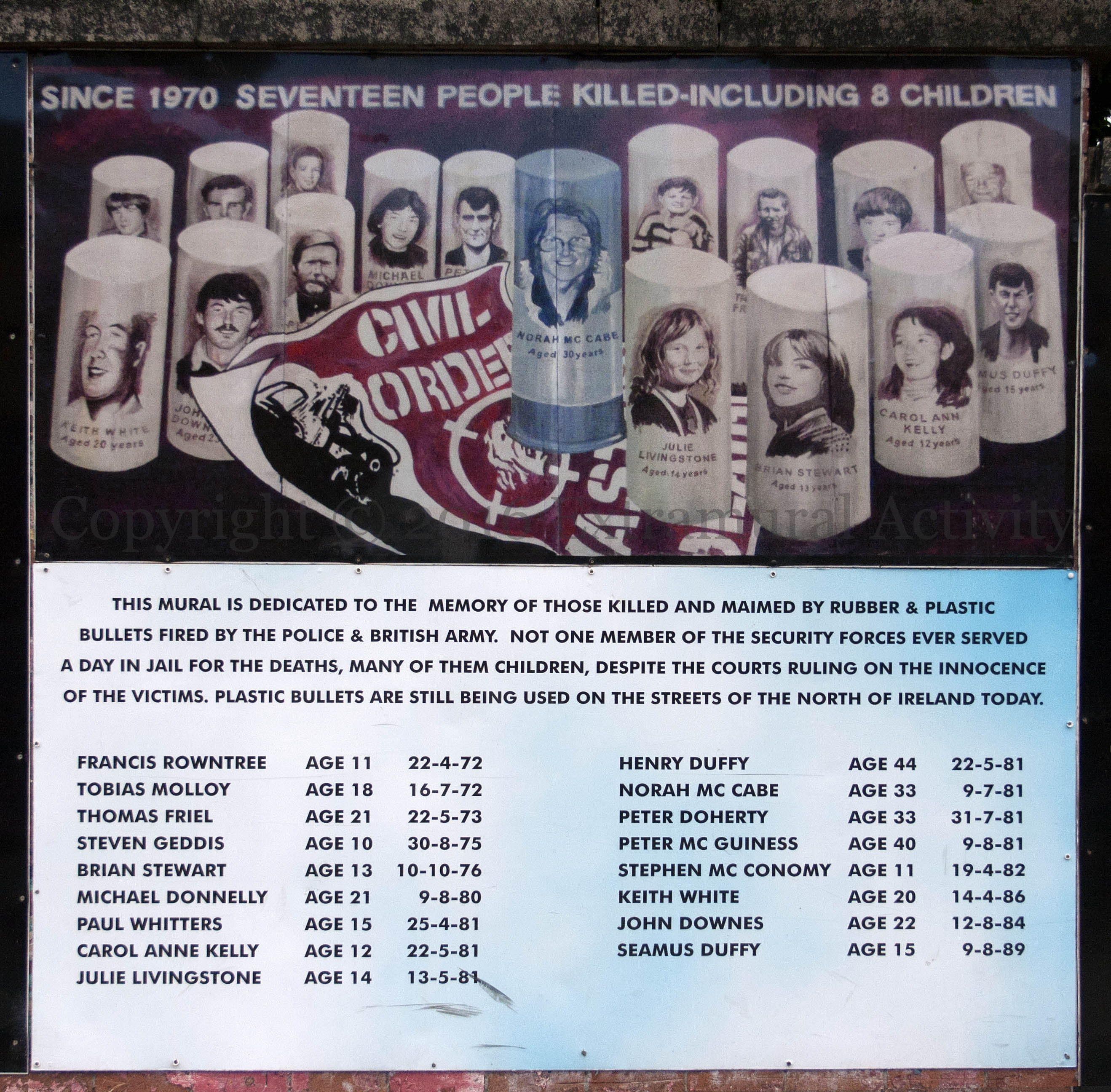
“Since 1970 seventeen people killed – including eight children”. A vintage poster against plastic bullets (see also Plastic Death in the Peter Moloney Collection for a mural) is part of this Beechmount Avenue mural showing a candle for each of the victims. The first listed (Rowntree, Molloy, Friel) were killed by rubber bullets, the rest by plastic; plastic bullets took over from rubber bullets in 1975 (WP).
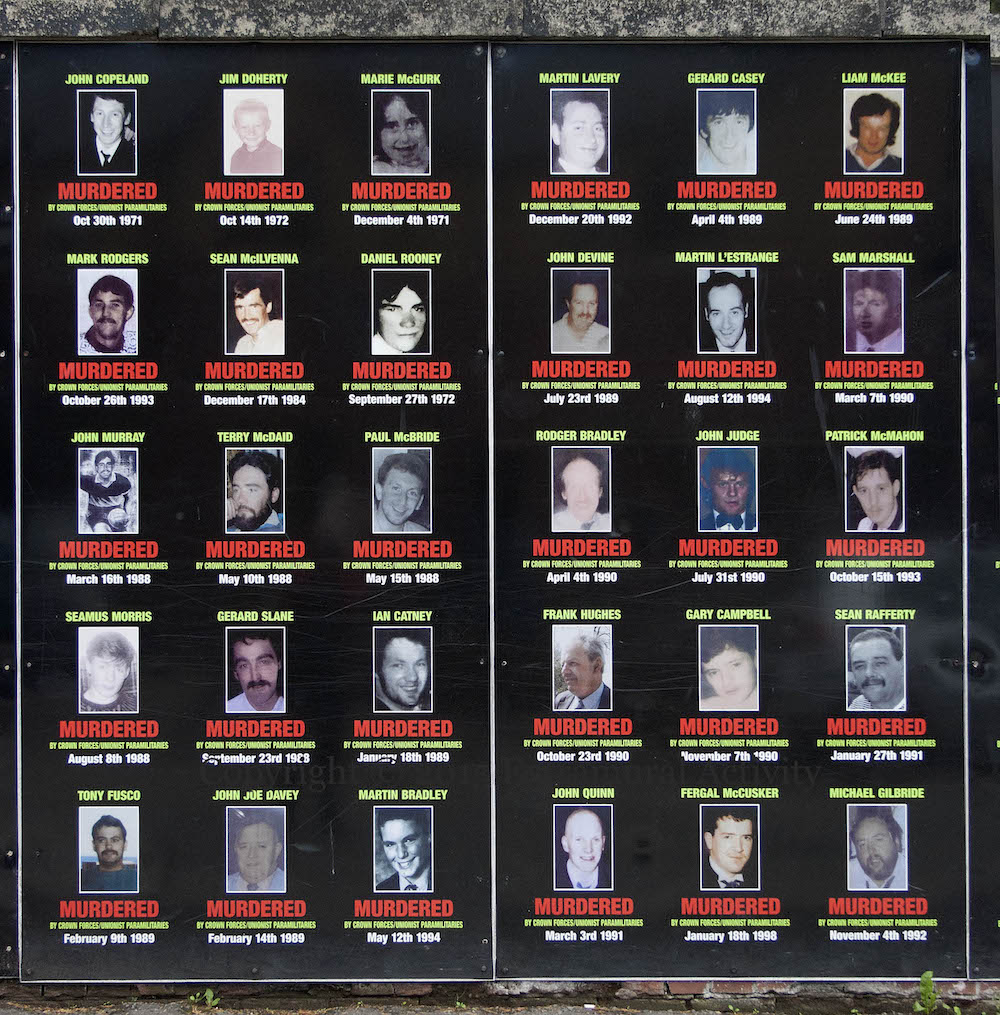
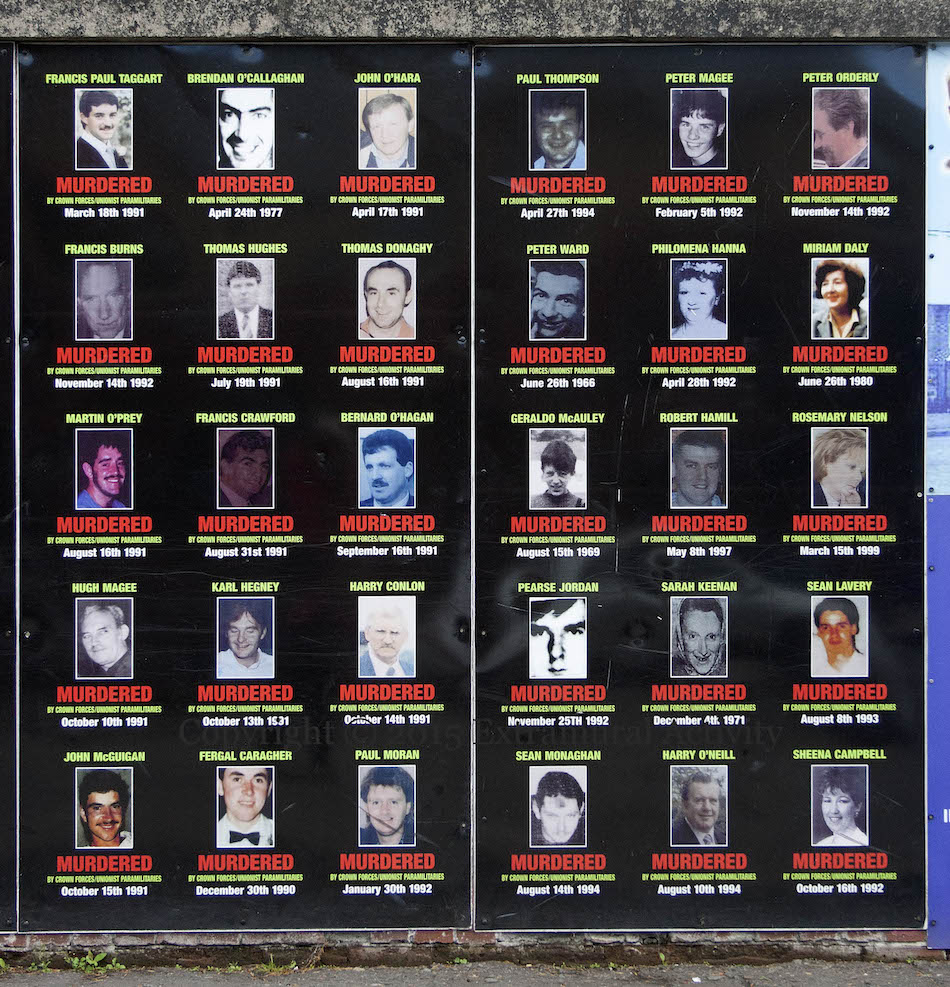
Panels 10-15 of the ‘murdered’ follow to the right of the Plastic Bullets board, here presented two-at-a-time. The 11th panel (the second one shown here, with Francis Bradley in top left) was previously the ninth panel; it is not clear why its position was swapped.
A mural of HMS Belfast “Built in Belfast” being launched on March 17, 1938, next to a fake storefront for “B&M Electricals”, with a Billy Graham hoarding above: “What if you got everything you wanted and it wasn’t enough?”, echoing the mural’s Latin inscription, the motto of Belfast city: What shall we give in return for so much?
“Richard Mussen joined the Royal Inniskilling Fusiliers (27th foot) at the age of 15. At the outbreak of the Zulu wars he volunteered for active service and was transferred to the Second Battalion The South Wales Borderers (24th foot). At the outbreak of the Great War he joined the 9th Battalion Royal Ulster Rifles and with him went his 4 sons and 2 sons-in-law. His son Richard (junior) was killed at the Somme on Thursday 21st March, 1918 and is remembered at Pozieres Memorial. Richard Mussen was buried from 22 Dundee Street [which was just above Agnes Street] on 29/12/1936 and was accorded full Military Honours. He was laid to rest in Belfast City Cemetery.” (From the plaque shown in image #3, below.)
Here is a short NVTv documentary about Mussen, including (at 12m25s) the image on which the mural shown here is based. The mural was done with spray paint by artist Sam Bates a.k.a. SMUG. It was unveiled on June 24th, 2011.
Seán Mac Dıarmada was born in Leitrim, left for Glasgow at age 15, but after two years returned to Belfast in 1905 (working on the trams) and – according to the new mural above – spoke from the back of a coal lorry in Clonard Street, outside the Clonard branch of the Ancient Order Of Hibernians. Mac Dıarmada was for a short time an AOH member, before moving on to the Irish Republican Brotherhood and Irish Volunteers, which led to his participation in the 1916 Easter Rising and execution on May 12th of that year.
The title of today’s post is historian F.X. Martin’s assessment of Mac Dıarmada, quoted in a pamphlet on Mac Dıarmada from the National Library Of Ireland, which includes reproductions of letters from and about Mac Dıarmada. The NLI made more letters available today (2016-02-08). (See also this Irish Times write-up).
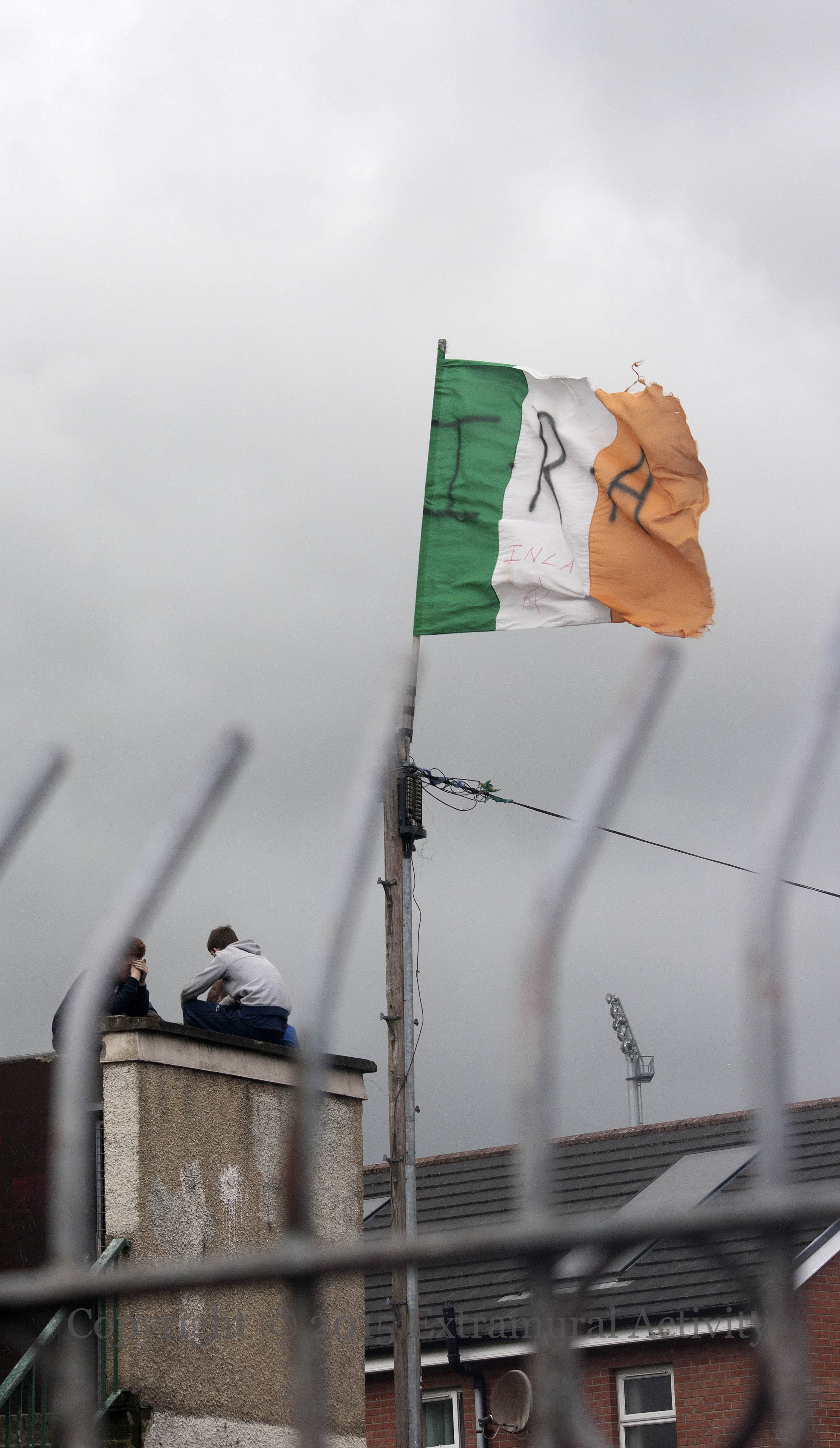
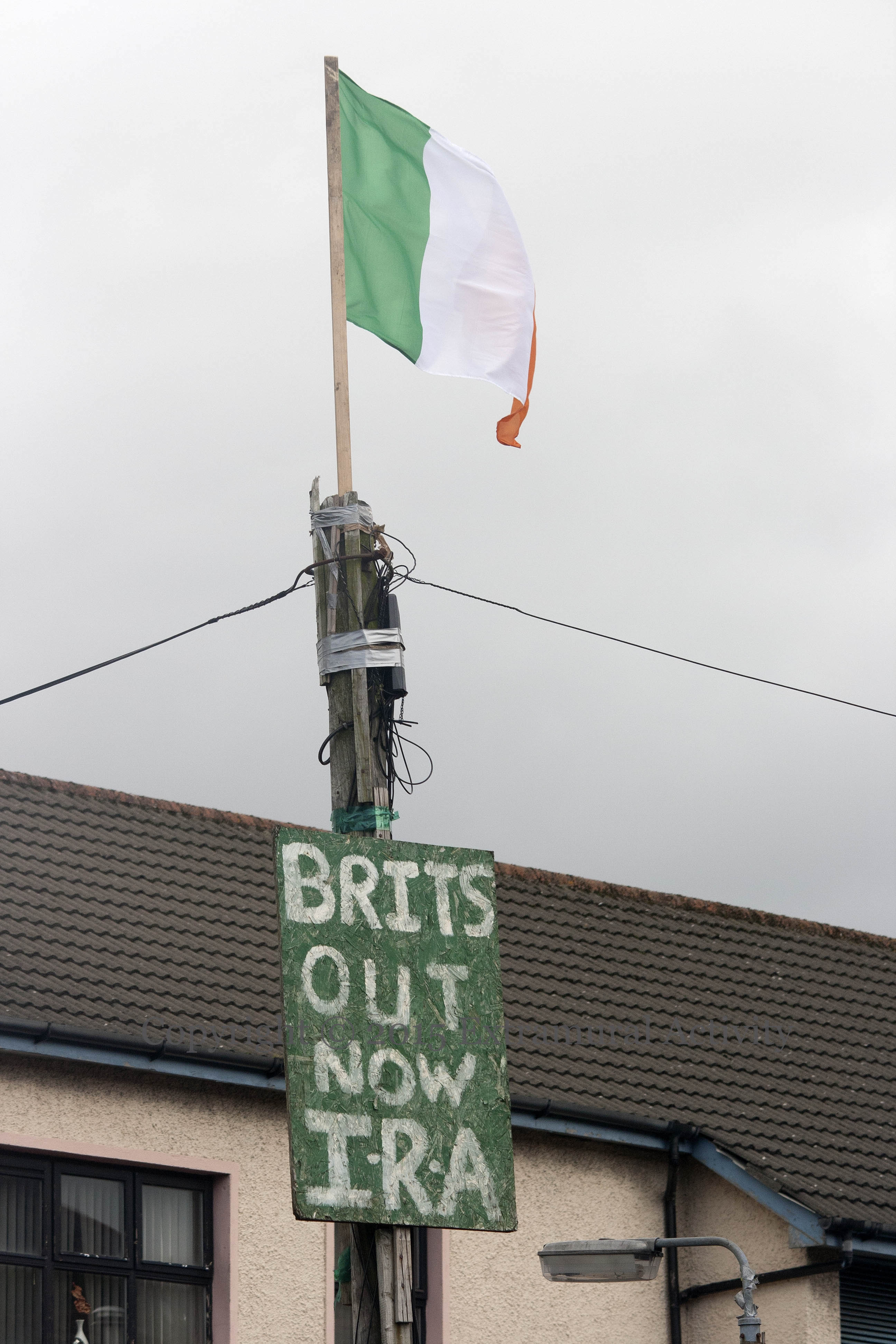
The crew whiles away the hours sitting atop a Bogside stairwell, with IRA-emblazoned tricolour fluttering overhead, keeping an eye on a heap of bonfire wood. Below: another tricolour in the same area, with “Brits out now – IRA” board beneath.






 Extramural Activity