The Campsie Club (of Londonderry) is the youngest of the eight parent clubs of the Apprentice Boys “founded 1950” and is the only one named after one of the apprentice boys who shut the gates against the forces of James II in 1688 – Henry Campsie (web).
This Irish Street board puts the “Bro. Scott Goligher Memorial, Londonderry, Loyal Orange Lodge No. 461” (history of the lodge at Grand City Lodge) and the Campsie Club on either side of the “Protestant Boys flute band” (Fb).
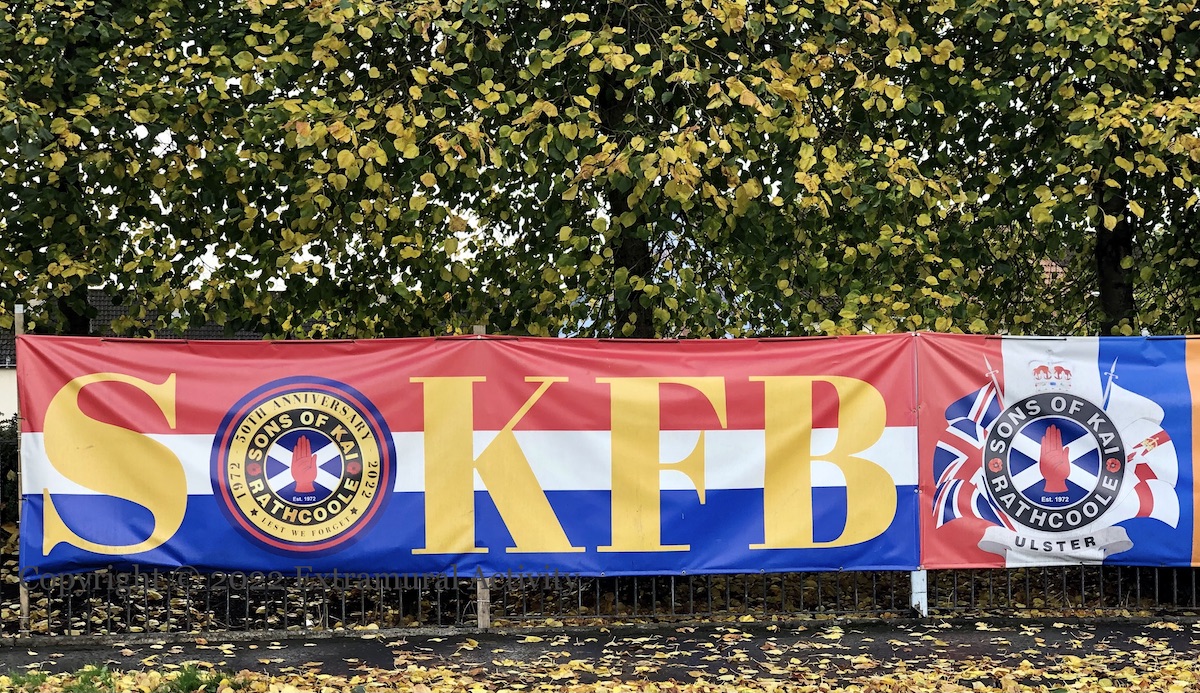
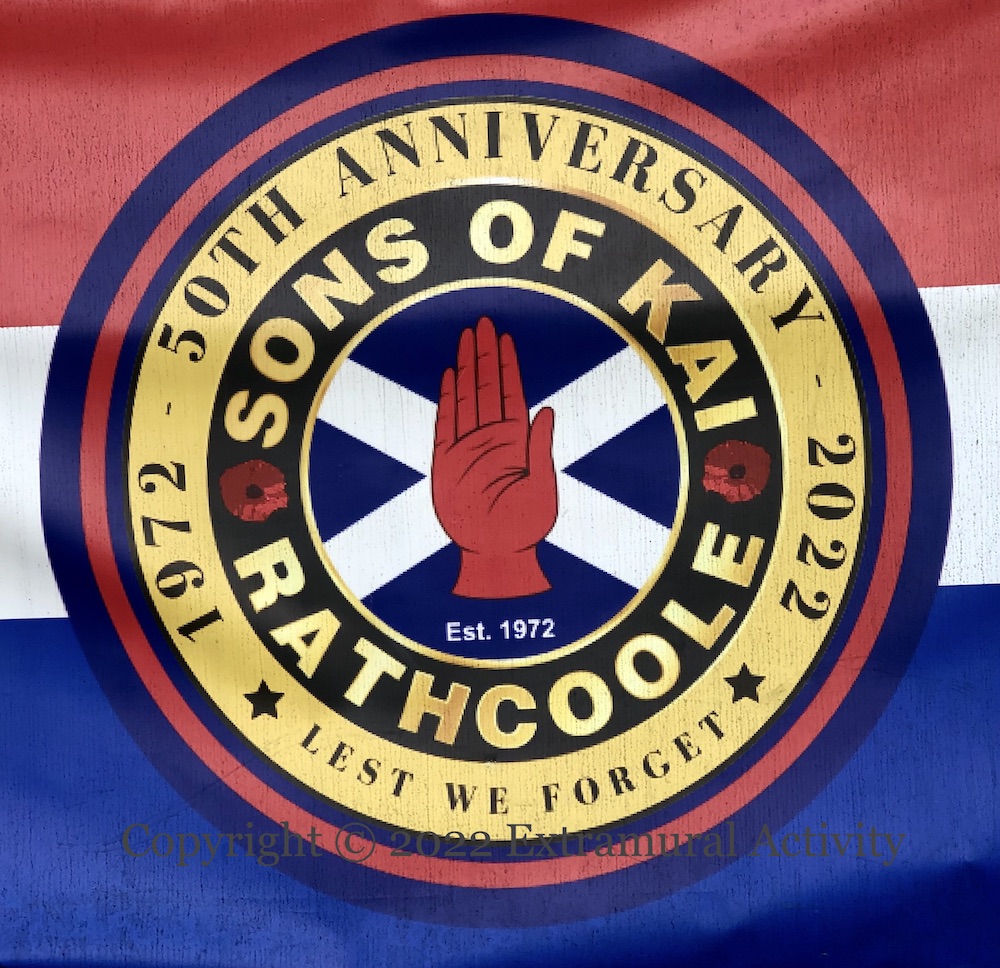
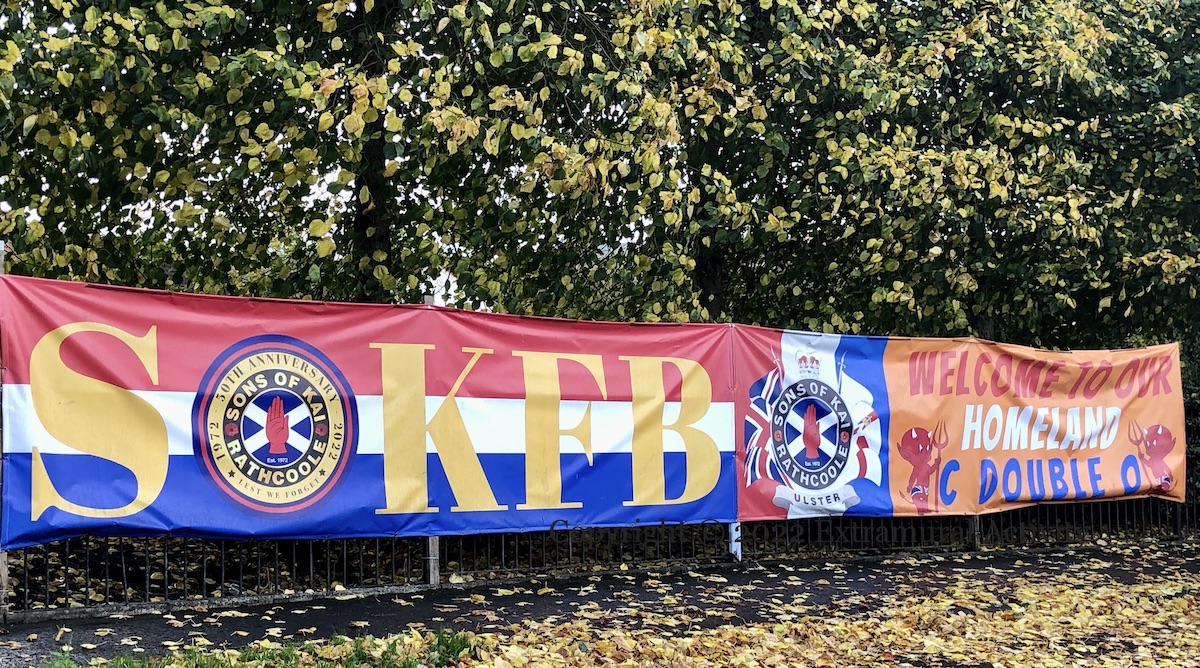
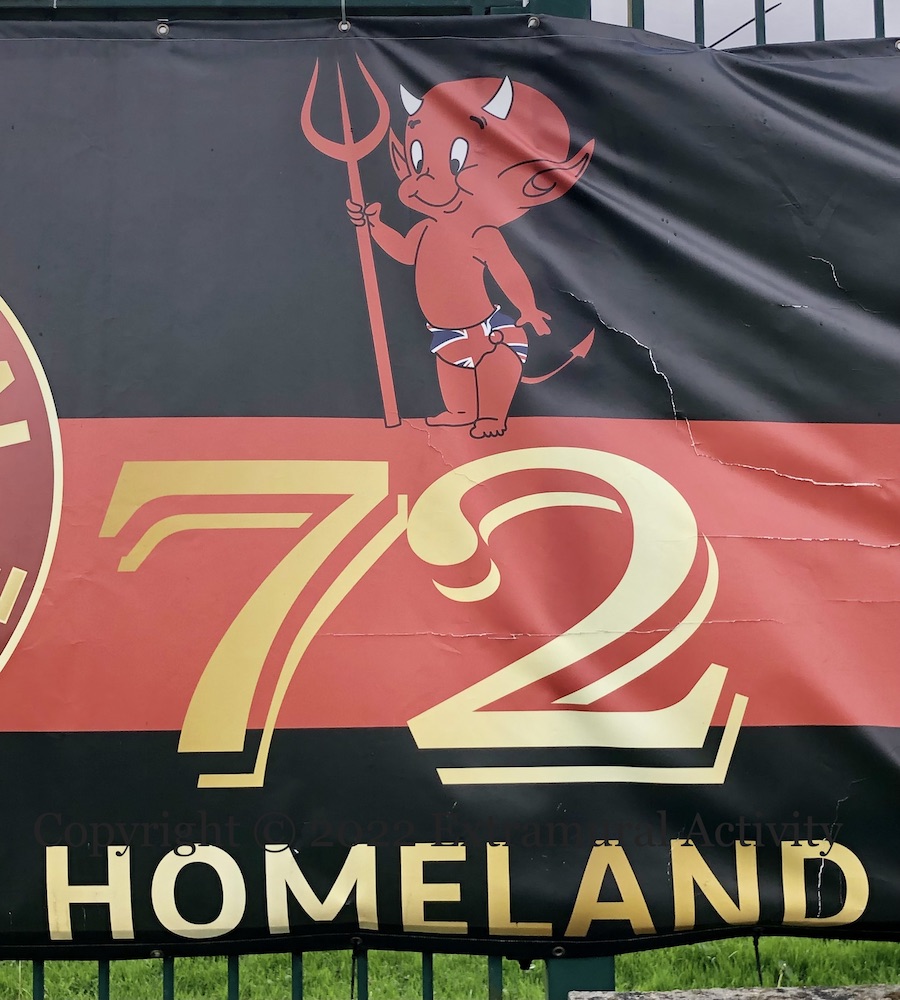
Here are two Sons Of Kai tarps in “the C-double-O” (Rathcoole), celebrating fifty years of the flute band. For the controversy over the name (and date of formation) see The Famous.
In the background of one of the wide shots can be seen (the latest version of) the Marky Quail mural.
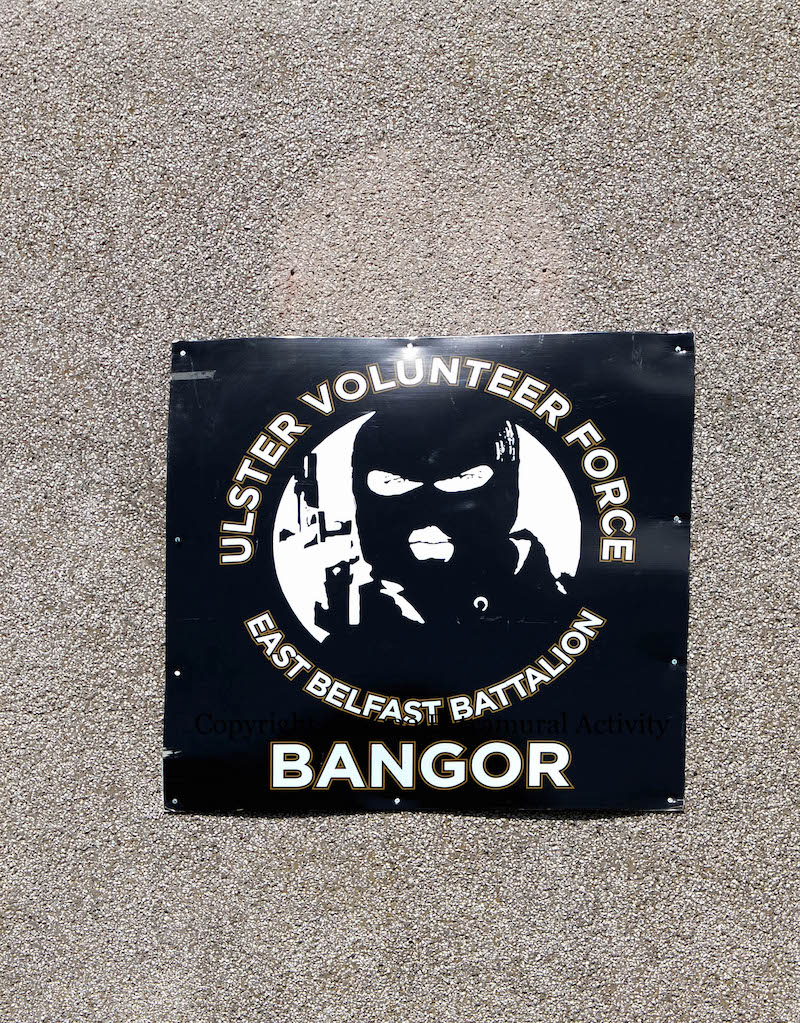
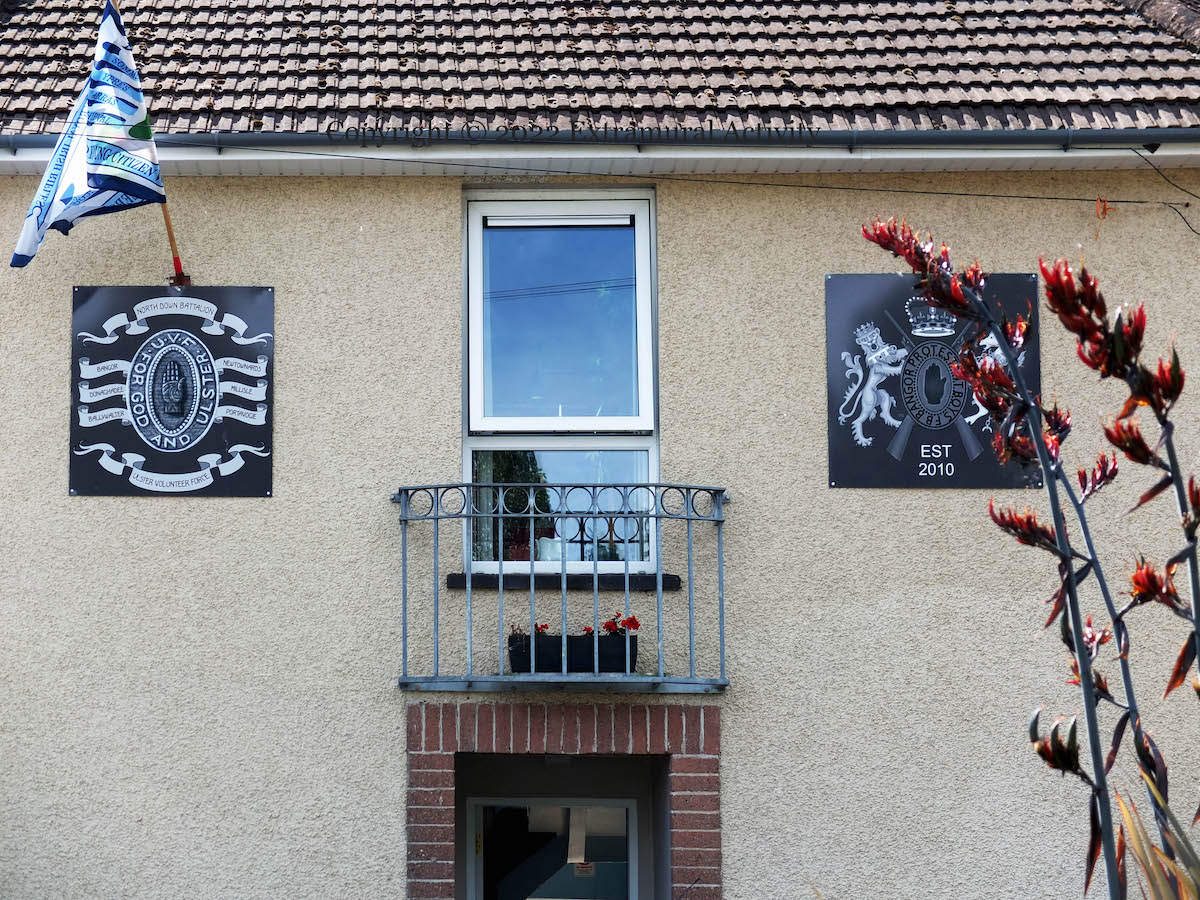
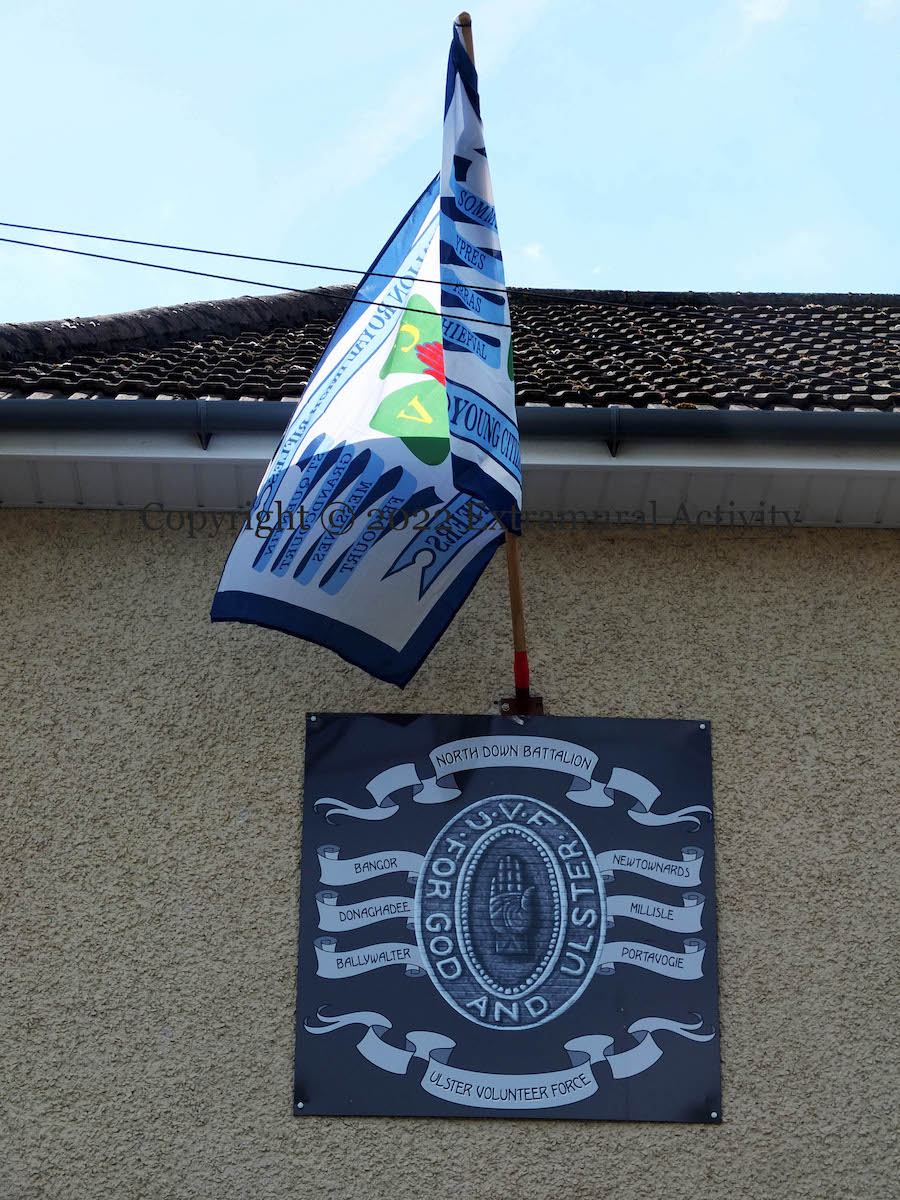
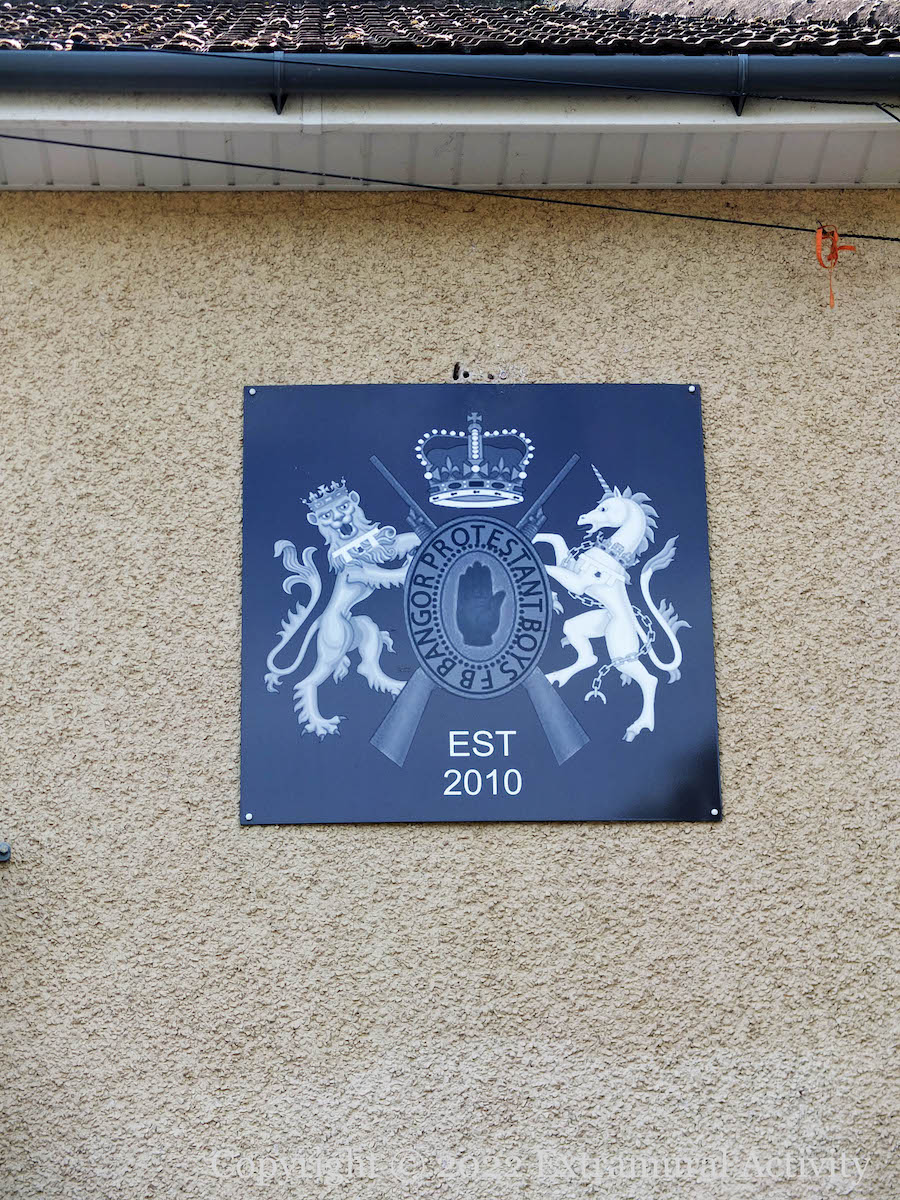
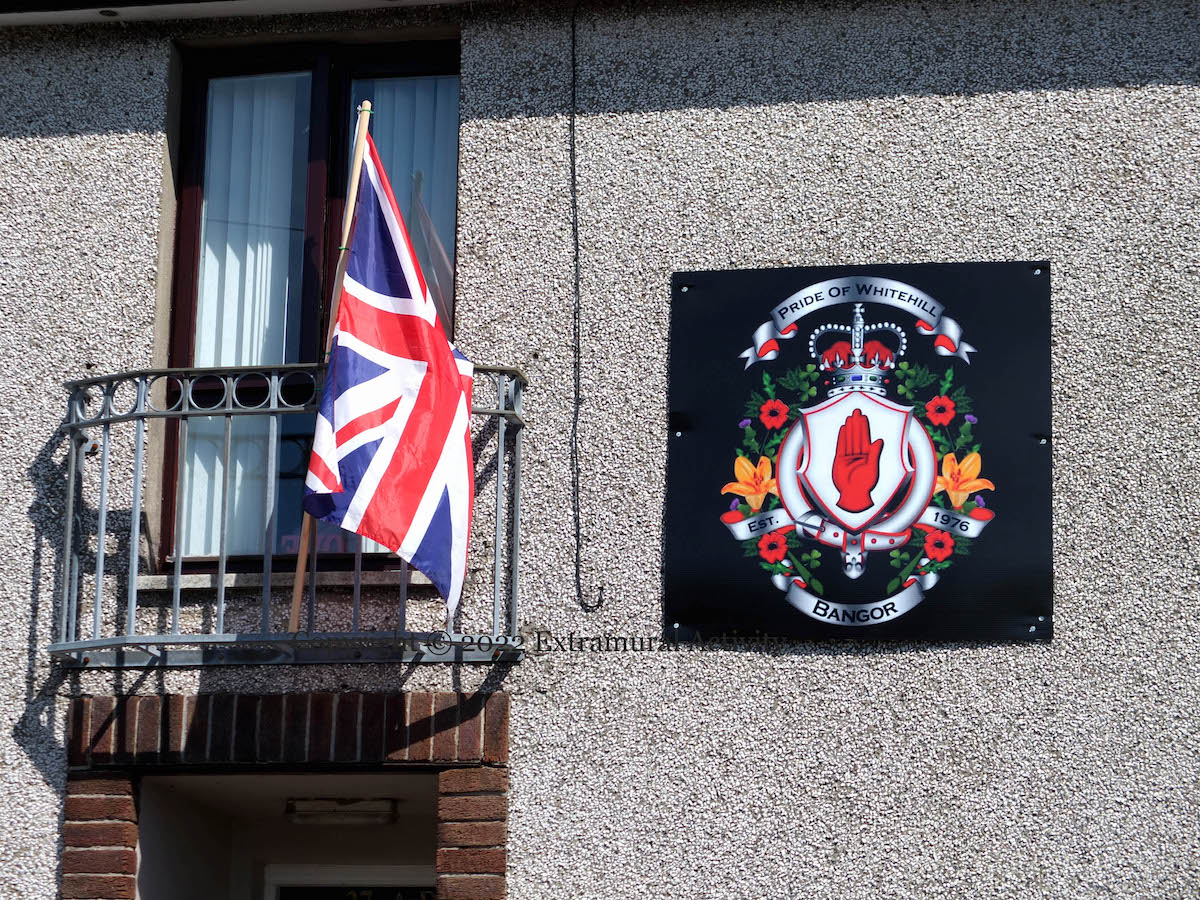
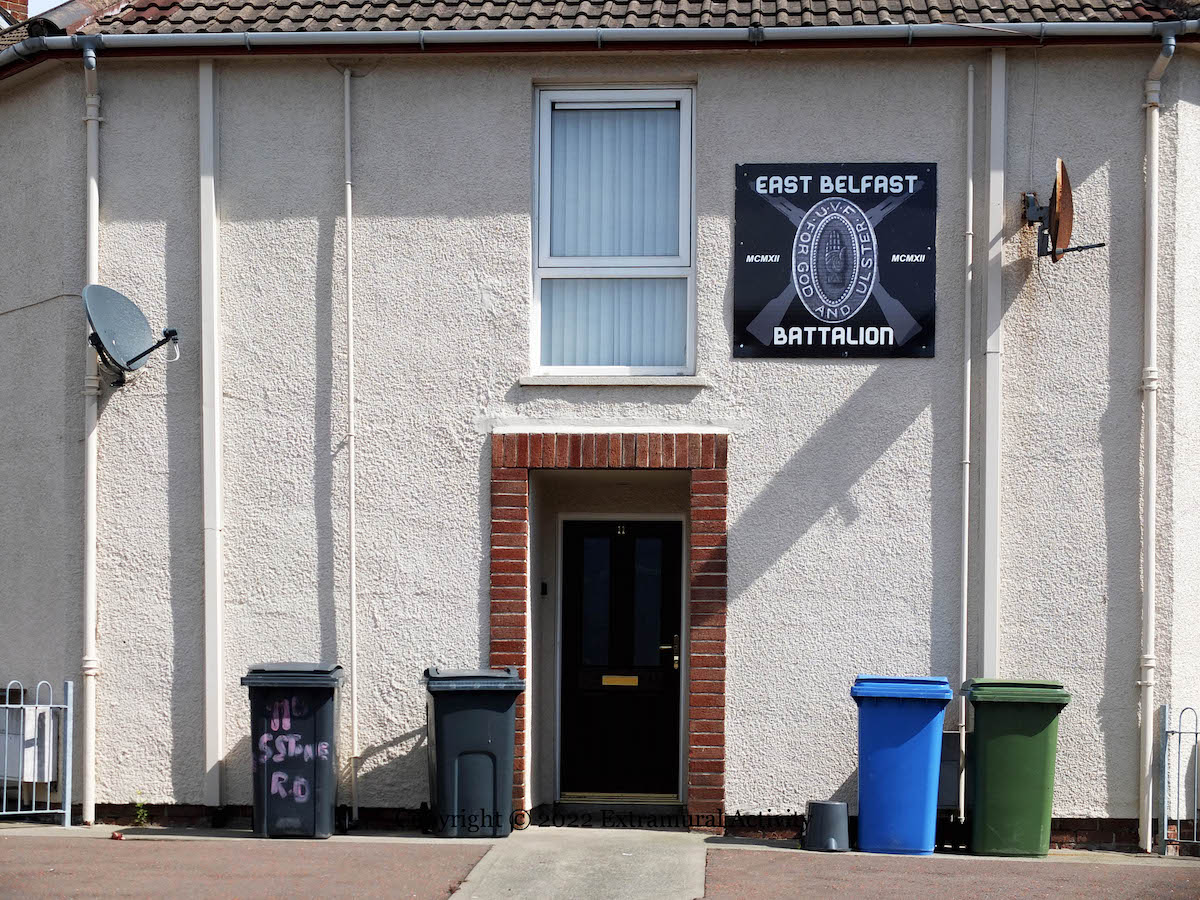
Here is a selection of UVF boards on the fronts of houses in Whitehill (Bangor). Two flute bands are mentioned: Pride Of Whitehill (Fb) and Bangor Protestant Boys (Fb). In the final image, the date of the formation of the Ulster Volunteers is given in Roman numerals: MCMXII.
The twelve “Gertrude Street Great War Fatalities” are: Robert Harvey; William Duff; James Fagan; Alexander Leckey; George McCune; Hugh Nabney; William Nabney; Matthew Scott; Robert C. Skillen; James Watson; Samuel Wright; James Burns.
This board was originally next to the To France And Flanders mural on the adjacent wall; the mural also named these twelve but which only lasted a year. That mural depicted the damaged basilica tower in the village of Albert and there is a similar mural in the village itself – a photograph of the mural and the rebuilt tower can be seen in the top right of the board; the mural can be seen in full here.
As the map in the top left shows, Gertrude Street was where Wolff Close now is, running north from the Newtownards Road; the original Gertrude Star mural (circa 1989) was on the first gable of what is now called “Freedom Corner” – see D00388.
“‘The Legacy Of Gertrude Street. Twelve brave young men from Gertrude Street,/Bravely fought in world war one./They tried their best as legends do./But never returned back home.//They dragged through muddy trenches,/In the darkness of the night./But never once would they give up,/As they bravely continued to fight.//Each year these men will be honoured,/As we stand together taking time to reflect./It’s vital to show these heroes the uttermost respect.//For now they lie in Flanders fields,/Between crosses row by row./They lived, they fought for our country,/And gave their lives many years ago.//Forever we will speak of these men,/Who came from Gertrude Street./Their legacy will always live on,/When we think of their marching feet.’ By Angela McCully”
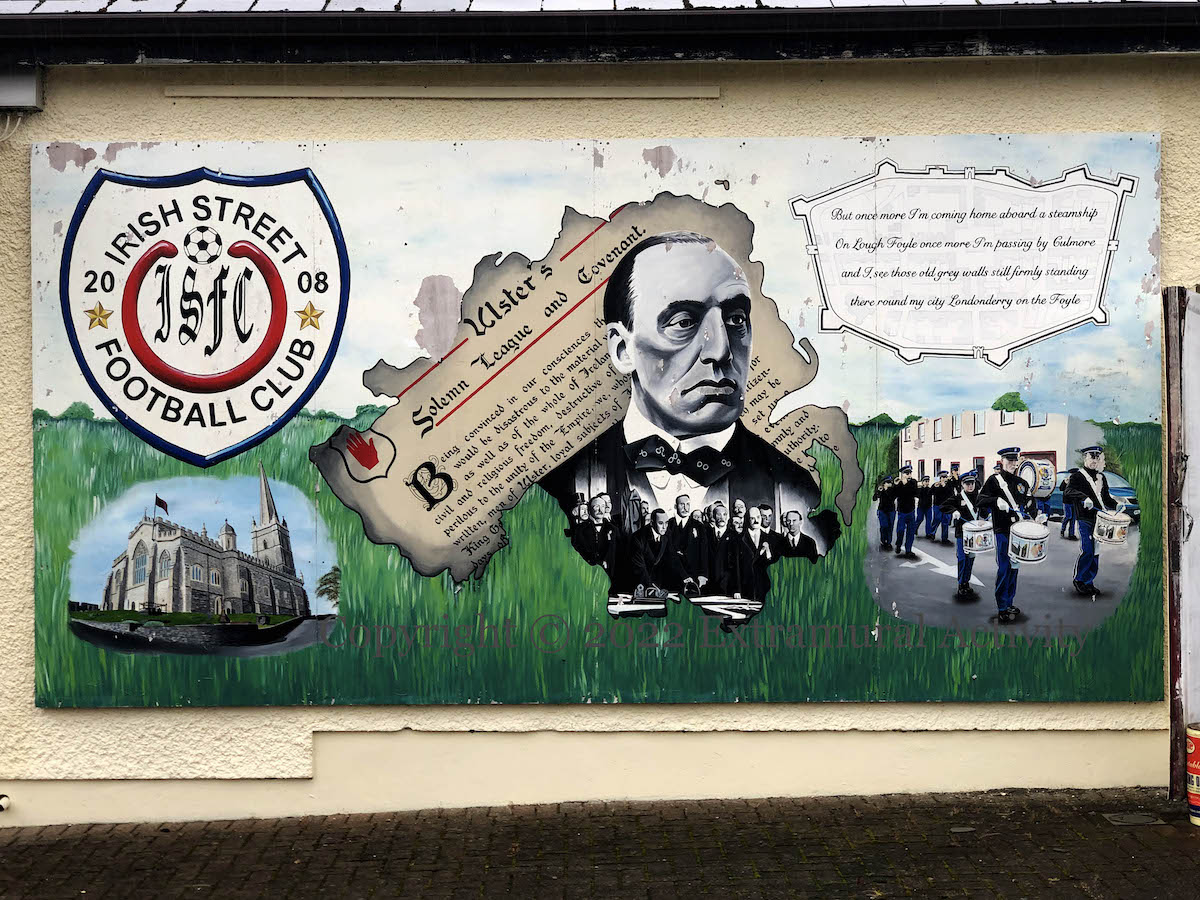
The sights and sounds of Irish Street and Londonderry: (clockwise from right) a verse from Londonderry On The Foyle (youtube) in a frame of the walls of the city of Derry – “But once more I’m coming home aboard a steamship/On Lough Foyle once more I’m passing by Culmore/And I see those old grey walls still firmly standing/There ’round my city Londonderry on the Foyle”; East Bank (Irish Street) Protestant Boys (Fb) on parade; Carson and the signing of the 1912 Covenant; St Columb’s Cathedral; Irish Street FC (Fb).
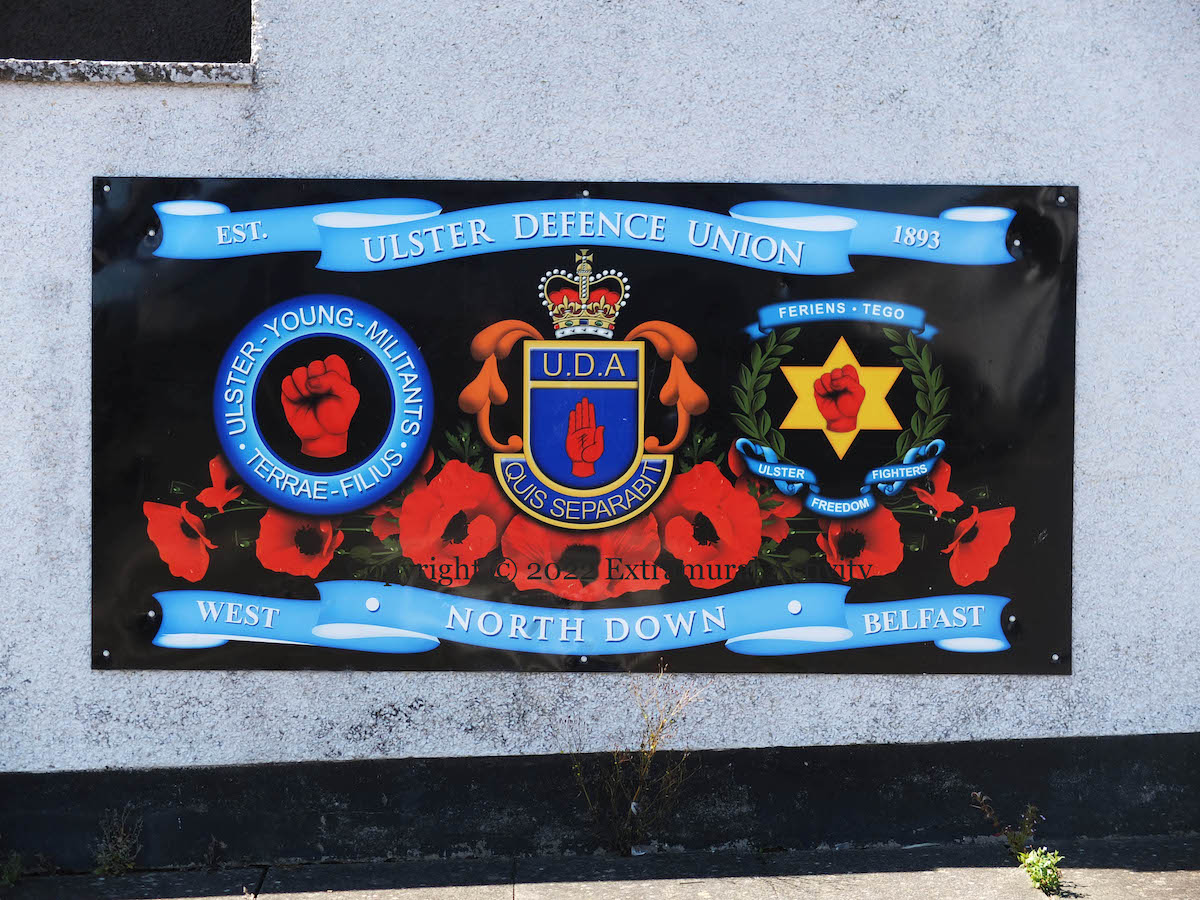
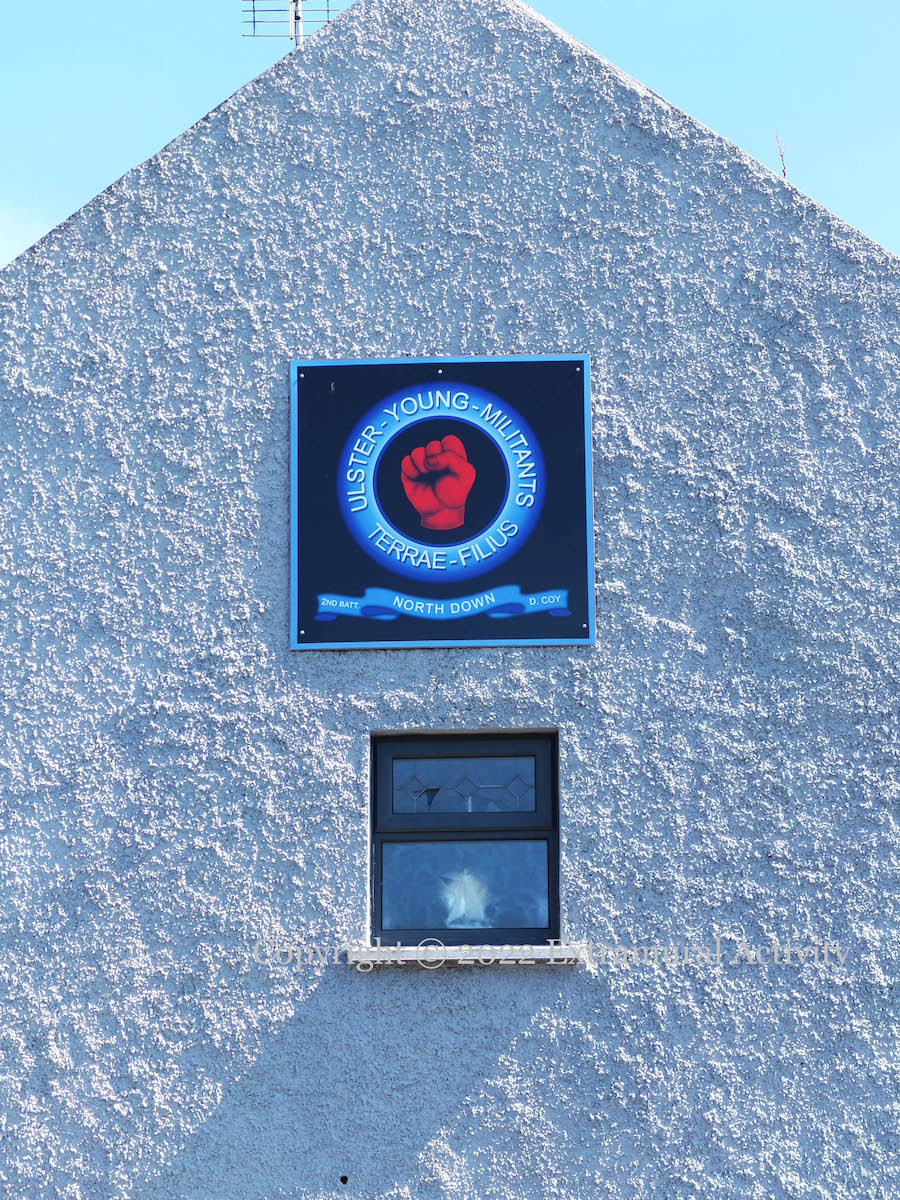
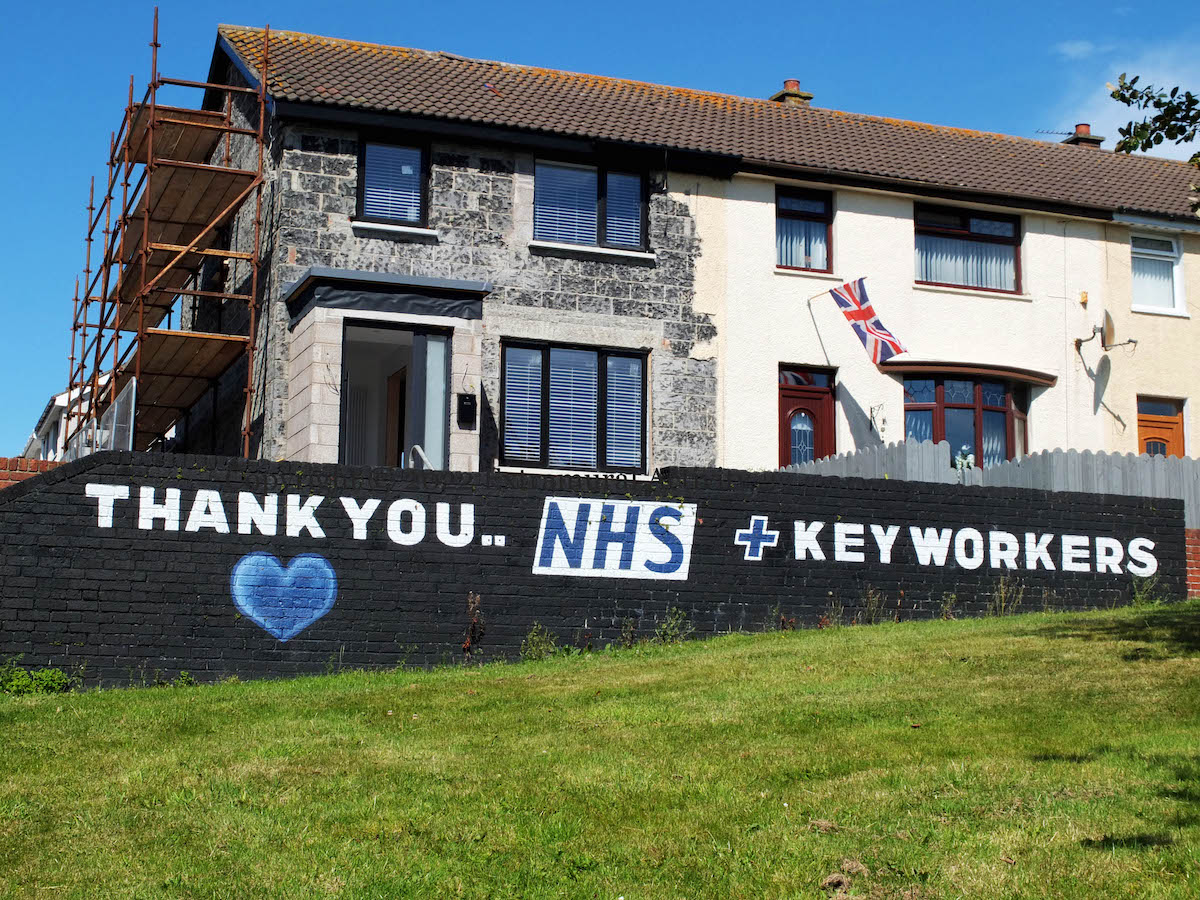
“Those we love don’t go away/They walk beside us every day”. The images in this post show Upper Greenwell Street in the Movilla of Newtownards, in the summer of 2022. The small boards are not new (see North Down West Belfast and North Down Ulster Young Militants) but the NHS/keyworkers and the North Down First Flute (Fb) murals have not been seen before.
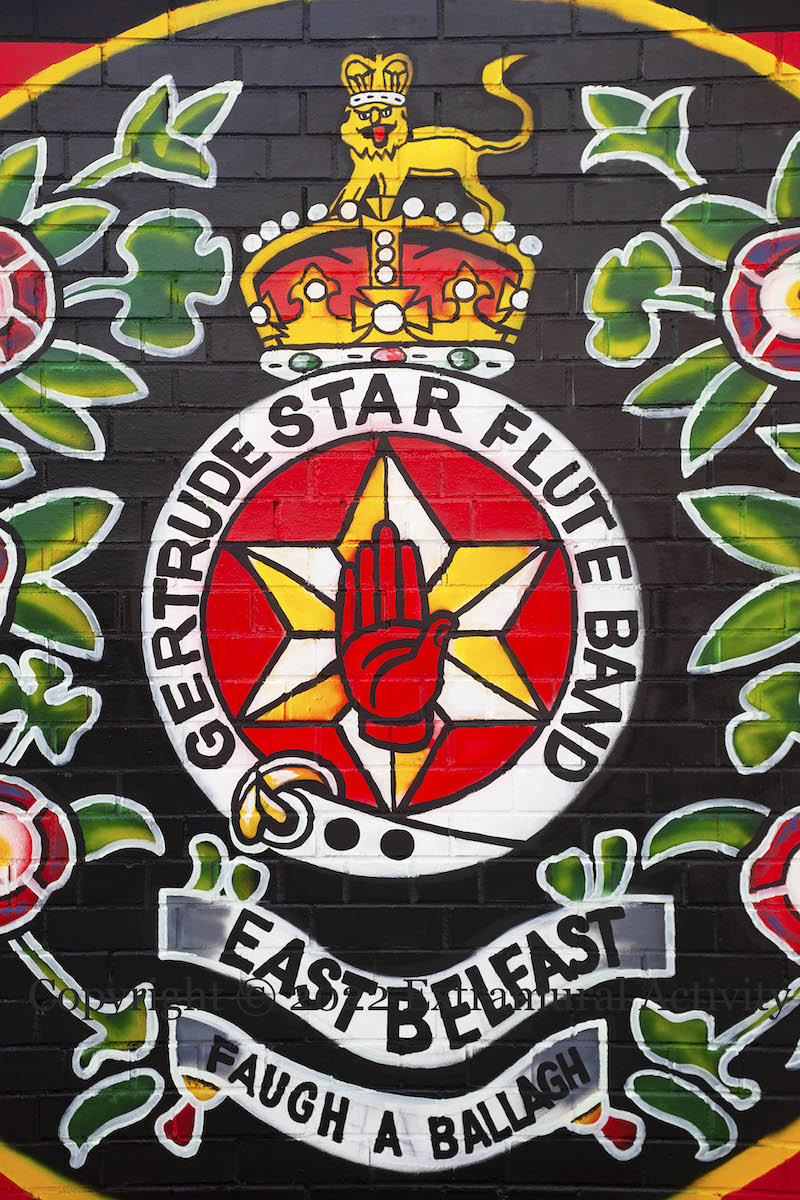
Gertrude Star flute band (Fb) celebrated its 60th anniversary in 2021 and to mark the occasion this (2022) May, the two side-walls were painted with the emblems above and immediately below. For the mural, which was painted for the 50th anniversary in 2011, M08166.
Sons Of Kai flute band (ig) re-formed in 2006 (youtube | Coin Talk) but here claims as its origin date “1972”. IWM gives the founding year as 1970, and quotes one of the founders, Bo Kerr, saying that the band was named after Danish soccer player Kai Johansen (WP), who played for Rangers from 1965-1970, and that the “tartan” gang (History Ireland) ‘Rathcoole KAI’ subsequently took its named from the band. Then (BelTel) and now (Irish News | Slugger) “KAI” is understood to stand for “Kill All Irish”. A 1982 image of the Rathcoole KAI “red devils” mural can be seen in the Ciaran McGowan collection at IWM.
[2024 update: the band’s foundation story is told in more detail in Kai Johansen’s Bar.]
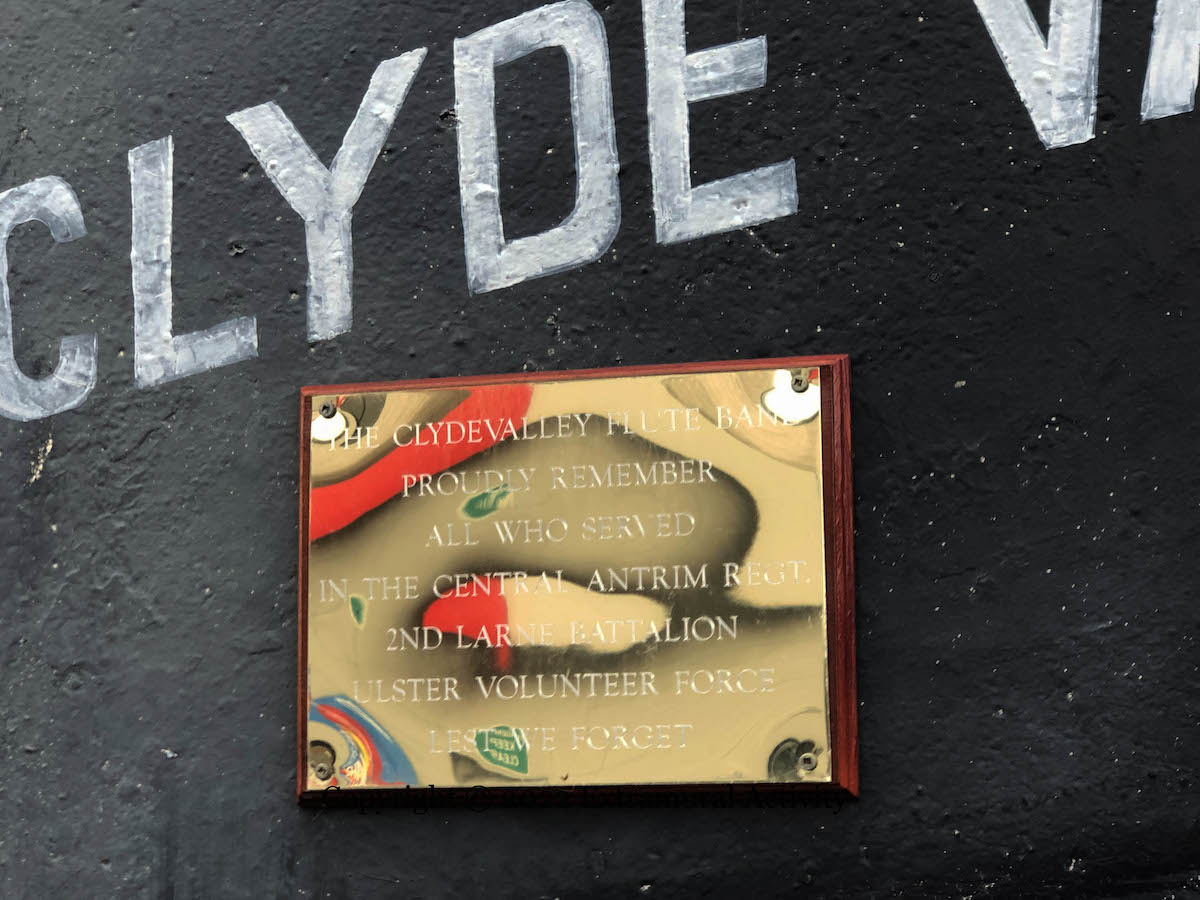
As this plaque in the Factory area of Larne indicates, the 2nd battalion of the Central Antrim regiment (of the Antrim division) of the Ulster Volunteers was drawn from Larne. Edward Carson reviewed the entire regiment at Drumalis in Larne on July 11th, 1914, (here is a postcard depicting the review) where he was presented with the colours of the 2nd from a Lady Smiley of First Larne Presbyterian. (The colours of the 1st and 2nd battalions are included below; the colours of the 3rd (Carrickfergus) Battalion can be seen at Sam’s Flags.) In the Royal Irish Rifles of WWI, Central Antrim became the 12th battalion (War Time Memories Project); its members included Larne man Rifleman Robert King.
“The Clydevalley flute band [Fb] proudly remembers all who served in the [Antrim Division,] Central Antrim Regt, 2nd Larne Battalion, Ulster Volunteer Force. Lest we forget.”
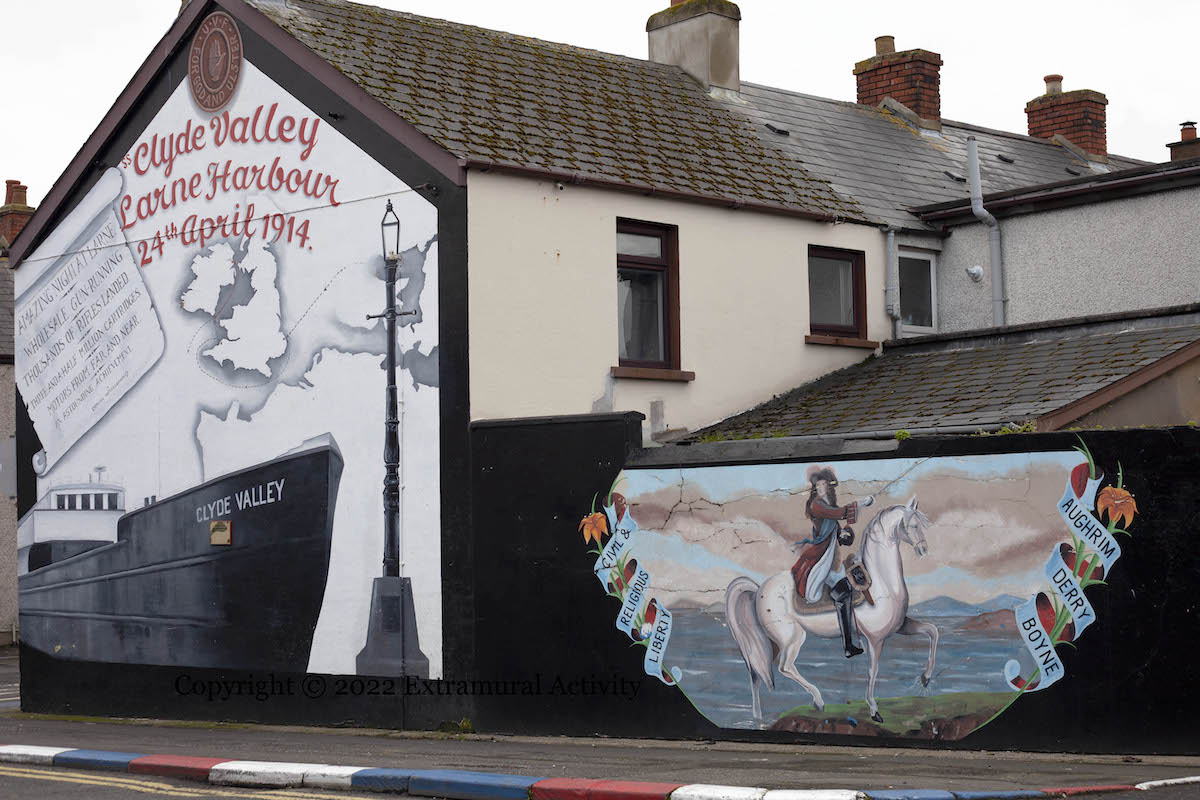
The plaque is on the gun-running mural and next to a King Billy mural in Greenland Drive. Both murals were seen previously in 2016; see Amazing Night At Larne and Civil & Religious Liberty.
The orange lily and the (pale blue) flax flower take their place around the Ulster Banner alongside the English rose and Scottish thistle, and the Irish shamrock is retained even in the presence of the lily. The flax is perhaps included because we are in the Factory area of Larne, near the site of a (former) linen mill. The Welsh daffodil is excluded. The detail above is part of a wider board “Boyne Square celebrates 100 years of Northern Ireland”; the flanking emblems of the Boyne Defenders (LOL 1297), Rangers Supporters club (Larne Branch) – which also uses the shamrock – Boyne Square Bonfire Forum, and Larne & District Great War Society and included below; the emblems of three flute bands can be seen in Norman Anderson and The Gunrunners.