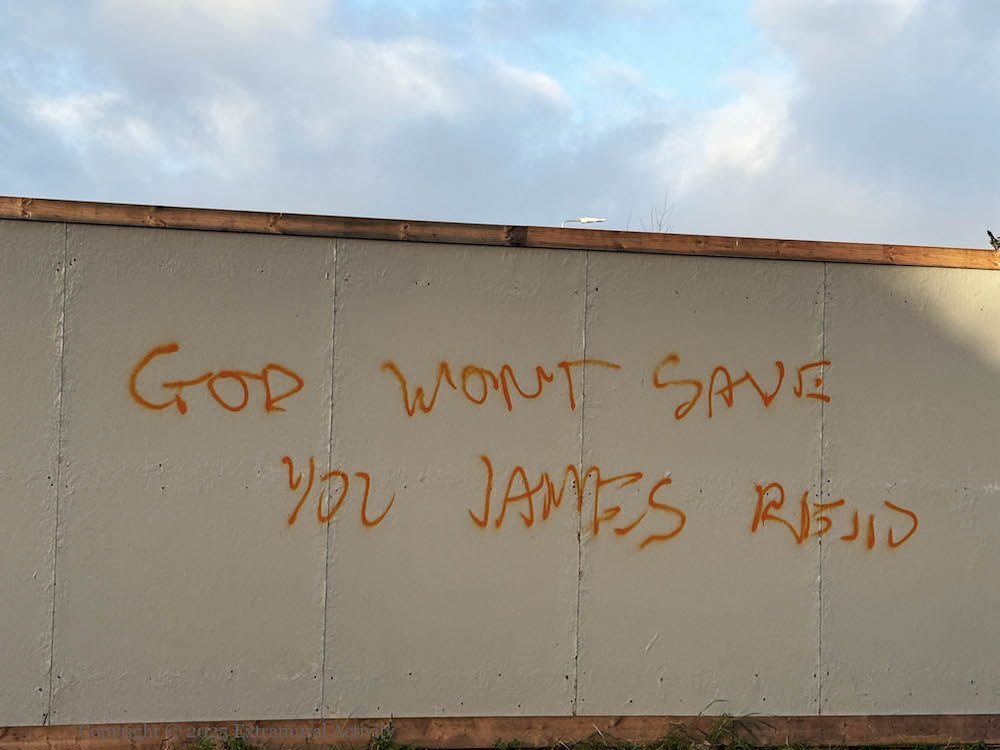
The UVF’s James Reid was arrested in 2022 (Crime World) and is currently awaiting trial on charges of blackmail and cocaine possession and distribution. His attempt to have the charges thrown out was rejected at the start of February (BelTel).
These graffiti are on North Boundary Street (in the lower Shankill, west Belfast) and the Ballysillan Road (north Belfast).
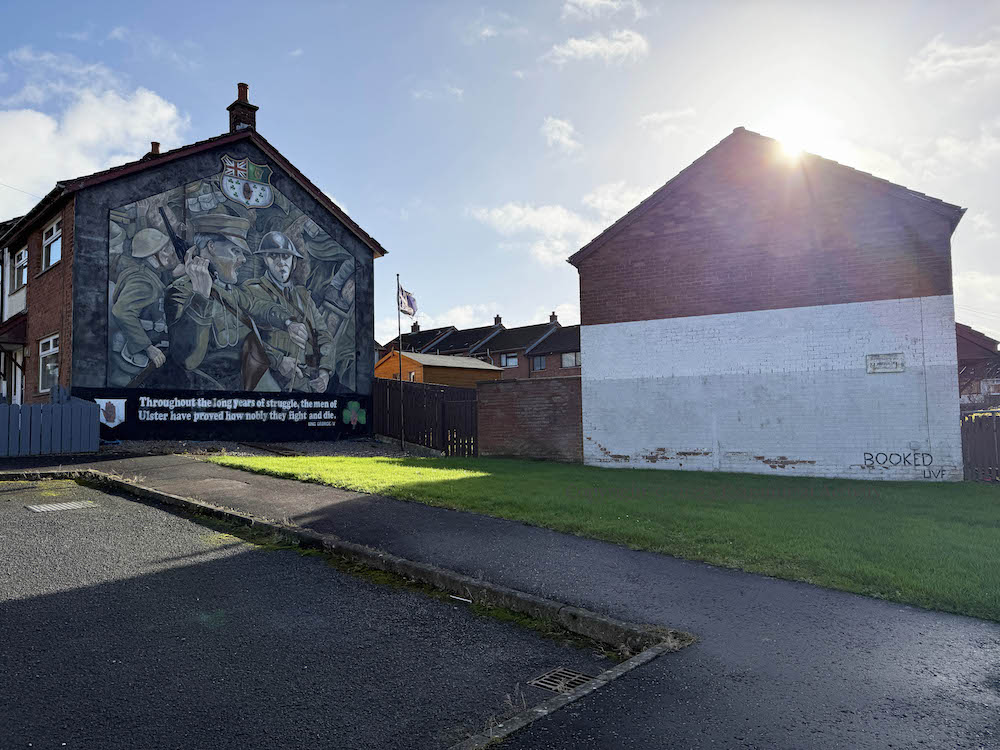
Here are a pair of ‘booked’ notices for competing loyalist groups – UDA and UVF – on adjacent walls in Queen’s Parade, Glengormley. Above, “Booked UDA” where the panels of The Longest Reign have come down; this wall is next to South East Antrim Remembers – see the wide shot below. And in the last two images, “Booked UVF”, which has been in place since 2015, and is next to How Nobly They Fight And Die.
The UVF mural overlooking the entrance to Mount Vernon has been repainted after Storm Darragh back in December (2024) knocked down part of the wall it was painted on (see Taken By Storm) and the remainder of the wall was subsequently knocked down (see Prepared For Space, Ready For Wall).
There were local voices against the repainting of the mural (Sunday World) but after the wall (which is owned by the Housing Executive) was rebuilt, scaffolding went up at the end of March (BelTel) and painting began in June.
The mural will be officially launched at the Twelfth celebrations. The repainting has been criticised by the father of one UVF victim (BelTel). One (very) small mercy is that neither of the gunmen – from the North Belfast UVF – is directly confronting the viewer (including the drivers coming off the M2 at Fortwilliam.
Images of the completed mural are from June 26th; the in-progress images are as dated below.
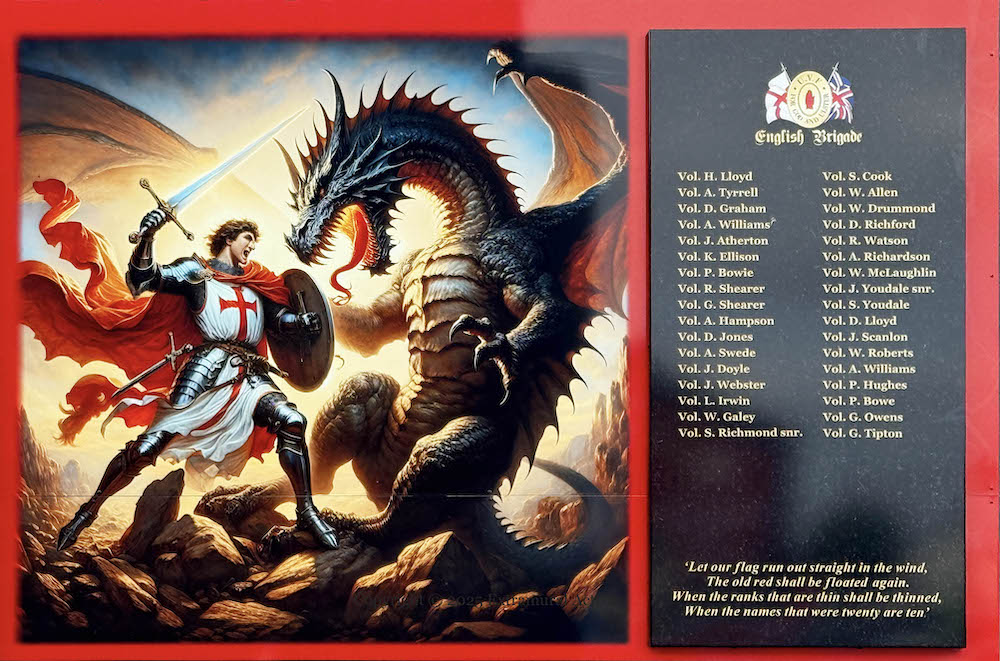
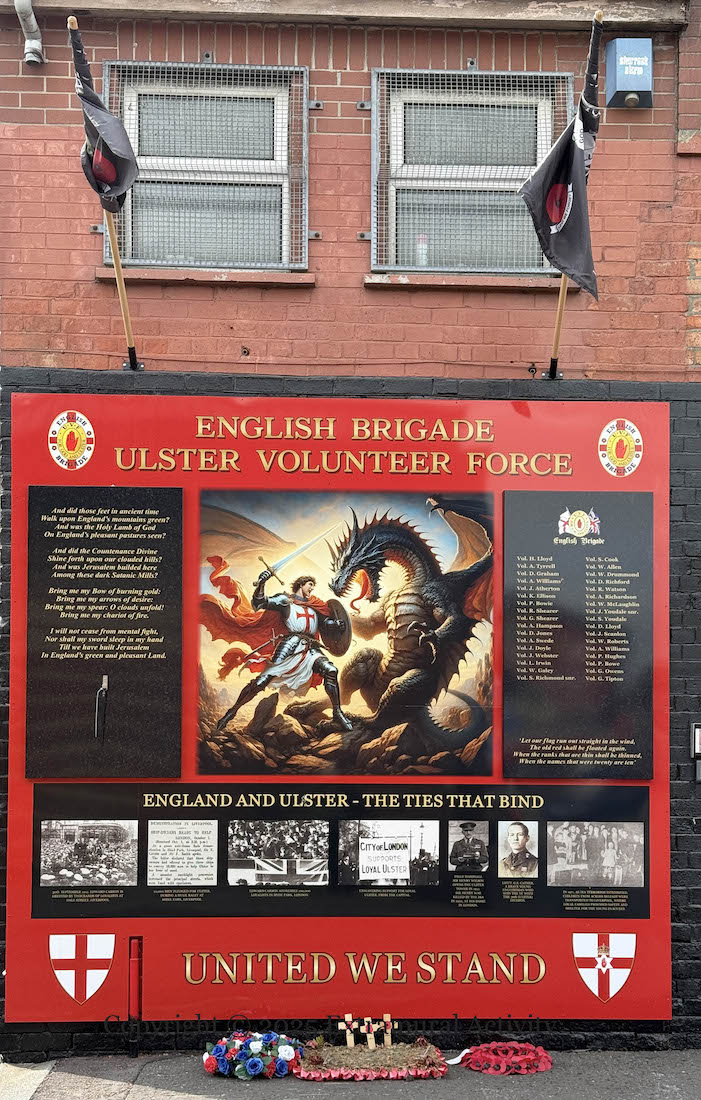
“English Brigade Ulster Volunteer Force.” “England and Ulster – the ties that bind.” “United we stand.”
“Let our flag run out straight in the wind/The old red shall be floated again./When the ranks that are thin shall be thinned/When the names that were twenty are ten.” [from Swinburne’s A Song In Time Of Order which was also used as a socialist song]
On the left are the words from William Blake’s poem, which also serve as the lyrics to the hymn Jerusalem.
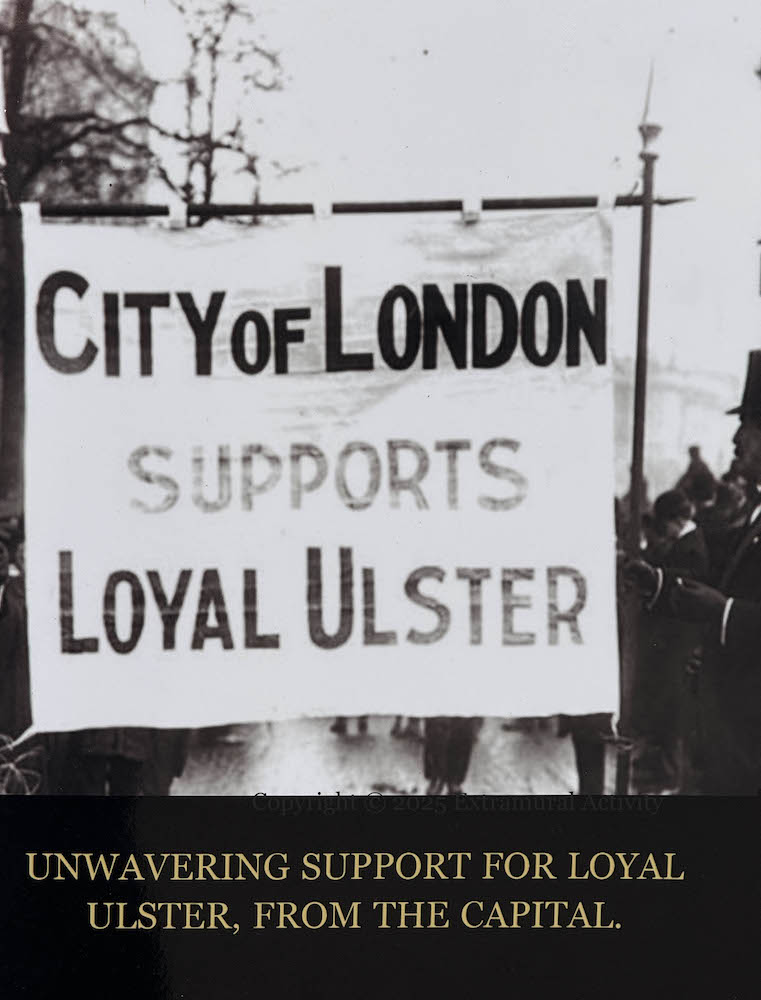
The images along the bottom illustrate the connection between Northern Ireland and England. From left to right: Edward Carson in Liverpool in 1912; 10,00 pledges from Liverpool men; Carson addressing 100,000 people in Hyde Park, London; a banner reading “City of London supports loyal Ulster”; “Field Marshall Sir Henry Wilson opens the Ulster Tower in 1921. Sir Henry was killed by the IRA in 1922 at his home in London”; GS Cather, VC winner with the Ulster Division; evacuees to Liverpool in 1973.
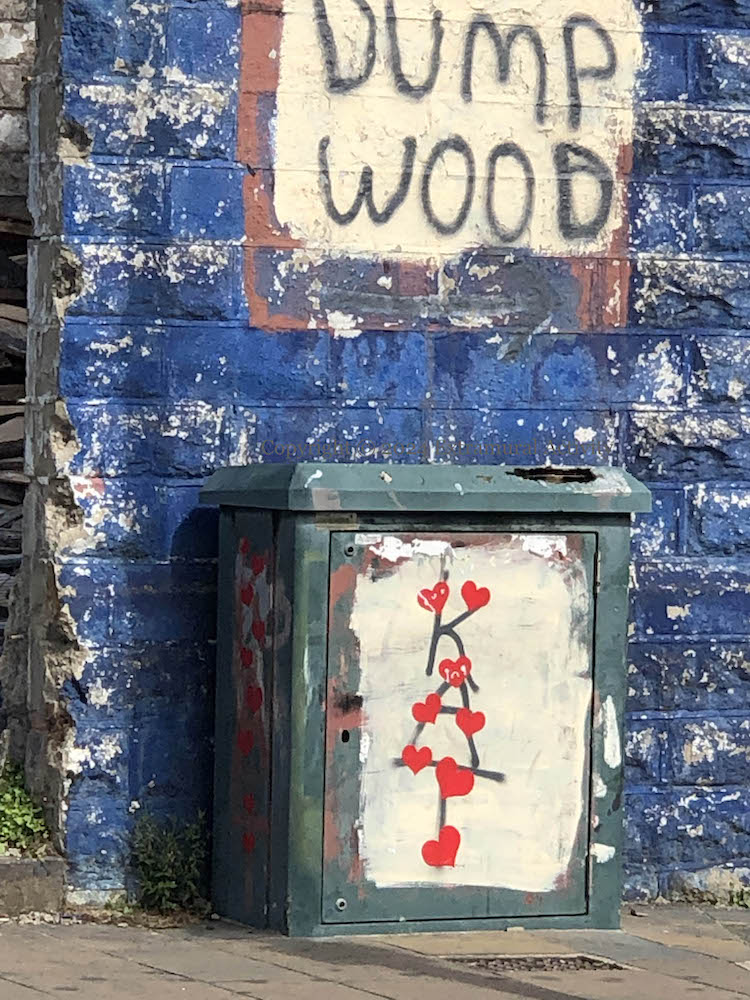
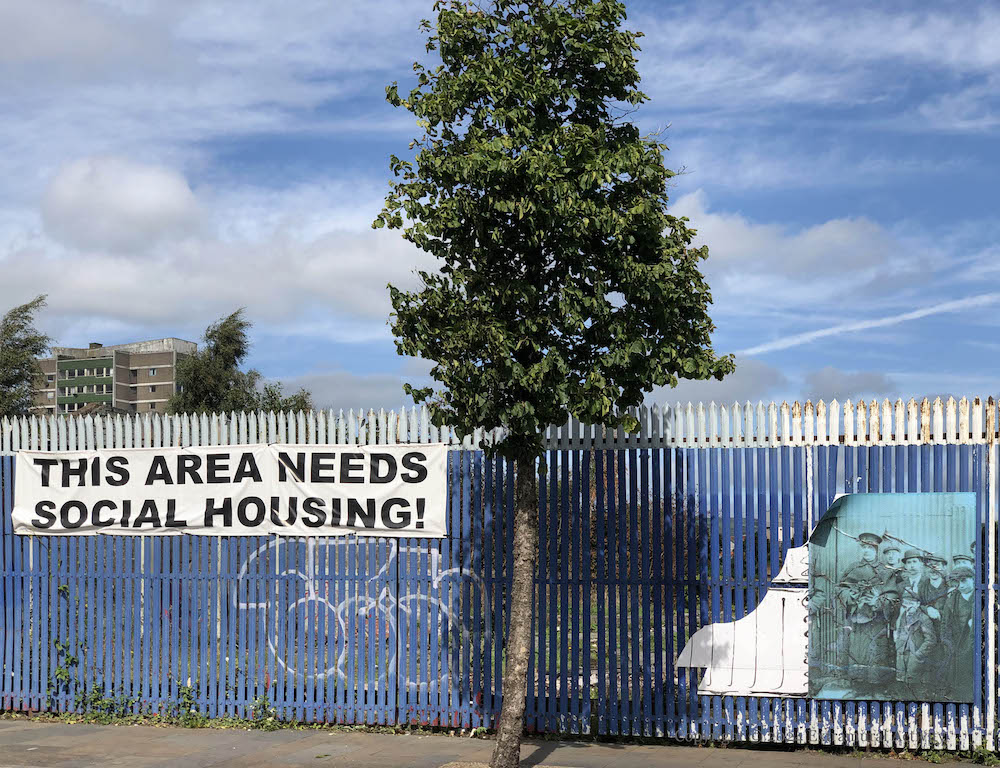
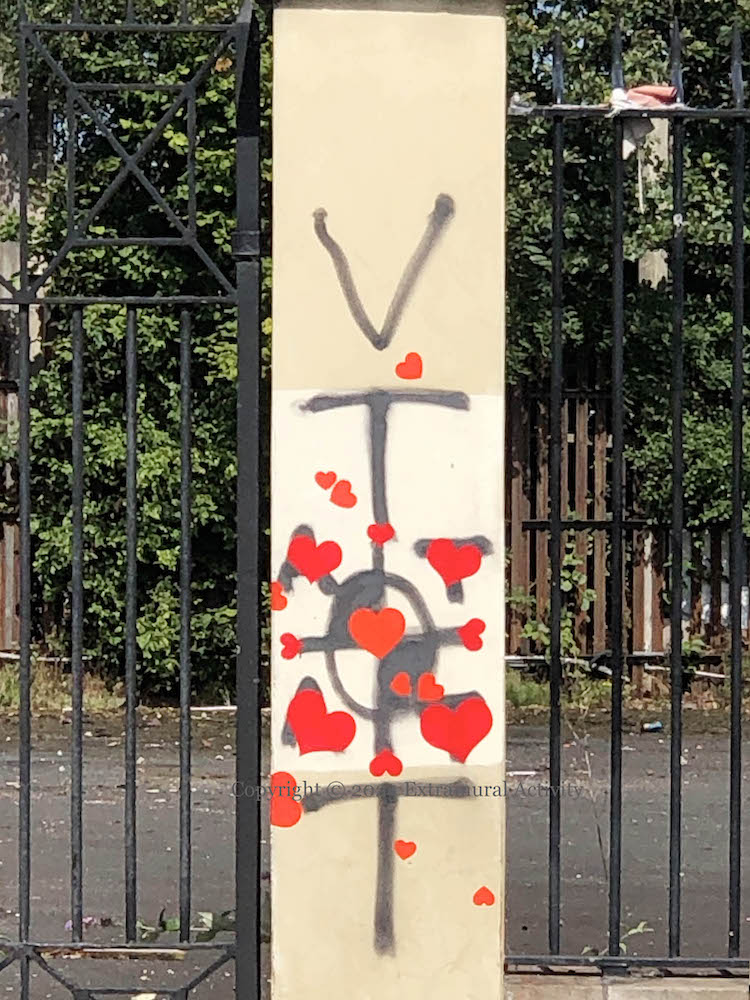
This is a 2024 revisiting of the waste-ground (an old weaving factory) at the Westlink corner of the Village, south Belfast. Compared to 2023 (see This Area Needs Social Housing), there is some UVF graffiti (some of which has been covered over with heart stickers – see also Smothered In Kisses) and many new flags, including the row overlooking the Westlink (in the tenth image) among which are the flags of Israel and Ukraine.
This UVF poster urges residents of east Belfast who owe money to loan sharks not to sell drugs or find some other way to pay it back, but instead to get in touch with a political representative.
The Sunday World reported that repayments are being withheld after the Shankill UVF ordered the leadership in East Belfast UVF to stand down (in November 2023 – IRN | BBC) and took over the operation. The posters thus come from the old (East Belfast) guard, trying to thwart the new bosses and hoping to resume collection themselves.
SDLP councillor Séamus De Faoıte commented (in the Irish News), “Anyone who has knowledge of criminal activity or exploitation of vulnerable people should report it to the relevant authorities, but people do not need to take any lessons from the UVF when it comes to upholding the law.” (Also: BelTel)
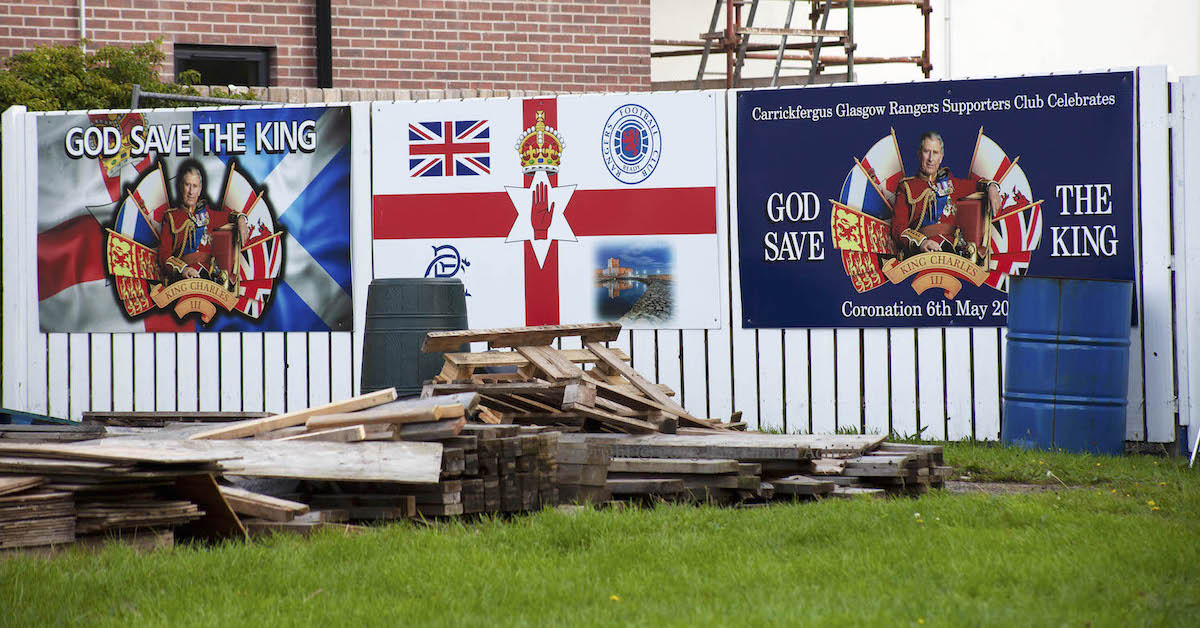
“Rangers ’til I die.” Here are images from the courtyard of the Carrickfergus Rangers Supporters Club, (Fb) and the approach to the clubhouse.
First, a pair of UVF boards above the courtyard listing both local (Carrickfergus, Ballyduff, Ballyclare, Greenisland, Glengormley, Monkstown, Rathcoole, Larne, Whitehead) and affiliated British units (Drumchapel (Glasgow, Scotland), Springburn (Glasgow) Possilpark (Glasgow), Paisley (Scotland), Falkirk (Scotland), Liverpool (England), Blackpool (England), Corby (England), and Blairgowrie (Scotland)) of the 1st East Antrim Battalion, “The people’s army”.
Second, the tarp on the back of the Men’s Shed.
Third and fourth, the boards on the lawn and the painted columns of the railway bridge on St Bride’s Street/North Road.
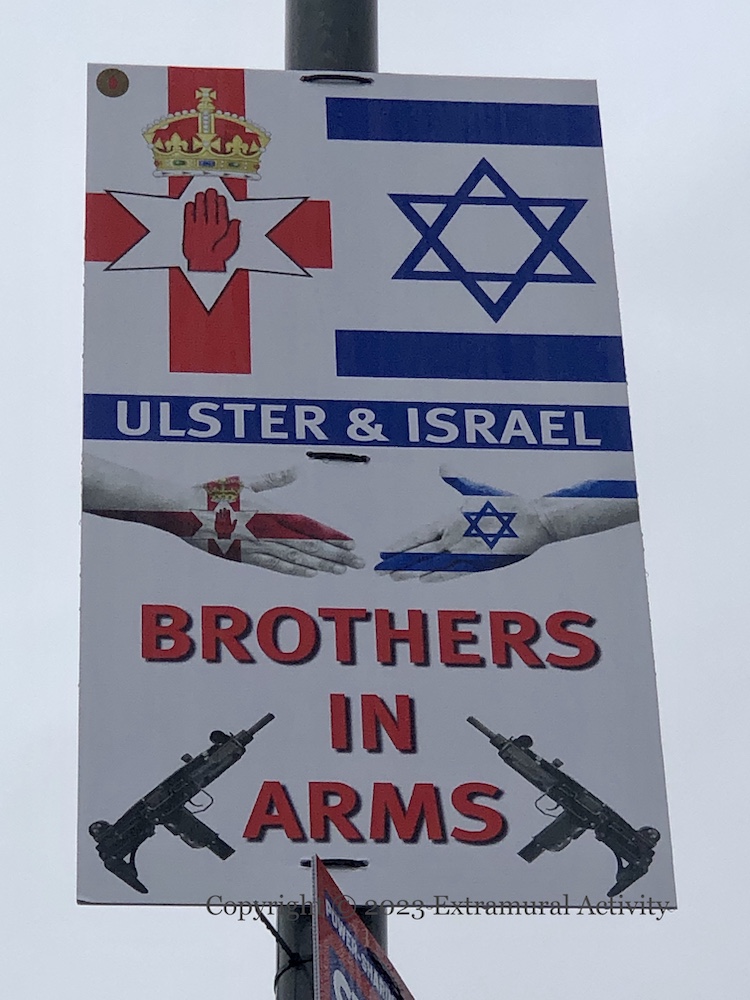
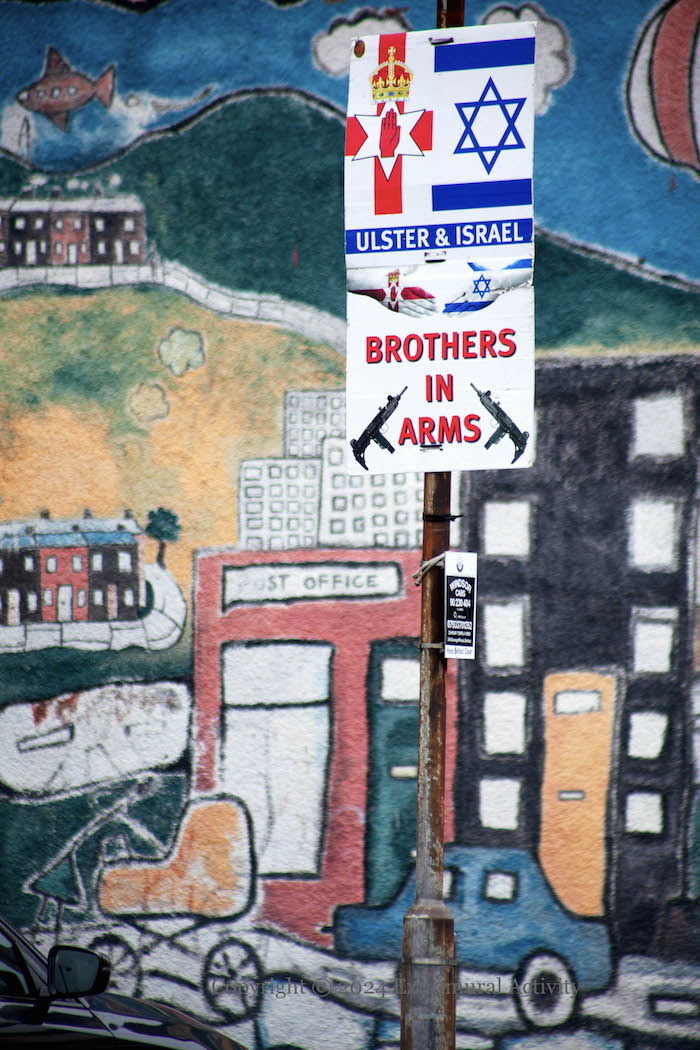
“Ulster & Israel – brothers in arms”. The Uzi was developed in Israel in the late 1940s and became a general-issue weapon in 1956 (WP). It was used (and copied) by loyalist paramilitaries in Northern Ireland (Balaclava Street has a comprehensive history of loyalist weaponry) and appeared in a both UDA and UVF murals and graffiti: The Elite | Ulster Says No! To The Politicians | Sandy Row 2nd Batt | UFF Uzi.
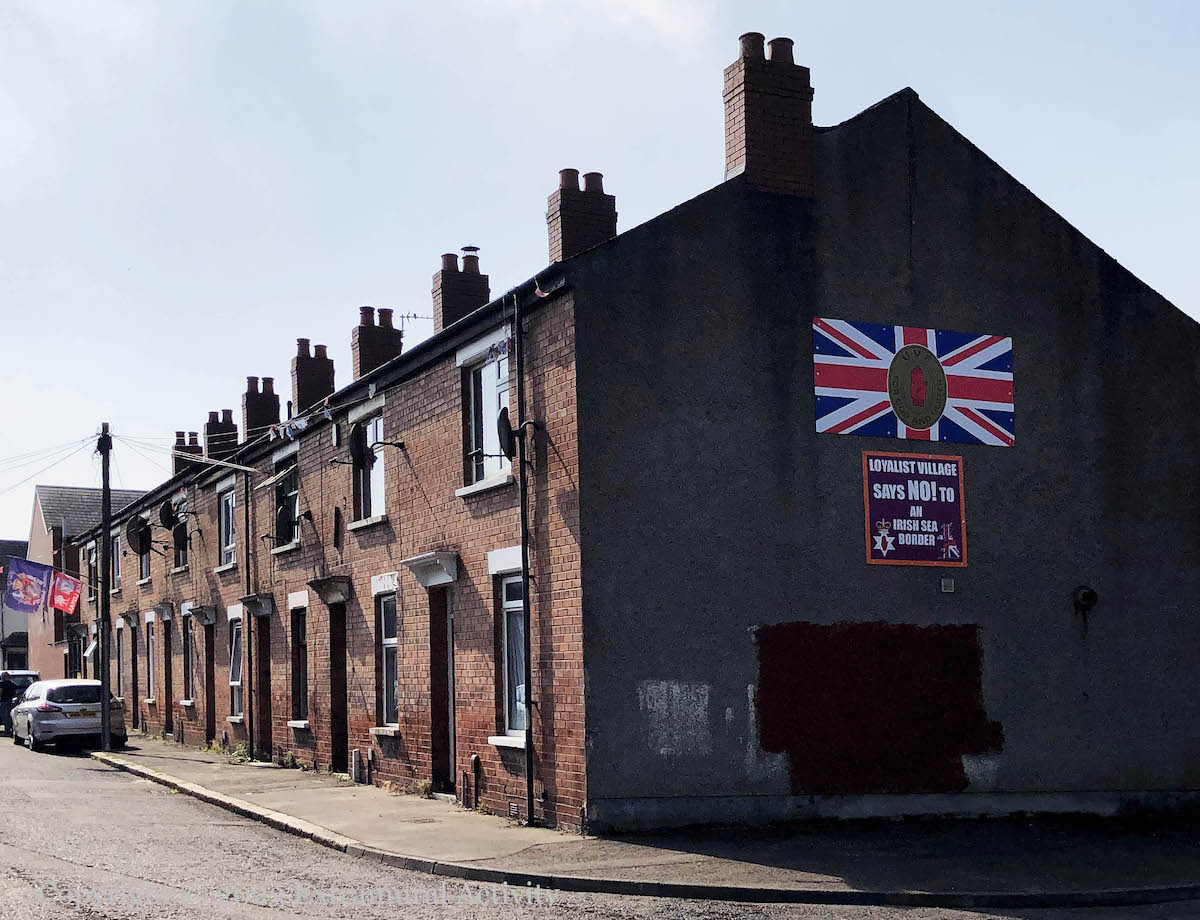
Tate’s Avenue, in the Village area of south #Belfast.
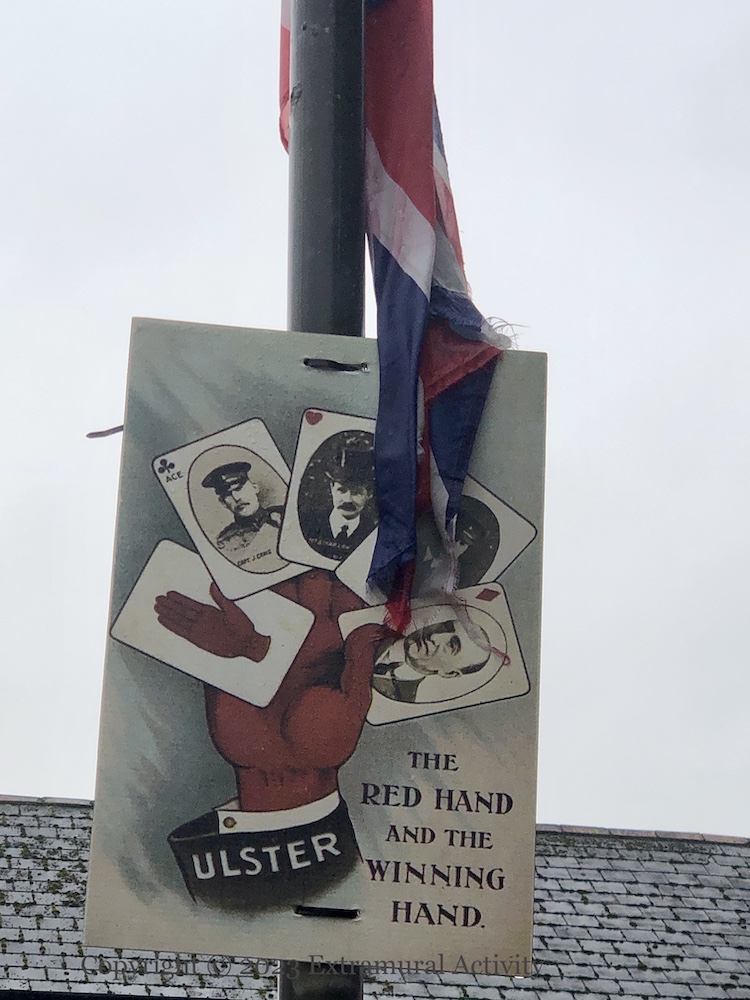
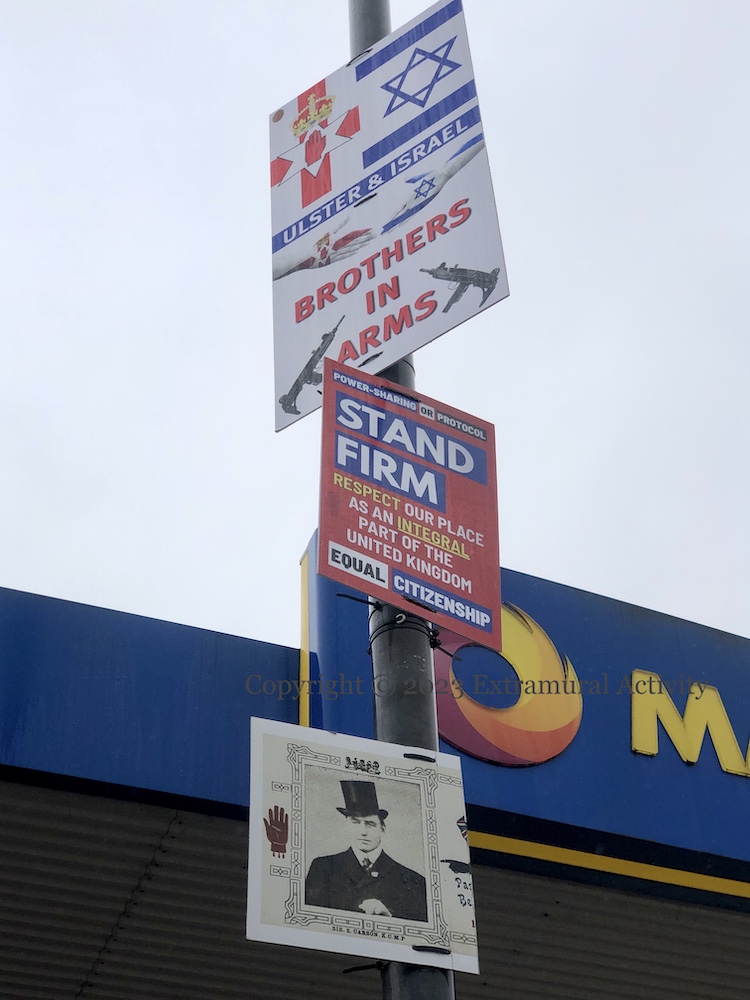
The placard in the middle, between Brothers In Arms and “Sir E. Carson K.C., M.P.” was discussed in Stand Firm. The Winning Hand was seen previously in The Red Hand And The Winning Hand.
The Ulster Unionist Council organised the signing of the Covenant in September, 1912, and in January 1913 voted to bring together the militias that had been formed in various places into an Ulster Volunteer Force. One of these was a South Belfast battalion that had formed in 1912 (History Ireland). Hence, both “1912” and “1913” are given as dates for the creation of the battalion. When the Volunteers were integrated into the Ulster Division for the Great War, the South Belfast Volunteers joined the 10th battalion of the Royal Irish Rifles.
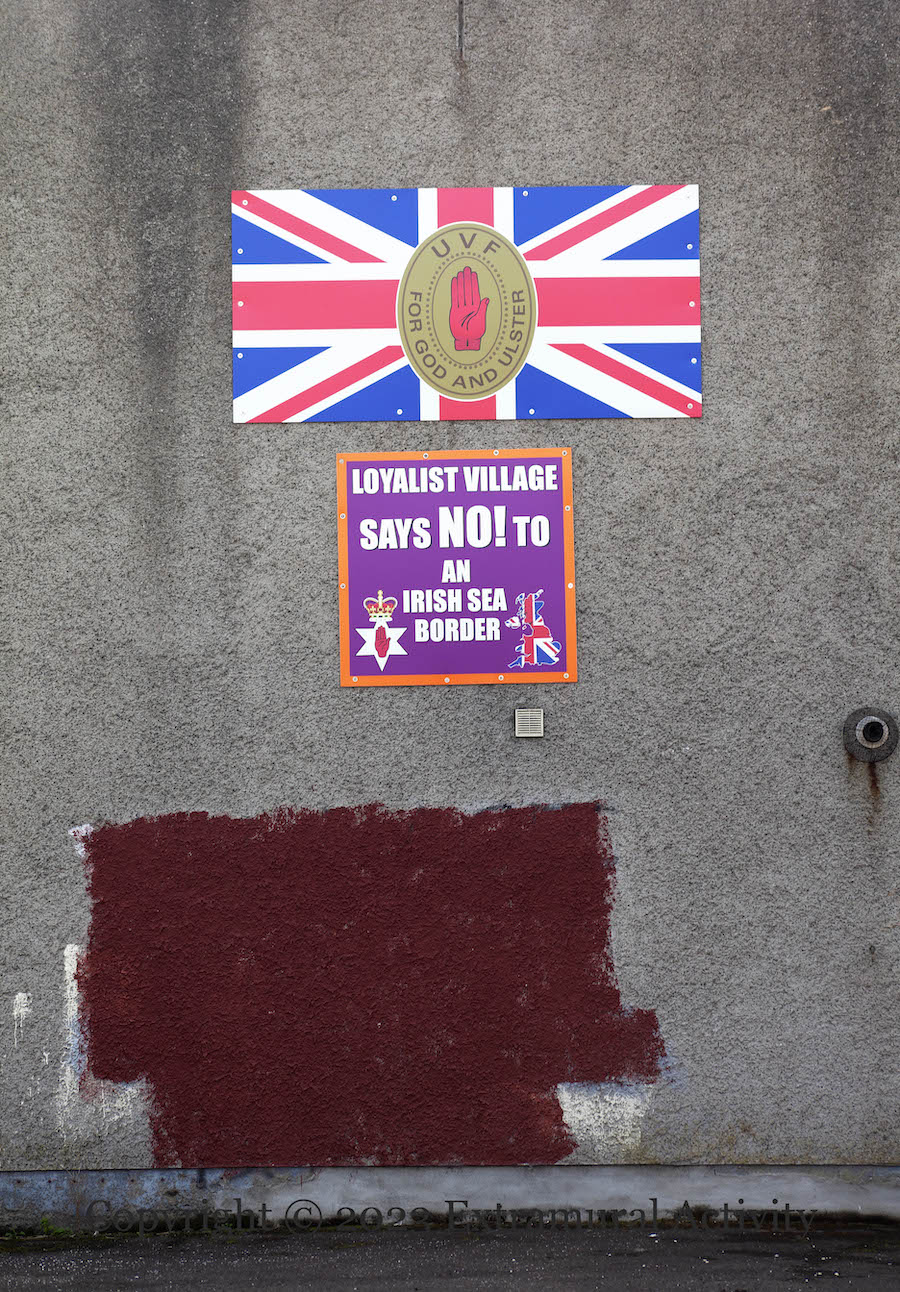
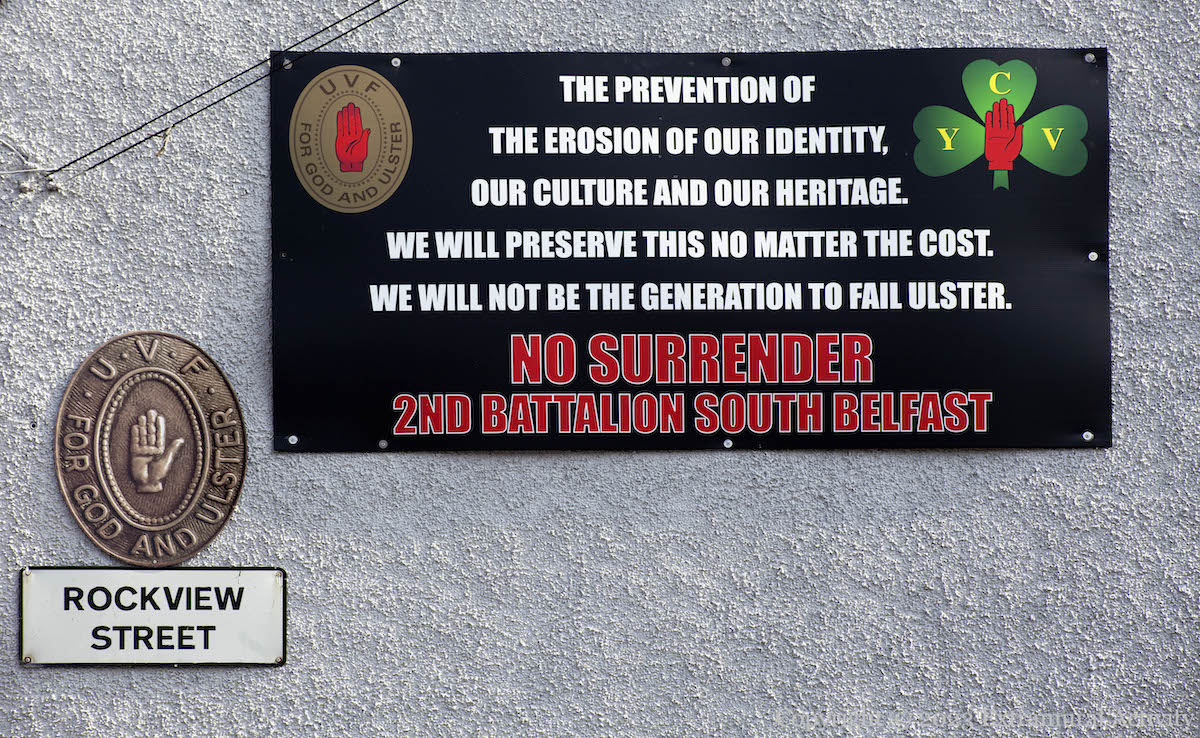
Of course, the boards above and immediately below concerning the 1912/1913 Ulster Volunteers serve double duty alongside the three other boards shown here which concern the modern UVF and the current protests against Brexit/NI Protocol/Windsor Framework.
The advertising hoarding has been informally re-purposed by the UVF for several years, and its de-commercialisation is now complete with the addition of this printed board.
“Loyalist Village says No! to an Irish Sea border.” “The prevention of the erosion of our identity , our culture and our heritage. We will preserve this no matter the cost. We will not be the generation to fail Ulster.”
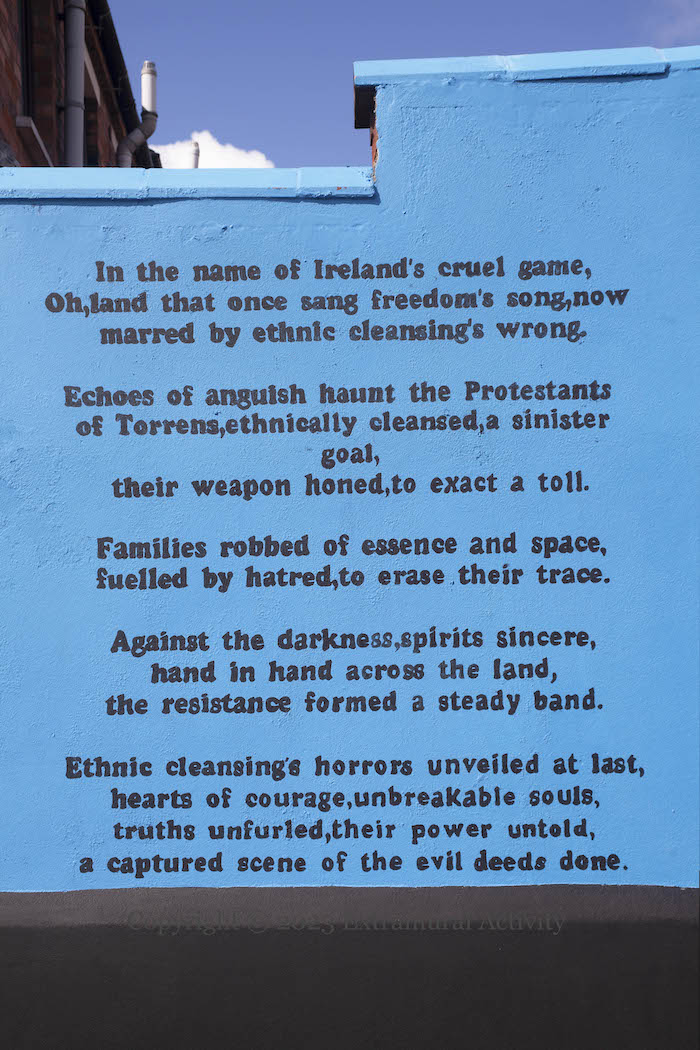
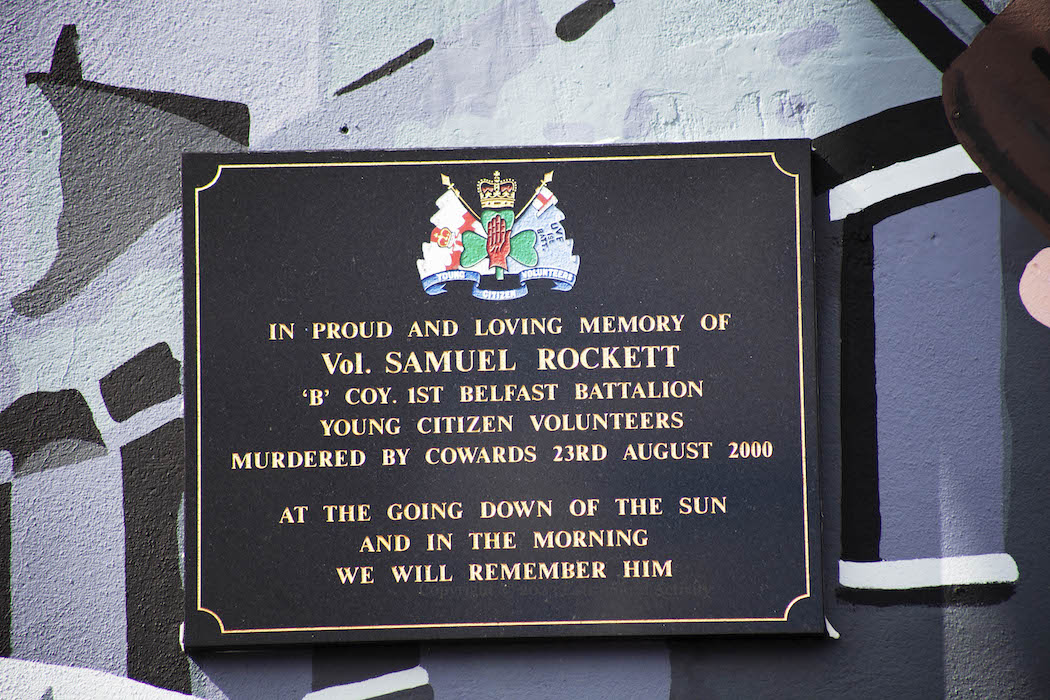
This is the new Sam Rockett mural in the Woodvale, replacing the mural seen in Murdered By Cowards. The old mural just featured Rockett, who died in August, 2000, in the feud between the UVF and lower Shankill UDA. This new mural also features the “ethnic cleansing” of Torrens in 2004.
Torrens sits between Cliftonville, Ardoyne, and the lower Oldpark, and was one of the many historically mixed areas in north Belfast that, with the Troubles, became increasingly segregated and separated from neighbouring areas by “peace” lines. Jarman (1996) provides eye-witness testimony of the dispute in Torrens in 1996 which saw Catholic families leave the area. Its proximity to Ardoyne (and Cliftonville), however, meant that over the next few years the houses were gradually abandoned by Protestants, culminating in 2004 when ten of the remaining Protestant families moved out of the area, alleging persistent intimidation and employing the term term “ethnic cleansing” – a term the poem to the right of the mural uses three times.
The area was eventually redeveloped from 2008-2012, with the Wyndham Street “peace” line coming down and Elmgrove Street being opened to the Oldpark Road.
The line in the poem “the resistance formed a steady band” is unclear – it might refer to loyalists being bussed into Torrens in 1996 (see the testimonies in Jarman); if it refers to B Company it would make a connection to Rockett. As it is, the connection between the two elements of the mural (if any is intended) seems to be that Rockett was from the lower Oldpark, near Torrens.
“In the name of Ireland’s cruel game/Oh, land that once sang freedom’s song/Now marred by ethnic cleansing’s wrong.//Echoes of anguish haunt the Protestants of Torrens,/Ethnically cleansed, a sinister goal,/Their weapon honed, to exact a toll.//Families robbed of essence and space,/fuelled by hated, to erase their trace.//Against the darkness, spirits sincere,/Hand in hand across the land,/the resistance formed a steady band.//Ethnic cleansing’s horrors unveiled at last,/Hearts of courage, unbreakable souls,/Truths unfurled, their power untold,/A captured scene of the evil deeds done.”
The mural was completed for the anniversary of Rockett’s death on August 23rd. The source for the central image (of furniture being loaded into a lorry) is unknown.




















 Extramural Activity