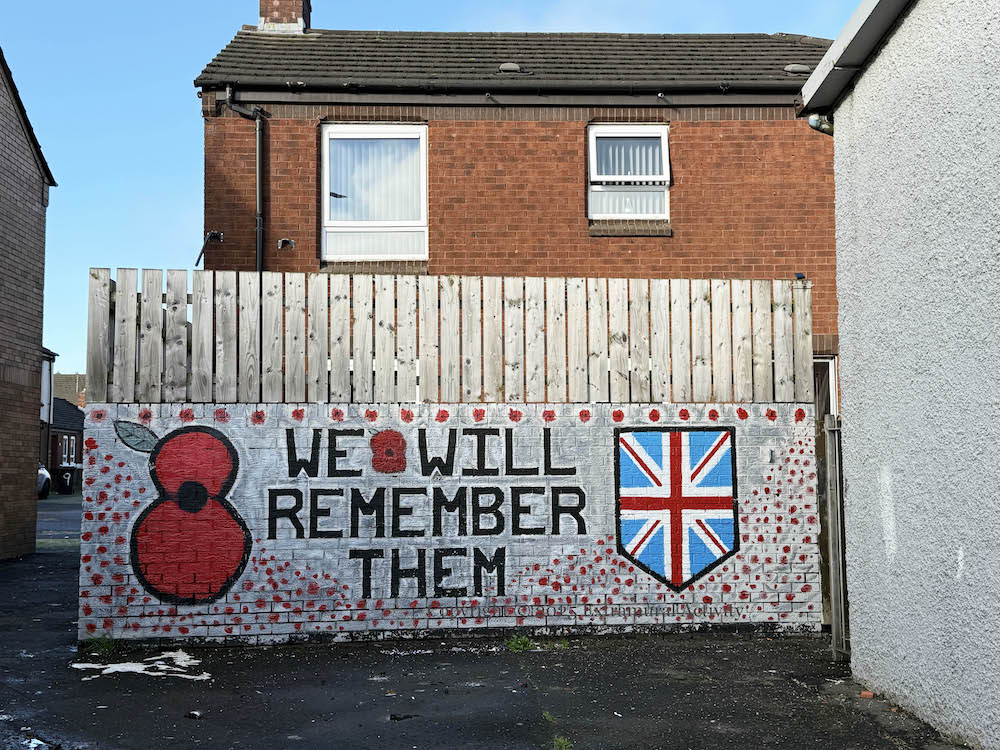
This pair of hand-painted (and stencilled) boards is next to the Mount Inn on North Queen Street. Tiger’s Bay is loyal to the memory of “1690” and the service of the 36th Division in WWI in 1916.
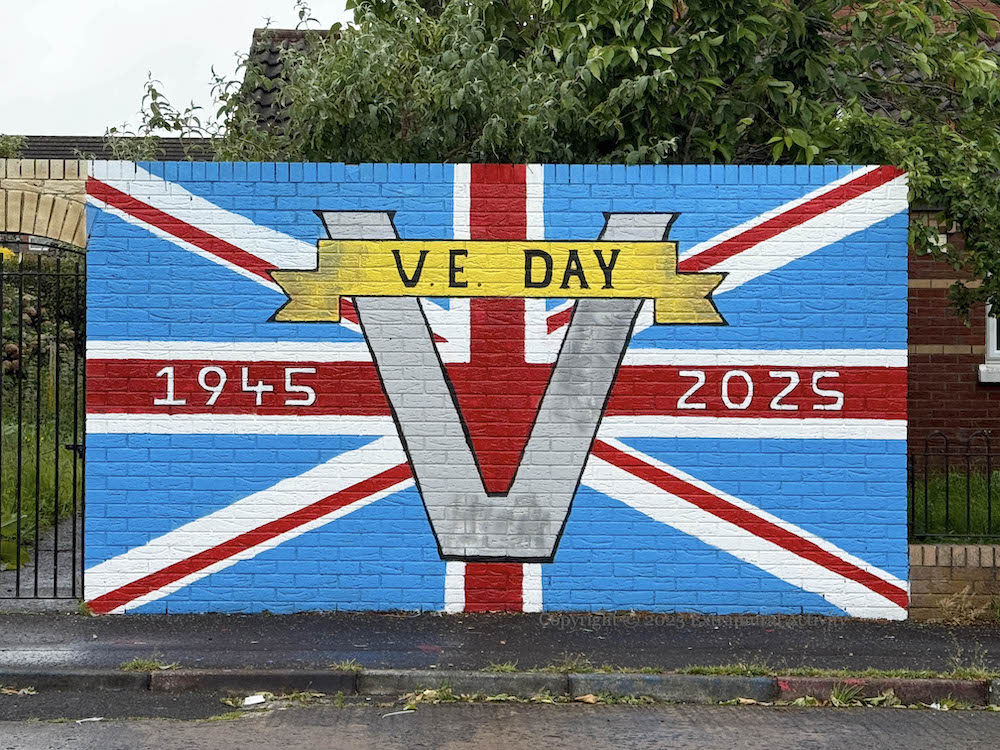
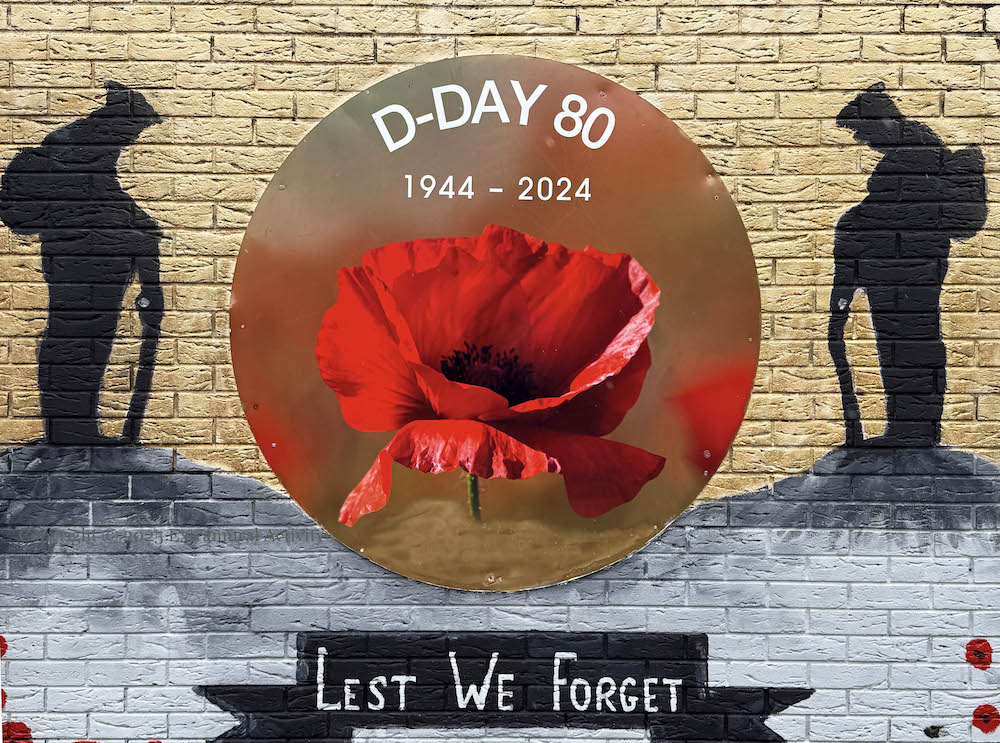
39 Allied divisions – 12 of them British – participated in the Normandy Landings – officially “Operation Neptune” – that took place on June 6th, 1944; in planning for the operation, the original “D-Day” was June 5th, but bad weather postponed it until the following day, when 160,000 troops stormed the beaches of the Bay Of The Seine. By the end of August, Paris had been liberated, and by the following May, victory in Europe had been achieved. 2024 was the eightieth anniversary of D-Day and 2025 the eightieth anniversary of VE Day, on May 8th.
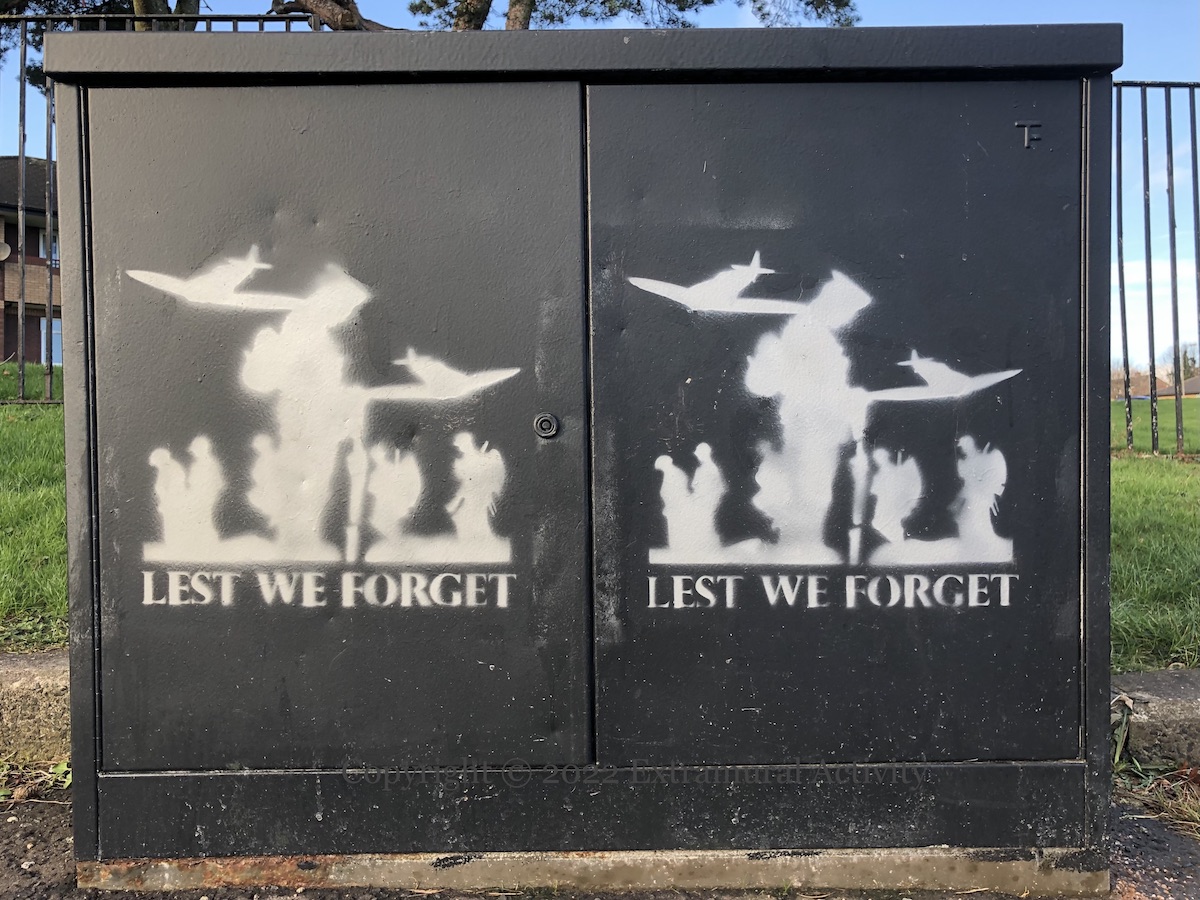
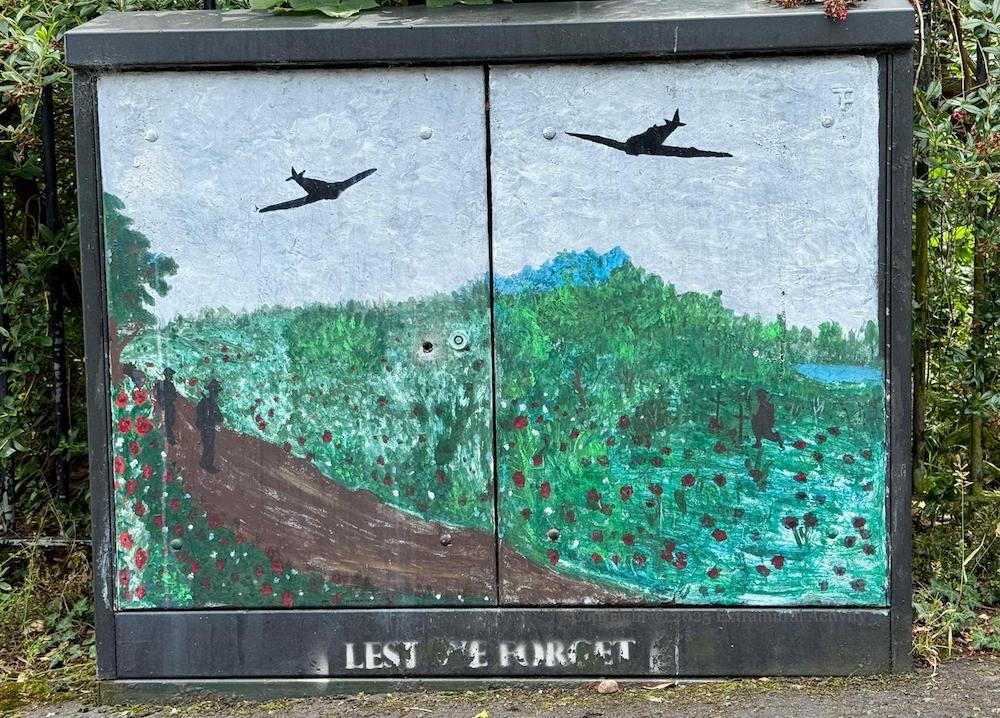
This D-Day board and VE Day mural are in Edlingham Street, Tiger’s Bay, north Belfast. Also included below is a WWI memorial electrical box opposite, though as can be seen from the board (immediately below) the ‘graveside mourner’ silhouette is becoming a generic symbol of lost UK forces.
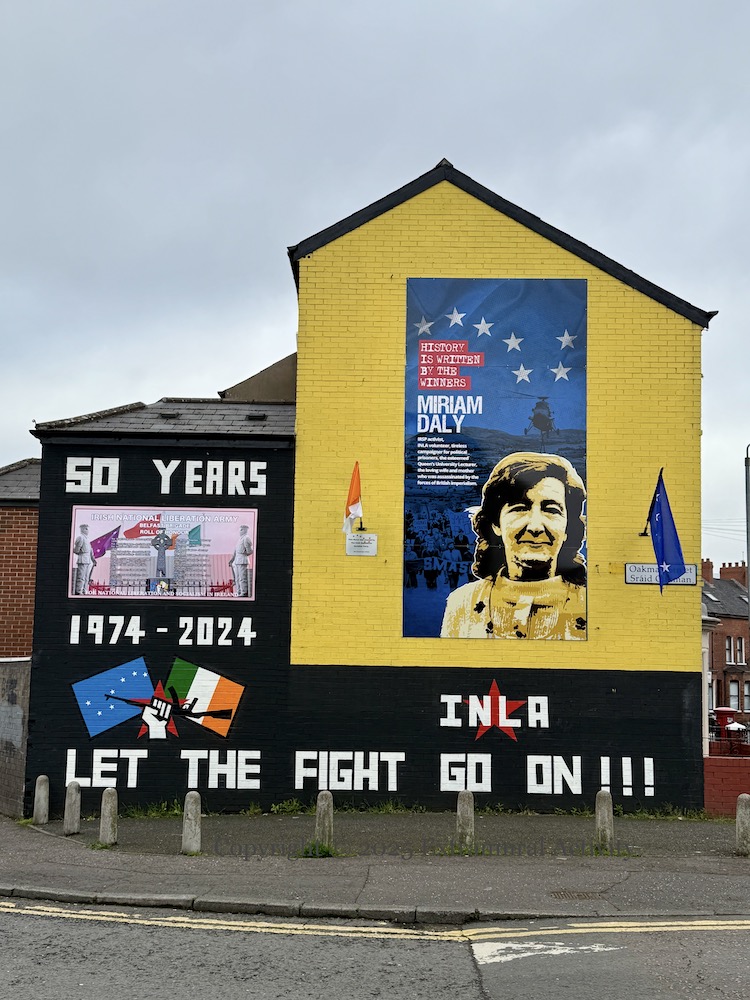
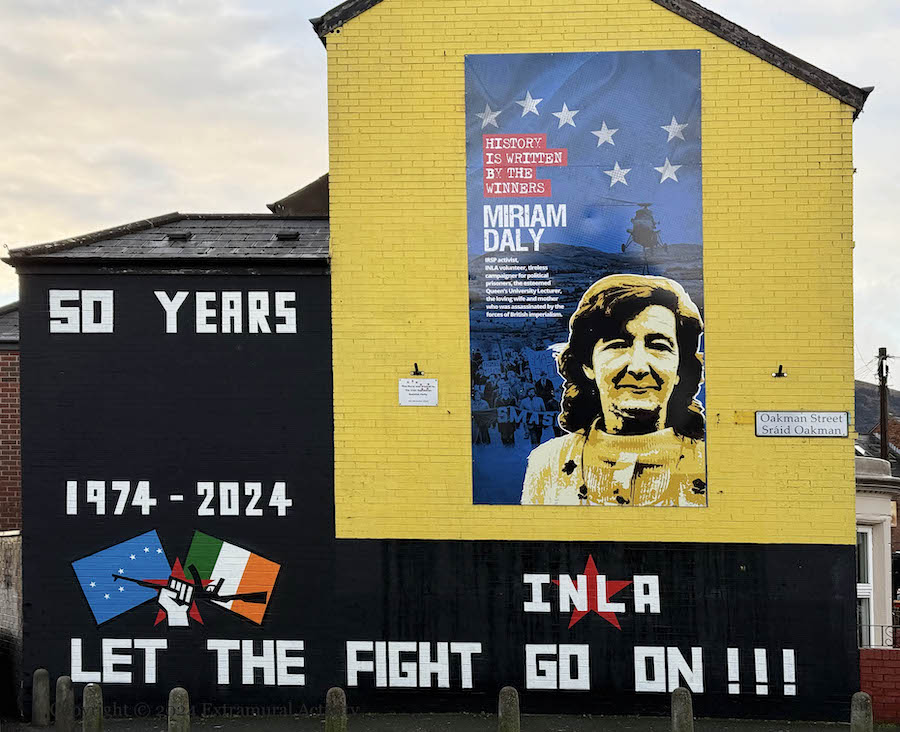
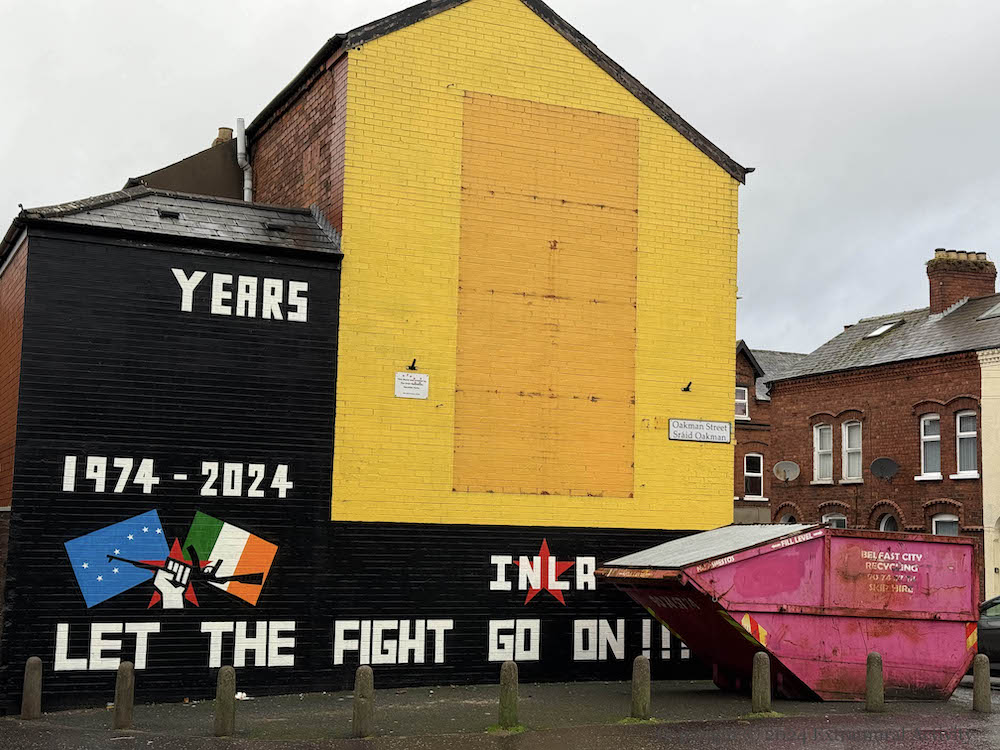
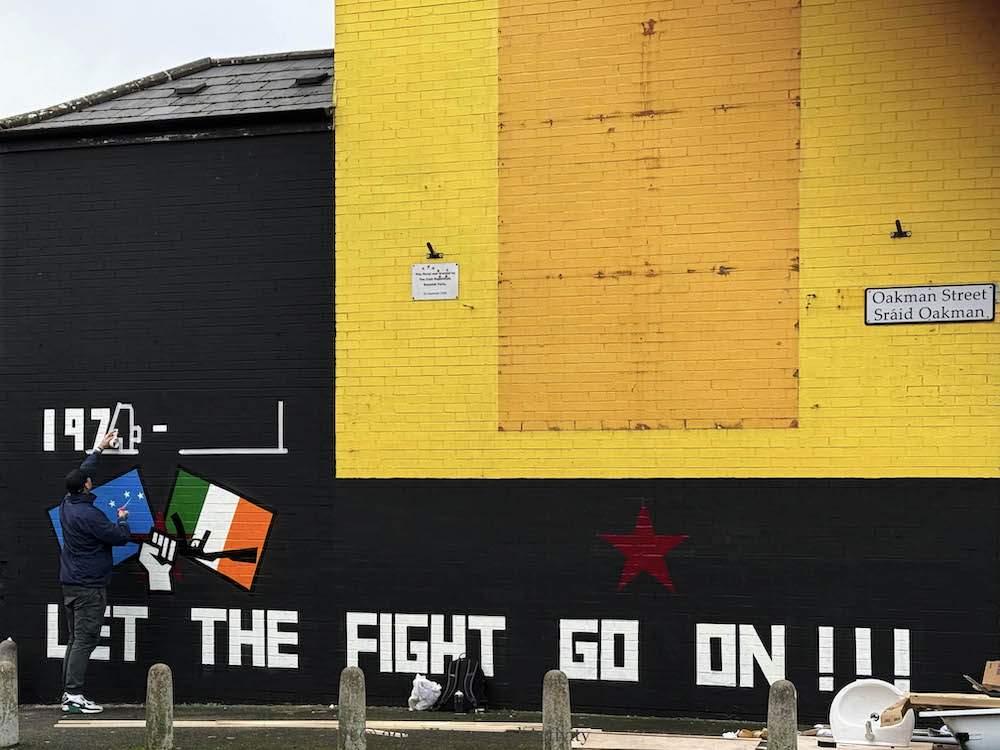
The large Miriam Daly board in Oakman Street was temporarily taken down while symbols and slogans to mark the fiftieth anniversary (“1974-2024”) of the creation of the INLA on December 8th, 1974 (WP) were mounted.
The wall was completed by early December, 2024, and the roll of honour added in the top-left corner by the end of the month. Those listed are: Hugh Ferguson, Danny Loughran, Brendan McNamee, Miriam Daly, Ronnie Bunting, Noel Little, Jim Power, Matt McLarnon, Joe Craven, Paul “Bonanza” McCann, Thomas “Ta” Power, John O’Reilly, Mickey Kearney, Emmanual Gargan, Gino Gallagher, John McColgan, Patrick Campbell, Christopher “Crip” McWilliams, Harry O’Hara, Barry “Bar” McMullan, Martin McElkerney, James McWilliams. The last five post-date the Agreement, starting with Patrick Campbell, who died in 1999 at the hands of drug-dealers in Dublin (Irish Times | Bel Tel).
The rosette at the centre of the poppy wreath shows the UK armed services badge (with the crown overlaid by the Ulster Banner) surrounded by a verse from Binyon’s ‘For The Fallen’ and “Tiger’s Bay – York Street – Sailortown loyal”. That group’s Facebook page is private and no home-page seems to be available for ‘North Belfast Friends Of The Somme’.
North Queen Street, Tiger’s Bay, Belfast, at the old Lewis Street.
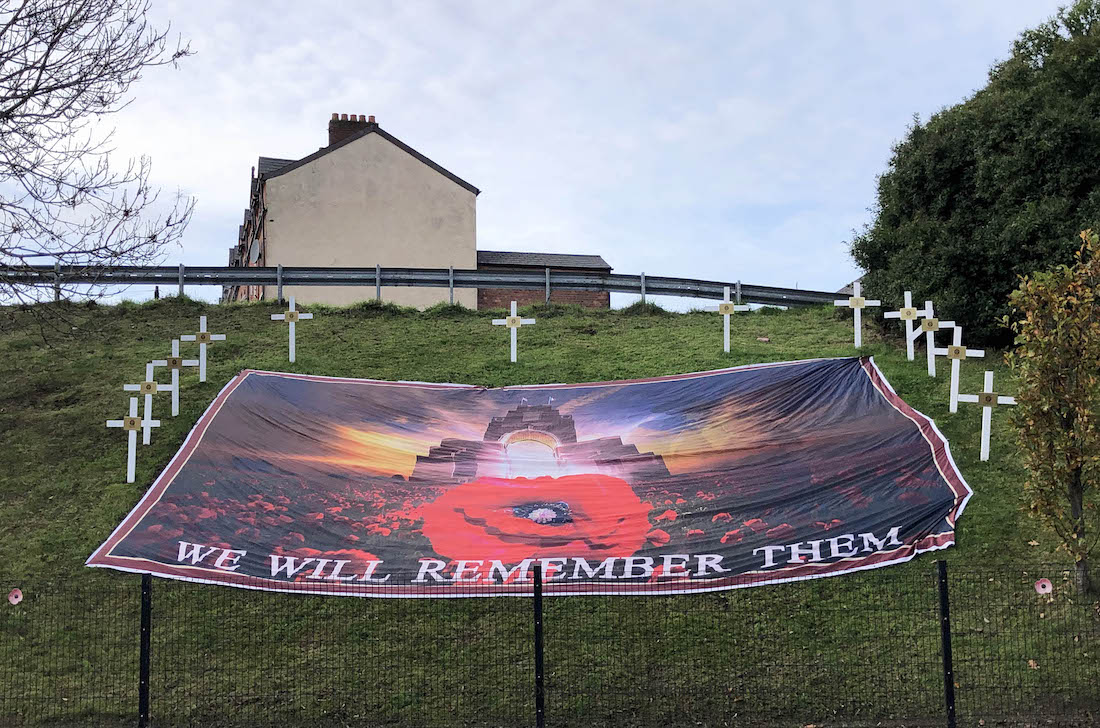
The large cloth on the Shore Road was also seen last year.
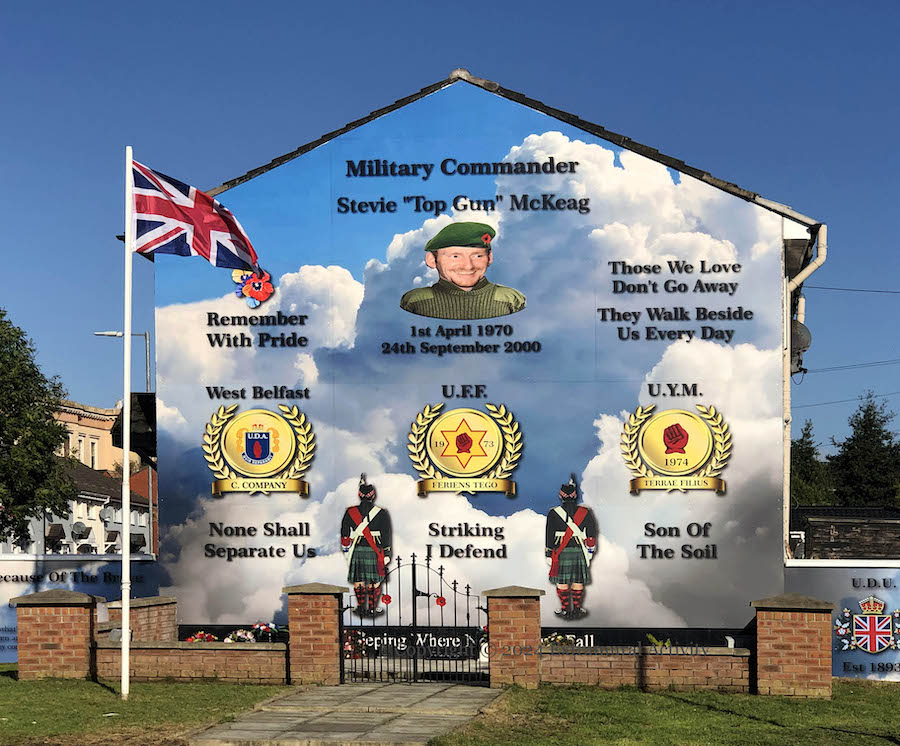
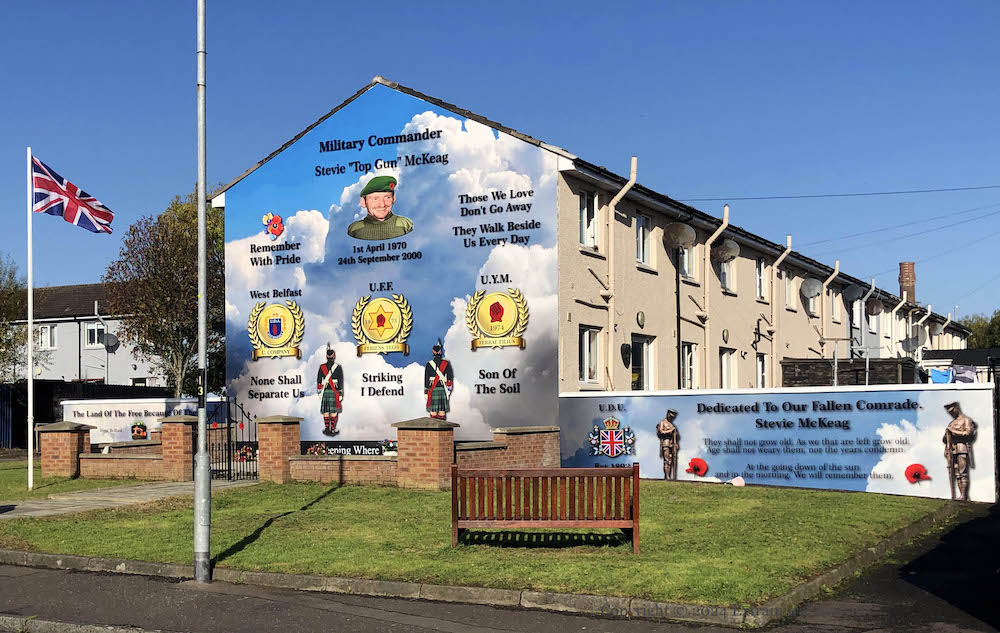
A new tribute to UDA assassin Stevie “Top Gun” McKeag has been put in place in the lower Shankill, replacing the flat-capped version of 2016.
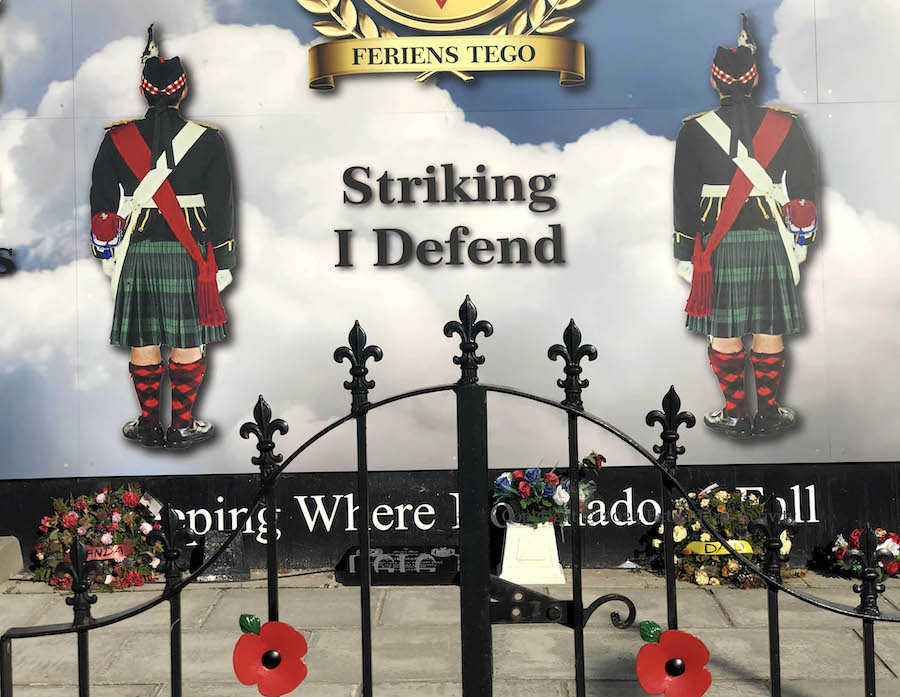
The main-streaming of McKeag continues with this new display: in the previous version he was presented in soldierly garb but as a soldier of the UDA; now, one would be forgiven for thinking that McKeag was a soldier in the British Army, given that the “military commander”‘s beret is now green (rather than grey) and now adorned by a poppy (rather than the UFF star), both complementing the commando-style sweater he is wearing. He is also being mourned by band leaders in ceremonial dress, such as is worn by the Royal Regiment Of Scotland (dress regulations pdf) when serving as equerries to the royal family.
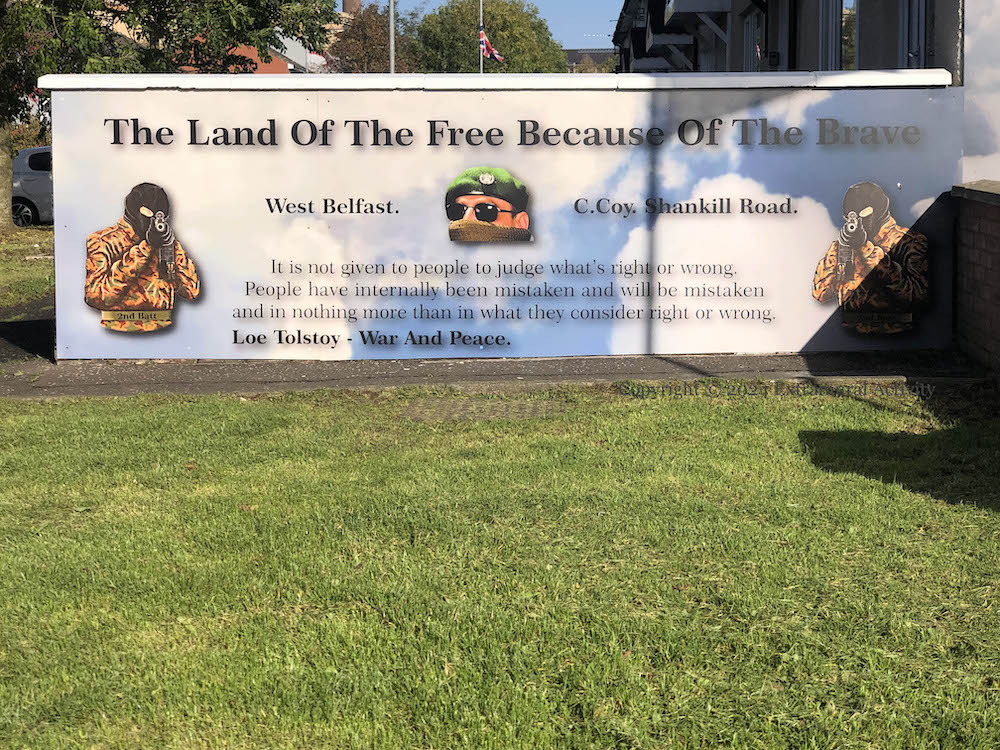
In the right-hand side-wall, the UDU, the poppies, and the graveside mourners are used to put McKeag’s actions in the context of resistance to Home Rule and the British Army’s role in the Great War. McKeag killed at least a dozen Catholics between 1990 and 1998 (WP). He is shown here smiling.
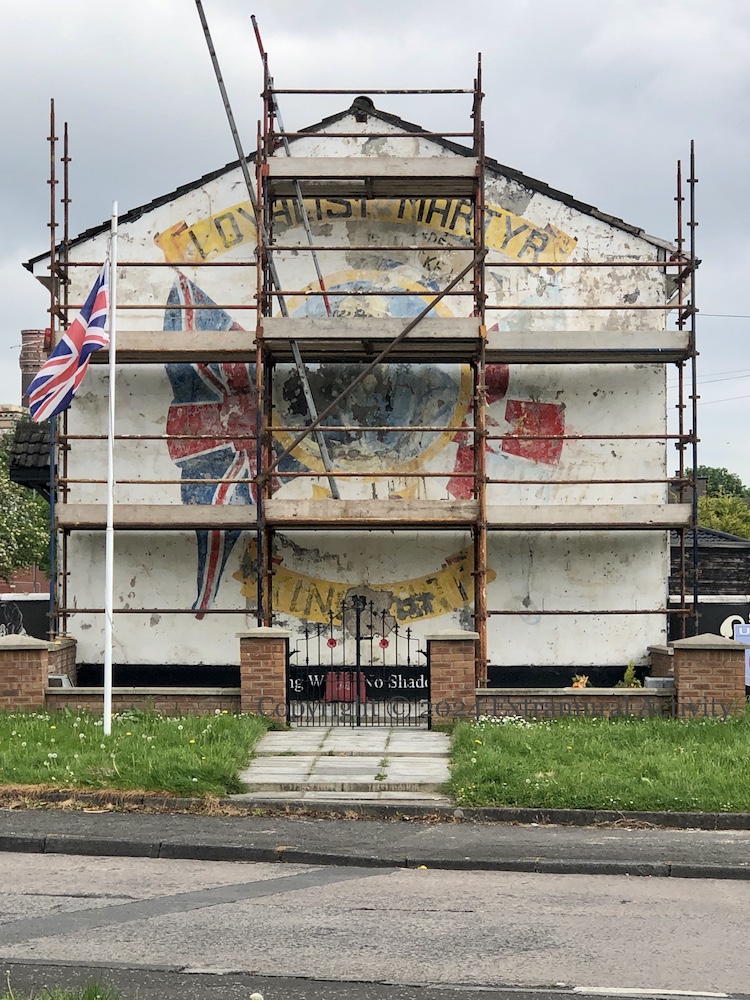
Not only does this display replace the previous display, but the paint from previous murals (and perhaps a layer of plaster) was removed, until the original mural on the wall, of “King Rat” (D01005), was reached. It then appears that the new display was mounted on top of this. The following image is from May 15th:
March 10th was the 53rd anniversary of the killings of three Highland Fusiliers, Dougald McCaughey and teen-aged brothers Joseph and John McCaig, who were drinking in a city centre pub and lured to their deaths in north Belfast at the hands of the (Provisional) IRA. The killings led to the resignation of NI prime minister James Chichester-Clark and an increase, to 18, in the minimum age for service (WP).
“Ní coırpıgh sınne! Éıreannaıgh sınne! [we are not criminals; we are Irish people] “There is that much to be done that no select or small portion of people can do; only the greater mass of the Irish nation will ensure the achievement of a socialist republic, and this can only be done by hard work and sacrifice.” – Bobby Sands [Hunger strike diary, March 14th, 1981]” With photographs of the ten deceased 1981 hunger strikers.
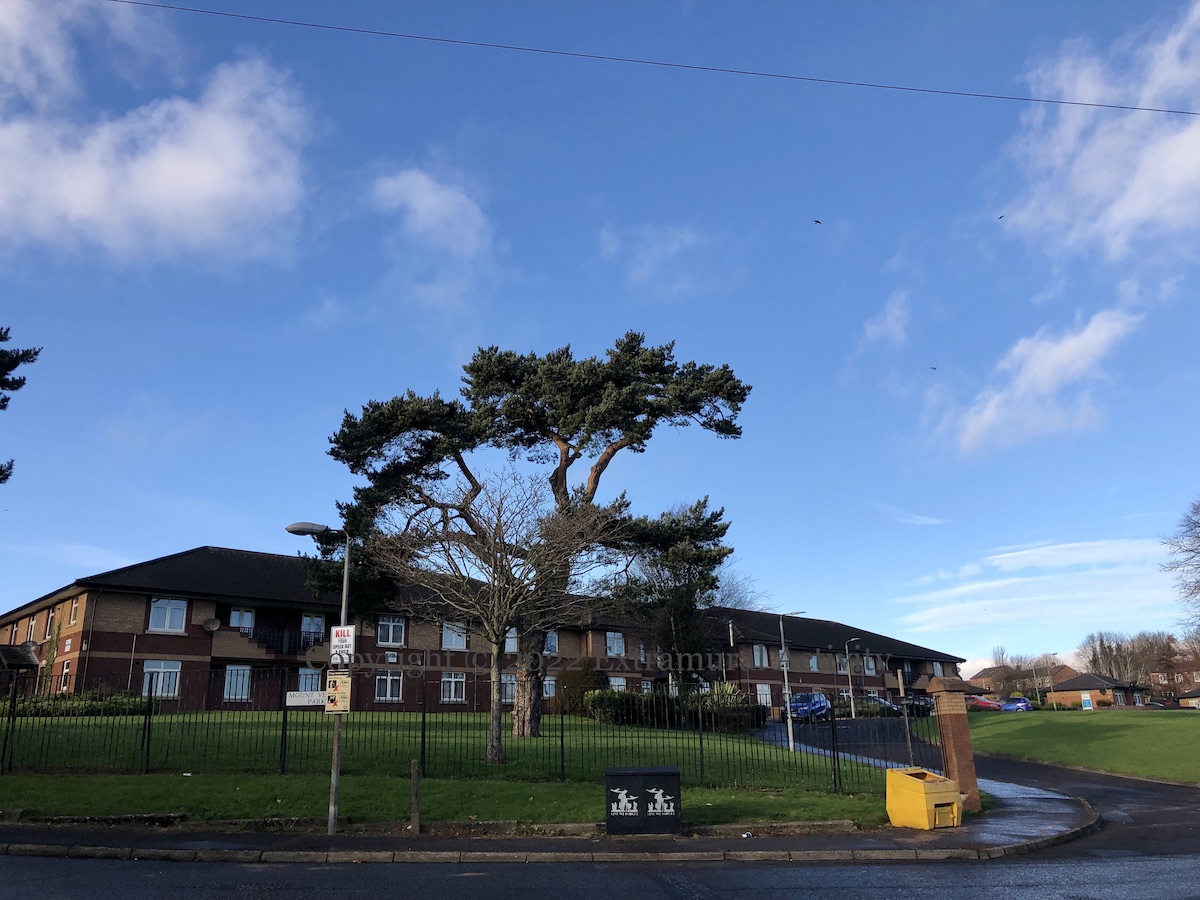
The stencil is in Mount Vernon, which is also home to a series of metalworks – see They Sleep Beyond Ulster’s Foam. That title, as well as the title of today’s post, comes from Binyon’s poem For The Fallen, the fourth stanza of which is often cited in memorial for the dead of the Great War: “They shall grow not old, as we that are left grow old; / Age shall not weary them, nor the years condemn. / At the going down of the sun and in the morning / We will remember them.”
The stencil is perhaps not only a memorial to the dead of WWI – the planes appear to be WWII models such as the Hurricane or Spitfire on the electrical box (and in A Miracle of Deliverance); most WWI planes were biplanes.
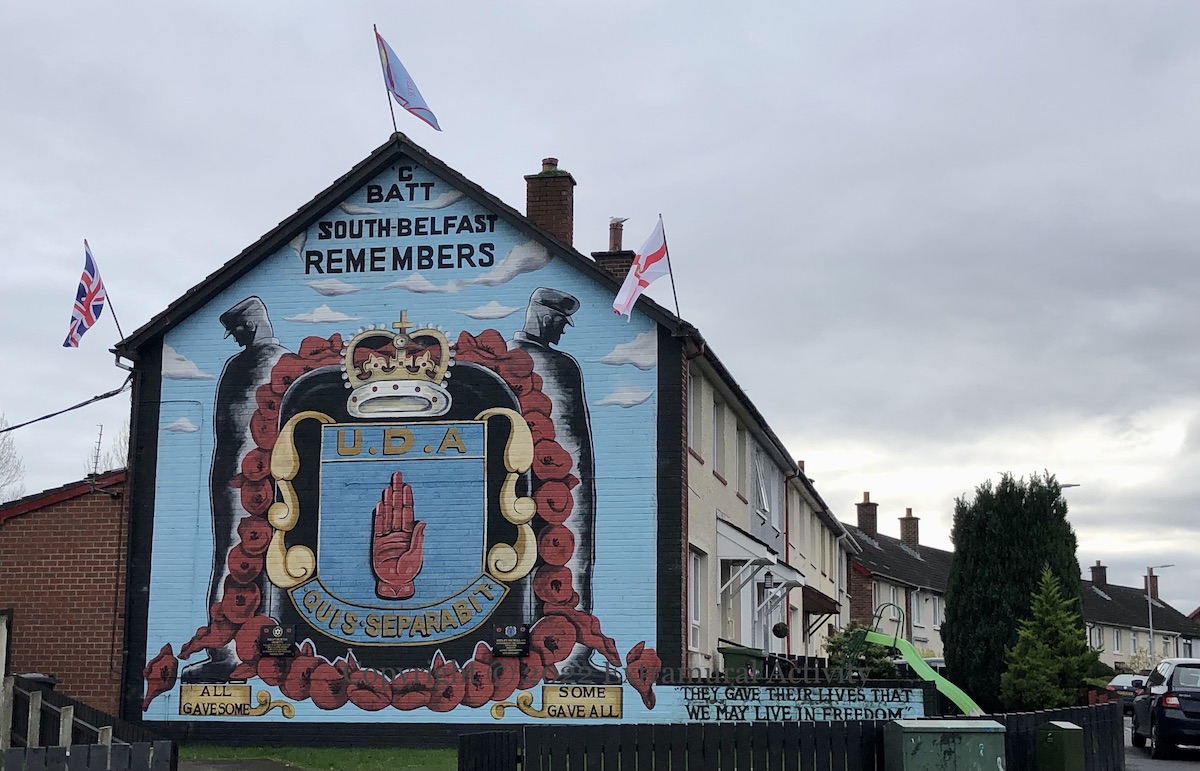
The old C Batt mural further up Hornbeam Road has long been painted over. It used the same line – “They gave their lives that we may live in freedom” – to remember Wesley Nicholl and Brian Morton. A plaque to Morton is now included on top of the new mural. “Brian Morton (Morty) killed in action 07/07/1997, a true Ulster patriot who gave his life in defence of his country. Feriens tego.” As with republican memorials, “active service” means that Morton was killed by a premature bomb exploding.
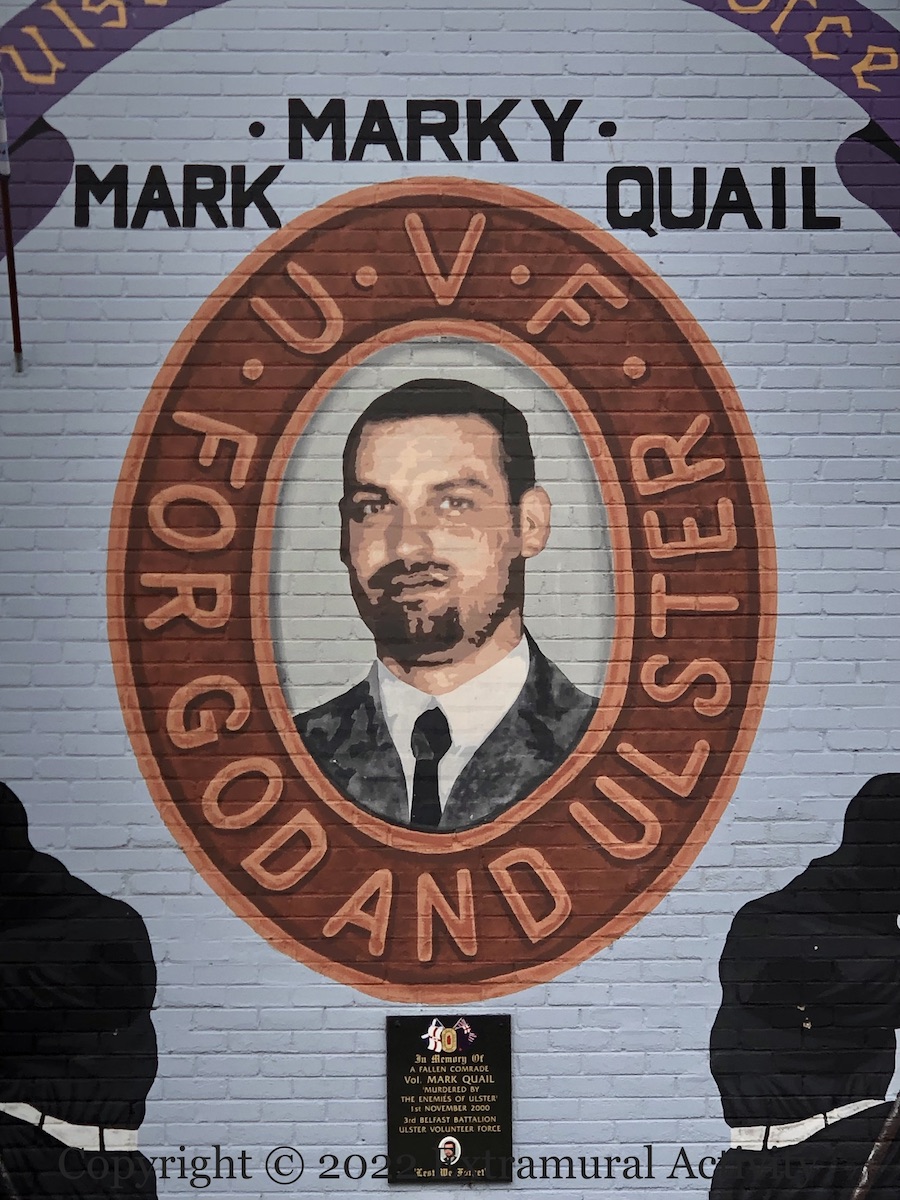
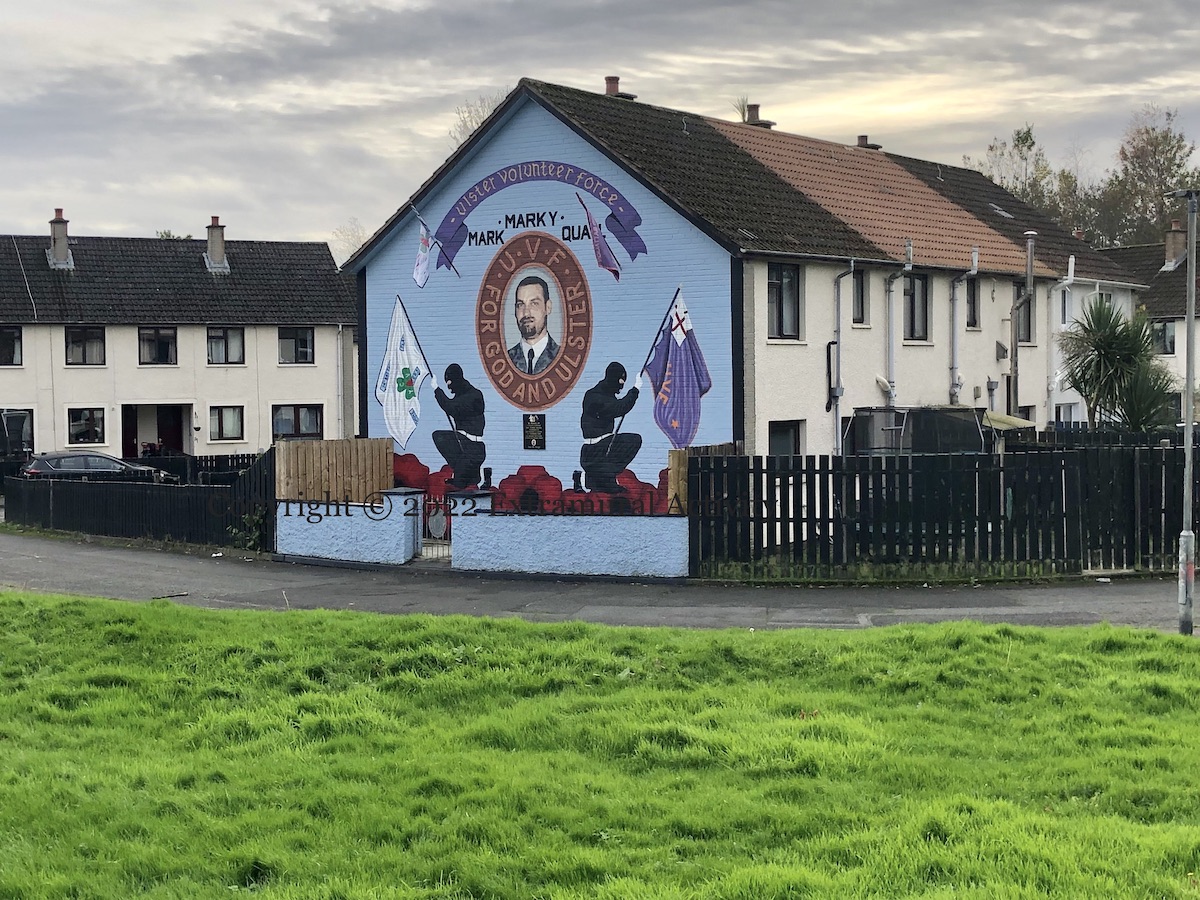
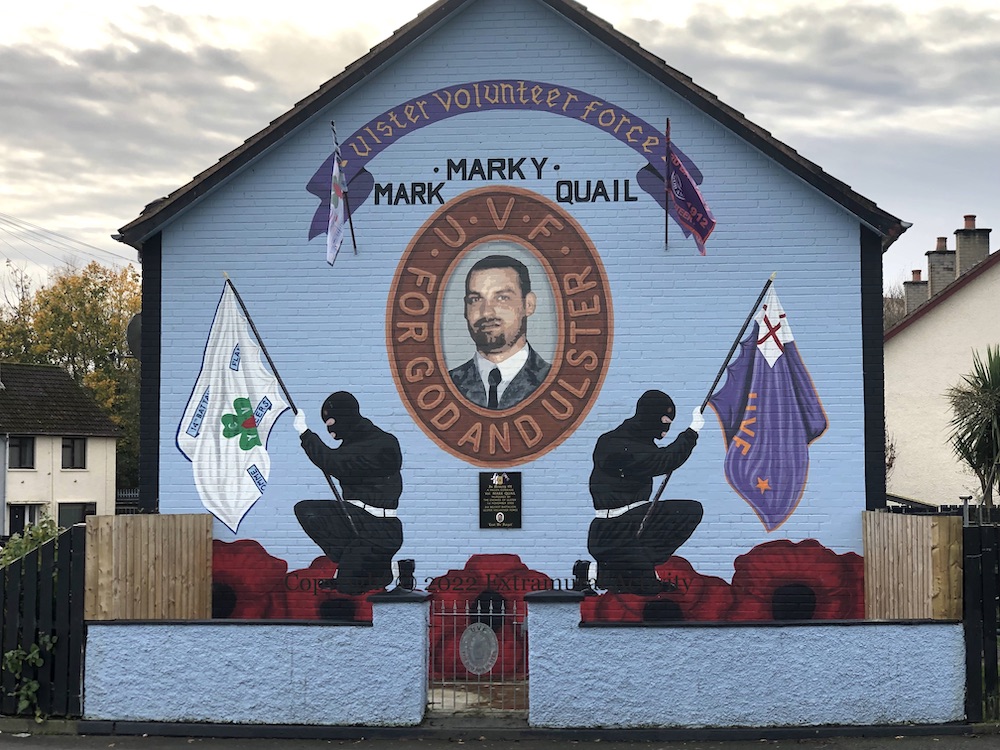
Mark Quail, of the UVF, was “murdered by the enemies of Ulster” – that is, shot by the UDA – at his Rathcoole home on November 1st, 2000. His was the fourth death in four days (after David Greer, Bertie Rice, Tommy English) (Irish Times) as the UVF-UDA feud that began in the Shankill with the infamous “loyalist day of culture” in August 2000 spread to north Belfast and Newtownabbey (though the BBC says they are unrelated). There were also attacks in east Belfast (BelTel) before the feud ended in mid-December (BBC | Guardian).














 Extramural Activity