Artist Glen Molloy (Fb) has painted a portrait of Jesus Of Nazareth next to the Cupar Way “peace line” in the style of Shepard Fairey’s Obama ‘Hope’ poster (also the inspiration for De Craig’s Achieve! in east Belfast). Irish News report on the mural.
During the blitz, more than 900 people died, 1,500 people were injured, and half of the houses in Belfast were destroyed (WP).
This is only one of about 20 similar plaques erected in 2016 by Belfast City council to commemorate the 75th anniversary of the blitz of Belfast in 1941. (For images of others, see Wartime NI.)
This is the one in Ohio Street, on the side of the Woodvale Community Centre. Another one, on the Falls, can be seen in Suíomh Marbhlaınne.
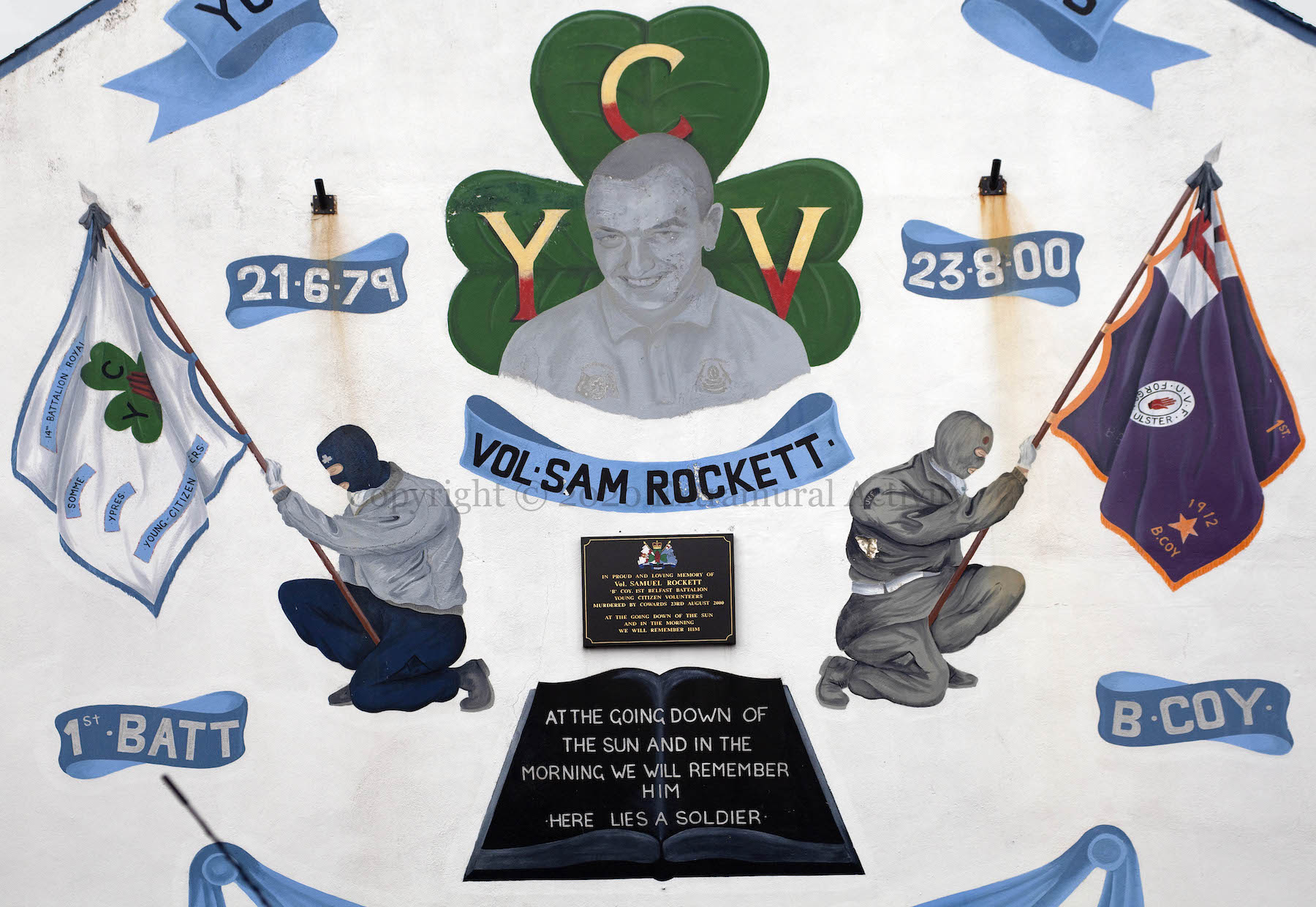
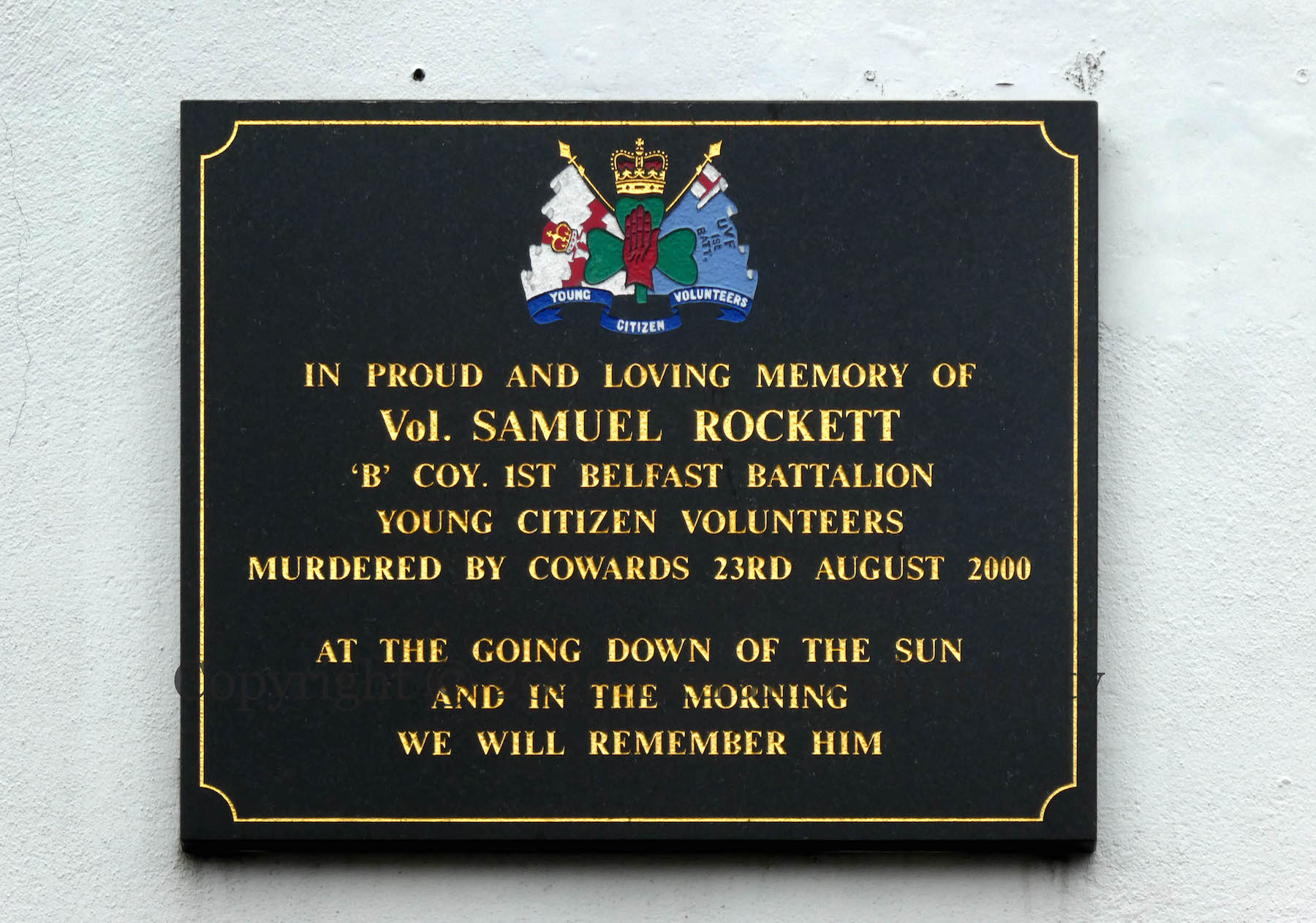
The “cowards” in this case are the members of the UDA who killed Rockett in front of his girlfriend and 18 month old child in an attack on her house in the lower Oldpark, during the feud between the UVF and UDA, sparked by Johnny Adair’s “loyalist day of culture” and removal of the UVF from the lower Shankill.
In response to the purge (and attacks on the Rex bar), the UVF killed Jackie Coulter (UDA) and Bobby Mahood (formerly of the UVF). Rockett was killed by the UDA in retaliation for Coulter’s death; 1,000 people attended Rockett’s funeral (Irish Times). The feud continued until mid-December (Mirror).
“In proud and loving memory of Vol. Samuel Rockett, ‘B’ Coy. 1st Belfast battalion, Young Citizens Volunteers. Murdered by cowards 23rd August 2000. ‘At the going down of the sun and in the morning we will remember him.'”
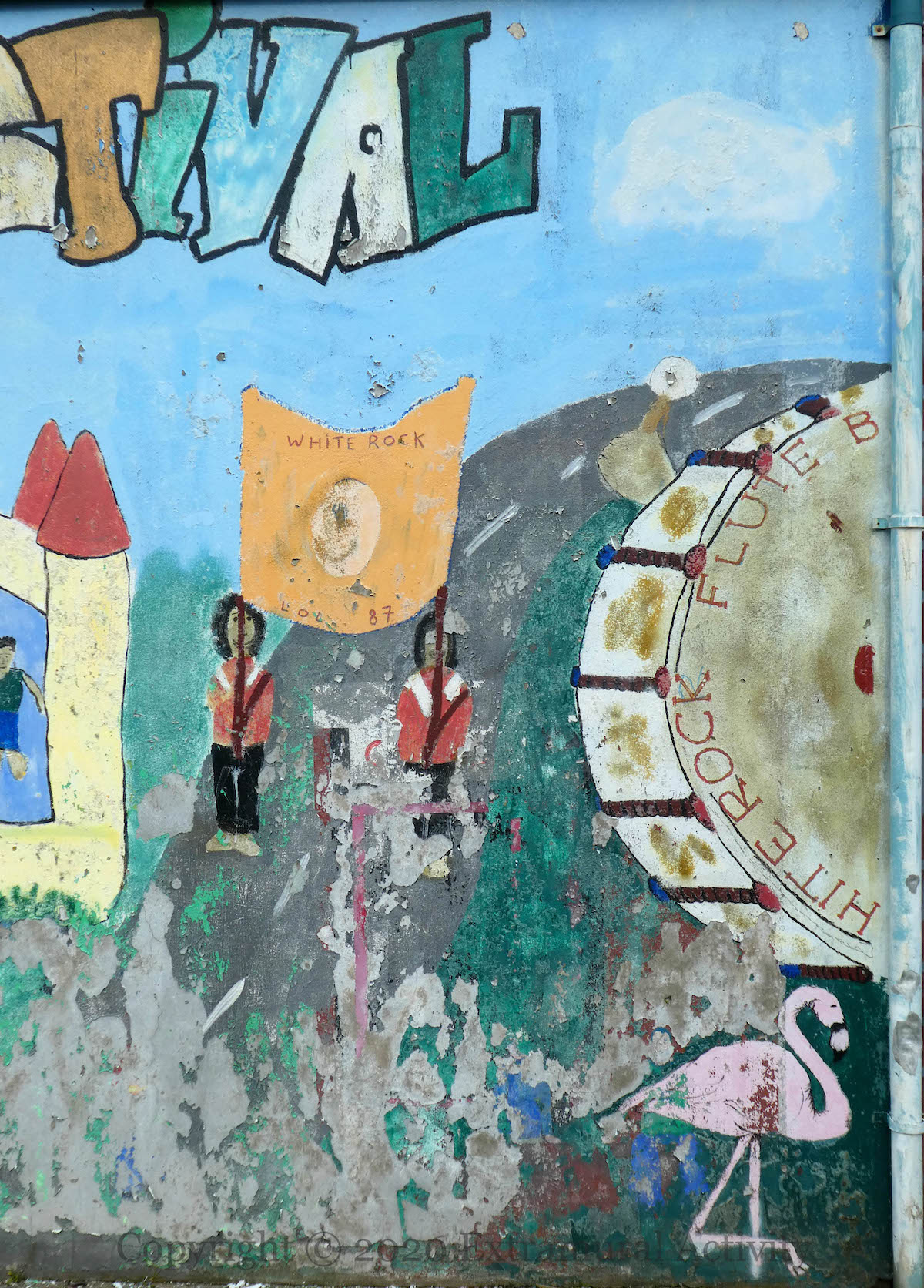
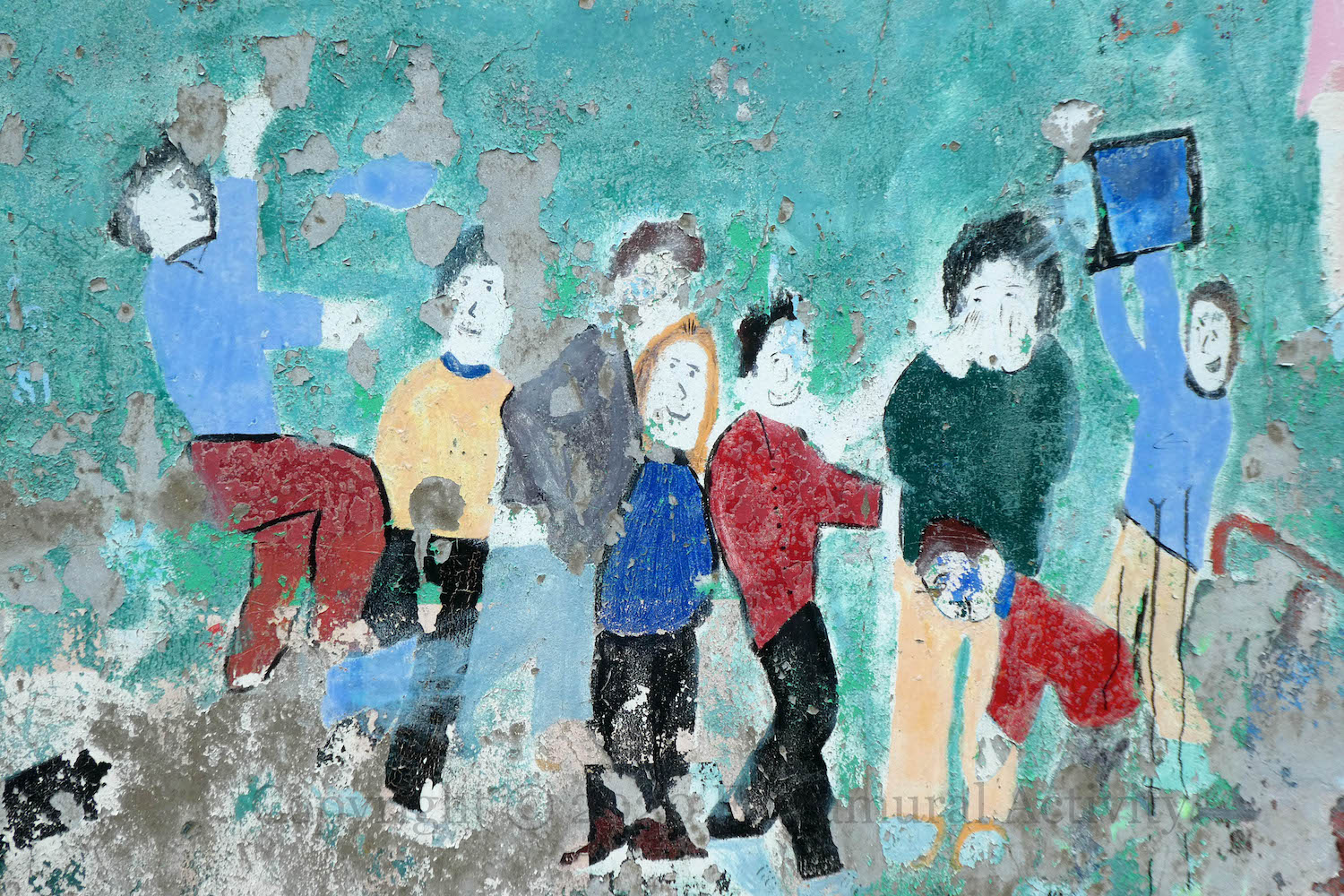
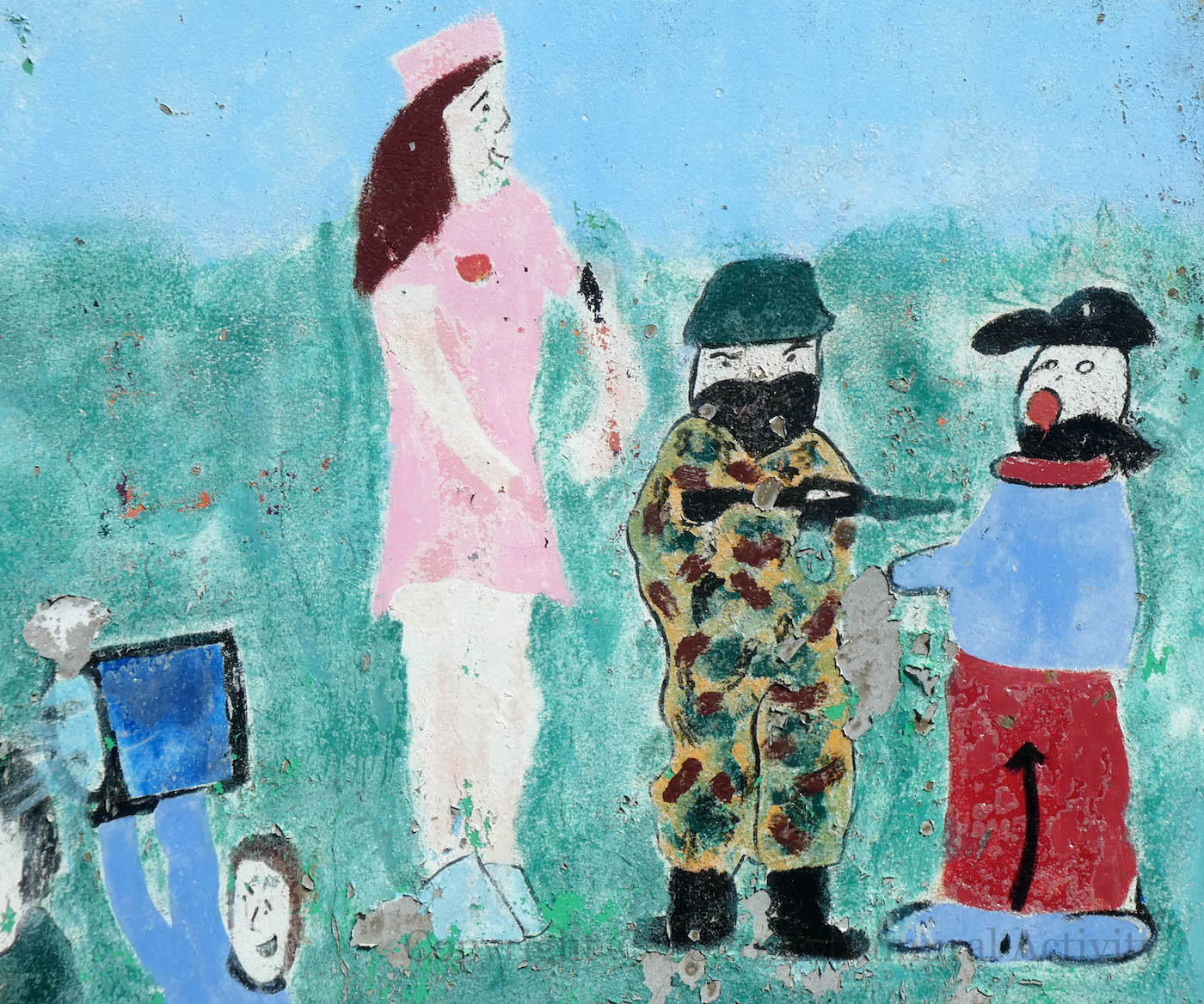
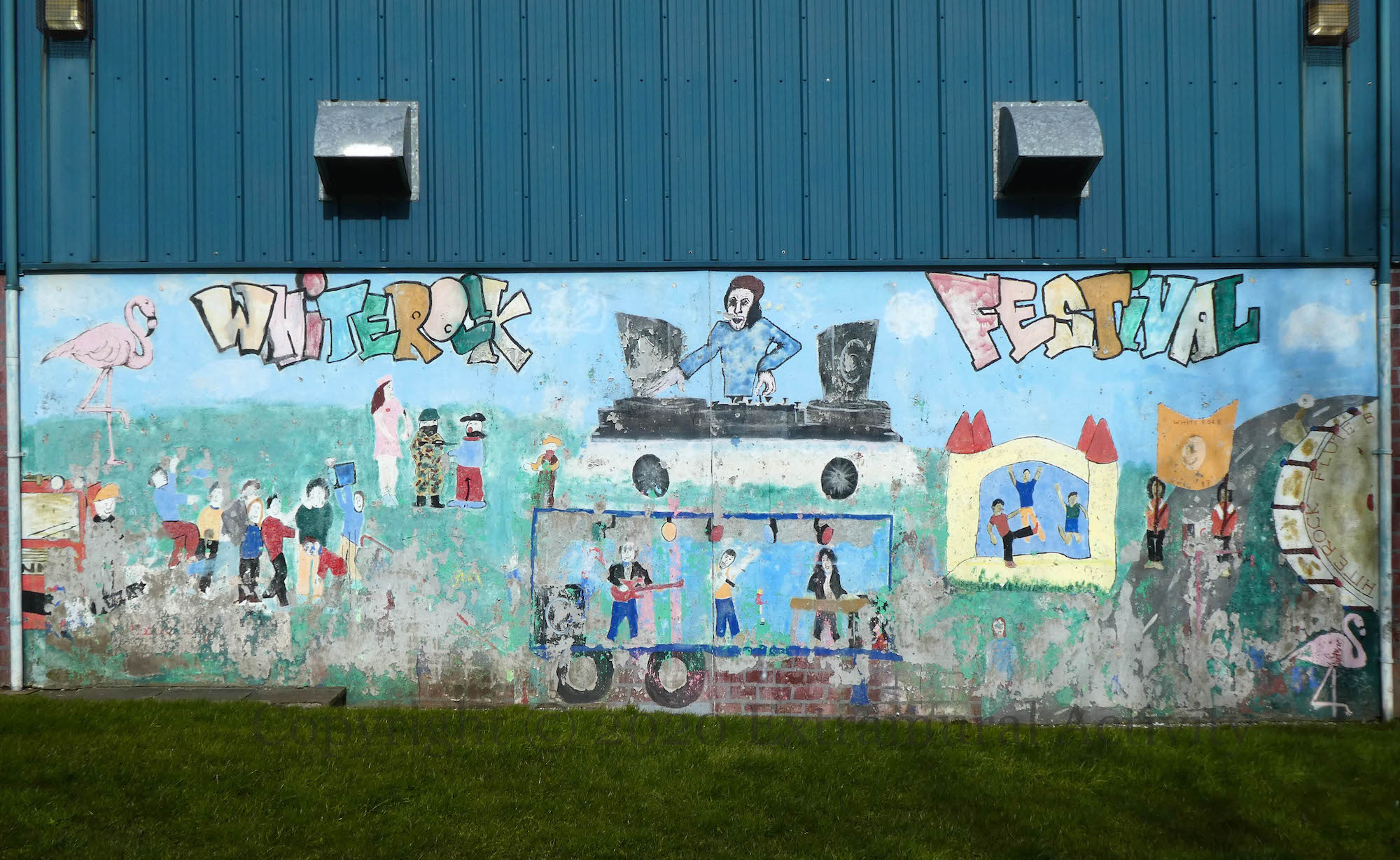
Plans for the Highfield estate were drawn up and approved in 1945, converting a green-field site in the foothills of Black Mountain between the Ballygomartin, West Circular and Springfield roads. The first houses were completed in 1948 (Belfast Forum.) The community hall sits at the centre of the estate. UDA bomb-maker Michael Wright died there in a premature explosion in 1980 (Sutton) and there used to be a UFF mural on the side. This was replaced in 2000 (C01505) and again in 2006(?) (M04512) with the current mural (entitled “Whiterock Festival” after the cross-community event sponsored by the City Council’s ‘Good Relations’ fund (one | two) showing Highfield kids having fun with music provided by a DJ, band, and the Whiterock Flute Band (Fb) drum.
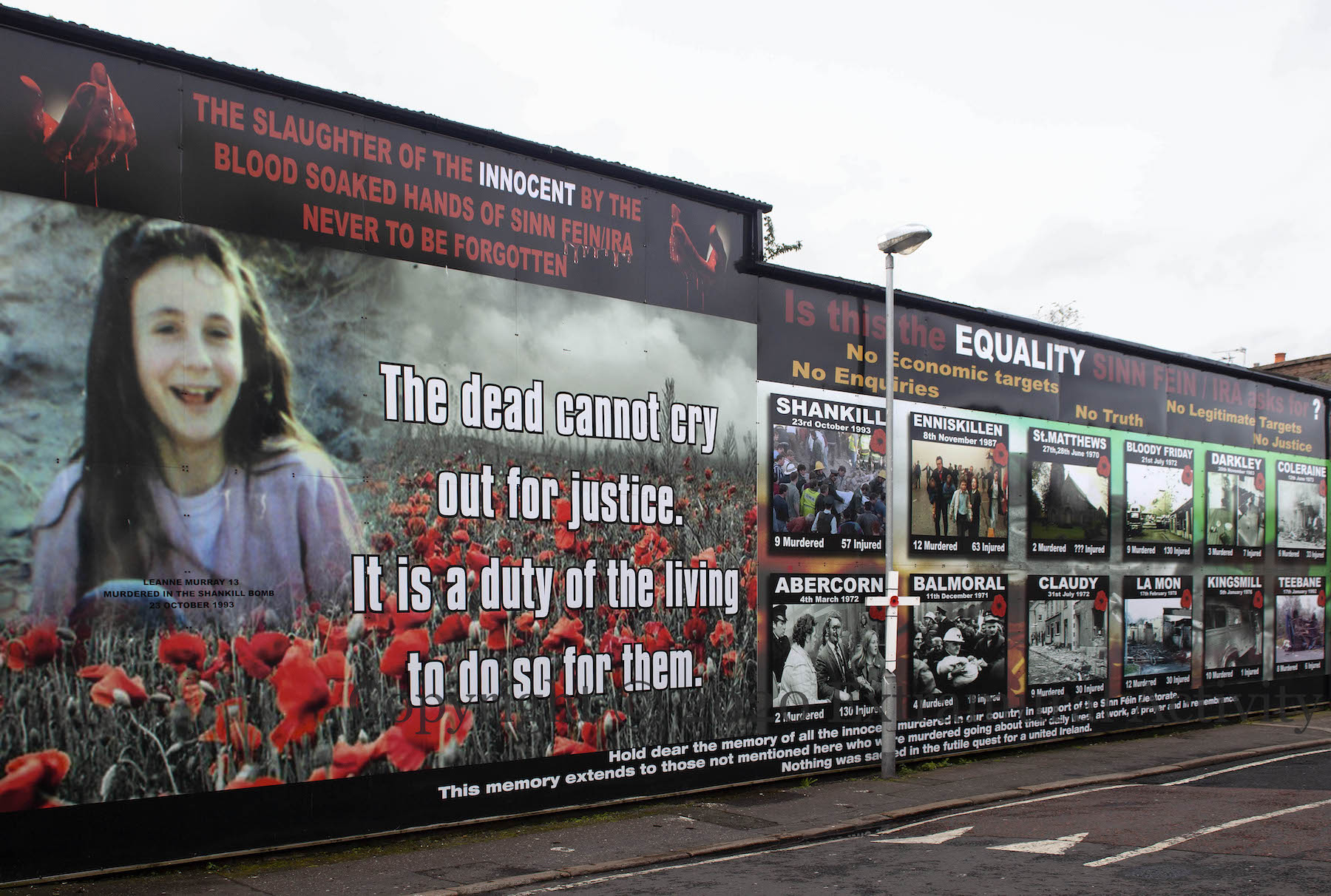
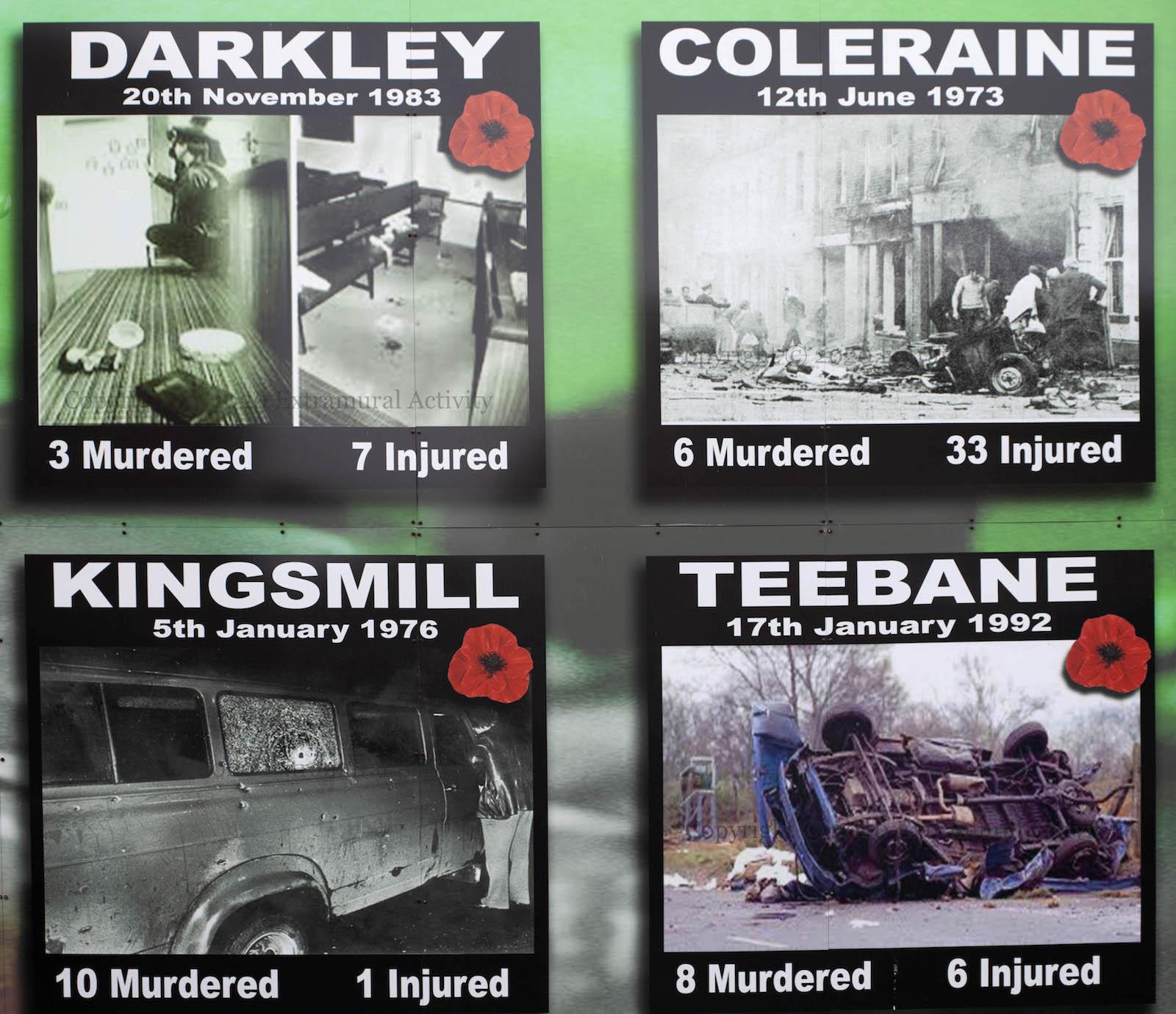
Photographs of a dozen atrocities are included on the right of this Derwent Street mural, ranging in time from the 1970 gun-battle around the nearby St Matthew’s church in 1970, in which Jimmy McCurrie and Bobby Neill were killed, to the October 1993 IRA bombing of Frizzell’s fish shop on the Shankill Road, in which Leanne Murray (shown on the left) was one of ten people, two of them children, to die. The others incidents portrayed are Bloody Friday, Darkley, Coleraine, Abercorn, Balmoral, Claudy, La Mon, Kingsmill, and Teebane.
This new computer-generated mural replaces the painted East Belfast Remembers, which had peeled away to a great extent.
“The slaughter of the innocent by the blood soaked hands of Sinn Fein/IRA never to be forgotten. The dead cannot cry out for justice. It is a duty of the living to do so for them. Is this the equality Sinn Fein/IRA asks for? No economic targets, no legitimate targets, no enquiries, no truth, no justice. Hold dear the memory of all the innocents murdered in our country in support of the Sinn Fein electorate. This memory extends to those not mentioned here who were murdered going about their daily lives at work, at prayer and in remembrance. Nothing was sacred in the futile question for a united Ireland.”
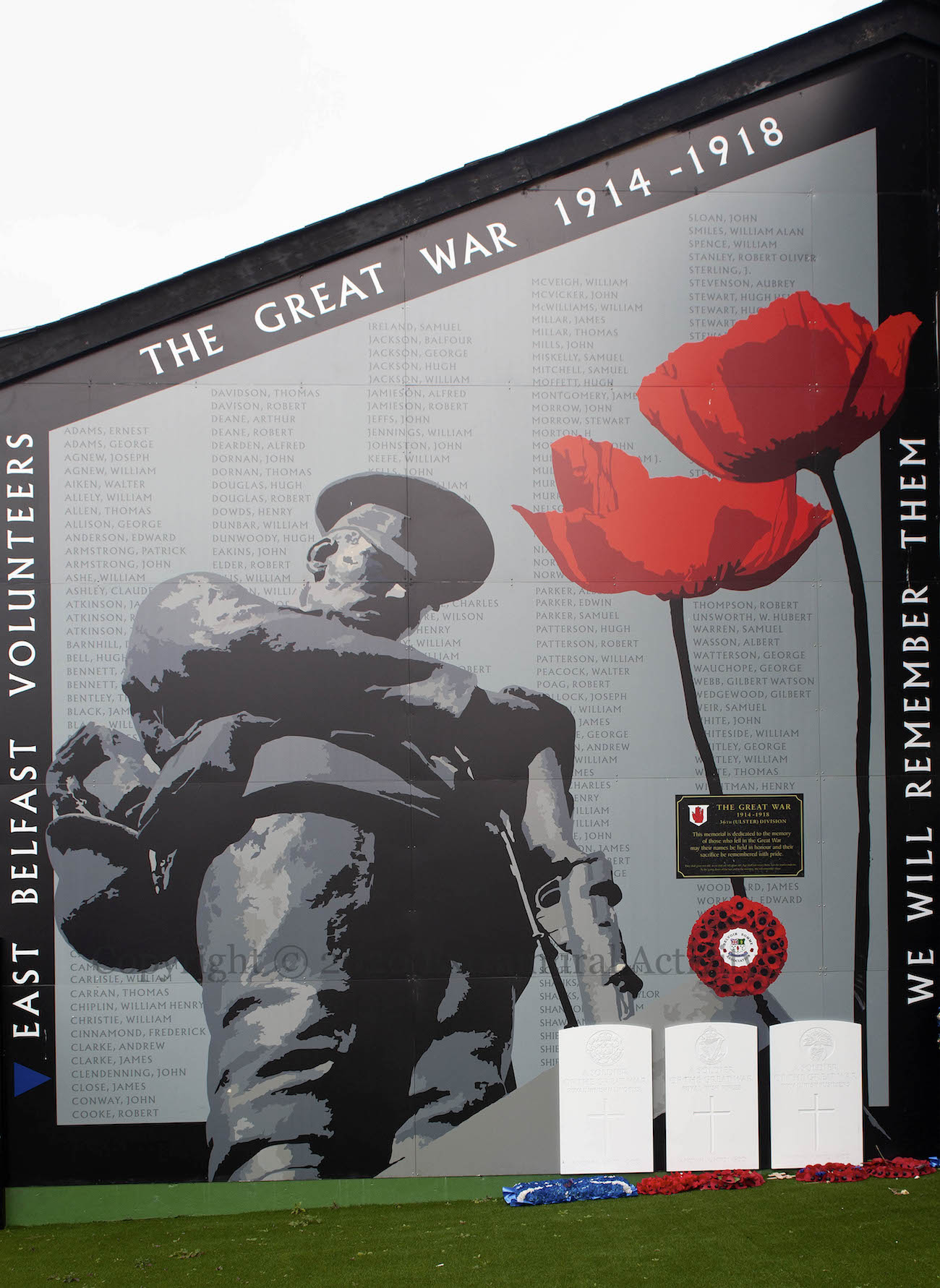
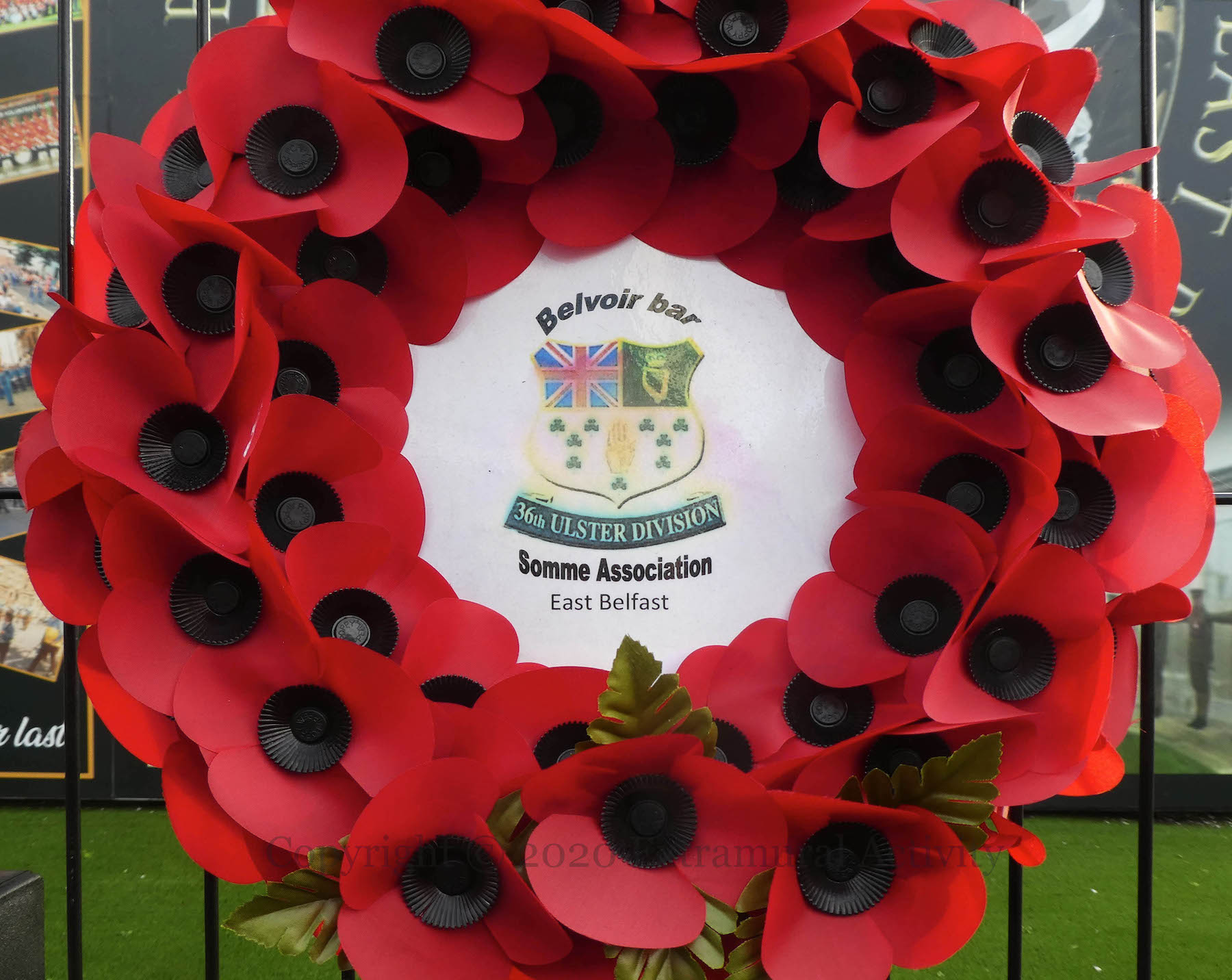
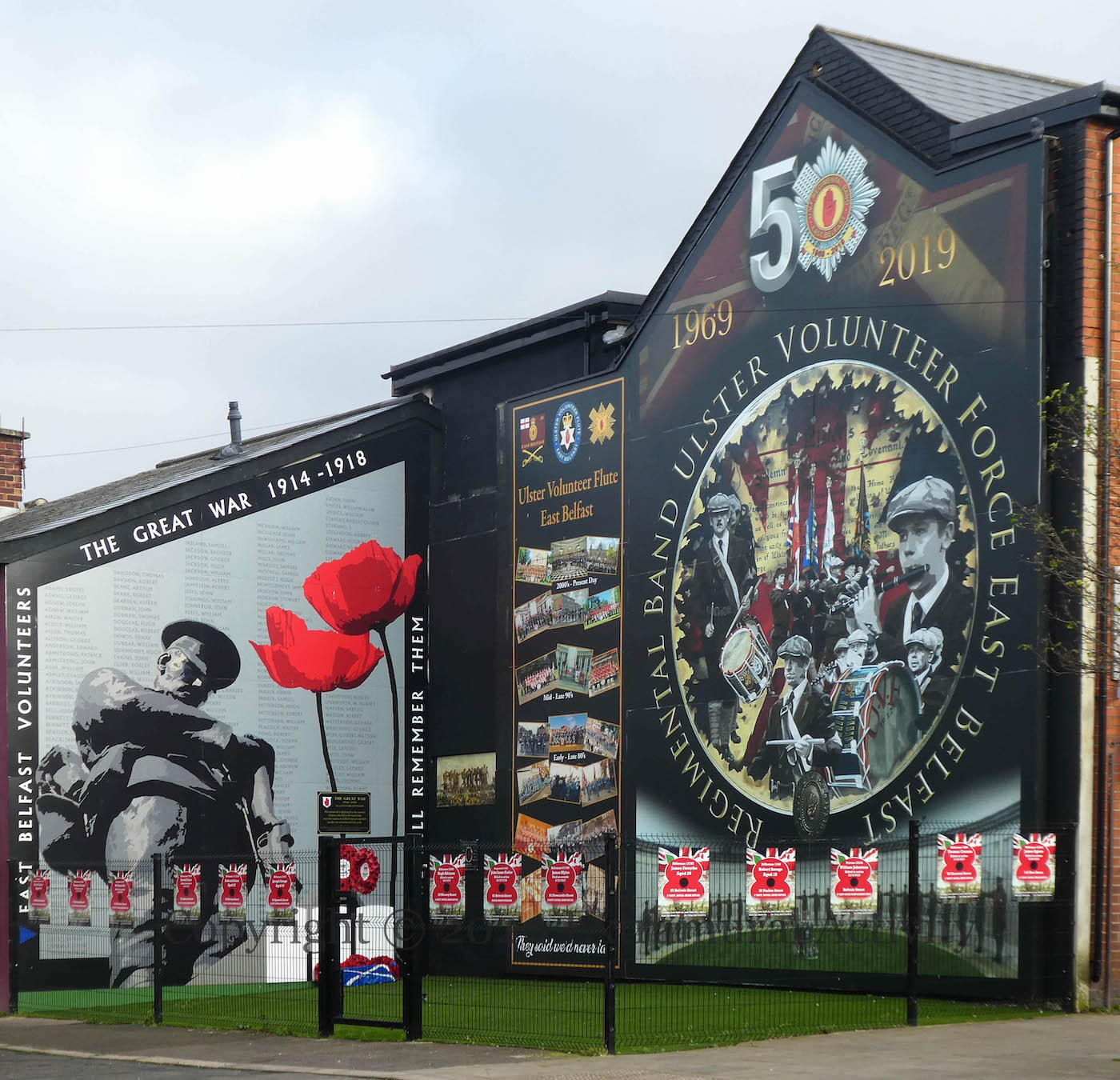
“The Great War (1914-1918) 36th (Ulster) Division. This memorial is dedicated to the memory of those who fell in the Great War. May their names be held in honour and their sacrifice be remembered with pride.” Next to to the UVF Flute Band 50th anniversary mural and the Singer Sergeant painting (Observe The Sons Of Ulster).
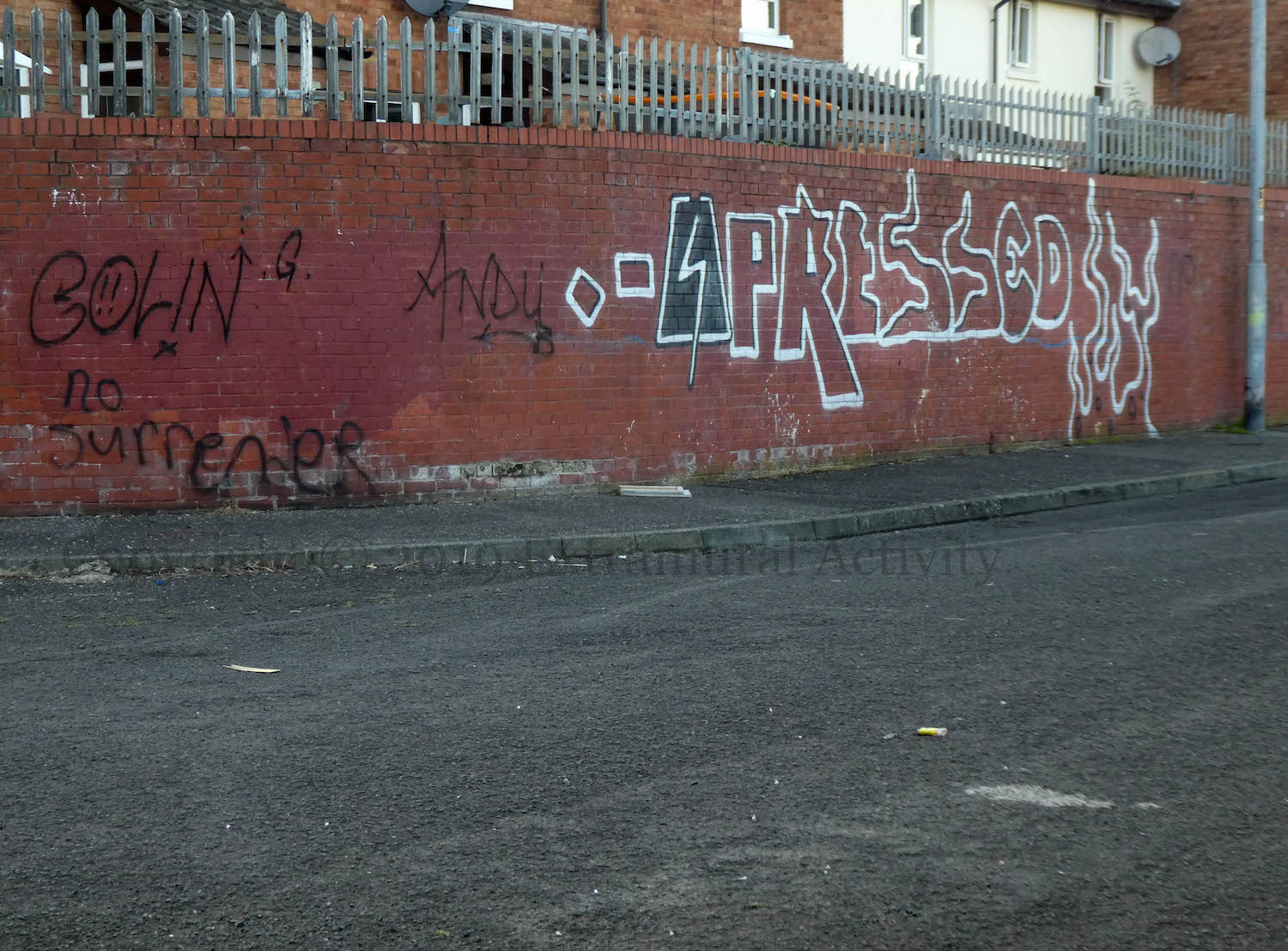
Conway Street used to run all the way from the Falls to the Shankill but was divided into two in response to the intense rioting of August 1969. Makeshift barriers were constructed along the Falls at the bottom of Conway Street and others, soon to be replaced by the permanent barrier. Although the so-called “peace” line largely does its job, the wall is itself a form of oppression to those living in its shadow. “No surrender” to the op(p)ressors. Graffiti on Conway Street above (i.e. Shankill side of) the “peace” line.









 Extramural Activity