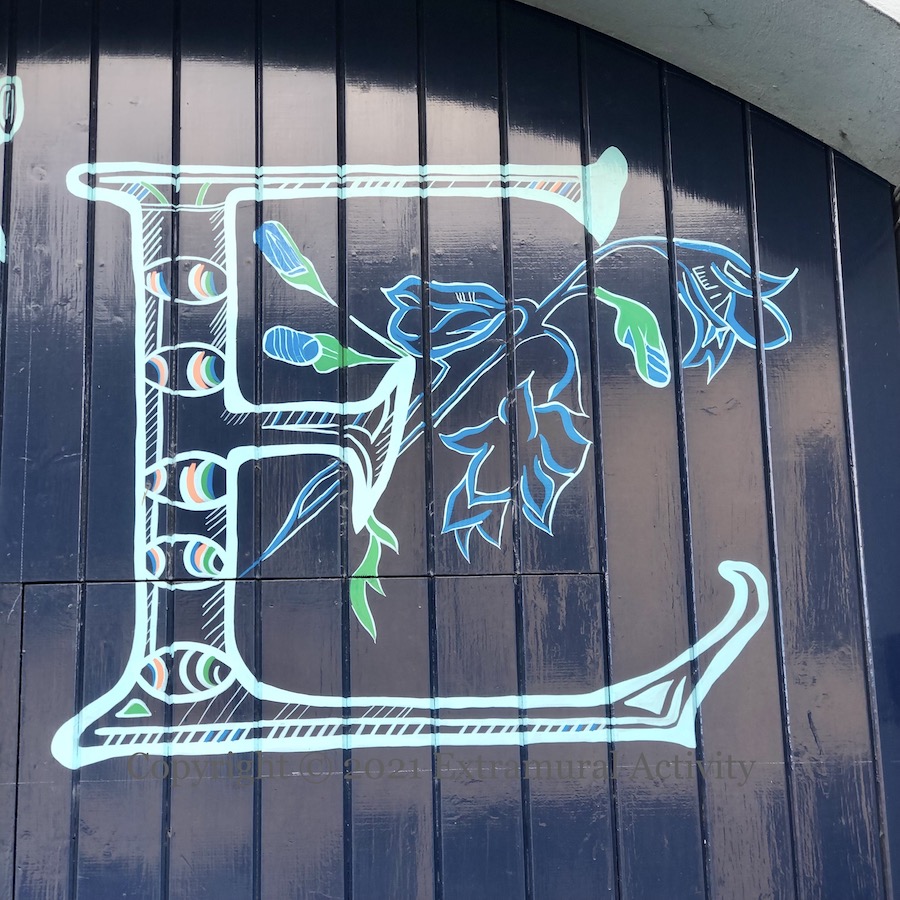
Feıs Na nGleann is an annual festival of Irish language, arts, and crafts, begun in Glenariffe in 1904. The website has not been updated since 2019, presumably due to COVID putting a stop to activity.
The “F” makes reference to the local “Irish (Peasant) Home Industries“, while the “E” shows the harebell (bluebell) in flower. The “I” might be St Brigid as an oak or a reference to Princess Taisie/Taobhgheal of Rathlin.
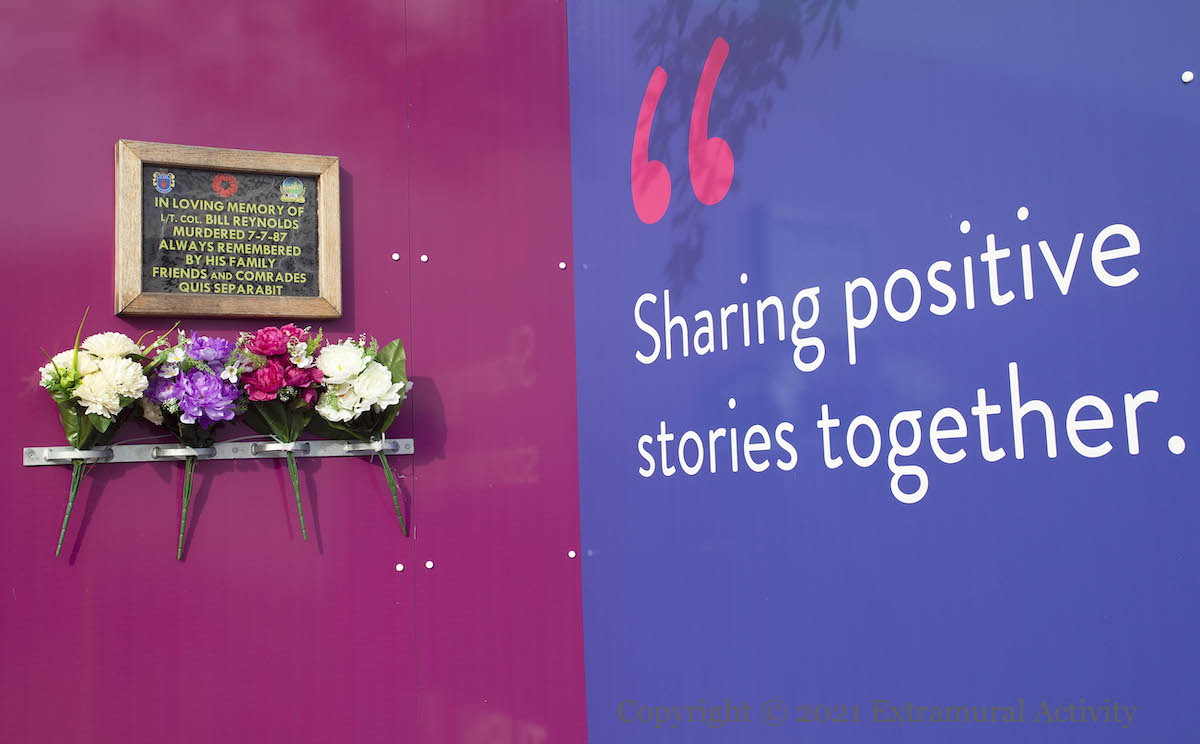
“I loved it here, and still miss it. The characters that came into the shop … and I miss the craic!” The advertising hoardings at the corner of Ligoniel and Crumlin roads have been replaced with this community alcove with pavers and a space for “sharing positive stories together” at “the turn of the road” from Ballysillan towards Ligoniel village. The plaque to the UDA’s Bill Reynolds, which stood on the building where he was killed until the building was demolished (see the old plaque) and then replaced with a new plaque next to the hoarding, has been included.
“In loving memory [UDA] Lt. Col. Bill Reynolds murdered [by the IRA] 7-7-87. Always remembered by his family, friends and comrades. Quis separabit.”
Local storyteller Hugh Dillon in Castle Street, Ballycastle, by JMK (Jonny McKerr). The original photograph, of Dillon in Leyland Road, Ballycastle, in 1956 and is available at Dúchas.
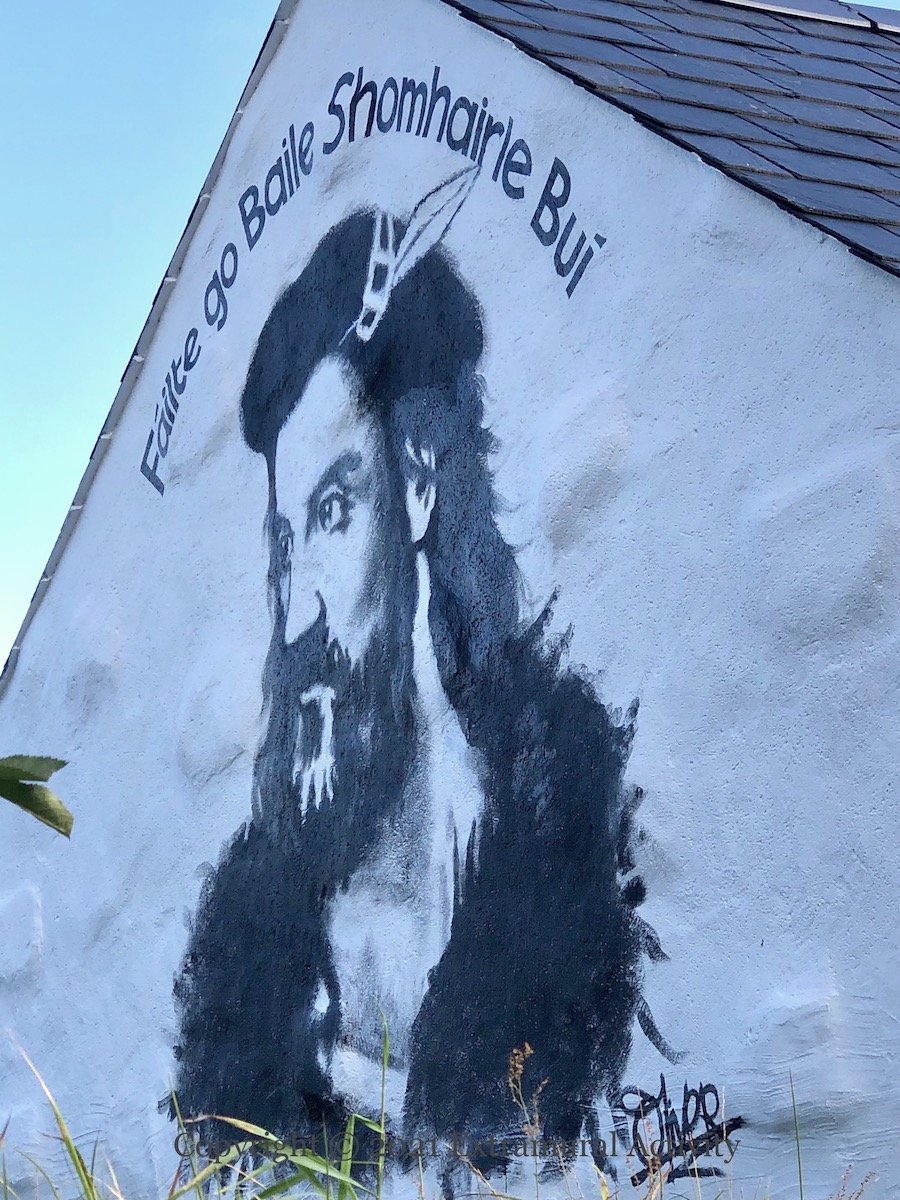
Somhaırle Buí Mac Domhnaıll (Gaeılge) / Somhaırle Buıdhe Mac Domhnaıll (Gàıdhlıg) / Sorley Boy MacDonnell (English) was so-called (Buí/Buıdhe) because of his “yellow” hair. Although his family was from the islands, he was born just outside Ballycastle in 1505 and is known for establishing the Mac Donnells in Antrim and for frustrating the plantation (WP | Tudor & Stuart Perspectives).
The mural was painted by Oliver McParland (web) in North Street, Ballycastle.
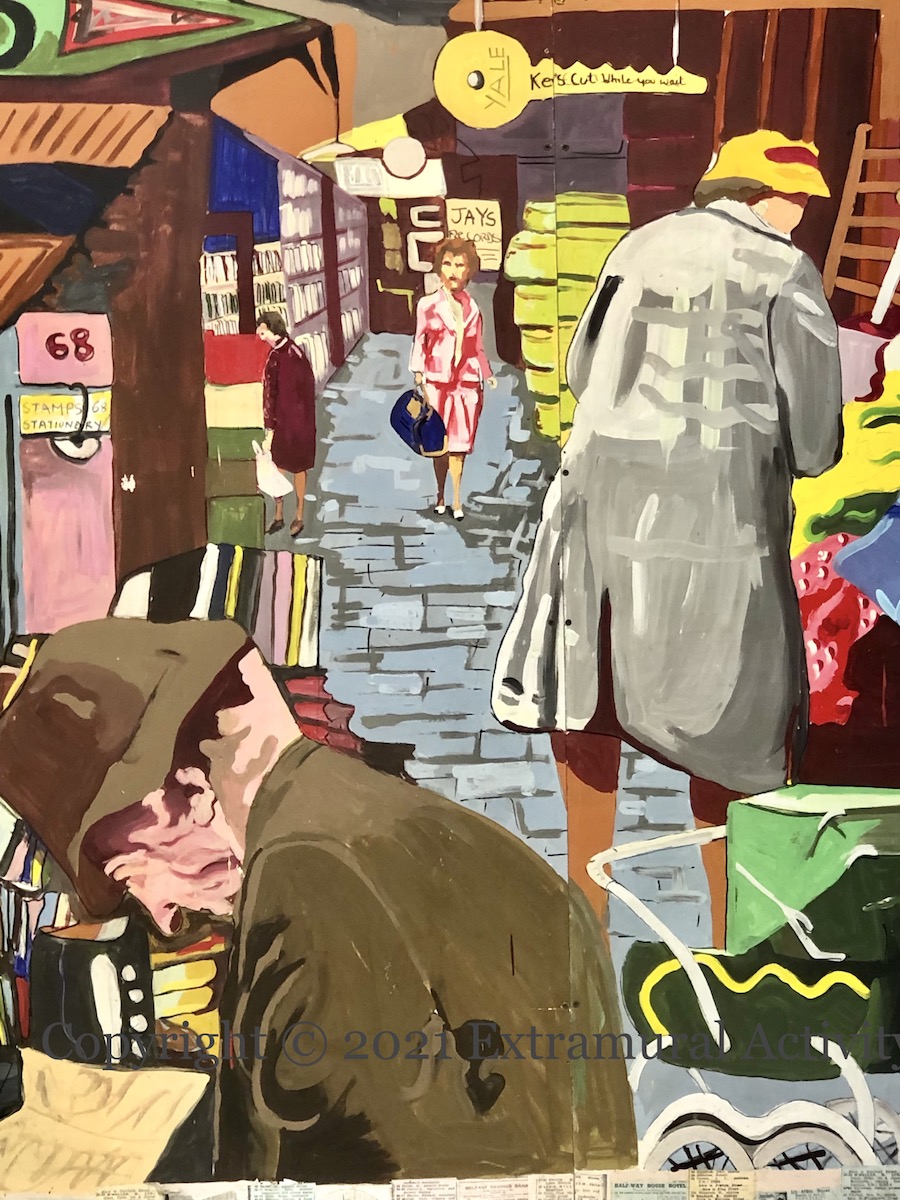
Here’s one from inside the modern-day Smithfield market, showing people browsing the shops in the old market, including Havelin’s key-cutting and Hall’s book shop – both have gone out of existence.
“In memory of all taxi drivers – public and private – who were murdered by loyalists/British crown forces during the conflict serving their community through transport.” This is the side wall to a larger mural to black taxi drivers which has been in place since 2001, was repainted in 2011, and is again looking in rough shape.
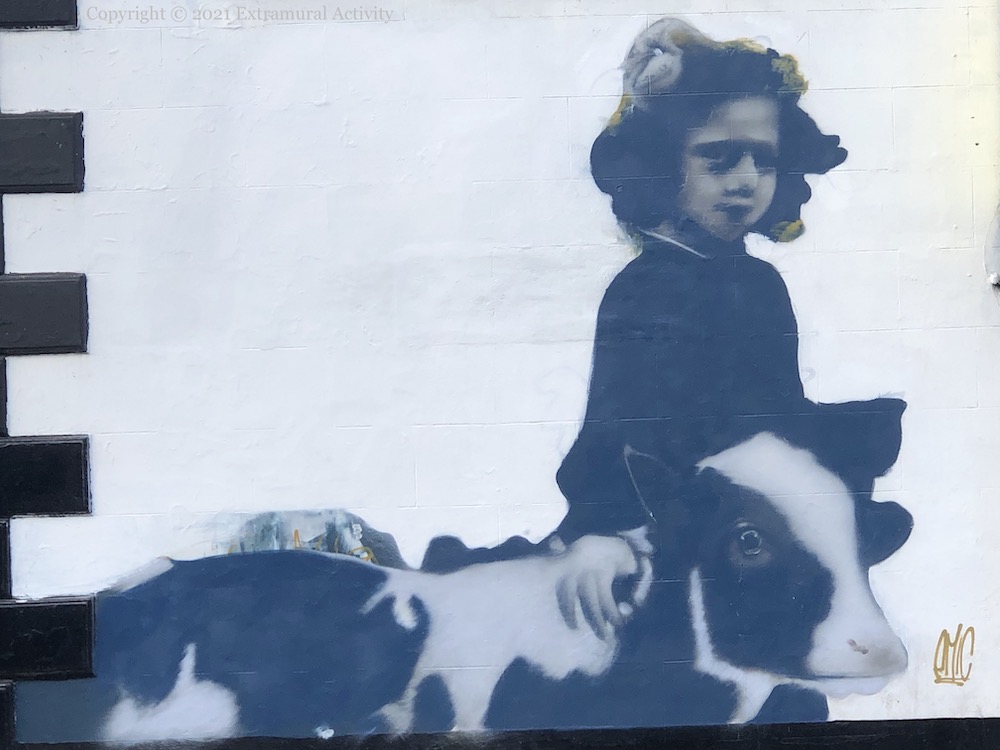
The inspiration for this piece is the Ould Lammas Fair, one of Ireland’s oldest and, some claim, biggest festivals, which is held in Ballycastle on the last Monday and Tuesday of August (Irish Culture & Customs). The piece, by emic (web), is in Castle Street which was perhaps the location of the market within the mediaeval town walls.
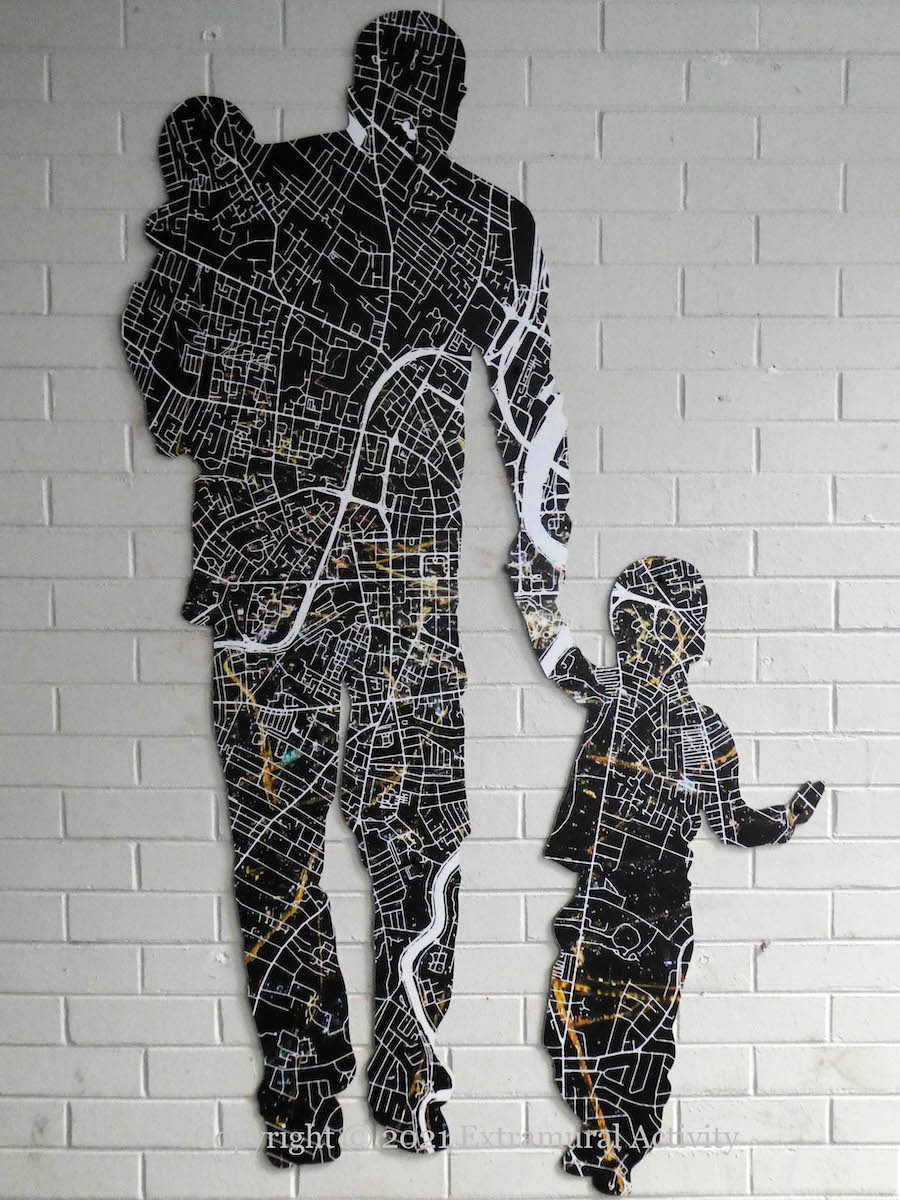
Plans to redevelop Castle Arcade were published in July (NewsLetter). The arcade runs between Castle Lane and Castle Place. The castle of Belfast originally stood at the top of High Street, built by the Normans in the late 12th century and then rebuilt by Arthur Chichester in 1611 but destroyed by fire in 1708 after which the area became commercialised (Belfast Entries | Belfast Castle). If you know the art’s creator, please comment or get in touch.








 Extramural Activity