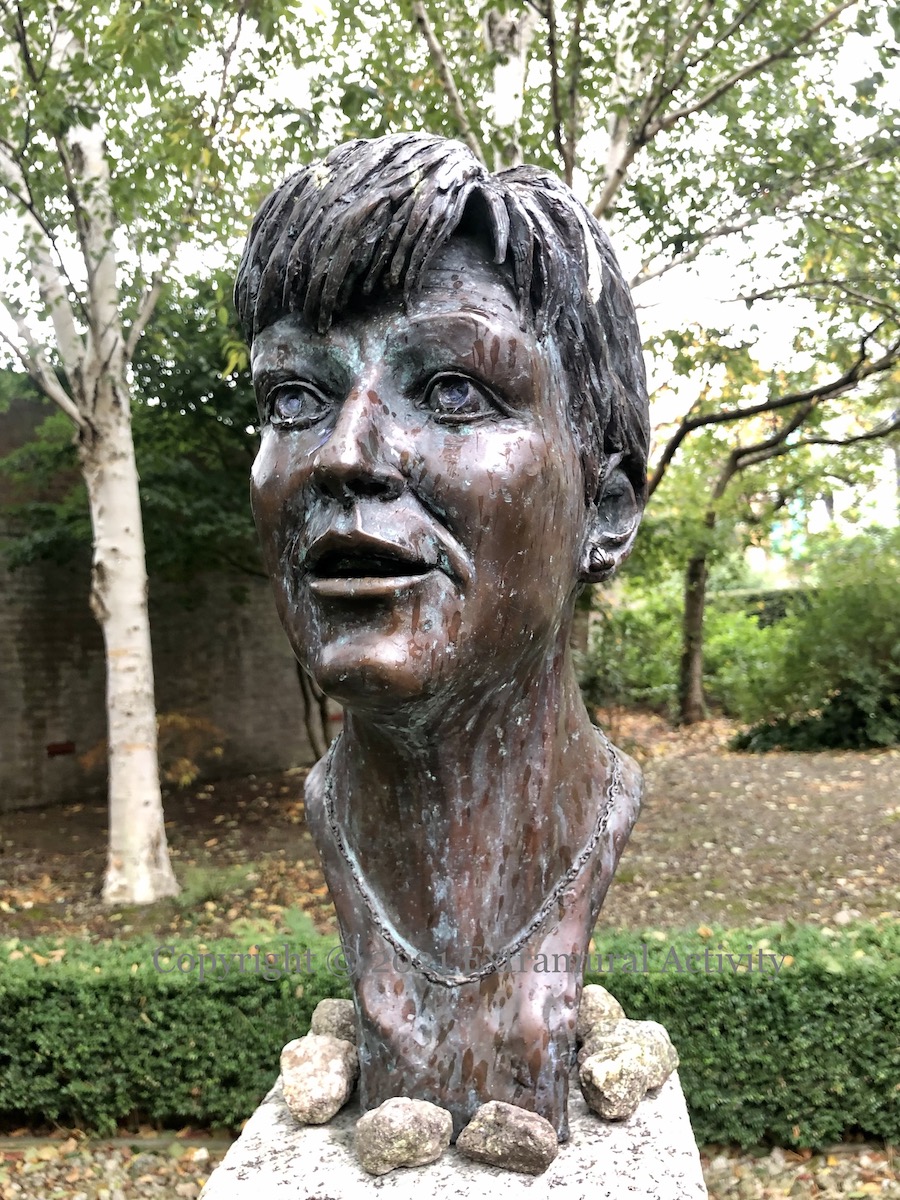
“Greater justice was her ideal and it was her ultimate achievement. Her courage and sacrifice saved many from the scourge of drugs and other crime. Her death has not been in vain.” Veronica Guerin was a Sunday Independent journalist who investigated drug trafficking in Ireland. She was shot and killed in 1996 while sitting at a traffic light on the Naas dual carriage-way by members of John Gilligan’s gang riding a motorcycle (WP).
The bronze bust, by sculptor John Coll, is in the grounds of Dublin Castle (Statues). “Unveiled by the Taoiseach, Mr Bernie Ahern, TD, 22nd June, 2001.”
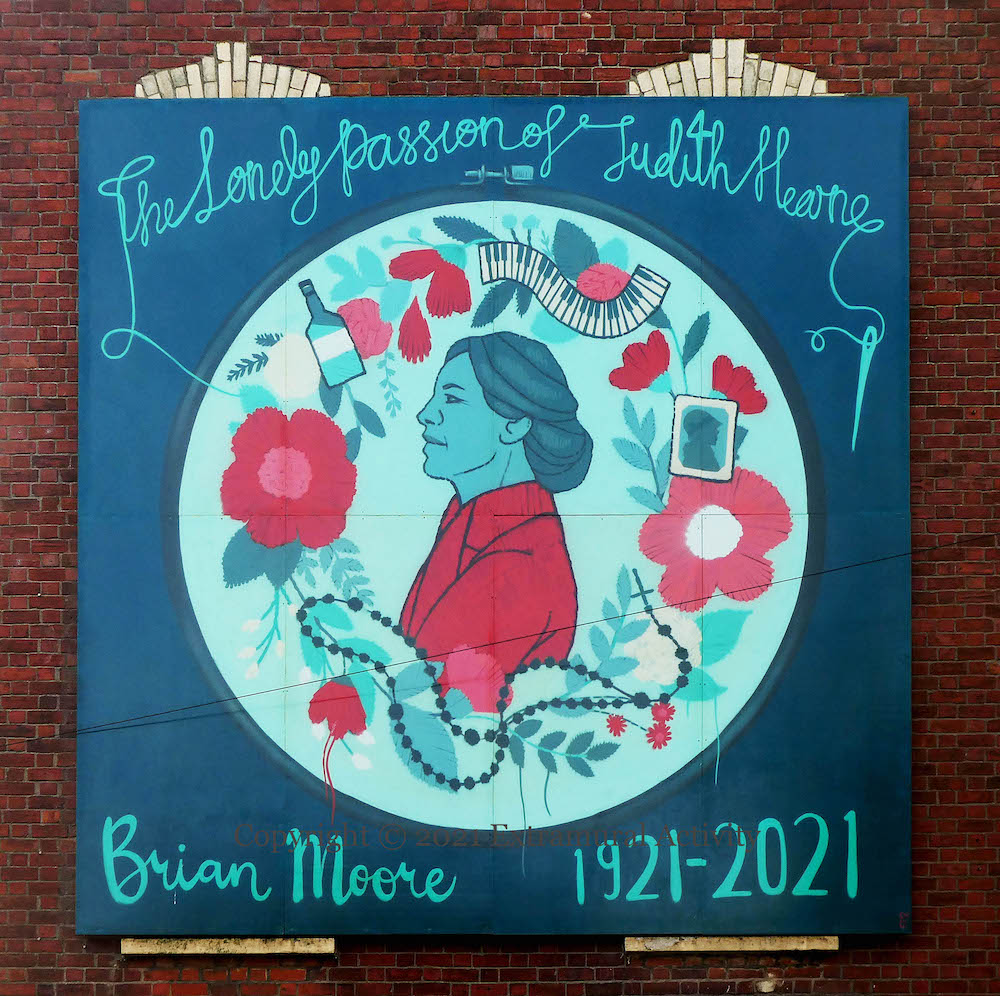
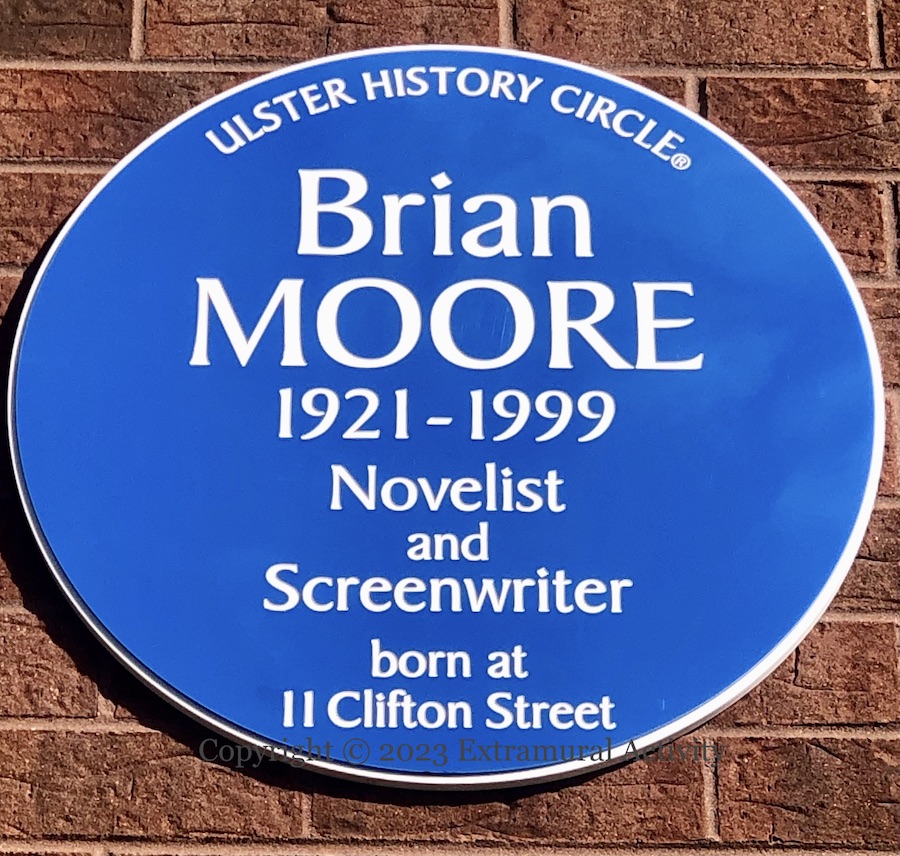
Novelist Brian Moore grew up on the Antrim Road and went to St Malachy’s, before emigrating to Canada in 1948. For the centenary of his birth in 1921, Paradosso Theatre adapted Moore’s best-known novel, (The Lonely Passion Of) Judith Hearne, for the stage and mounted this mural in Duncairn Avenue, showing the elements of Judith’s life: the bottle, the beads, the aunt who raised her, the piano used for lessons, and her red coat.
The board by Friz (ig) replaces the anti-joy-riding mural “Where’s The Joy?”, the last to go of the three, the others having been in CNR west Belfast and PUL west Belfast.
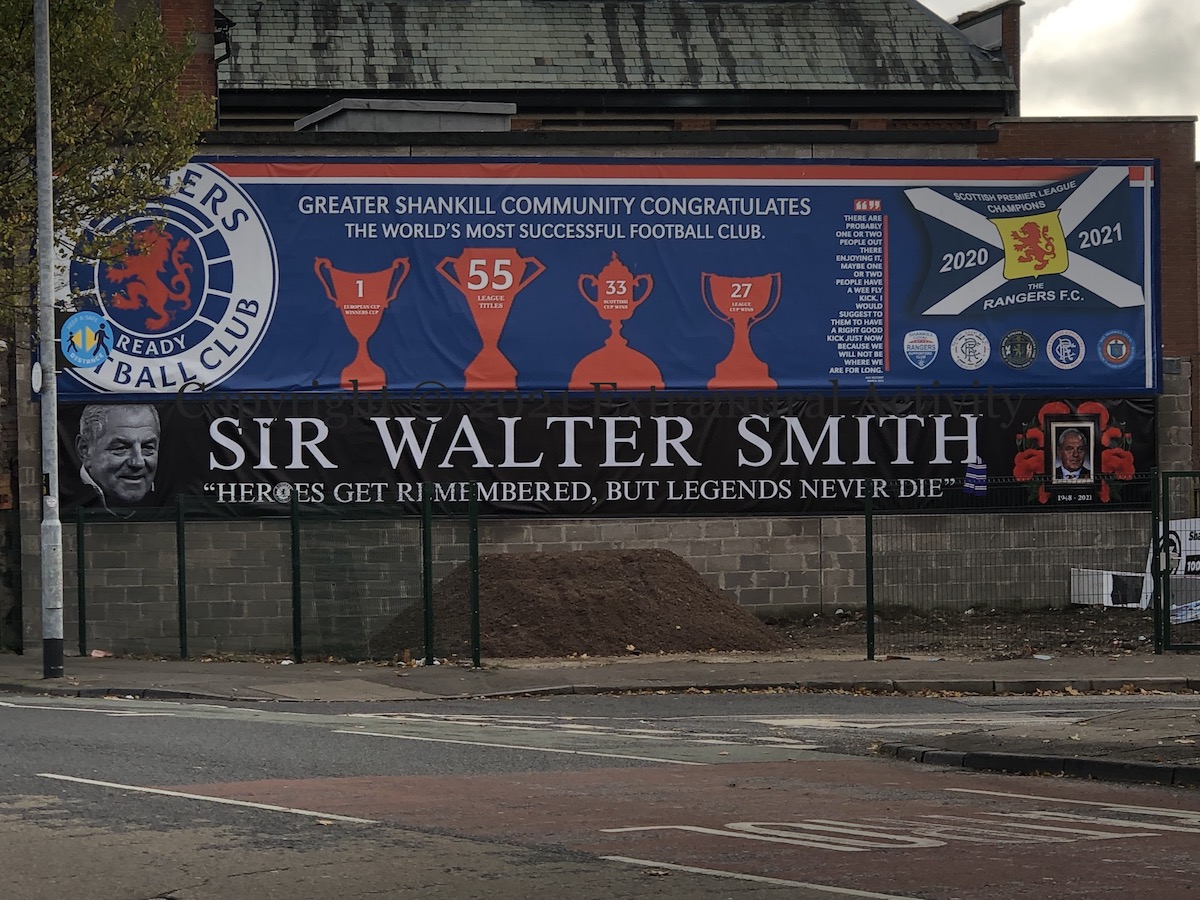
“Heroes get remembered, legends never die.” Walter Smith passed away on October 26th, after a managerial career spanning 33 years, including two stints at Rangers – winning 21 titles over 11 years – and the Scottish national squad. A tarp in his honour – with poppies around his portrait – has been added to the Shankill Road celebration of Rangers’ 2020-2021 league title.
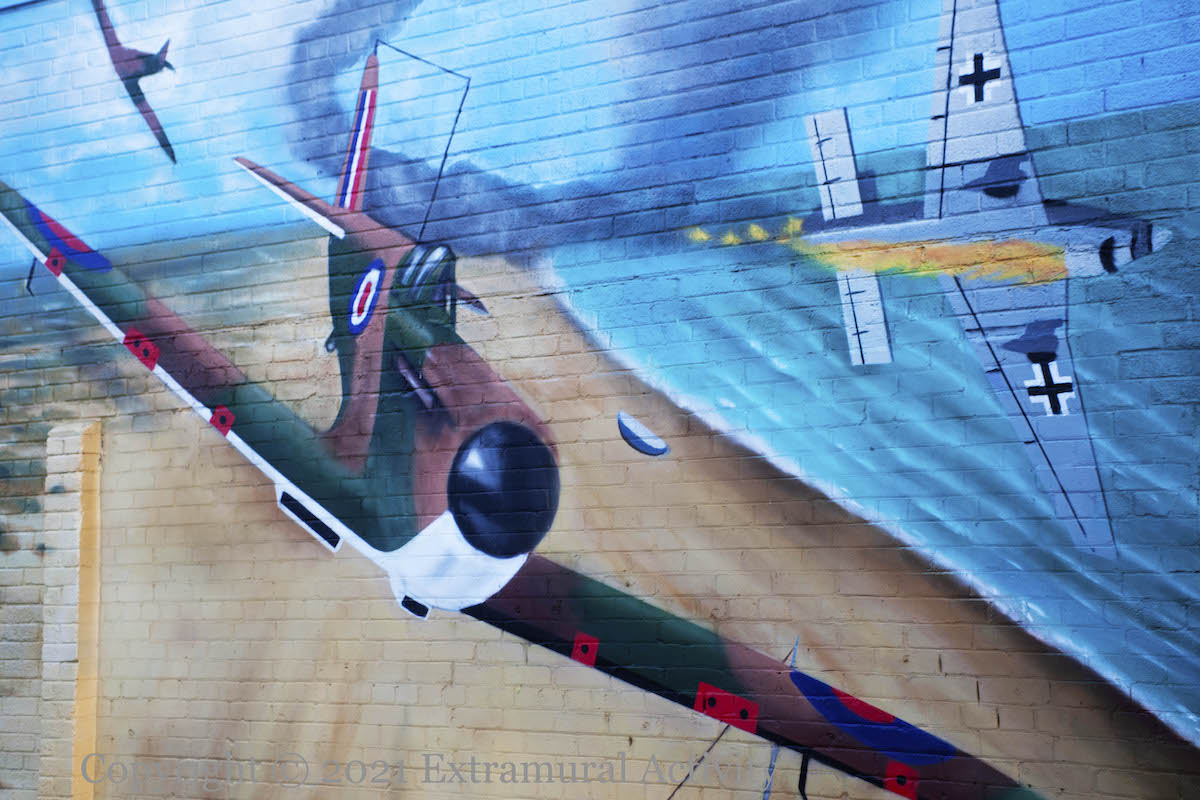
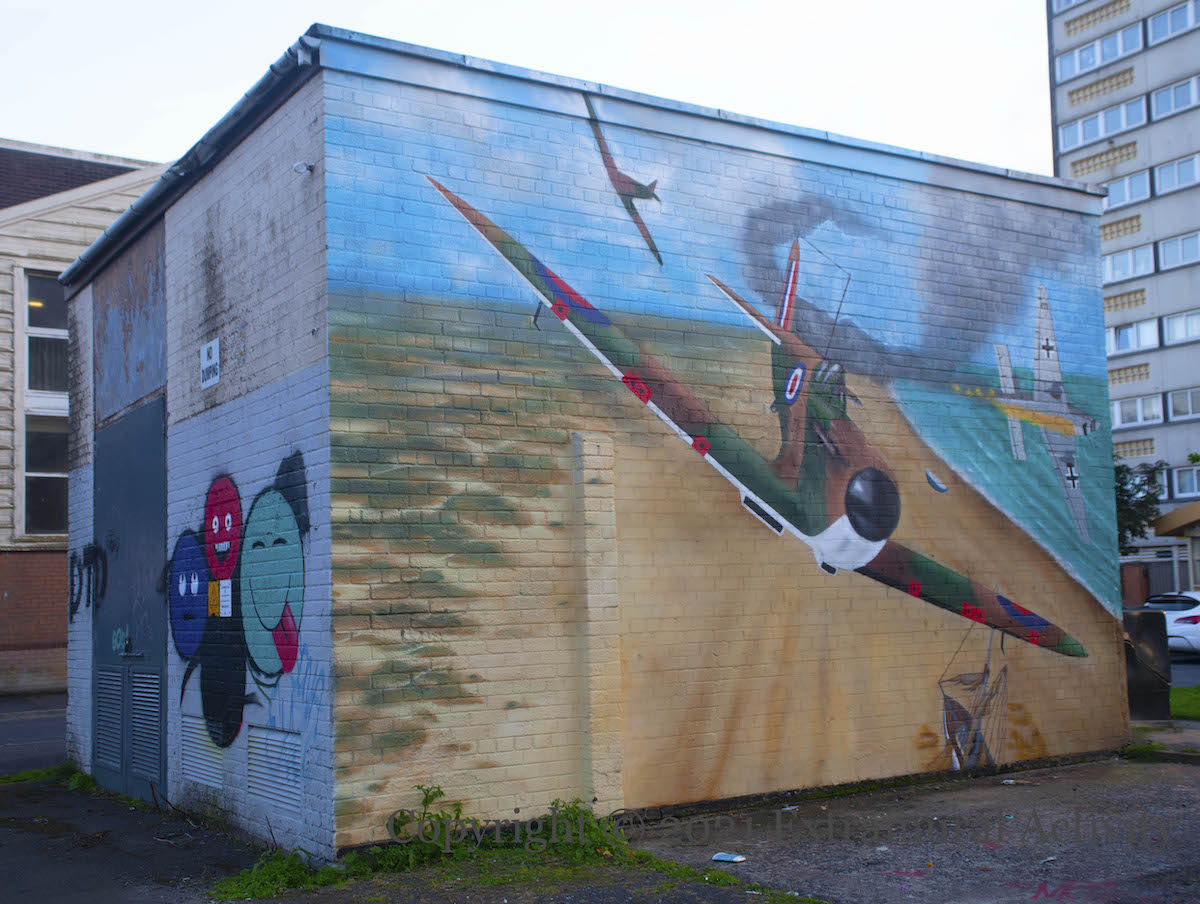
An RAF Spitfire sees off a Luftwaffe Ju87 Stukas over the beach at Dunkirk, France, as British troops are evacuated from the Continent. The fighter plane, designed and built by Supermarine Aviation from 1928 to 1948, became iconic during the Battle Of Britain as the faster counterpart to the Hurricane (WP).
The mural, by Glen Molloy, reproduces Mark Postlethwaite’s painting, Spitfires Over Dunkirk. Oddly, the mural is on the wall of the Clarawood substation that is not visible from any of the residences.
Part of the most recent development of the upper streets in the Village was not to rebuild the two rows on houses on Ebor and Nubia/Moltke streets and in their place construct a park – the Village Green – and playground. This new board on the outside railings make the park a “community park of remembrance” for WWI, showing an Ulster Banner with a Union Flag in the canton. There was formerly on this site an image of Thiepval Tower and a UVF stone.
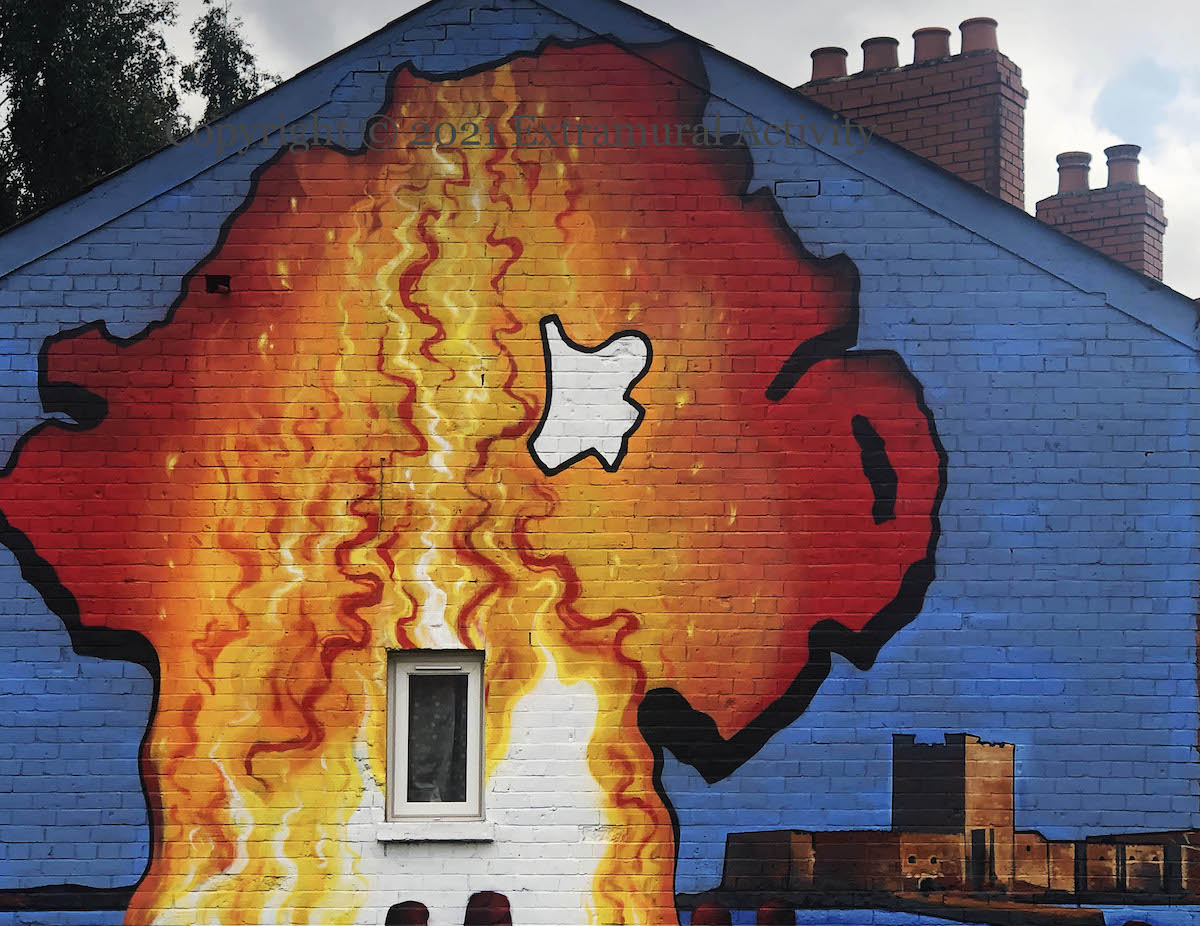
“This site housed the former Mid Donegall Road Bonfire for over two decades, until the expansion and development of the surrounding area including the City Hospital meant that it was no longer viable for a bonfire to remain on this site. Greater Village Regeneration Trust, through its work with The Health Trust, who own the site, and the local community, including the local bonfire builders wanted to have something on the site that could benefit the whole community and agreement was given for it to be transformed into the garden that is here today. Local Artist Johnny [sic] McKerr worked alongside Greater Village Regeneration Trust and the local community and this artwork was designed to depict and celebrate the heritage, history and culture which the people of this area are extremely proud of.”
The info board includes a photograph of the bonfire spilling out towards the car-park for the City. The other image is a photograph from the Peter Moloney Collection, used without permission, and photoshopped to add “DRL” – Donegall Road Loyalists.
According to Eddie Kelly of the GVRT, Carrickfergus castle is included because “This is where King William landed, and the annual bonfire is a symbol of a beacon lit across the coast to guide him” (Belfast Live).
Painted by JMK/Jonny McKerr (tw) at Coolfin St on Donegall Rd.
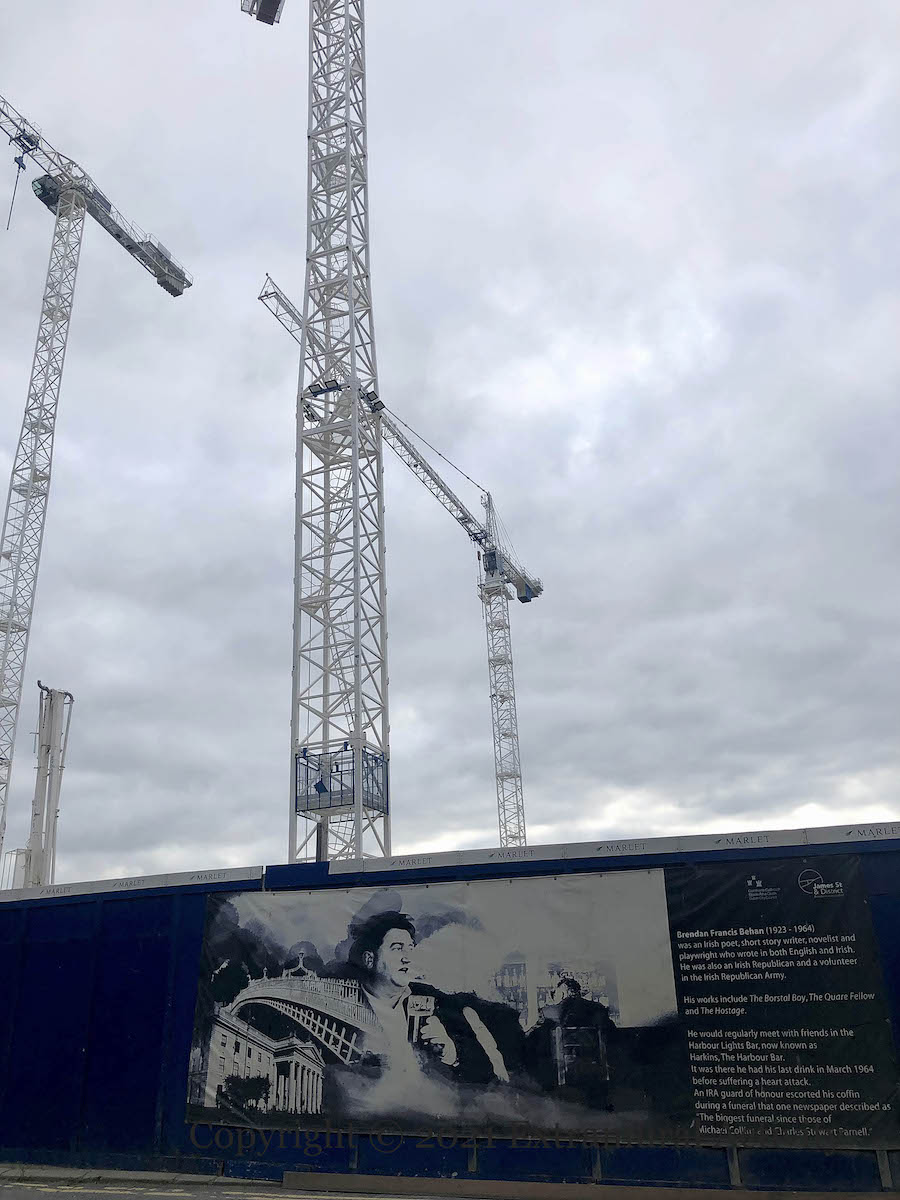
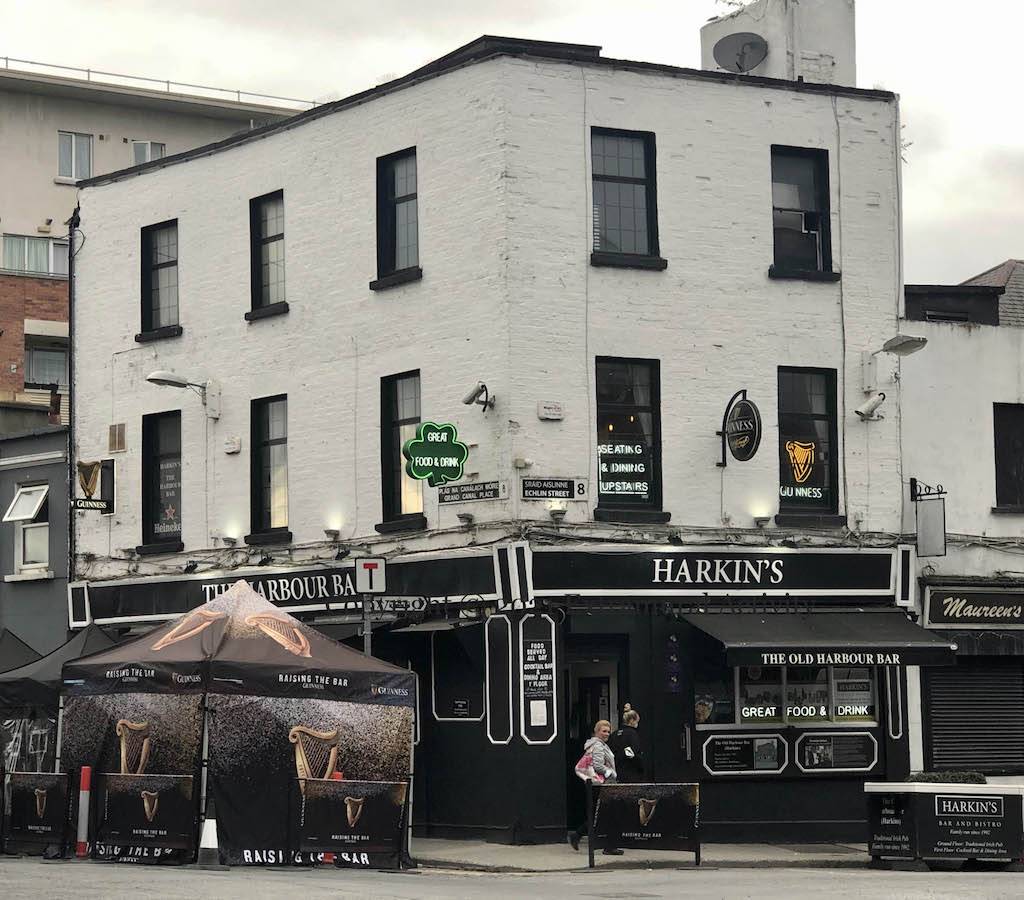
“Brendan Francis Behan (1923-1964) was an Irish poet, story writer, novelist and playwright who wrote in both English and Irish. He was also an Irish Republican and a volunteer in the Irish Republican Army. His works include The Borstal Boy, The Quare Fellow and The Hostage. He would regularly meet with friends in the Harbour Lights Bar, now known as Harkins, The Harbour Bar. It was there he had his last drink in March 1964 before suffering a heart attack. An IRA guard of honour escorted his coffin during a funeral that one newspaper described as “The biggest funeral since those of Michael Collins and Charles Stewart Parnell.”
The Bogside bonfire was set ablaze on Sunday night. It has long been put about that the occasion for the Derry bonfire is the feast of the Assumption (which newspapers and radio stations have repeated, e.g. BBC | RTÉ | Irish Independent). This is an attempt to provide some cover for the “dissident” republican nature of the event, as evidenced by the King Billy, UDA, UVF, RUC and Israeli Star Of David flags on the bonfire, shown above. The triggering event is rather the introduction of internment on August 9th, 1971. (Sunday was also the same day as the ‘Fire In The Sky’ fireworks to mark the end of Féile (Derry Journal). The local féilte in Belfast – which in time became Féıle An Phobaıl – were introduced as alternatives to the rioting that traditionally took place to protest the introduction of internment; the origins of Derry’s Gasyard Féıle, which began much later (1993) but takes place in the same August weeks, are unclear – please comment if you know.)
Before it was lit the banner in the lower left of the image above – “Ronann [sic] Kerr first, Lee Anderson your [sic] next” – was removed; the other flags and banners remained (BBC). The banner had drawn criticism as Kerr, a Catholic PSNI officer, was killed by a car bomb just north of Omagh in 2011 (BBC | BelTel).
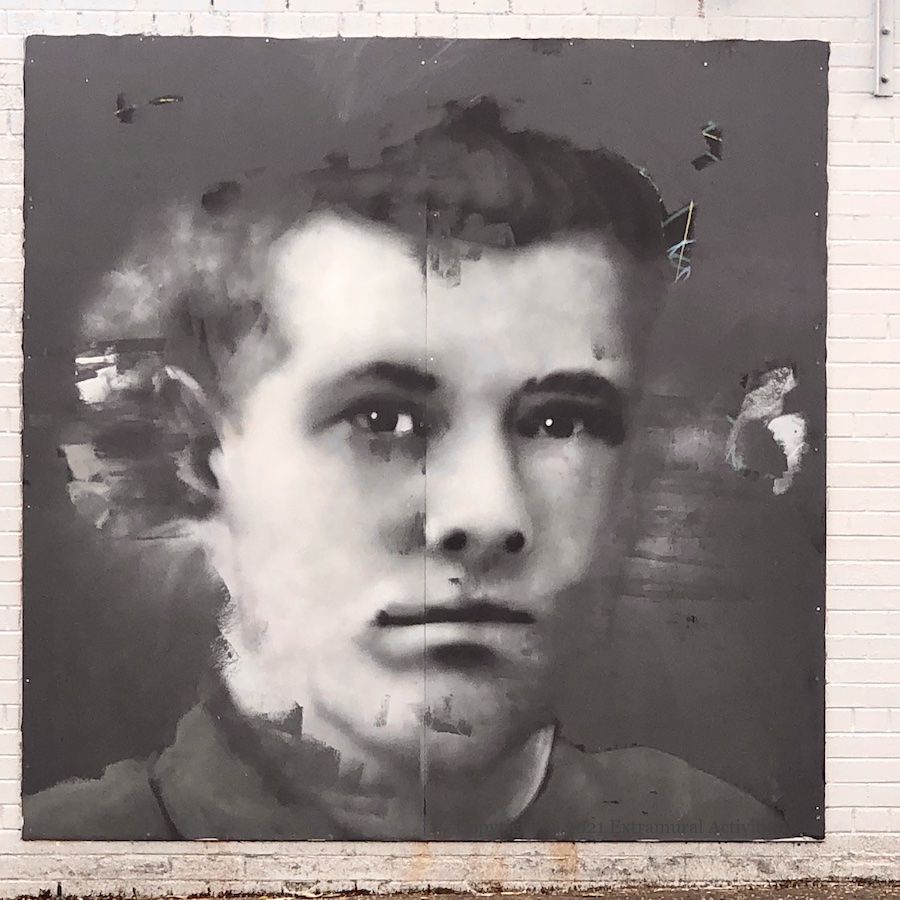
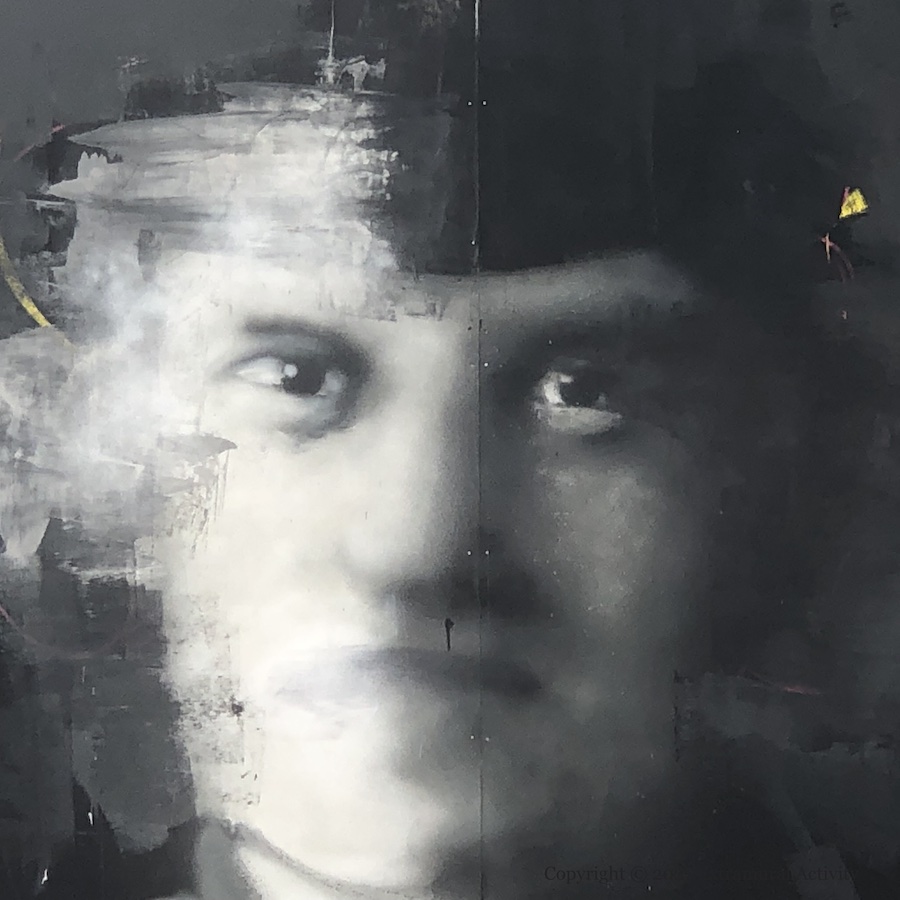
William Glasgow – see the image below – was the British Army soldier who shot and killed 15-year old Manus Deery in 1972 near the spot of the bonfire. His killing was ruled “unjustified” in 2017 (Irish Times); Glasgow died in 2001 (BBC). There are two plaques to Deery’s memory and he is included in the mural The Runner.








 Extramural Activity