Here are two final images from the memorial garden in Kilcooley. As mentioned in Tuesday’s post (To Keep Our Ulster Free), it seems that the combination of WWI imagery (today’s post and Across The Wire) and paramilitary memorials was not the plan approved by the Department of Social Development, which contributed funds to the project (Belfast Telegraph). A wide shot of the whole is included below.
According to an article in the Tele last Friday (2017-04-21), the Housing Executive has a list of over 100 memorial on Executive-owned land that it considers illegal. The list itself does not seem to be available and so it is not not known if the Kilcooley garden is one of these.
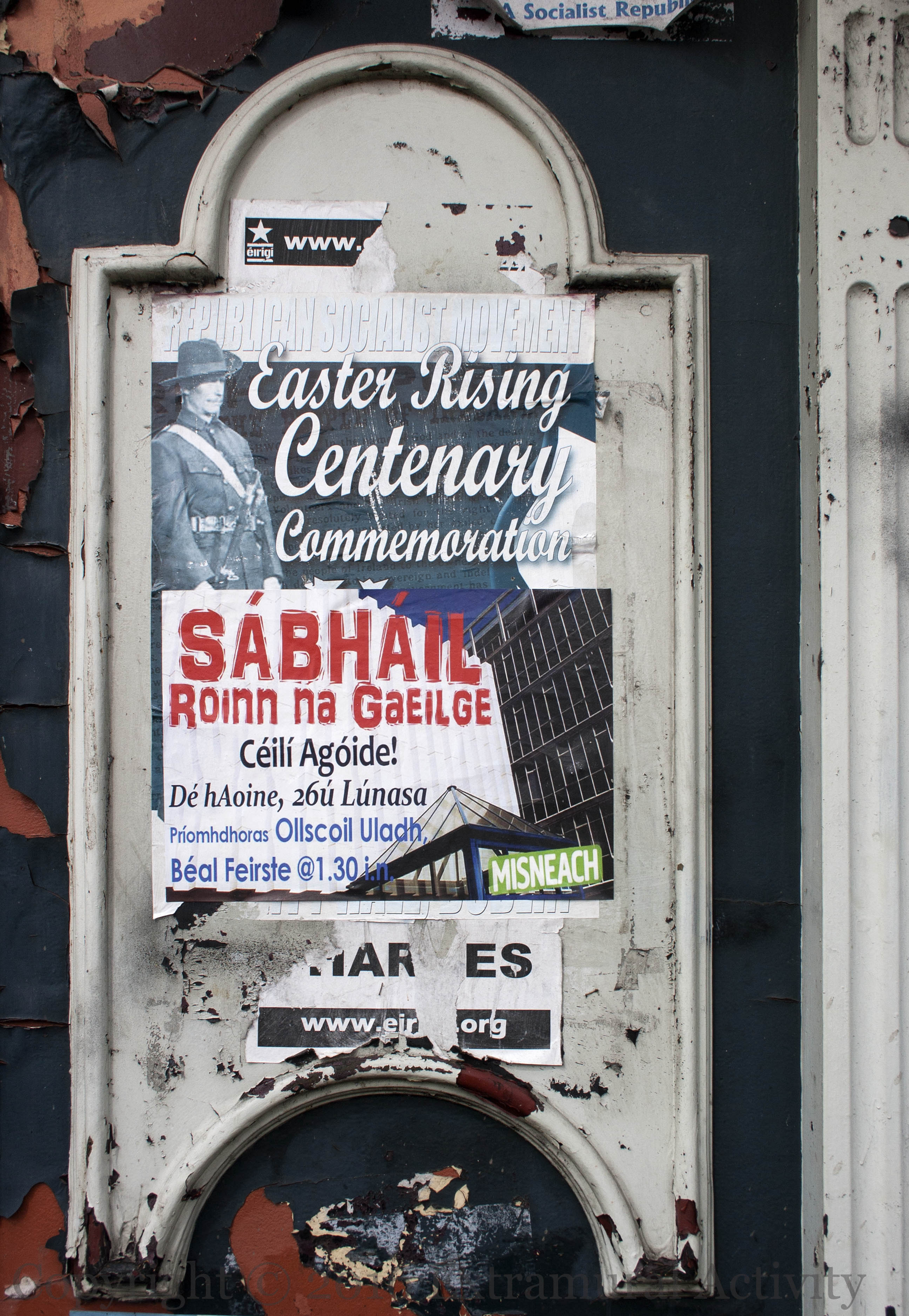
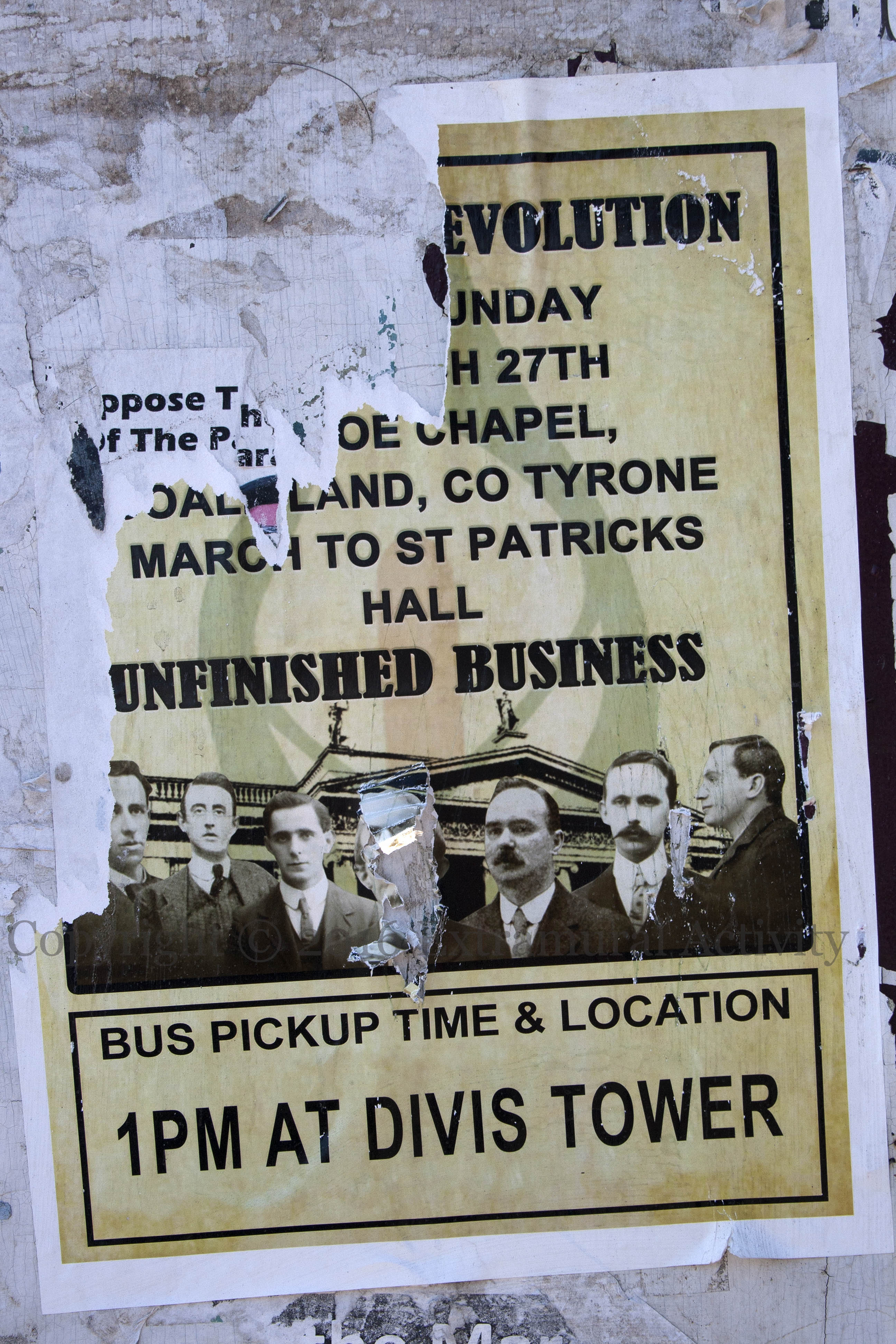
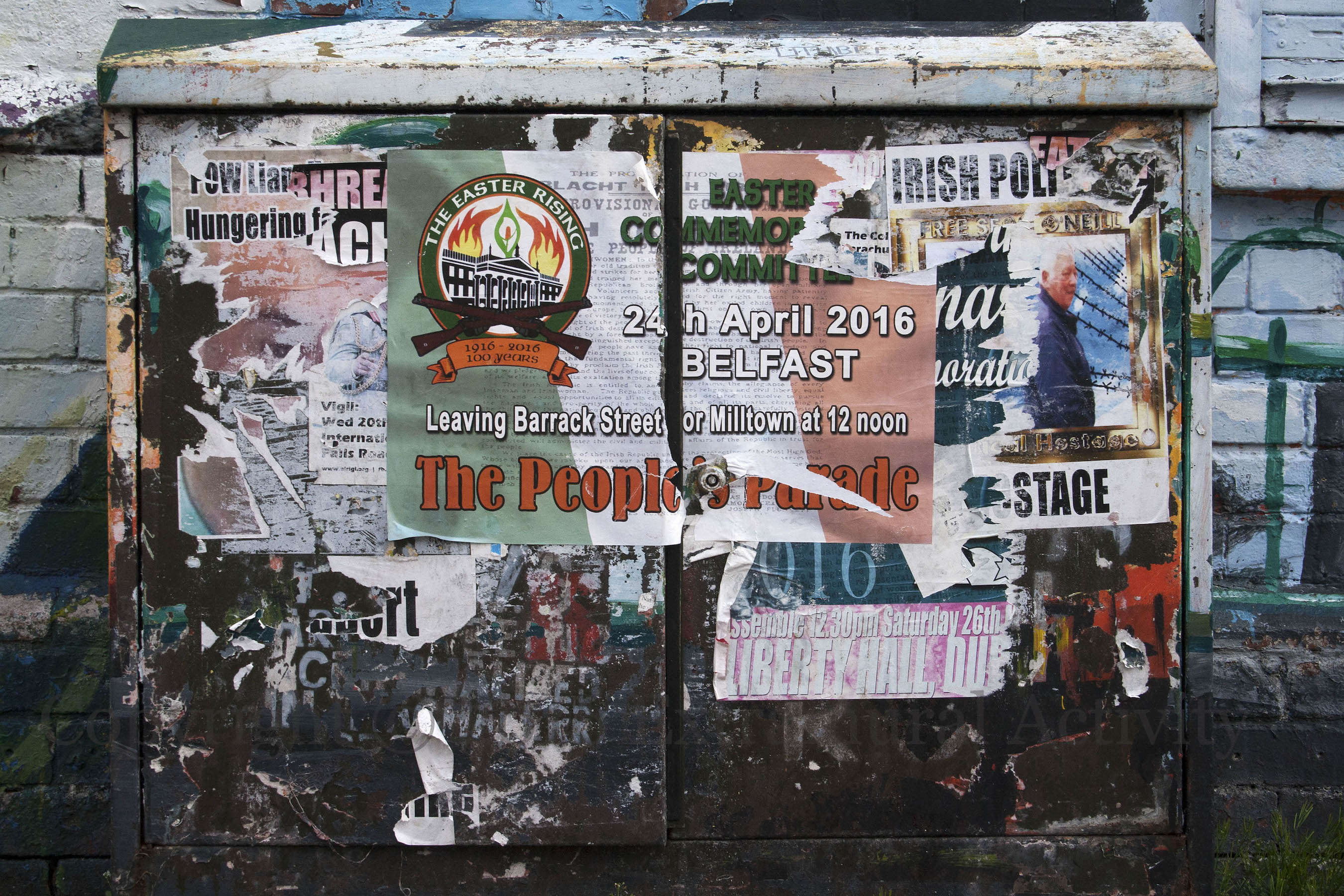
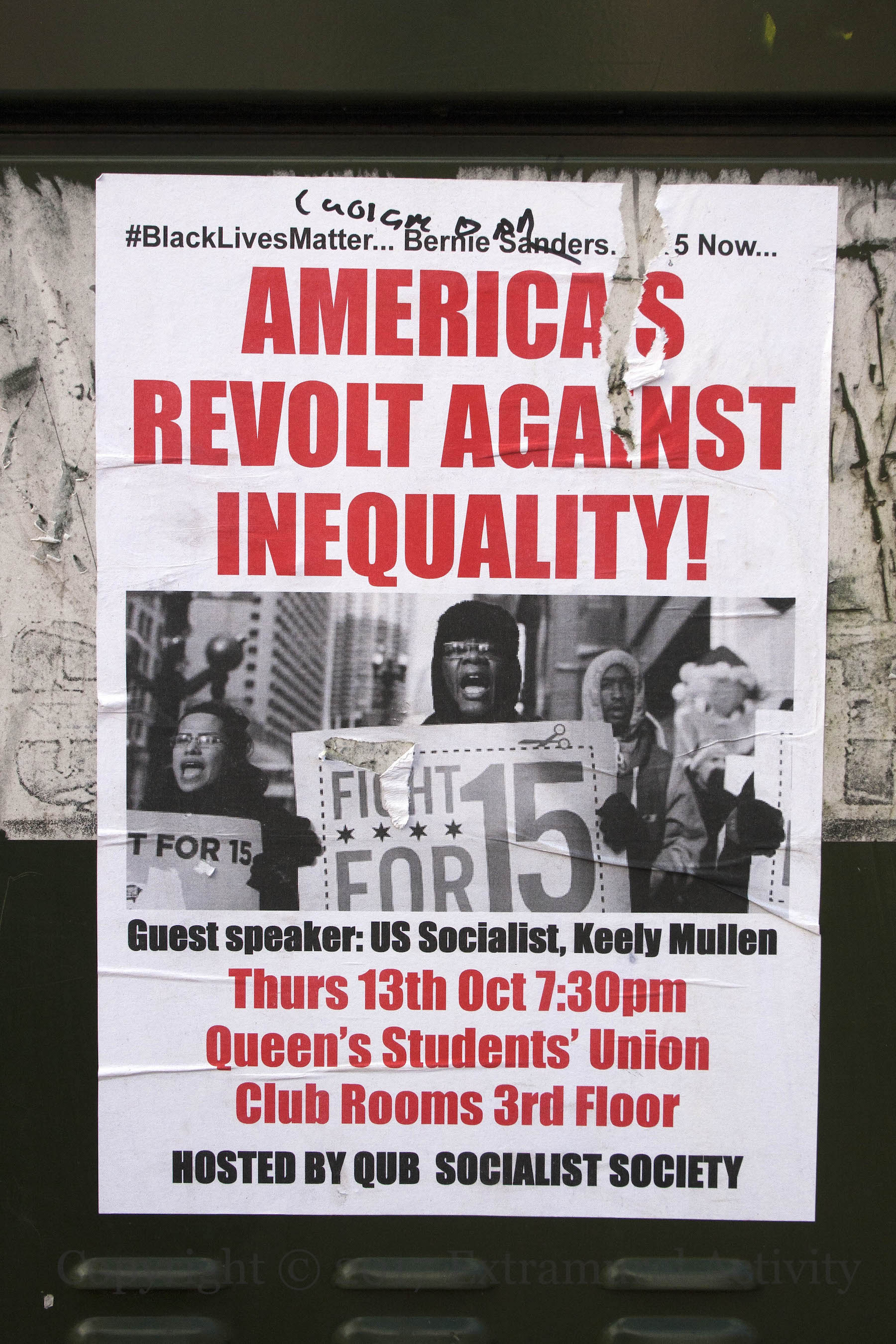
Another selection of distressed posters, torn to reveal … more posters. The electrical box in the third image was included in last year’s collection: We Had Our Distresses.
“We have slain him but we fear him/As we stand in silence now/For the hero light still lingers/Like a lantern on his brow. And the wiles of witchcraft jeer him/With the phantoms of our dead/As they moil like may mosquitoes/Round his torn and bleeding head.” Cuchulainn is invoked as a “defender of Ulster” on the UDA memorial stone in the Kilcooley estate. The Red Hand Commando and UVF stones are shown below. The three paramilitary stones were added independently of the WWI garden (BelTel).
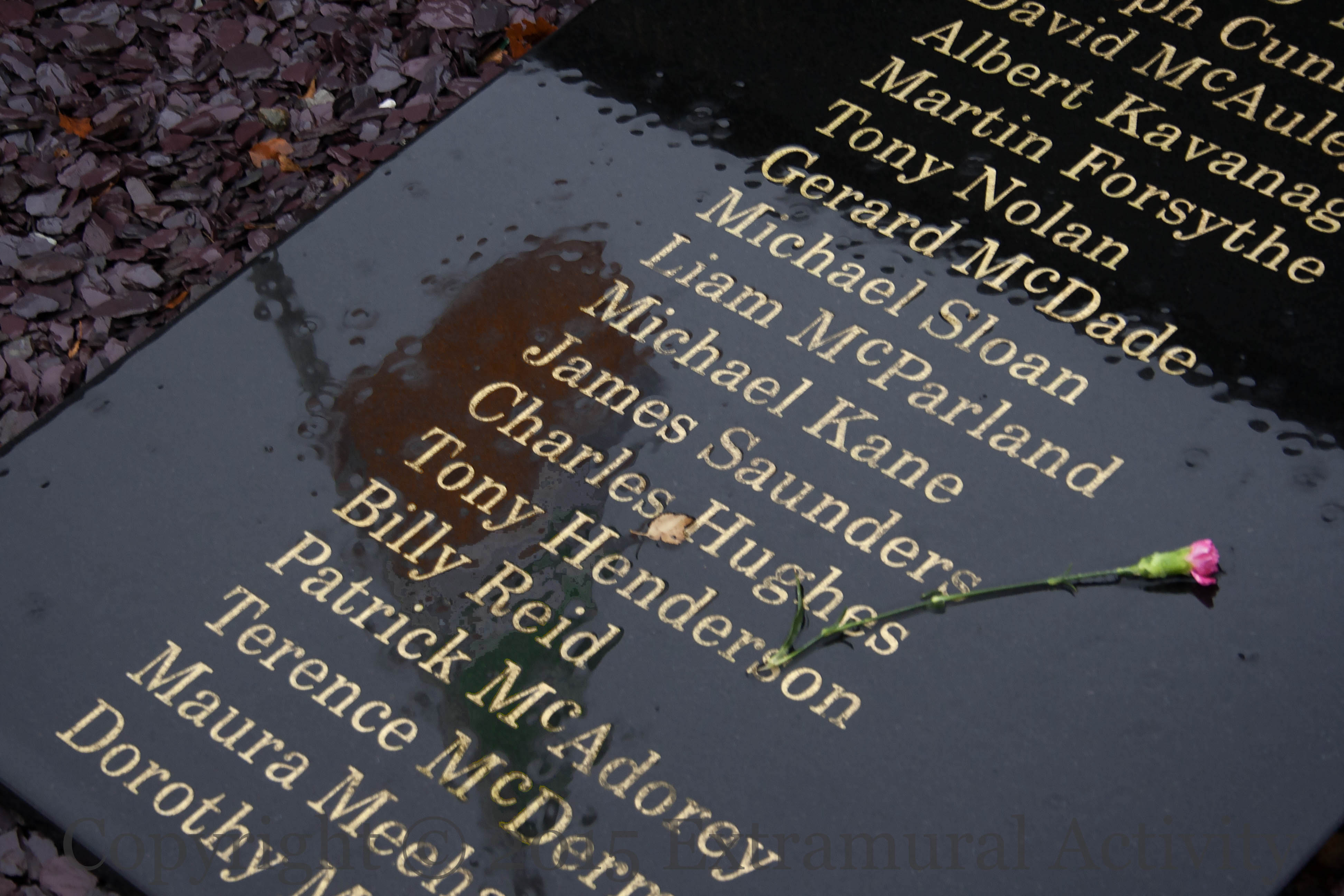
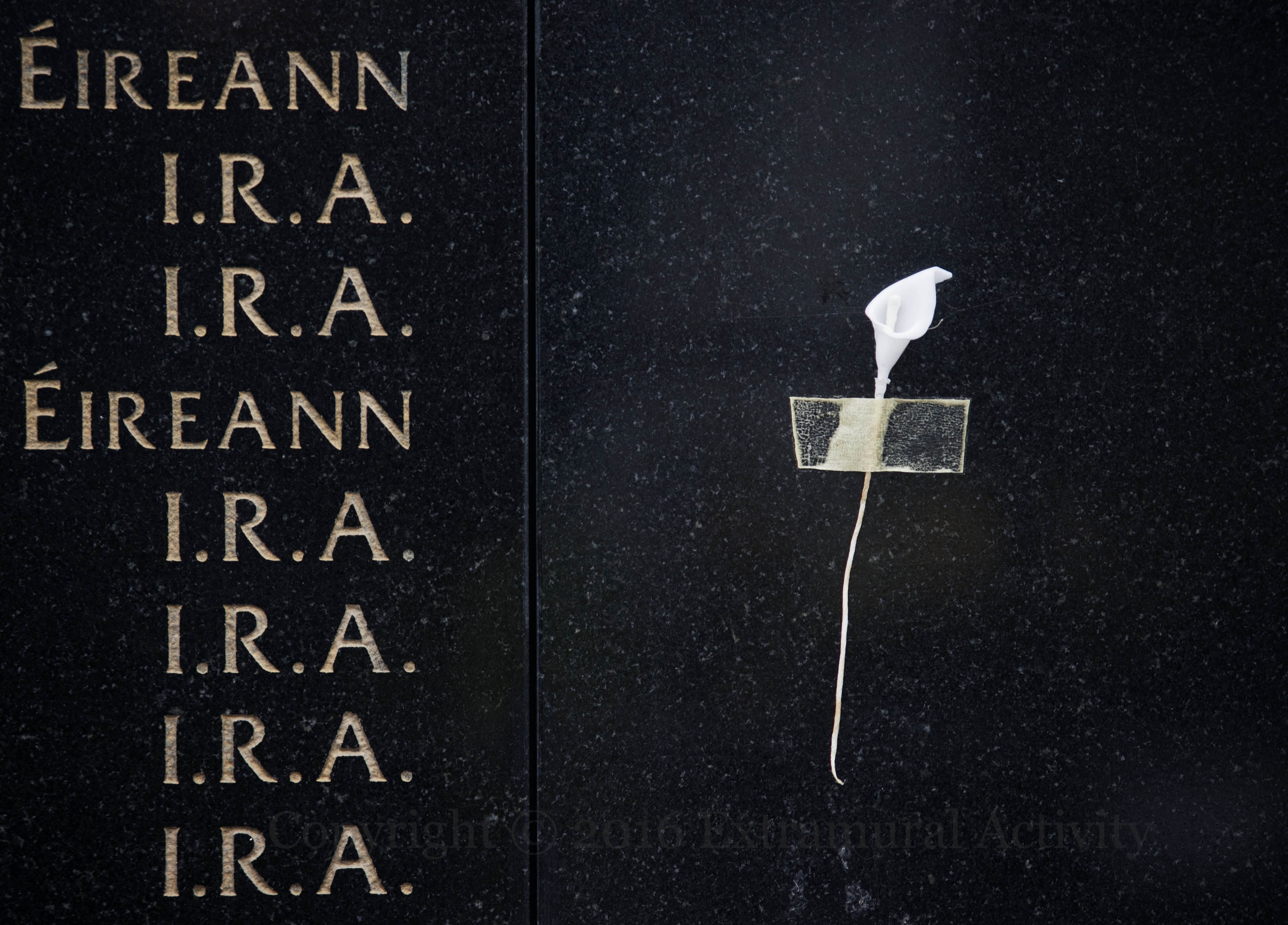
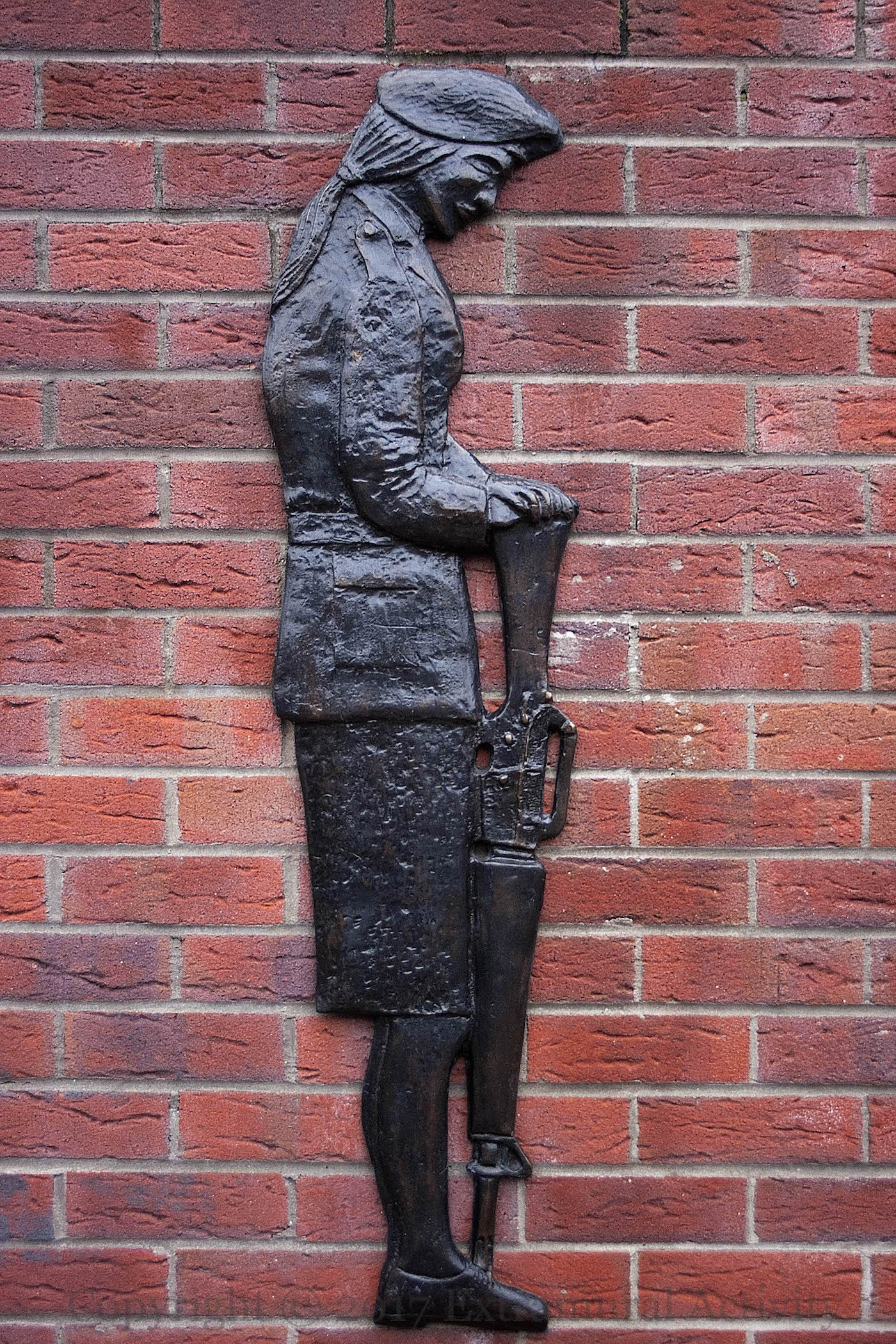
Here, from left to right, are all of the metalworks in the memorial garden on Ascaıll Ard Na bhFeá by sculptor and painter Hugh Clawson. On the stone (above) an IRA volunteer – with the emblem of the Easter lily on his beret – rests in the arms of Mother Ireland and her harp. Then two featuring the lark as the ‘spirit of freedom’ (from The Lark And The Freedom Fighter). In the first, the lark breaks through the bars of a prison cell, and in the image below, it flies in front of an “H” made of bricks, carrying a bin lid. (For a lark carrying a rifle, see Lark Of War and Armed Resistance.) Clawson’s name can be seen on the bars. In the second, a lark carries a binlid, used by locals to signal the presence of British Army troops. “In memory of all Irish martyrs who have died on hunger strike in the fight for Irish freedom. Their inspiration and courage will always be remembered by the republican movement and republican family (mid Falls).” One female and one male volunteer stand with bowed heads. A pair of hands joined in prayer in the Beechmount memorial garden: “in memory of those innocent people from this area who have died in this struggle for Irish freedom”. Finally, a scene of protest, in front of the Free Ireland mural at the bottom of the street. “In memory of the all the unsung heroes off [sic] this area who’s [sic] hardship, sacrifice and support during this struggle for Irish freedom will never be forgotten by the Belfast Brigade óglaıgh na h-éıreann.” The plaque depicts the work of print-makers (“Smash H-Block Armagh”), marchers carrying portraits of hunger strikers (“Mid Falls supports the women of Armagh”), bin-lid rattlers, and muralists. The tarp above reads “Cuımhníonn Lár na bhFál – Mid Falls remembers” Out of picture to the right of the wide shot is Bobby Sands’s quote “Our revenge will be the laughter of our children.” See M04415.
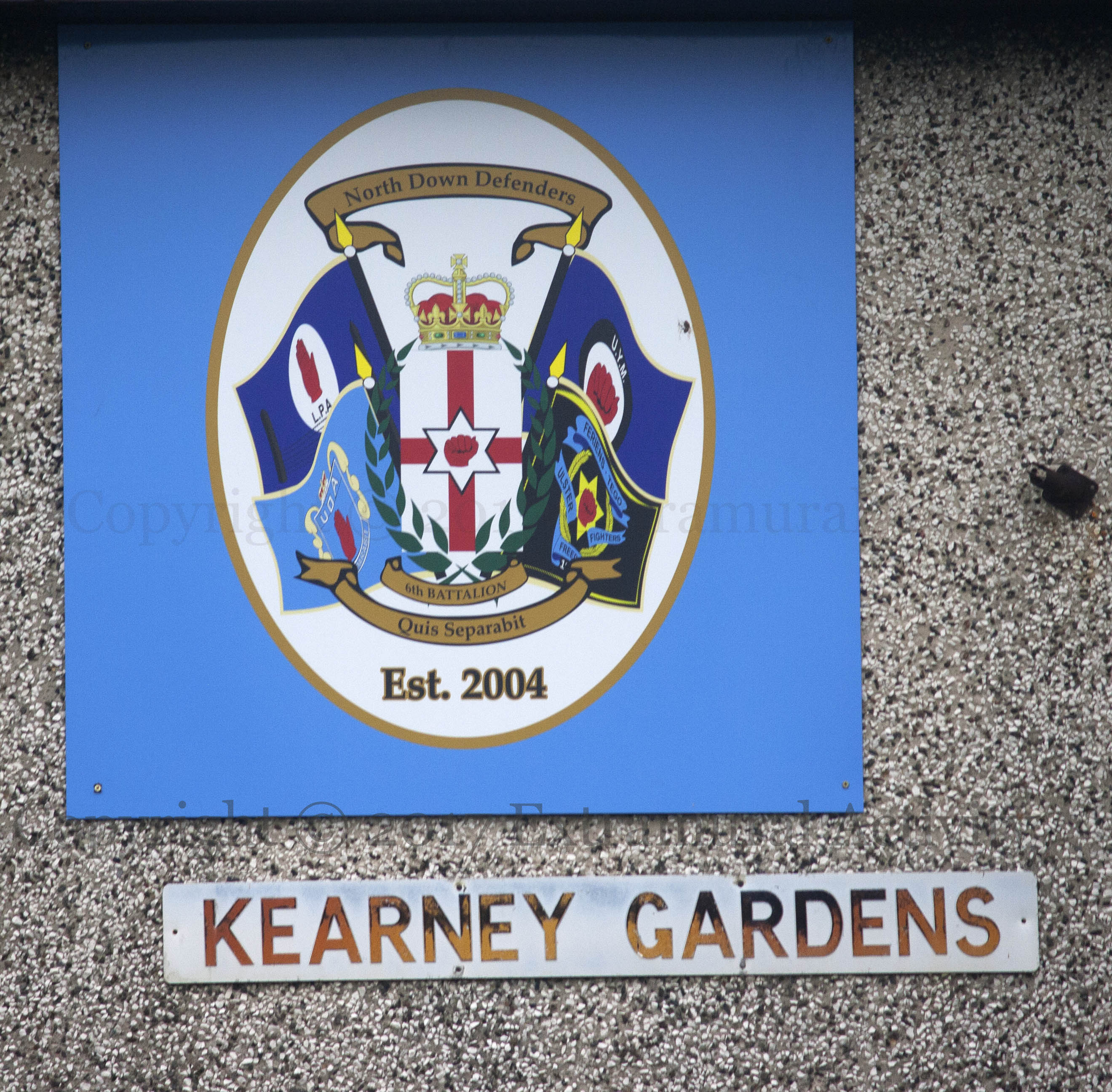
Here is a small board in Bangor from the North Down Defenders flute band (Tw | Fb), unusual due to the modified Ulster banner with clenched red hand in the centre. Surrounding it are the flags of the LPA, UDA, UFF, and UYM.
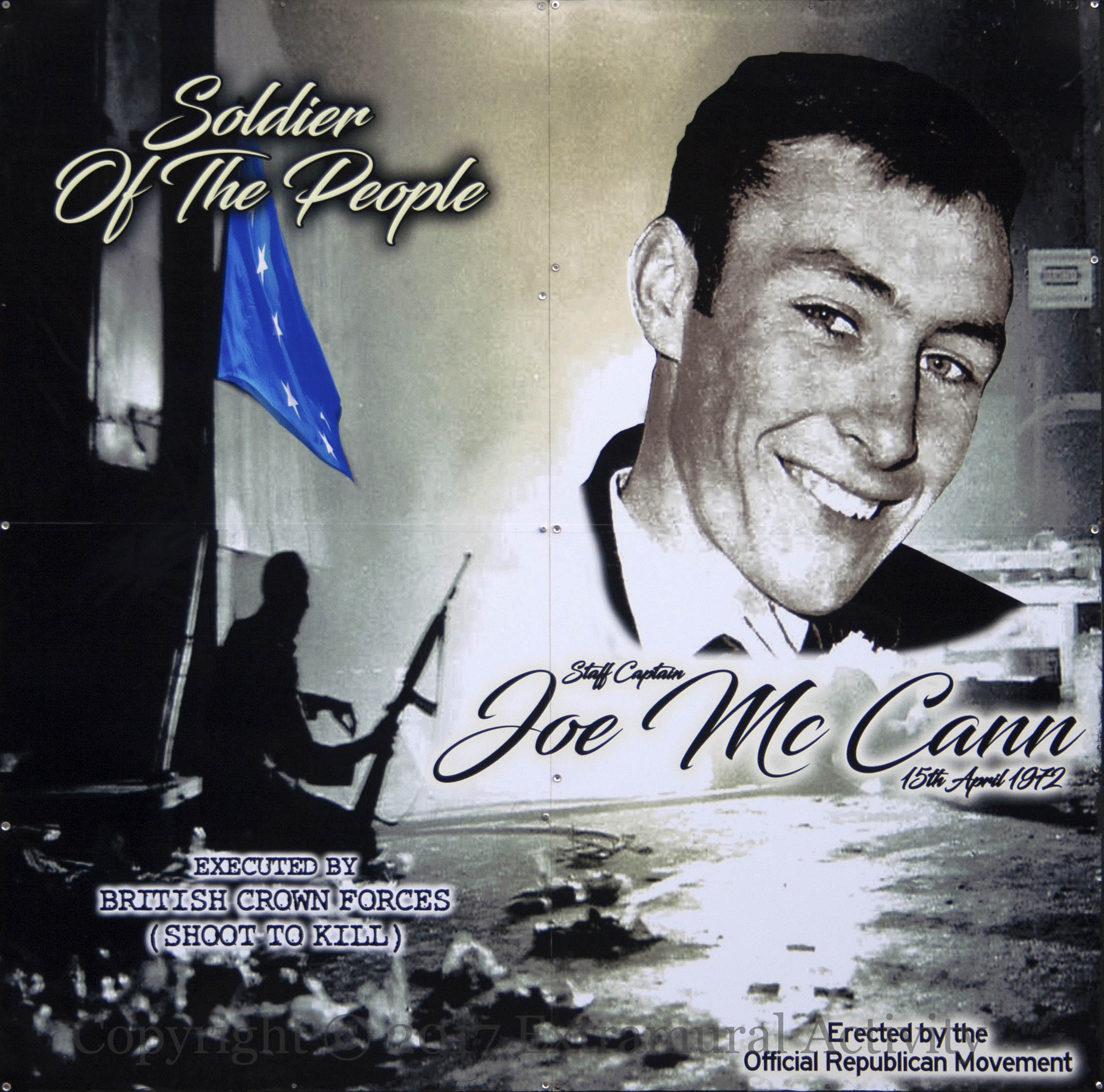
Joe McCann was (Official) IRA OC in the Markets area of south Belfast, where he was shot by paratroopers in 1972. The HET in 2013 found that the killing was unjustified, as McCann was unarmed and shot multiple times at close range; the DPP announced in December 2016 that two soldiers – now in their 60s – are to stand trial for the shooting. (WP | Irish Times | Telegraph which also includes the photograph used as a background, which shows McCann, with MI, during the occupation of the Inglis bakery in the Markets on August 9th, 1971 – Internment Day.)
The boards on the right read: “‘Tis thy flag and my flag;/The best of flags on Earth,/So cherish it my children,/It’s yours by right of birth.//Your fathers fought,/Your fathers died,/To raise it to the skies,/And we like them must never yield,/But keep it flying high.” from The UnionJack, by Edward Shirley, in Little Poems For Little People, and “In memory of the men and women from the Orangefield area, who have made the ultimate sacrifice in the defence of our freedom in all theatres of conflict, both foreign and at home.” These memorial boards are to local men who “stood to the fore to defend the Empire as the 8th Battalion (East Belfast) Royal Irish Rifles” in the 36th division, formed from formed from the “8th Battalion (Avoniel) and the 6th Battalion (Strandtown)” of the Ulster Volunteers.
Privates Fred Starrett and James Cummings died in an IRA bombing on Belfast’s Royal Avenue on February 24th, 1988. Both Orangemen, their deaths are commemorated every year by a parade from east Belfast to the city centre. Shown in today’s post are the panels from a new UDR commemorative wall in east Belfast.
The fourth panel is a collage of UDR activities (on the streets, on base, manning check-points, in boats, helicopters, with dogs) with a few pieces of republican signs as backdrop (Free Derry Corner, “Provies rule”, “Such is British justice – remember 9th August”) and the fifth shows soldiers searching for arms near some outbuildings.
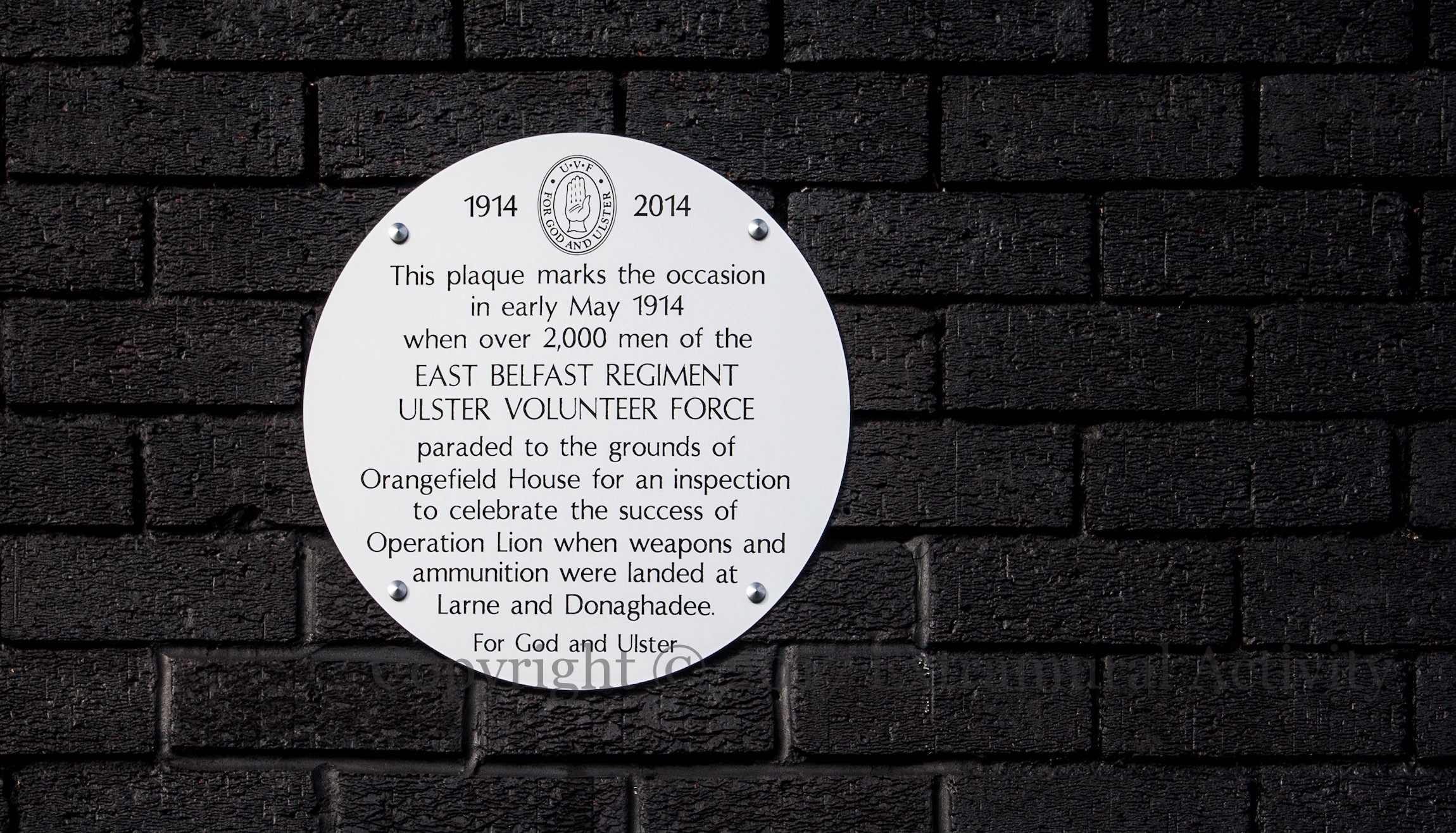
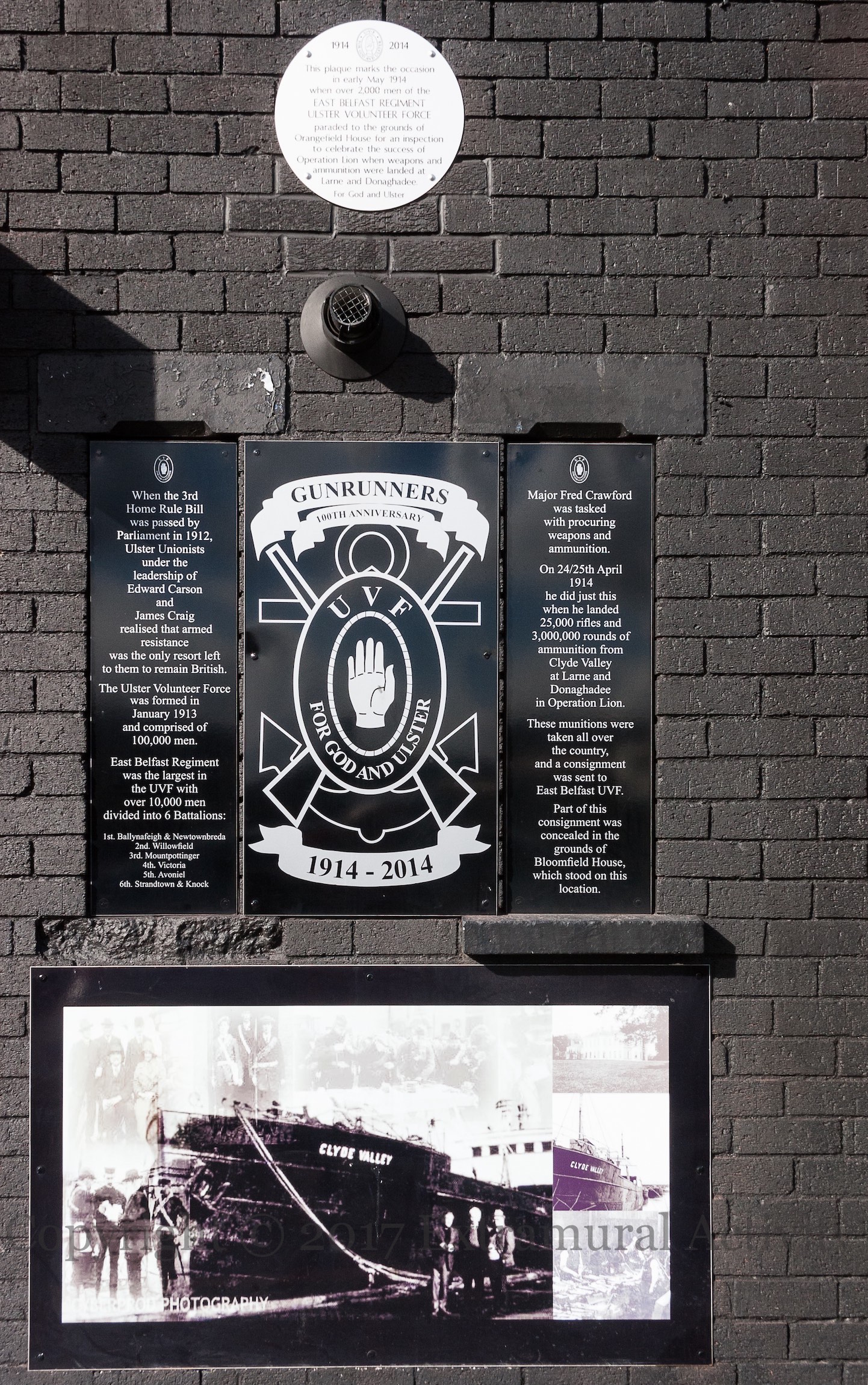
The 100th anniversary plaque and board shown in this entry are on the spot of Bloomfield House (web), where guns from Clyde Valley were held for the East Belfast battalion of the Ulster Volunteers in 1914. See also: John Henry Patterson’s involvement in Operation Lion.
“When the 3rd Home Rule Bill was passed by Parliament in 1912, Ulster Unionists under the leadership of Edward Carson and James Craig realised that armed resistance was the only resort left to them to remain British. The Ulster Volunteer Force was formed in January 1913 and comprised of 100,000 men. East Belfast Regiment was the largest in the UVF with over 10,000 men divided into 6 Battalions: 1st. Ballynafeigh & Newtownbreda, 2nd. Willowfield, 3rd. Mountpottinger, 4th. Victoria, 5th. Avoniel, 6th. Strandtown & Knock. Major Fred Crawford was tasked with procuring weapons and ammunition. On 24/25th April 1914 he did just this when landed 25,000 rifles and 3,000,000 rounds of ammunition from Clyde Valley at Larne and Donaghadee in Operation Lion. These munitions were taken all over the country, and a consignment was sent to East Belfast UVF. Part of this consignment was concealed in the grounds of Bloomfield House, which stood on this location.”
“This plaque marks the occasion in early May 1914 when over 2,000 men of the East Belfast Regiment, Ulster Volunteer Force paraded to the grounds of Orangefield House for an inspection to celebrate the success of Operation Lion when weapons and ammunition were landed at Larne and Donaghadee. For God and Ulster.”
These three are next to (and the same black background) as the Orangefield memorial – see In All Theatres Of Conflict.










 Extramural Activity