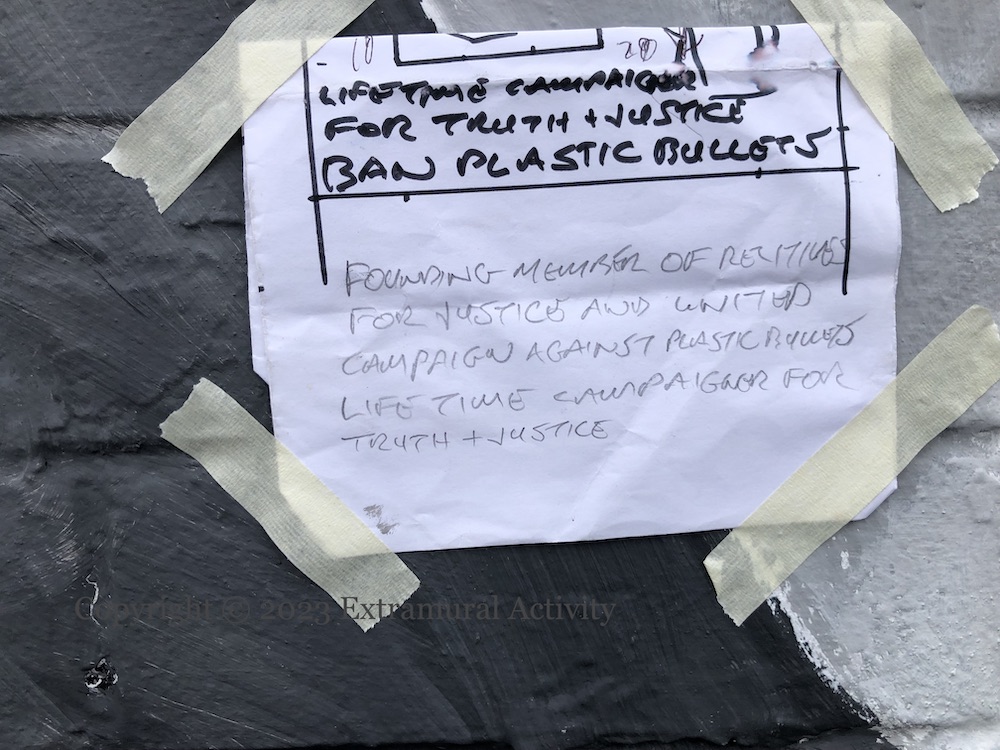
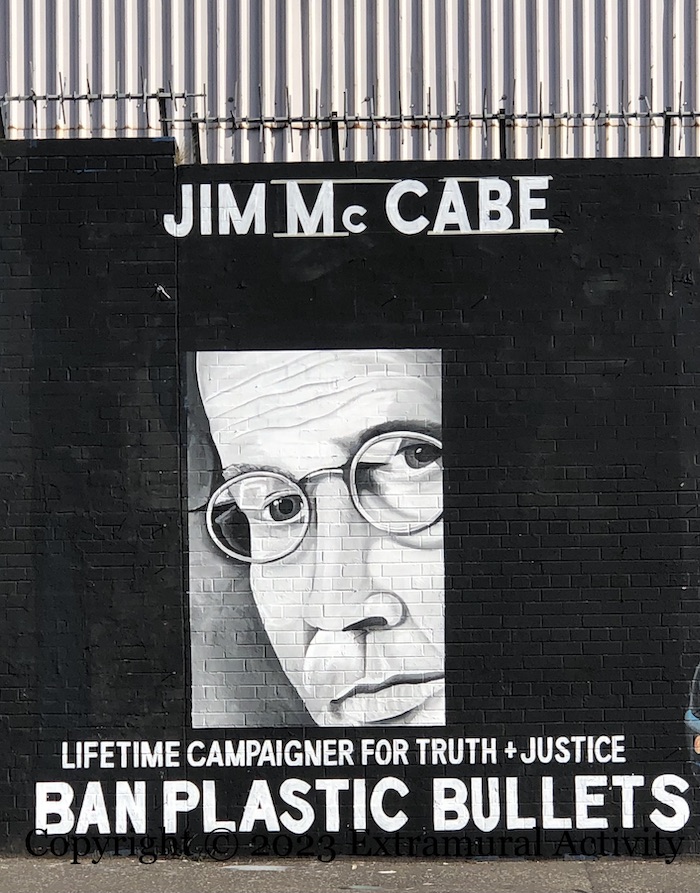
A new mural was unveiled yesterday in memory of Jim McCabe, the husband of Norah McCabe who was hit by a plastic bullet in 1981 and died a day later. Jim went on to become a “lifetime campaigner for truth + justice” and a “founder member of Relatives For Justice [web] and United Campaign Against Plastic Bullets [web]” – the sketch shown in the third image suggests this line was part of the plan for the mural. (For a profile of Jim’s campaigning work, see Belfast Media.) Jim died in January of this (2023) year.
The image above shows one of the children of Norah and Jim – James – standing in front of the new mural wearing a ‘Ban plastic bullets’ t-shirt and carrying an image of his mother.
“Ní coırpıgh sınne! Éıreannaıgh sınne! [we are not criminals; we are Irish people] “There is that much to be done that no select or small portion of people can do; only the greater mass of the Irish nation will ensure the achievement of a socialist republic, and this can only be done by hard work and sacrifice.” – Bobby Sands [Hunger strike diary, March 14th, 1981]” With photographs of the ten deceased 1981 hunger strikers.
Kelly’s Bar at the top of the Rock was packed with punters watching a World Cup match between England and West Germany when a car bomb went off outside shortly after 5 p.m.. The bombing was followed by two nights of gun-battles, with loyalists firing from Springmartin, republicans (both PIRA and OIRA) from Ballymurphy, and British Army soldiers (the King’s Own and 1 Para) from Henry Taggart and other mobile locations. Within three hours following the explosion, barman Tommy McIlroy was killed in the gunfire from Springmartin as he helped with clean-up from the bomb, Alan Buckley of the King’s Own was killed by IRA fire, Michael Magee of Na Fıanna was killed by friendly fire, and Robert McMullan was killed by British Army fire. The next night (May 14th), John Pedlow was killed by British Army fire and Martha Campbell was shot by UVF fire from Springmartin (see her memorial plaque). (Lost Lives 352, 353, 354, 355, 358, 359 | Battle At Springmartin (WP))
As with the bombing of McGurk’s bar in north Belfast (see most recently Justice Delayed Is Justice Denied), the bombing was initially spun by the UK forces and government as an IRA attempt to stir up loyalists (An Phoblacht | Lost Lives 352). An inquest into Moran’s death (and thus into how the bombing was carried out) has been opened (BeTel | Independent).
The plaque dates back to 2004 (see M02243); the tarp was added for the 50th anniversary in 2022; the small mural is more recent.
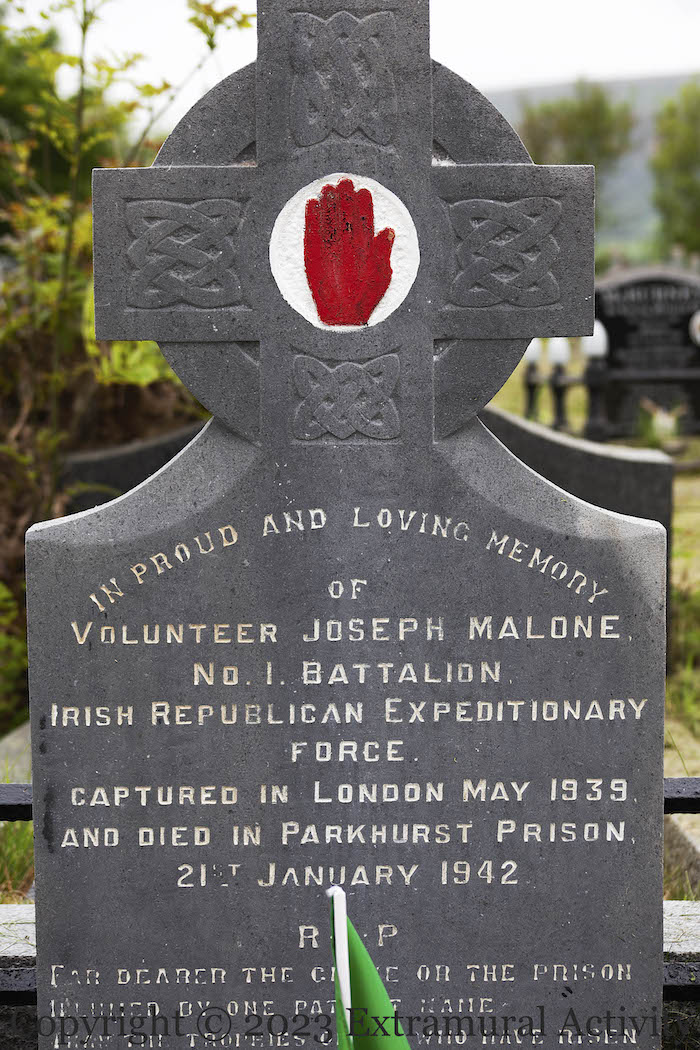
“Far dearer the grave or the prison, Illumed by one patriot name, Than the trophies of all who have risen On Liberty’s ruins to fame.”
Thomas Moore’s lyrics were written for the air The Lamentation of Aughrim, in honour of the Jacobites who died on 12 July, 1691, but they are applied here to Joe Malone of the IRA’s “Expeditionary Force”.
In January 1939 the IRA declared war against Britain and carried out a bombing campaign called the “sabotage plan” (WP S-Plan). Malone was arrested in May when a tear-gas bomb intended for the New Victoria cinema in London exploded prematurely in the cloakroom, injuring his arm and wrist (Belfast Battalion p. 103 | West Australian).
Malone and other prisoners refused to co-operate with prison authorities and began a hunger strike in January 1941; on day five of the strike, force-feeding began and Malone was injured and ordered off the strike by OC Conor McNessa; despite stomach surgery, he died a year later. (Belfast Battalion p. 126, 136)
“In proud and loving memory of Volunteer Joseph Malone, No. 1 battalion, Irish Republican Expeditionary Force. Captured in London May 1939 and died in Parkhurst prison 21st January 1942. RIP.”
As the info board points out, the red hand is used to denote the graves in Milltown of volunteers from the 1920s to 1940s.
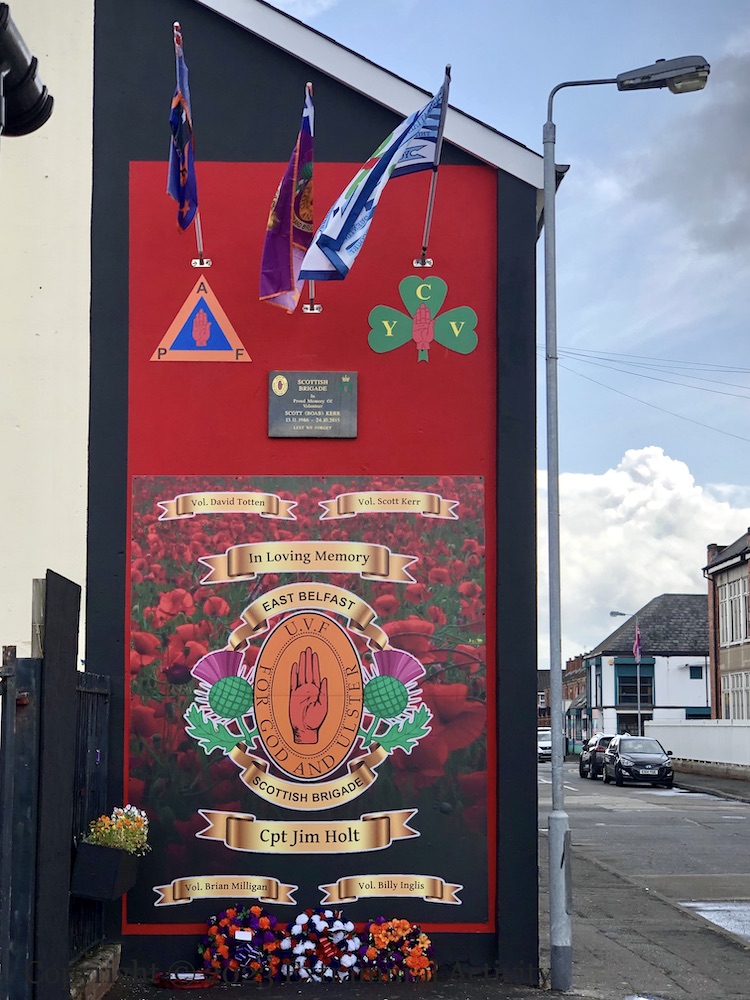
The hand-painted UVF Scottish Brigade mural (see Boab Kerr) in Beechfield Street/Tower Street has been replaced by this new printed board. The plaque to Kerr has been retained, but four names have been added – David Totten, Brian Milligan, Billy Inglis, and Jim Holt, who is now the most prominent. Holt died in February 2021 (ACT Fb).
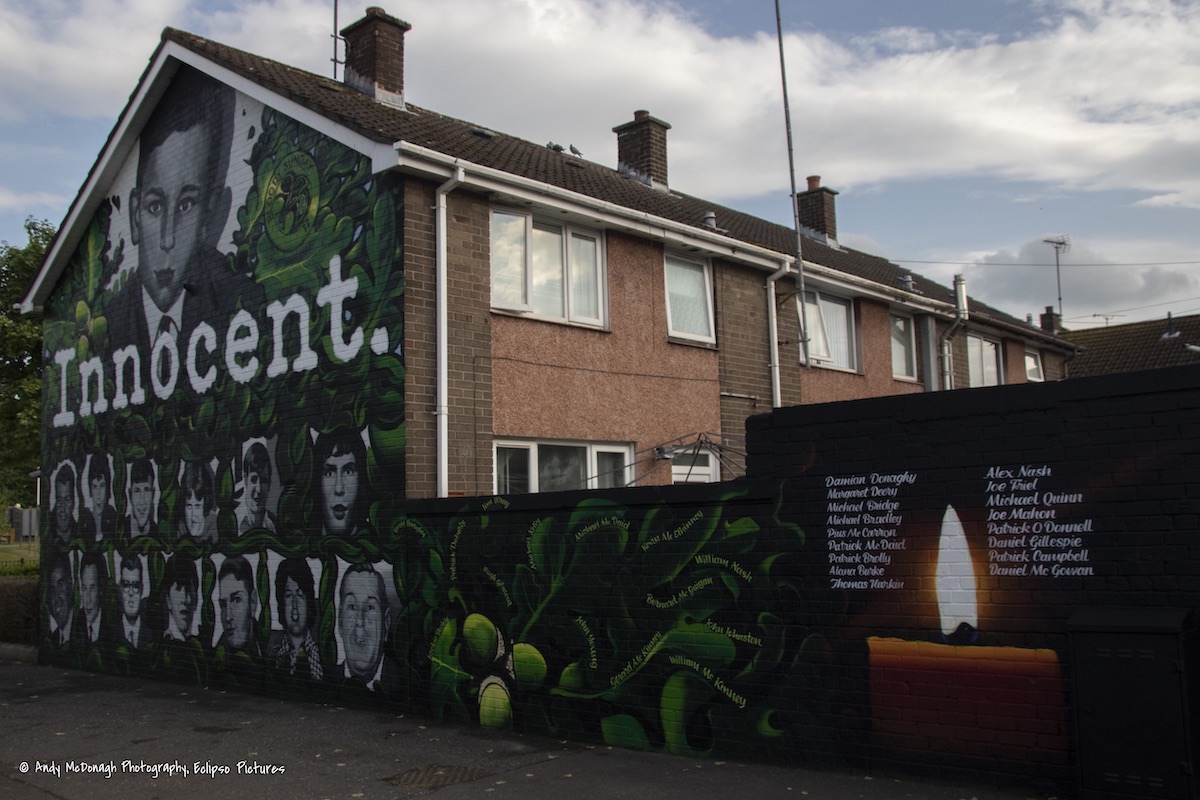
On January 30th, 1972, the Parachute Regiment, 1st battalion (“1 Para”), opened fire on a civil rights march in Derry’s Bogside, hitting dozens of people of which fourteen ultimately died.
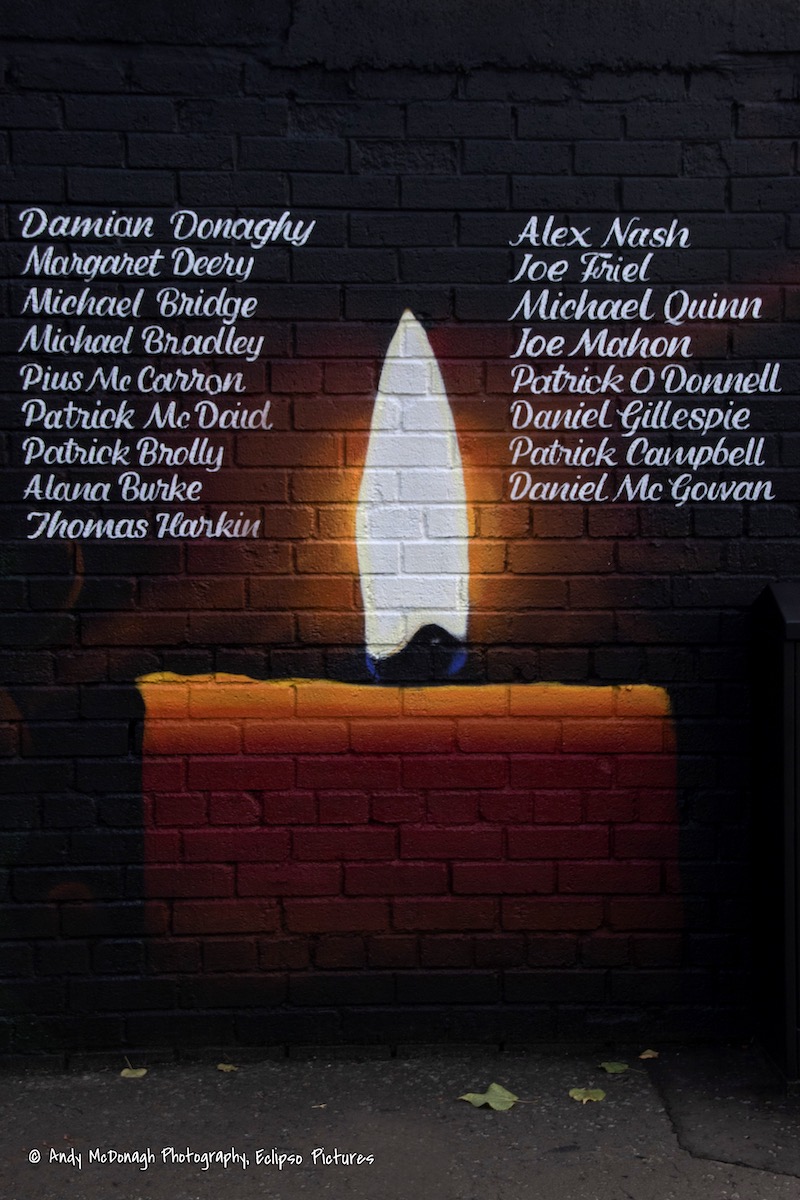
Seven of the dead were teenagers, including Gerald (“Gerard”) Donaghey/Donaghy, who is featured (in younger days) in the apex of this new mural commemorating the dead, none of whom were judged to be attacking Army soldiers when they were shot.
It was alleged, however, that Donaghey had nail bombs in his pockets. This judgment was upheld in the Saville Report, though most of the people who were with him and who handled his body – including the medical officer who pronounced him dead – did not see any bombs (WP | BelTel). The launch was on June 15th, the same date that the Saville Report was issued in 2010.
Painted by JMK (ig) in Fahan Street, Derry, (on the wall that was briefly home to the Mike Jackson “War Criminal” mural – see From The Top Down). The owner of the gable wall granted permission for the painting of the mural (see the video of the launch on the Museum Of Free Derry’s youtube channel).
As a fıan, there is a plaque to Donaghey at the spot where he was killed in Glenfada Park (M09537) and he was included in the roll of honour in Shantallow (X02870).
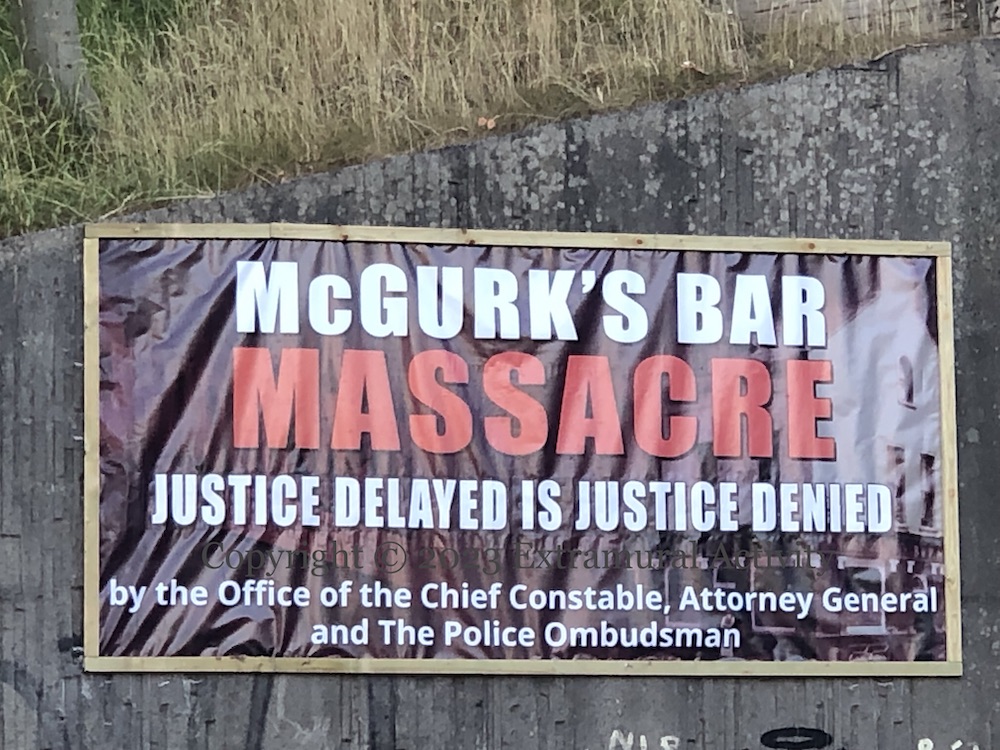
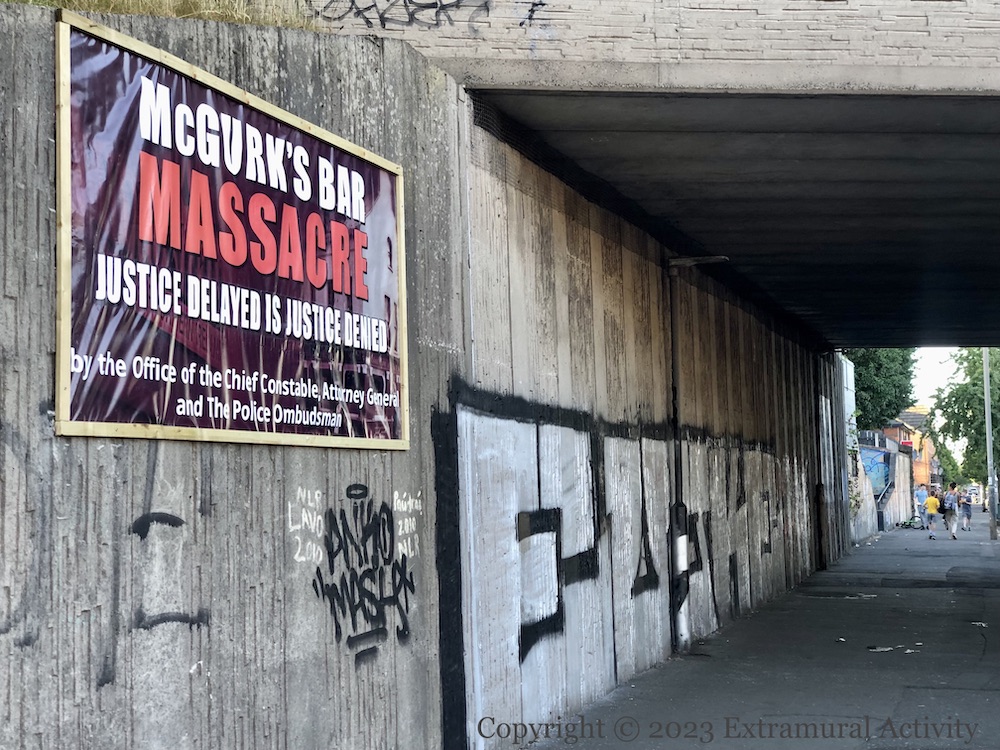
“Justice delayed is justice denied by the Office of the Chief Constable, Attorney General and The Police Ombudsman.” McGurk’s bar was bombed in December, 1971, causing the death of 15 people. At the time, the security forces maintained that the bomb was left by someone from the IRA for later collection and that the pub was affiliated with the IRA, despite the fact that a loyalist group claimed responsibility and a witness saw the bomb being planted a few moments before it went off. Among those repeating the “own goal” story was Brigadier Frank Kitson (McGurk’s Bar twitter | BelTel), who was recently named in a Derry mural in connection with Bloody Sunday – see From The Top Down.
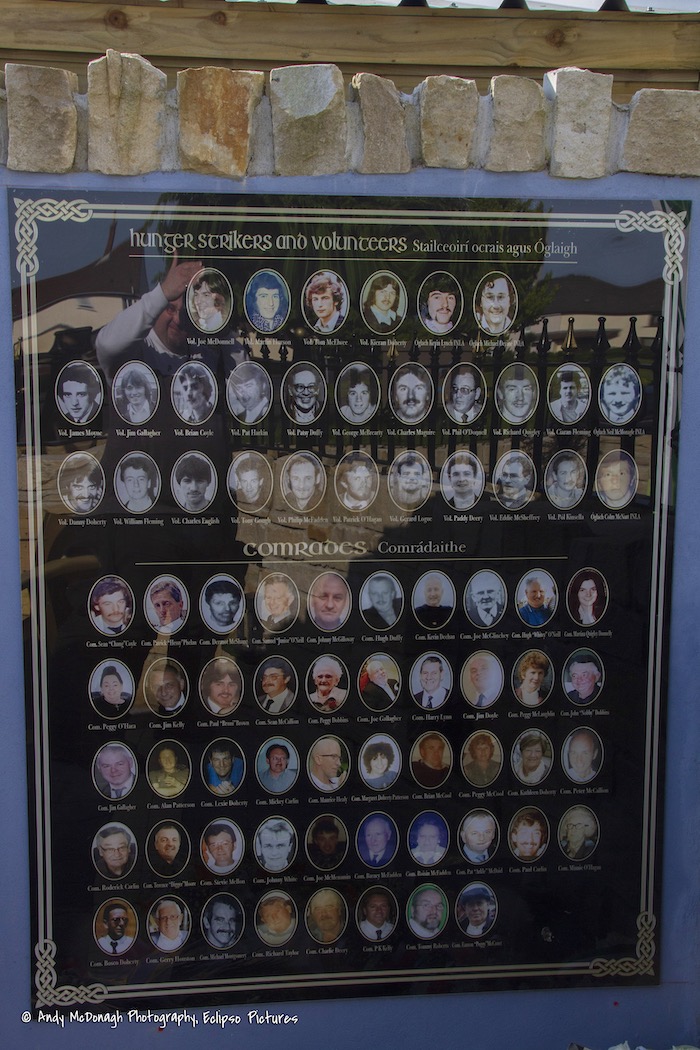
“At this place of reflection, we proudly honour our heroic volunteers, who made the ultimate sacrifice for the freedom & sovereignty of Ireland and the Irish people. We salute our many comrades, who spent numerous years in captivity, and who’s [sic] lives were often blighted by the experience. Never forgetting the WOMEN & MEN of Creggan and the Derry district, who stood steadfastly with the volunteers. BEIR BUA.” The 12 Troubles-era hunger strikers and 43 Derry brigade members are at the top of each panel with 115 named comrades/comrádaithe (and three unnamed) below (and on the side wall – first image below), with each name preceded by “Com.” as though establishing a new category of activist.
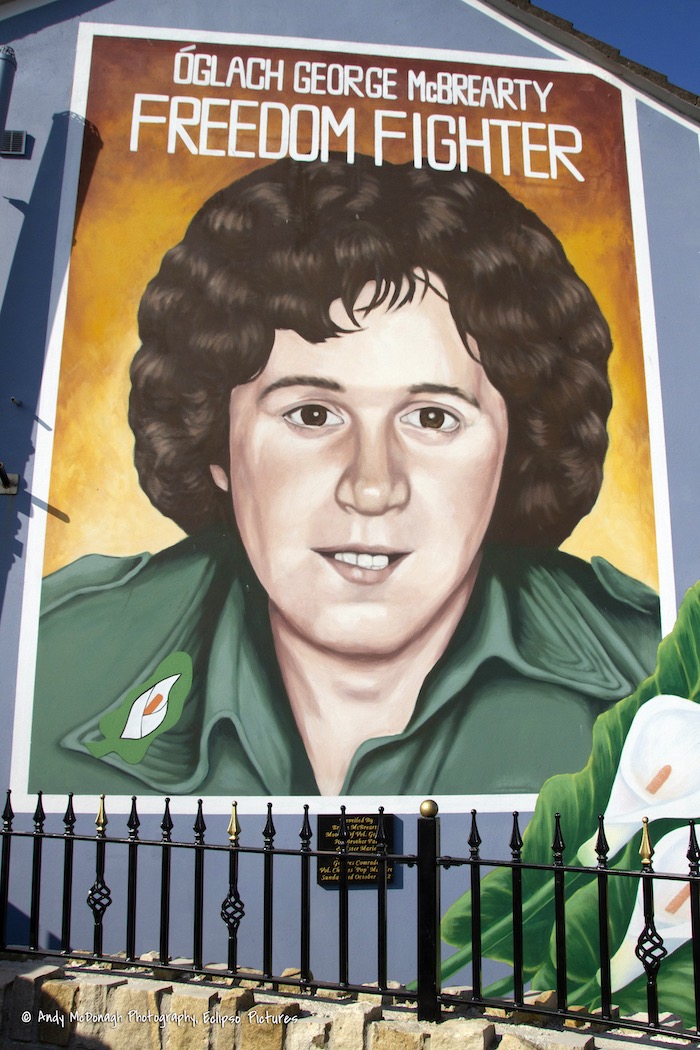
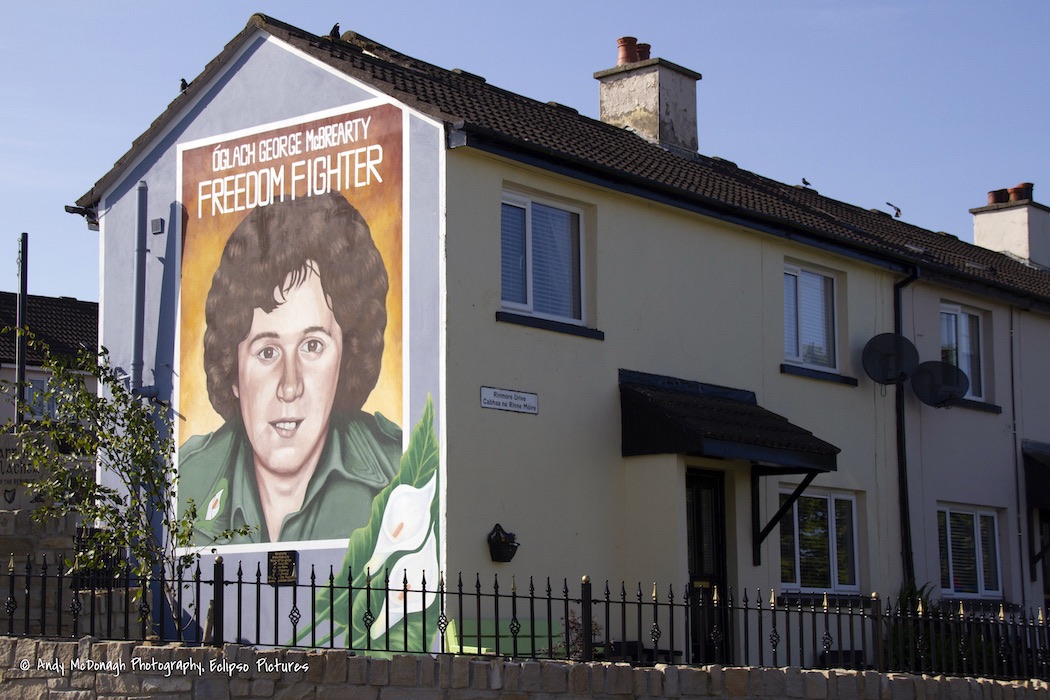
A ceremony to mark the forty-second anniversary of the deaths of IRA volunteers George McBrearty and Charles “Pop” Maguire – shot by the SAS on May 28th, 1981 – was held last Sunday (May 28th) in the garden of remembrance in Linsfort Drive, Creggan (Derry Now). On patrol in Creggan with two other IRA men, McBrearty and Maguire pursued and a car whose driver they suspected of being an SAS soldier and eventually stopped it at the bottom of Couch Road/Southway at the edge of the Brandywell. The driver shot McBrearty as he approached the car and Maguire was shot by the driver and/or by other undercover soldiers from 14th Intelligence who emerged from two other cars. A third volunteer was injured. (Lost Lives 2330)
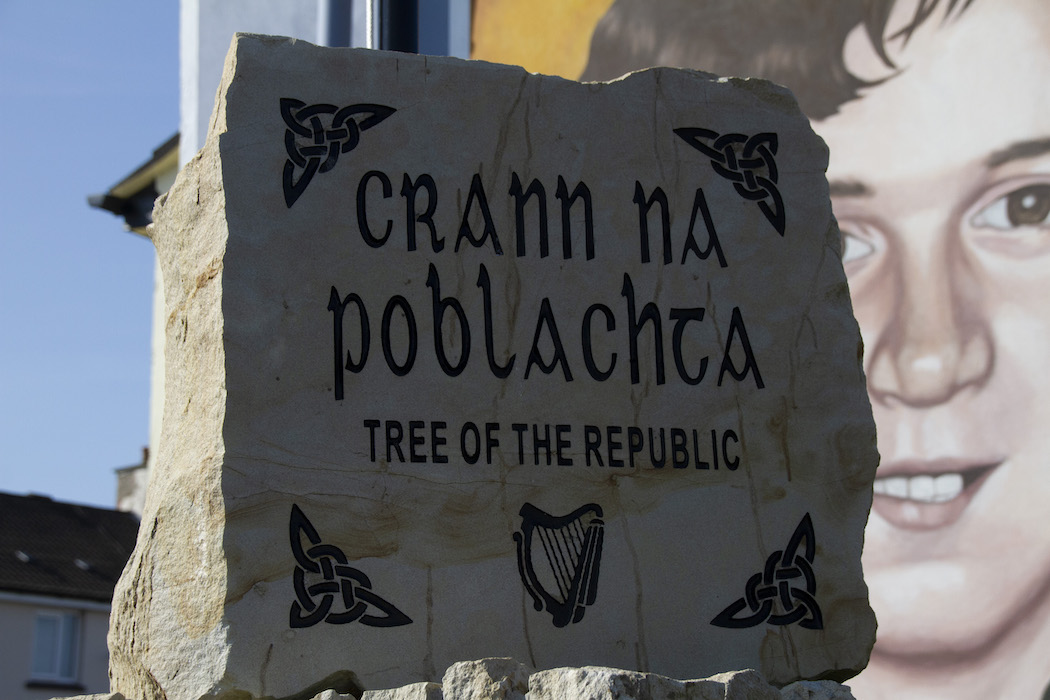
The “Crann Na Poblachta”/”Tree Of The Republic” – a silver birch – was originally planted in front of the previous mural to George McBrearty mural in Rathkeele Way (see Freedom Fighter For The Republic) (Derry Journal). Both that mural and this one were painted by ‘Bogside Artist‘ Kevin Hasson.
There is a plaque to McBrearty & Maguire near the spot where they were killed on Coach Road/Southway (see M01544).
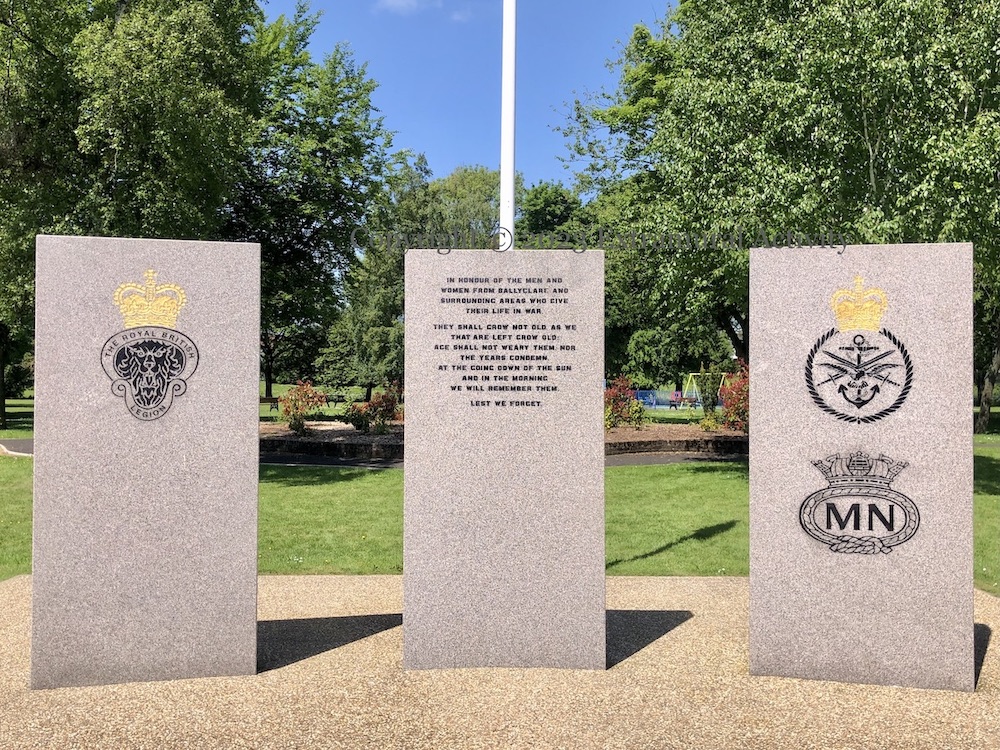
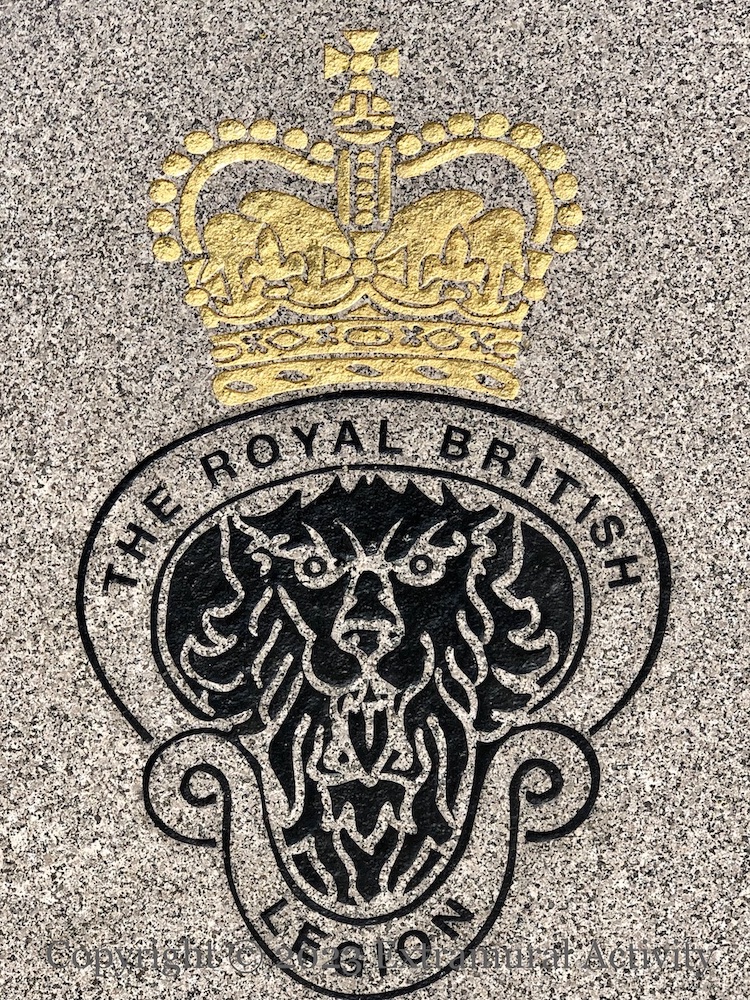
“In honour of the men and women from Ballyclare and surrounding areas who gave their life in war. ‘They shall grow not old as we that are left grow old, age shall not weary them nor the years condemn, at the going down of the sun and in the morning, we will remember them’. Lest we forget.” With emblems of the Royal British Legion (left), Navy and Merchant Navy (right), and a separate stone for the UDR “When danger threatened, some made the supreme sacrifice”.
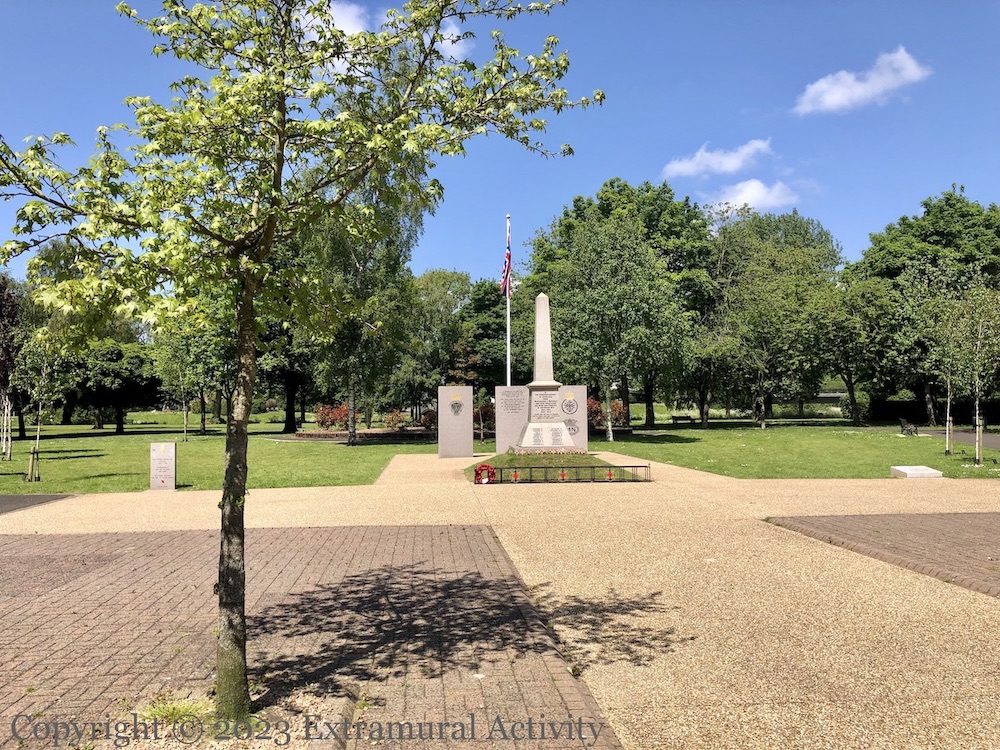
The main obelisk is dedicated “in the honoured memory of those men from Ballyclare & District who gave their lives for King and country in the Great War 1914-1918, 1939-1945. ‘Look not on this in sorrow but in pride and may ye live as nobly as they died.”
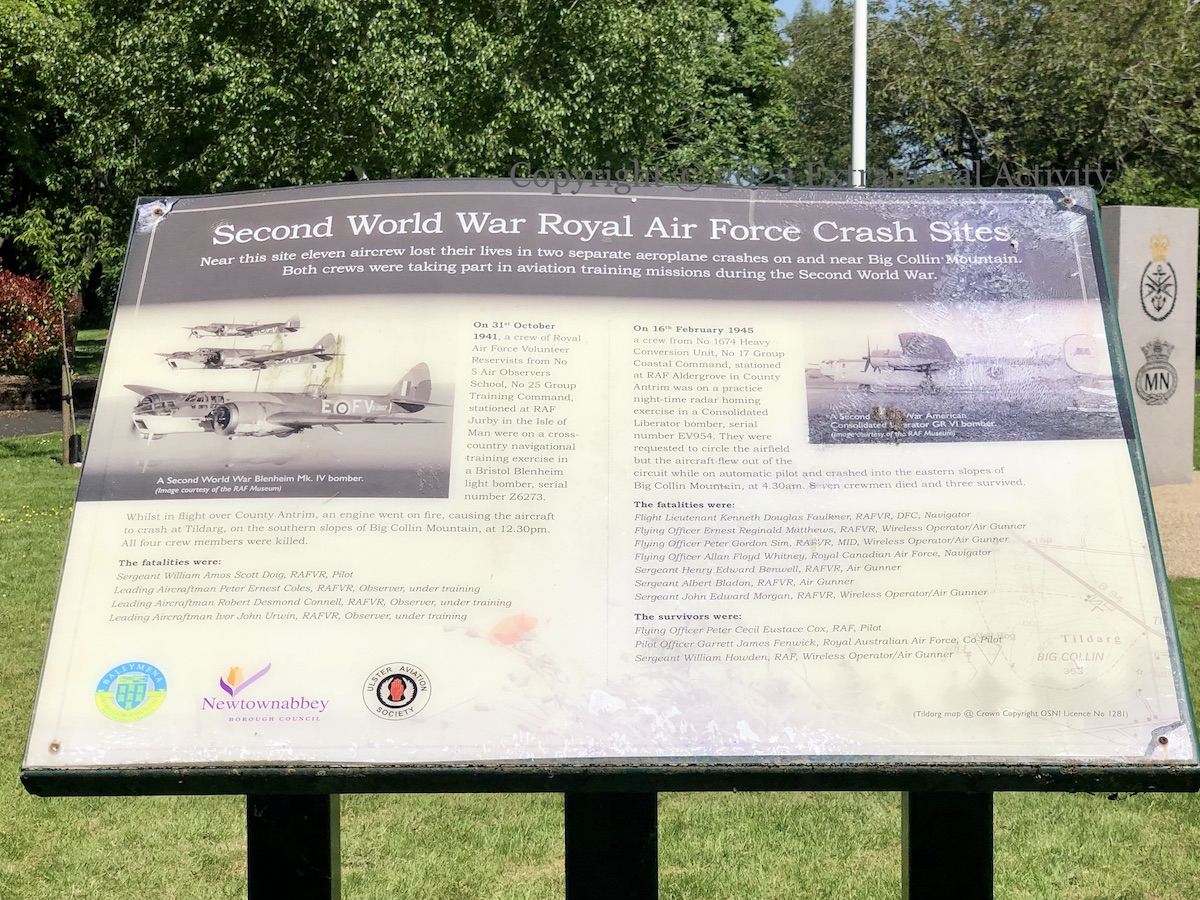
The remaining image shows the info board describing two aeroplane crashes around Big Collin Mountain, in which eleven airmen died while on training flights, one the result of an engine fire, the other crashed into the side of the mountain.
Ballyclare War Memorial Park, Ballyclare Road, Ballyclare. There are also separate murals in Erskine Park to the locals who died in WWI and in WWII.

















 Extramural Activity