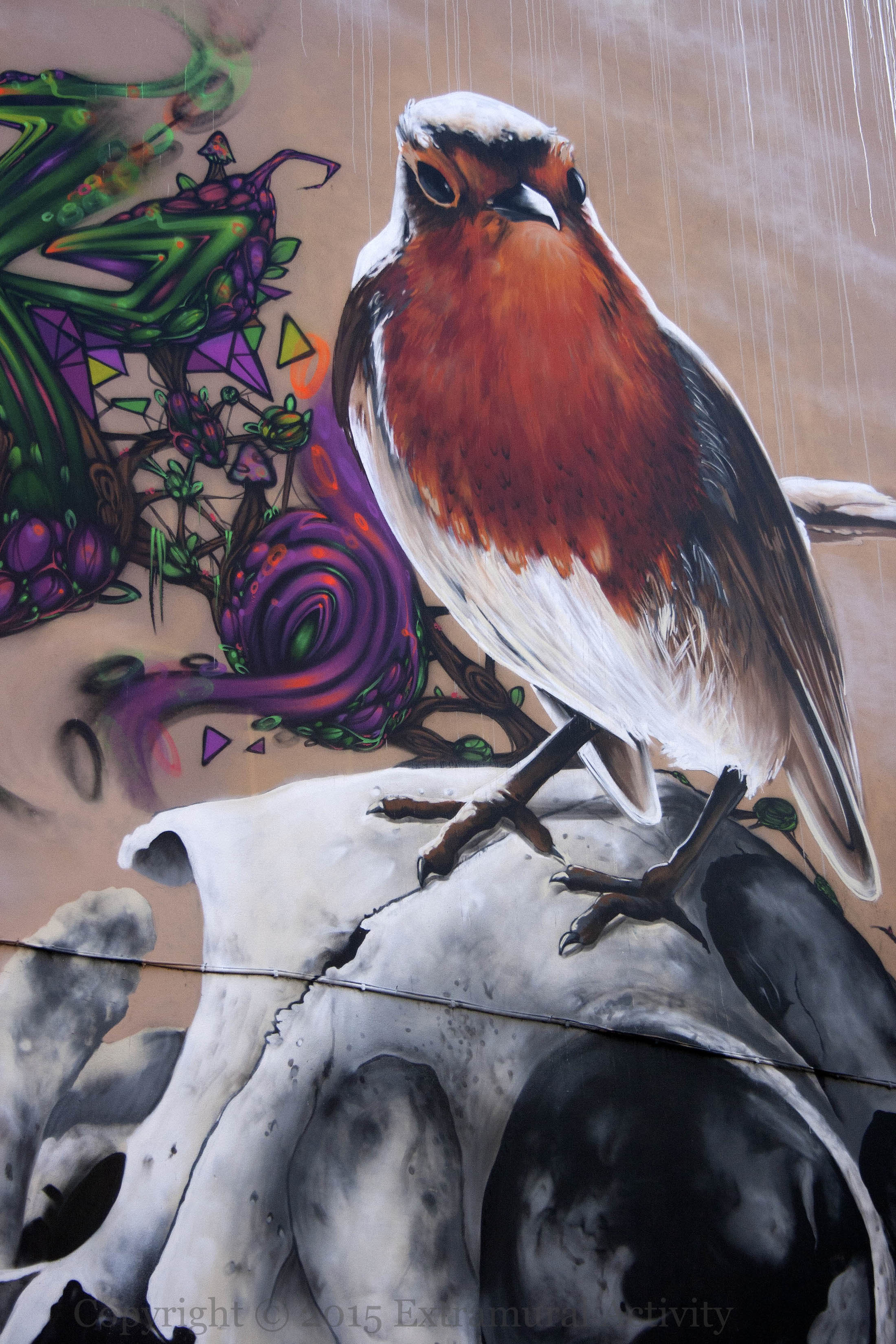
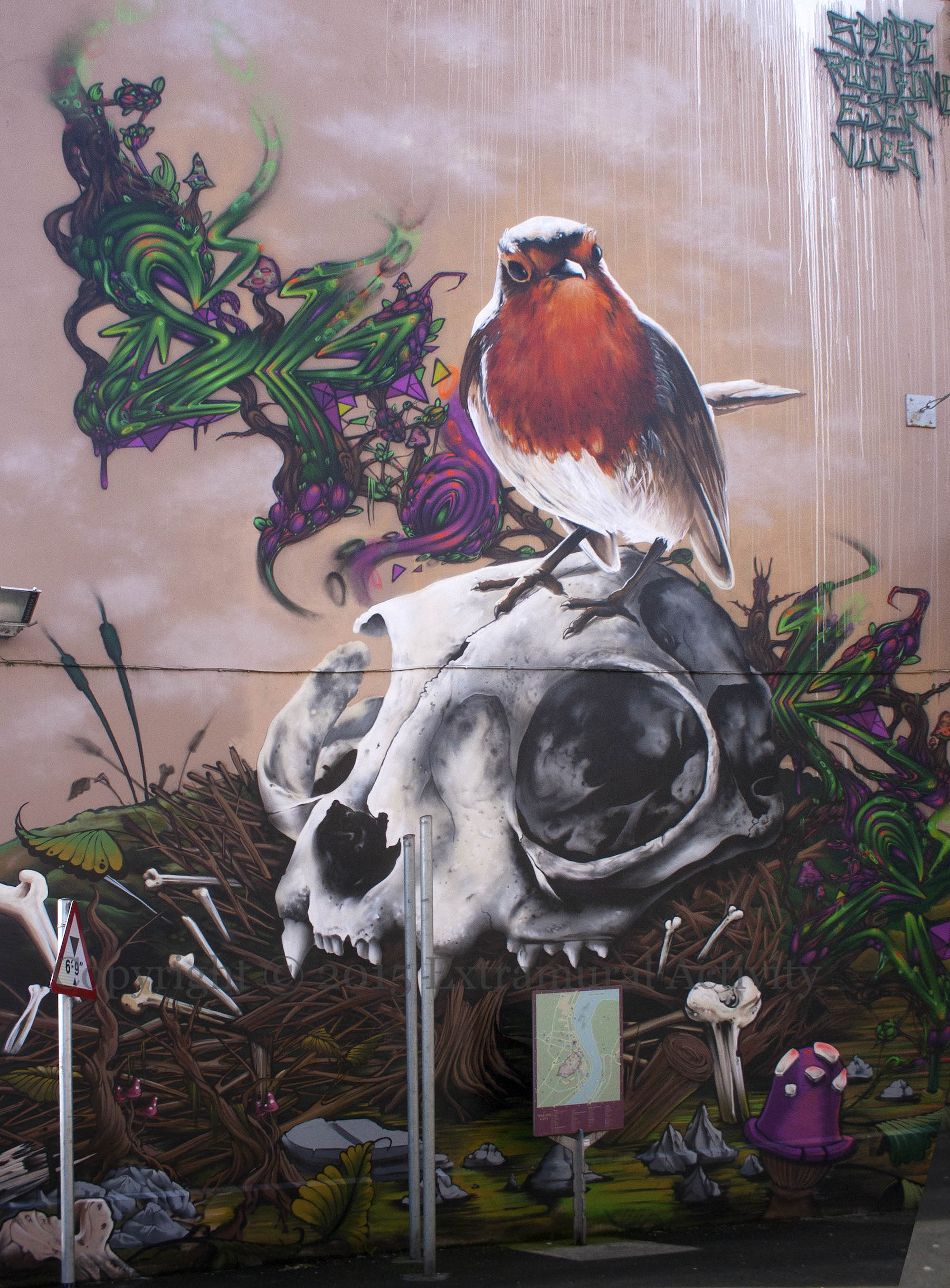
A robin sits atop the skull of a cat. Work by Glaswegian street artists Spore, Ejek, Rogue-One, and Vues Oner for the Release The Pressure festival in London/-Derry/Doire back on July 25-26th. See below for a shot of the whole thing and a video of the piece in production.
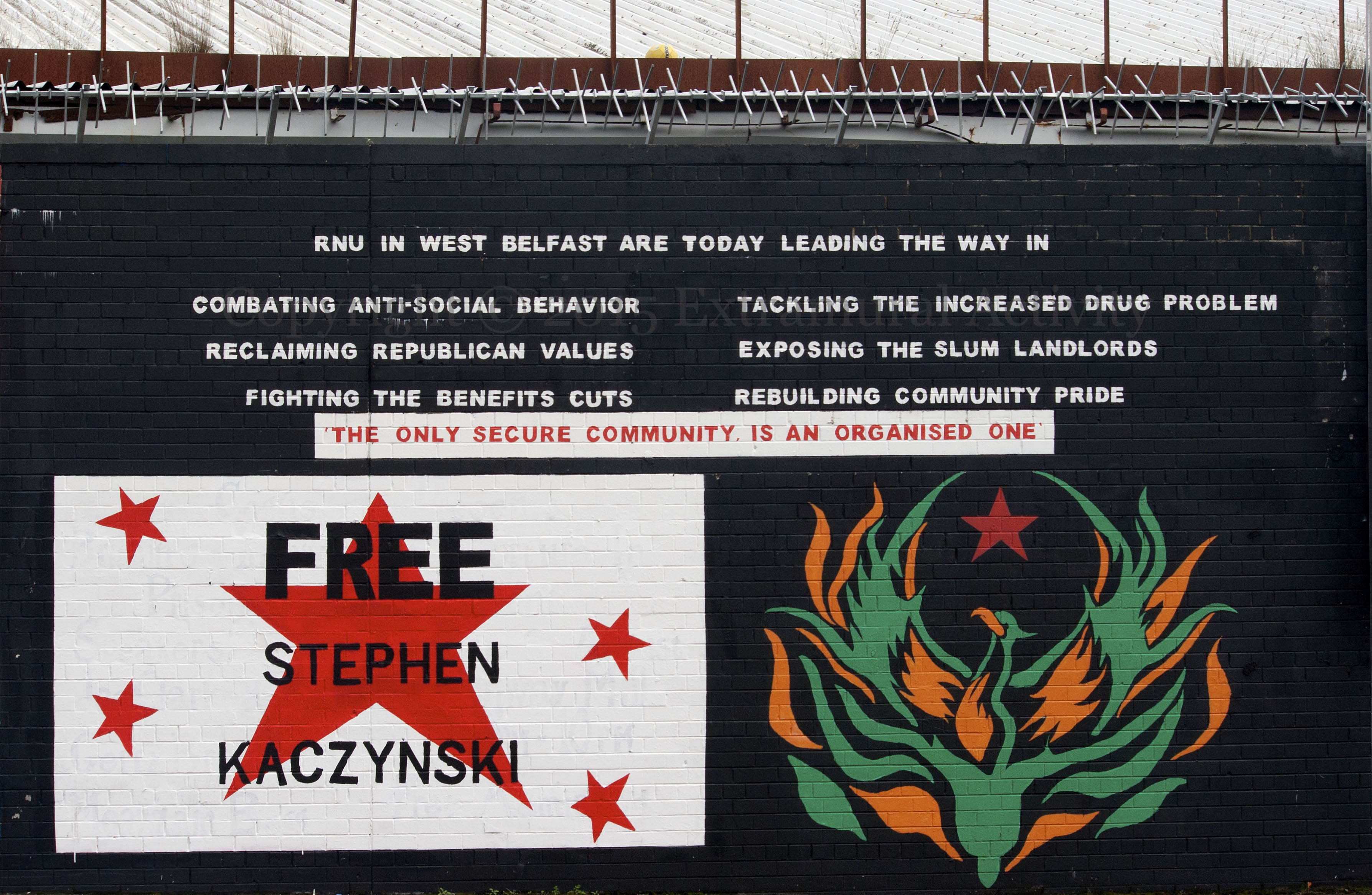
Stephen (or Stephan) “Steve” Kaczynski will go before a Turkish court on September 18th on charges of membership of the Marxist-Leninist ‘Revolutionary People’s Liberation Party-Front’ (DHKP-C). (WP) In April, members of the group took over a courtroom and held a state prosecutor hostage; when special forces stormed the building, the hostage and two of his captors died. (Independent) Kaczynski, a freelance journalist from Scotland, is alleged to be instrumental in financing the group. Alternatively, (according to various newspaper reports) he is an undercover agent of the Germans (Daily Sabah) or the British (Brian Shaw). He was on hunger-strike in protest at the conditions in Maltepe #3 from June 25th to August 12th.
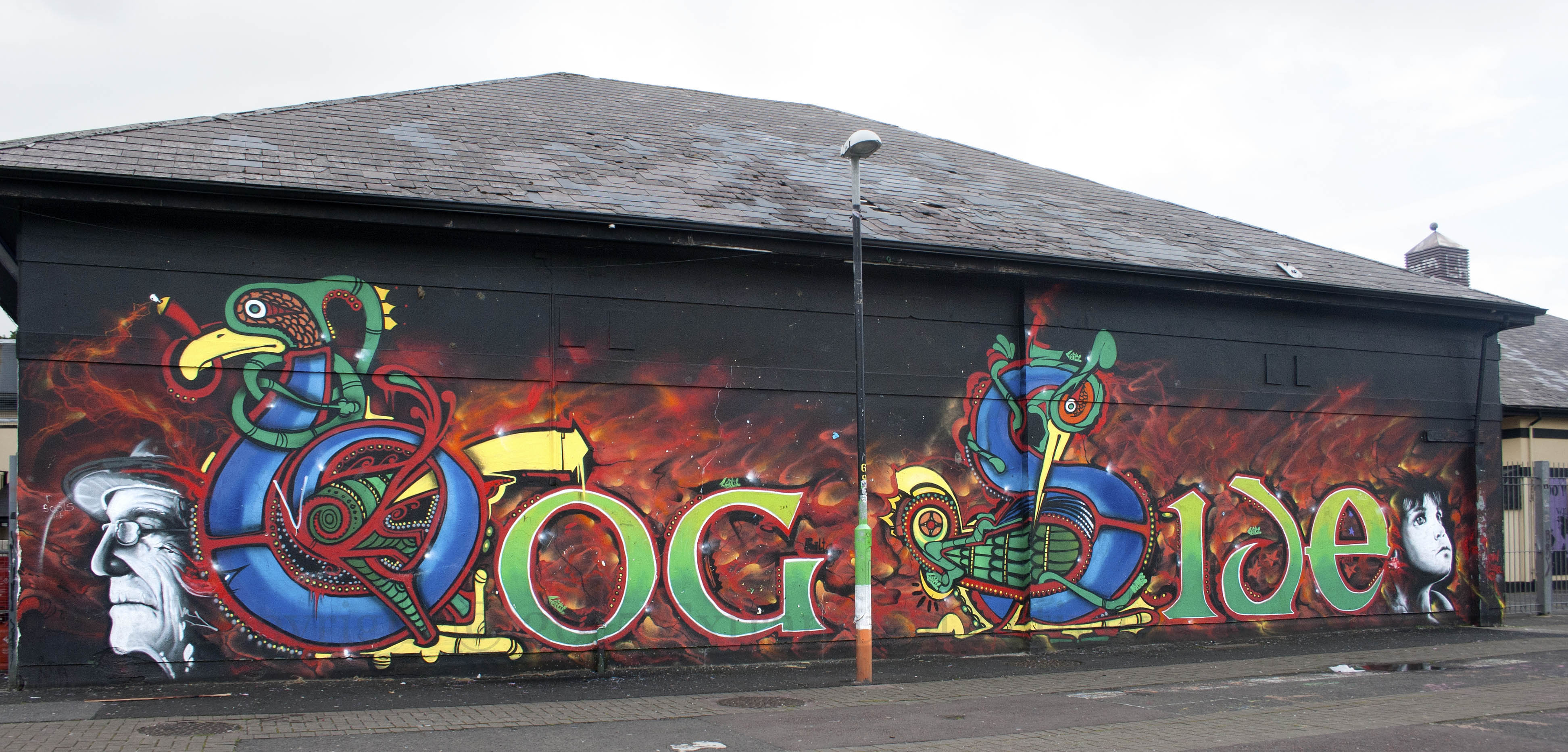
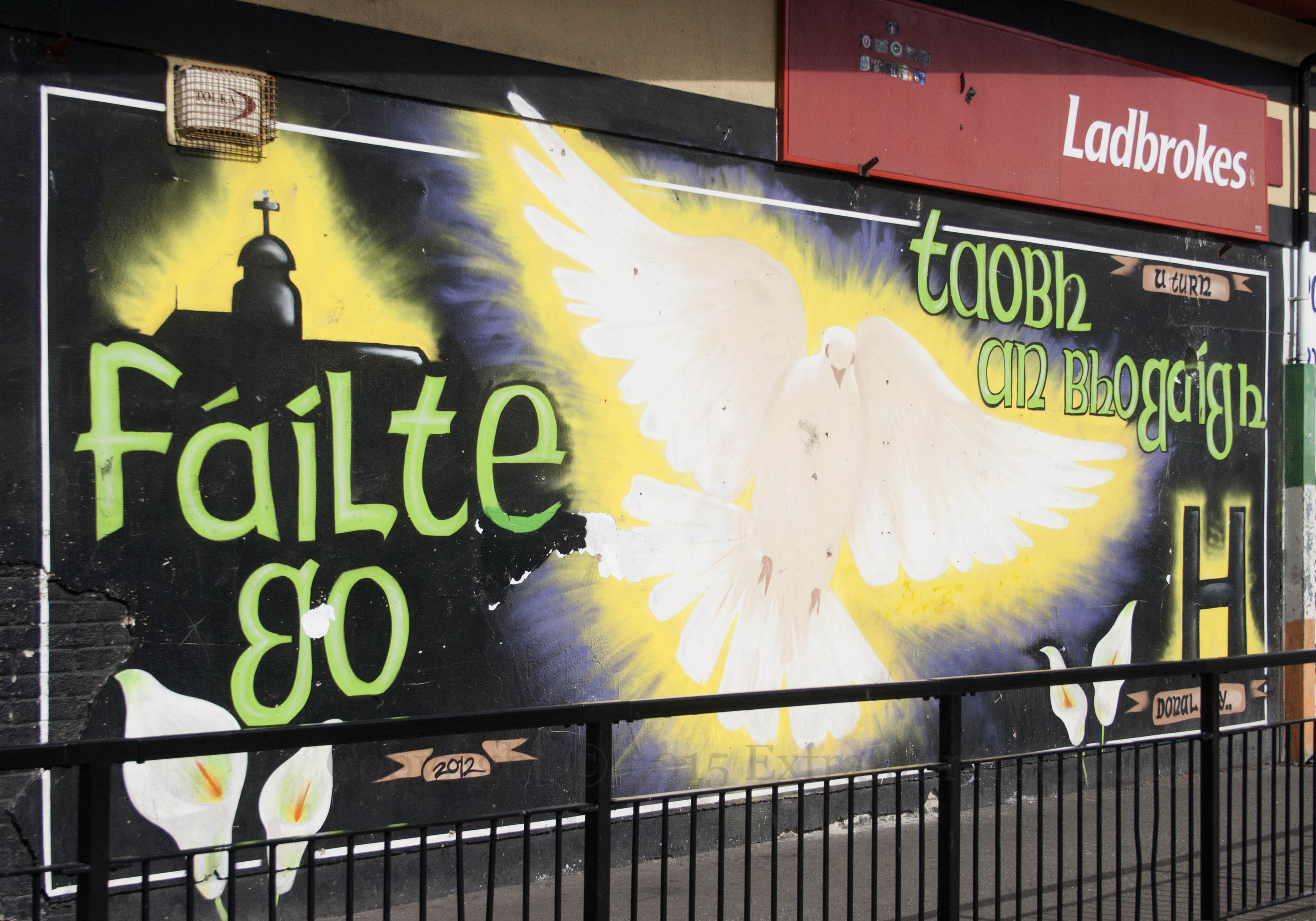
The eastern side of what was the island of Derry is called the Water side and the western side, although originally under water, became the Bog side in about 1600. The two murals shown here are on either side of the shops adjacent to the Bogside Inn. There is an excellent history of the area from 1162 to the construction of Rossville flats in 1966 at the Museum Of Free Derry.
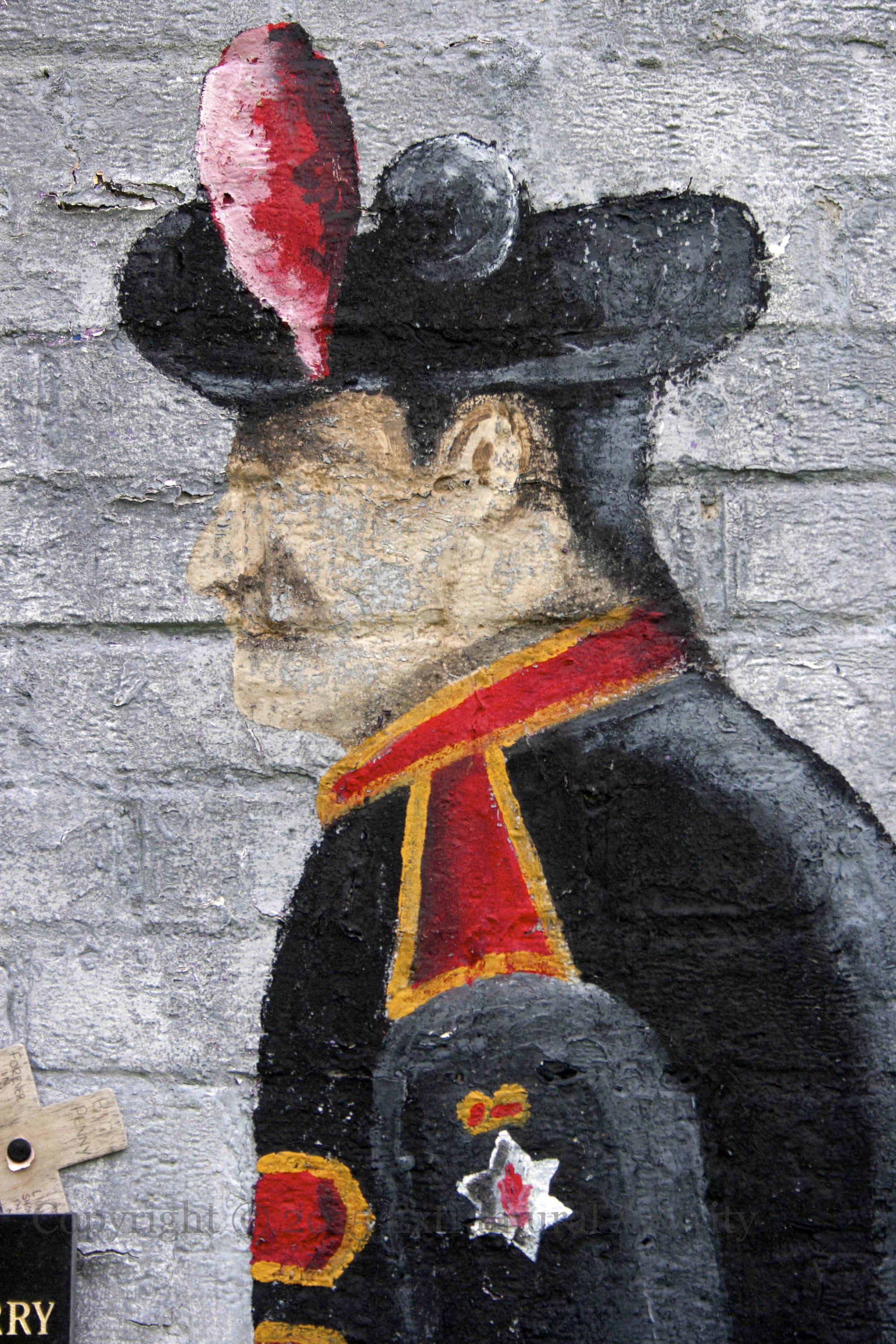
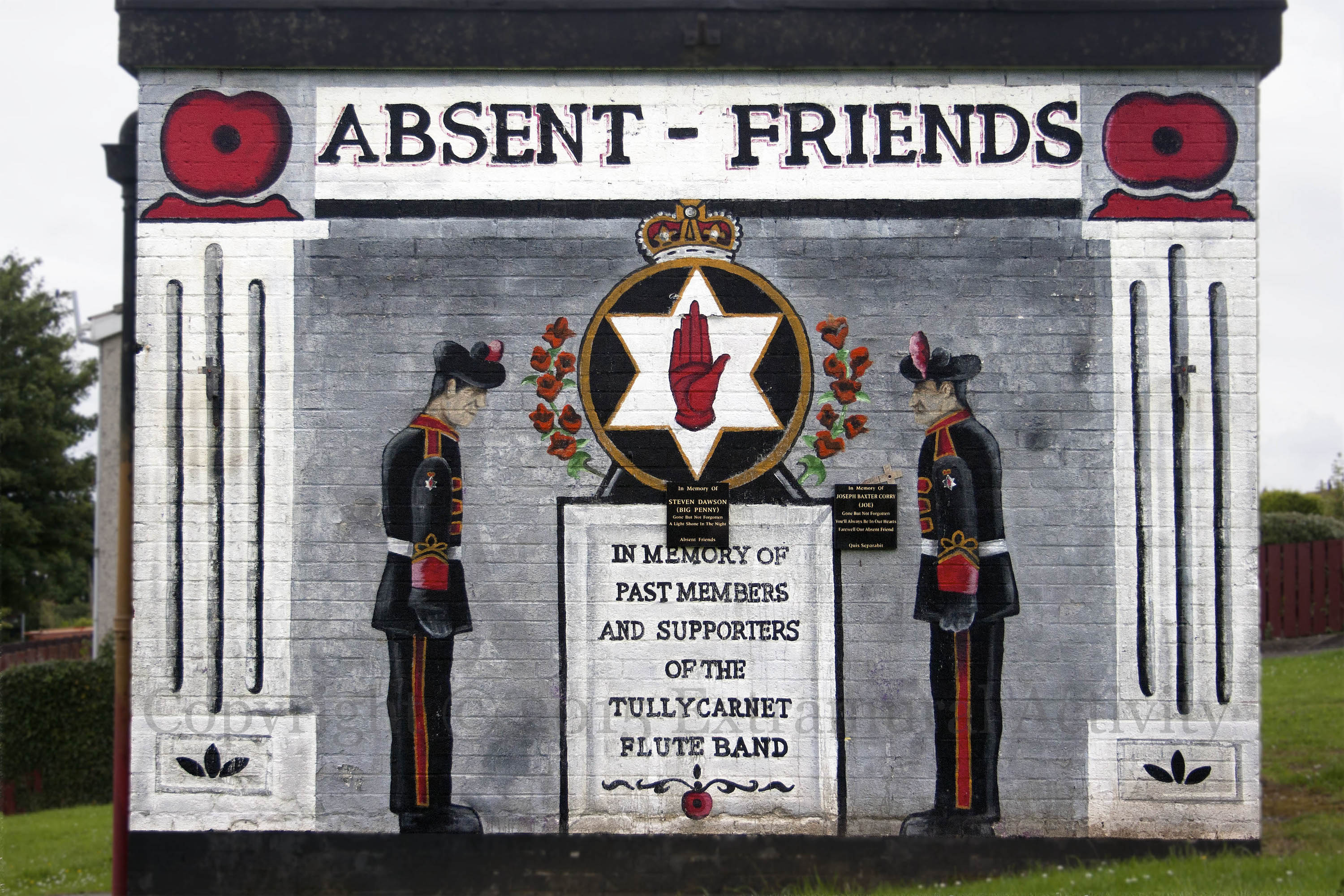
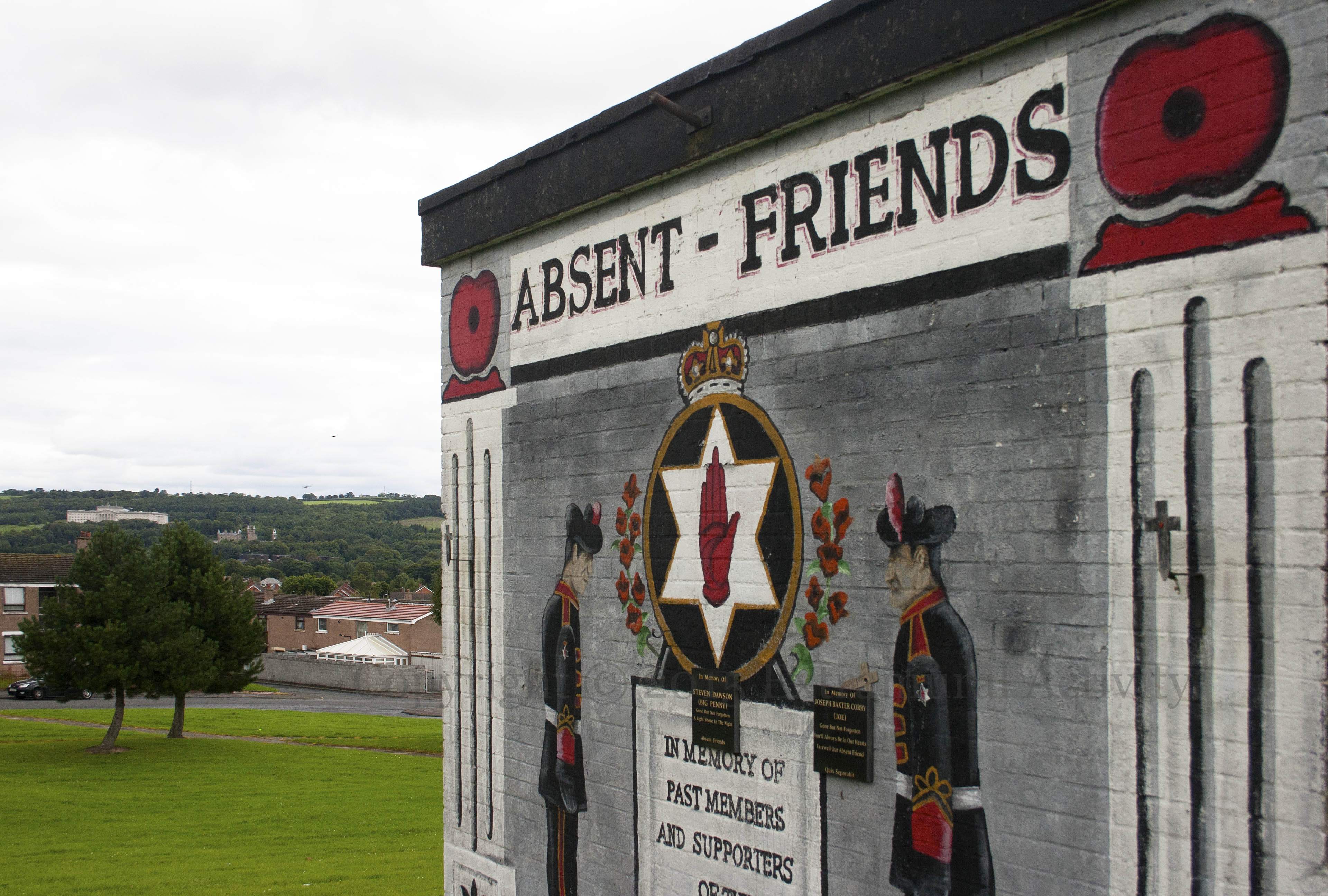
Three images from the Tullycarnet Flute Band’s (Tw | Fb) memorial mural for members who have died. The mural is in Lochinver Drive, due south of Stormont, as can be seen in the third image, below. The mural shows two band-members in uniform “In memory of past members and supporters of the Tullycarnet Flute Band. In memory of Steven Dawson (Big Penny). Gone by not forgotten. A light shone in the night. In memory of Joseph Baxter Corry (Joe). Gone but not forgotten. You’ll always be in our hearts. Farewell our absent friend.”
The Pride Of The Hill’s memorial mural was previously featured in a previous Absent Friends
This is a new mural from the 32 County Sovereignty Movement (web) on the international wall, Divis Street, (Visual History) with symbols of nationalism (the crests of the four provinces, the harp, the tricolour), socialism (the plough in the stars) and support for republican POWs (the barbed wire).
For images of the mural being worked upon, see the Peter Moloney Collection; for an earlier version see 100% British.
The images above and below show a new UDA mural in memory of John Gregg, “The Reaper”, who waged a campaign of terror against Catholics in south-east Antrim and was reputedly associated with British neo-Nazi groups. Gregg was gunned down in 2003, while returning from a Rangers match, as part of the power struggle with Johnny Adair. Watta-Chip (from the previous mural) has been replaced by Turkish Kebabs (Fb).
Here are two images of the extremes of the Mná Na hÉıreann mural.
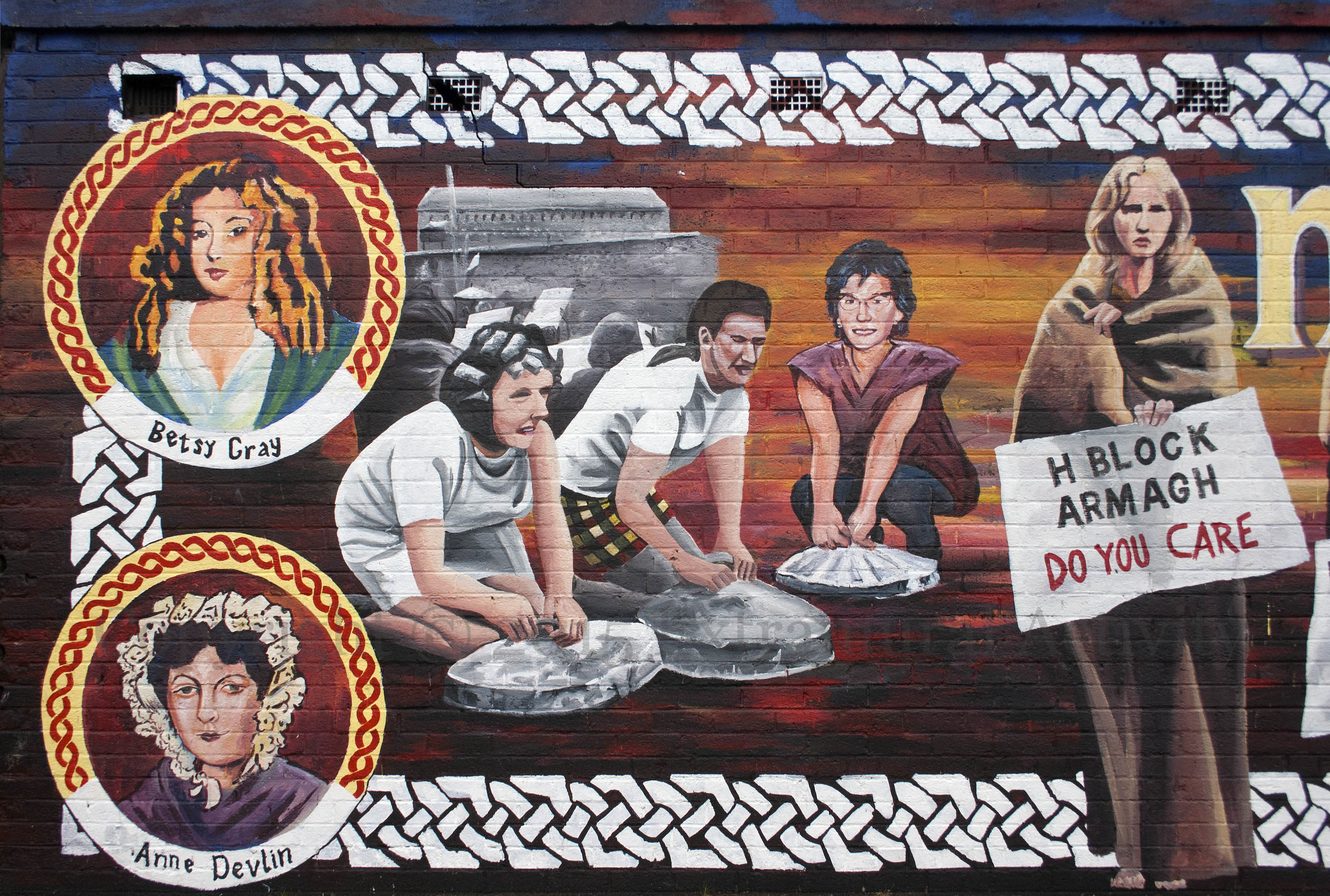
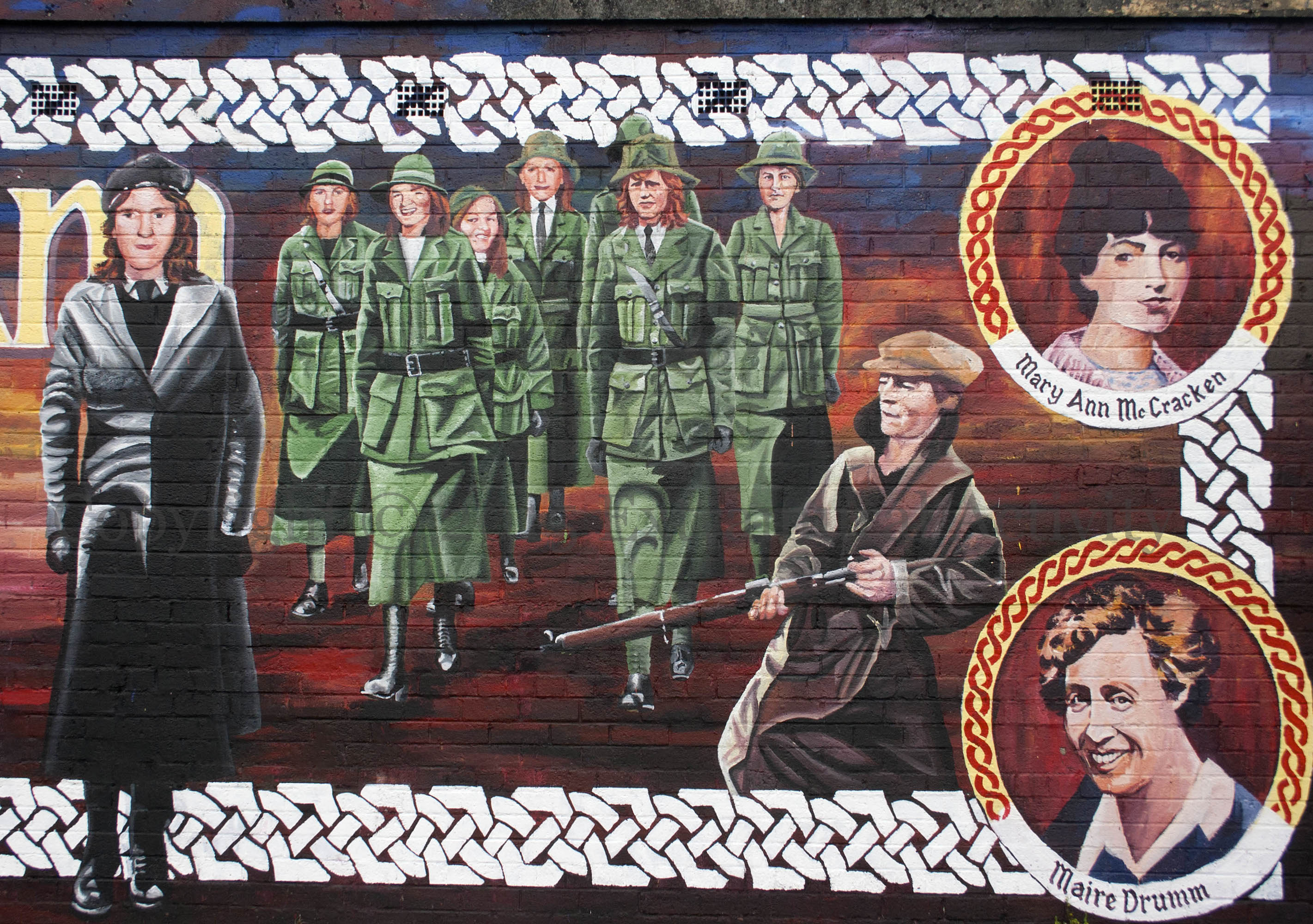
In the four corners are circles of Betsy Gray, Anne Devlin, Mary Ann McCracken, and Máıre Drumm. Gray and McCracken were Presbyterians; Gray fought (or at least, was killed) in the 1798 rebellion, as did McCracken’s brother Henry Joy; Mary Ann went on to work for the poor of Belfast and lobby against slavery. Anne Devlin assisted in Robert Emmet’s 1803 rising. (National Graves Assoc) Máıre Drumm was vice-president of Sınn Féın and commander of Cumann Na mBan, who are shown marching on the right-hand side.
In the cloth cap and holding a rifle is Eithne Coyle, a leader and later president of Cumann Na mBan, imprisoned both by the Black and Tans before the treaty and after it by the Provisional Irish government (WP). For the photograph on which her pose here is based, see An Phoblacht‘s History Of Cumann na mBan, which also includes the photo of marching women (discussed previously in Mothering Sunday In Beechmount) though the faces have been changed here, presumably to those of more contemporary volunteers. The same is probably true of the third woman with a bin lids on the left – leave a comment or send an e-mail if you can put a name to any of these faces.
Here are two details from the Mná Na hÉıreann mural. This one shows three Derry women protesting the conditions in Armagh Women’s Prison and in the H-Blocks. This article on Mary Nelis (the protester on the right, with Kathleen Deeny and Theresa Deery) describes the photograph on which this part of the mural is based. The women in Armagh prison were allowed to wear their own clothes and so were not ‘on the blanket’ as their male counterparts in the H-Blocks of Long Kesh were. However, they did engage in a “no wash” protest, which lasted from February 1980 until March 1981, and three of them – Maıréad Farrell, Mary Doyle, and Margaret Nugent – joined the 1980 hunger strike.
In the second image, below, grieving mothers, wives, and sisters stand over a coffin draped in the Irish tricolour with paramilitary gloves and beret on top.
Countess Markievicz, carrying a flag of Cumann Na mBan, and Ethel Lynch, carrying a flag of the Derry IRA, take centre stage in the Mná Na hÉıreann mural in London-/Derry/Doıre’s bogside. Markievicz is famous for her role in the Easter Rising of 1916 (WP); Lynch died in December 1974 of injuries sustained when a bomb exploded prematurely. (Derry Journal – also contains the photo on which the painting above is based.) Between them, “Liberty leads the people” waving an Irish tricolour.




 Extramural Activity