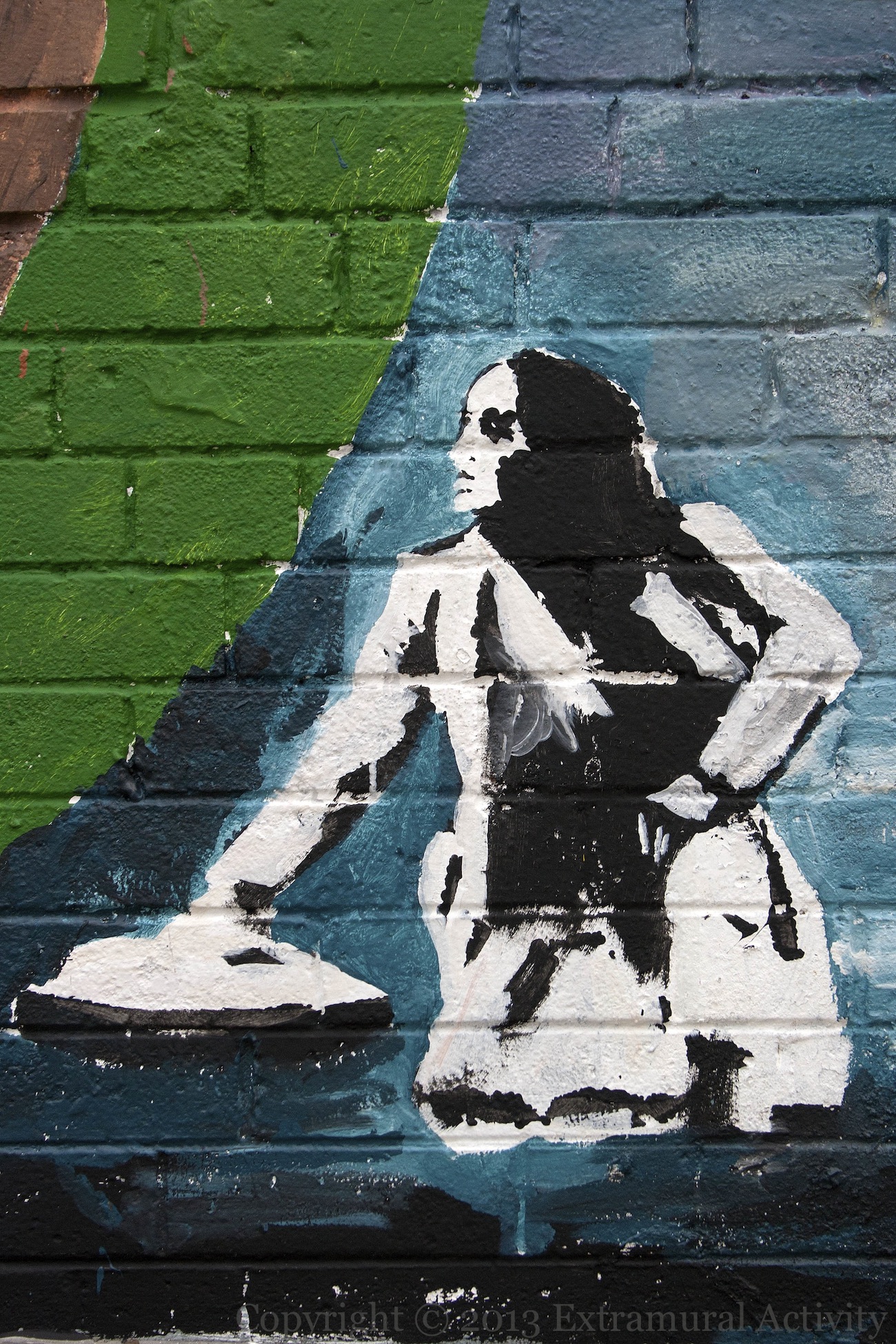
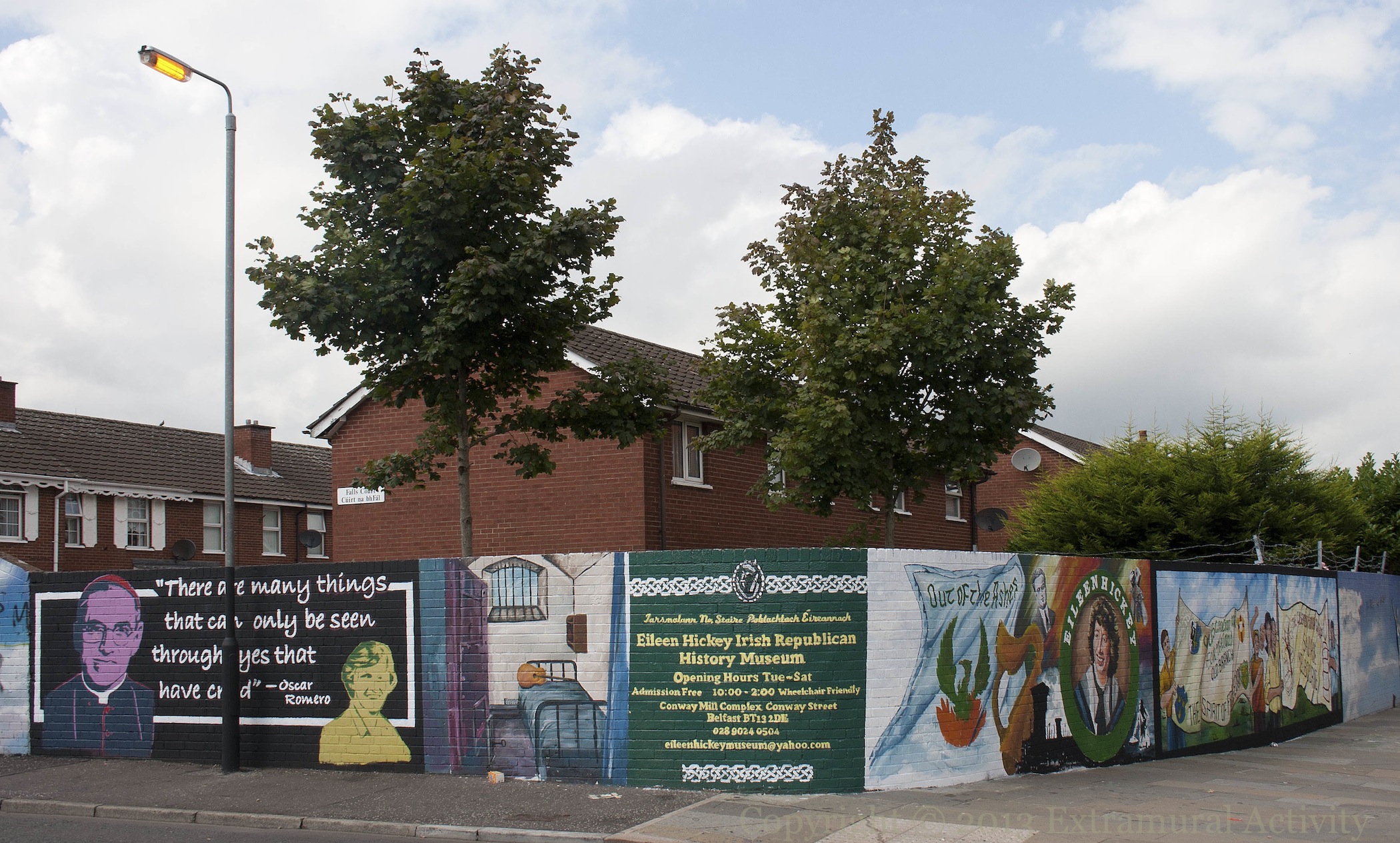
The ‘Eileen Hickey Irish Republican History Museum‘ — which is across the street behind the Conway Mill — is named for Eileen Hickey, a Provisional IRA member who served time in Armagh prison; she died in 2006, one year before the opening of the museum (obituary at An Phoblacht). A close-up of the woman with a bin lid, in the lower right-hand corner, can be found below.
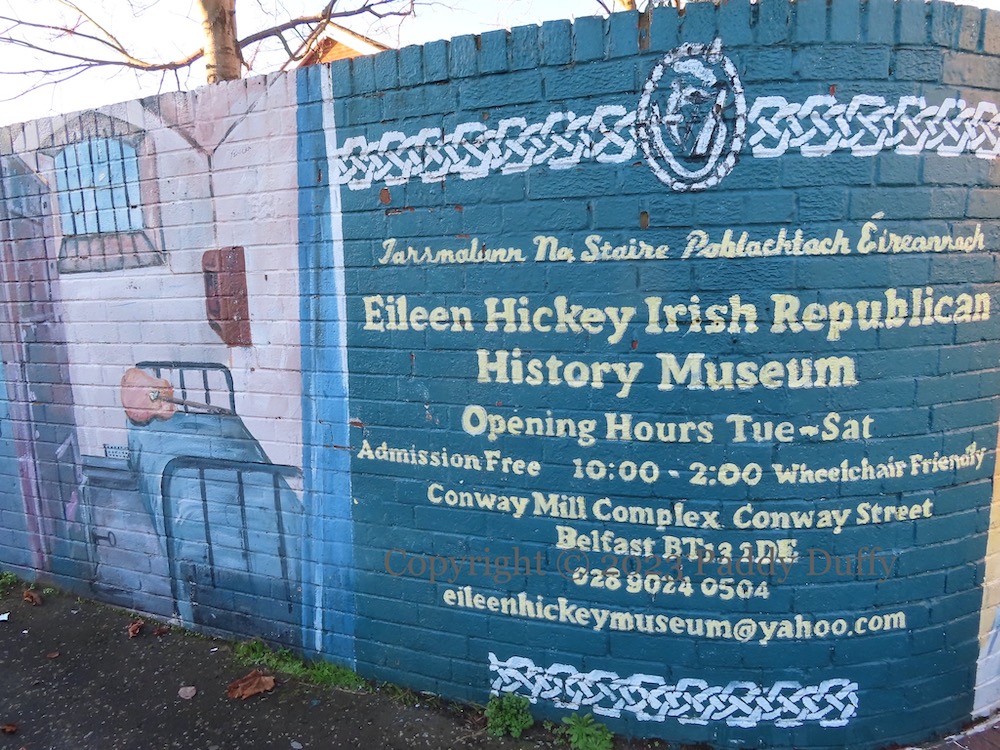
Next to the opening hours is an image of a prison cell in the Armagh women’s prison. The museum itself contains a cell door and a bed from the prison.
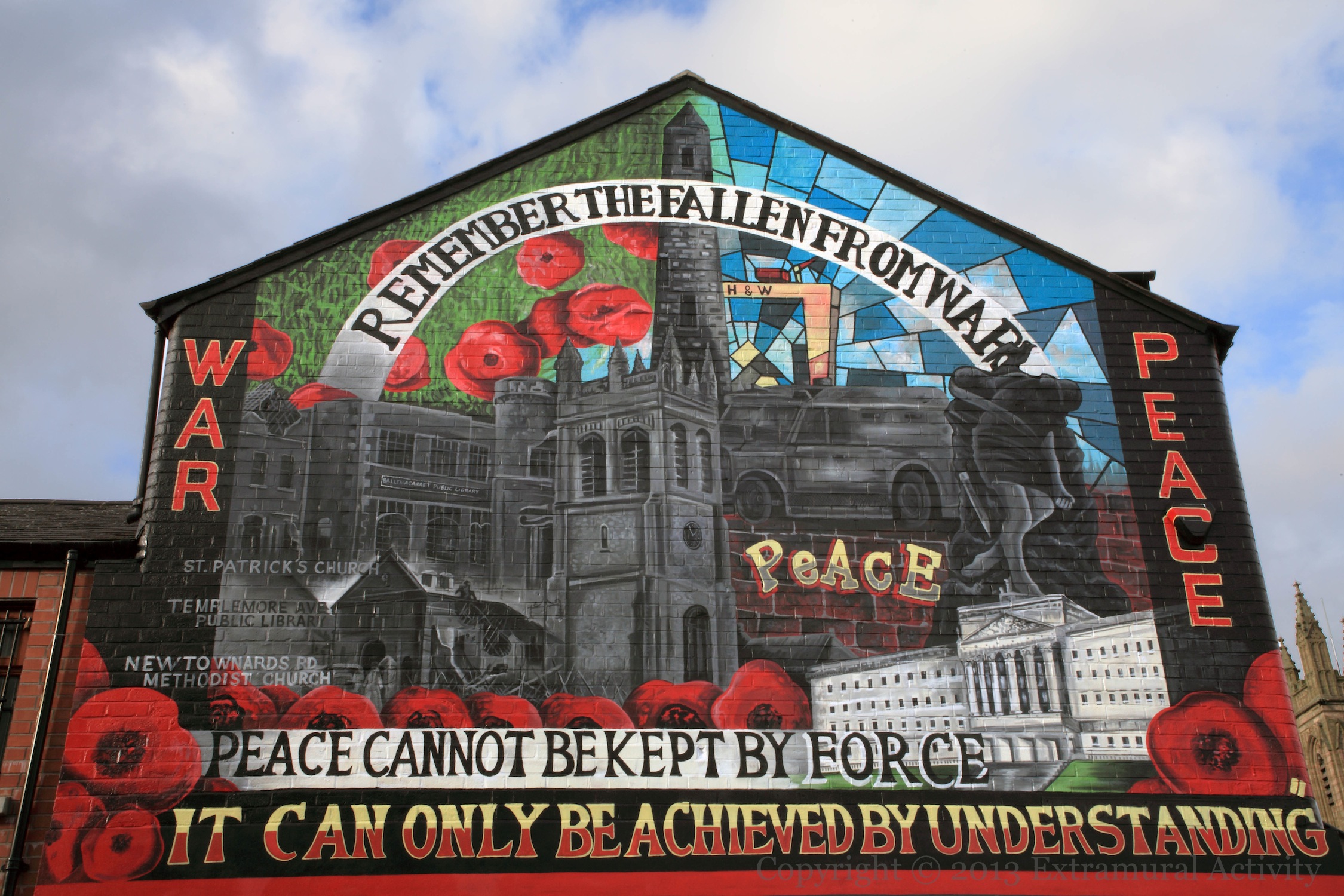
The mural above is on the Newtownards Road at Lendrick Street and shows a bombed-out Ballymacarrett library, St. Patrick’s church (the church itself is visible in the lower right-hand corner) – both were hit by the blitz in 1942 – a police land rover (perhaps representing the “fallen” during the Troubles), and Cuchulainn (perhaps representing the IRA, though Cuchulainn is also a UDA icon – see the bottom of the Visual History page on Cú Chulaınn), and Stormont (representing … peace???). Poppies in a field and a H&W crane against stained glass provide a background.
We are supposed to remember the dead because (perhaps) their deaths were unnecessary and misguided as means to peace, at least according to the saying along the bottom (sometimes attributed to Einstein): “Peace cannot be kept by force; it can only be achieved by understanding” – understanding of the Nazis during the blitz, it seems, and of loyalists and republicans during the Troubles. (If you have a better interpretation, please leave a comment.)
The mural was imitated on the hoarding around An Cultúrlann on the Falls Road during its renovation (shown below): the left hand side of the side was replaced with images of the Falls library and Bobby Sands mural and Divis tower, and Cú Chulaınn on the right was placed in front of the GPO, and the poppies were joined by lilies, and the words translated into Irish. The message here seems clearer, lamenting the CNR dead and calling for understanding of the CNR community (sc. by Britain and the Orange state) though the poppies below include the dead of WWI.
Vintage mural in Linfield Avenue, flanking the Sandy Row Methodist church, with the 1690-1990 piece on the other side. ‘In glorious memory, 36th Ulster division. YCV – In God our trust.’
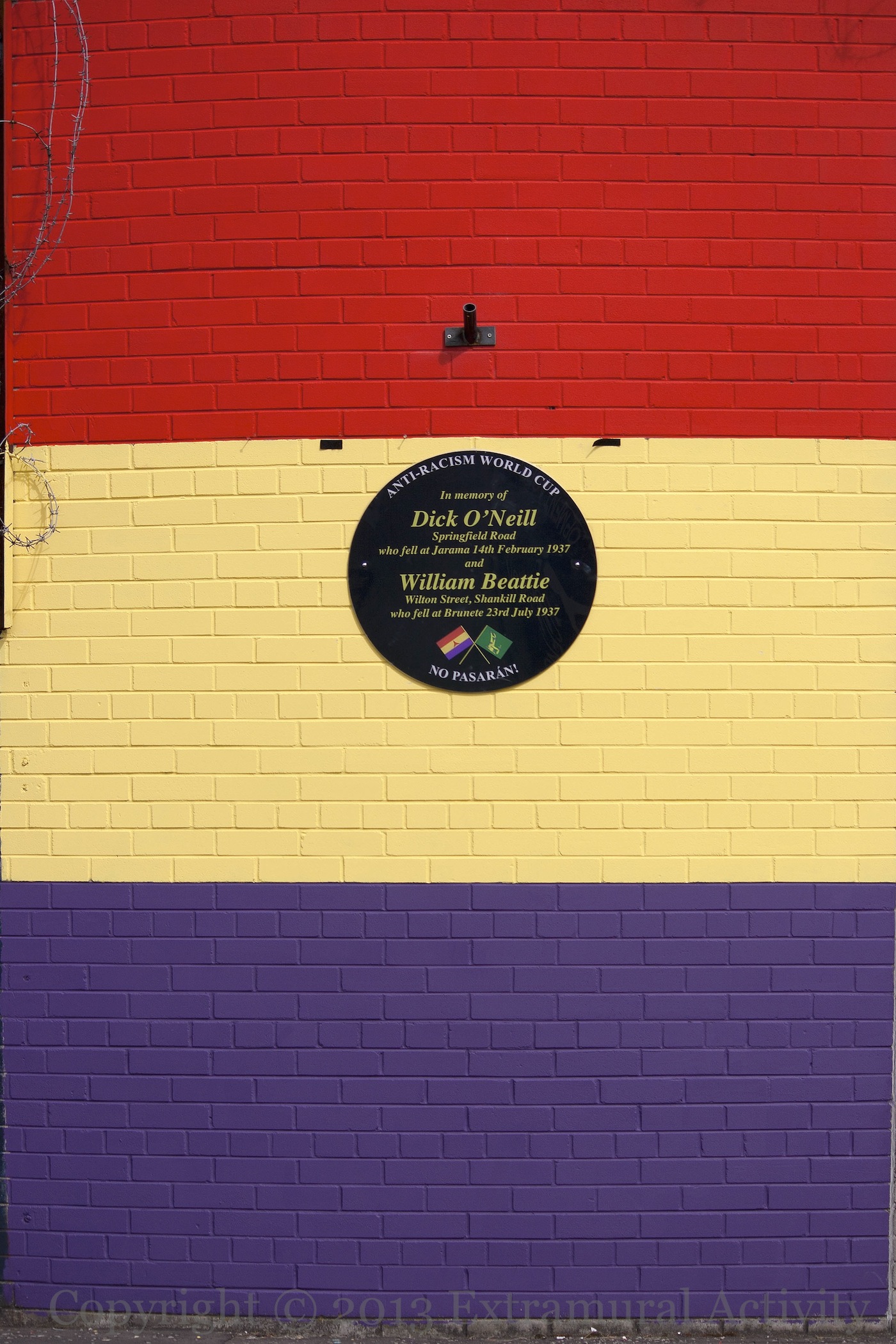
A second anti-fascist, and cross-community, piece has gone up on Northumberland Street. This one commemorates the deaths of Dick O’Neill and William Beattie who died fighting the fascists in the Spanish Civil War. O’Neill died at Jarama and Beattie at Brunete, both outside Madrid, in 1937.
As can be seen from the third image, below, the piece is immediately to the right of the Frederick Douglass mural.
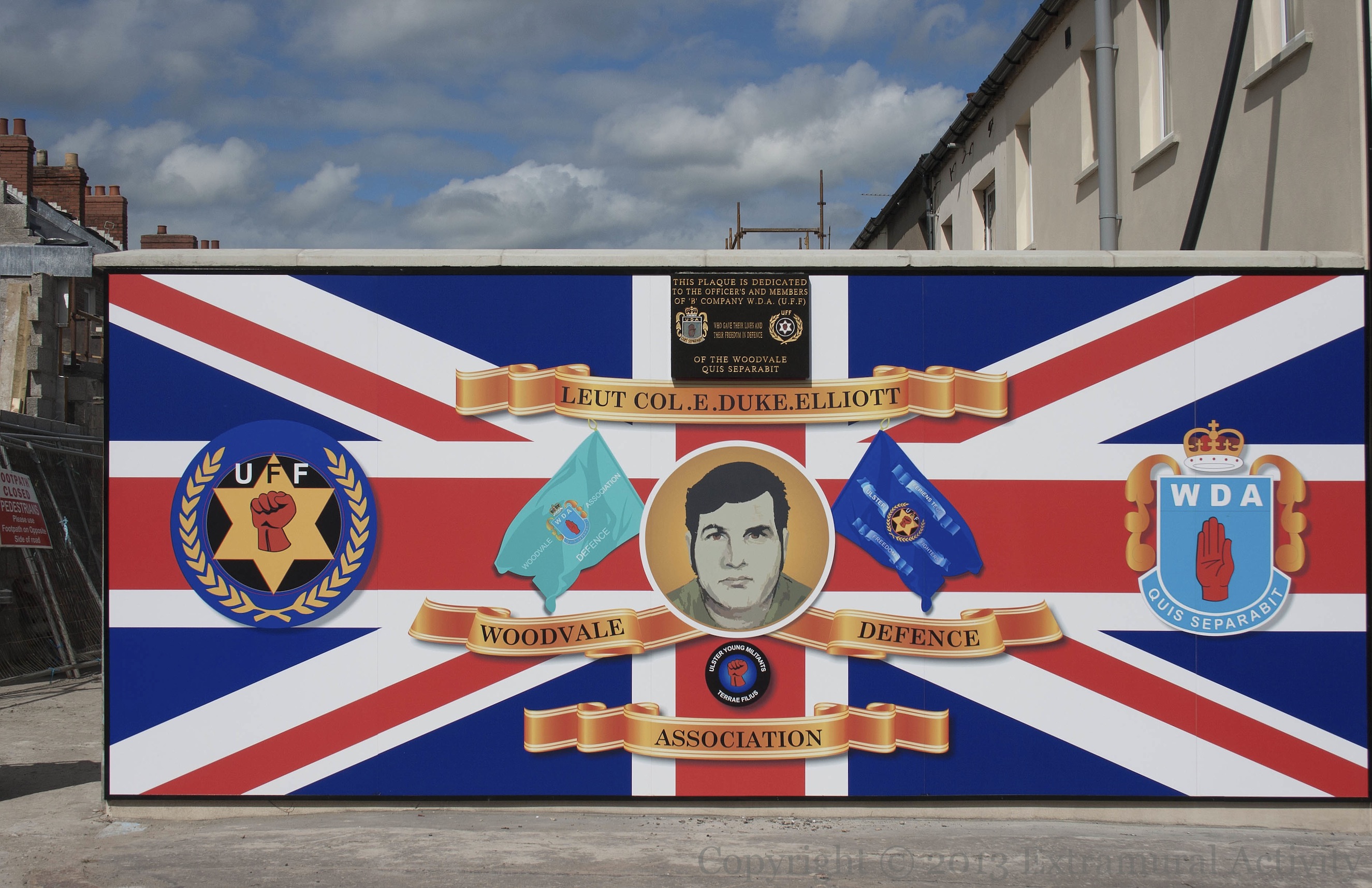
As mentioned in UDU-WDA-UDA-UFF, the end wall of Columbia Street was knocked down, taking with it a former Duke Elliott/UDA mural, which has now been replaced with boards (rather than murals) commemorating the history of the UDA and Elliott. Elliott lived one street over, in Leopold Street (WP). He was killed in 1972, at age 28, in a dispute with other UDA members.
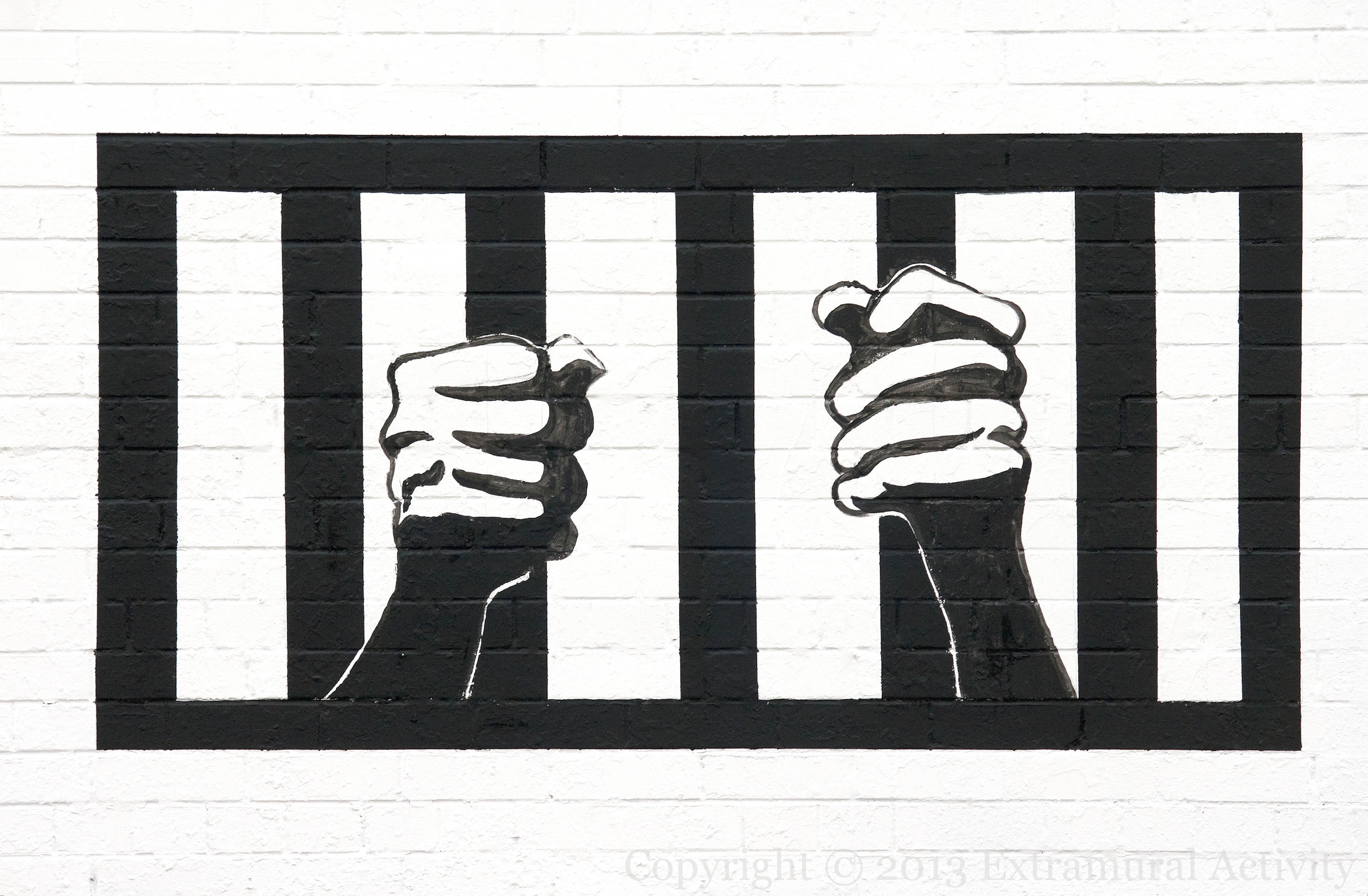
A new half-size (or 2/3rds-size) mural on the International Wall, Divis Street, in stark black-and white: End British Interment of Irish Republicans 2013. The mural was painted to coincide with the anti-internment march on August 9th that was routed through Belfast city centre and sparked violent protests (U.tv video reports).
Replaces the ‘Maghaberry – Stop Strip Searches’ piece, which itself earlier replaced this Maghaberry piece.
Mural from mid-2011 on the “international wall” (Visual History) featuring a quote from early (1976) hunger-striker Frank Stagg (WP), along with portraits of Stagg, Michael Gaughan (d. 1974 WP) and the 10 strikers who died in 1981. The images of Stagg and Gaughan, along with a Tricolour and a copy of the Proclamation of the Irish Republic, are here concealed by a placard announcing a rally commemorating the hunger strikers.
This mural takes the place of a pro-Basque mural (and the Martin Meehan bookmark) in the second half of 2011. There is currently no Basque mural on the wall.
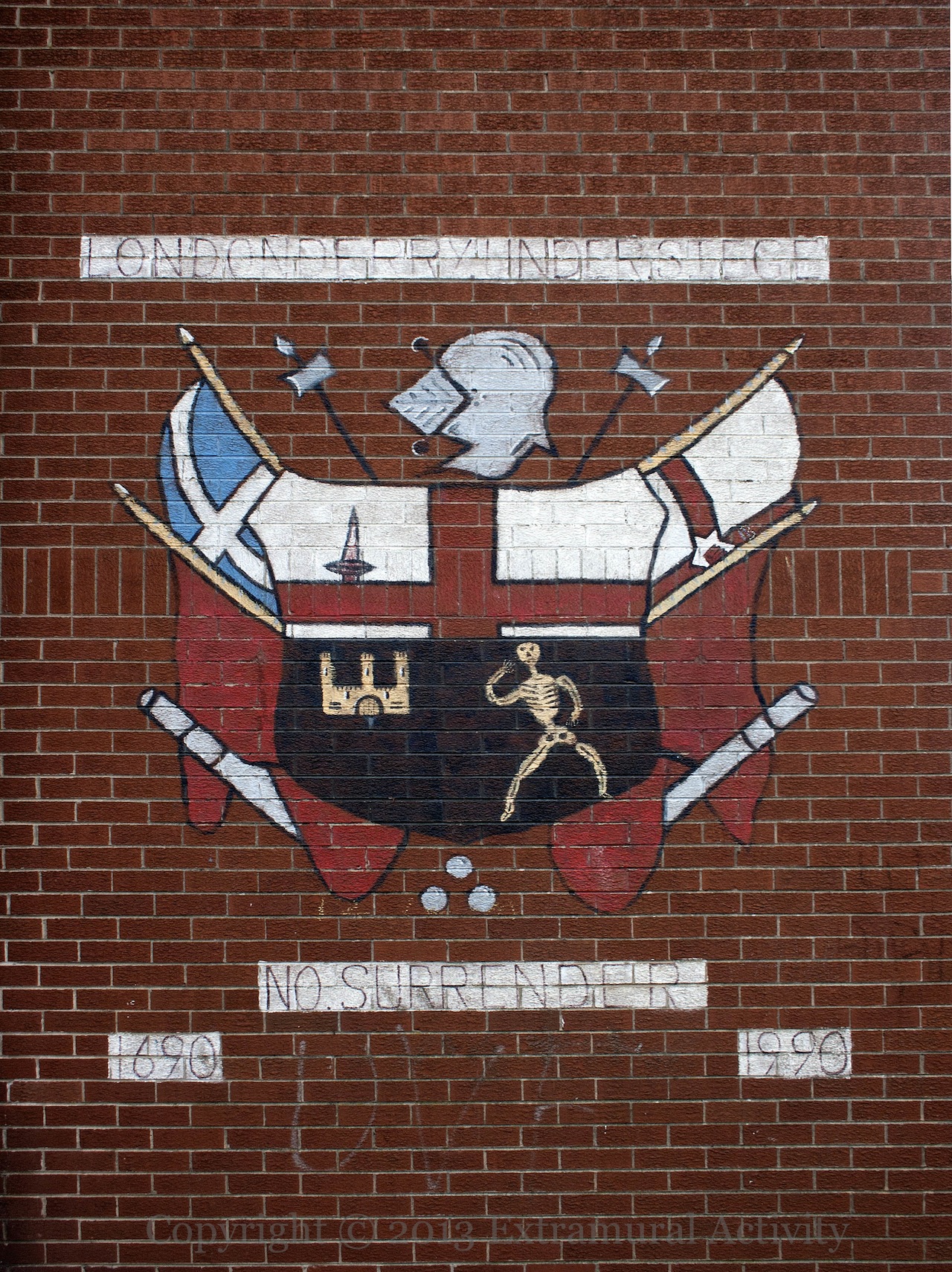
This Sandy Row mural commemorating the siege of London-/Derry is in pretty good shape, despite being more than 20 years old. It features the coat of arms of Londonderry – see this post – Vita, Veritas, Victoria – for some background. For more on the siege, and relief, of Derry, see Breaking The Boom. The siege ended in 1689; the battle of the Boyne was in 1690. It is in Linfield Avenue and is visible from Rowland Way, off Sandy Row.










 Extramural Activity