“Some believe it is only high walls that can hold fear in check but that is not what I have found. I have found that it is the small, everyday deeds of ordinary folk that keep the darkness at bay, small acts of kindness and love – Gandalf and me [called_to_create_ (ig)].” The quote is from the movie of ‘The Hobbit – An Unexpected Journey’ (youtube) and not any Tolkein book. Whatever the truth of the quotation, residents generally want the so-called “peace” walls to remain: 2023 BelTel (about Derry) | 2019 Irish Times | 2015 BBC.
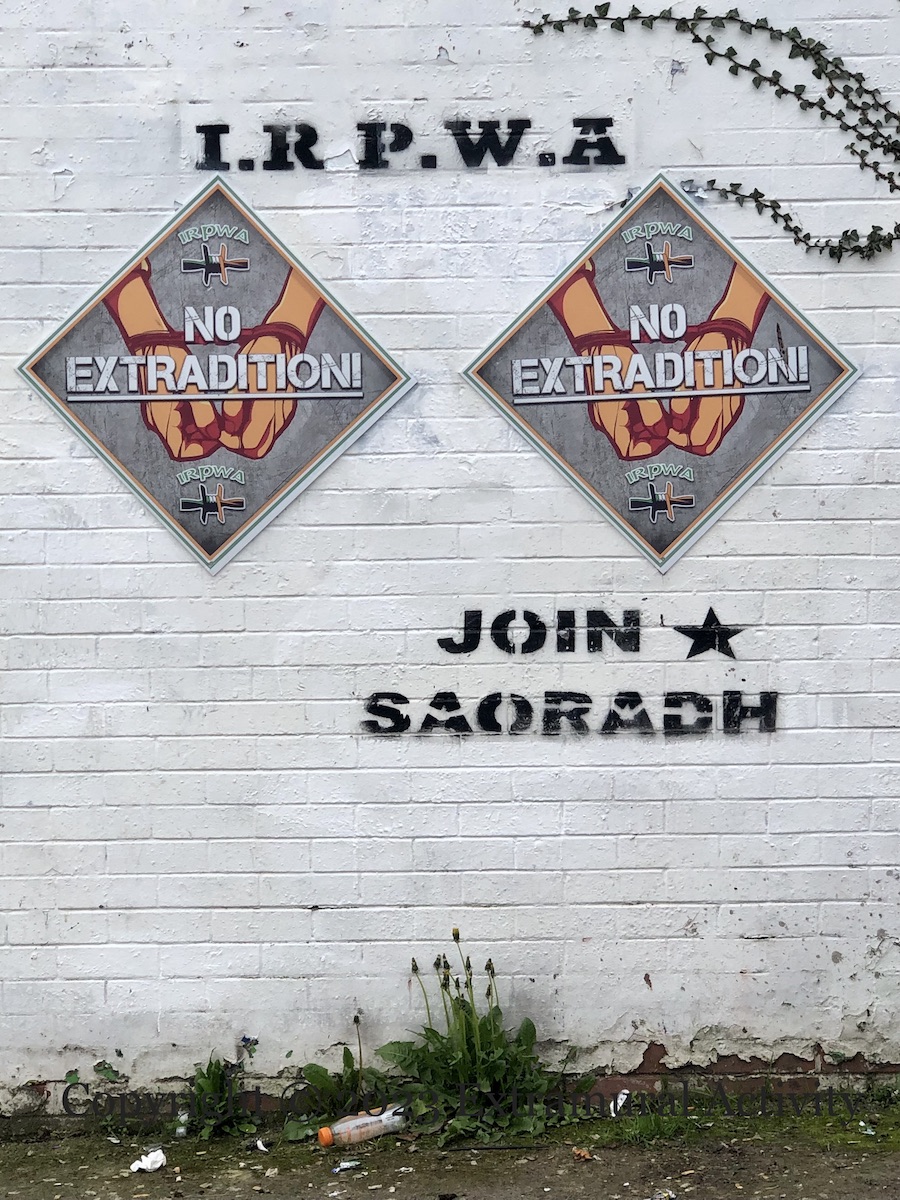
There has been graffiti art of the side wall of what was Vogue Hair & Beauty and is currently the Kurdish barbers since 2008 (see Visual History 11) but in 2018 the wall was claimed by Saoradh (web) with a mural depicting the Palestinian flag (see From The River To The Sea – it has recently been repainted) and a changing message to the right-hand side – currently a pair of IRPWA “No extradition’ boards.
Here are three new pieces above the security gates on Northumberland Street, coving over the “Deserted! Well, We Can Stand Alone” graffiti in the last remaining spot on the wall without a mural. From left to right:
Arthur Guinness: “Black Protestant Porter” as a description of Guinness stems from Arthur Guinness’s opposition to the 1798 rebellion (Indo). The Union Star (newspaper in Belfast – A Planet Of Light And Heat) called Guinness a spy and advised that “United Irishmen will be cautious of dealing with any publican who sells his drink.” (An Phoblacht).
Gusty Spence, a former commander of the UVF, read out the ceasefire statement of the “Combined Loyalist Military Command” (UVF, RHC, and UDA): “Let us firmly resolve to respect our different views of freedom, culture and aspiration and never again permit our political circumstances to degenerate into bloody warfare – Gusty Spence, loyalist ceasefire [statement in full], 13 October, 1994.”
“Welcome To The Shankill Road – we are proud, resilient, welcoming”: The original ‘three hands’ was on Northumberland Street, just above this spot – see Proud, Defiant, Welcoming – which was then reproduced in reduced form in Gardiner Street – see Welcome To The Shankill Road.
This is the most conciliatory statement ever made by loyalism and the decision to put it on Northumberland Street, especially in the context of the internationally famous and associated-with-Ireland Guinness and the “welcome” mural, suggests that the trio is directed at tourists rather than locals.
“Where is our Alternative Ulster?” Alternative Ulster was a fanzine (Fb | Musical Revolutions) and later a magazine (Issuu) and radio show covering the Belfast music and arts scene until March 2012; the name was then used for the Stiff Little Fingers’ song (youtube) in 1978. By Verz (Fb) and Belfast One (web) in Fountain Street, Belfast.
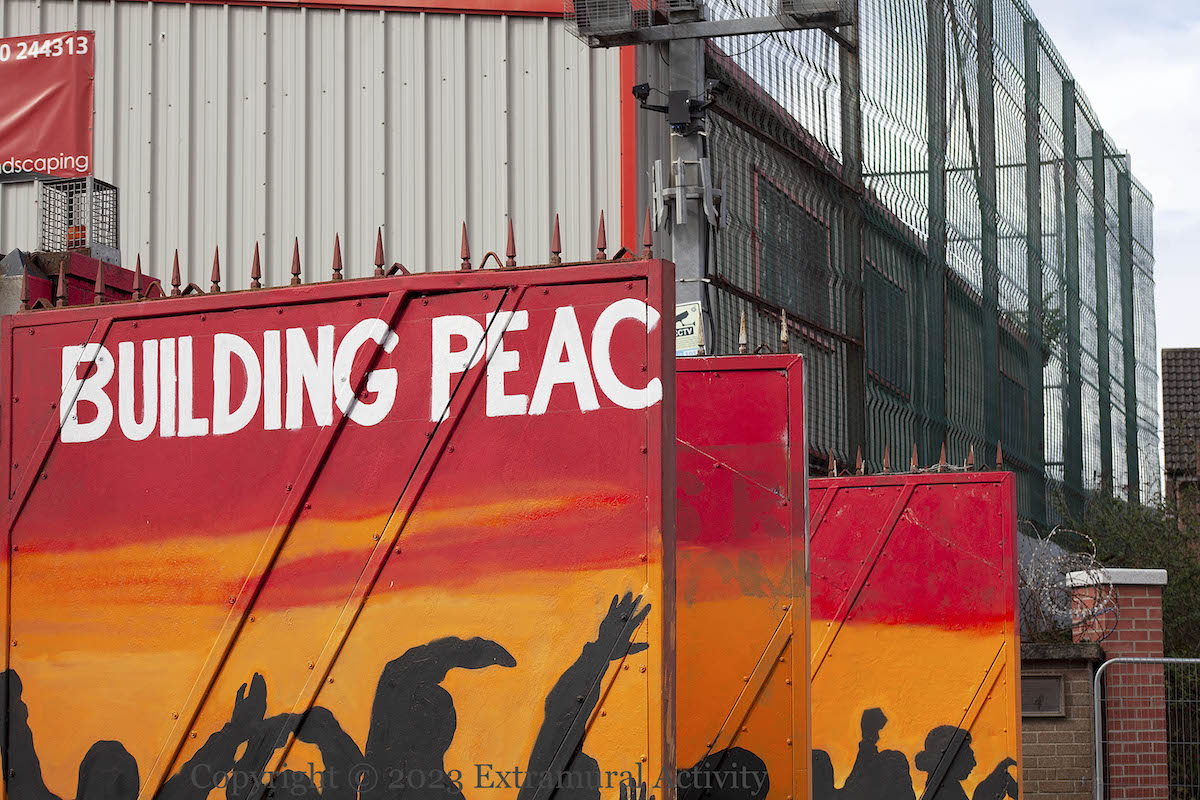
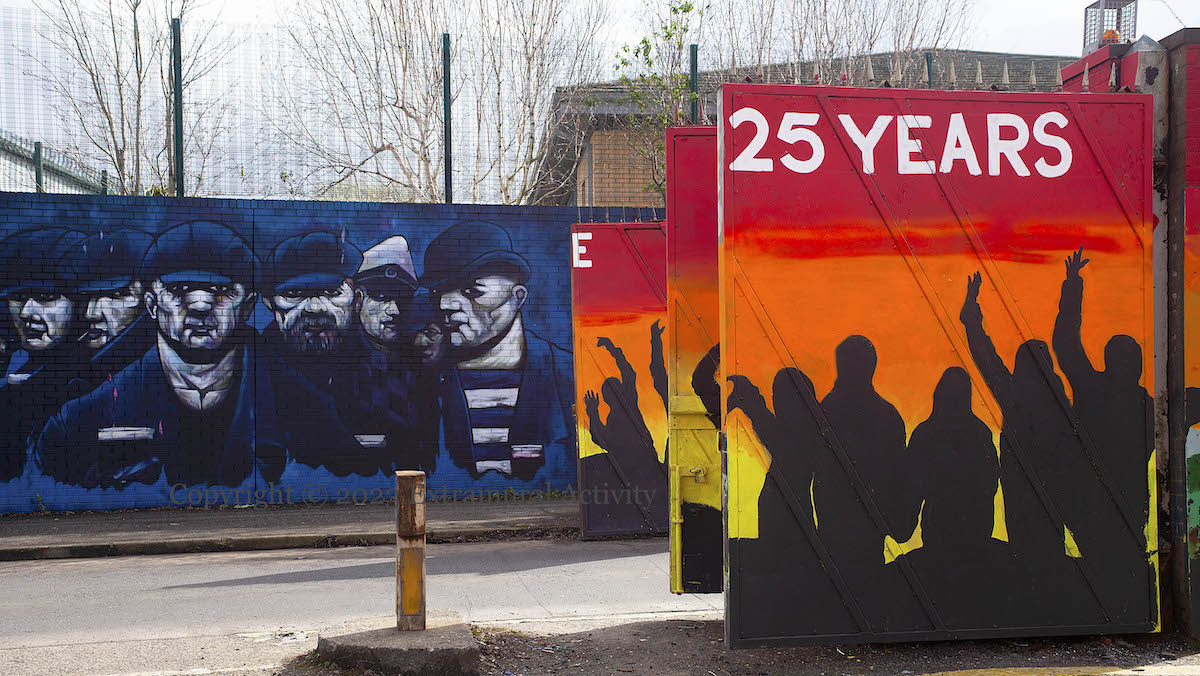
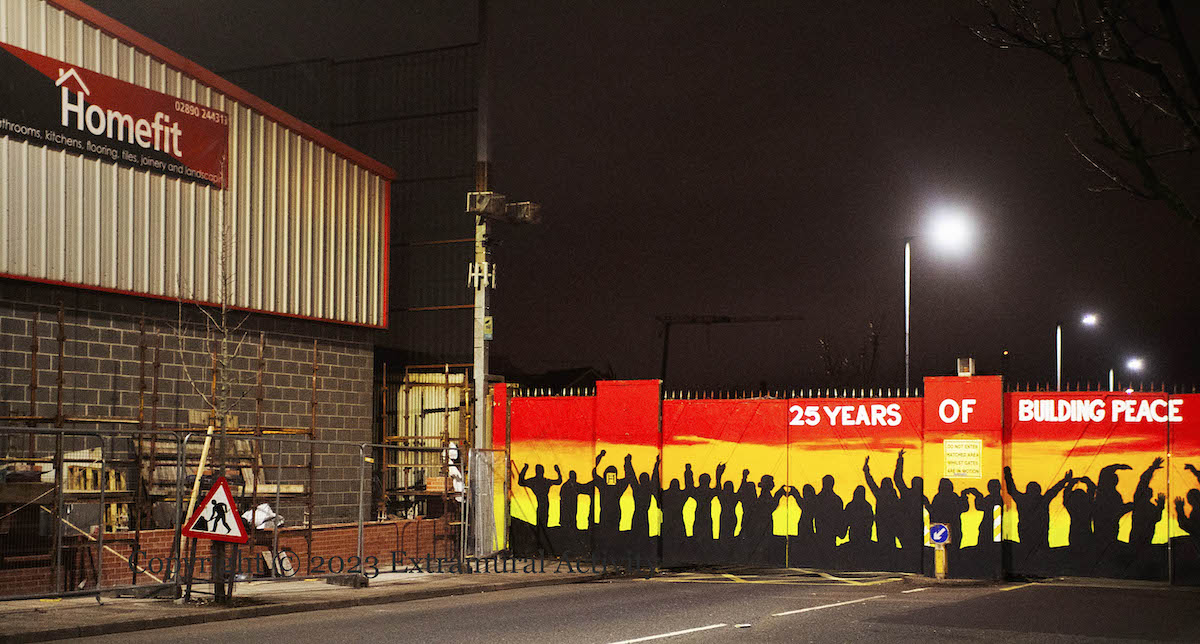
The gates on Lanark Way are part of the west Belfast “peace” wall. On this site we always put the word in scare-quotes to signify that it has a different meaning than it typically does. Without them, “peace wall” might suggest a place where people can go for a few moments of quiet reflection.
Rather, the wall – and the gates and the cages that surround many buildings on either side of the wall (see above) – is a divider meant to keep the peace by separating warring factions. Indeed the reason for the re-painting of the gates is not just the up-coming 25th anniversary of the Belfast or “Good Friday” Agreement (on April 10th) but the fact that they were damaged in the 2021 rioting (BBC). (This Irish News article surveys 150 years of violence at the site.)
The new art on the gates is inspired by the cover of the booklet sent to every household in advance of the May vote to ratify the Agreement (available at CAIN), which was similar in various ways to the television ad shown at the time (Ads On The Frontline). It showed a family of four in silhouette against a red-and-orange sunset; given the rioting associated with Lanark Way, on the gates this sunset could be mistaken for flames, and the rejoicing silhouetted figures for gesticulating and petrol-bomb-throwing rioters. For the previous art on the gates, see the Visual History page on the west Belfast “peace” line. (For the mural in the background, see Sailortown Dockers.)
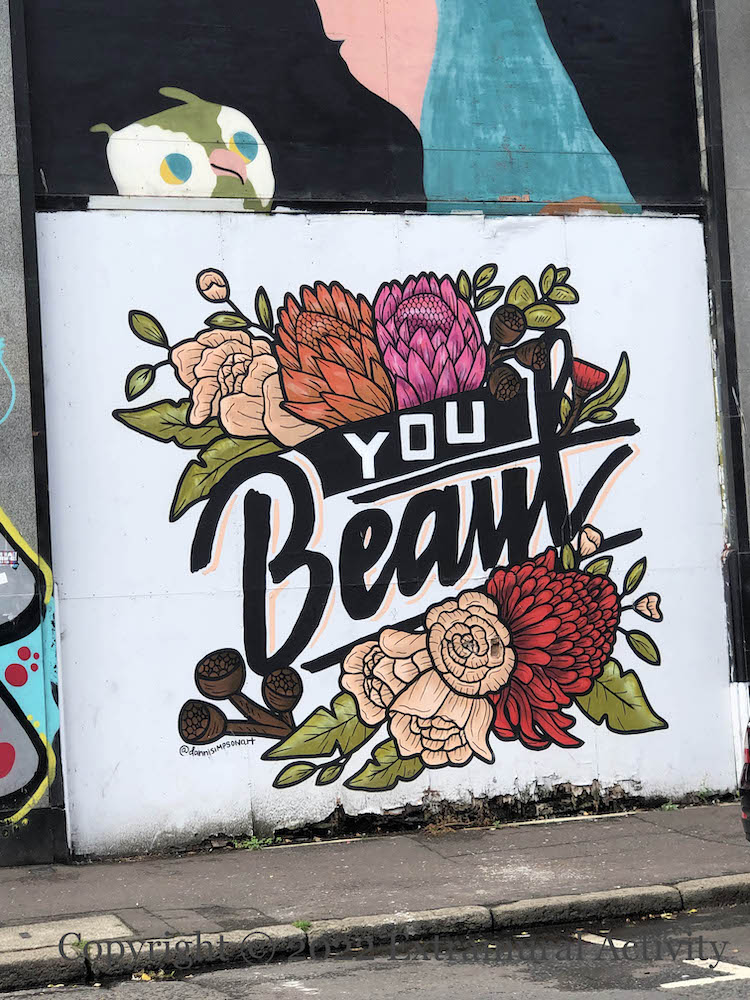
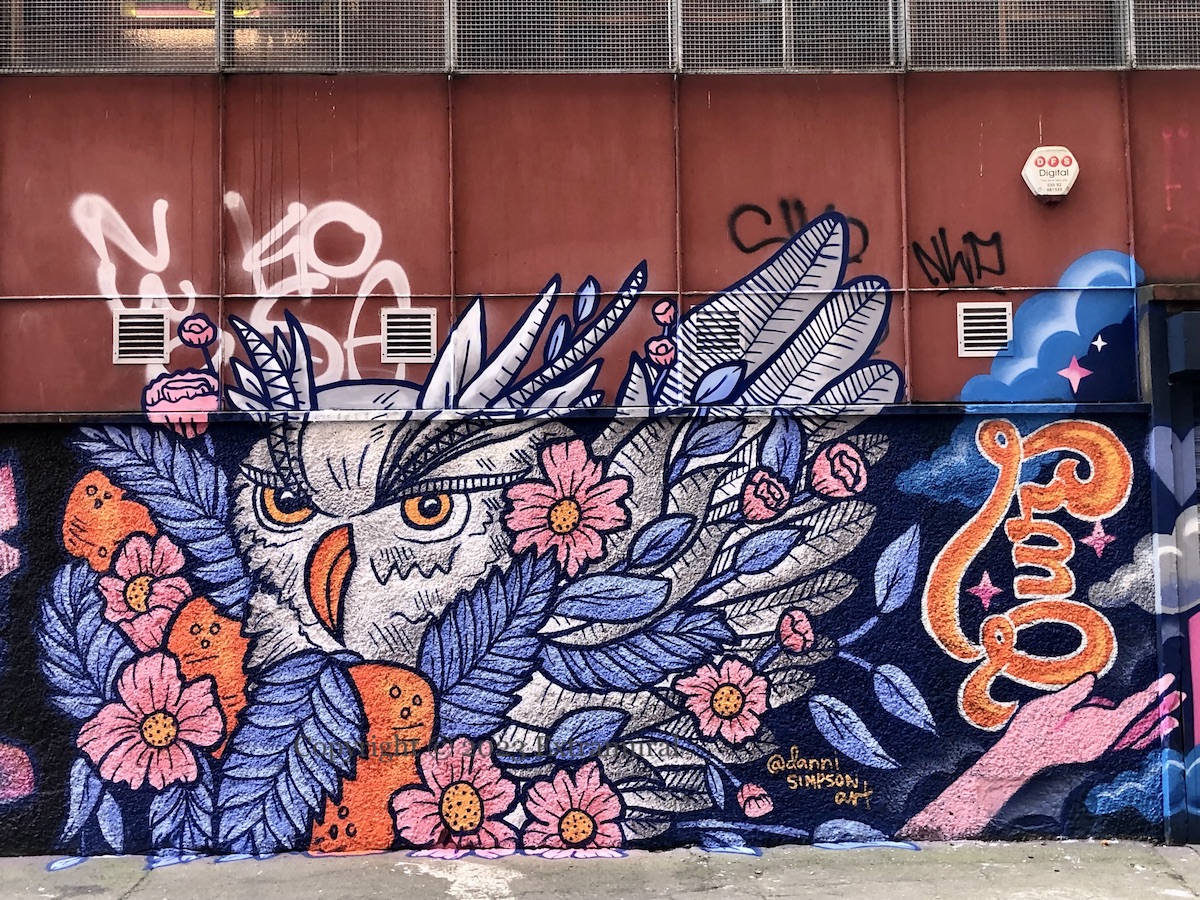
North Street Arcade was burned down in April 2004 – see Who Burnt Us Out?. Since 2012, there has been street art at both its North Street and Donegall Street ends, the latest (from September, 2021) being this piece by Danni Simpson (ig) in Donegall St.
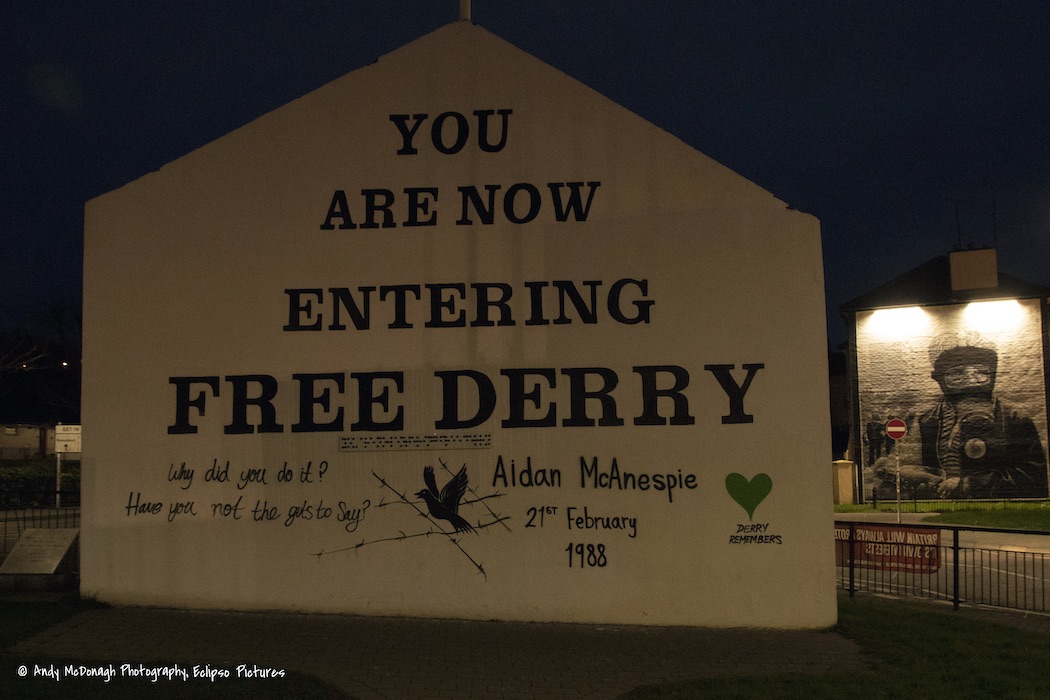
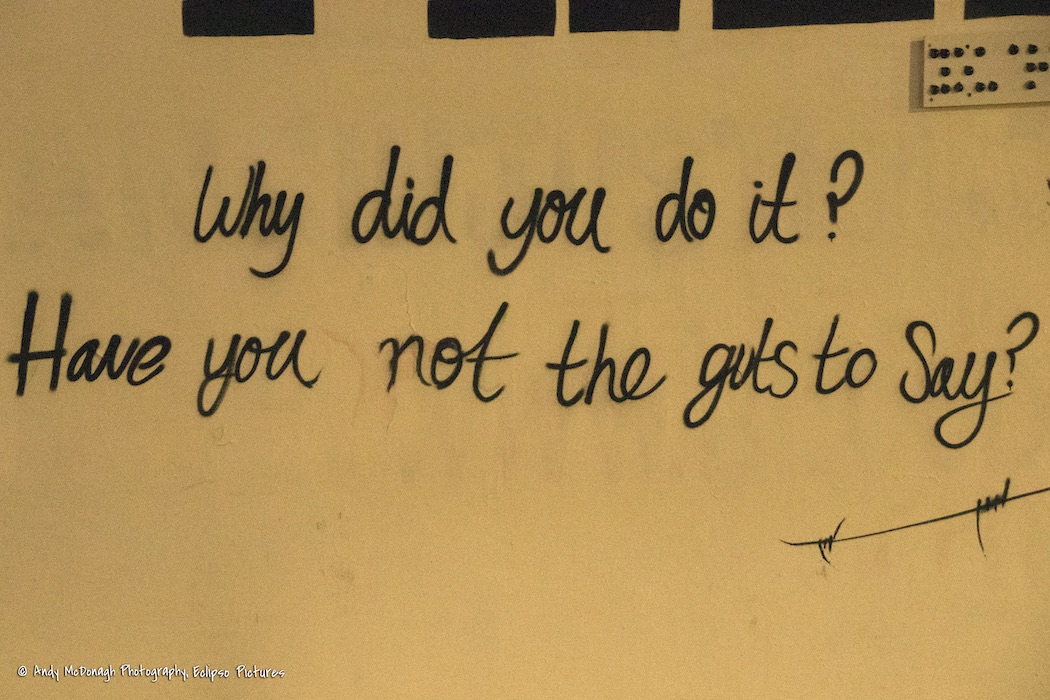
“Why did you do it? Have you not the guts to say?” The question is for David Holden, who in 1988 was an 18-year-old Grenadier Guardsman, manning a checkpoint in Aughnacloy, Co. Tyrone. On February 21st, Holden shot Aidan McAnespie as he was walking to the nearby GAA club. Holden was convicted of manslaughter by gross negligence (BBC | Belfast Live) and was sentenced in February to three years, suspended for three years. The family expressed disappointment, saying that Holden did give a clear account of what happened nor express remorse (Sky News | Journal). Holden has now decided to appeal his conviction (BBC | RTÉ).
The lark in barbed wire is used here not as a symbol of political prisoners but of the struggle for justice in the UK system. (See the Visual History page on the lark and the dove.)
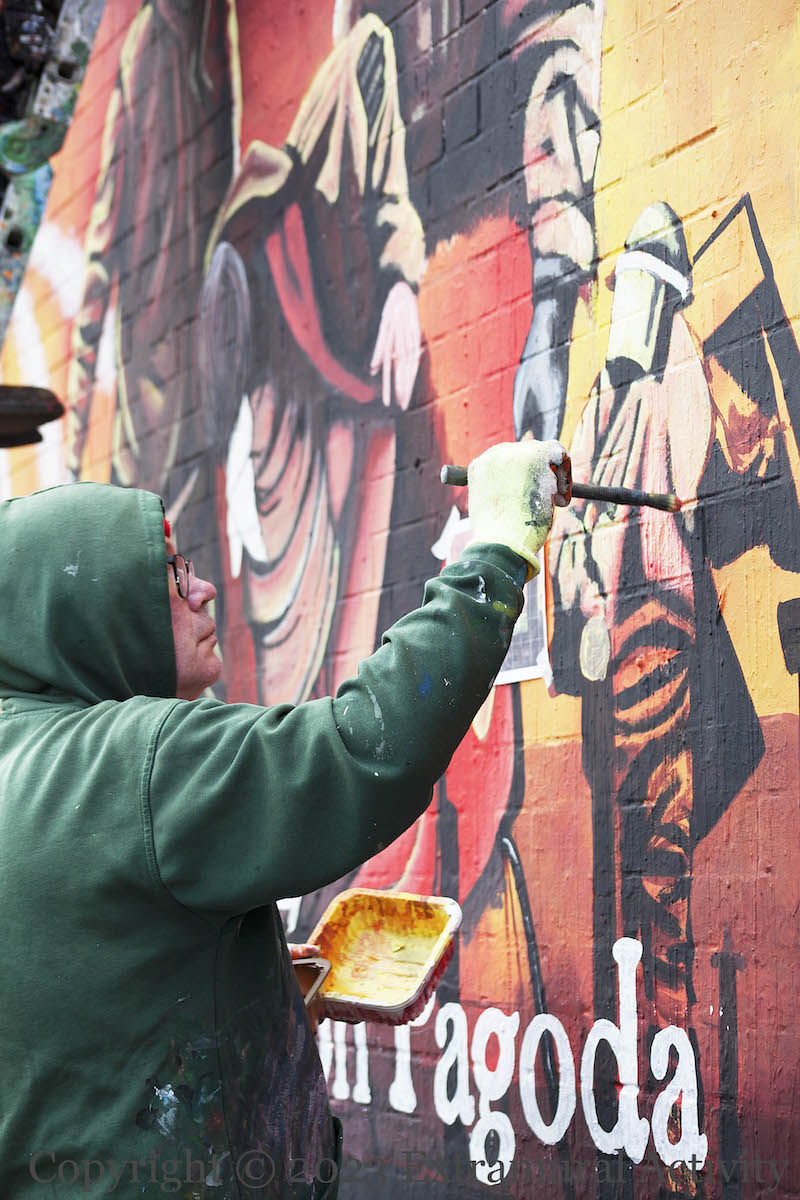
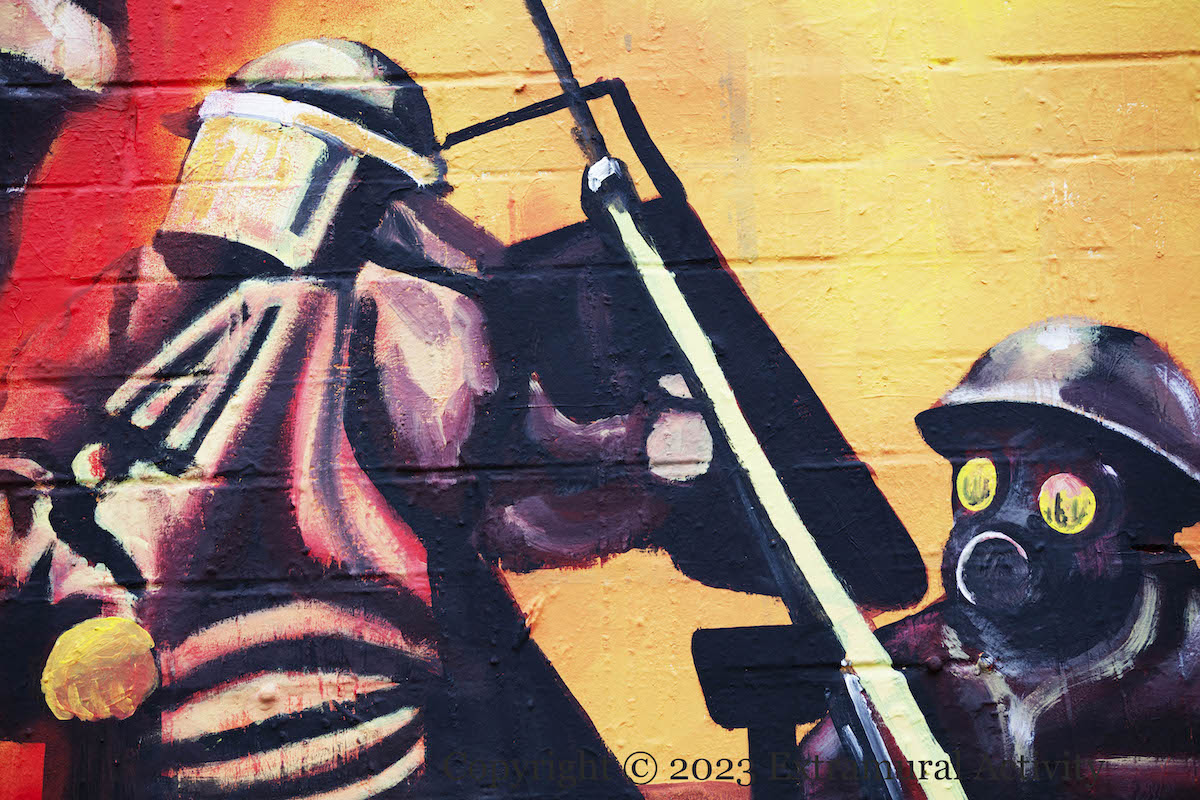
“CR Gas & The Burning Of Long Kesh, 15th-16th October, 1974 in Long Kesh. Operation Pagoda – the British government authorised and sanctioned the use of a chemical weapon against Irish Republican prisoners. Members of the 22nd S.A.S. carried out the attack from a helicopter.”
Operation Pagoda was the name of the SAS’s counter-terrorism programme (WP). Its role in the ‘Battle Of Long Kesh’ in October 1974 and its alleged use of CR (dibenzoxazepine) powder – the successor to CS powder (and before that, CN or “tear” gas) (New Scientist) – remains a classified matter. CR had been authorised for use in 1973 (Guardian).
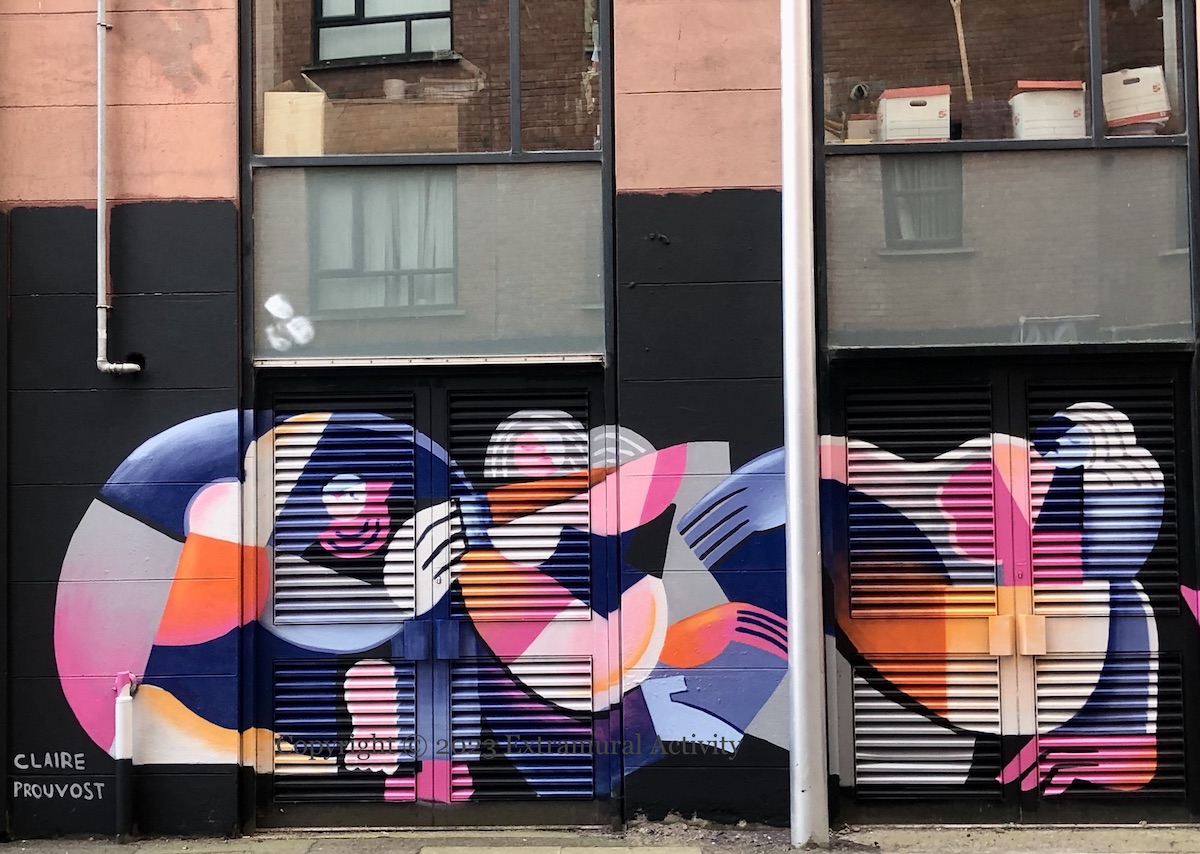
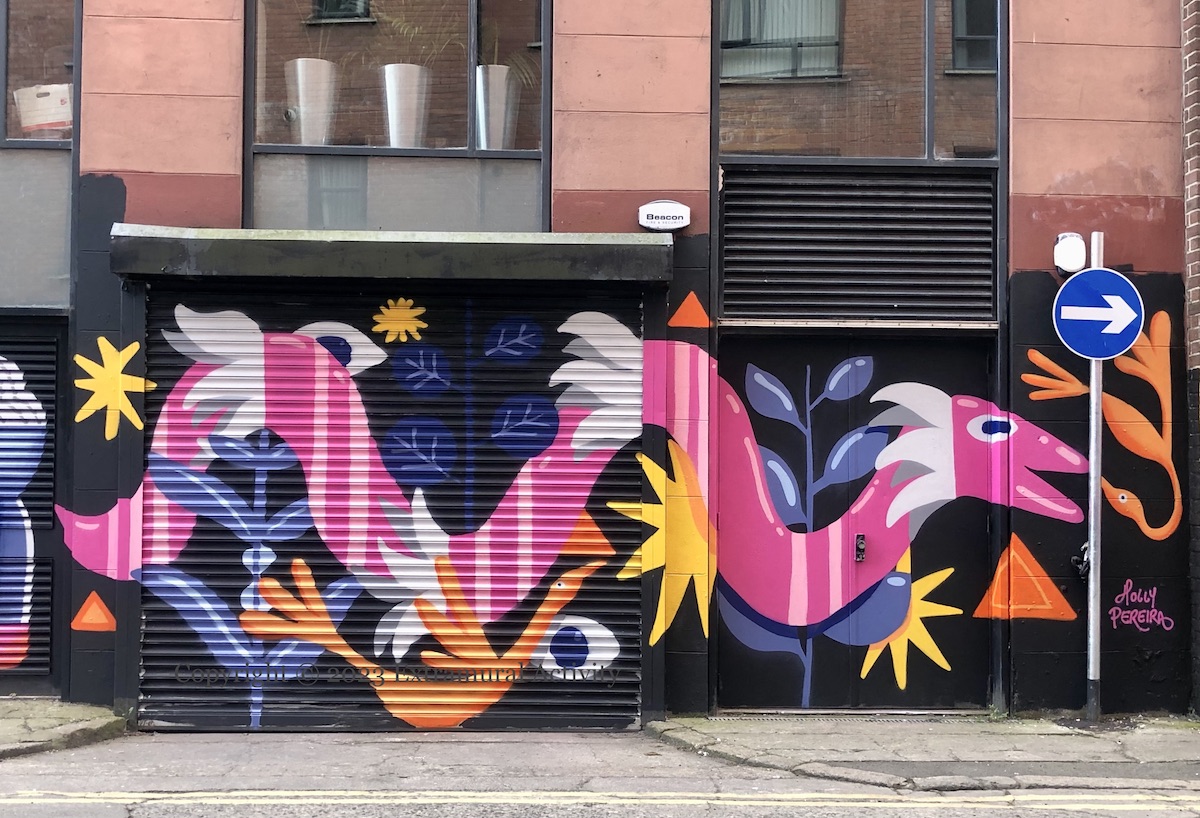
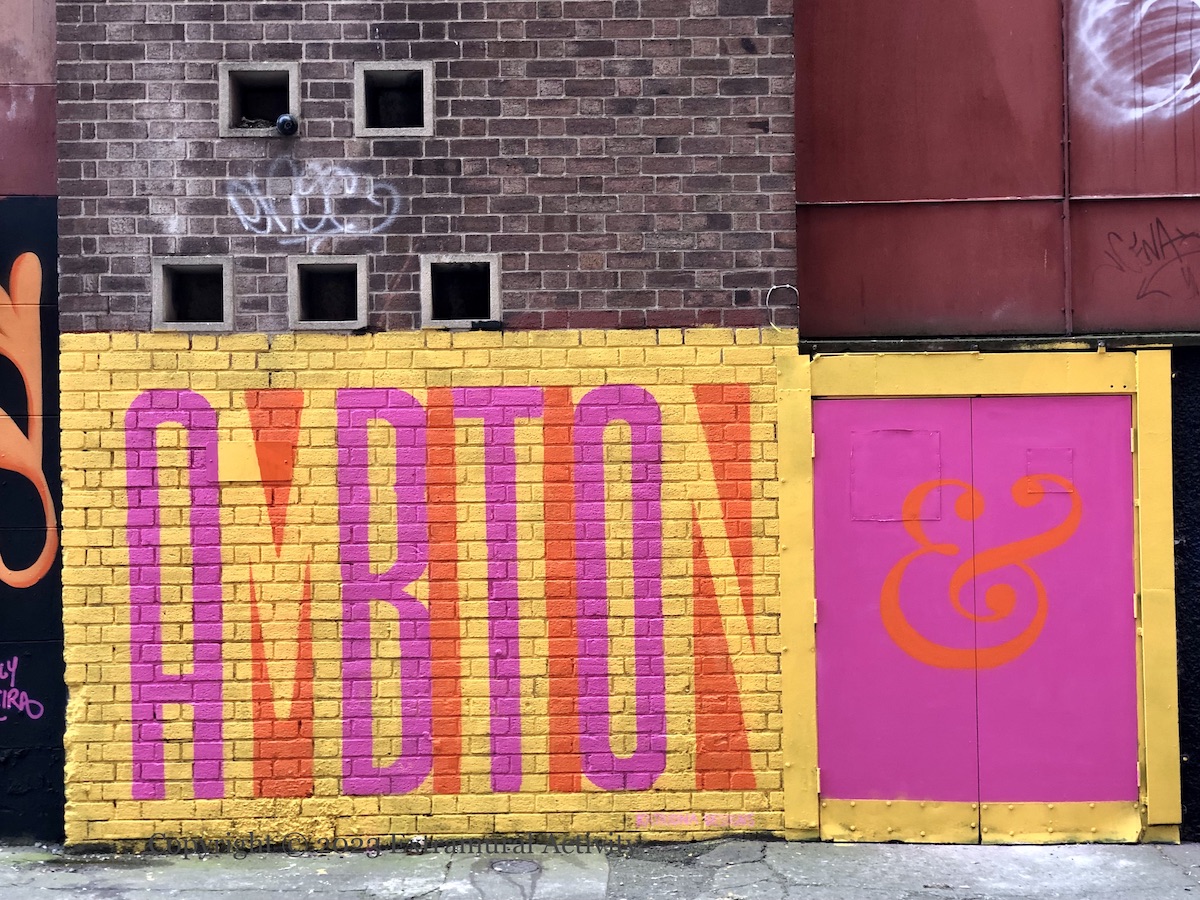
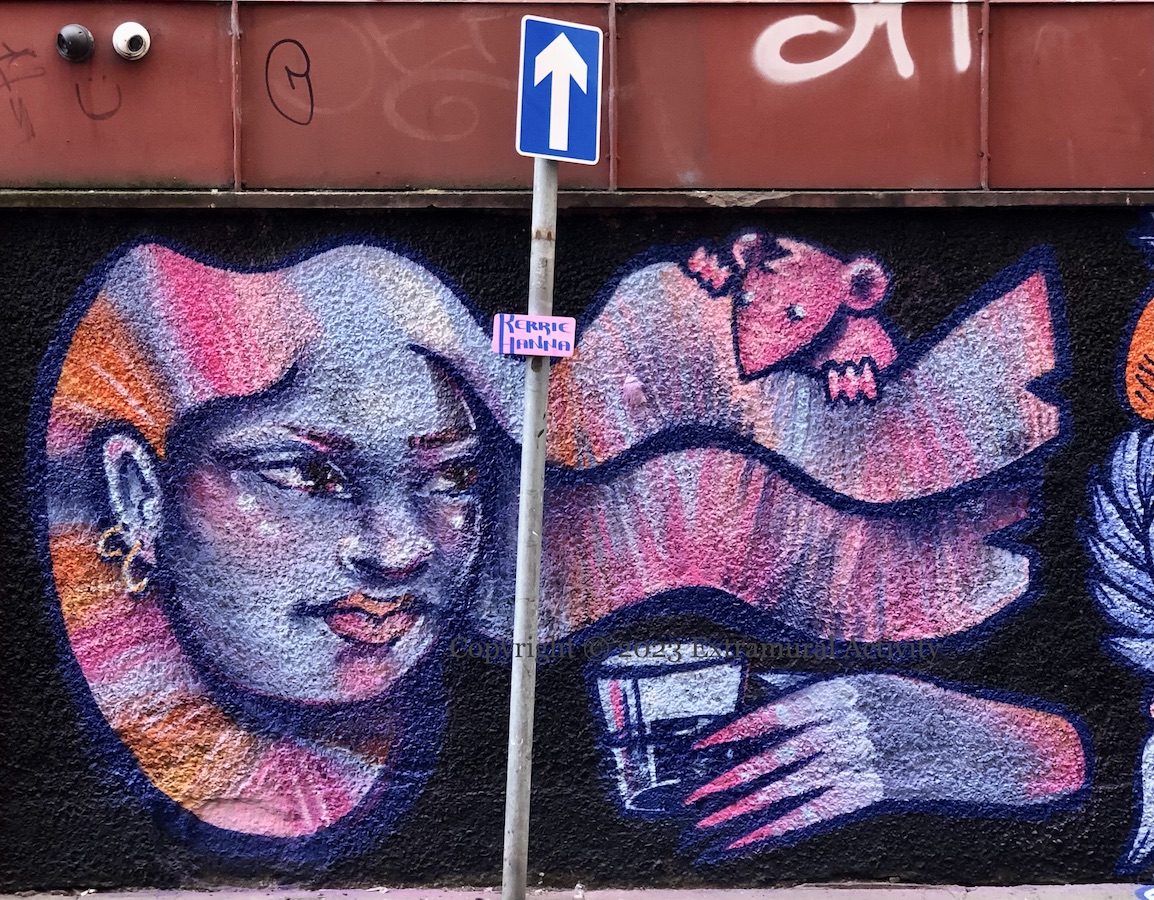
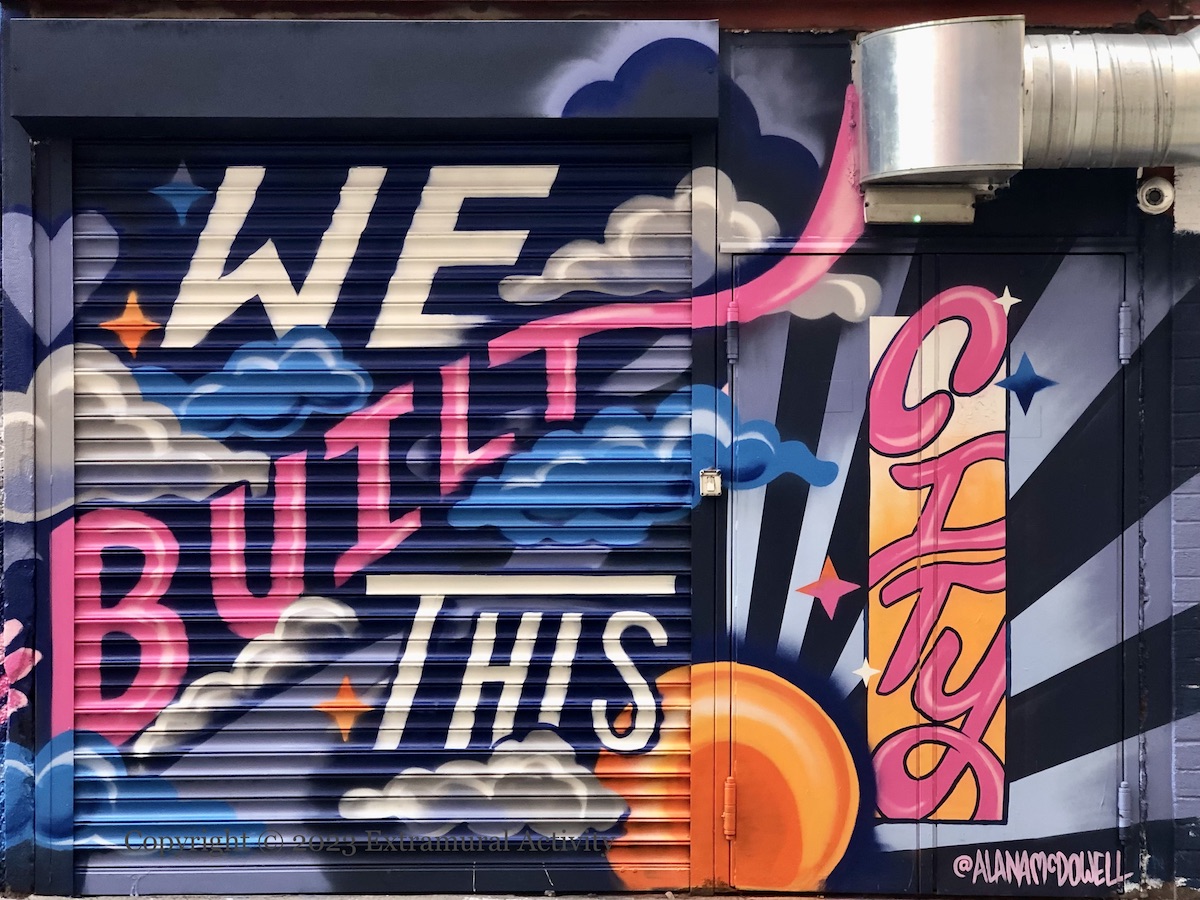
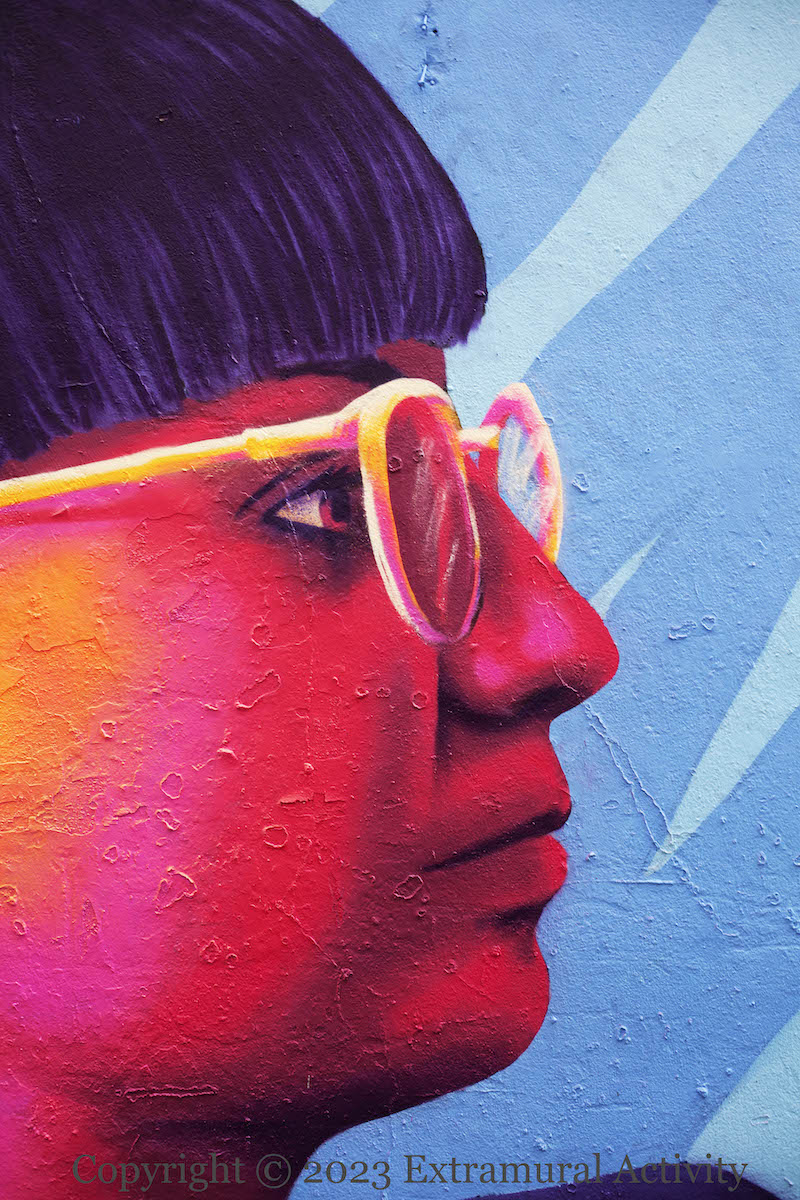
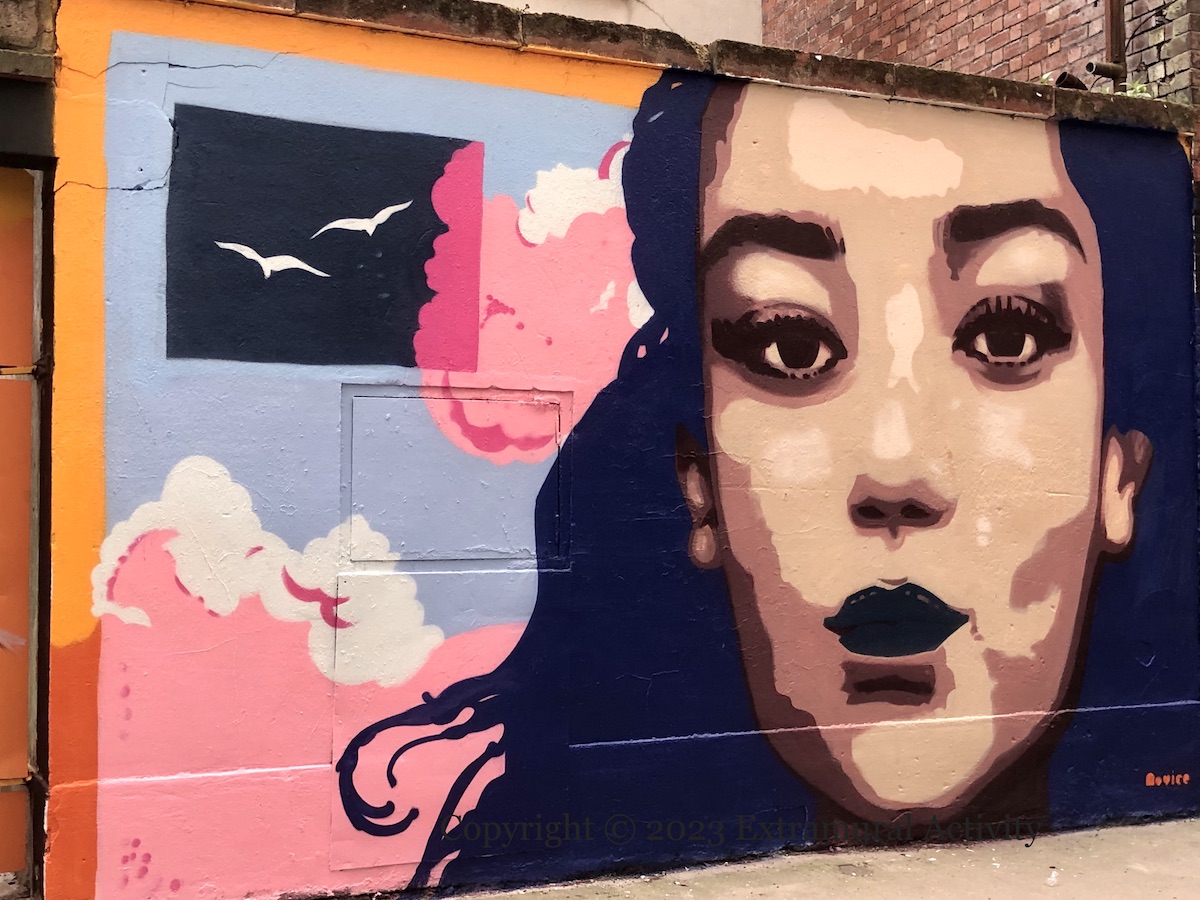
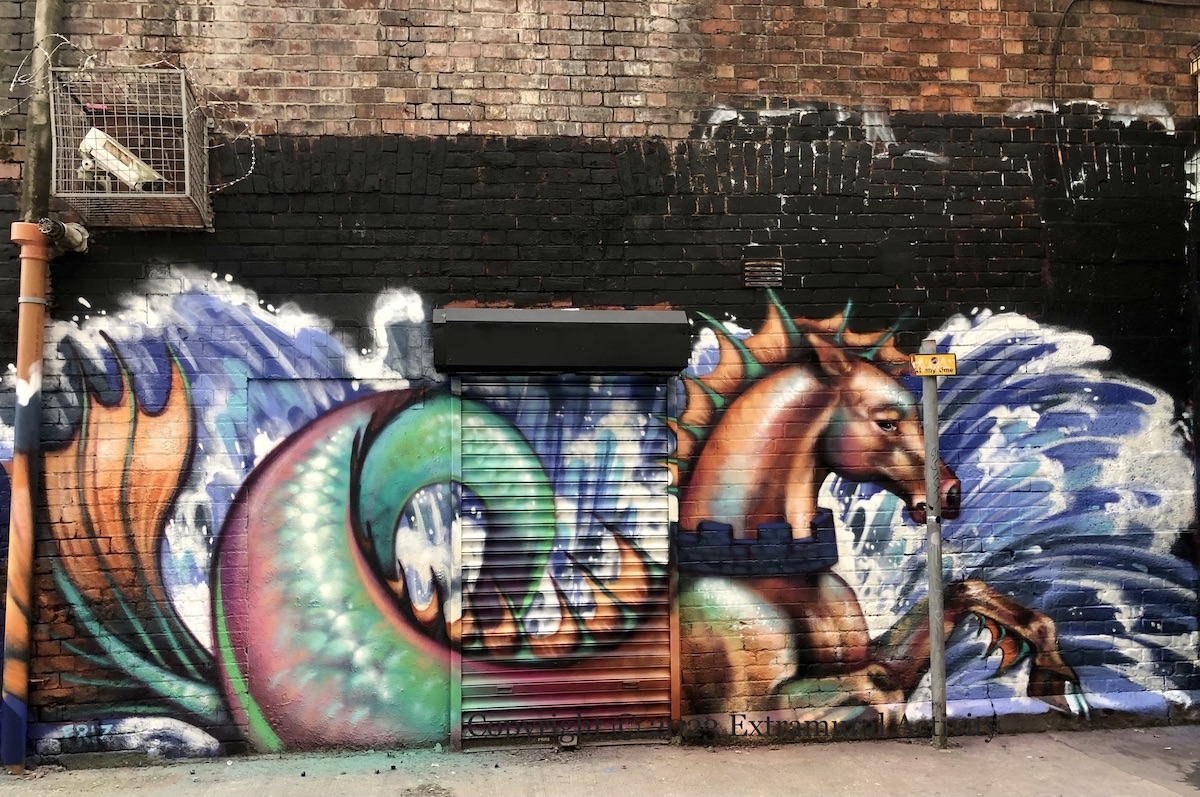
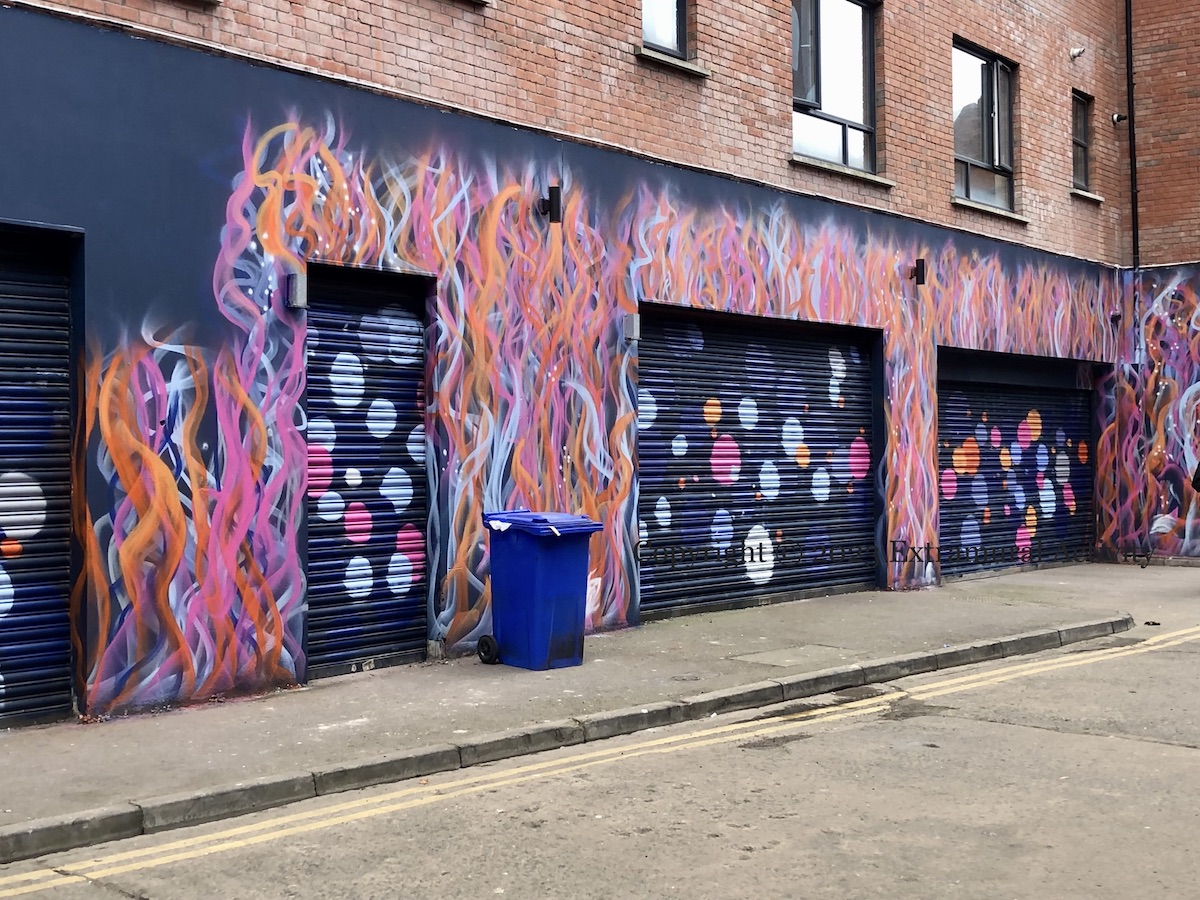
Here is a gallery of completed pieces produced for International Women’s Day 2023 in College Court. The new street art is part of a larger revitalisation project (Belfast City Council).
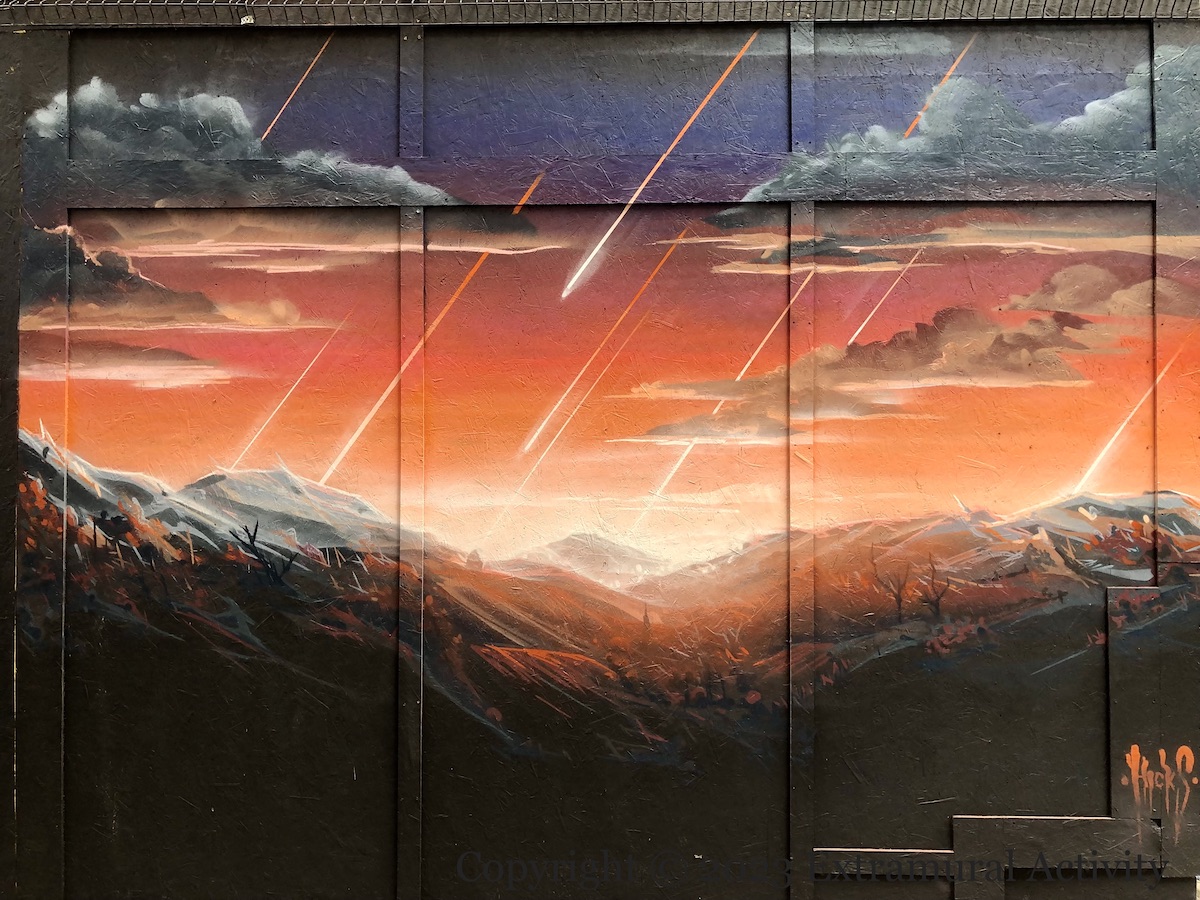
The works shown are (from Castle Street to College Street) by Claire Prouvost, Holly Pereira, Katriona, Kerri Hanna, Danni Simpson, Alana McDowell, ESTR; Laura Nelson, Novice Jess, Friz, (guest artist Hicks who was in town to repair and extend his piece in College Street Mews (see Cool) – it was damaged by a dumpster fire) and, on the other side of the street, HM Constance [Update: 2023-04 a purple cow was painted on one of the HMC shutters – see the image in the Paddy Duffy collection].
“My piece relates to the history of college court and the coming together of committee in 1807 to raise public subscriptions in co-educational, non denominational education.” (tw)
“This piece took inspiration about the history of College Court, which used to be called Water Street, as it was the first place running water pipes were installed in Belfast.” (ig)
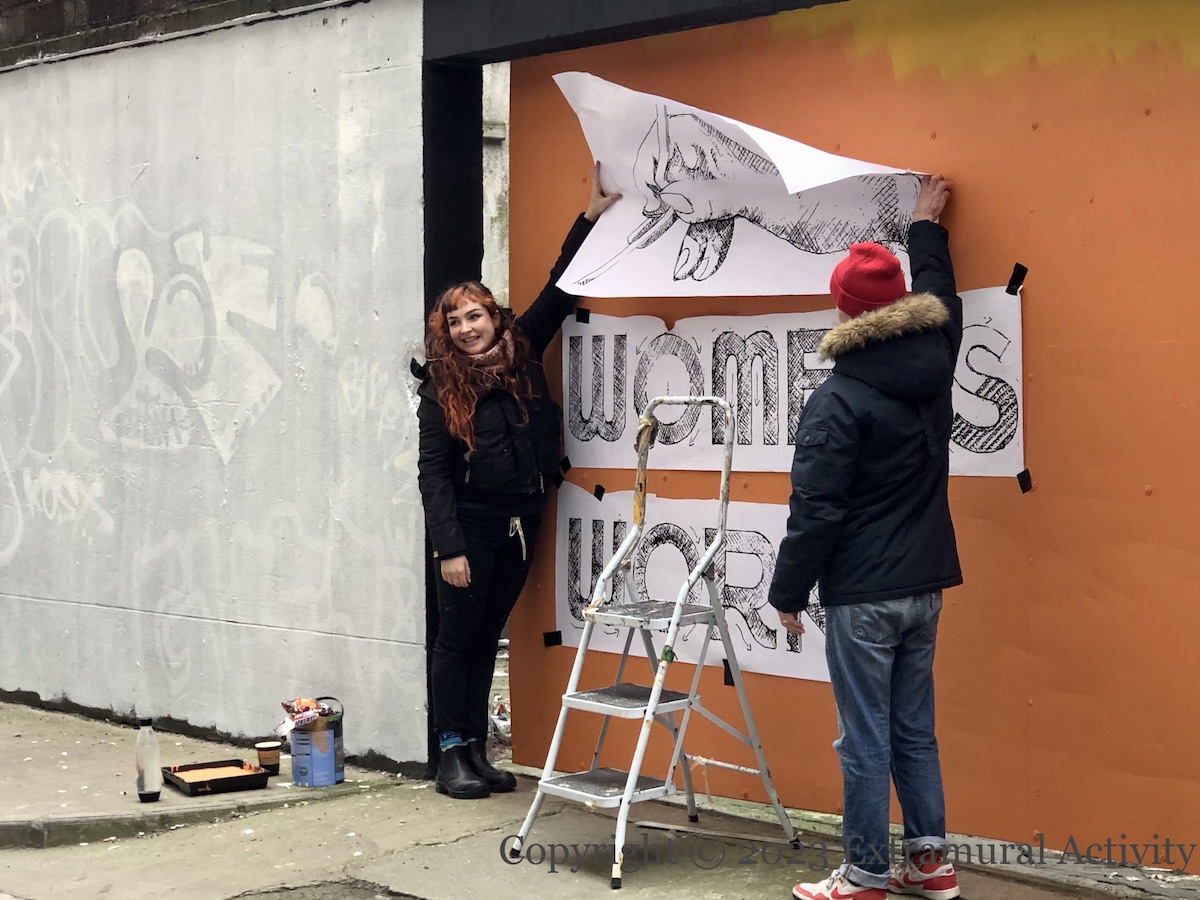
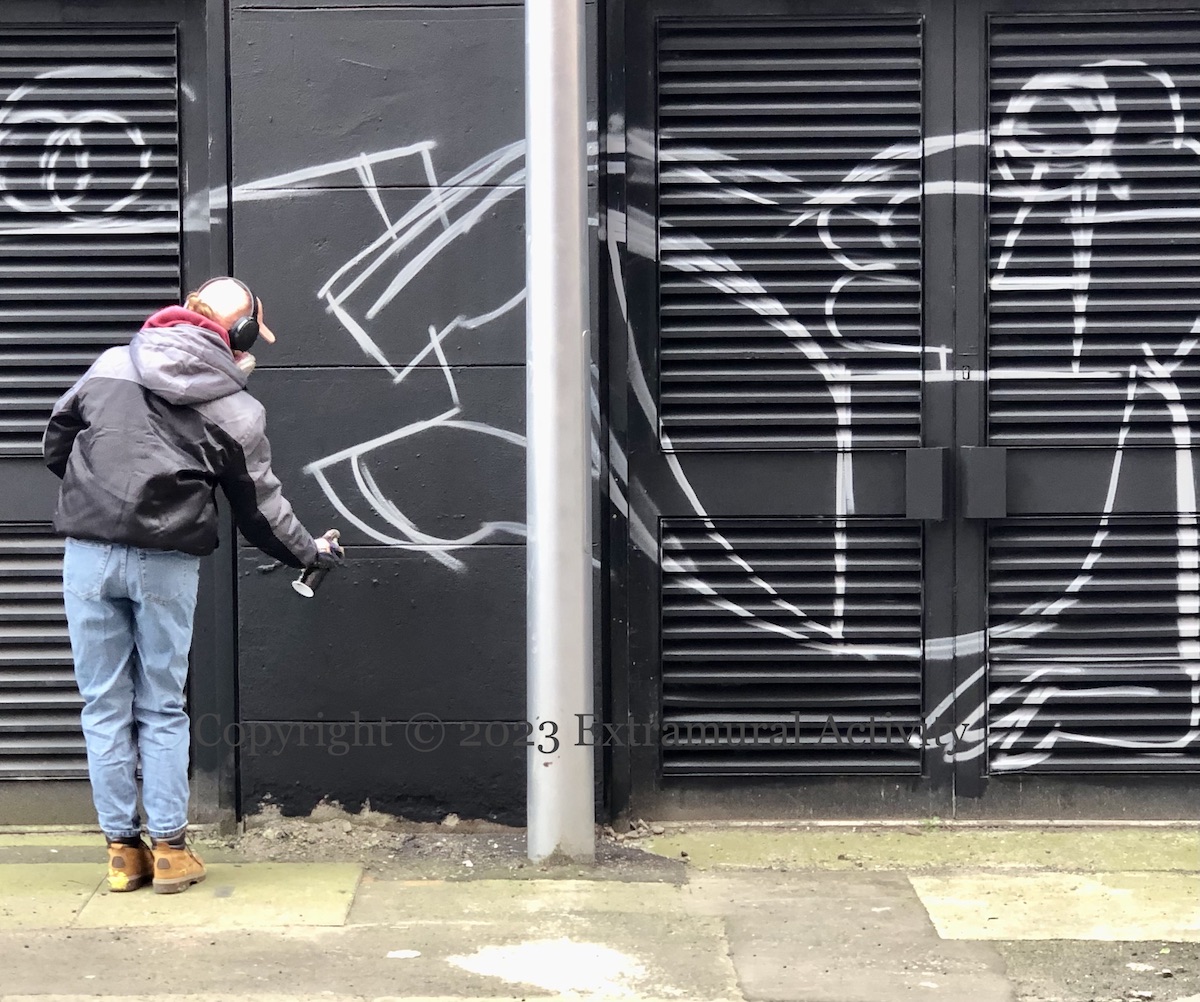
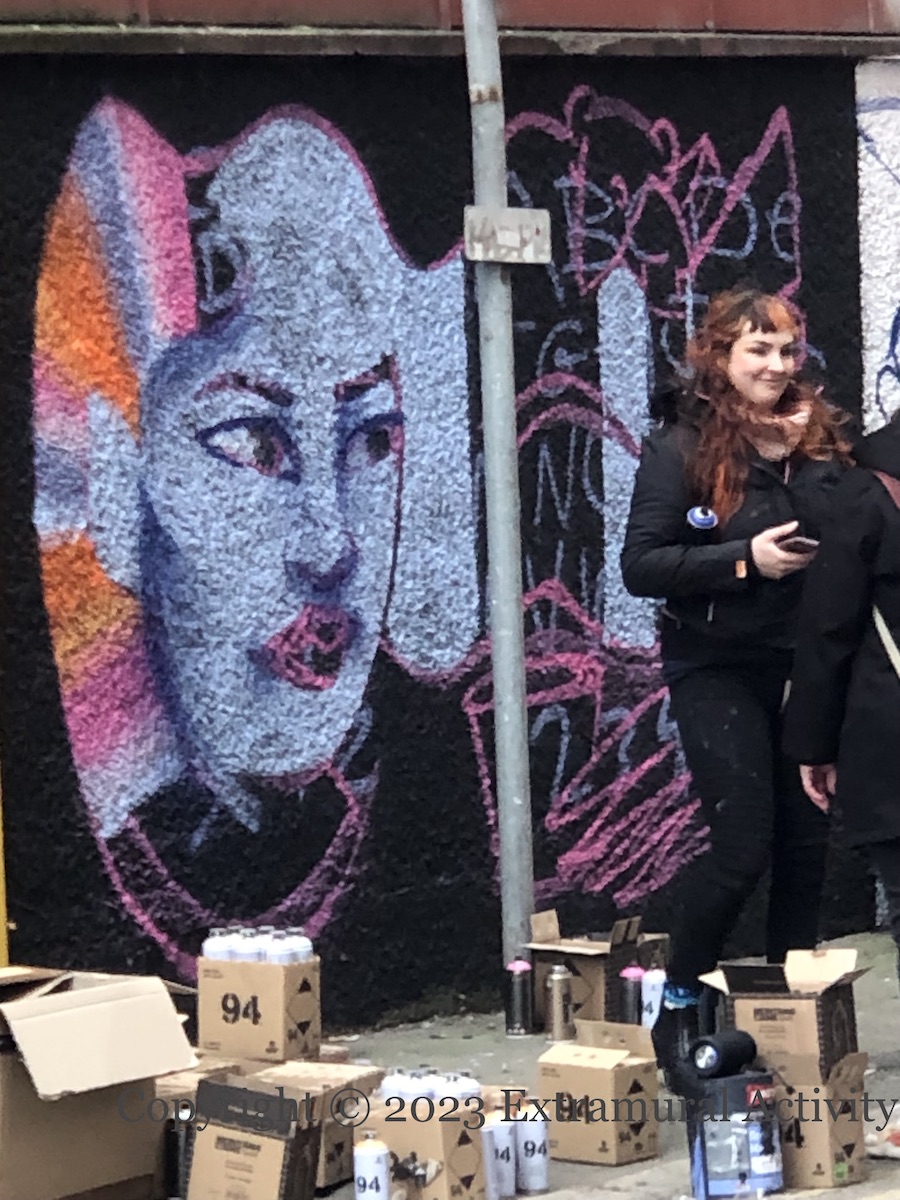
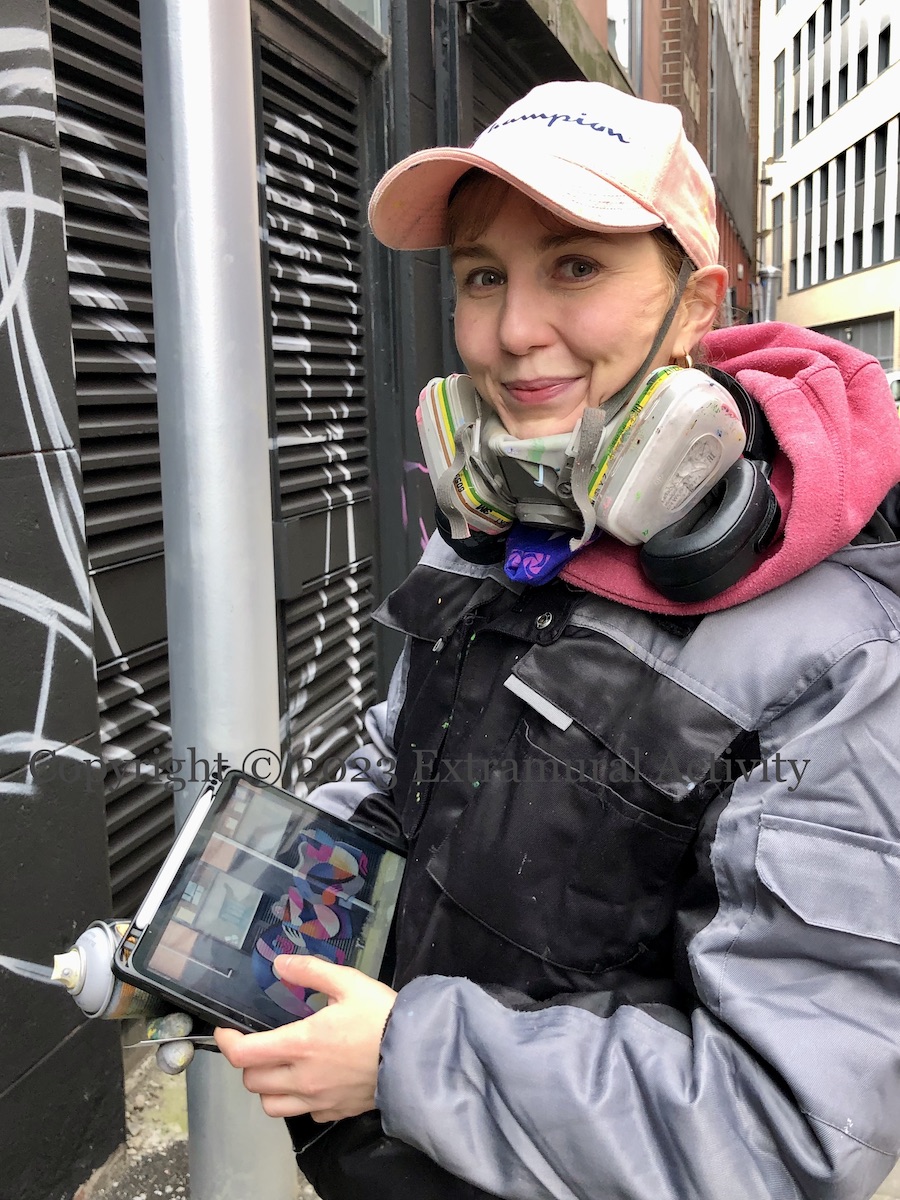
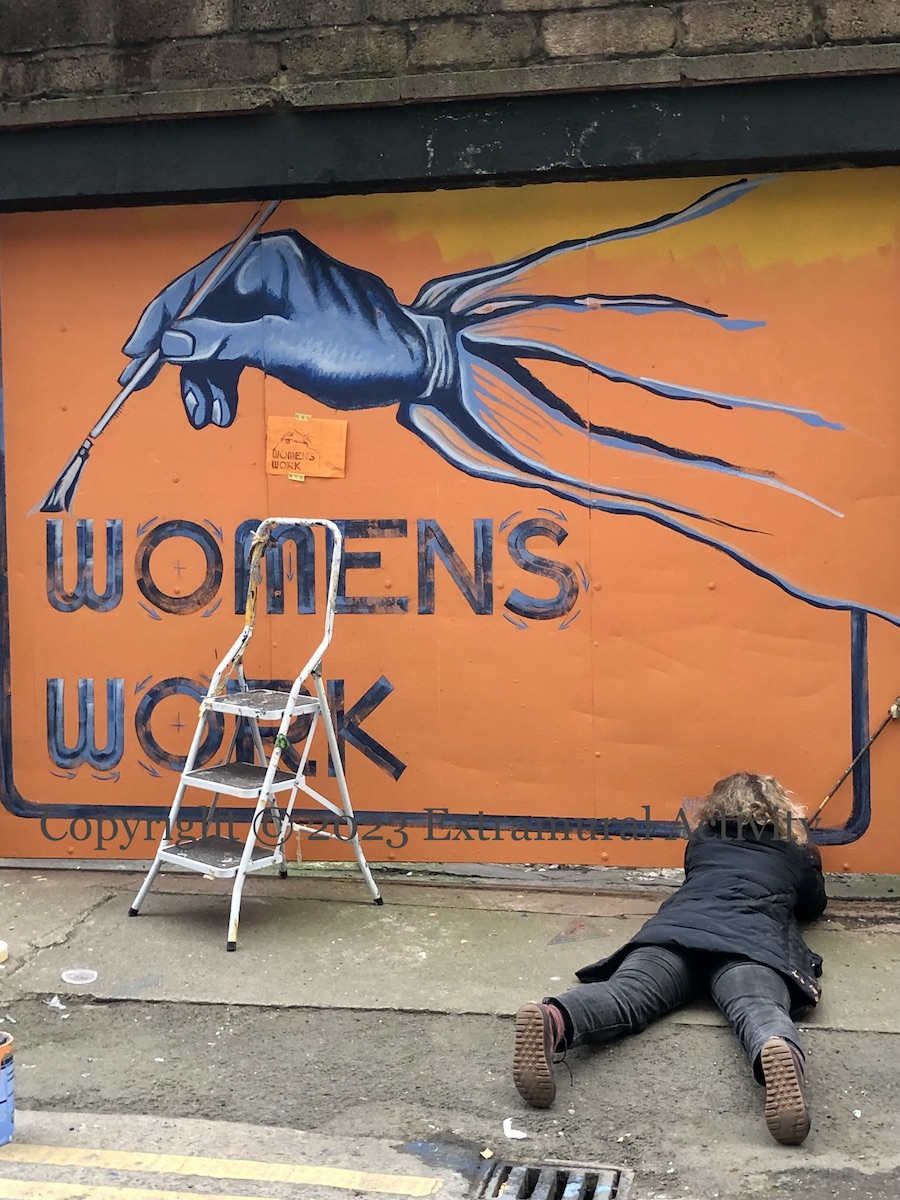
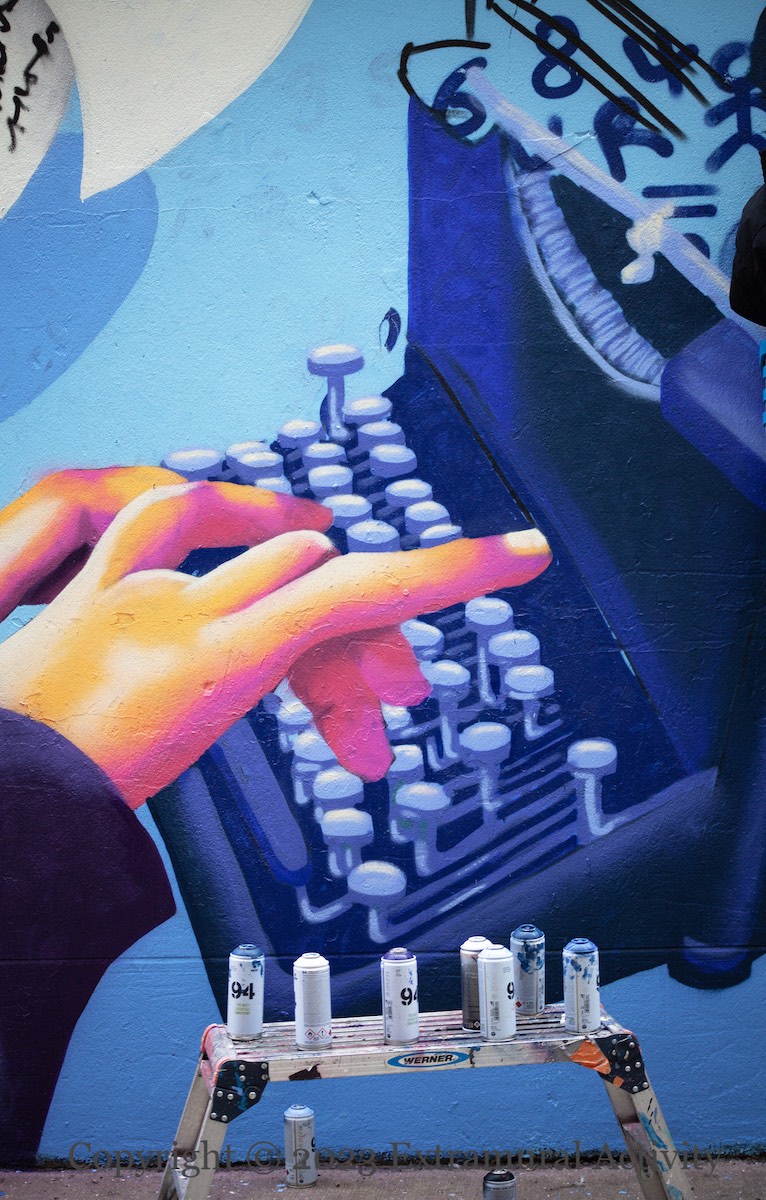
Here is a gallery of “in-progress” images of the street art being painted by female artists for International Women’s Day, all along College Court. (Most of) The completed pieces can be seen in We Built This.

















 Extramural Activity