“A scramble for the window seat/Steam curls as the whistle blows/Clickety clack train on track.//Remember your neighbourhood in the late afternoon sun/The district was a different place then/All you owned was a box full of toys and a smile on your face.”
The York Road railway station was a few minutes’ walk below Ritchie Street – site of this mural and community garden – until it closed in 1992. The original line was to Ballymena and then Coleraine and London-/Derry, with service to Carrick and Larne added later. It was badly damaged in WWII and its final demise came with the opening of Belfast Central in 1976 (WP). It was replaced with Yorkgate in 1992 which no longer serves as a terminus (WP), but the line still runs along behind the end of the streets along York Road and the Grove area of the Shore Road.
The ‘bare and tortured land’ is Messines (now Mesen) in West Flanders, Belgium, where approximately 25,000 soldiers on both sides were killed or injured at the start of June, 1917, as Allied forces retook the ridge between Messines and Wytschaete.
The central figure is the 1922 bronze statue in Winchester, England, by John Tweed, depicting a soldier from the Kings Royal Rifle Corps, which does not appear to have fought at Messines, though both the 36th (Ulster) and 16th (Irish) divisions were there (WP) and this is the reason for a number of Messines murals that have been painted in recent years: see Messines 1917 and Brothers In Arms in Newtownards | Comrades In Arms in Londonderry. During the battle, Sopwith Pups (biplanes – the triplane was used by naval squadrons (Military History)) were ordered to fly low and strafe enemy targets (Key Aero | FirstWorldWar | Vintage Aviator).
The poetry – “When you and I are buried/With grasses overhead/The memory of our fights will stand/Above this bare and tortured land/We knew ere we were dead.” – appears to be original.
There is a “No ball games allowed” notice on the left-hand side.
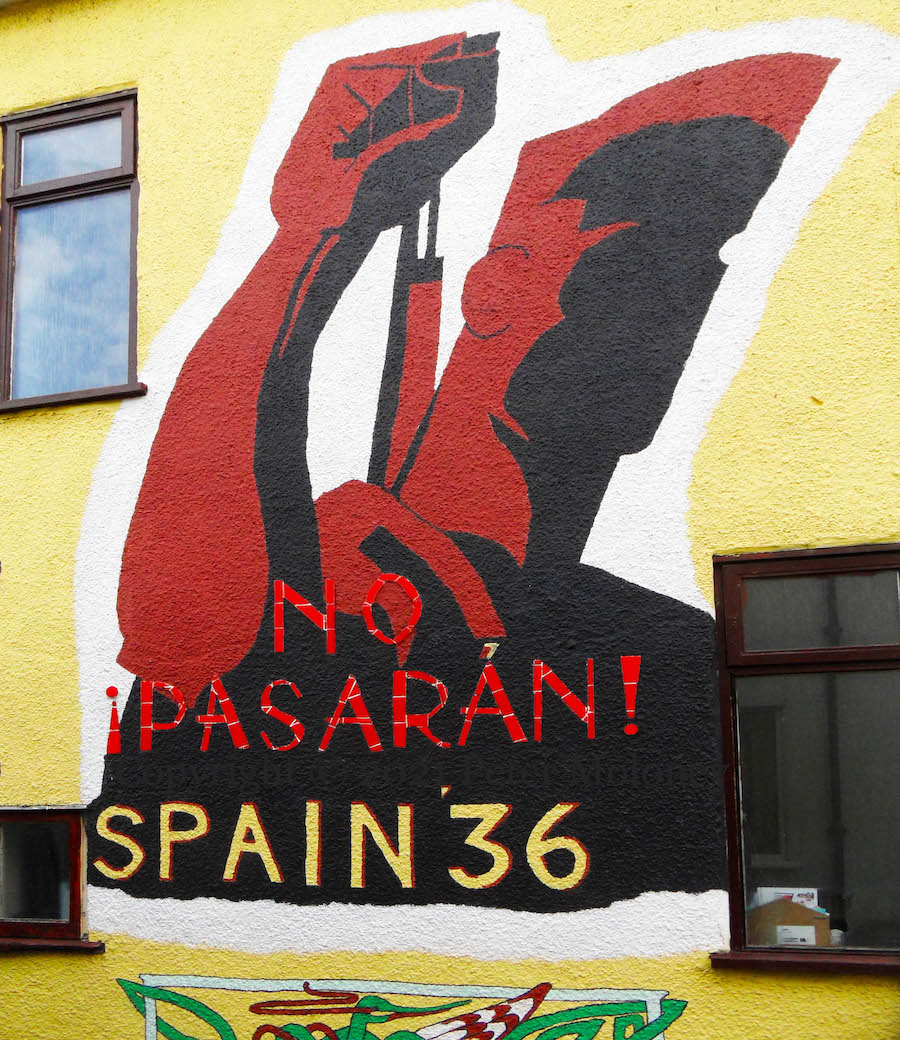
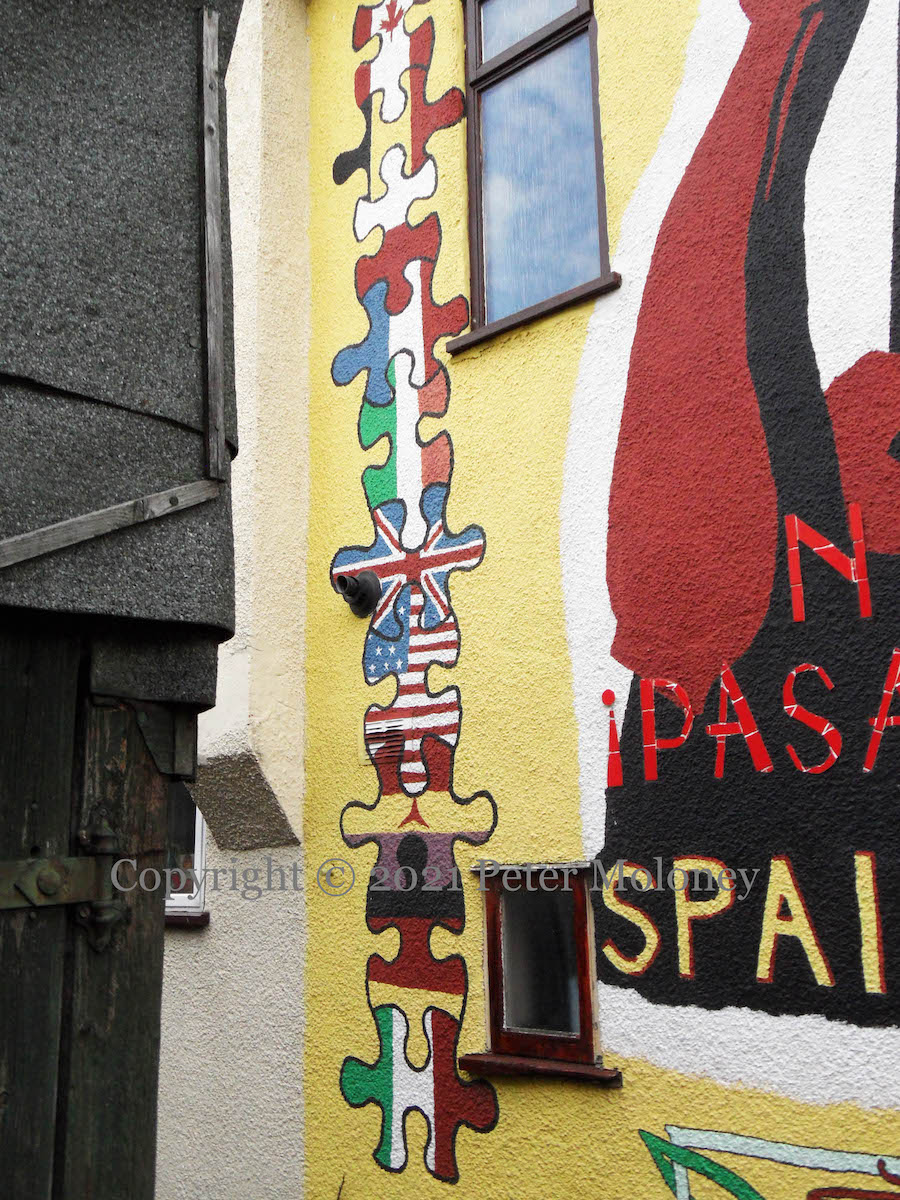
More than 35,000 from more than 80 countries people – see the jigsaw pieces on the left of this mural – joined the International Brigades in the Spanish Civil War, including 2,300 from Britain and Ireland (Guardian). The slogan “¡No pasarán!” [They shall not pass] comes from a speech by Dolores Ibárruri (“La Pasionaria”) in July 1936: “The Communist Party calls you to arms. We especially call upon you, workers, farmers, intellectuals to assume your positions in the fight to finally smash the enemies of the Republic and of the popular liberties. Long live the Popular Front! Long live the union of all anti-fascists! Long live the Republic of the people! The Fascists shall not pass! They shall not pass!” (WP)
It would also be used in October that year at the Battle Of Cable Street in London’s East End, when approximately 100,000 anti-fascists clashed with police protecting a British Union Of Fascists (“blackshirts”) march (WP).
This is a new mural by Peaball (Fb) and emic (Fb) in Glenview Street, Derry, inspired by the chat on the Golden Years club at the Glenview Community Centre (tw).
The Nissen huts that form the background are perhaps a reference to the US WWII camp in nearby Springtown that was used to house Catholic families from the end of the war until the 1960s (Gavin Pattondocumentary | WP).
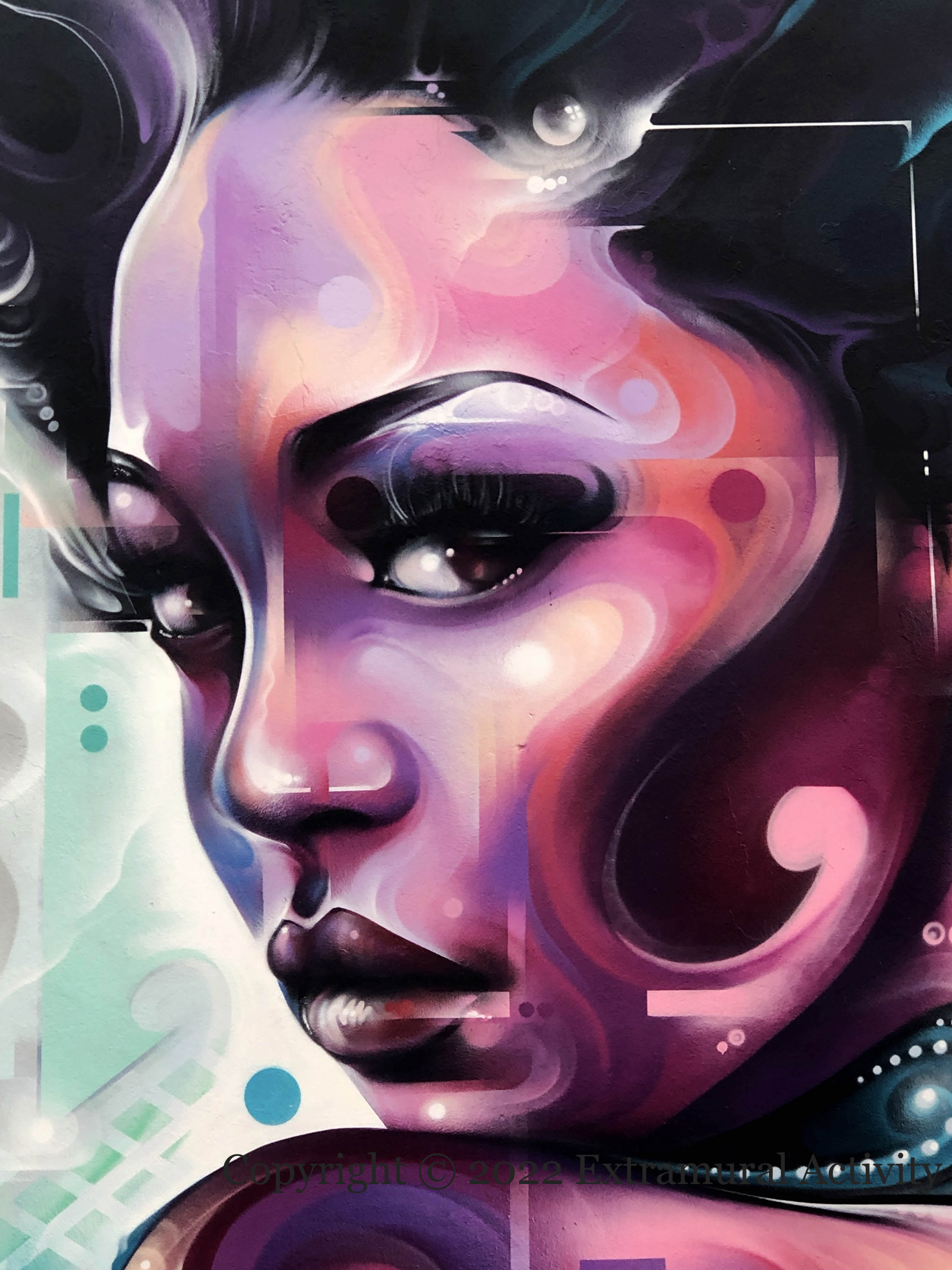
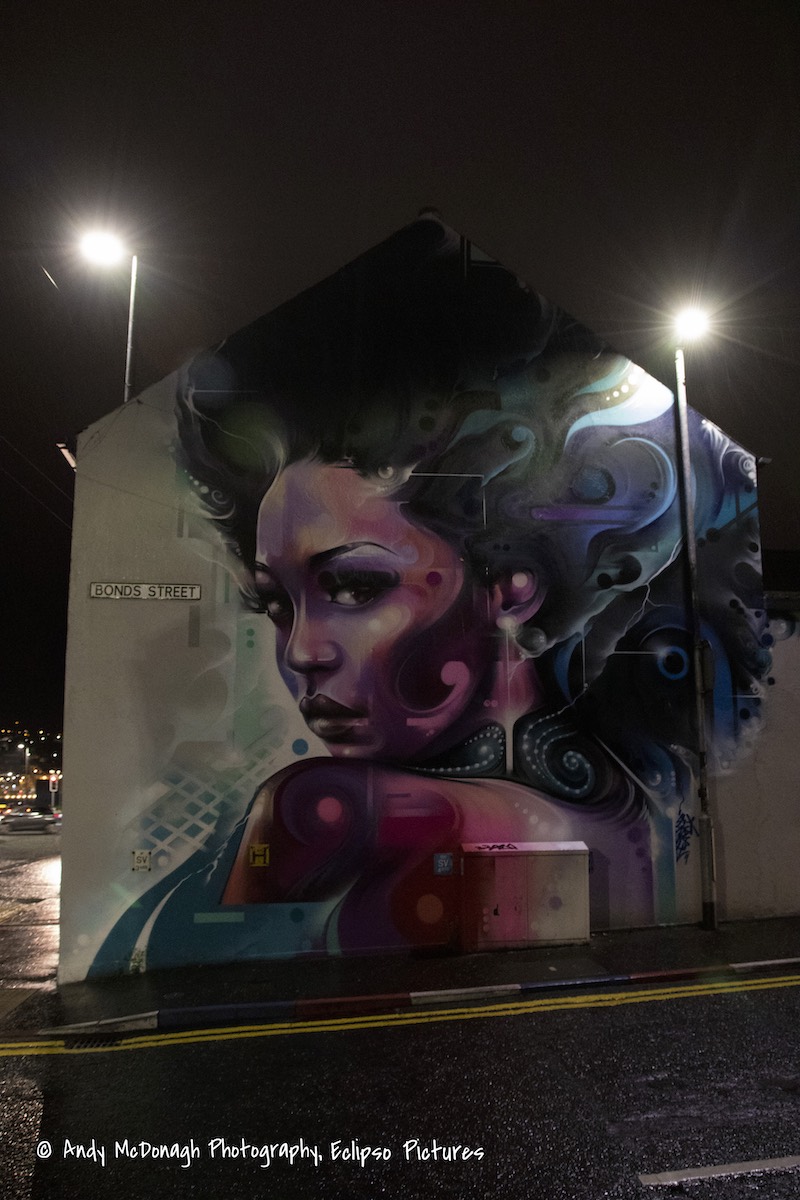
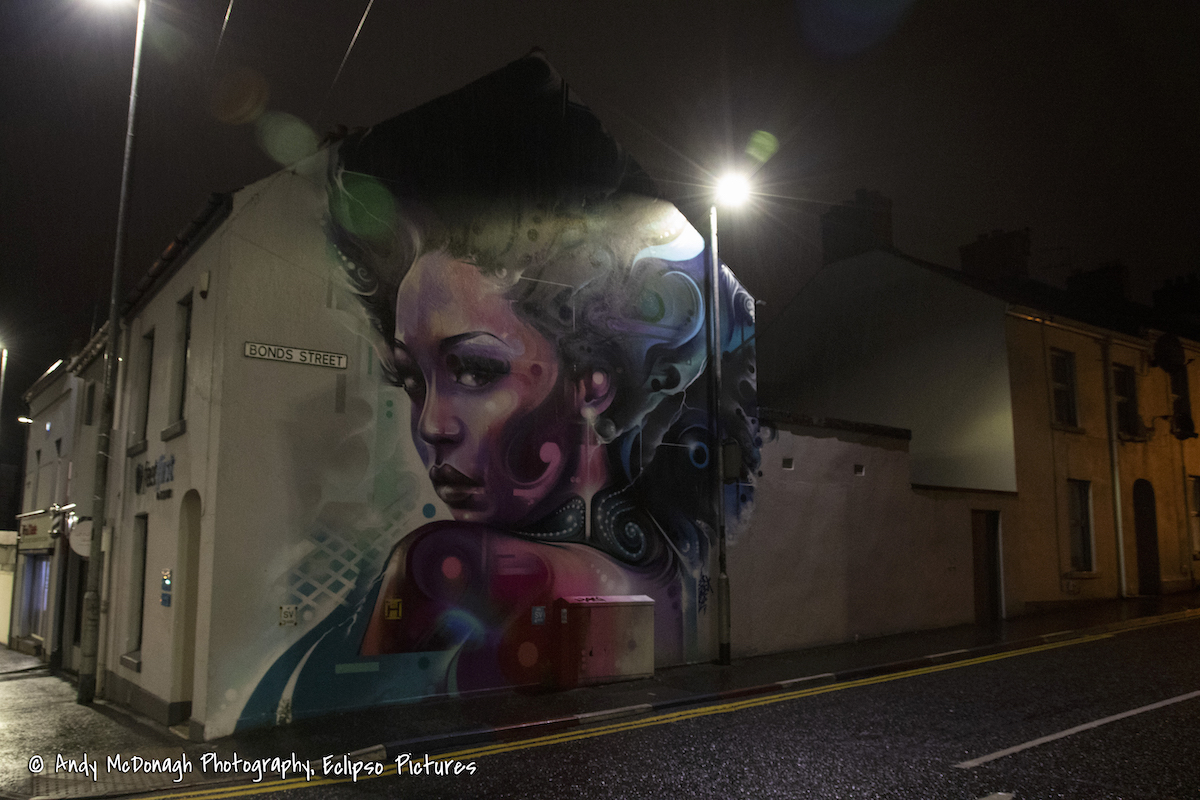
The referents of the central portrait and of the title are unknown.
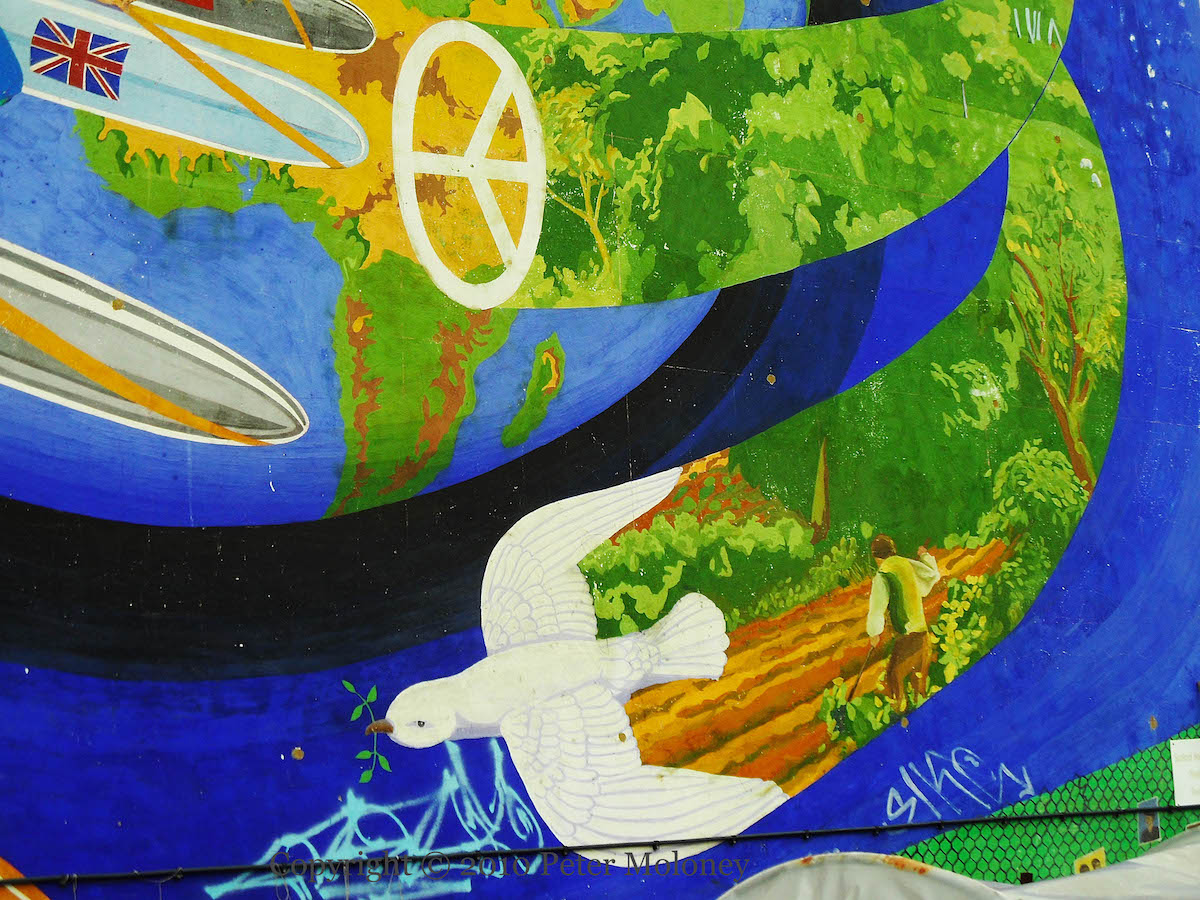
Yuri Andropov, Michael Heseltine, Margaret Thatcher, and a sari-wrapped Ronald Regan are the four riders of the nuclear apocalypse, riding on rockets fueled by rubles, pounds, and dollars, facing off for the fate of the planet against the dove and CND/anti-nuclear symbol as harbingers of peace.
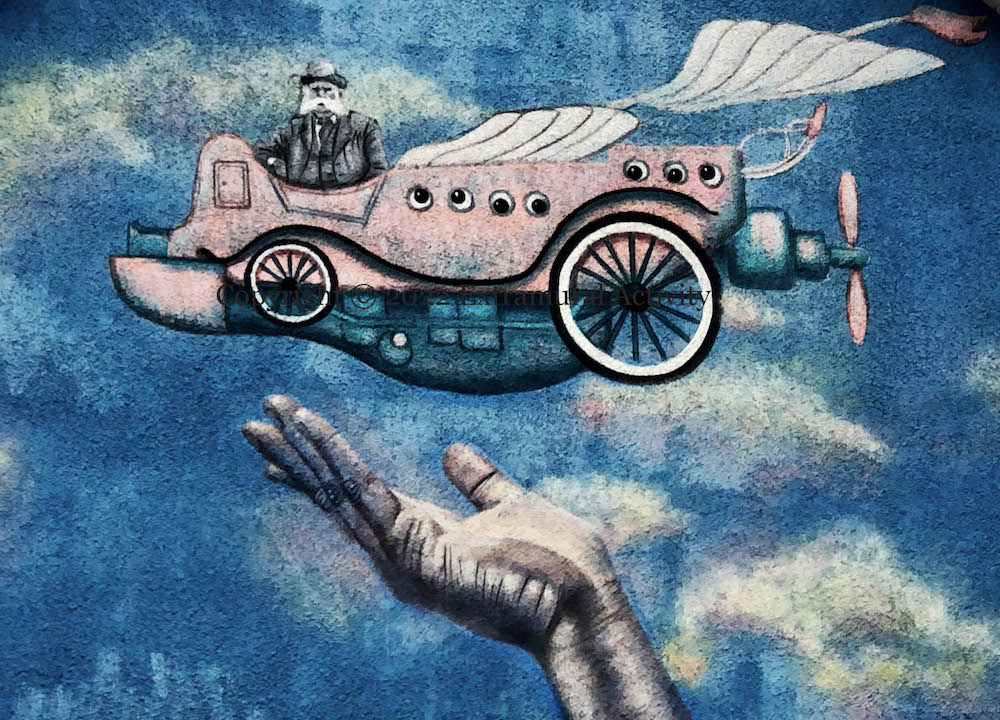
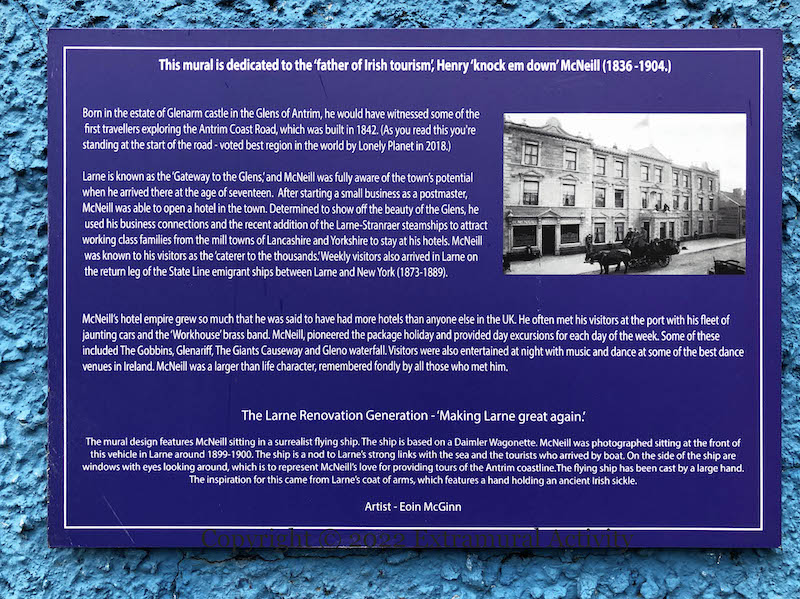
Hotelier Henry McNeill, it is reported, brought the horseless carriage to Larne in 1899, in the form of a Daimler Wagonette that he used to ferry guests up and down the coast and in to scenic spots in the Glens Of Antrim – the mechanical future combined with of the timeless beauty of the natural world. Here is a photo of McNeill aloft in 1899; emic (ig) recasts the image as though he were at the helm of a flying machine.
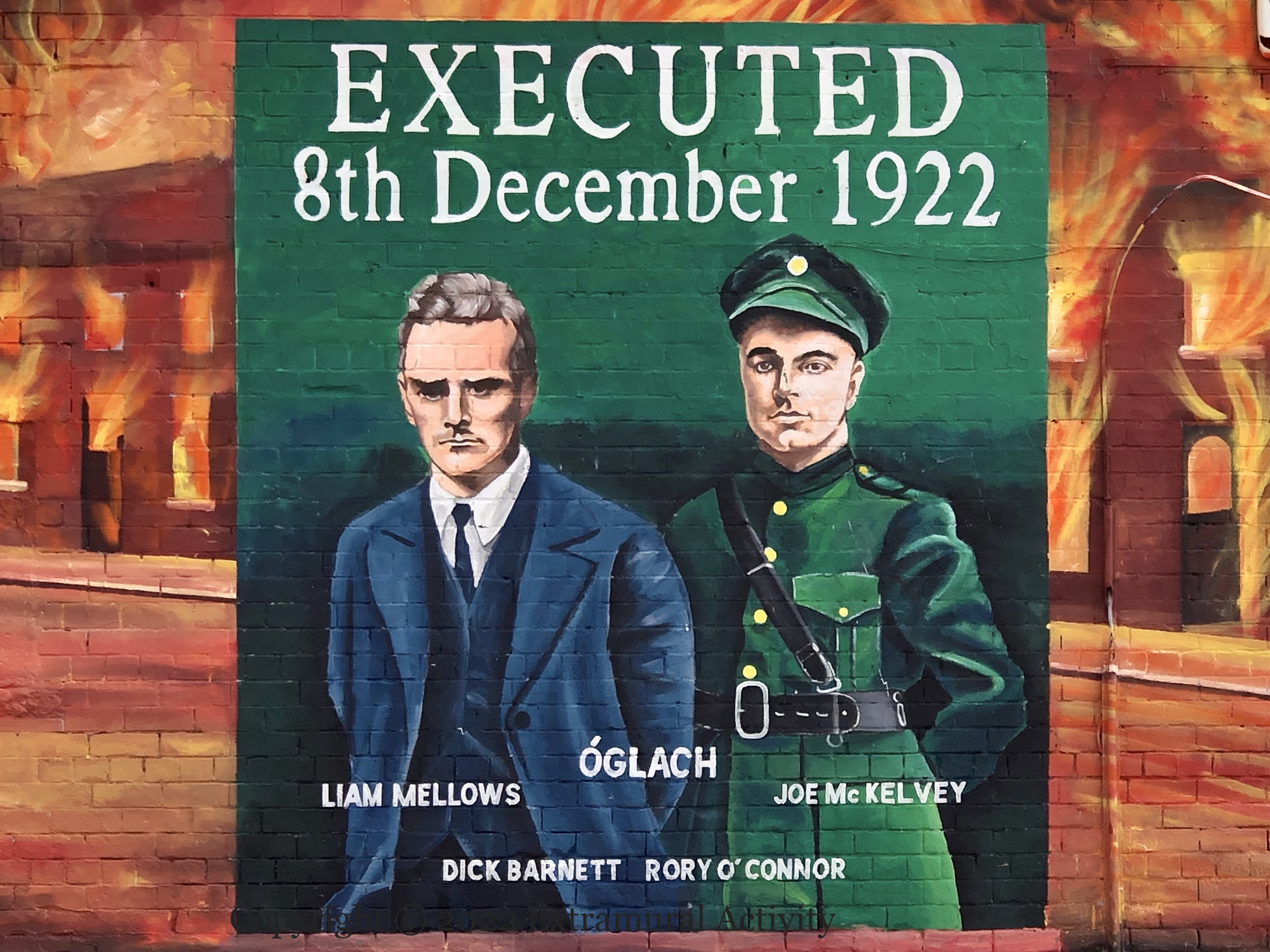
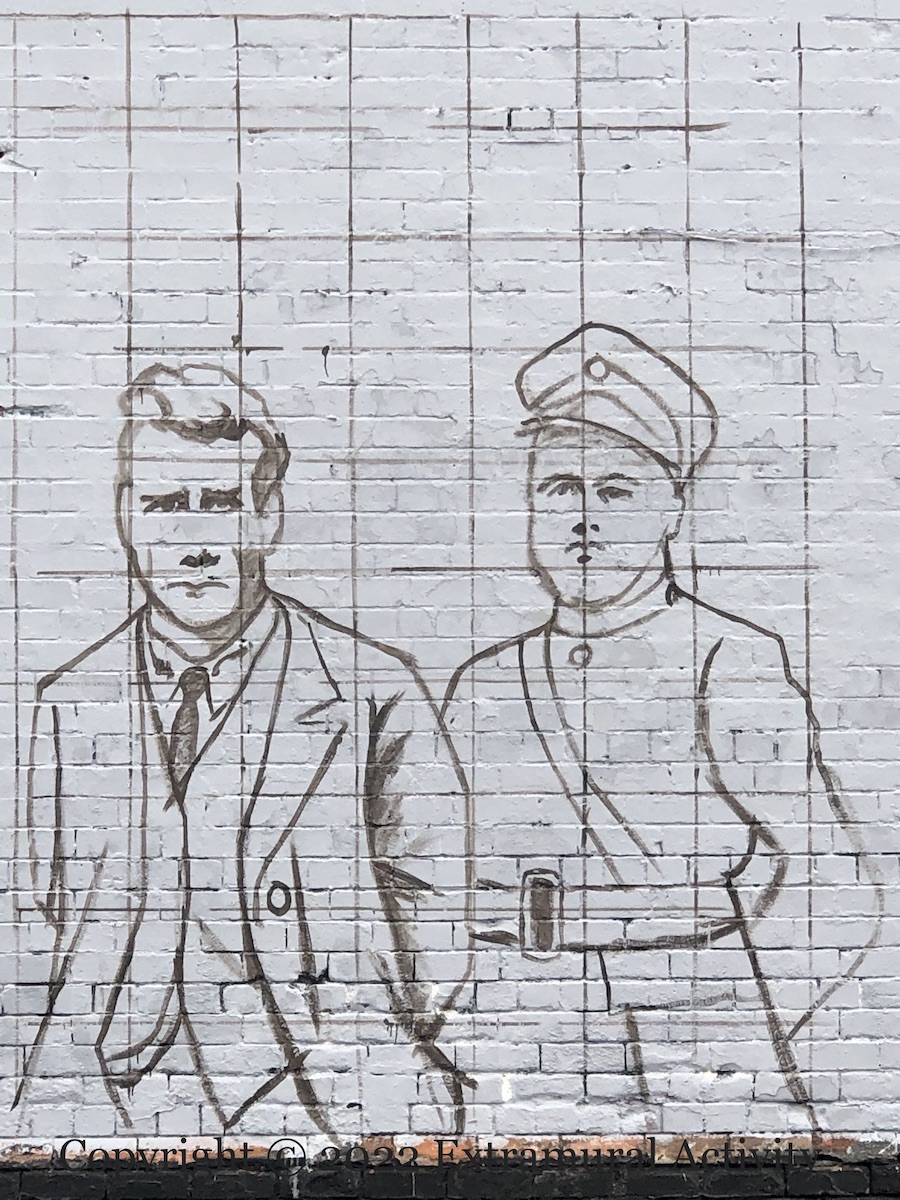
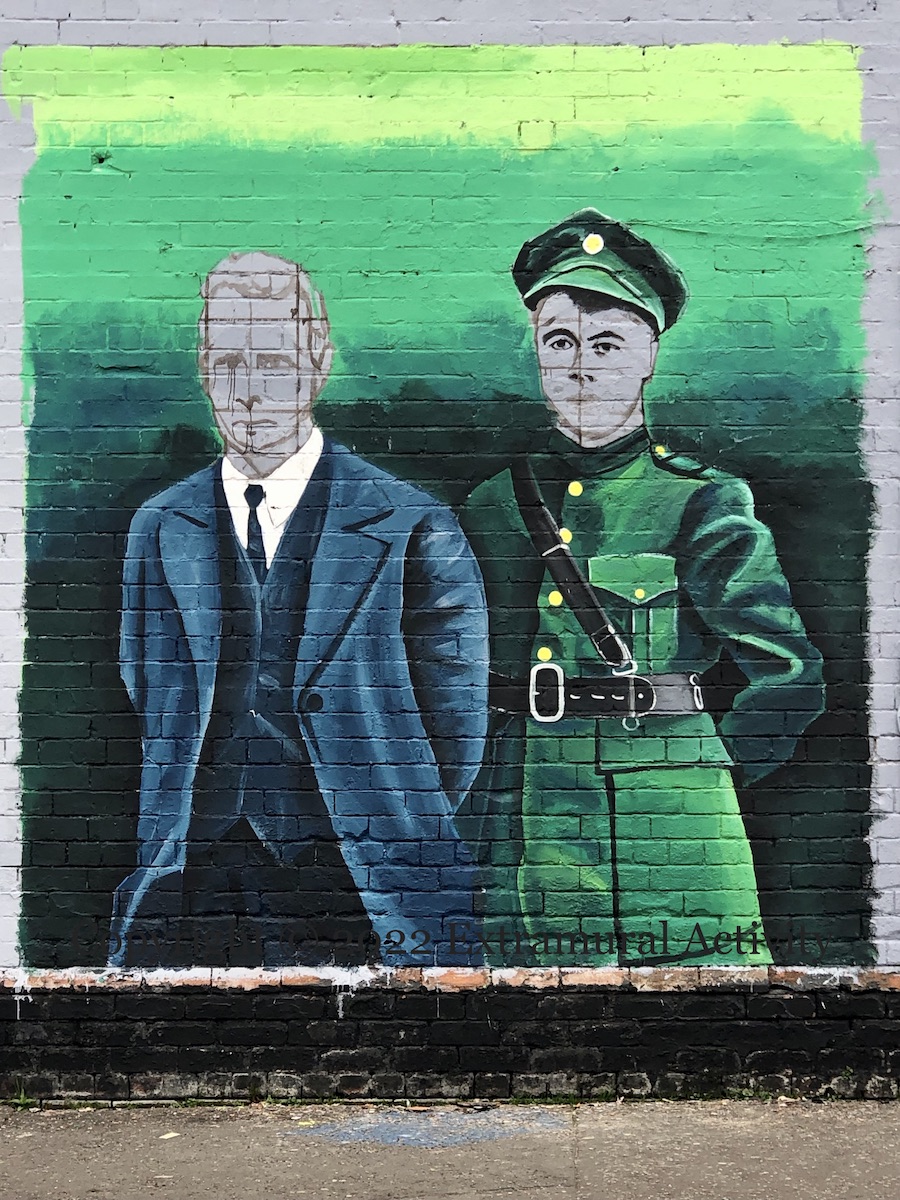
On October 18th, 1922, the third Dáıl/second Provisional Government Of Southern Ireland approved – in the absence of anti-Treaty members – a bill entitled the “Army Emergency Powers Resolution” which introduced martial law, including martial courts with the death penalty for anyone found in possession of an illegal firearm – “illegal” meaning not sanctioned by the nascent pro-Treaty Free State. Under these powers, seven IRA volunteers were executed on November 17th and 19th, followed on the 24th by Erskine Childers (a member of the team that negotiated the Treaty but subsequently against it). In response, the IRA declared that TDs who had voted for the bill were fair game, and on December 7th Seán Hales of Cork was shot and killed. In reprisal, the government ordered the execution of four more volunteers, one from each province: Liam Mellows, Joe McKelvey, Dick Barnett, Rory O’Connor. The four had been arrested five months earlier, on June 30th, 1922, at the start of the Civil War, after surrendering the Four Courts. By the end of the war, 81 executions had taken place. (An Phoblacht | Irish Times | The Irish Story | WP | WP)
For the left-hand side of the wall, on the shipyard clearings and the McMahon murders, see Belfast Butchery.
“Belfast Pogroms 1920-1922.” Against the backdrop of the first Dáıl, the War Of Independence, and the debate in Westminster over the fourth Home Rule bill (it would be passed in November 1920), northern Protestants began to assert their de facto independence from the rest of Ireland – both in economic and in military terms.
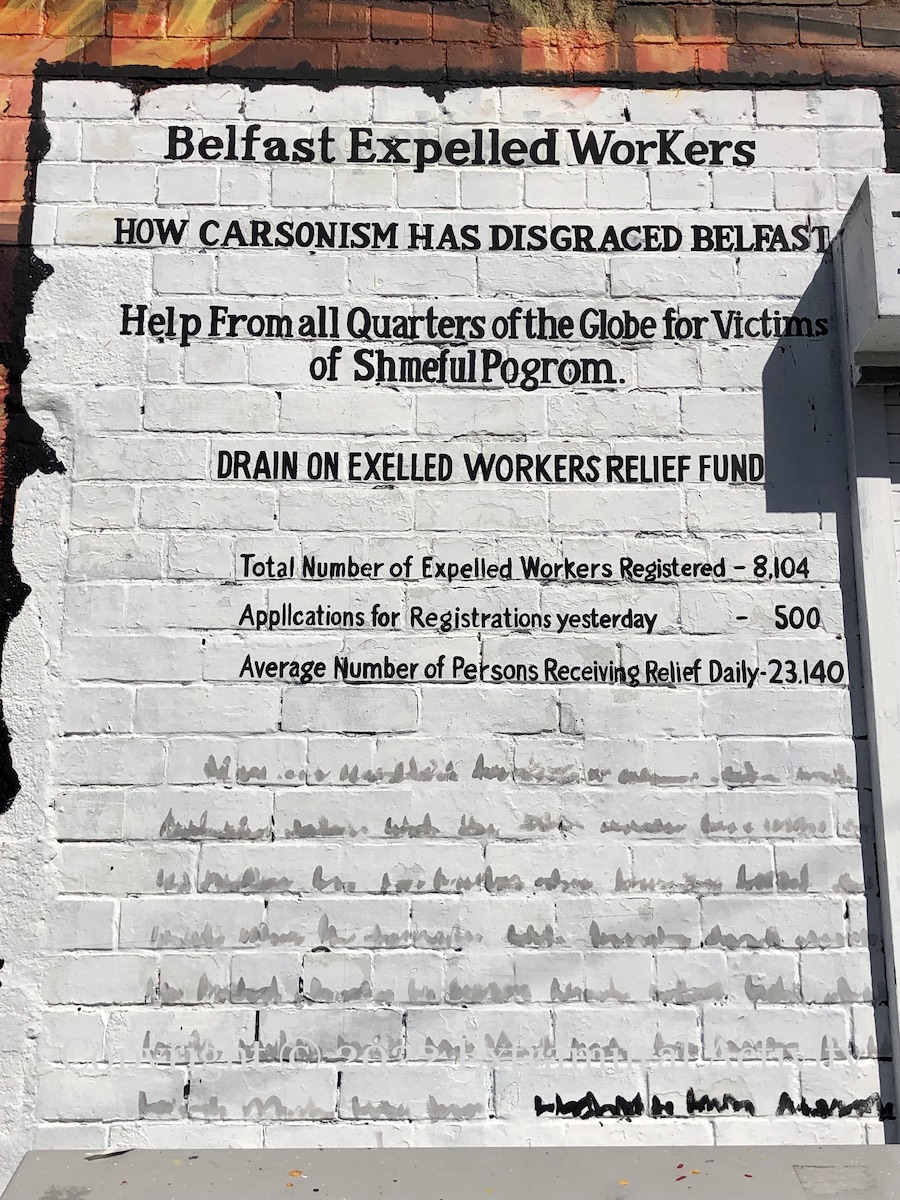
On July 12th, 1920, Edward Carson spoke to a crowd in Derry and, addressing the government in Westminster, said “if you are yourself unable to protect us from the machinations of Sınn Féın, and you won’t take our help; well, then, we tell you we will take the matter into our own hands.” (Treason Felony). Nine days later, the “clearings” of Catholics from Belfast shipyards and mills began, with about 5,700 Catholics and 1,850 socialists (“rotten Prods“) being expelled from Workman Clark and Harland & Wolff yards, and in total 10,000 workers from yards and mills over the next two weeks (History Ireland). In combination with the straitened economic circumstances of the time (post WWI) thousands (23,140 according to this mural, which reproduces a flyer derived from the Irish News of October 6th, 1920 – via The Irish Story’s account of the start of the “Belfast Pogrom”) were on relief.
Militarily, in October, 1920, the Ulster Special Constabulary was established (drawing on members of the Ulster Volunteers, which had been reconstituted in June 1920, and the 21,000 members of the Ulster Imperial Guards (WP)) as an alternative to the Royal Irish Constabulary in fighting actions by the IRA in Belfast, Derry, and elsewhere in the north. On March 23rd, 1922, two officers of the Specials were killed in Belfast city centre by the IRA. In reprisal, two Catholic civilians were killed in the Short Strand, and in the early hours of March 24th, a party of five men, four dressed in RIC uniforms, burst into the home of Catholic businessman Owen McMahon and shot McMahon, his six sons, and one of his employees – only two of the sons survived. District Inspector John Nixon of the RIC was suspected of leading the attack on the McMahon household – see The RIC Murder Gang and Pat And Dan Duffin. (The headlines are from the Freeman’s Journal of March 25th, 1922 – see Joe Baker’s 80-page account of the murders of summer 1922; the photograph of the McMahon corpses that is reproduced in the mural can be seen at Slugger.)
This is the first half a new mural in Ascaıll Ard Na bhFeá; the “1922” part can be seen in Executed.
“Belfast Expelled Workers – How Carsonism has disgraced Belfast – Help from all quarters of the globe for victims of sh[a]meful pogrom – Drain on Ex[p]elled Workers[‘] Relief Fund. Total number of expelled workers registered – 8,104; Applications for registrations yesterday – 500; Average number of persons receiving relief daily – 23,140.”
“Belfast Butchery – Horrif[y]ing story of massacre of McMahon family – Dying man[‘]s declaration – Murderers dressed in police uniform and spoke with Belfast accents.”












 Extramural Activity