Norah McCabe was shot in the back of the head by a plastic bullet fired from an RUC land rover at around 7:45 a.m. on July 9th, 1981, the day after hunger striker Joe McDonnell died. (Danny Barrett would be killed by a British Army sniper in the evening.) The new boards were mounted to coincide with the fortieth anniversary of McCabe’s death. In 1981, a mural was painted at the same spot (in the old Linden Street) to protest the use of plastic bullets: see Plastic Death.
“Norah McCabe, 1947-1981, murdered by an RUC plastic bullet on 9th July 1981, aged 33 years.” With a poem “Peace” by daughter Áıne McCabe, who was three months old when her mother was killed (Irish News).
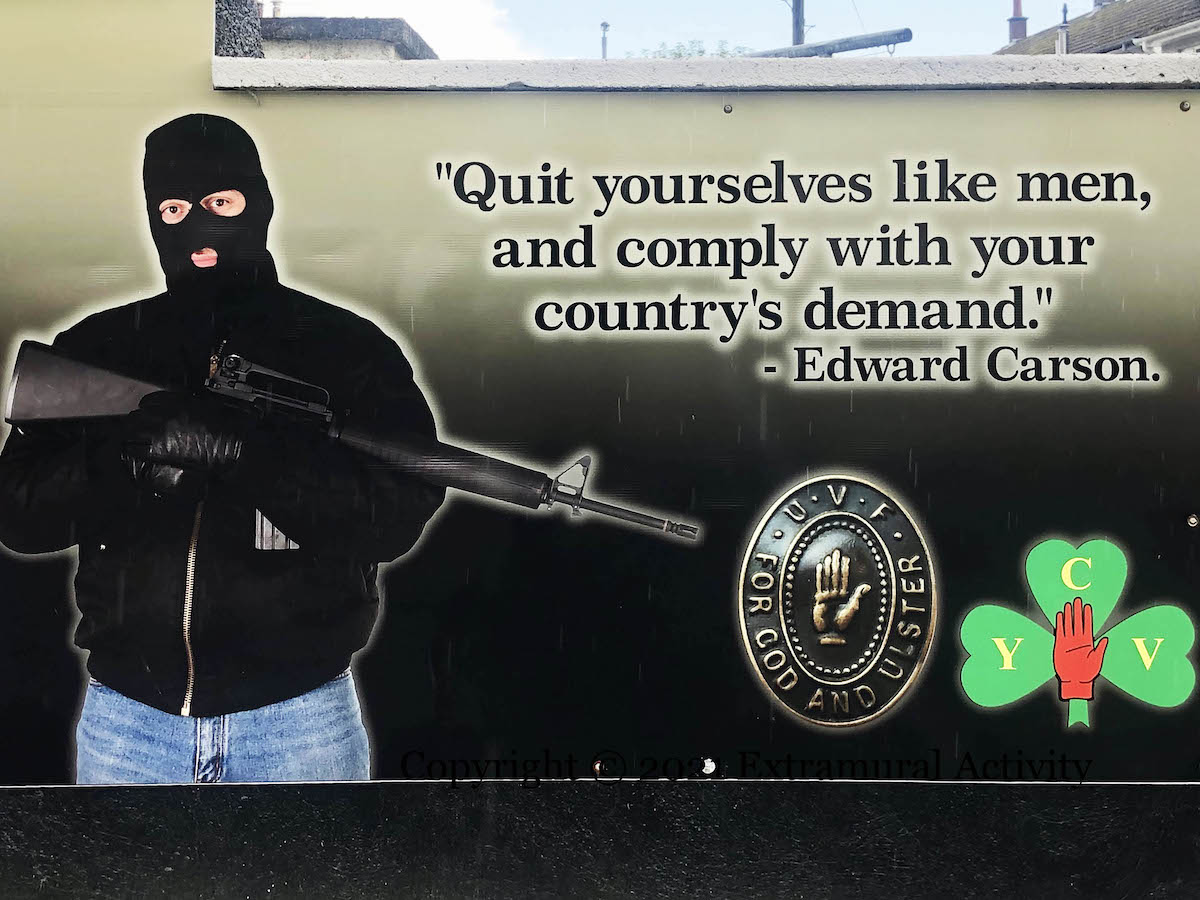
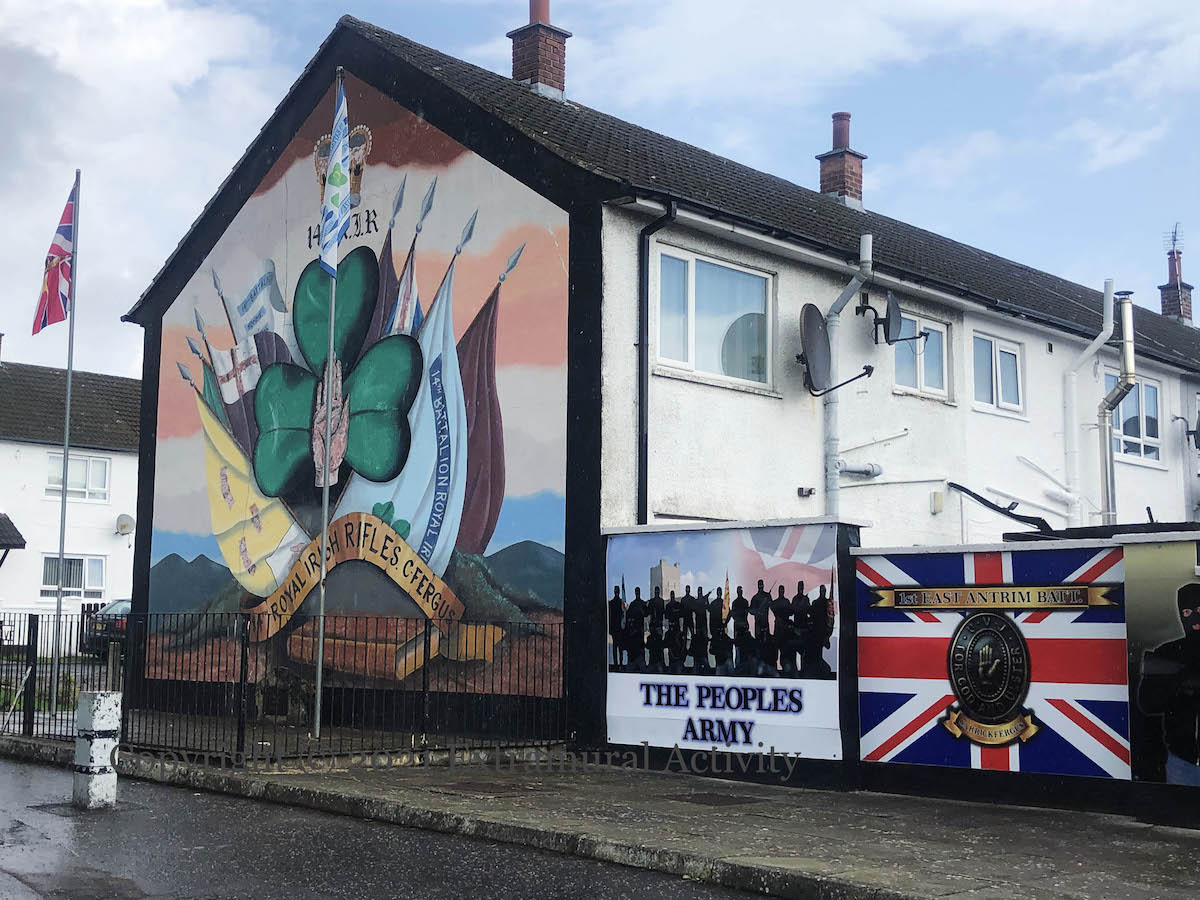
In September, 1914, six weeks after the Great War had begun, Edward Carson wrote to the Ulster Volunteers entreating “those who have not already responded” to “my call for Defenders of the Empire” to “enlist at once for the Ulster Division in Lord Kitchener’s Army”, fighting alongside “our fellow Britishers”: “Quit yourselves like men and comply with your country’s demand”. The impulse for the display of force shown here – two panels of hooded gunmen from the 1st East Antrim battalion of the UVF – is the other, original, motivation for the paramilitary force, which Carson describes as “to defend our citizenship in the United Kingdom” (Strachan & Nally).
For the RIR mural, see For Valour. The new panels shown here re-re-image the VC part of that previous mural in the Larches, Carrickfergus.
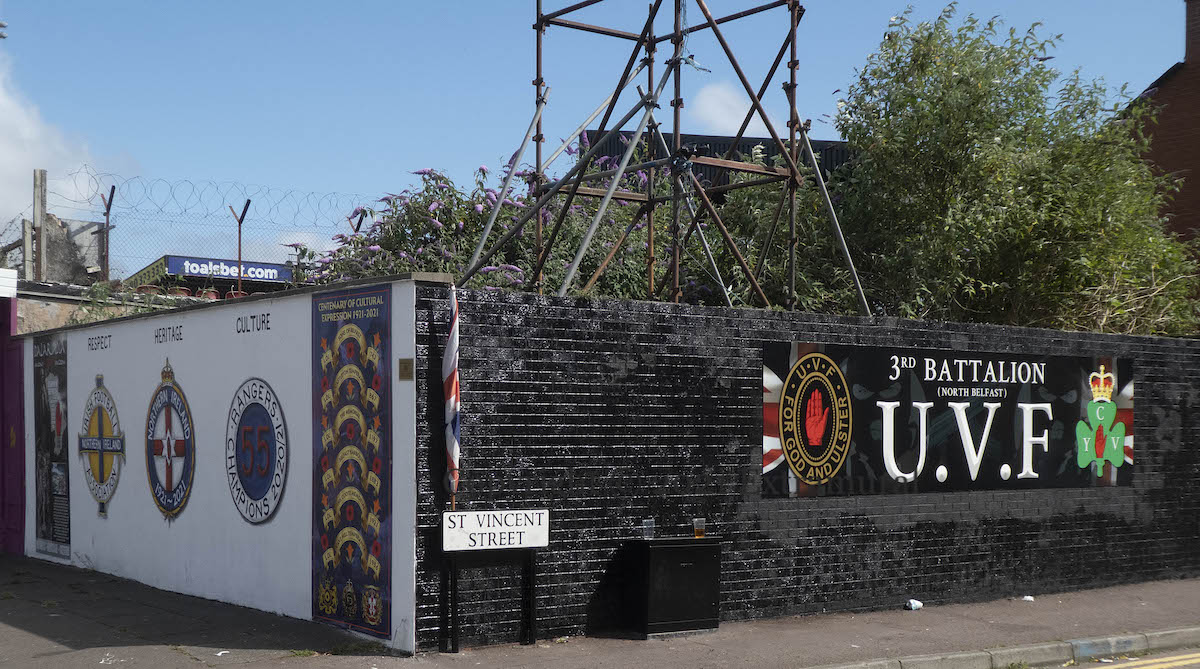
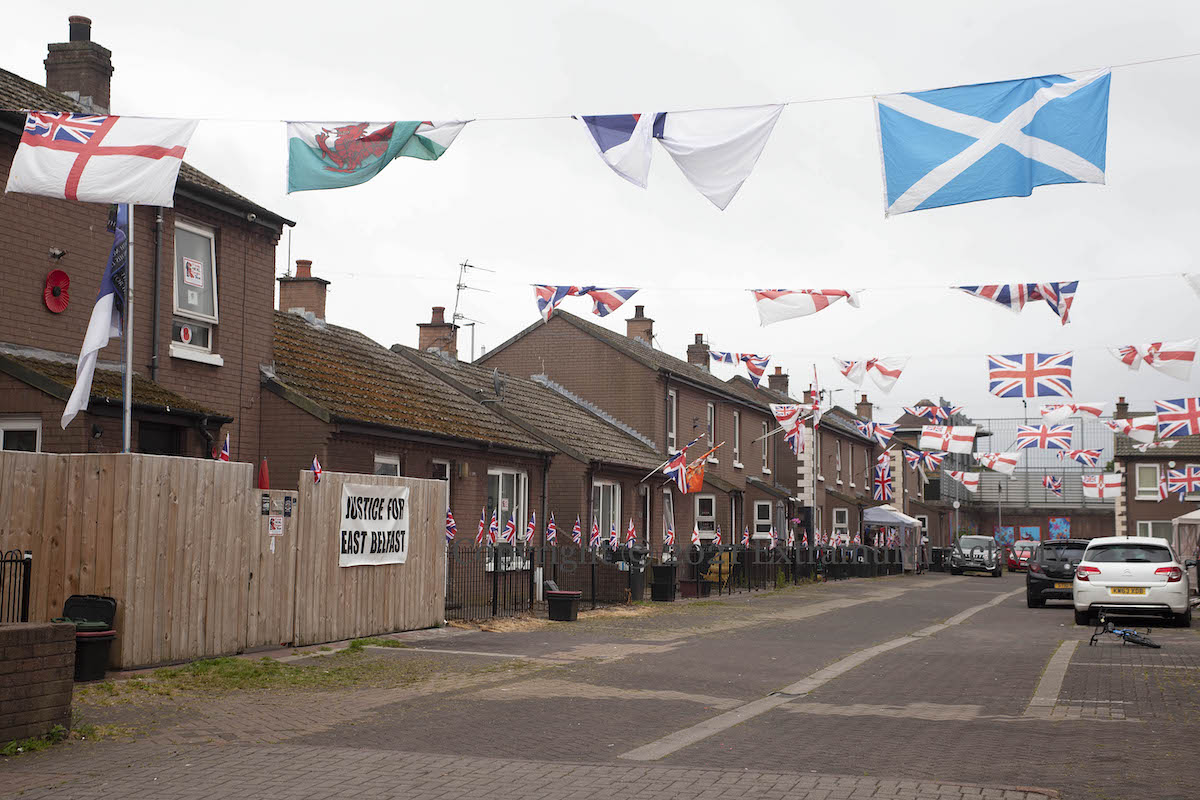
“Loyalist Woodburn celebrates 100th anniversary Northern Ireland”. Maintain the union of (left to right) England (St George’s Cross), Wales (The Red Dragon), Northern Ireland (Ulster Banner), Scotland (St Andrew’s Saltire). Along the fence we have the NI coat of arms, Ulster Grenadiers flute band (Fb) celebrating its 25th anniversary, King Billy at the Boyne, “Ulster Scots” (on an Independent Ulster flag?), Captain Sir Tom Moore, a Union Flag, Rangers 55, an Ulster Banner. The crown sits atop all.
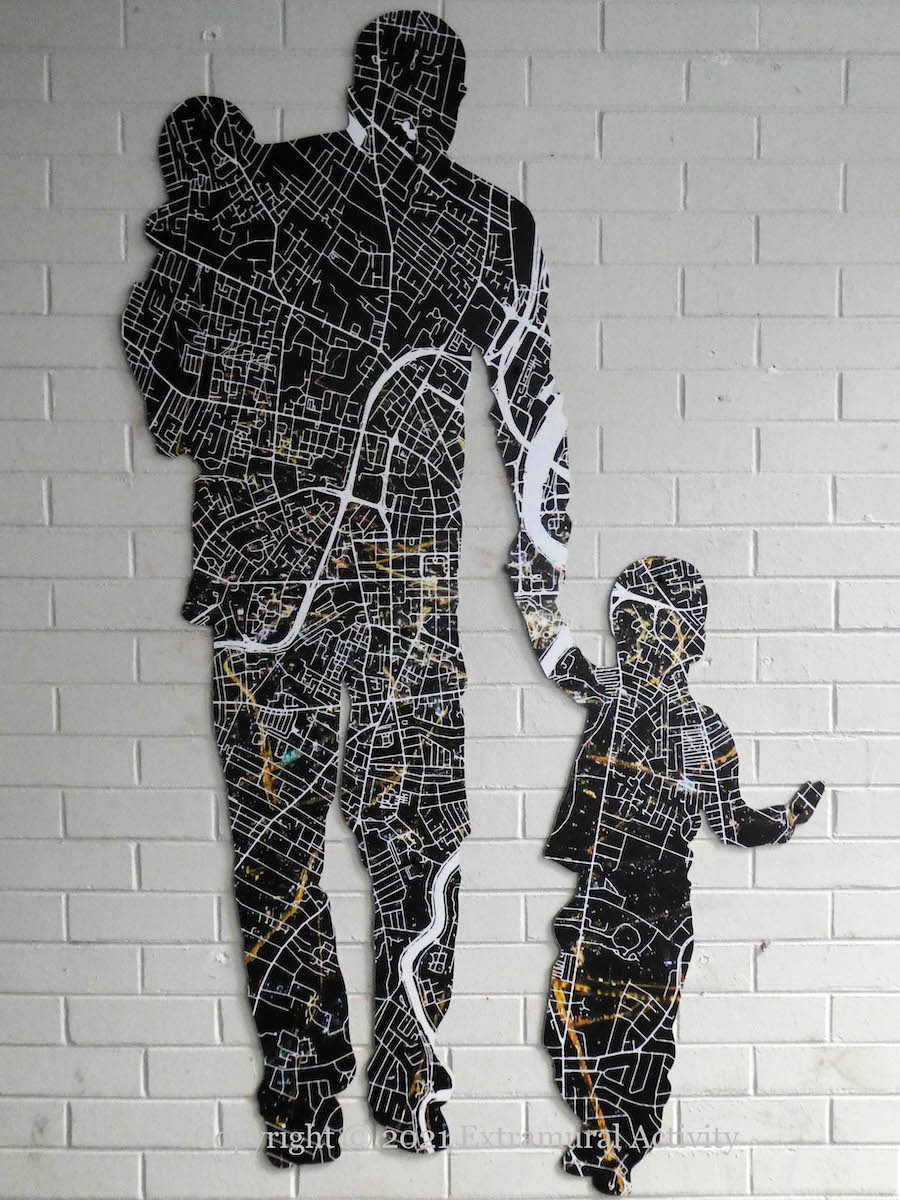
Plans to redevelop Castle Arcade were published in July (NewsLetter). The arcade runs between Castle Lane and Castle Place. The castle of Belfast originally stood at the top of High Street, built by the Normans in the late 12th century and then rebuilt by Arthur Chichester in 1611 but destroyed by fire in 1708 after which the area became commercialised (Belfast Entries | Belfast Castle). If you know the art’s creator, please comment or get in touch.
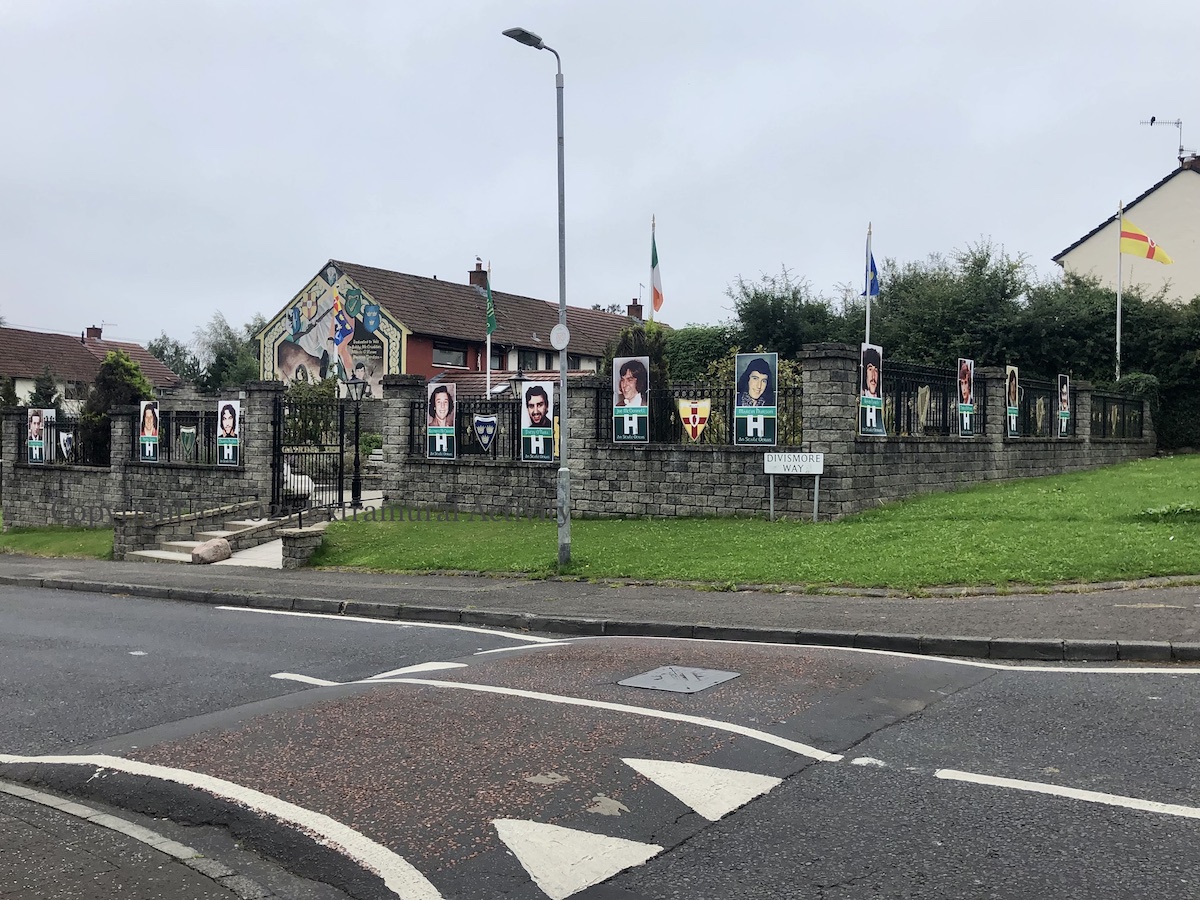
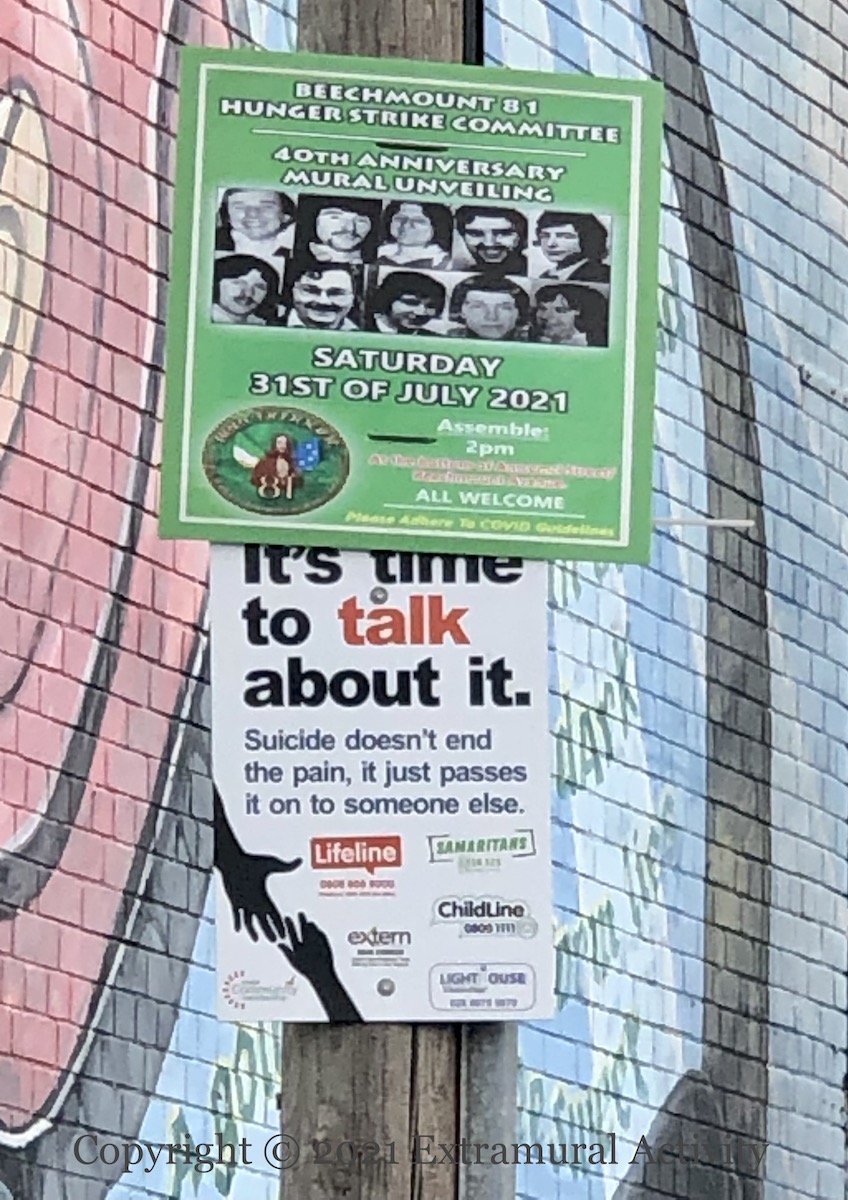
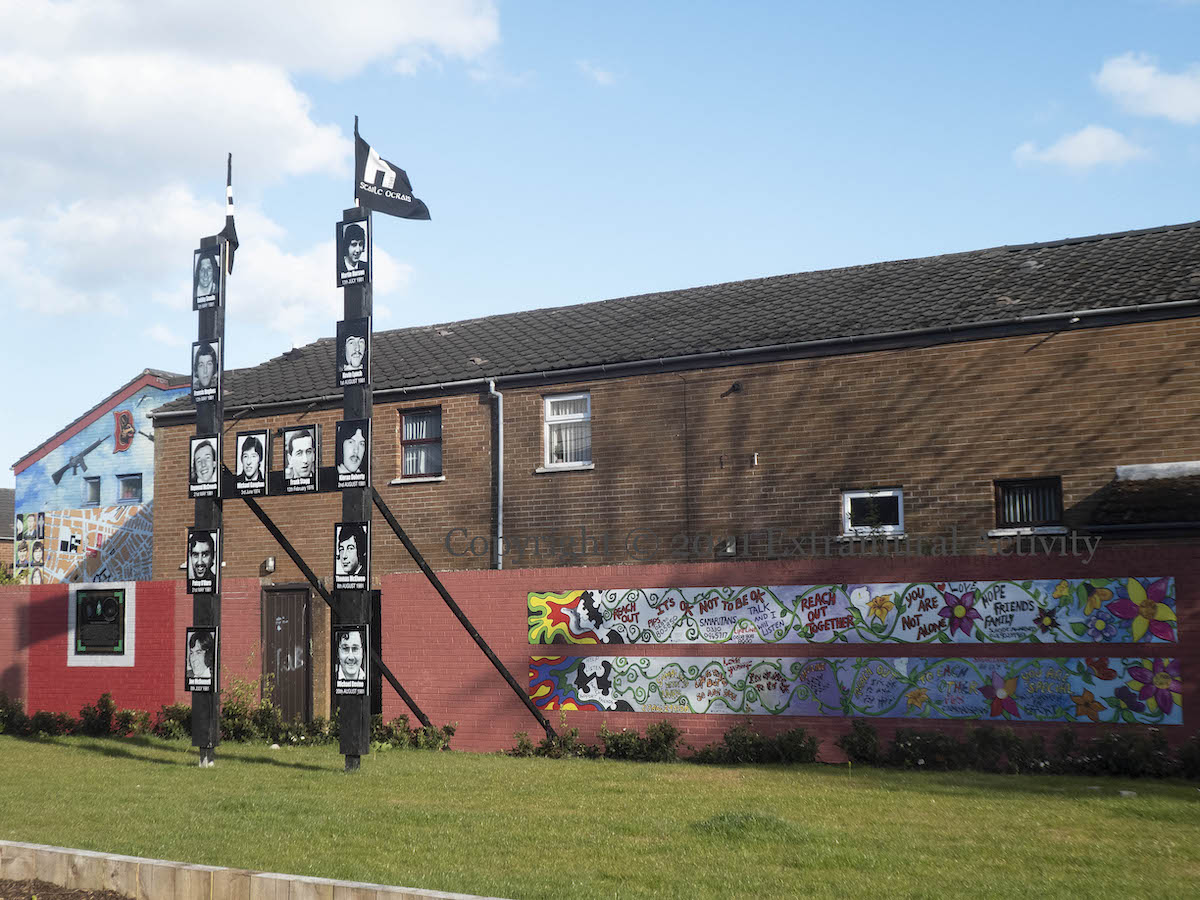
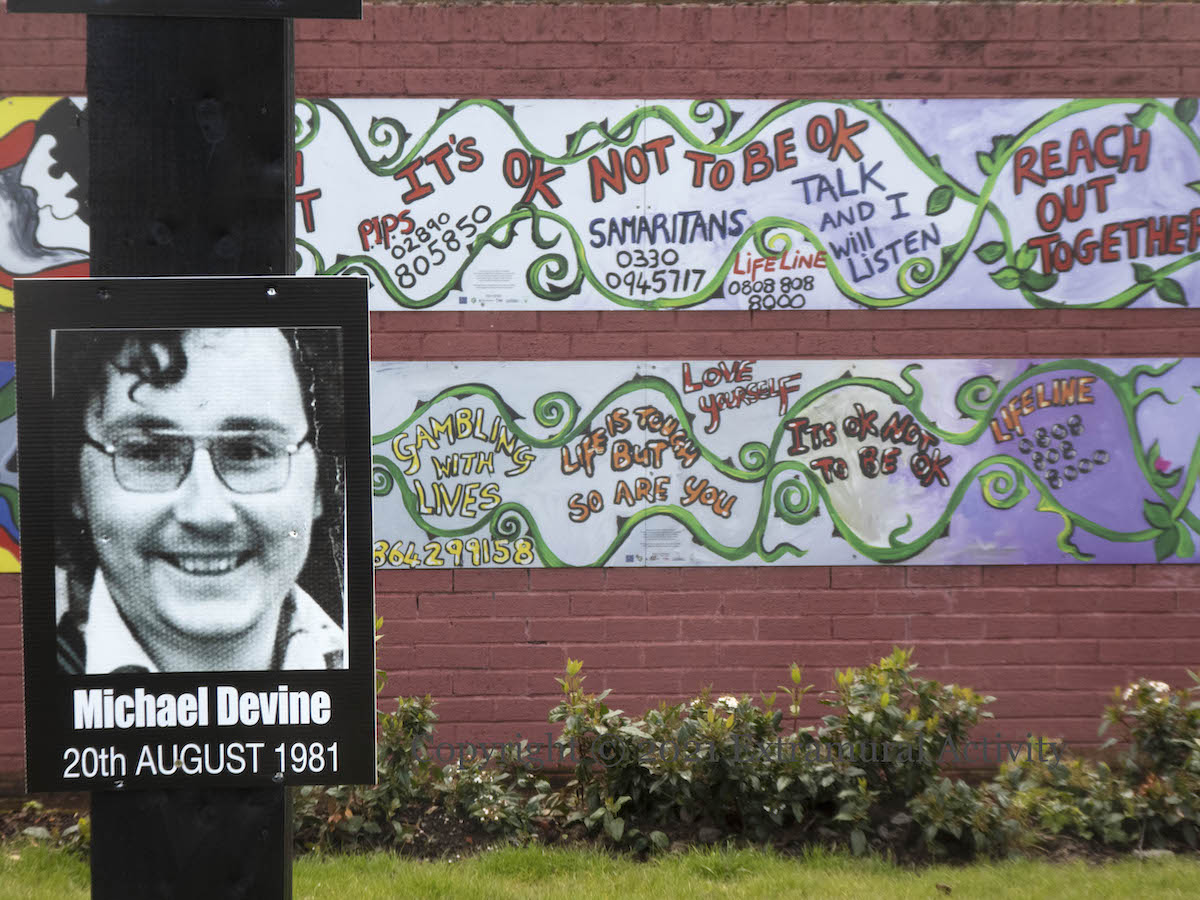
For the 40th anniversary of the 1981 Hunger Strike, portraits of the deceased ten (plus Frank Stagg and Michael Gaughan from the 1970s) were placed on the railings of the Ballymurphy memorial garden. There is a new (compared to 2006 and 2008) set of plaques, erected in 2017:
“A Letter To The 22: You have not gone away, you are in the hearts and on the lips of your people. The old speak of you with knowing tongue. The middle aged, as those who worked beside you. The young men and women with a passion not unlike your own. Your names can be heard on the wind taken from the mouths of men who tend their flocks on Slieve Gullion, Cnoc Phadraıg, Glenshane. They echo in the small graveyards in Cork, Kerry, Galway, Mayo, Tyrone, Antrim, Derry and Armagh. They are heard among your people at the mass gate on Sunday in the crowd at the hurling game, around the hearth when the bottle is cracked and song is sung. Your image can be seen on the faces of happy smiling children for whose freedom you gave your all. You are in our prayers you have not gone away, you never will. Mıse le meas Colm Mac Gıolla Bheın 2006. This monument was erected by the Ballymurphy Ex POWs in memory of the 22 hunger strikers who died for the cause of Irish freedom. It was unveiled on the hundredth anniversary of Thomas Ash[e] who was the first republican to die on hunger strike in 1917. He died after five days while being force fed. Thomas Ash[e] an these 21 brave Irish men stood by their beliefs and refused to be criminalised. Fuaır sıad bás ar son shaoırse na hÉıreann. I measc laochra na nGael go raıbh sıad.”
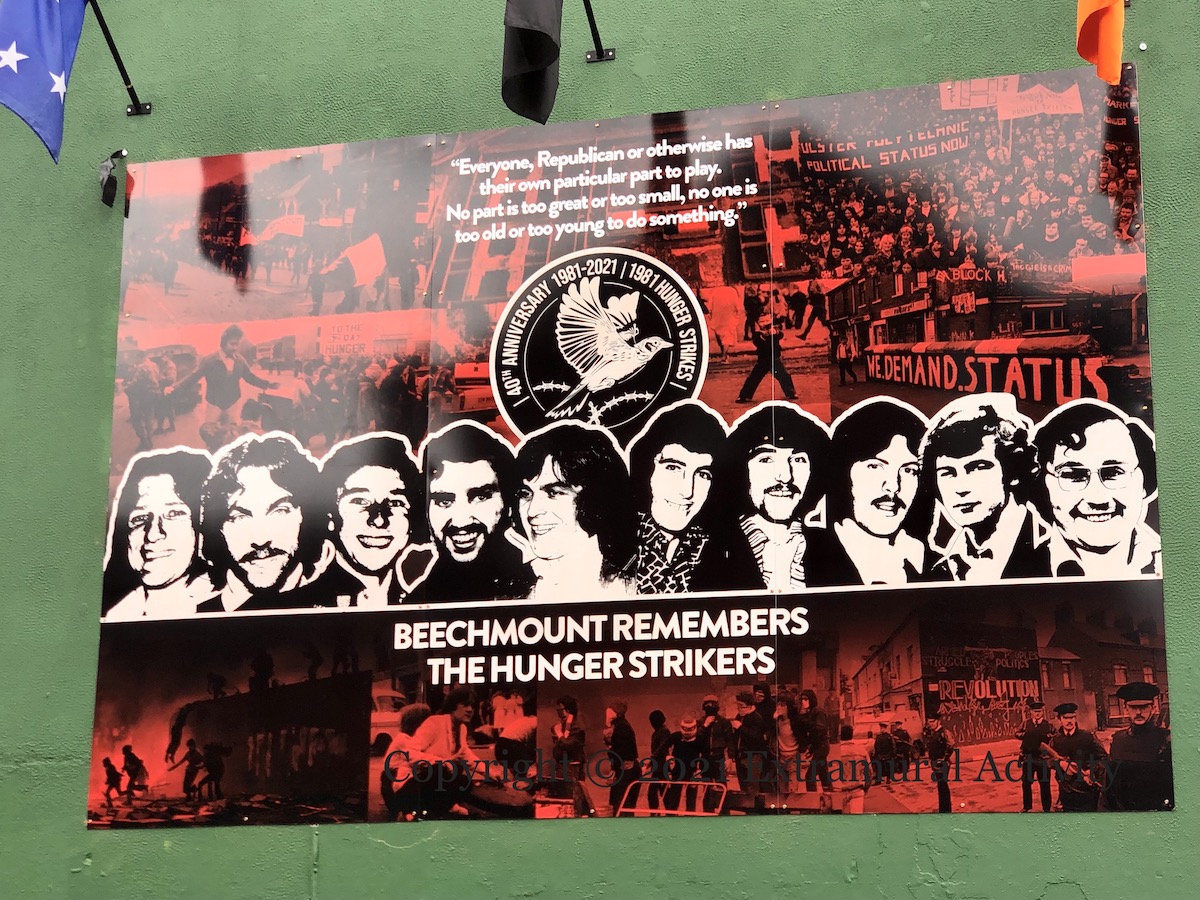
A new board has been mounted in AMCOMRI Street for the fortieth anniversary of the 1981 hunger strike, with photographs from the area in the background, including the Revolution mural at the bottom of Beechmount Avenue in 1996-1997.
“Everyone, Republican or otherwise, has their own particular part to play. No part is too great or too small, no one is too old or too young to do something.”
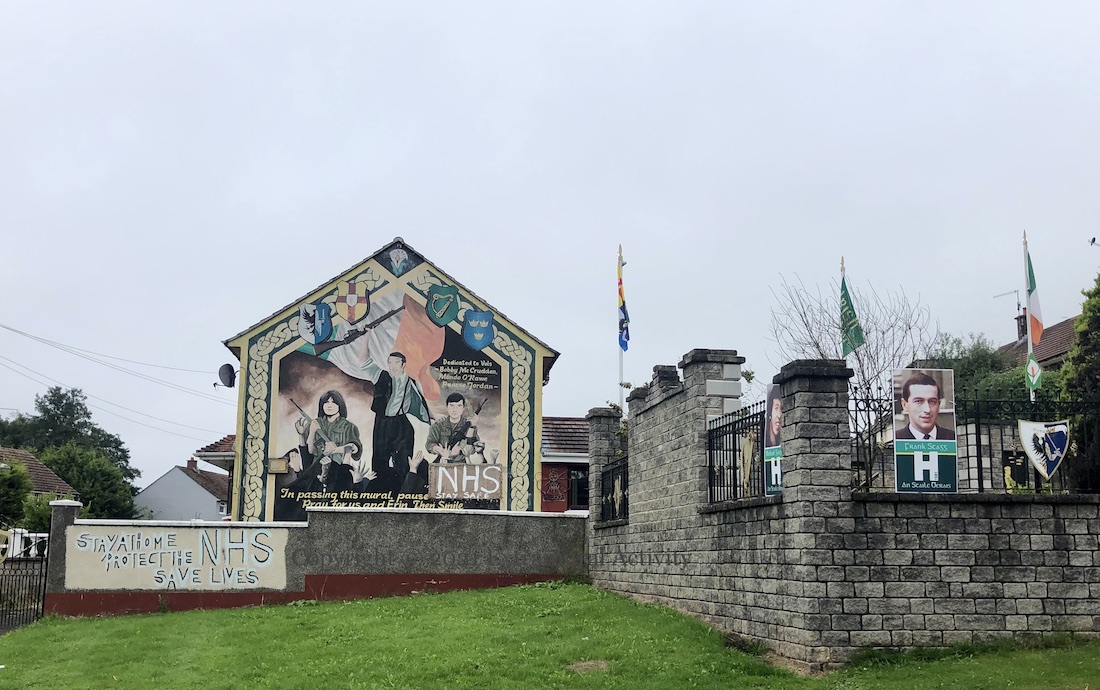
Six weeks after the first four deaths, the 1981 hunger strike’s long summer of mourning resumed with the death of Joe McDonnell, who died on July 8th, 1981. The “H” (for “H Blocks”) is on the Falls Road, next to the D company IRA memorial garden.
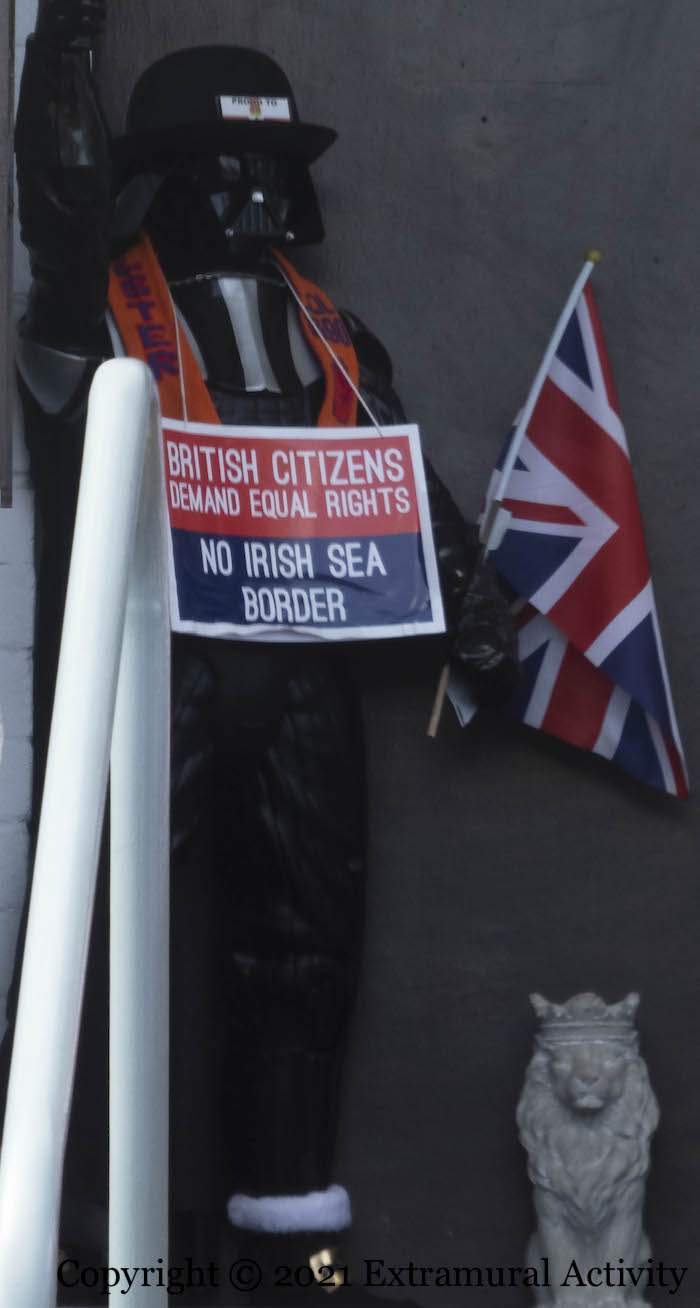
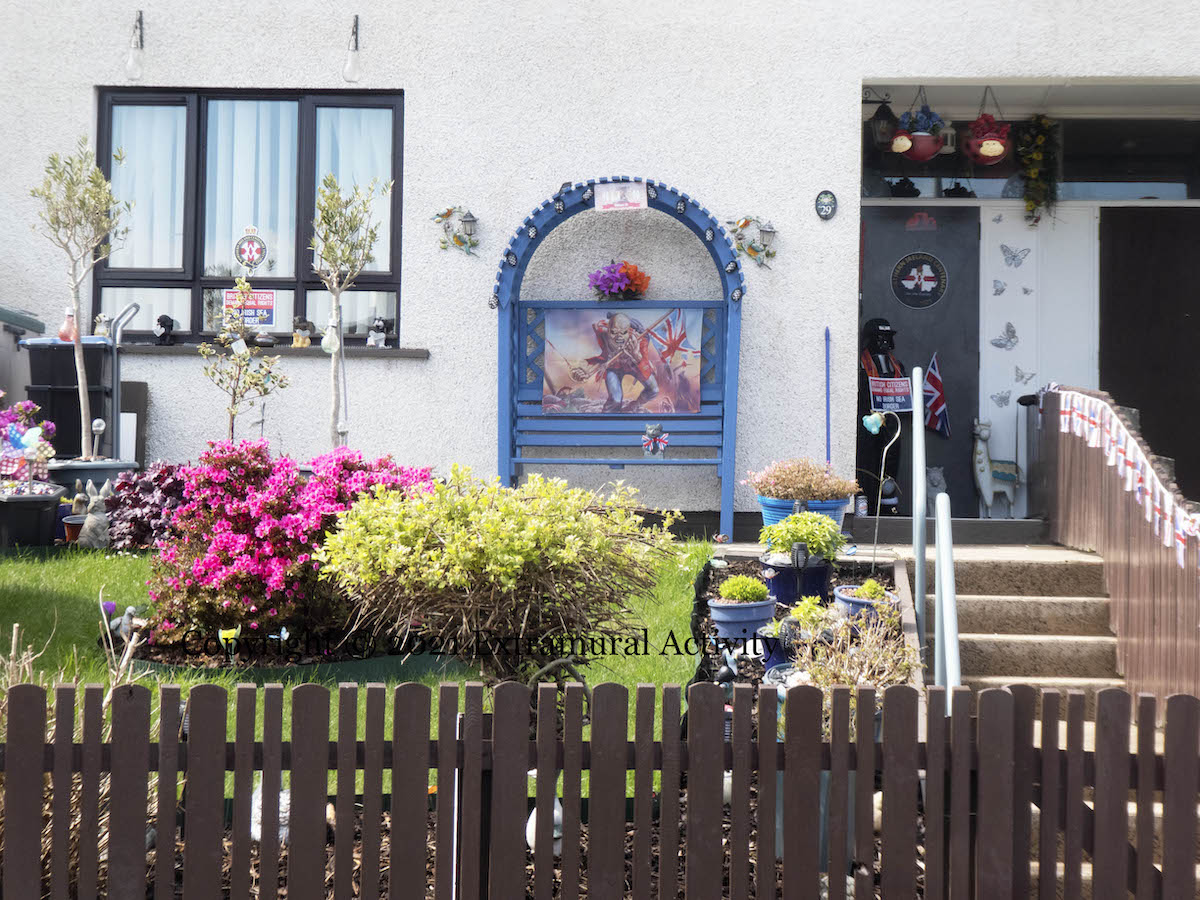
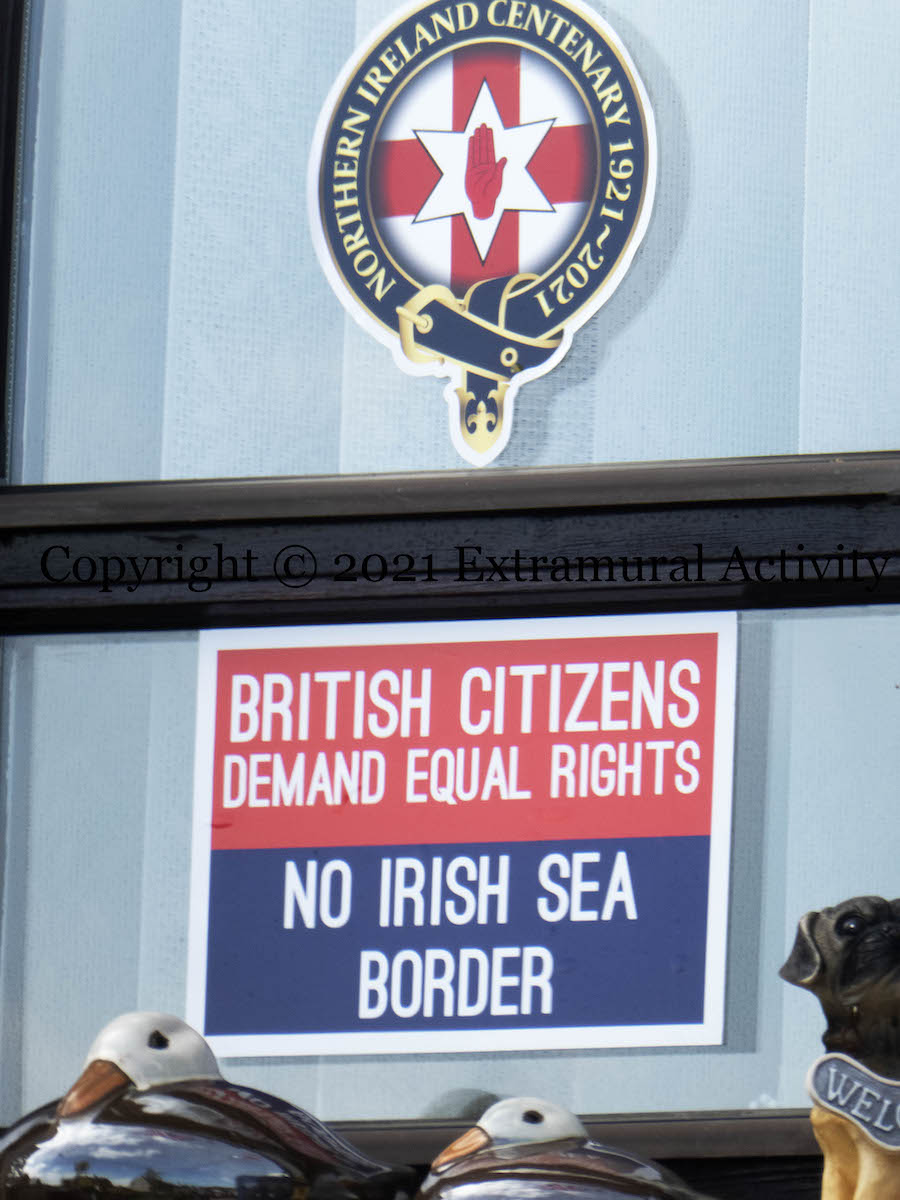
Darth Vader in a bowler and collarette on a Rathcoole porch demanding “equal rights” for “British citizens” and protesting the NI Protocol (“No Irish Sea border”), which is result of Brexit. Lord Vader is accompanied by more traditional icons of loyalism: King William III and Eddie The Trooper (who has his own Visual History page).












 Extramural Activity