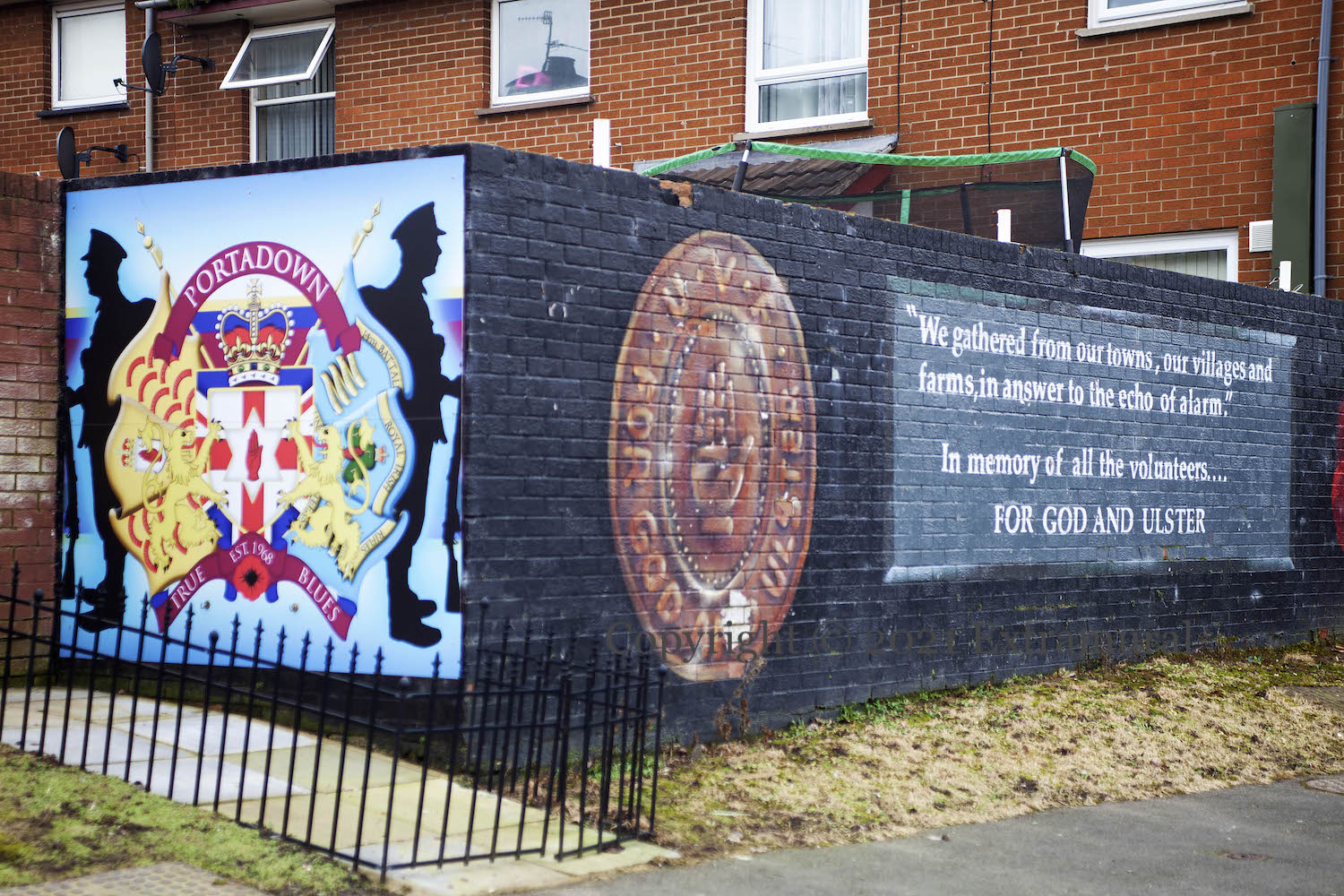
“If our shores are threatened/We will take up arms/To defend our loyal cause/Our culture and our heritage/Our freedoms and our laws.” Moygashel’s own (William) Wesley Somerville, a member of both the UVF and UDR, was killed by a bomb prematurely exploding as he placed it on the minibus of the Miami Showband in July of 1975. Three members of the band died, one of them Protestant, along with volunteers Somerville and Harris Boyle from Portadown (WP). “He died for Ulster” (on the plaque).
More anti-Good Friday/Belfast Agreement sentiment, this time from Dungannon, and this time claiming not that support has been withdrawn from the Agreement but that it was not supported in the first place: “Loyalist Eastvale Avenue says ‘No’ to Irish Sea border – Anti-GF 1998, still anfi-GFA 2021”.
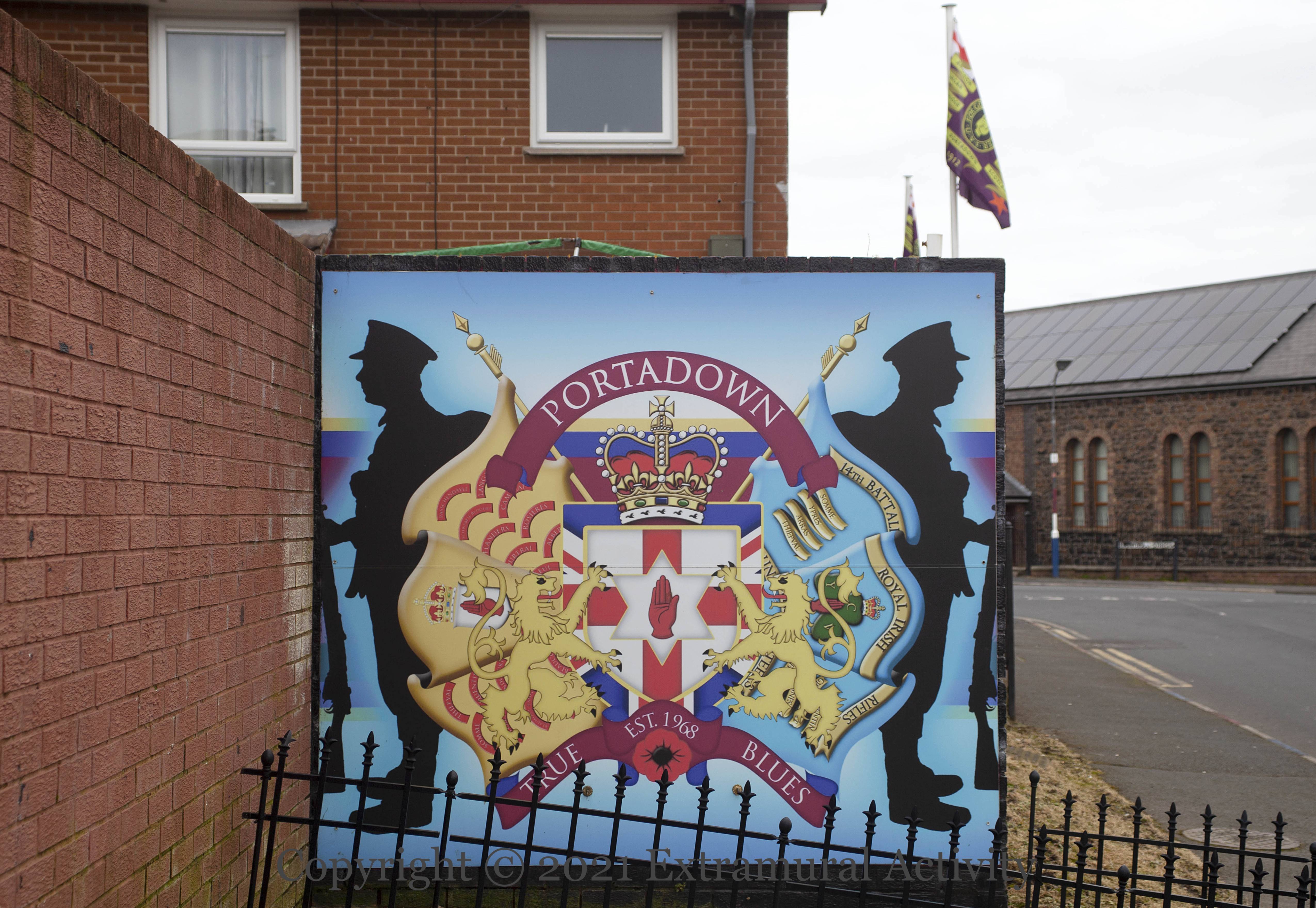
This time last year, Portadown True Blues flute band (Fb) was preparing for a trip to Toronto, Canada, for an international celebration of the Twelfth (News Letter) but it was cancelled on account of the pandemic. This blue board was an update of their long-standing purple mural in Edgarstown next to the Somme mural, also featured below (and previously in In Answer To The Echo Of Alarm.
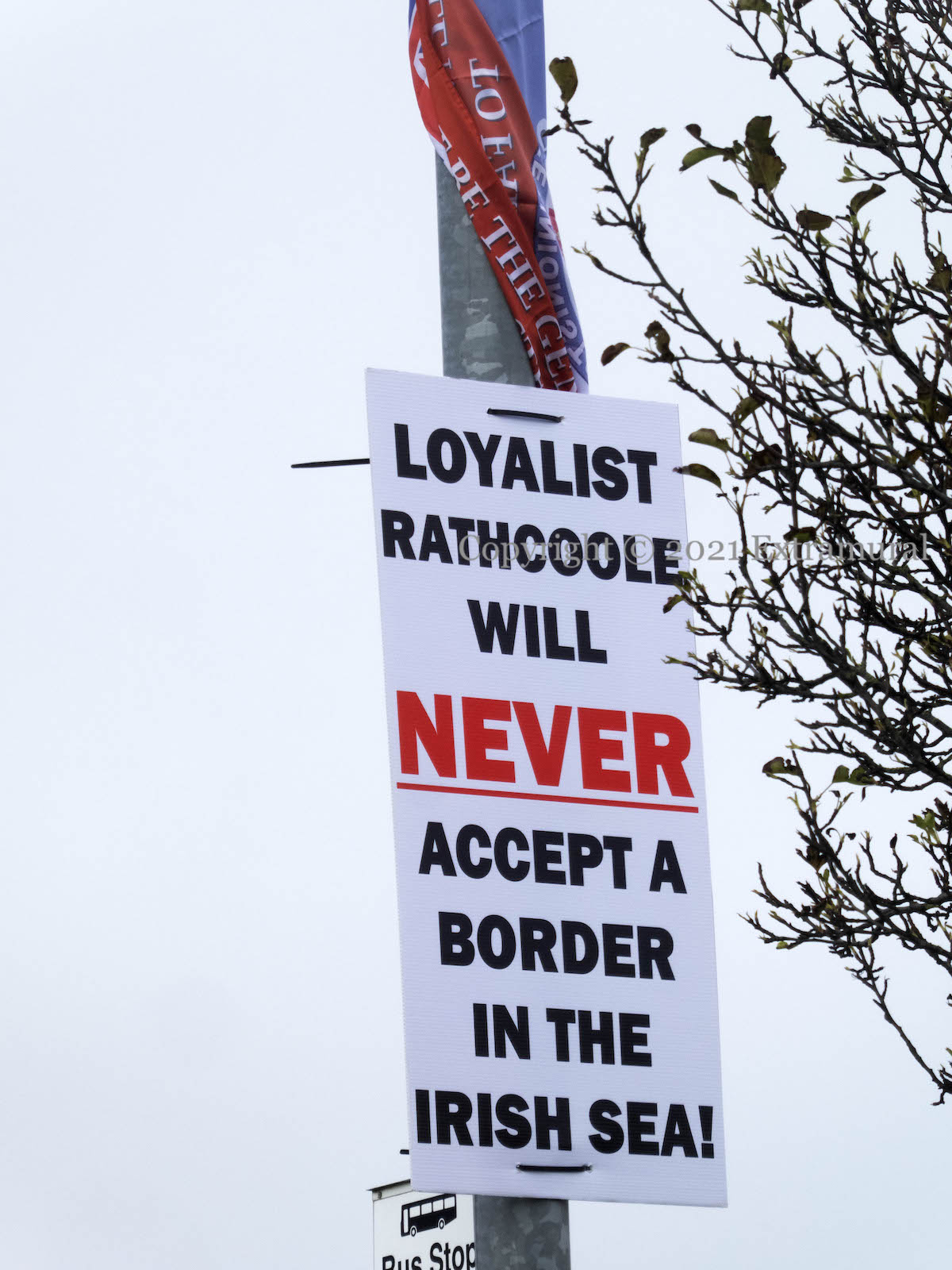
The slogan “How is freedom measured? By the effort which it costs to retain!” dates back to WWI and, in the Irish context, to the Home Rule era. It looked as though Britain was going to give Ireland – as a whole – some measure of self-governance (whether while remaining in the UK (“constitutional Home Rule”) or separating from it (“revolutionary Home Rule” or “Fenianism”). In response, it seemed to some that fighting for Britain in the war might secure the status quo. Perhaps additionally or alternatively, it indicated the willingness of unionists to fight. Great effort is the measure of freedom greatly prized – “loyalist Rathcoole will NEVER accept a border in the Irish Sea.” The placards are a product of United Unionists Of Ulster (News Letter). For a mural rendition of the WWI postcard, see previously: How Is Freedom Measured?
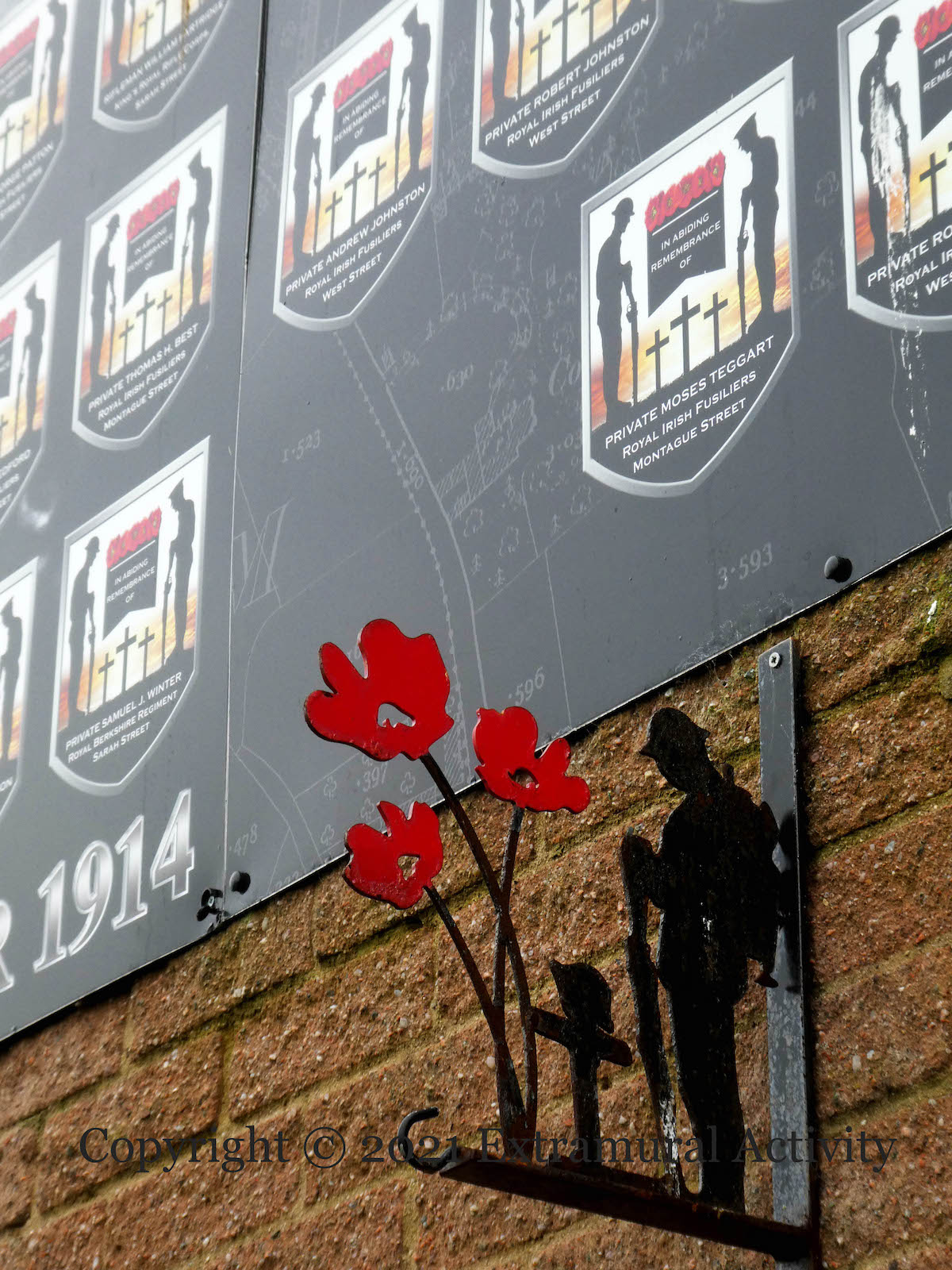
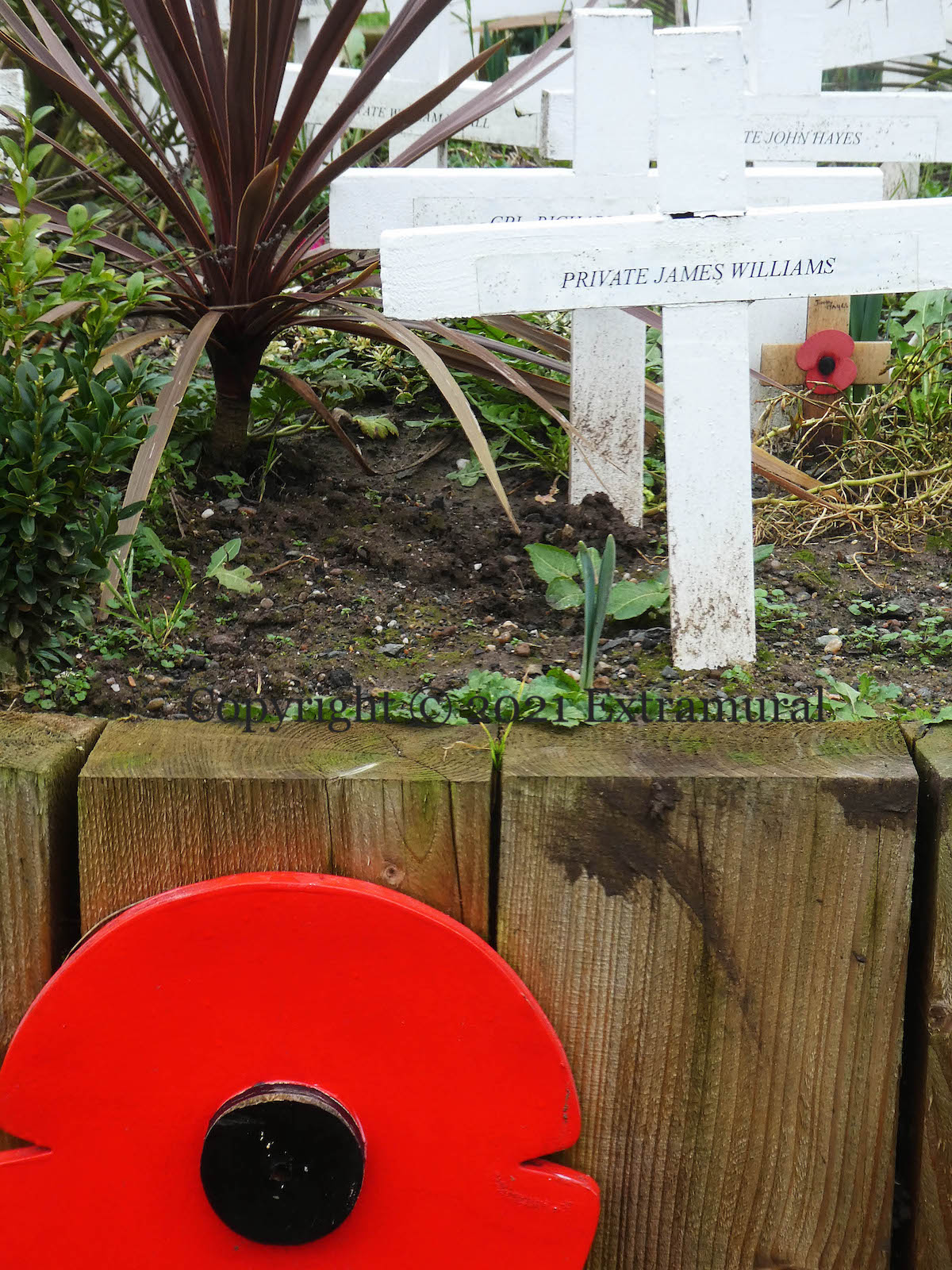
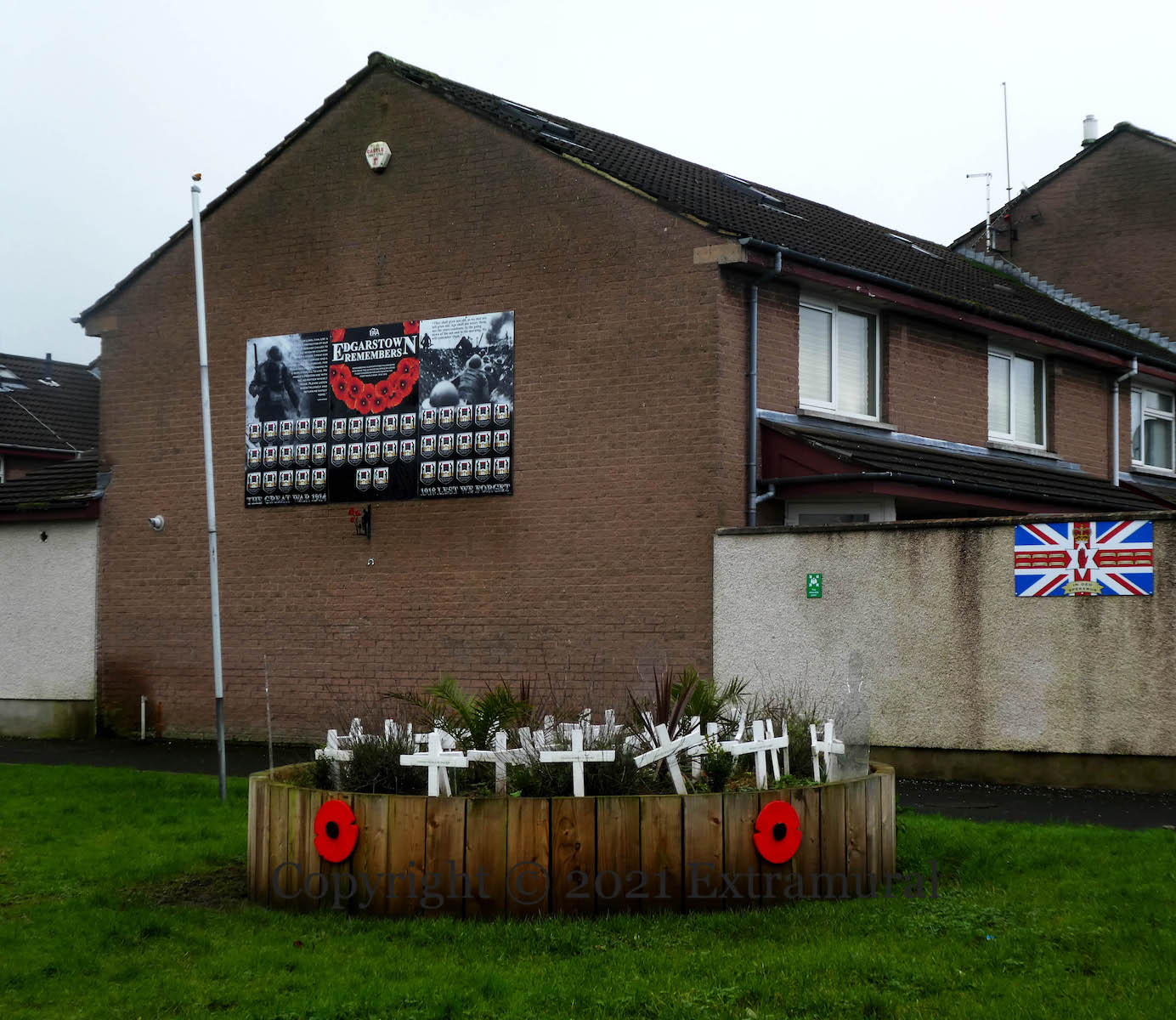
“In Deo speramus”. “Edgarstown Remembers” “our forty-two fallen sons who made the ultimate sacrifice by giving their tomorrow for our today in the Great War 1914-1918.” “Dear Lord, I am just a soldier, a protector of our land/A servant called to battle when my country takes a stand./I pray for strength and courage and a heart that will forgive/For peace and understanding in a world for all to live./My family’s prayers are with me, no matter where I roam./Please listen when I’m lonely and return me safely home – Unknown”
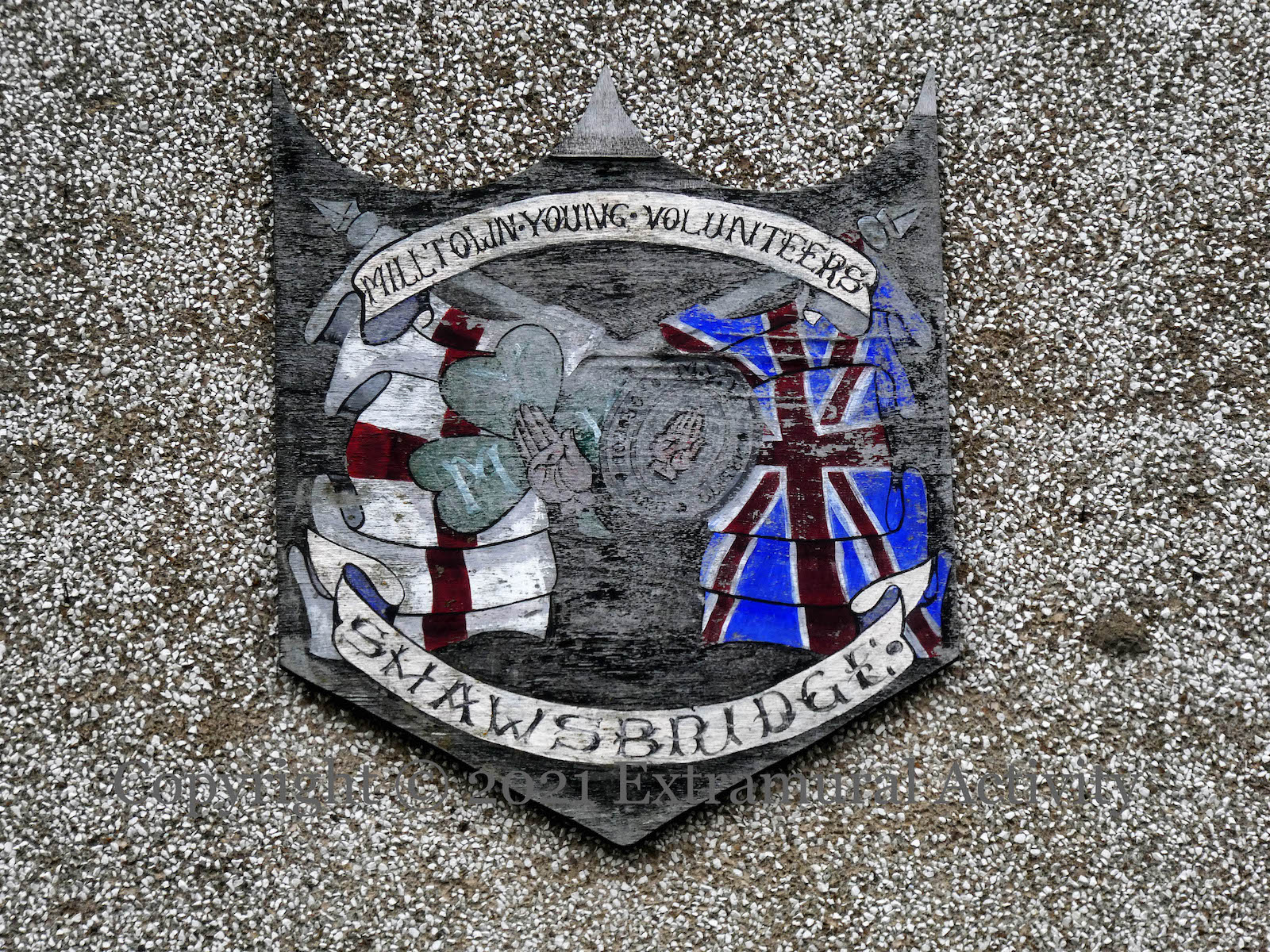
This is a vintage board in Milltown (south Belvoir), carved and painted with the YCV/UVF emblems but with “MYV” instead of “YCV”. The band’s last on-line presence seems to be from a decade ago, playing in Rathcoole.
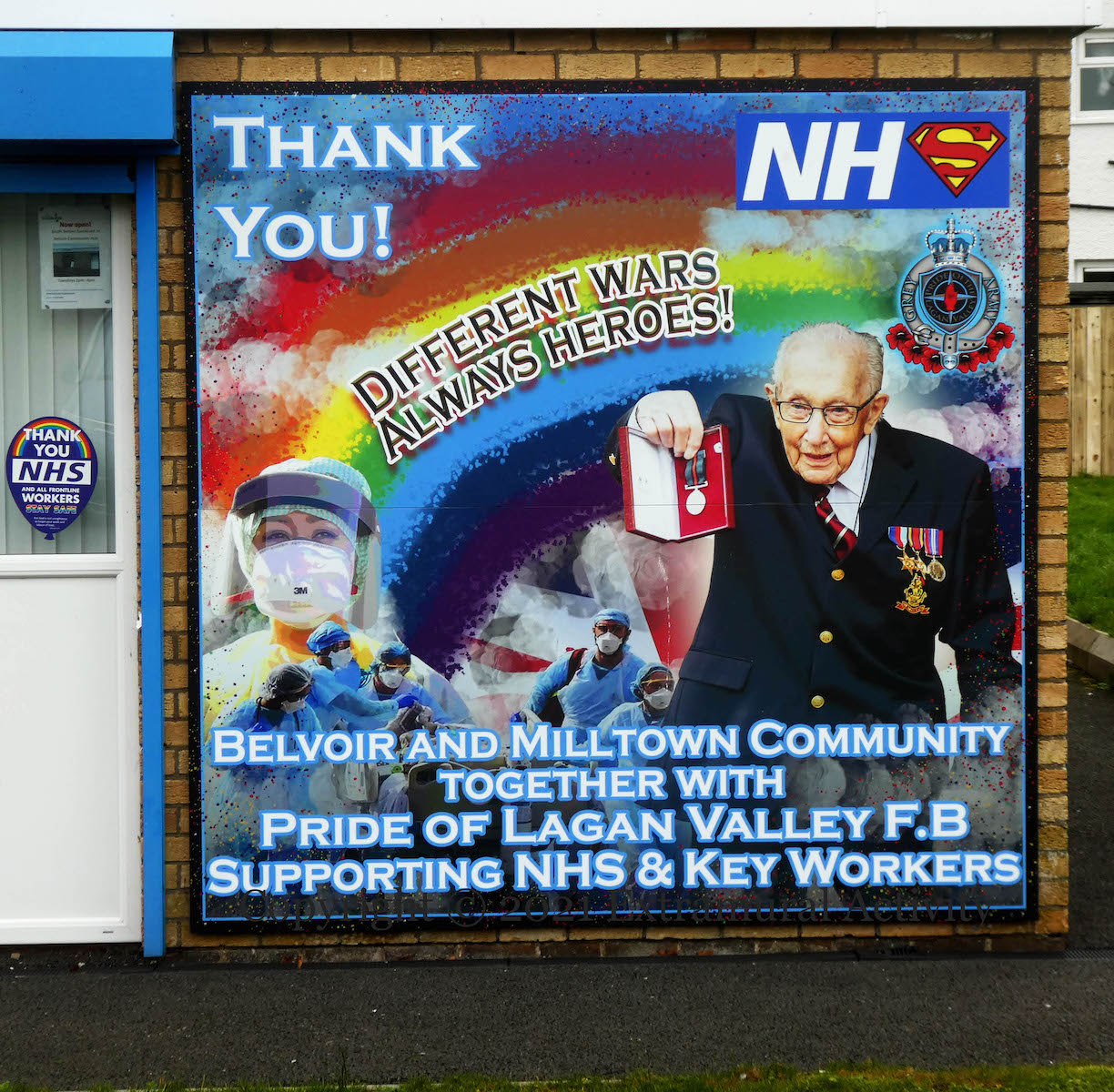
“Different wars, always heroes.” This mural in Belvoir estate shows Captain Tom Moore, who served in the British Army in Indian and Burma/Myanmar during WWII but became a household name last year for raising more than 30 million pounds for the NHS by doing 100 laps of his garden, being knighted in July on the occasion of his 100th birthday. He died of coronavirus and pneumonia on Tuesday (February 2nd). (BBC | BBC) “Belvoir and Milltown community together with Pride Of Lagan Valley FB supporting NHS & key workers.”
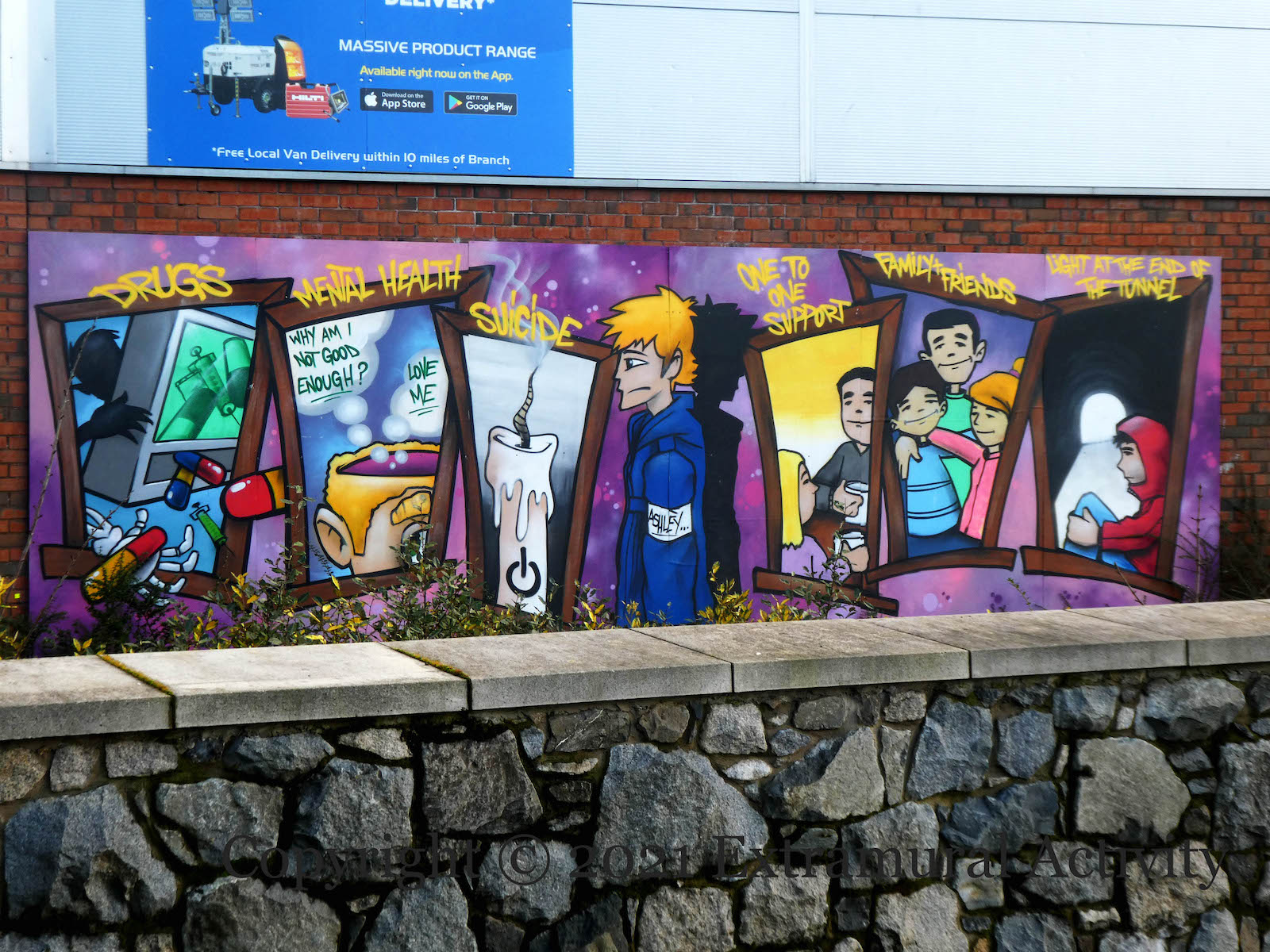
Claire Curran of Survivors Of Suicide (Fb) in Tamar Street, east Belfast, reports that there has been in increase in people reaching out to the organisation during the pandemic (NewsLetter). This Blaze FX (Fb) mural is at Connswater.
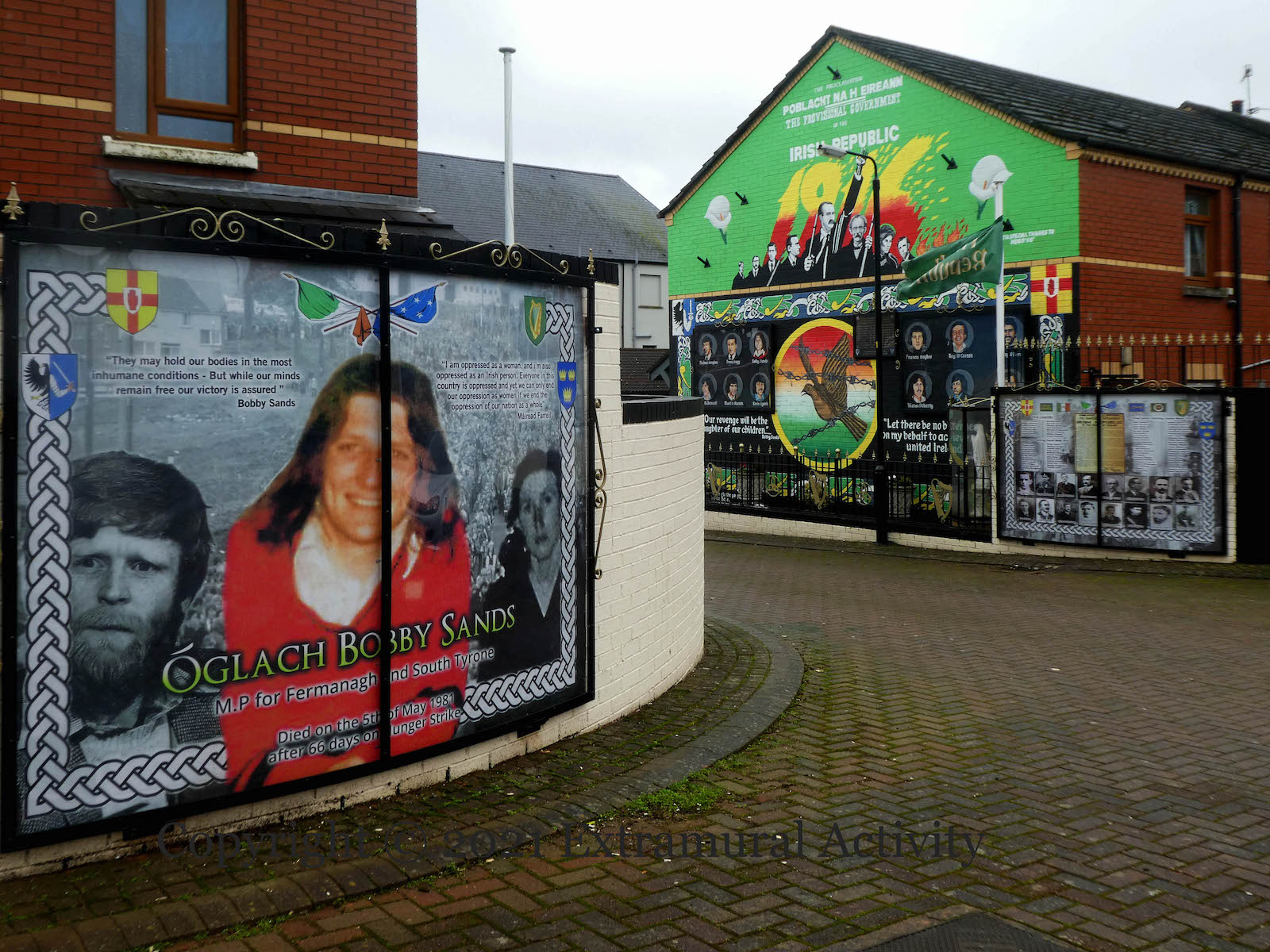
Mairéad Farrell (on the right of the image above) was arrested for planting a bomb at a hotel in Dunmurry in April 1976, one month after Special Category Status for republican prisoners had been revoked. Kieran Nugent (on the left) began the “blanket” protest in September that year and Farrell was the first person to join the protest, when she arrived in Armagh women’s prison to begin her fourteen year sentence. She later took up a dirty protest and joined the 1980 hunger strike. She stood for election in 1981 (in Cork), but, unlike “Óglach Bobby Sands, MP for Fermanagh and South Tyrone”, was not successful. (WP)
“I am oppressed as a woman and I am oppressed as an Irish person. Everyone in this country is oppressed and yet we can only end our oppression as women if we end the oppression of our nation as a whole.” Máiread [sic] Farrell
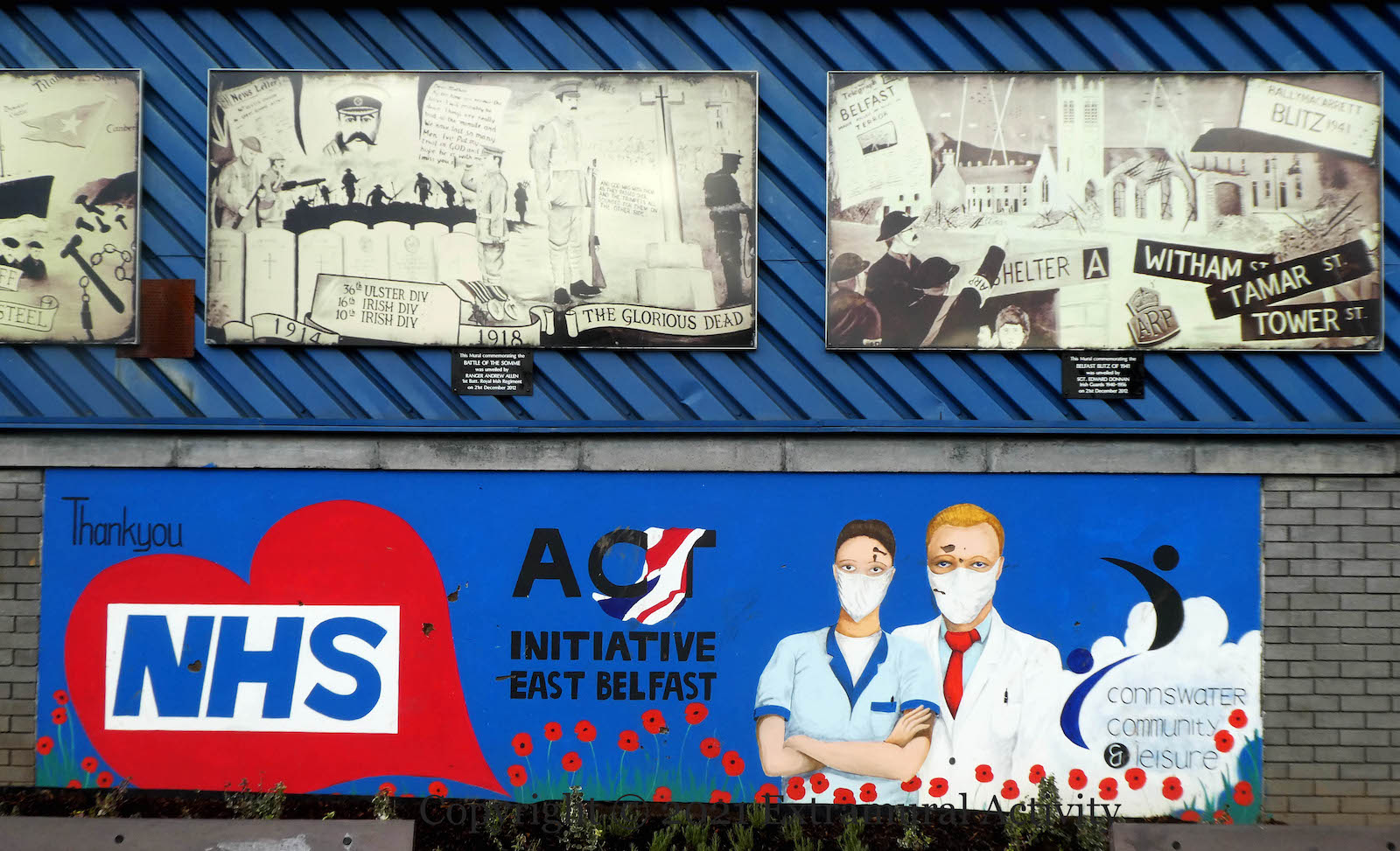
Four of the 700 NHS staff in the UK to die of Covid during the pandemic have come Northern Ireland, the most recent being dementia specialist Alan Henry in Antrim hospital (Express | BelTel | iTV). In the south, Defence Forces have been deployed to three nursing homes while 6,400 health workers are off sick (Irish Times). The mural above shows a masked nurse and doctor among a field of poppies. For the black-and-white boards above, see Connswater Commemorates.









 Extramural Activity