The river in question is the Farset, which in the late 1700s was still open in what was then the Back-Of-The-River area and is now Bank Square. It was all covered over by 1804.
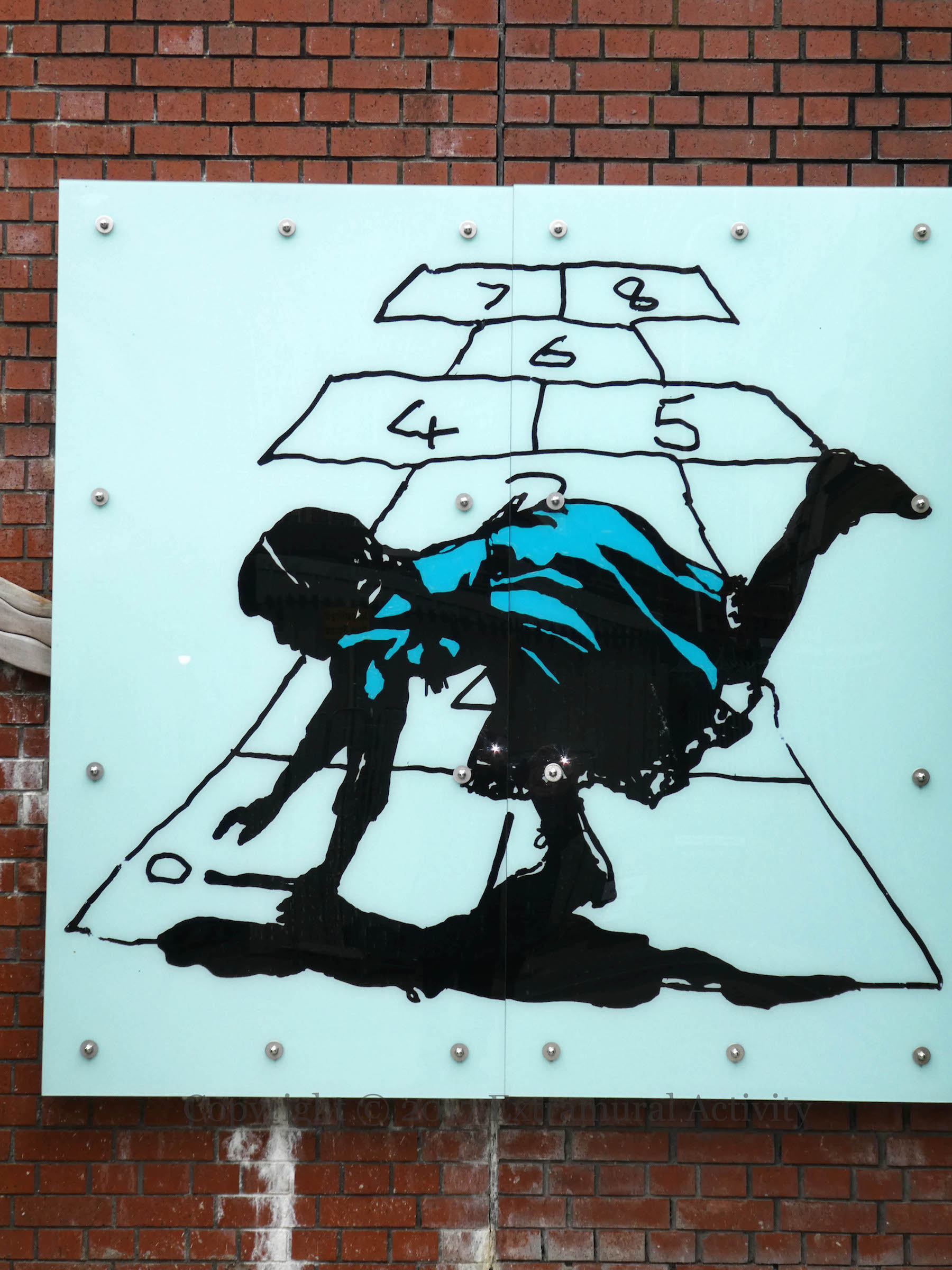
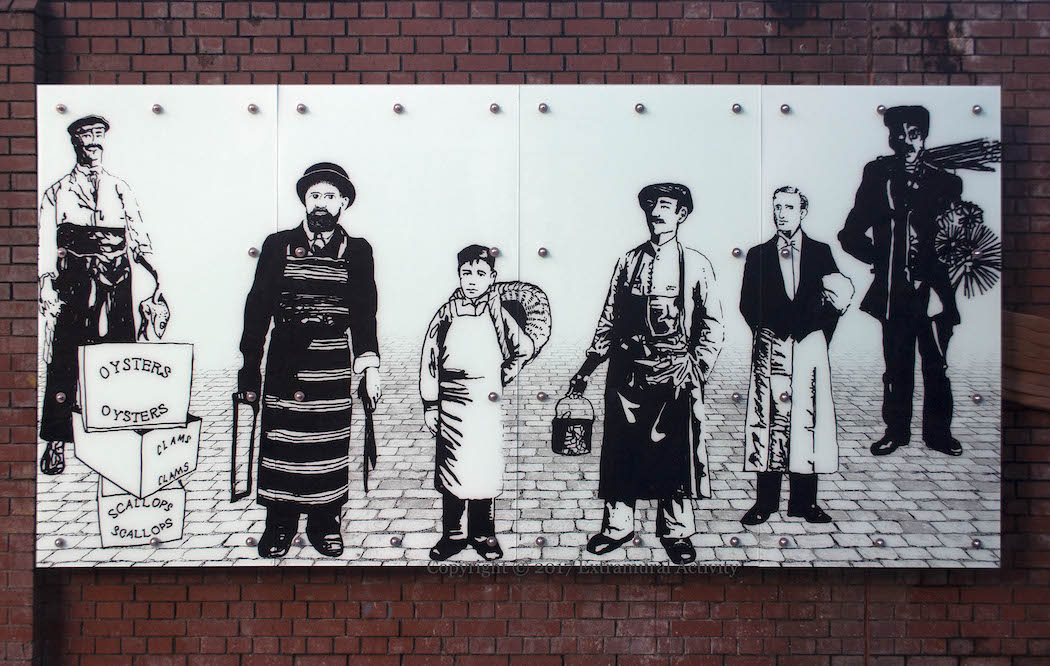
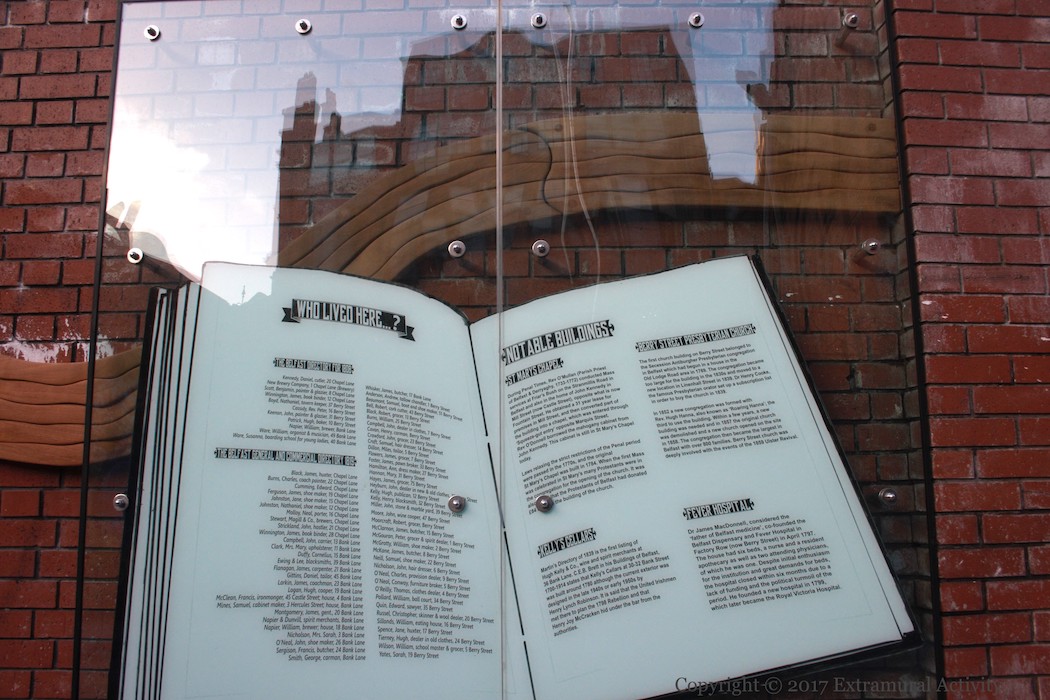
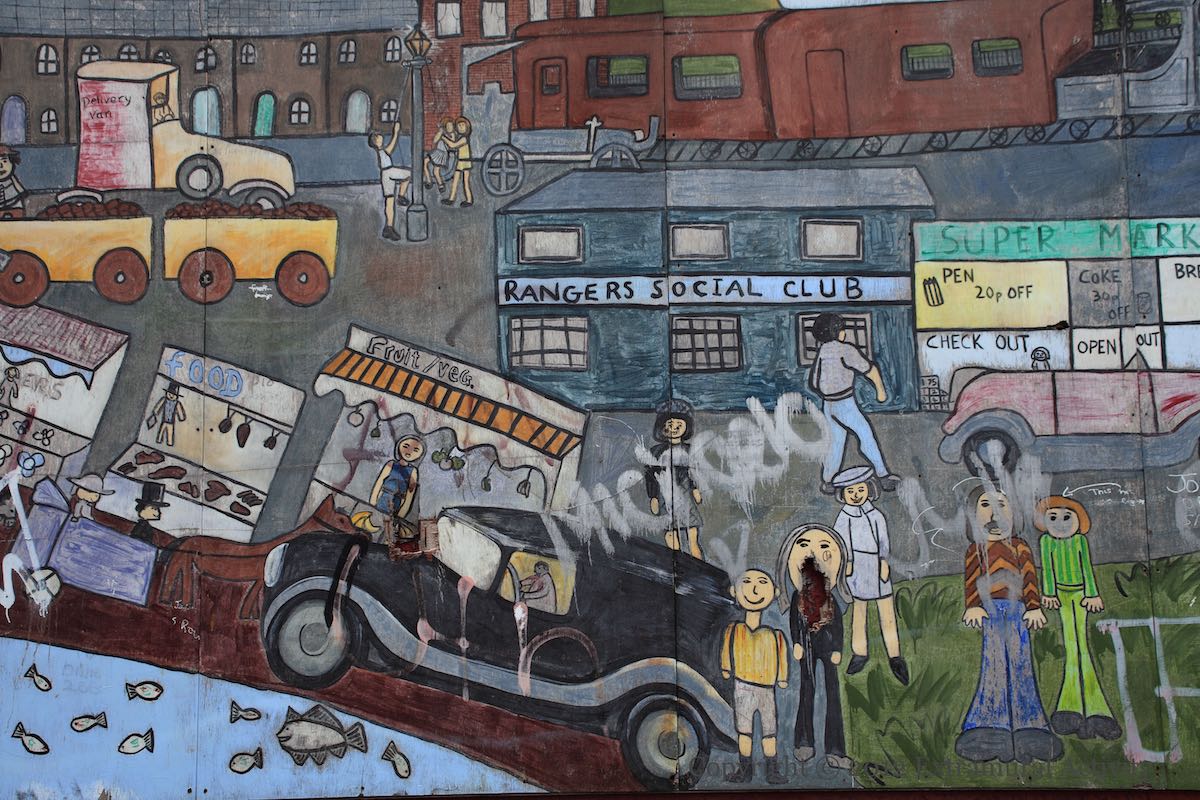
The 2015 installation of ‘life in the old days’ panels is by Annemarie Mullan, Stephen Mackey, and King Street Arts, presenting street scenes inspired by “information from the 1898 census” (CultureNI | Love Belfast).
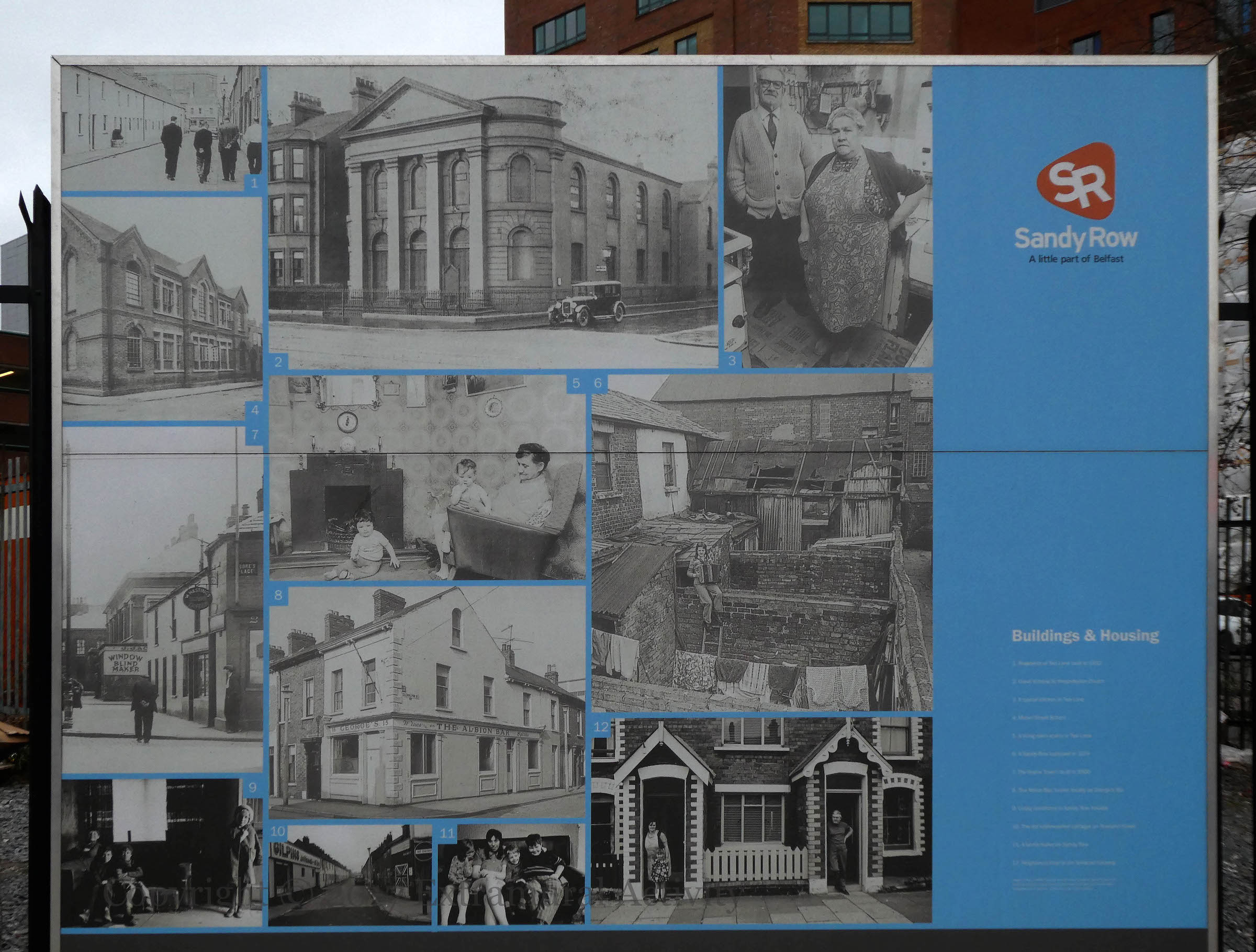
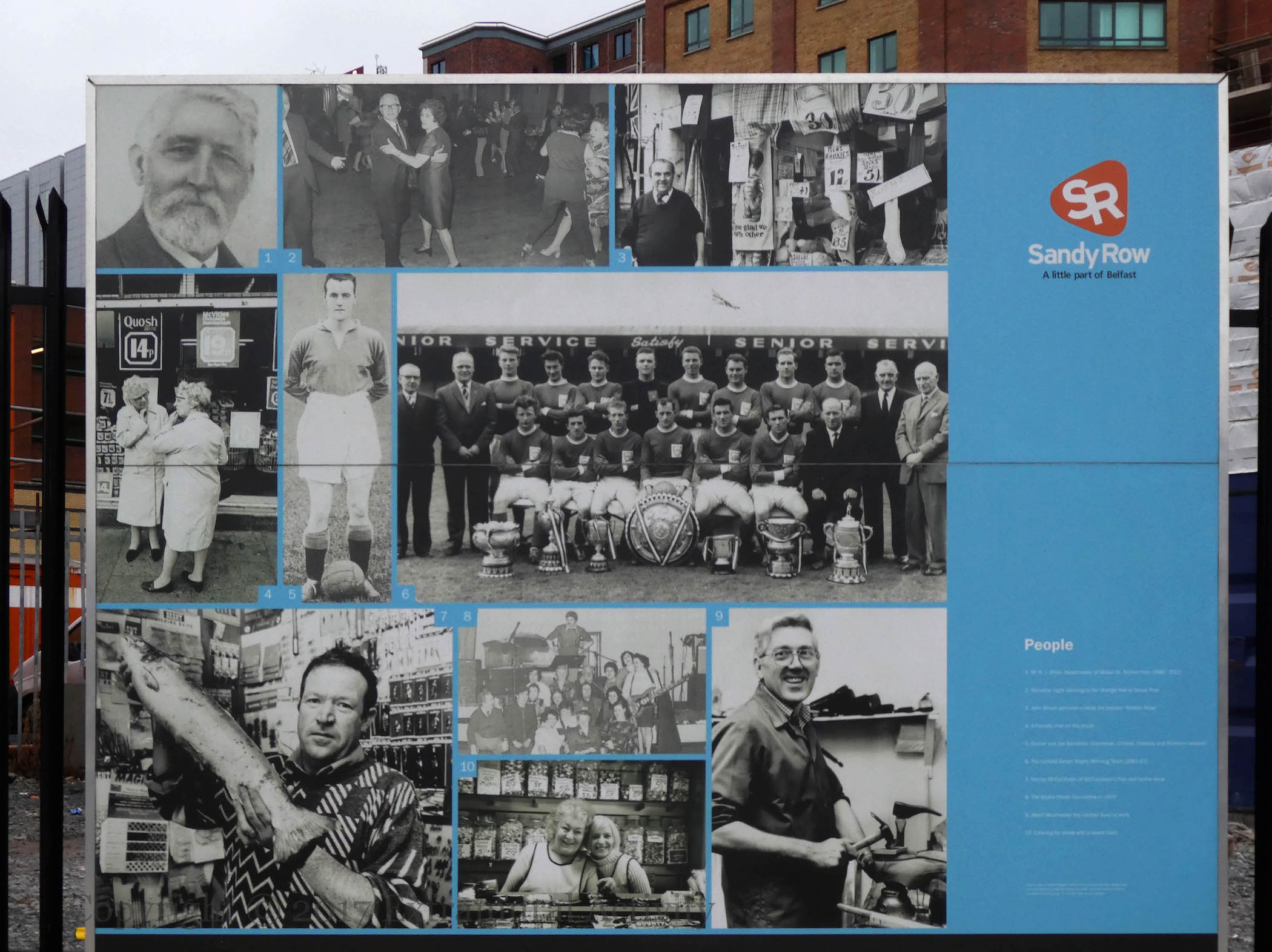
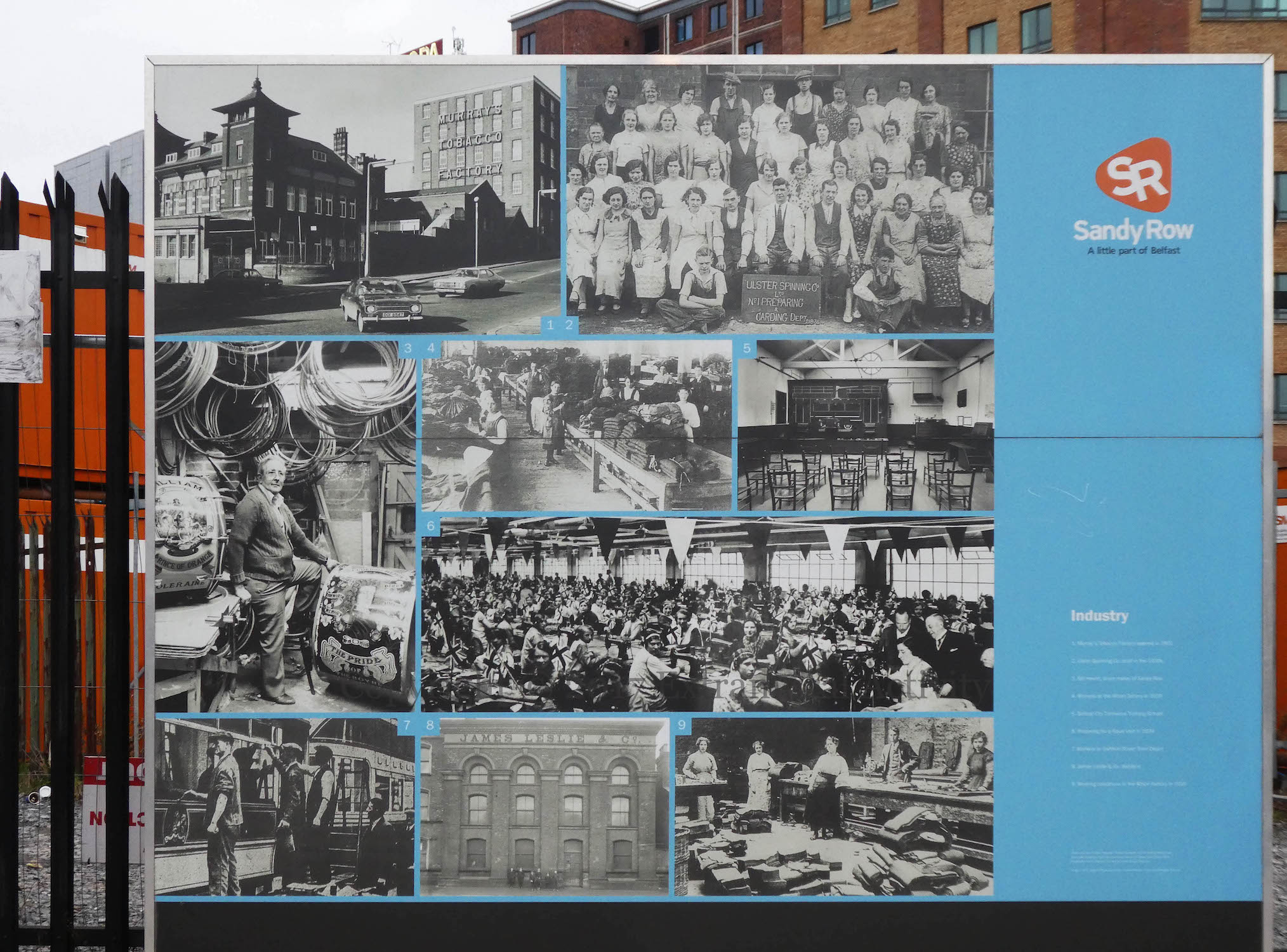
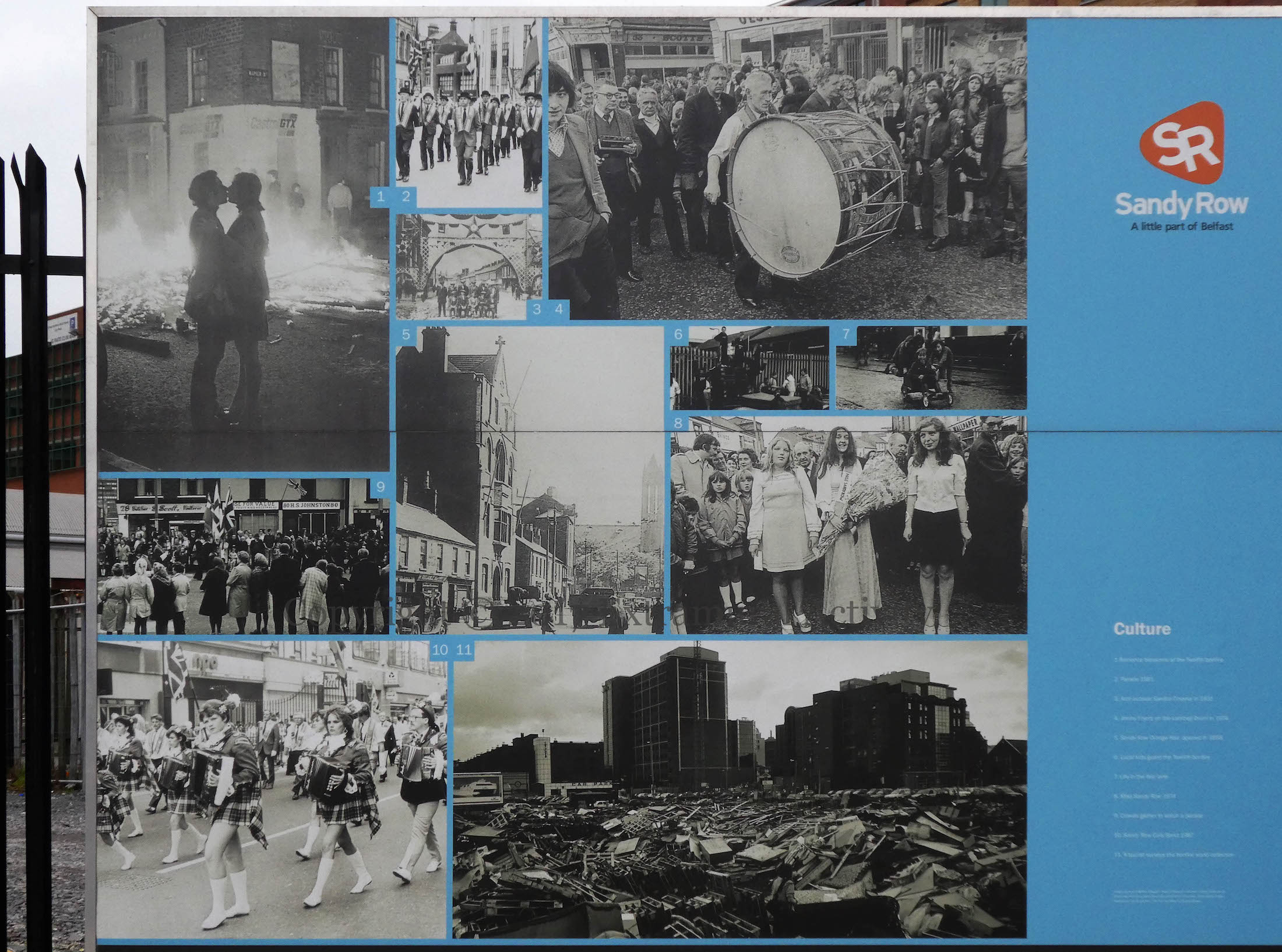
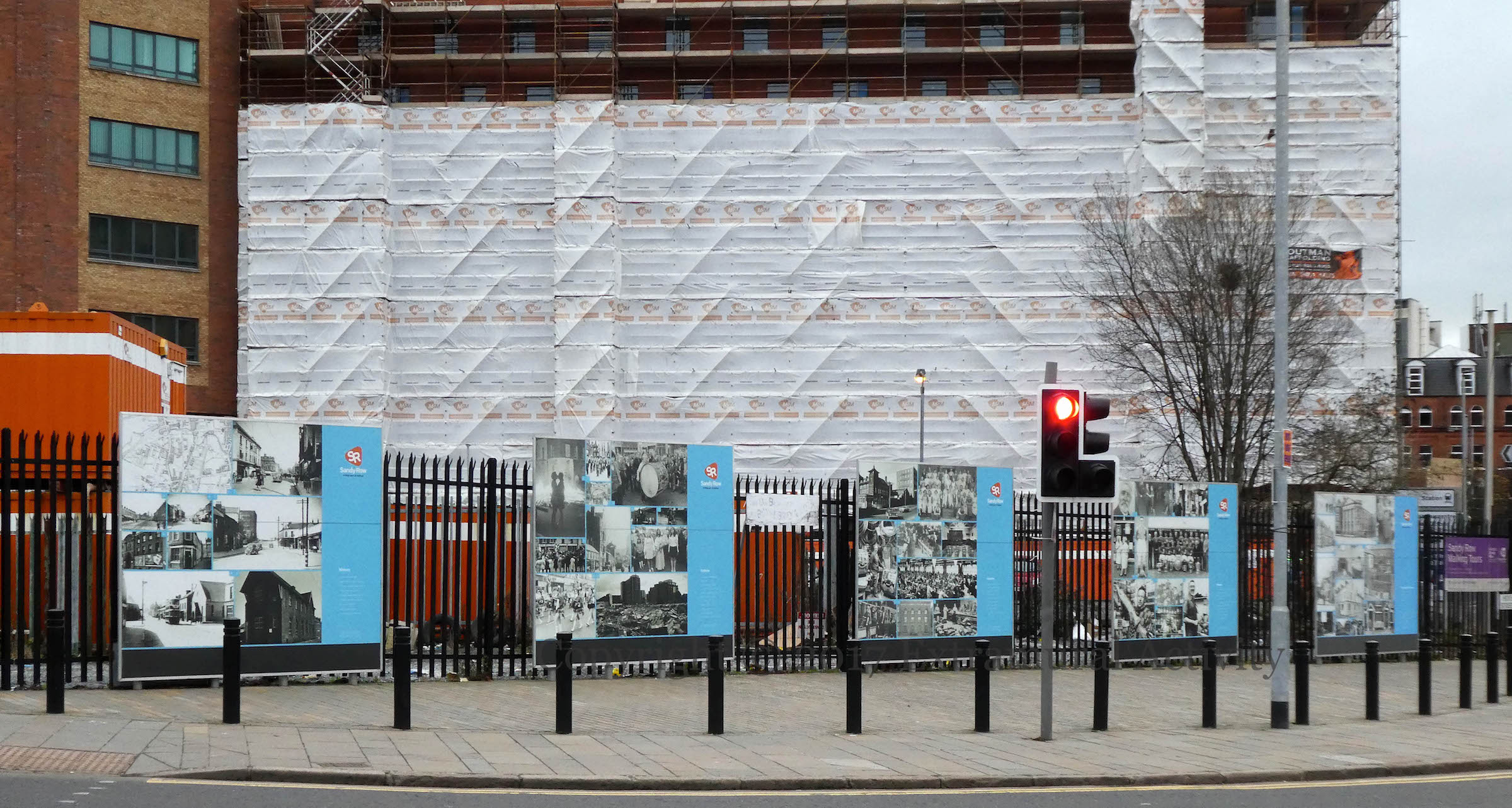
Sandy Row is “steeped in 400 years of tradition”, according to Historic Sandy Row (and sister site Sandy Row Community Forum which has developed a “growth strategy” for the area). Some of that history is presented at the junction with Hope Street, one each for Buildings & Housing, People, Industry, Culture, and History.
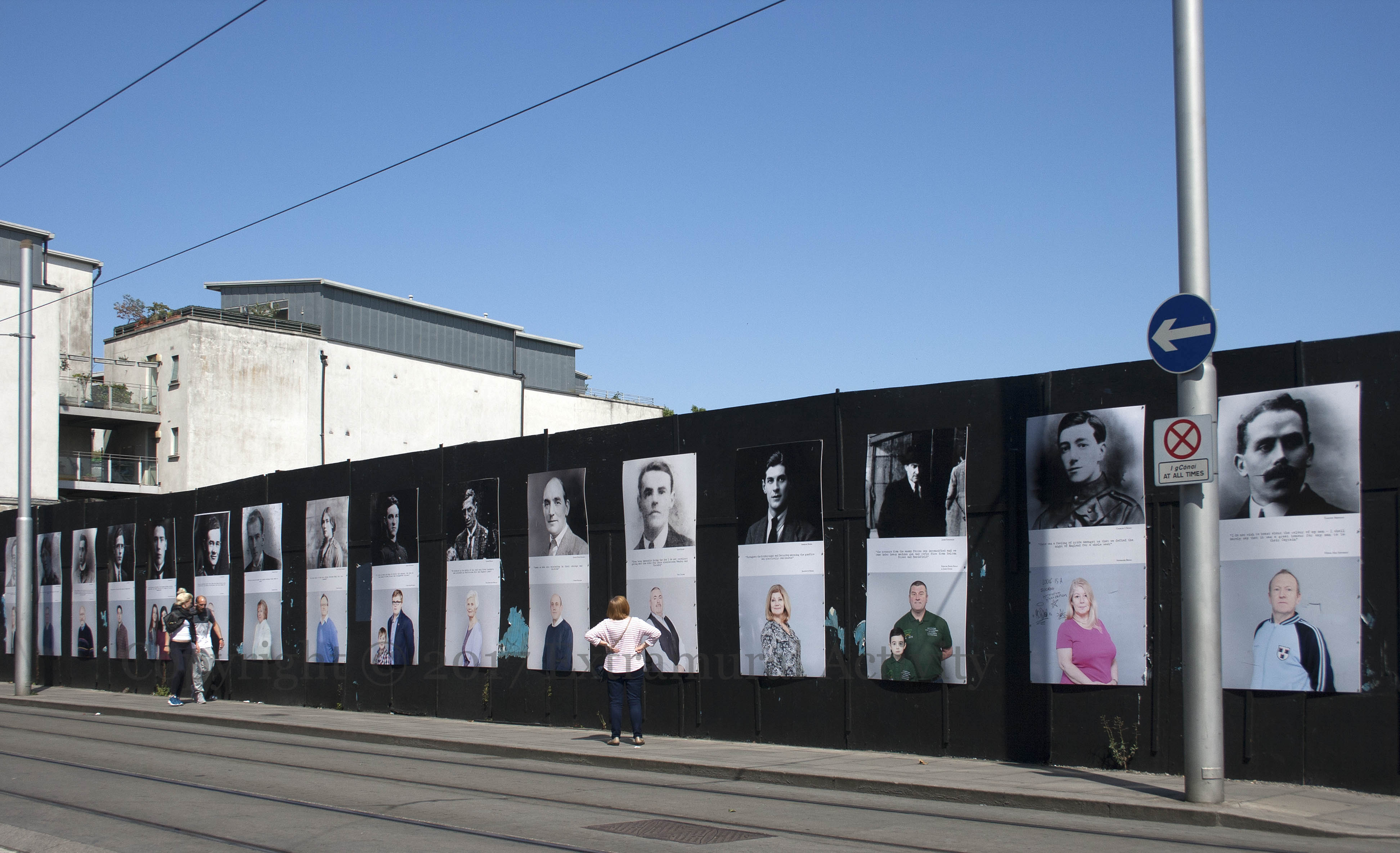
This Dublin exhibition from The Complex pairs images of rebels from the 1916 Rising with a statement from witness accounts and an image of a relative. (Witness accounts of soldiers from 1913-1921 are archived at the Bureau Of Military History.) Above is Mamie Kilmartin, a nurse. Bríd Smith, grand-daughter of Barney Murphy (shown in the final image, below) is People Before Profit TD for Dublin South Central and launched the original exhibition, which ran for nine months in the Law Society Of Ireland in 2016 before being moved to Benburb Street.
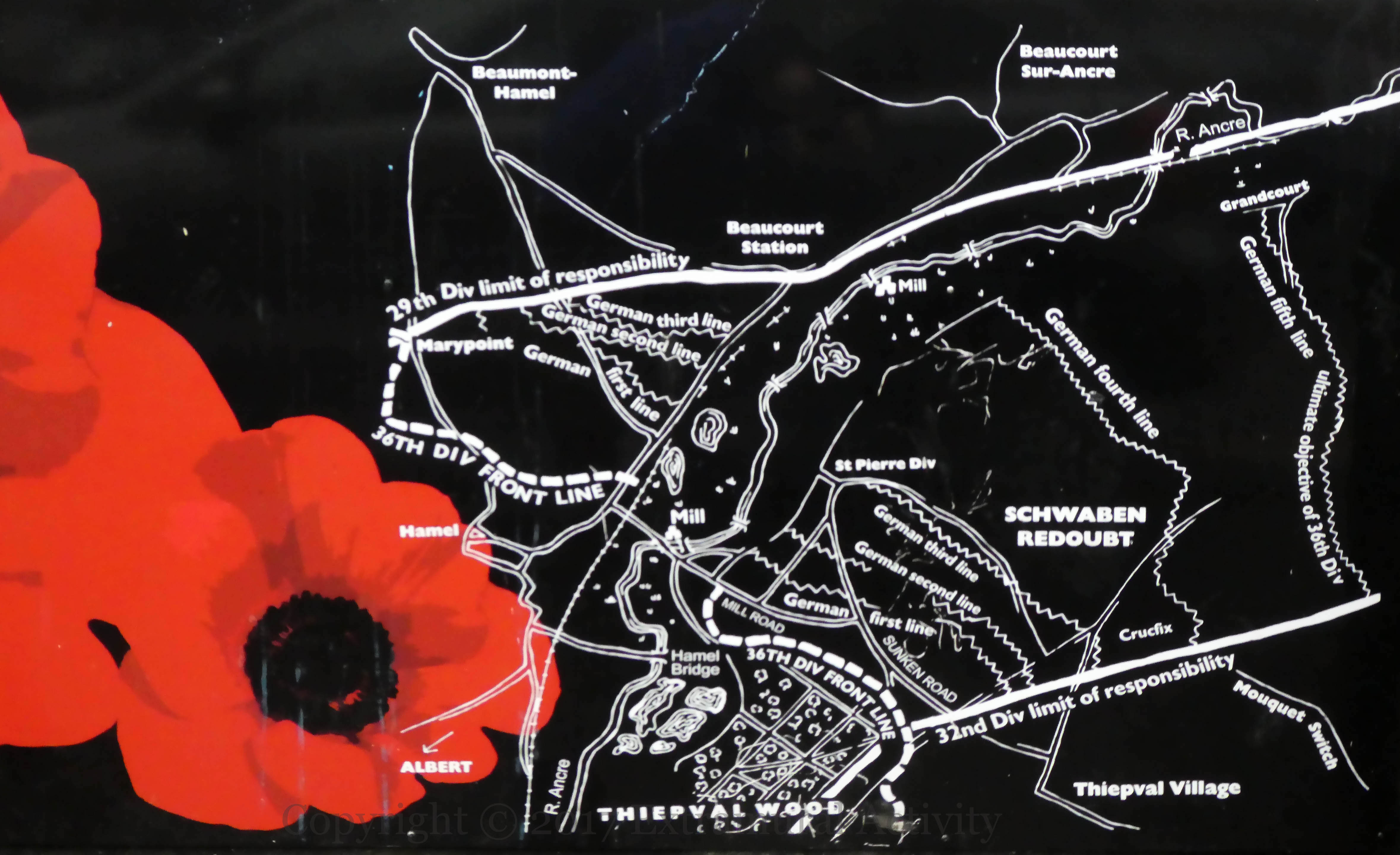
The map in the lower left corner of this WWI commemorative mural shows the defensive lines of both the Allies and the Central Powers. As the inscription on the mural describes, the Ulster Tower is situated close to the Schwaben Redoubt, the primary objective of the 36th Division on the first day of battle.
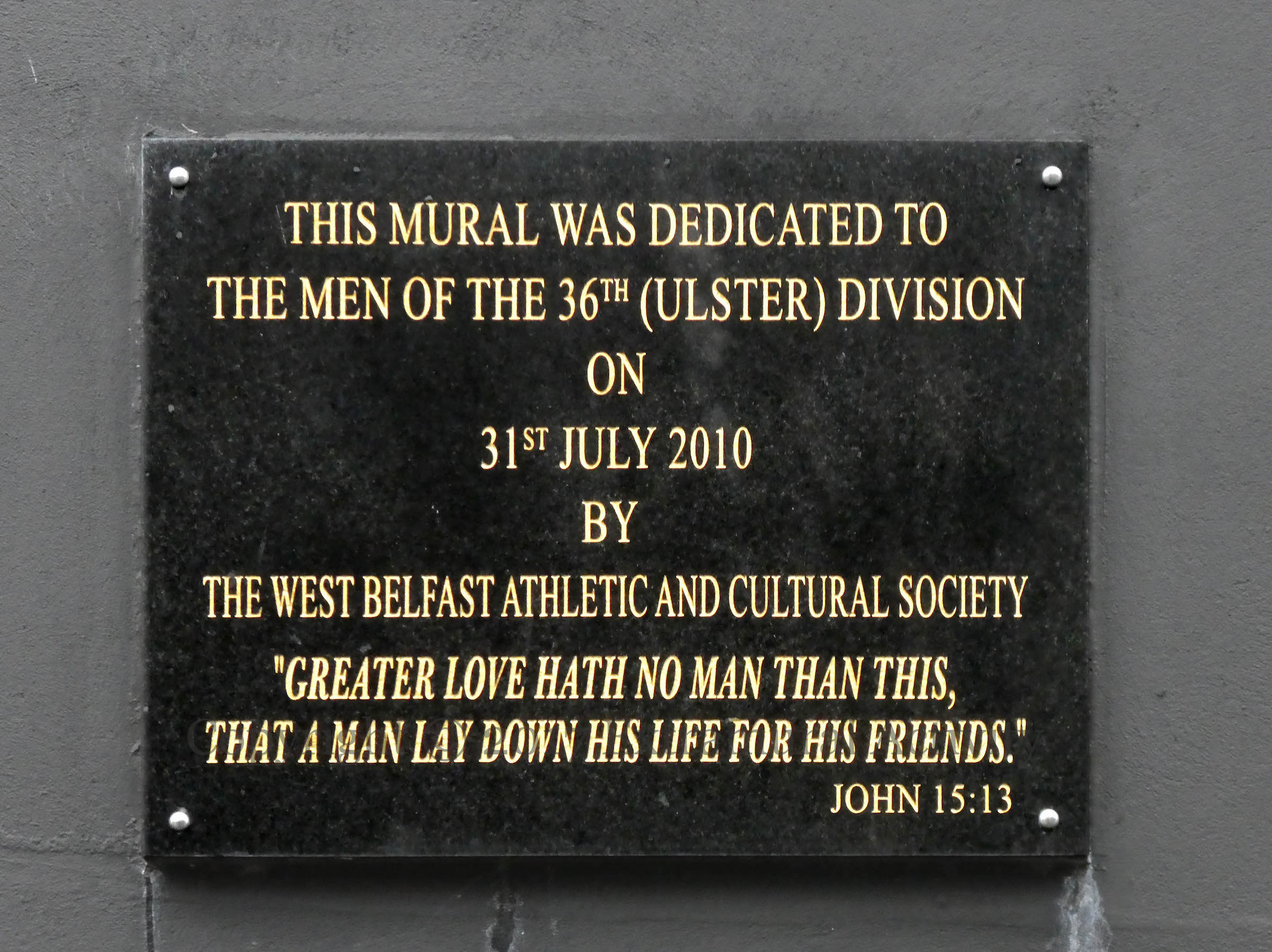
The plaque (shown second, below) refers to a similar mural painted in 2010.
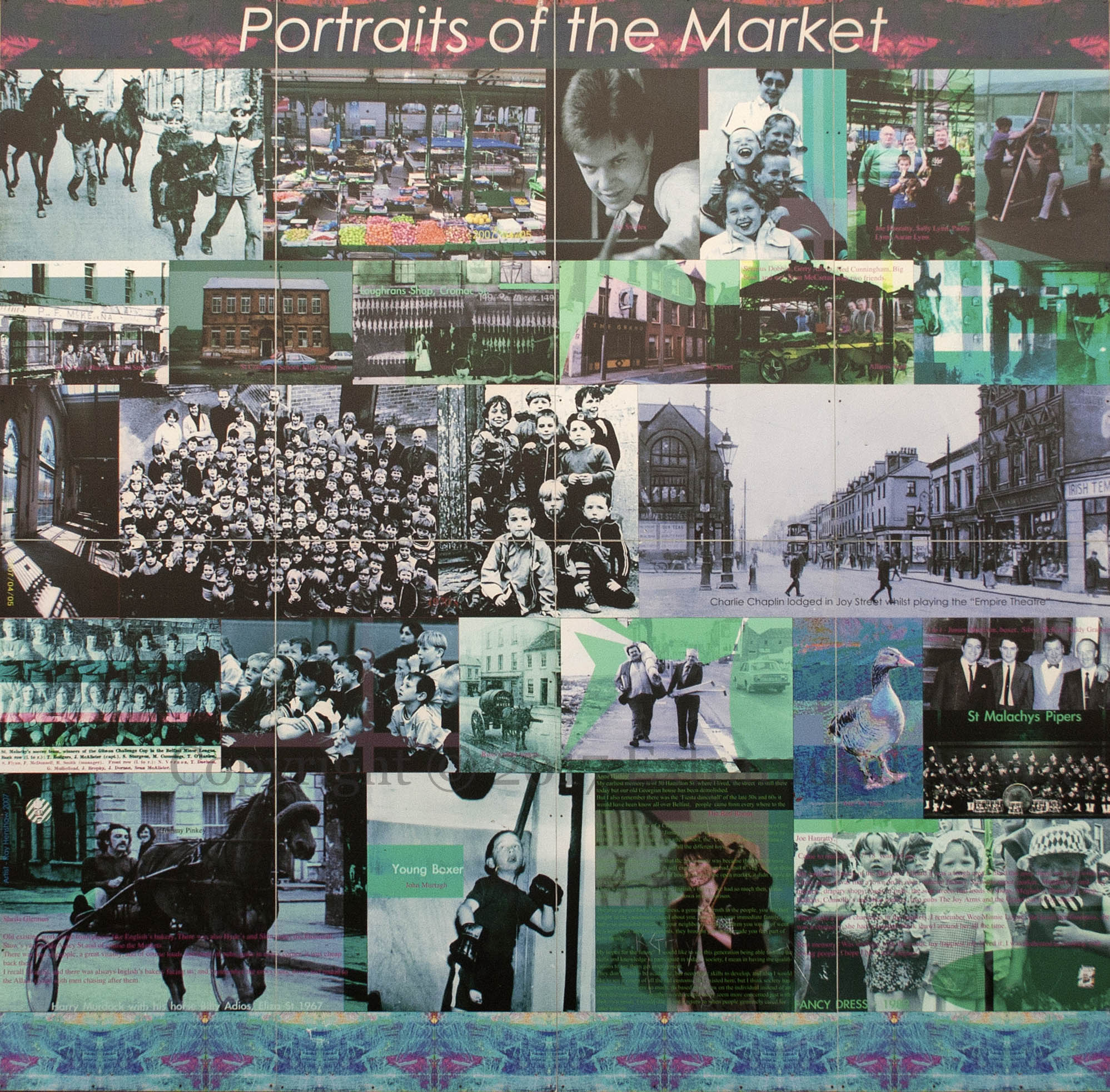
Artist Raymond Henshaw undertook a series of six collages of photographs of the Markets area of south Belfast (in 2008): Social, Bars, Industry, Social History, Sport & Culture, and – shown in today’s post – Portraits of locals, such as snooker player “Joe Swales” (Joe Swail) and familiar buildings, such as Loughran’s Shop. The boards were part of the 2008 re-imaging campaign and sponsored by the Arts Council.
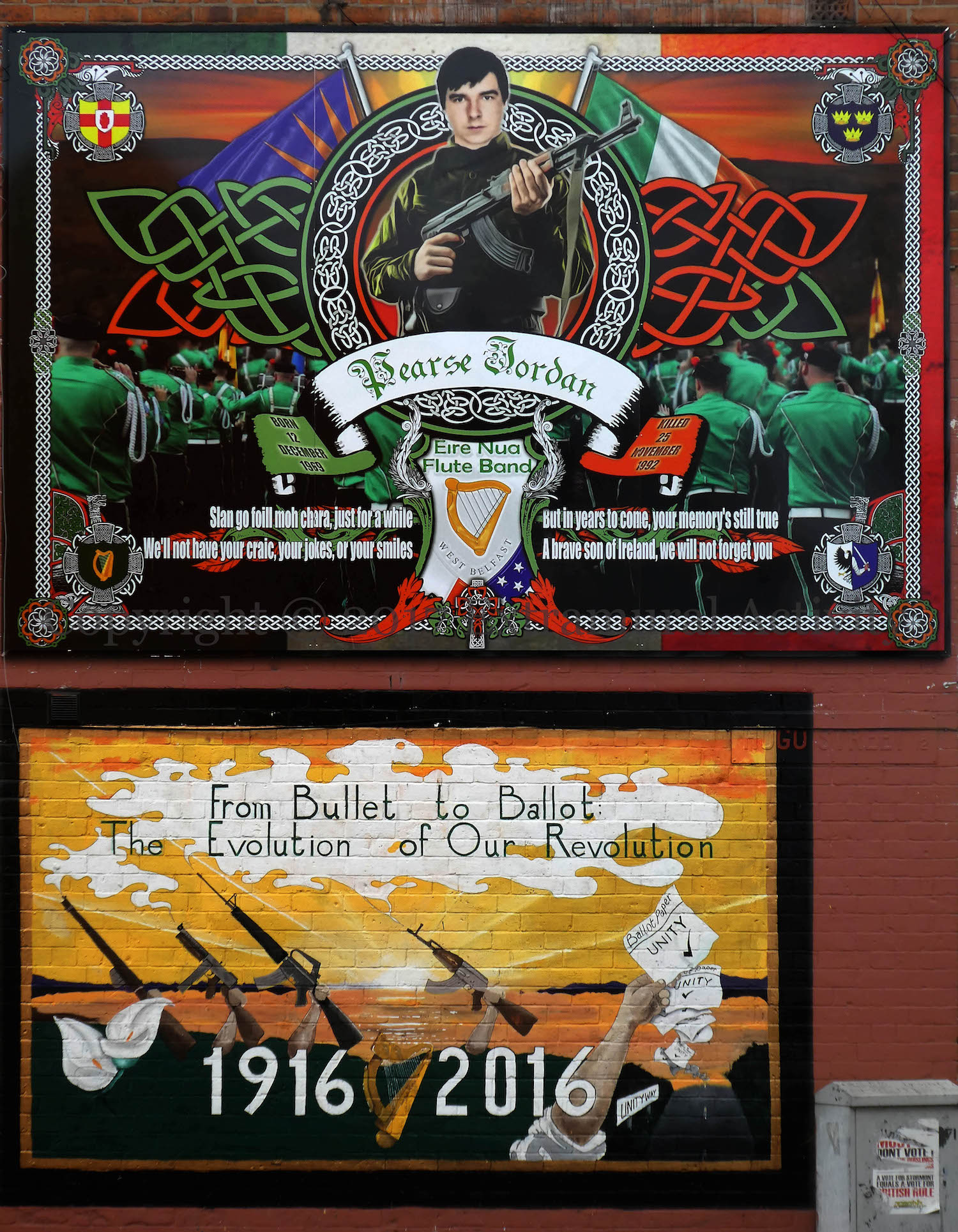
Pearse Jordan was unarmed when he was killed by the RUC on November 25th, 1992 but in this new Éıre Nua Flute Band board he leaves his prints on an assault rifle. (previous Éıre Nua board) His killing was ruled unlawful, and subsequent inquest insufficient, by the European Court Of Human Rights in 2001. The campaign for an inquest continues (An Phoblacht).
The words on the board – “Slan [sic] go foıll [sic] moh [sic] chara, just for a while/We’ll not have your craic, your jokes, or your smiles/But in years to come, your memory’s still true/A brave son of Ireland, we will not forget you” – are the chorus of The Ballad Of Pearse Jordan (words | sung by The Irish Brigade).
The board is in Hugo Street, which is also the site of his memorial plaque, just above the Evolution Of Our Revolution, as seen in the second image, below.
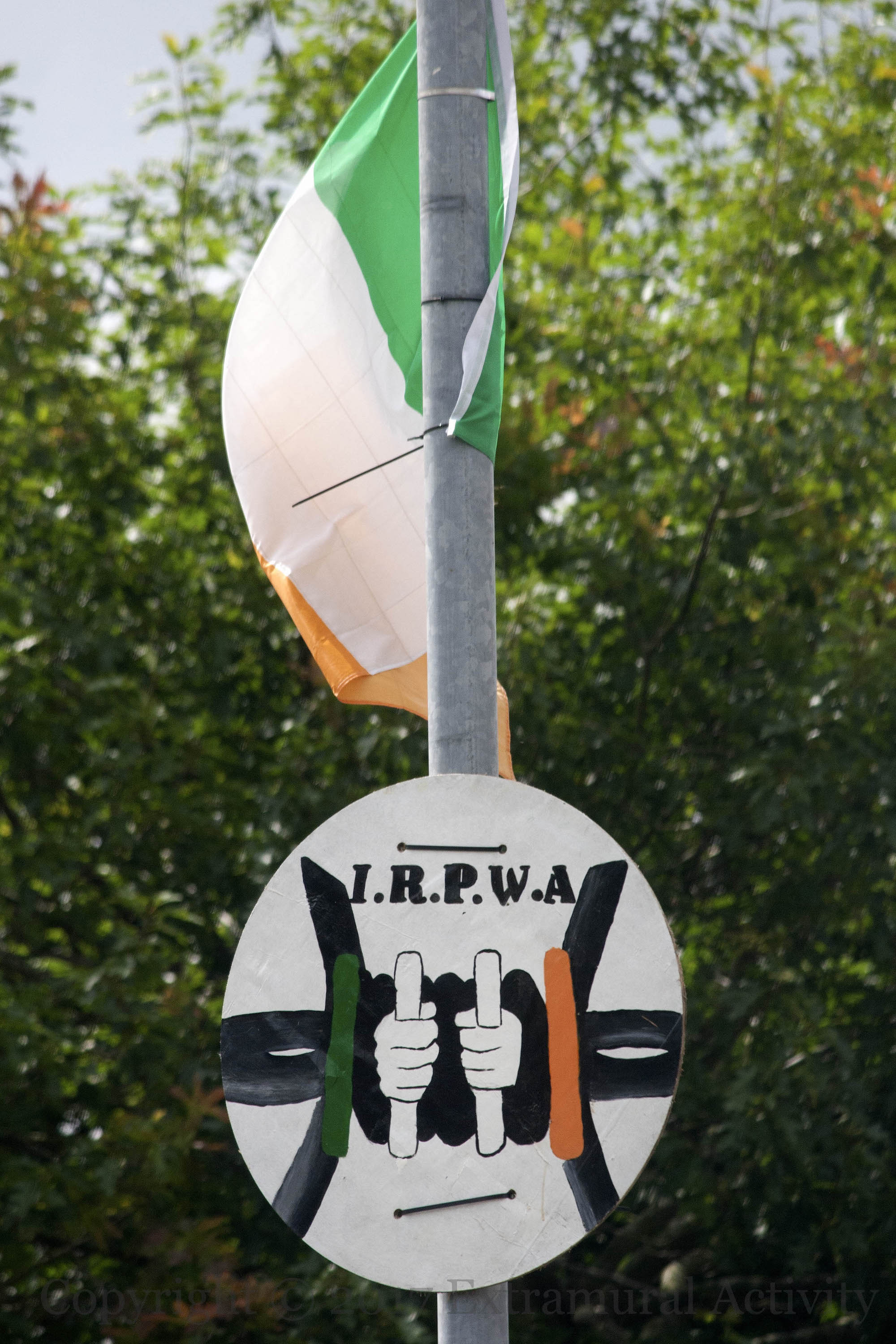
IRPWA is the Irish Republican Prisoners Welfare Association (web | Fb | tw), a body working to support republican prisoners and their families in Maghaberry, Portlaoise, and Hydebank. Barbed wire has long been the symbol of political prisoners, both republican (1981) and loyalist (1988). Previously in this series of boards: éıstıgí | Sniper At Work | IRA | Beır Bua
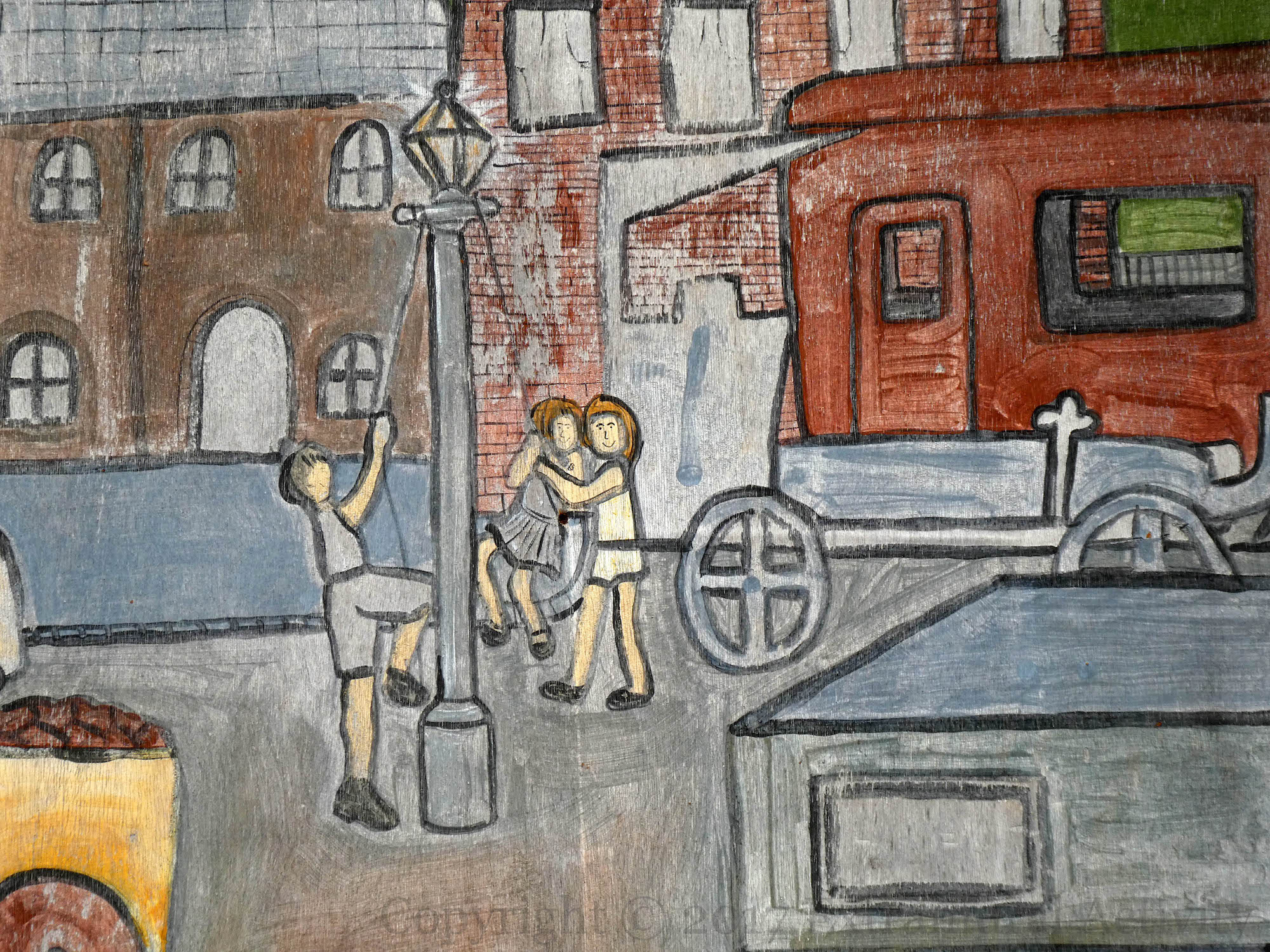
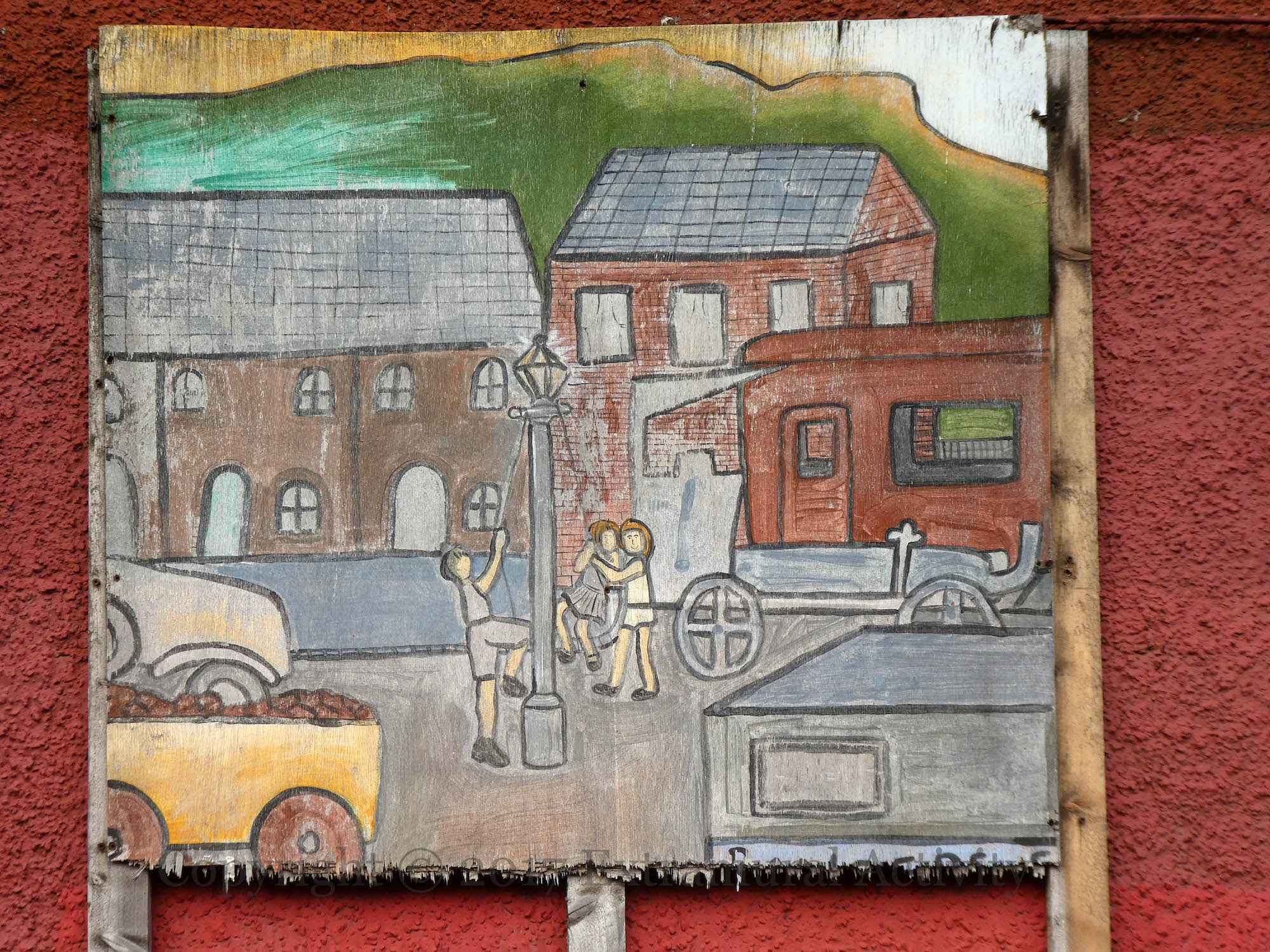
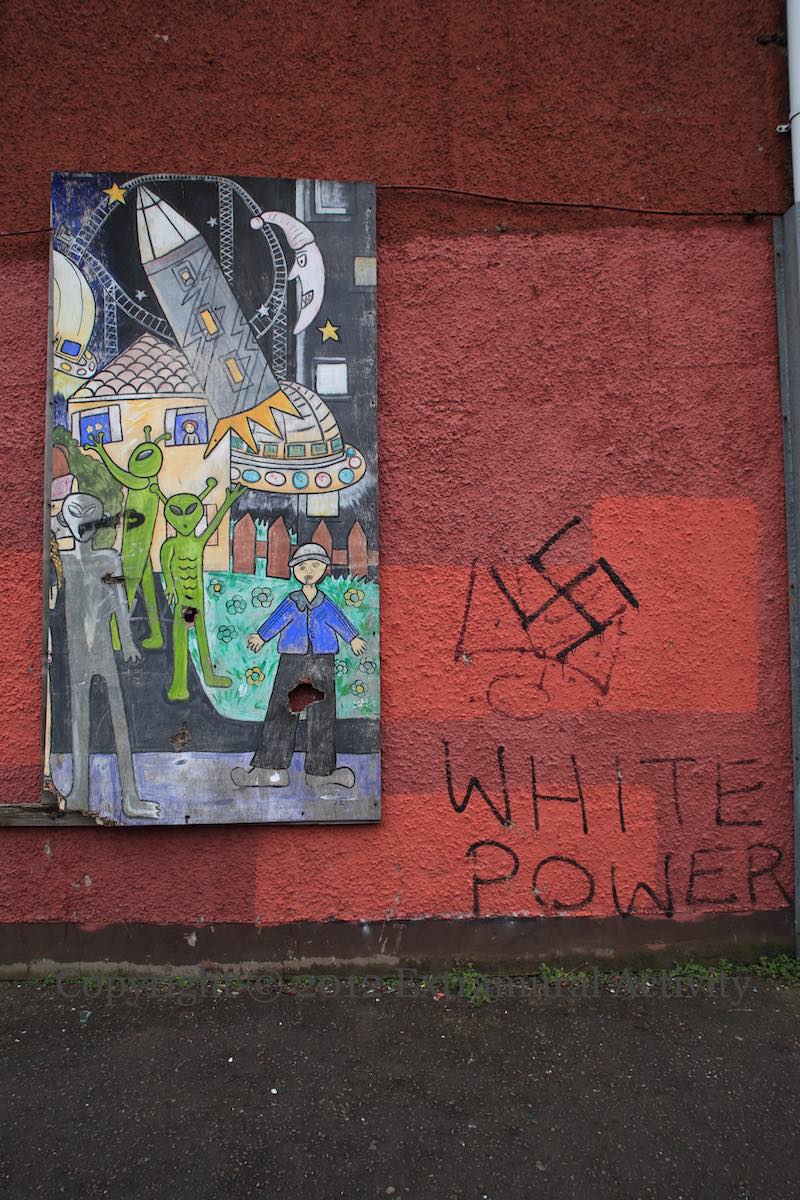
Some of the children’s mural in Boyne Court (off Sandy Row) is still hanging on, though quite faded and with about half the panels missing. The first two images (from 2017) show children playing on a lamp-post swing in the middle of the street (panel 4); the latter two (from 2012) show a broader view (panels 4-5-6) of Sandy Row buildings and (on the last of the ten panels) an alien landing.
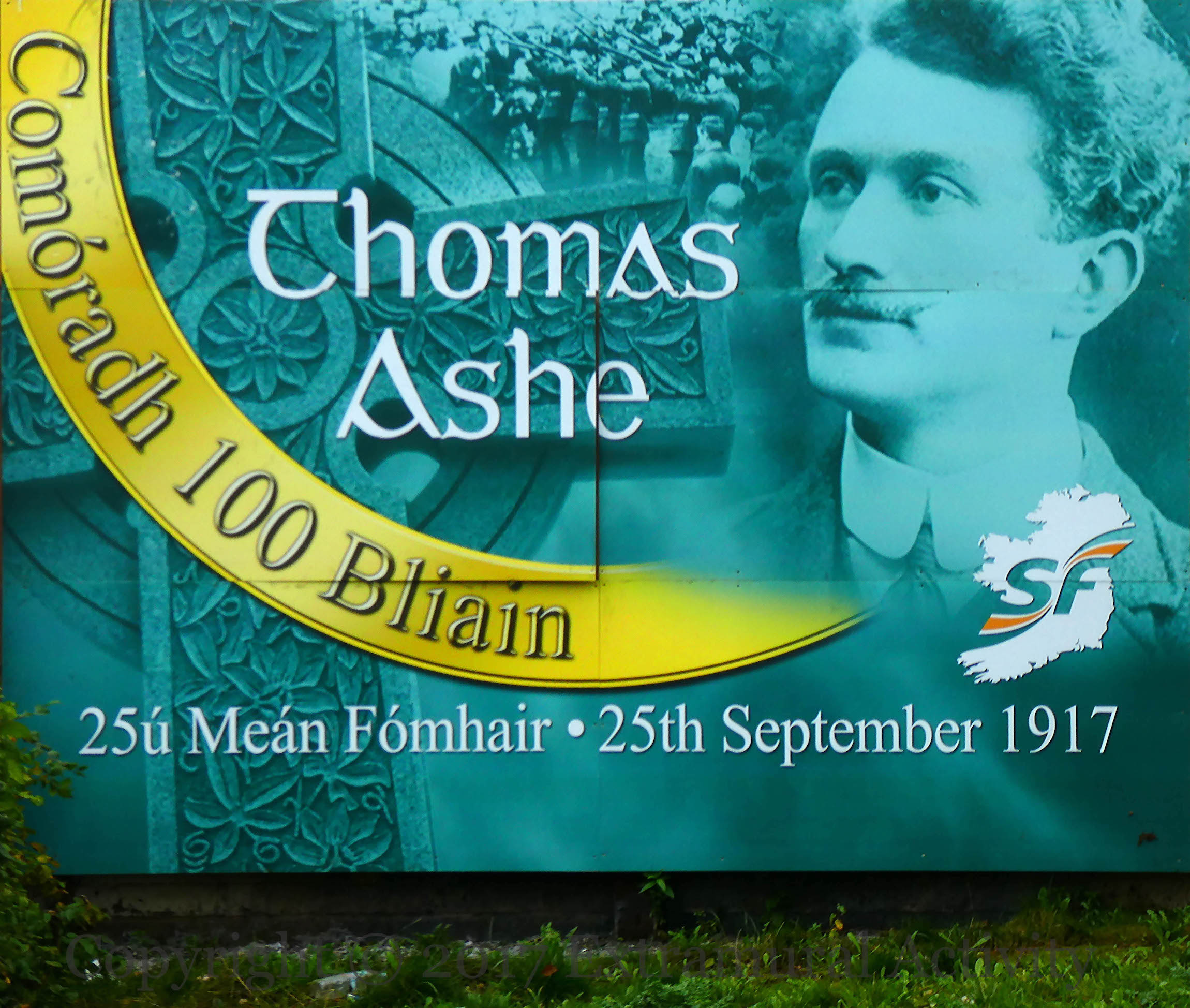
Thomas Ashe was born on January 12th, 1885, in County Kerry, into a bi-lingual household. He became an Irish teacher in Lusk and joined the Gaelic League and the Irish Volunteers, commanding the Fingal battalion during the Easter Rising. His death sentence was commuted to life imprisonment, which in fact lasted only a year. He was released but soon charged and convicted with sedition, and died on hunger strike on September 25th, 1917, after an “inhuman and dangerous” attempt at force-feeding by the authorities (WP). See also Tomás Ághas.
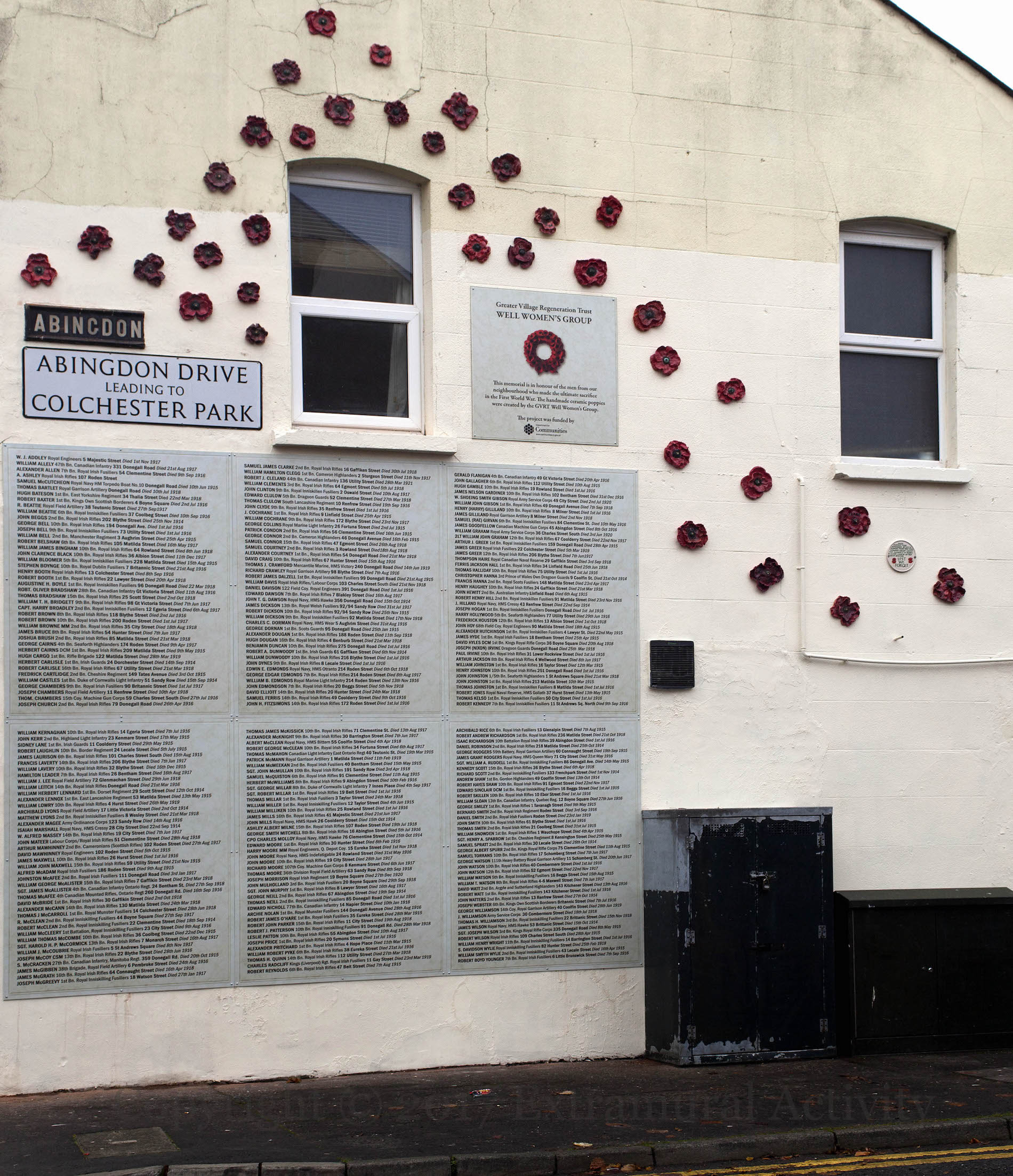
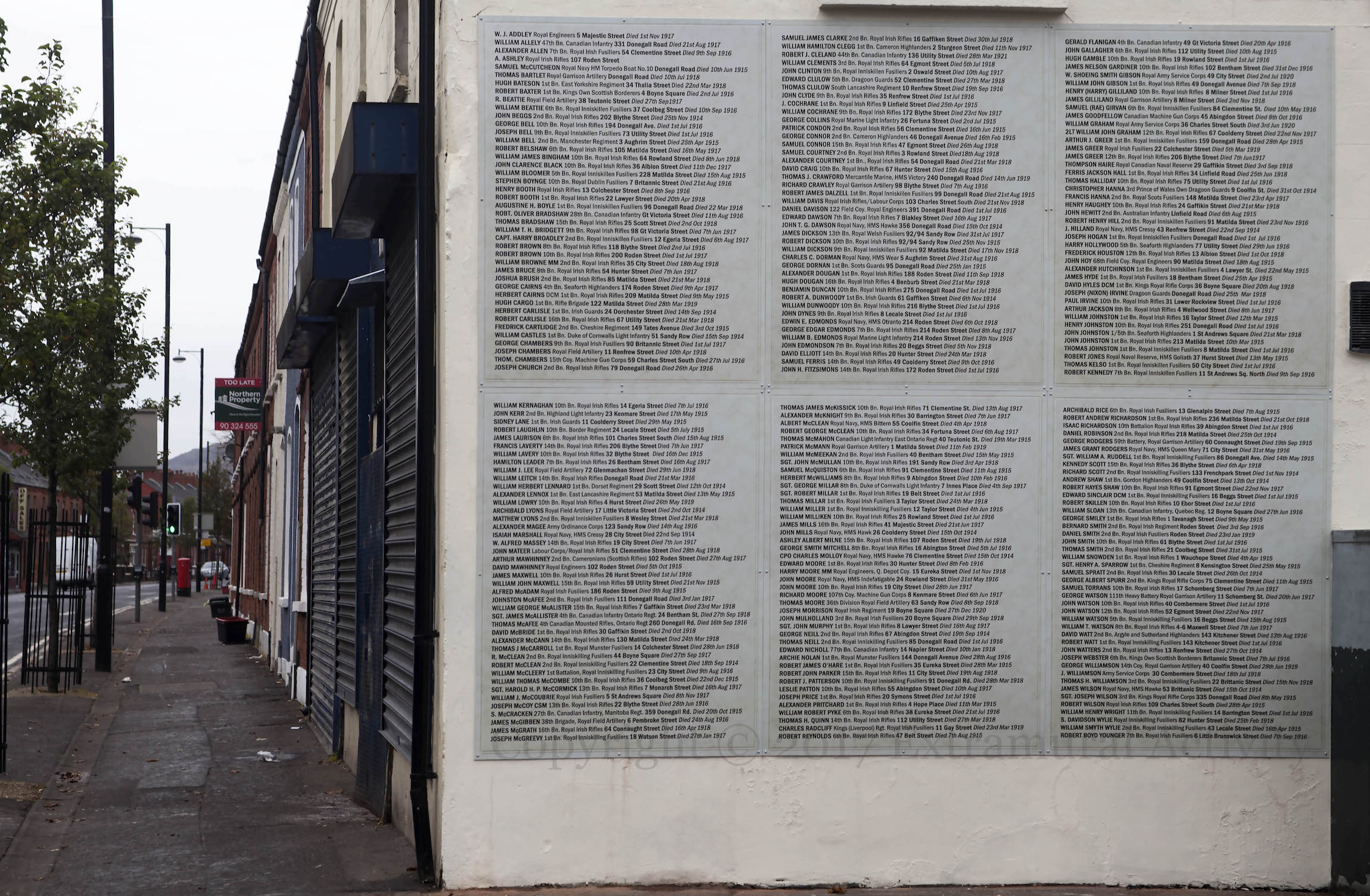
“This memorial is in honour of the men from our neighbourhood who made the ultimate sacrifice in the First World War. The handmade ceramic poppies were created by the GVRT [Greater Village Regeneration Trust] Well Women’s Group.”














 Extramural Activity