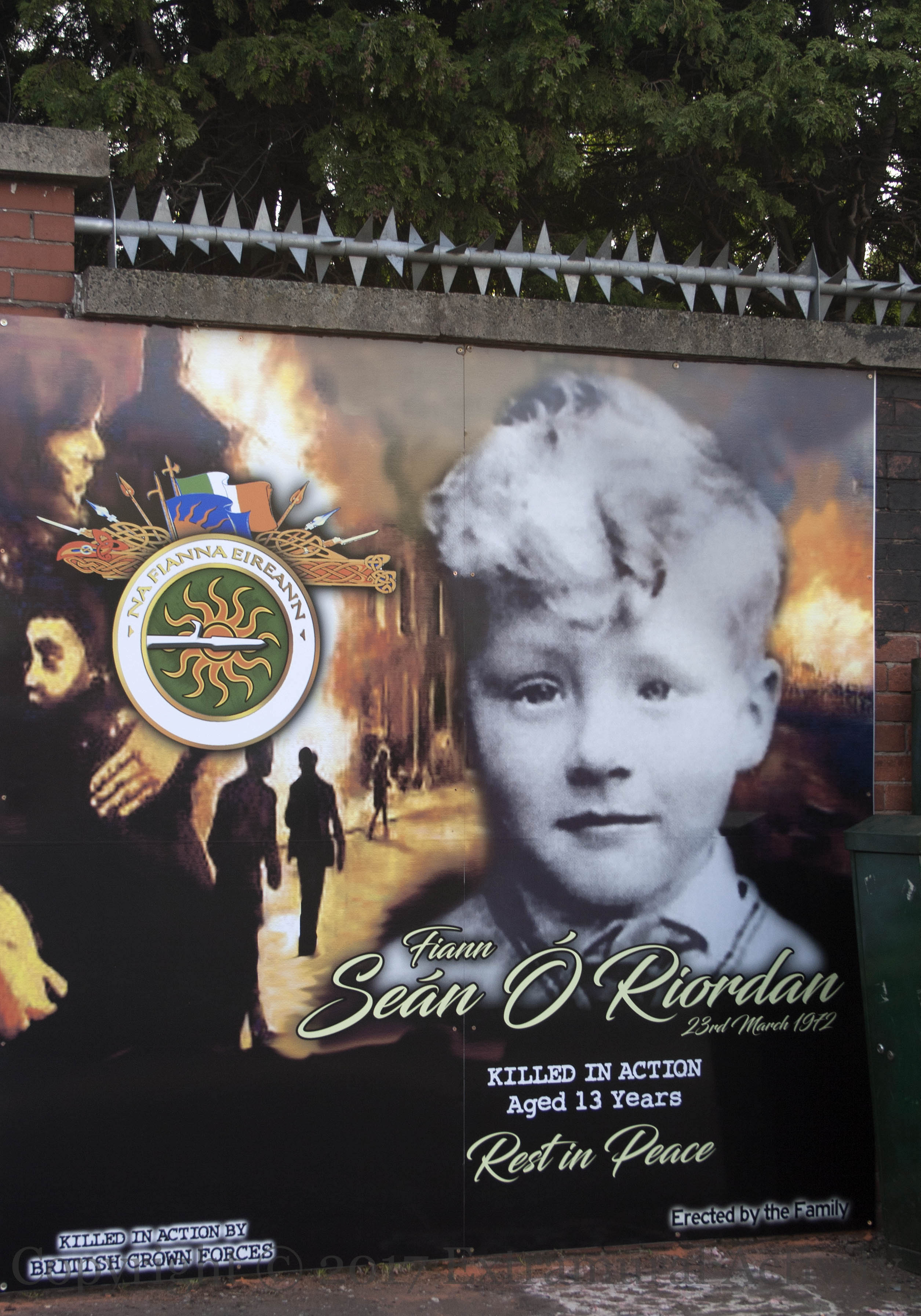
Seán Ó Rıordan was aged 13 when “killed in action by British crown forces” on Cawnpore Street on 23rd March 1972 (Sutton) and he is buried in Milltown cemetery. The 1977 Protocol I of the Geneva Convention would later prohibit conscription of children younger than 15 but allow for their voluntary participation. It is thus notable that this new board to “Fıann [sic] Seán Ó Rıordan” was “erected by the family”.
Ascaıll Ard Na bhFeá/Beechmount Avenue, west Belfast.
“Ourma says if you stick t’herown diet of landandairy prod you’ll be firmanna an’trim down” – a saying in which the names of all six Northern Irish counties are (phonetically) included. Above it are a variety of vintage advertisements from the late 1800s and early 1900s: Mew’s brewery (Isle of Wight), Lloyd & Yorath’s stout (Newport, Wales), Hall’s paints (Hull), Batey’s ginger beer (London), Campbell & Menzies’s shipments of Oporto wines, Gilbey’s wines, Gold Flake tobacco (in both English and Irish: Sásuíonn sıad!).
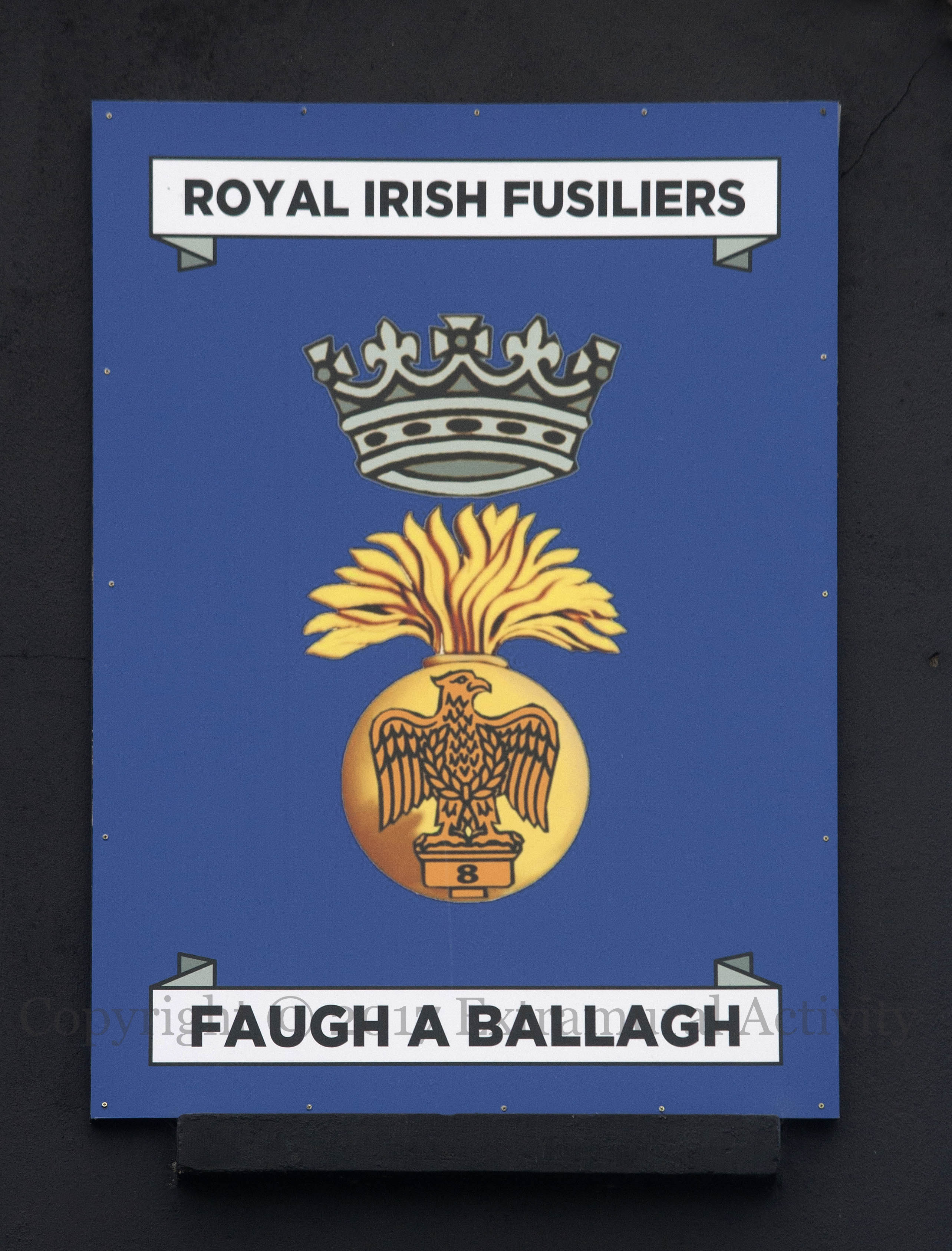
“Faugh a ballagh” (Clear the way) was the motto of the Royal Irish Fusiliers (and then of the Royal Irish Rangers and currently of the Royal Irish Regiment). The Fusiliers served on the western front during WWI – the first and ninth battalions serving in the 36th (Ulster) Division – and the 3rd battalion helped put down the Easter Rising in 1916. Its coat of arm are one of four panels along with the 36th, the Royal Irish Rifles, and the Royal Inniskilling Fusiliers.
The Thiepval Memorial, the Cross of Sacrifice, and the Ulster Tower are pictured in the bottom left.
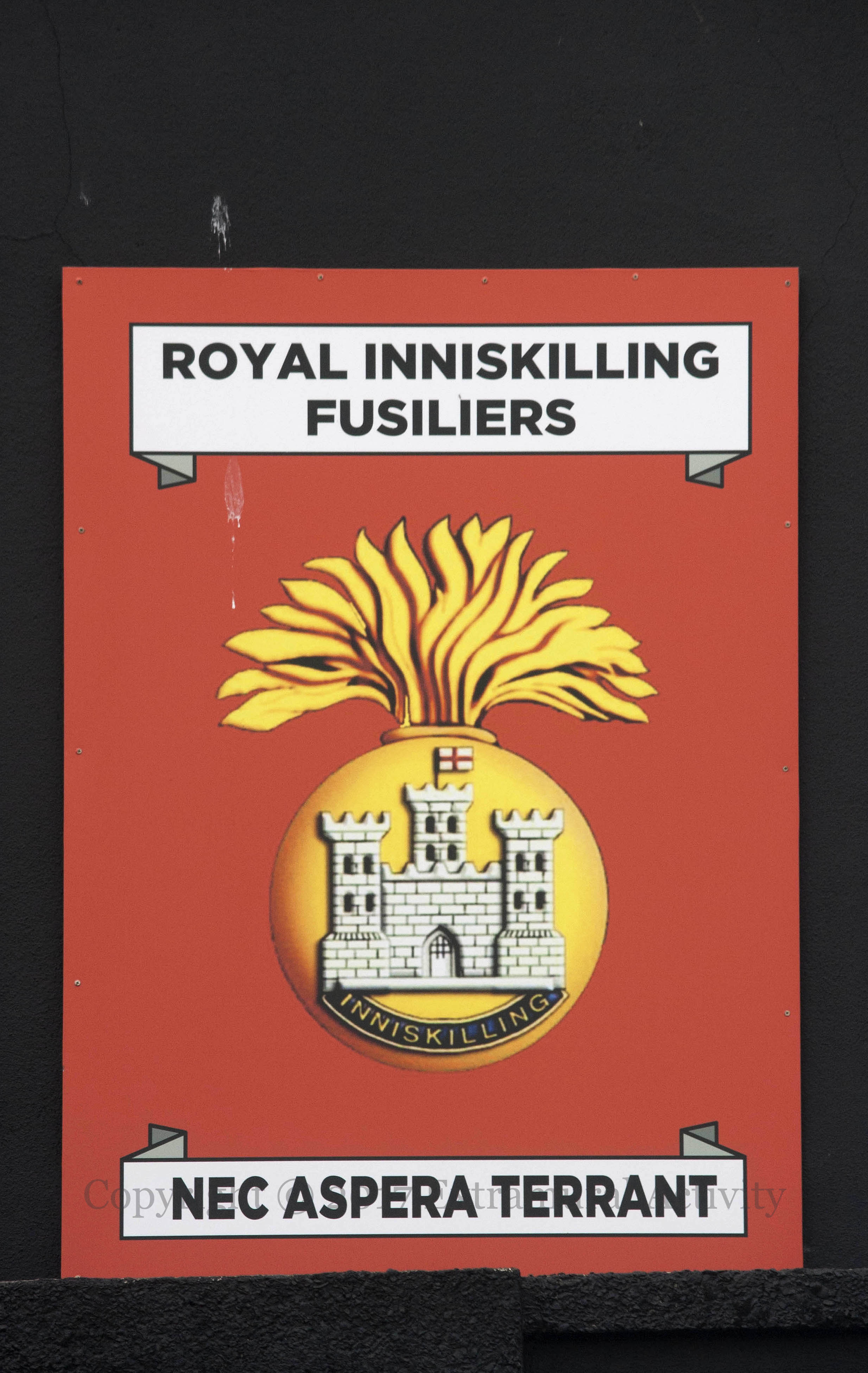
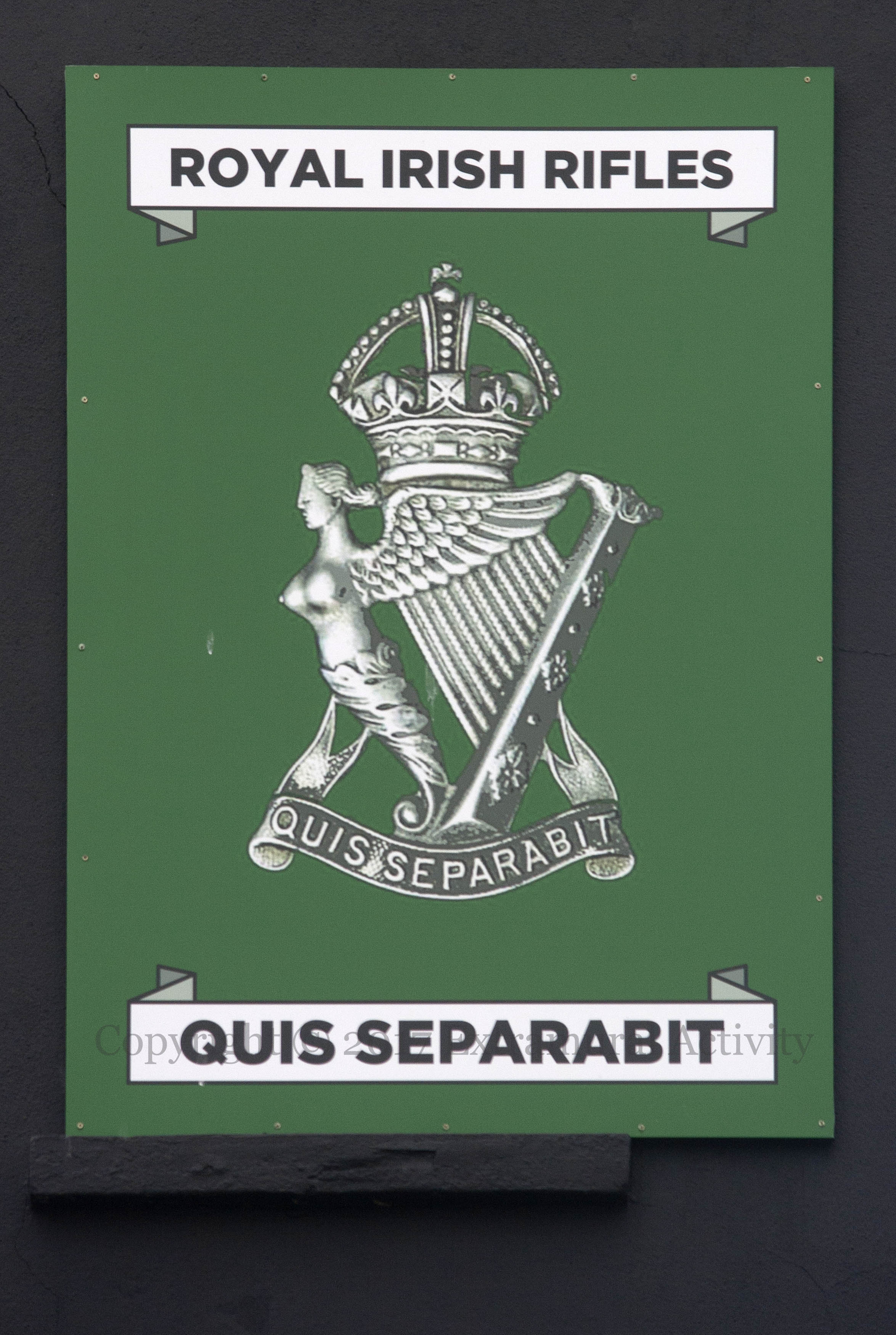
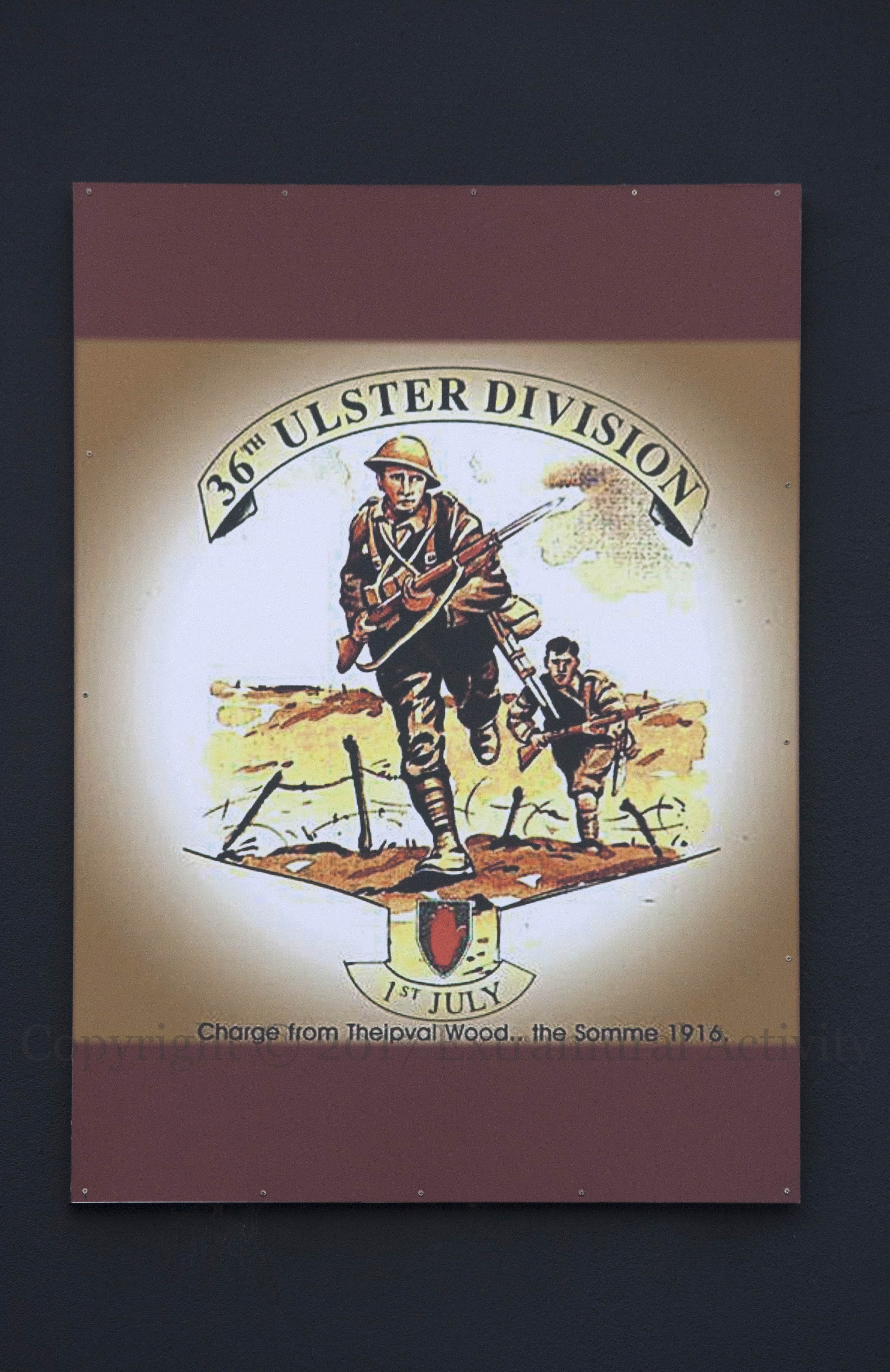
Close-ups of the four regimental insignia are included below. “Nec Aspera Terrant [sic, for “terrent”]”, meaning “frightened by no difficulties”, was the motto of the Inniskilling Fusiliers, who fought in both Boer Wars and both World Wars – its battalions saw action at Gallipoli and on the Western front – before being amalgamated in the Royal Irish Rangers in 1968, along with the Royal Ulster Rifles and the troop featured in the third image, the Royal Irish Fusiliers. Their arms are shown along with those of the Royal Irish Rifles and a board commemorating the charge from Thiepval Wood during the Somme
Here are two wide shots of a long wall from the Bangor Protestant Boys Flute Band (Fb). Many of the panels are related to WWI. For the Somme panel on the left, see Ulster Volunteers; for three of the flags on the right, see North Down Battalion. Right of centre is an emblem for the band itself: the lion and the unicorn on either side of cross rifles and the red hand of Ulster on an oval.
This is another part of a long ‘Bangor Protestant Boys Flute Band’ wall in Kilcooley: the shield of the 36th (Ulster) Division – the Union flag and Irish harp above a red hand on a field of shamrocks – on a garland of orange poppies and WWI battlefields on a purple ribbon – orange and purple being the colours of the Ulster Volunteers.
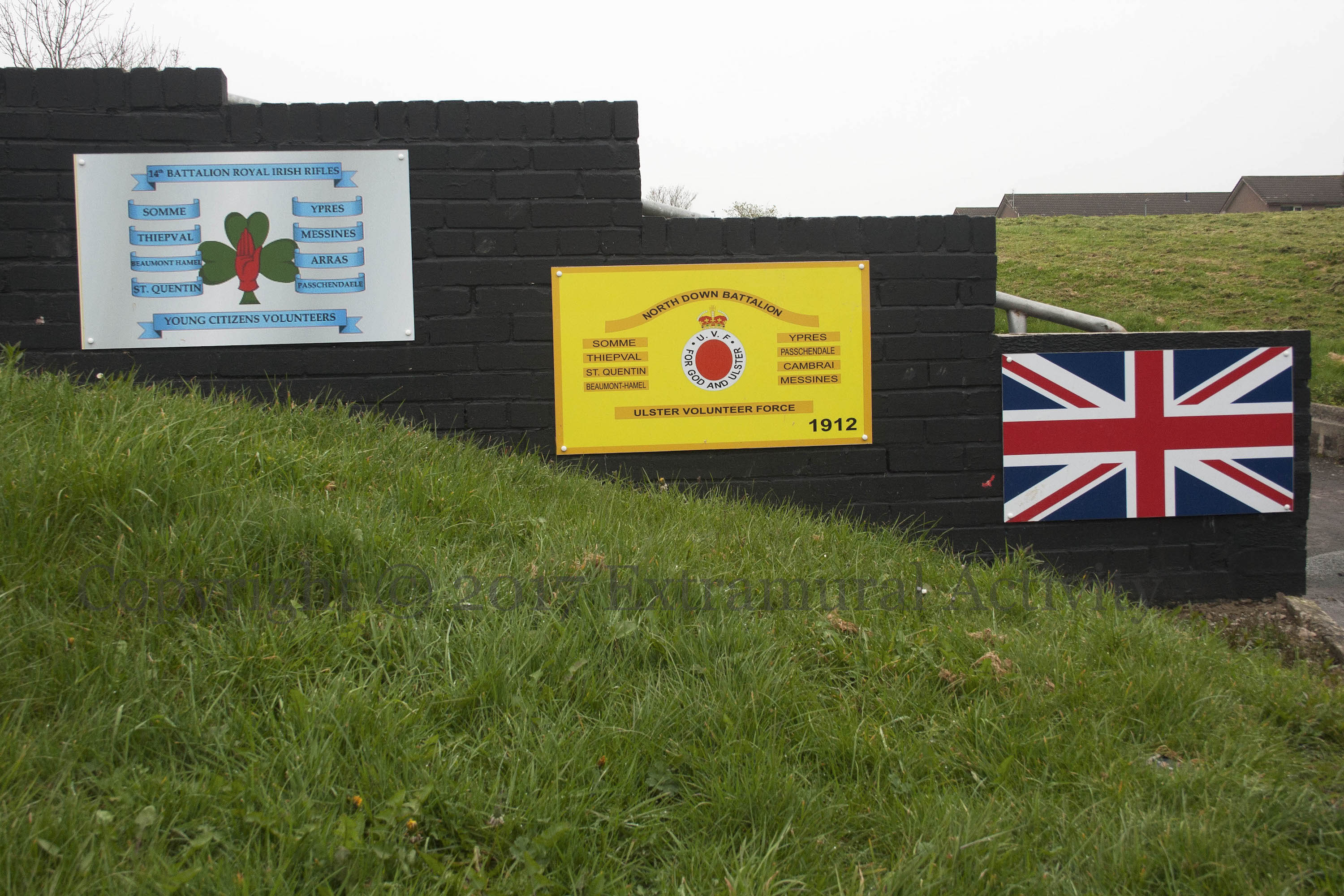
Recruiting for the Ulster Volunteers in Down was so successful that it was divided into four areas (North, South, East, and West), each with a battalion, and the North down battalion comprised 15 companies (History Ireland). The Down battalions became the 13th battalion of the (108th Brigade) Royal Irish Rifles in WWI. The YCV (Young Citizen Volunteers) was formed separately (in 1912) but joined the Volunteers in May 1914, before becoming the (109th Brigade) 14th battalion of the Royal Irish Rifles when the war broke out (WP). Both began their campaigns at Boulogne-Sur-Mer in October, 1915 (WP).
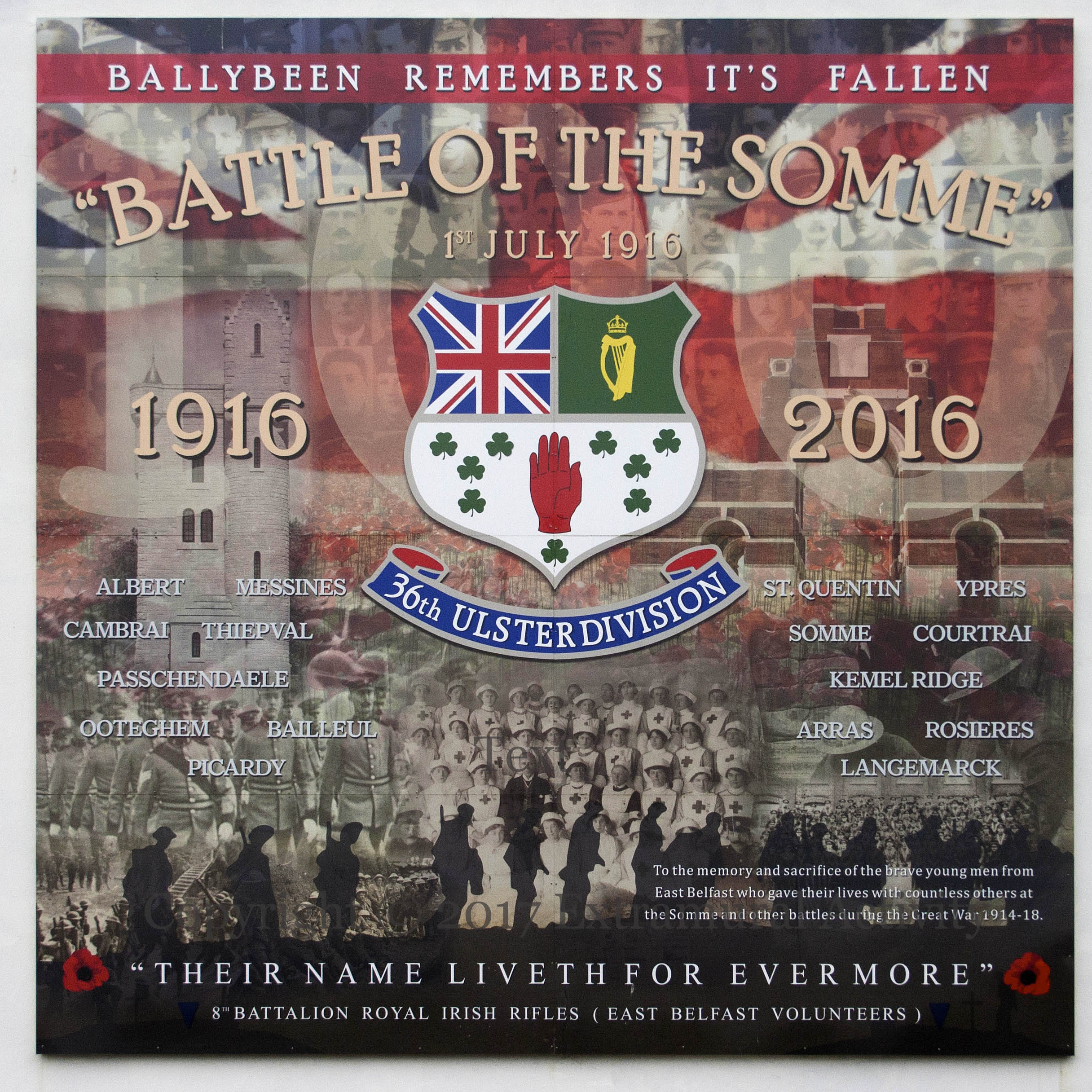
“Ballybeen remembers it’s [sic] fallen – to the memory and sacrifice of the brave young men from East Belfast who gave their lives with countless others at the Somme and other battles during the Great War 1914-18.” The Union flag and the Thiepval memorials serve as a backdrop for images of individual soldier and photographs of soldiers and nurses at work.
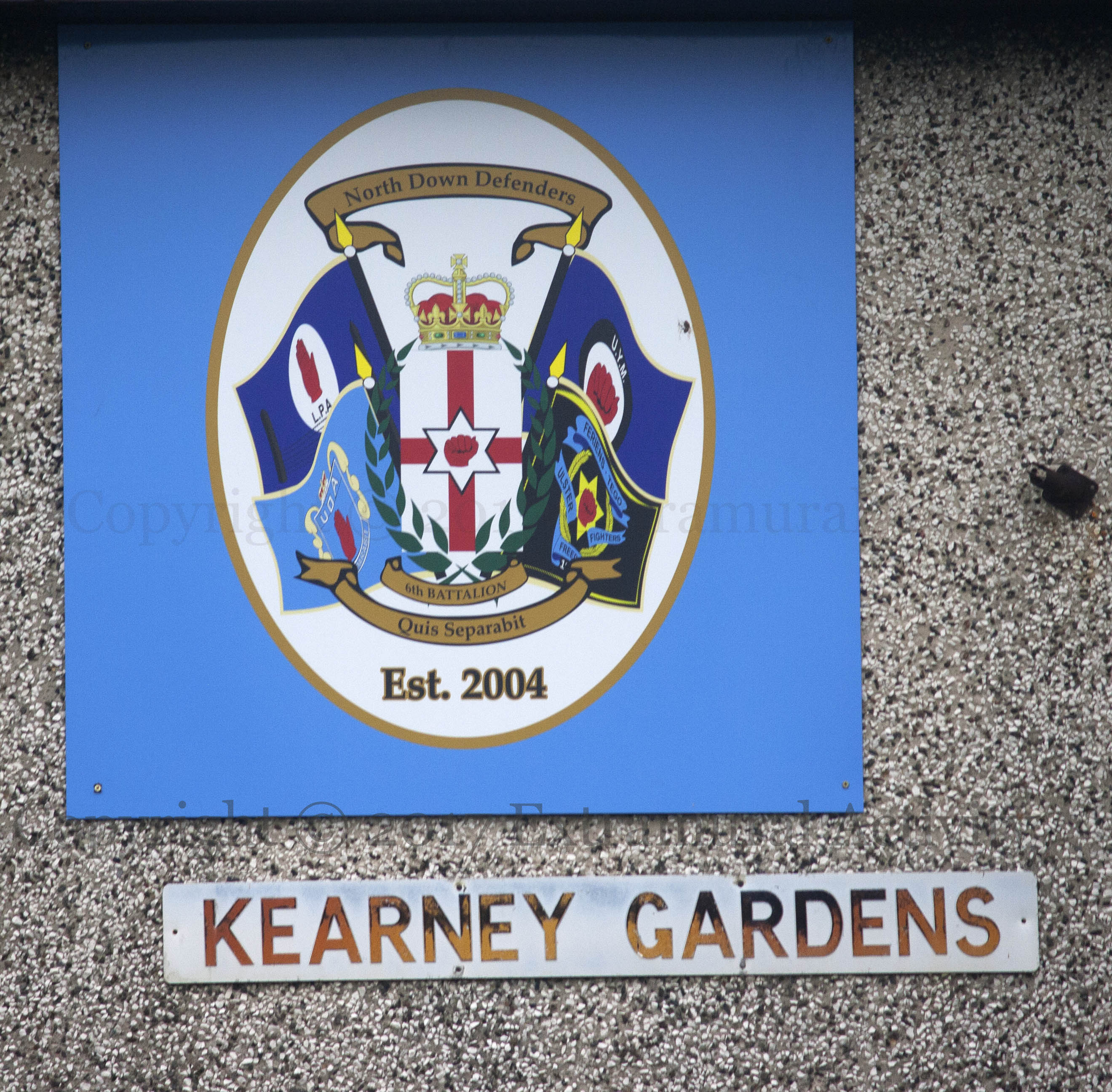
Here is a small board in Bangor from the North Down Defenders flute band (Tw | Fb), unusual due to the modified Ulster banner with clenched red hand in the centre. Surrounding it are the flags of the LPA, UDA, UFF, and UYM.
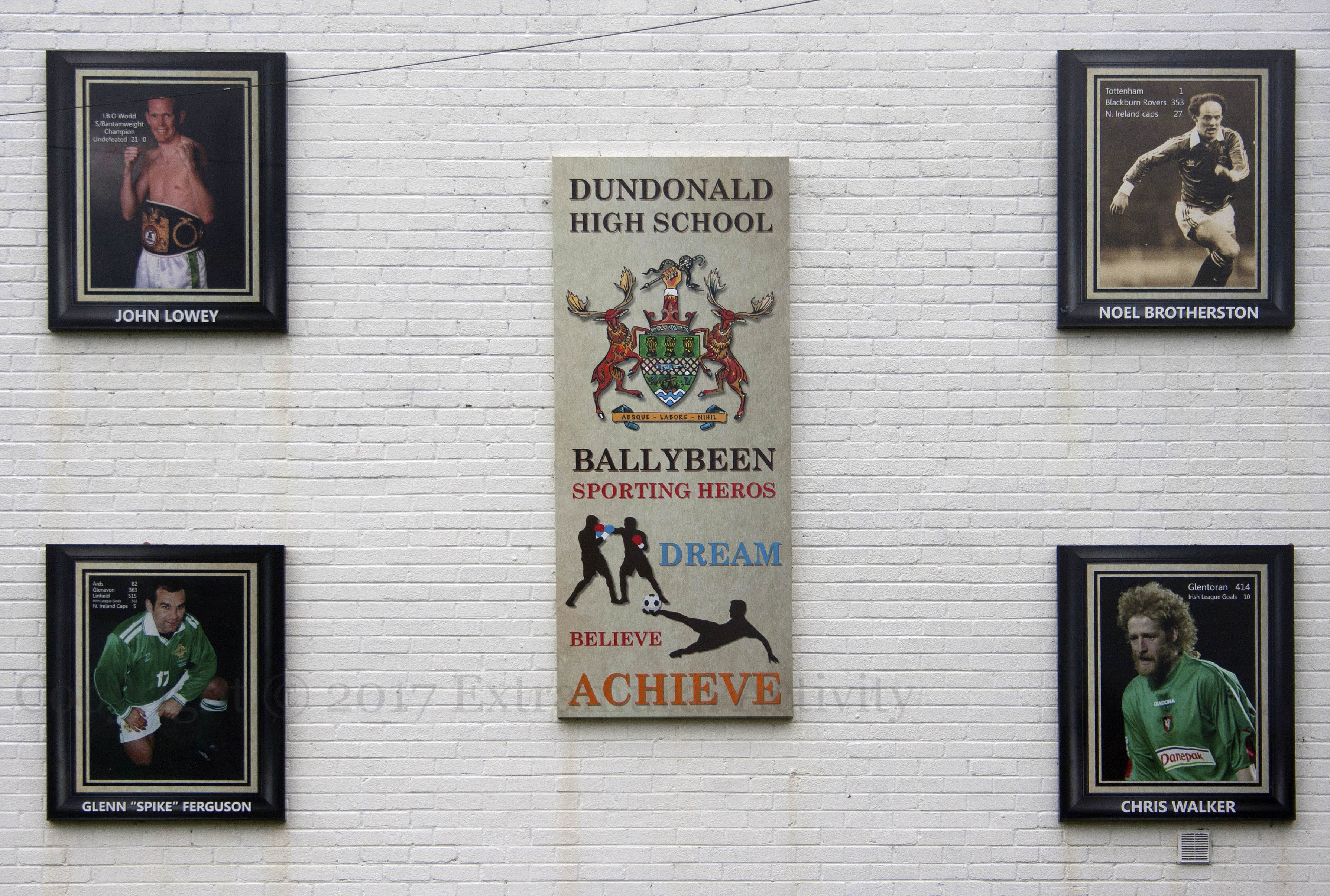
Teenagers at Dundonald High “dream, believe, achieve” success on a par with their “Ballybeen sporting hero[e]s”, such as IBO super bantamweight boxer John Lowey and footballers Noel Brotherson (Blackburn Rovers), Glenn “Spike” Ferguson (Glenavon and Linfield), and Chris Walker (Glentoran).
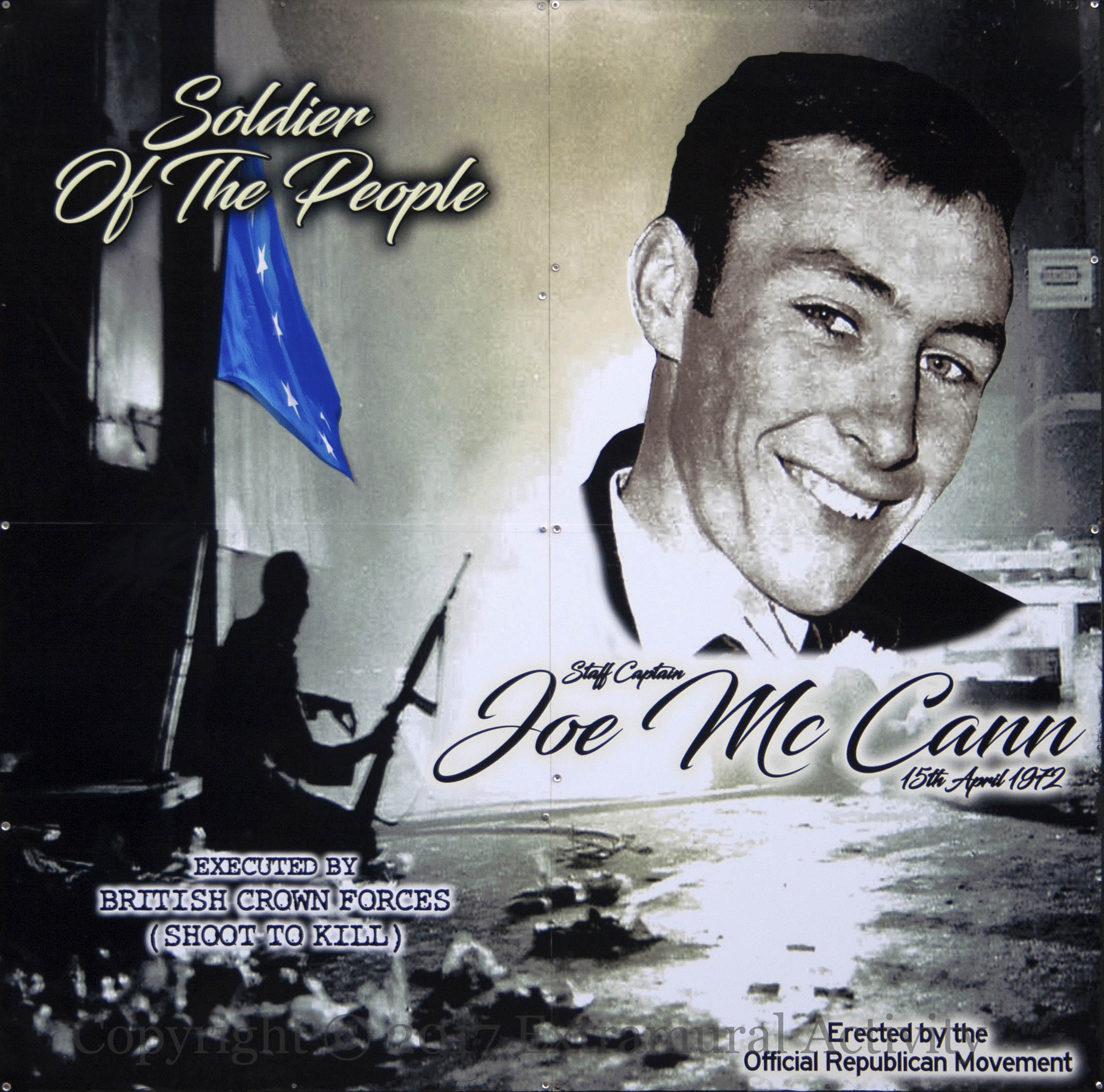
Joe McCann was (Official) IRA OC in the Markets area of south Belfast, where he was shot by paratroopers in 1972. The HET in 2013 found that the killing was unjustified, as McCann was unarmed and shot multiple times at close range; the DPP announced in December 2016 that two soldiers – now in their 60s – are to stand trial for the shooting. (WP | Irish Times | Telegraph which also includes the photograph used as a background, which shows McCann, with MI, during the occupation of the Inglis bakery in the Markets on August 9th, 1971 – Internment Day.)





 Extramural Activity