Not a phoenix or a bonfire but a pile of sterling going up in flames, a reference to the recent RHI (“Renewable Heat Incentive” rather than Sinn Féin’s promised “Respect, honesty, integrity”) scandal which was a cause of yesterday’s election. Whether it will make any difference to the electorate will be seen today, as counting gets under way in the 2017 Assembly Elections.
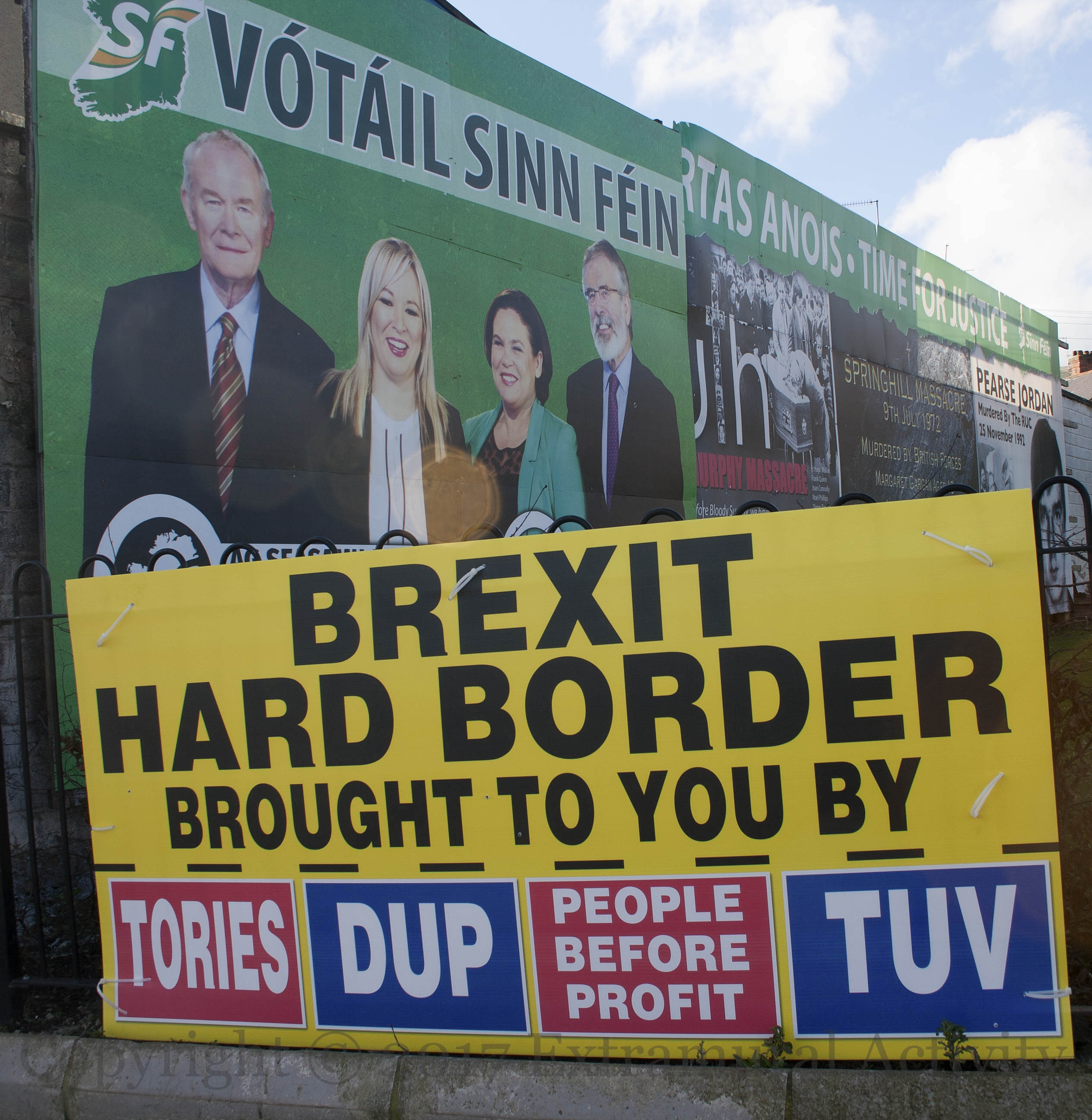
The UK’s vote to leave the EU (“Brexit”) might mean the return of the “hard” border between Northern Ireland and the Republic. The board shown above lists the Tories, DUP, TUV, and (west Belfast rivals) People Before Profit as supporters of Brexit. PBP supported the exit on anti-austerity grounds.
Voters go to the polls on March 2nd and among the candidates in East Belfast is Northern Ireland Conservative (web | Fb) Sheila Bodel. The party placard above in Grand Parade suggests that the peace process has been a “fleece process”.
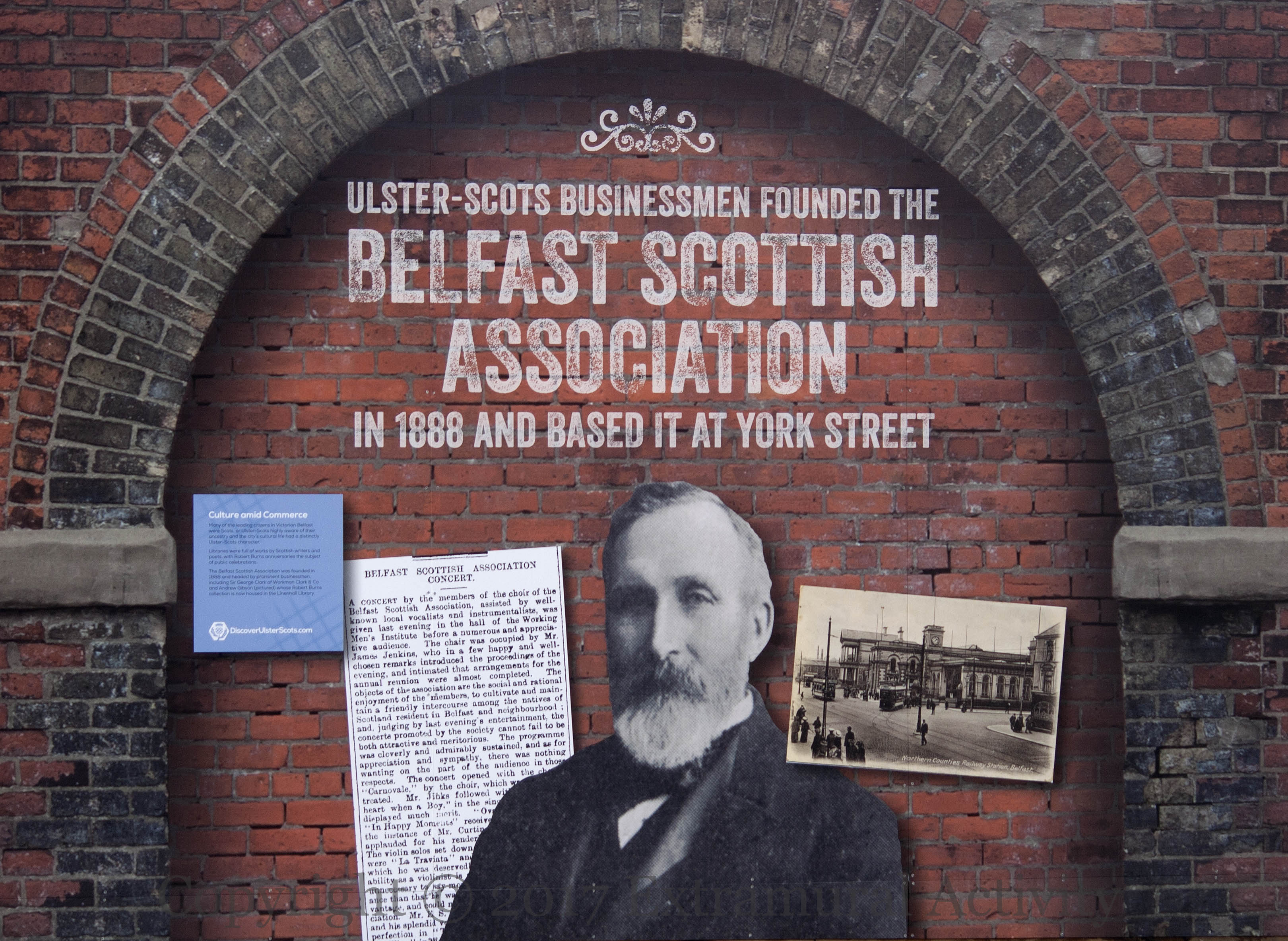
“The Belfast Scottish Association was founded in 1888 and headed by prominent businessmen, including Sir George Clark of Workman Clark and Andrew Gibson (pictured) whose Robert Burns collection is now housed in the Linenhall Library.”
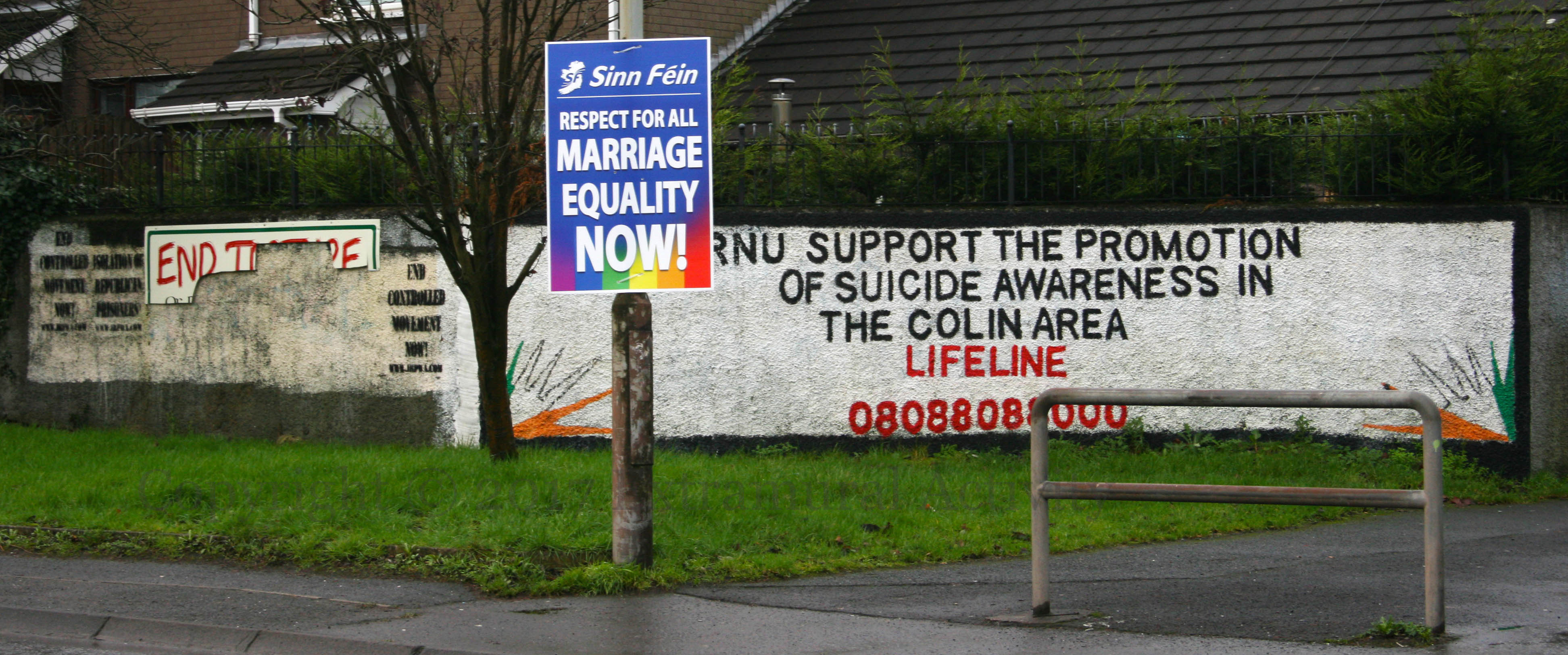
In the background, an RNU suicide awareness stencil (with tricoloured sunbursts) – “RNU support the promotion of suicide awareness in the Colin area”; in the foreground, a Sinn Féin poster – “Respect for all – marriage equality now!” At the pedestrian entrance to Old Colin.
(And to the left, a broken End Torture board can be seen.)
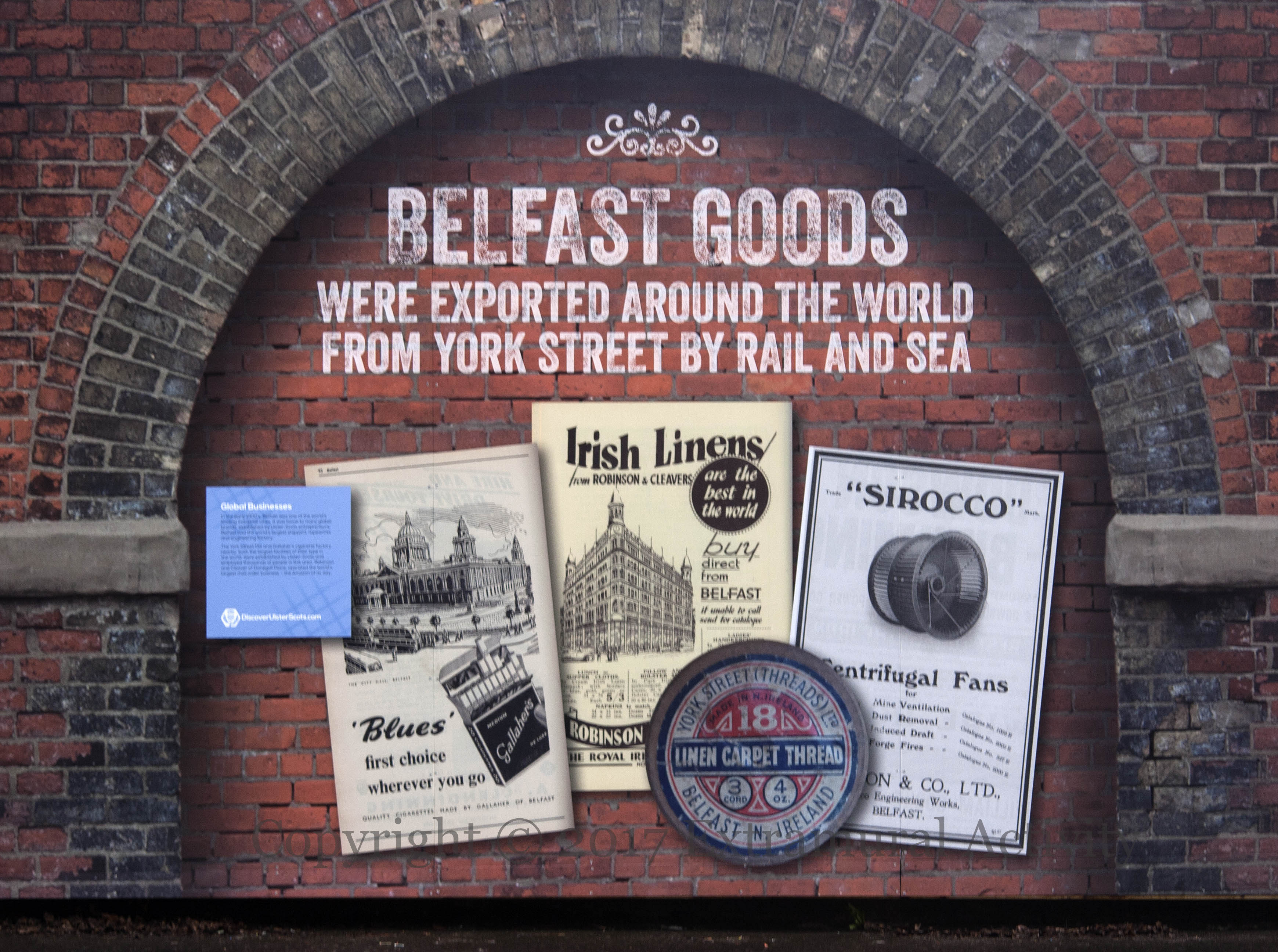
Among the Belfast goods “exported around the world from York Street by rail and sea” were Gallaher’s Blues (cigarettes), Irish linens, Davidson & Co (Samuel Davidson, born in County Down to an Ulster-Scots family, was the inventor of the Sirocco centrifugal fan “for mine ventilation, dust removal, induced draft, forge fires”), and linen carpet thread from York Street (Threads) Ltd. Robinson & Cleaver’s department store is now out of business. Gallaher’s is now the multinational Gallaher Group, but its factories in Belfast and Ballymena have closed. And Davidson’s company was bought by Howden UK in 1988.
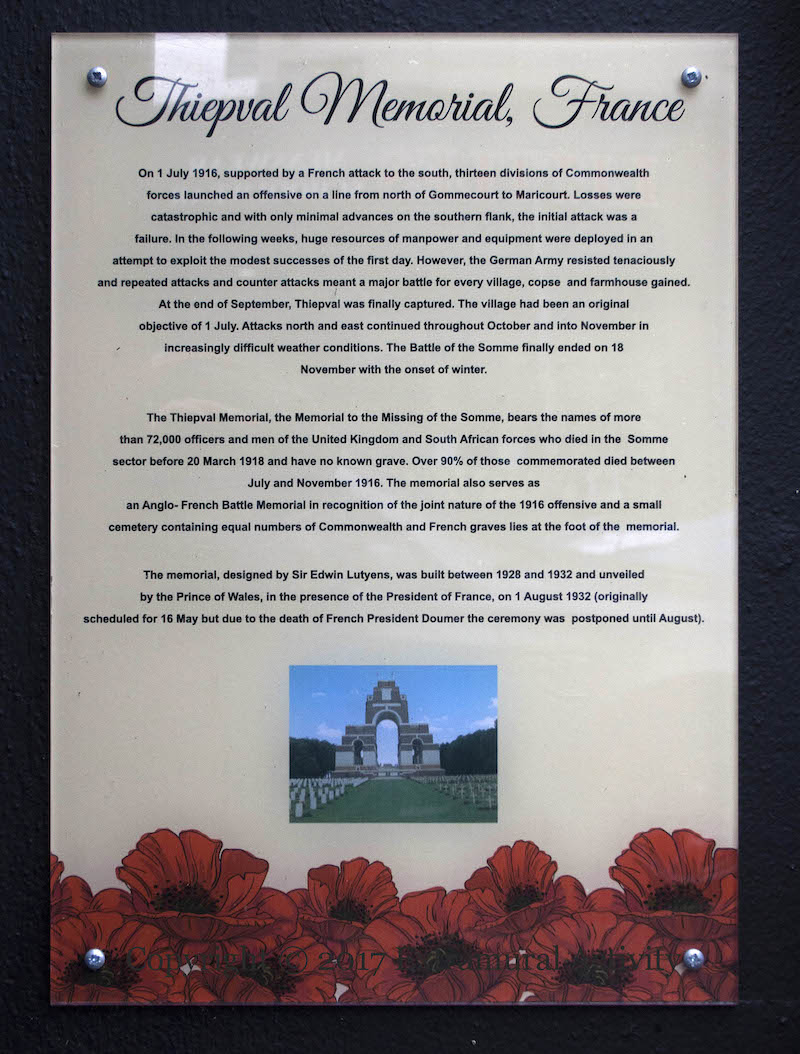
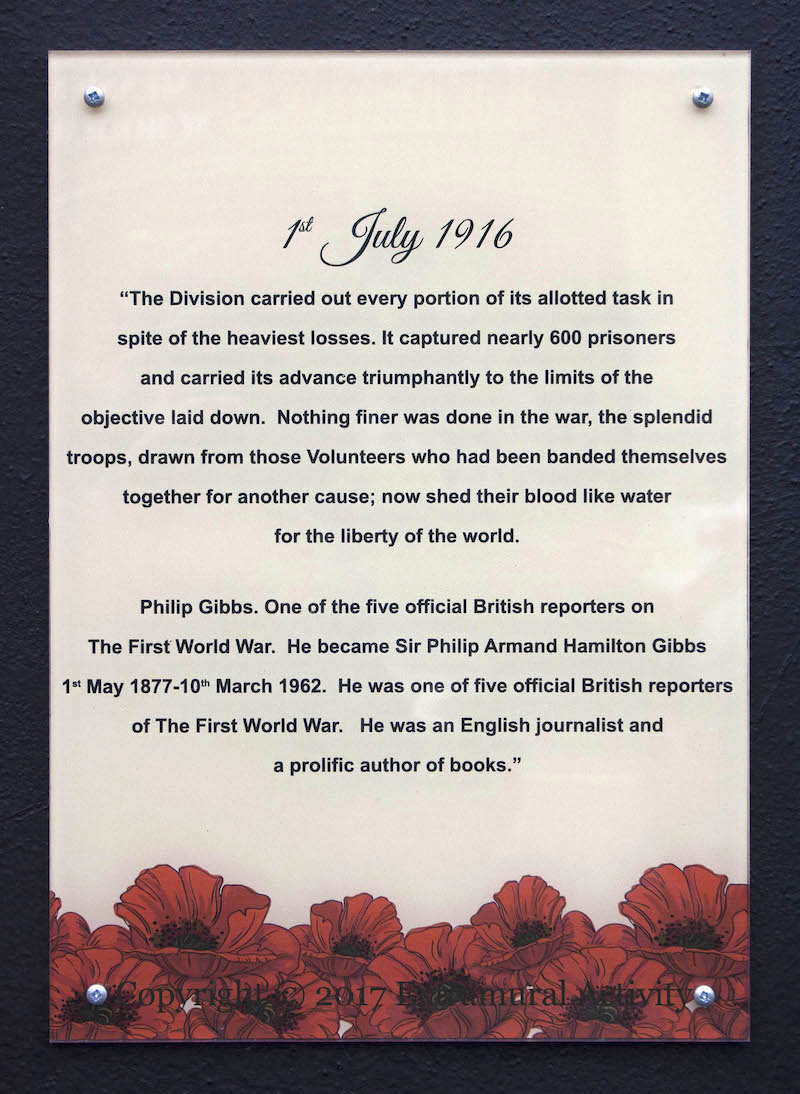
Winston Churchill’s line about the British Air Force in WWII, that “Never in the field of human conflict was so much owed by so many to so few“, is echoed in this WWI board about the battles at the Somme between July 1st and November 18th, 1916. “The few” in this case, however, number nearly half a million dead and more than 72,000 missing. “Never before was a debt owed to so few by so many. Generation after generation owe them everything. Lest we forget.”
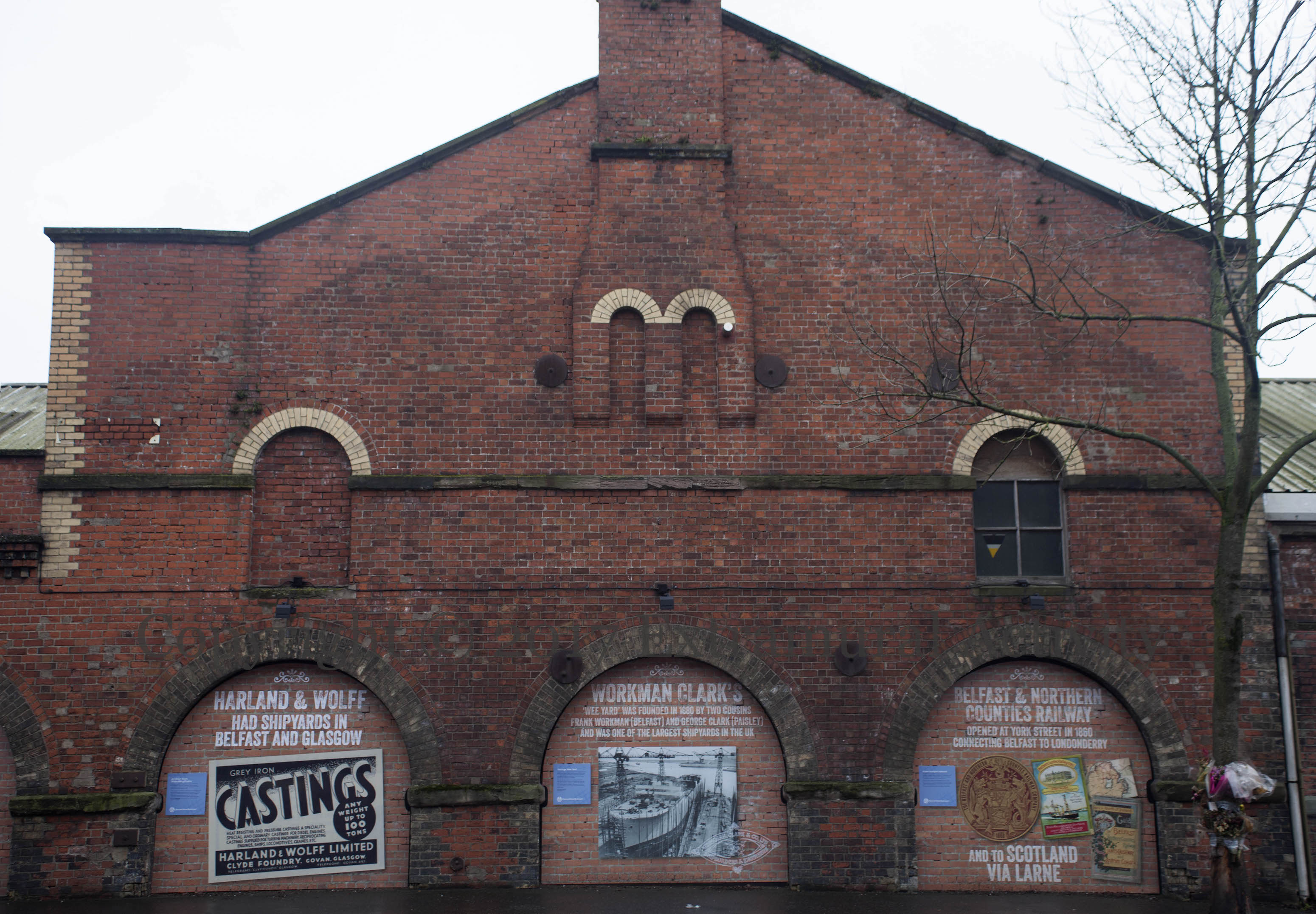
Workman & Clark’s (in the centre panel above) was a Belfast shipyard existing from 1880 to 1935. During the first world war it took over the construction of two monitor ships (specifically, M29 and M31) for the Royal Navy that H&W did not have space to build. For more, see Grace’s Guide | BBC audio on monitor ships and their construction, including a record for number of rivets hammered in by one John Moore at Workman Clark’s.
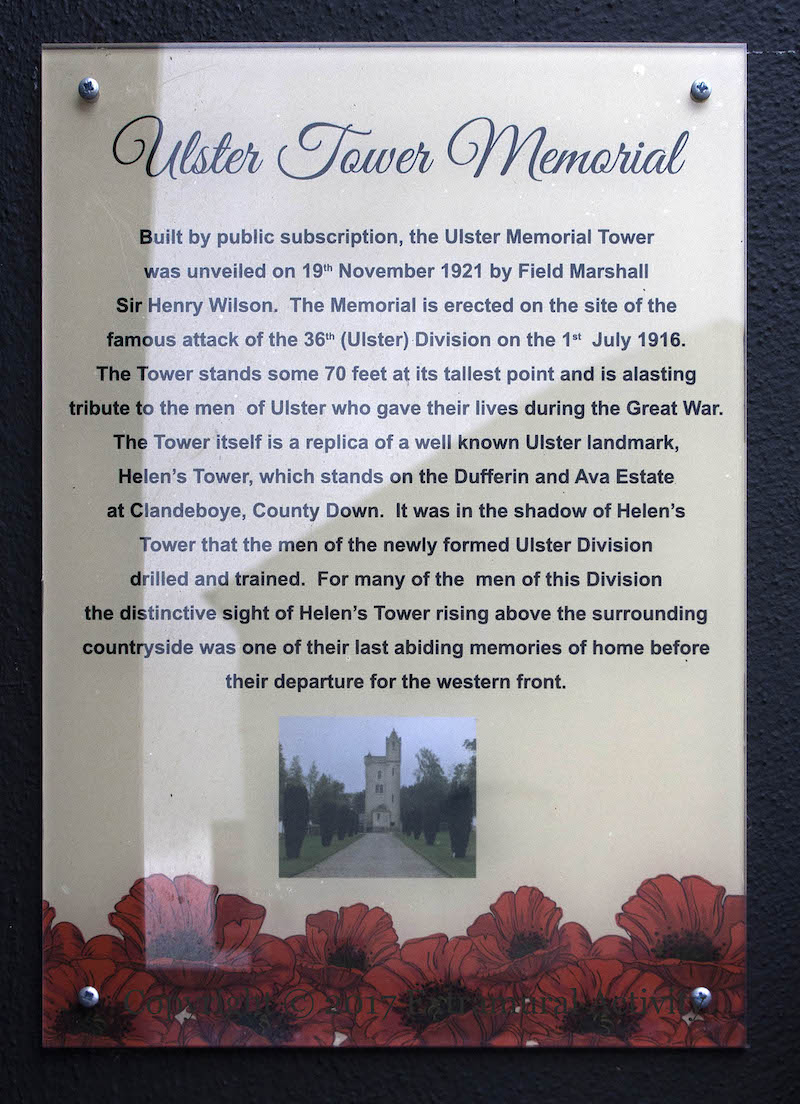
These are panels 6, 7, and 8 from the new boards along York Street on the outer wall of the NI Railways mechanical engineering workshop.
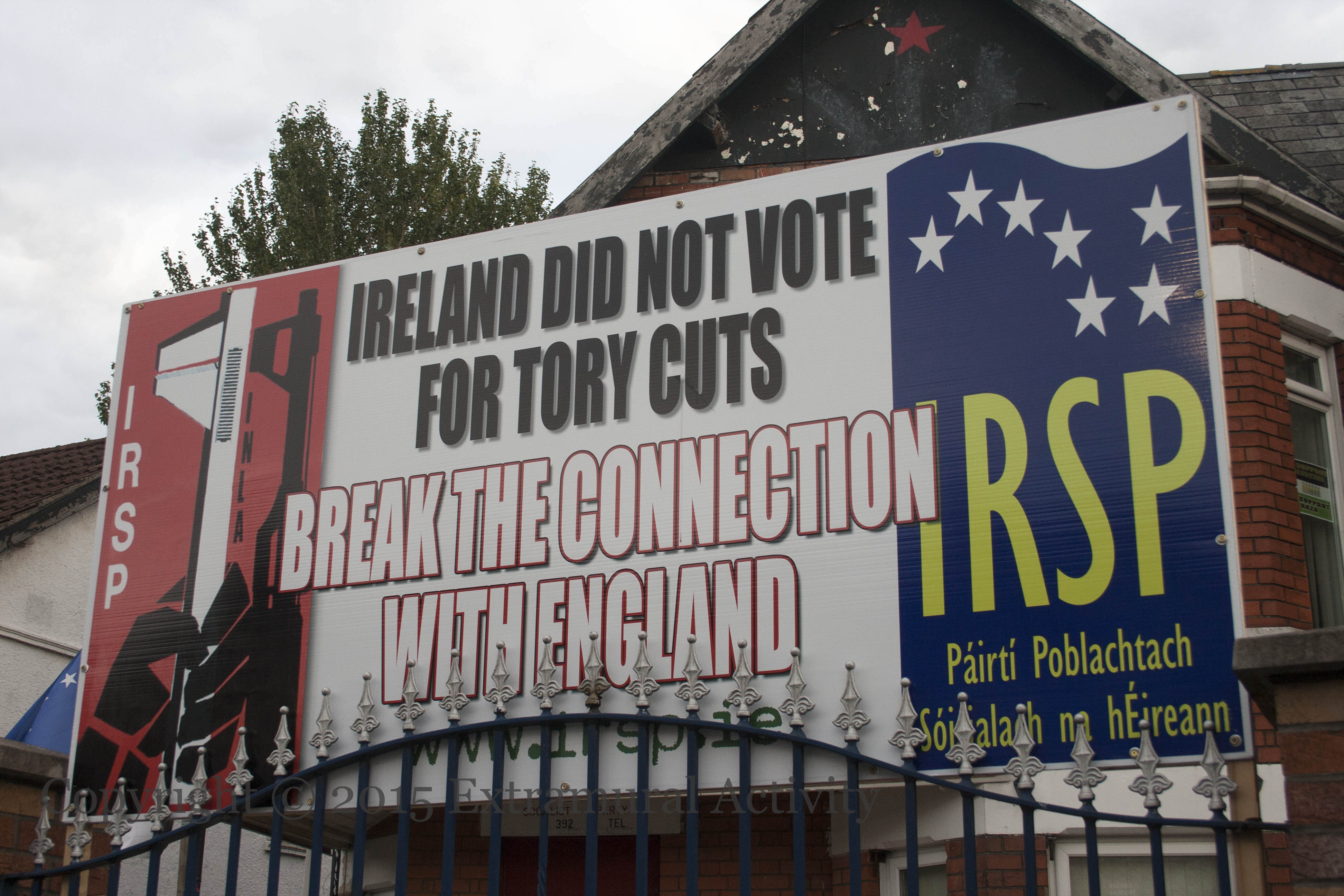
“Ireland did not vote for Tory cuts. Break the connection with England. www.irsp.ie. Páırtí poblachtach sóısıalaıgh na hÉireann.”
This IRSP/INLA board outside the party offices on the Falls Road protests policies coming from the Westminster parliament and specifically the Conservatives. On the left-hand side of the board are an adjustable pipe-wrench (for IRSP) and a rifle (for INLA). The sticker on a post-box is in Cavendish Street.








 Extramural Activity